Household Hazardous Waste Disposal

Previously I wrote, or ranted, about stupid smoke detector design, and at the end of the post I mentioned that smoke detectors have a small amount of radioactive material in them, and thus they should be disposed of properly. I didn’t say specifically how because it really depends on where you live. I live in Virginia, and I have since learned that there is no place in Virginia to dispose of them. My county’s website says they have no way to dispose of them and to try to return them to the manufacturer, but if you can’t find any other way to dispose of them, they can be thrown away in the trash. I contacted Kidde, the manufacturer, and they said they will accept them, you just have to mail the smoke detectors to them. The customer service representative I spoke to said just put “for disposal” on the package, and they will take care of them. I actually had a total of three to return because I had the malfunctioning one plus two ones I had originally bought before I had the hardwired ones installed. So last month, I mailed three smoke detectors back to Kidde. It cost me $6.15, but I now have a clear conscience. This may seem a bit much to some people, but I am an environmental engineer. My career has mostly been dedicated to cleaning up and properly taking care of human and hazardous waste. It has also been about dealing with contamination when waste was not taken care of properly, so there is no way I am going to improperly dispose of waste unless it is completely impossible not to do so.

Here is a fun quirk of United States environmental law, my smoke detectors are non-hazardous because they were used in my house. Those same smoke detectors, if used in a commercial or other non-household setting, are hazardous. Hazardous waste in the US is regulated through the Resource Conservation and Recovery Act (RCRA, pronounced rick-ra). Under 40 CFR §261.4(b)(1), “household waste, including household waste that has been collected, transported, stored, treated, disposed, recovered (e.g., refuse-derived fuel) or reused” is considered to be non-hazardous and exempt from RCRA regulation. There are a bunch of reasons why this exemption is in RCRA, but how you treat your legally-not-hazardous, but technically-hazardous, household waste comes down to a bit of just because you can do something, doesn’t mean you should. However, disposal of household waste is also governed by state and local regulations. Just because federal laws allows you to dispose of household hazardous waste in the trash, does not mean your municipality will because they are the ones who actually have to deal with the waste.

Most people know that fluorescent bulbs contain a small amount of mercury, and thus if you ever break one indoors, you should open the windows and leave the room while the mercury volatilizes. It is because of this mercury that most (or possibly all) municipalities and/or waste disposal companies state that fluorescent bulbs should not be put in the trash. The vast majority of trash in the US is sent to landfills and the rest to incinerators, and mercury does not belong in either of these type of disposal facilities. Also, and just as importantly, the bulbs can easily be broken during transfer from your trash can to the truck, while in the truck (especially if it compacts), at the transfer station, at the disposal site, and all the places in between. If it breaks, the workers can be exposed to the mercury, and thus it is not just about protecting the environment but also the workers.

There is more household waste that is technically hazardous. Aerosol cans can become explosive if punctured. Various cleaning, home maintenance, and vehicle fluids routinely used in household are hazardous to the environment. Conversely, both prescription and over-the-counter (and for that matter illicit) unused drugs should be disposed of in a seal container and put in the trash. Putting unused drugs in the trash is far better for the environment than putting them down the drain where they will eventually get into the waterways. Wastewater plants are not designed to remove chemicals like drugs, but that is a post for another day. [I suppose if someone is trying to dispose of their illicit drugs it is most likely because the police are raiding their house, and they are really not thinking about the environment but about jail, but I still don’t want to drink water with trace amounts of cocaine because some druggie upstream of my water treatment plant was trying to evade arrest.]

The point of all this is, think before you toss something in the trash. Spend a little time on your municipalities website, as most now have them, educating yourself on what can and can’t be thrown in the trash and where things that can’t be thrown in the trash can be disposed. While you are at it, educate yourself on what things can and can’t be recycled in your area. There may be a recycling market in your area for something you didn’t even realize.
Inside a Water Filter

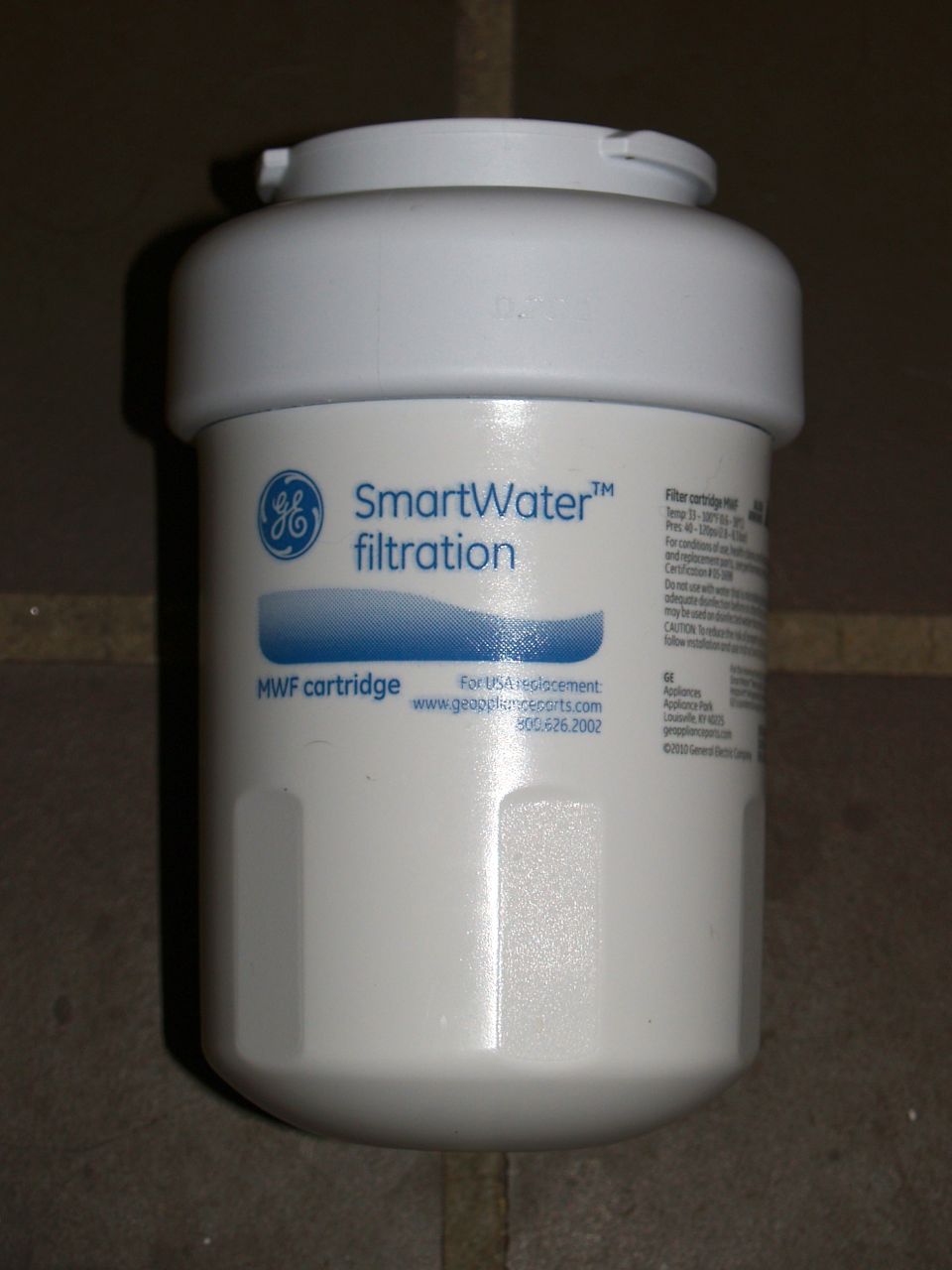
This is what happens when an engineer with an insatiable curiosity, power tools, and clearly too much time on her hands changes the water filter inside her refrigerator. Yes, that is pretty much it. There really is no other point to this post. Most normal people would take the old water filter and throw it away. I am not a normal person, and I wanted to see inside it, so I cut it open. Warning and reassurance to my mom: I wore a half-face respirator with PM10/VOC filters, goggles, and a leather glove while I cut through the filter. I strongly recommend if anyone else tries this, you do this also. I didn’t want to breathe in the dust or get it in my eyes.

Here is the filter before I began.

Used water filter for my refrigerator, side view

Photo 1: Used water filter for my refrigerator, side view

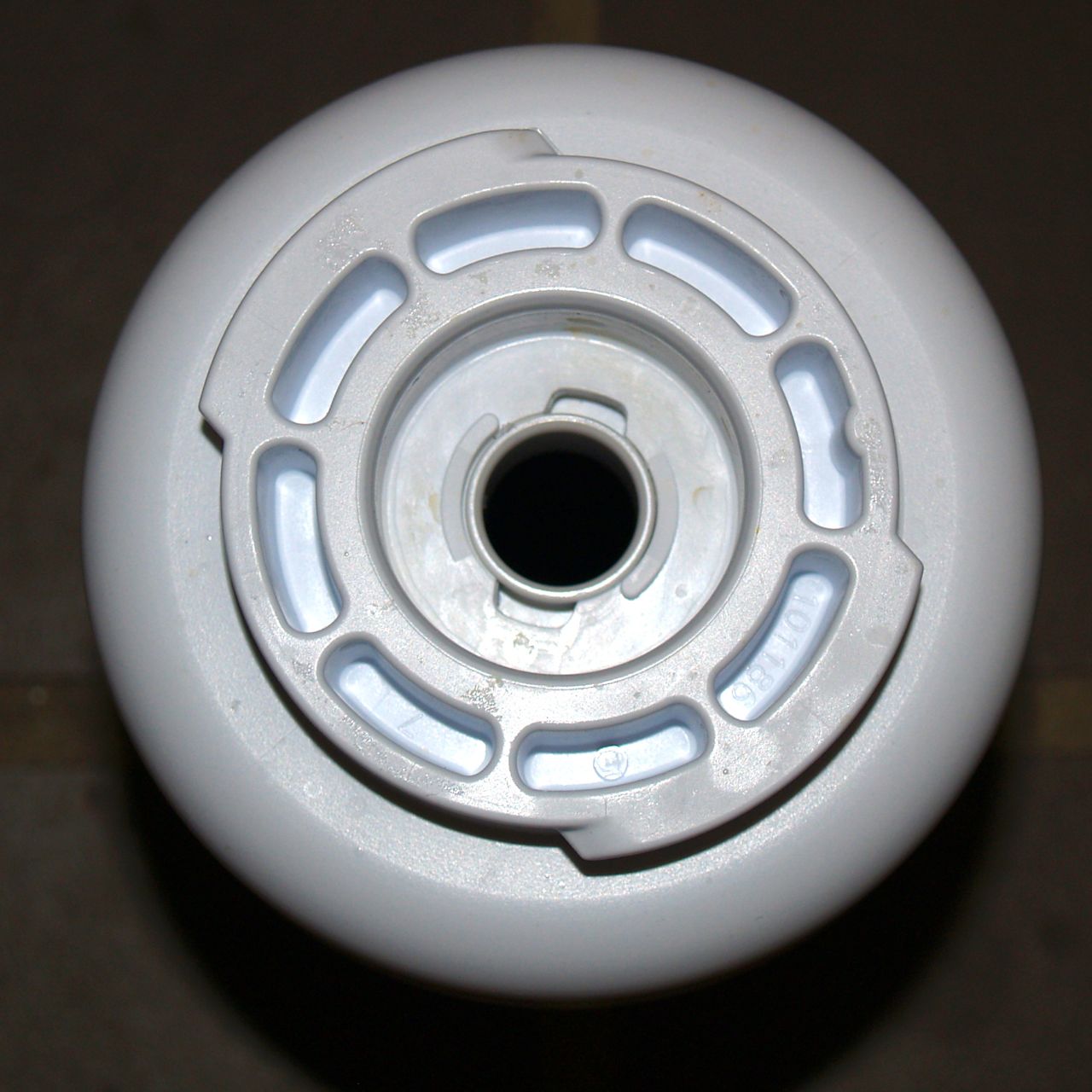
Used water filter for my refrigerator, top view

Photo 2: Used water filter for my refrigerator, top view

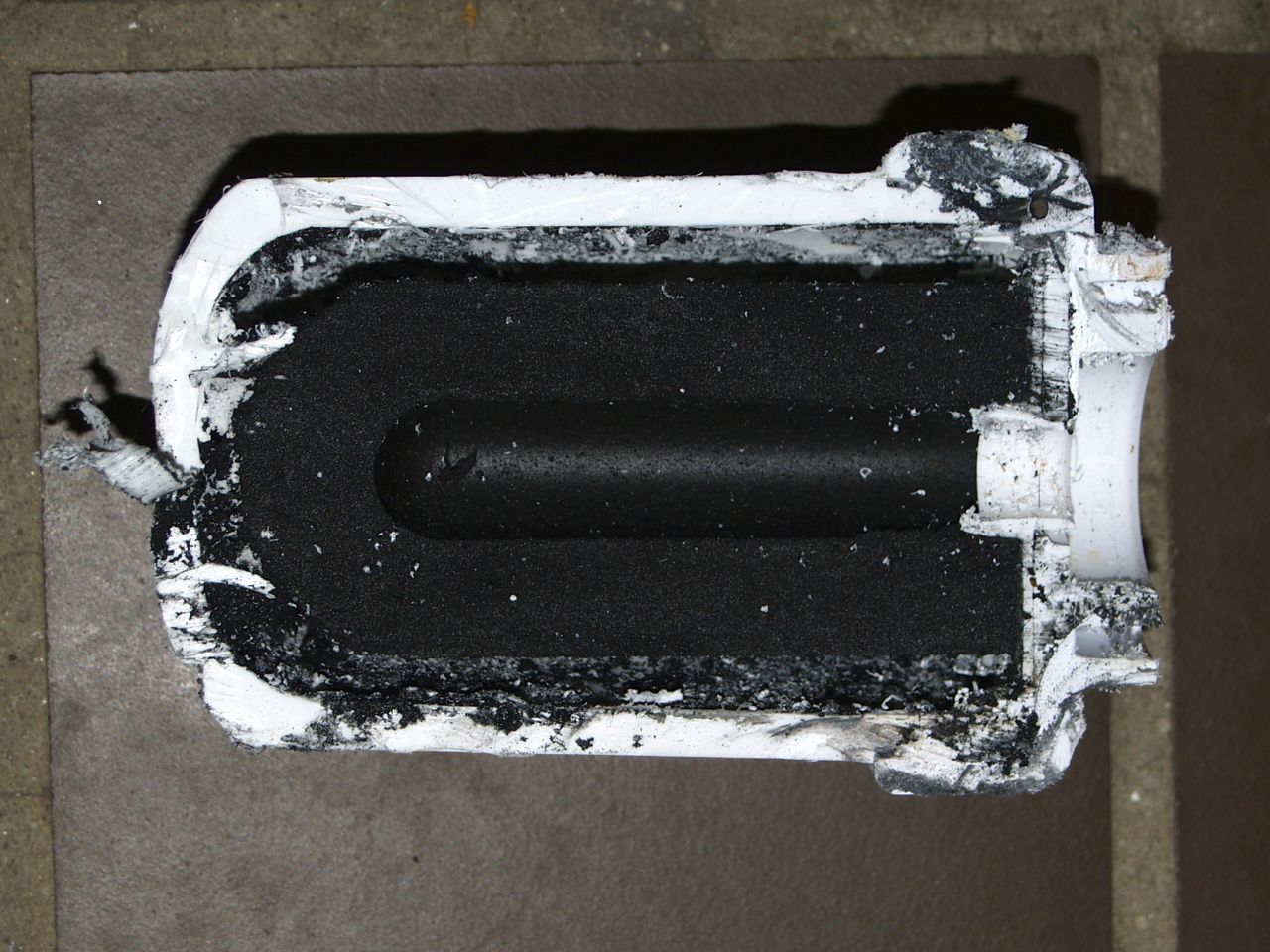
Here is the cross section after I cut through it length wise.

Water filter after length wise cut

Photo 3: Water filter after length wise cut

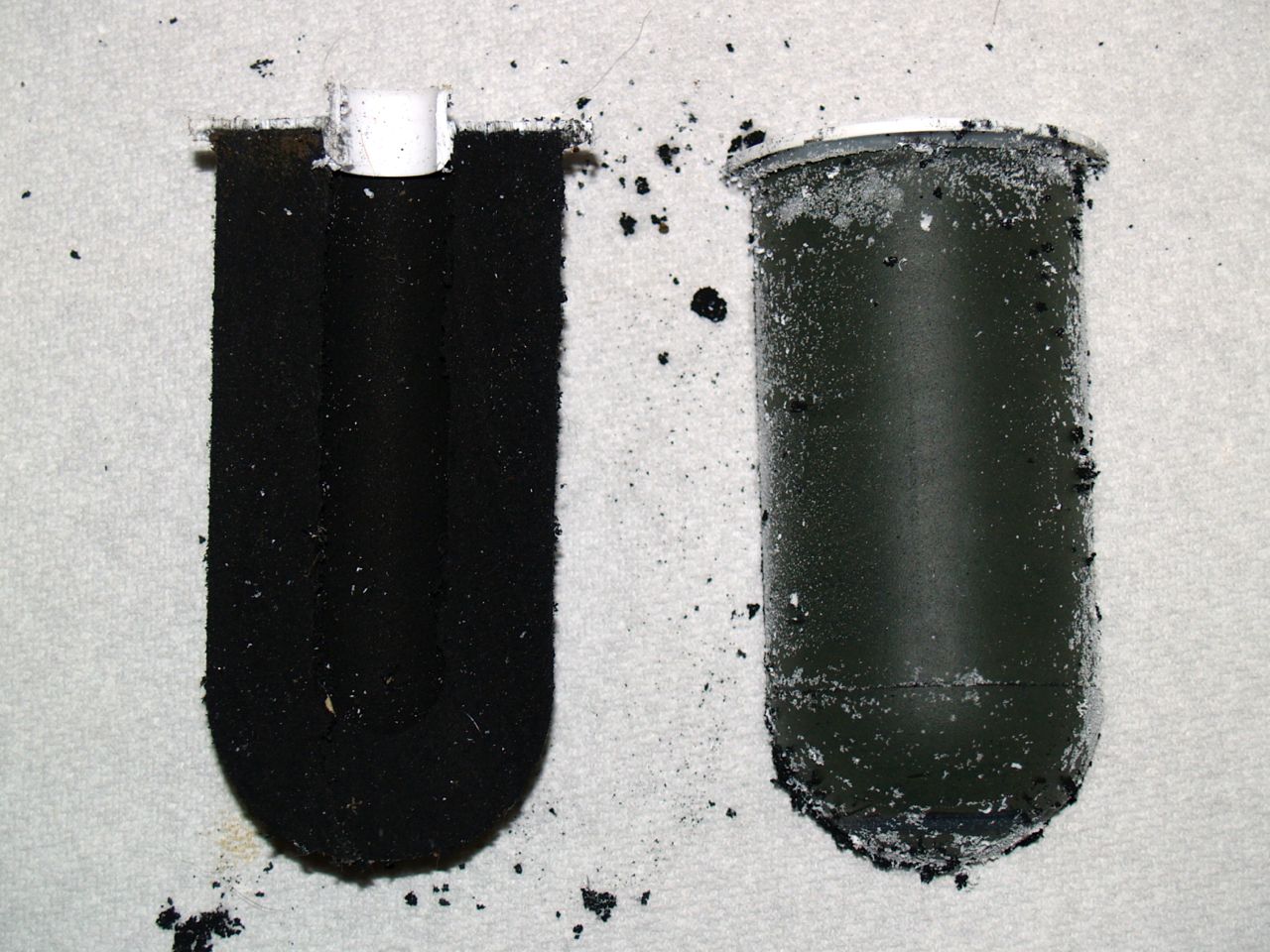
The filter consists of a plastic shell that contains a hollow, round-bottom, cylindrical carbon filter. It is kind of hard to see, but the middle of the carbon filter is hollow. The carbon filter is held in the center of the plastic shell, so that there is free space all around the filter. Here are the two halves of the carbon filter side by side with inside of one shown on the left, and the outside of the other shown on the right.

two halves of the carbon filter, showing inside and outside

Photo 4: Two halves of the carbon filter, showing inside and outside

As you can see the inside is still very black while the outside has started to gray. I have a hypothesis for the reason, which I will get to soon.

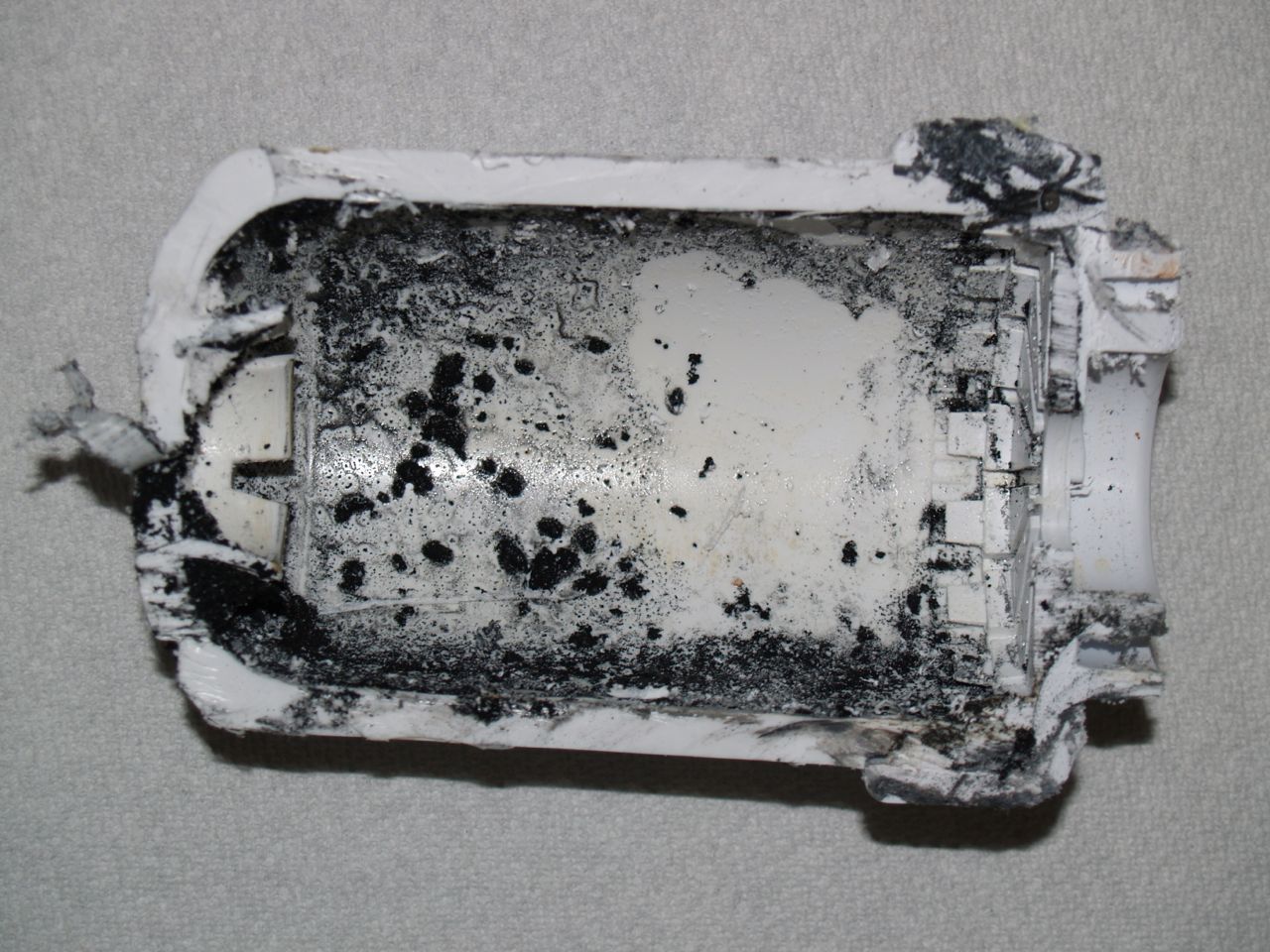
Here is the plastic shell with the carbon filter removed.

plastic shell of the filter

Photo 5: Plastic shell of the filter

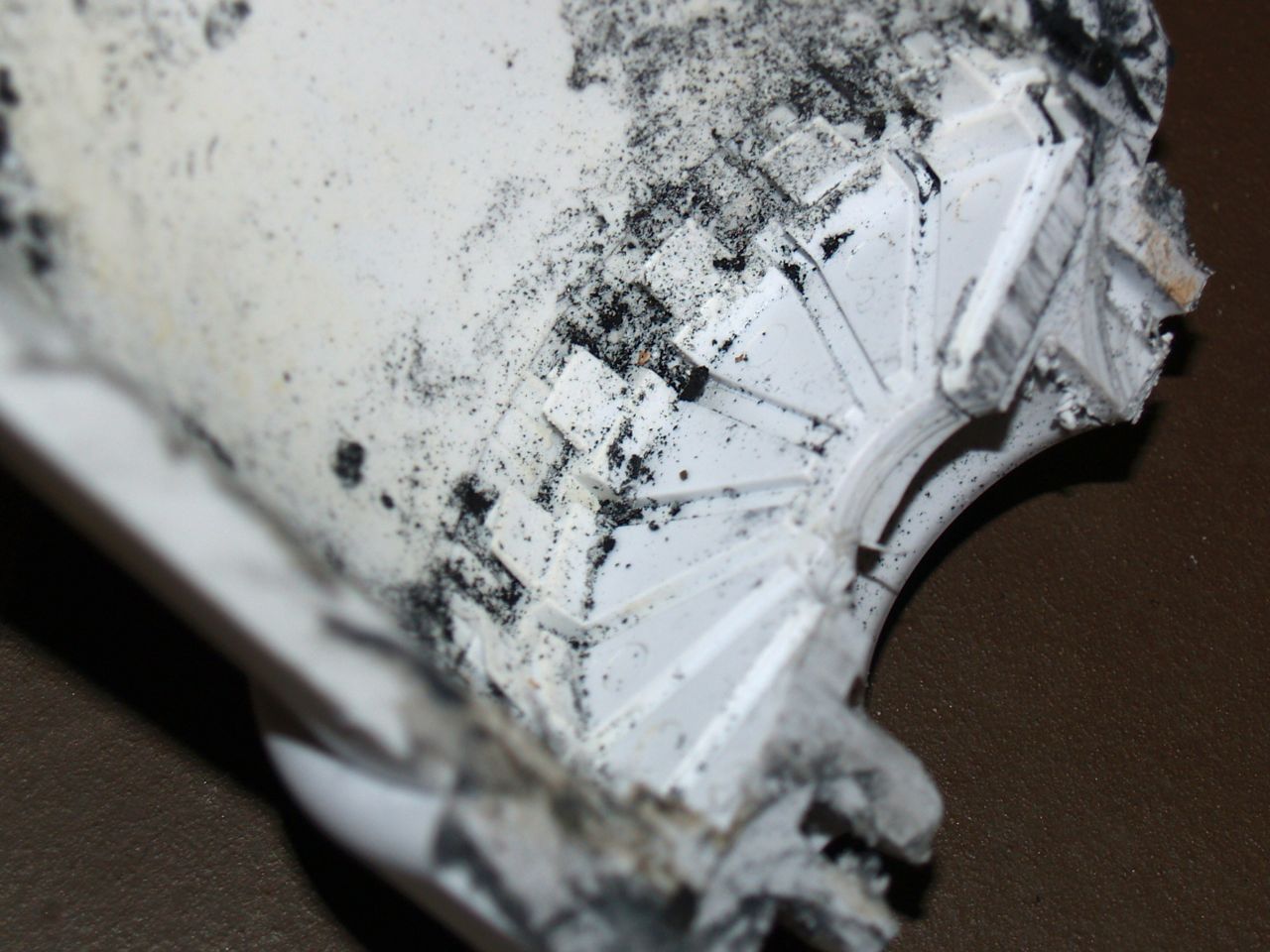
Now here is a close up of the inside top of the plastic shell.

close up of the inside of the top of  the plastic shell of the filter

Photo 6: Close up of the inside of the top of the plastic shell of the filter

Notice how there are channels formed radiating from the center? The filter only has one opening, the hole in the center in the top, as is shown in the second photograph. Thus, one of the reasons I cut the filter apart was to try to figure out how it works. Water goes in through the center, but how does it get out? What follows is my engineering guess as to how it works. I am fairly sure the water comes in through the center hole, and the water pressure in the house forces it into the hollow center of the carbon filter and then through the carbon in all directions radiating outward. The water then is stored on the outside of the carbon filter until it is pulled by the refrigerator’s water dispenser or the ice maker. I think the white matter that has formed on the outside of the carbon filter that gives it a grayish appearance is calcium and magnesium, otherwise known as hardness. I live in Arlington County, Virginia, and our latest water report lists our water’s hardness as 125 mg/l. According to the United States Geological Survey, that puts our water as just in the hard range.

So if the water is stored on the outside of the carbon filter, how does it leave the filter to get to the water dispenser or ice maker? That is where I think those channels at the top of the plastic shell come in. In Photo 3, you can see the plastic top of the carbon filter fits flush with the top of the plastic shell, but the top of the plastic shell has those channels. Because of the space between the plastic shell and the carbon filter, the water can enter the channels from the outside then flow through the channels back to the hole in the center. However, the now filtered water does not flow back the same hole where the unfiltered water enters.The plastic tube at the top of the carbon filter prevents the filtered water from going back into the filter. Instead the filtered water leaves next to the center hole. In Photo 2, two rectangles can be seen next to the center hole, at approximately 1 and 6 o’clock in the photo. Those rectangles are holes, and it appears that the water that flows through the channels then can exit the filter through those rectangular openings. I can’t tell exactly this happens even though I examined where the filter attaches in the refrigerator. I did consider that perhaps I have the flow direction completely opposite, that is that the water enters through the rectangles, flows through the channels into the open space, then is forced through the carbon filter into the center of the filter. There are a variety of reasons, geometry, fluid dynamics, water pressure, etc., why I am fairly sure this is not the case.

So that is how my refrigerator’s water filter works. See this was educational. It was not just about me having fun with my Dremel rotary power tool and destroying something. Really it wasn’t.

Smoke Detector Stupidness

Last night at 3 a.m. my smoke detectors went off. There really is nothing like being awakened from a dead sleep to that extremely high pitched chirp and a female voice saying “fire, fire.” I, of course, immediately got out of bed and went in search of this supposed fire. There was none to be found. However my smoke detectors assured me there was. I then had to go through the house and pull all five of them from their wiring and in some cases pull out the batteries because pushing the button would not hush them. At 3 a.m., that was so much fun.

When I bought this house it did not have any smoke detectors. It had two wall mounted holders for smoke detectors, one in each the downstairs and upstairs hall. There were none in the bedrooms, and there was no wiring for interconnected ones. I decided early on that as I renovated the house, I would install interconnected wired smoke detectors and bring the house up to current code, even though it was not required. I’m an engineer that way. During Phase 2 of renovations, because the ceiling downstairs had to be opened to install a structural beam, the house lost grandfather status, and interconnected wired smoke detectors now became required by the County. No problem. I was already planning to do it. When it came time to install them, I decided to get combination smoke and carbon monoxide detectors. I had to buy all new ones anyway, so I might as well go for full protection.

This leads me to last night and my need to rant. My detectors are Kiddie brand. I mention the brand because there is an oligopoly of sorts on household fire alert and response equipment. All of them seem to work the same and have the same flaws. Modern houses generally will have interconnected smoke detectors so that if one detects smoke, all the detectors will go into alarm. There should also be one detector in each bedroom and in each hall. Interconnected fire detectors and their location are not universally adopted building code requirements for new construction but are a good idea. If you have a large house, it is possible for one to go in alarm and not awaken a sleeping person in another part of the house. Research has also shown that children do not necessarily wake to a smoke detector at all, in particular the tone. This is partially the reason why voice alarms have been added, but with children, personalized voice alarms with the parent’s voice may be needed to insure children are awakened.

If my detectors detect fire, they set off one set of chirps and say “fire, fire.” If they detect carbon monoxide, they set off another set of chirps and say “carbon monoxide.” If the battery is low, another chirp and “low battery.” Then there is some complicated series of chirp sequences to denote if it was previously in alarm, has malfunctioned, needs replacement, etc. that NO ONE COULD POSSIBLY DISTINGUISH THE MEANING OF AT 3 A.M. Mine were definitely yelling fire last night. As I ran around with a stool trying to figure out what the problem was, the hush button was not working at all. At one point, one of them said carbon monoxide, but I have no idea which one because they are all blaring at me at 3 a.m. The units also have some complicated series of LED blinks to denote in which mode (or possibly mood) it is. This is great, but they are IMPOSSIBLE TO UNDERSTAND AT 3 A.M. Also, as far as I could tell or at least understand, there was no way to figure out which specific detector set off the alarm and thus which one was malfunctioning. Maybe the LED is supposed to tell me this, but I couldn’t figure it out when all I wanted to do is stop the awful noise being blared at me.

Thus if any person who happens to work in smoke detector design happens to read this, these things are too complicated to understand when there is some malfunction or inaccurate alarm. I appreciate the voice that says fire, carbon monoxide, or low battery tells you what the supposed problem is. That makes it much easier to understand than which series of chirps are being blared. However, if you are trying to track down a malfunction, it is impossible. Stopping the blare seems to be impossible short of removing all sources of power. For interconnected detectors, I want and need to known which one started the alarm. I can’t figure out the problem if I don’t know that, ESPECIALLY WHEN IT IS 3 A.M. WHICH IS EVIDENTLY THE ONLY TIME DETECTORS HAVE A FLASE ALARM OR LOW BATTERY.

That ends my rant. While I’m on the subject of fire detectors though, please remember to change the battery every six months. Also, please remember when the detector itself needs to be replaced, never throw it in the trash. Smoke detectors contain a small amount of a radioactive substance. They are perfectly fine to have in your house, but they should not be disposed of in a landfill. Find an appropriate place to dispose of them. [Update: Please see my post Household Hazardous Waste Disposal on how I eventually disposed of my malfunctioning smoke detector.]

Mulching Plant Tour

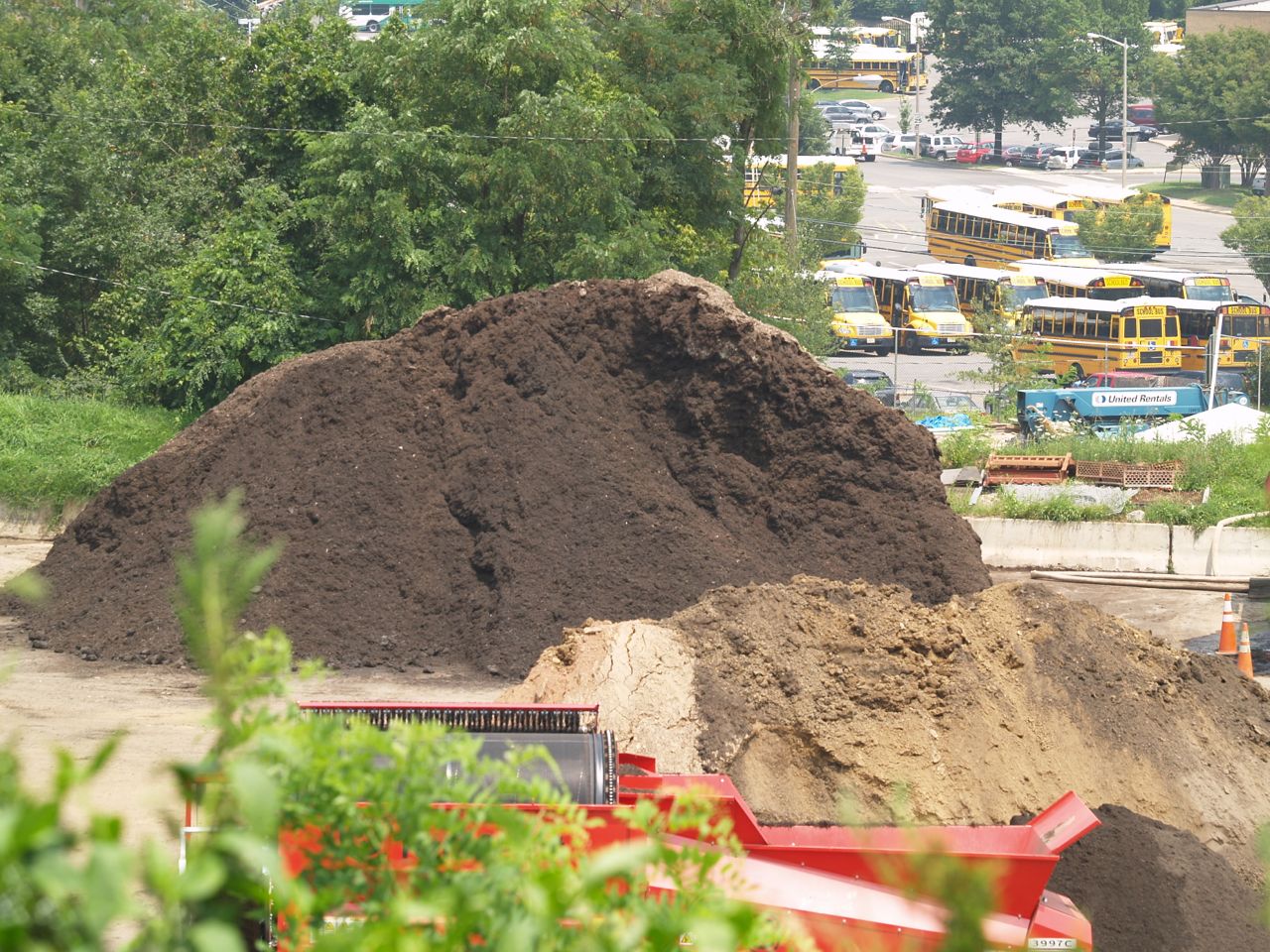
About a month ago, I got a chance to tour a recycling plant. This Arlington County municipal recycling plant focuses on recycling yard waste. In the spring, Arlington County has curbside collection of yard waste in paper bags including invasive vines, leaves, dead plants, pine cones, etc. In the fall, Arlington County picks up leaves in paper bags from residents and also from curbside vacuum collection. All year long, Arlington County also picks up brush curbside. All of these waste streams are treated separately at the plant, and the plant also handles dirt and rock excavated during utility work.

The plant manager said he likes to think of the plant as a reutilization plant because something goes in, they process it, and then something goes out. Their operation is really quite impressive, especially when its 2.7 acres total yard size is considered. It is mainly this plant size that limits their ability to accept more waste for processing. Their biggest issue is dirt from pipe breaks etc. that is processed here. They reuse the processed dirt and rock for backfill, but if they can’t find a use for it, they have to dispose of it in a landfill.

The yard waste has to get to 140°F to kill any invasive weeds. Because the plant is located near a residential area, they do not accept food waste because of the odor it produces. They use lime on the yard waste solely for odor control. [Lime the inorganic material, which generally means calcium oxide (CaO) with some calcium hydroxide (Ca(OH)2) not lime the fruit.] With the leaf waste, they achieve a 66% volume reduction to the leaf mulch product. Leaf bag collection mulch is mixed with dirt for final product.

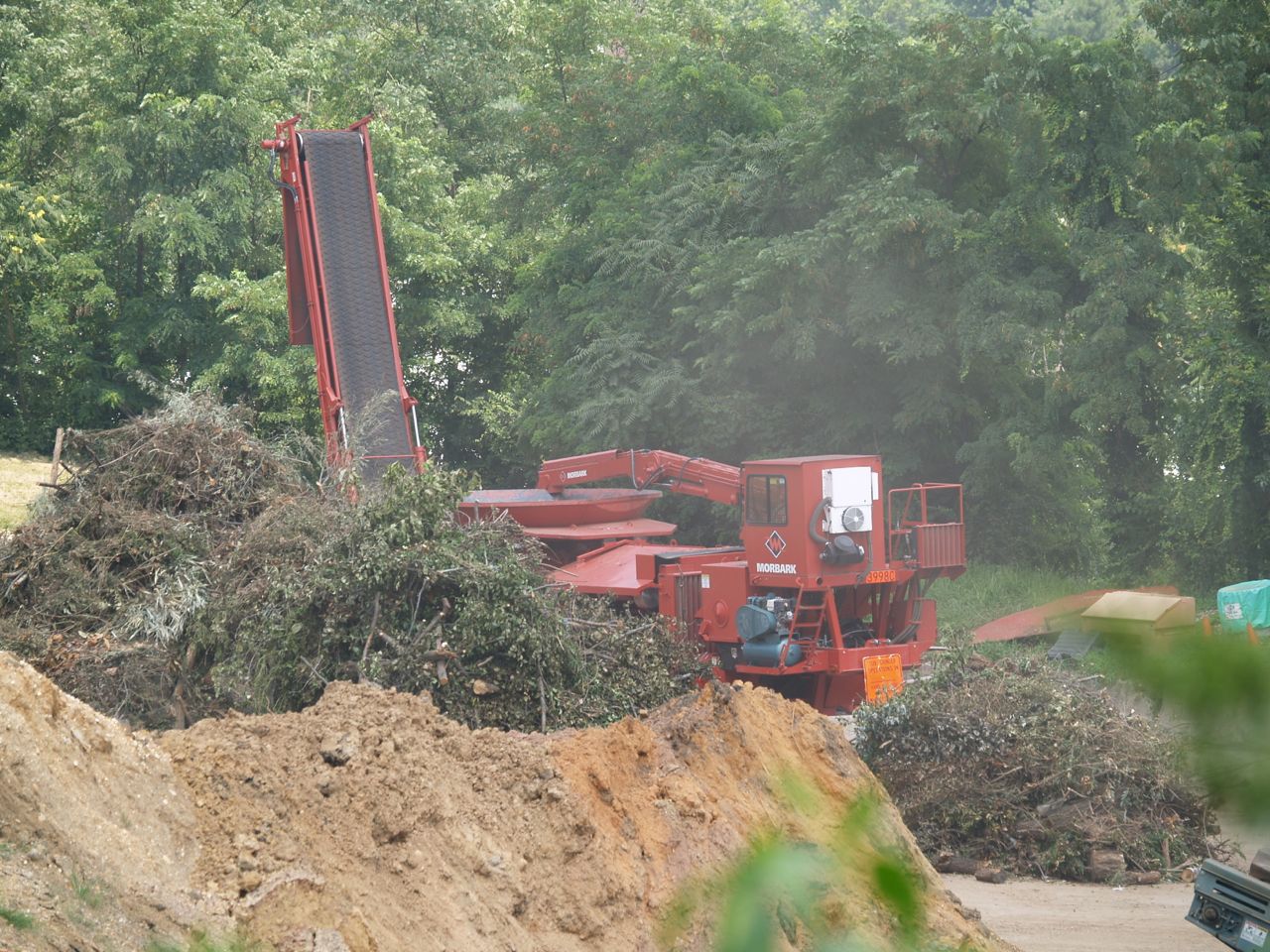
Tub grinder that processes leaf, brush, wood, and spring yard waste

Tub grinder that processes leaf, brush, wood, and spring yard waste

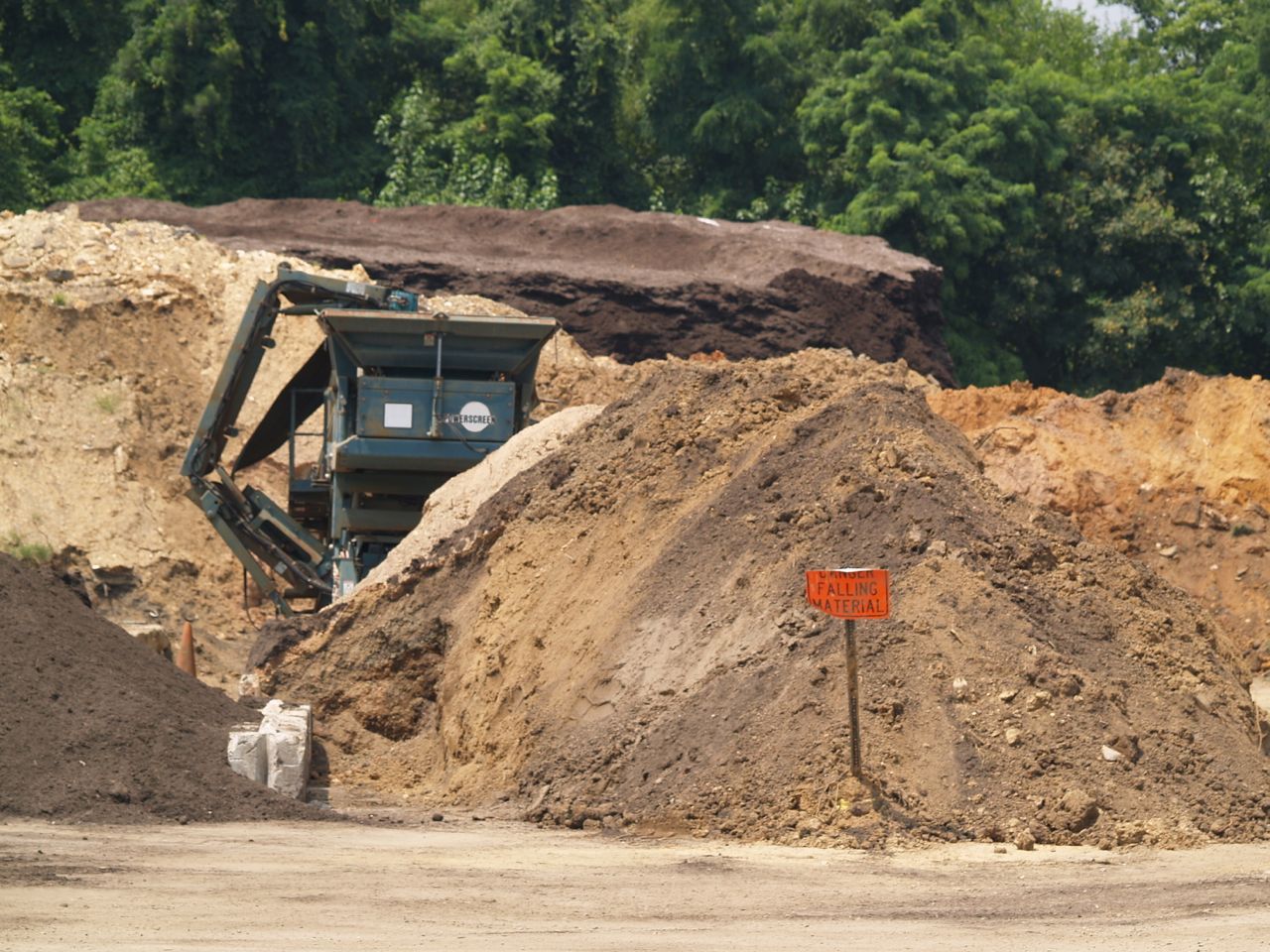
Dirt processing machine that sorts material by size

Dirt processing machine that sorts material by size

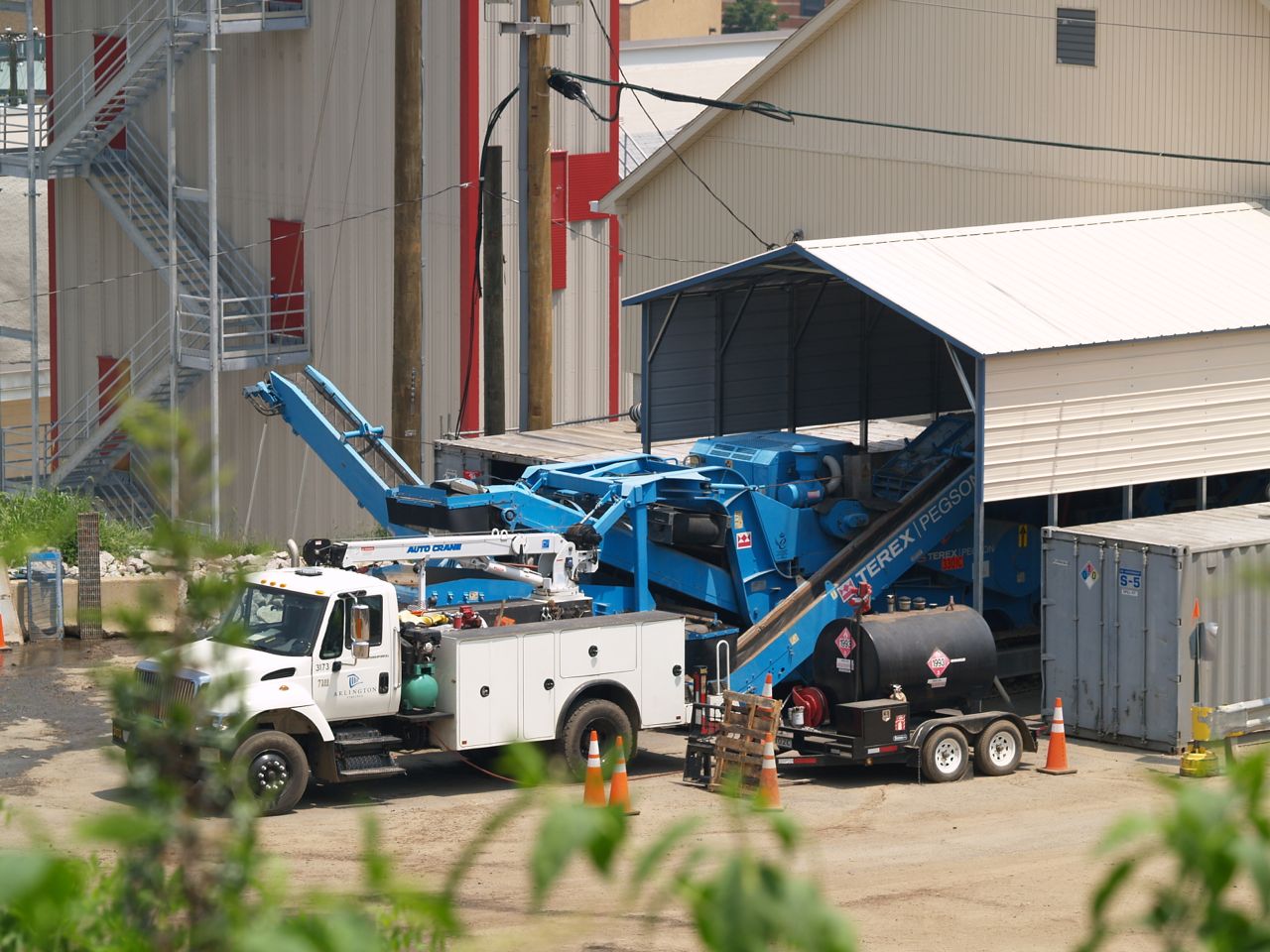
Stone crusher machine

Stone crusher machine

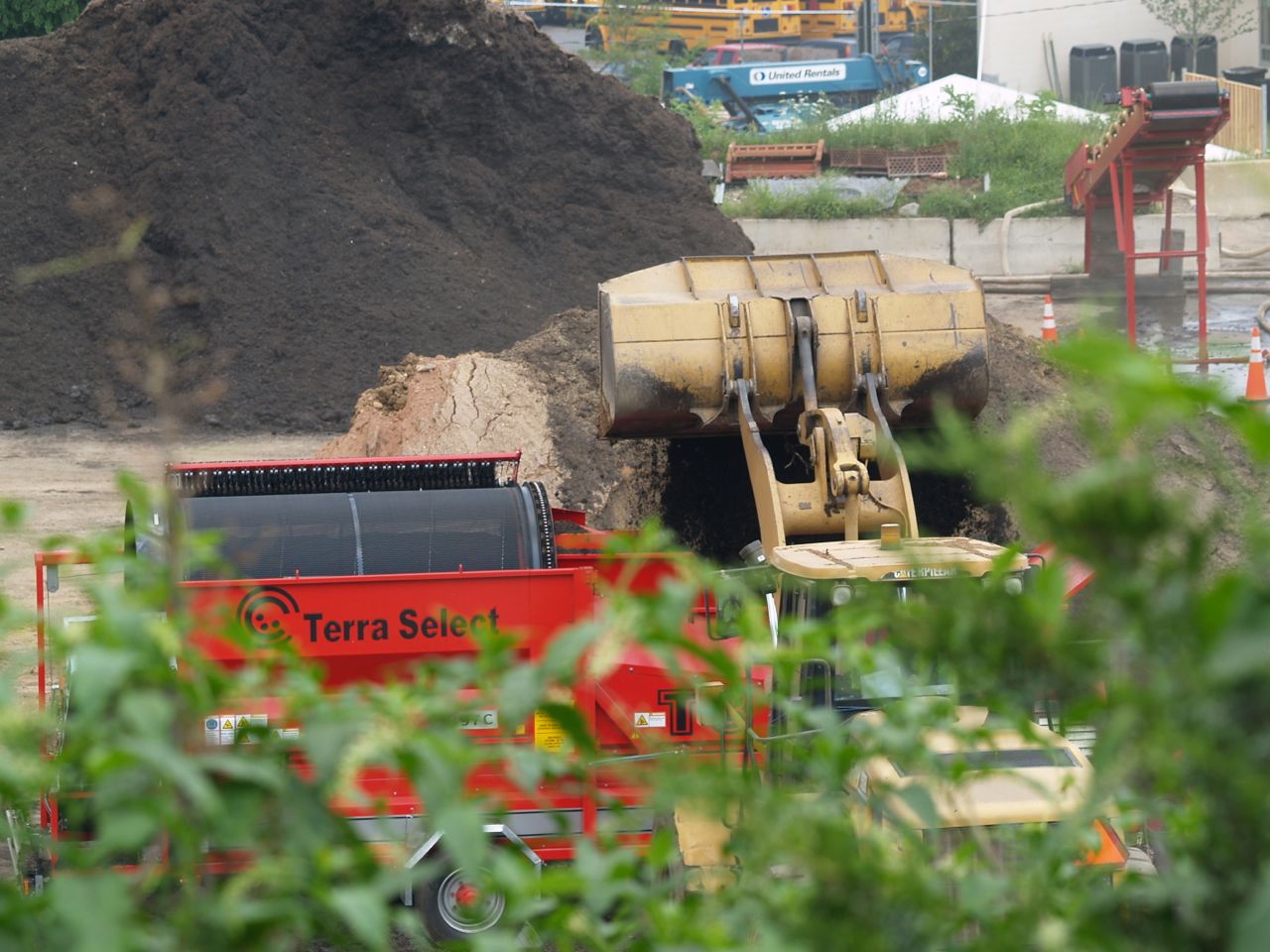
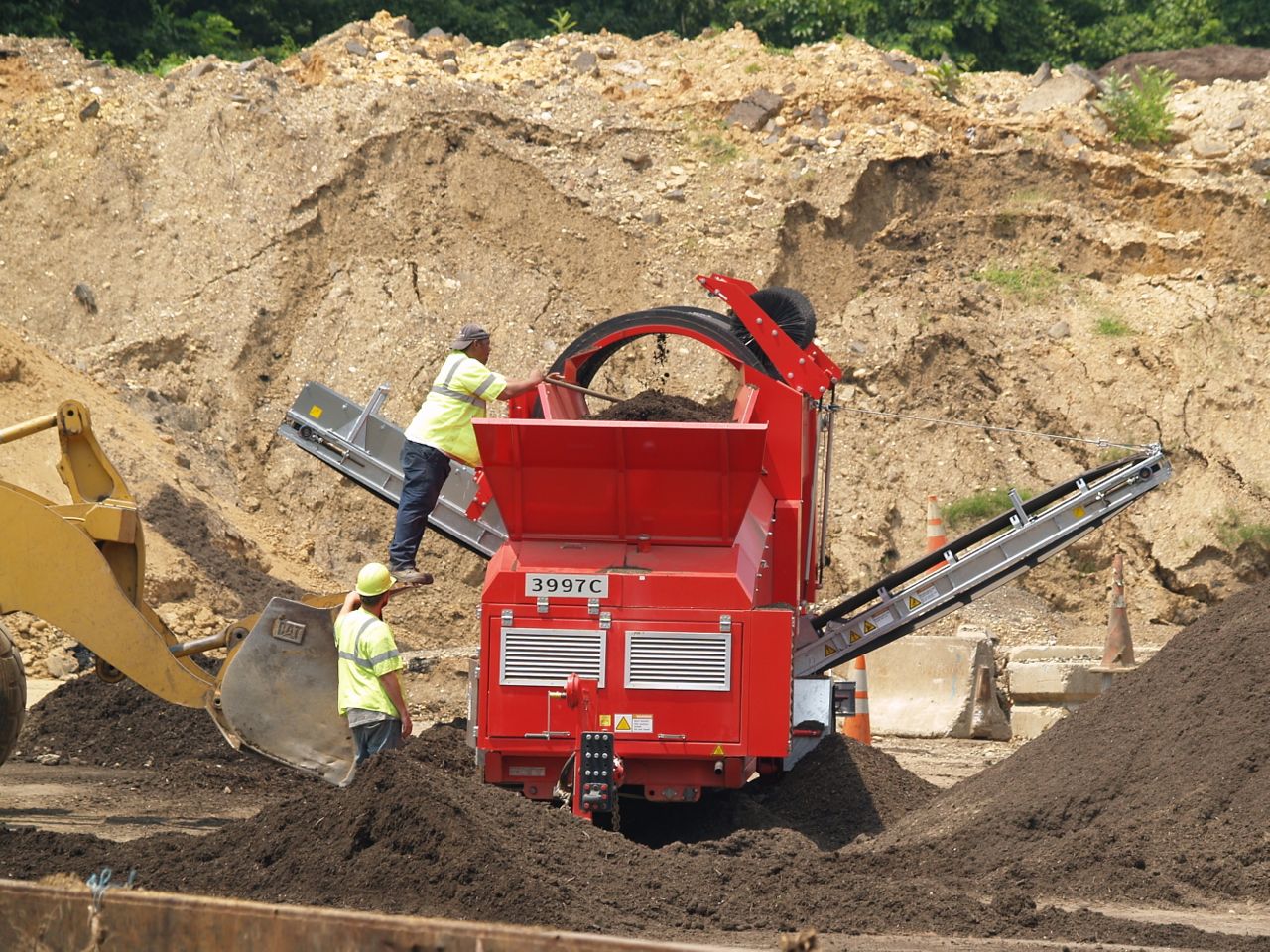
Material going into trommel screen for separation. The trommel screen sorts dirt and big aggregate.

Material going into trommel screen for separation. The trommel screen sorts dirt and big aggregate.

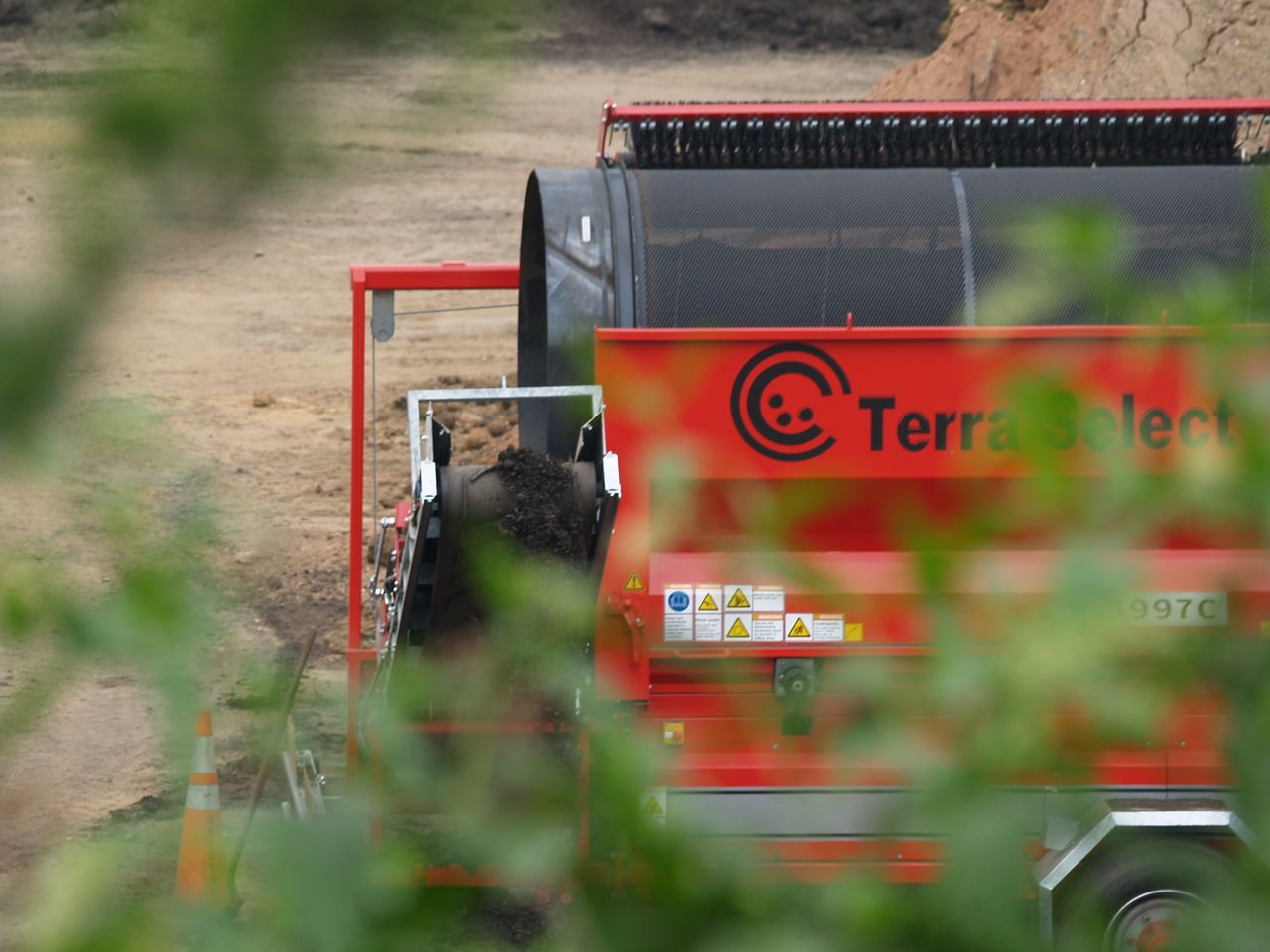
Material coming out of trommel screen after separation

Material coming out of trommel screen after separation

As is often the case, fixing a piece of equipment involves a guy standing on the bucket of a front loader using a pole to move things.

As is often the case, fixing a piece of equipment involves a guy standing on the bucket of a front loader using a pole to move things.

Rock and concrete after separation

Rock and concrete after separation

Dirt for separation by size

Dirt for separation by size

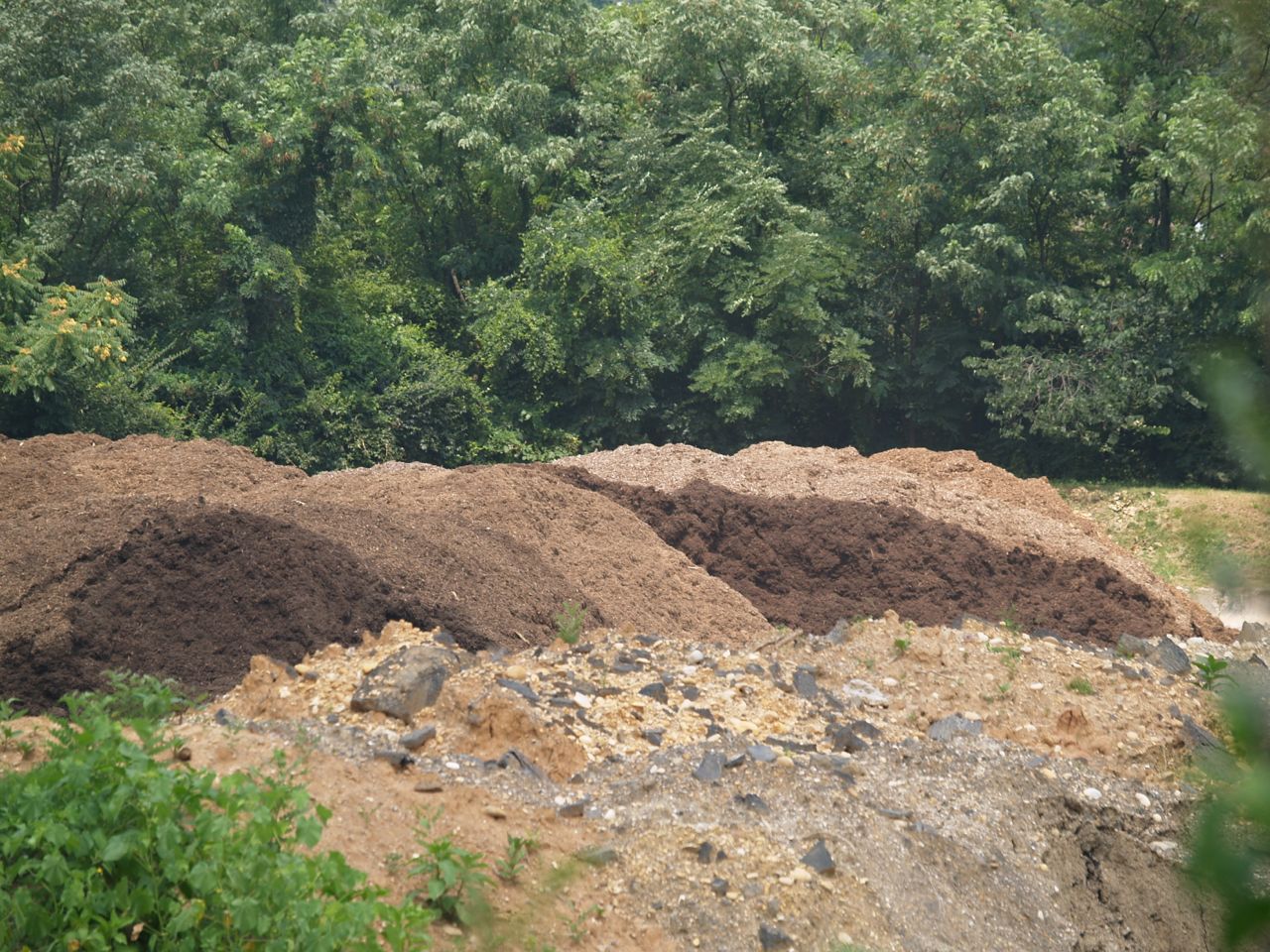
Leaf mulch product

Leaf mulch product

Wood mulch product

Wood mulch product

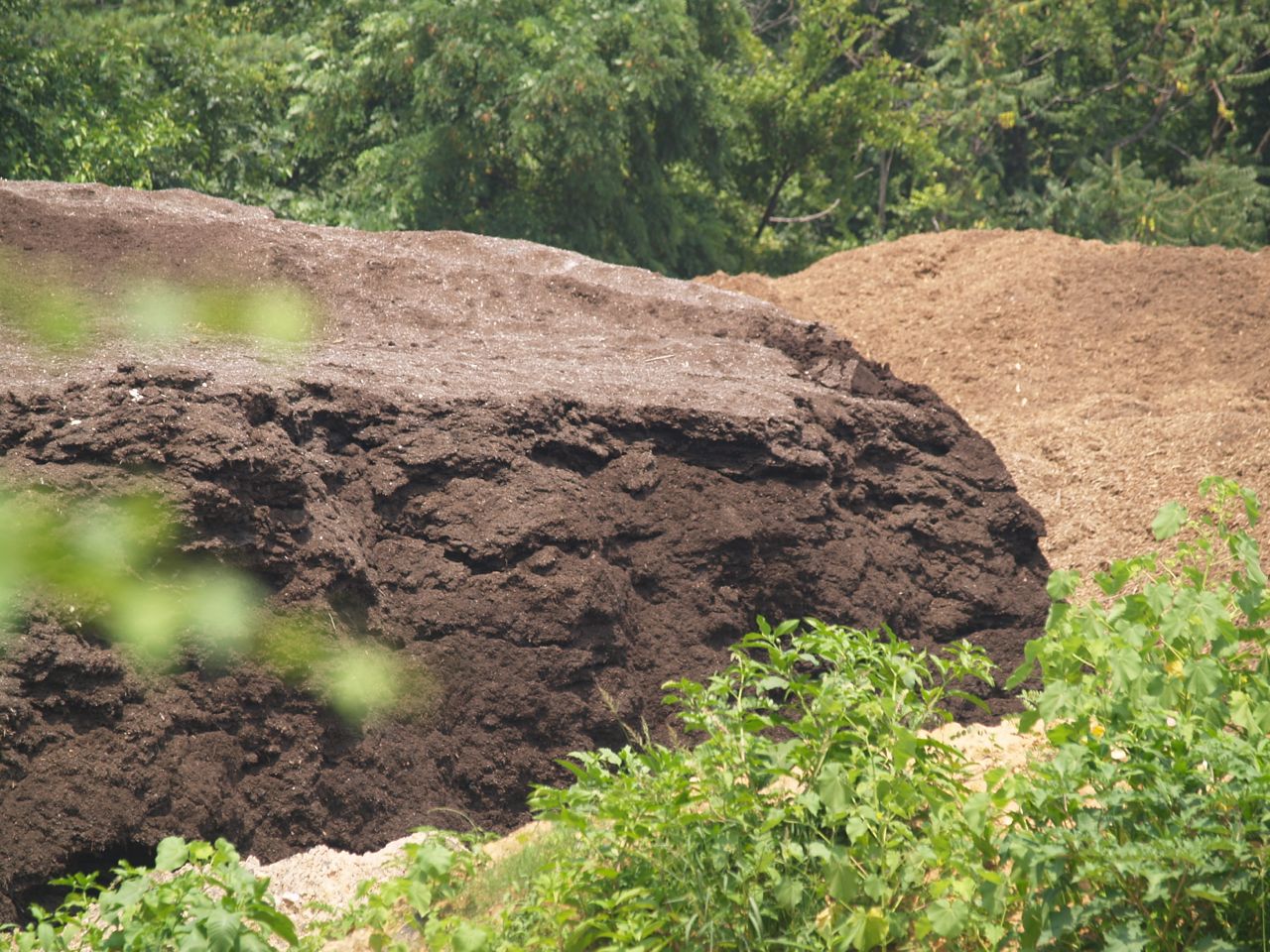
Yard waste mulch product

Yard waste mulch product

The plant uses the product dirt to create this vegetable garden. It had wonderful looking vegetables, and in the past, they have entered the vegetables in the county fair.

The plant uses the product dirt to create this vegetable garden. It had wonderful looking vegetables, and in the past, they have entered the vegetables in the county fair.

Engineering Party Decorations

My boss retired today. I am going to miss her very much. She was a great boss and a great coworker. There were projects on which I very much worked with her and not for her. She is very knowledgable, smart, and great at communicating science to non-scientists. My workplace is losing a great worker. My coworkers and I wanted to throw her a great party before she left. Somehow I ended up planning most of the party decorations. Most people would probably think a nerdy engineer would make a bad party decorator, and they most likely are correct. However my boss is a geologist, and I wanted party decoration that honored her and her work. Thus, most of the party decorations came from Home Depot. Yes, seriously. I wanted to go with a geology and engineering theme, so where else am I going to buy stuff? What kind of party decorations can you get at Home Depot? Read on.

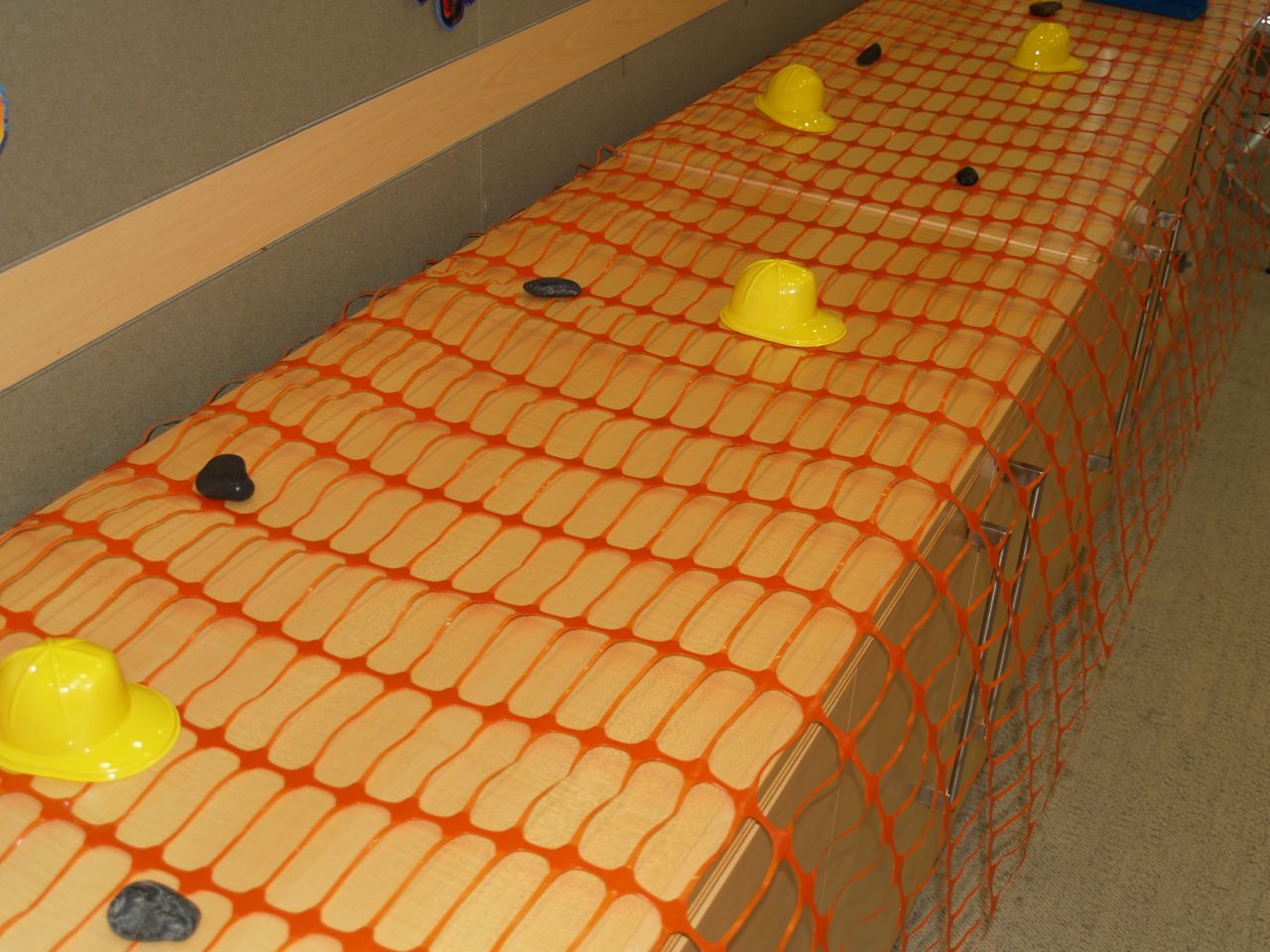
Safety fence table clothTable cloth made from orange safety fence. In some places, this is known as magic orange fence. It is “magic” because on one side of it, you need personal protective equipment (PPE) such as respirators, and on the other side, you are fine. Sometimes, the fence is just used to keep chickens, goats, dogs, etc. off the construction site. The table decorations are rocks and little yellow hard hats that coworkers found at various party and other type stores.

caution danger tape streamers

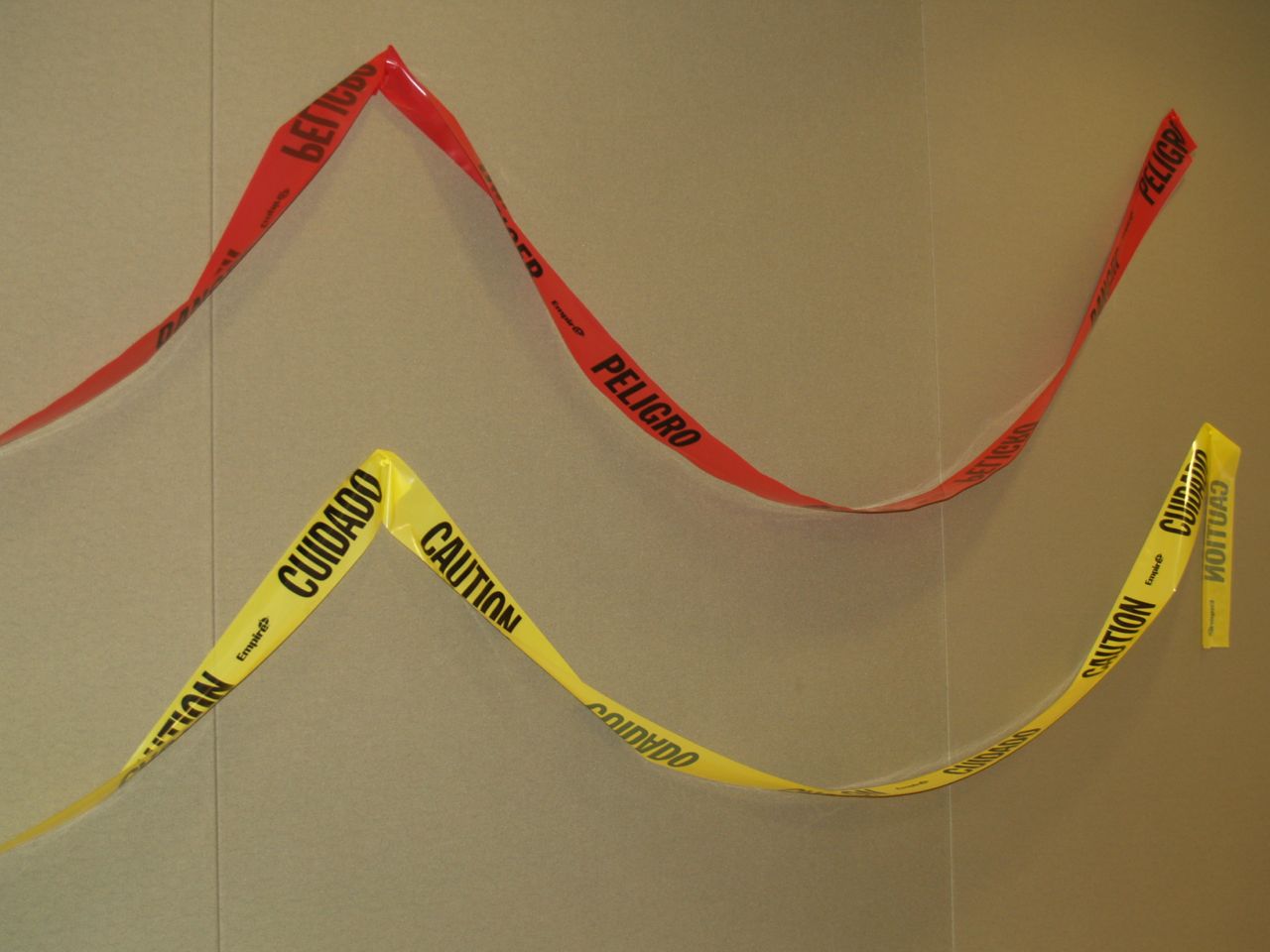
Streamers made from yellow caution tape and red danger tape.

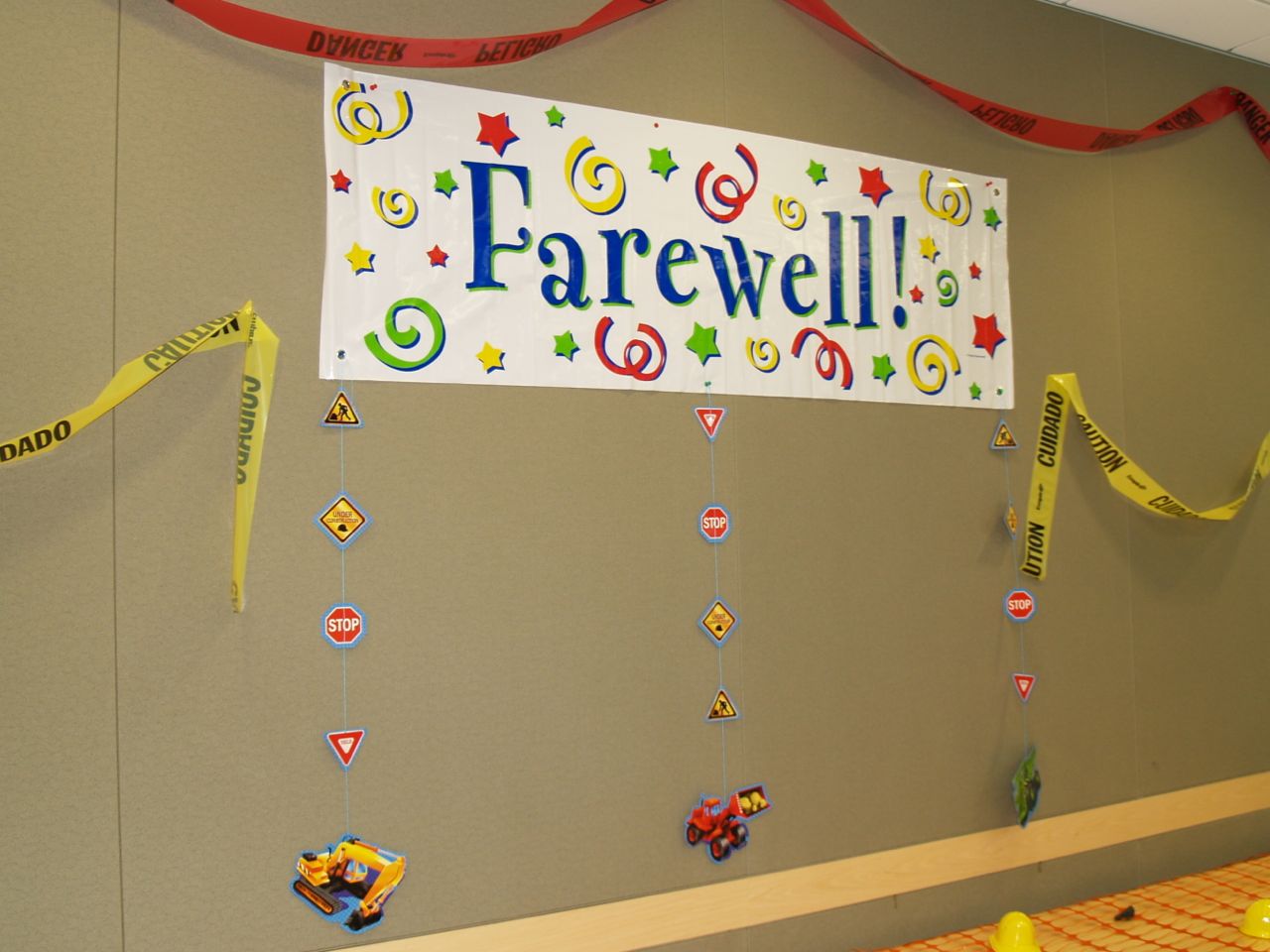
farewell bannerThe banner and construction equipment mobiles came from a party supply store. My coworker who bought them told me it was difficult to shop for my theme, but she found the construction equipment mobiles.

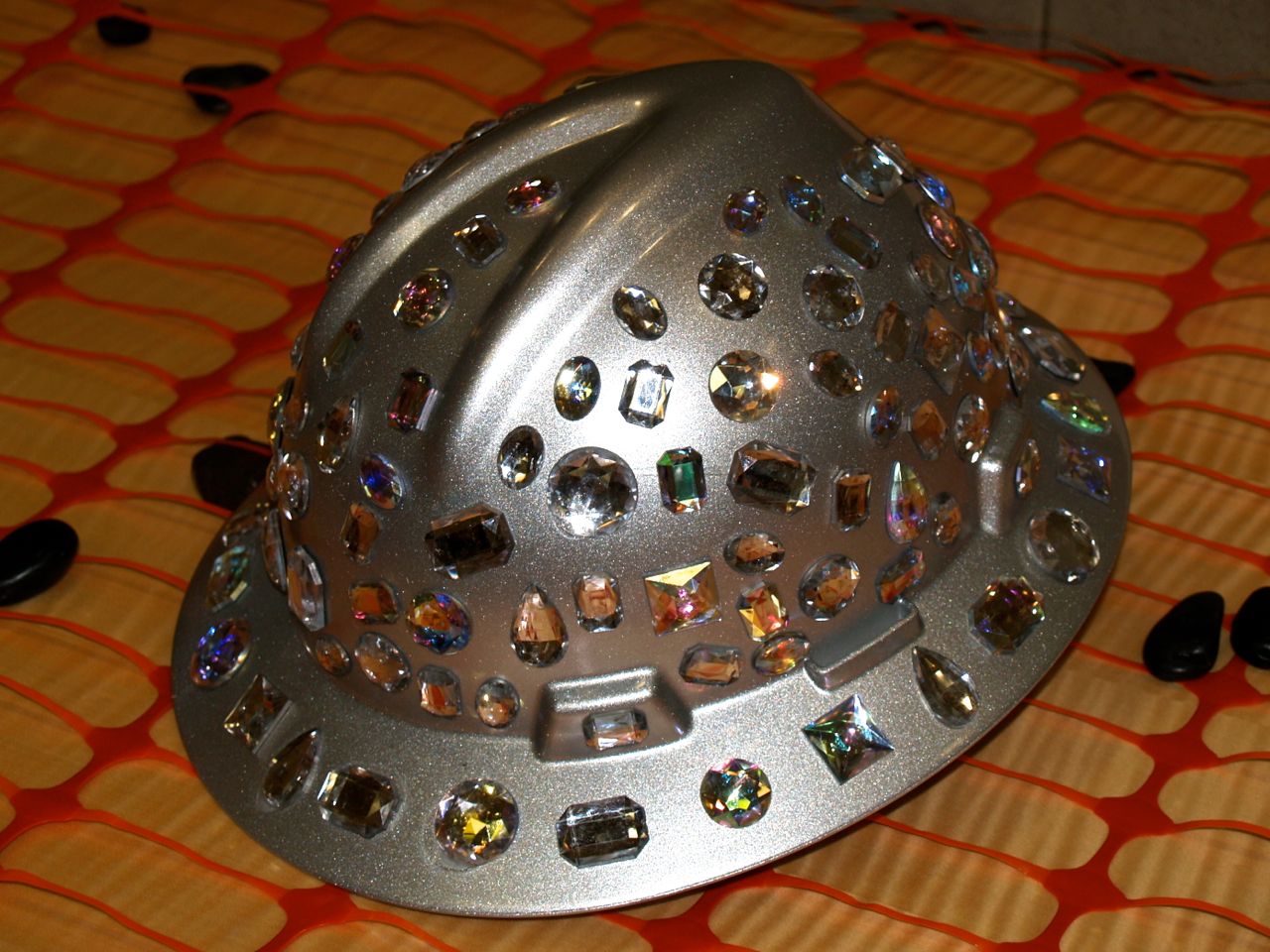
bedazzled hardhatThe coworkers in my branch and I decided to give our boss a few gag gifts. Someone suggested making our boss where a tiara for the party. I said it would be more appropriate for her to wear a jeweled hardhat, so I made this. It is a regular hardhat with four-point suspension that meets ANSI and OSHA standards. I just spray-painted it silver and then glued plastic gemstones to it. Just because you have to wear PPE doesn’t mean you can’t have style or bling.

After people looked at my decorations and hardhat, I was told several times today that I think outside the box. I take that as a compliment. My box is probably on another planet in fact.

Mu is Not U

Time for another blog post where I try to improve science grammar.

This is the lower case Greek letter mu: μ. This is the lower case Latin letter u: u. Latin letters are, of course, what are used in the English alphabet as well as many, many other languages. While μ and u look similar, they are different. The Greek letter mu, uppercase Μ, is closer to the Latin letter M. The Latin letter U (uppercase, or u, lowercase) is more related to the Greek letter Upsilon (uppercase Υ, lowercase υ).

So now that I got that out of the way, when it comes to science in particular, μ and u are NOT interchangeable. In the International System of Units (SI), otherwise known as the Metric system, μ is the symbol used to represent the prefix micro-. “μ” can easily be added into a document using a insert symbol compound. It is an easy procedure, and there is no need to be lazy and just use “u”. “u” does not mean micro-. It is wrong. Don’t do it.

Speaking to High School Students

I was asked to speak at The Washington Youth Summit on the Environment (WYSE) to a small group of the delegates about my career as environmental engineer/health scientist. The delegates are high school students. I’ve never done anything like this before, and I can’t remember the last time I’ve spoken to a group of high school students about anything. I was told to talk about my career and talk about specific projects on which I’ve worked. I prepared a few slides on the basics of risk assessment as that is the general field in which I work now and then quite a few slides on my dissertation and a few slides on the project I am currently working at work. I wasn’t sure what to expect. Would they be interested in this at all? Would my slides be interesting or too far over their heads? I took out what I thought were the more advanced and complicated slides and just focused on graphs and photos. I wanted to focus on the big picture.

Part of my problem with giving this presentation was, the more educated you become, the more you take for granted what other people know. At least, I have that problem. I have had so much math education including three semesters of calculus, differential equations, linear algebra, probability, statistics, and biostatistics, that I’m flabbergasted when I meet people who can’t do or understand basic algebra or understand what a square root is. Certainly, you can make an argument that this is a sign of the failure of the US education system, but people’s education level is what it is. If you want to explain something to someone, than you have to be able to explain it to them on their level. These are high school students, and I can’t expect them to know information that is not taught until college or after. Thus, I have a group of high school students that I need to talk to about the work that I do and the work I did to earn my Ph.D. I am not entirely sure how to do this. I don’t quite frankly remember what I knew in high school. I have no idea what these students know. I don’t want to bore and confuse them by talking at so high a level that they can’t understand me, but I don’t want to insult them by explaining things they already know.

I am really not sure how I did. The one thing I am fairly sure about is that I babbled and rambled a few times. I am really not the best speaker. I am not a bad speaker, but I do much better if I have a set text that I am reading or very specific things with high points written on slides. I didn’t do that for this talk because I wanted to be able to change what I was saying once I got there and started getting questions. They did ask me questions. They asked me great questions in fact. However those questions made me realize just how much I know and forget that other people don’t know. That is in no way meant to be an insult to these students. I was really impressed with them. Like I said, they asked great questions. Also, they were very polite and politely listened even when I am sure I started to ramble. I really appreciated their attentiveness, and I loved their questions.

For example, one of the first questions I got was on one of my first slides, which had the word epidemiology on it. I was asked “what is epidemiology?” This is probably where it hit me that I had no idea what they knew. It didn’t really dawn on me that some (or all) would not know what that word meant and what that science field is. Again, that is not an insult to them. If anything, I was annoyed with myself for not considering when I learned that word. I am glad I was asked the question. It gave me a chance to tell them about John Snow and the London cholera epidemic. I am fairly sure all epidemiology courses are legally required to start with a discussion on John Snow and the London cholera epidemic, so I had fun telling them about it.

I can’t remember all the questions I got, but I got quite a few. I loved this because that meant the person asking the question was listening and engaged. When I describing issues related to soil and groundwater contamination, I got a very simple question as to how these chemicals get into the soil and groundwater. I LOVED this question. I can’t describe all the reasons why I loved this question, but one is because I am an engineer, and I get frustrated when people think we build things and then no maintenance is ever needed. Bridges in the US keep falling down, and the American Society of Civil Engineers gives our infrastructure a D+ grade. One of the reasons is lack of maintenance. I got to explain to the students about maintenance and inspections and things simply not being designed or built to last forever. I also explained how decades ago, people used to just dump chemicals in the ground or water and never think of the consequences.

I also got some questions of how to find out more information on different topics and things I discussed. They wanted to know more. As I always want to know more, how could I not like these students? I hope some of them already have or are now on the internet reading more about the topics I only lightly discussed. Maybe one day I will meet them again professionally.

Solar Impulse

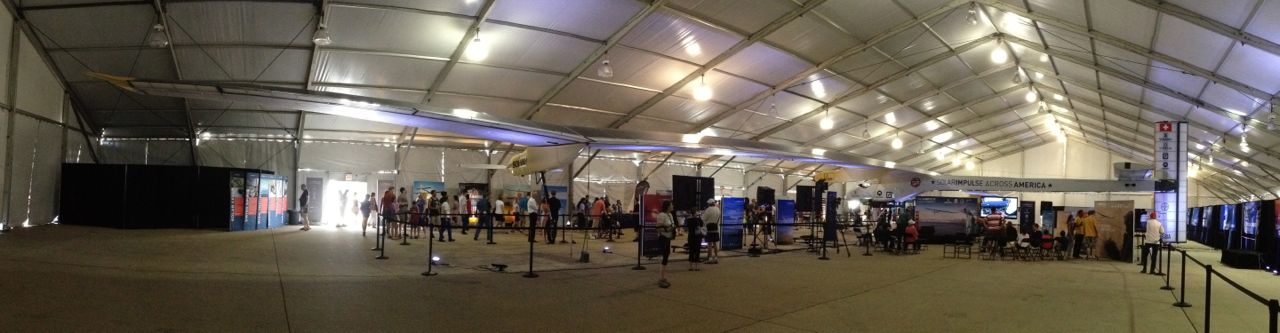
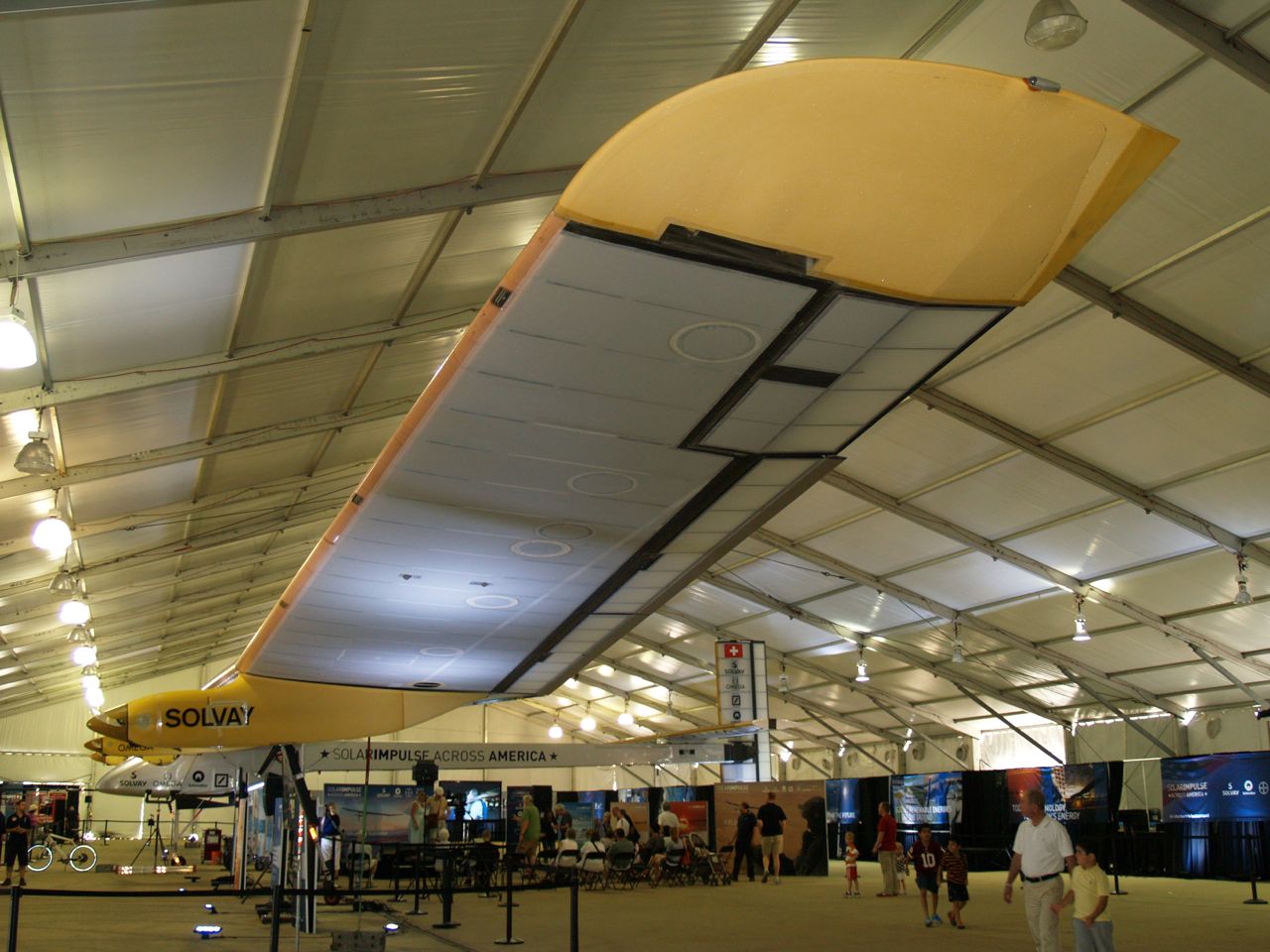
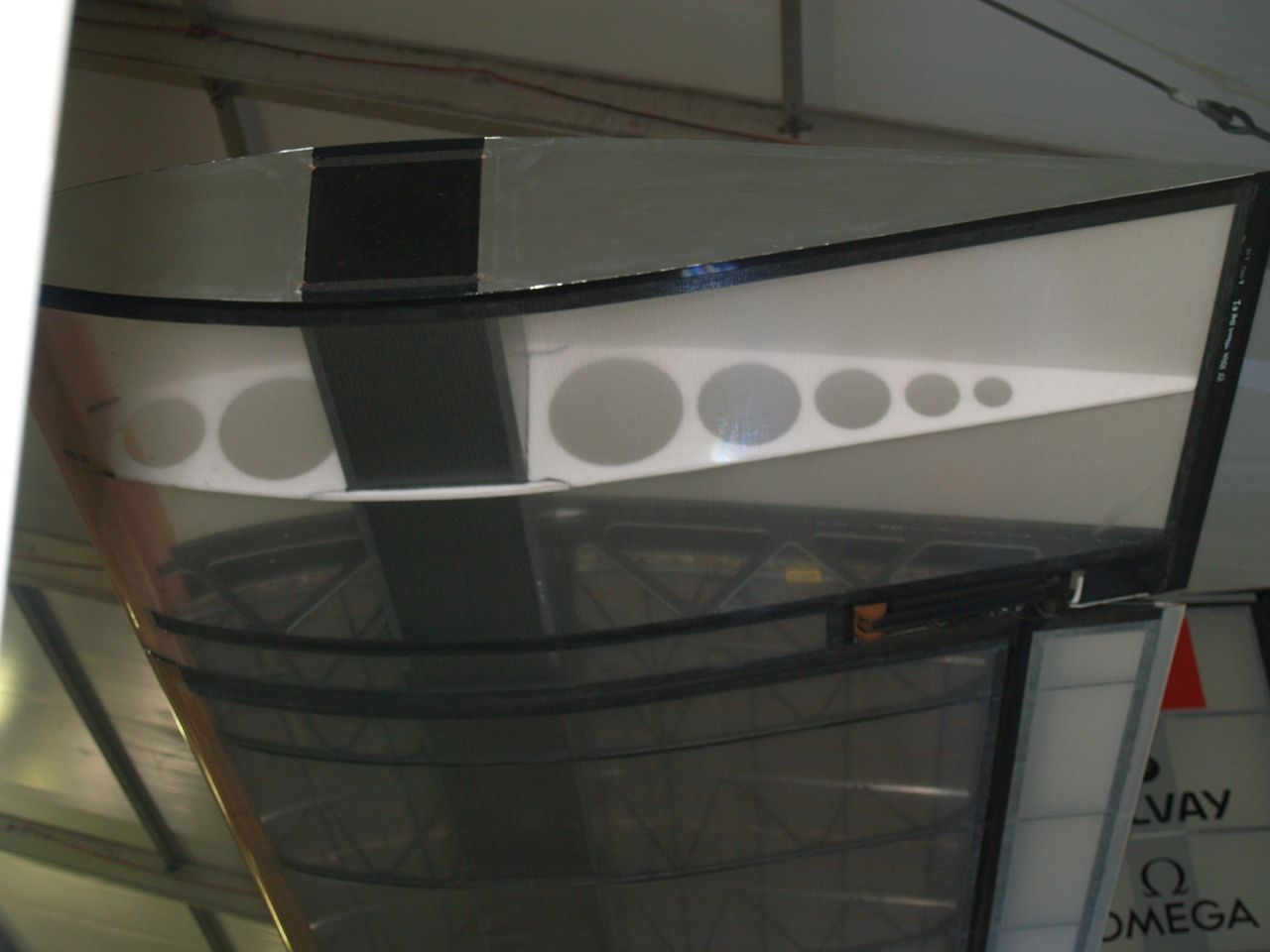
Solar Impulse, the solar powered plane that can store enough energy to fly through the night, is currently at Udvar-Hazy Center. The plane is a marvel of engineering both from the standpoint of being able to collect enough solar energy during the day to power itself all day and through the following night but also from the standpoint of being light enough in weight that it needs very little energy to keep it flying. I went to see it while it was open for public viewing Saturday, and from an engineering perspective, it is just beautiful. When viewed in person, you can see how the plane is covered in high strength fabric. In the back stabilizer, you can see the internal structures that give the stabilizer its shape. It is just an amazing vehicle. Note: If you click on any of the photos, it will open up larger in a new page to allow a better look.

front panorama of Solar Impulse

front panorama of Solar Impulse

Side panorama of Solar Impulse

Side panorama of Solar Impulse

Solar Impulse cockpit and middle two propellors

Solar Impulse cockpit and middle two propellors

view down the wing span

view down the wing span

Tail and stabilizer

Tail and stabilizer

View of stabilizer from side showing internal support

View of stabilizer from side showing internal support

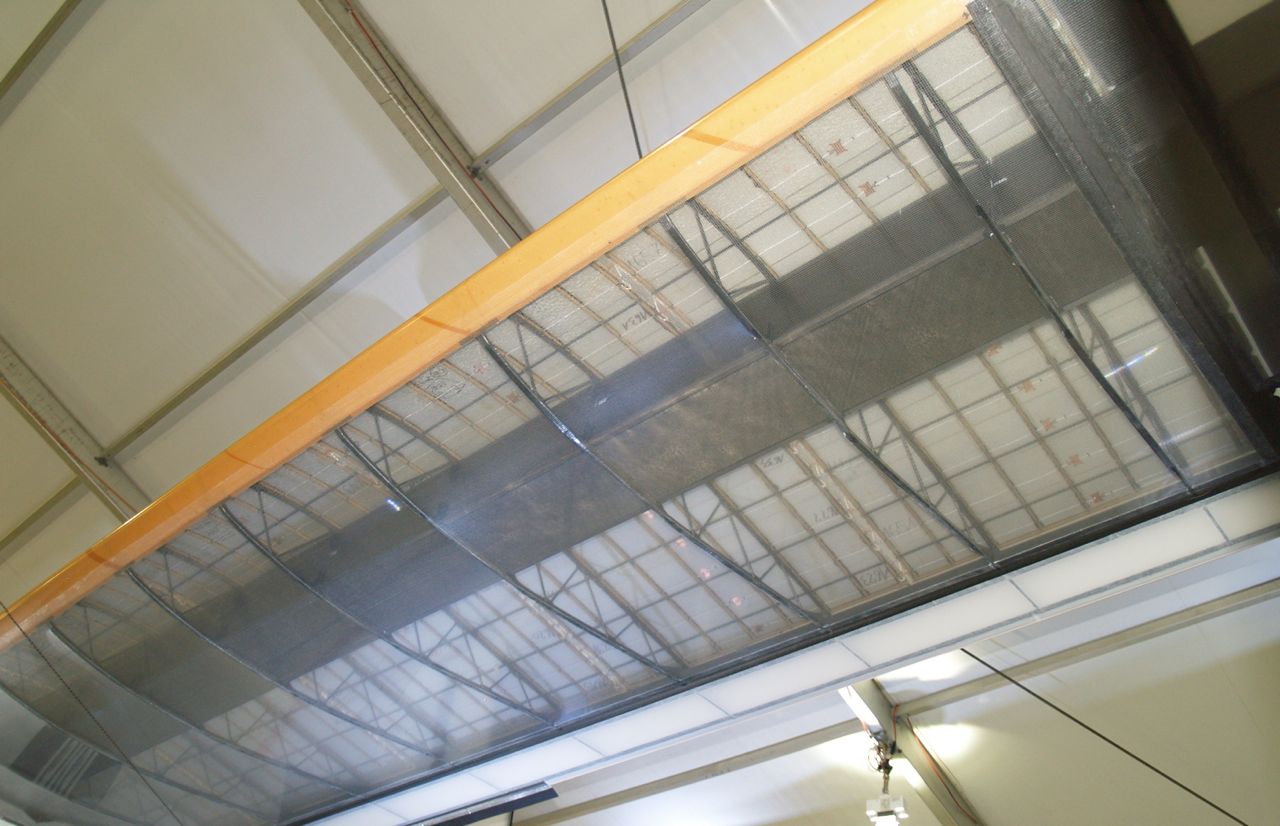
View from below stabilizer showing internal supports and photovoltaic cells above

View from below stabilizer showing internal supports and photovoltaic cells above

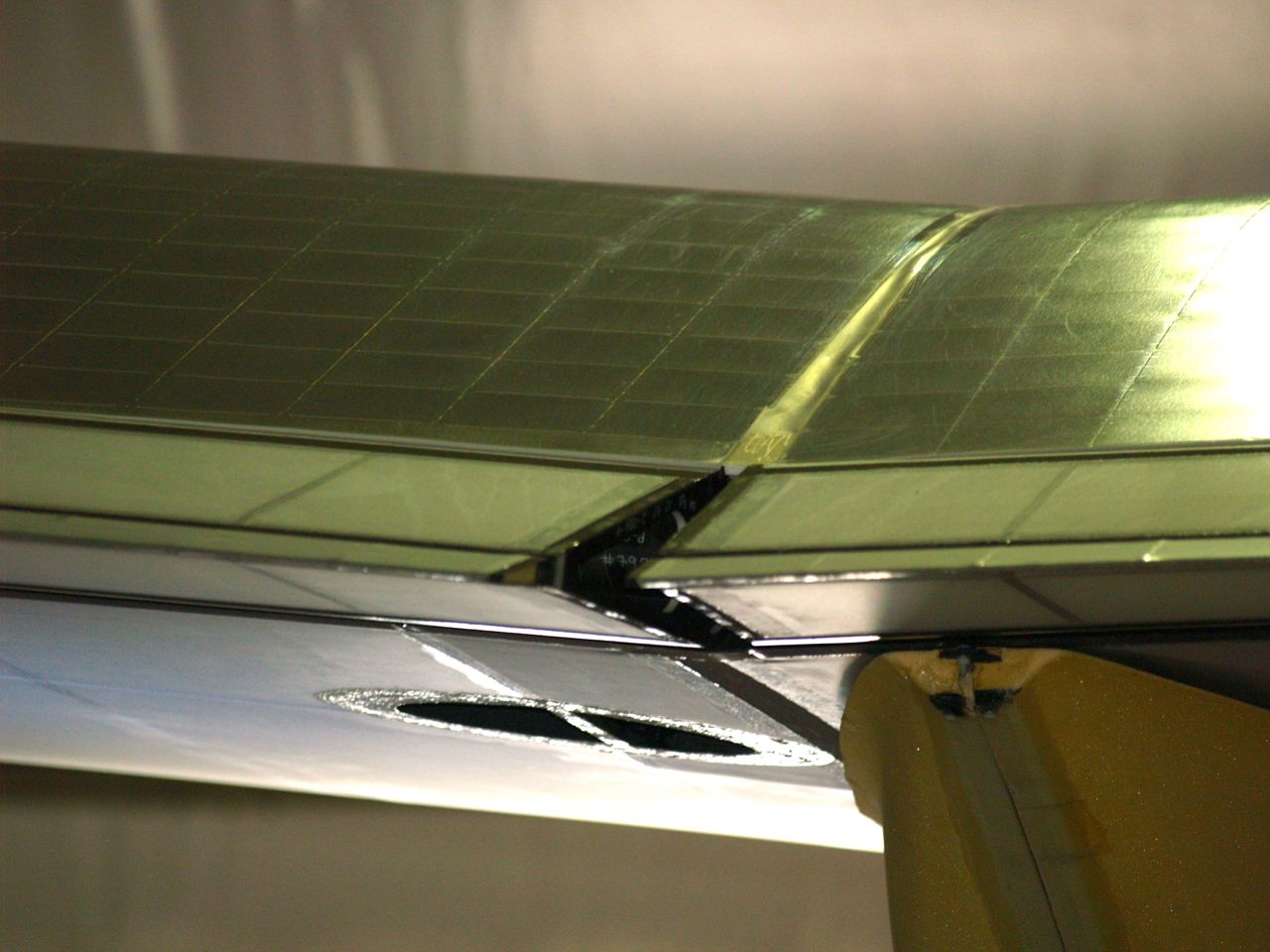
Solar Impulse wing flaps with photovoltaic cells on top

Solar Impulse wing flaps with photovoltaic cells on top

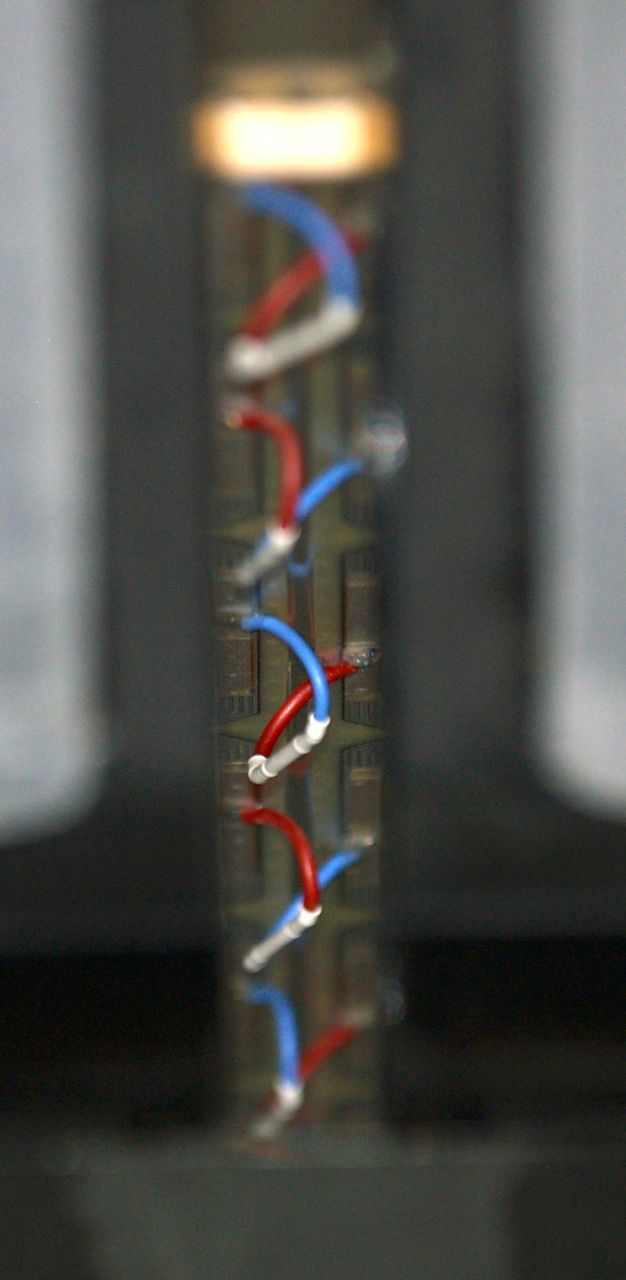
View between wing flaps using my zoom lens to show wires connecting photovoltaic cells

View between wing flaps using my zoom lens to show wires connecting photovoltaic cells

Giant Shiny Ball Play Thing

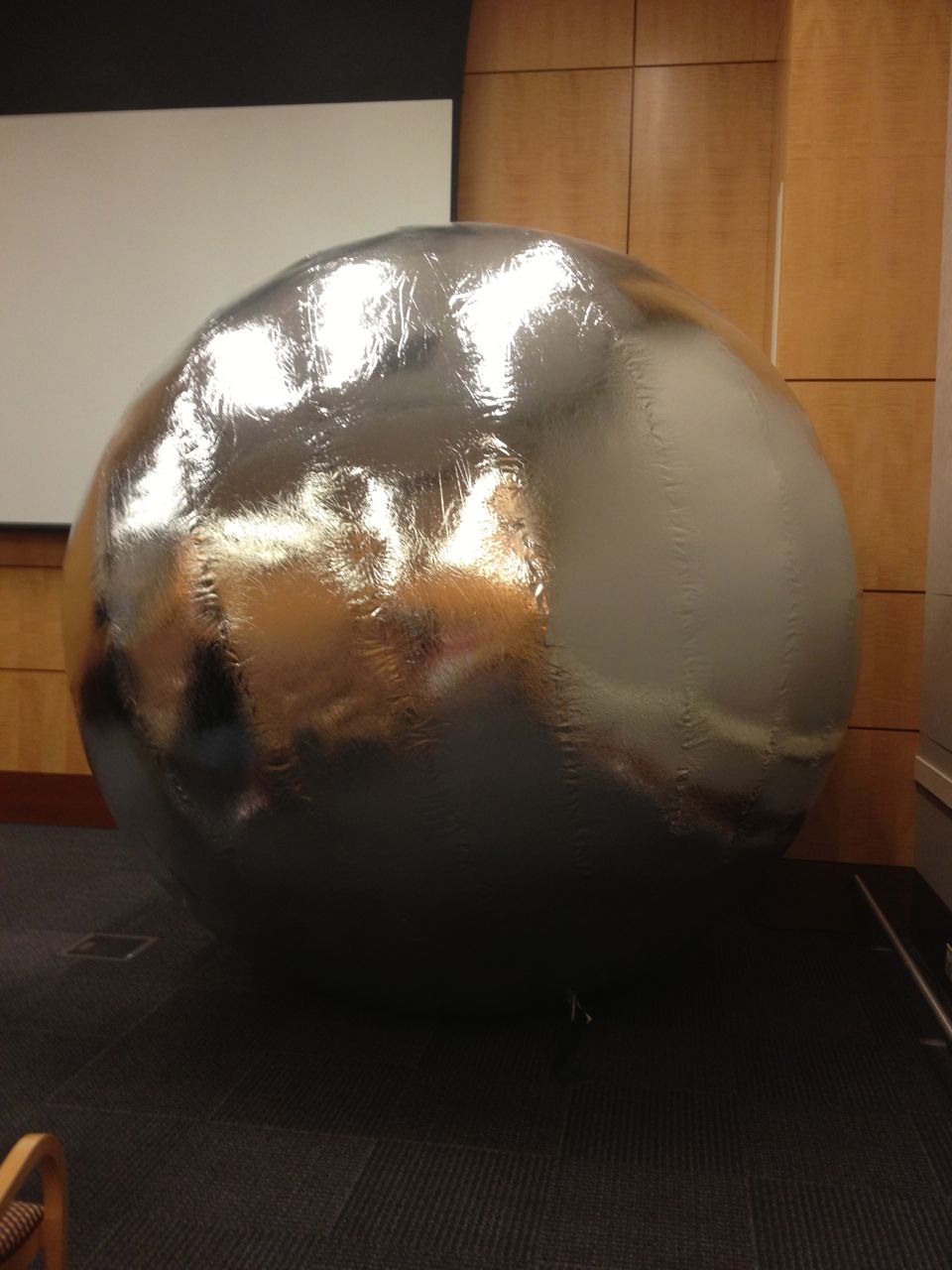
Last night, I went to Cultural Programs of the National Academy of Sciences (CPNAS)‘s D.C. Art Science Evening Rendezvous (DASER). It is a monthly discussion forum on art and  science. They always have interesting speakers, and it is one of the cool things about living in the DC area. Anyway, last night upon walking into the room right before the program began, I was immediately intrigued by this enormous sphere siting in the corner of the room, which I dubbed the Giant Shiny Ball Play Thing.satelloon

I had no idea what this thing was, and there was no mention of it in the program. I envisioned the amazing game of beach ball toss that a large crowd could play with it. The Giant Shiny Ball Play Thing was seriously one of the coolest things I had ever seen, and I wanted one. Sure it was probably about 10 feet in diameter and would never fit in my house. Even if it did fit in my house, putting a shiny inflatable ball in the same house with my cat and her claws would not end well at all.

I finally found out that the Giant Shiny Ball Play Thing is a reproduction of a satelloon. Greg Allen, one of the speakers, had it fabricated as part of his Exhibition Space exhibit. A satelloon is satellite balloon, of course, and I’m going to bet that either an engineer or scientist came up with that name. NASA made satelloons for Project Echo from 1956-1964. I am not going to describe the whole history because Greg Allen has a great summary of the project and the amazing satelloons. If you want even more history, you can read about it straight from NASA. The history is fascinating.

Thus the Giant Shiny Ball Play Thing is really a symbol of some incredible science and engineering history. I still want to play with it though. Also, I took a fun self portrait of myself in the satelloon.

satelloon and meThere, dear readers, now you know what I look like.

Finally, if like me, you can’t get enough of the Giant Shiny Ball Play Thing, Heather Goss created this fun Vine video of it being deflated.

Kilograms Do NOT Measure Weight

I think like many engineers, one of the reasons that I liked the idea of going into engineering was the mistaken belief that a career in engineering meant working with numbers and not having to write. I have never been very good with words. I love numbers. Numbers make sense to me. Words confuse me at times. Also, the English language in general makes no logical sense to me, and I am a native English speaker. [Well, I’m a Southern, so you can go ahead and make an argument against the native English speaker part.] I can’t spell worth crap because of the aforementioned English language illogical thing. This is actually fairly common among engineers. Had my family known the warnings signs, it would have been obvious since I was about 5 years old that I was destined to be an engineer. I have always been good with numbers, and I can’t spell worth crap. Take note parents, as these are the warning signs your child may be an engineer. Also, an early love of duct tape.

I am fairly good with grammar though probably because there are more rules and less exceptions. Partially because of this and for other reasons, at my current job, I often edit other people’s documents not just for science and engineering accuracy but also for grammar, readability, and clarity. I have also been a peer reviewer for a few manuscripts submitted to scientific journals, and previously, I used to edit manuscripts that were about to be submitted to peer review journals. I keep coming across certain words and phrases that are scientifically and grammatically incorrect. There are many grammar style manuals that exist, but I have yet to come across a science grammar style manual. If one exists, I would love for someone to point me to it. So I’ve decided to start writing about some of the most common and inappropriate phrases in the hope that maybe it will stop at least one one person from using these incorrect phrases.

The most common and completely wrong phrase I see is stating that something or someone weighs a certain number of kilograms. Ironically, non-US citizens, i.e. people who live in a country where they use the metric system, are just as guilty of this phrase as US citizens who sort of have the excuse that they live in a country that refuses to stop using the completely archaic and impossible to use if you are a scientist or engineer, English imperial or US customary units. For the benefit of everyone who doesn’t understand why this is wrong, let me explain why it is.

A kilogram is a unit of mass. Mass is the amount of stuff that an object has.

To say something weighs something, you are saying it has a certain amount of weight. A weight is a specific type of force, and because it is a force, weight, like all other forces, is measured in Newtons (N) in the metric system. Weight is the amount of force on an object due to gravity. Therefore, weight is the mass (the amount of stuff) multiplied by the acceleration due to gravity. If you happen to be a person on Earth with a mass of 70 kg, then since the gravitational acceleration on Earth is 9.81 m/s2, you have a weight of 687 Newtons (N). Let’s say you happen to be an astronaut, and the Moon program gets revived, and you go to the moon. Your mass will not change. Your mass will still be 70 kg, but once you arrive at the Moon, your weight will be about 114 N because the Moon’s gravitational acceleration is 1.63 m/s2. While you are on your journey to the Moon in space, there will be no gravity, so you will have no weight. You will be weightless, hence the fun videos of astronauts floating, but you will still have the same 70 kg mass.

To review, a person or an object has a mass that can be measured in kg. A person or an object that is on any celestial body with gravity has a weight that can be measured in N. It is completely incorrect to say that a person or an object has a weight in kg. It is also confusing. Does it mean you have a mass in that number of kg? Does it mean you have a weight in that number of N, not kg? Please, don’t use kg and say weight. Mass and weight are not interchangeable. They do not mean the same thing.