NY Transit Museum

As should be completely obvious from the name of this site, I am in fact a geek. Specifically, I am a geek about about all things science and engineering. I visited the New York Transit Museum on my most recent trip to New York City, and I loved it. I can see how if you are not a geek or into mass transit, you might not enjoy it. The museum is housed, quite fittingly, in an abandoned subway station in Brooklyn.
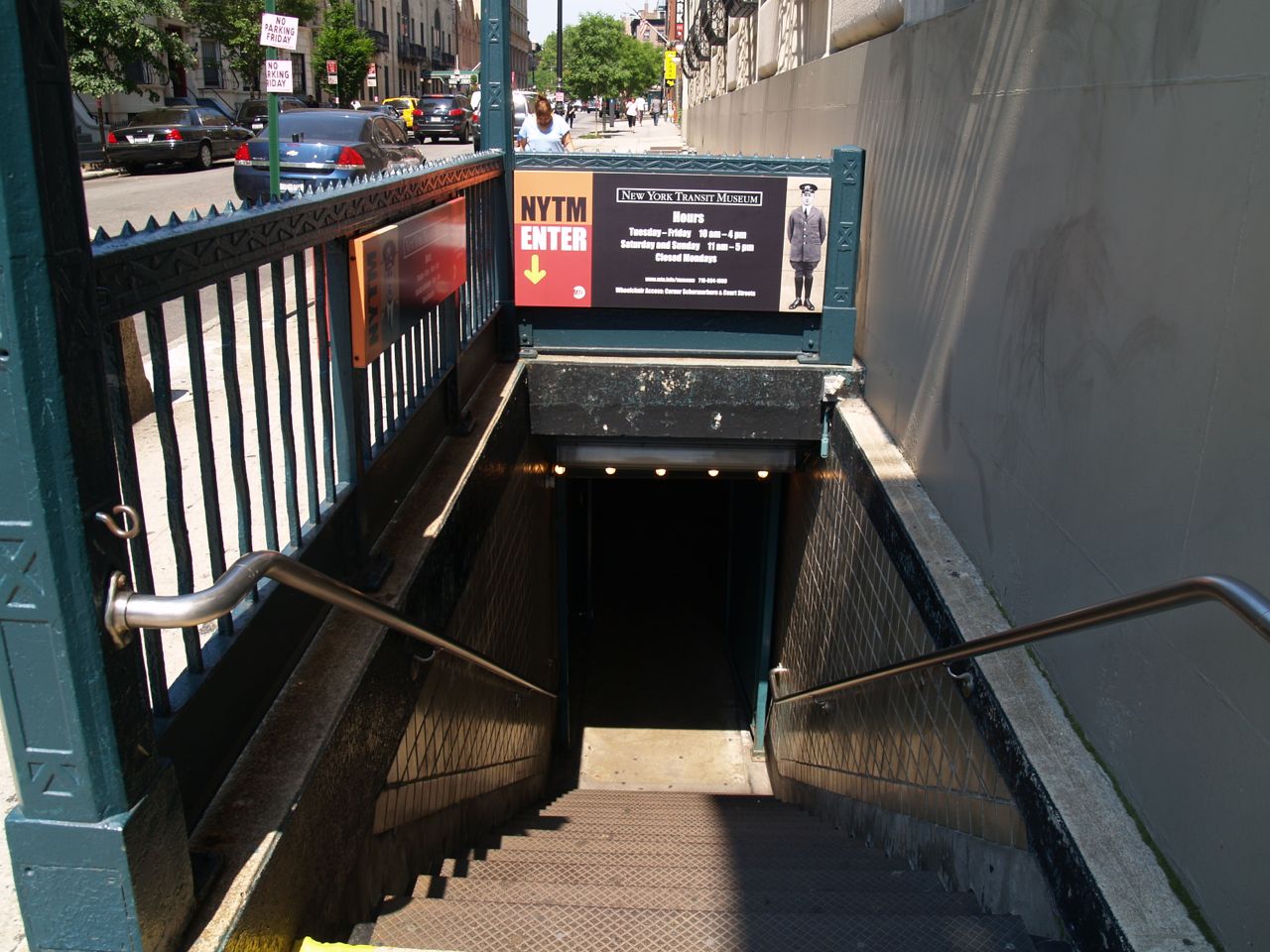
NY Transit museum entrance

The museum starts with exhibits on how the subway tunnels were built. It does a really good job of portraying the amazing work and hardships the workers endured and how they had to fight for the pay they deserved. We now have modern tools, tunnel boring machines, and much stricter safety standards. They for the most part had picks, wood, concrete, and brute strength. It has some exhibits of the tools used including surveying tools. I took surveying in college, so I went into geek mode when I saw the below exhibit. I used a transit in surveying, but it was a more modern one. [Modern surveying is done with a theodolite, but you have to learn the basics first with a chain, transit, and plumb.] Next to the transit in the photo is a linked chain. It is labeled as a surveying chain. Personally, I think they should label it more properly and specifically as Gunter’s chain, which by the way is 66 feet long, and the tool by which much of United States and other countries were originally surveyed. I had never actually seen a Gunter’s chain before, so I enjoyed seeing one. In surveying I learn to throw a chain and survey with a “modern” chain, which is a steel tape type chain.
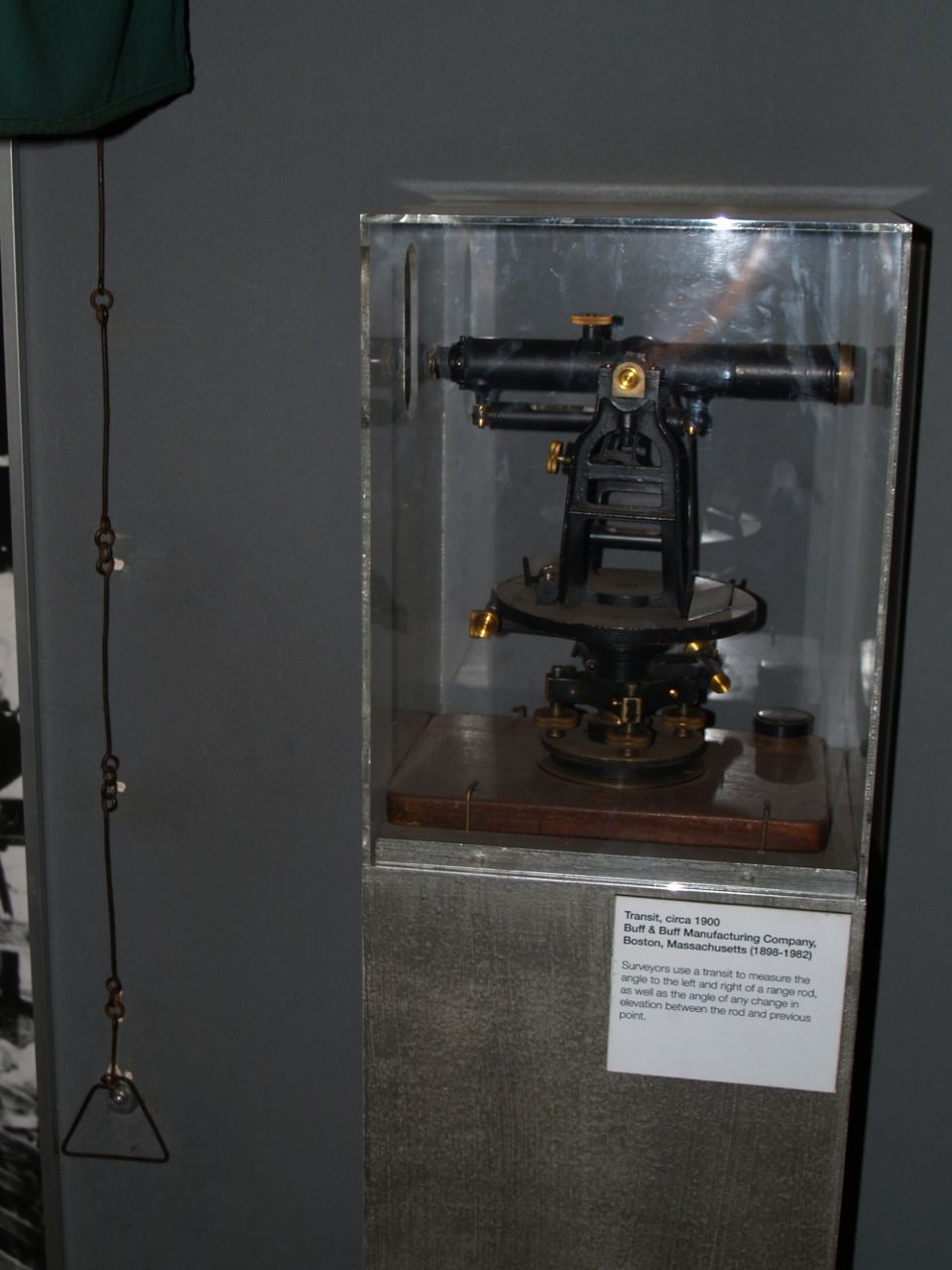
surveying tools

It has exhibits on how the subways are powered, including information on electricity generation and transmission.
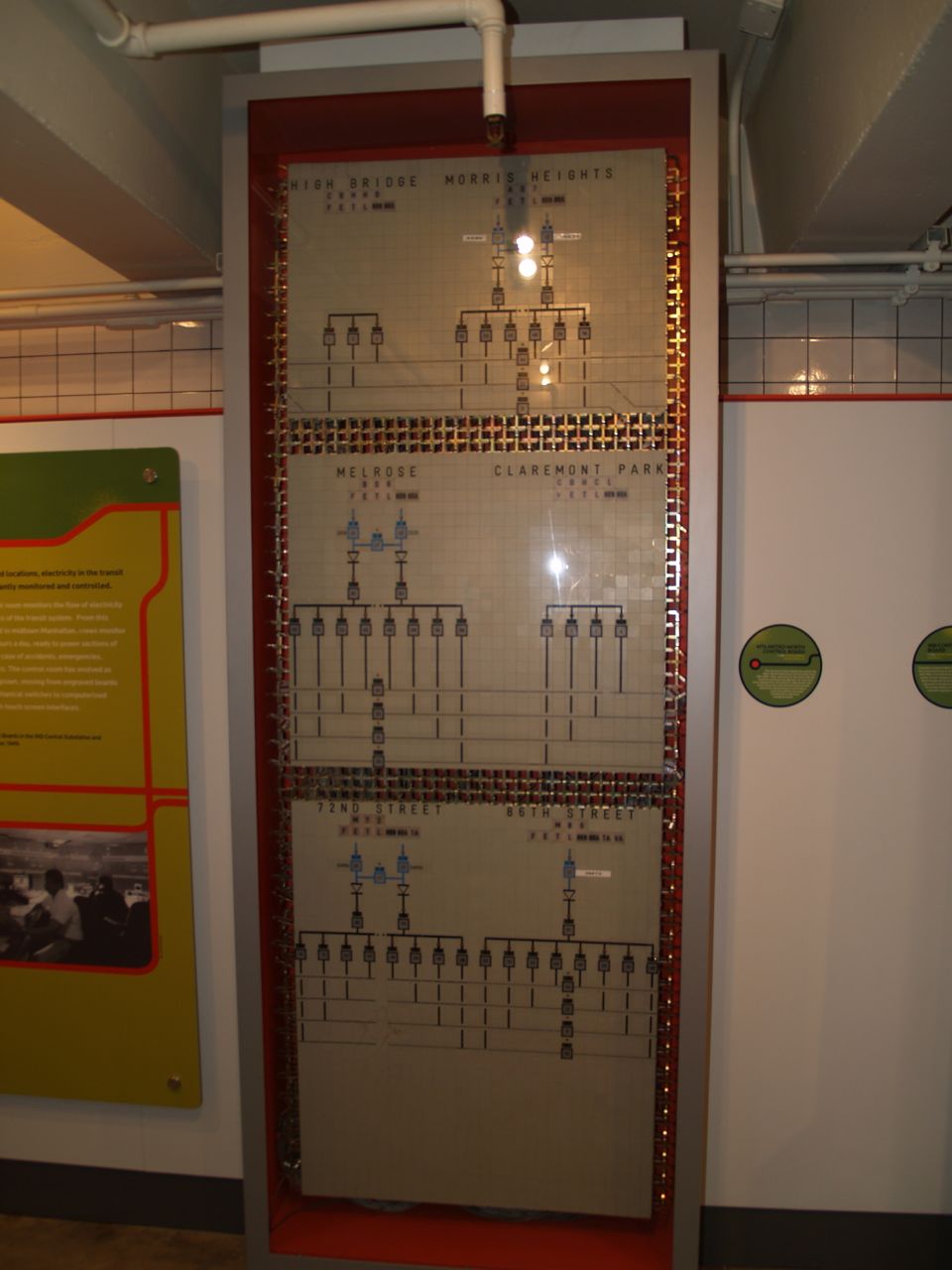
electricity grid map

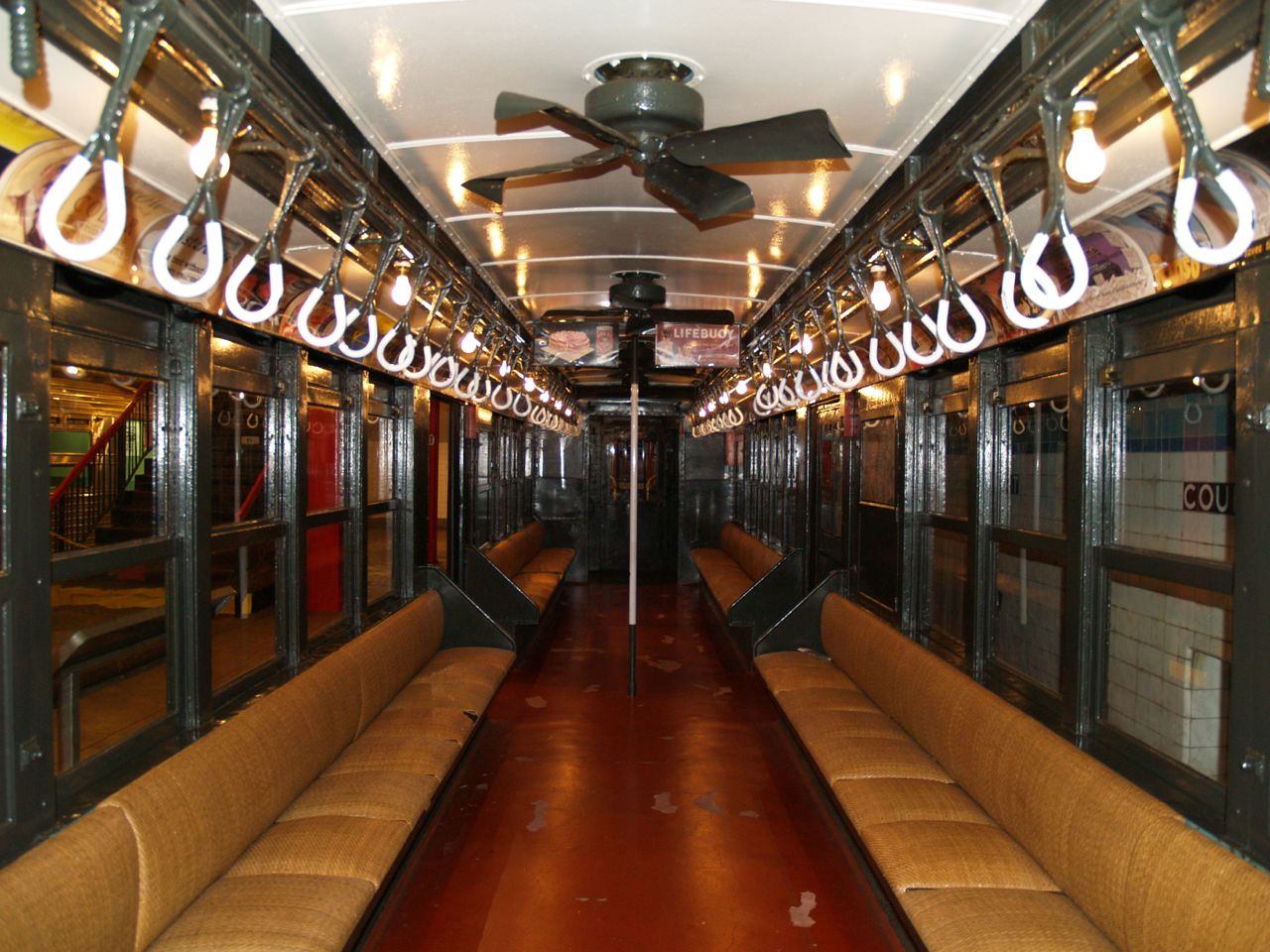
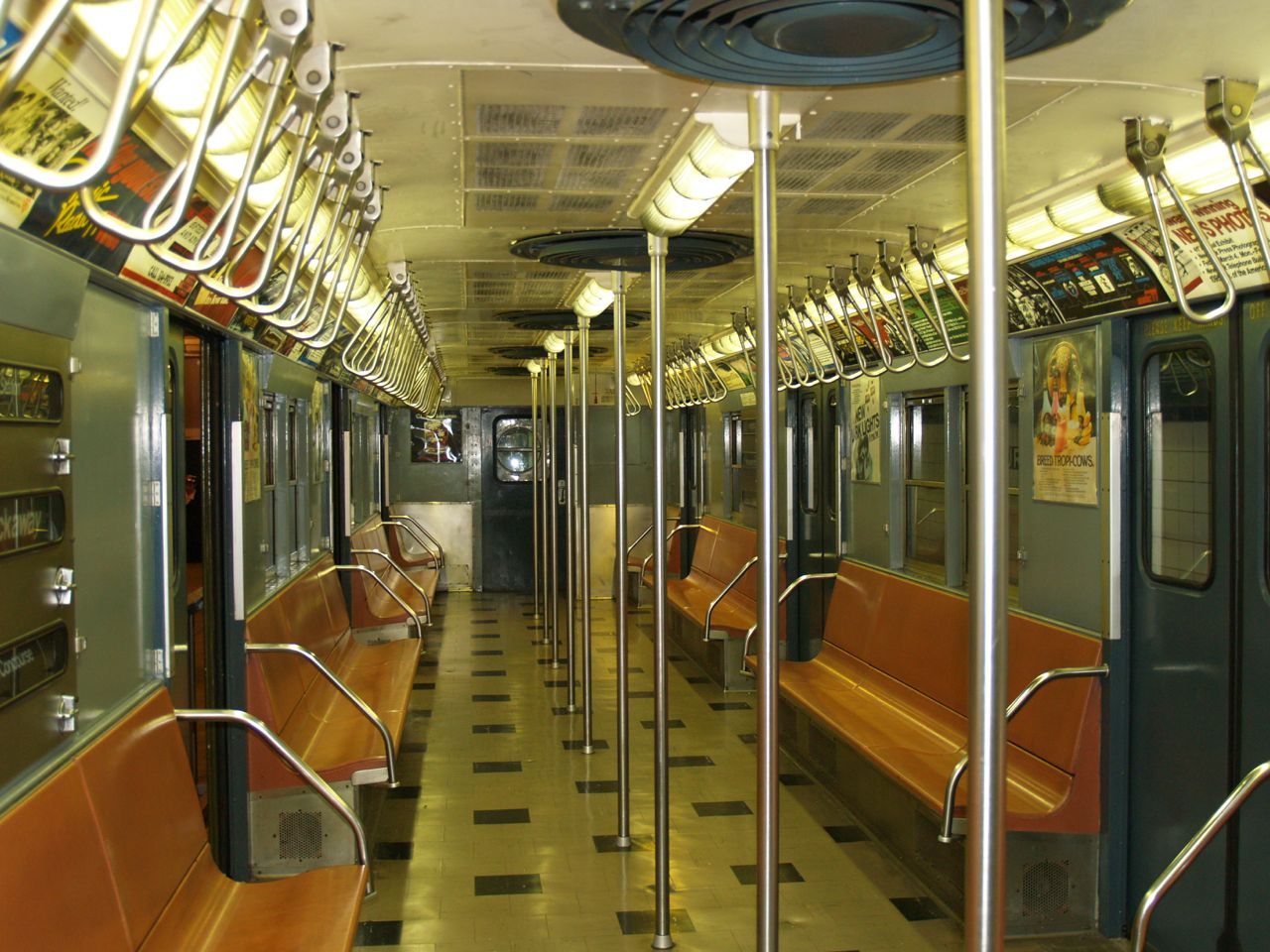
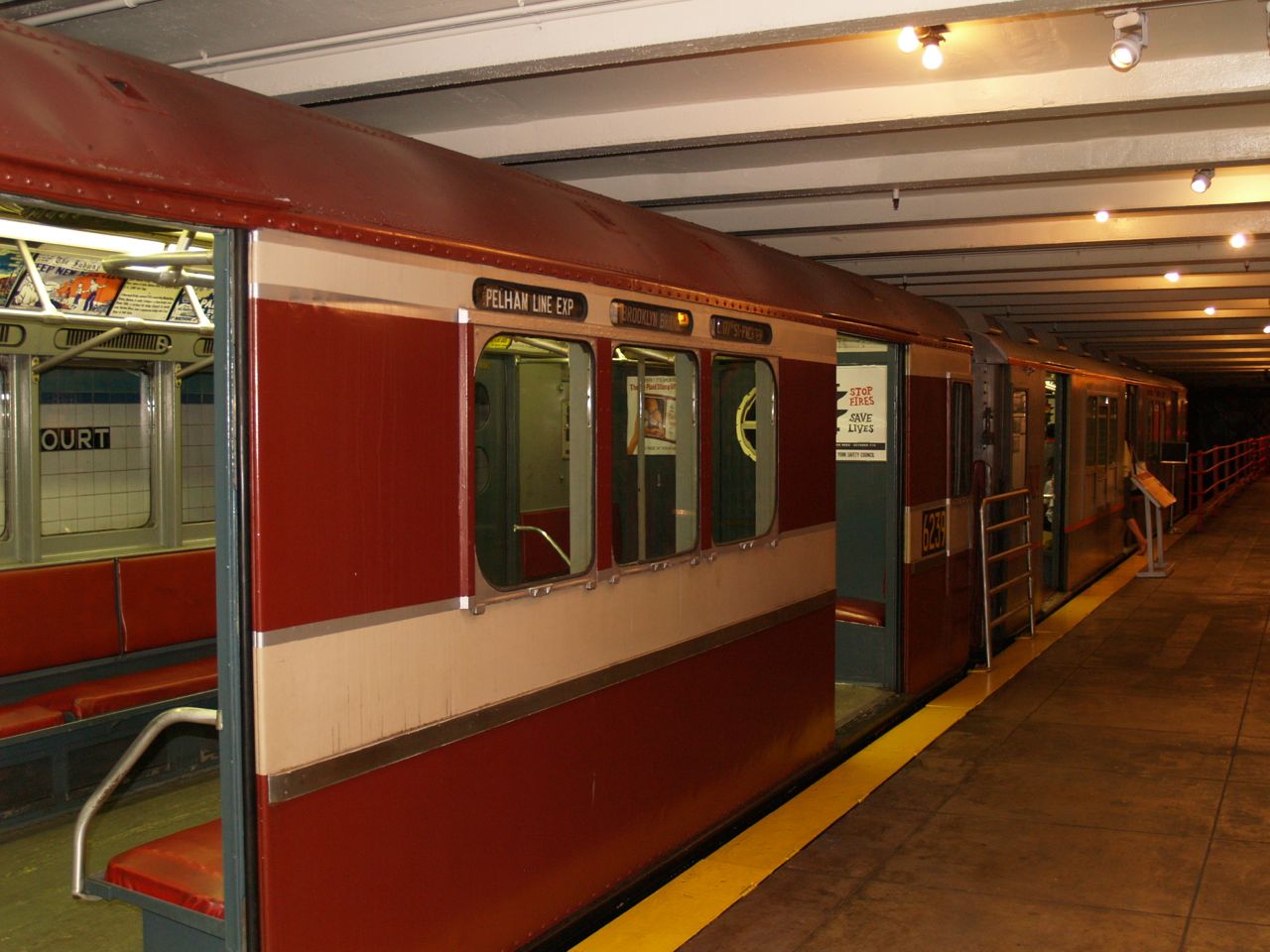
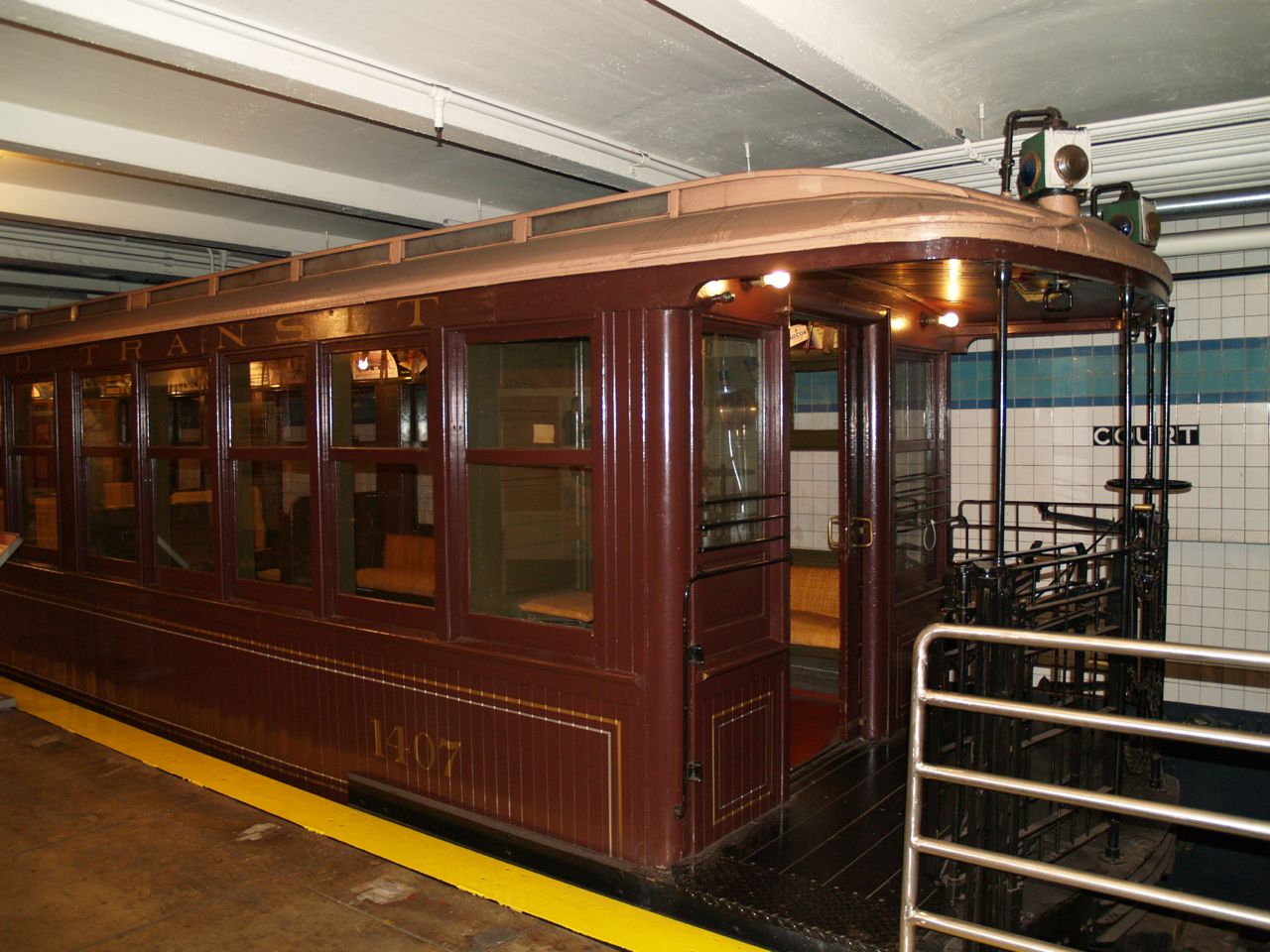
It has a history of mass transit in New York City, including the various forms of mass transit starting with horses. It also has exhibits on buses, and when I was there, it had a special exhibit on the past Miss Subways, which I had no idea had been a thing. They used to have a beauty pageant for everything I guess. As it is housed in an old subway station, on the old station platform, they have several old subway trains from the first models up to modern ones. You can walk through them, which is kind of neat.
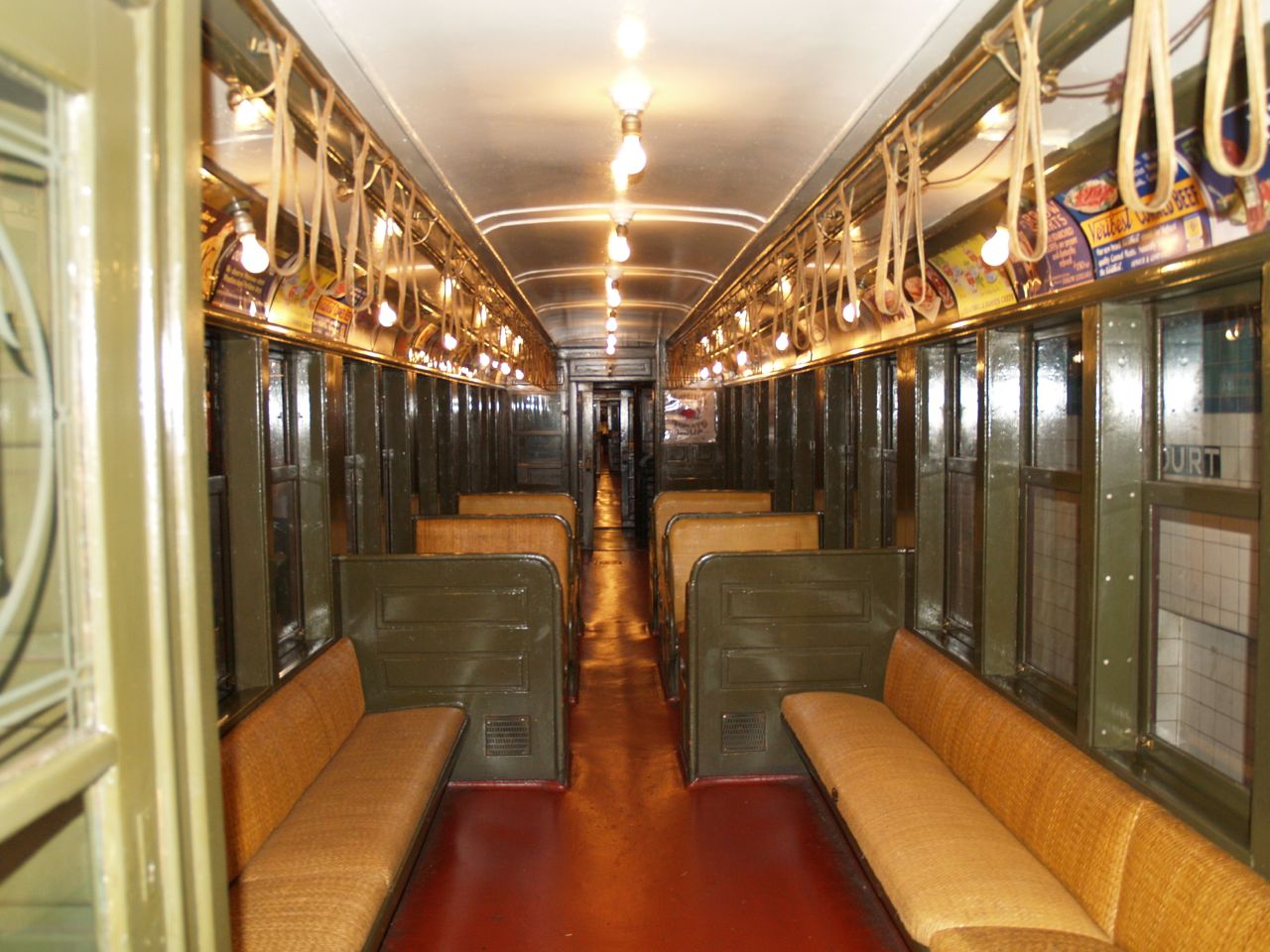
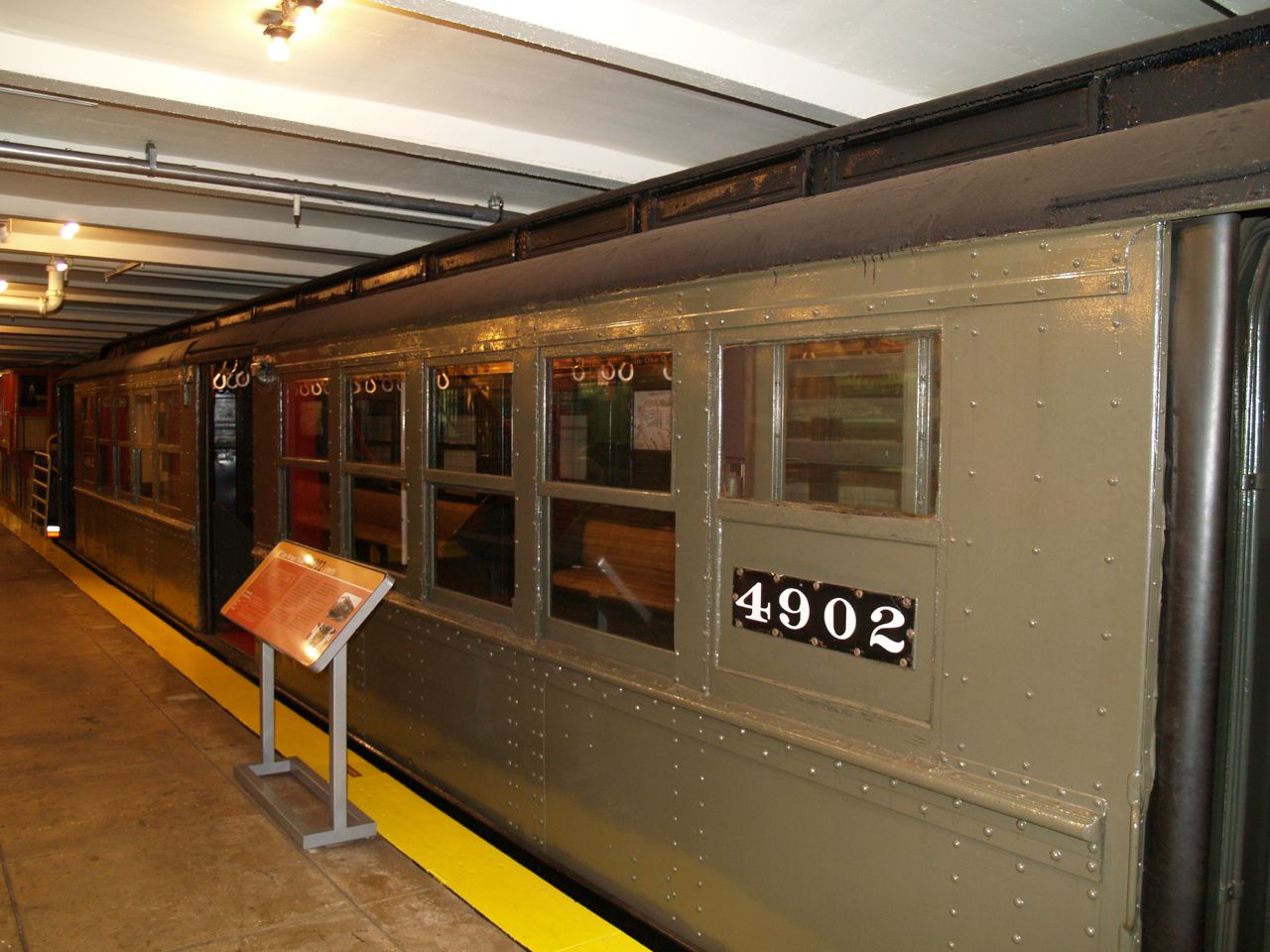
old subway cars old subway cars old subway cars old subway cars old subway cars old subway carsAlso within the subway platform is, what I think they called, a subway switching tower. It was the control area to watch and regulate where the trains were.
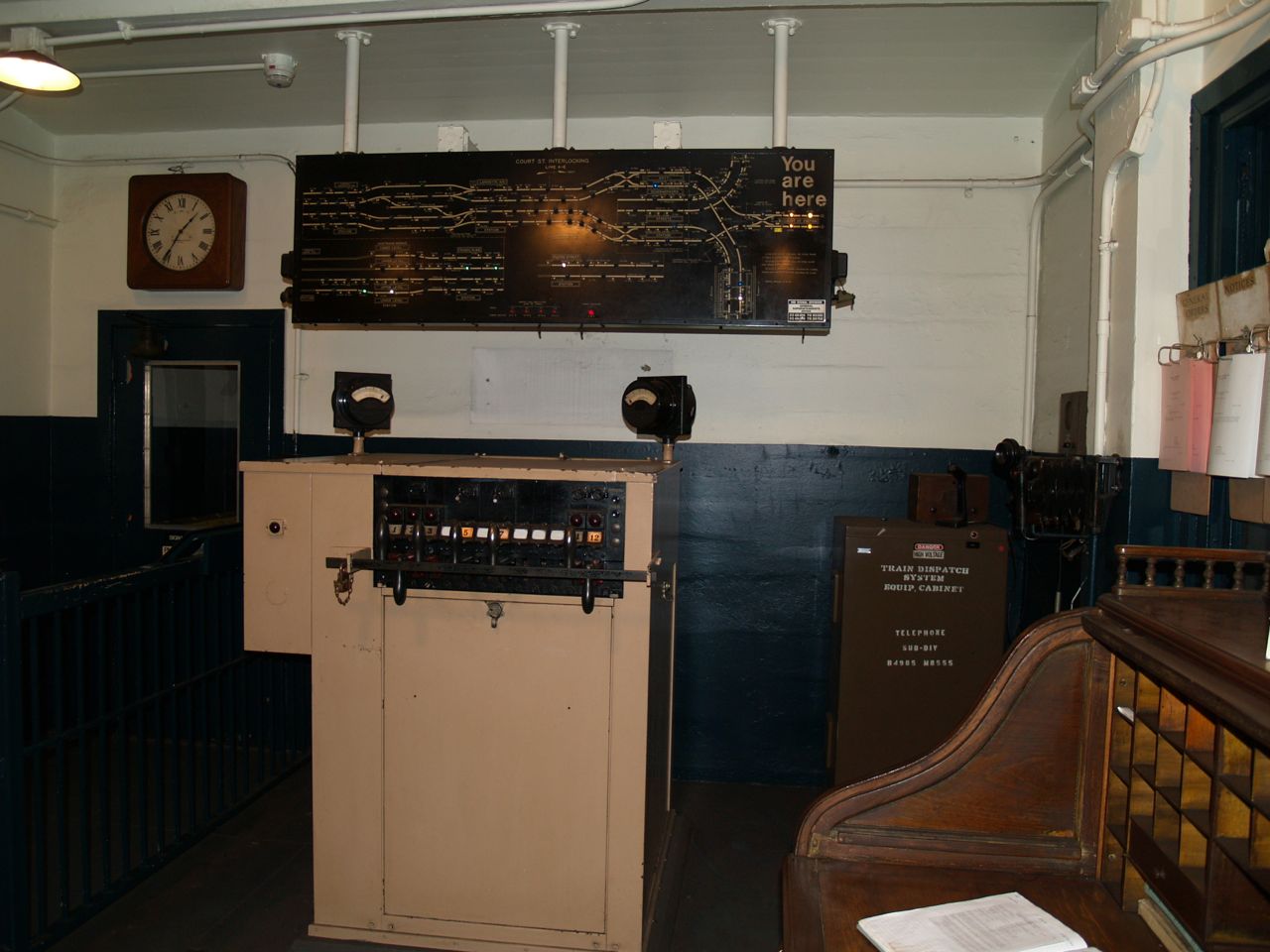
subway switching tower

Finally upstairs, they have some exhibits that I am fairly sure you just have to be a geek to love. They have an exhibit of old turnstiles.
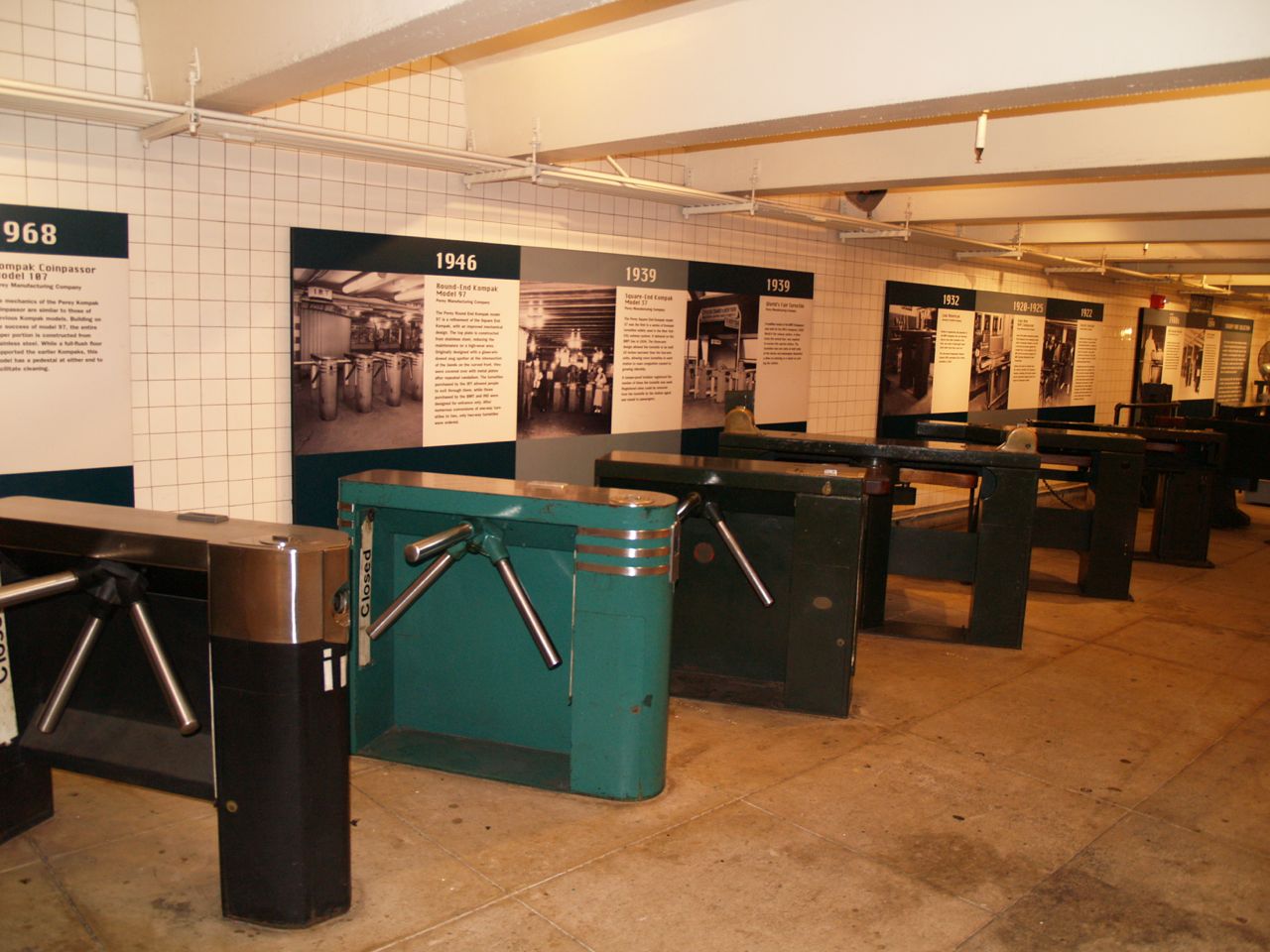
turnstilesPerhaps my favorite, is an exhibit of various subway coin slugs that people have used to try to avoid paying the fare. Some were quite inventive. Some were just hilarious.
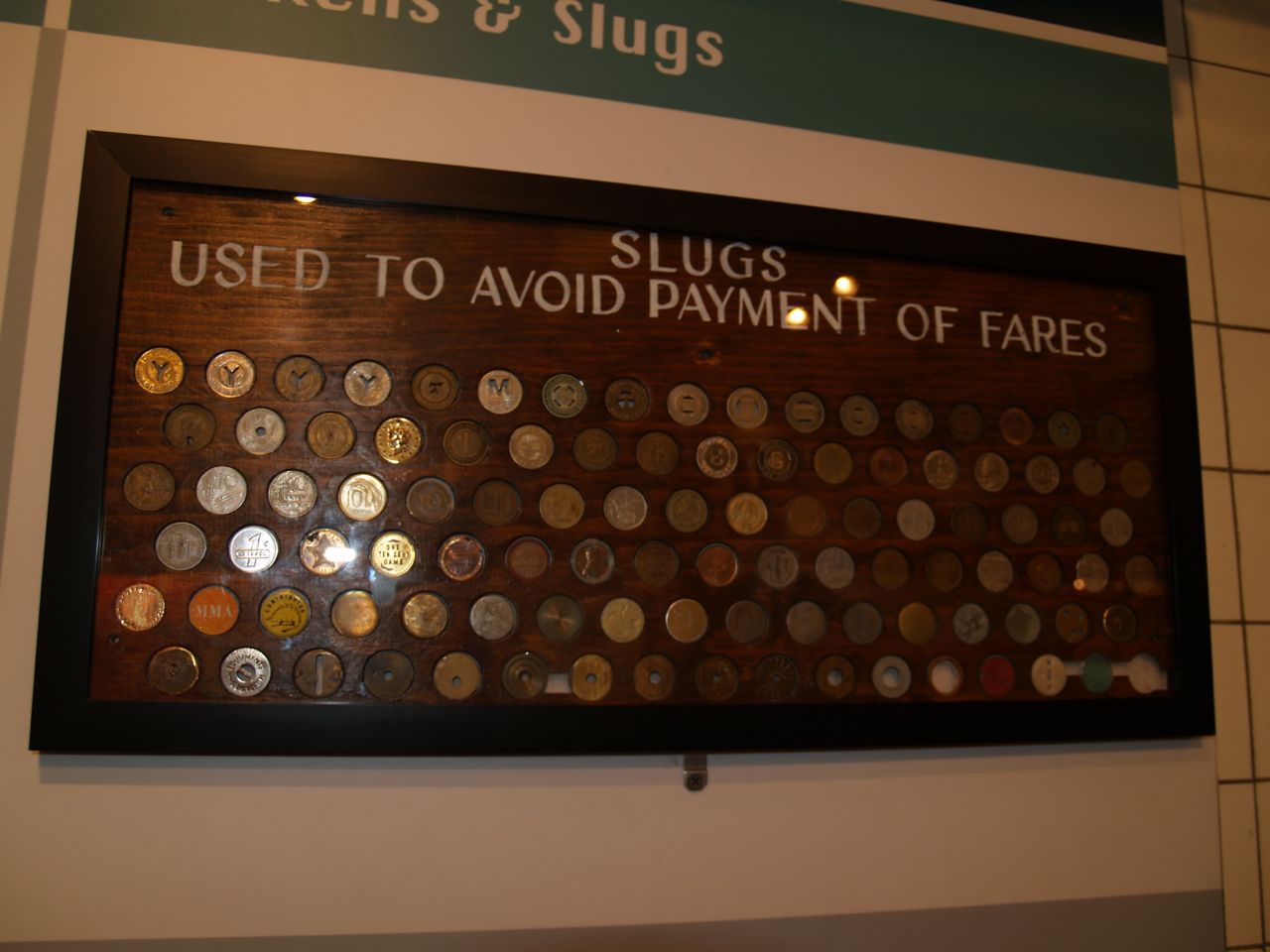
subway coin slugsThat was my visit to the New York Transit Museum. If you love mass transit, or you are a geek, go check it out when in New York.


Bottling Wine

I spent last Friday at the Philip Carter Winery, small winery in Hume, Virginia helping them bottle wine. A couple of times a year when the wine is ready to be bottled, they invite people who love their wine to come help them bottle it. They pay the volunteers for their help with lunch, wine, more wine, and then more (bottled) wine to take home. A friend invited me to join her with this bottling work. It sounded like a great deal to me, not to mention fun, but I didn’t realize how much I would geek out and have fun learning about the bottling operation. I learned that small wineries hire a bottling operation on wheels to come to their winery and bottle their wine when it is ready. An entire bottling operation fits on the back of medium sized truck. It is totally cool in my humble geeky opinion.


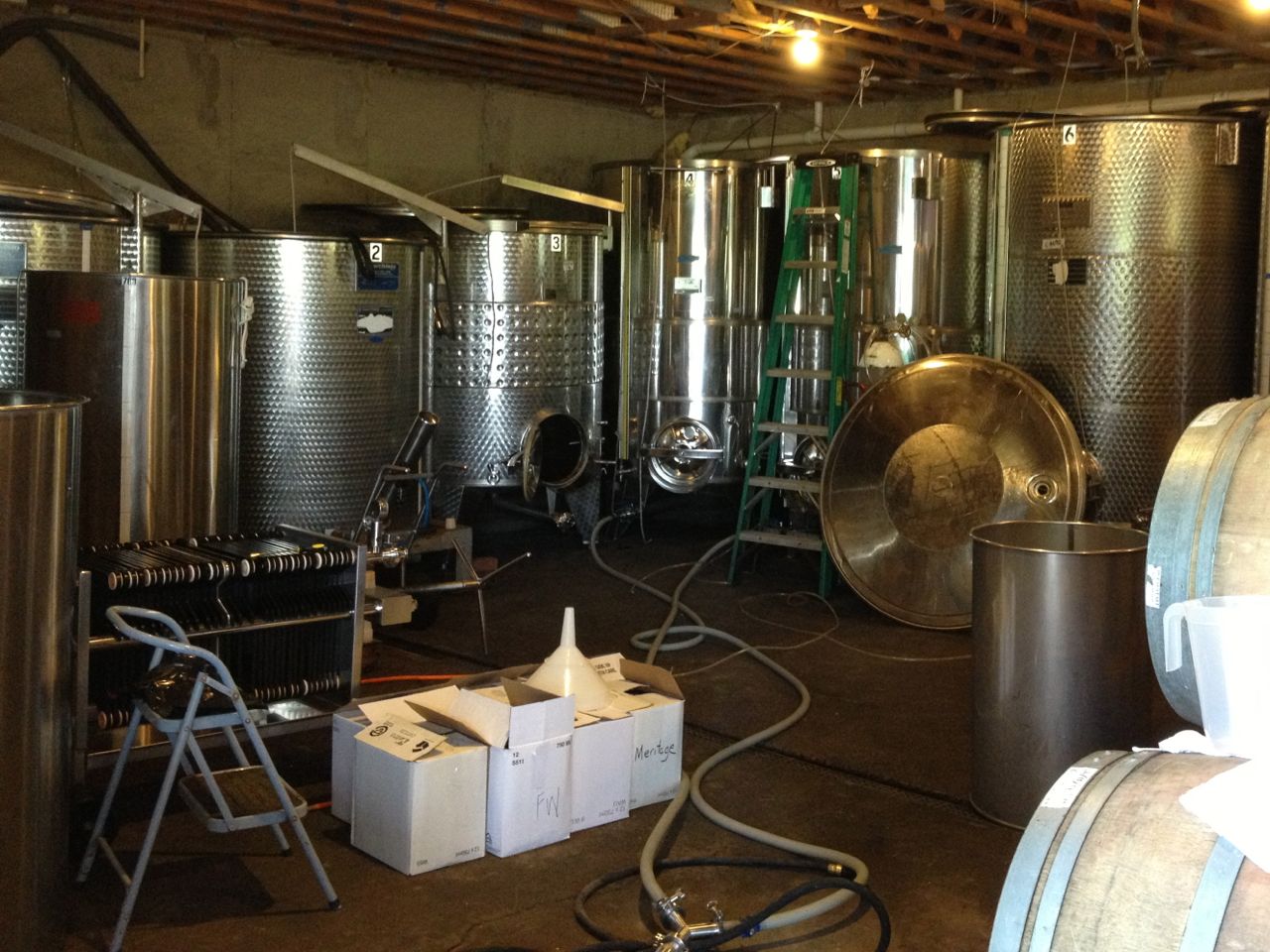
Like at all wineries, the wine is aged in barrels. It is later transferred to stainless steel vats.

vats

Vats of wine, the ones with the attached tubes are being drained to be bottled

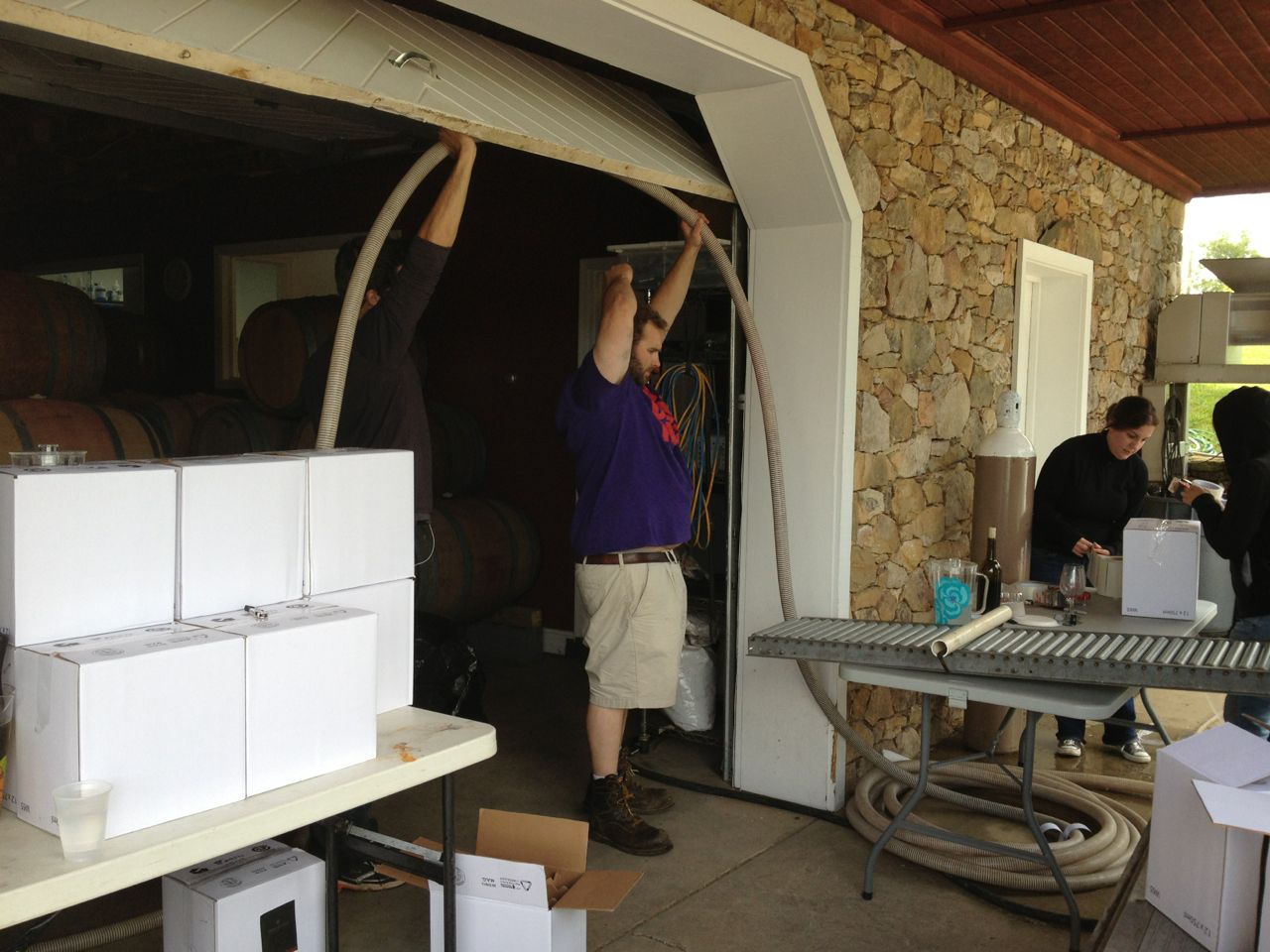
Four of these vats were bottled that day. In the morning, two vats of Chardonnay were bottled, and in the afternoon two vats of Cabernet Franc were bottled. When a vat is completely empty, workers make sure all wine makes it from the vat to the bottling operation through the tubing through a highly technical process called “walking the line.” This entails people lifting the tubing up and letting gravity move the final volume of wine towards the pump. “Walking the line” also involves everyone yelling down the line “walking the line” so that the person inside the bottling truck knows the final volume of wine is coming.

Winery employees "walking the line"

Winery employees “walking the line”

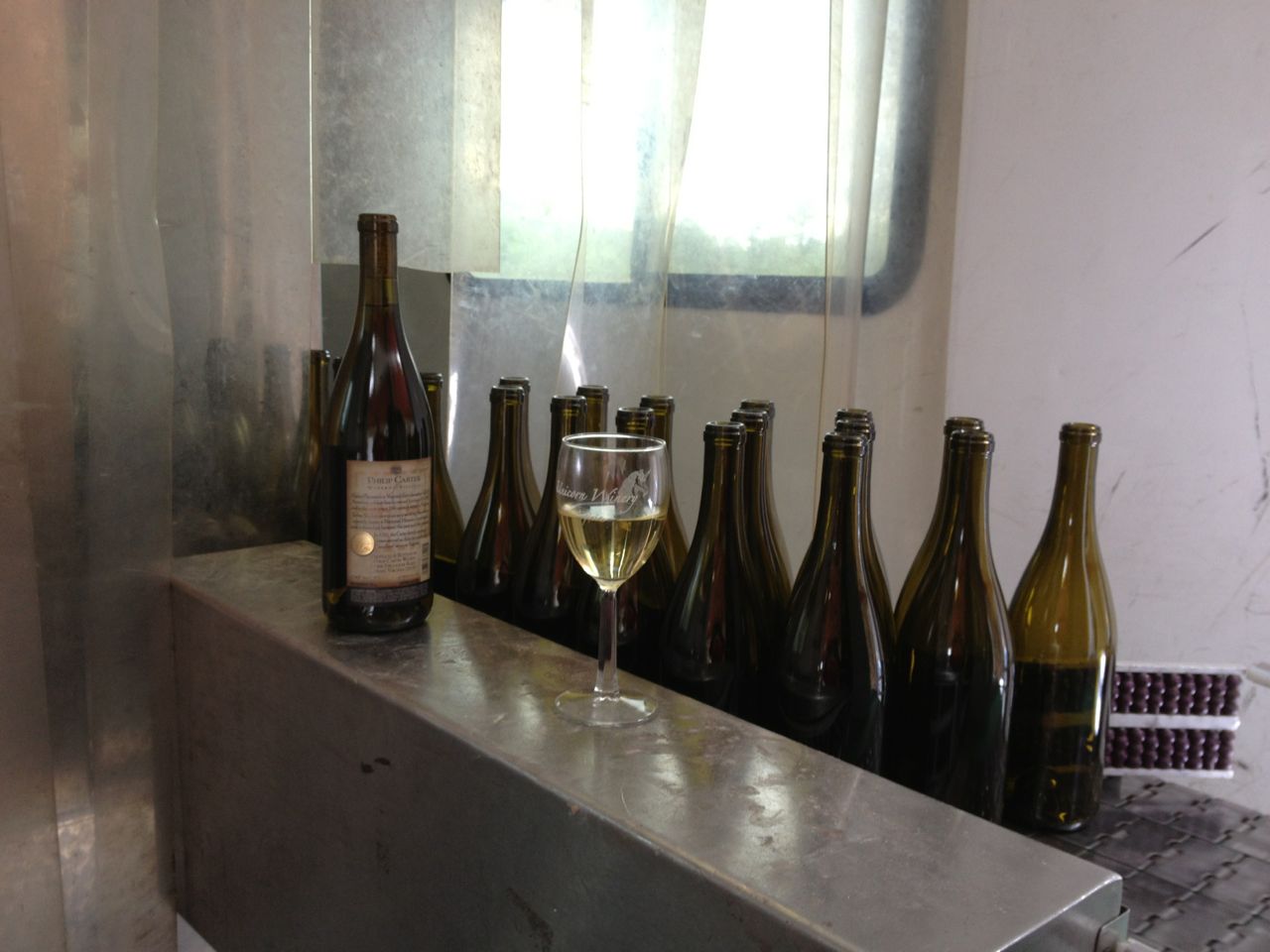
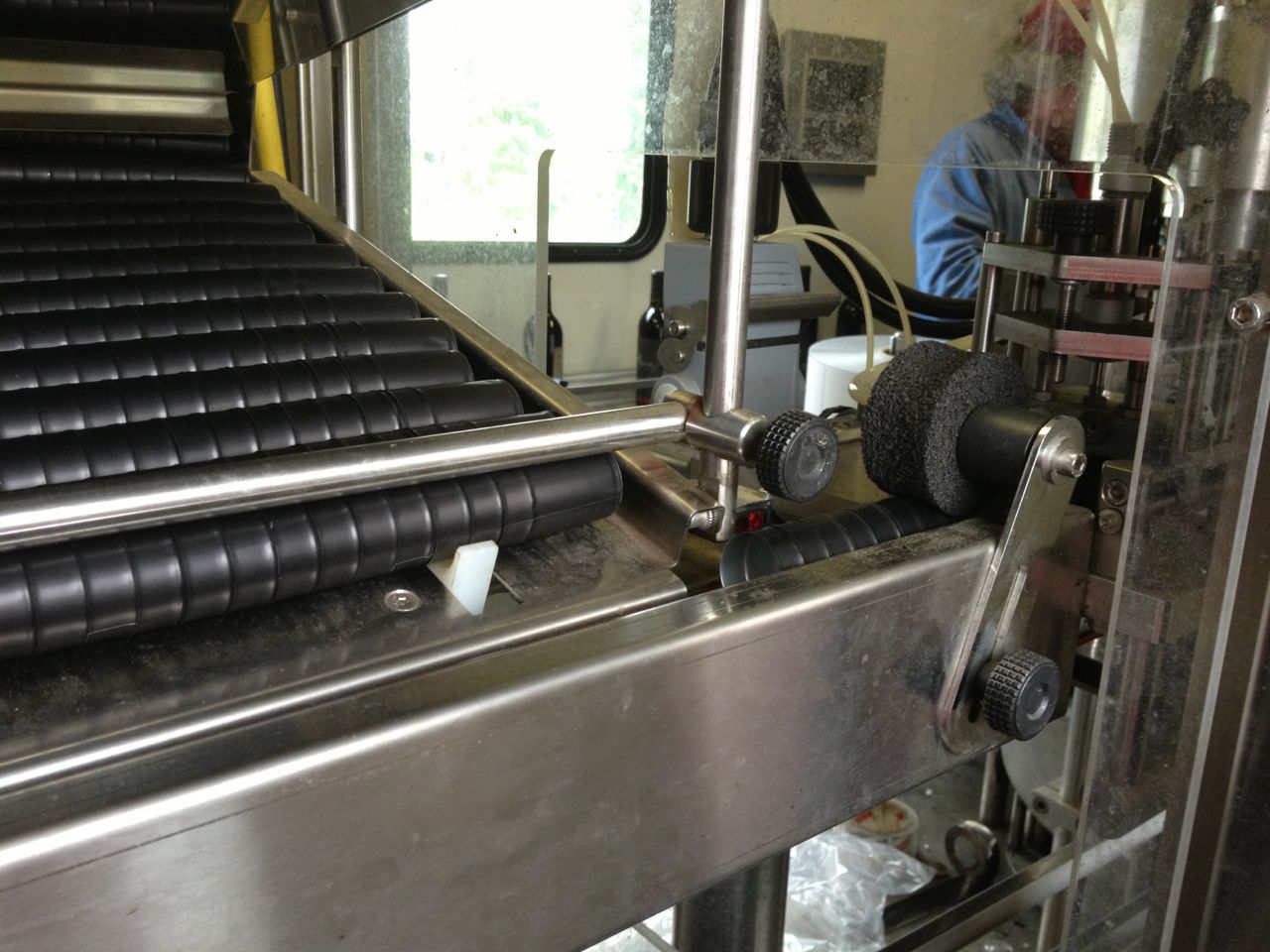
Empty bottles are loaded onto a conveyor belt on the right side of the back of the truck. The people loading the empty bottles generally enjoy drinking wine while working.

empty bottle start

Empty bottles on the conveyor belt to be filled with wine

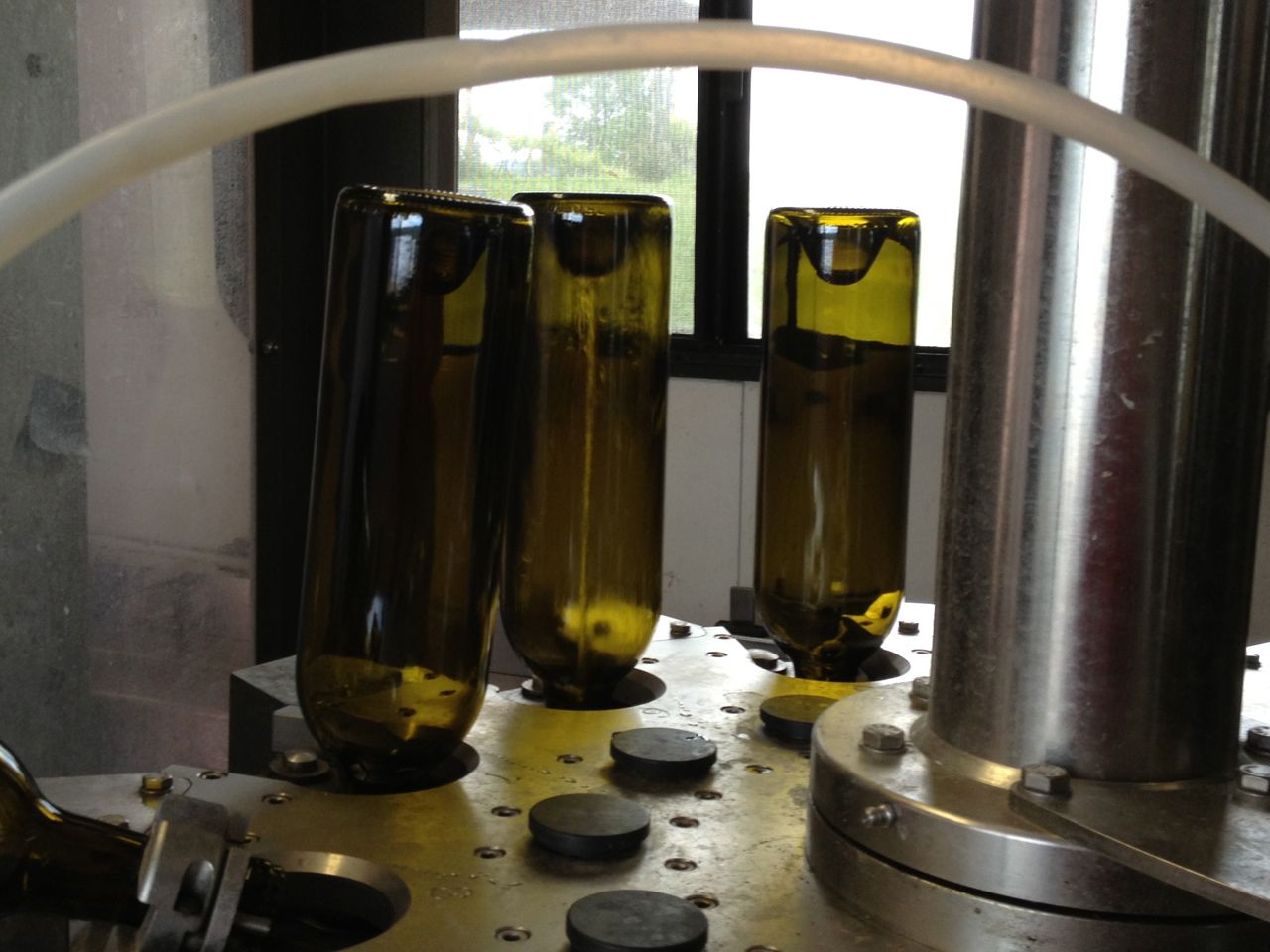
The bottles are first washed. A stream of water is squirted into the upside down bottle.

Water is squirted into the bottle in the middle

Water is squirted into the bottle in the middle

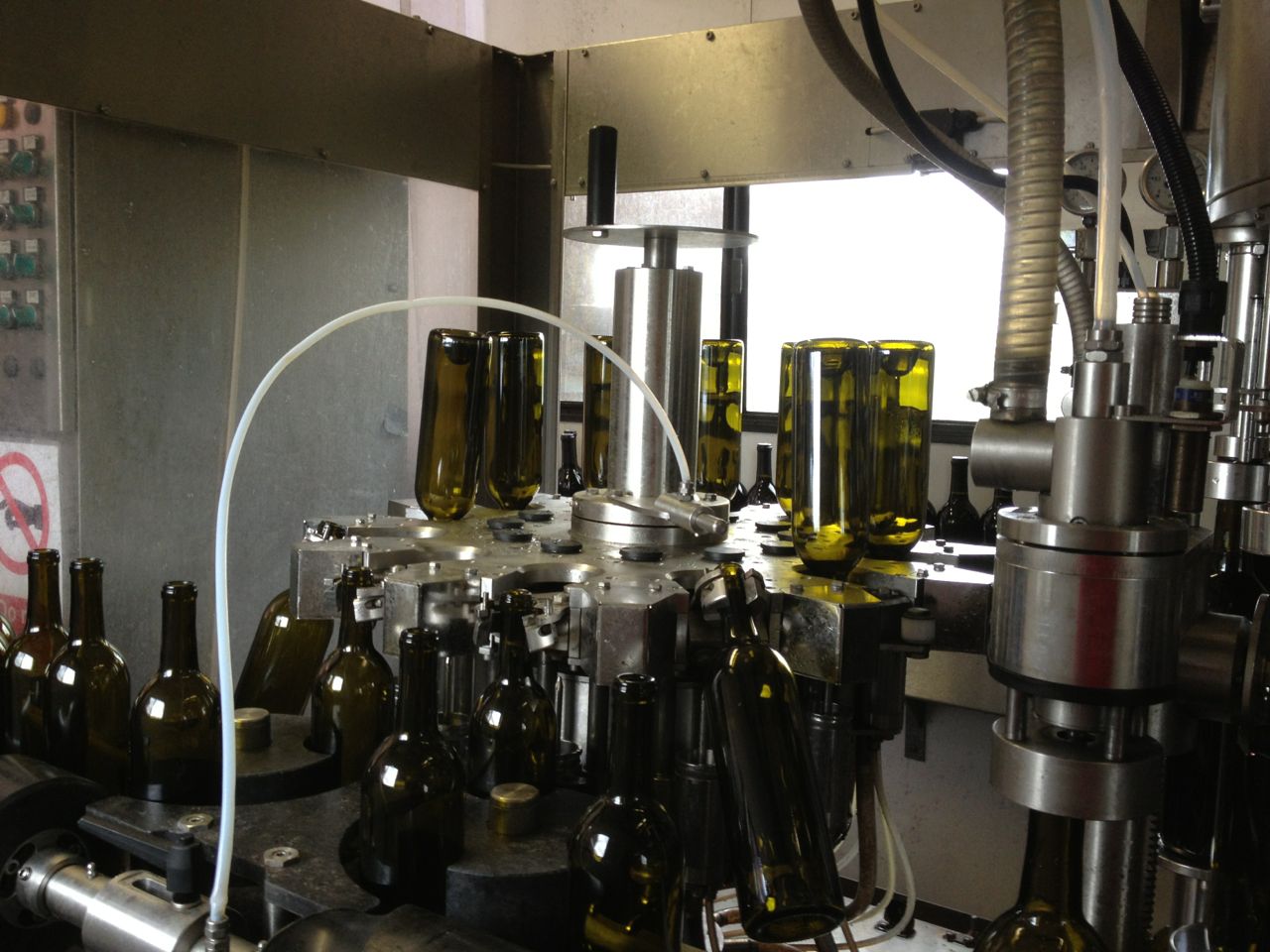
After the water drains, air is blown into the bottles to dry them. The bottles are then turned right-side up, and carbon dioxide is blown into them. Carbon dioxide is heavier than air, so carbon dioxide fills the bottle and forces air out of the bottle. This keeps the bottle free of oxygen before being filled with wine. Oxygen reacts with, or oxidizes, wine causing it to lose flavor.

bottle washer

The upside-down bottles on the left are being washed, and the upside-down bottles on the right are being dried by blown in air. On the far right, the right-side up bottle with the machinery attached to it, is being filled with carbon dioxide.

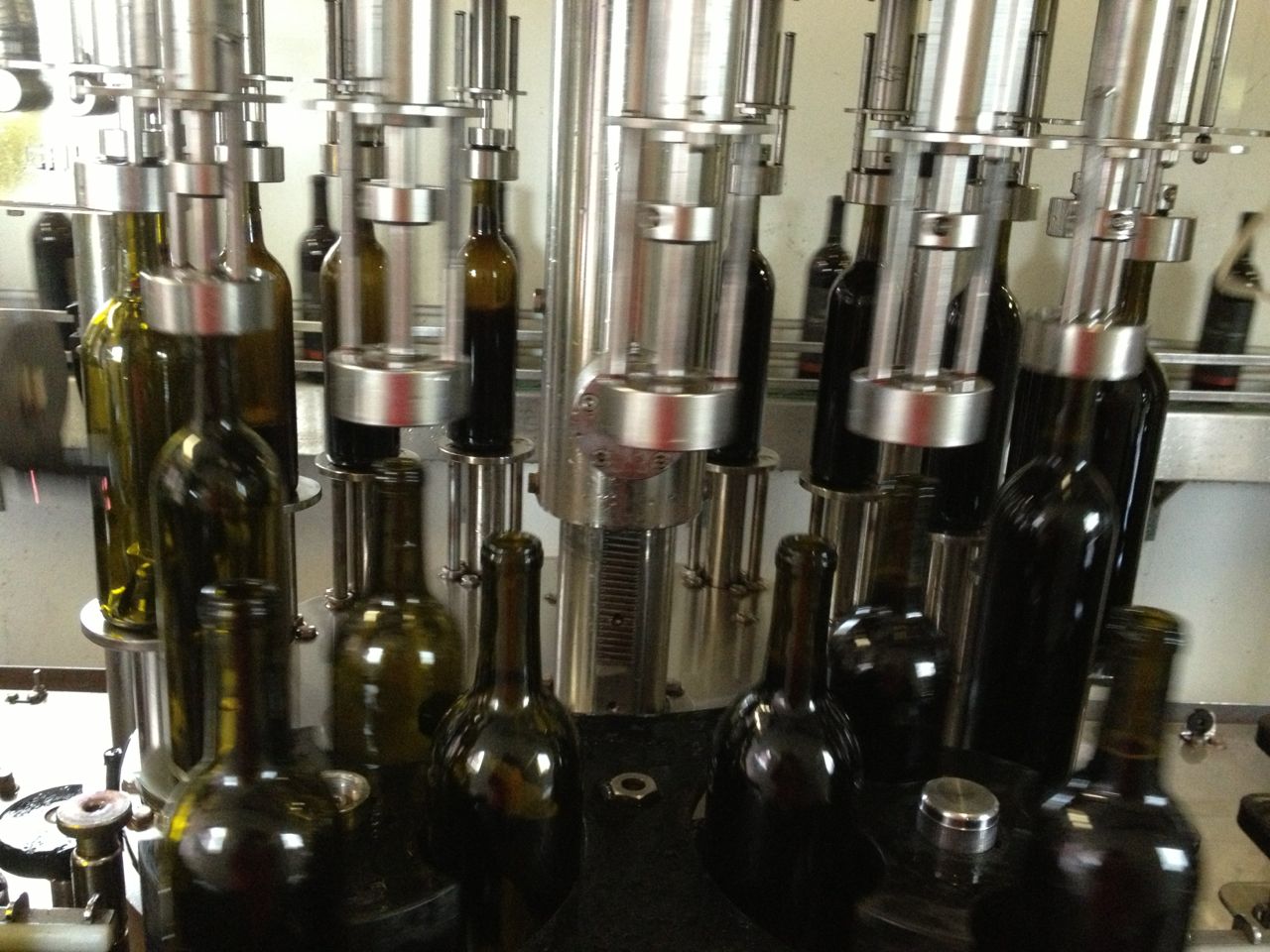
The bottles are then filled with wine. They are actually slightly overfilled.

Bottles being filled with wine

Bottles being filled with wine

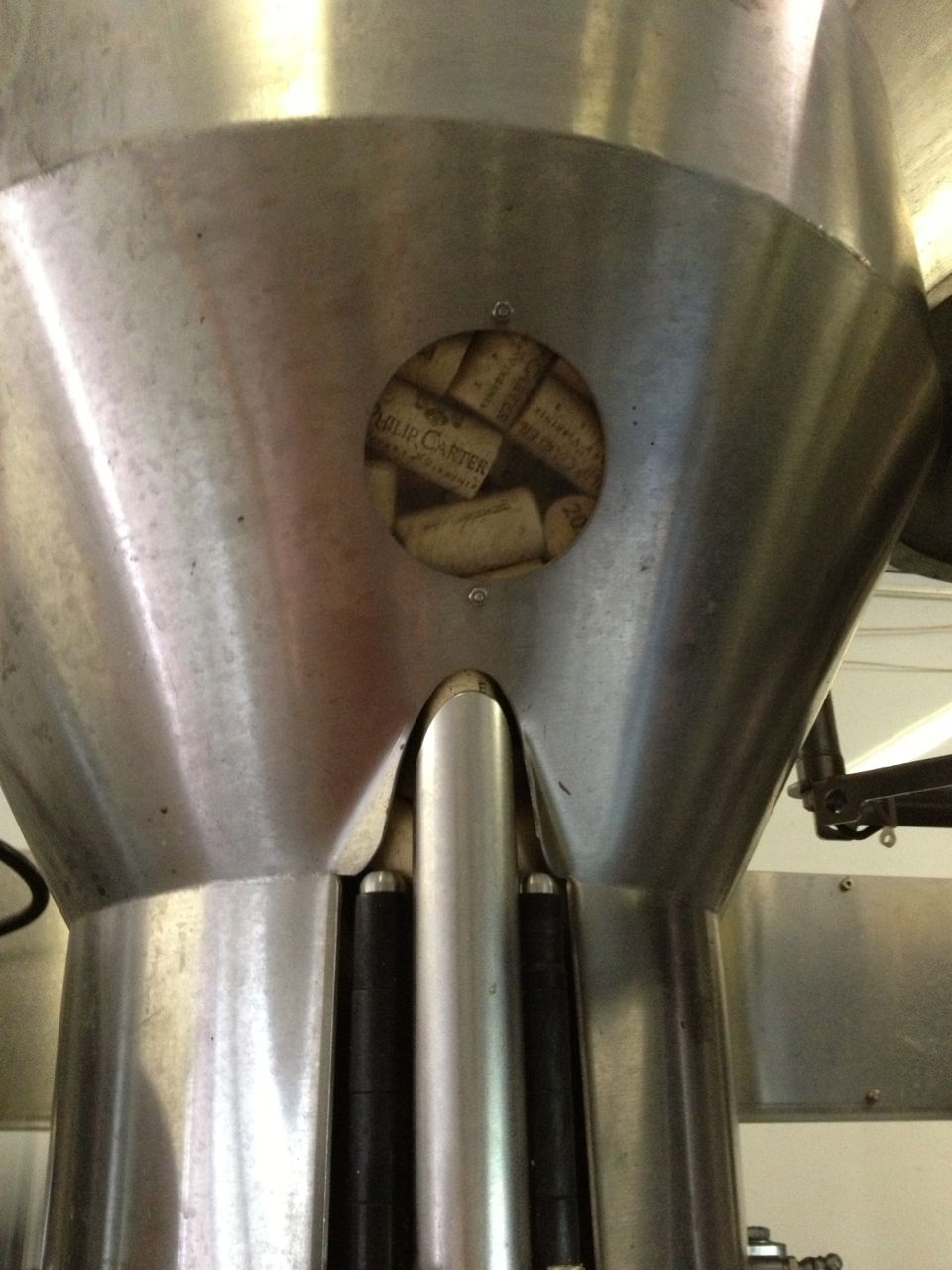
A small amount of wine is then removed from the bottle to make the wine volume exactly 750 ml. Evidently it is easier to make sure the correct amount is in the bottle by overfilling then removing the extra. Then the cork is pushed into the bottle.

Corks in the bin before being placed in the bottles

Corks in the bin before being placed in the bottles

The bottle on the left is having the excess wine removed, and the bottle in the middle is having the cork pushed into it.

The bottle on the left is having the excess wine removed, and the bottle in the middle is having the cork pushed into it.

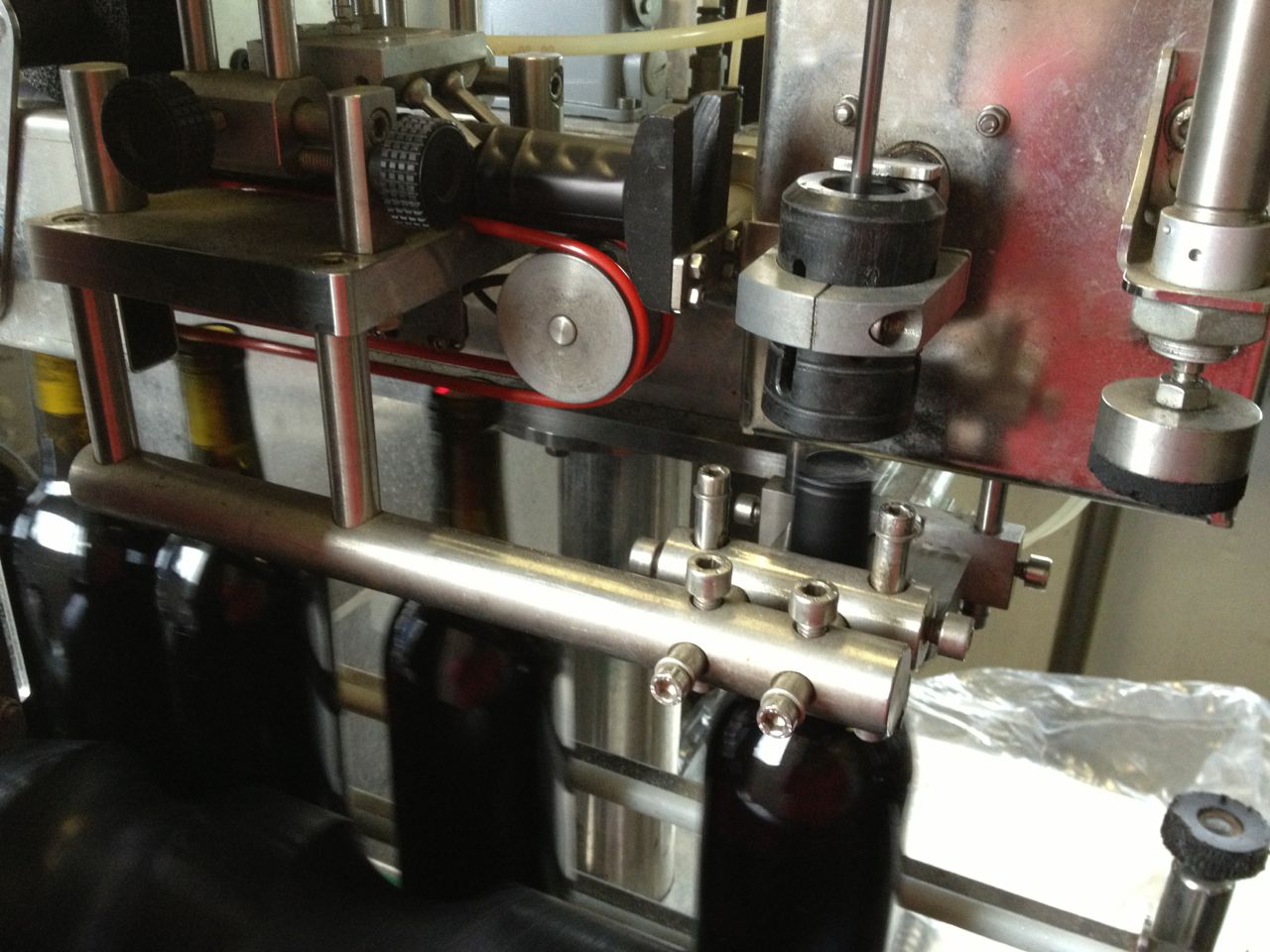
A laser then checks that the cork is in the bottle, and then the seal is placed over the bottle.

Stacks of seals ready to be dispensed

Stacks of seals ready to be dispensed

A laser (the visible red dot) checks that a cork is in the bottle in the middle, and then a seal is placed over the bottle on the right.

A laser (the visible red dot) checks that a cork is in the bottle in the middle, and then a seal is placed over the bottle on the right.

The seal is then pressed and stretched over the bottle to give a good seal.

Seals are stretched and pressed over the bottle.

Seals are stretched and pressed over the bottle.

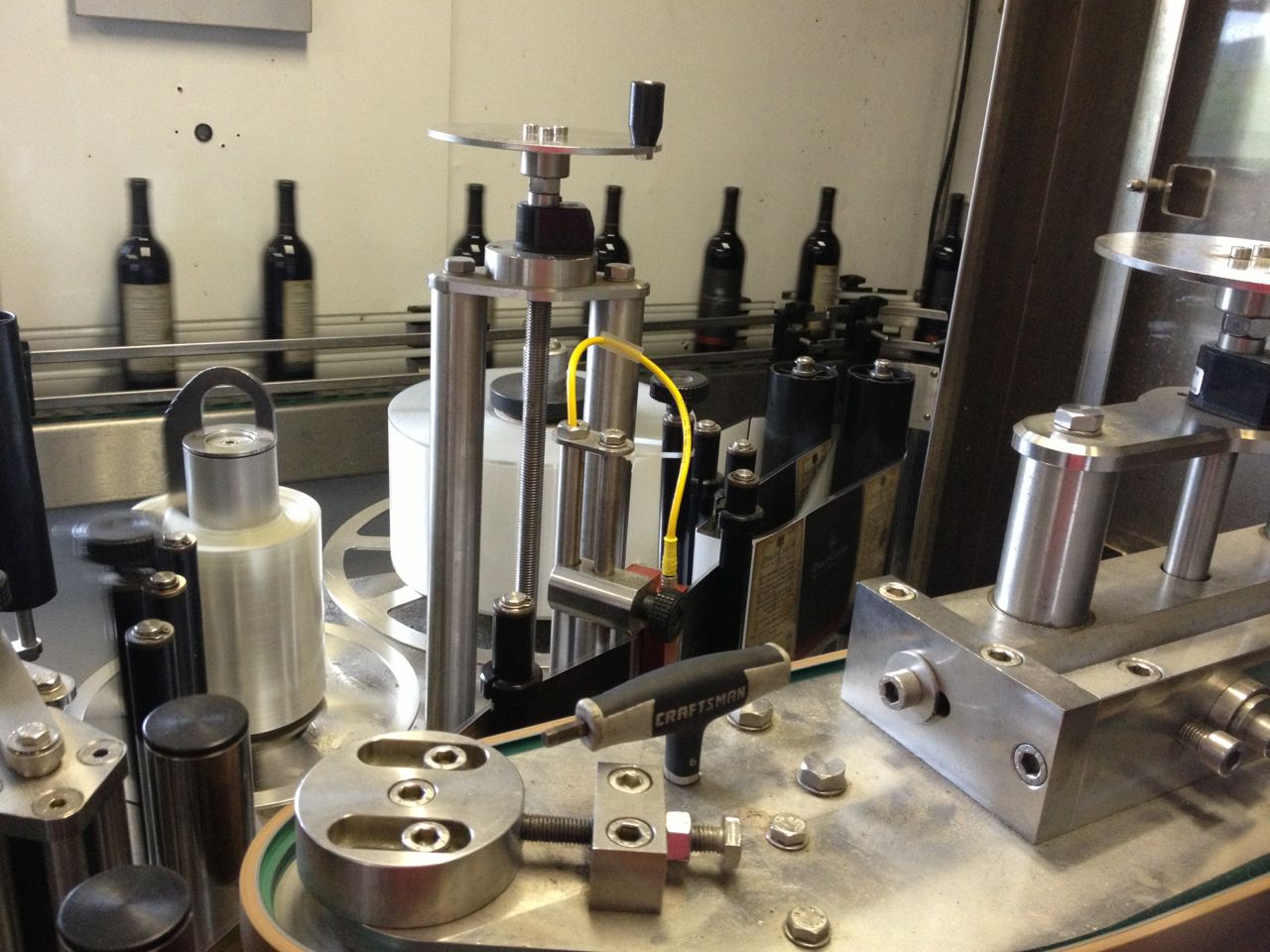
The front and back labels are then placed on the bottle. The front and back labels are on the same roll.

Labels being dispensed from roll

Labels being dispensed from roll

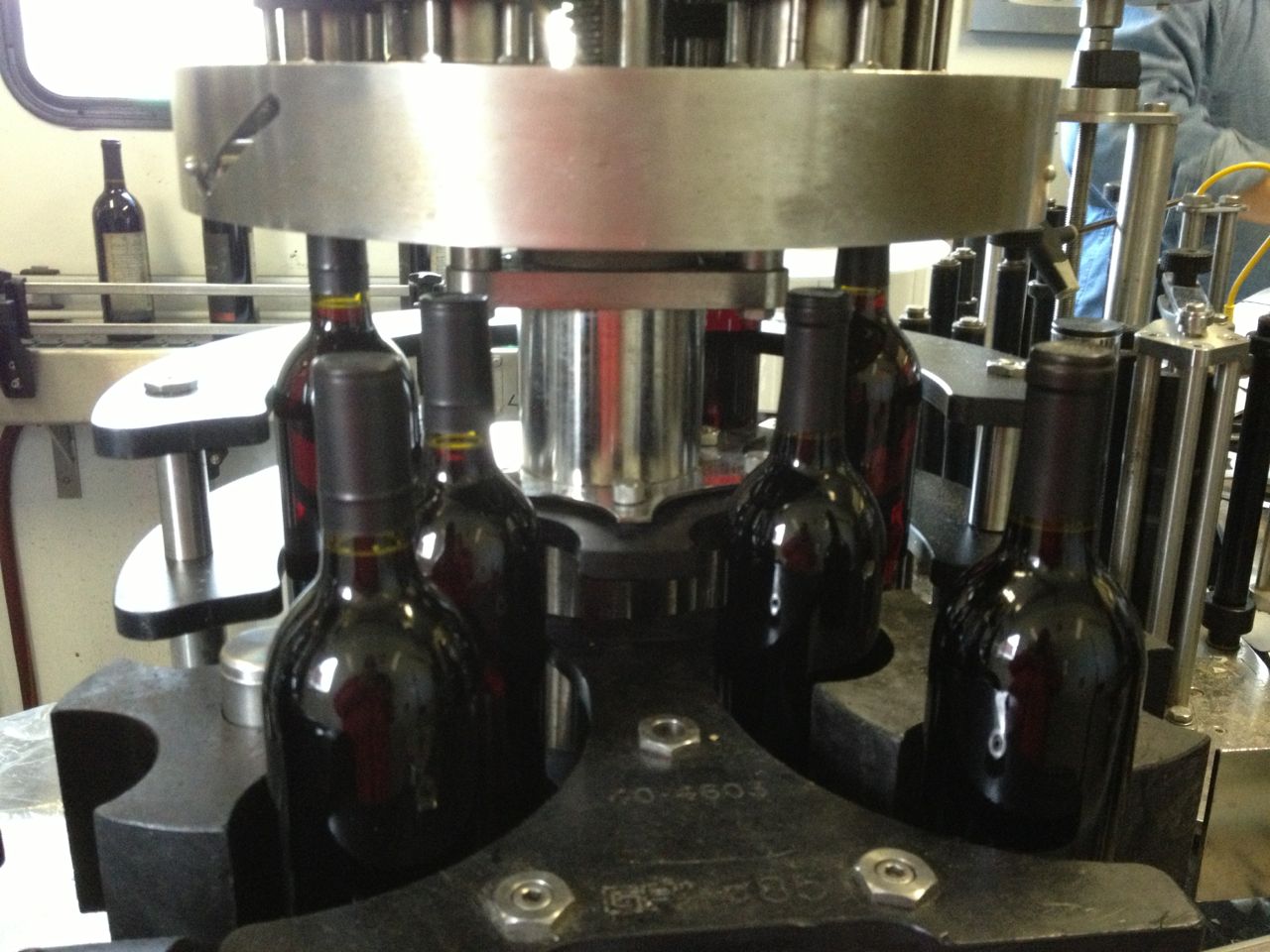
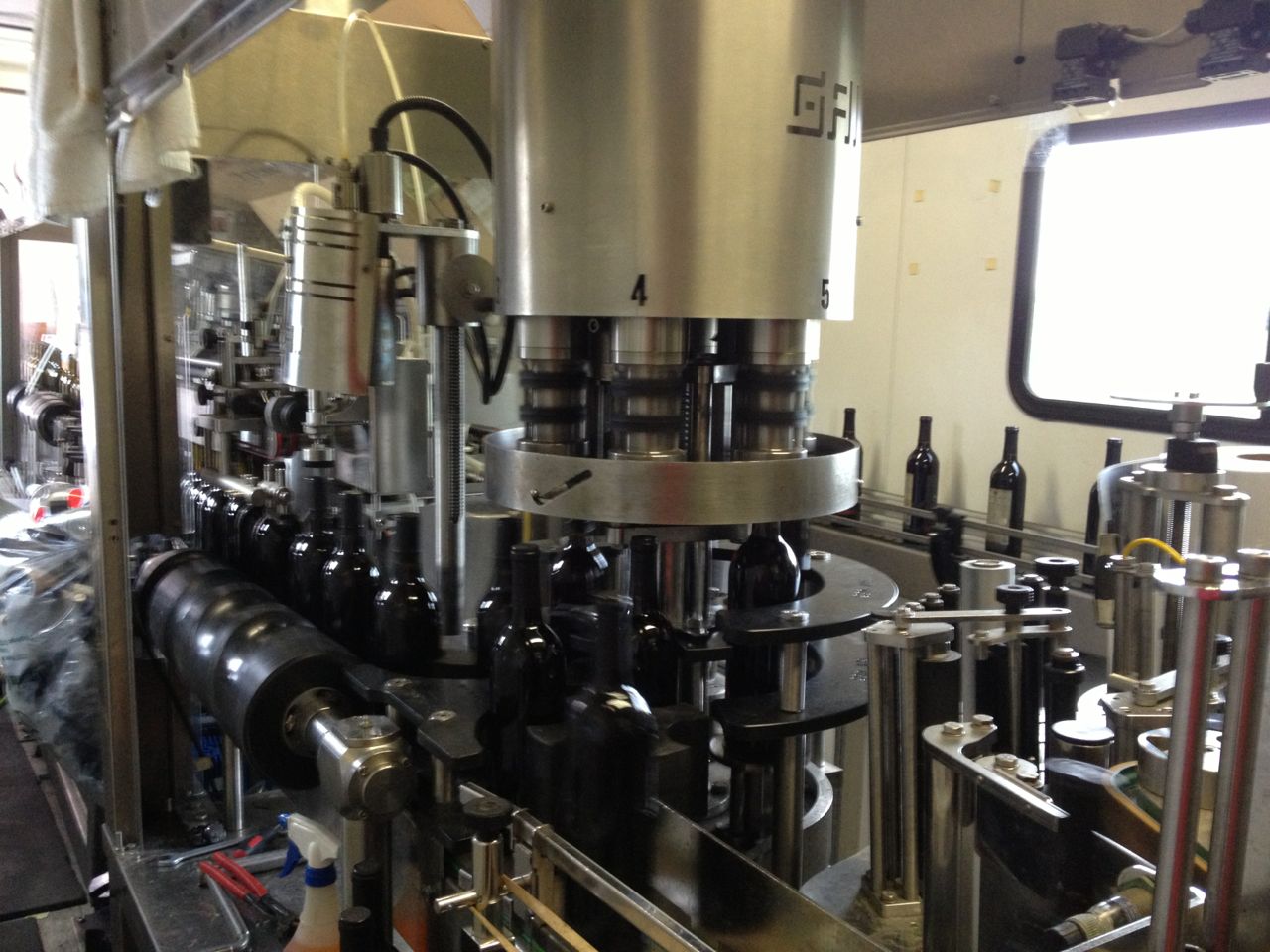
The whole bottling operation machinery is ridiculously compact.

Entire process, in the foreground is the sealer, behind it the corker, then the filler, then the washer in background

The entire process, in the foreground is the sealer, behind it the corker, then the filler, then the washer in background

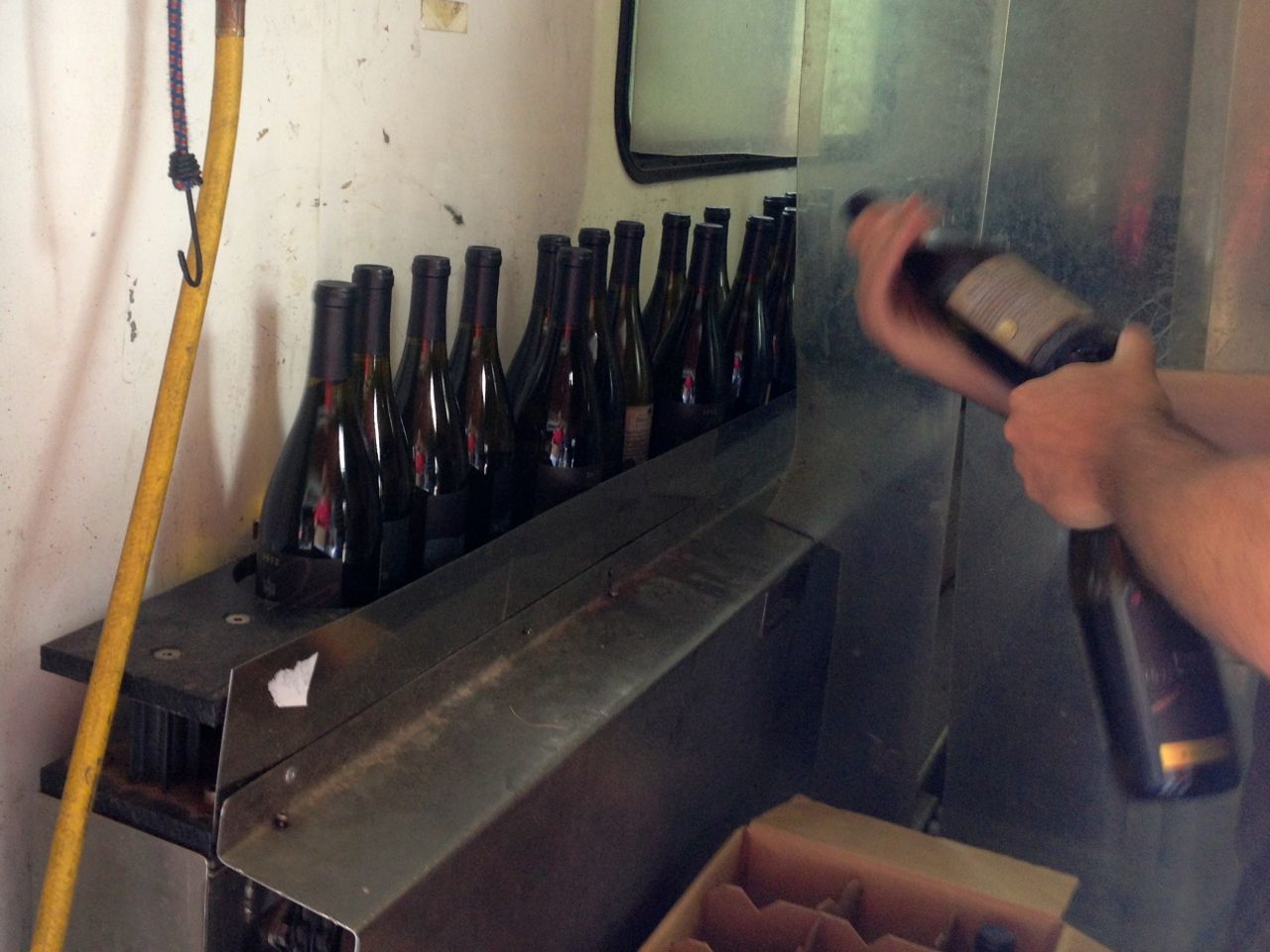
The finished bottles come out the back of the truck on the left side of the truck, five feet or so from where the empty bottles entered. They are checked by a person to make everything is perfect then put in a case.

Finished, filled bottles leave the bottling operation

Finished, filled bottles leave the bottling operation

The final product from the operation is delicious bottled wine. I want to thank the Philip Carter Winery for allowing me to help, a wonderful day, and all the delicious wine. Also, I would like to thank the operator of the bottling truck (whose name I am horribly sorry to say I don’t remember) for giving me a tour of the truck and explaining the whole process. It was great fun and incredibly interesting.

Two of the final products from that day and my reward for helping to bottle the wine

Two of the final products from that day and my reward for helping to bottle the wine

Geeky Girl Engineer’s Home DIY Tips for Morons

I have been renovating my current house for two years now, and I realized before I bought it that it had been built and originally owned by smart, caring home owners, but it was later owned and “renovated” by morons. Therefore, in order to help and possibly stop morons out there, I have decided to start a new, sporadically reoccurring series of posts called “Geeky Girl Engineer’s (GGE’s) Home DIY Tips for Morons.” First, a few disclaimers though as to why you should either ignore or not ignore anything I write.

  • I am not a licensed contractor of any type. I am also not a home renovation expert.
  • I however have owned and renovated three homes. Much of the work I did myself.
  • I am a licensed professional engineer (PE), but I am by no means selling or marketing my services as a PE. Also, I am an environmental engineer, so I am more knowledgable about wastewater and hazardous waste and not so much about structural engineering such as one needs when designing and sometimes renovating a house. I hired a licensed structural PE to help with a portion of my current house’s renovation because I demolished a structural wall.
  • As an engineer, I have been known at times, to adhere to the engineer’s adage which is:
    1. If it doesn’t move and it’s supposed to, use WD-4.
    2. If it moves and it’s not supposed to, use duct tape.
    3. If those don’t work, use a hammer to bang the crap out of it. This may not solve the problem, but it will make you feel much better.
    4. If all else fails, use C-4.
  • OK, I totally made up number 4. I have never actually worked with explosives, which is disappointing. Actually, that is not entirely true. I have used picric acid in a dilute solution before to measure creatinine in urine. However it was always in solution and kept in a plastic container and never at risk of exploding.
  • As a female, unlike some but not all males, I read the directions. I even read the directions when it is something from IKEA and the directions involve a strange cartoon man, and no matter how well you follow the directions, you always have leftover: three screws, four washers, two nuts, and five wooden dowels. No matter if the piece does not involve wood, there will still be wooden dowels included. Also, I now have a fine collection of Allen wrenches.
  • I know what I can and can’t do. I also know what I shouldn’t do. I know when to call in professionals. As a chemical engineer, I have the book knowledge to design a petroleum refinery, but I don’t have a clue how to change the oil in my car. I leave that to the professionals, who can also recycle the oil. I fully understand fluid dynamics, pipe sizing, friction factors, municipal waster and waster design, etc. However, I still use a professional plumber for tasks larger than changing o-rings or existing faucet heads, etc.
  • I am a natural blond.

So, while many might be able to learn something from this series of posts, before you attempt any type of home do-it-yourself (DIY) tasks, please try to figure out if you are in fact, a moron. Consider the follow questions:

  • Has anyone ever told you that you are a future Darwin award winner or that you almost won a Darwin award?
  • If you have an electric outlet with two holes, but your plug has three prongs, is your solution to cut the third prong off the plug?
  • Do you believe building codes are silly and not in the least useful?
  • Have you ever seen something you did or something very similar to something you did on There I Fixed It? Or are you confused as to why some things are on that site because they look perfectly fine to you?
  • Do you think that when a female is raped, her “body has a way to shut that whole thing down” to avoid getting pregnant?
  • Have you ever opened a box containing electronics or some other non-food item, found a little packet and thought “oh nice, it came with a snack,” only to be disappointed when it said “don’t eat”?

If you answered yes to any of the above questions, you might be a moron. If you are going to do anything more complicated than changing a light bulb in your home, you might want to consider calling in a professional. Actually, you may want to consider if you are even capable of changing a light bulb. After all, someone had to be the inspiration for all those “how many _____ does it take to change a light bulb” jokes. Please consider carefully. Your future self, and any future owners and occupants of your home will thank you for it.

There is the introduction. Stay tuned for tips based on the incredibly stupid things I have encountered in this house. Contact me if you have questions. Contact me if you have tips or photos of really stupid things done at your house that you would like to share with the morons out there as something not to do. I can promise that if you ask me a question, and I don’t know the answer, I will not make up an answer, but I may be able to refer you to some sites with actual valuable information.

Short Term Radon Test Results

Previously I wrote that I was testing my house for radon. I got the test results back this week, and the test results came back as an average radon level of 2.9 pCi/L. The good news is this is less than the 4 pCi/L action level. The bad news is this is still elevated above average house level of 1.3 pCi/L. This test involved collecting radon over four days. At work, I am currently working on a project that involves looking at the indoor air variability due to radon or volatile organic compounds intrusion from the soil and groundwater. Thus, I know better than most how variable indoor air concentrations can be. They can vary a lot. Therefore, before deciding what to do, I have considered the following items:

  • The test was done in winter under proper closed house conditions. Closed house conditions means keeping the doors and windows closed except for normal entering and exiting the house through the doors. This is not an issue in the winter because it is cold. This is also one of the reasons winter is one of the best time to perform the test, but it also means that the test will lead to higher results than if more open house conditions are maintained. When the weather is nice, I like to open the windows and doors, so that would generally mean at least during those times, the radon concentrations in my house should be much lower.
  • The test was performed over four days. As I stated, indoor air concentrations can vary a lot, and in terms of those fluctuations, four days is relatively short term. Even ignoring the seasonal effect of closed versus open house conditions, the long term average radon conditions could be much higher or lower than 2.9 pCi/L. The reasons are not fully understood, but exterior temperatures and precipitation can affect it. A long term test over several months or even better a year, will give a much better understanding of the average concentration. If the results had been 1.3 pCi/L or less, than given the conditions, I would probably not be at all worried that the long term concentrations would be higher.
  • The EPA recommends that the test be performed in lowest habitable portion of the house. As such, I placed the test in the guest room for that and other reasons stated previously. However, I am almost never in the guest room. I don’t have guests that often, and the door to that room remains shut most of the time. Thus the only air exchange in the room is via the ventilation ducts and a little underneath the door. Furthermore, my bedroom and all the common areas of the house (kitchen, living room, etc.) where I spend most of my time are upstairs and should have lower radon concentrations than the guest room. Therefore, even if the results from the guest room do accurately represent average radon concentrations, they are borderline for taking mitigation action and probably represent the highest levels in the house. While I don’t want to expose my guests to undue risks, especially since my guests are generally people I like or love, do I want to mitigate based on the results from this room?
  • Finally, I’m a scientist, and I believe in validation and replication. This was one test result, and home test kits are generally not considered the gold-standard of any type of test. There is no doubt at least of some amount of inaccuracy with it.

Therefore, I have decided to test the house again, but this time for a longer duration. I have also decided to run two tests simultaneously. I plan to place two testers in the house, one in the guest room again and one upstairs in my master bedroom. I have ordered a long term home test kit that can be used to test between 90 and 365 days. I plan to run the test over an entire year to get a much better indication of what the long term average radon concentrations are in the house. Also, by testing both the guest room and master bedroom, I can better understand what my average exposure is both in terms of the average annual concentration and in the rooms where I spend the vast majority of my time. I will also add that while the guest room is a guest room now, as it is bedroom, legally and real estate-wise speaking, and thus in the future it could be a normal bedroom if my life changes or if I sell the house. Therefore I still consider it important to know what the long term radon concentrations are.

Check back in a year, and I will let you know what happened and how I am proceeding.

Female Restroom Design Basics for Men

I am officially fed up with going into restrooms that have been obviously designed by men. Evidently the women of the world are going to need to take more drastic actions because this situation does not seem to be resolving itself as more women enter engineering, architecture, and construction. Building code covers a whole range of issues from structural to safety to just plain standardization. Clearly, proper female restroom design needs to be put into building code. Perhaps we also need a rule that just as all engineering designs must be certified by a Professional Engineer, all female restrooms deigns must be certified by a female, perhaps not a female engineer, but probably any female who has ever used a public restroom will do.

Men, yes I am aiming this post at men because honestly I find it very hard to believe that a woman would be capable of making such stupid design decisions for female restrooms. This is not to say a female is smarter than a male (that’s an argument for another day), but because any female who has used a public restrooms knows exactly that I am talking about and would not design it so stupidly. So men, I don’t know why you are so confused about what about what we do and don’t need in a restroom. I assume and hope that none of you have been in a restroom when the ladies are using it, but still I would think the things that we need and want would be pretty common sense. Perhaps I should not assume certain men to have common sense when it comes to the ladies though. This election season has taught me that there are men out there who think women have magical reproductive systems. Thus ladies, lady parts, and lady part business is clearly an utter mystery to some segment of the male population. Therefore, let me give you an education about what the ladies want and don’t want in a restroom. I promise there will be no discussion the lady parts of anything else that might make you squeamish.

  1. Probably the biggest complaint that I and many other women have is the length of the stalls. Here is how it is fellas, ladies like to do their business in stalls. We don’t use the urinals. Not only do we like to use stalls, but we like to have doors on said stalls to give us some privacy. No problem, you say, we always give you stalls with doors. Well, yes, you do, but here’s the thing, evidently you have never used a toilet in a stall with a door because if you had, then you would understand that the stall needs to be long enough that we can close the dang door without standing on the toilet or straddling the toilet. Seriously, the stall should be long enough that we can stand in front of the toilet and close the door at the same time. If you can’t imagine what I am talking about, I invite you to go to nearest toilet and stand in front of it, facing away from it (like you might sit down or something on it). Now look at the distance your body takes up in front of the toilet. We need at least that much space between the toilet and the swing area of the door. Since the swing area of the door is put onto building plans, you already know that distance, so just add a proper distance between the toilet and swing area so that you can stand there. Simple right? Makes sense?
  2. We need a coat hook or something like it on the back or the door or the side of the stall. You might be aware that many women carry purses. Sometimes we also carry jackets or backpacks or other items. We like to be able to hang them when we are in the stall, so we don’t have to put our stuff on the floor. See this stuff is really not complicated.
  3. We need a small trash can inside each and every stall. Some restrooms have those neat trash can and toilet roll hangers that fit in the wall between two stalls. Those are just fine, just as long every stall has a trash can that can be reached from the privacy of that stall. I realize you may be confused as to why on earth we would need a trash can in each stall. Let me just say that at certain times of the month, we need to carry certain, shall we say feminine hygiene products, into the stall, and we like to dispose of, shall we say used feminine hygiene products, in the privacy of the stall. If you want further information please go ask your wife, mother, middle school health teacher, or the internet.
  4. While I am sure it is obvious that the stall needs to have toilet paper in it, what does not always seem to be obvious is where to put it. To put it simply, 99.999% of women are not in fact contortionists, and I imagine even the 0.001% of women who are, don’t like to do contortions in order to reach the toilet paper. It should not hitting our leg. It should not be behind the toilet. It should be in an easy to reach location.
  5. One more thing about the stalls. I can only presume that someone somewhere at some point created some calculation as to how many stalls would be necessary based on the planned traffic in the bathroom based on the design occupancy of the building. Whoever they were that came up with this calculation, they were wrong. I don’t care how smart they were and what kind of glorious calculus and statistics they used. They were wrong. If you don’t believe me, I invite you to go stand outside any women’s restroom at any sports or performing arts venue, airport, dance club, or any other place where you can find large groups of women. There will be a line. However outside the men’s room, there will be no line, or there will be a line 1/10 the size of the women’s room line. So whatever your calculation says, throw in a large safety factor, maybe upwards of 1.5. We will call it the female safety factor. It is a safety factor both from the traditional engineering standpoint of being conservative in design but also from the standpoint of you may be in danger if us females find out who is responsible for these horrible restroom designs that never seem to improve.
  6. Enough talk about the stalls, now let’s discuss the sinks. In general, the time spent in the stall is the time limiting step in a women’s use of the restroom, so there does not need to be as many sinks as the stalls. However there should be an adequate number of sinks, and they should be placed such that traffic can easily flow to, away, and around them.
  7. Staying with the sinks, optimally there should be one soap dispenser per sink, however, if needed, this number can be reduced to as low as one dispenser per two sinks, if and only if, the dispenser if placed between the two sinks that share it. I’ve been to too many restrooms where there were three sinks and two soap dispensers at either end. Let’s think about this. Where the heck is the person using the middle sink supposed to get her soap. While I suppose some people may wash their hands differently, I and everyone I know, wets their hands, then puts soap on their hands, lathers, then washes with water. If the soap is not near the sink, are we supposed to get the hands wet, walk around someone else, get soap, and return to our sink, all while dripping water from our wet hands? Common sense. That is is that is really needed here. Also, if the reason for this stupidity in restroom design is due to restroom designers not being the type that wash their hands after the restroom, then gross, and wash your dang hands.
  8. Now that we have cleaned our hands, we need to dry them. Shocker. Similar to the sink discussion, there should be enough paper towel dispensers or hot air dryers, to keep traffic moving in the restroom. I don’t know the optimal number, but if there are ten sinks, then more than two towel dispensers would be a good idea.
  9. Next, we are back to trash cans. Yes, I know, I already stated that we need trash cans in each stall, but we also need them outside the stalls. After we use paper towels to dry are hands, we need to throw the used towels away. This is where the trash can comes in. Sometimes, we have something else we might like to throw away, who knows, so trash cans are good. Also, to get into more detail, big trash cans are good, and trash cans that we don’t have to touch to open are really necessary for hygiene reasons.
  10. The next item that is necessary is a baby changing area. However, I am not sexist; the men’s restroom should have this too. Daddies change diapers too nowadays. A space specially dedicated for changing babies is required.
  11. Now let’s discuss furniture. We don’t need it. I don’t know what you fellas think we do in restrooms, but in general, we do our business, wash our hands, and get out. Sometimes, a lady might want to freshen her makeup or do other personal tasks. Sometimes, if we are with a friend, we might chat. In general though, we don’t use the restroom as a living room. We don’t need couches. We don’t get the vapors and need to use the restroom to have a lie down. However we keep finding restrooms with couches in them. My theory is that the couches are there because the restroom is being used as a storage location for the couch. Look if the restroom is huge, then fine put a couch there, and if some women has a use for it, she can use it. However if the restroom is huge, go poll all the women you know, most of us would vote for more stalls, not a couch. [See number 5]
  12. Are you ready for advanced restroom design? I know you can handle it. For hygiene reasons, after you wash your hands, you should touch as little as possible. That is why some of the newer restrooms don’t have doors at the entrance, they just have a slightly torturous route from the opening to the restroom to provide privacy. These are great. If this is not possible, consider placing a trash can right by the door, that way we can open the door with a paper towel, then throw it away afterwards. Simple.

Edited to add the following three based on comments from others:

  1. No pedestal sinks. They are pretty and all, but just as we have stuff to bring into the stalls, we will still have that same stuff when we leave the stalls. Where do we put said stuff if there are no counters?
  2. Consider that humans are different heights. While toilets and sinks normally are at generally standard heights that does not always accommodate everyone, there is flexibility in the height of paper towel dispensers, hand dryers, mirrors, and a few other items. Try putting them at different heights, so short people can use the lower ones, and taller people can use the higher ones.
  3. I have been informed from a couple of males, that I may have assumed too much when I said the bad female restroom design reflects ignorance or unthinking on the part of men. I stand by my statement that the problem is probably men because statistically speaking most engineers, architects, and contractors are men. However, I have been informed by men that male’s restrooms have just as bad design as the female’s restroom. I have also been informed that there are bad design of urinals. I know nothing about urinals, so I will not comment on how to improve them, other than to say that improved fluid dynamics design may be needed.

This has been your basic introduction to proper female restroom design. Please consider it carefully because if not, we are going start coming after those responsible for bad female restroom design. You have been warned. Women, was there anything I forgot? Please feel free to add to this in the comments. For further amusing discussion on what both women and men want in a restroom, please see this Storify Twitter discussion.

Flight from Las Vegas

The flight path between Las Vegas and southeastern airports such as Dallas passes over some really pretty terrain and landmarks. Flying into Las Vegas I was lucky enough to get some really good photos of the Grand Canyon. For several reasons, on the flight leaving Las Vegas, I did not as good photos of the Grand Canyon, but I did get a few interesting photos. Immediately after taking off, I got some neat photos of the Las Vegas Strip.

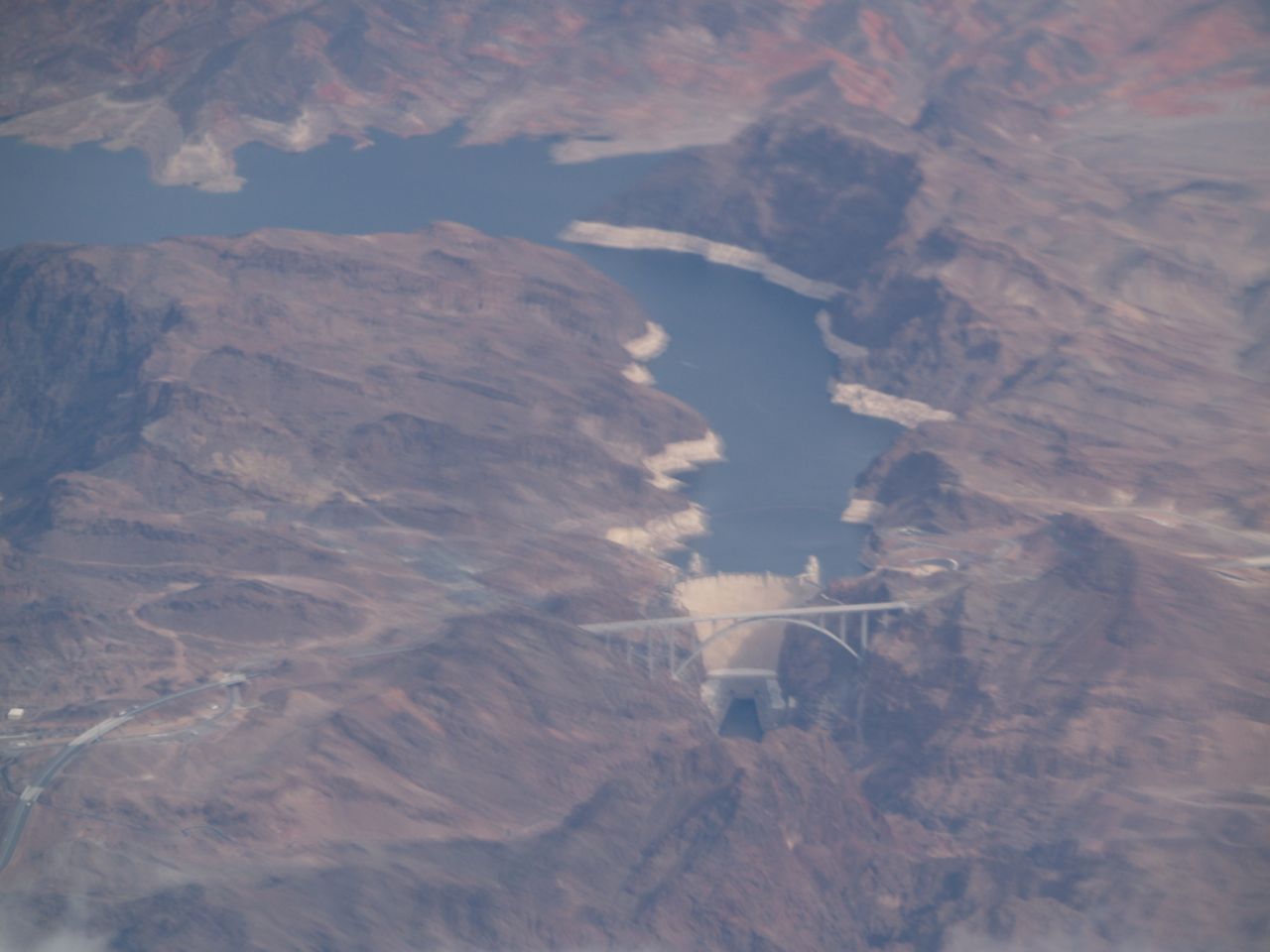
Then the Hoover Dam.

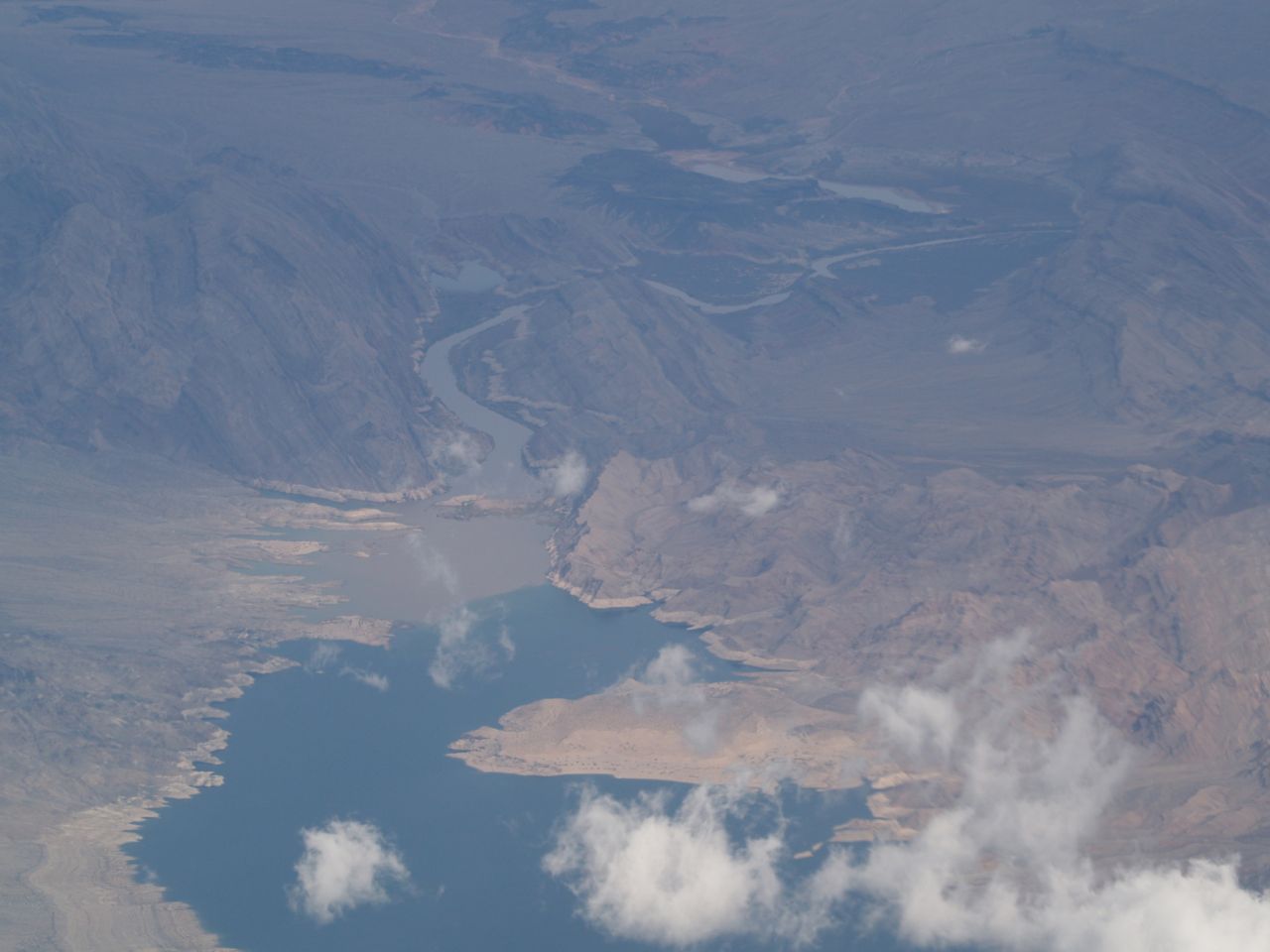
This is part of Lake Mead. I am fairly sure it is part of what is called the Grand Wash Bay.

Then a few photos of the Grand Canyon.

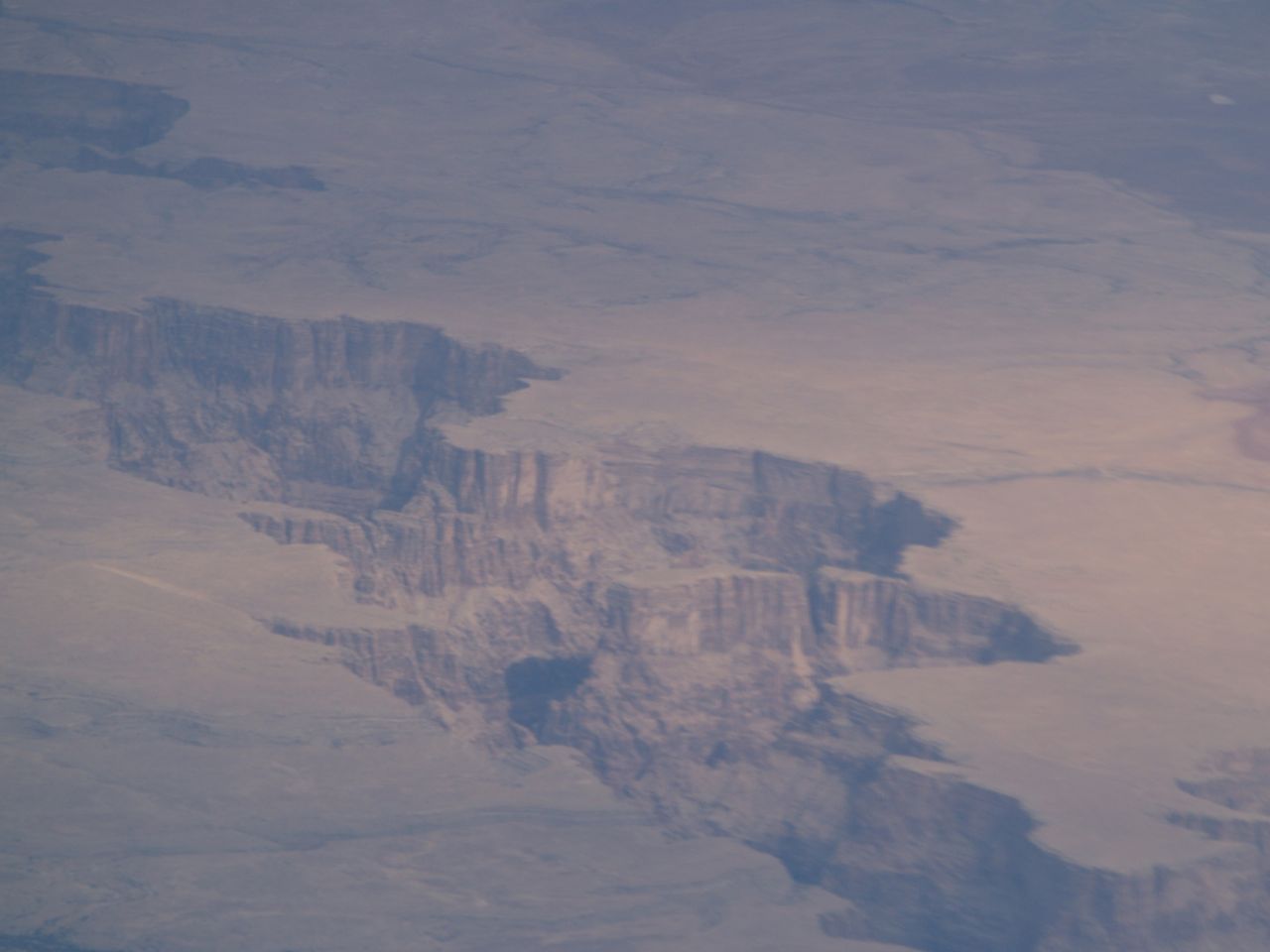
Finally this canyon that is east of the Grand Canyon, and I am not sure if it is technically part of the Grand Canyon.

Industrial Waste Site Tour

I recently toured an industrial waste site where the groundwater underneath is being remediated for perchlorate contamination as well as other contaminates. Perchlorate can be naturally occurring, but in this case it is from historic rocket fuel and explosives manufacturing. The groundwater is being remediated partially through the use of bioremediation (i.e. microbes).

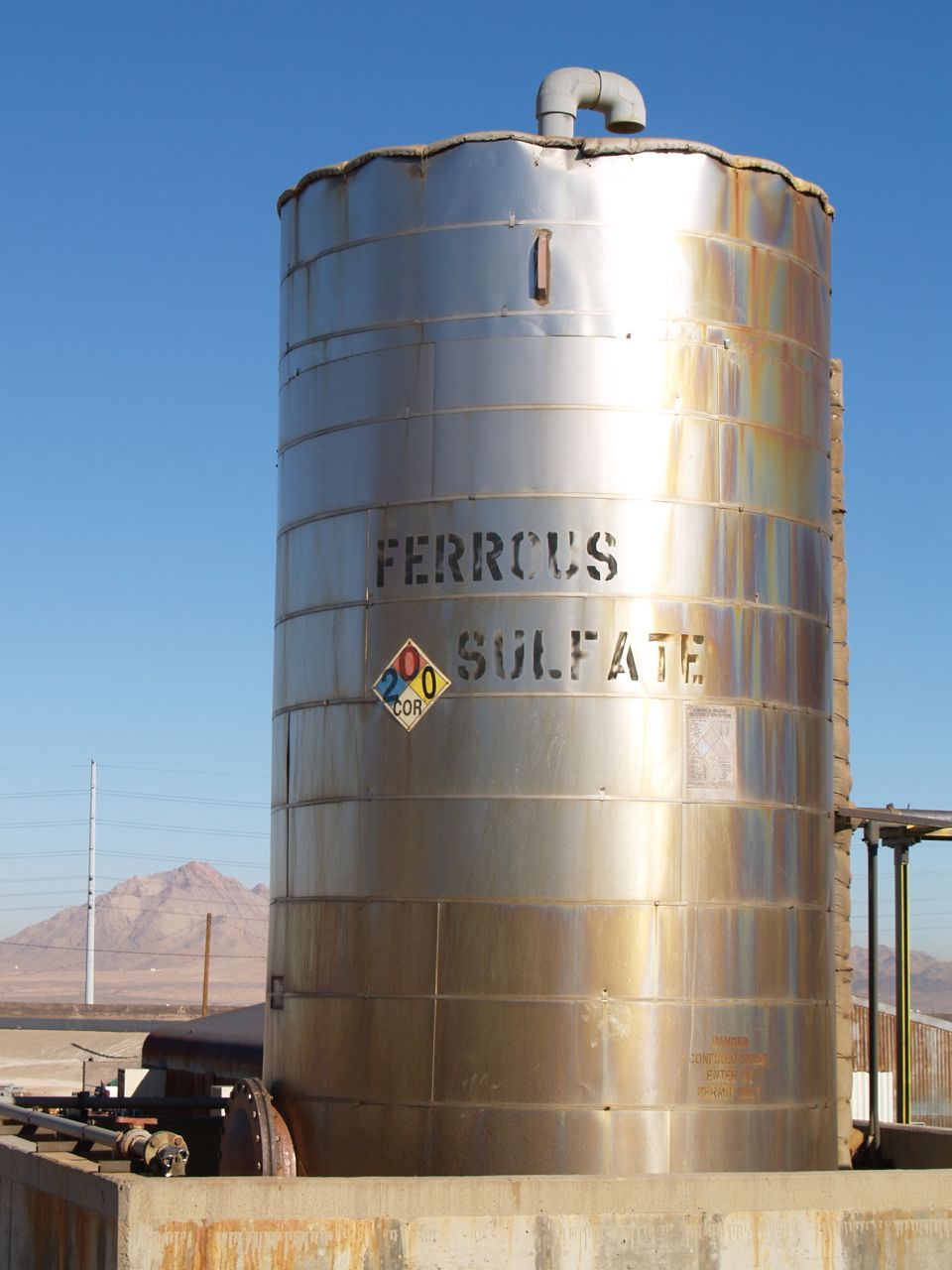
Lots of chemicals on site for the remediation, like ferrous sulfate.

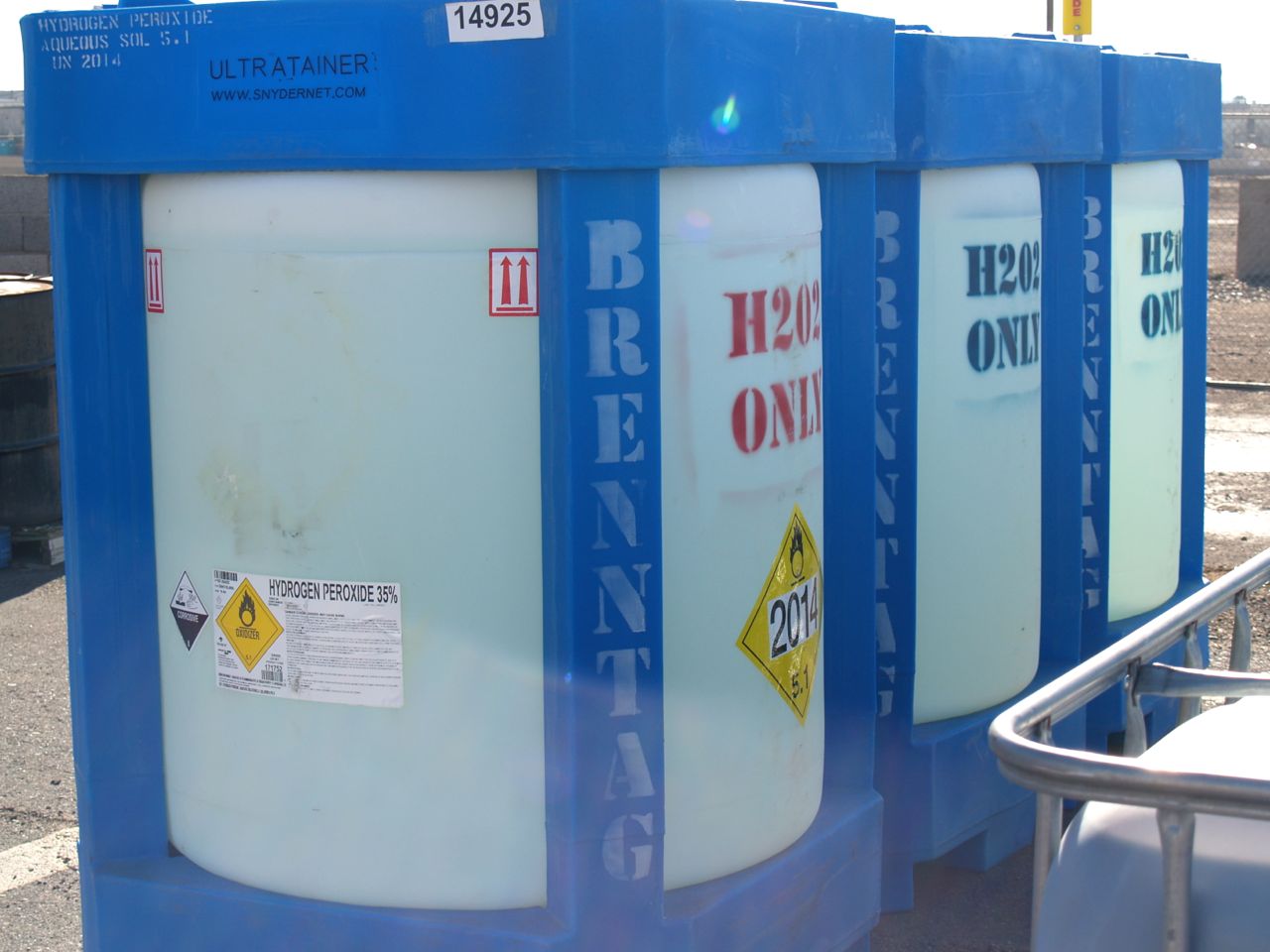
Hydrogen peroxide

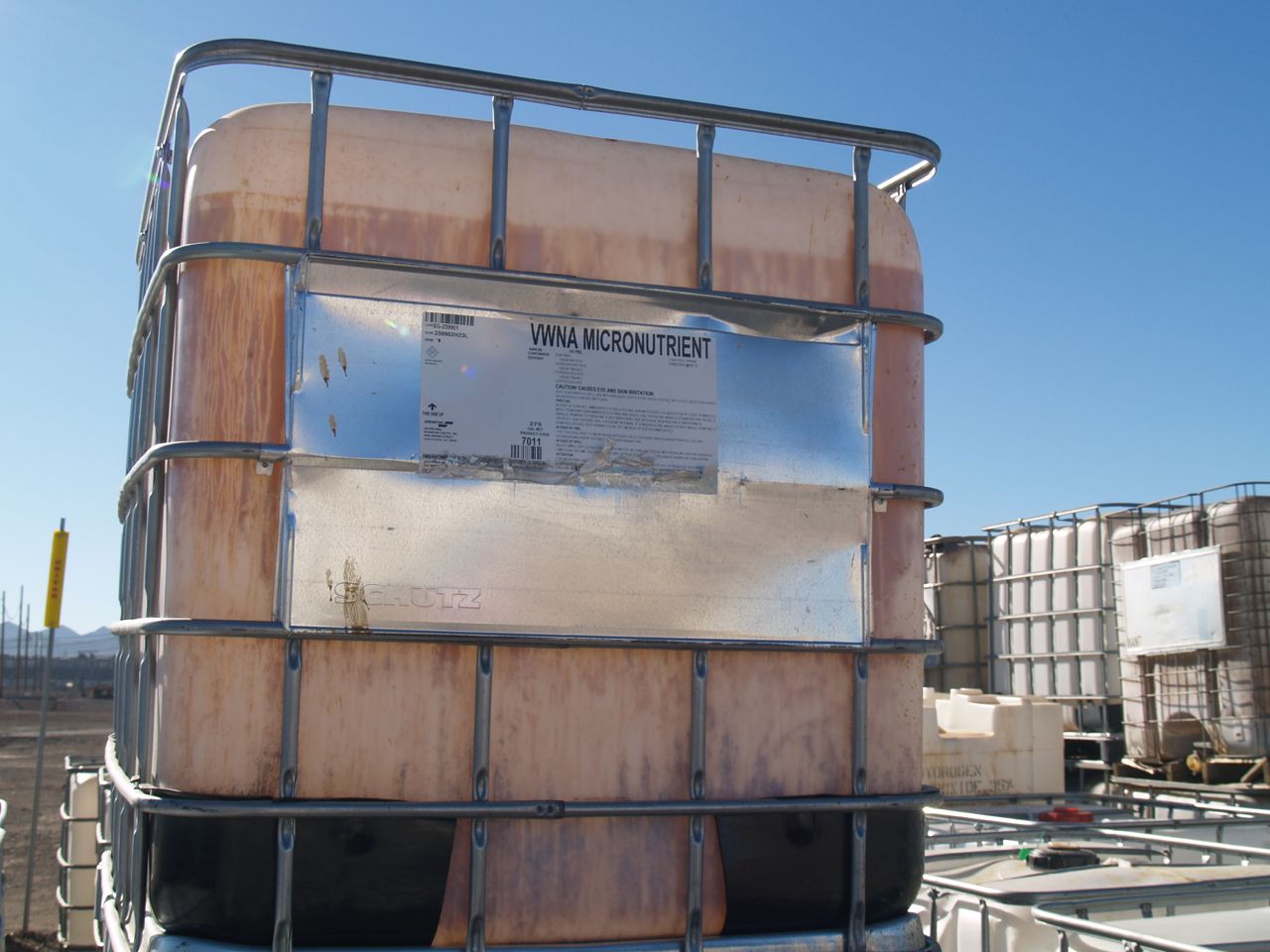
Nutrient for the microbes.

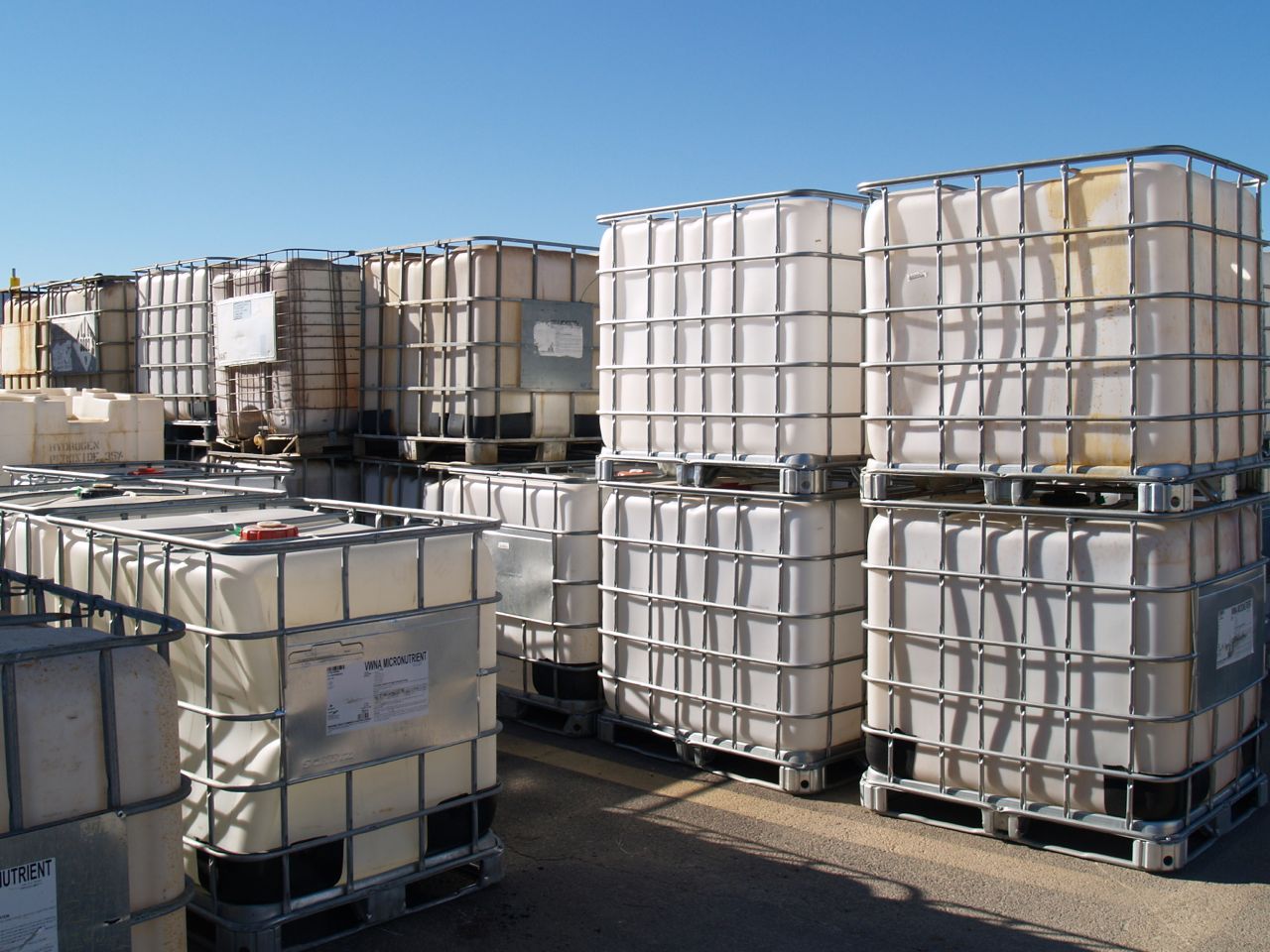
Lots of nutrients for the microbes

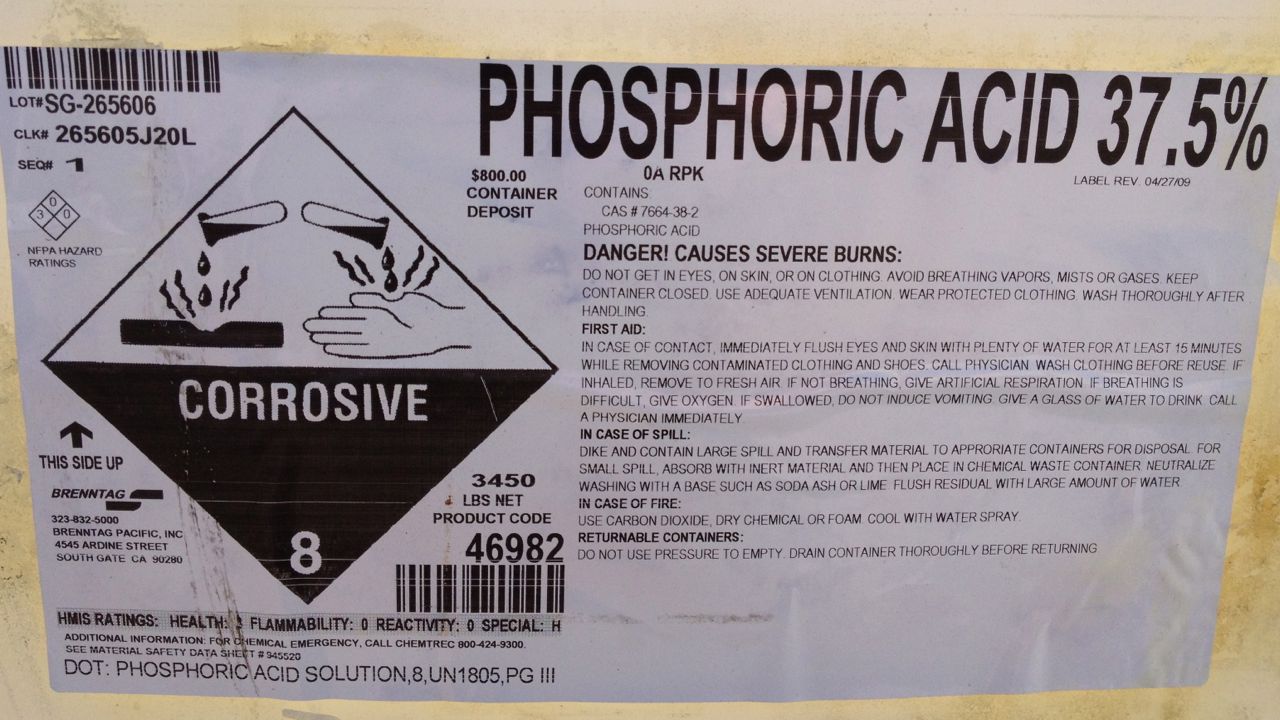
The label on this container notes the dangers of the concentrated phosphoric acid, which it contains. It also notes that there is a $800 deposit on the container, so you definitely want to remember to return the container.

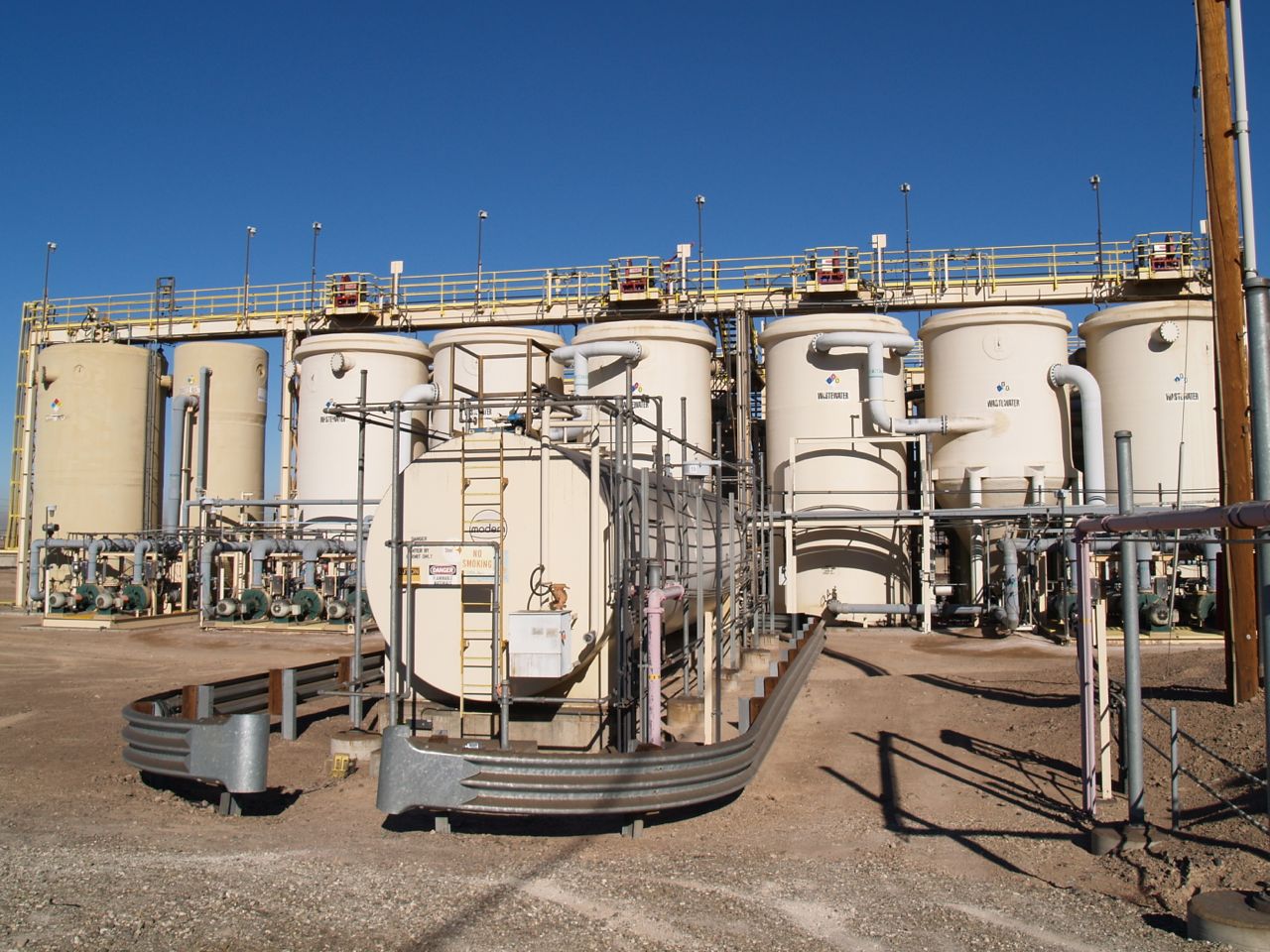
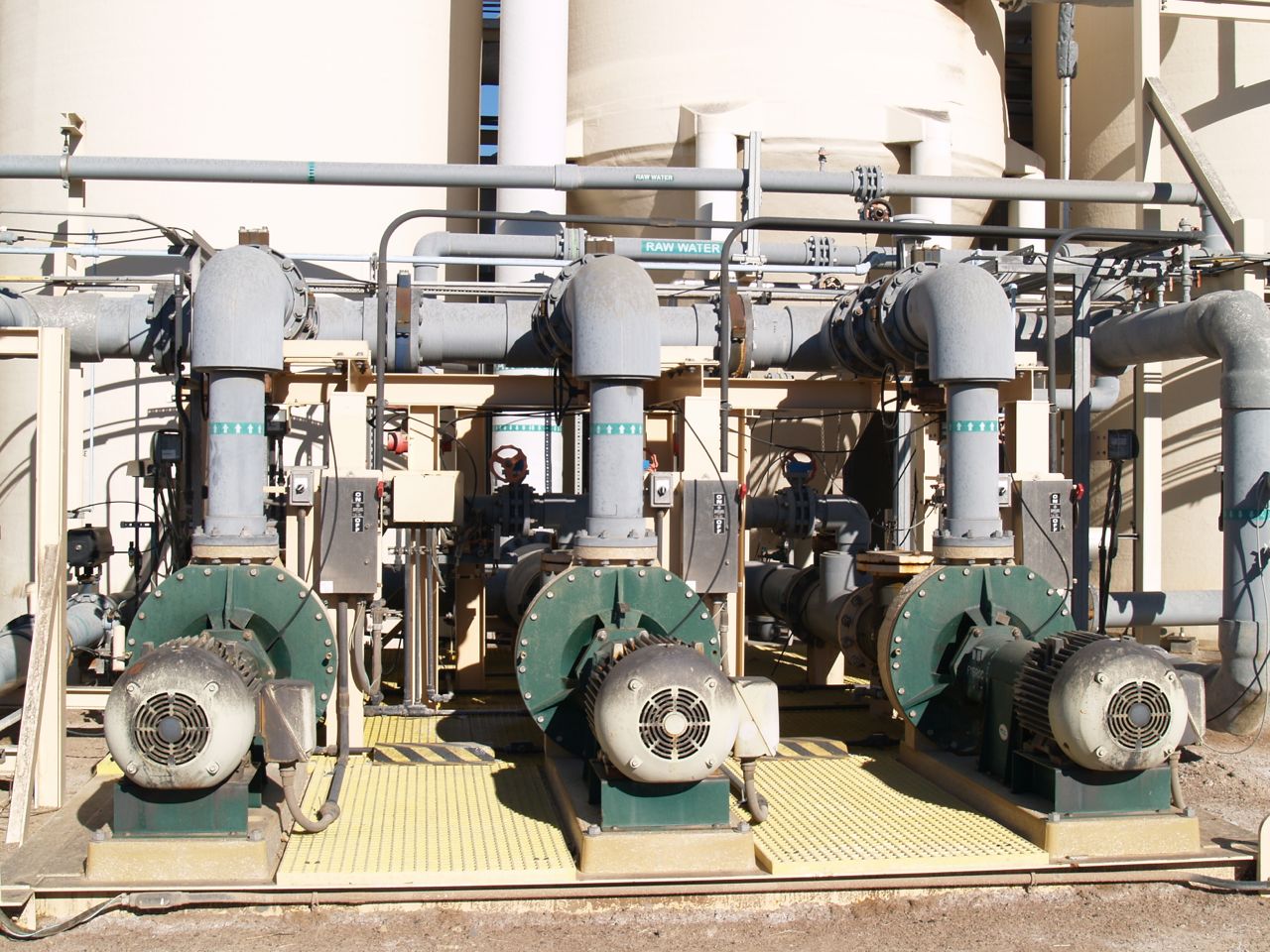
The main part of the site is a series of fluidized bed reaction tanks.

With centrifugal pumps to keep the fluids moving.

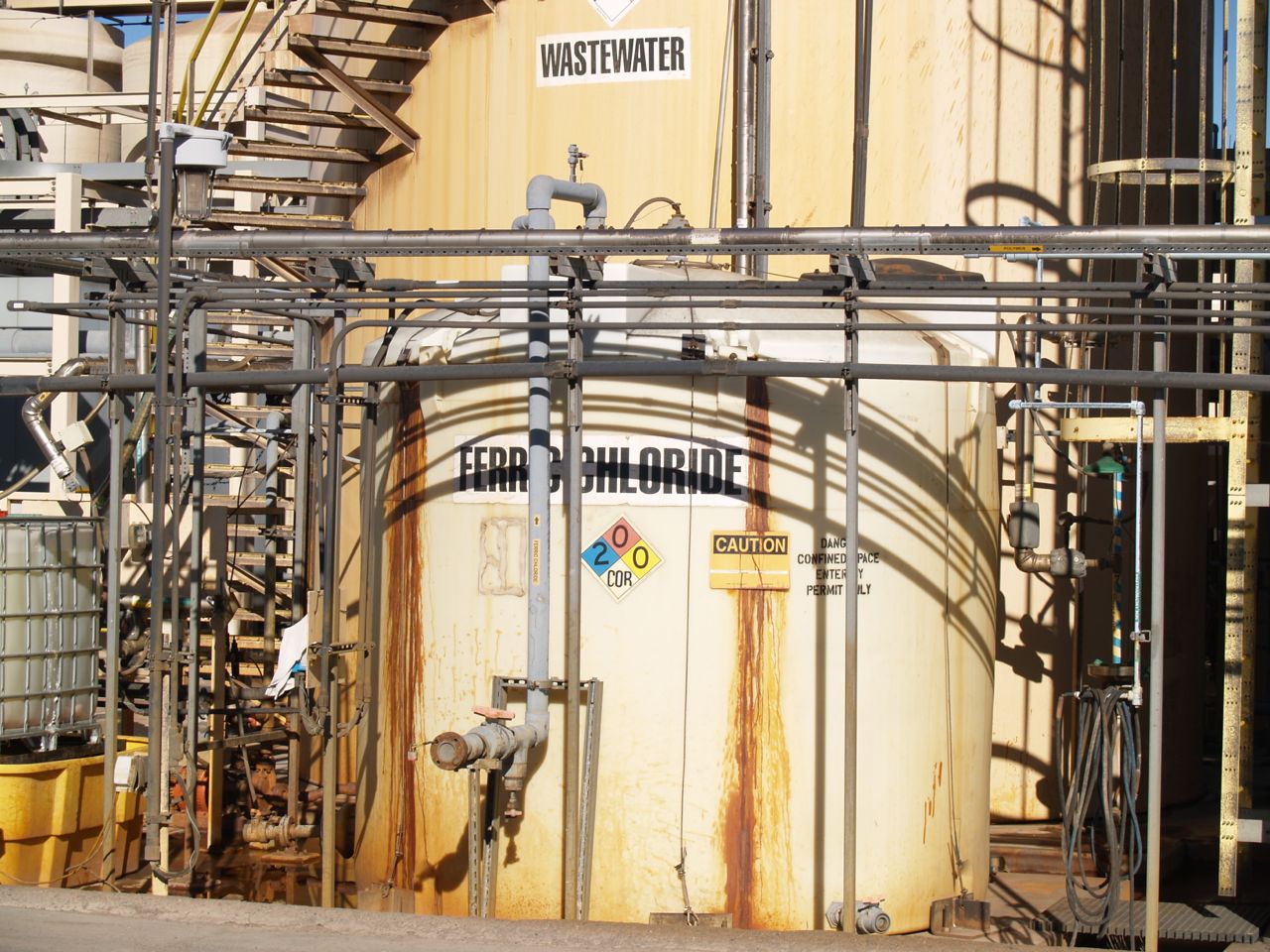
More chemical storage tanks

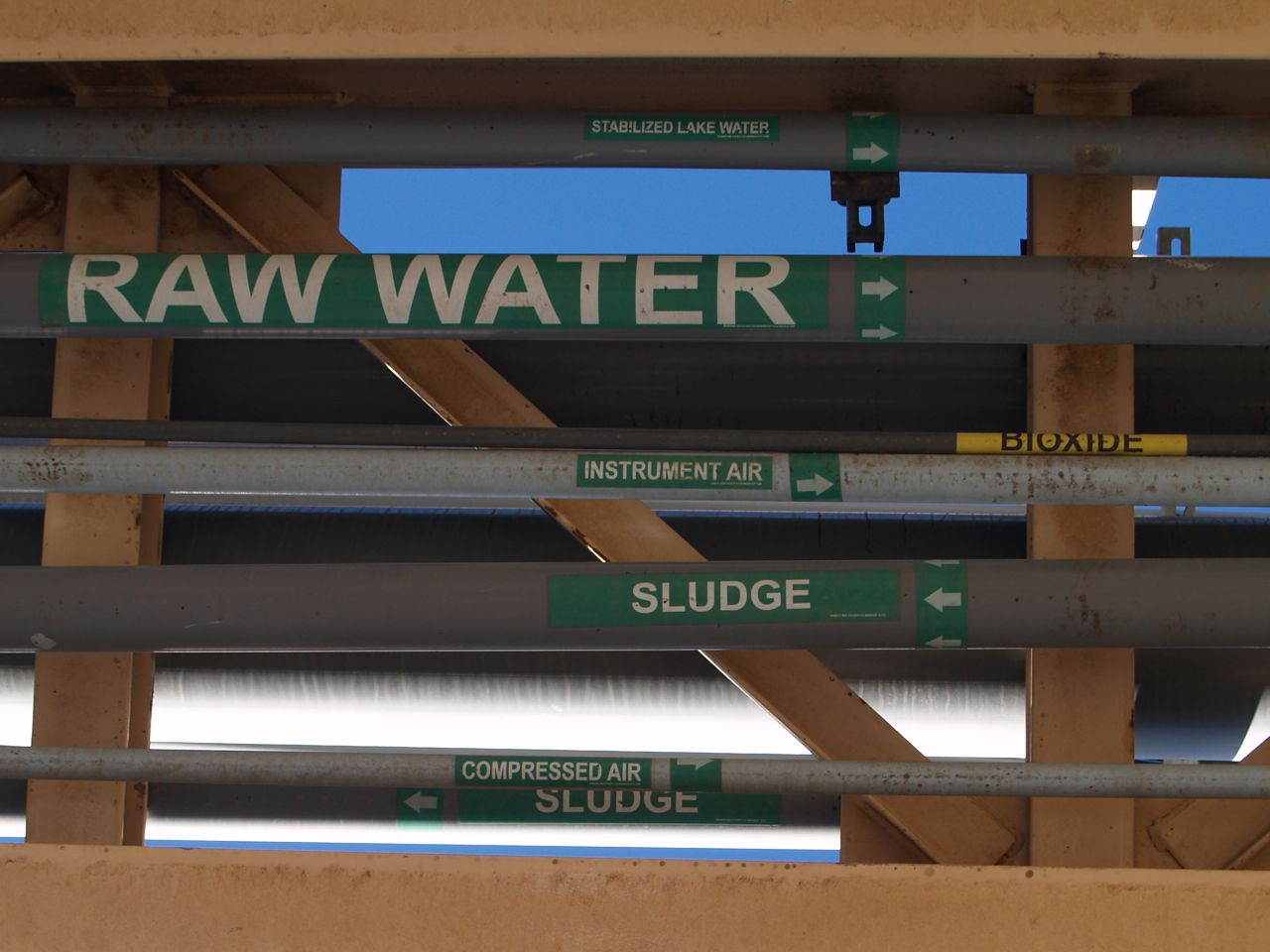
At industrial plants, pipes always need to be labeled.

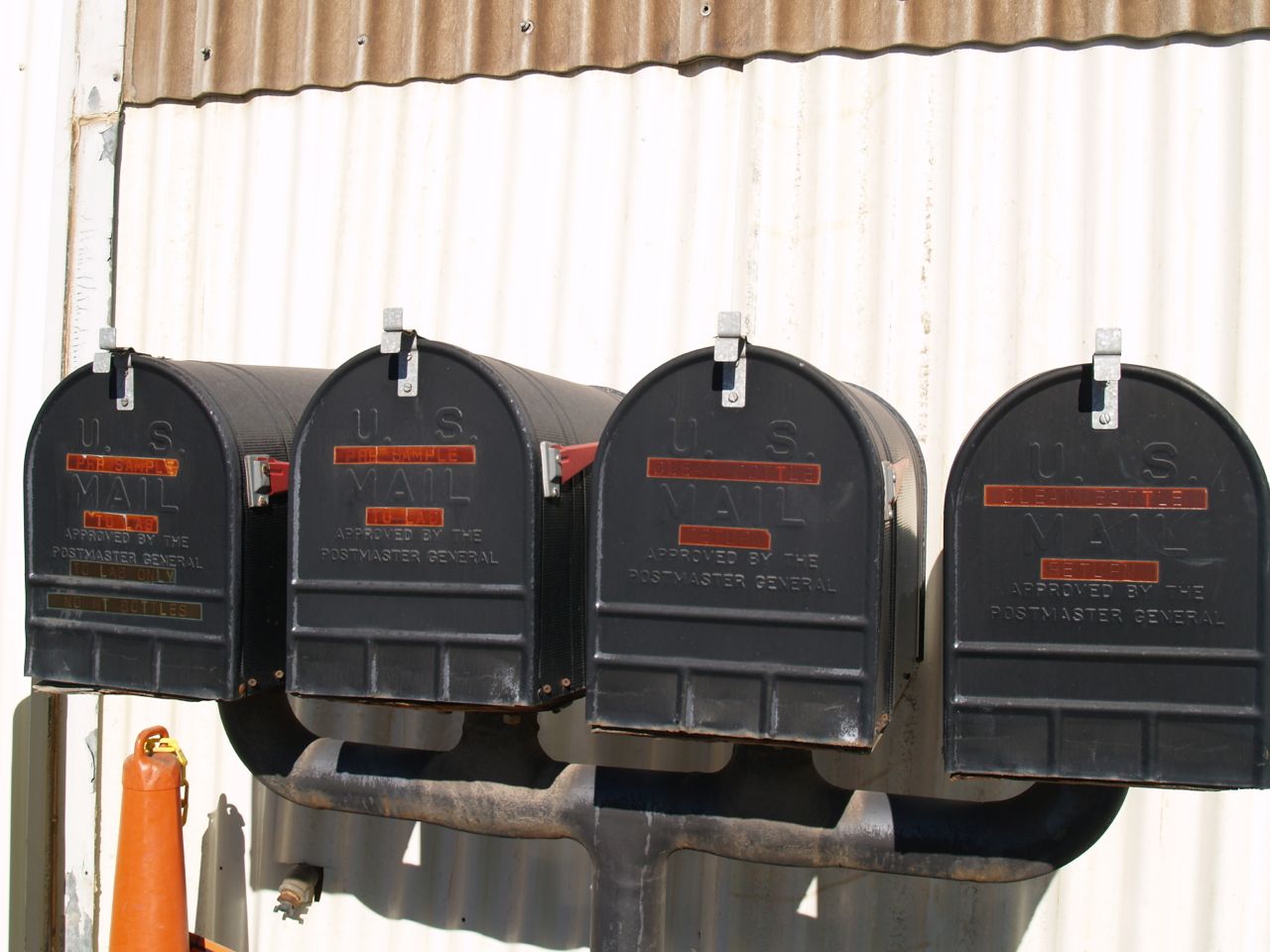
The first two mailboxes are labeled “PAP Sample to Lab,” and the second two are labeled “Clean Bottle Return.” I actually have doubts that these are really being used for pick up of samples to go to the lab. In general, samples need to be refrigerated once taken, and they should not be left in a metal box to bake in the hot sun.

Finally, always remember to drive slowly

Las Vegas, Where Insane Architecture Reigns

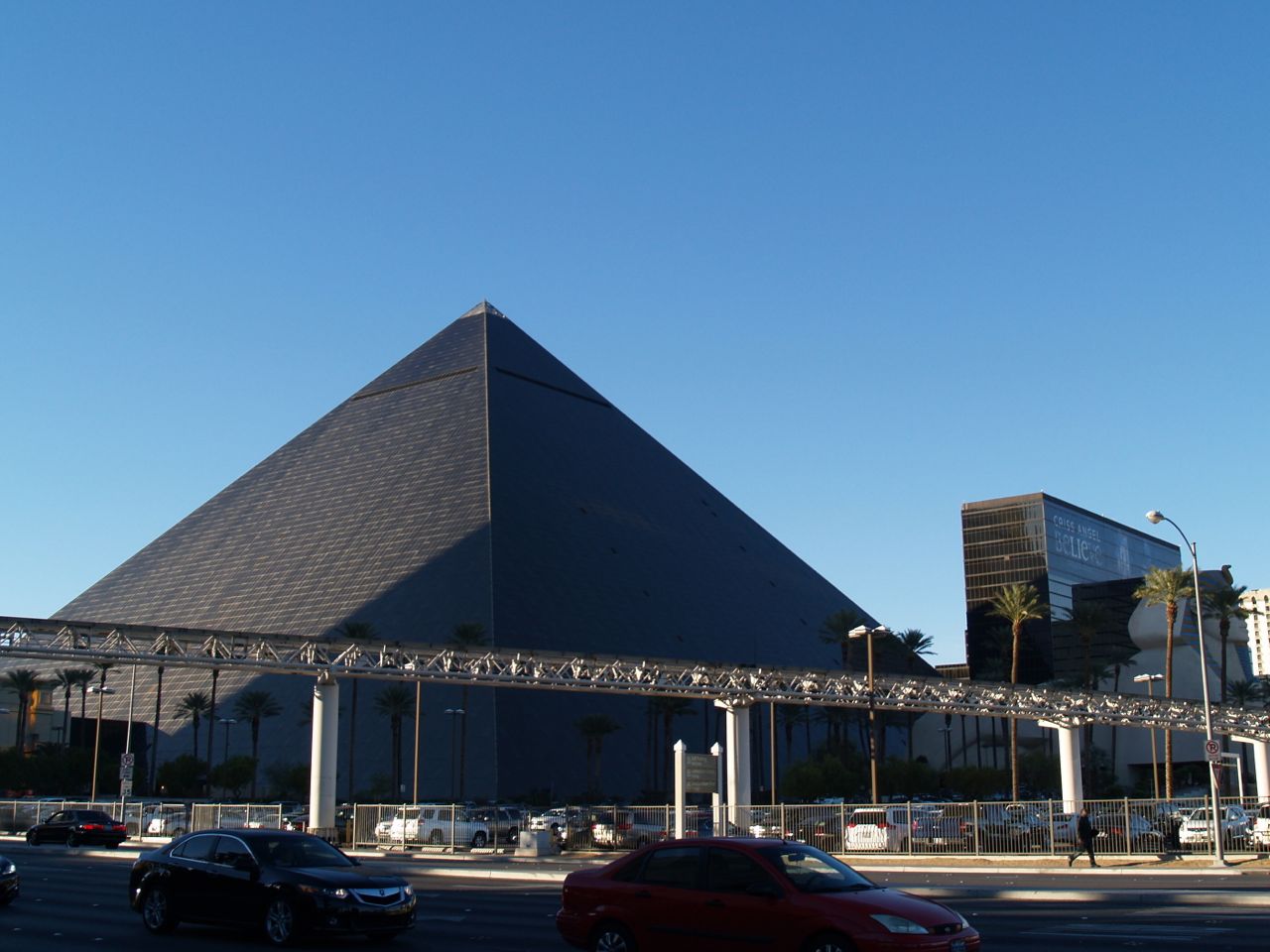
A disclaimer on this post: I am an engineer. Architects and engineers famously don’t get along all that well. Oh sure, we work on projects together, but engineers understand and respect the laws of physics. Architects, not so much. I do in fact like and respect architects, and at one point in high school, I wanted to be one. That was until I realized how much more I like and was better at the math and science of design than the art of it. However I do appreciate good architectural design. Then there is Las Vegas. I need to study the history of Las Vegas because I am really curious when and why casinos started being built with crazier and crazier, over the top themes. The casinos really know how to do a theme also. They completely saturate the property with the theme, whatever it may be. I have to wonder if drugs were involved in the design of some of the casinos. Along the Strip, are casinos and hotels with themes based on at least three different continents, several different time eras, and both real and fictional places. Part of what I find so hilarious is that casinos with completely different themes sit right next to each other. For example, on the southern end of the strip is Mandalay Bay which has water as part of its theme and features an aquarium. Thus it is appropriate (in Las Vegas logic) that next to it is the Luxor, which is themed off of ancient Egypt (i.e. the desert) and features a giant, black glass pyramid, a shape, I might add which is rather inefficient use of space for a hotel. Also, I can’t leave out the fake Sphinx in front of it because of course a pyramid is not complete without a sphinx.

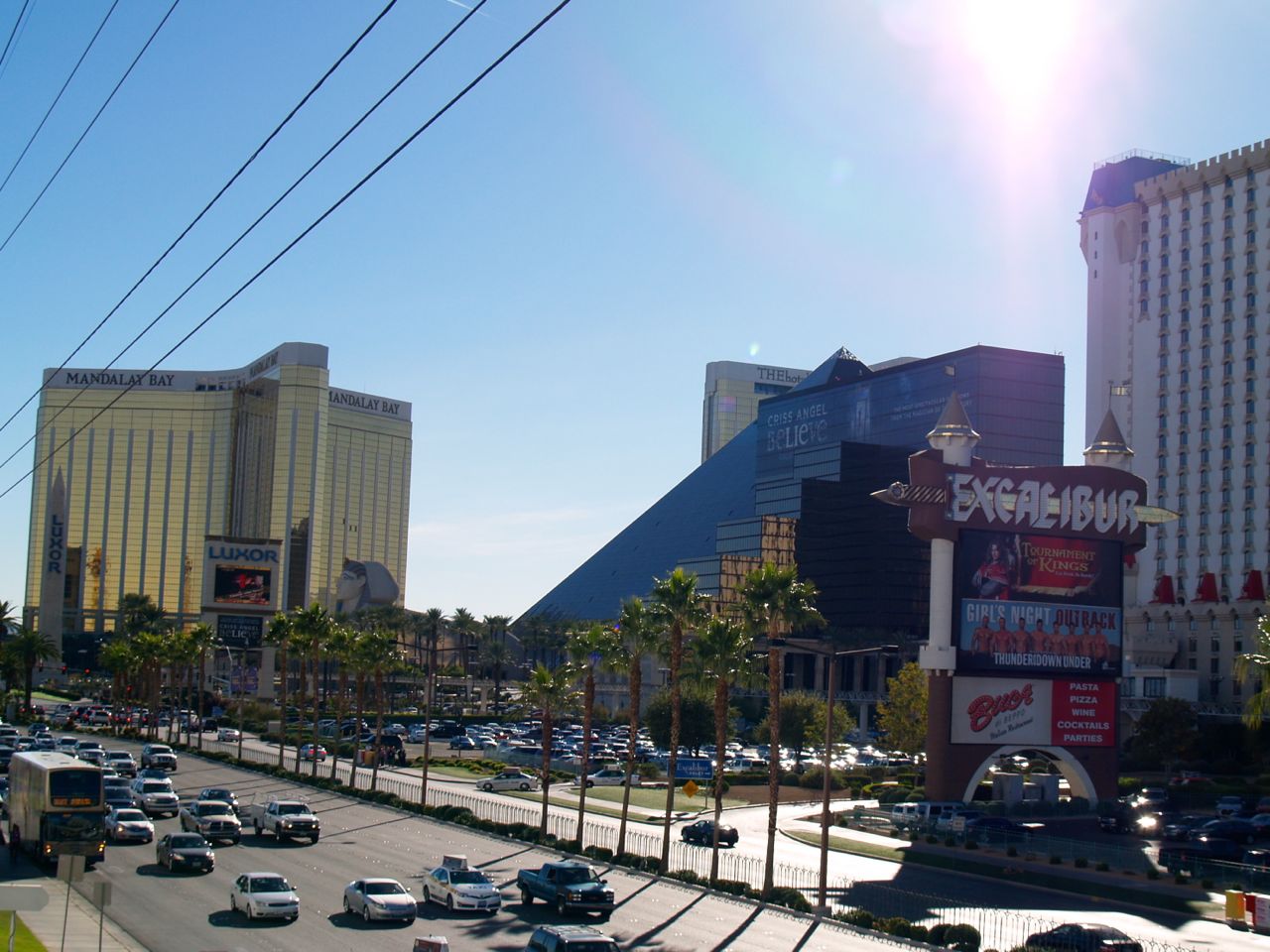
The Luxor sits hilariously next to the Excalibur, so that one can walk from ancient Egypt to the fictionally old England of Camelot.

I must say that while the Excalibur does a nice, over the top, job of a theme based on the fictional England of the Camelot tales, it really does not have a proper moat, and that is a disappointment.

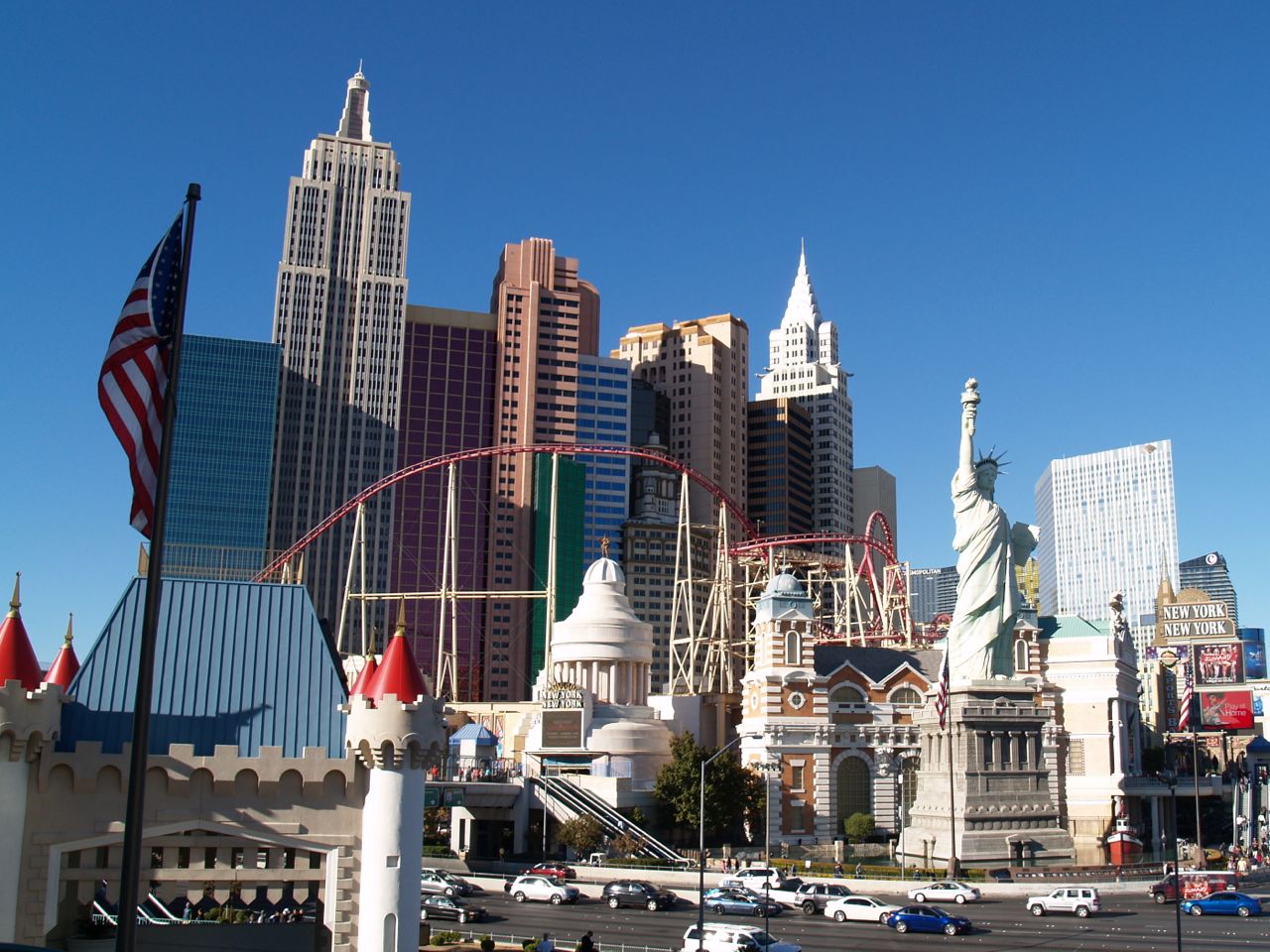
From fictional England, one can then walk to modern day New York City because well, why not?

Across the street from New York New York is the MGM Grand, whose theme I have never been clear on, but it features a giant gold lion head in front. If the MGM Grand lion and the Luxor’s sphinx came to life, would they be friends or enemies? Would they eat the giant M&Ms and drink the giant margarita and coke that sit next to the MGM Grand in what appears to be food trademark central?

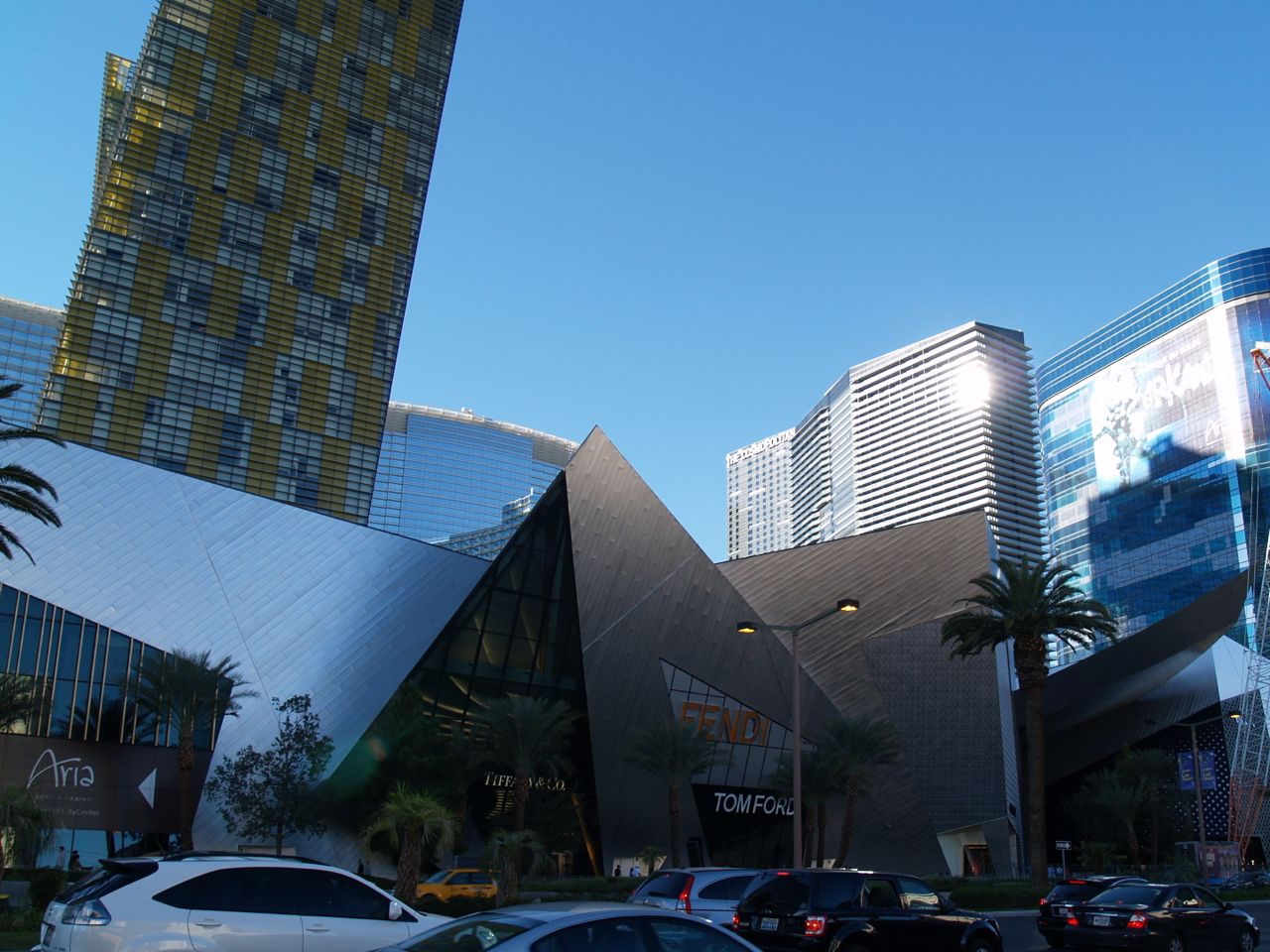
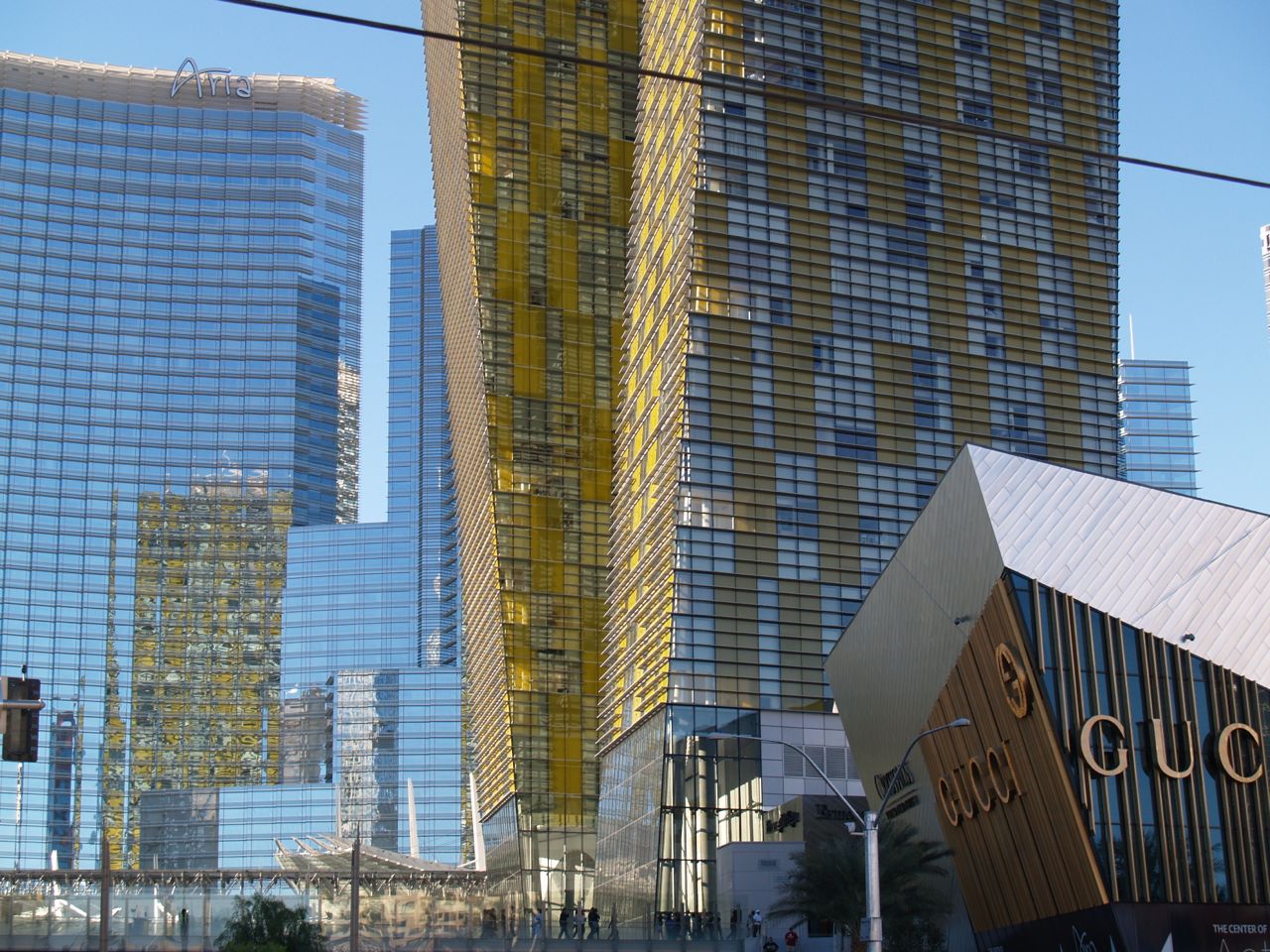
Very close to all the gaudiness and insanity is the brand new CityCenter, which features some absolutely gorgeous buildings and in my opinion, looks rather out of place on the Strip.

At the front of CityCenter is the Crystals at CityCenter designed by Daniel Libeskind in his trademark disjointed, angled buildings design. I am rather a fan of Daniel Libeskind. He and Frank Gehry are probably my favorite modern architects, but I could never work on the construction of any of their buildings because first, I’m not that type of engineer, and second because they seem to enjoy designing buildings that try to break the laws of physics.

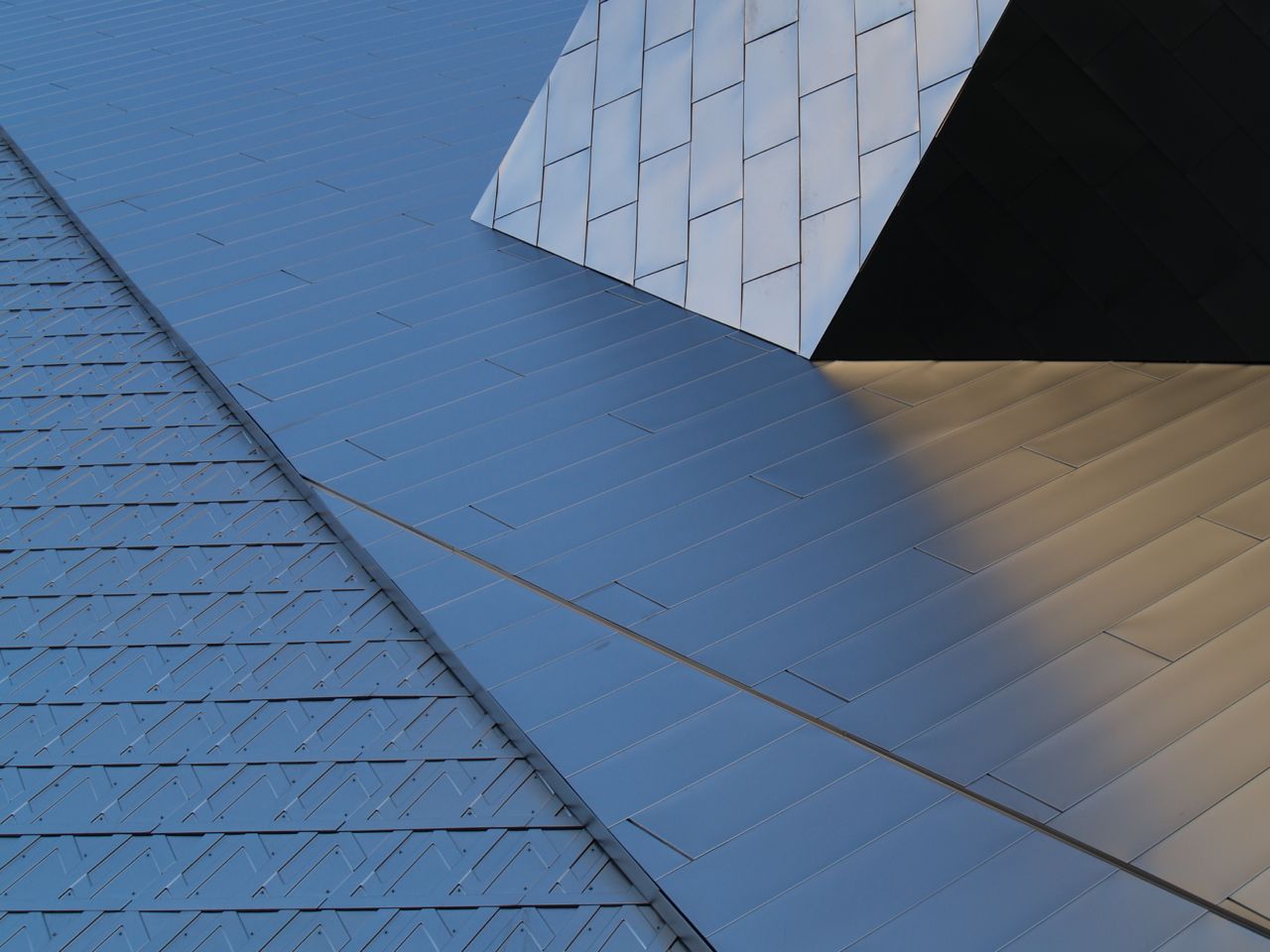
The Crystals is even interesting up close due to the different materials and textures on the exterior.

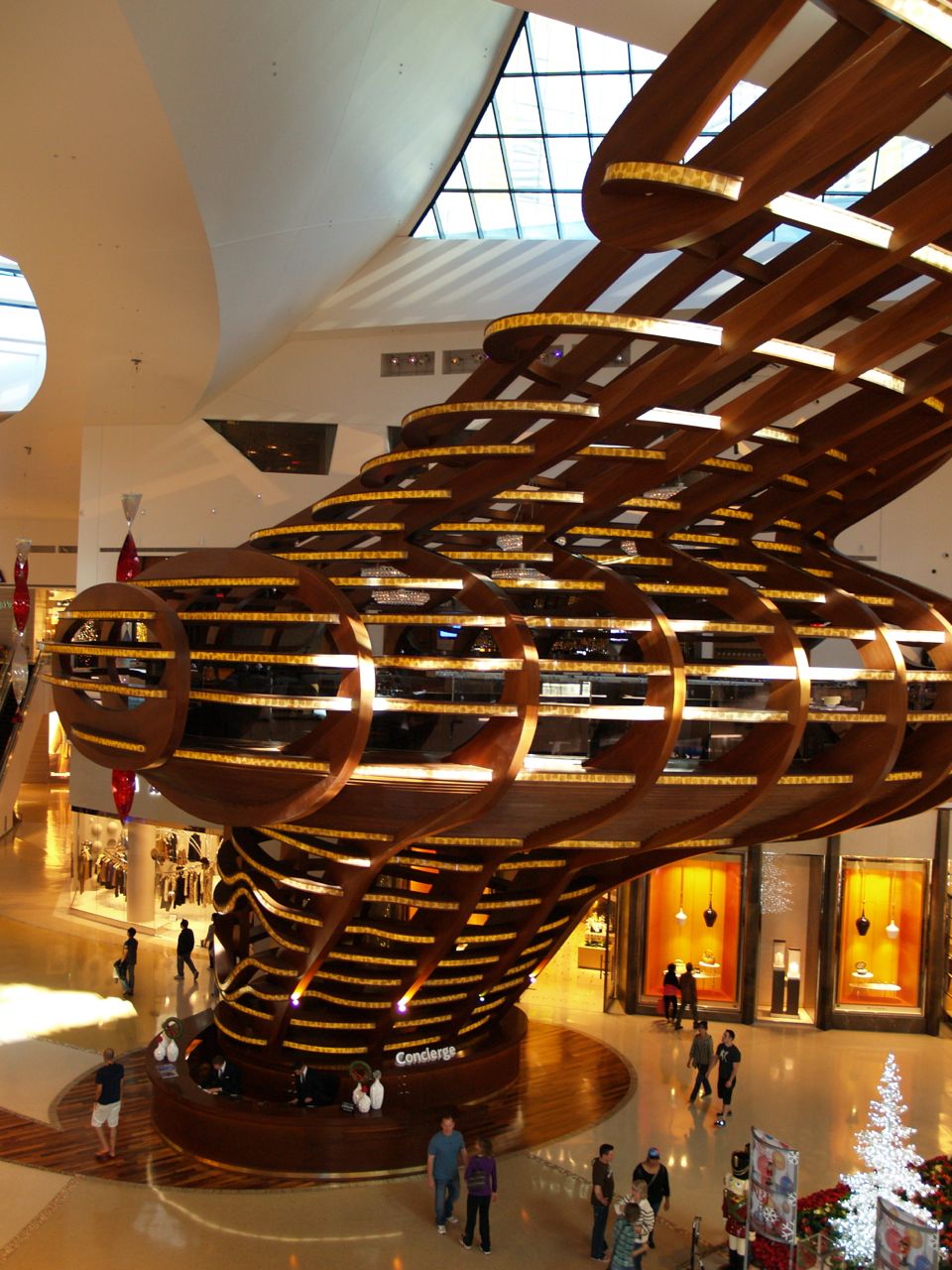
Inside the Crystals is more insane architecture. I have no idea what this wooden structure is supposed to be.

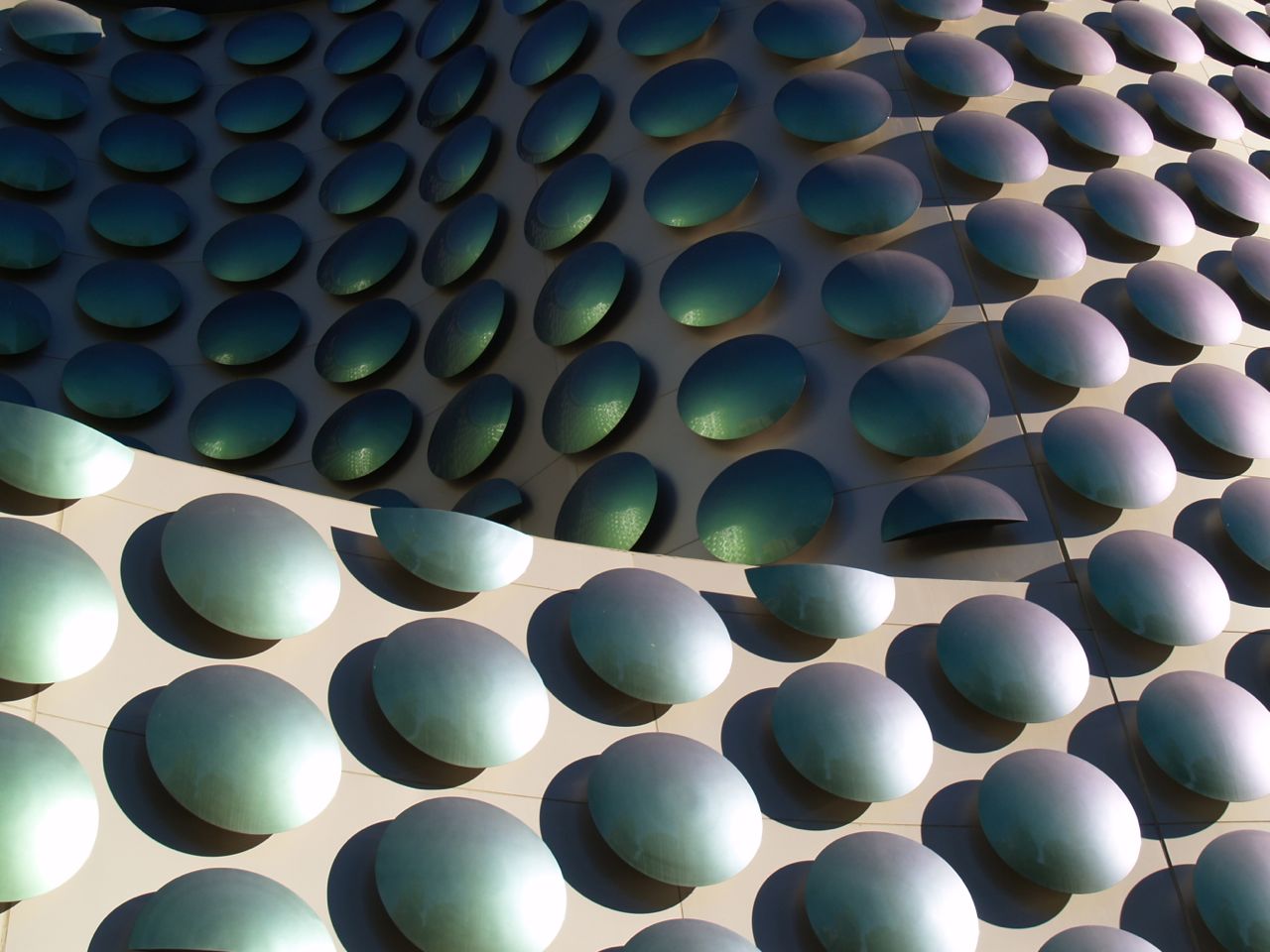
Across the street from CityCenter is Planet Hollywood and the Miracle Mile Shops, whose architecture is not really insane, just rather loud. The exterior of the Miracle Mile Shops features a series of three-dimensional dots that look either green or purple depending on the direction from which they are viewed. I have no idea what they are supposed to represent, but they are kind of cool.

Next to Planet Hollywood, we again travel to another continent with Paris which features a scale model of the Eiffel Tower because again, why not?

At this point on the strip, you can look at a scantly clad women from Bally’s who appears to be looking at Paris, perhaps to get some much needed clothes for which Paris is famous. Across the street is the edge of ancient Rome (Ceasar’s Palace), modern (?) Italy (Bellagio), and the modern architecture of CityCenter. Only in Las Vegas.

The Strip is not done yet though. Across from ancient Rome is the Flamingo, which is not all that outrageous, but just features lots of pink flamingos that would never be found in Nevada. Then the Asian themed Imperial Palace, which appears to be coming down or being renovated. Asia is next to the New Orleans’s Mardi Gras themed Harrah’s. Close to this, we go back to Italy with the Venetian and Palazzo. Italy is very popular on the Strip.

Across the street from fake Venice is the Mirage with its waterfall that at night has a volcano on top of it. Again, why not?

In the background is Treasure Island which of course has pirates. Don’t most deserts have pirates? Oh wait. . . Then slightly further down the strip is the Fashion Show Mall which appears to just be a mall, but a UFO landed on top it. No doubt the UFO got lost from nearby Area 51. Further down from it is the Stratosphere which features a roller coaster on top of a really tall tower because isn’t that where most people put their roller coasters?

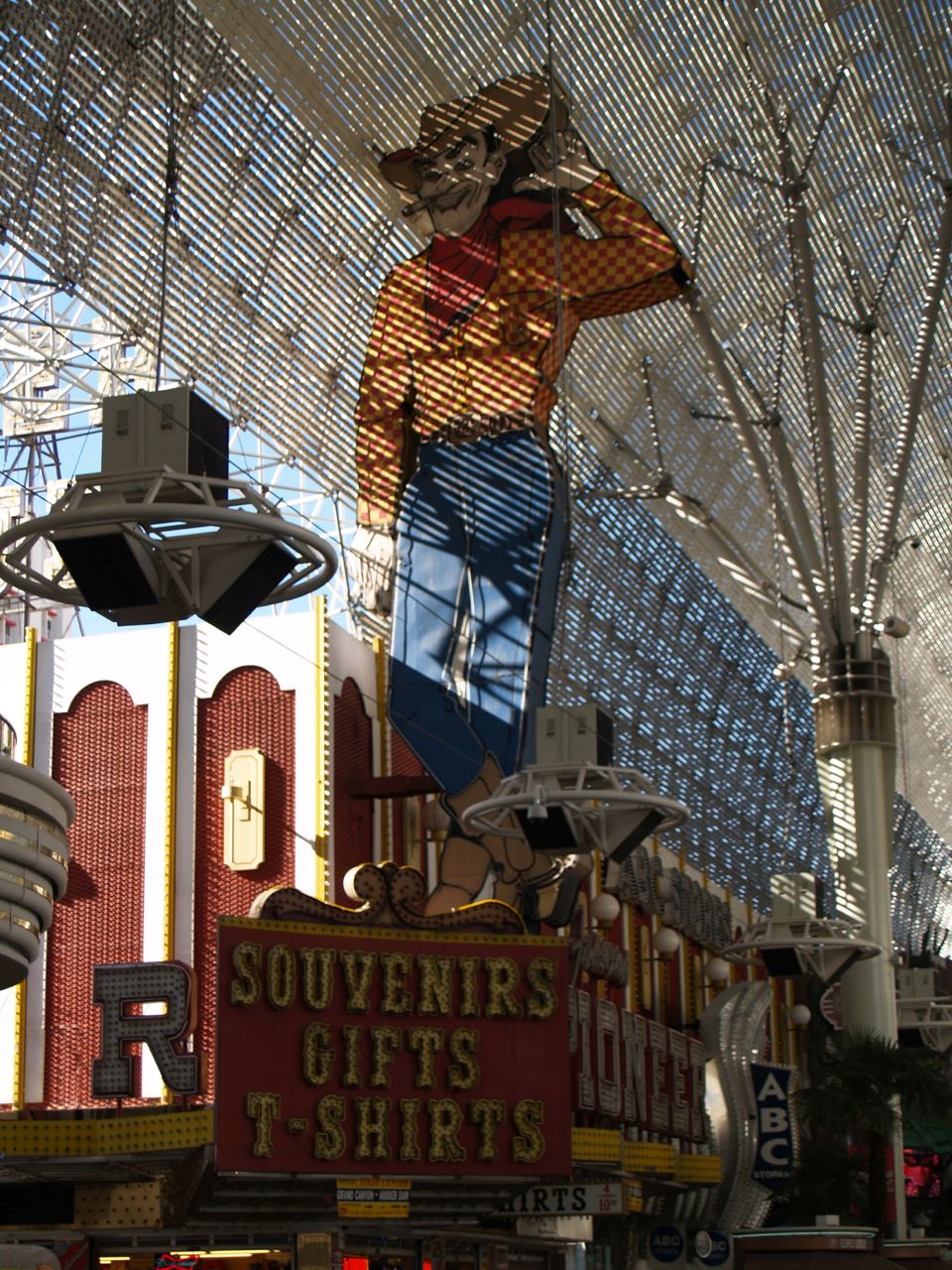
Well north of the Strip are the really old casinos of Fremont Street. Several years back, they built the Fremont Street Experience, a light structure to help bring business back to their area and away from the Strip. From an engineering standpoint, the Fremont Street Experience is a cool structure.

One of the fun things about the Fremont Street Experience is that it is a light show that encapsulates other lighted advertisement signs.

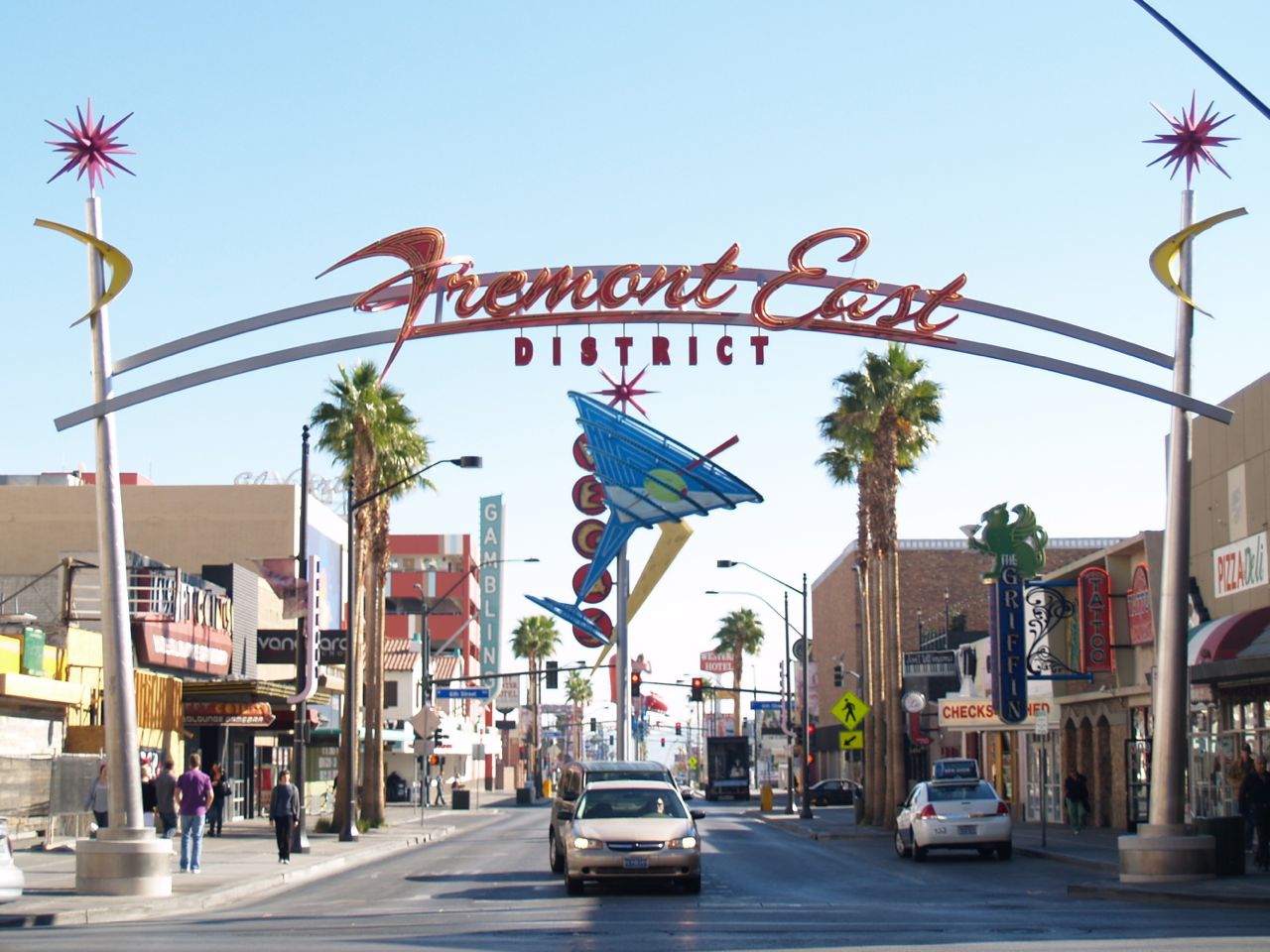
I have to wonder how much electricity would be saved if all of Las Vegas’s lights were converted to LEDs. At the east end of the Fremont Street Experience is Fremont East. I have no idea what is in this district, but it features a fun, retro martini sign. Presumably there are bars there, but I think that goes without saying.

So that was my one cent tour of the insane architecture of Las Vegas. I hope you enjoyed the visit. I did.


Hoover Dam and Bypass Bridge

On my recent trip to Las Vegas, I made a trip out to Hoover Dam. As an engineer, I have an irresistible urge to visit important engineering landmarks. However, I don’t think you have to be an engineer to realize what a marvel the Hoover Dam is. Too many hardworking men died building it (one is too many though), and it has caused ecological problems by altering the flow of the Colorado River. However from an engineering stand point, it is an absolute marvel. The new bypass bridge next to it, more formally known as the Mike O’Callaghan – Pat Tillman Memorial Bridge, is in my opinion also a marvel and beautiful in its design. Part of the reason I consider both the dam and bridge to be marvels is where they were built, across the very steep, deep canyon of the Colorado River. The Hoover Dam was built with some really nice details that I have to wonder if most visitors appreciate or even notice. It was not just built as a plain hunk of concrete, especially on top where visitors walk. The bypass bridge was also built with some nice details, including many education plaques explaining how the bridge was built and why.

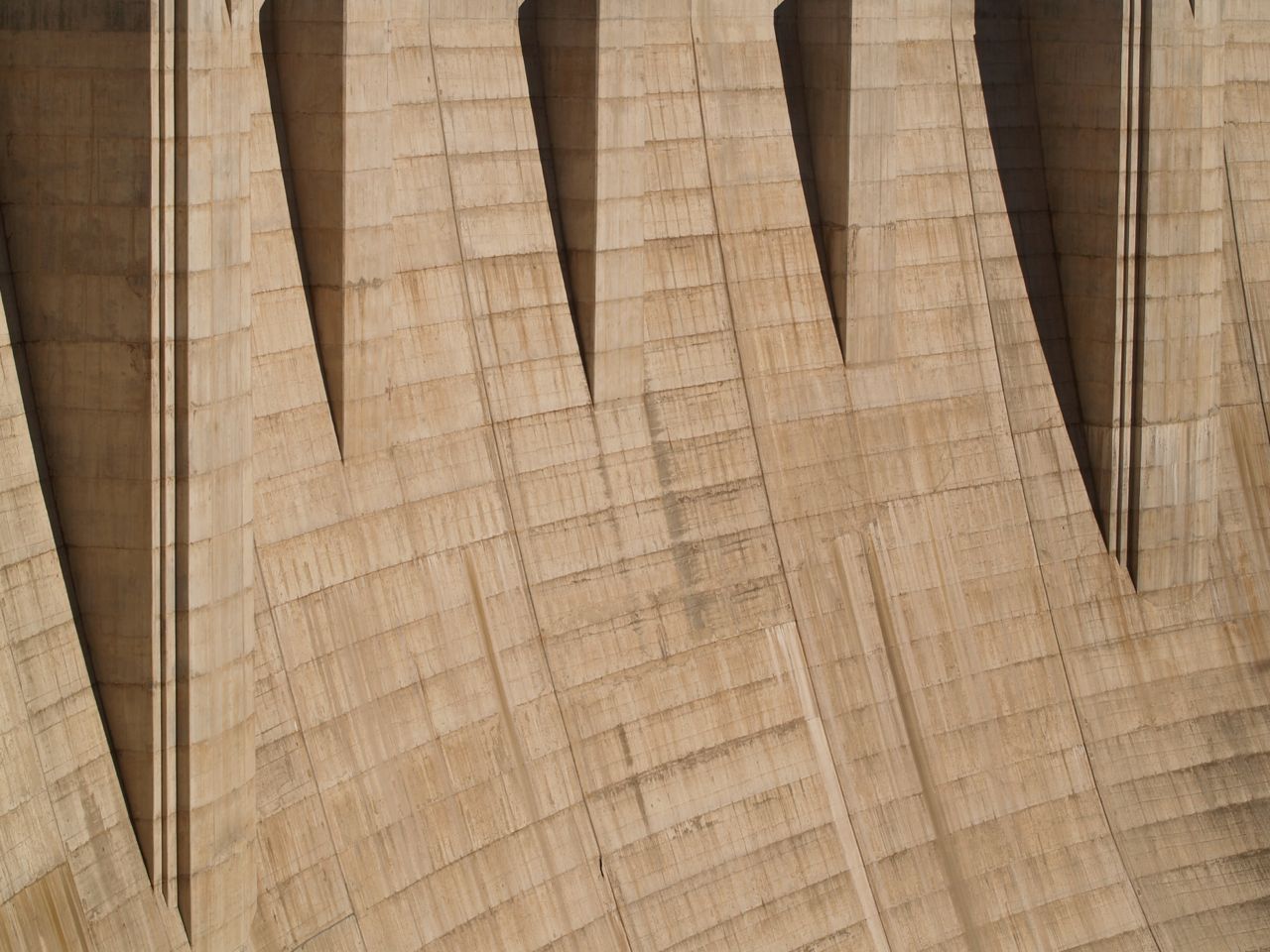
On a basic level, the Hoover Dam is a large block on concrete, carefully poured to hold back the Colorado River, and its adjoining power plant.

Actually, it is not a large block of concrete. It is a massive structure of carefully and individually poured blocks of concrete that form one connected structure.

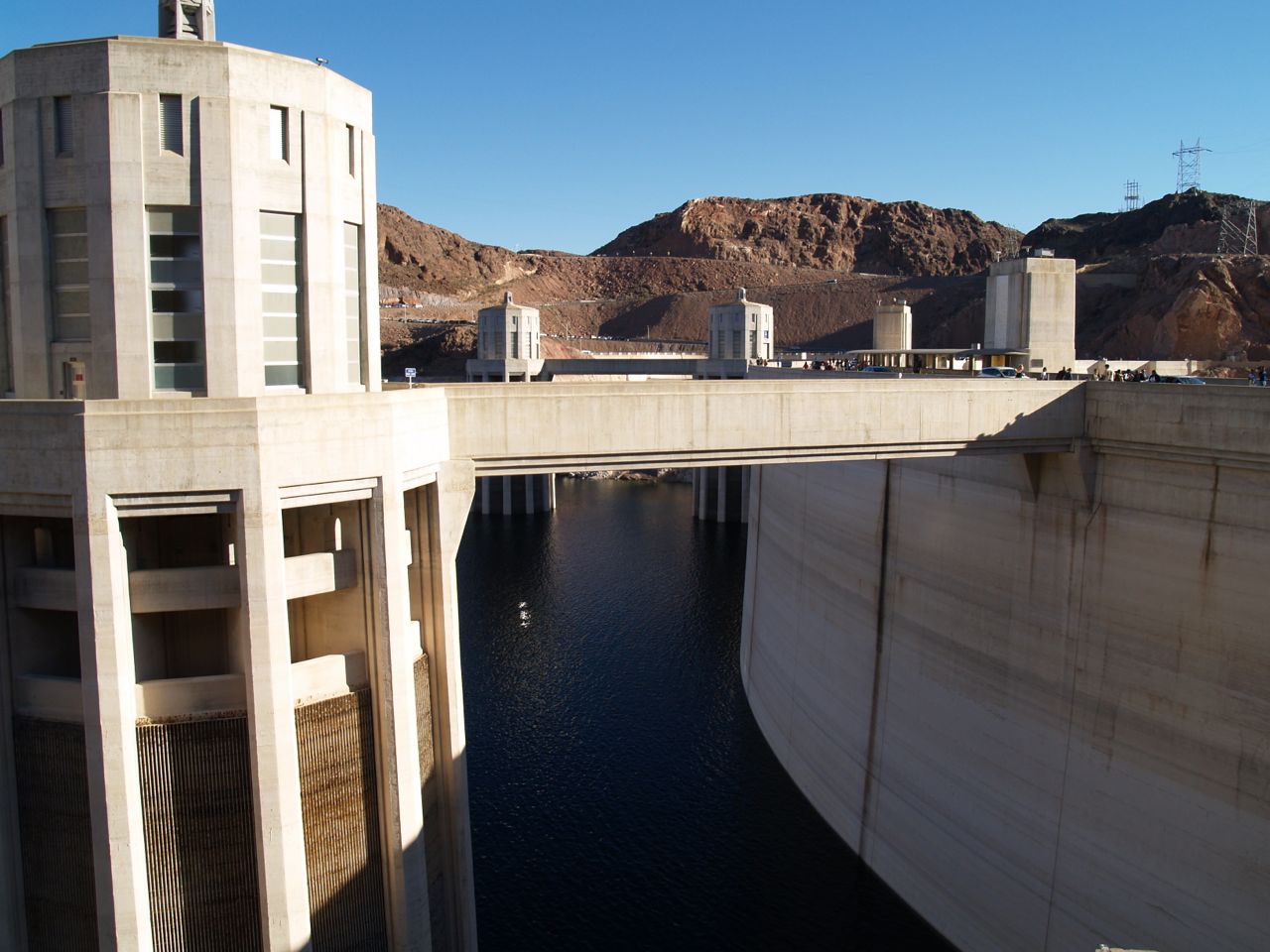
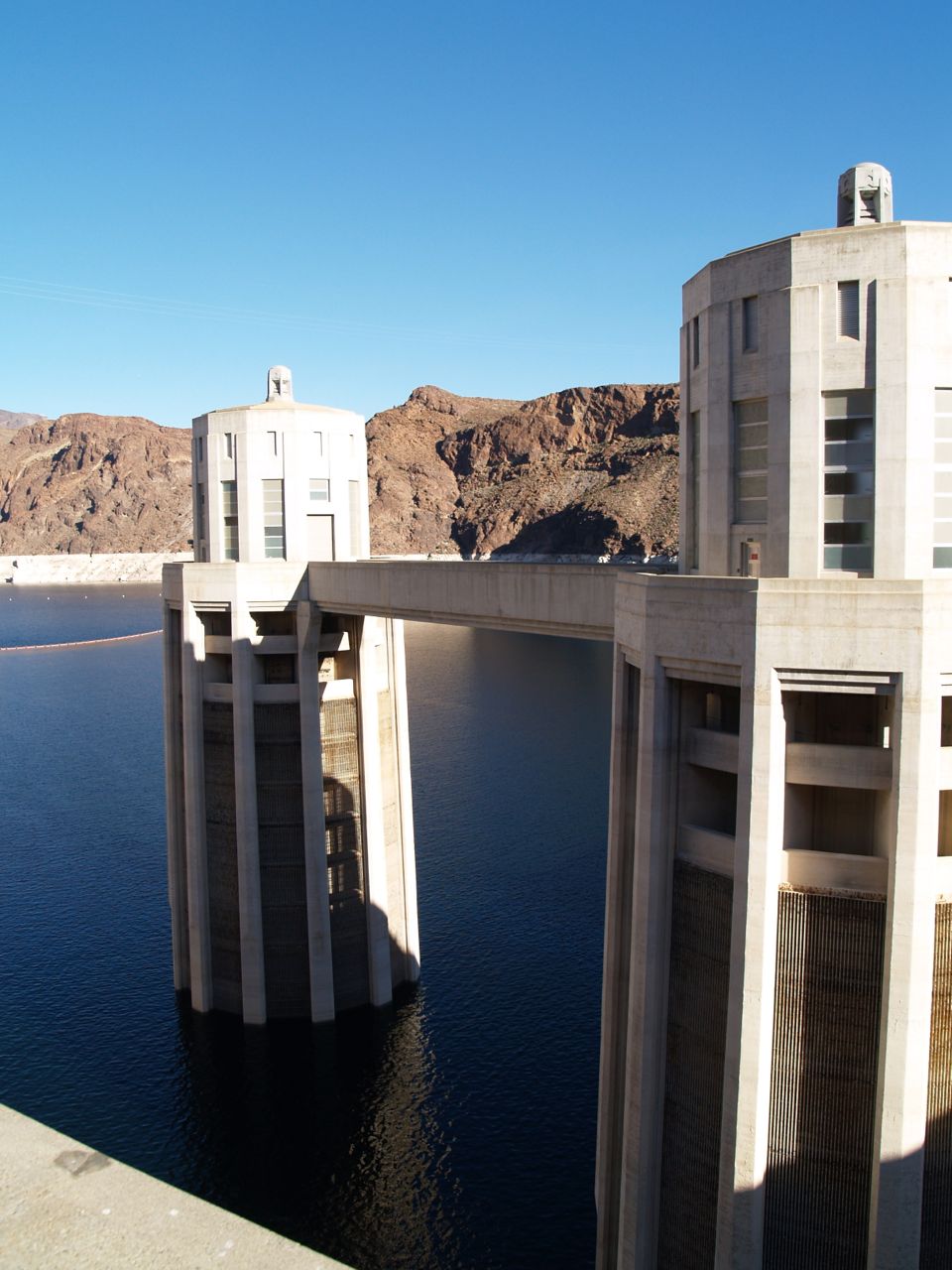
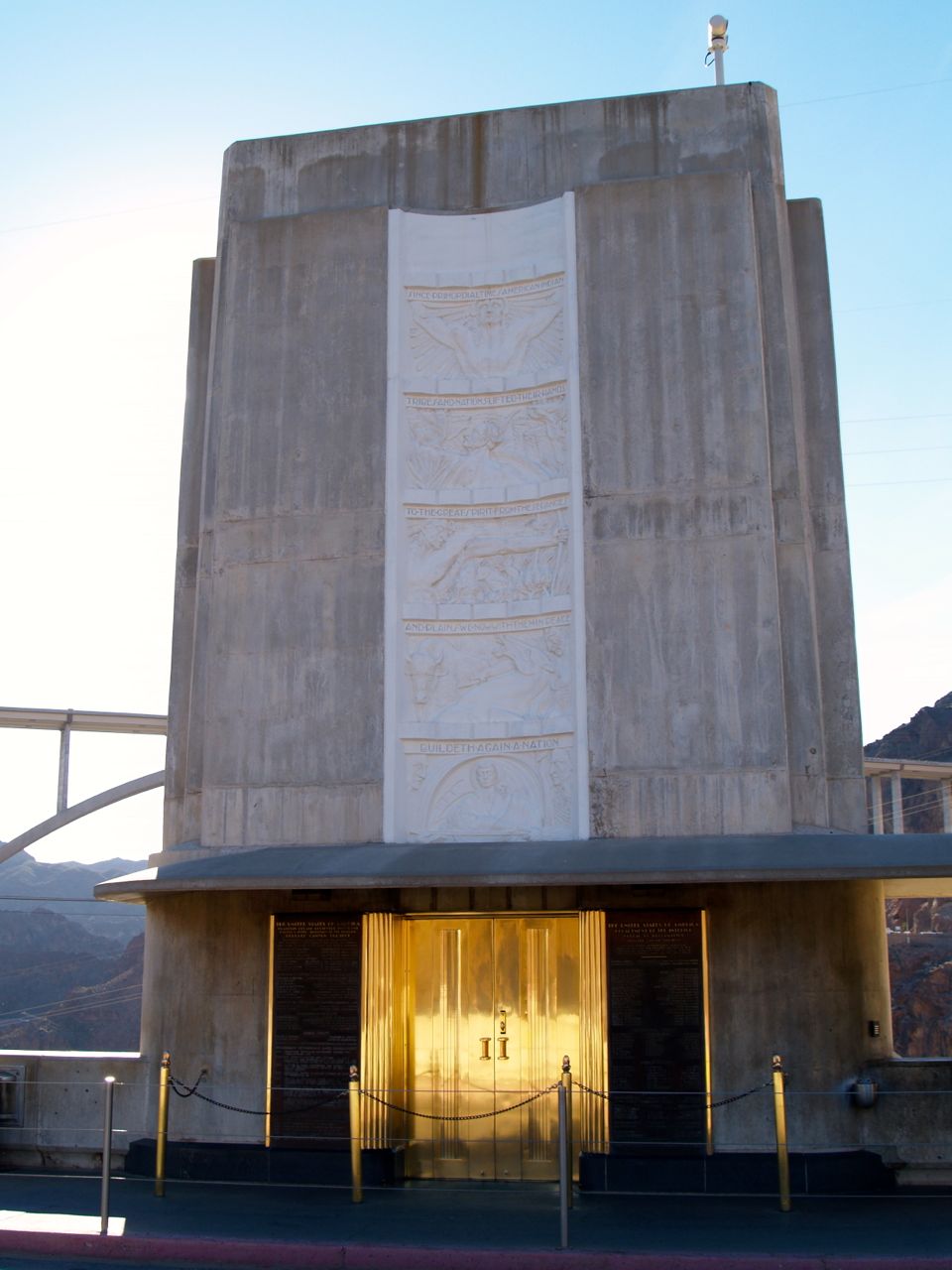
It has its four connected intake towers to bring the water to the power plant. The intake towers were nicely designed in an art deco style.

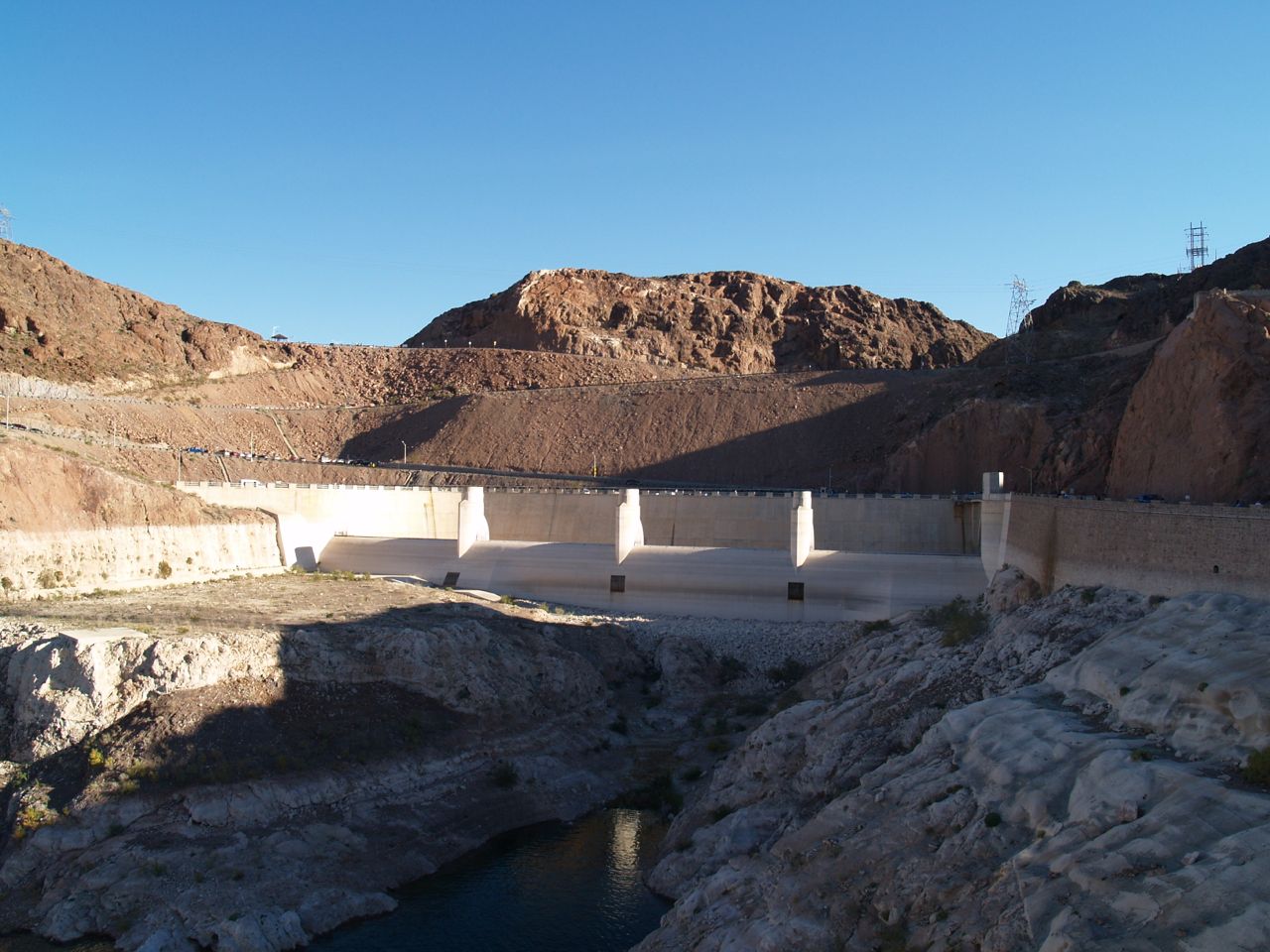
Lake Mead water level has been dropping, so currently the Arizona overflow spillway is entirely out of the water.

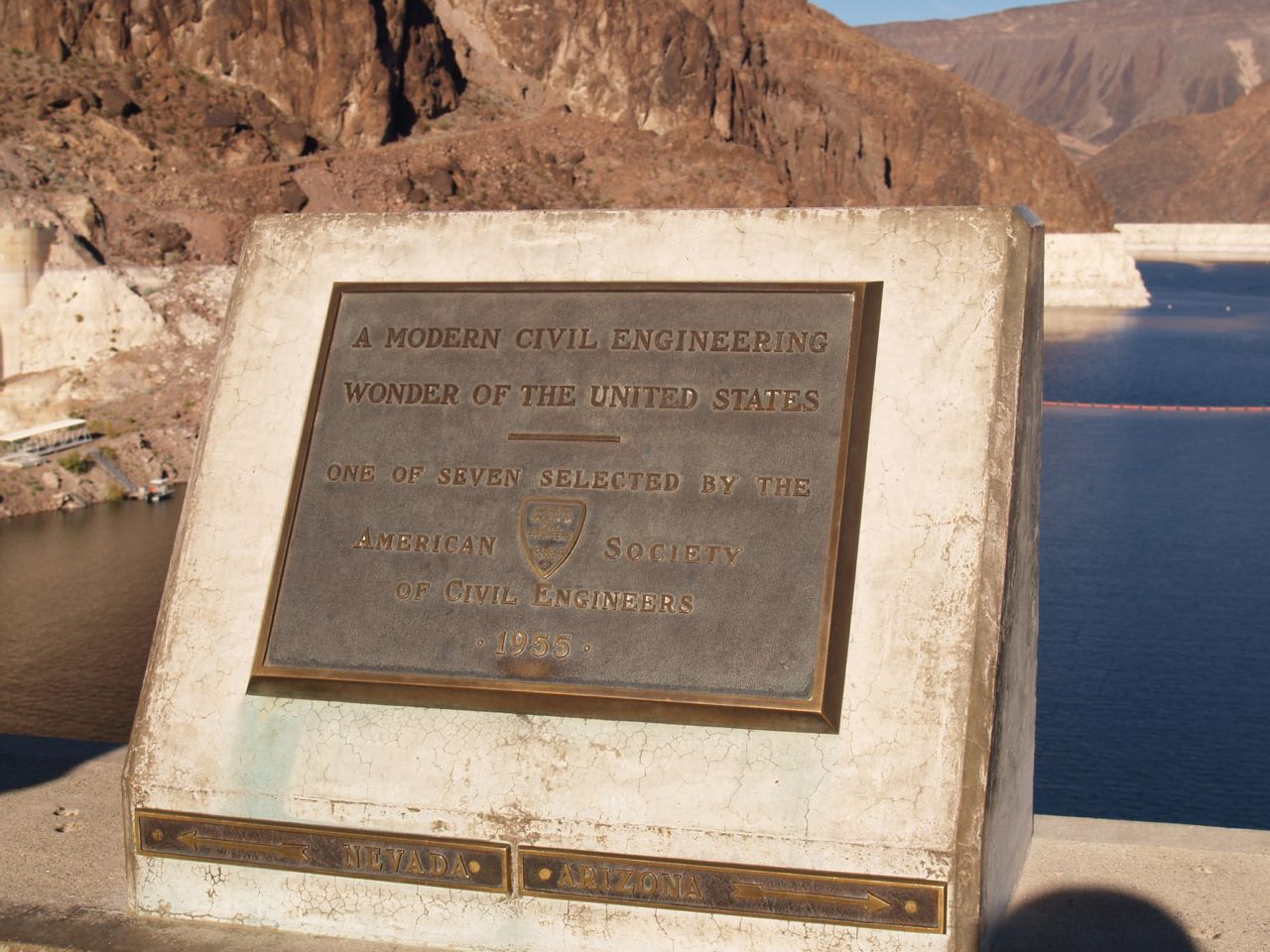
A plaque on the dam marks the state line between Nevada and Arizona and notes that the American Society of Civil Engineers has selected the Hoover Dam as one of seven modern civil engineering wonders.

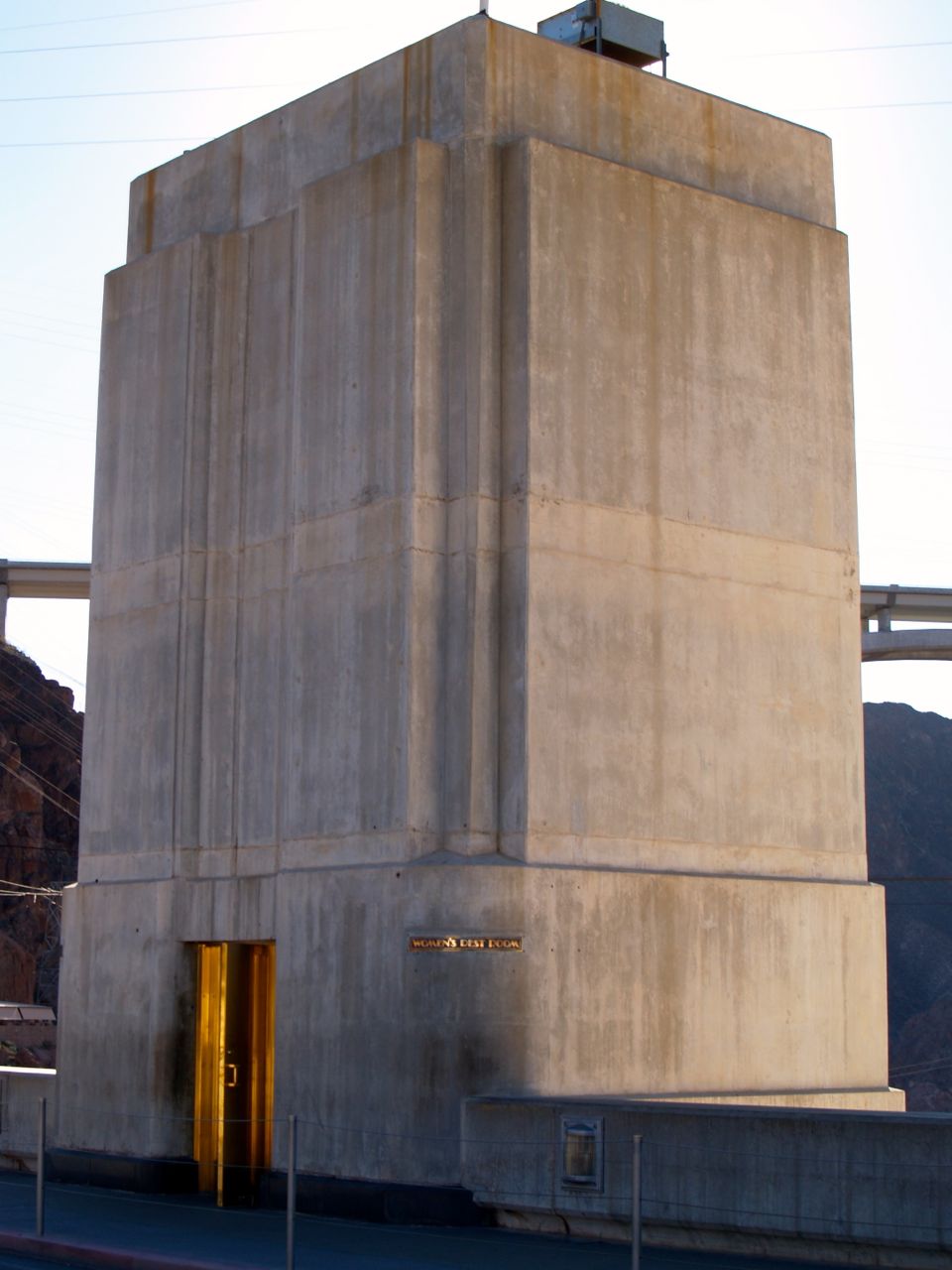
On top of the dam are restrooms. Here is the women’s restroom which has quite the entrance.

Here is the floor of the women’s restroom. Presumably the men’s restroom has a nice one too, but I wouldn’t know.

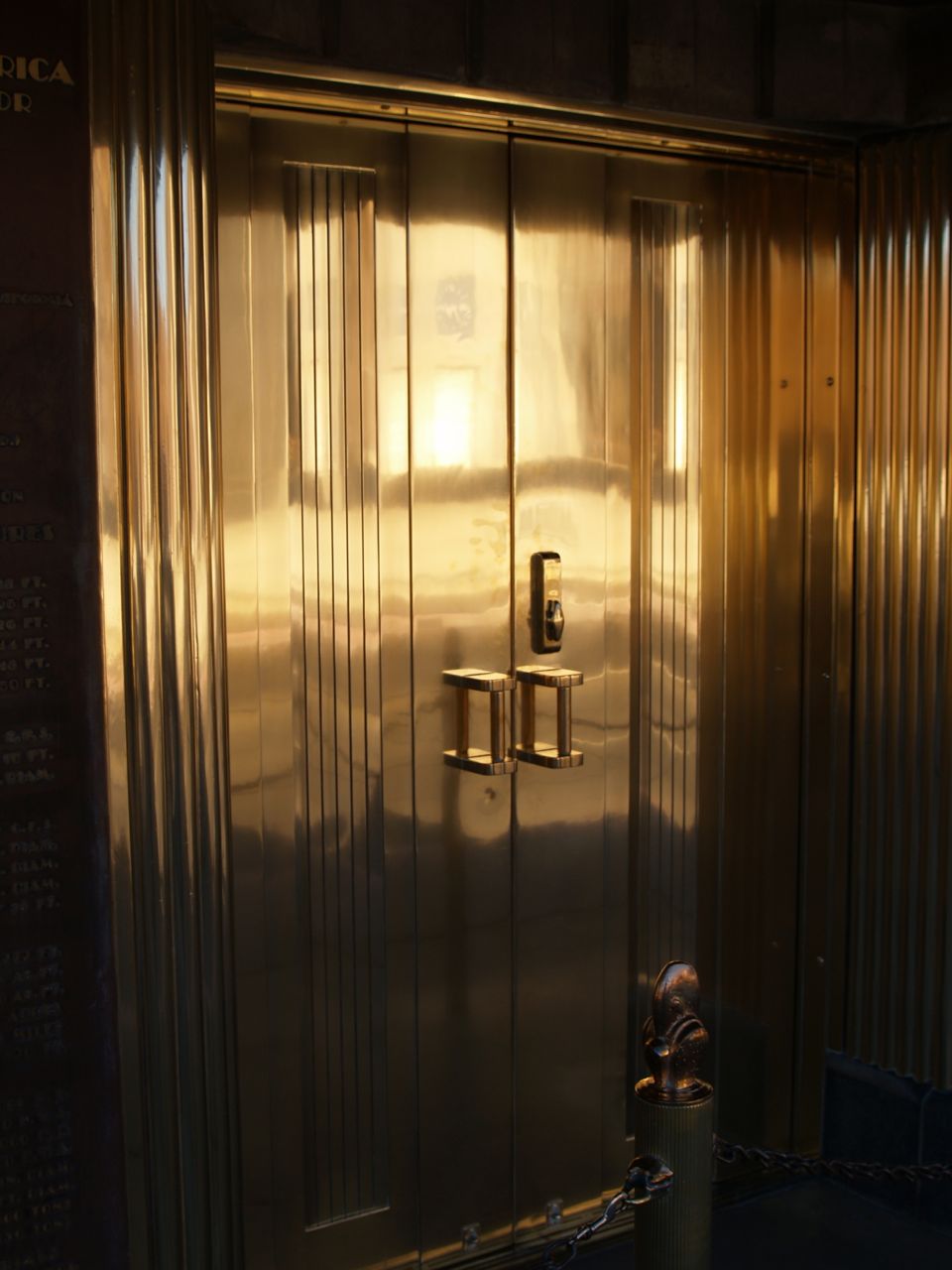
The designers really liked brass doors. I am not sure where this brass door leads since you can longer enter the dam the way the way you could when it was originally built.

If you stand in front of the door at the right angle, at the right time of day, with the right sunlight, you can see the intake tower on the other side of the dam reflected in the door. Look near the top of the door, and you can see the reflection of the blue clock near the top of the intake tower.

An upclose photo of the post top in front of the door in the above photo. They put brass prickly pear cactuses on top of the posts. I love that level of detail.

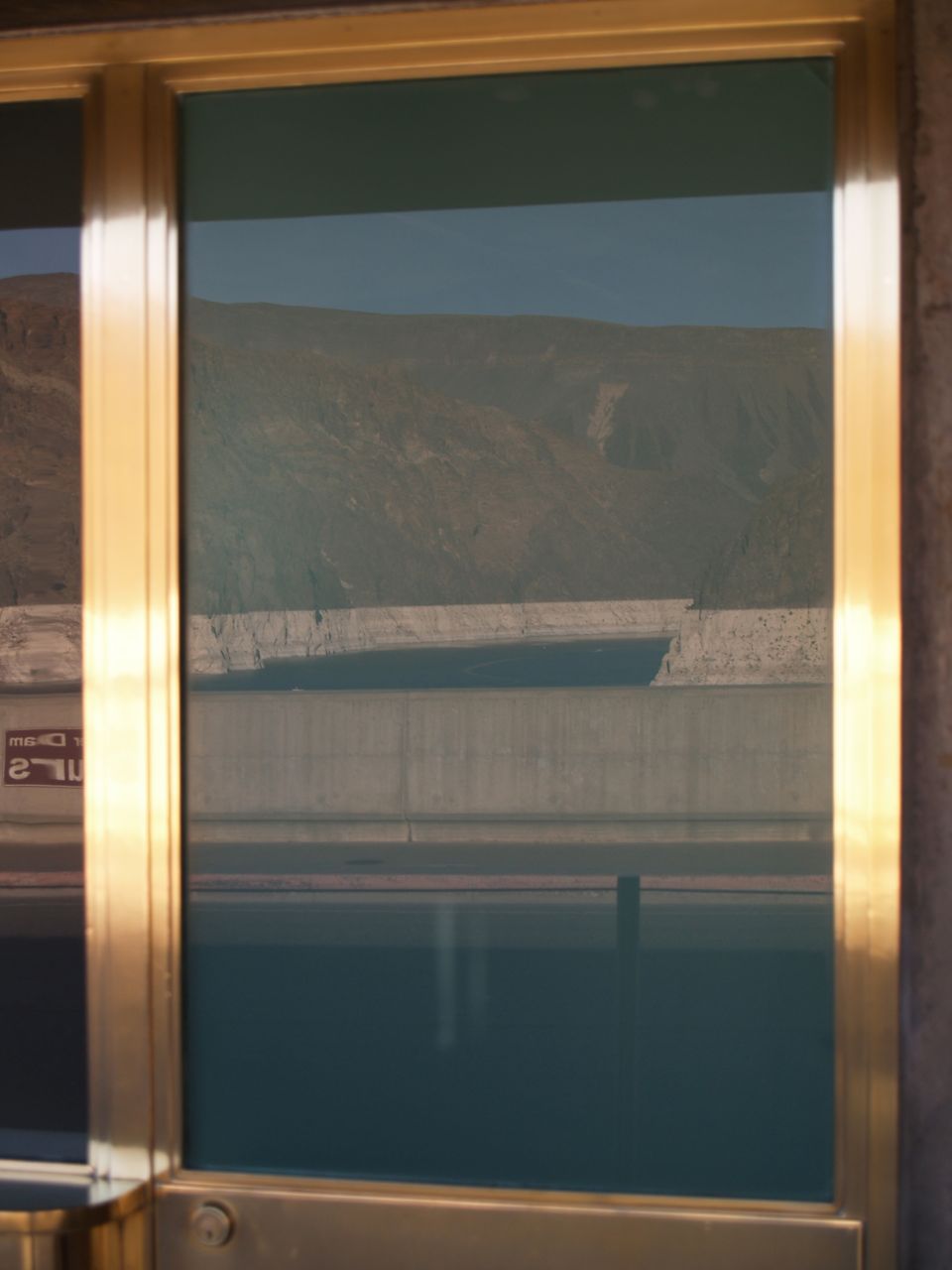
In the reflection of this door’s window, you can see Lake Mead.

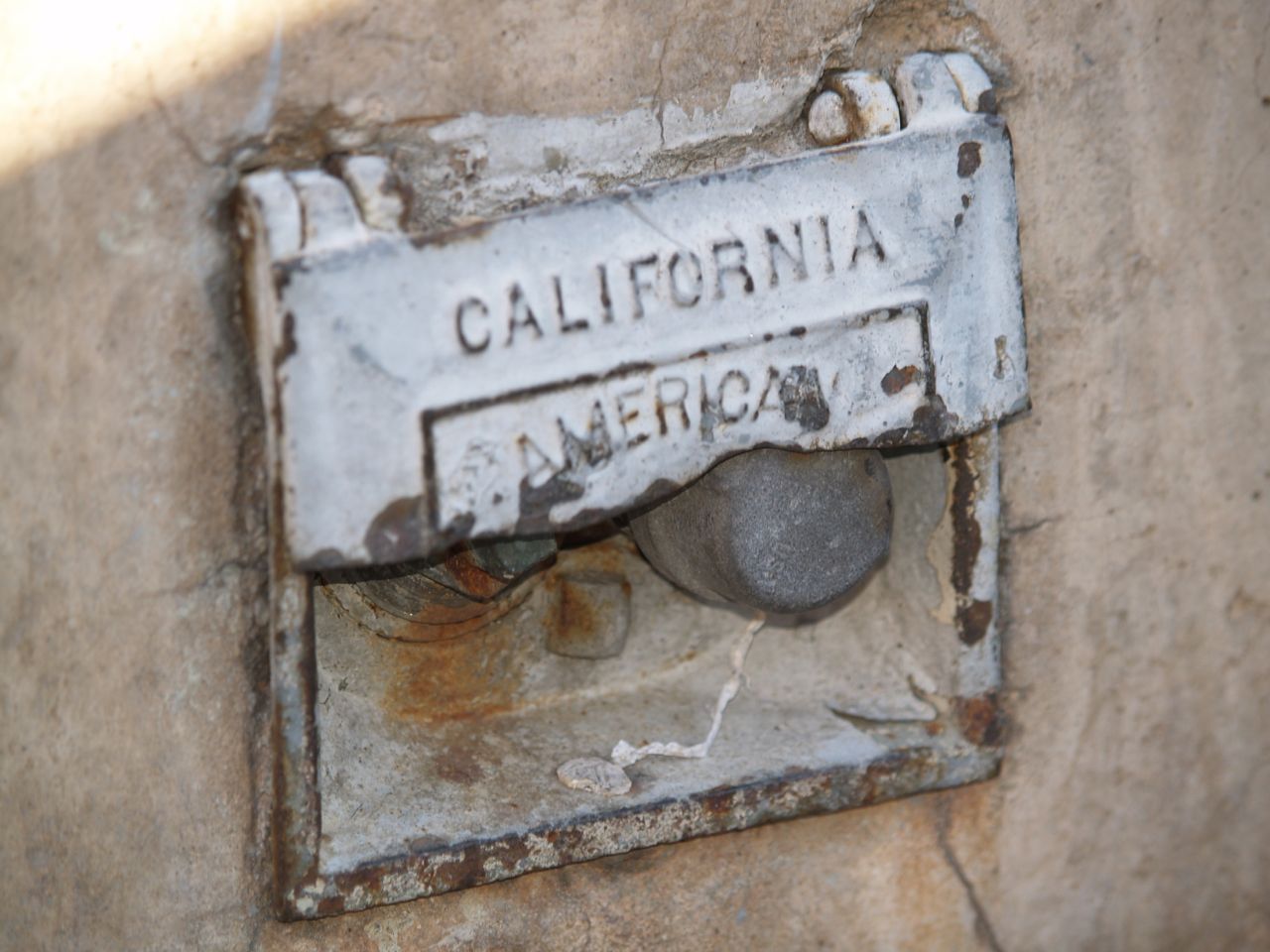
I don’t actually know what this is, but it is on top of the dam. I thought it was kind of interesting, and also it has the name of another state besides Nevada and Arizona on top of the dam.

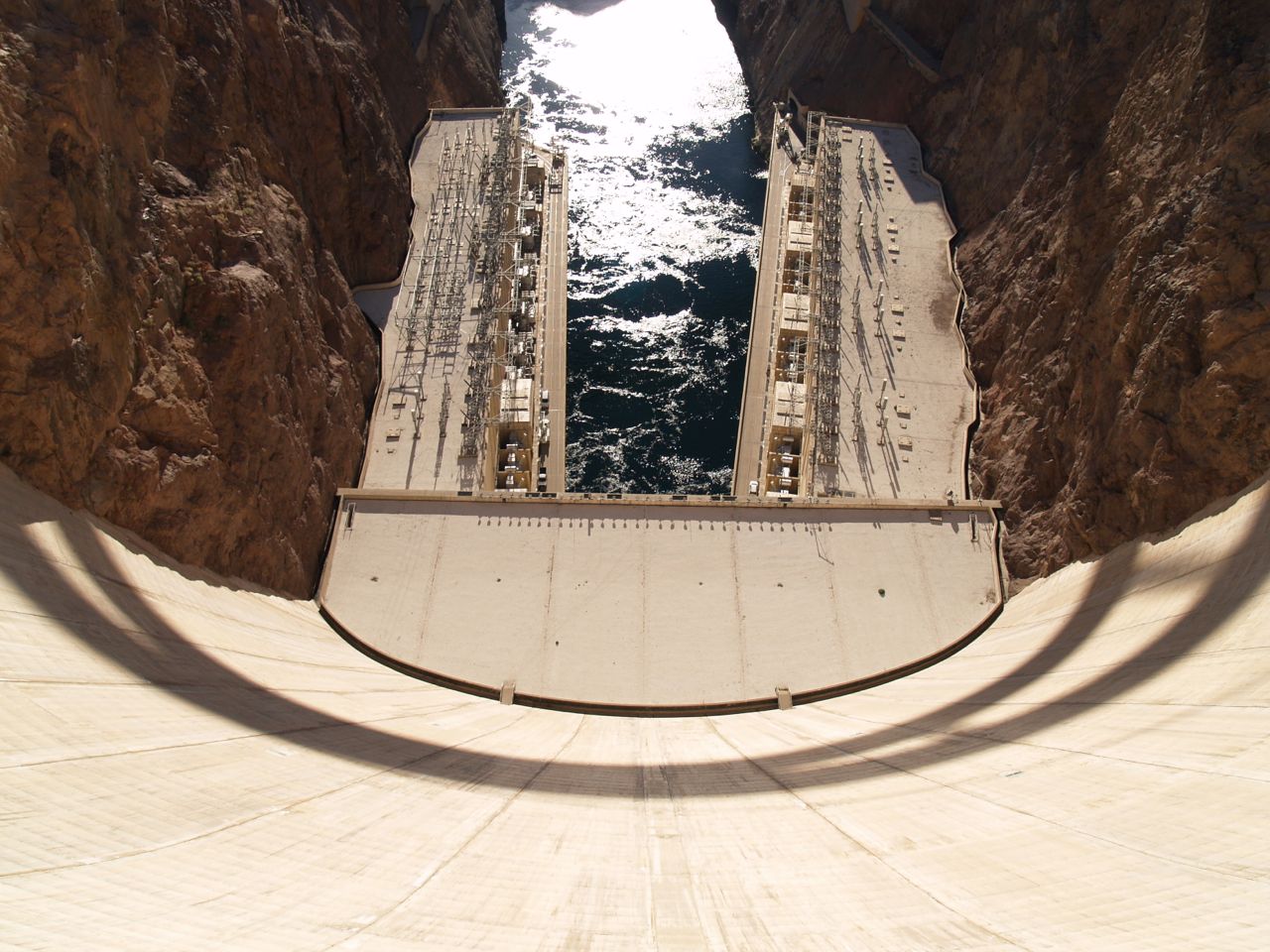
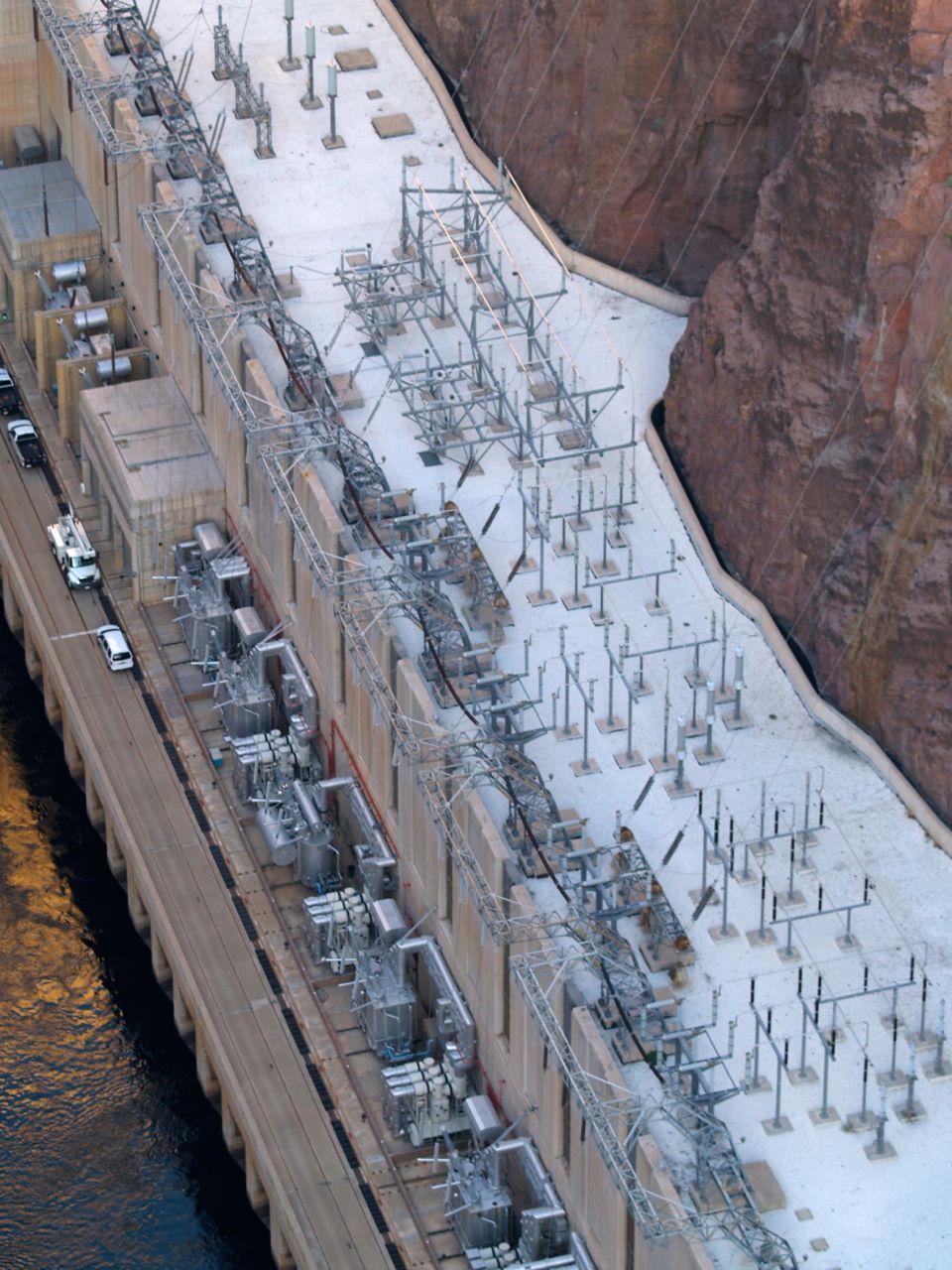
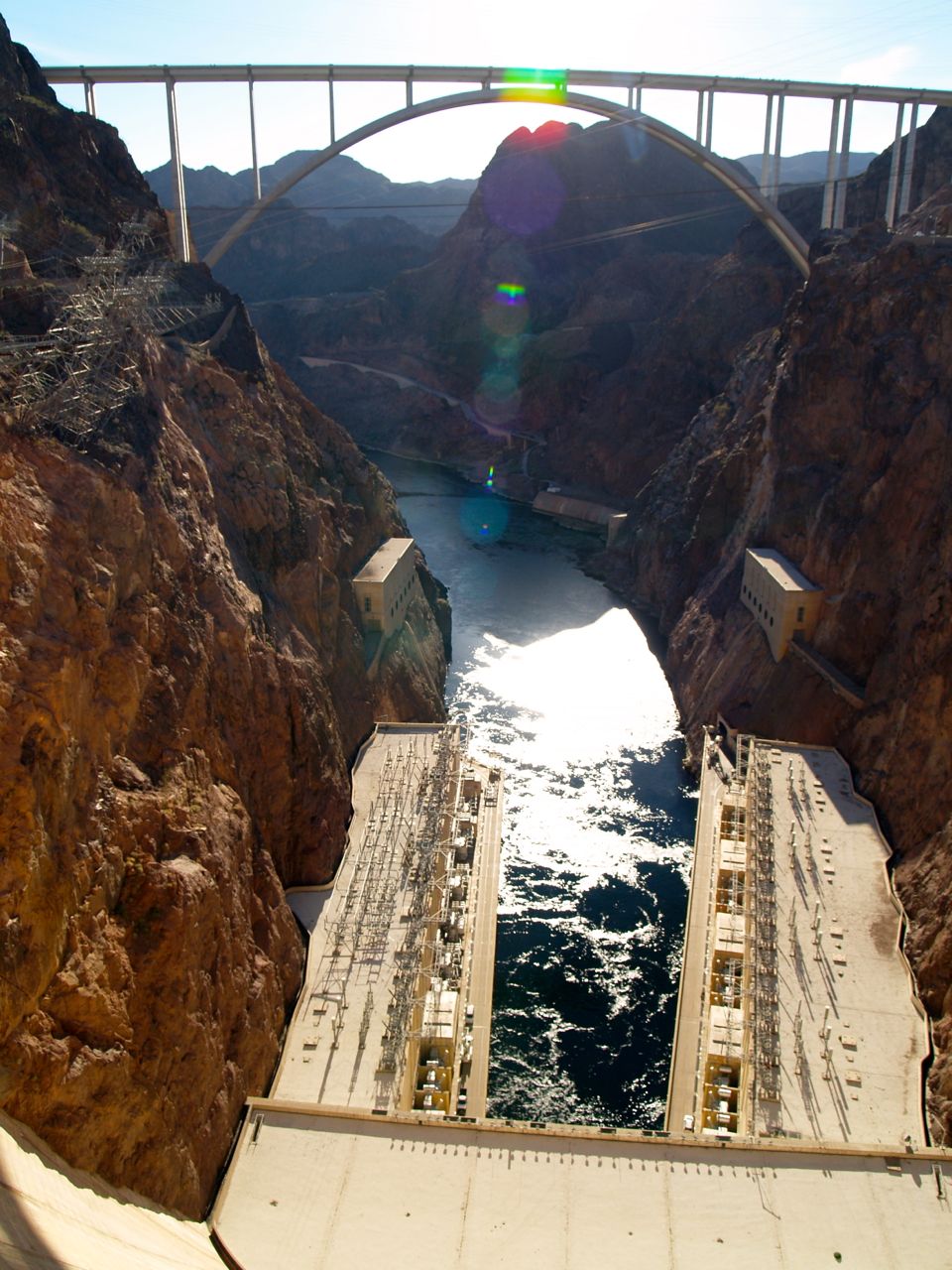
At the bottom of the dam, of course, is its power plant. Below, as seen from dam.

The view from the bridge of the power plant.

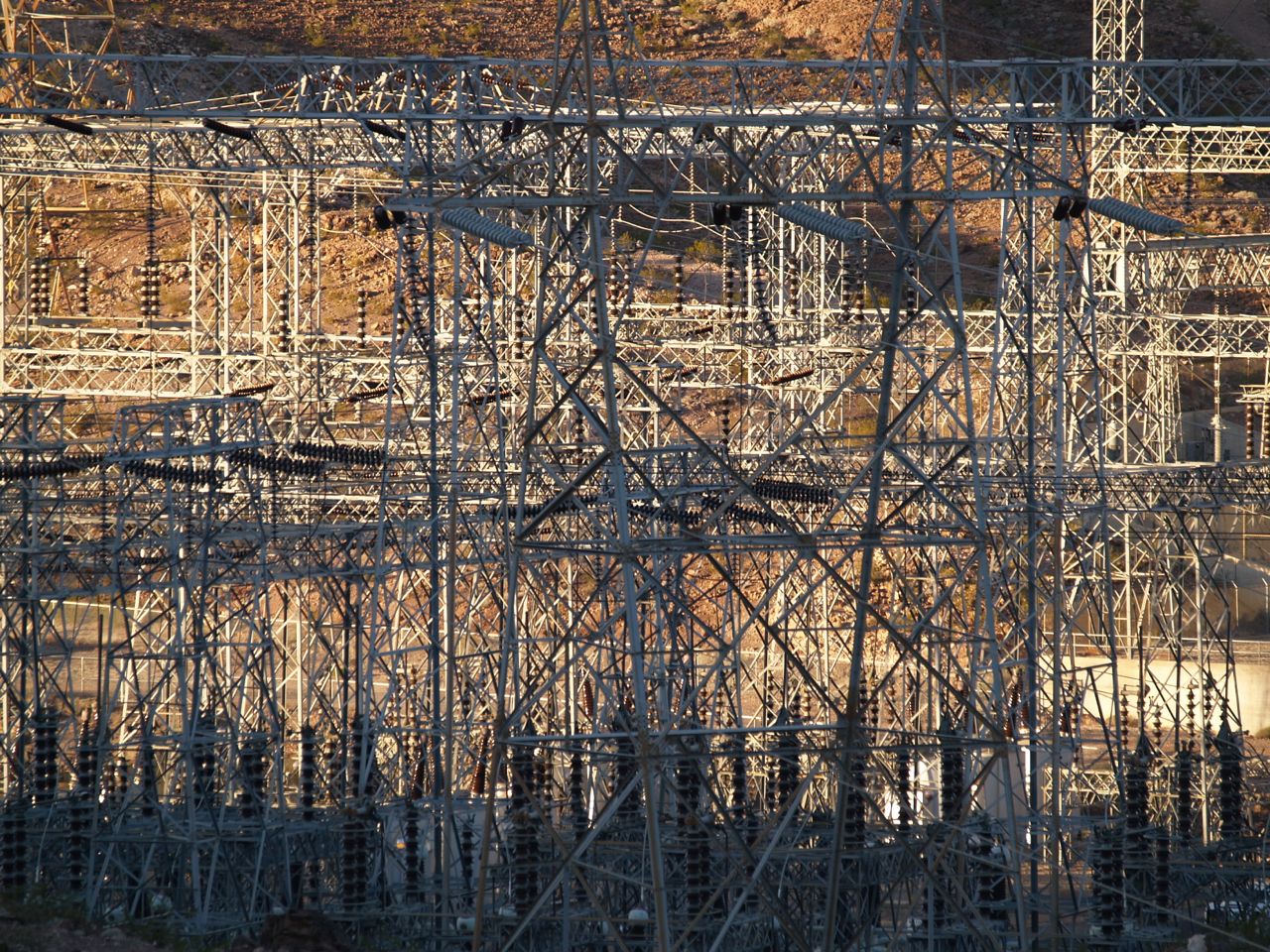
The power plant requires a jungle of transmission lines.

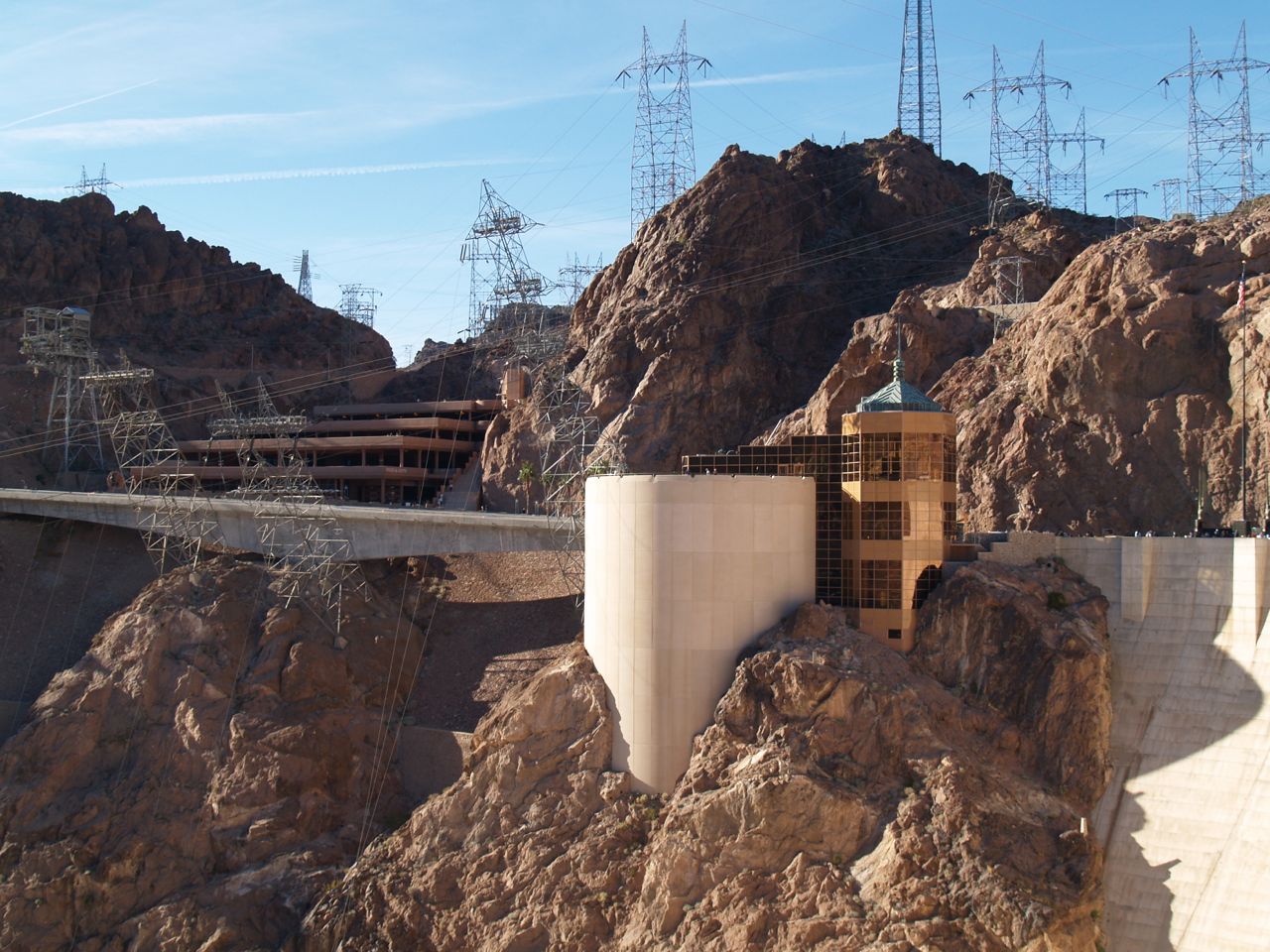
The relatively new visitor’s center, new compared to the dam, was also built in a ridiculous position on the shear canyon walls.

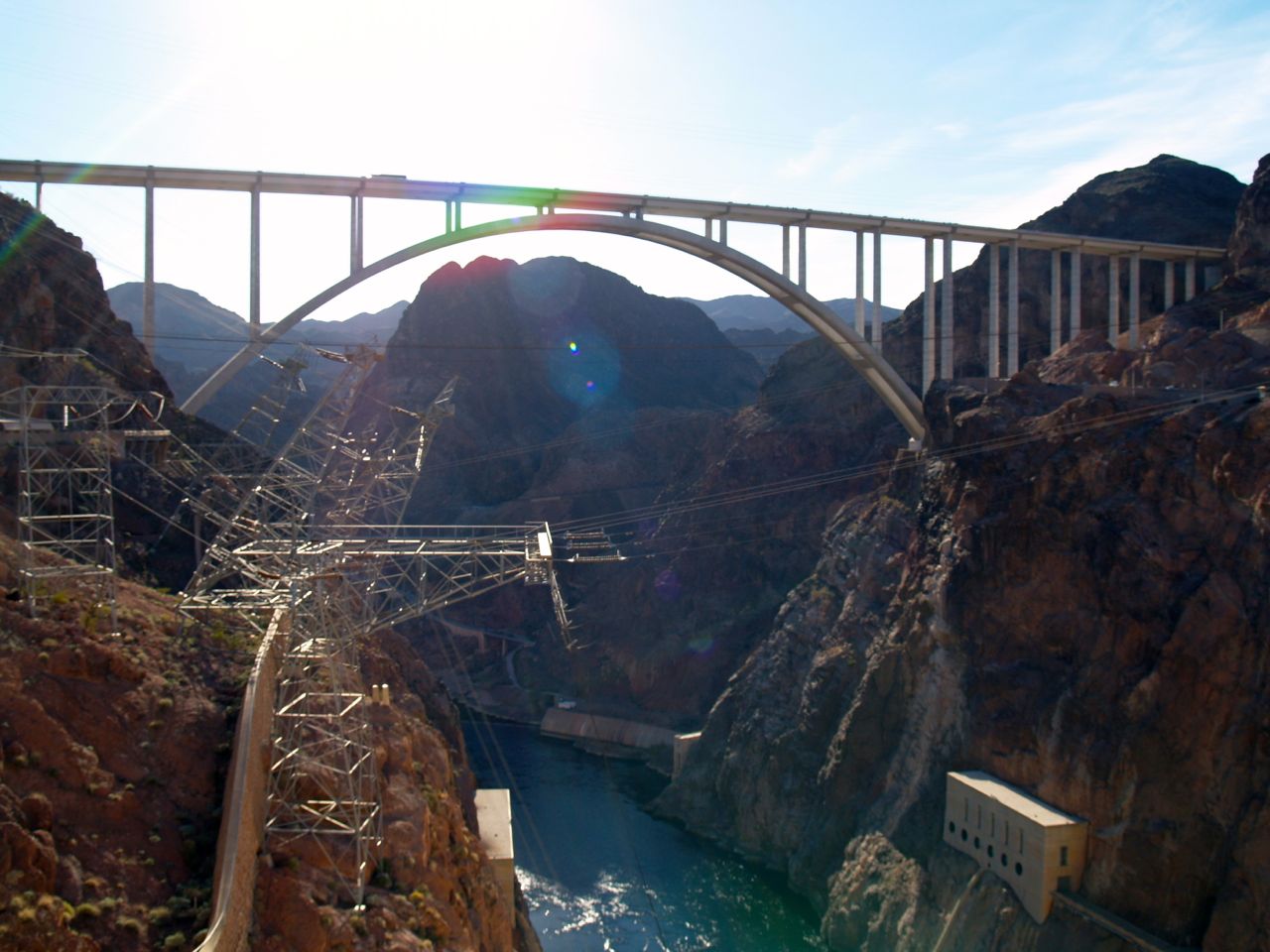
The bypass bridge sits high above the power plant.

It gracefully crosses the canyon.

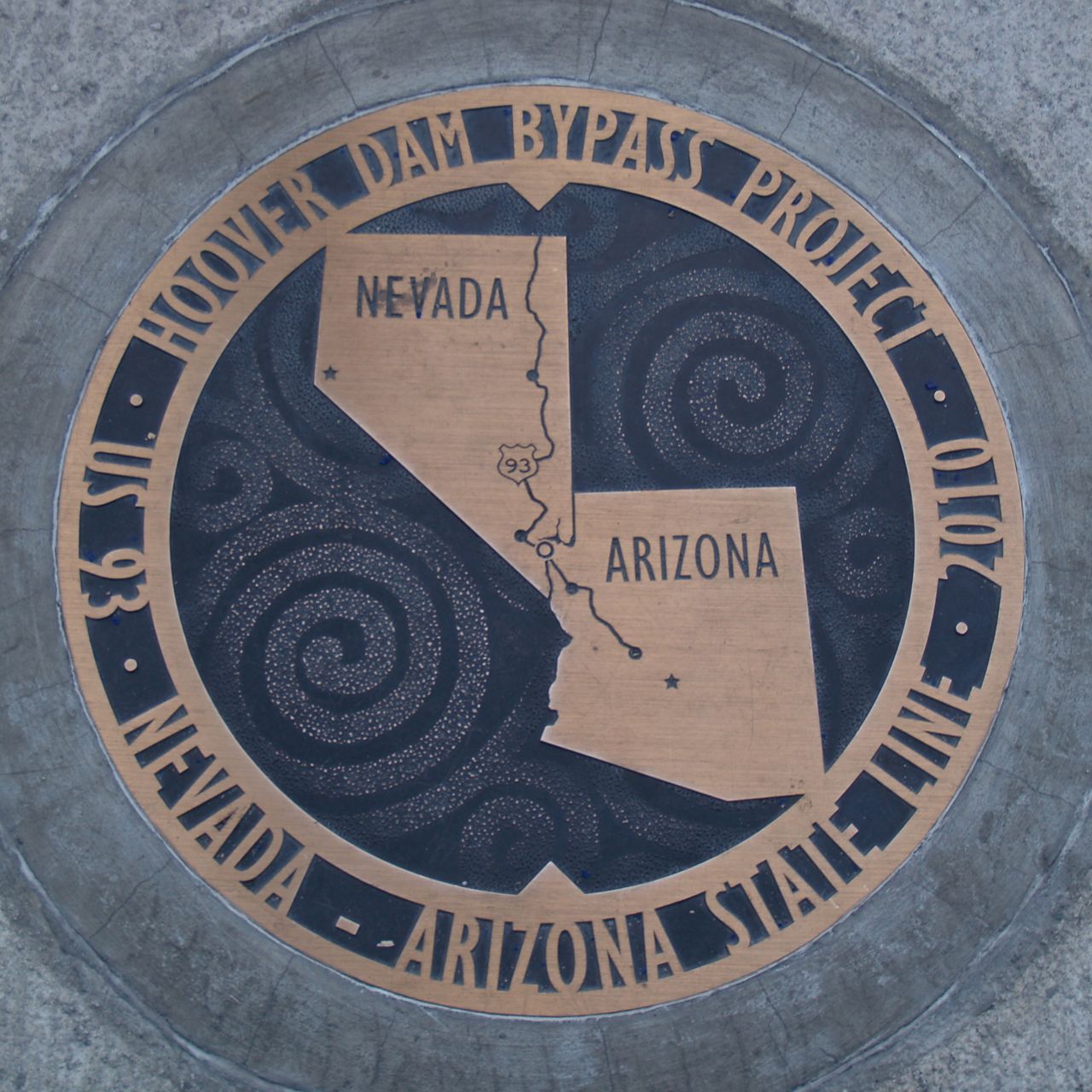
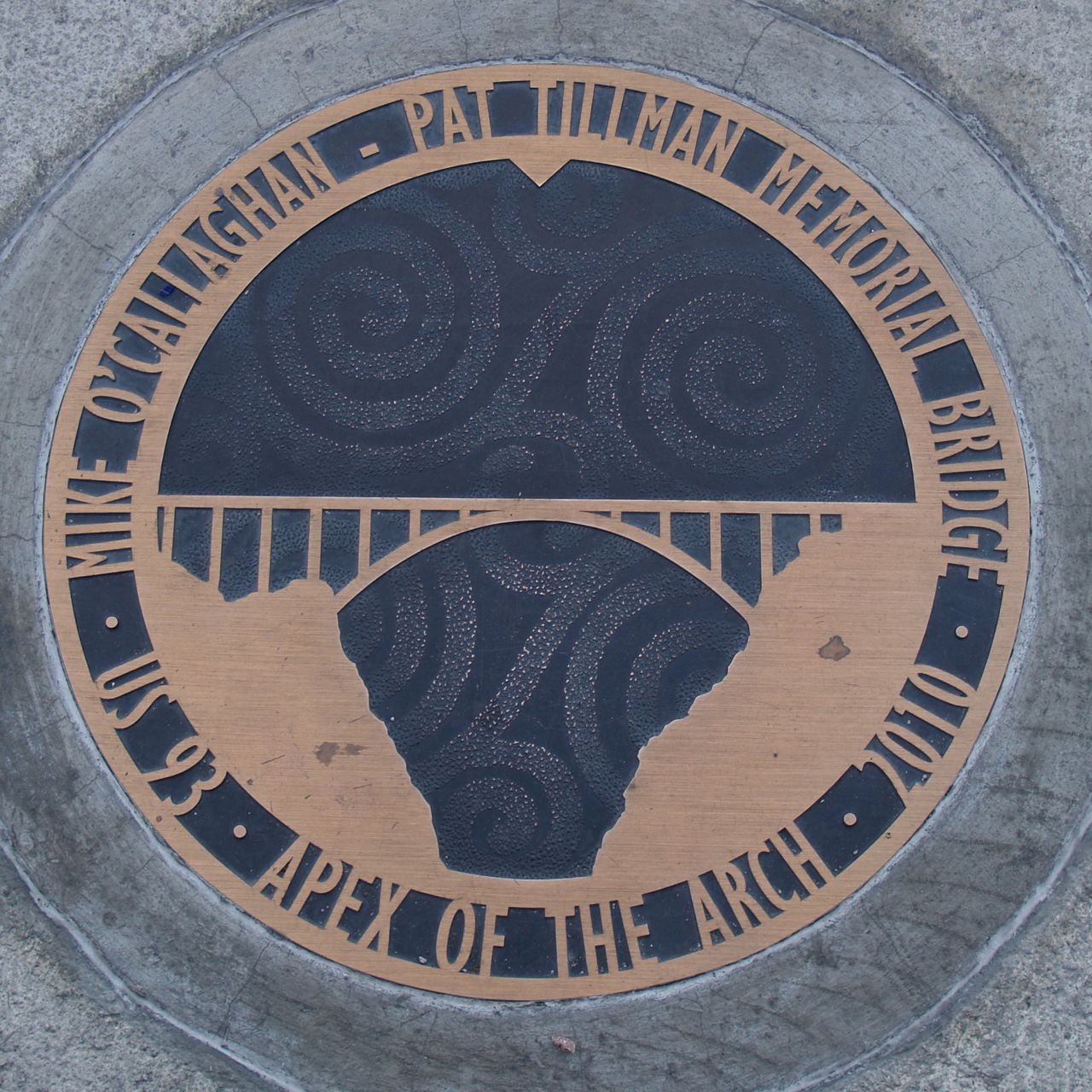
The pedestrian walkway of the bridge has nice markers to denote the state line and apex of the bridge, which are in two different spots.


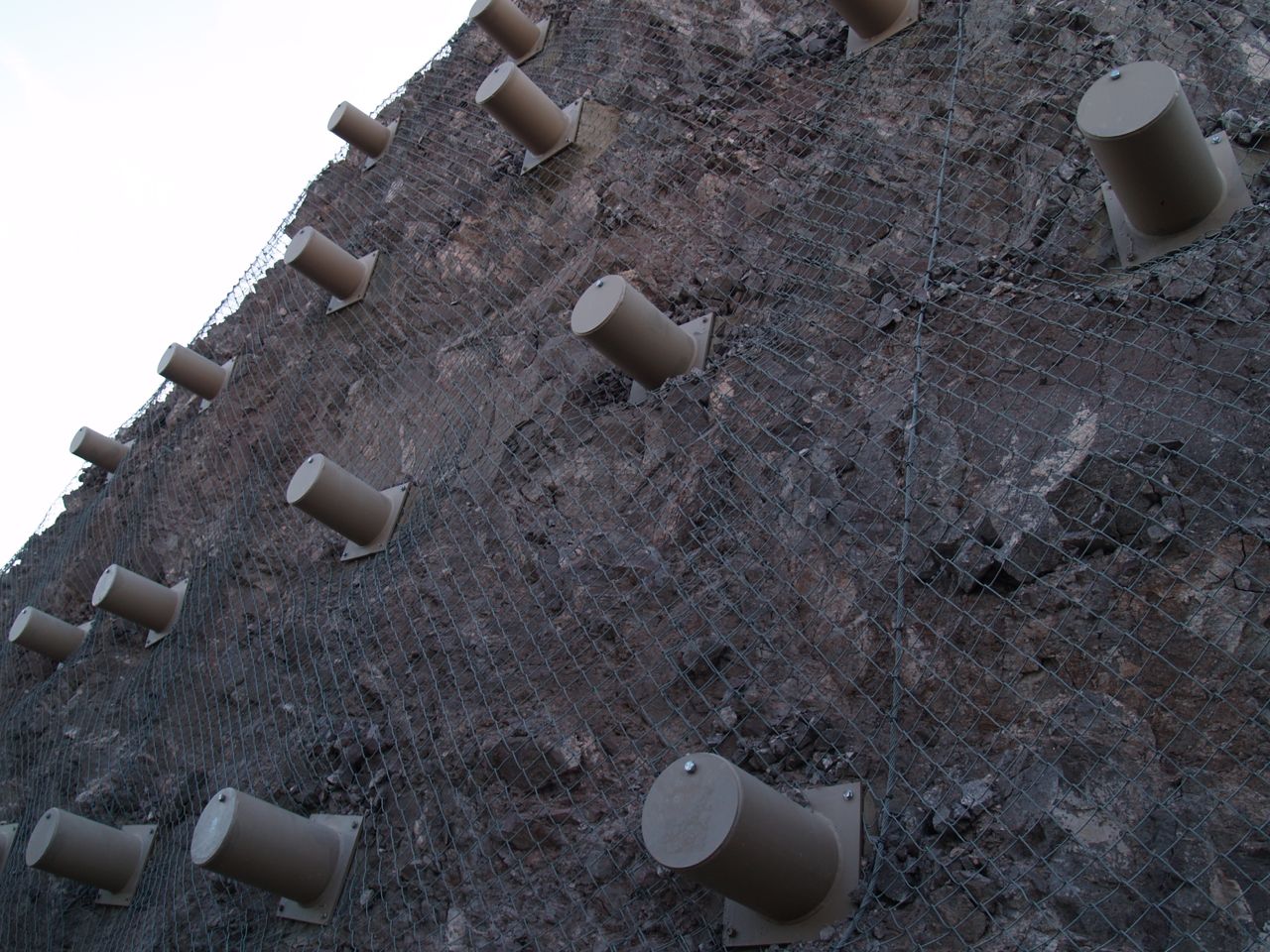
The path to the bridge passes through a rock cut where each side is lined with rock stabilization bolts, which I personally think are really cool looking.

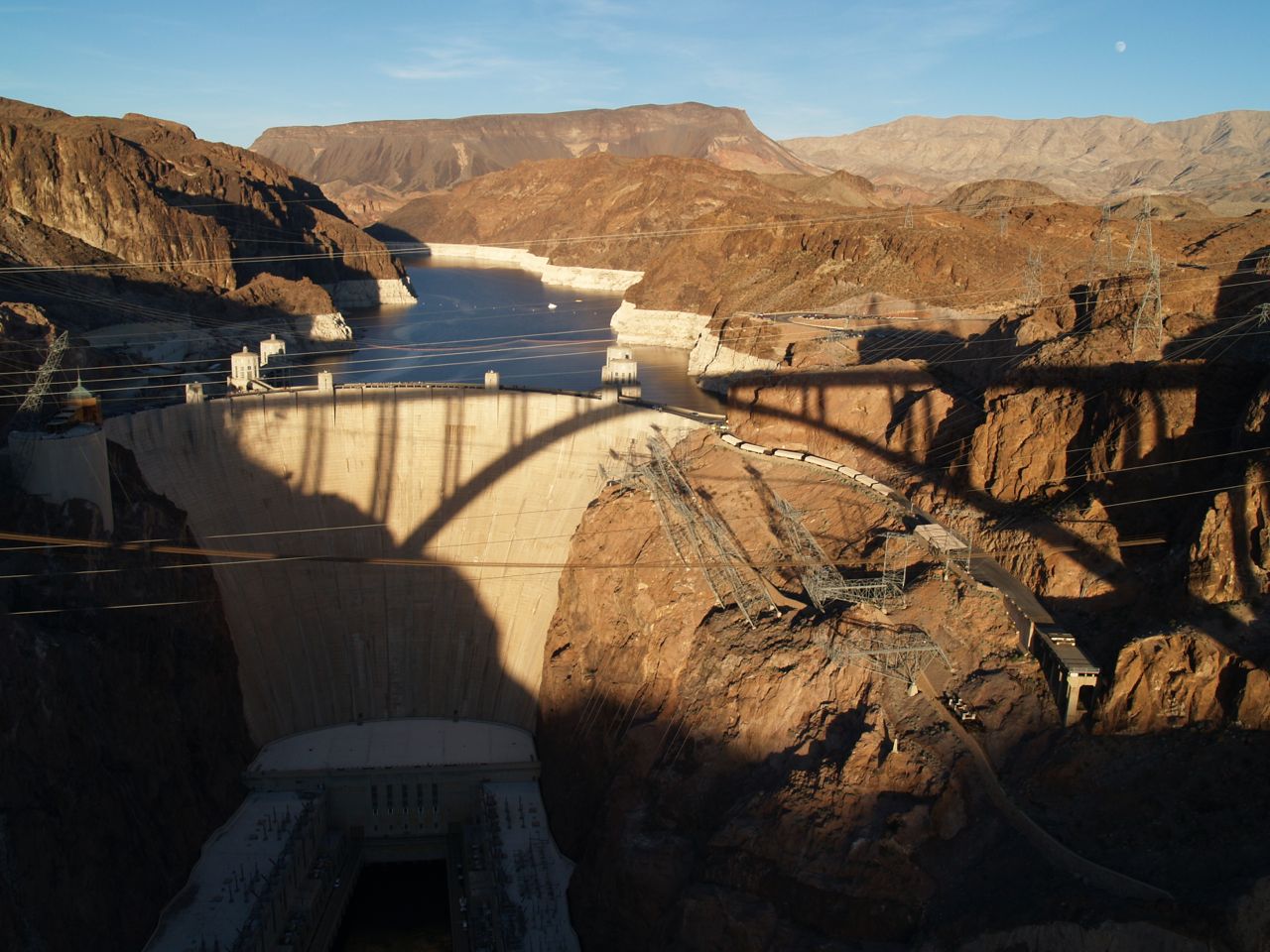
Finally, one last look at the Hoover Dam with the shadow of the bridge across it, and the moon rising in the sky.

It Can Be Lonely Being a Female Engineer

Today is my mom’s birthday, so I’ve thought about her many times today and how she has influenced me in so many ways. The way she has influenced me has been in stark contrast to different news stories that came out recently that have distressed me a great deal. First, Iran has banned women from almost 80 different college majors. This does not affect me at all, but this sexism is disturbing. Many of the majors women are being banned from are science and engineering majors. Second, a Yale study recently concluded that women are  still biased against in universities in science majors. This Yale study is just astounding and to me really depressing. It is particularly depressing to me since I am scientist and engineer, and I realize just how far we have to go until women have equal footing with men in the science, technology, engineering, and math (STEM) fields.

When my mom was little, she had trouble in her math classes. When she would tell her mom this, my grandmother would tell her “Don’t worry honey, girls aren’t supposed to understand math.” At some point, she took this to heart and stopped trying to understand math. My mom is not stupid, and she doesn’t give herself enough credit for all the things she does and understands. I don’t think she has full confidence in her abilities though. My mom told me about what her mom told her, several times when I was older. She told me that when she had my sister and I, she was determined that we would never be told that there was something we could not do. She always told us that we could do anything to which we set our mind. Somethings might require more work than others, but we just had to work harder. My sister struggled with math at times, so she went to a math tutor. I can remember when I was in junior high, and at one point had trouble with math. Then at some point, something clicked, and I started to excel in it again, as I had when I was younger. It should be noted that I have always had a skill at math. My grandmother, the same one who told my mom that girls weren’t supposed to be able to do math, used to tell me a story about when I was little. I had just started to learn addition in school, and when my grandmother was driving me somewhere, I would ask her to give me numbers to add. I must have really liked math already, and I wanted to practice. She would give me numbers like 5 and 3. I would reply “No Maw Maw, give me big numbers.” I would demand she give me three digit numbers to add. After this happened once, she later my mom there was something wrong with me. I guess she just couldn’t understand a little girl liking and being that good at math. [As a side note, I believe at that point, I was already displaying the signs that I would grow up to be an engineer. I was good at math, and I was already a horrible speller. Parents, if you notice these traits in your child, they may be destined to be an engineer. Please take precautions.] I don’t mean to describe my maternal grandmother badly. She was a wonderful grandmother, and she was always supportive and proud of me. She was just from a different era. I credit my mom with being determined to break gender biases and wanting her daughters to have equal opportunities as any male. I credit my mom and her telling me I could be anything I set my mind to, with my becoming an engineer.

I am not sure if I have been biased against as a female engineer, but I have definitely felt like an oddball simply for being a female. As an undergraduate, I went to a small technical college whose student population was and still is only about 20-25% female. My undergraduate department of chemical engineering had one female professor, and I never actually had her as a professor. As I think back, I can’t even remember that many female professors at all. I think the math department had possibly the best ratio, close to 50%. I think I had one female professor in the engineering department, and she was as adjunct professor. Of the geology, physics, and chemistry classes I took, I can’t actually recall one female professor that I had, but I think each of these departments had a couple. I graduated from college in 1995. I am not ancient, and this was not that long ago. The civil engineering department of the university where I got my Master’s degree was similar in terms of student and professor female ratios. My advisor was a women, but she was one of the few females in the department. At some point back in college, I just got used to this type of ratio.

In my first job as an environmental engineer at a consulting firm, the company was dominated by men. There were female engineers, but not that many. I worked in a small branch office where initially I was the only female engineer. I can remember being in meetings with clients from a municipality along with coworkers from my firm, and I was the only female in the room. Later I worked for a state agency where once again, most of the scientists and engineers were men. When I went back to graduate school a second time to get my Ph.D., like with my Master’s, I had a female advisor for my Ph.D. The fact that a women was my advisor had nothing to do with her gender but that she studied a topic that I wanted to study. The department I was in actually had a number of female professors, but it was still dominated by males. I don’t know the ratio for the students, but it was pretty good. I think one reason it had plenty of female students is that it was environmental science and engineering department. Environmental engineering seems to have a greater number of female engineers than other other engineering fields. The hypothesis many people, including myself, have is that part of environmental engineering is caring for the Earth. Perhaps that “caring for the Earth” aspect attracts women more than other engineering fields.

In my career, I can’t remember feeling biased against as a female. It is possible I was, but like other aspects of my life, when I have felt something like this, I would just plow right through it. I can remember when I did field work such as working with drillers, I would sometimes force an air of confidence on myself that I didn’t really feel to get through the job. However just as importantly, I never felt particularly encouraged as a female engineer. I have no wish for special treatment or recognition just because I am a female, but when the only females I sometimes worked with or interacted with on the job were the secretaries, it would have been nice to have a female mentor to talk to just when I was tired of all the testosterone. I feel very fortune where I work now because there is an extremely good ratio of women to men in the science and engineering positions. My boss and her boss are both women. I am no longer lonesome being a female engineer.

I don’t know that STEM fields will ever reach a point where there is an equal number of women as men working in the fields. I get the impression that certain science fields are doing better than others at attracting women. The engineering fields seem to be eternally struggling to attract females. I don’t know what the solution is, but I do think it is very important to have females as well males in the STEM fields. Having females and minorities in STEM fields brings diversity to solving problems and even recognizing problems that can be vitally important. We also must make sure women are given equal opportunities. Even if for whatever reason females just don’t like STEM fields as much as males, we must make sure that females who do like STEM fields are encouraged to enter and stay in those fields. [Helping women to stay in STEM fields during their careers is to a certain extent a whole other issue.] We must make sure little girls are told they can be anything they want to be. We must make sure girls and boys are not told that there are girl and boy subjects. If we can’t even accomplish that, then we have no hope of equal opportunities.