Aquileia, Italy

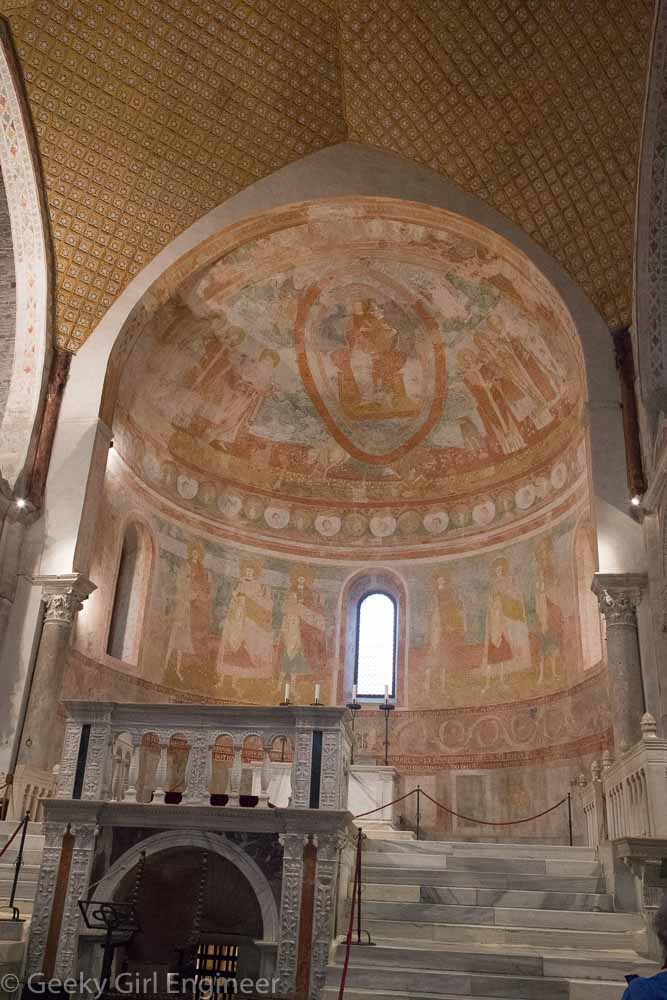
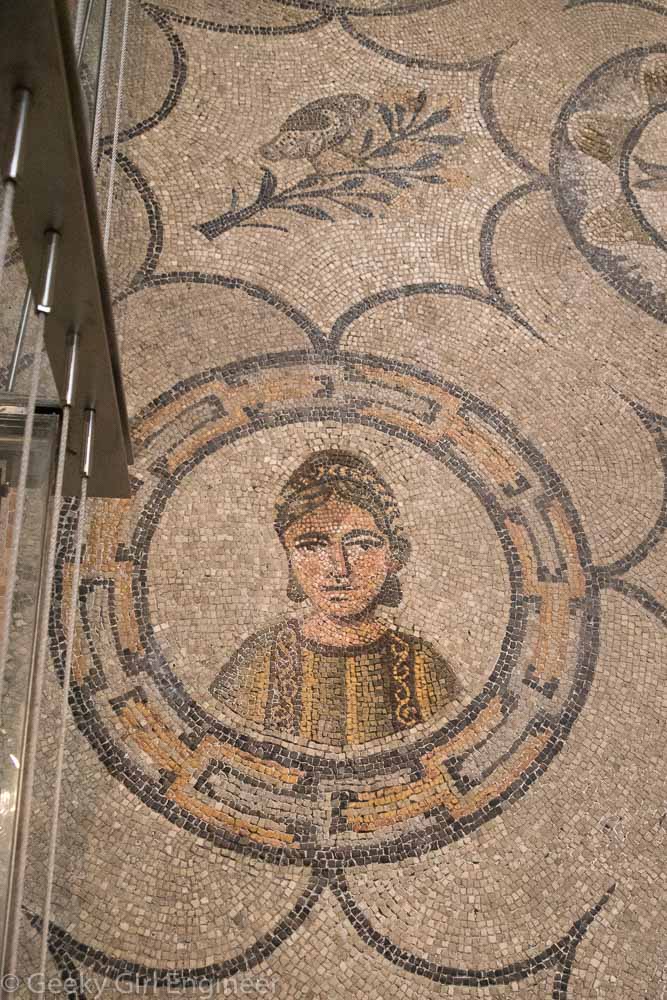
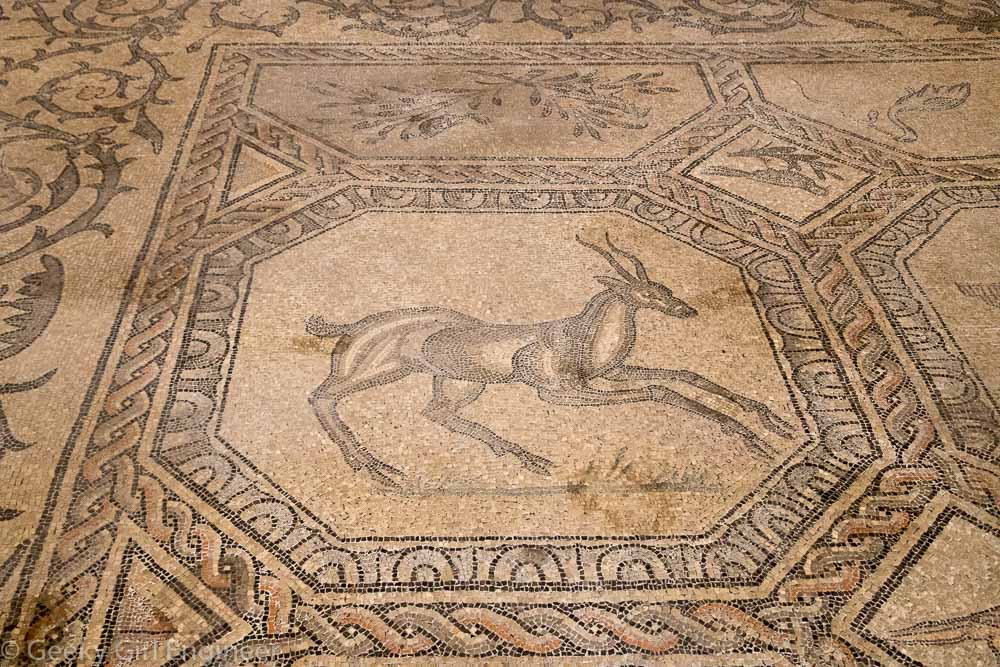
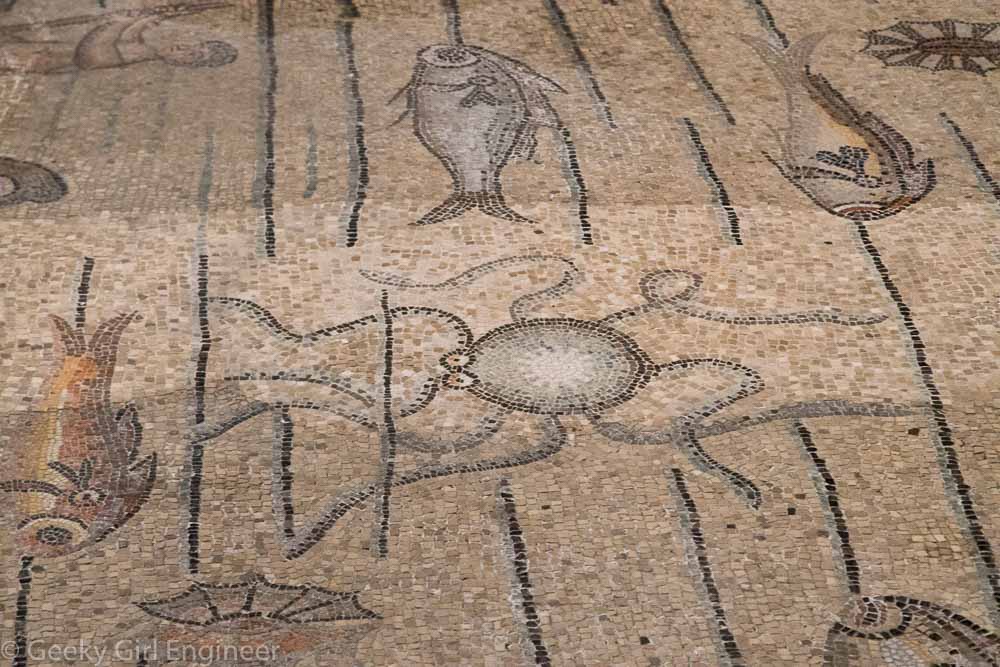
This morning we visited Aquileia, or more precisely the historic basilica there. The original church dates back to the 4th century, and there are some mosaics near the bell tower based that are probably from that era. The main part of the church is from the 11th and 14th centuries. While working on the church, they discovered beautiful mosaics under many more recent floors. Behind the church is the the Crypt of Frescoes with beautifully painted frescoes.

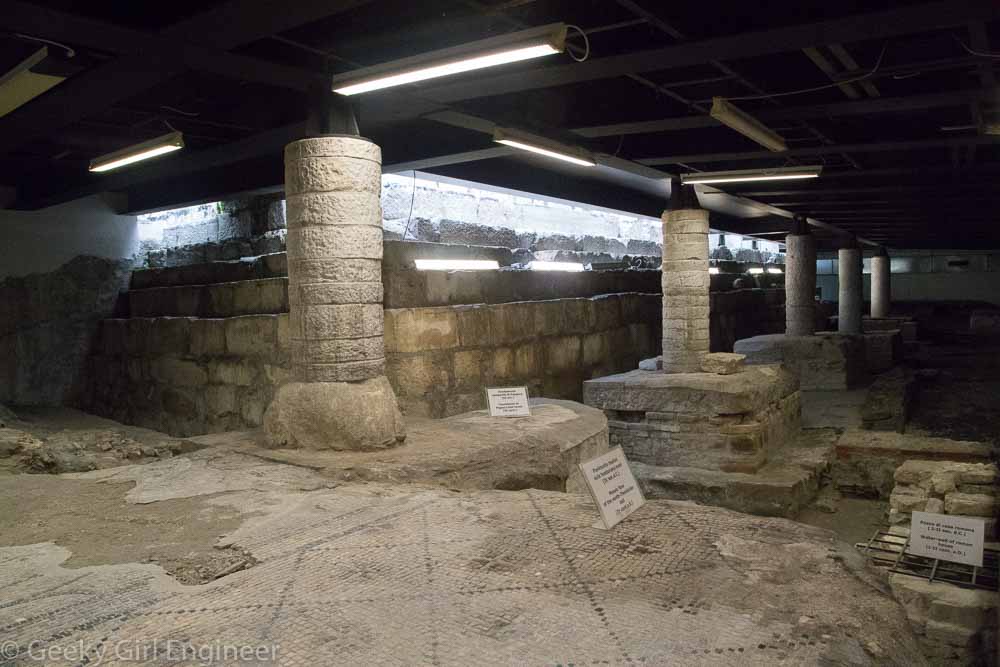
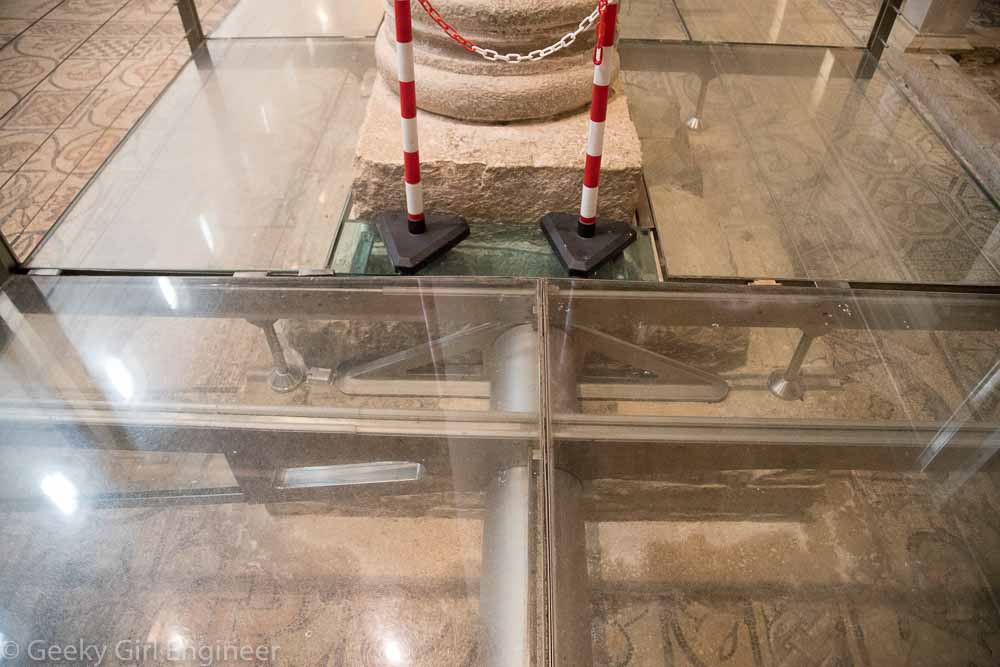
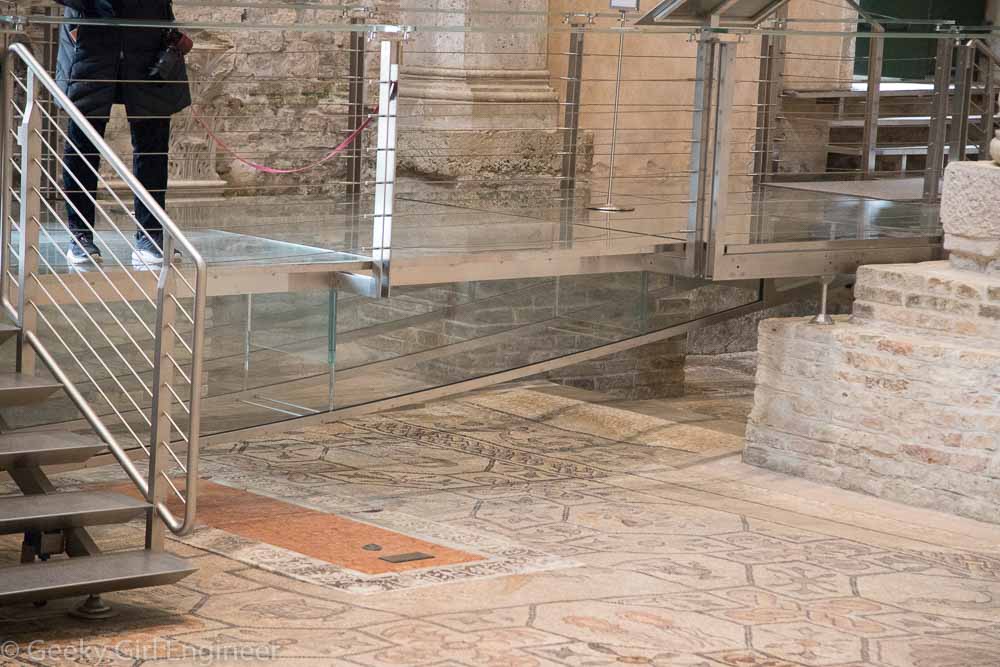
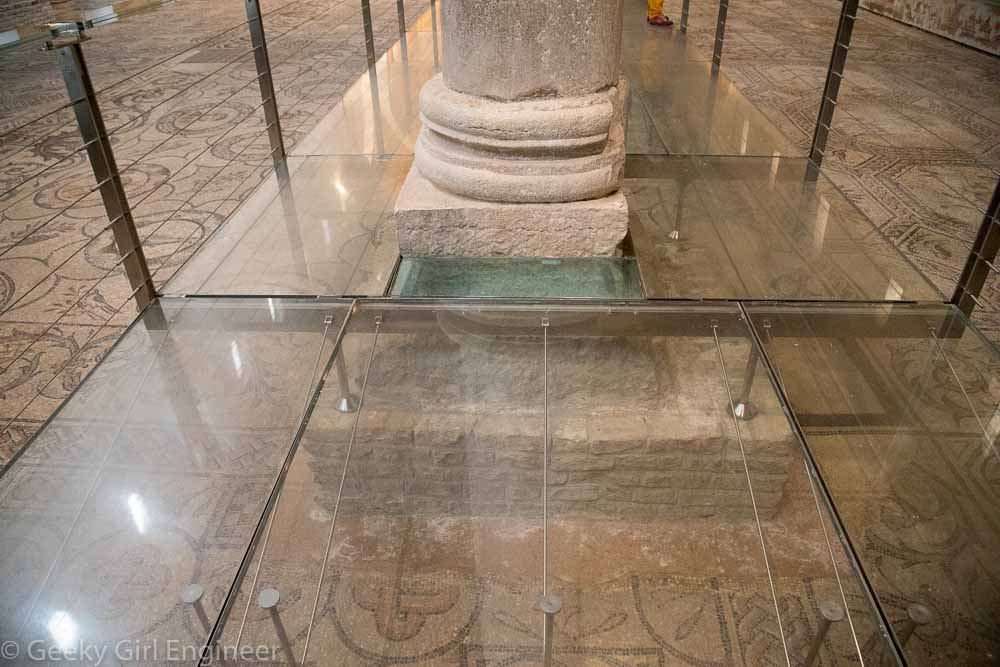
In 2000, they built a glass walkway, so people would not have to walk on the mosaics. The glass walkways were nicely designed and don’t touch the mosaics at all. In the main part of the church, they are supported by the columns. In an underground portion, the glass walkways are supported by steel wires attached to the ceiling.
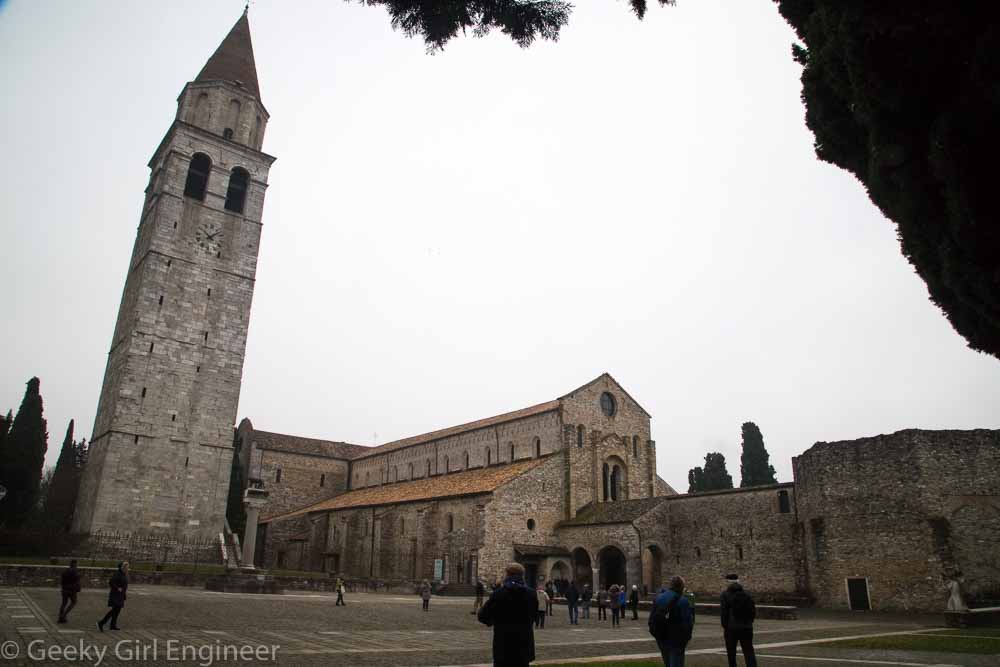
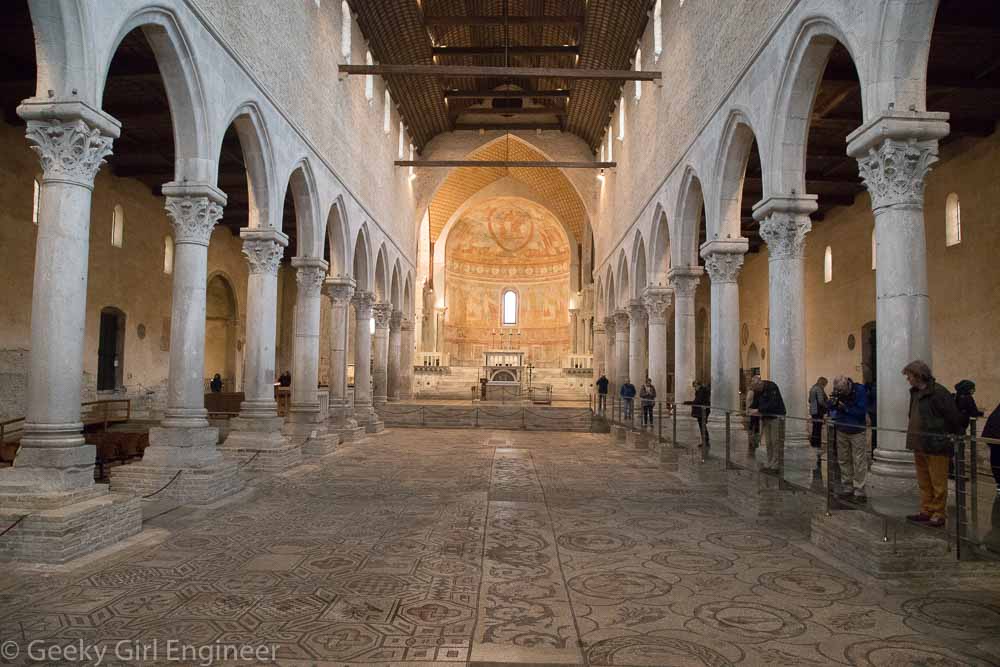
Basilica di Aquileia
The basilica from the front door entrance with mosaic floor
The Apse
Portrait mosaic in the floor
Mosaic of an animal
Octopus and fish mosaics
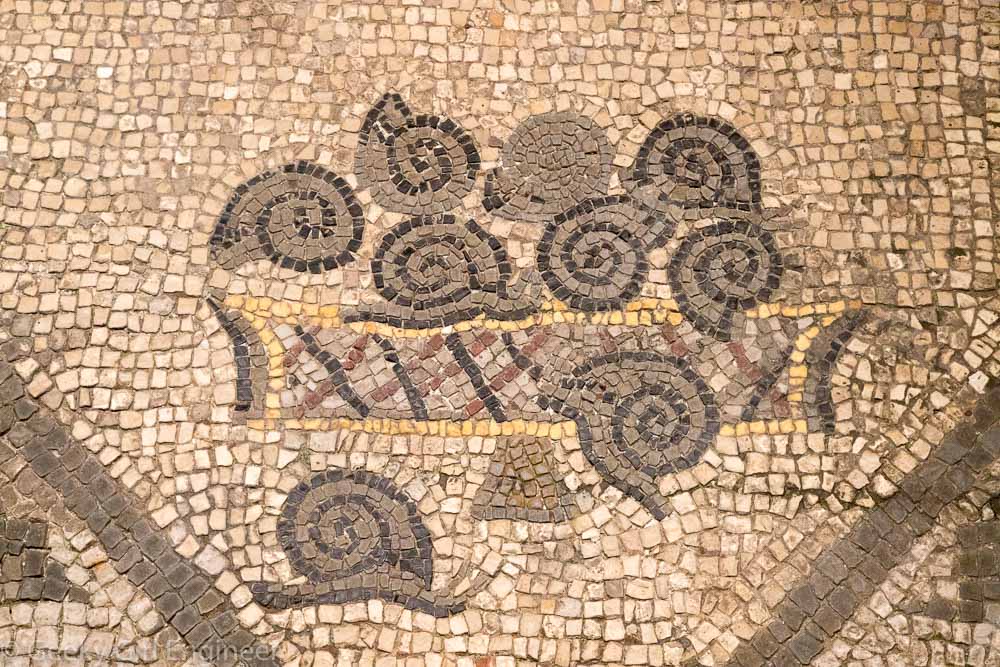
Basket of snails mosaic in the crypt of excavations
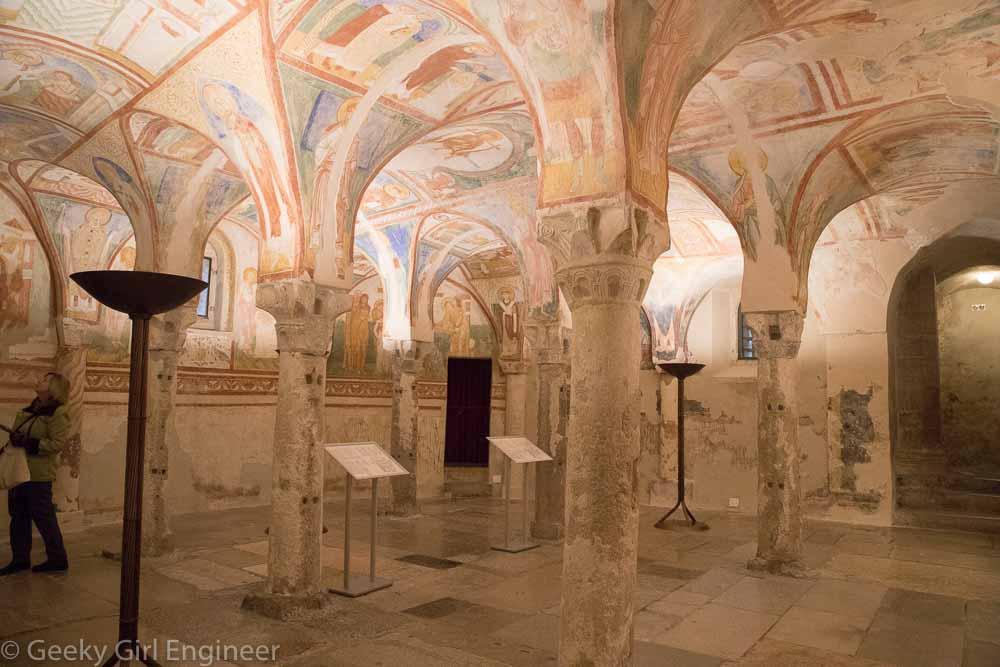
Crypt of Frescoes
Crypt of excavations
Glass walkway supported by column and cantilevered from support near wall
Bridge over mosaics at front door
Glass walkway supported by columns
Glass walkway at front door spanned over the mosaics

Bale, Croatia

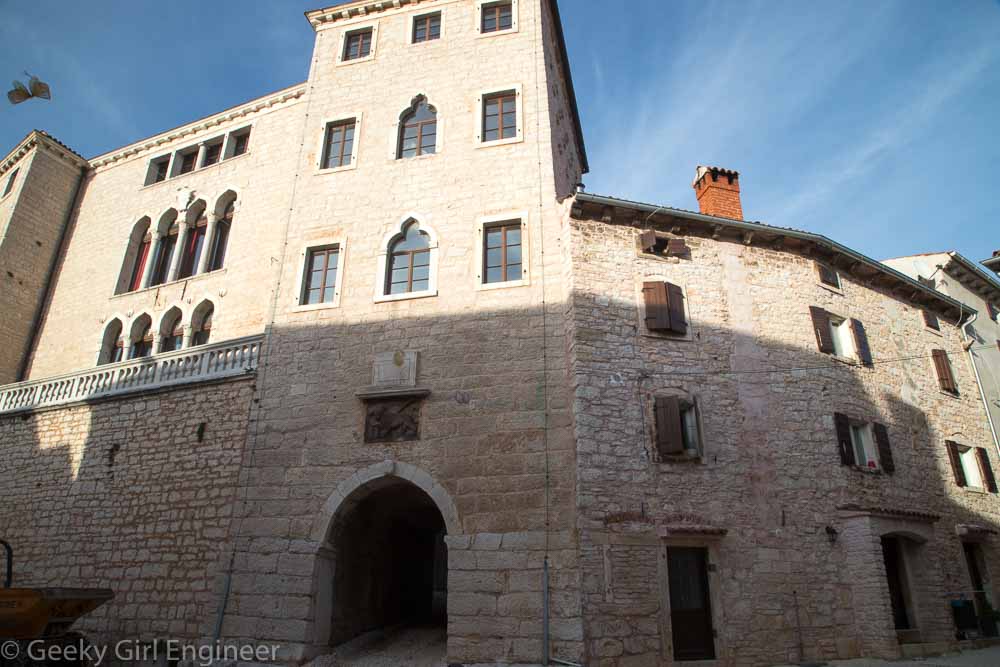
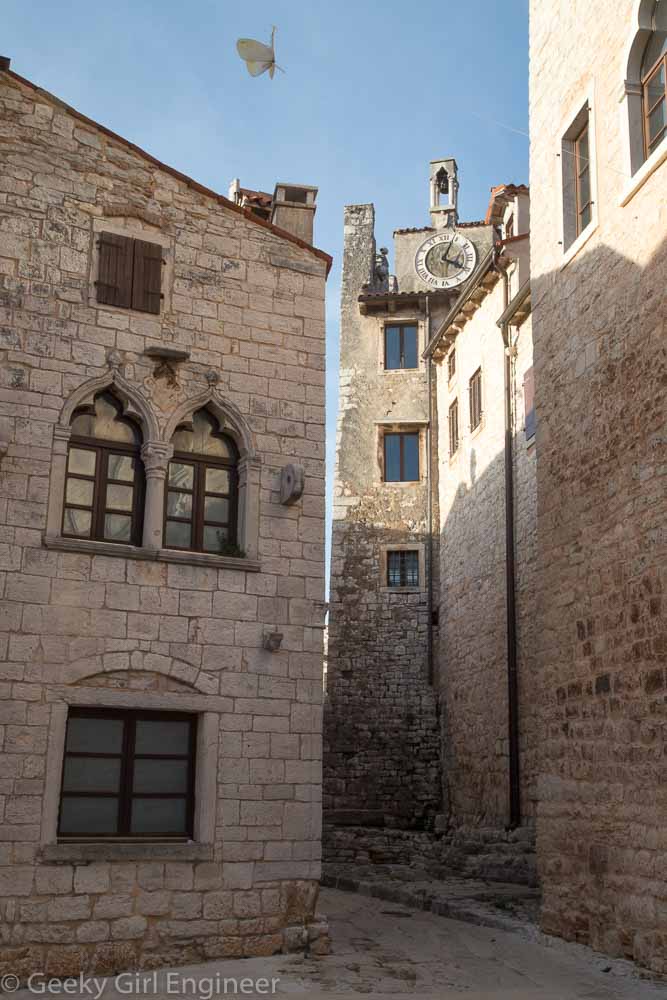
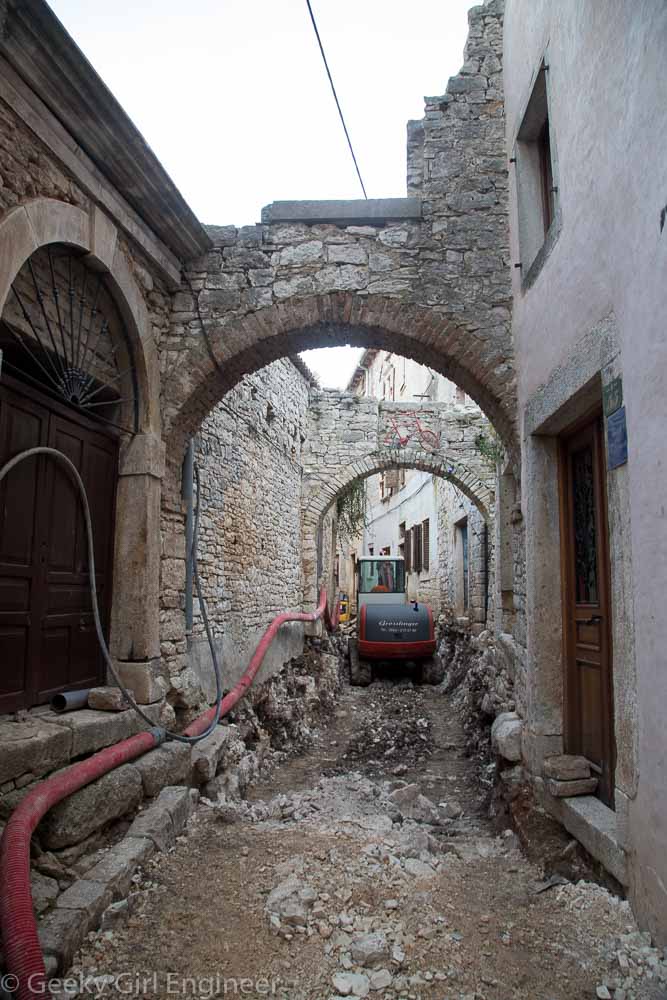
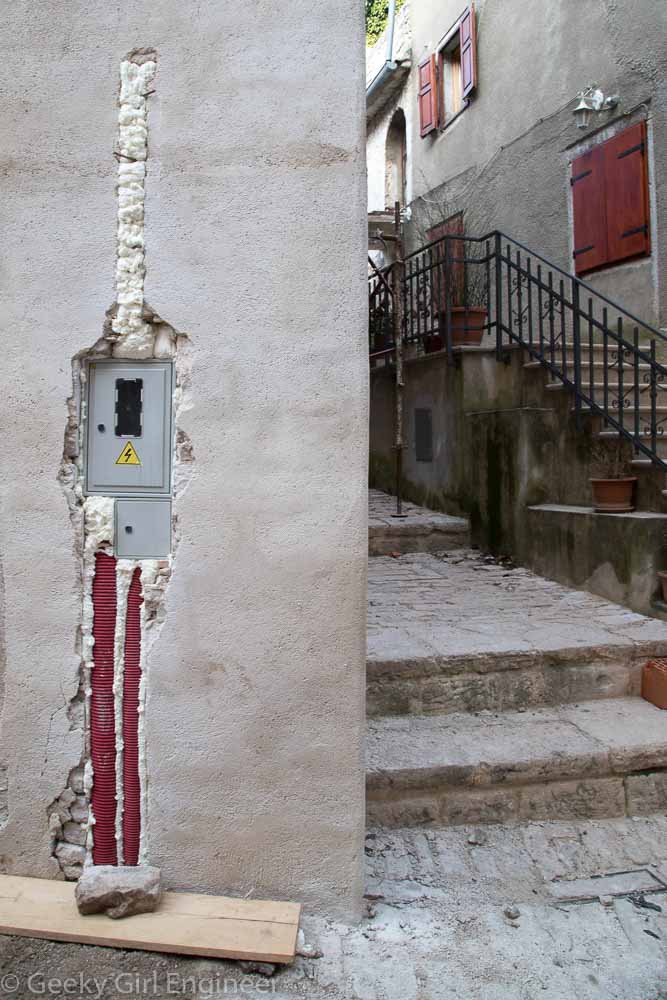
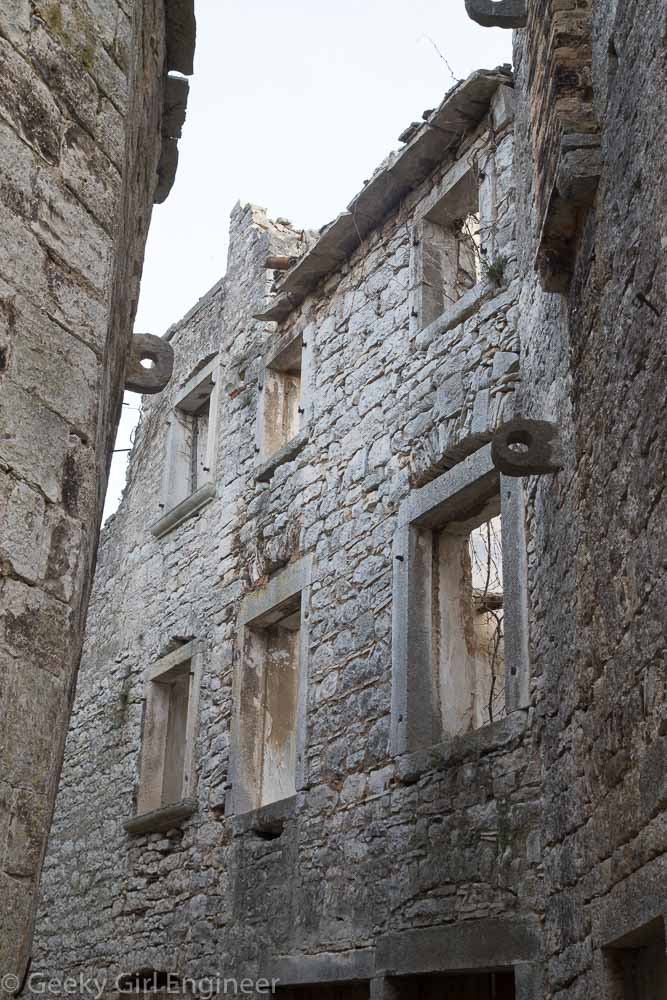
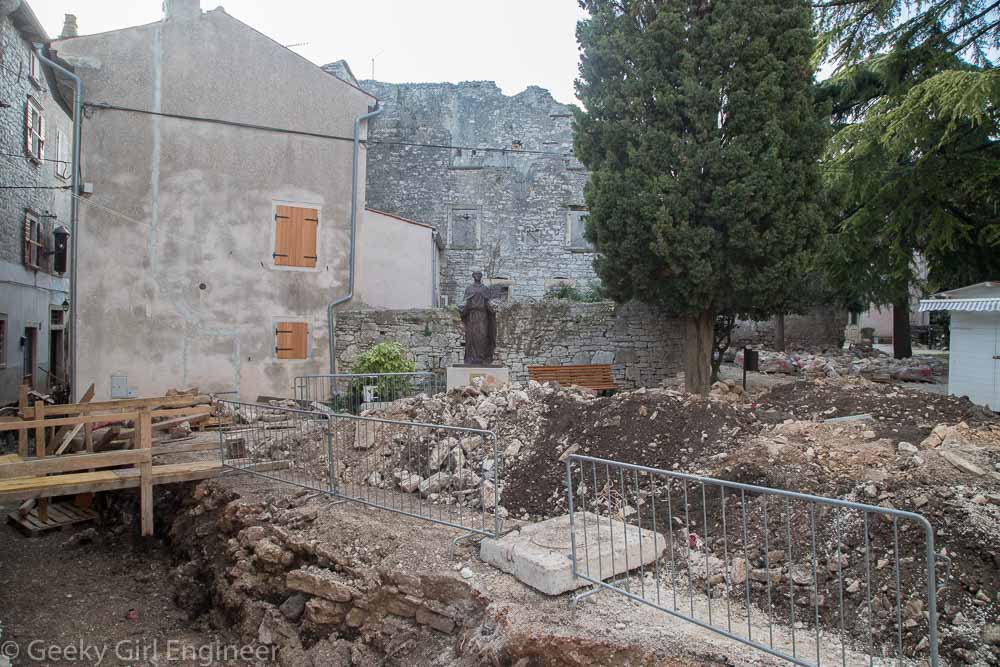
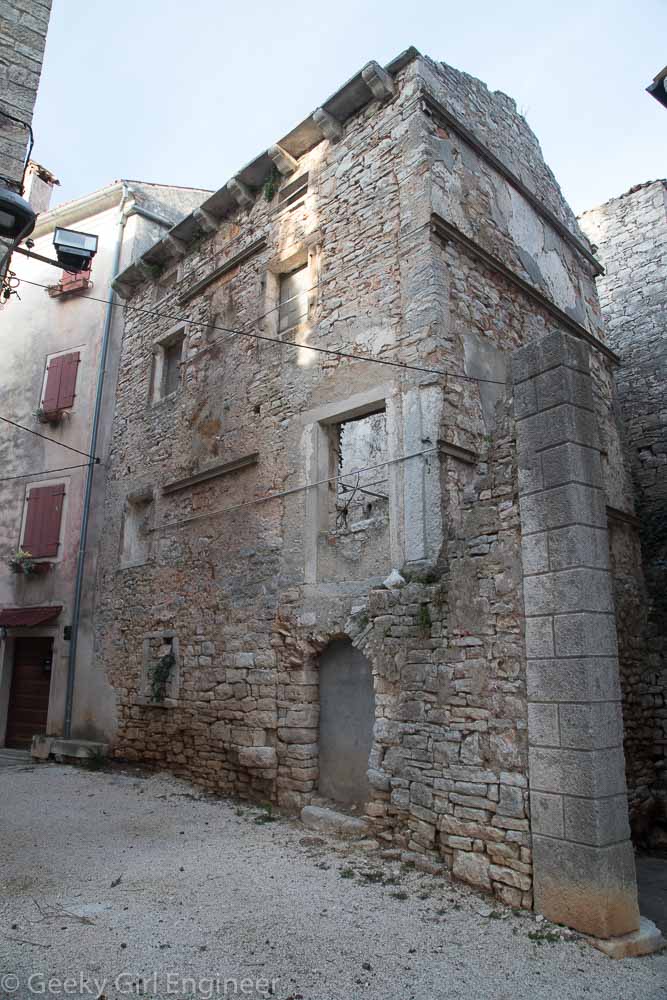
This afternoon we visited Bale, Croatia, which our tour guide described as a sort of ghost town. The town is old, but it was bombed during World War II and was deserted after that. The government gave good deals to people to come and live in Bale and rebuild the city, but many of the buildings are still just shells with only the exterior walls somewhat existing. Currently it is is being rebuilt and renovated, and utility work was everywhere. It was fascinating to me to see the utility work done on the historic buildings and how some of it is hidden once finished.
Mansion near center of town and the arch is the original entrance to the town
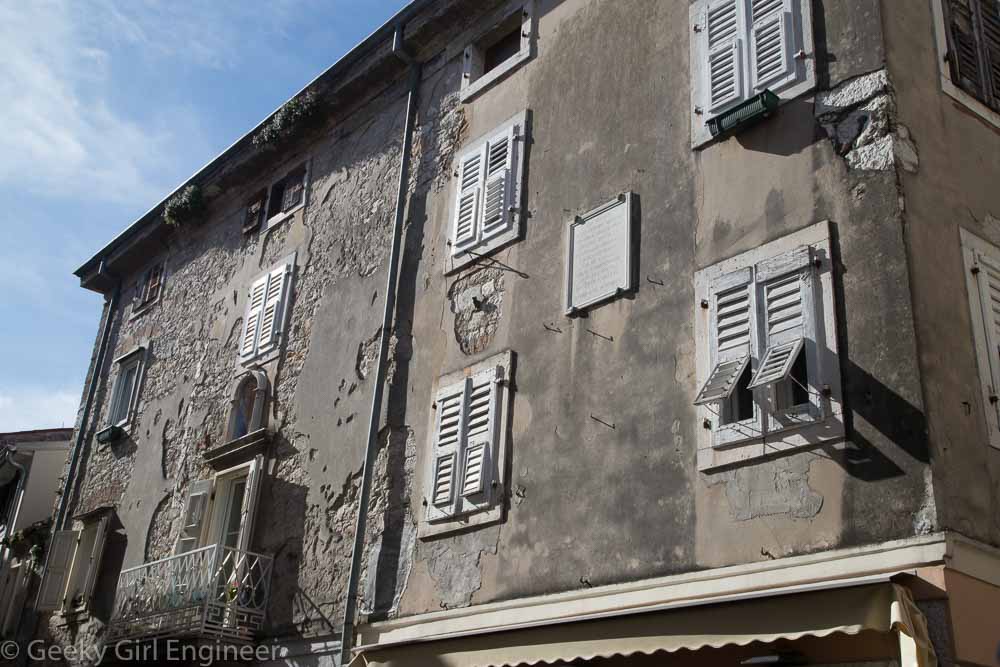
Original buildings in Bale
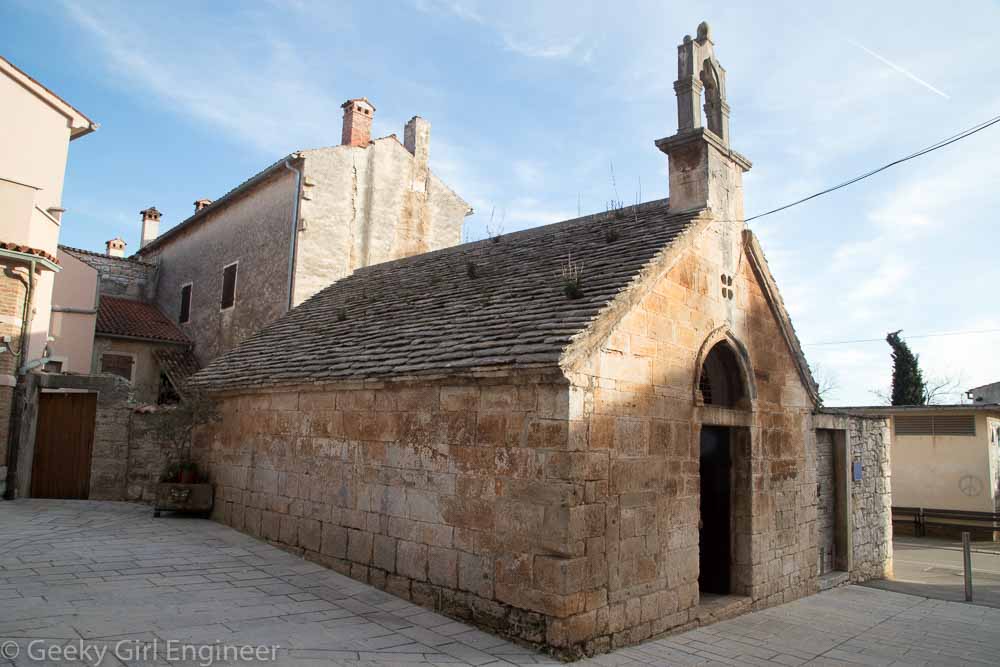
Small church with stone roof
Lots of utility work being done across the town
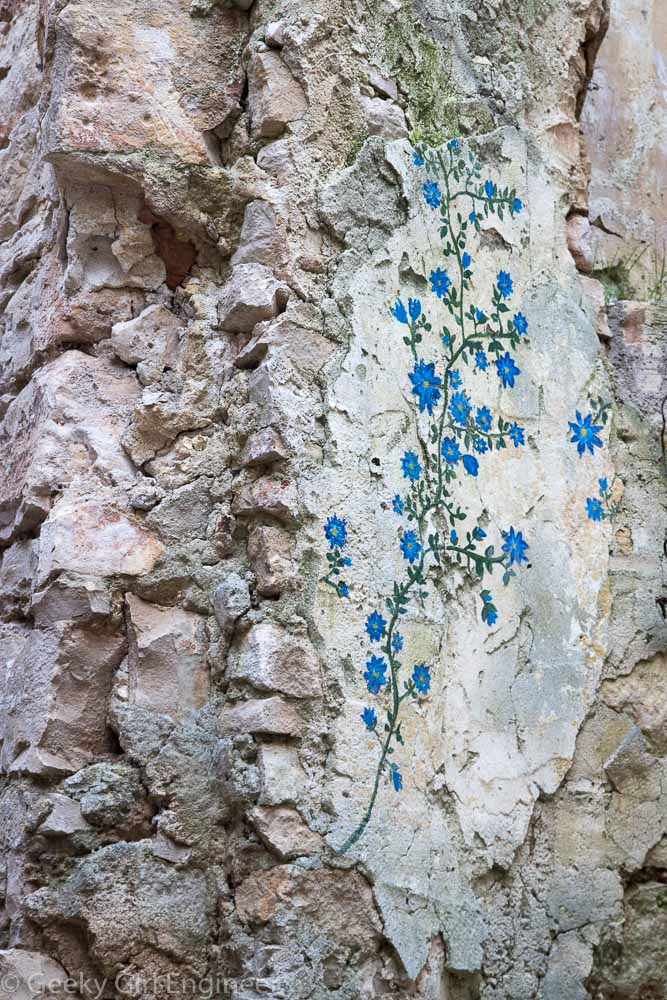
Artwork painted on old stucco on an exterior wall
Electrical work upgrades in process
One of the bombed buildings that is still a shell
More utility work, the building in the center of the photo is just a shell
Bombed out building

Poreč, Croatia

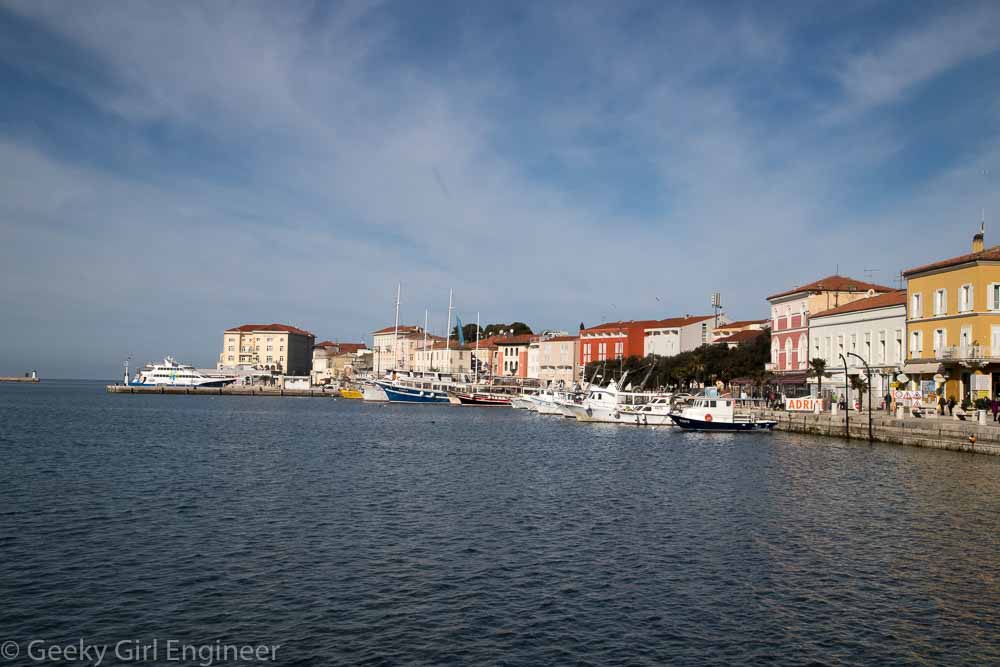
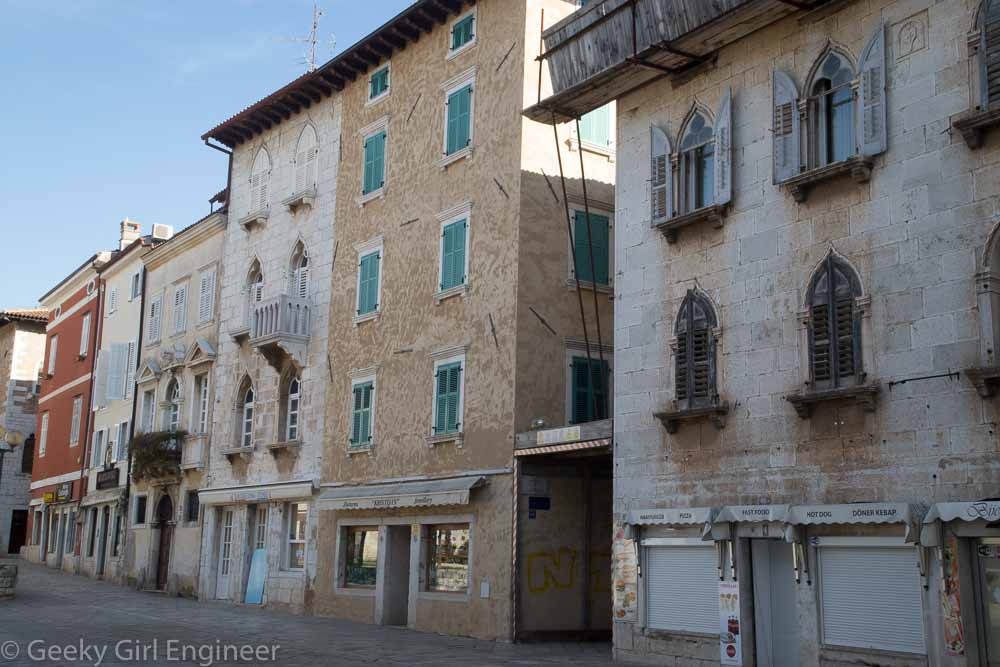
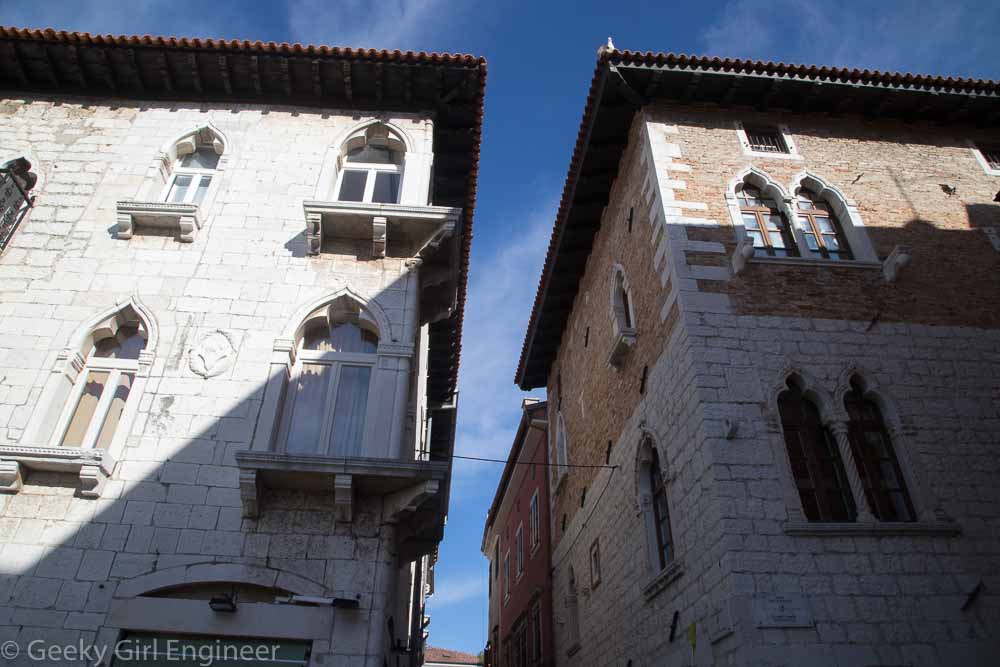
This morning we visited Poreč, Croatia, a town on the Istrian peninsula in the Adriatic Sea. Some of the architecture is Venetian, and some architecture is Austrian. It was founded by the Romans, although it has been inhabited since pre-historic times, and in the very old section of town, the street names are still the Roman names.

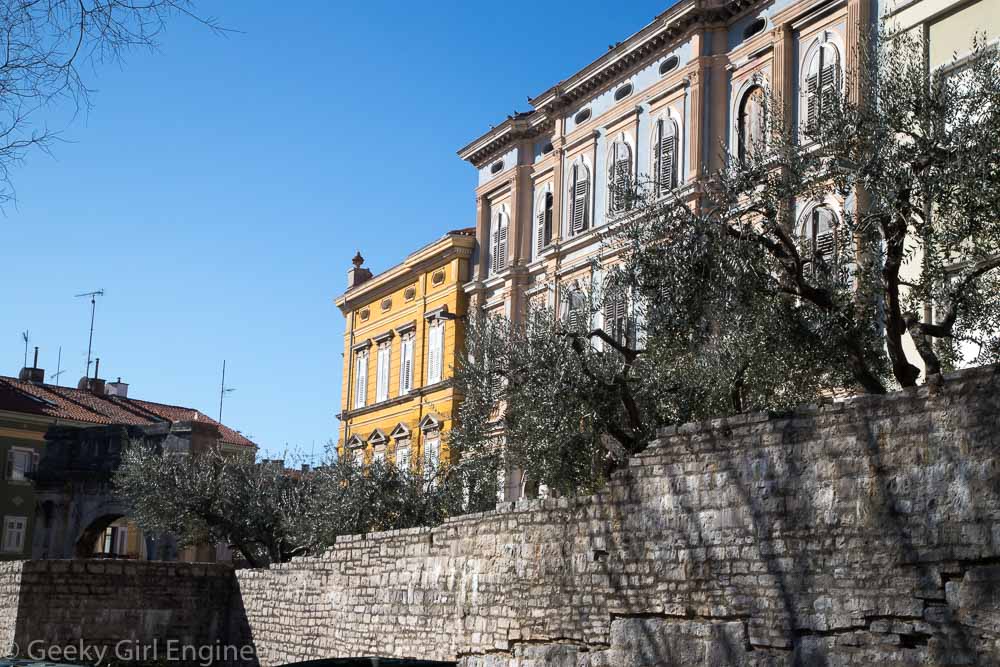
Historic buildings in the old section of Poreč
Original section of Poreč on the water
Various architecture in Poreč
Venetian architecture at the corner of Cardo Maximus and Decumanus
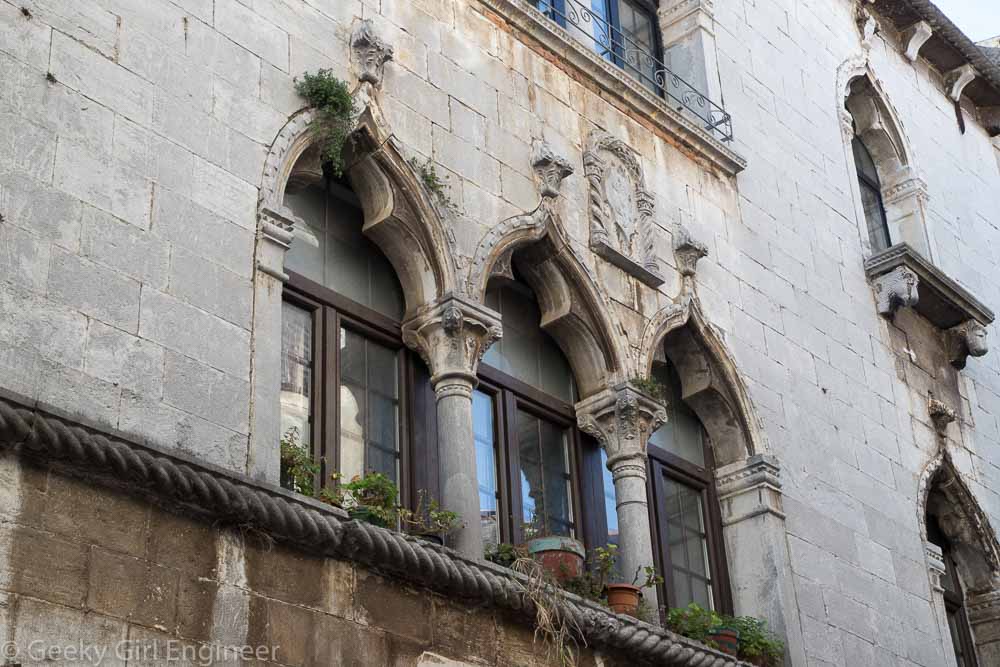
Beautiful windows

Rovinj, Croatia

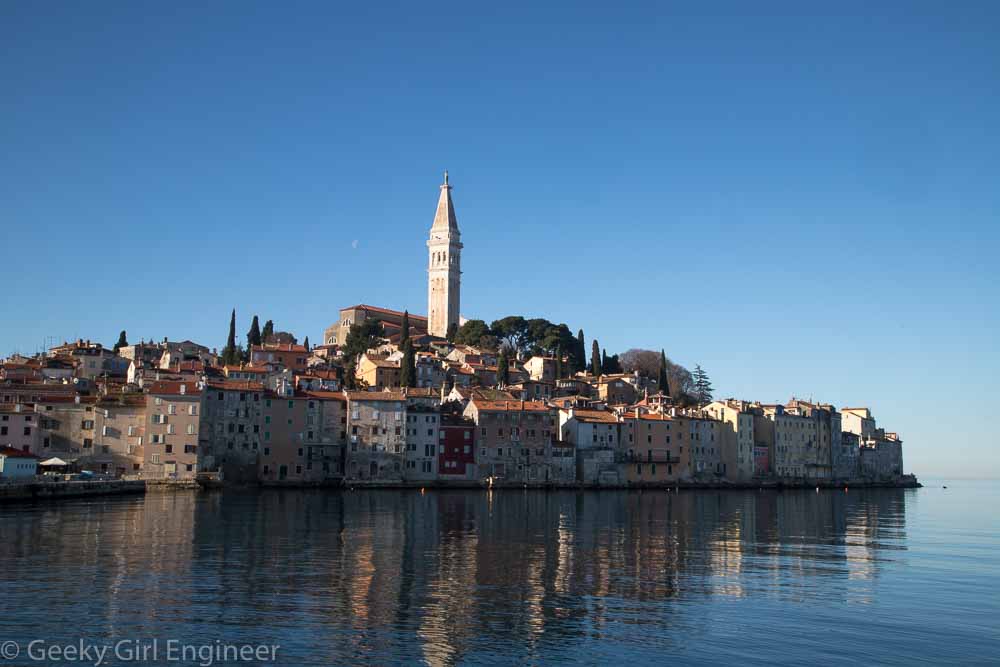
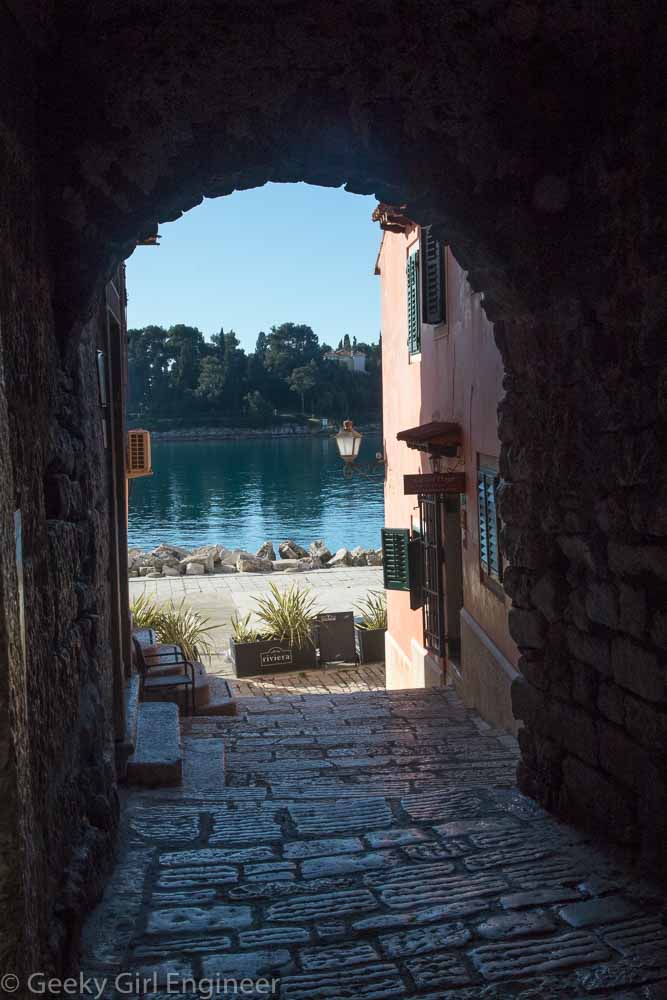
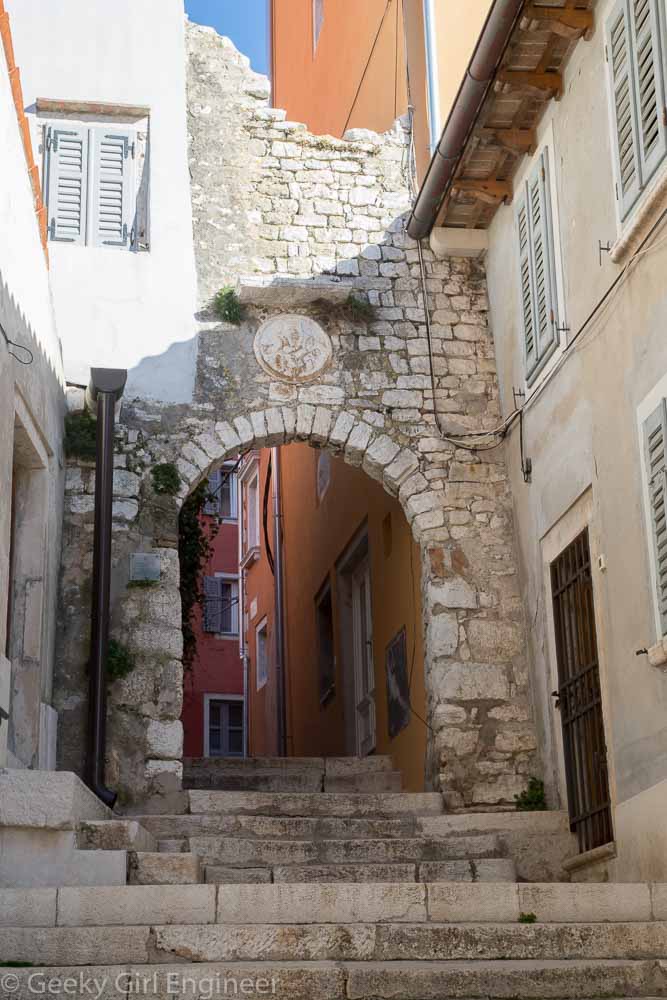
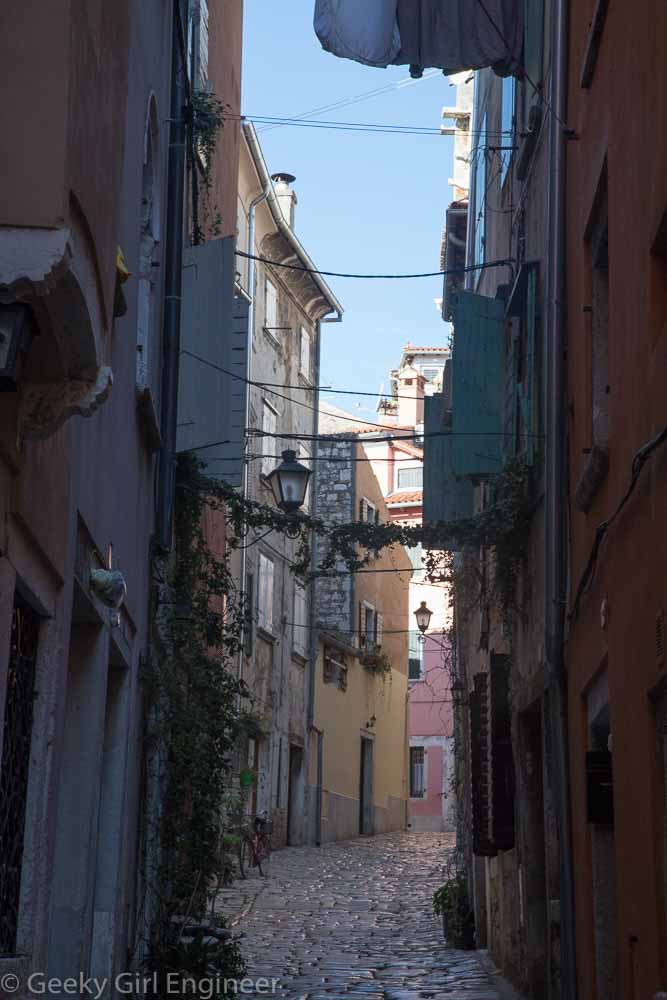
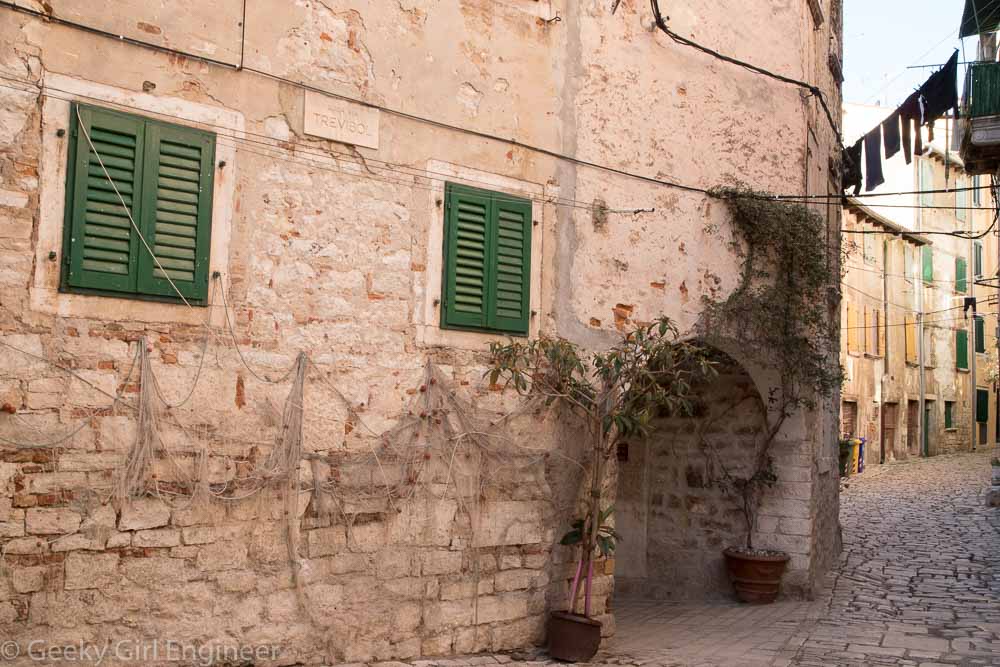
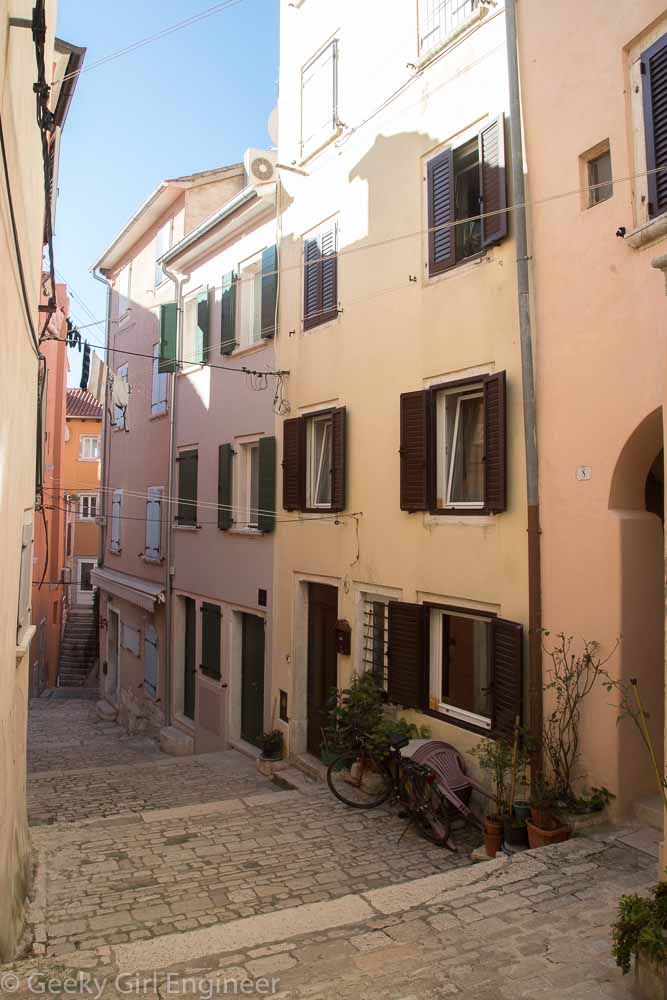
Today my cruise arrived in Rovinj, Croatia. It is a small town on the Istrian peninsula. The town was originally an island, but eventually the spit between the island and the peninsula was filled to allow the town to grow larger. The original part of town is very old and still feels authentic. Everyone’s laundry hangs in the narrow alleys between the buildings. Parts of the original wall that surrounded the island and the arches that allowed entry are still visible. A top the island’s hill is a church and bell tower, which makes the former island look even more dramatic from afar.

Rovinj, the original section that was originally an island
An original passageway to the island
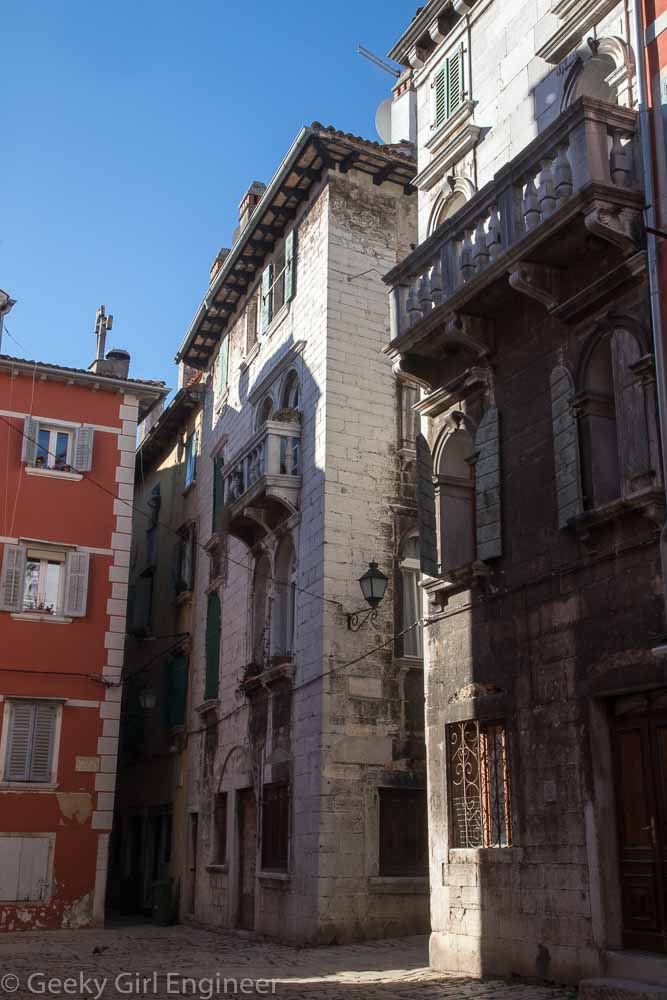
Buildings in the original part of Rovinj
Small church in a tiny square
Passageway with laundry hanging in alley
All alleys are sloped as the former island is a hill
View from the top of the hill looking to the Adriatic
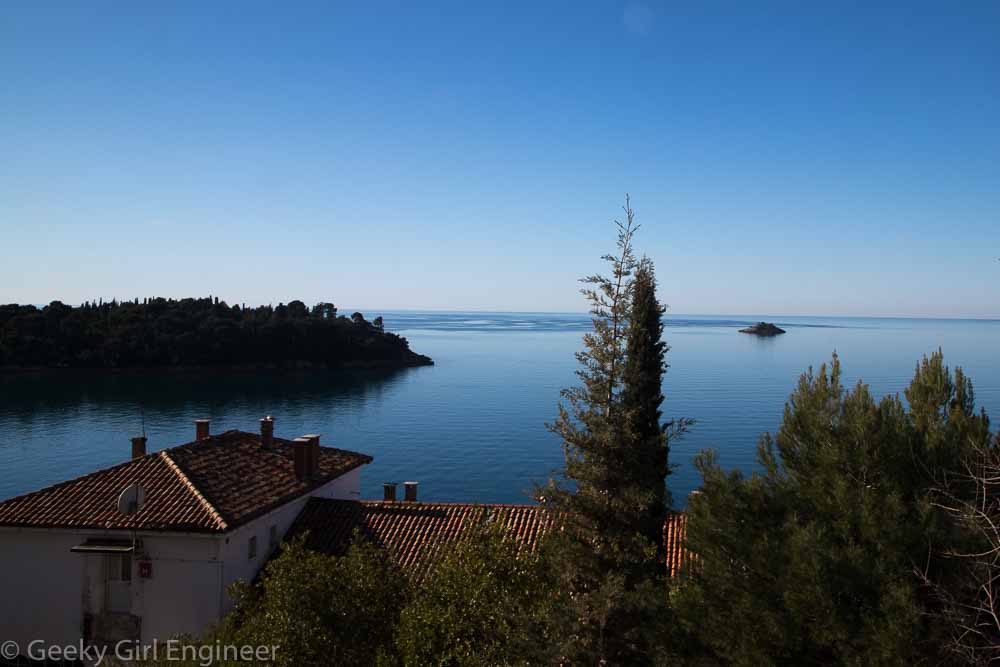
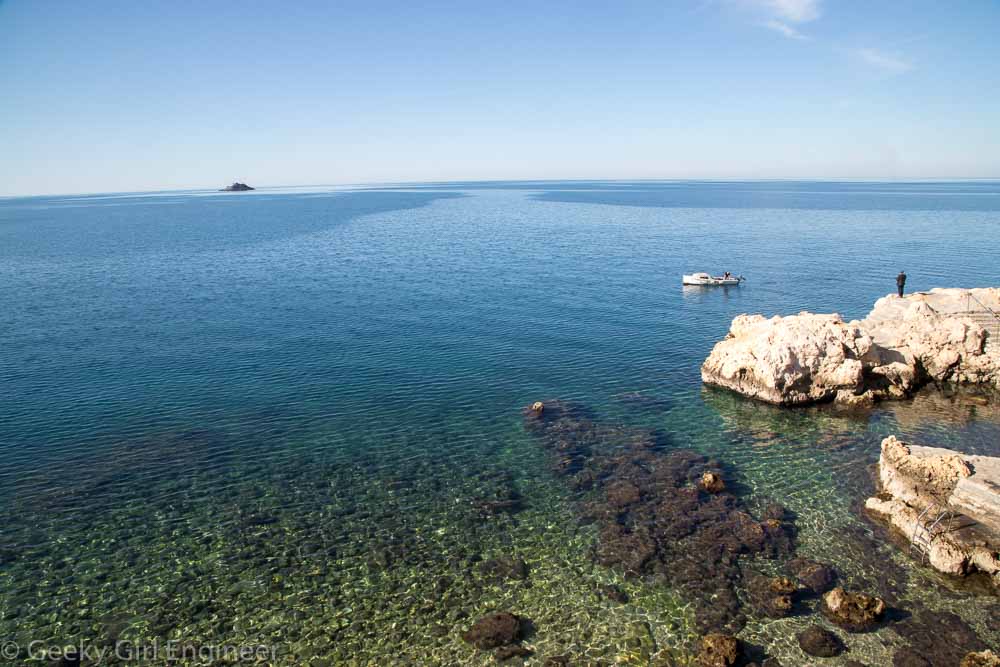
Clear beautiful water of the Adriatic off the former island
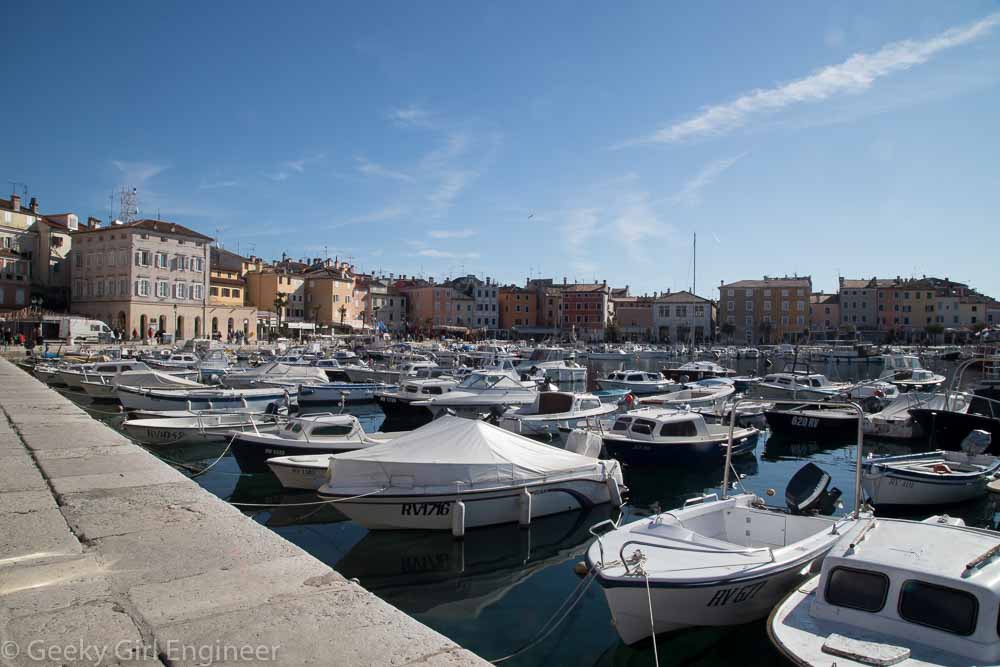
A view of the new section of town with many boats in harbor

Pula, Croatia

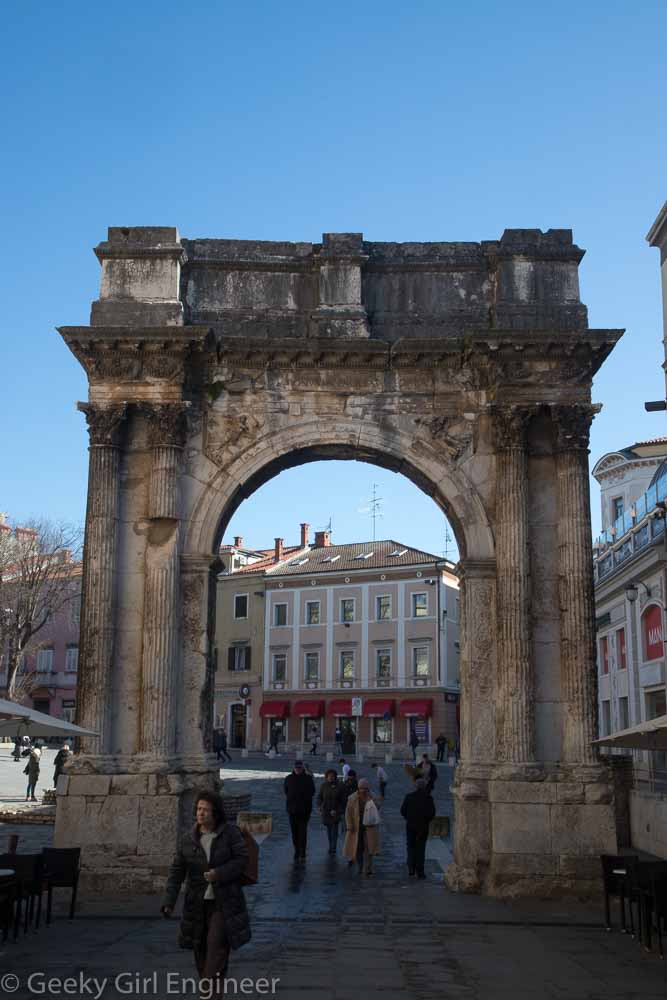
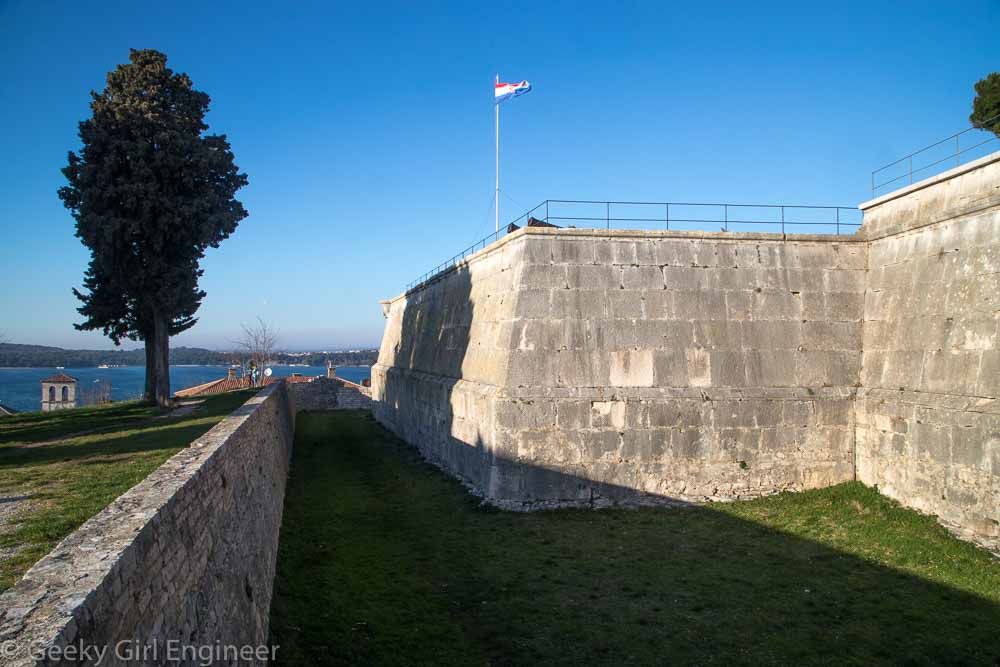
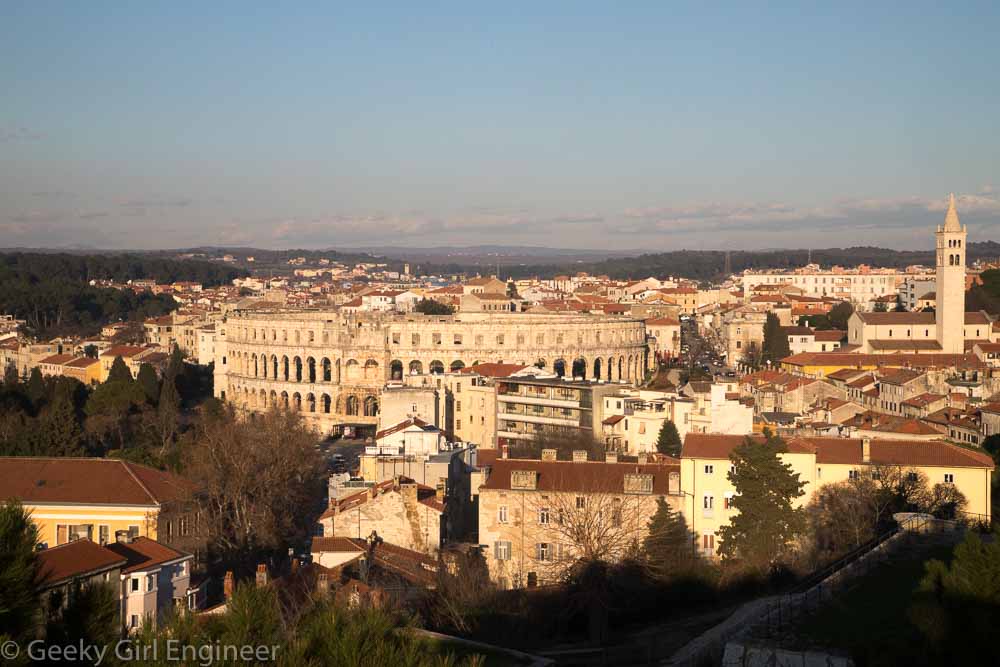
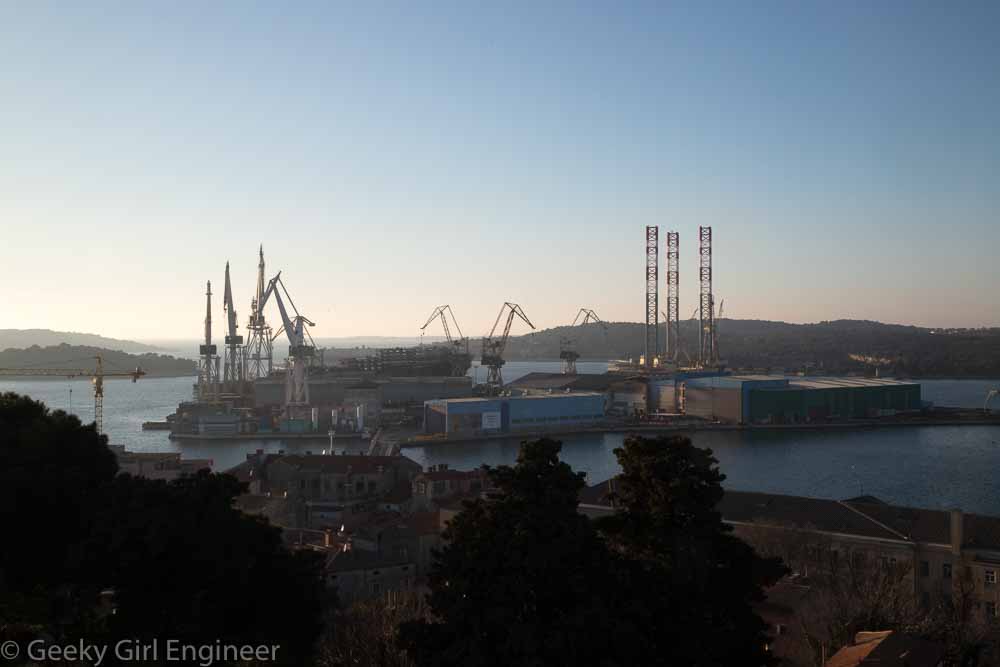
My cruise arrived in Pula, Croatia today. After visiting the Roman amphitheater, we walked around a bit, and in the afternoon, some of walked to the highest point in Pula to visit the Venetian fortress. (It is called the Venetian fortress, as it was built when the area was part of the Venetian Republic.

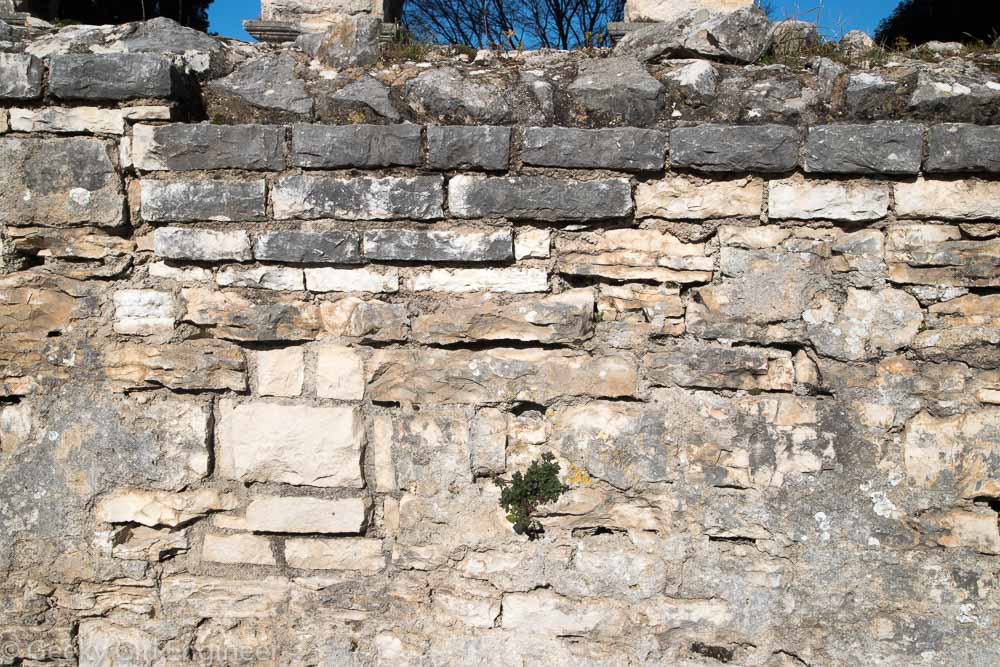
Roman wall in front of more modern buildings
Ancient arch
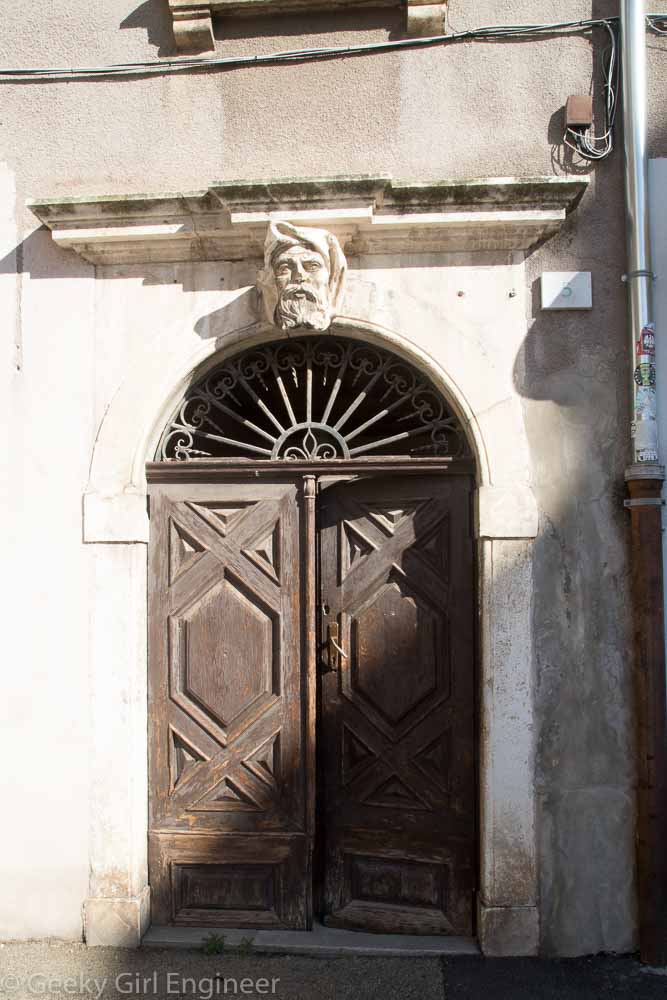
Exterior door on a commercial street
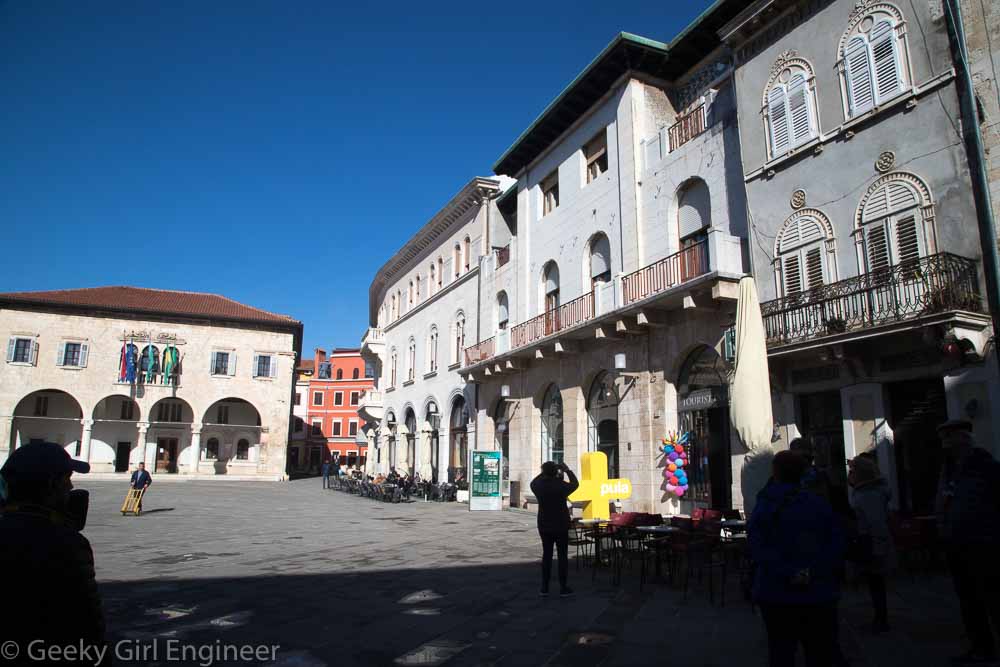
Square in downtown Pula
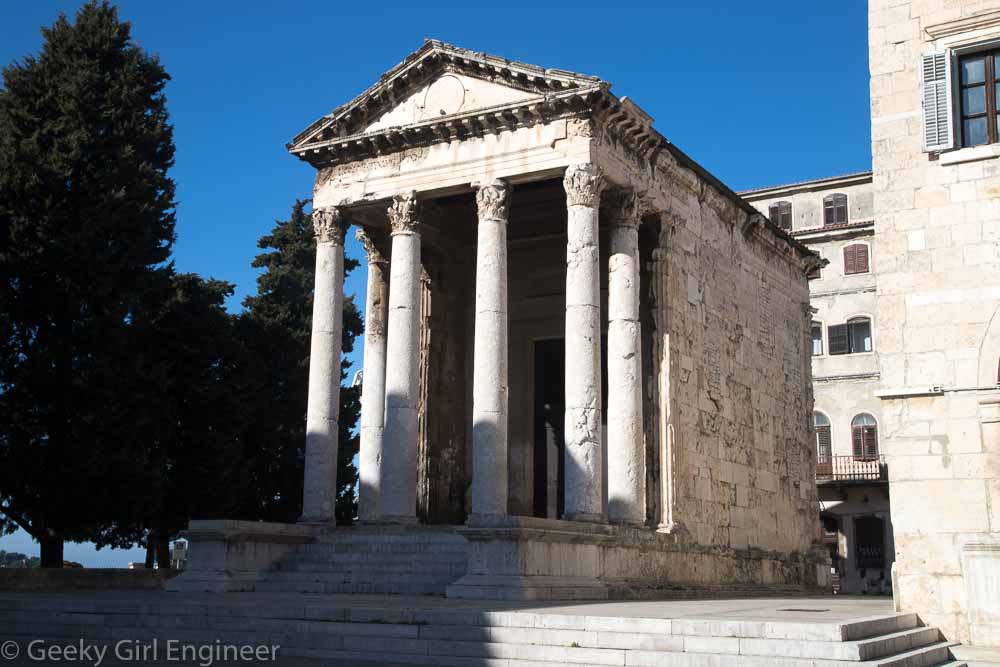
Roman temple
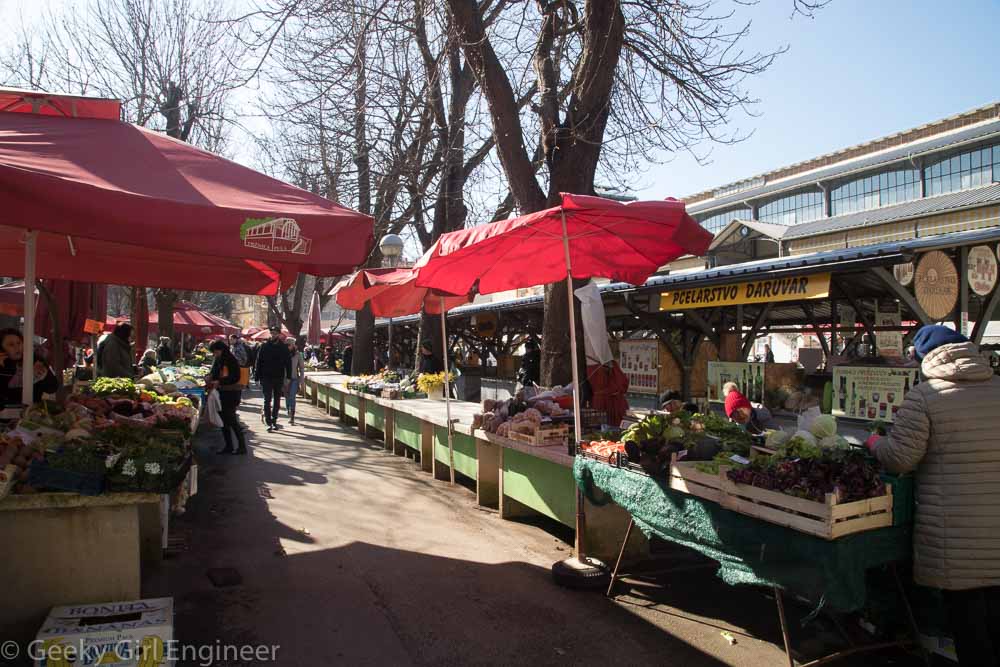
Farmers’ market
Venetian fortress situated on highest part of Pula
View of the city and Roman amphitheater from the Venetian fortress
View of the shipyards from the Venetian fortress

Pula Croatia Roman Amphitheater

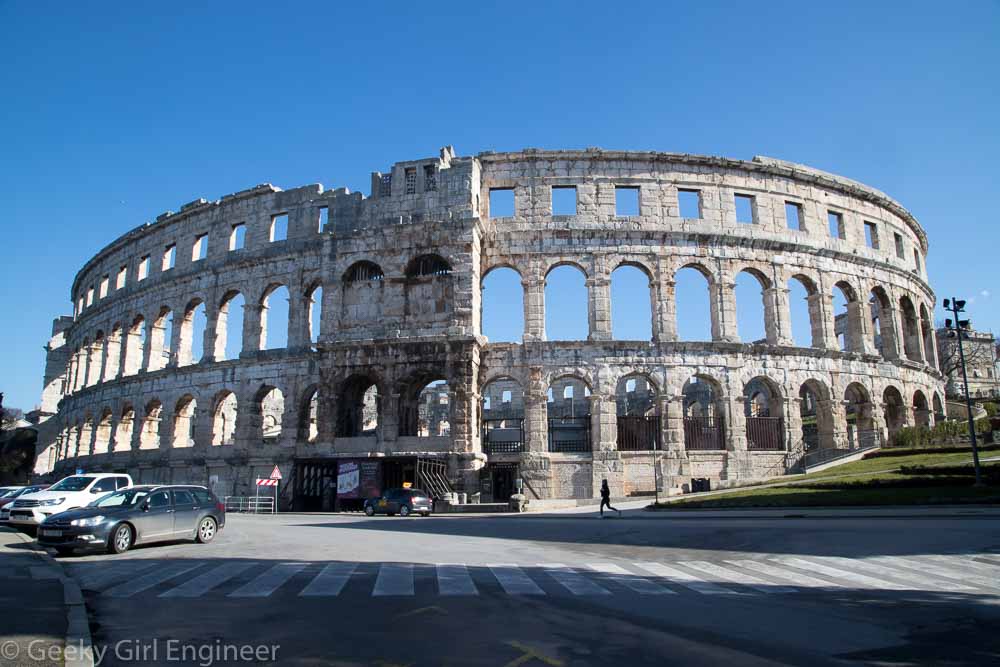
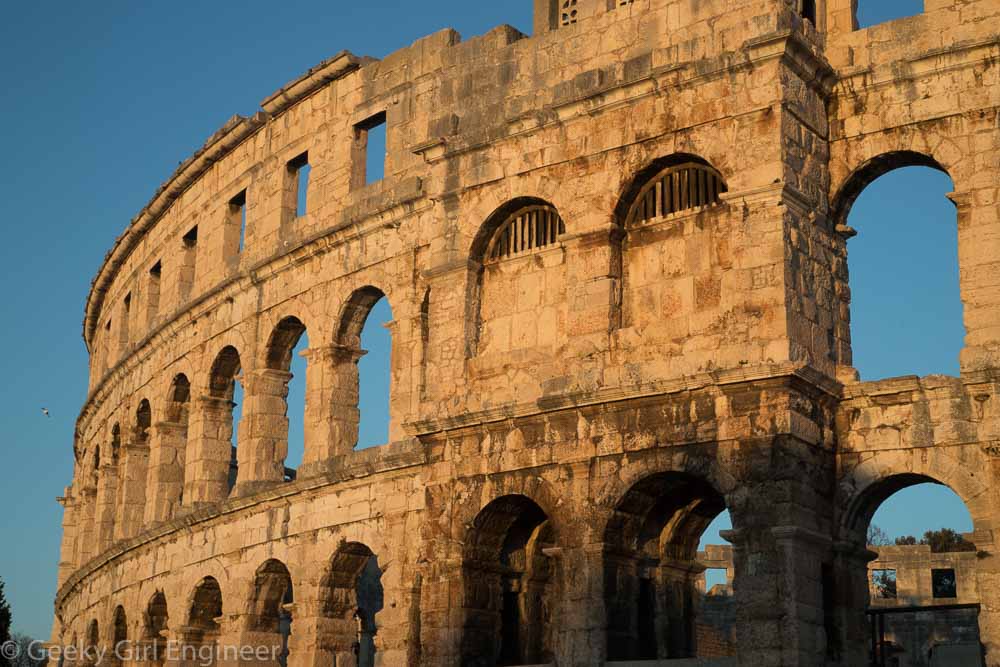
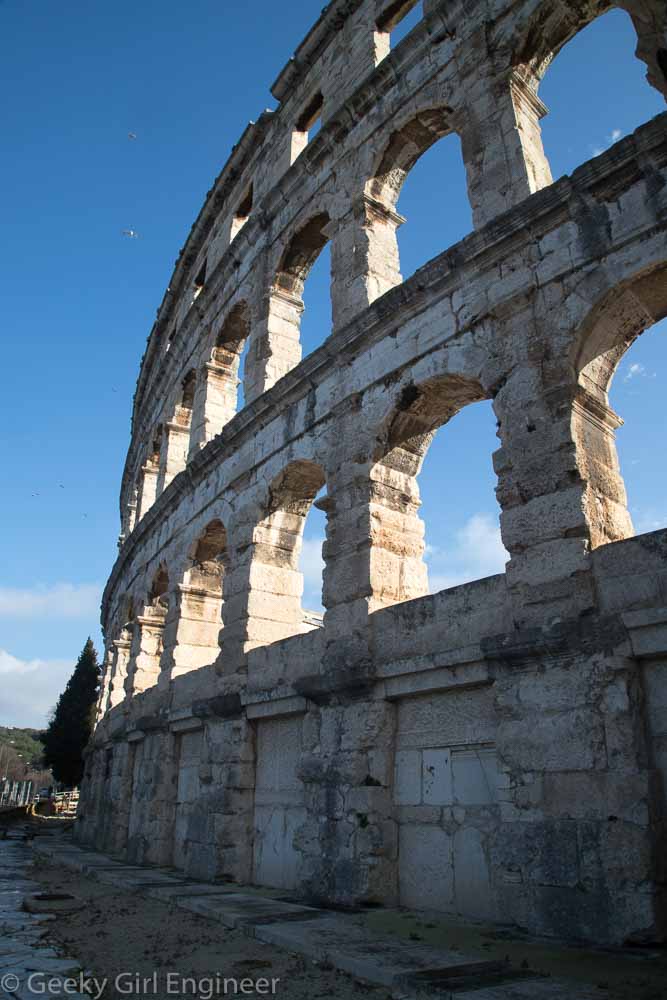
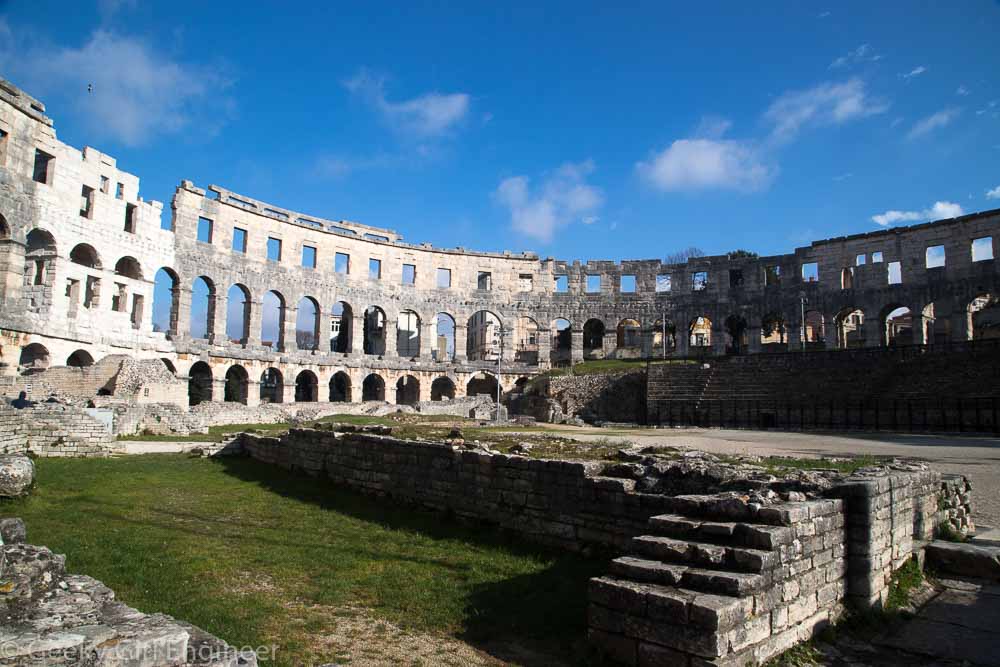
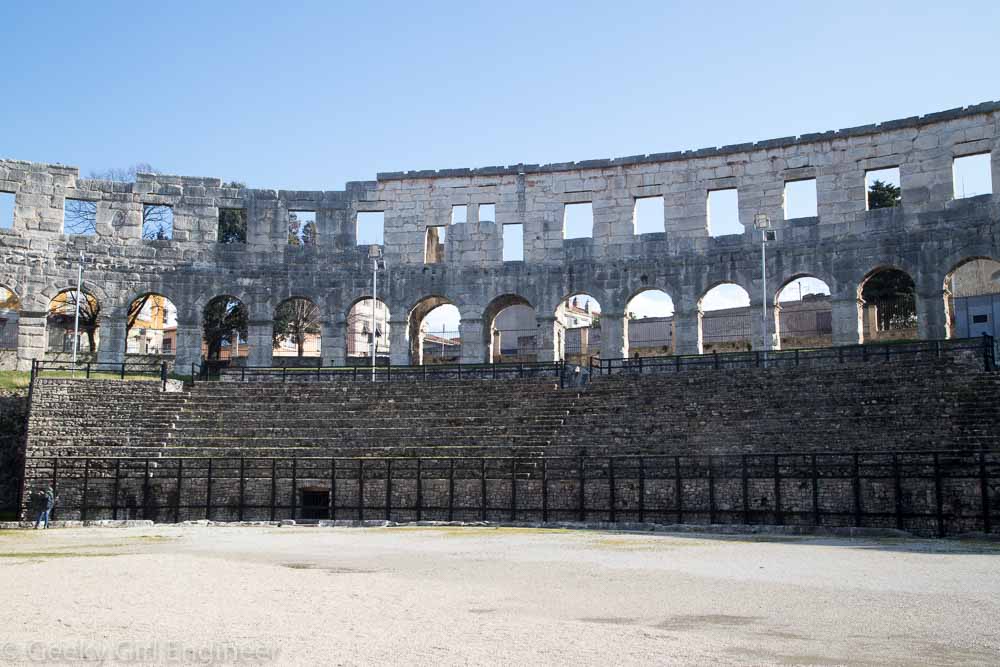
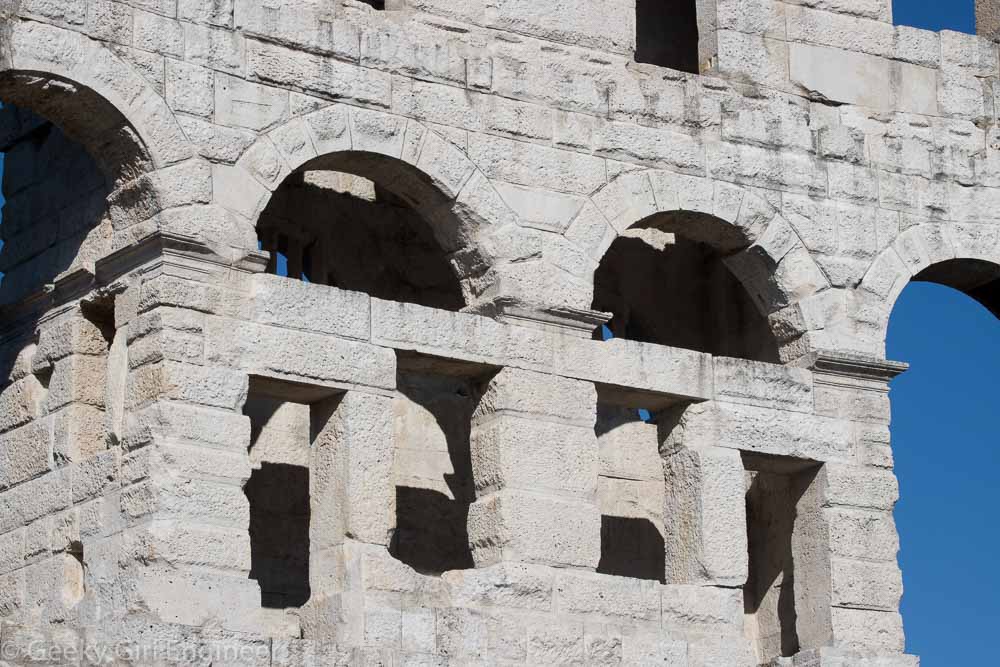
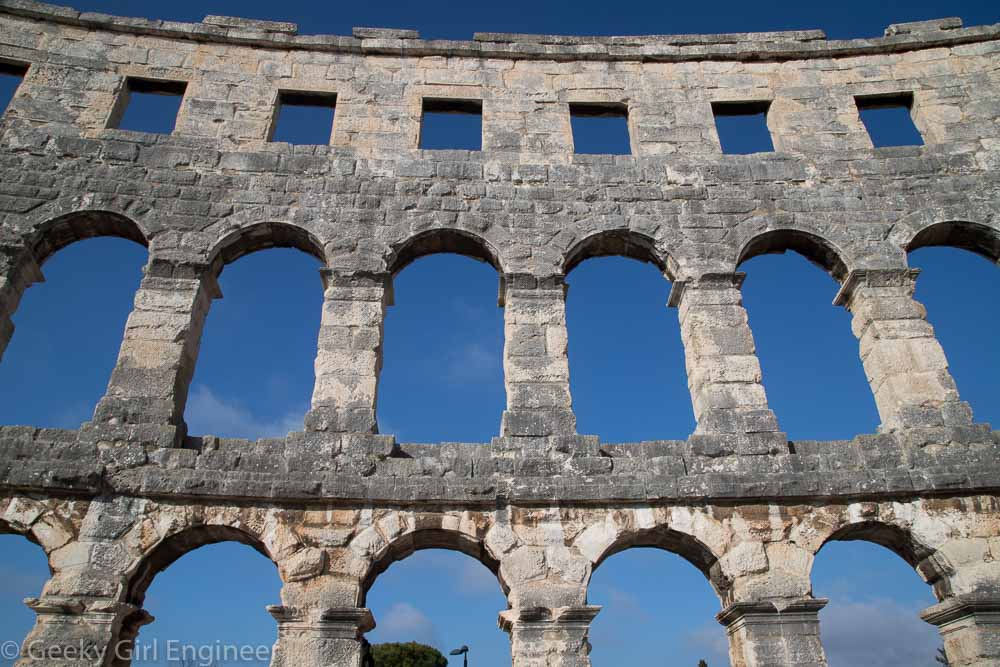
My cruise, which started in Venice, arrived in Pula, Croatia today. We started the day visiting an amazingly intact Roman amphitheater. It was gorgeous, and we could just wander around looking at all the details. It is still used as a concert venue. Parts of it have been reconstructed.

View of amphitheater from outside
View of amphitheater at sunset
View of amphitheater from outside
View of amphitheater from inside
View of amphitheater seats from inside
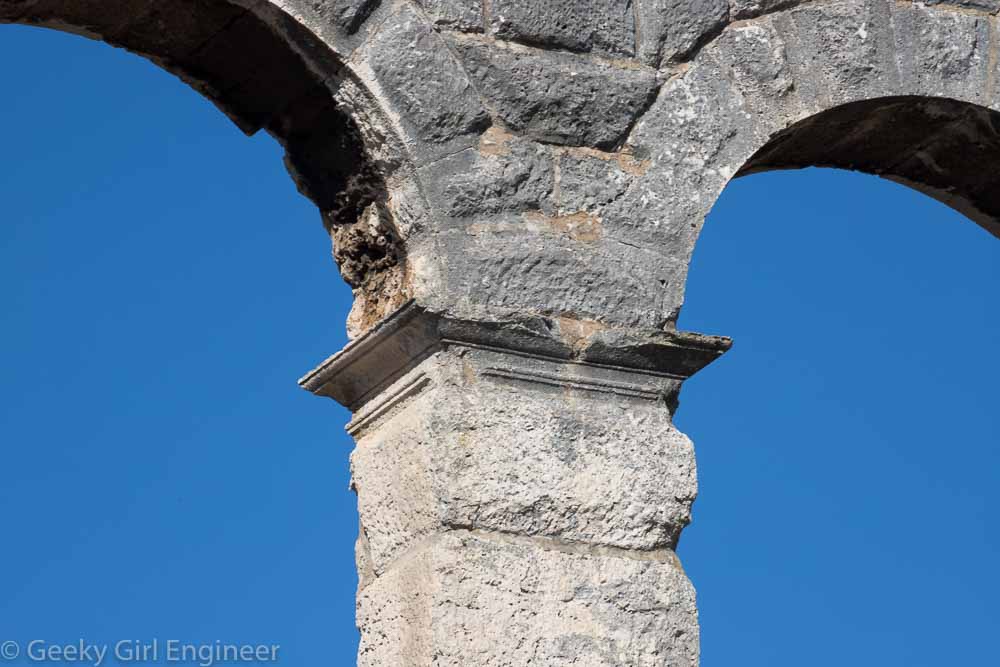
Zoomed in view of amphitheater columns
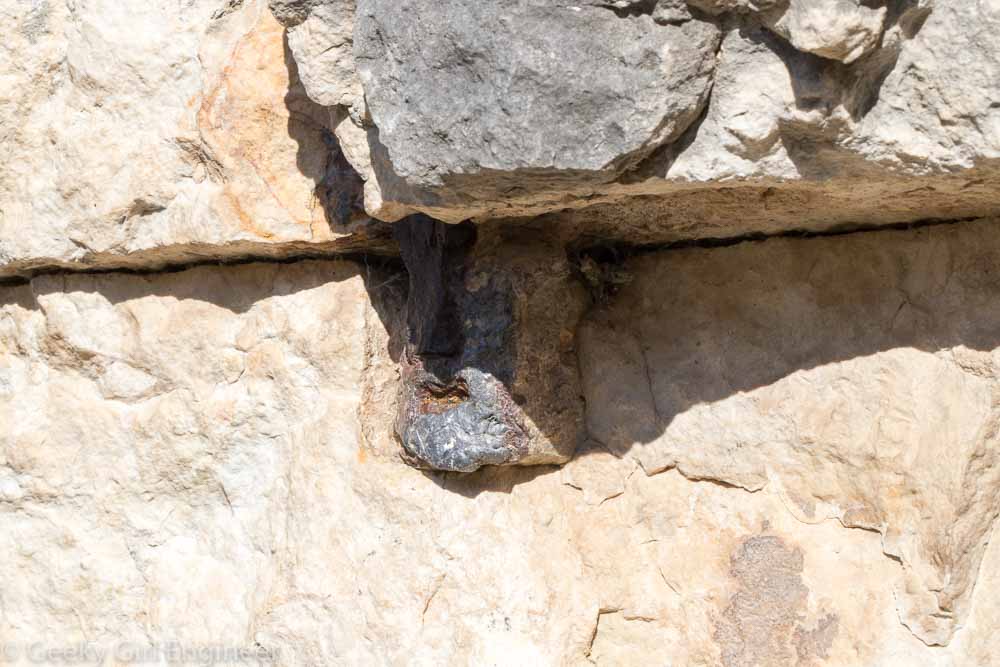
Original iron bar with poured lead used to increase strength and stabilize rock columns
Close up view of wall inside amphitheater

Ciao Venice

I have been to Venice once before this trip. It was probably 20 years ago, and I was with my family in Venice for a day or so. I remember Piazzo San Marco and bridges. We took the train there. That is for the most part what I remember. I do remember getting lost at one point. However, I once read that you have not truly visited Venice until you have been lost in Venice.

Today was my last day in Venice. We took a walking tour with our guide and visited a few sites, and then we had some free time before we had to be back at the hotel to then go to our ship. My friend and I looked in a few shops and bought a few items, and then we walked a bit. We didn’t really have anywhere else we wanted to go, and we had a couple of hours. After we had walked a little, we started seeing signs for “alla ferrovia” (to the train station). We knew how to get from the train station to our hotel, so instead of taking the water bus back to the hotel, we decided just to start walking to the train station. I was sure we would eventually see something familiar, and we would not have to walk all the way to the train station. However, we had plenty of time, and both of us thought a walk would be nice, so we started walking. We walked leisurely and looked in shops along the way. At one point, we looked inside a shop and recognized some magnets that are handmade by the artisan who we visited yesterday who makes forculas for gondolas. I thought some other shop must sell his little trinkets. [I bought one yesterday. They are nice, unique trinkets.] My friend said no, I think this is his shop. I said no, we are no where near his shop how can that be. Then we both saw his dog. I still could not believe we were at this shop, so I wondered why his dog was in someone’s else’s shop. Then he appeared. We waved and said hi and spoke for minute to also say hi to the dog. I am still not sure how we went by his shop. We kept following the signs to the ferrovia, and we made it there, but not by a common route to our hotel. We went back via the route we knew to our hotel and got back in plenty of time. We probably took the longest route back to our hotel possible without crossing Canal Grande. I feel like I have now really been to Venice.
Now, I am on my cruise ship leaving Venice, and I only really got a taste of this wonderful city. I hope to return one day, and I hope the city is still around for me to return to one day.

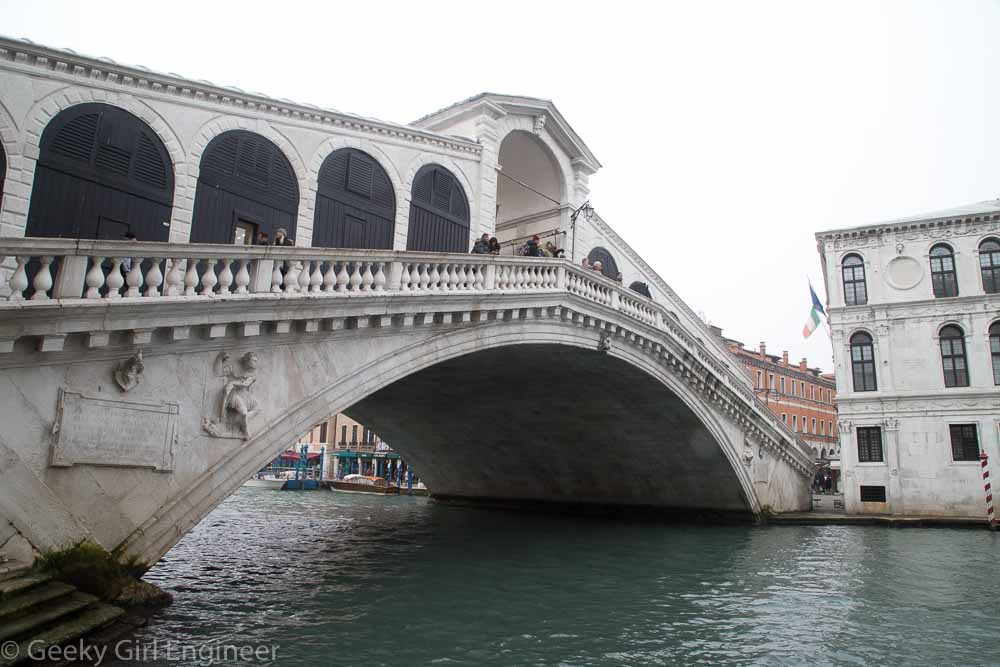
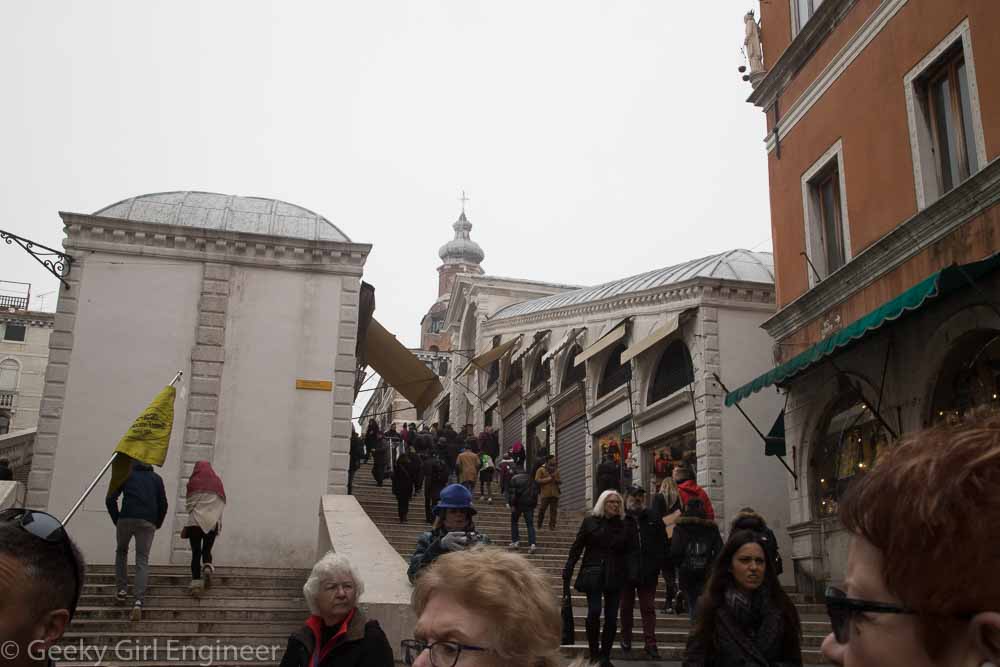
Rialto Bridge
Rialto Bridge
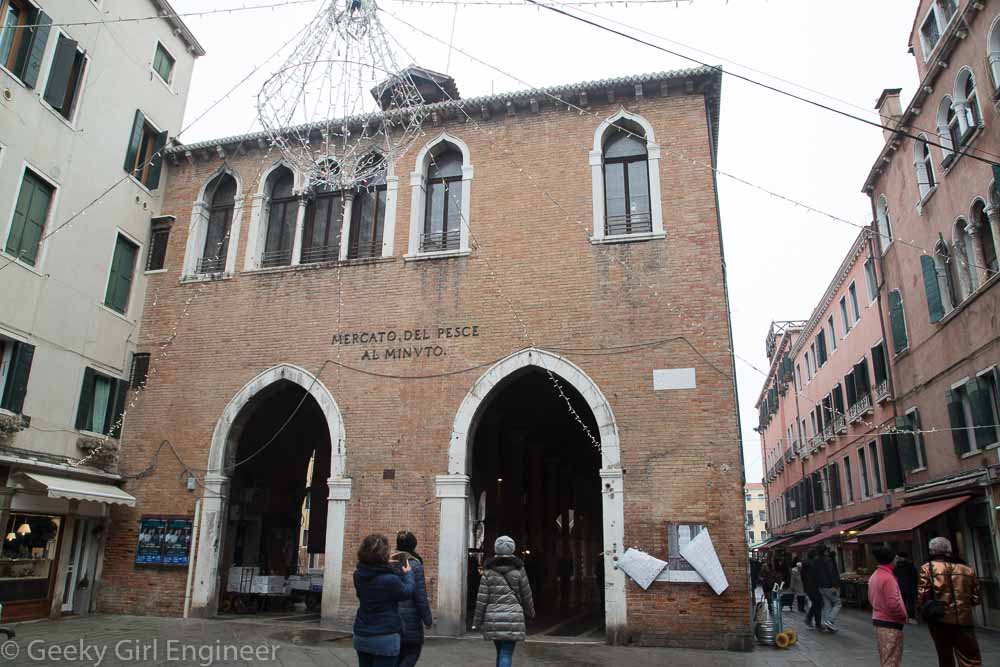
Rialto Market (the fish market area)
Rialto Market area
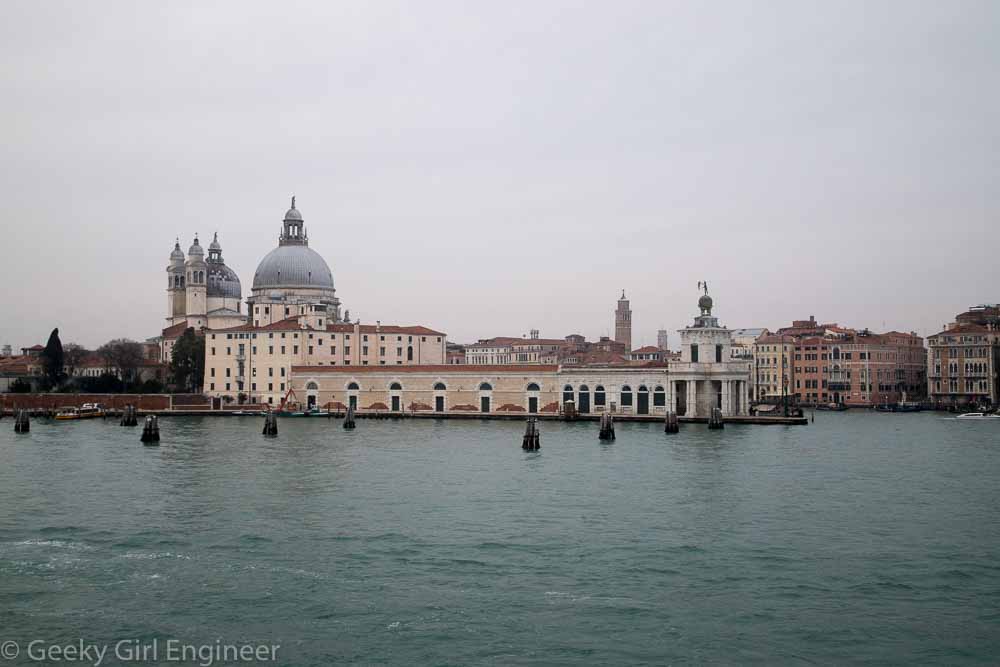
Basilica di Santa Maria della Salute
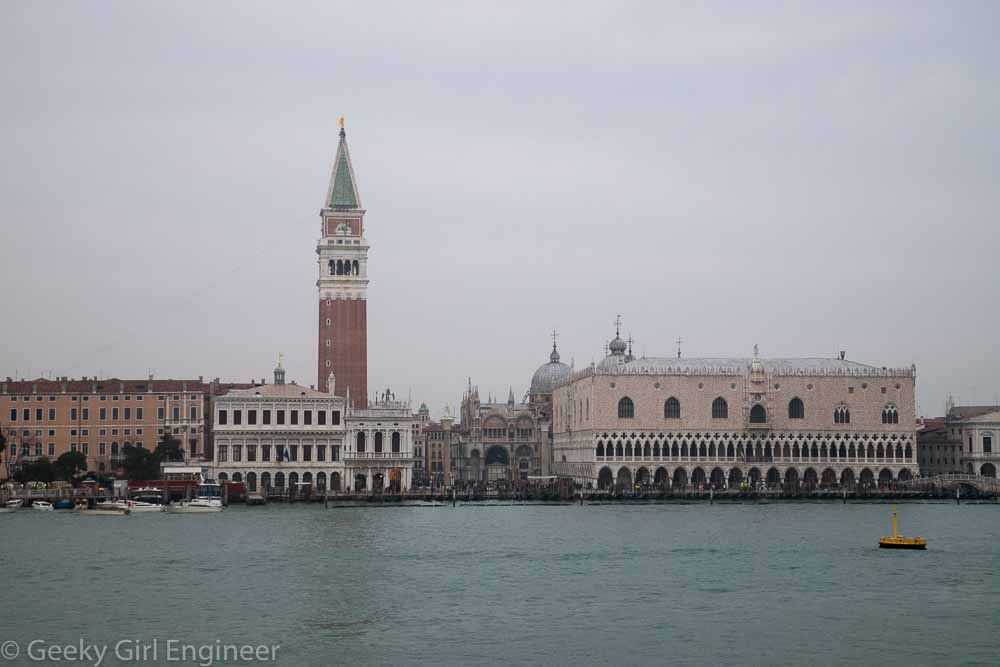
San Marco Basilica and Palazzo Ducal

Fondaco dei Tedeschi Platform

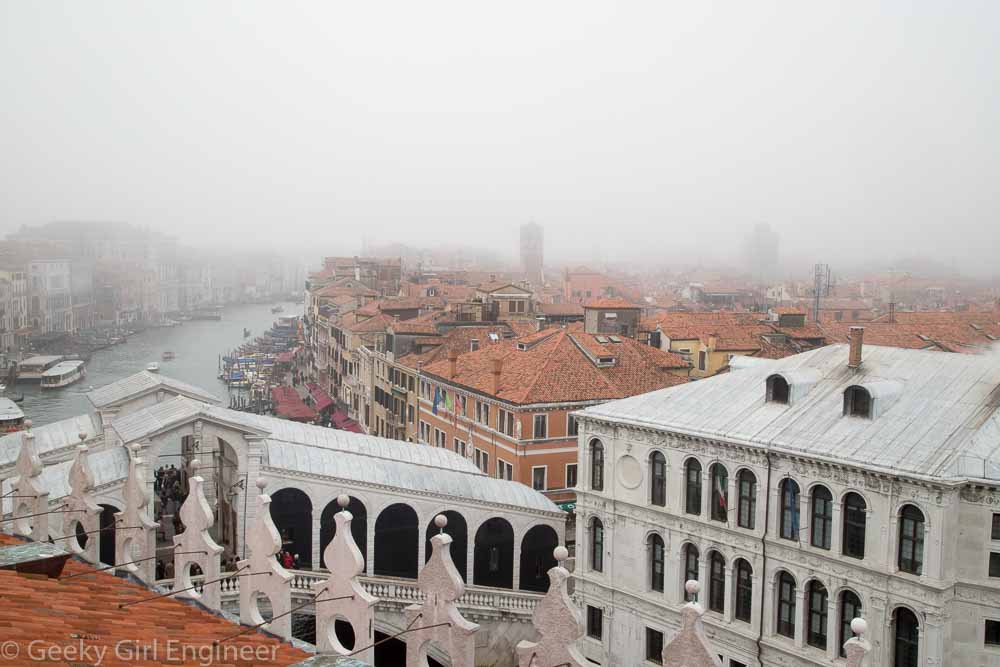
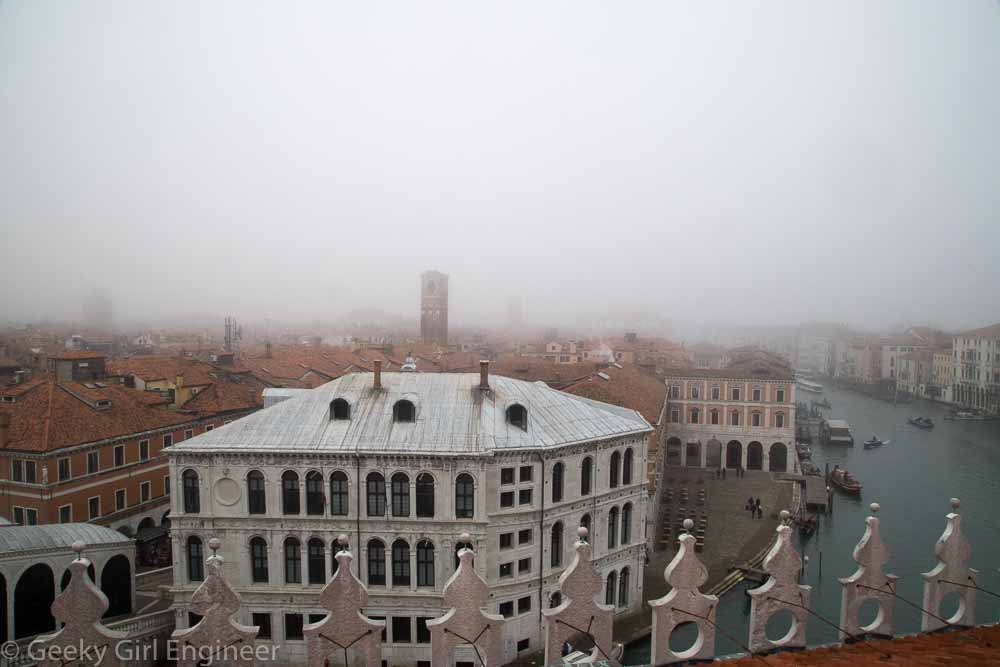
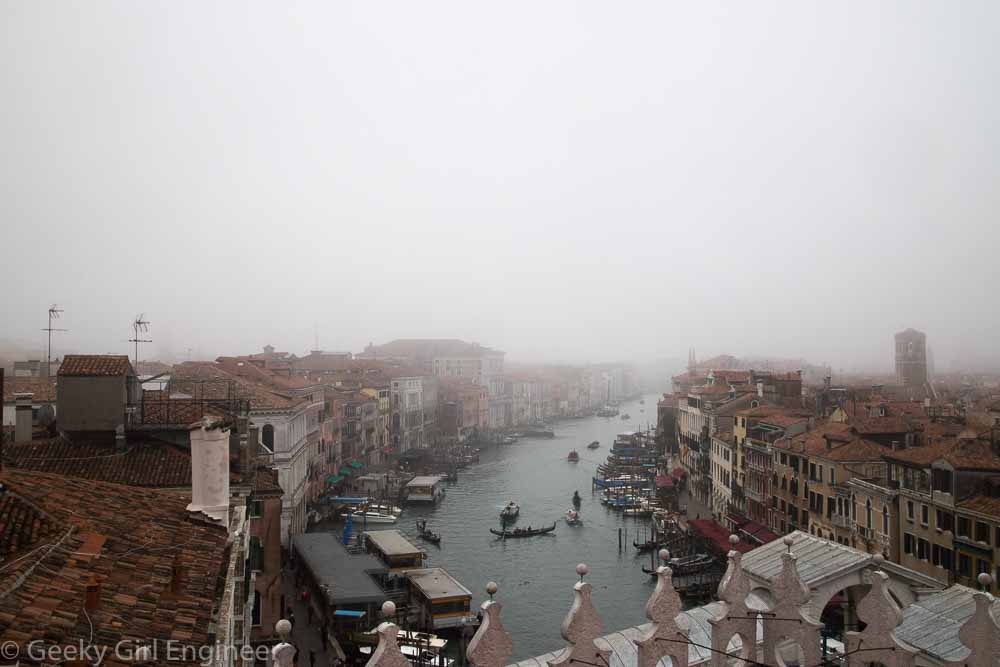
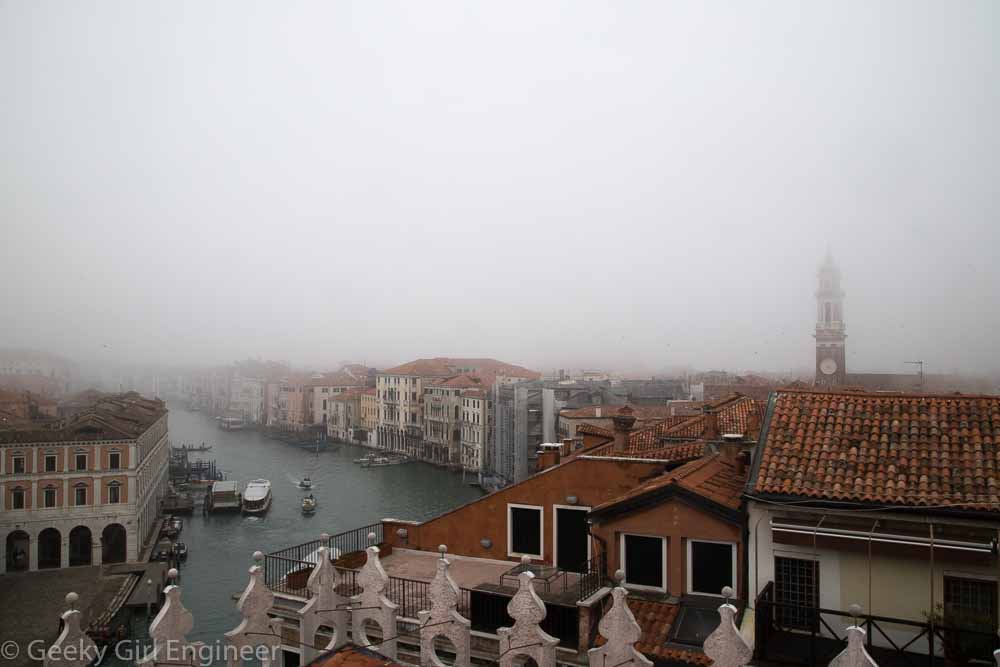
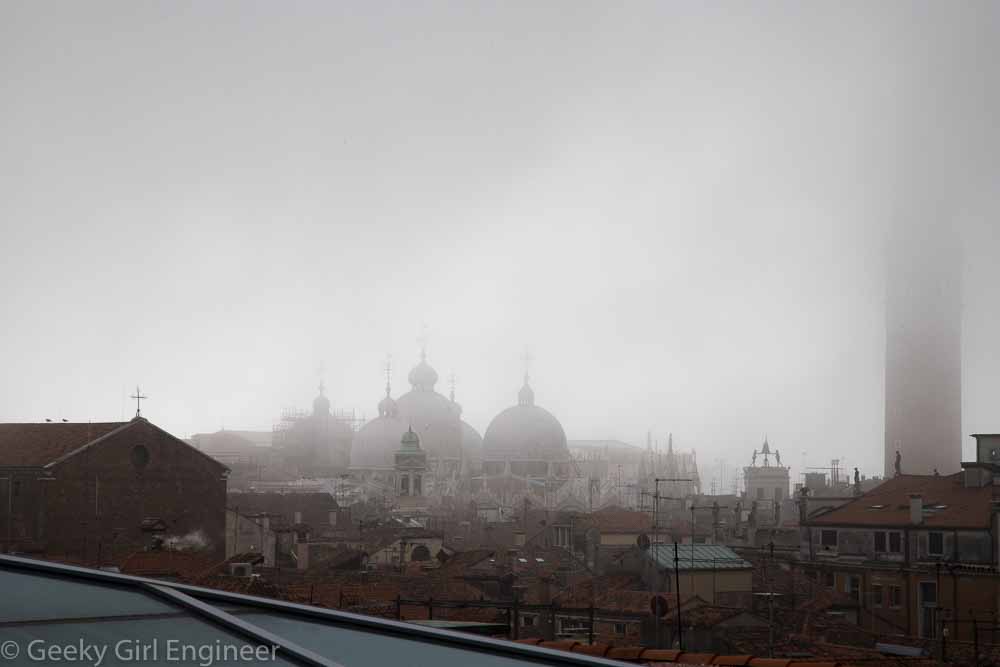
In Venice, on top of the old German Warehouse, which is now an upscale shopping center, is a terrace on the roof. From it, there are outstanding views of Venice. Unfortunately, when we visited, there was still quite a bit of fog, but the views were still lovely.

Looking southwest along Canal Grande with Rialto Bridge in foreground
Looking west along Canal Grande
Looking southwest along Canal Grande
Looking northwest along Canal Grande
Looking south to San Marco Basilico

Venice: All the boats

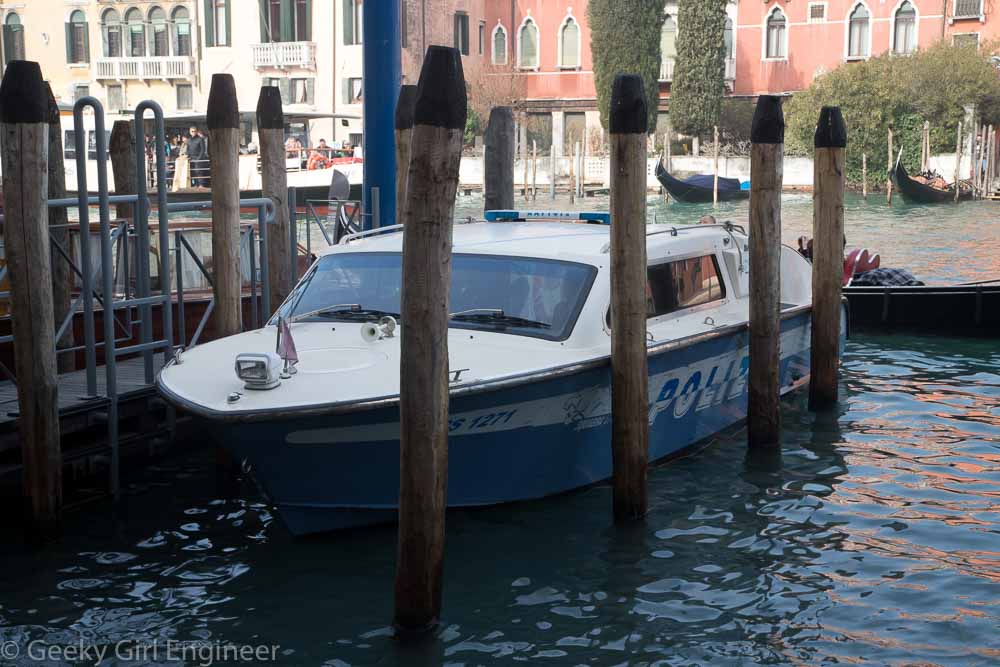
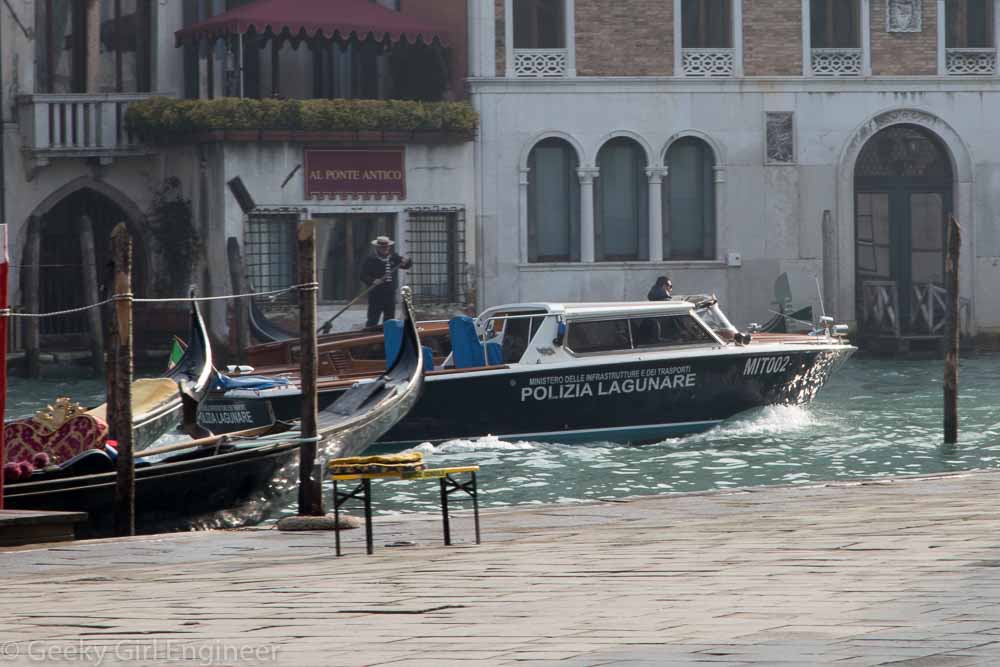
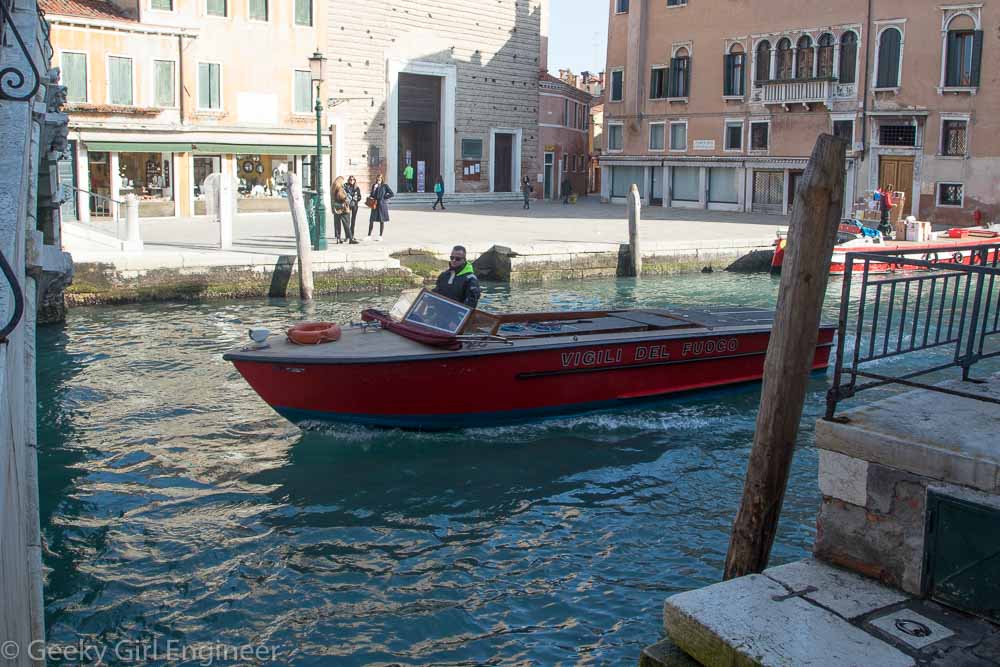
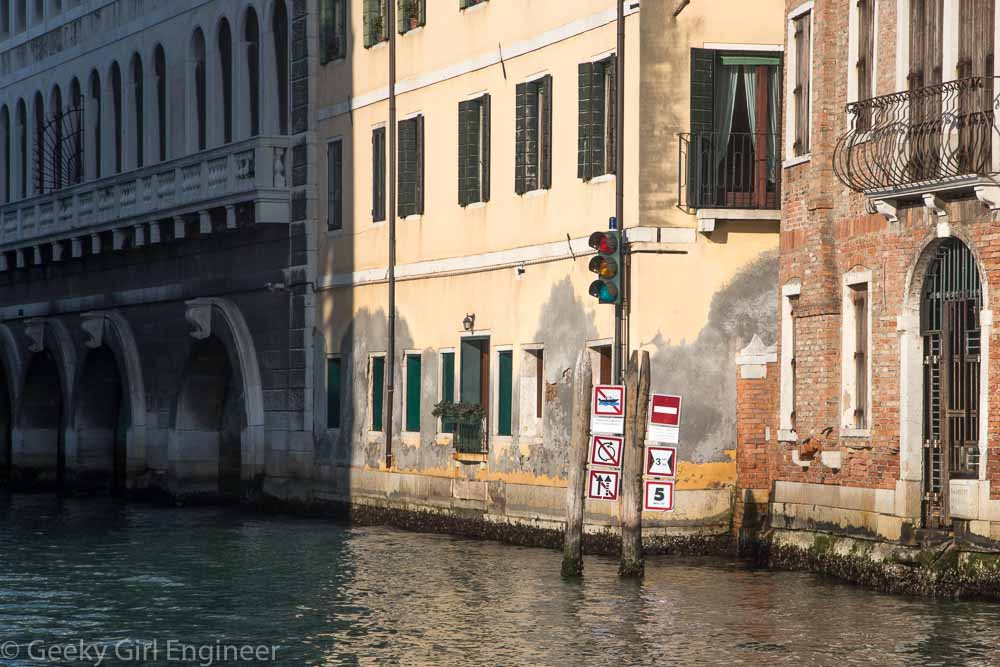
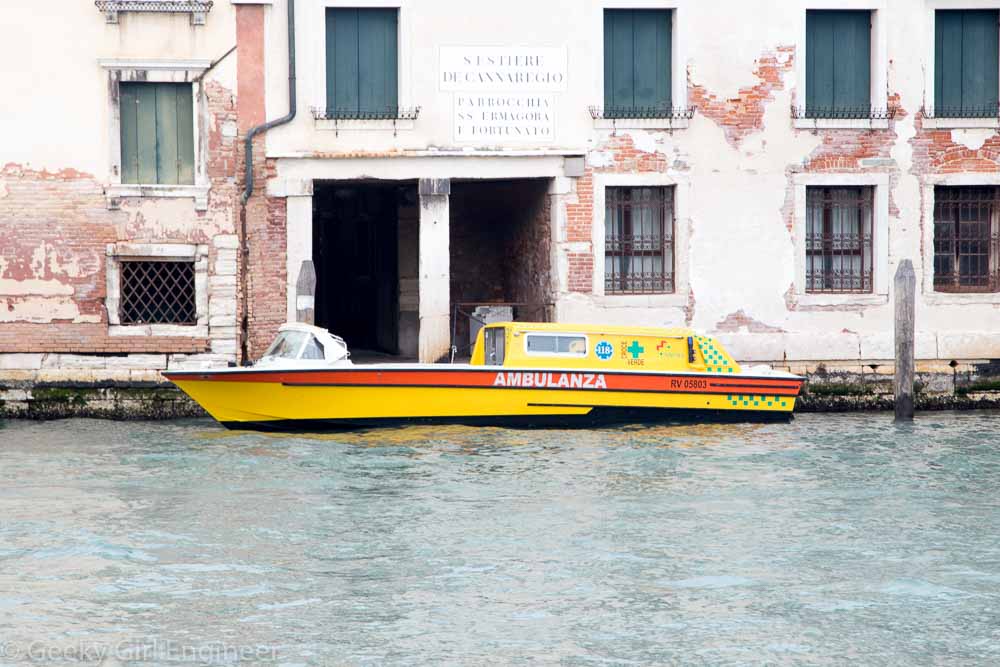
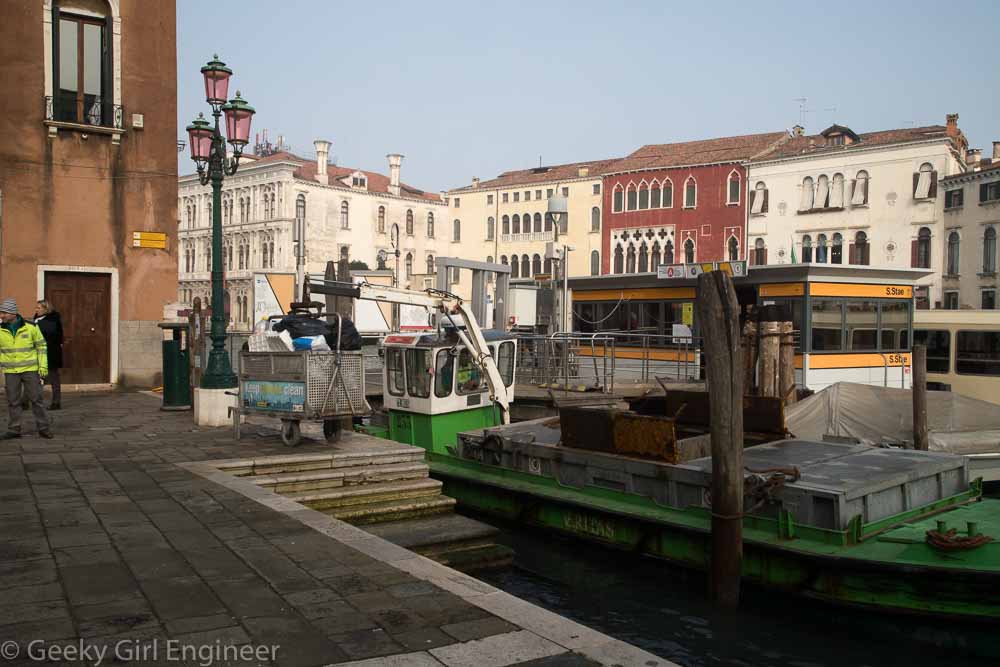
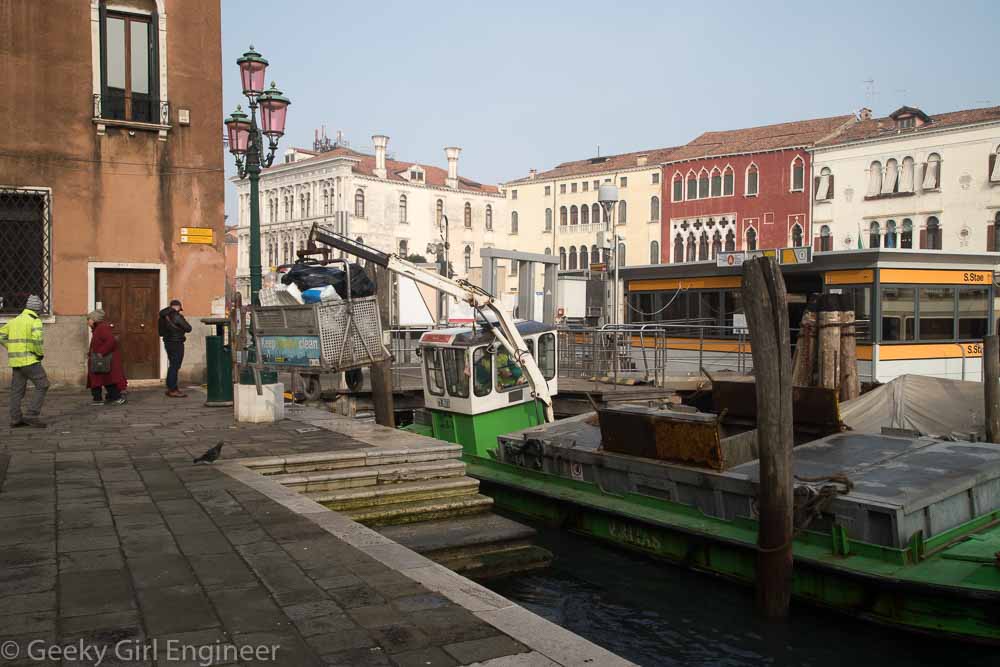
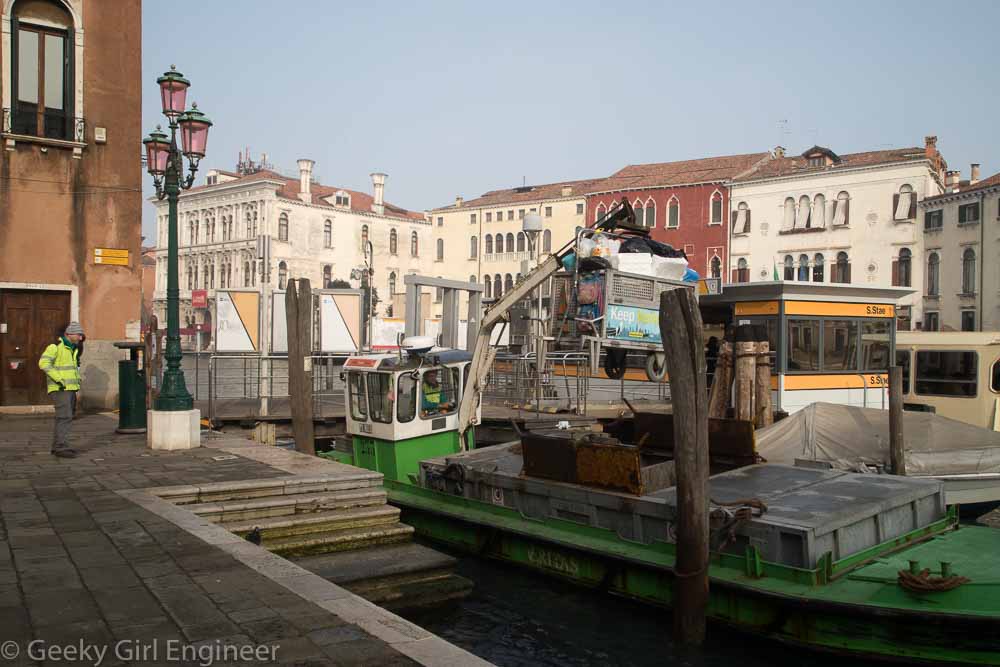
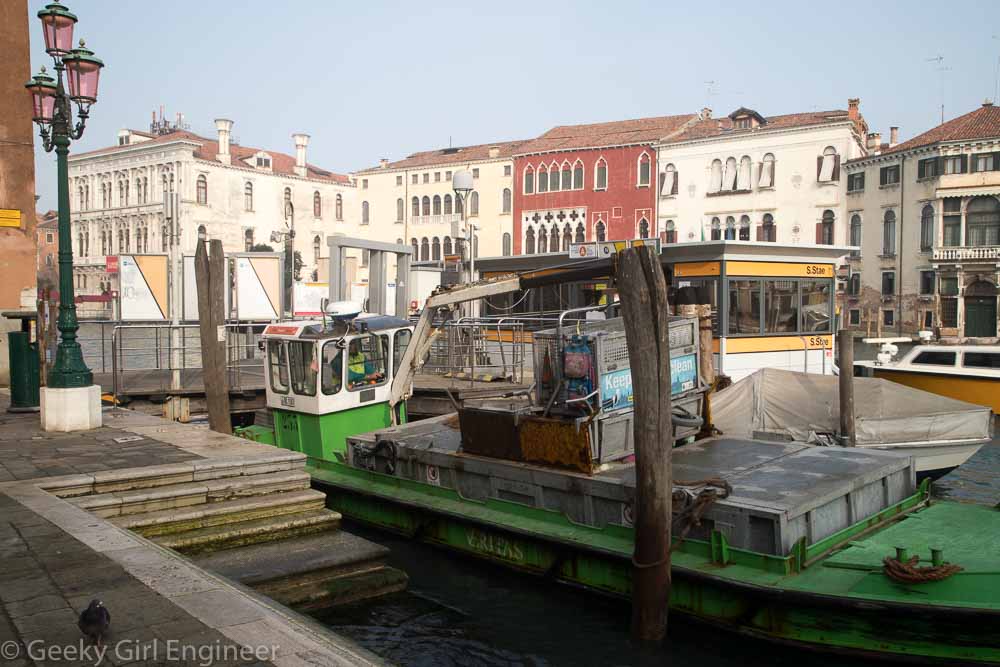
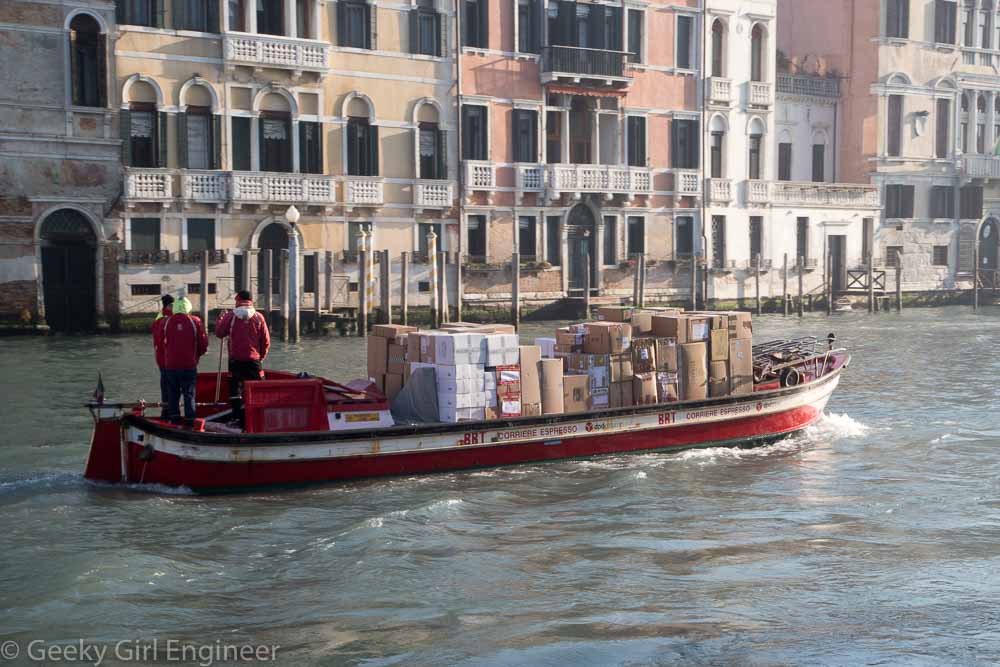
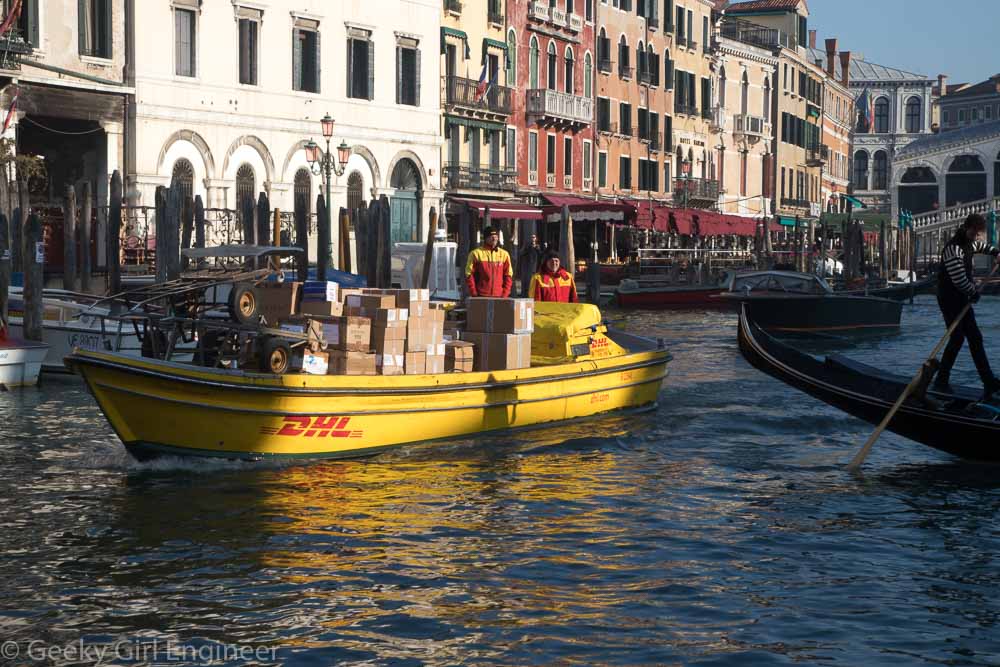
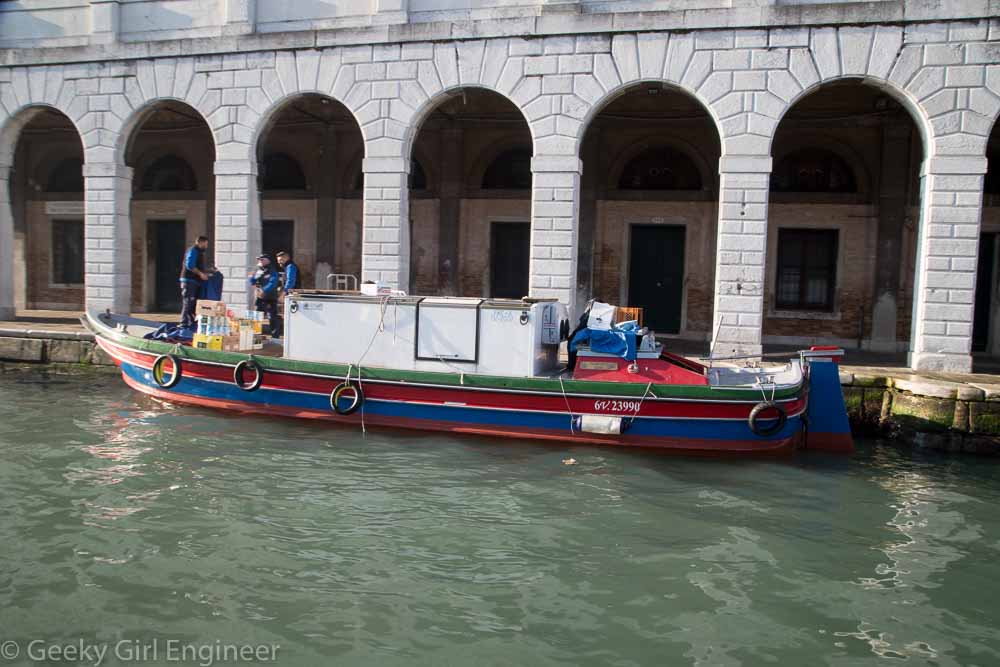
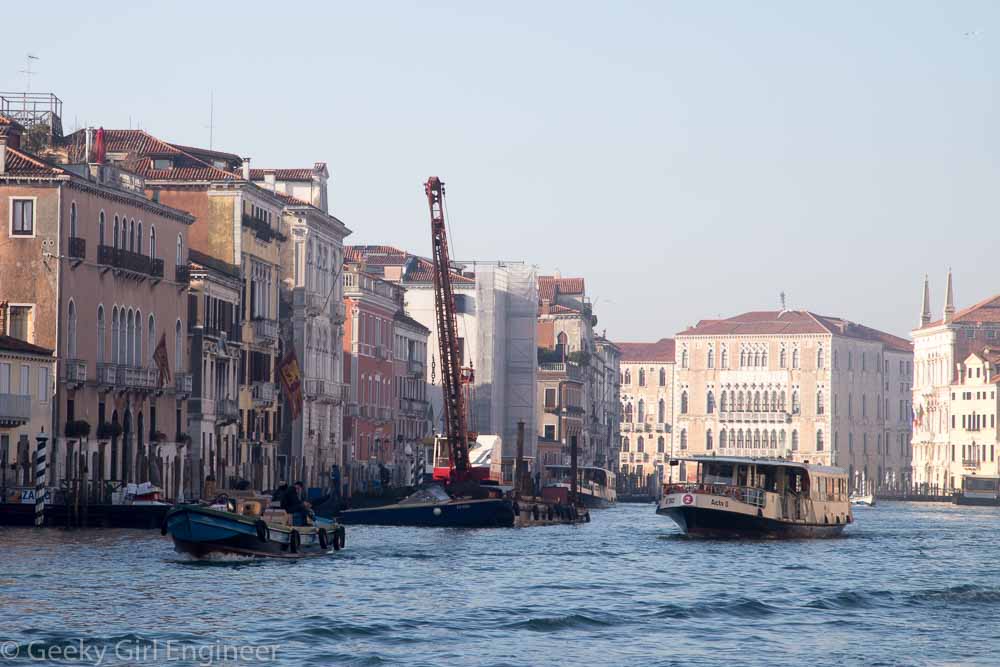
I am somewhat obsessed with the infrastructure of Venice, including transport. There are no cars, nor any other powered land-based vehicles. Everything is transported by land on foot or water by a boat of some type. Everyone gets around by foot or boat. I am unclear how the firefighters get the hoses to a fire. However, I was lucky enough to see the garbage boat in action taking a garbage basket that a garbage worker had brought to the canal.

Police boat
Police boat
Fire boat
Fire station boat entrance is to the left, and this is the only street light I saw in Venice.
Ambulance boat
Garbage boat picking up garbage basket
Garbage boat bringing garbage basket over boat
Garbage boat emptying garbage basket into holding
Package delivery
DHL
Supply delivery with refrigerator or freezer
Crane boat and ferry boat to the right. The Vaporetto is the Venetian mass public transport.
Supply delivery boat entering narrow channel

Venice: Piazza San Marco

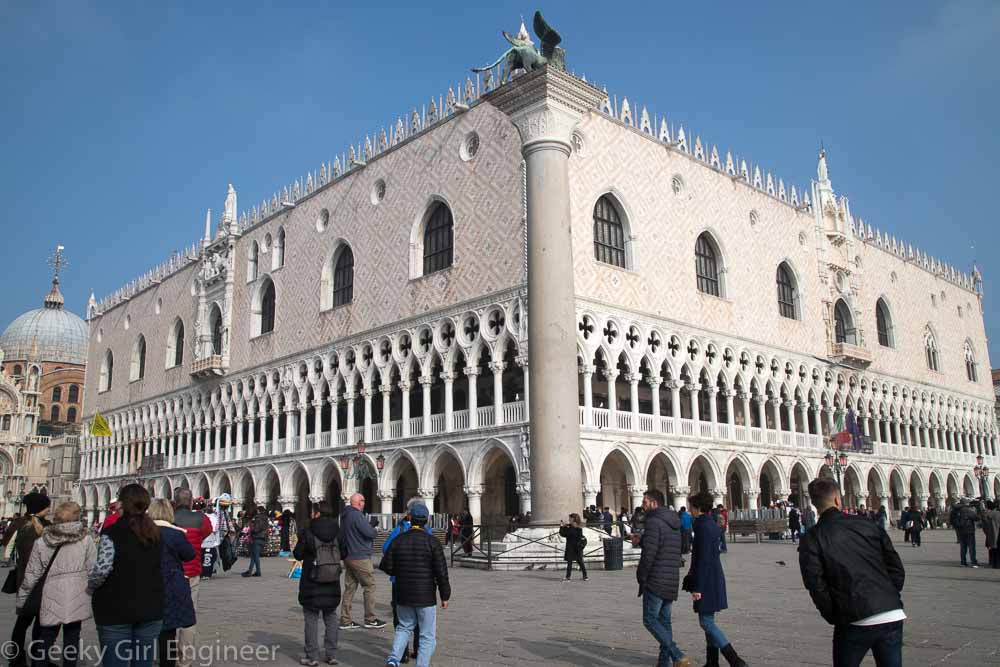
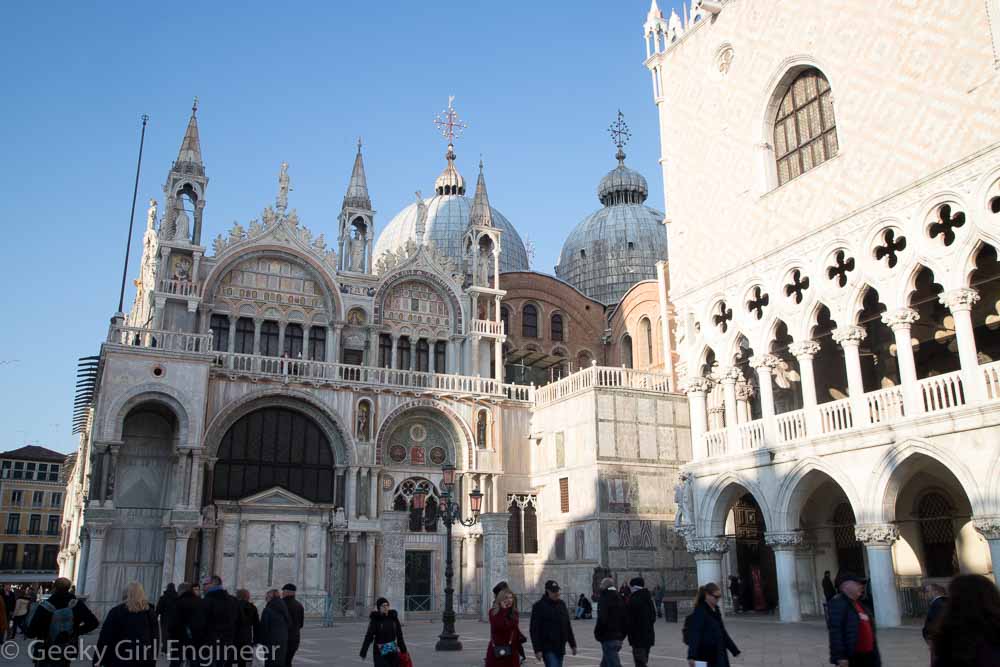
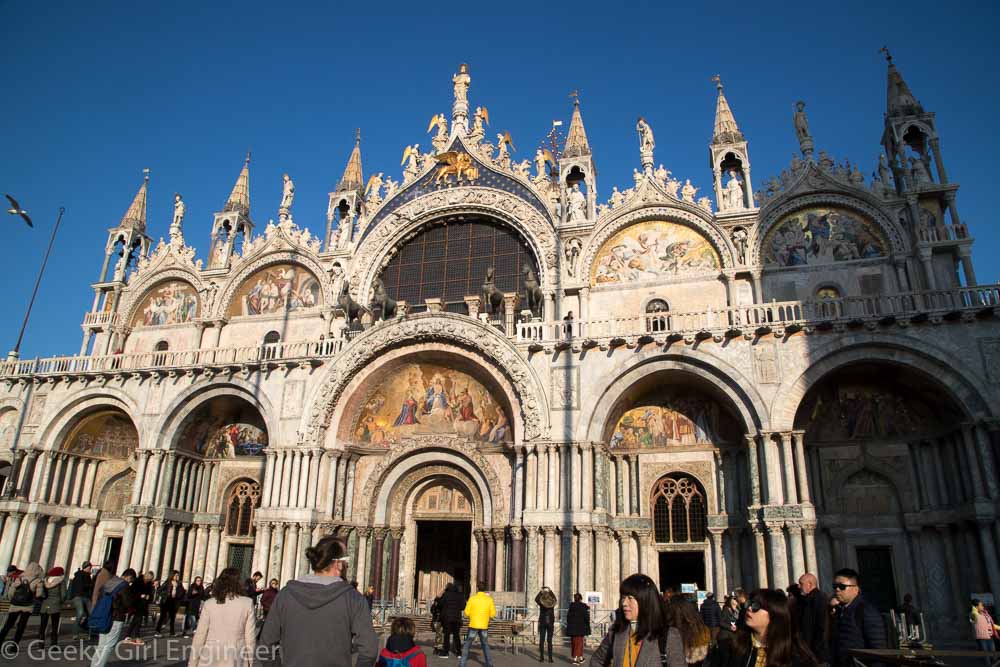
Piazza San Marco is the big tourist area in Venice. It is where the Palazzo Ducale (Doge’s Palace) and Basilica di San Marco are among other photogenic spots. It is also the spot that is always photographed when Venice floods. They have the parts for the platforms for people to walk on placed strategically around Venice for when acqua alta arrives. The basilica is one of the lowest parts of Venice, and some tiny amount of water was present around the basilica when I was there. [The flooding essentially comes from below the buildings. It does not come from shores exactly.] I was able to wander around the area on two different days, which is why differing weather conditioning can be seen in the photos below.

Palazzo Ducale as seen from near the water
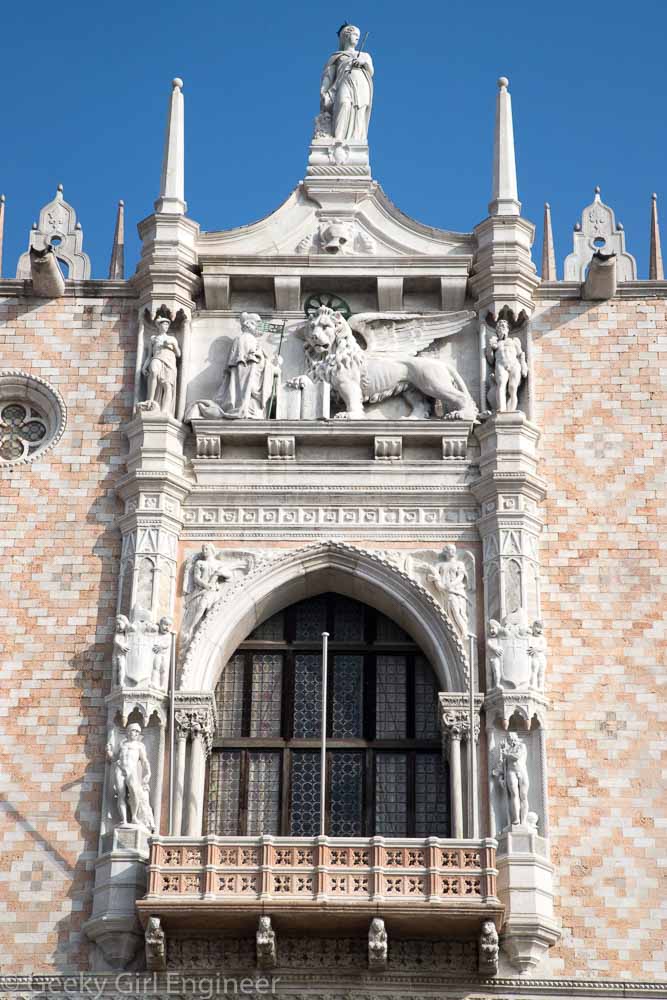
Palazzo Ducale
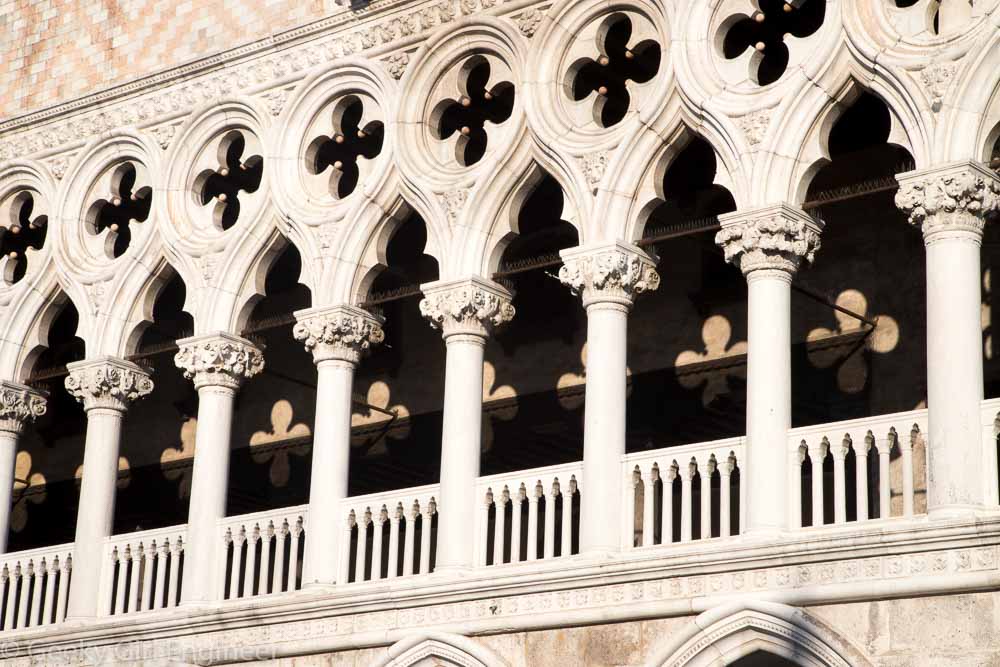
Palazzo Ducale, in the afternoon, the light hits it just right to cause the lovely shadows and light from the cross-shaped openings.
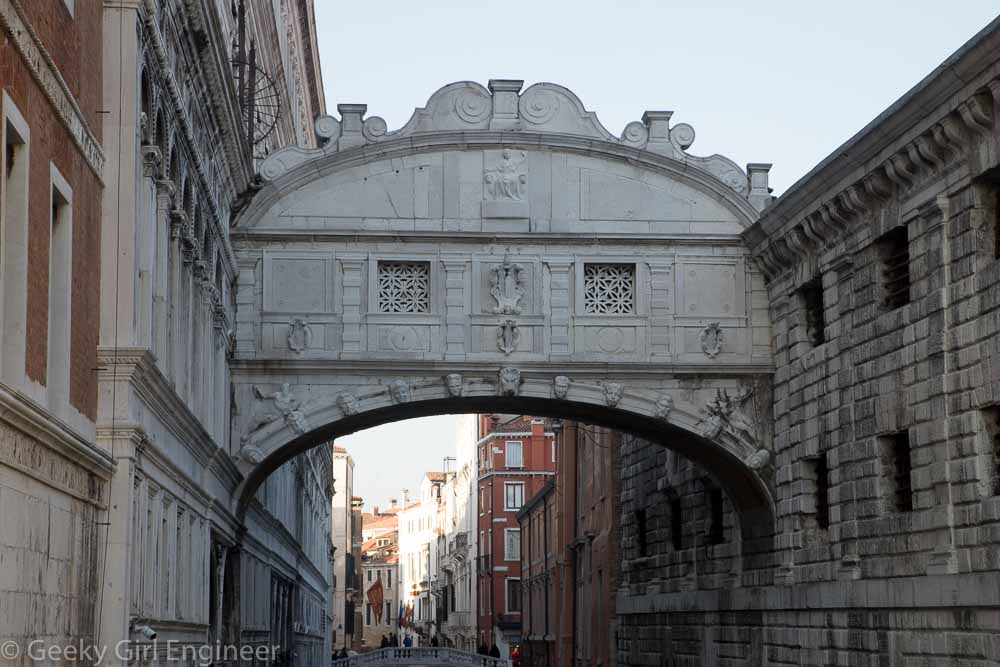
Ponte dei Sospiri (Bridge of Sighs) that connects the Palazzo Ducale and the prison. So named as the bridge was how a prisoner entered the prison after judgement.
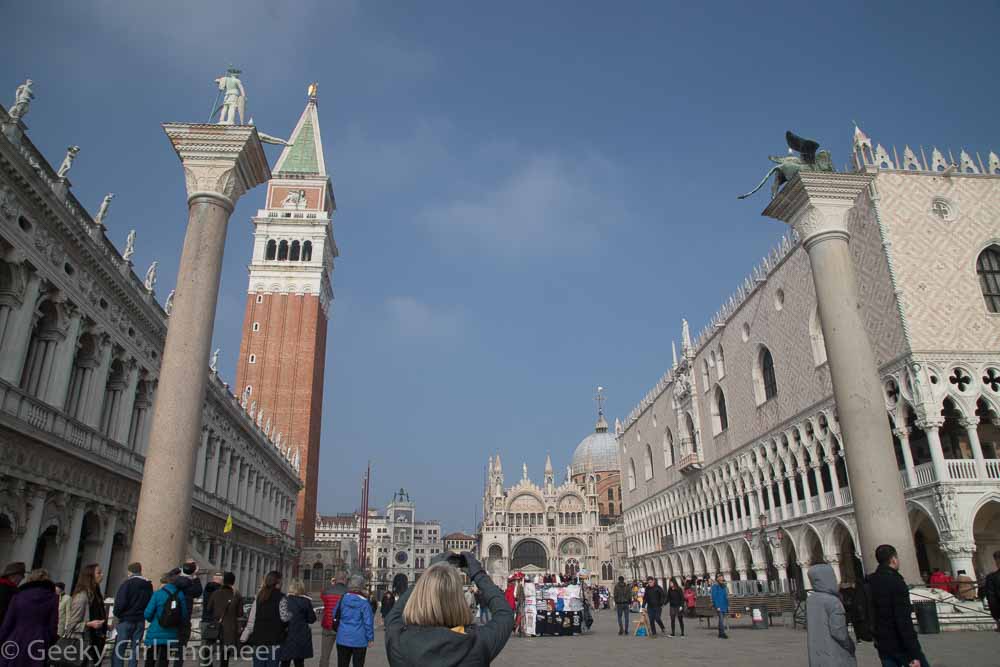
Looking toward Piazza San Marco with Saint Mark and Saint Theodore Columns in foreground
Saint Mark and Saint Theodore Columns (looking toward water)
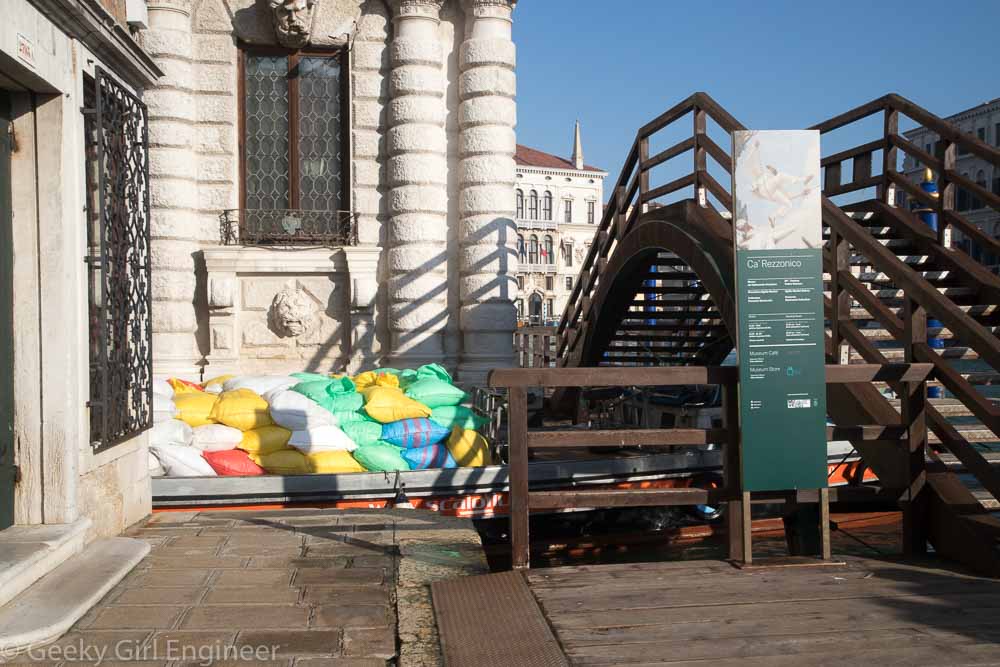
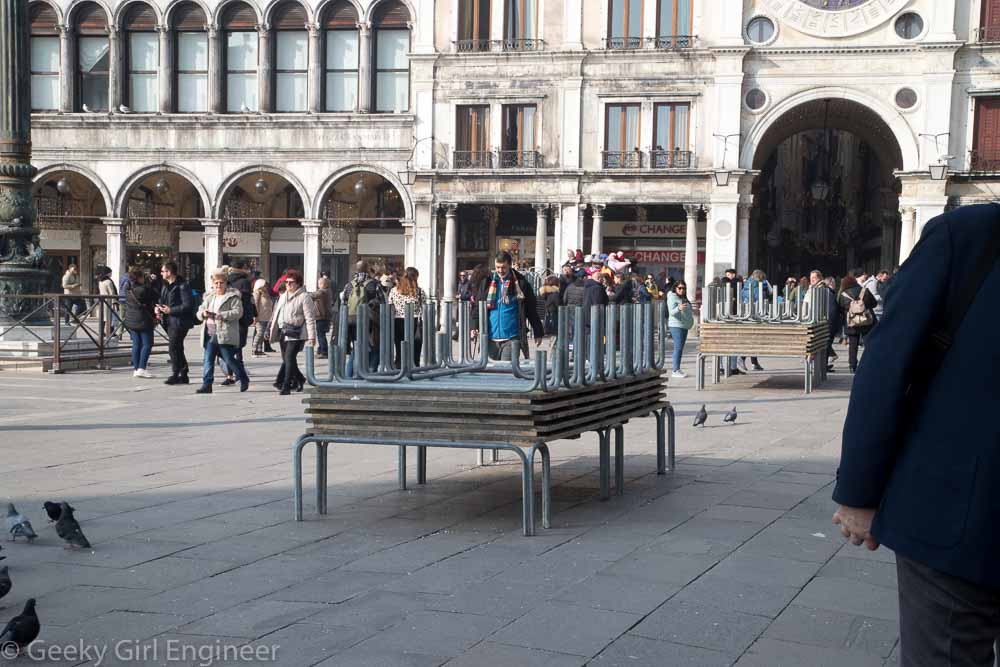
Platform parts in the piazza in case of acqua alta
A small amount of acqua alta forming around the basilica. It later subsided.
Basilica San Marco from side near Palazzo Ducale
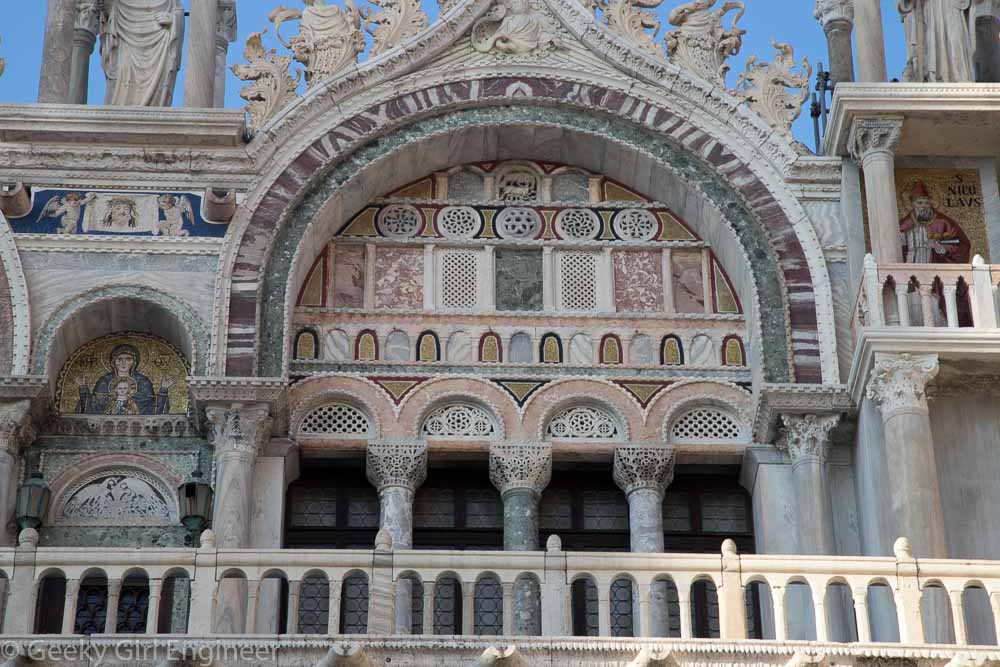
Basilica San Marco
Basilica San Marco, front side from Piazza San Marco
Procuratie Vecchie
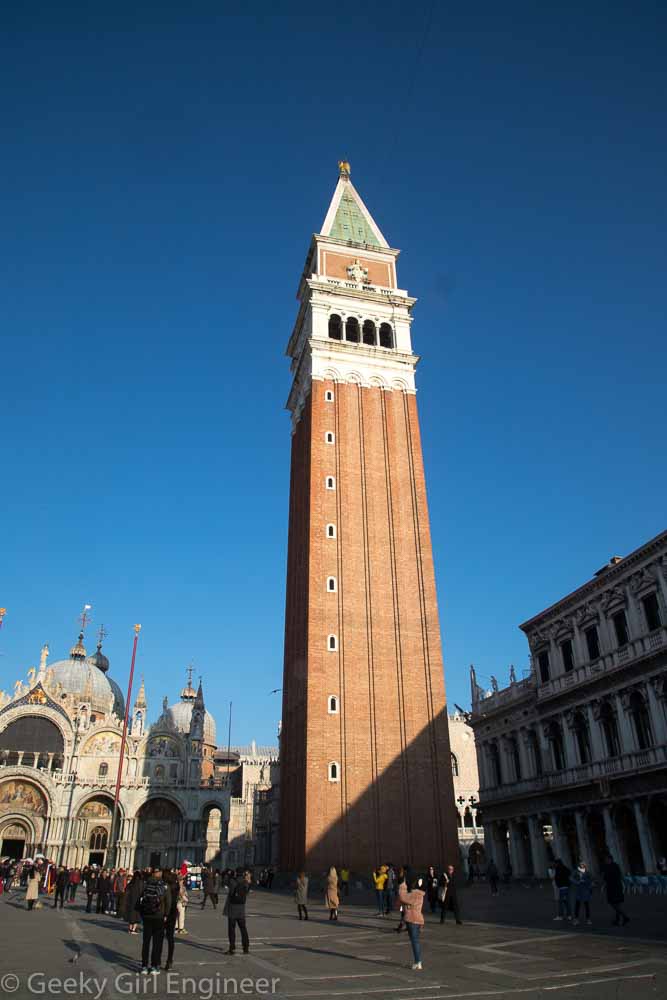
Campanile di San Marco
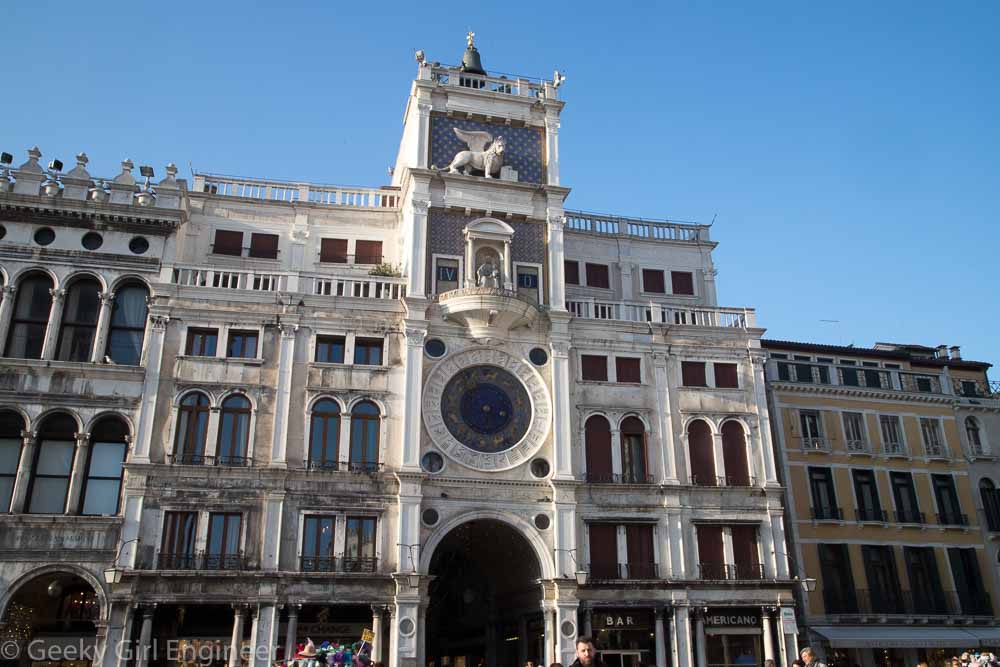
Torre dell’Orologio
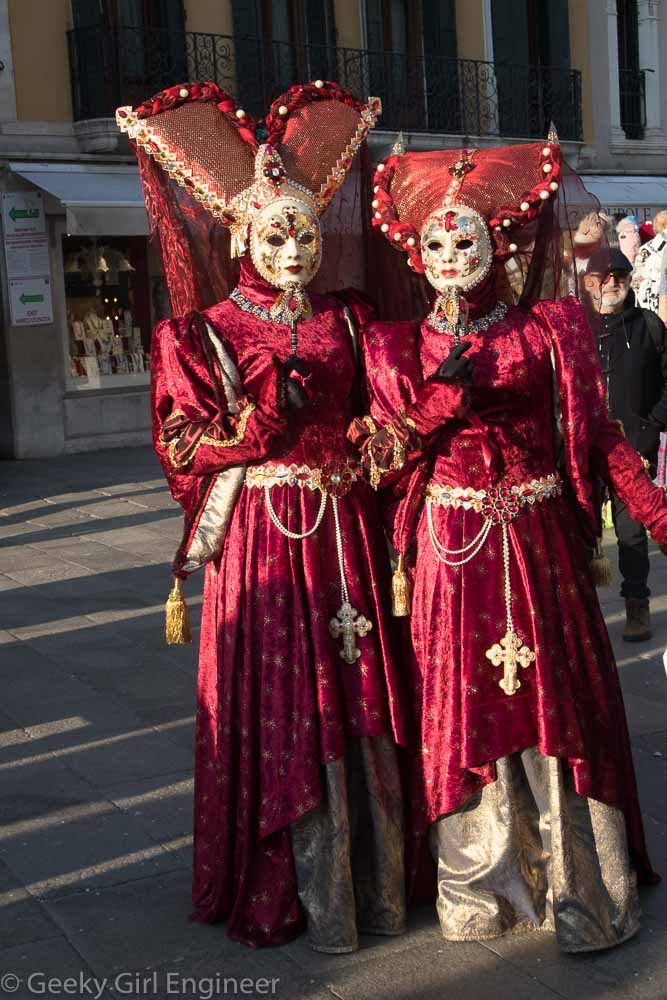
Woman dressed up for carnival. (I think it is only for carnival.) The were nicely posing for photos and didn’t seem to be taking tips. Nice change from in New York where people dress up in bad super hero and puppet characters for tips.