
Solar Eclipse
Snorkeling in Alaska
Carrie Blast Furnaces
Nuttallburg
Bridge Walk

El Morro

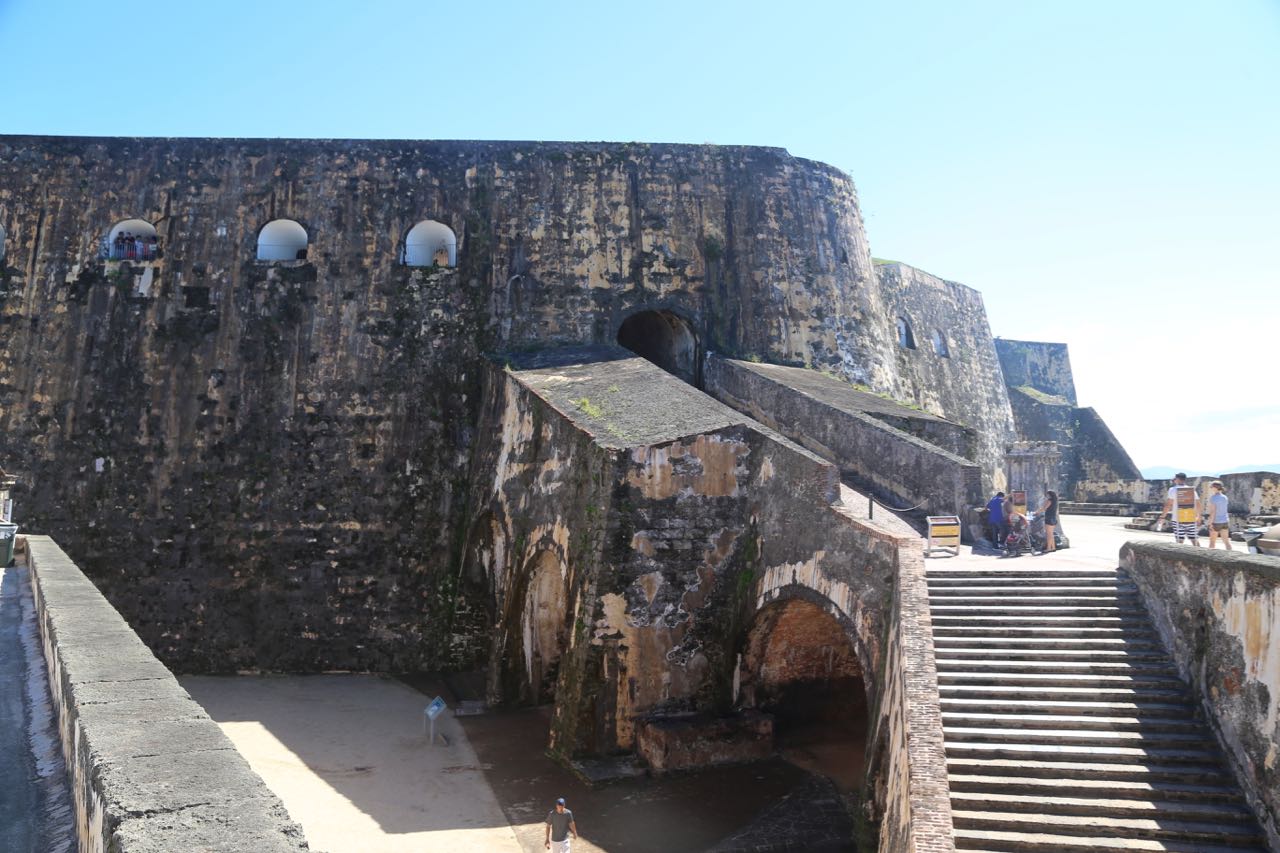
I’m on my first visit to San Juan, Puerto Rico. Today we visited Castillo San Felipe del Morro (El Morro), a fort originally built by the Spanish to guard the entrance to San Juan Bay. The original foundation was laid in 1539, and it was modified and enlarged over 250 years. The United States then added to it during World War II. Finding out that a fort this old was modified and used during WWII surprised me. I was born long after WWII, so I forget that our military has advanced a great deal in terms of technology used since then. The fort is impressive. It has six different levels and is incredibly well built. I am impressed with those people who built it with the amount of stone and brick that must have been laid.  Currently it is maintained by the National Park Service and guarded by iguanas, who by the way like to have their photos taken.
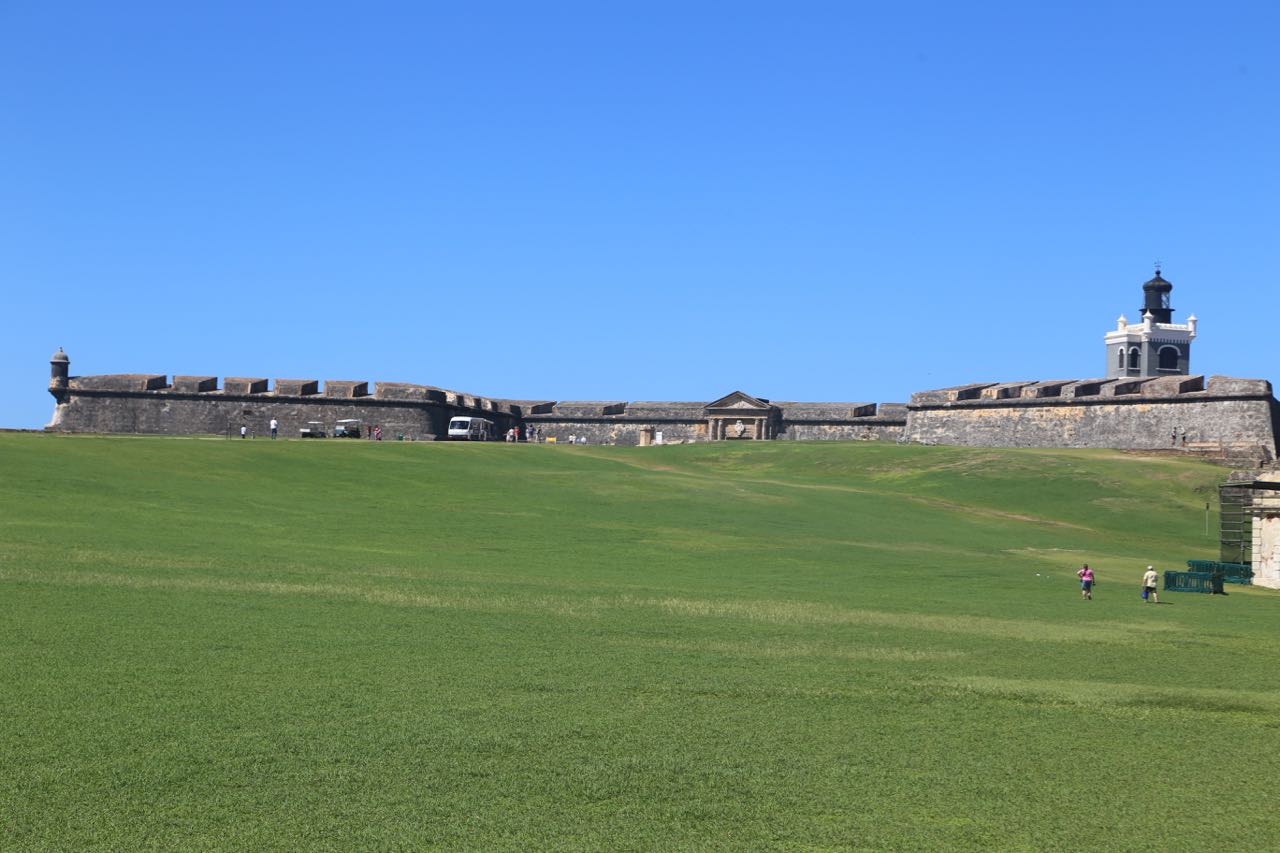
Castillo San Felipe del Morro (El Morro)
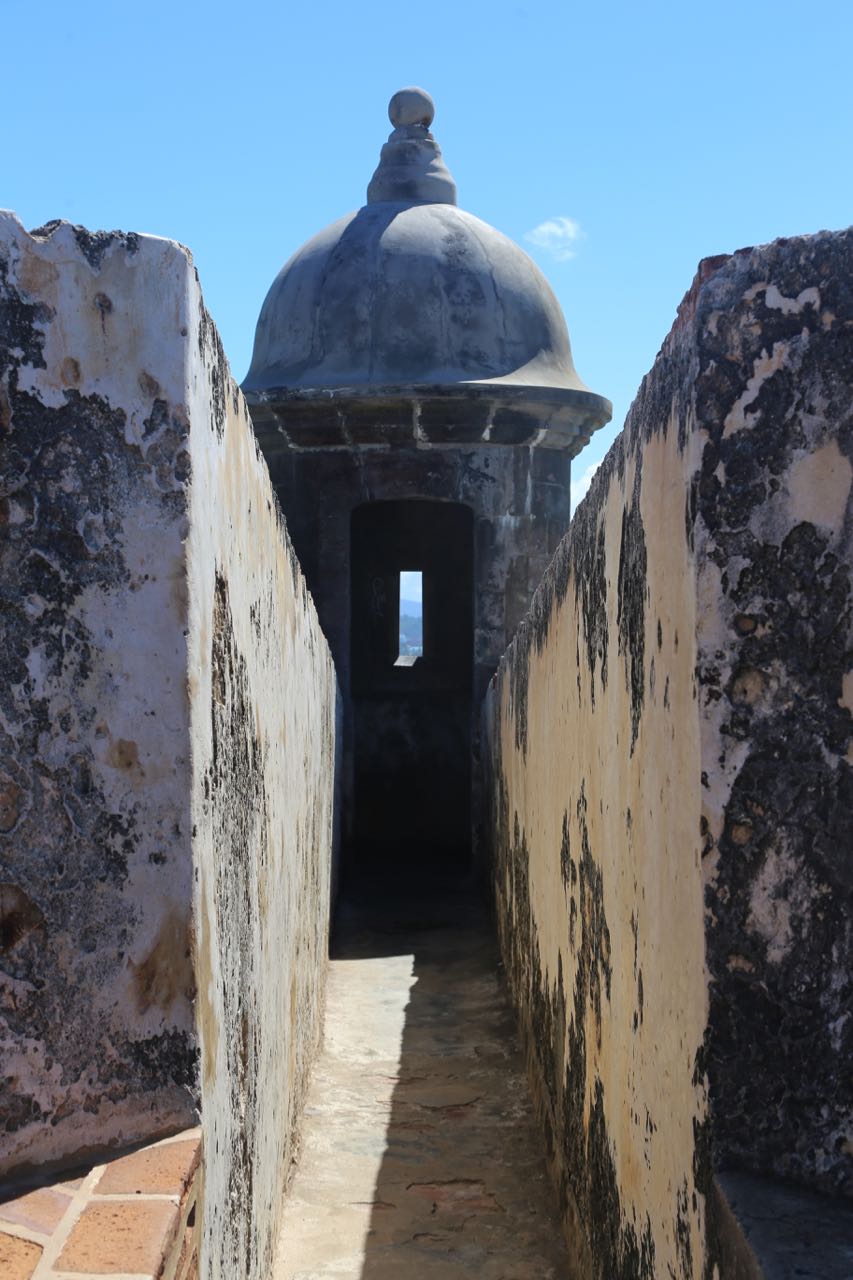
Castillo San Felipe del Morro (El Morro)

Garita

Garita

Main level

Main level with lighthouse

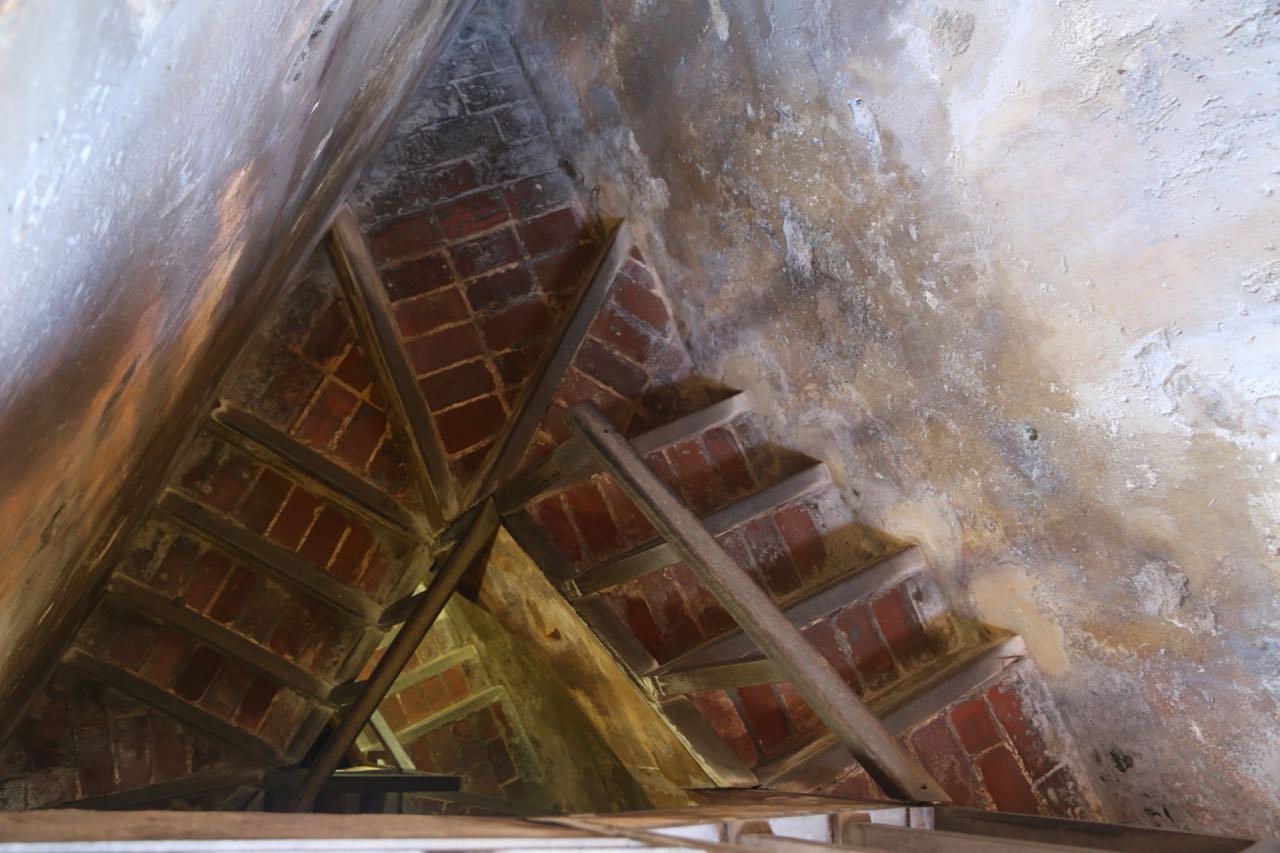
Triangular staircase
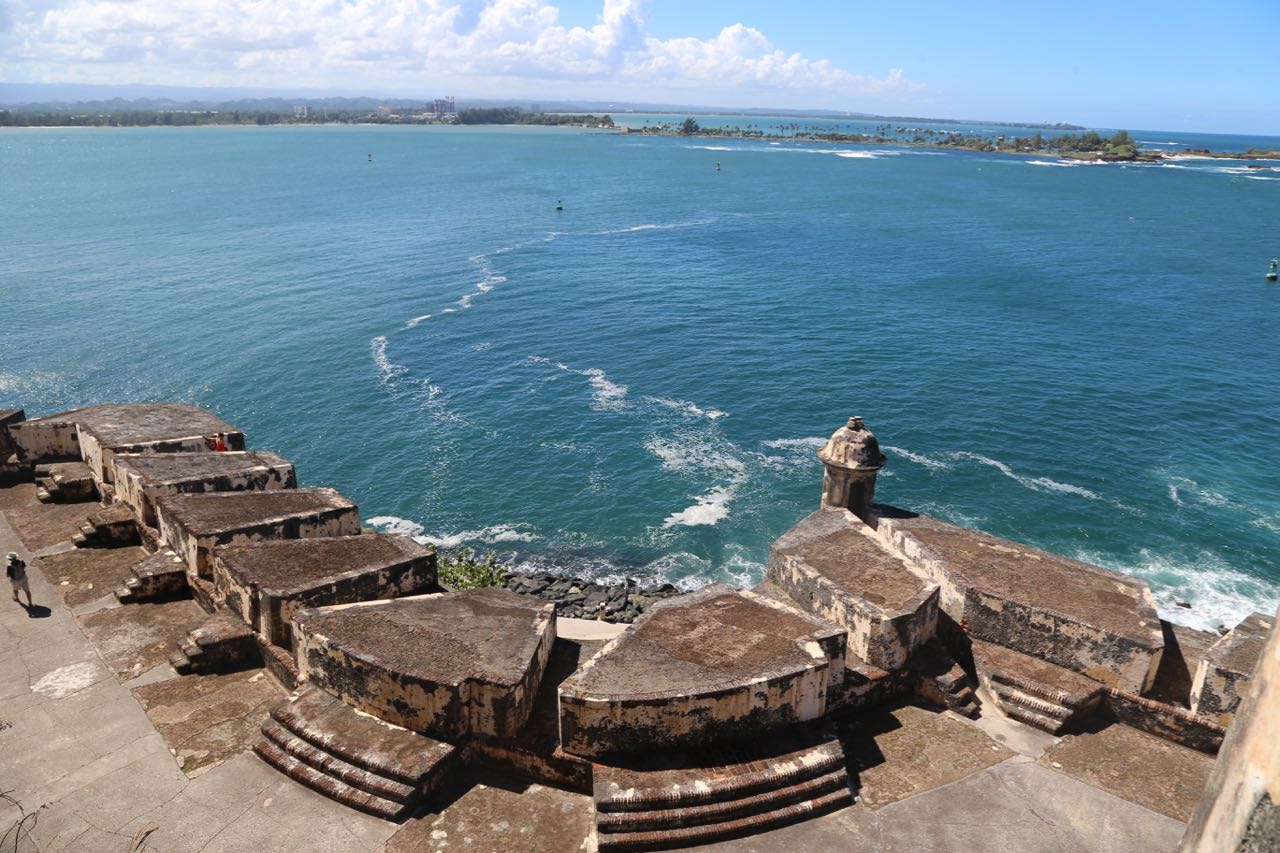
Triangular staircase

View of the entrance to the bay
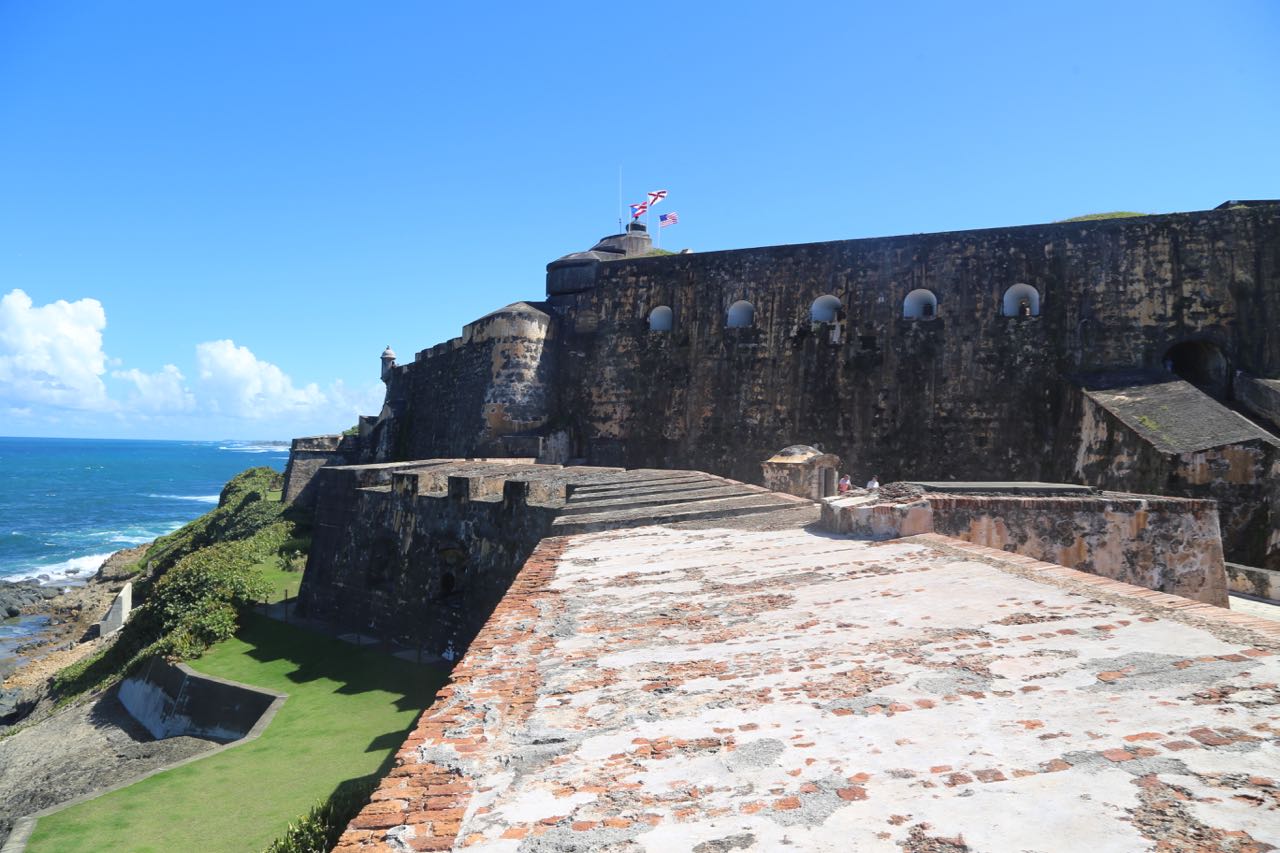
View of the entrance to the bay

El Morro
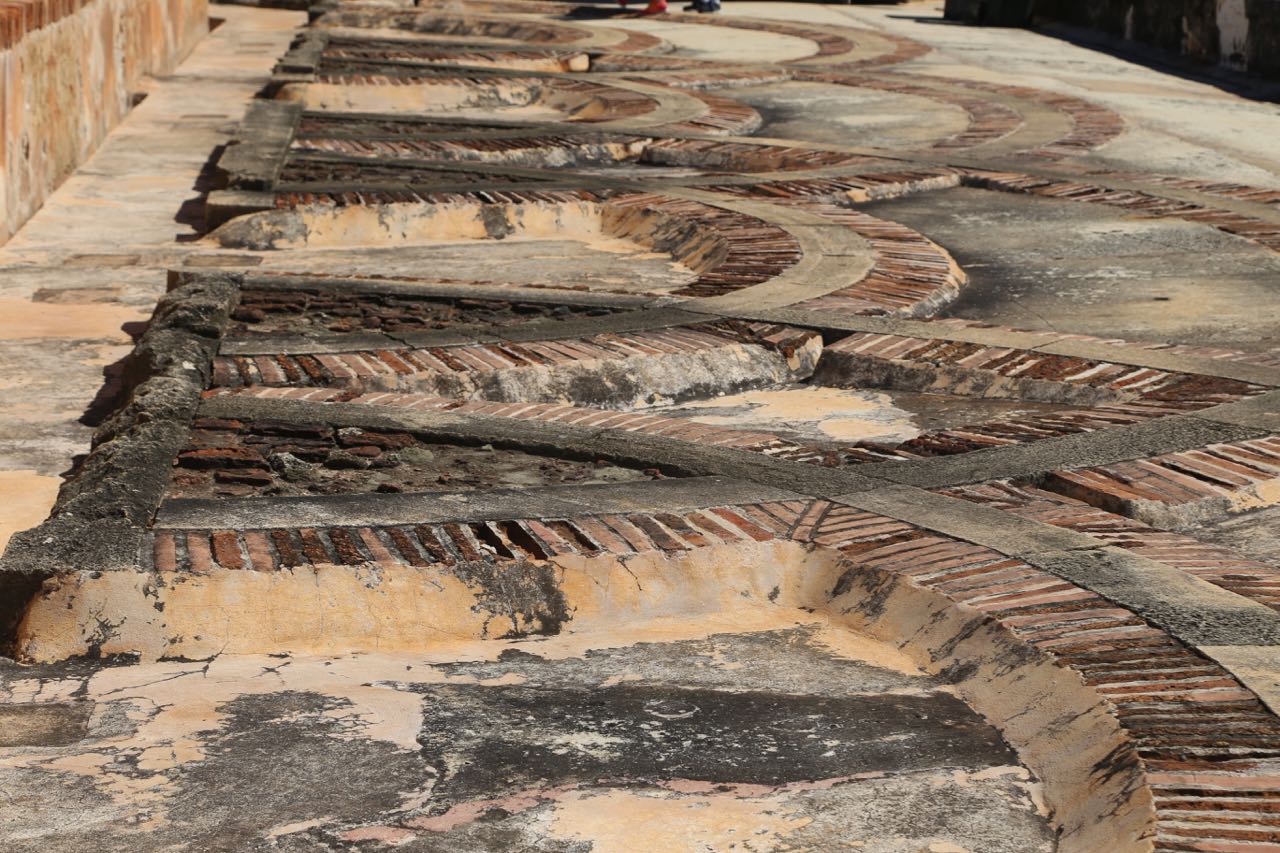
El Morro

Foundation for artillery

Foundation for artillery

Stairs connecting levels 3, 4, and 5
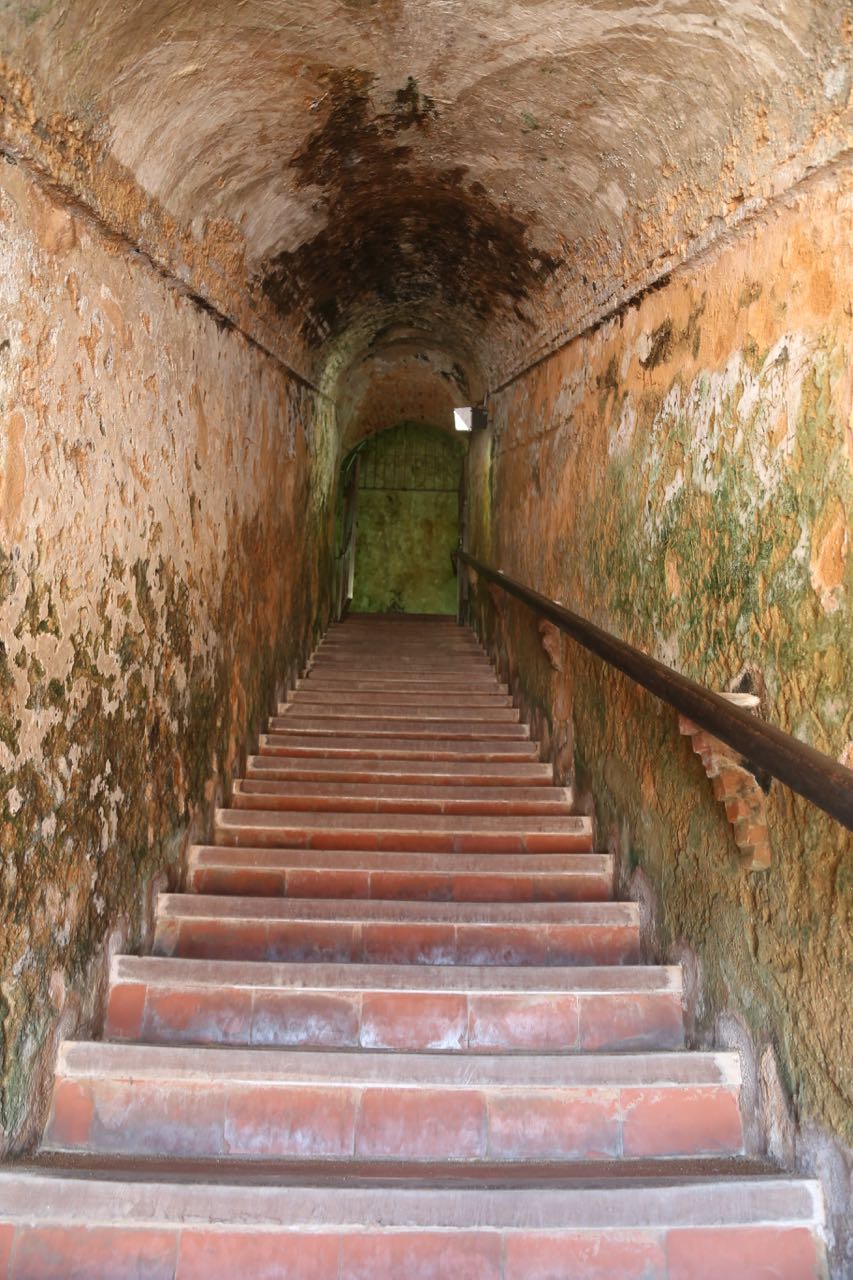
Stairs connecting levels 3, 4, and 5

Staircase from level 1 (ocean front) to level 2
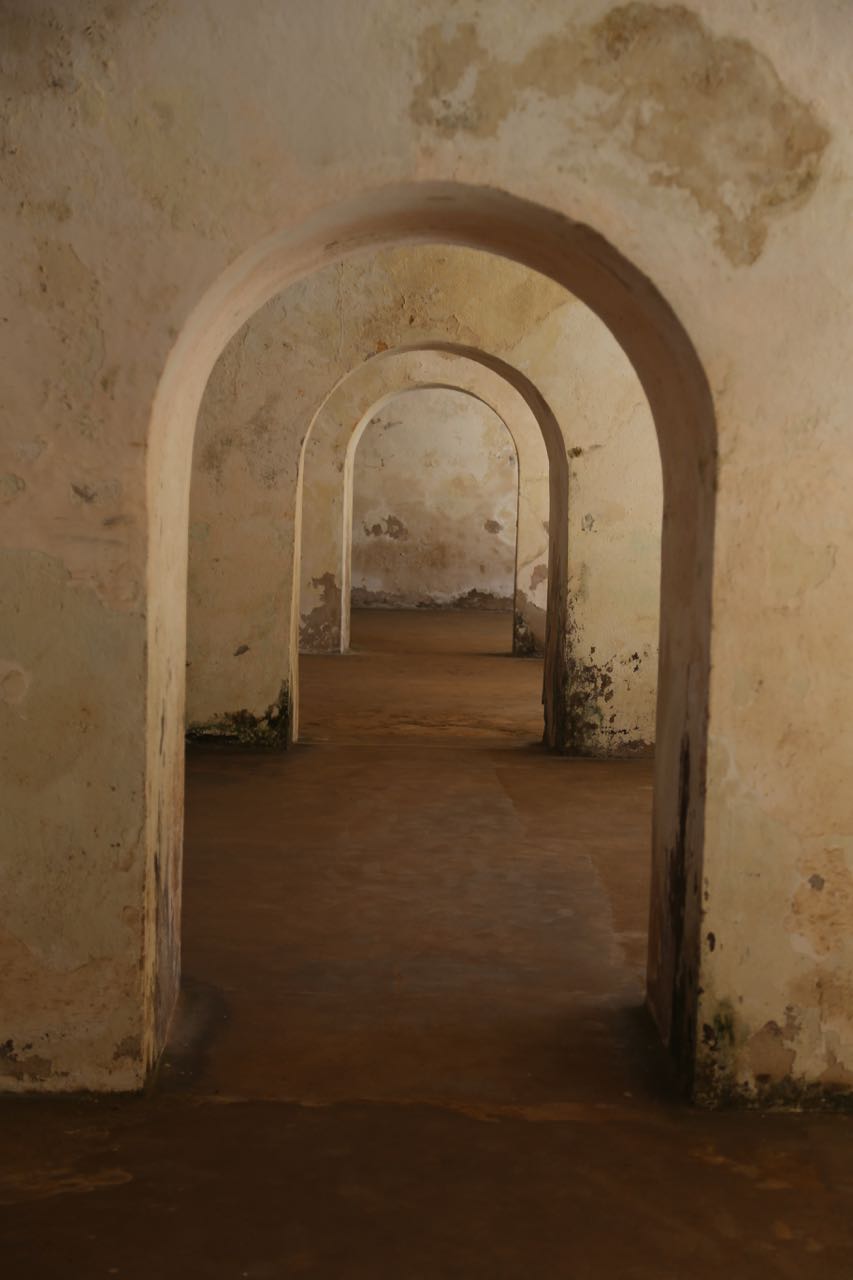
Tunnel staircase from level 1 (ocean front) to level 2

Series of doorways
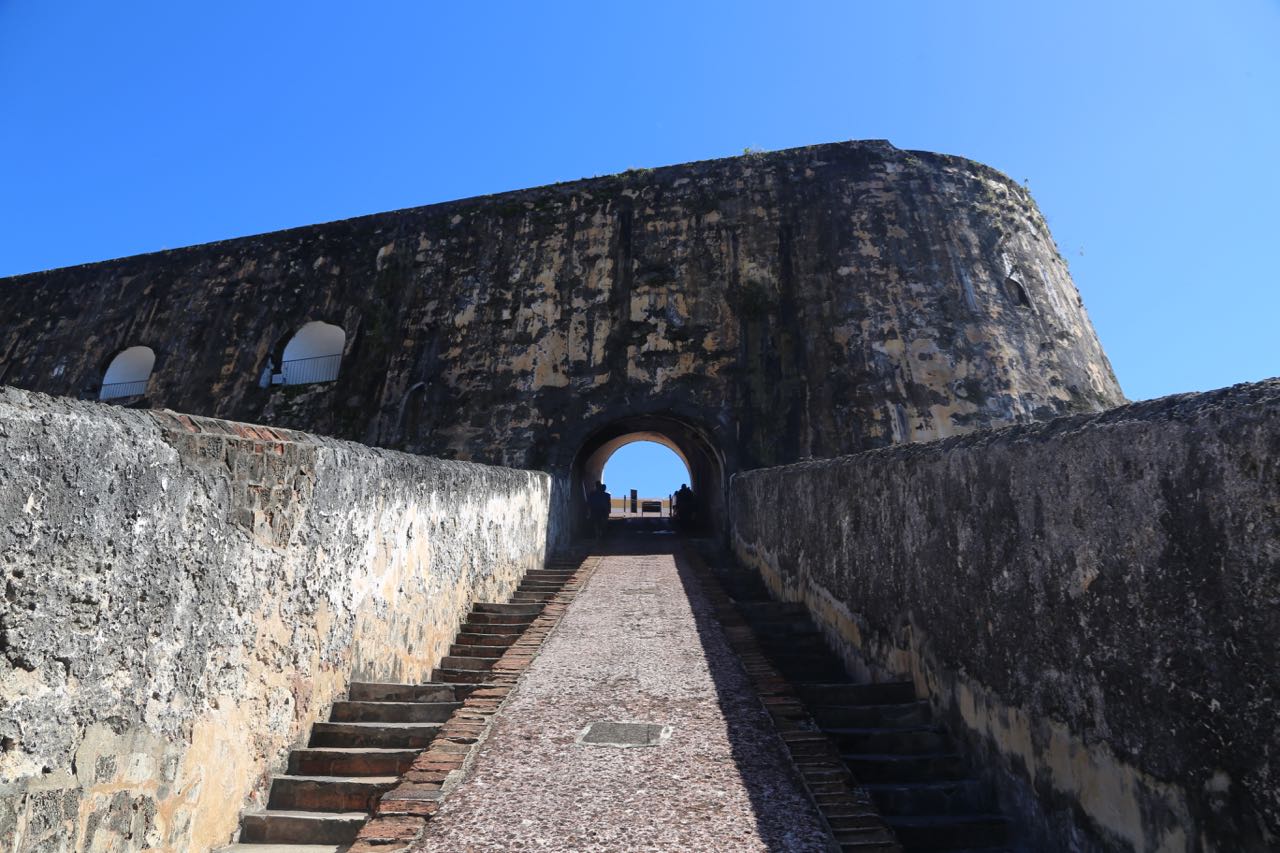
Series of doorways

Ramp from level 4 to 5
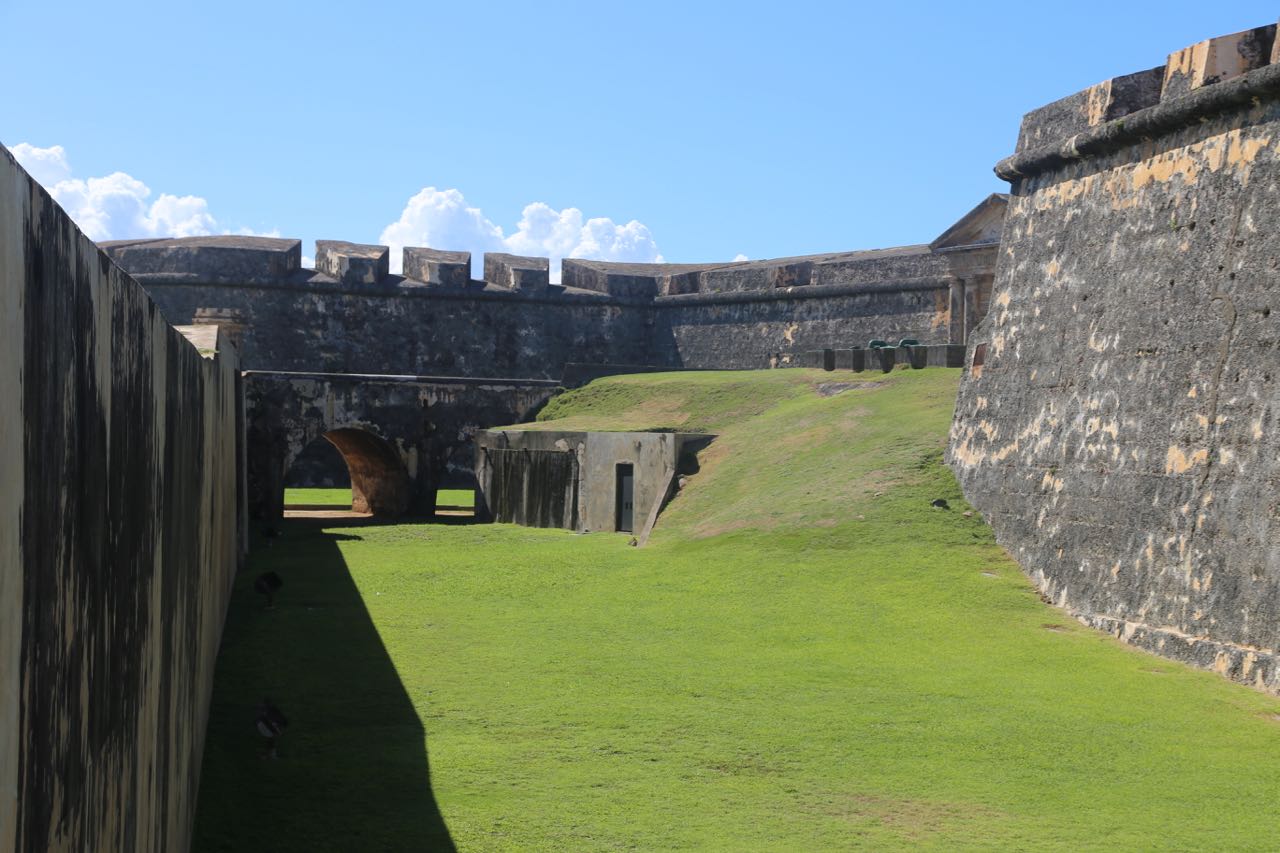
Ramp from level 4 to 5

Land side of El Morro
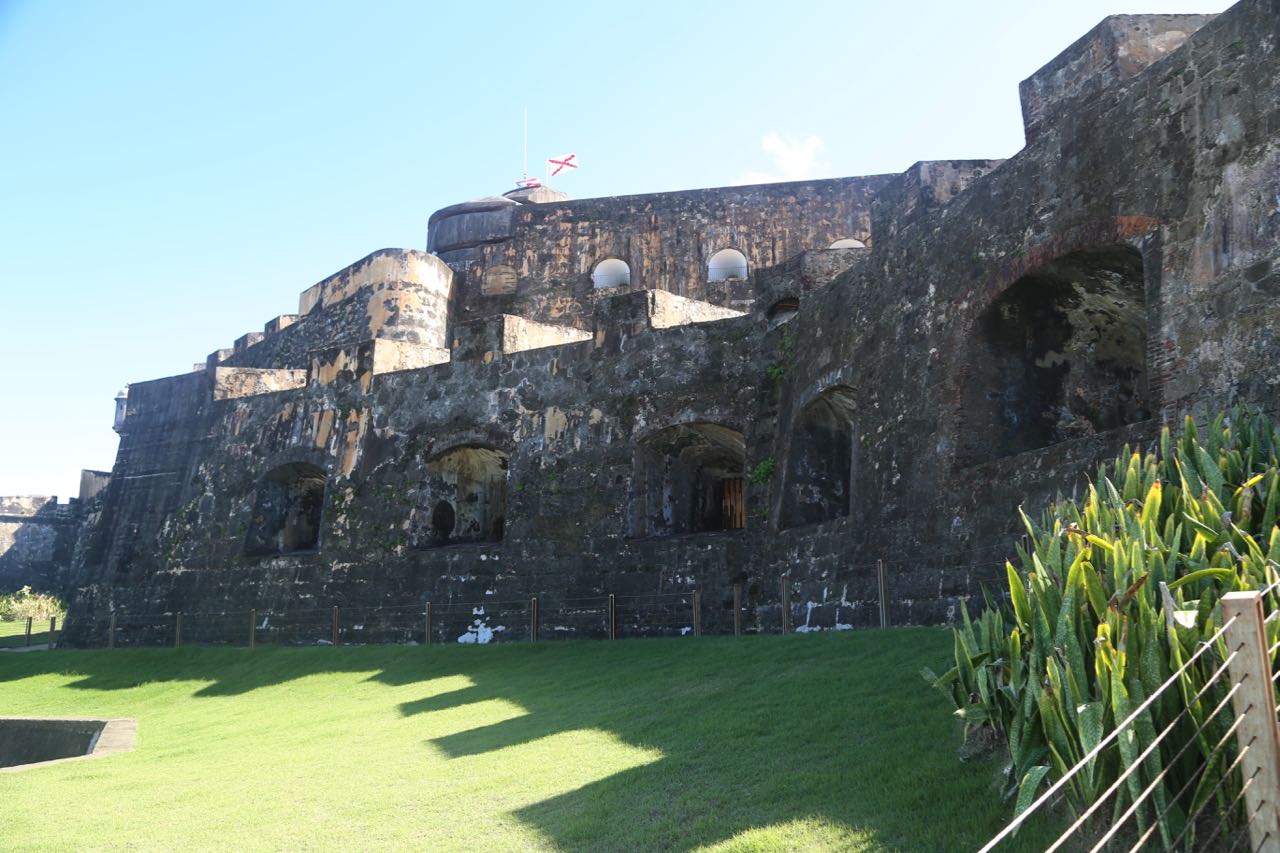
Land side of El Morro

Ocean side of El Morro

Ocean side of El Morro

 

This Toilet Given to the Glory of God

Years ago, I lived in Austin and went to a historic Episcopal church. The parish house needed major renovation, and when the parishioners were surveyed for what they wanted from the renovation, more and better bathrooms was at the top of the list. Considering how few and far between the bathrooms were, this request was predictable. Like others, I donated money to support the renovations, and the new parish house was wonderful, and the multitudes of new and bigger bathrooms were glorious and much appreciated.

My current DC area Episcopal church is also historic with a parish house needing major renovations. Once again I find myself being asked by my church to donate money to support renovations. The space is small and not used efficiently partially because the parish house is an old house. It has this tiny little ancient elevator that scares me. Also like my former church, at or near the top of everyone’s wish list is more and bigger bathrooms.

As I’ve contemplated how much money I want to and can give, I’ve also thought about what I’d like to sponsor if I had enough money to request something being acknowledged as being sponsored by me. I don’t actually know if anything in the renovations will be designated as being sponsored, but churches do that all the time with big donations. The church has brass plaques on all the pews, stained glass windows, and other items.

So I’ve thought about it just because it’s fun. The same way I think about if I died famous what would I’d like dedicated to me. I’ve already decided should I die famous that it will be written into my will that if anyone tries to name a freeway after me, my estate will sue them for defamation and pain and suffering, and I’ll come back to haunt them. A park or library would be lovely, but a freeway would be an insult.

I realized what I’d like to sponsor at my church. I want to sponsor the new toilets. I want a plaque next to a toilet that reads “This toilet donated in glory of God by GGE.” As much as the vast majority of people don’t want to think about toilets, when there are not enough, or they are not working, they are all you think about. I speak for all women when I say public places never have enough of them, and we spend too much time in line to use one. [More of my Opinions on public restroom design.] We have all sorts of euphemisms to avoid having to say the word toilet, and God forbid someone should mention the words urine or feces or urination or defecation in polite company. I’ve spent years in the lab analyzing urine and spent part of my career in wastewater treatment and conveyance. I could speak for hours on bodily human waste.

The truth is the toilet is one of the greatest inventions of all times. It effectively and efficiently takes human waste away to where it can be treated and not spread disease. Toilets prevent smelly and dangerous gases from the waste from coming inside. Humans no longer walk outside avoiding streams of human waste and falls from above from people emptying their chamber pots. Because of toilets and sanitary sewers and treatment plants, most of us do not have to worry about cholera, typhoid, Guinea worm, and many other diseases.

Be thankful that you have a toilet. When my church’s renovations are over, I know all the members of the parish will be grateful we have more of them.

“These toilets given to the glory of God and in appreciation of the past, present, and future people who ensure bodily human waste is removed from this premises and properly treated, by an environmental engineer who understands a toilet’s importance.”

Milkweed Beauty

I went on a road trip with four friends. Three of those friends, like myself, are photography geeks. We had an absurd amount of camera gear with us. As part of our road trip, we went to Fort Necessity National Park. There we are looking at this historic site, and the four photographers become obsessed with some milkweed seed pods. They are so cool though! Without further ado, some of my photos of the milkweed seed pods.

Milkweed

Milkweed

Milkweed

Milkweed

Milkweed

Milkweed

Milkweed

Milkweed

Milkweed

Milkweed

Milkweed

Milkweed

Preparing to Brief Top Boss

I’ve been working on this project at work for over a year now that seems to keep getting more and more important because of the effects of it. Recently I learned that Top Boss wants a briefing on it, and my presence is requested at the briefing. Top Boss would be the head person where I work. I work at a large place with somewhere on the order of 15,000 employees. I have become the subject matter expert on this project. Thus I need to be there because if Top Boss asks any technical questions, I will probably be the one who needs to know the answer. When I first learned that I would need to be at Top Boss’s briefing, I wasn’t nervous about it. If no technical questions are asked, I will happily sit quietly in the back as management talks. If technical questions are asked, I know my stuff. I’ll have my notes, and I feel confident I can sufficiently answer whatever might be asked. I don’t know if I should feel excited to brief Top Boss because I never thought I would end up in a meeting with Top Boss. Honestly thought it just feels like another management briefing. I am hopeful that this briefing will at least allow us to get some documents out that we have been trying to get out for a while now.

No, my first thought when learning I would need to be there was, crap, I hope I am not supposed to wear a suit for this because I don’t own a suit. I immediately looked around for a coworker who might know the dress code to brief Top Boss. The first coworker I see happens to be a straight male soil scientist, whom I called Dave. This may seem like an absurd choice, but I put Dave at the middle to high end of straight male scientist and engineer dress spectrum. Unlike some I have worked with, his clothes fit him properly and are appropriate business casual, and I have never seen him in a tie that makes you wonder if he lost a bet. However, I don’t remember ever seeing him in a tie. Dave however is kind of an appropriate choice in that Dave and I constantly seem to show up to work in similar outfits. There are two other scientists who also seems to constantly dress similar to both of us. We all show up to work in khaki pants and and a green top, or black pants and a blue top. You get the idea. We are not adventurous dressers. I wear more jewelry and other accessories than any of them though. Dave and I also shop for clothes similarly. I go to Costco, find a pair of colored denim pants, and once I determine they fit me well, I go back and buy them in several more colors. Same for tops, but those normally come from Kohl’s. I have the same short sleeve top in six colors and similar for long sleeve version and my sweaters also. My few unique pieces generally come from a thrift store or flea market. I will admit to having too many scarves and pashminas, but they are all unique, sometimes come from my travels, and keep my warm in the always cold office building.

I don’t know enough soil scientists to know if Dave is a typically dresser for a soil scientist. Geologists seem to have an unnatural obsession with Hawaiian shirts. Male engineers tend to wear neural suit pants and a white top. They then have two or three ties hanging on a hook in their office. If there is a third tie, there is a good chance it will involve Snoopy or some other cartoon. In any event, Dave assures me that office casual should be fine. However he also said he has never been in a meeting with Top Boss. I may seek a second opinion just to be sure. I will probably ask my boss. He is a good dresser. He has a science background, but he is also Italian. More importantly, I think he used to work as an advisor to upper management before, so he probably knows what is normal dress.

I’ve heard that you should dress for the job you want, not the job you have. I have the job I want. I suppose if I was really to dress for the job I want I would wear a hard hat, gloves, jeans, and a t-shirt that I don’t mind getting covered in dirt, or I might wear a lab coat, goggles, gloves, and have a pipetter on my hip. I am fairly sure these outfits will not work to brief Top Boss.

Science, the Media, Graphics, and Communication

Recently, I had my annual performance review at work, and one of the things my boss said I needed to work on was communication with upper management in the form of not realizing they don’t know what I think everyone knows. I fully admit that there are some things so engrained in me that it would never dawn on me that other people do not actually know those things. Perhaps it is a reaction to the fact that I HATE being talked down to. I hate when people attempt to explain something to me I already know. The more basic the fact the more I hate it. It feels insulting. I hope those people where I have to go back and explain at a lower level, take it as a compliment, as it kind of is. I sometimes assume they already know things, and while I will correct it when necessary, it really is a compliment that I assume someone knows something they don’t. However, I do understand what my boss was saying, and science communication is something a lot of scientists talk about a lot. How can scientists improve science communication so that non-scientists can understand science, especially since science concepts sometimes are complicated?

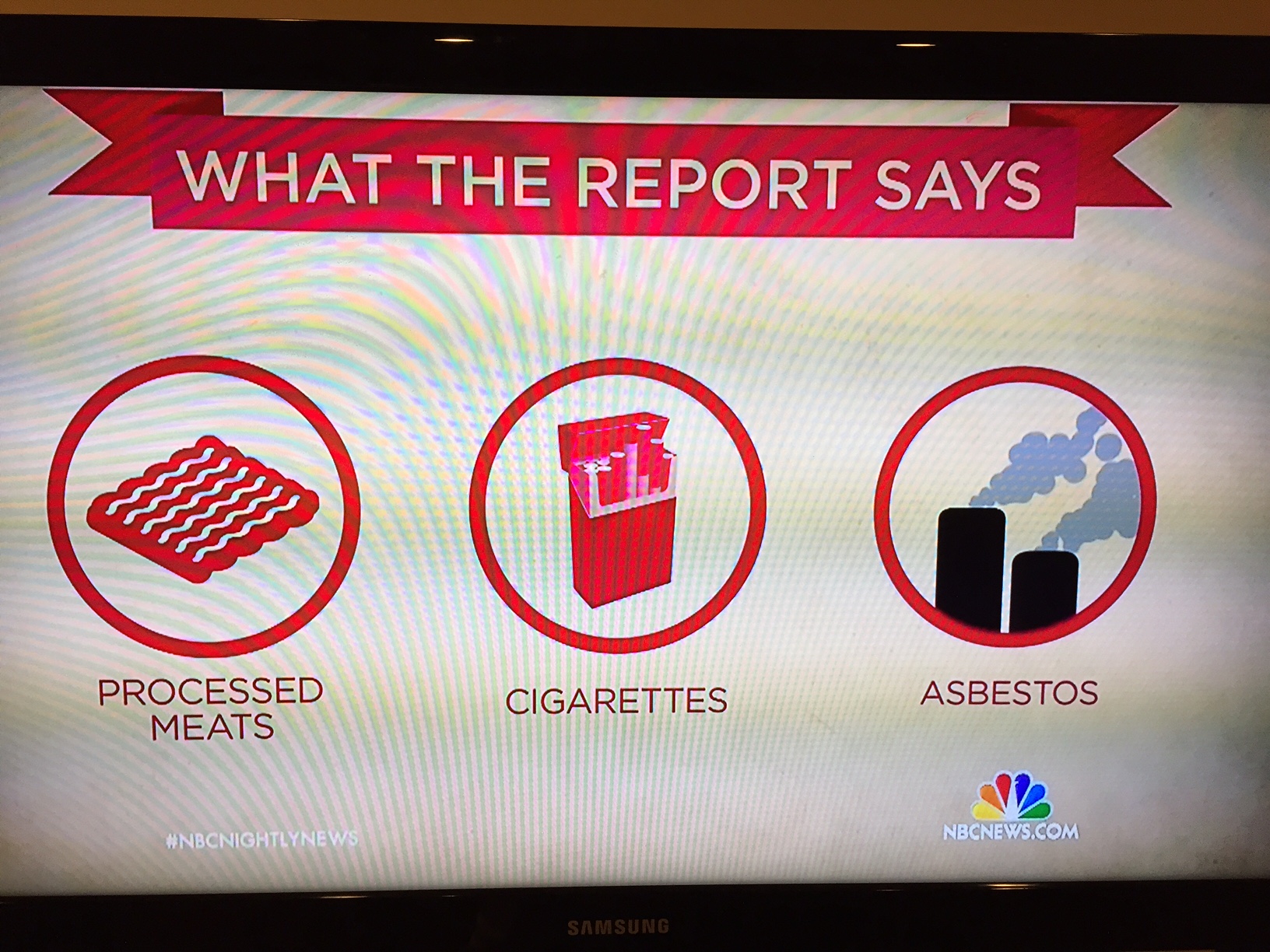
So in one of those striking coincidences, the same day I have my performance review, the World Health Organization (WHO) comes out with a report that says that processed meat is carcinogenic to humans. The blog post is not meant to go into a discussion of how badly this report was blown out of proportion by much of the media. I will just say there is a difference between relative risk and absolute risk. This Forbes article I think does a pretty good job of explaining what the WHO said and also what it means, and this post by Cancer Research UK is really good and has wonderful graphics explaining risk. I will also say I am not a vegetarian, and although I really don’t eat that much red meat or processed meat, I don’t have a thing about bacon, but I spent a good part of childhood in Texas, and God bless Texas barbecue, meaning brisket so tender no knife is needed, and now I am hungry. I’m sorry where was I? Oh right, WHO and processed meat. So what I did want to say a few words about was a graphic I saw on NBC Nightly News, mainly the image below (which in case it is not obvious, I literally took a photo of my television screen).

Screen shot of NBC Nightly New with Lestor Holt on 10/26/2015

Screen shot of NBC Nightly New with Lestor Holt on 10/26/2015

I am not an expert on asbestos, but I can say with confidence that a smokestack is NOT where asbestos originates. Asbestos is a naturally formed mineral, and in some locations, you can be exposed to asbestos from the natural soil and rock near you. Where people generally get asbestos exposure is old house insulation, old pipe insulation, car brake pads, and a whole lot of old building material. I posted this photo on Facebook yesterday because I was just kind of flabbergasted. It leads me to questions like does NBC News seriously not know where asbestos comes from? Are they just too lazy to find a better graphic? One Facebook friend said that maybe they used a smokestack to designate a generic industrial process. I replied that by that analogy cigarettes should also have a smokestack because they also come an industrial process. Asbestos does not originate from an industrial process. It originates from the earth, but it was then used by industry into various products. The other two graphics imply where your exposure to the named carcinogen would be. Your exposure to asbestos is not from a smokestack. It is from old building material like insulation. They could have had a graphic of fibrous pipe insulation. They could have also just had a graphic of fibers to show what asbestos looks like under a microscope. I feel confident that with a short period of time and a graphic designer, we could have come up with a factually correct and simple asbestos graphic. One may very well already exist. This reply led to a bit of a discussion between my friend and I that was partially about science communication. In short he said that because my reply was so long explaining the problems with the graphic, that he stood by his opinion that the graphic was fine. I acknowledge that my reply was long, but I was not wrong on any points. Also the NBC graphic was just plain bad. A smokestack does not in any way represent asbestos. Worse than that it provides incorrect information to an uninformed viewer who might think that a smokestack is in fact where asbestos exposure comes from.

I very much respect the points my friend made, and he did state something that gets at the heart of a problem I often have, which is brevity. [How long is this blog post now?] I have a tendency to give long answers, which I understand can be annoying to management or anyone else, who wants a short answer. The reason I sometimes give long answers is that the answer is not simple, or I need the question defined better in order to give a simple answer. I just can’t bear the idea to give an incorrect answer. I can’t bear to give a short answer to management then have someone come back and say well what about “this”, and management to come back at me and say well what about “this.” I work in complicated subjects. Very often the problems, the solutions, the questions, and the answers are all complicated. The problem with the media sometimes is they try to make a complicated subject simple and sometimes fail miserably. Sometimes they just have no clue what they are talking about and seem to refuse to want expert advice. I respect journalists who can take complicated science subjects and explain them simply. There is a difference between explaining something simply and accurately and explaining something simply and wrong. Asbestos coming out of a smokestack is simple. It is also wrong.

Brooklyn Navy Yard

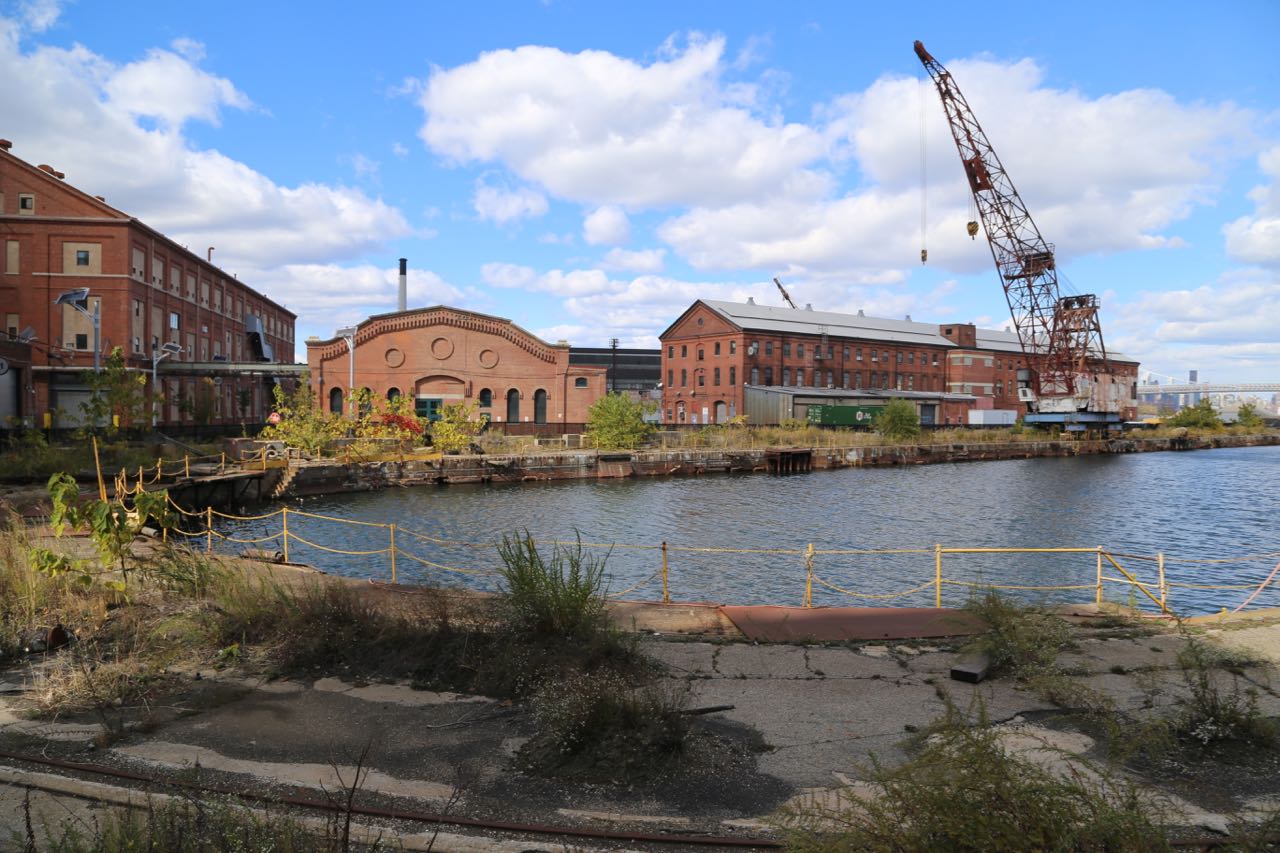
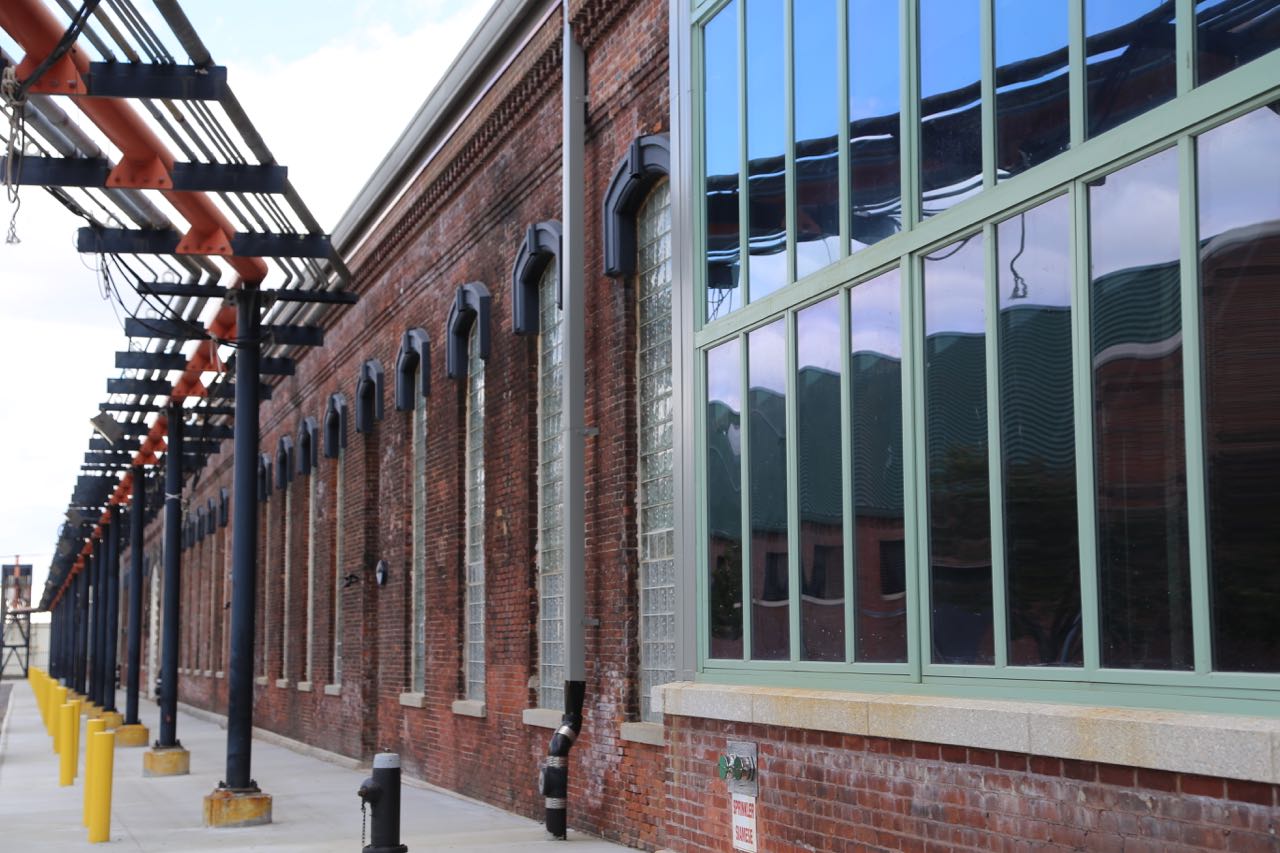
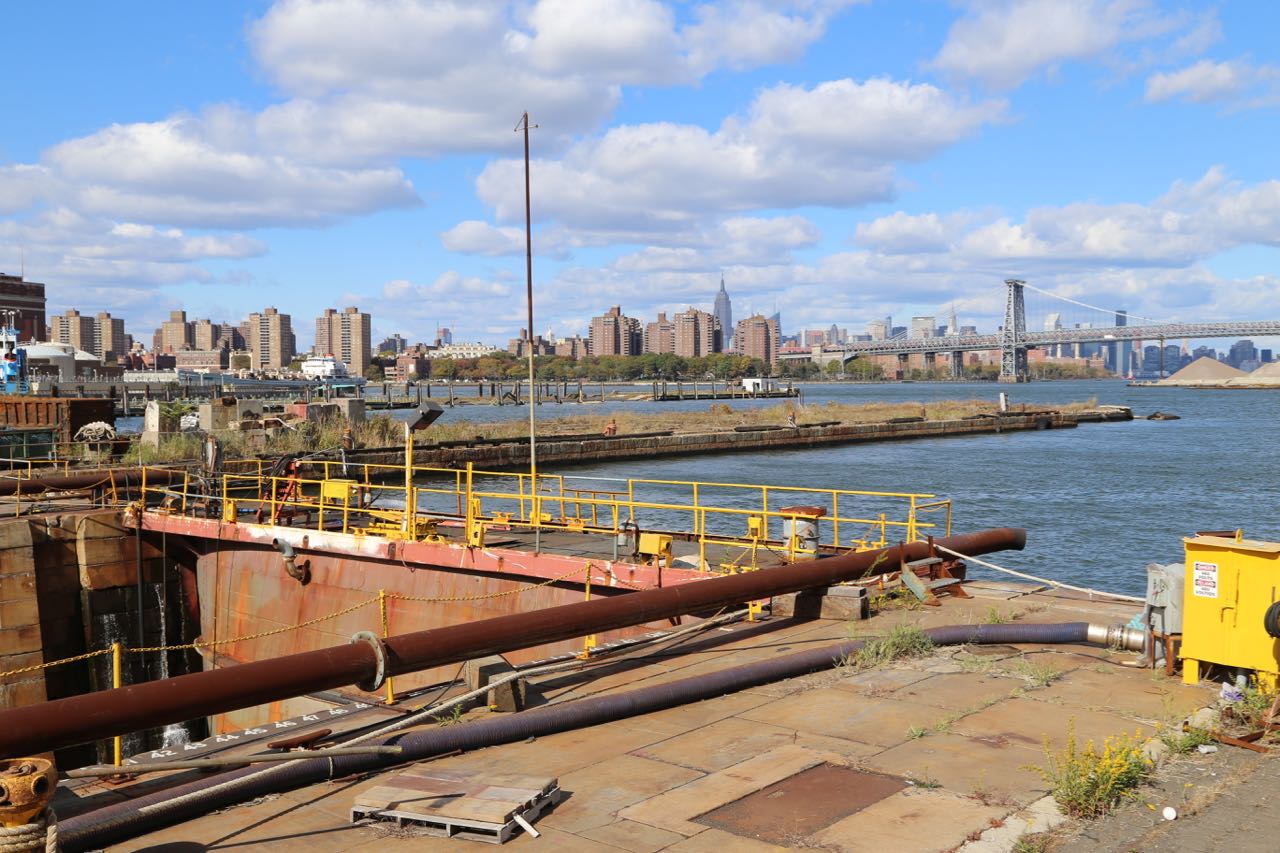
As part of Open House New York, I got to wander around the Brooklyn Navy Yard. The old navy shipyard is being redeveloped for commercial use. There are several dry docks, and one dry dock is still operational. There is also many green features includes renewable power. However, the site is quite simply a really cool place to photograph.

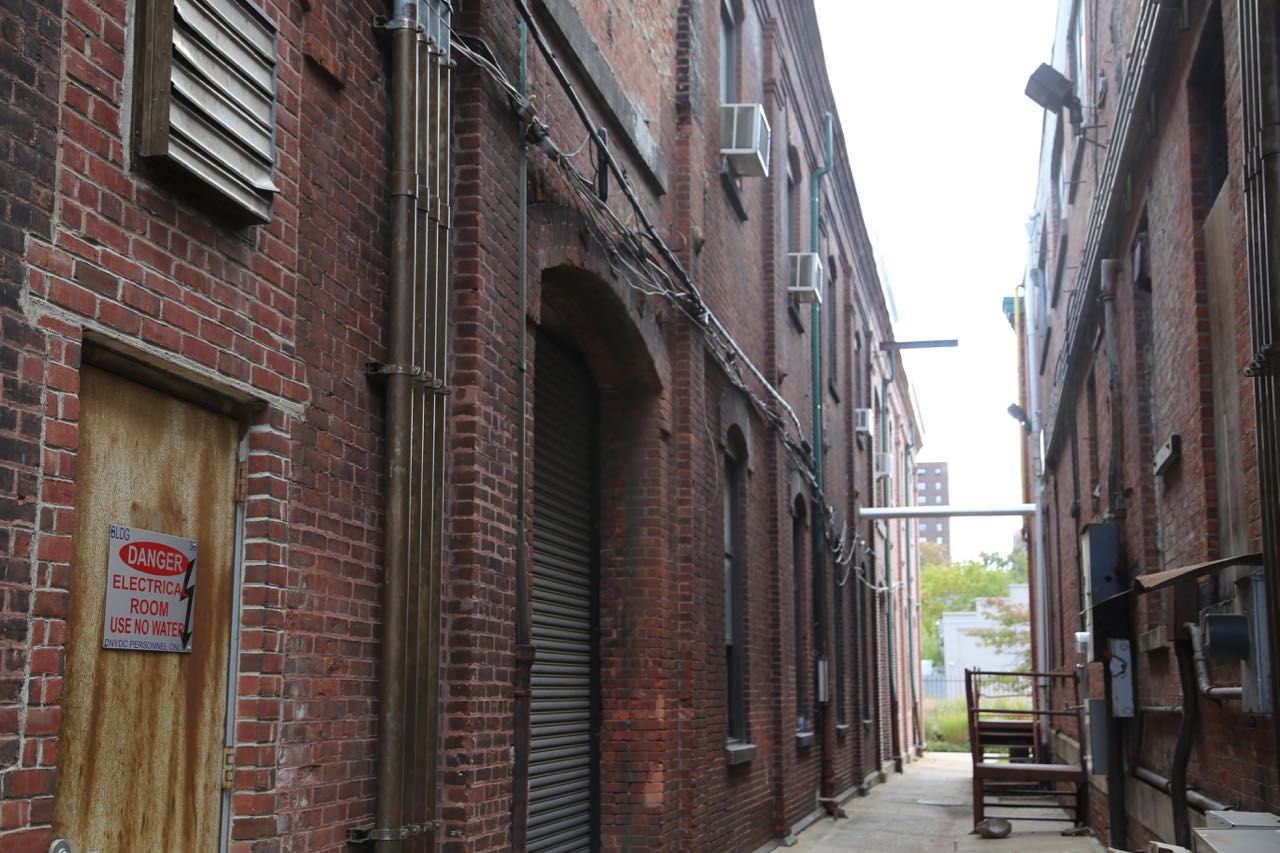
Between Buildings 30 and 58

Between Buildings 30 and 58

Dry dock that is no longer in use

Dry dock that is no longer in use

Building 128

Building 128

Building 25

Building 25

Building 20

Building 20

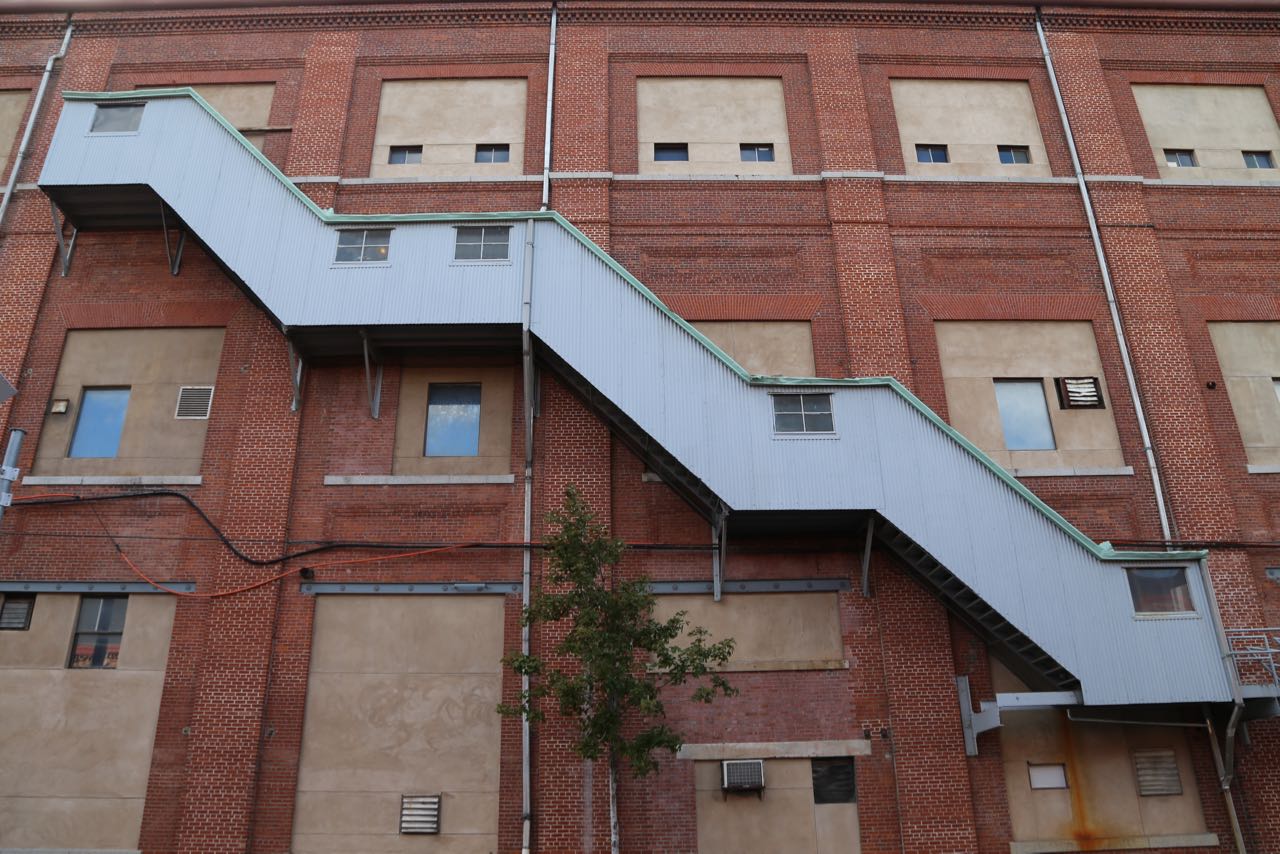
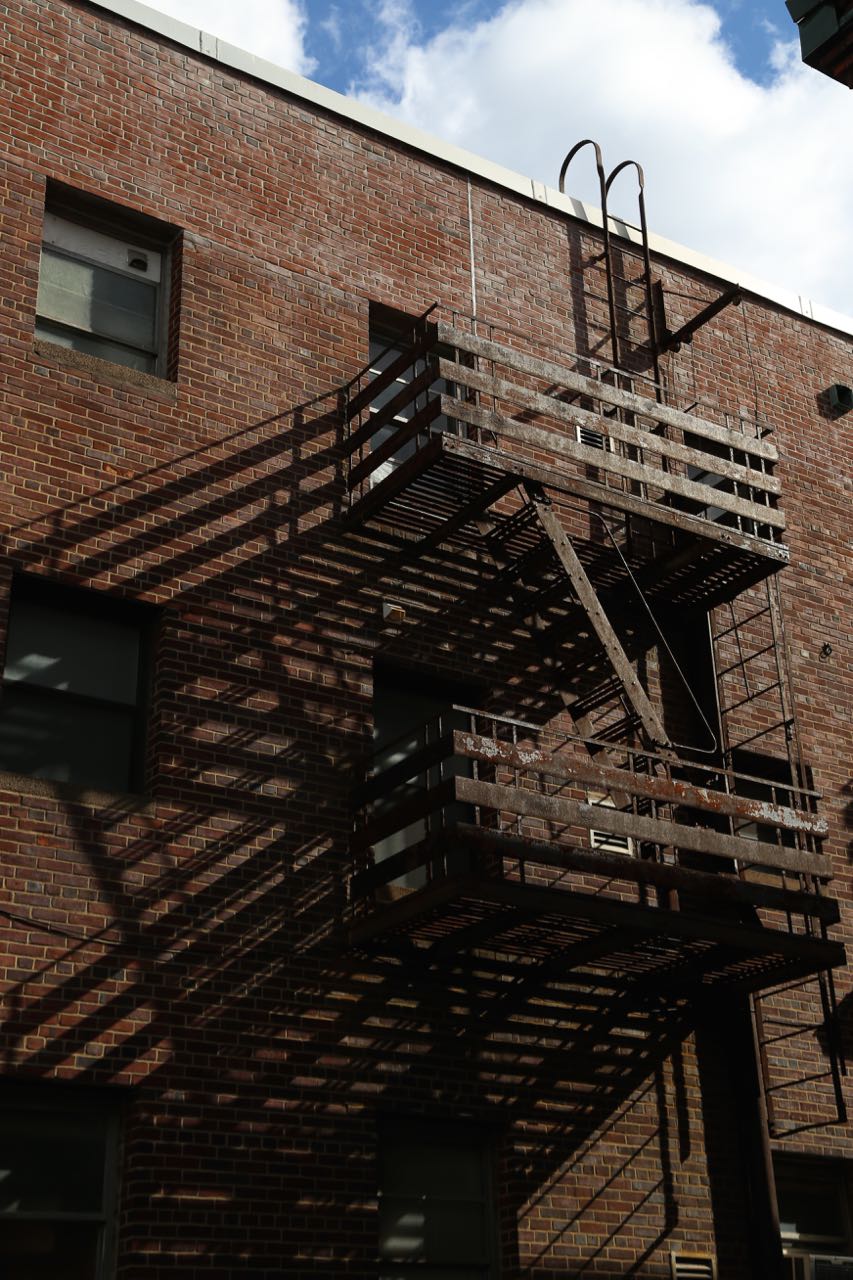
External staircase on Building 127

External staircase on Building 127

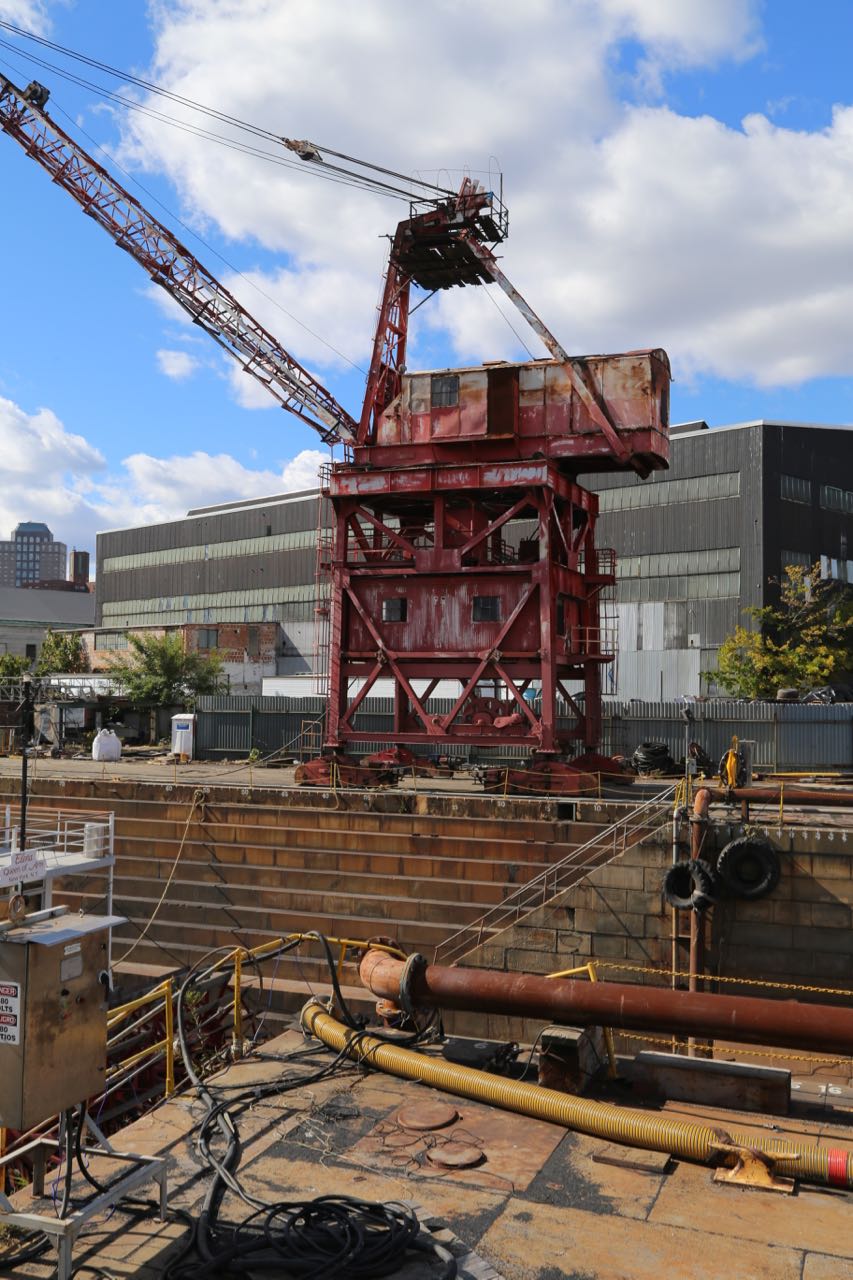
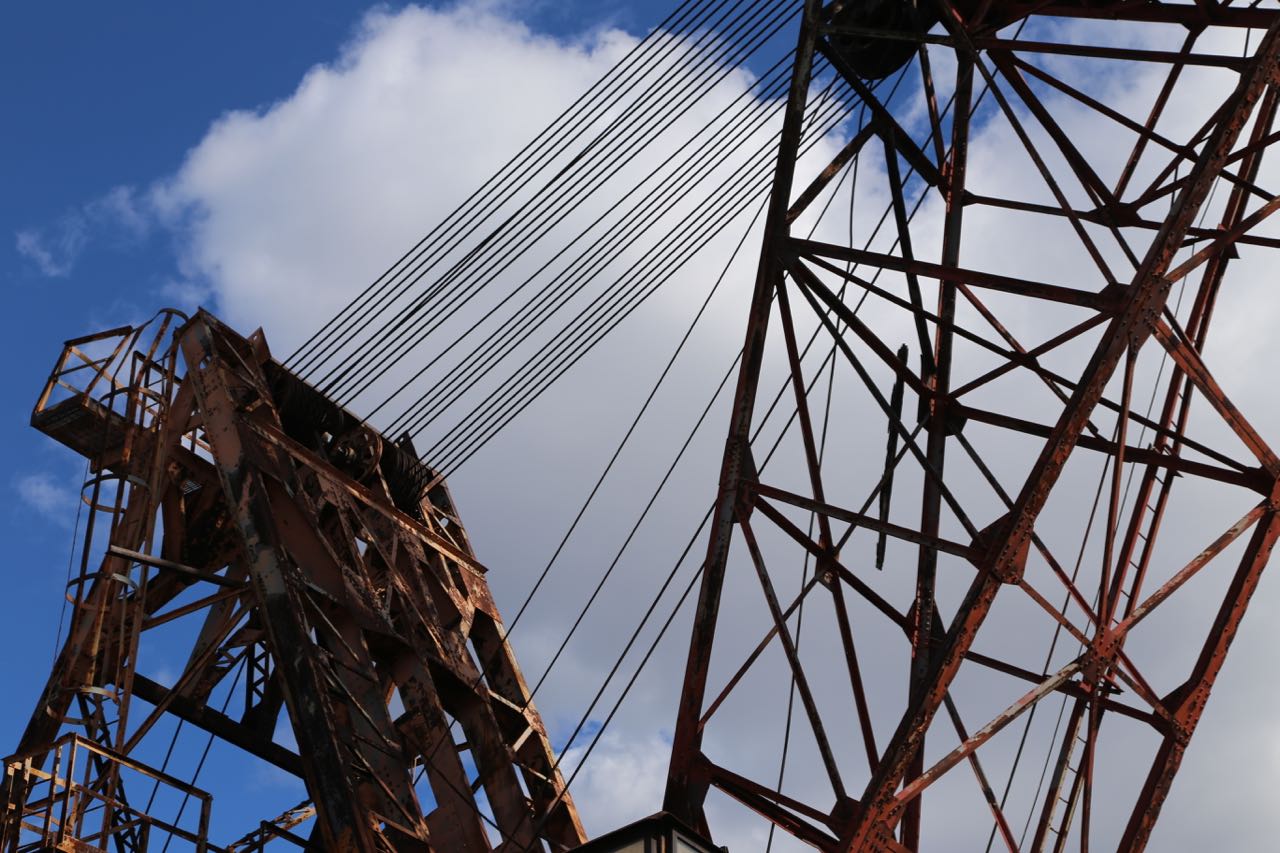
Crane for operation dry dock

Crane for operation dry dock

Operational dry dock next to the East River

Operational dry dock next to the East River

Old crane

Old crane

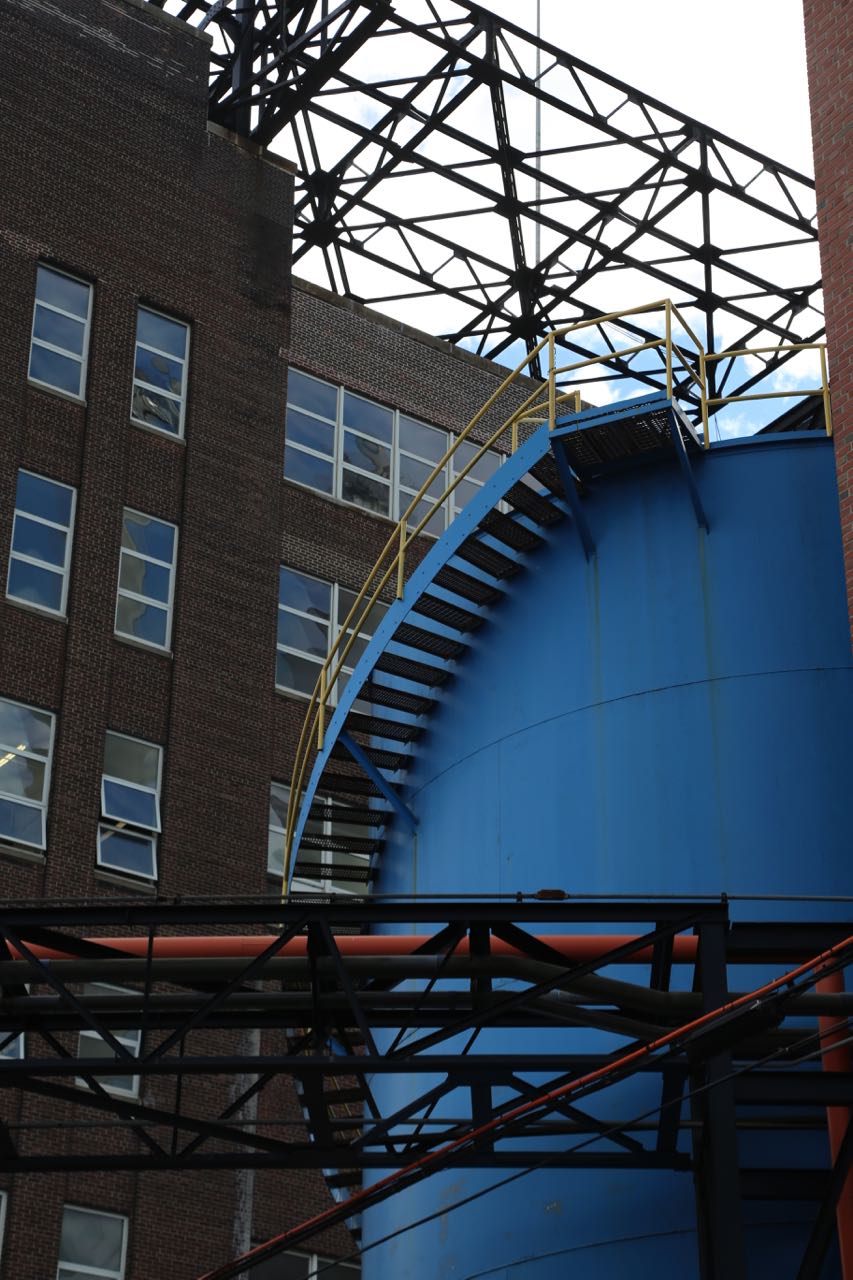
Tank next to Building 41

Tank next to Building 41

Building 58

Building 58

Renovated Bluiding 92

Renovated Bluiding 92

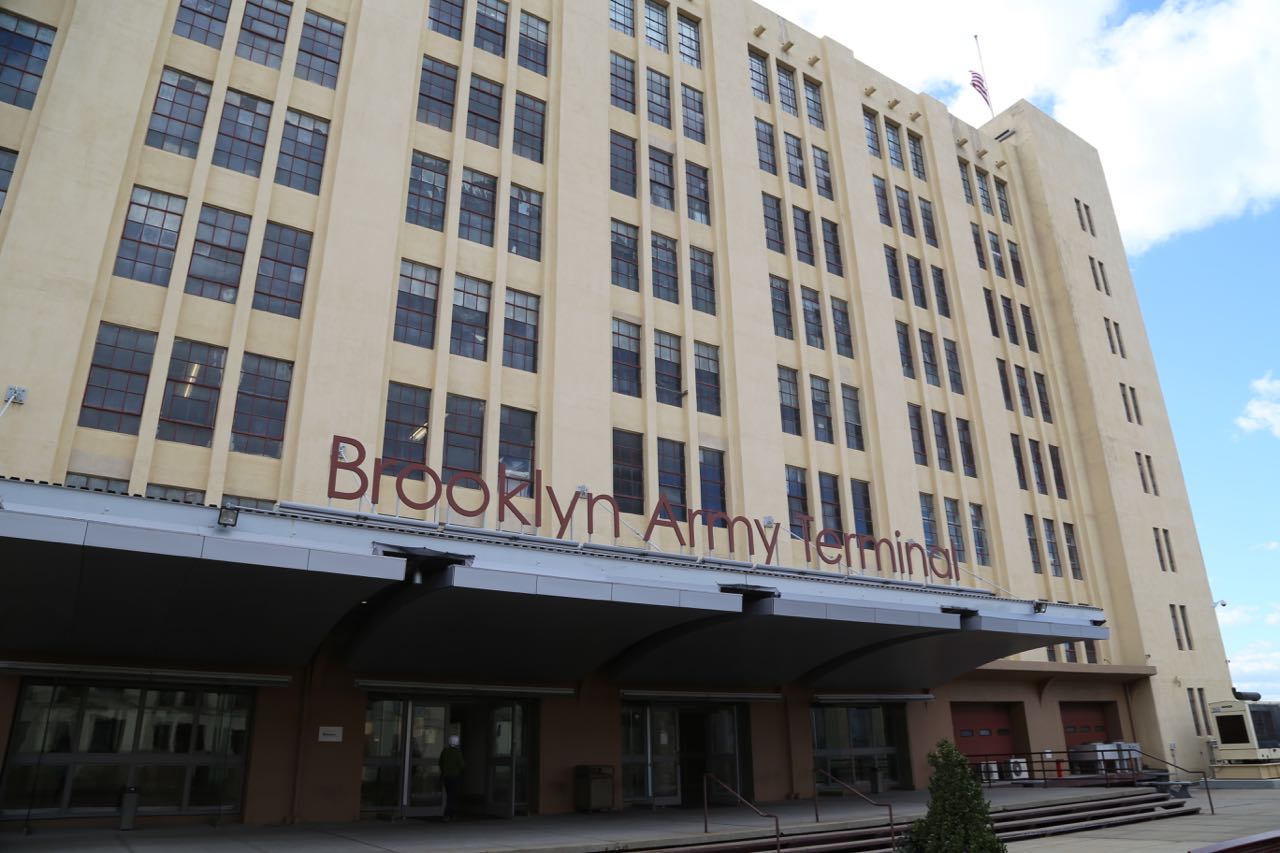
Brooklyn Army Terminal

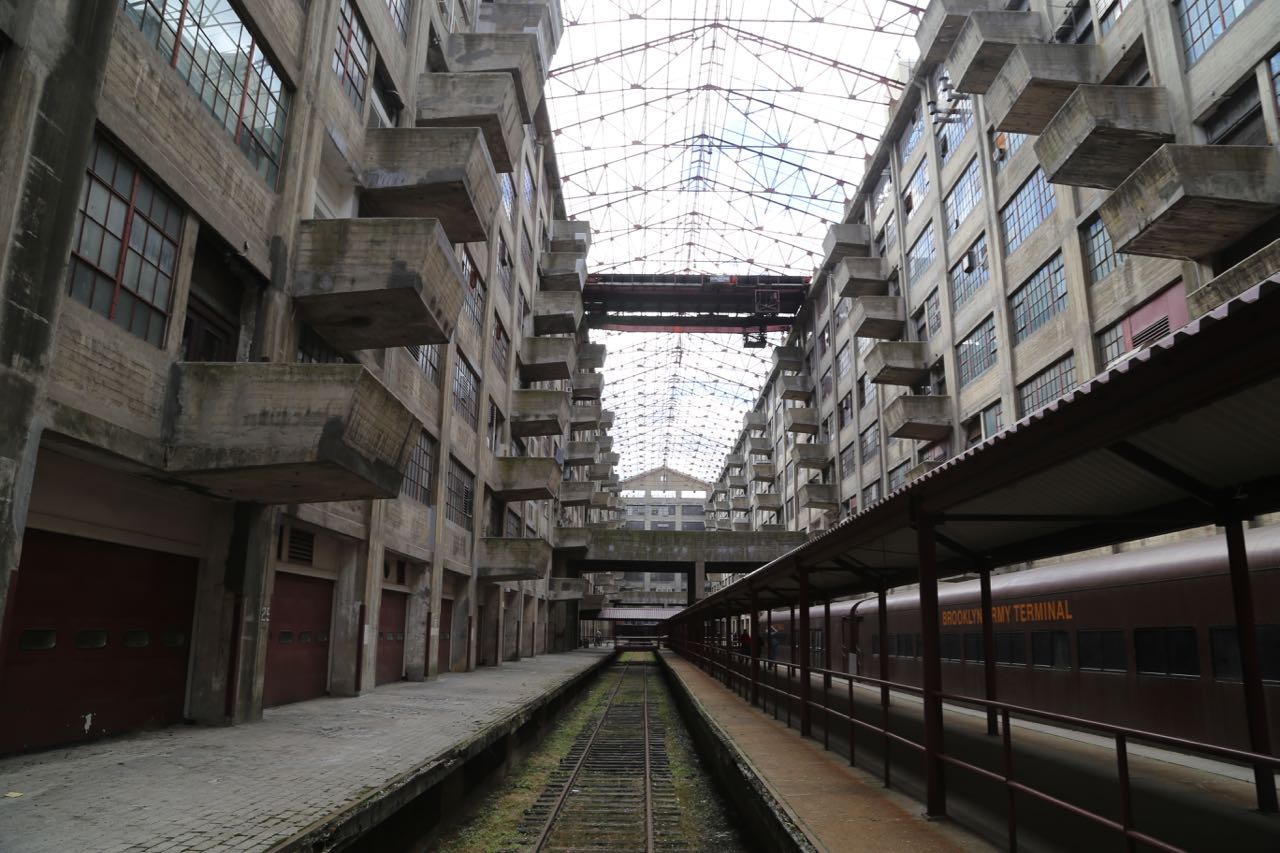
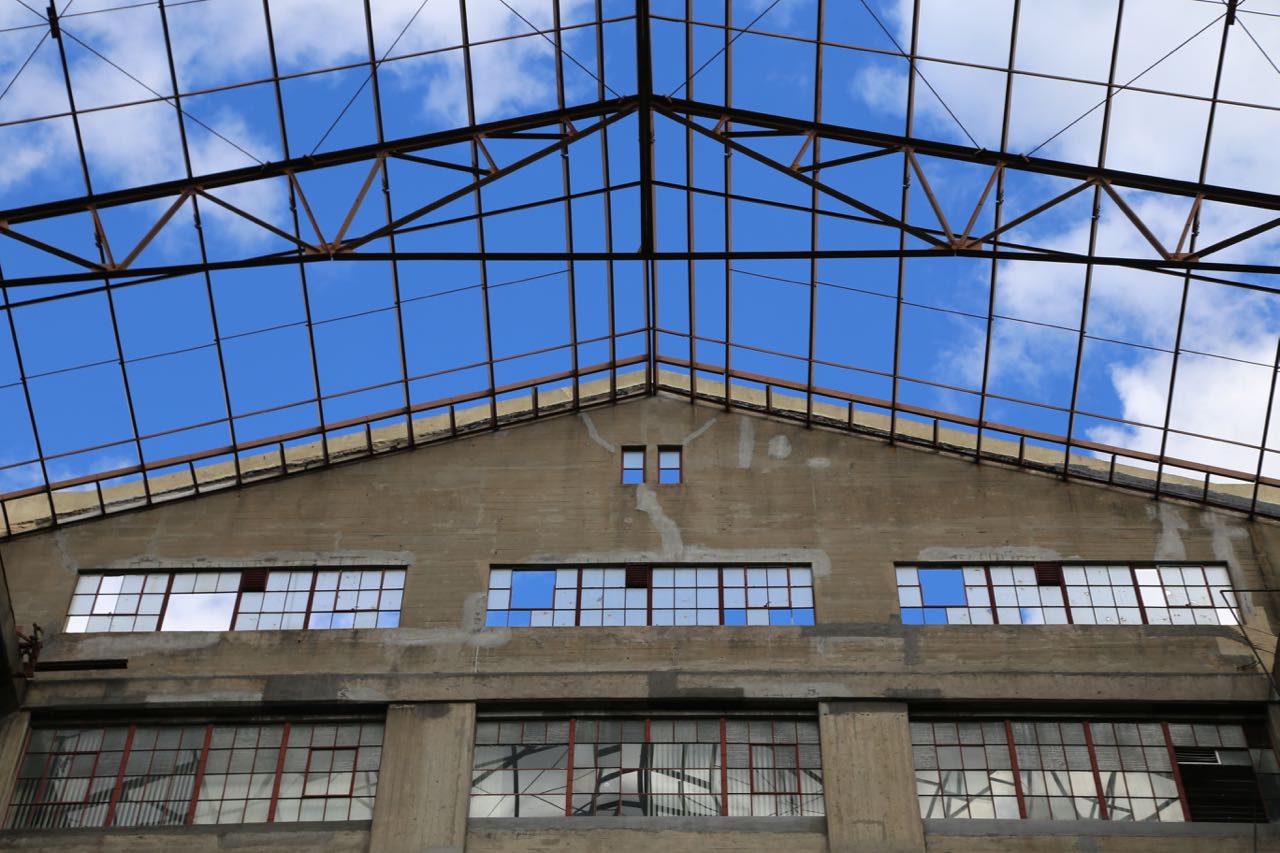
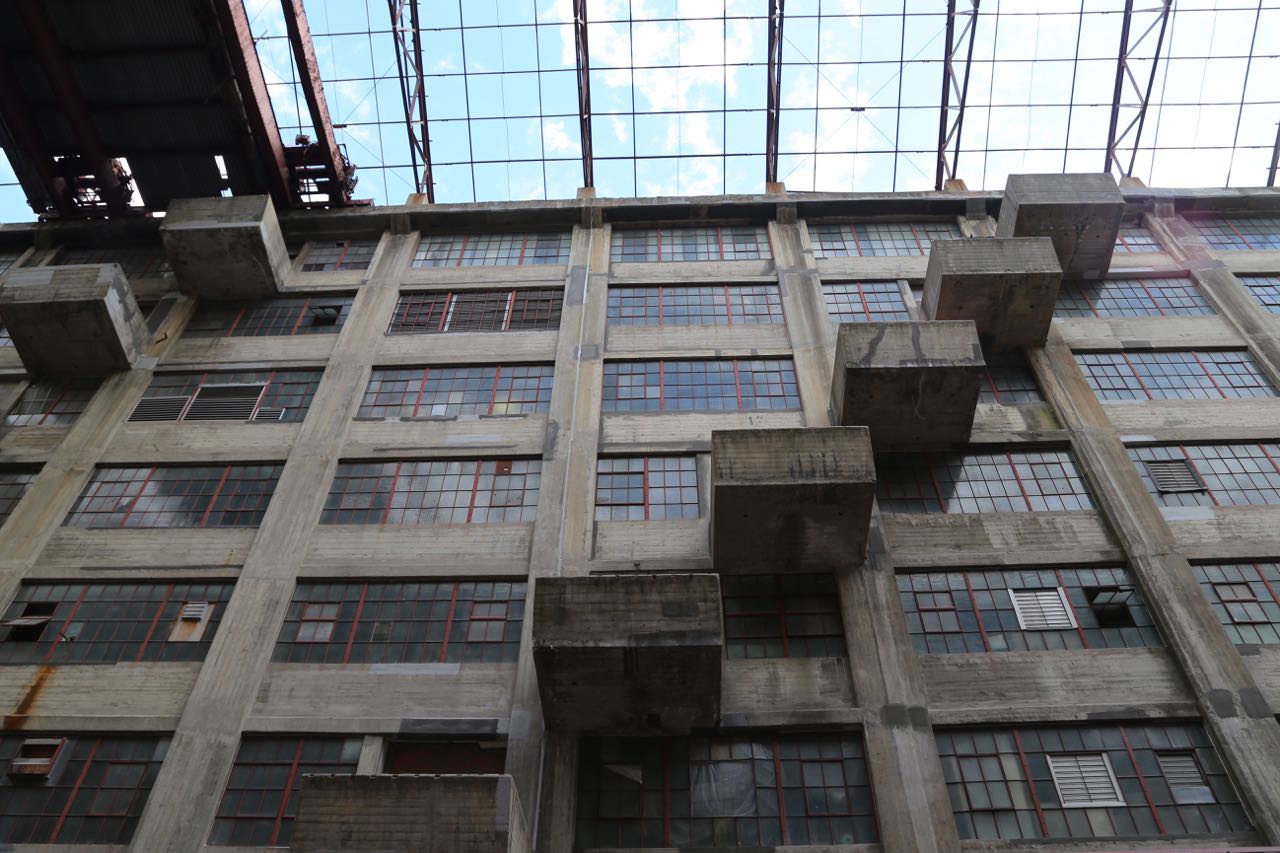
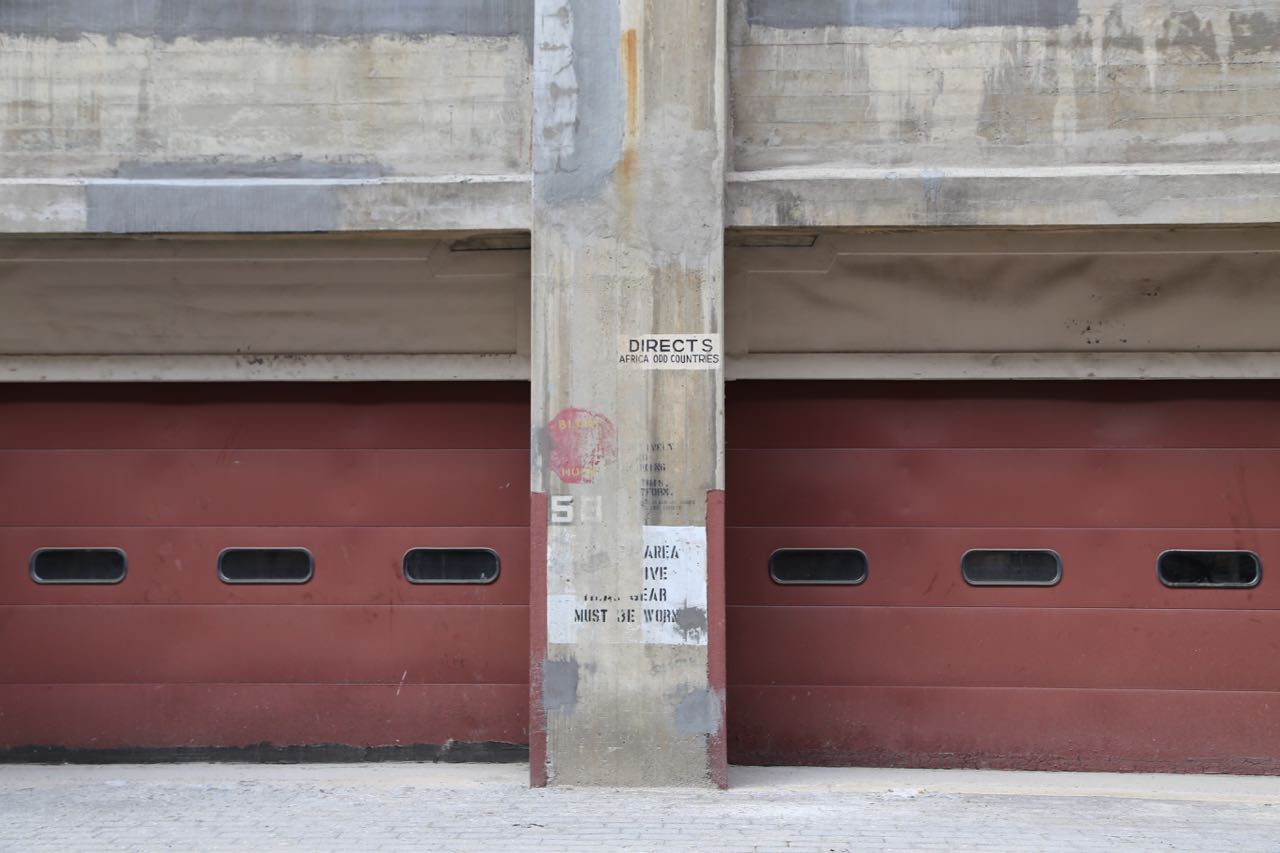
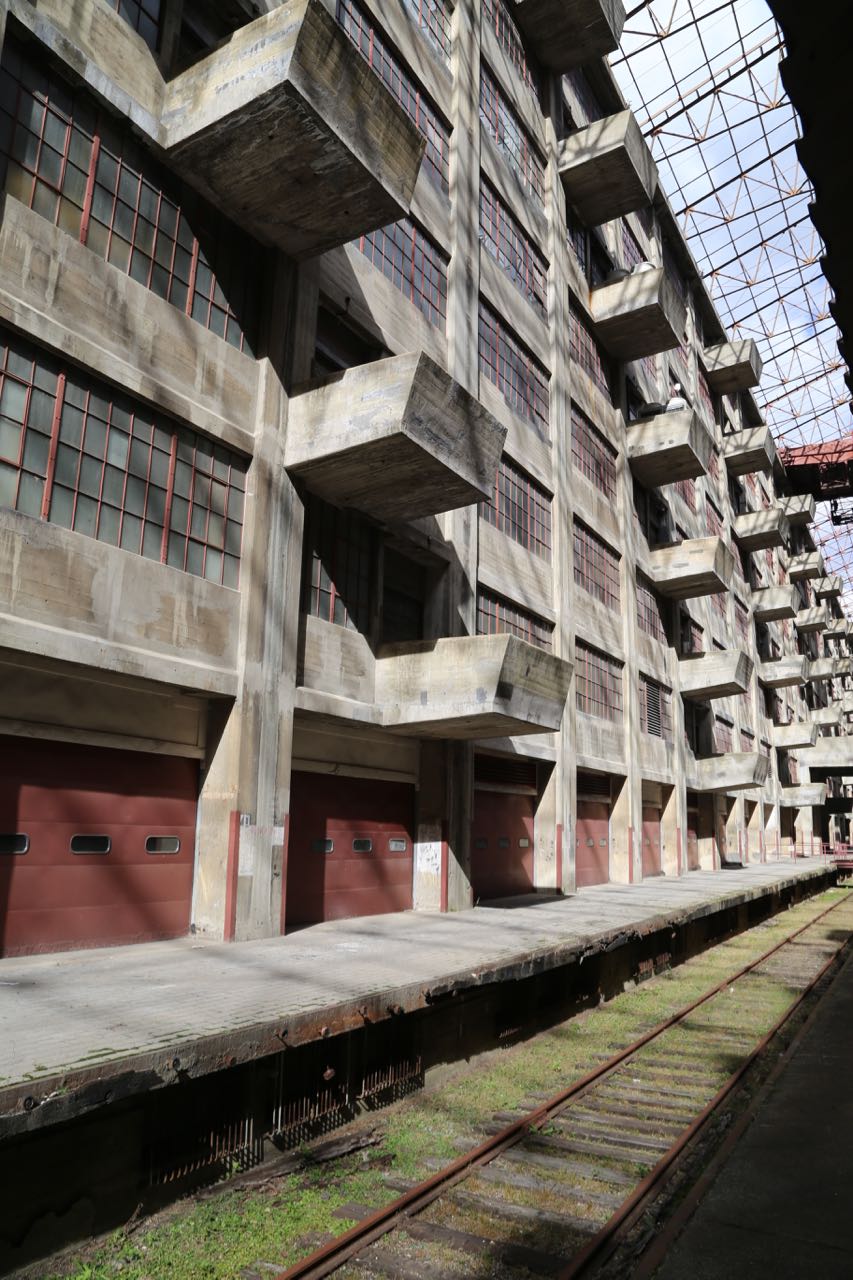
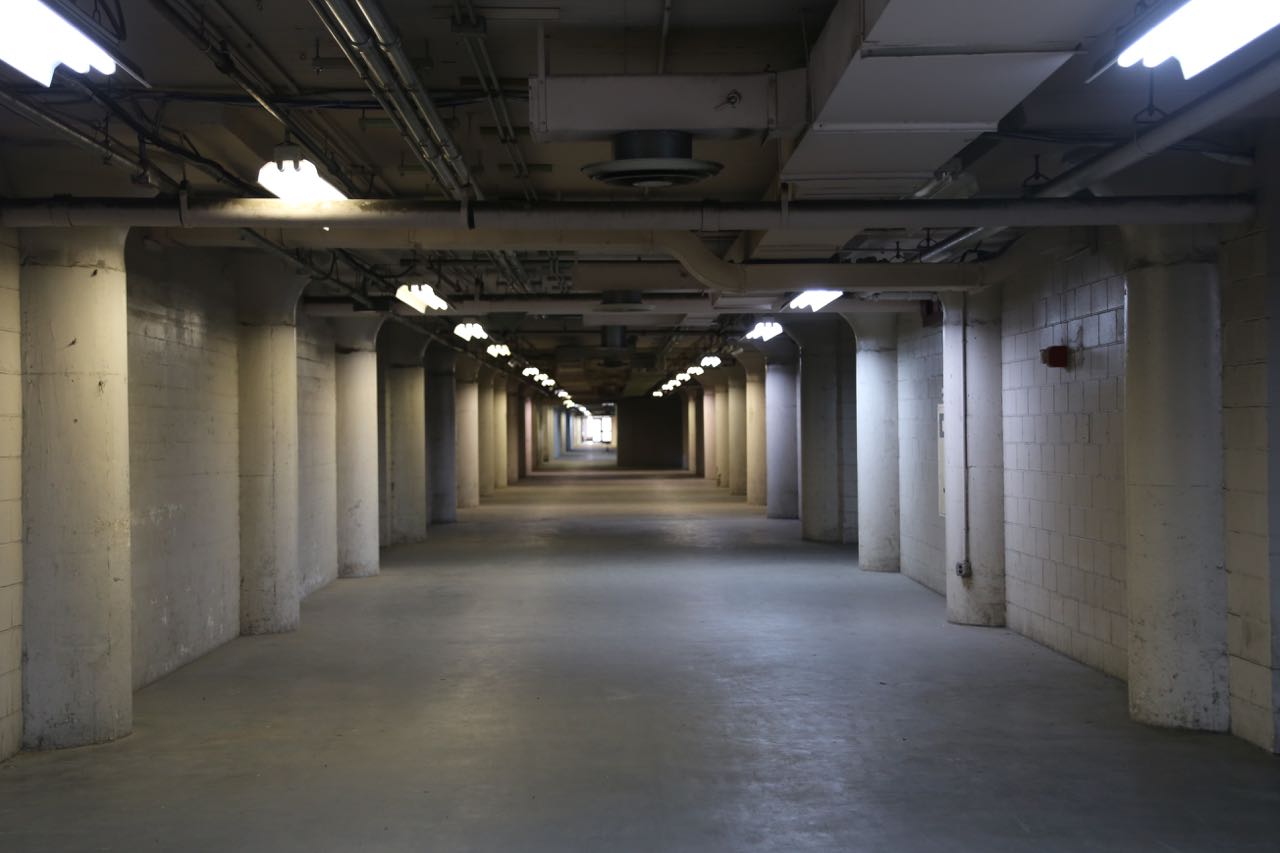
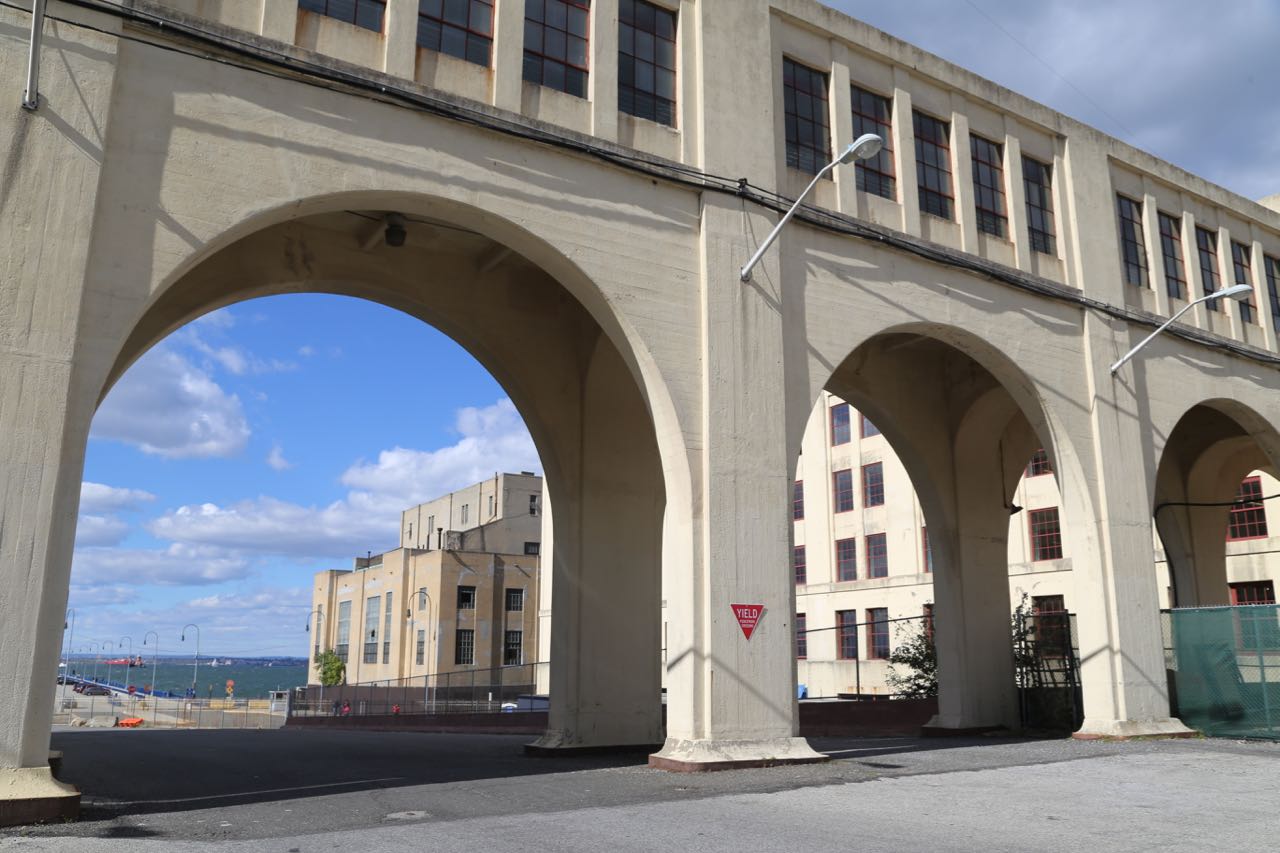
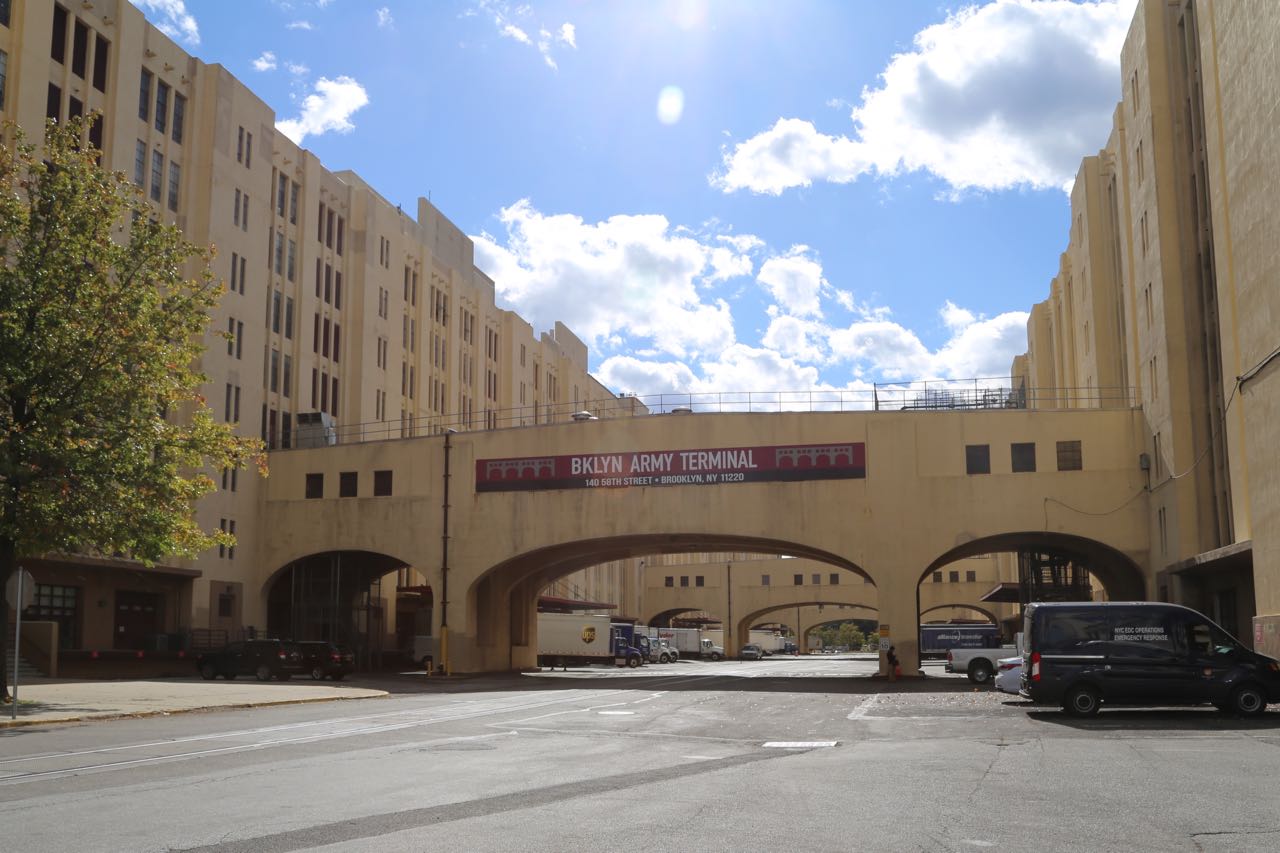
As part of Open House New York, I toured the Brooklyn Army Terminal. It was built at the end of World War I and was a huge military base that was used to transfer people and materials from land to sea. It was built in an entirely utilitarian design and in the incredibly short time of 17 months. However, its utilitarian design is what I find incredibly interesting. Building B has this huge atrium with two sets of railroad tracks. Trains would travel directly into the building where material would be off and on loaded from various levels. There are several bridges connecting several buildings so that material could be moved between buildings on vehicles without interfering with the train traffic below. The atrium is dramatic, and I love that the concrete pour lines are visible.

Building B Atrium

Building B Atrium

Building B Atrium

Building B Atrium

Building B Atrium

Building B Atrium

Building B Atrium

Building B Atrium

Building B Atrium loading docks

Building B Atrium loading docks

Building B Atrium

Building B Atrium

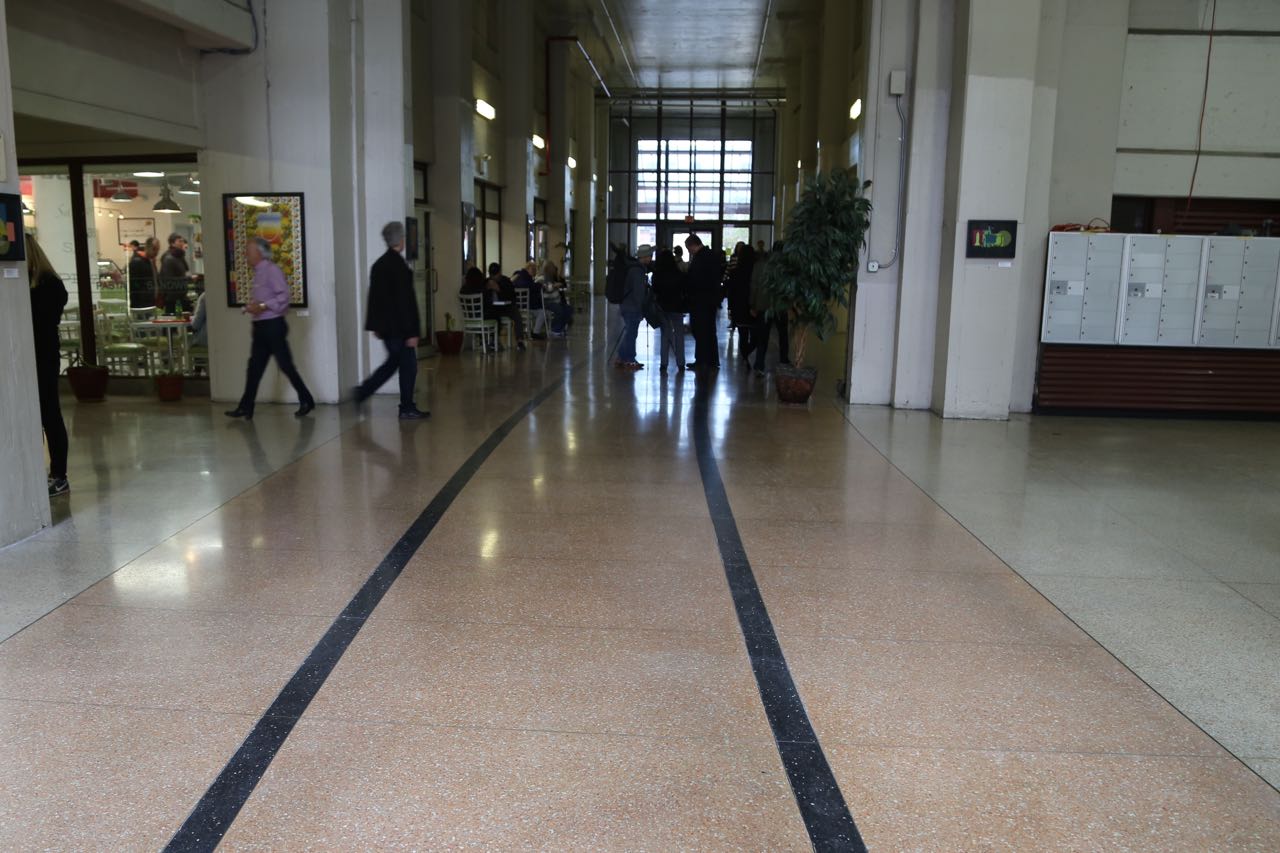
Building B entrance, the black lines show where railroad tracks originally were

Building B entrance, the black lines show where railroad tracks originally were

Exterior of Building A

Exterior of Building A

Building A

Building A

Bridge between Building A and Annex

Bridge between Building A and Annex

Bridge between Building A and B

Bridge between Building A and B

Man Swims the Gowanus Canal

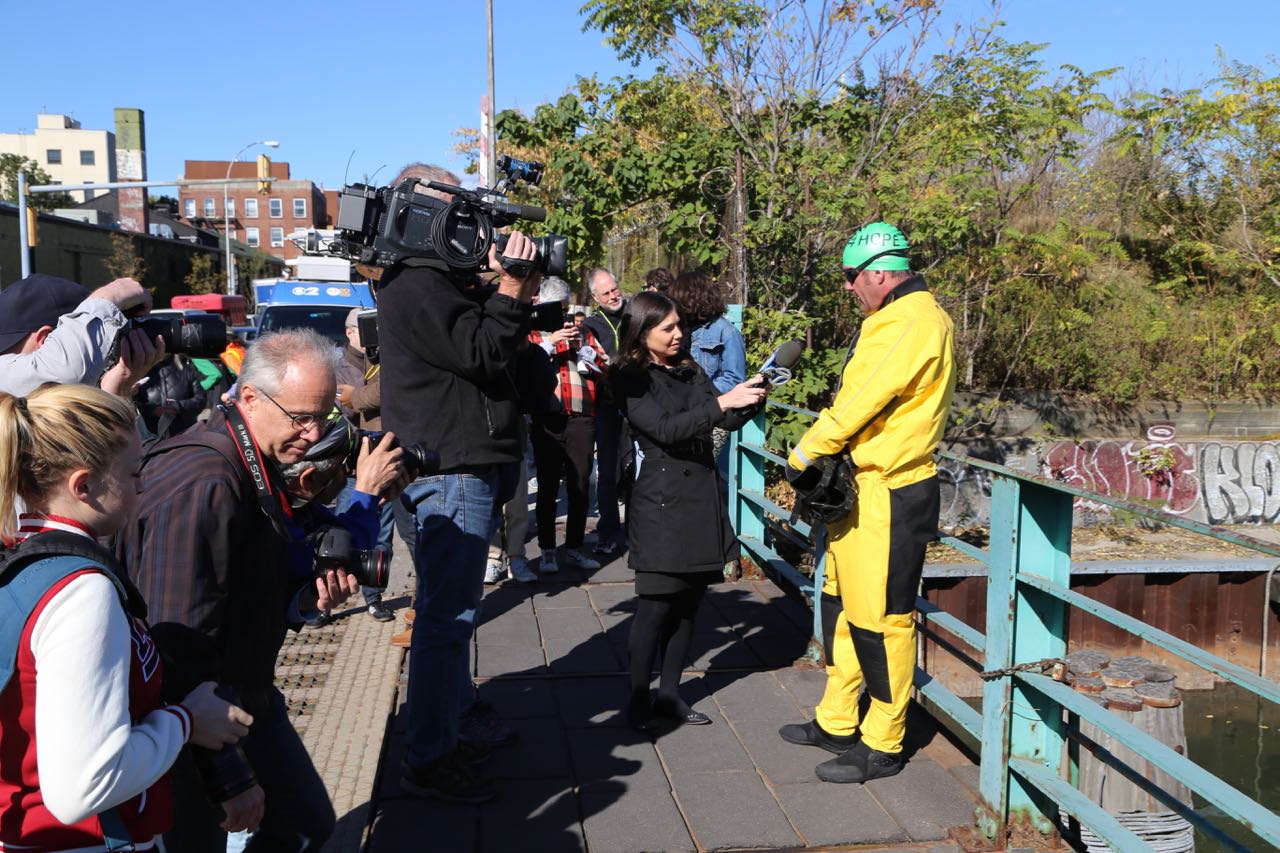
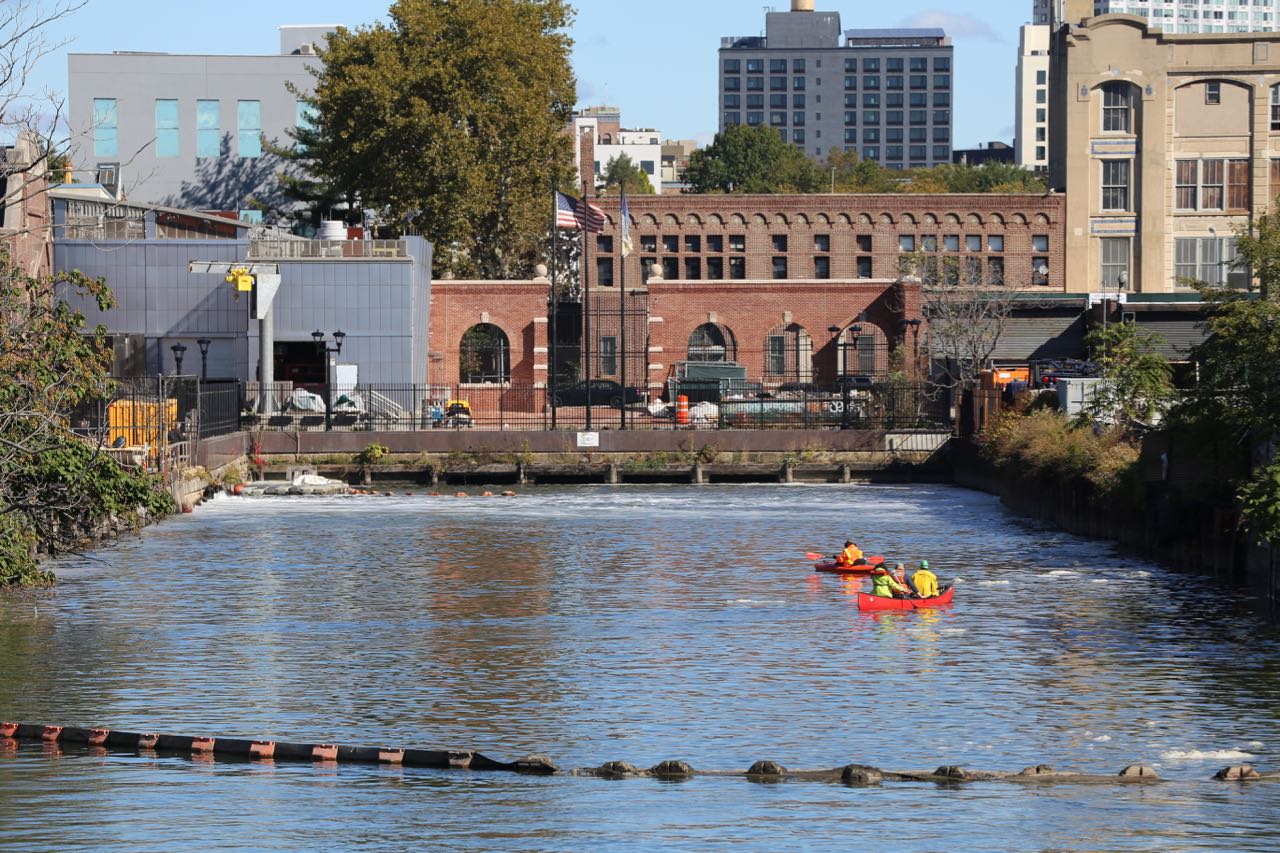
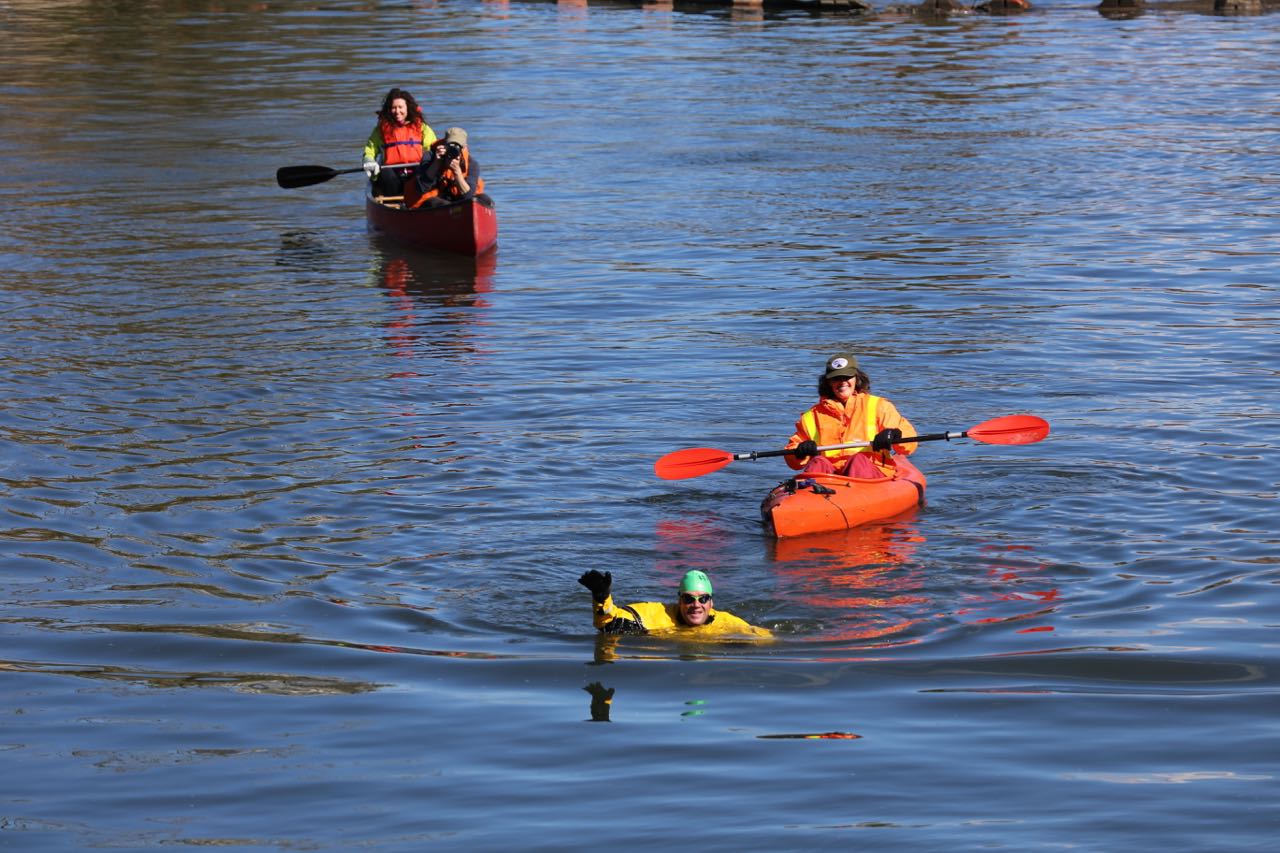
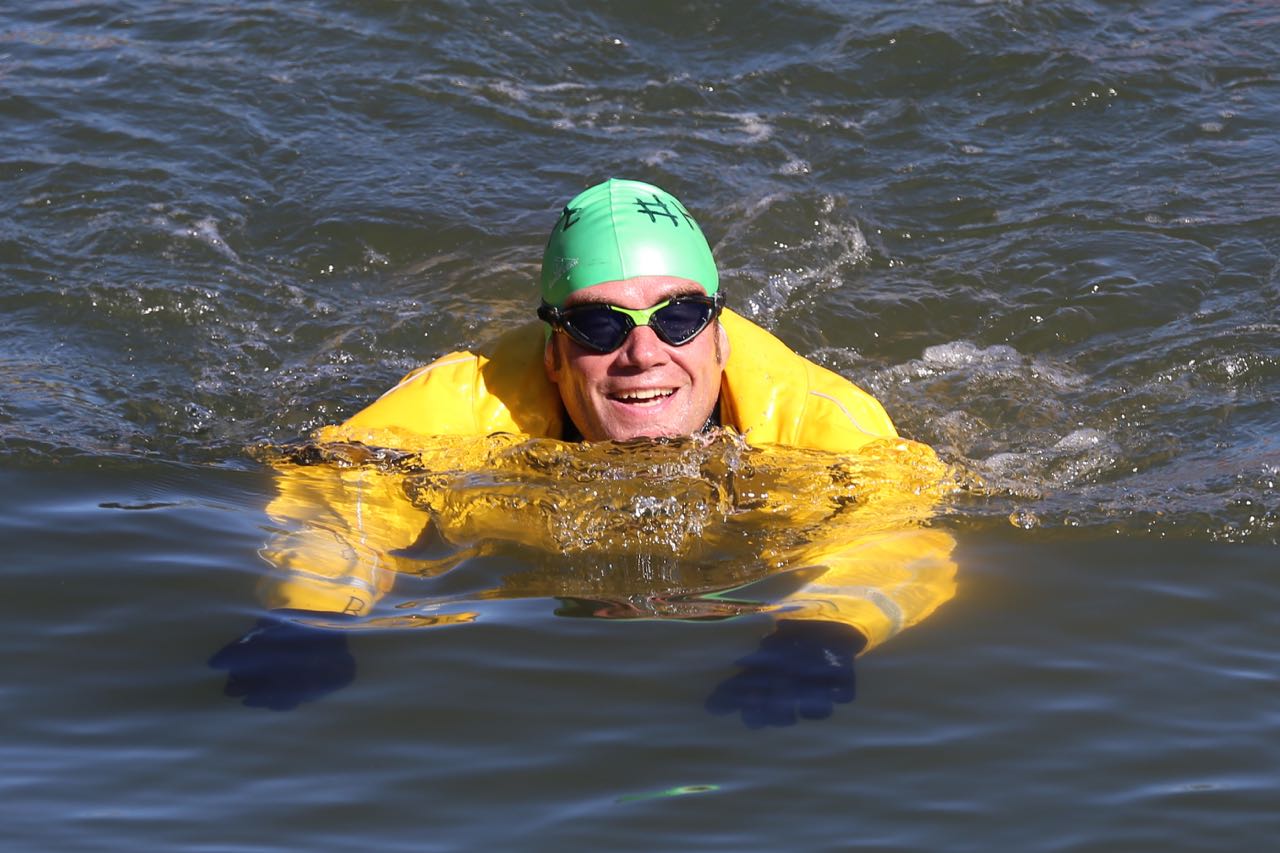
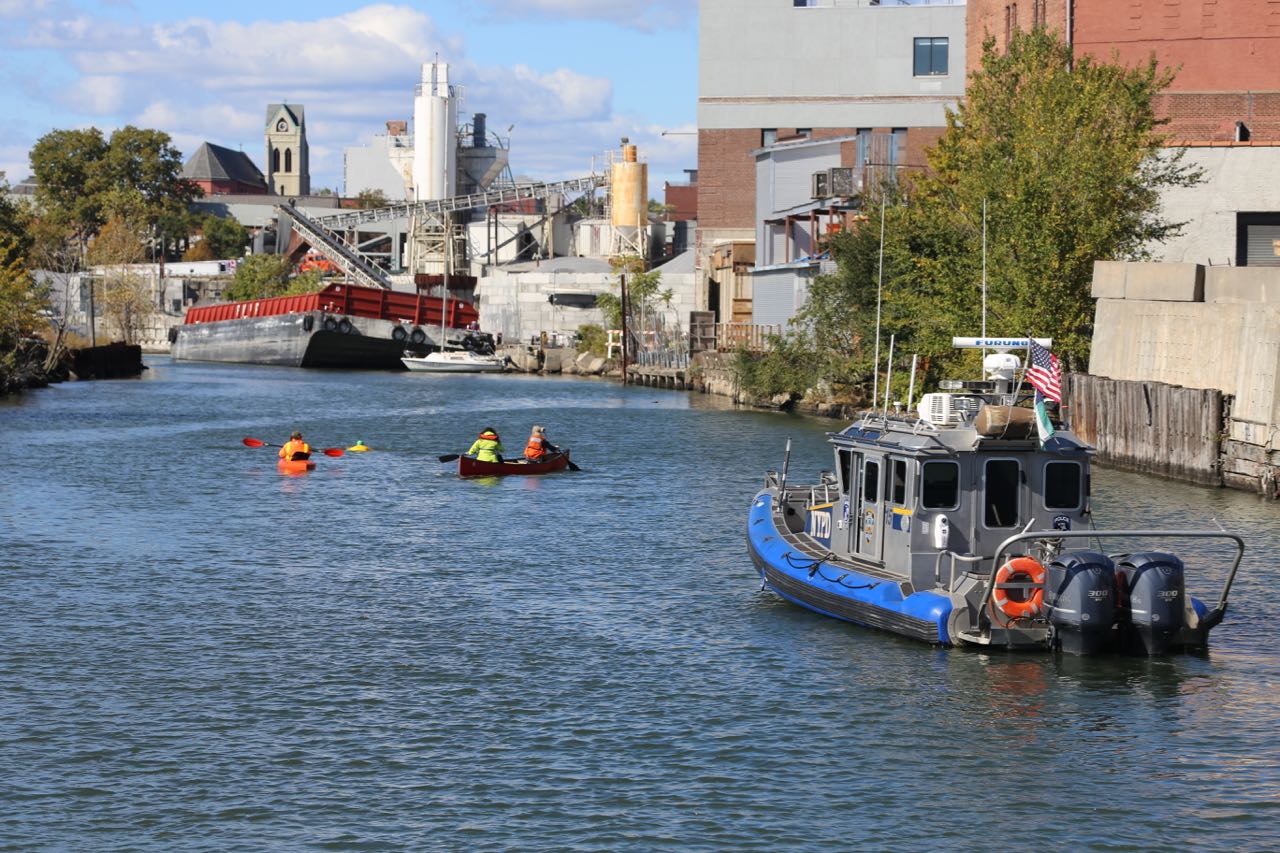
I was planning to come to New York for the weekend, and by pure chance this was the weekend Christopher Swain announced he was going to attempt to swim the Gowanus Canal again. He tried in April but the threat of rain and then actual lightning, which caused the New York Police Department (NYPD) to order him out of the canal, prevented him from swimming the entire length. This time he was successful. He said he did it to raise awareness of the pollution of the Gowanus Canal. When being interviewed by reporters, he said he was concerned this would be perceived as a stunt. He said they would actually be collecting data that would be given to school kids, so they could help solve the problems affecting the Gowanus.

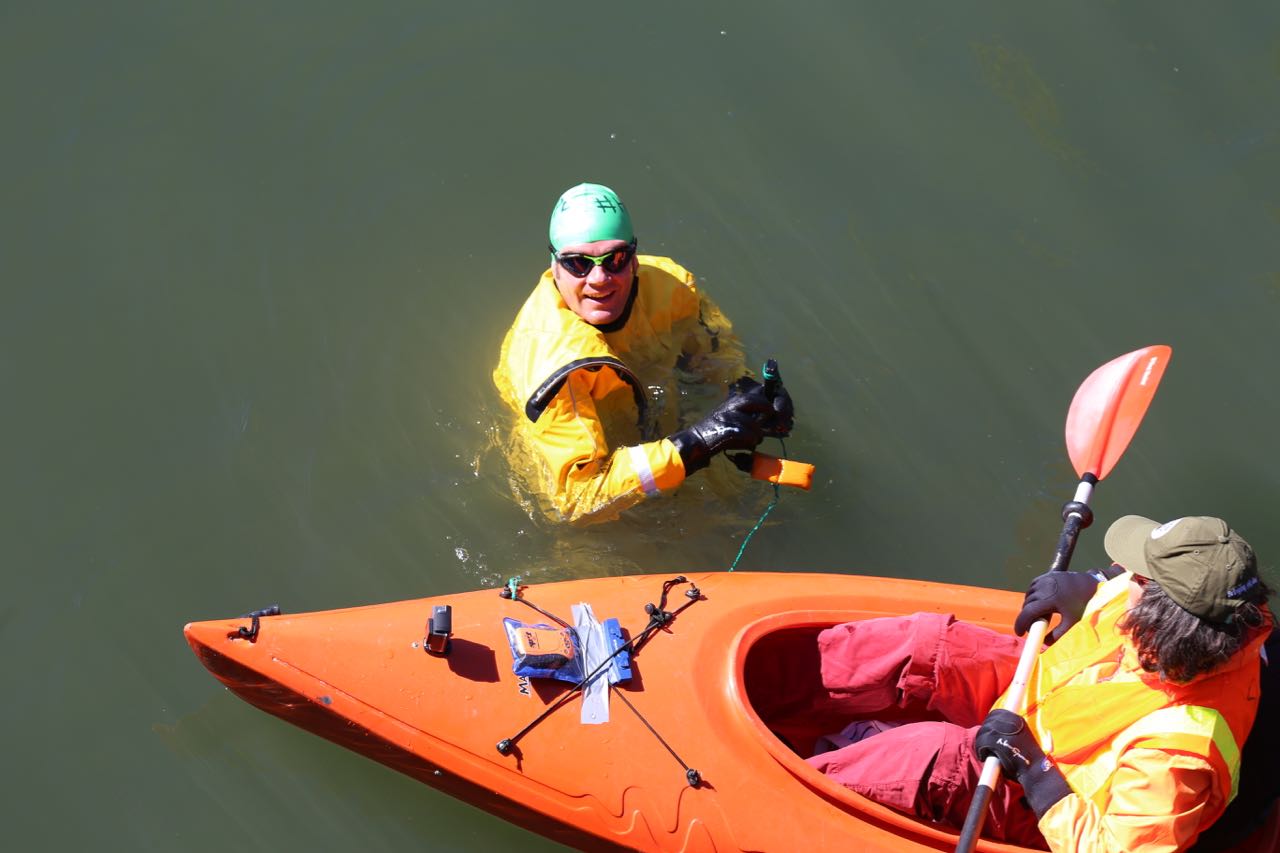
As an environmentalist, I appreciate him bringing awareness to the plight of the Gowanus. I even appreciate him wanting to bring awareness to school kids. Honestly though, as an environmental engineer, who works in the field of cleaning up hazardous waste sites, I can’t see what he is doing as anything other than a stunt. I seriously can’t think of any information he could gather that couldn’t be gathered from a person in a boat, a person who would not be exposing herself or himself to the risk that Mr. Swain is. At one point, Mr. Swain stopped swimming to collect data and told anyone listening that the water had a temperature of 64ºF and had a pH of 7.5. He started by saying “for the scientists out there” and then said he wished he had studied science harder or something to that effect. First, both those two pieces of data could easily be collected from a boat. Second, neither of those pieces of data tell me anything about the state of the Gowanus. The temperature just reflects that it is fall, and a pH of 7.5 is close to neutral and what is expected for a body of water. [Yes, thermal pollution, where water that is too hot is released into a body of water, is a thing that can affect water bodies because hot water has less oxygen, and the reduced oxygen would affect any wildlife in the water, but it is not a concern for the Gownaus.]

Also, I fail to see what school kids are going to do to help solve the problem. I completely agree in bringing awareness of environmental issues to children, but it is environmental professionals and perhaps community organizers who are going to solve the pollution problem with the Gowanus. The Gowanus has two main issues. First, it has hazardous pollution from years past that needs to be cleaned up. This is where the US EPA and Superfund comes in. Hazardous waste includes PCBs, heavy metals, and whatever other fun chemicals might be polluting the canal. Second, it has wastewater pollution from the past and current that needs to be cleaned up. New York City, like many old cites, has a combined wastewater system. This means that wastewater, the stuff that flows from your toilet and sink drain, and stormwater, the stuff from street drains, flows to the same destination. When it is not raining, it is not an issue. The wastewater all flows to various wastewater treatment plants where it is treated before being released to a river or ocean. During rain events, there can be a problem because the wastewater treatment plant may not be able to handle all the water flowing to it. In this case, untreated wastewater is generally directed to some location (technical term is outfall) where it enters a body of water, like the Gowanus. This is actually the main immediate risk to Mr. Swain. Most of the hazardous pollution is in the sediment at the bottom of the canal, and drinking one mouthful of the Gowanus water probably will not kill you, in terms of the hazardous chemicals, or at least not immediately. [DO NOT TRY THIS. THIS IS AN EDUCATED GUESS.] However, because of the untreated wastewater that flows into the Gowanus, the canal has a lovely concoction of viruses, bacteria, and who knows what other pathogens having their own little party. This would be my more immediate concern for him or anyone else who might accidentally ingest Gowanus Canal water, getting an infection of who knows what pathogen. [According to news reports I’ve seen, after the swim, he stated that he swallowed three mouthfuls. My advice is to go see a medical doctor.] It is also not clear to me if there is other pollution concerns to Gowanus, like outfalls from nearby business or stormwater from the nearby area that may contain things they shouldn’t.

The Gowanus Canal absolutely needs to be cleaned up, and regulatory authorities and the community are already working on it. It may not be proceeding at the speed Mr. Swain and the community would like. I completely understand that. Cleanups, such as the Gowanus Canal, take time and money. It takes professionals, the regulatory authorities, the groups being regulated, and the community to determine the best path forward. Unfortunately, it generally takes patience also. My completely biased opinion is that not enough money is dedicated by politicians to cleaning up all the different pollution in this country. Hence even more patience is needed. One final note, in all the news reports, Mr. Swain and the reporters keep making reference to the Gowanus Canal being a Superfund site. It is, but the issue of untreated wastewater being released into the canal and causing, in my opinion, the more immediate risk to him or anyone else who wants to go for a dip, does not normally fall under Superfund regulation. Superfund (aka CERCLA) regulates hazardous waste, and pathogens are not hazardous waste. However, when the U.S. EPA finalized the Record of Decision for the Gowanus Canal Superfund site, they did require the City to build two very large tunnels to capture combined sewer overflow during rain events. [Edited to correct my statements regarding Superfund and the untreated wastewater contamination.]

Christopher Swain being interviewed before his swim

Christopher Swain being interviewed before his swim

Mr. Swain and his support crew paddled to the start of the Gowanus Canal before he entered the water.

Mr. Swain and his support crew paddled to the start of the Gowanus Canal before he entered the water.

Christopher Swain swimming with his support crew behind him

Christopher Swain swimming with his support crew behind him

Christopher Swain swimming the Gowanus Canal in a dry suit.

Christopher Swain swimming the Gowanus Canal in a dry suit.

He takes measurements of the water.

He takes measurements of the water.

After he reached the 3rd Street bridge, the NYPD provided an escort (either the water wasn't deep enough or the bridges prevented it before).

After he reached the 3rd Street bridge, the NYPD provided an escort (either the water wasn’t deep enough or the bridges prevented it before).

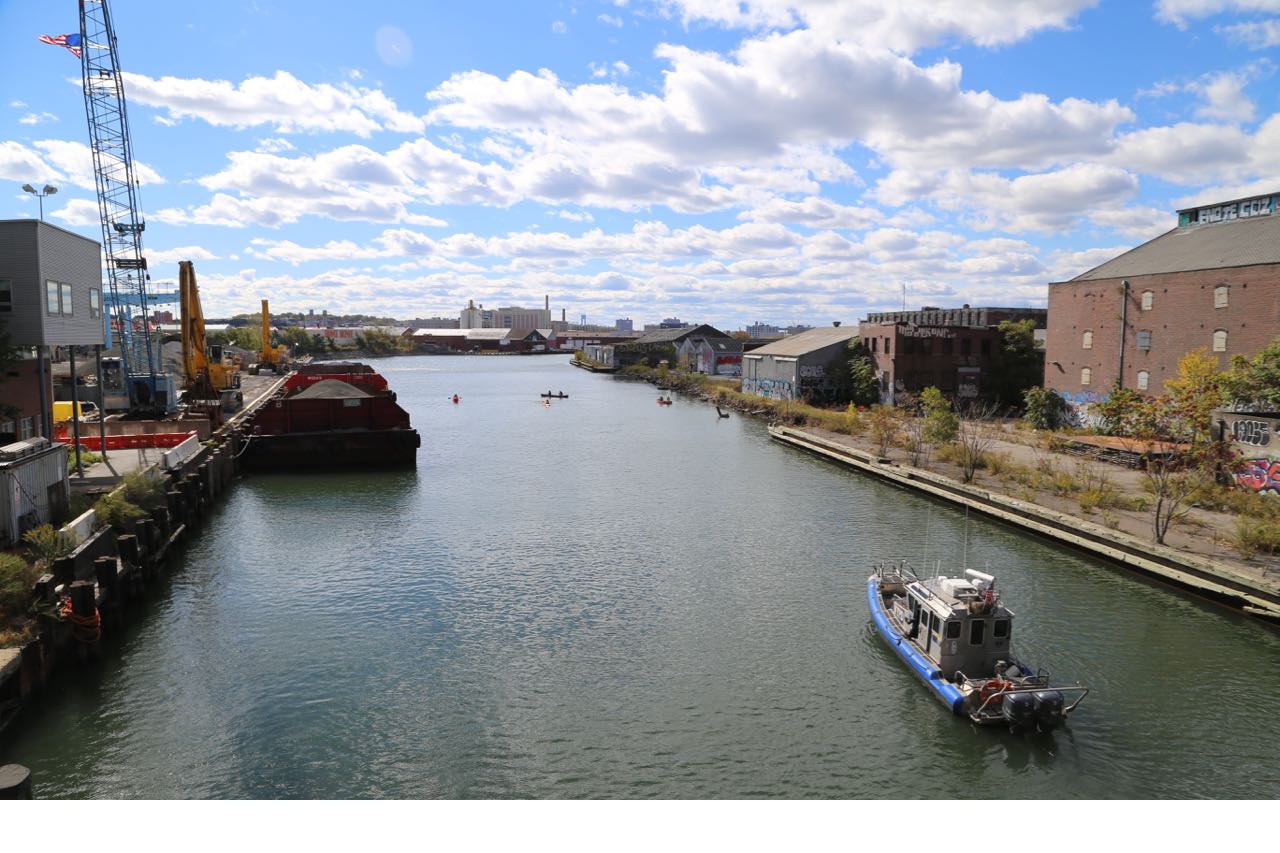
Mr. Swain and escorts nearly at the end of the Gowanus Canal, just after the Gowanus Expressway bridge.

Mr. Swain and escorts nearly at the end of the Gowanus Canal, just after the Gowanus Expressway bridge.

Joint Base Andrews Air Show

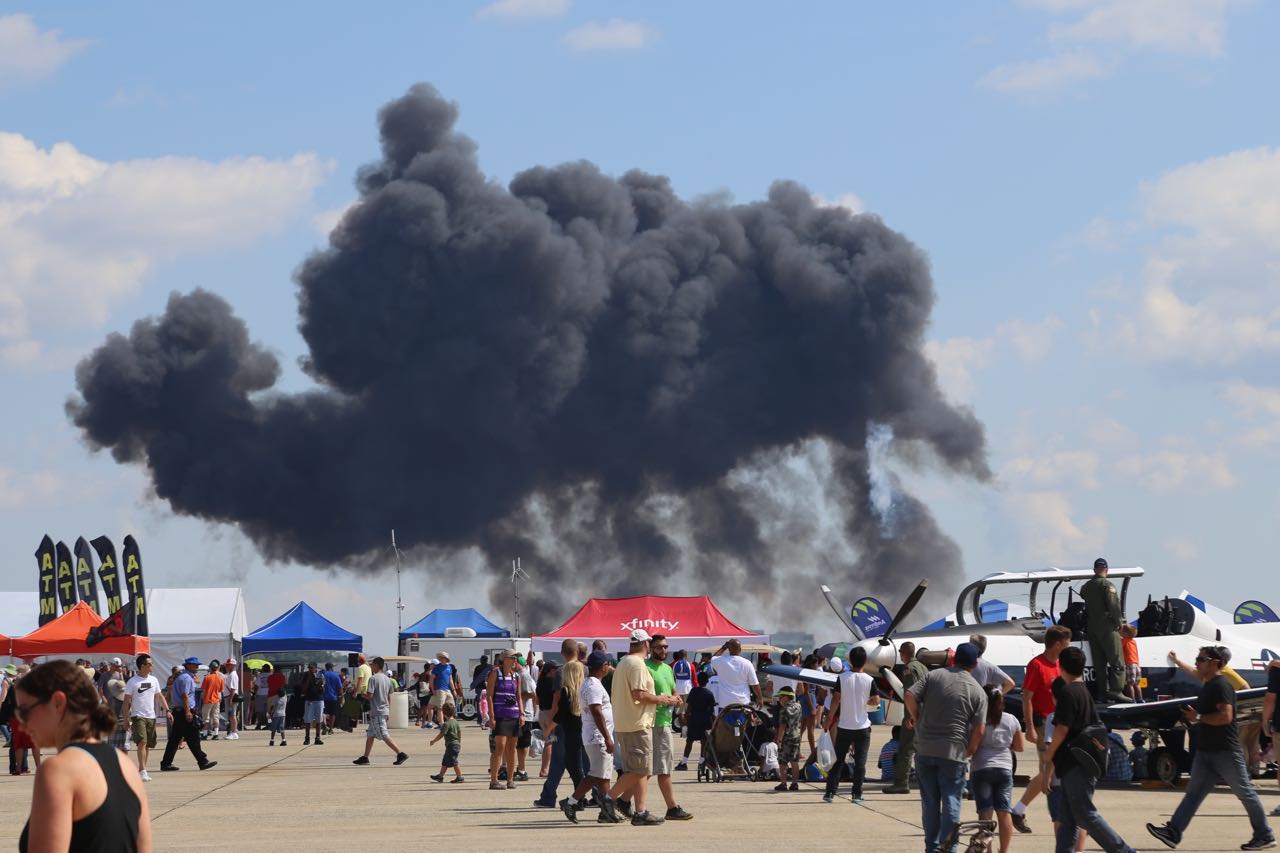
I went to the Joint Base Andrews Air Show today. It was awesome. There were lots of planes to view on the ground, but unfortunately you couldn’t enter all of them. Then there were incredible air shows demonstrations and acts in the air, appropriately. My only criticism is that the air show was already going to be causing air pollution because, well, planes, but then there was smoke that just seemed to be gratuitous air pollution cause by things on the ground. What can I say, I am an environmental engineer.

F-22 Raptor

F-22 Raptor

P-51 Mustang and F-22 Raptor

P-51 Mustang and F-22 Raptor

P-51 Mustang and F-22 Raptor

P-51 Mustang and F-22 Raptor

KC-135

KC-135

KC-135

KC-135

Trojan Horsemen

Trojan Horsemen

USAF Thunderbirds

USAF Thunderbirds

USAF Thunderbirds

USAF Thunderbirds

USAF Thunderbirds

USAF Thunderbirds

USAF Thunderbirds

USAF Thunderbirds

USAF Thunderbirds

USAF Thunderbirds

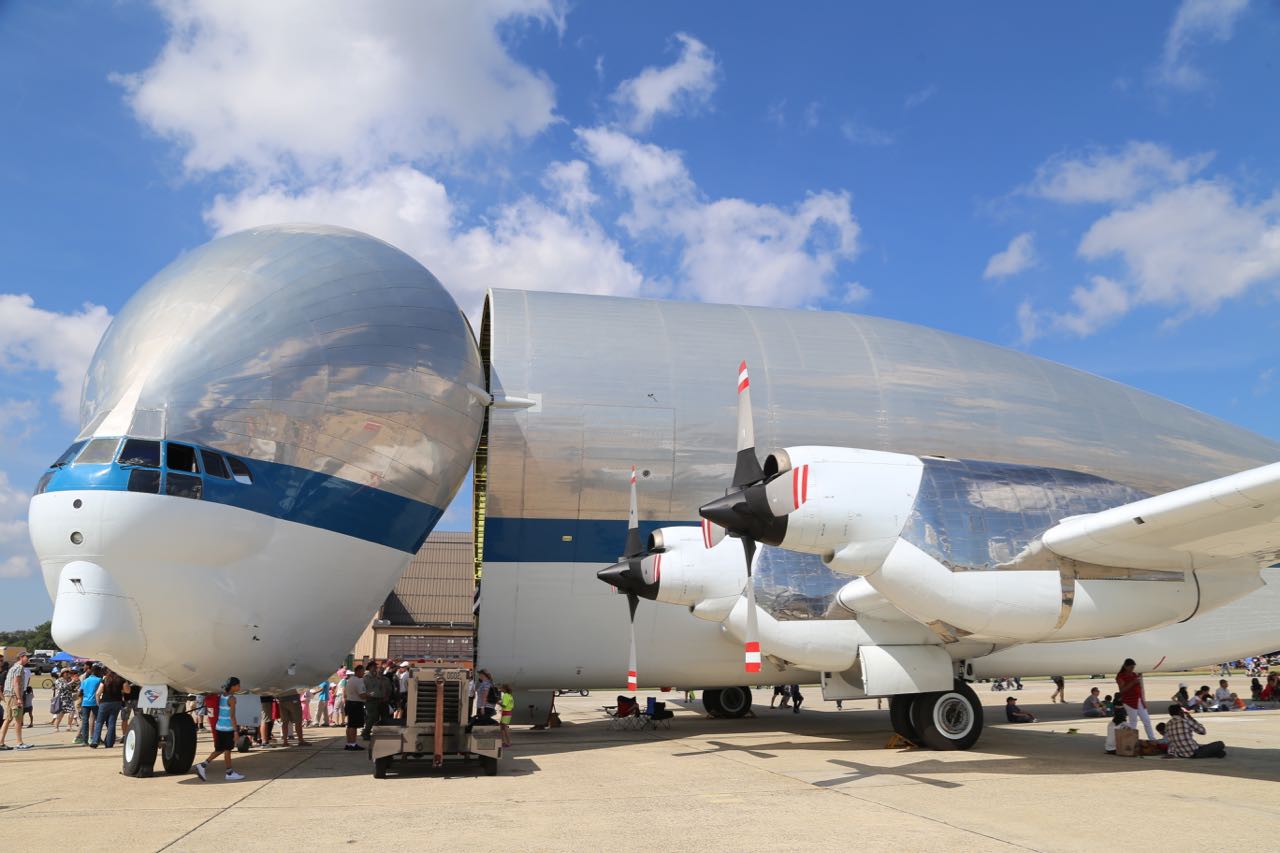
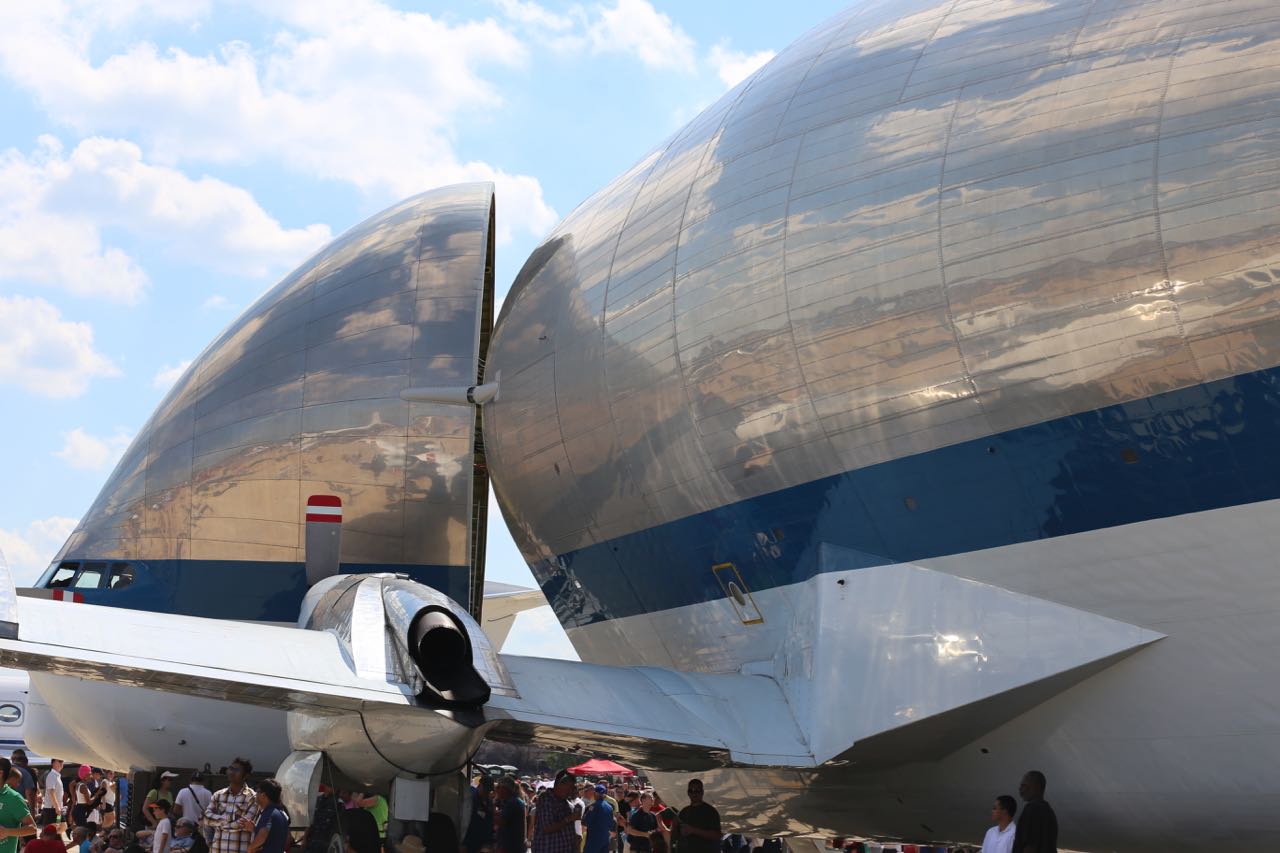
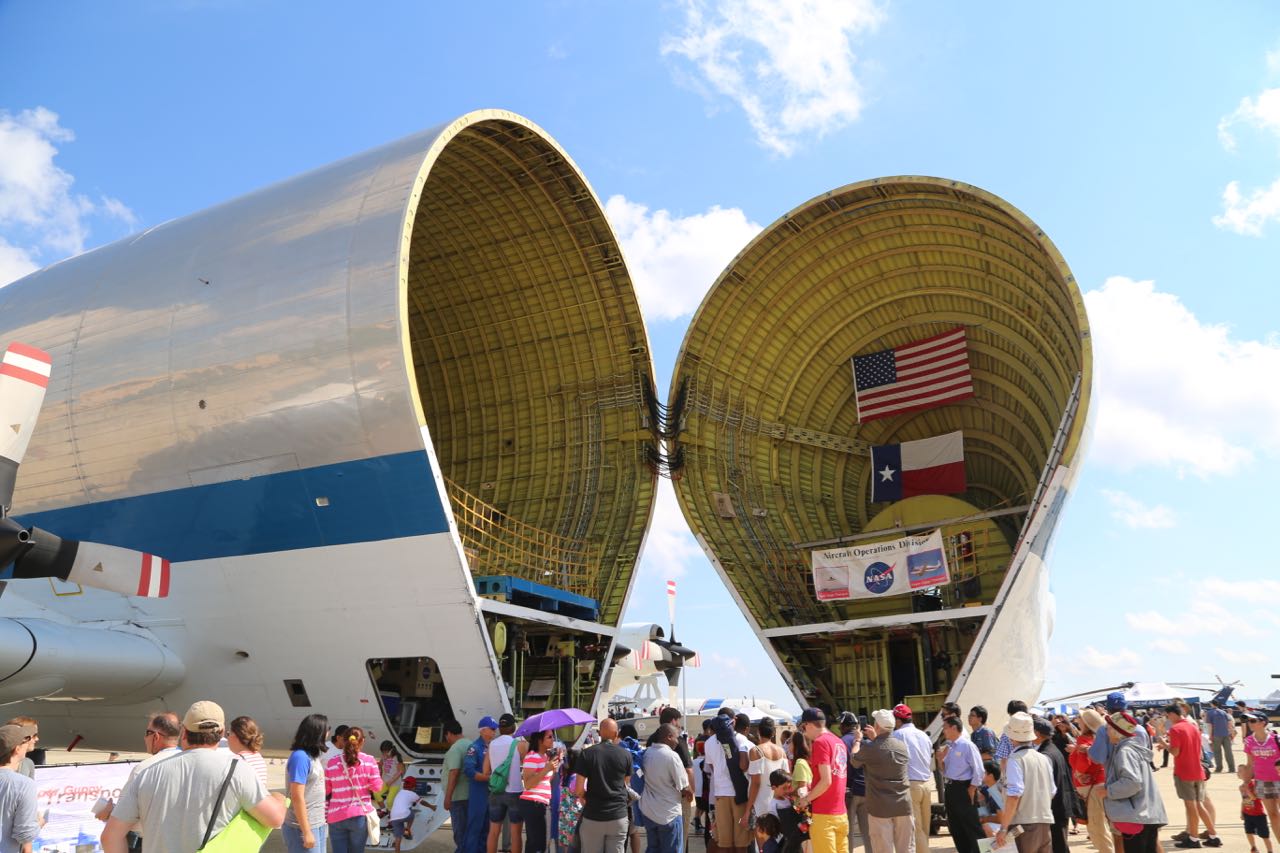
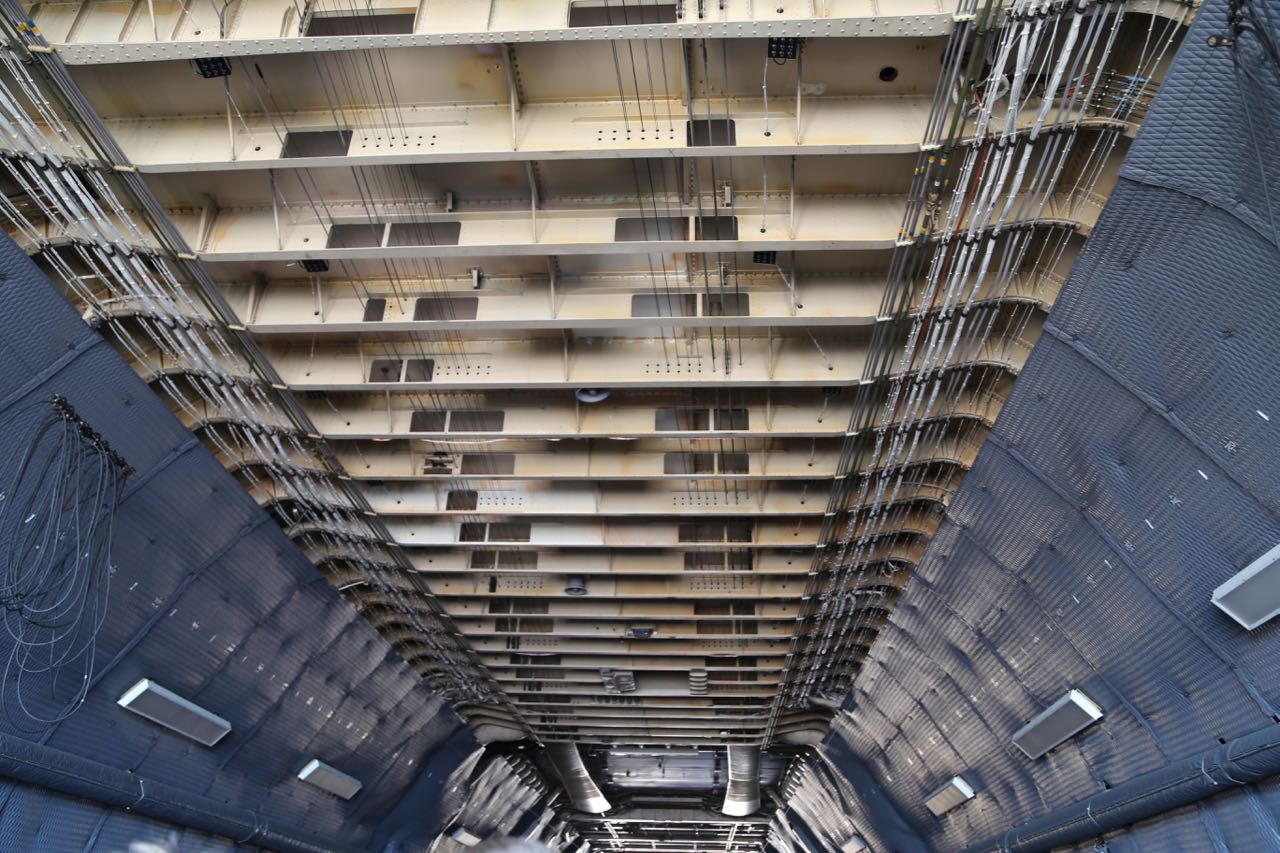
NASA Super Guppy

NASA Super Guppy

NASA Super Guppy

NASA Super Guppy

NASA Super Guppy

NASA Super Guppy

C-5

C-5

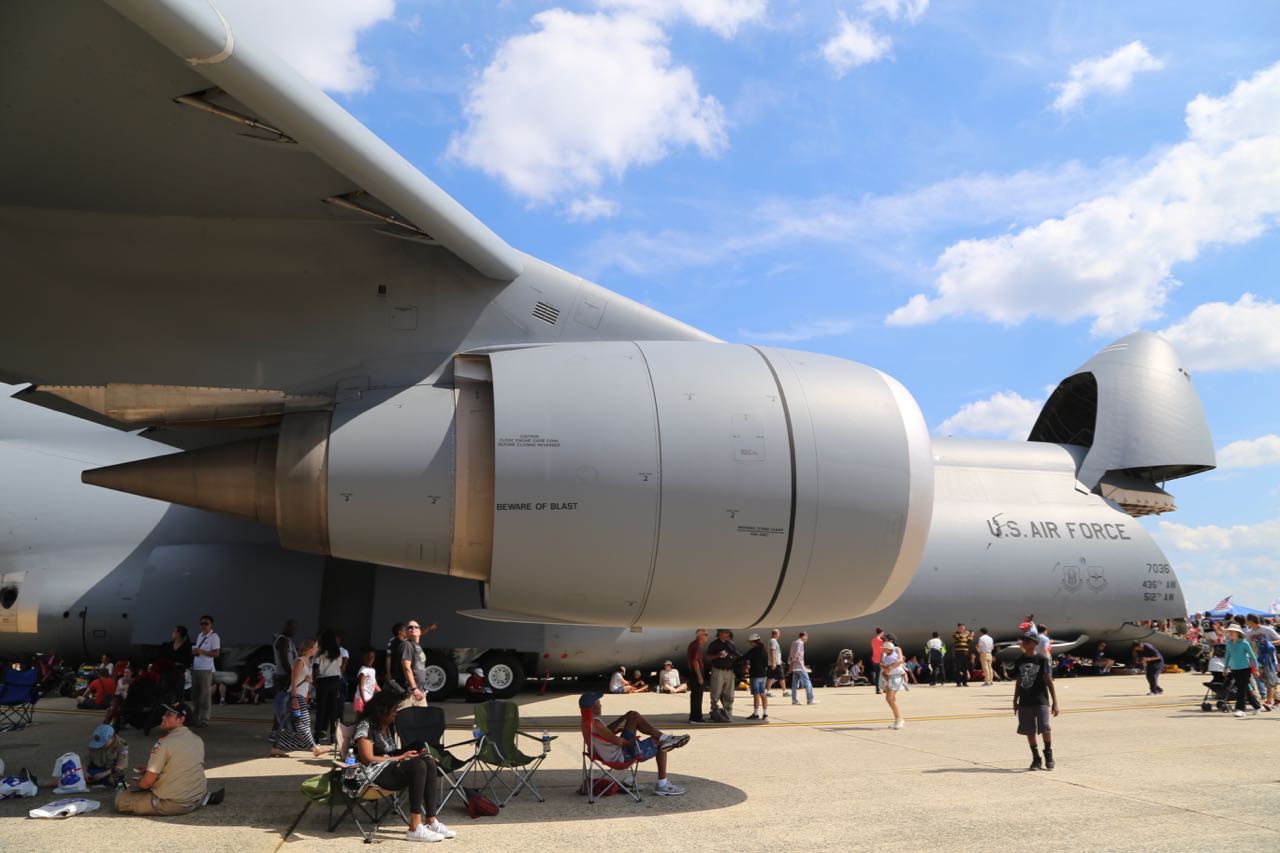
C-5, with the most insane warning on the side of the engine "Beware of Blast", I mean do really need to be warned of that?

C-5, with the most insane warning on the side of the engine “Beware of Blast”, I mean do really need to be warned of that?

C-5

C-5

DHS P-3AEW&C

DHS P-3AEW&C

Gratuitous air pollution

Gratuitous air pollution

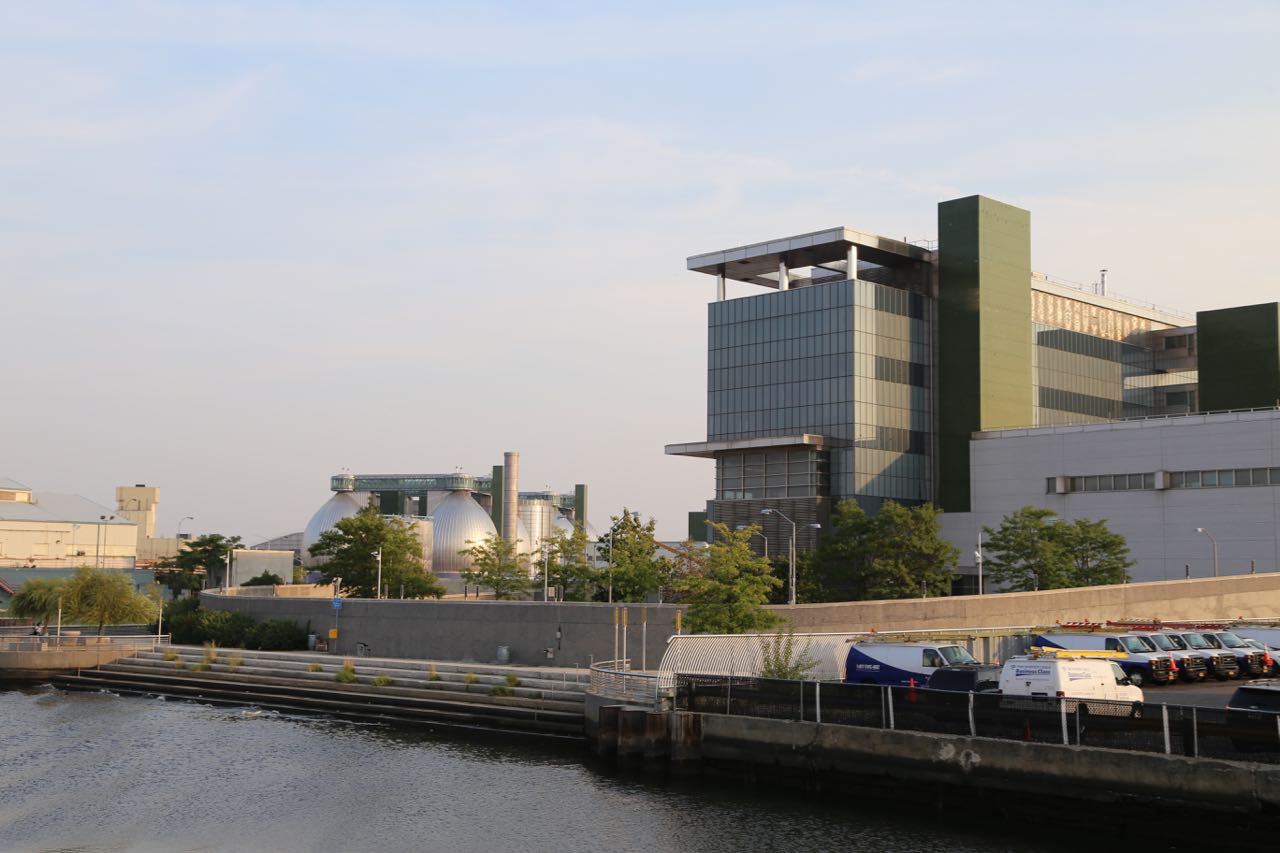
Newtown Creek

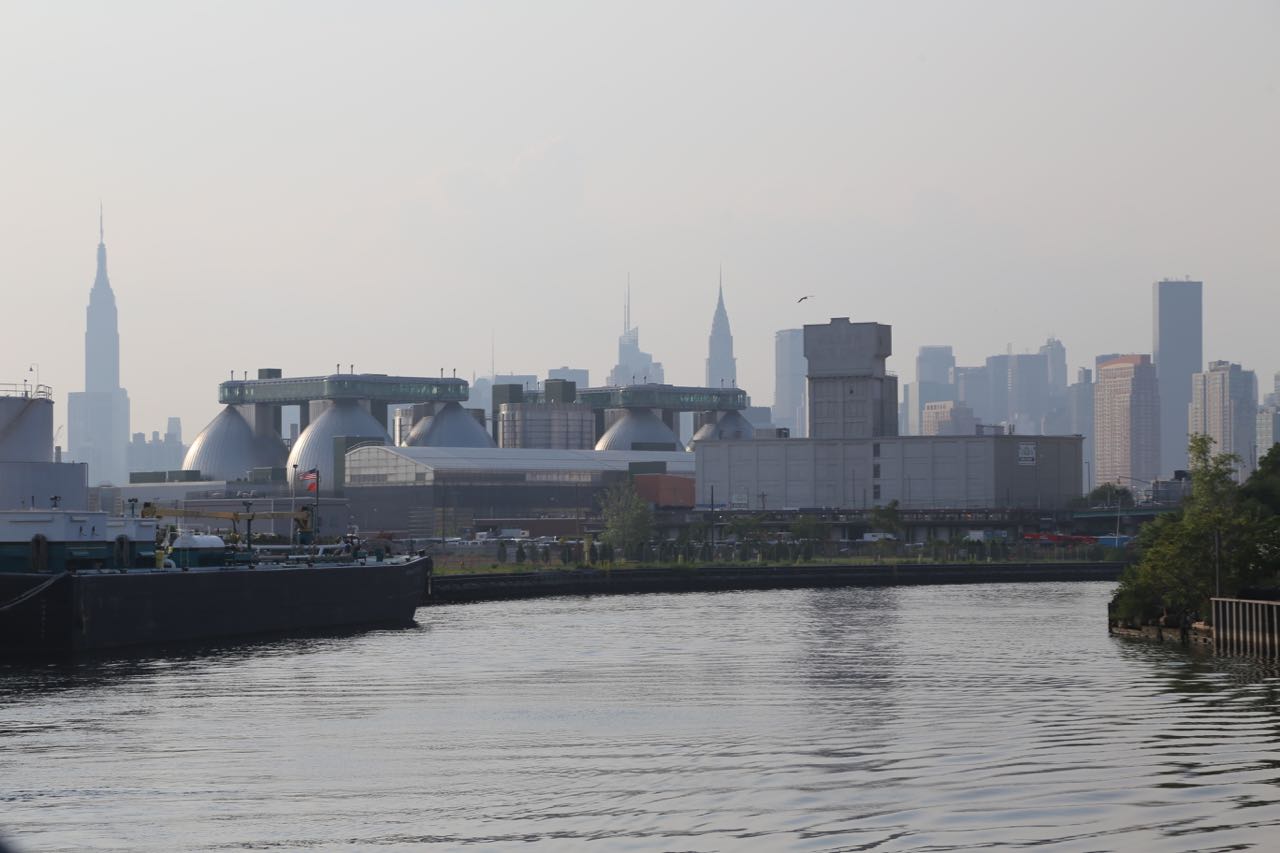
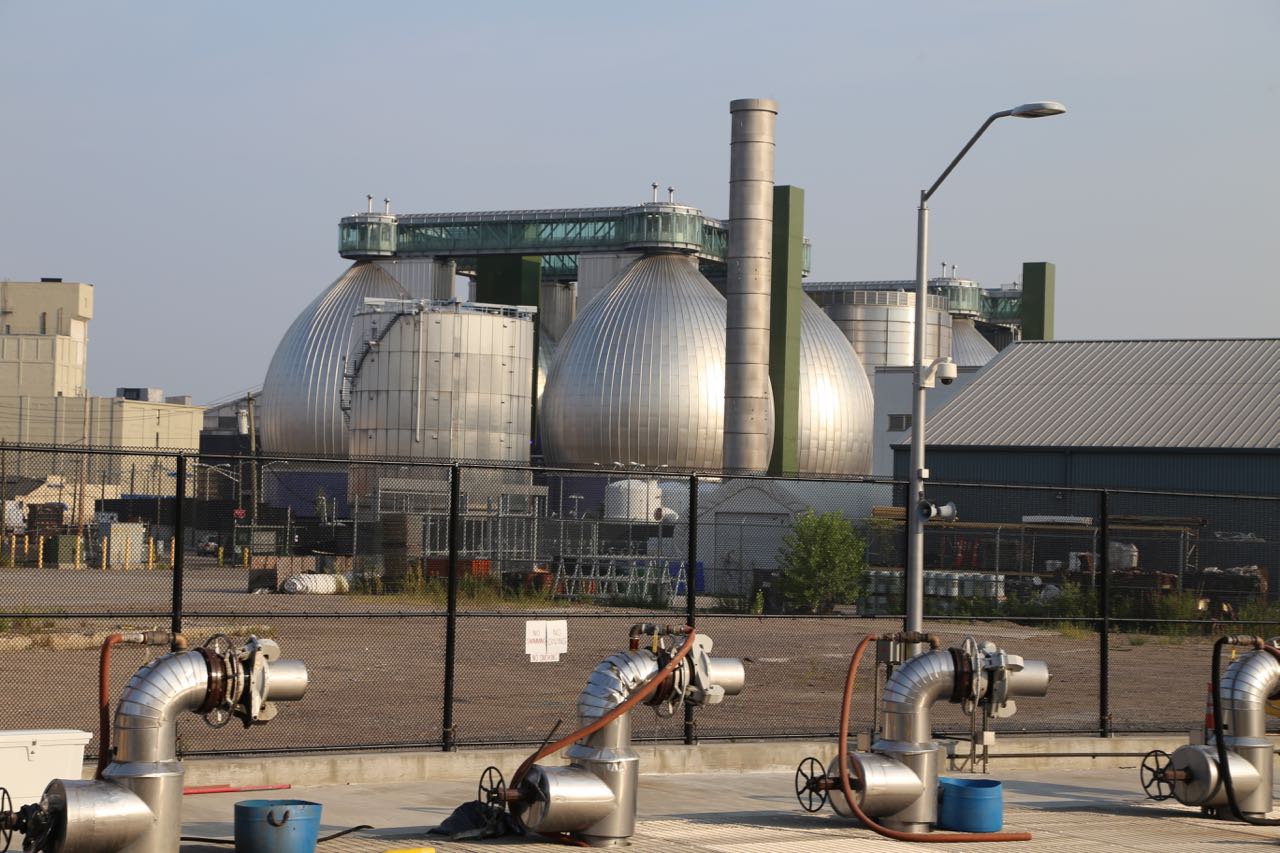
Manhattan skyline behind Newtown Creek Wastewater Treatment Plant

Manhattan skyline behind Newtown Creek Wastewater Treatment Plant

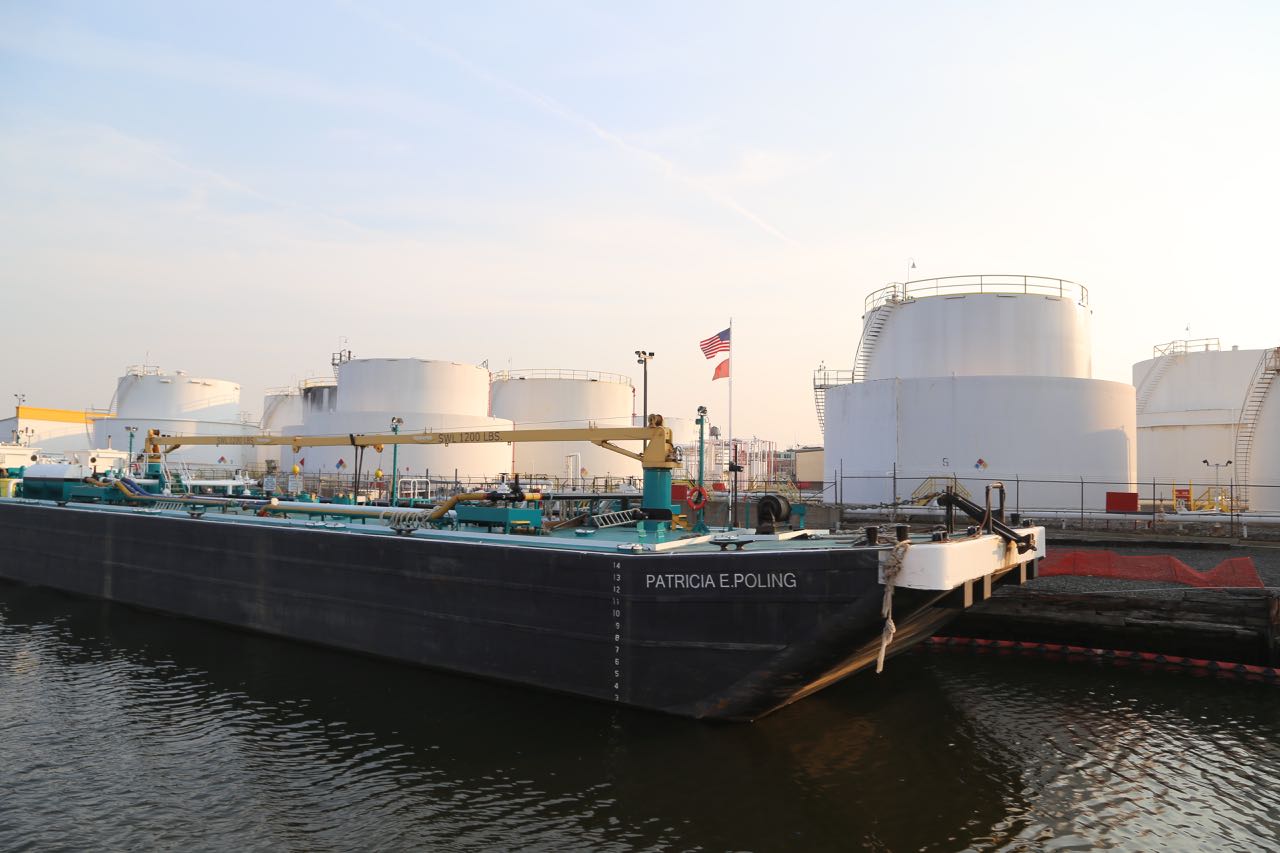
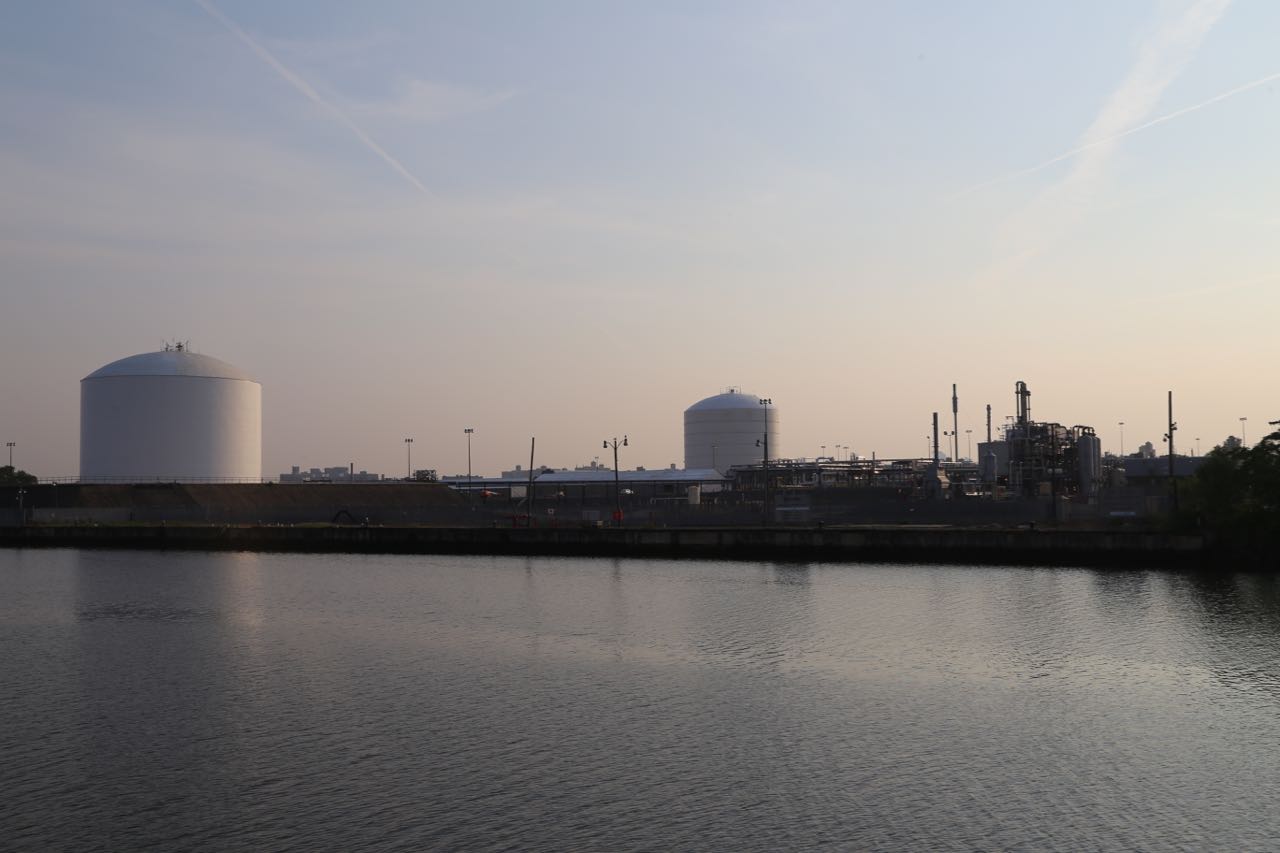
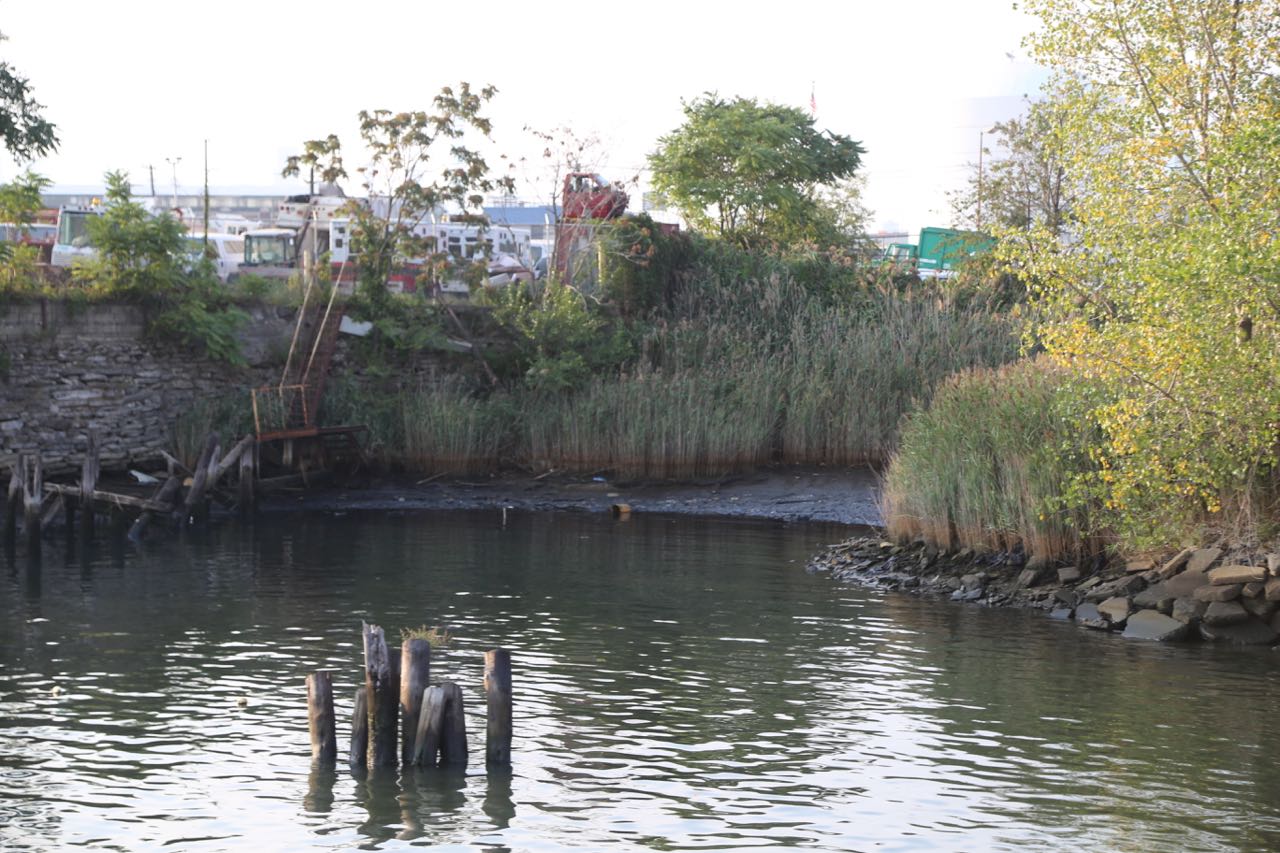
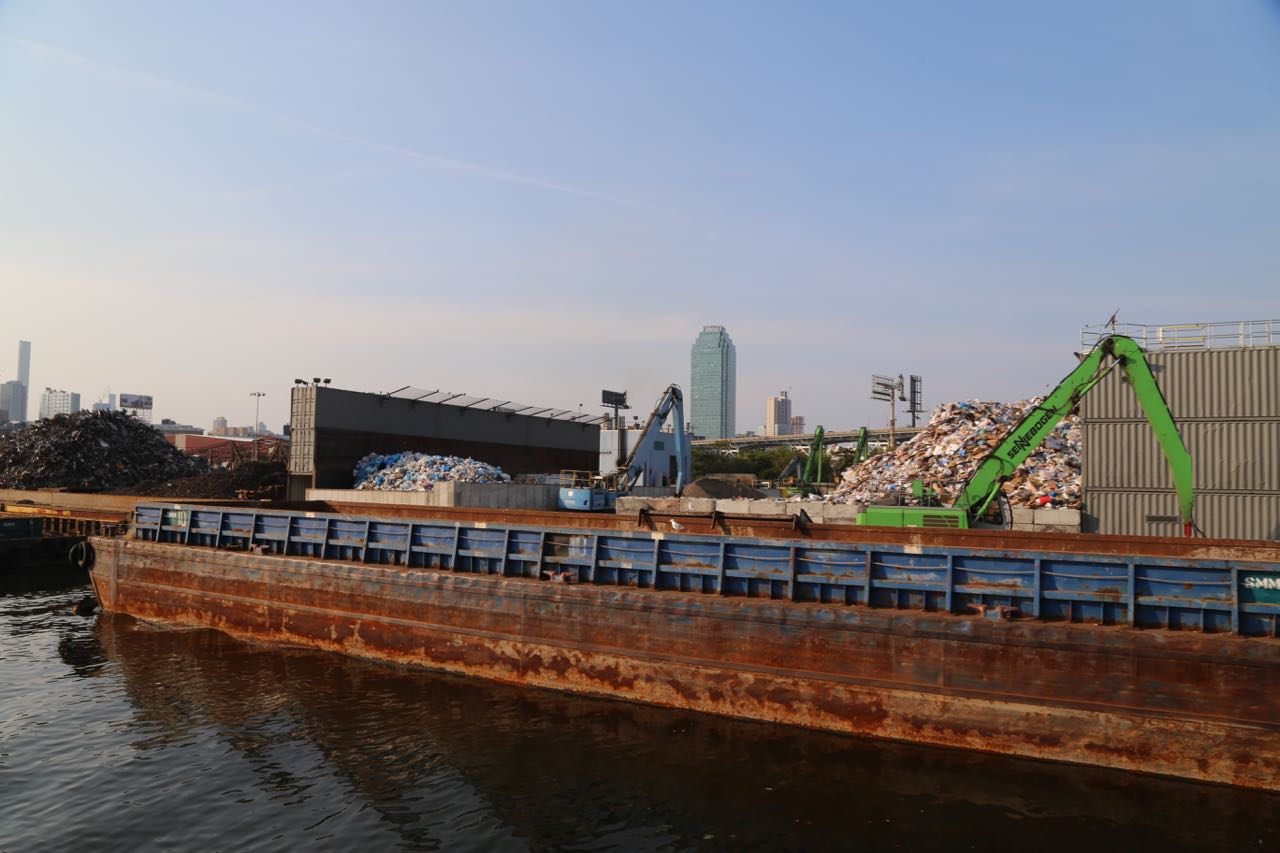
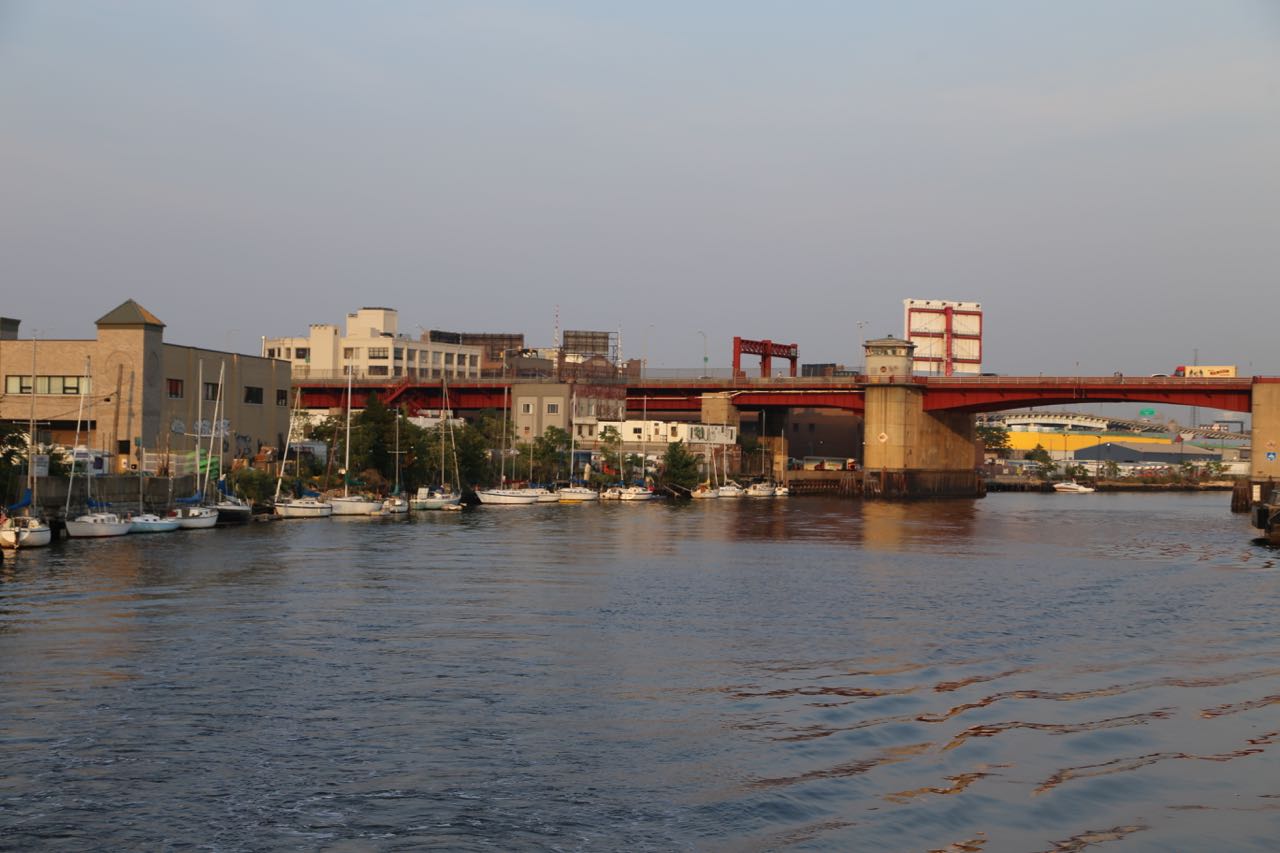
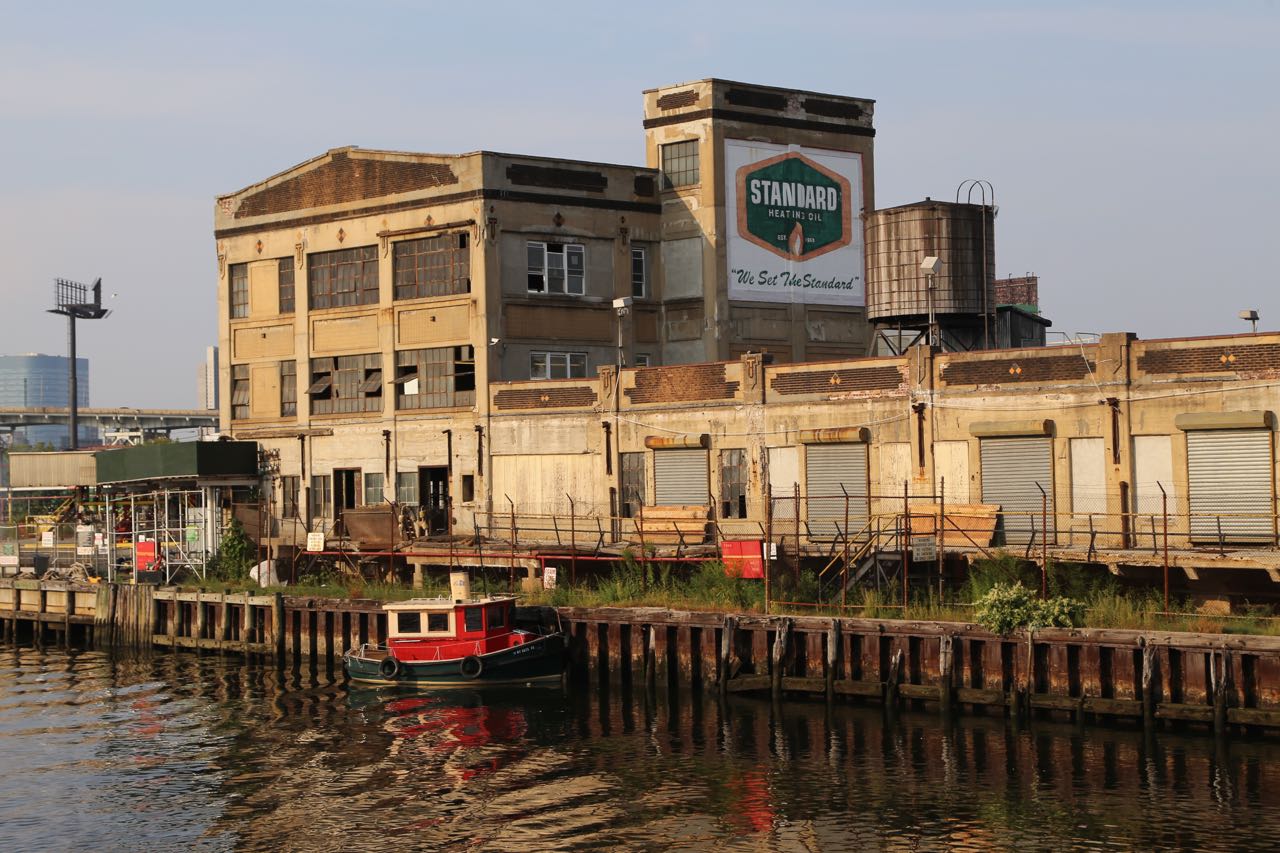
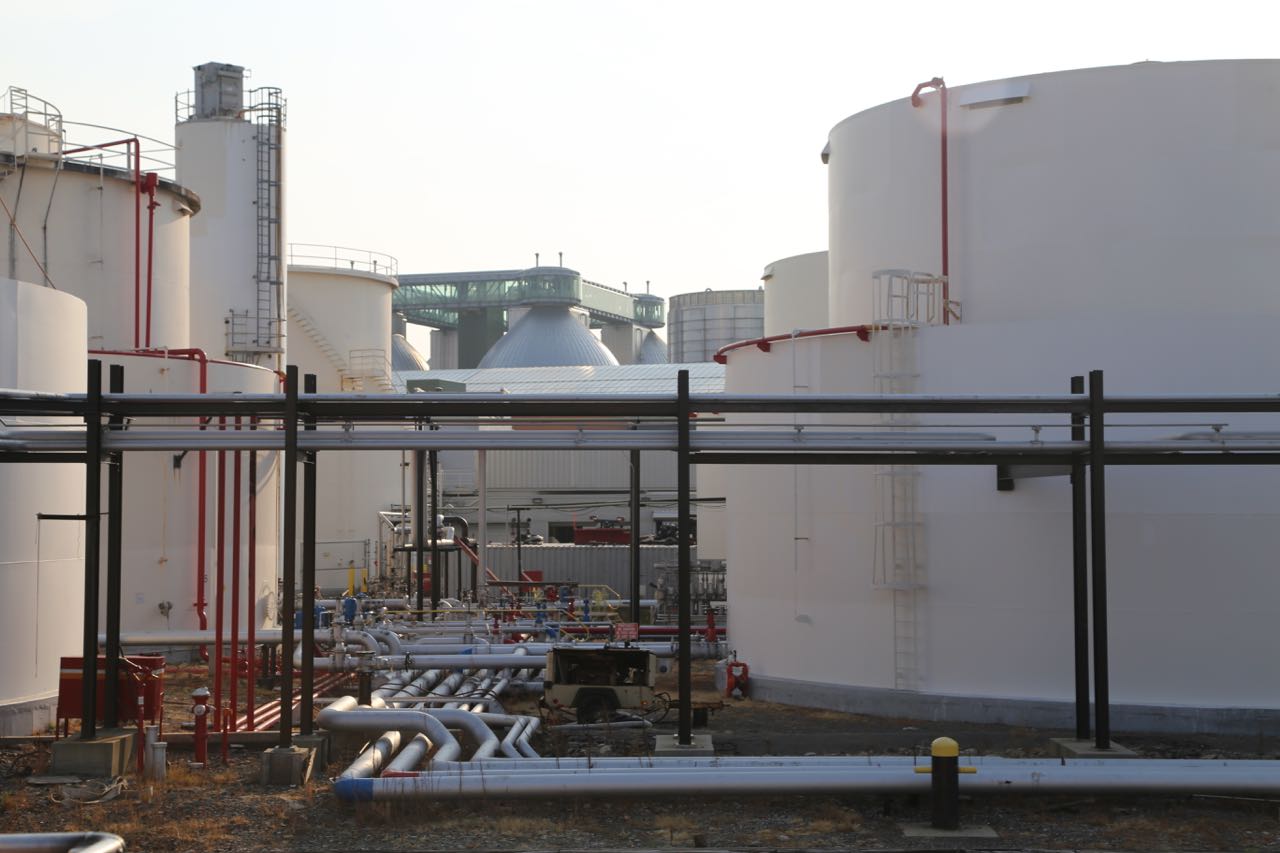
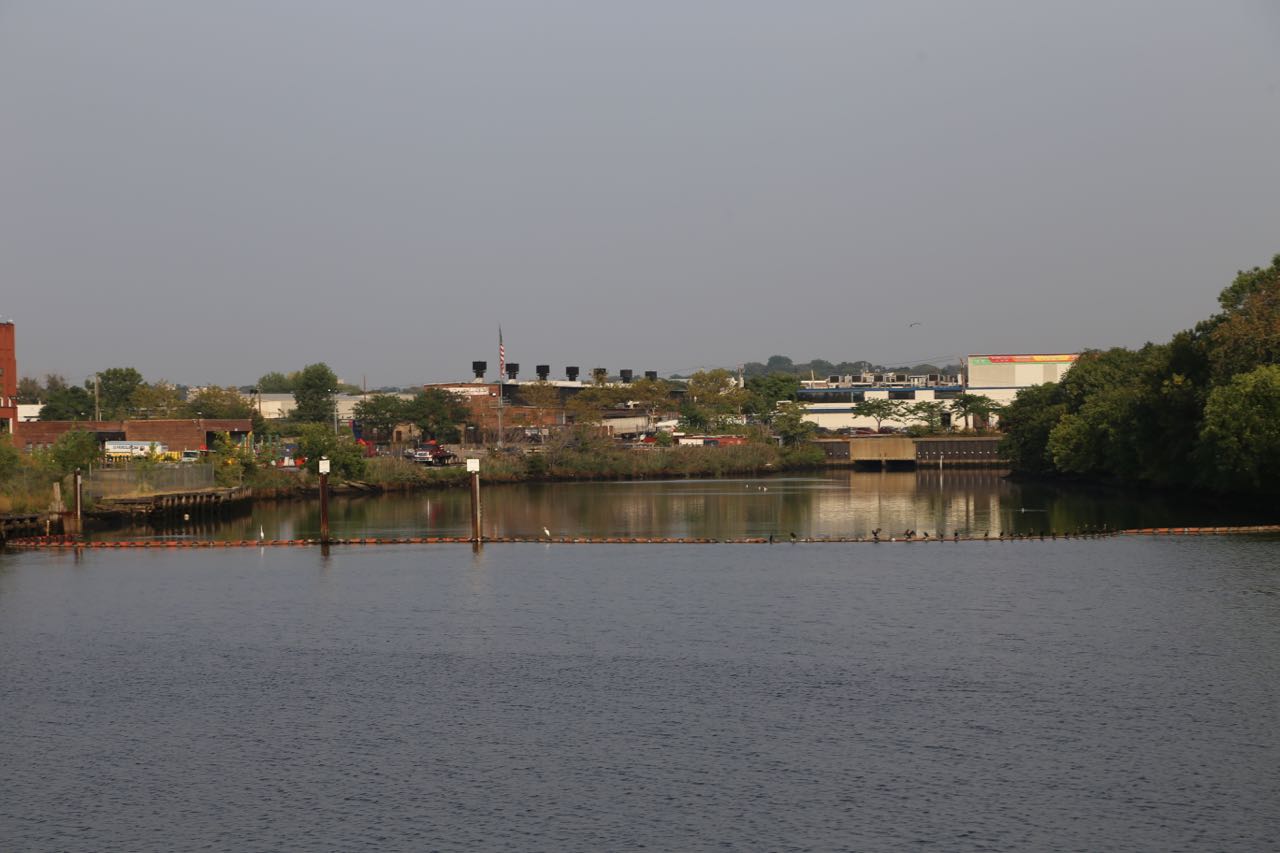
Newtown Creek is a natural creek that now resembles more of an industrial waterway and serves as a divider between Brooklyn and Queens in New York. I recently got a boat tour of it through Open House NY with superb guides from Newtown Creek Alliance and was able to see all the industrial facilities that are on it as well as a few places where its natural state is peaking through. Newtown Creek is heavily polluted because of New York City’s combined sanitary wastewater and stormwater system, which has led to untreated wastewater flowing into the creek during heavy rain events, and also industrial pollution, which has led to it being a Superfund site. A trip down Newtown Creek is almost history lesson down NYC’s past with some historic sites still visible like an old Standard Oil building. More modern parts of NYC also lie on the creek, most famously the newly redesigned and rebuilt Newtown Creek Wastewater Treatment Plant and its eight stainless steel digester eggs.

Brooklyn Queens Expressway

Brooklyn Queens Expressway

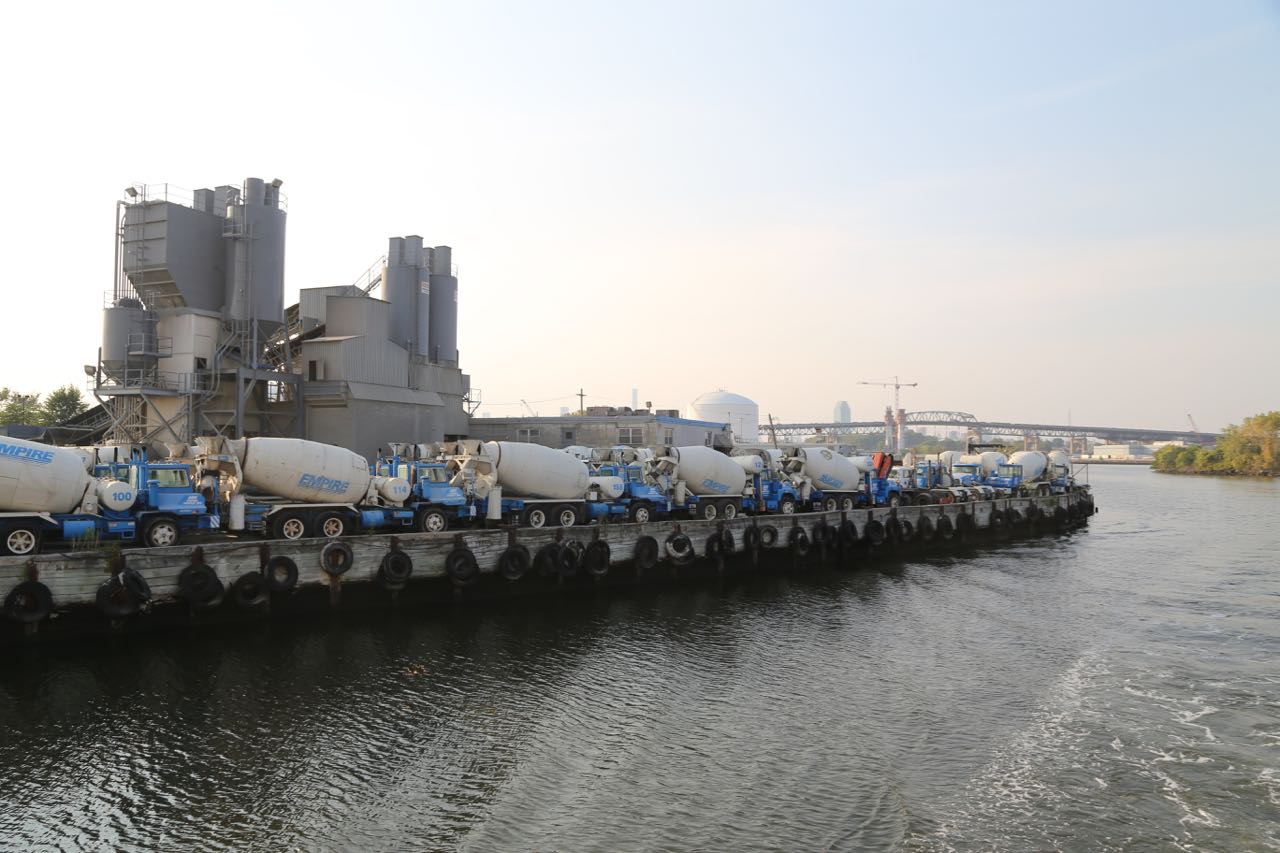
cement plant

cement plant

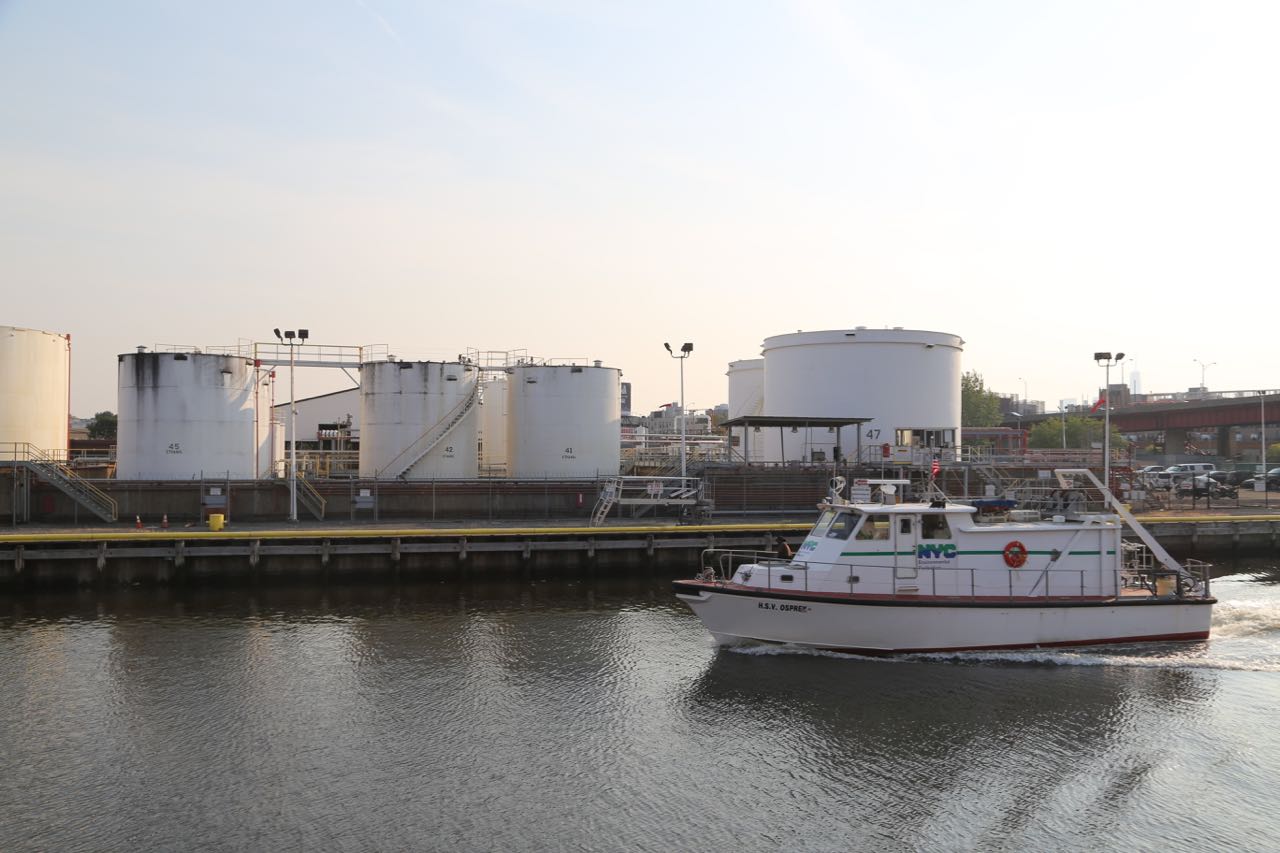
DEP boat

DEP boat

Newtown Creek Wastewater Treatment Plant and DEP offices

Newtown Creek Wastewater Treatment Plant and DEP offices

Fuel tanks and barge

Fuel tanks and barge

LPG (or possibly methane) tanks

LPG (or possibly methane) tanks

mud flats

mud flats

Recycling facility

Recycling facility

Sailboats at entrance to Newtown Creek

Sailboats at entrance to Newtown Creek

old Standard Oil facility

old Standard Oil facility

swing bridge

swing bridge

Tanks

Tanks

Newtown Creek Wastewater Treatment Plant

Newtown Creek Wastewater Treatment Plant

Sewage outfall with birds on boom line

Sewage outfall with birds on boom line