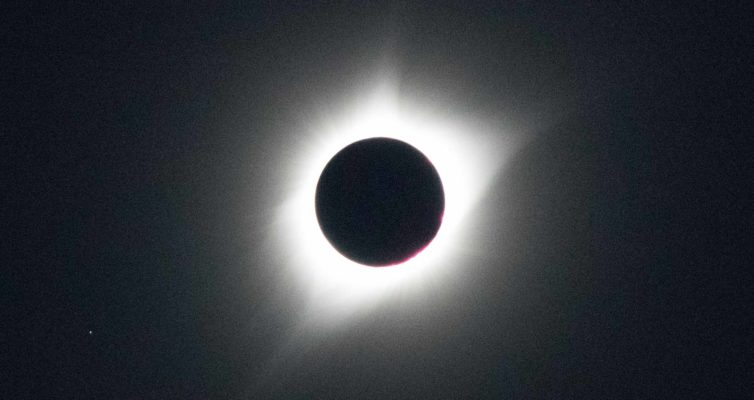
Solar Eclipse
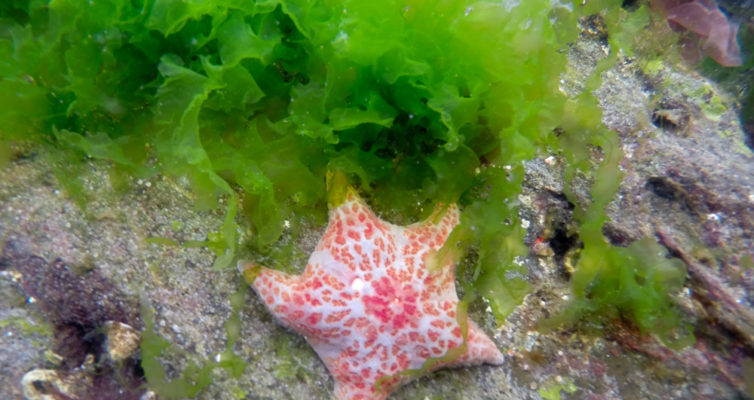
Snorkeling in Alaska
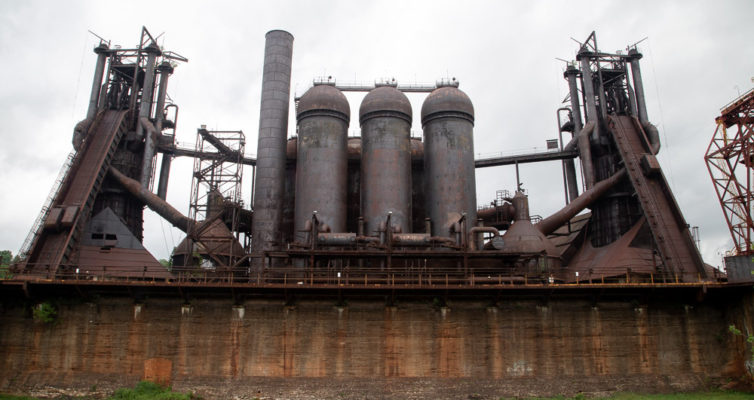
Carrie Blast Furnaces
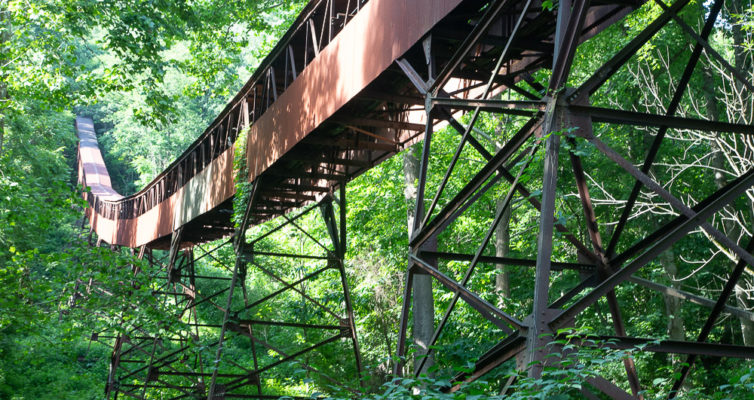
Nuttallburg
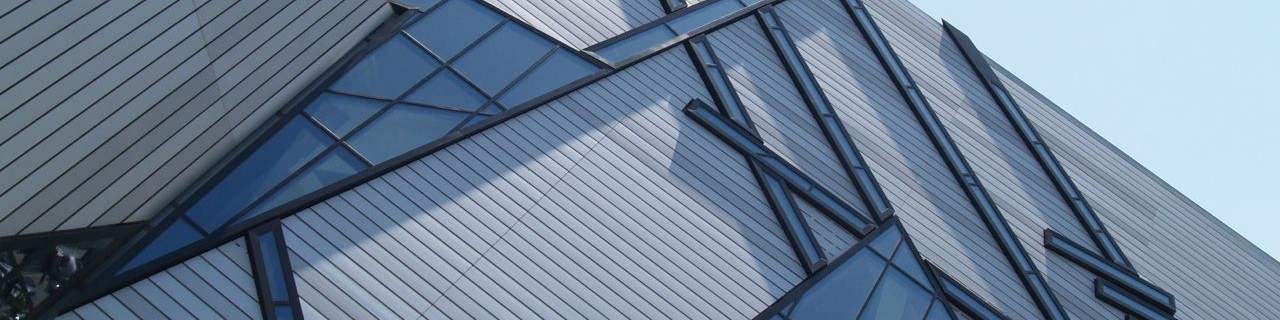
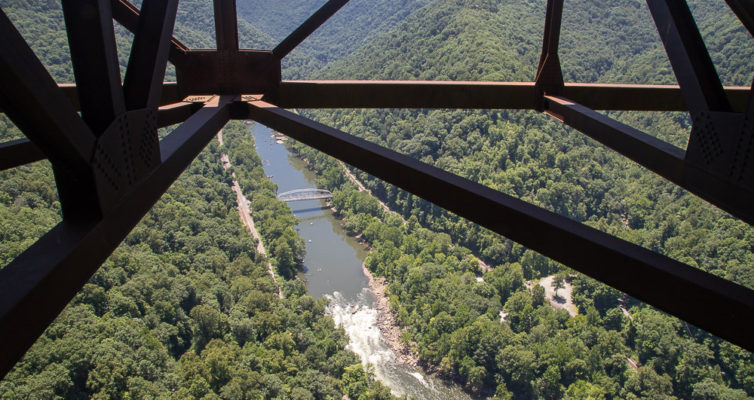
Bridge Walk

Sampling Fish

Recently for work I got to help out in the field taking samples to quantify environmental contamination. Some of the samples we were taking were fish tissue to measure the levels of polychlorinated biphenyls (PCB) in them. The fish live in a river that was contaminated decades ago. The sampling results will be used for fish advisories and also to determine a clean up plan.

Sampling fish starts with the really fun part, which is cruising on a small electrofishing boat. Electroshocking the fish allows you to catch them alive and throw back any fish we didn’t want. We had target fish we were trying to catch to sample, and those were the only ones we kept, and we only the number of target fish we needed. The electroshock sort of stuns the fish but doesn’t kill them. The electrofishing boat has two long poles with anode wires hanging off of them protruding from the front of the boat. There were more wires hanging from the bow of the boat, and those are the cathodes. The electricity flows from the anodes to the cathodes. We stood at the front of the boat in rubber soled boots with nets extended waiting to catch any fish stunned by the electroshocking. Netting electroshocked fish is not actually as easy as it sounds. Some of the fish are more stunned than others, so some fish seem slightly confused but then swim away. Also, some were stunned but at a depth too low or cloudy for us to catch or see. According to the boat’s captain, the water had really low conductivity, which was making it difficult. Since we had target fish we were trying to catch, I, naturally, kept catching fish we didn’t want. I threw a lot of fish back. Still, a day on a boat catching or not catching fish was a wonderful change from the cubical I normally work in. Also, I learned that you really need polarized sunglasses when out on the water.
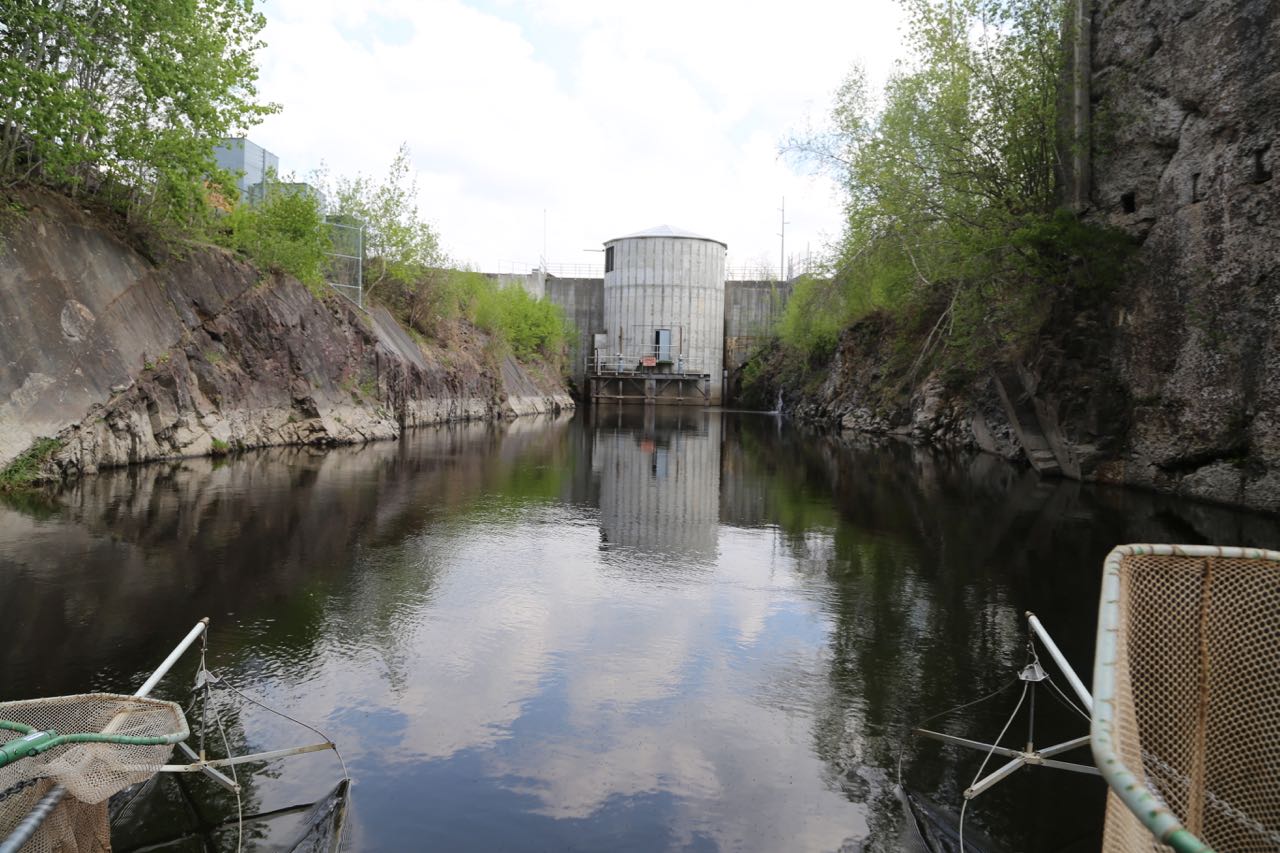
View from the boat with the anodes out in front. Not a bad office.

View from the boat with the anodes out in front and nets at the ready. Not a bad office.
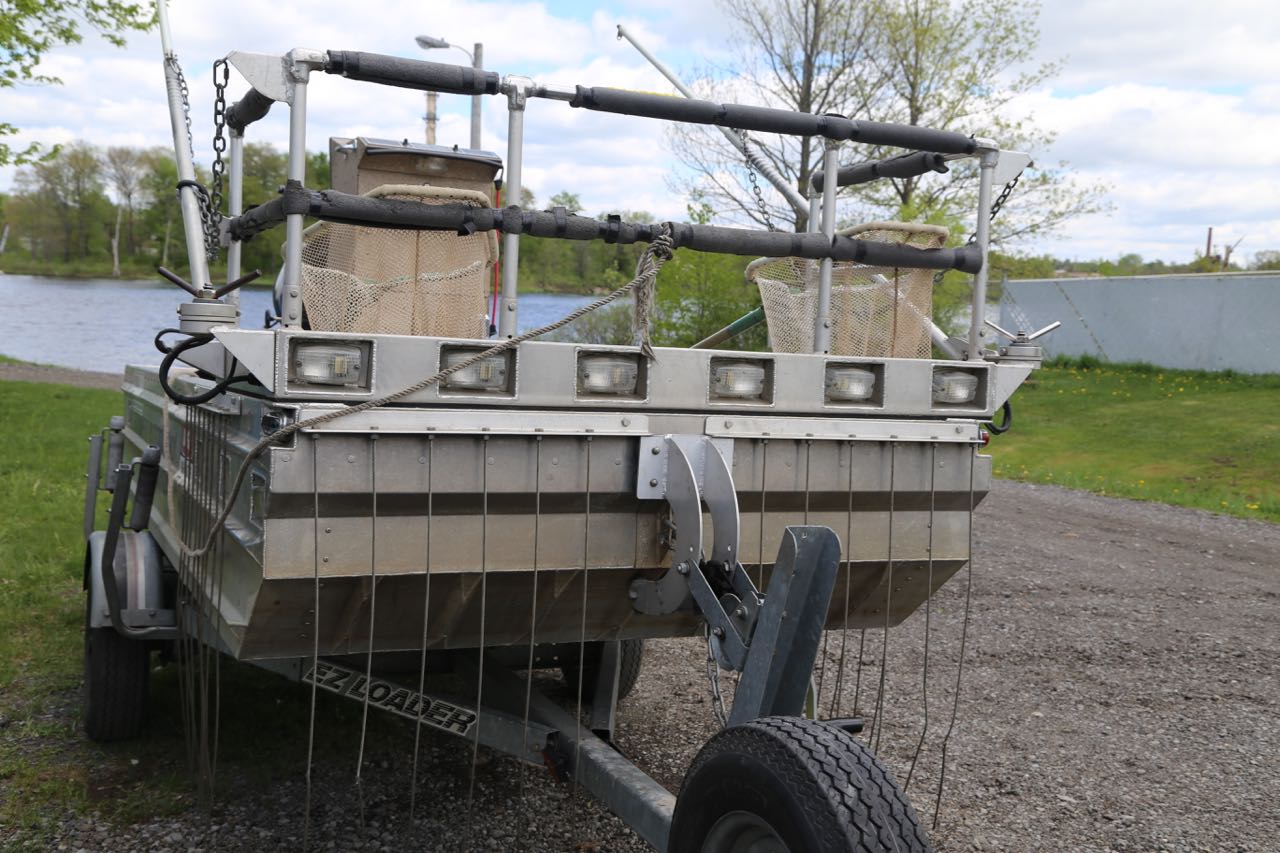
Front of boat, cathode wires hang along bow

Front of boat, cathode wires hang along bow

Anode hangs in front of the boat
Anode hangs in front of the boat

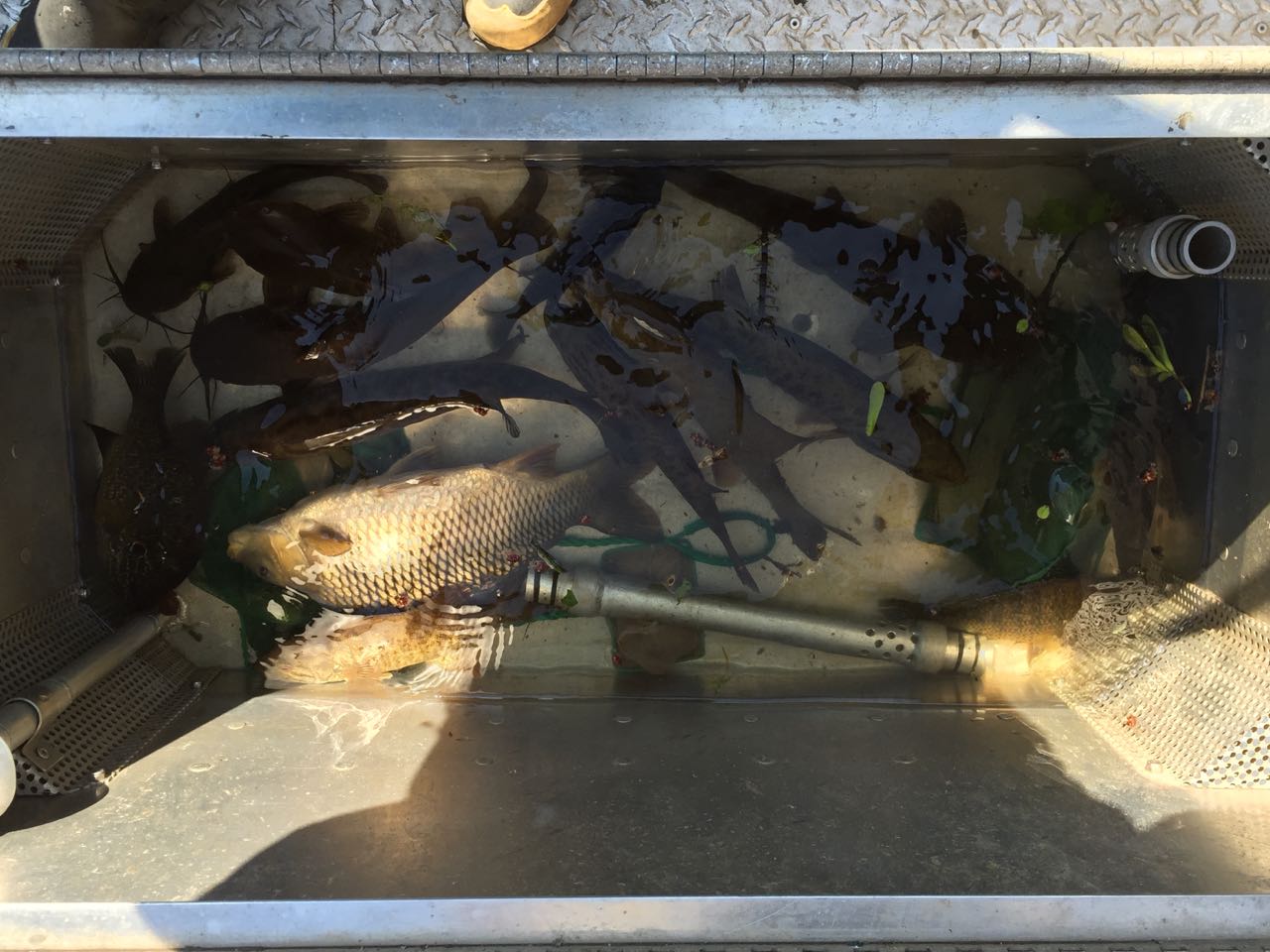
Caught fish in boat's holding tank

Caught fish in boat’s holding tank

Once we got the fish to shore, the biologist took over. The fish were weighed and their length measured. He took a a sample of their scales from a standard location, and those scales were going to be used by a laboratory to determine their age. Evidently scales can be used to age fish in the same manner tree rings age trees. WARNING: If you are uncomfortable looking at the insides of fish, do not read any further. You should probably not eat fish also, if you can’t look at an uncooked one.
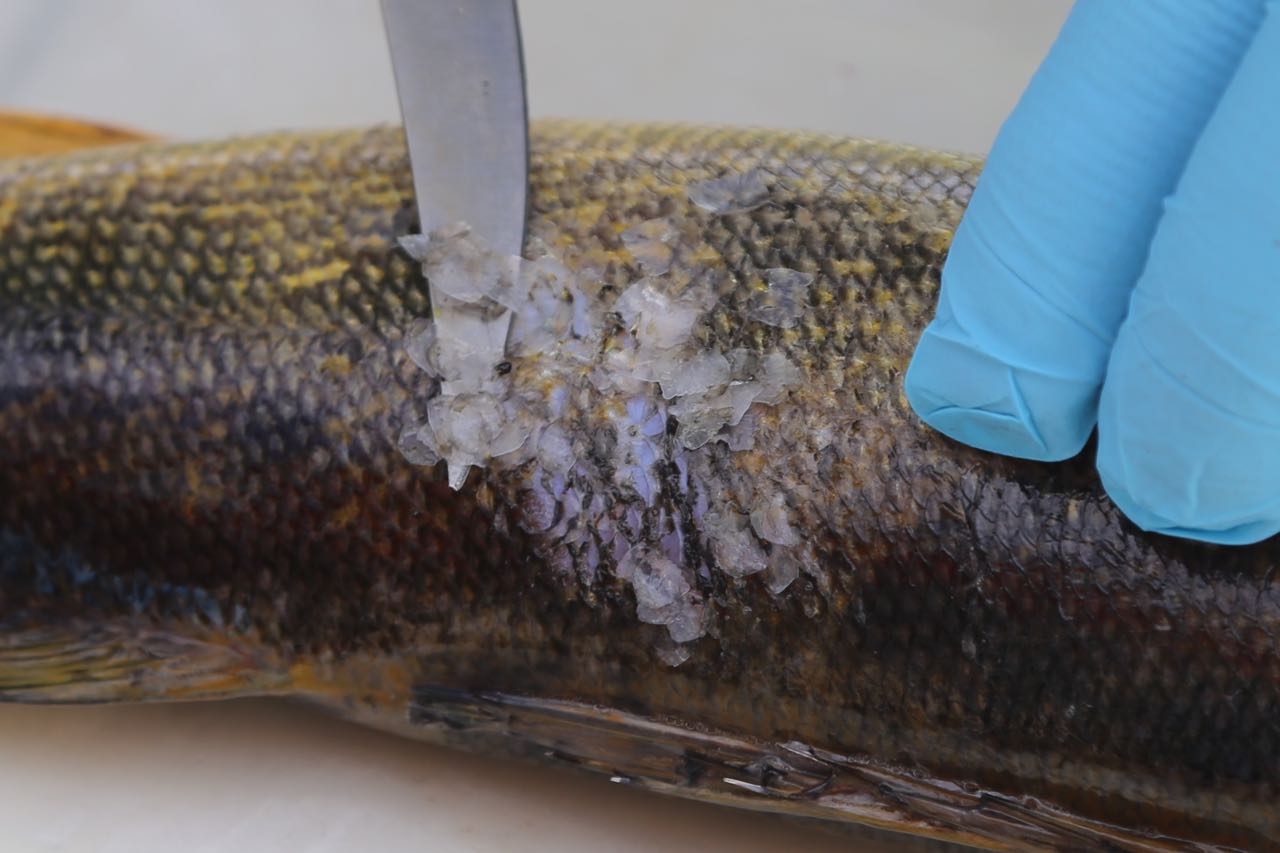
Scrapping scales off fish. Scales are used to age fish.

Scrapping scales off fish. Scales are used to age fish.

The rest of the scales were then scraped off. The fish were then cut. Only the fillets were used for sampling. The part of the fish used for sampling can differ depending on what the exposure pathway being examined is. We took two different parts: the filet, which represents what a human would normally eat, and also the fillet with rib meat. The rib meat is normally not eaten, but it would have more PCBs in it, so using it in the sample would represent a worse case scenario for a human consuming fish.
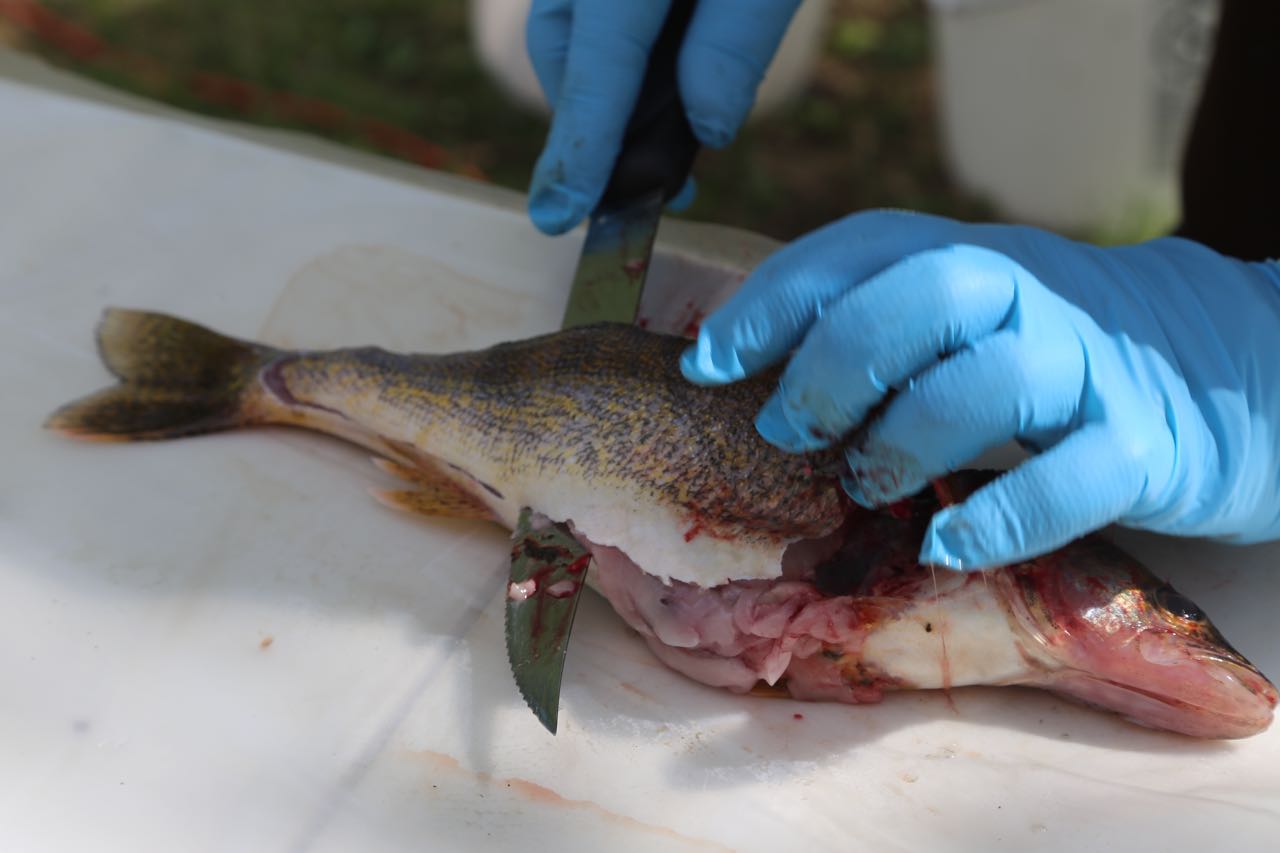
Cutting fish to take the samples
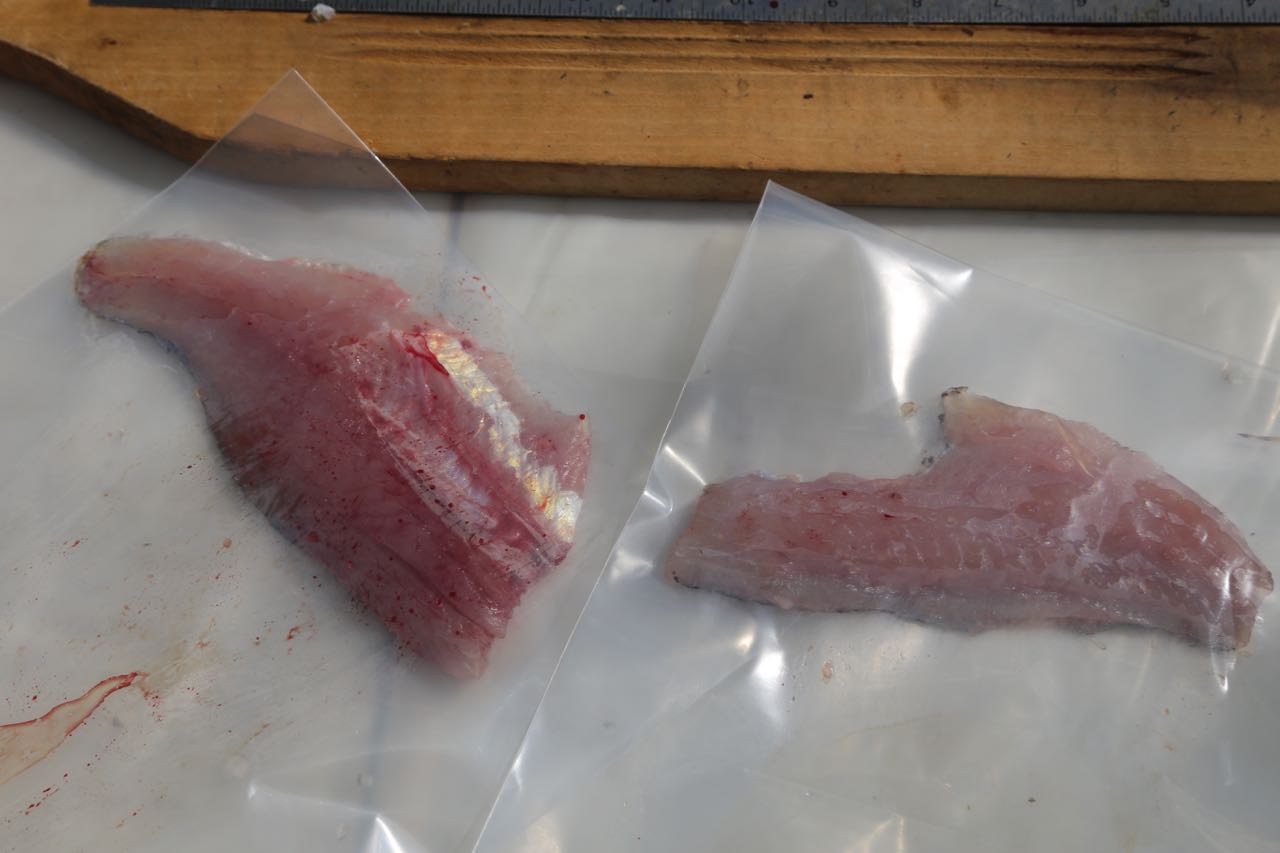
Cutting fish to take the samples

Fish samples ready for lab. Left side fillet also has rib meat. Right side fillet does not.
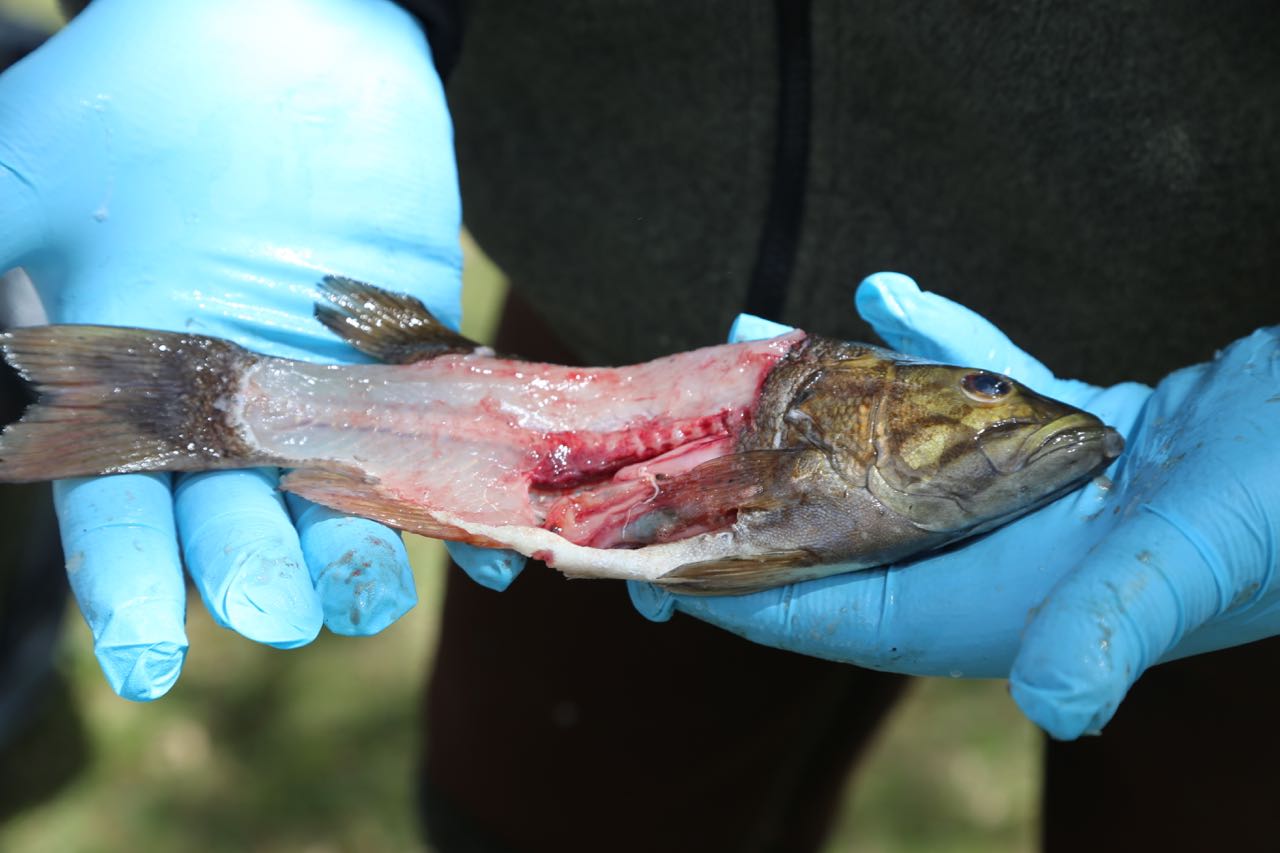
Fish samples ready for lab. Left side fillet also has rib meat. Right side fillet does not.

Fish post fillet and rib sample
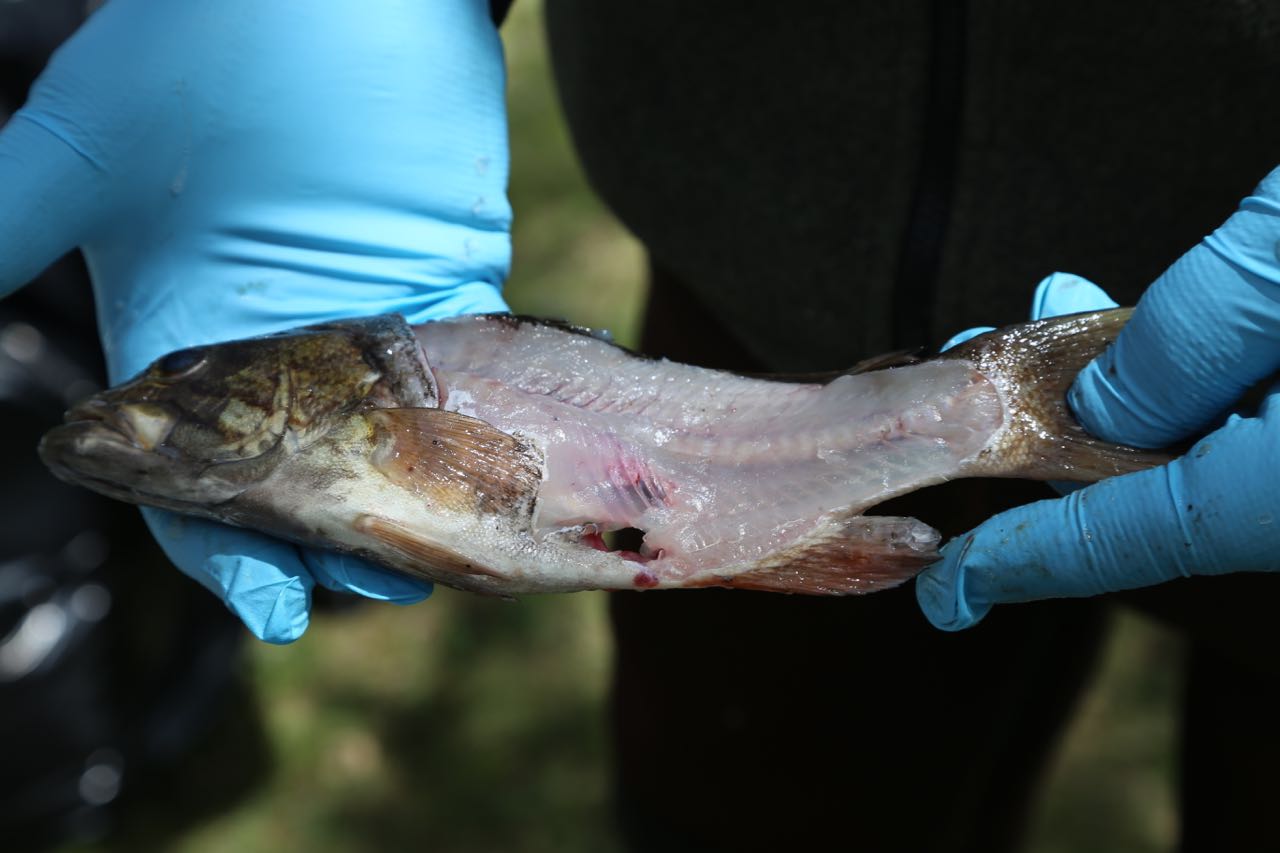
Fish post fillet and rib sample

Fish post fillet sample

Fish post fillet sample

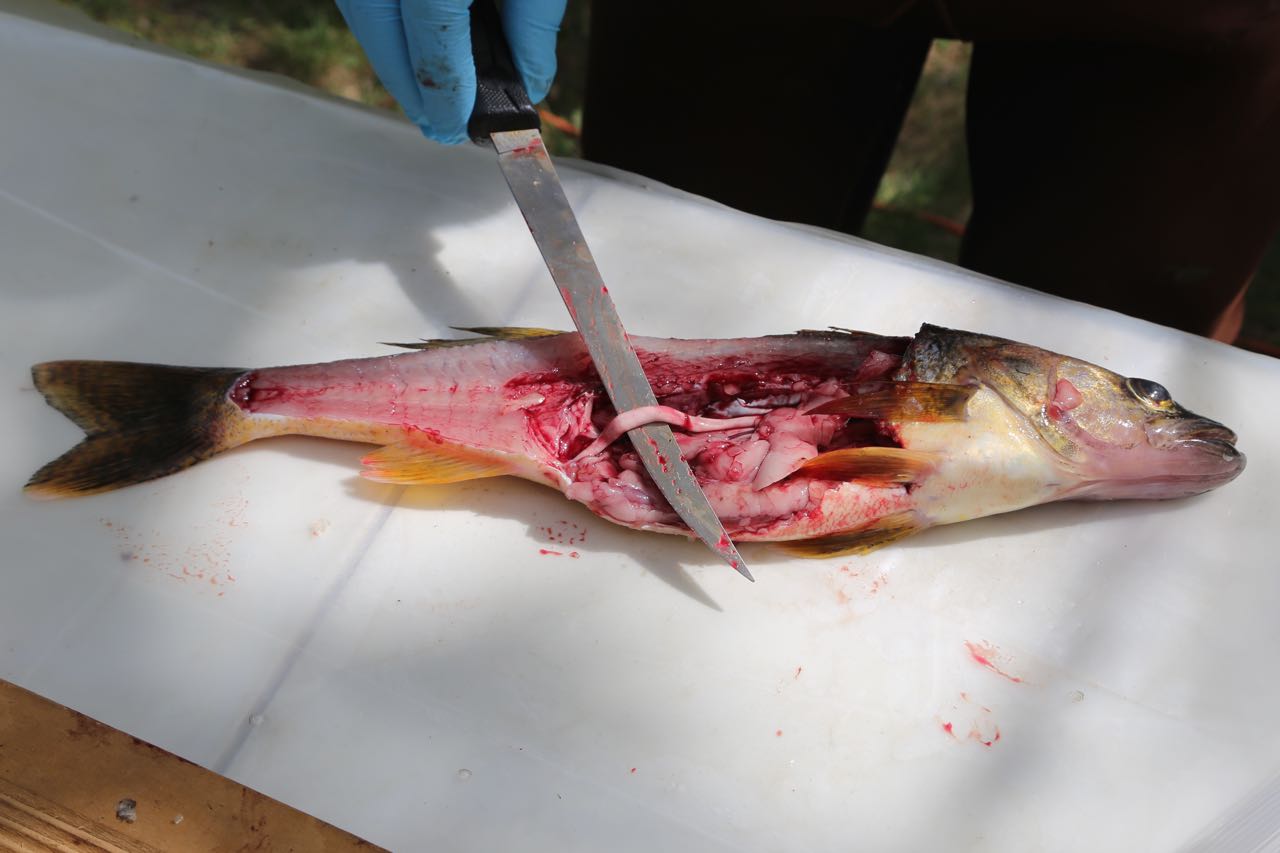
I also learned a bit of fish anatomy during the sampling. The biologist was also sexing the fish.
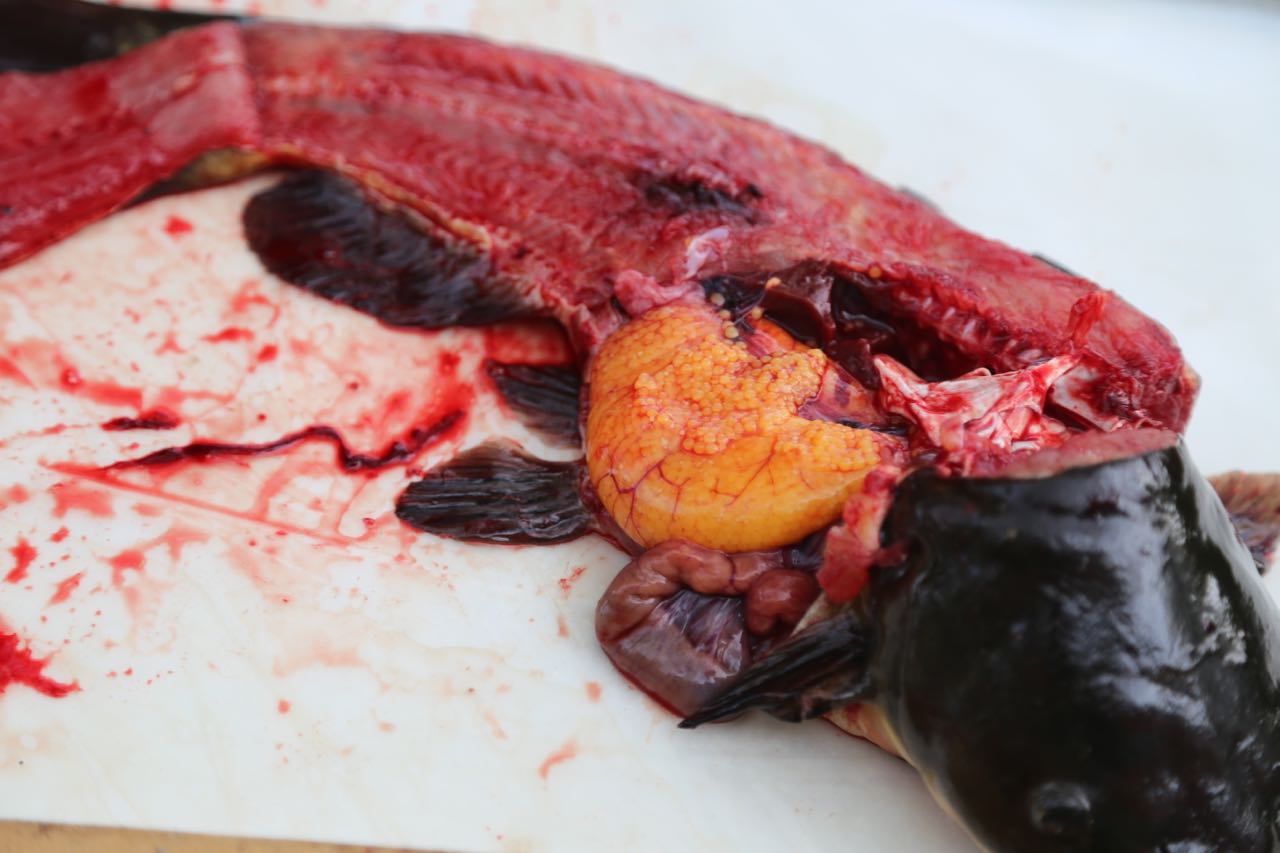
Female brown bullhead fish with orange egg sack
Female brown bullhead fish with orange egg sack

Male fish

Male fish with testes/seminiferous tubules indicated

We weren’t necropsying the fish, but we still got a look inside, including sometimes as to what it had eaten recently.

Fish gastro intestine tract. Eaten food is in stomach.

Fish gastro intestine tract. Eaten food is in stomach.

We sampled quite a few fish, but it was for science and to benefit the community.
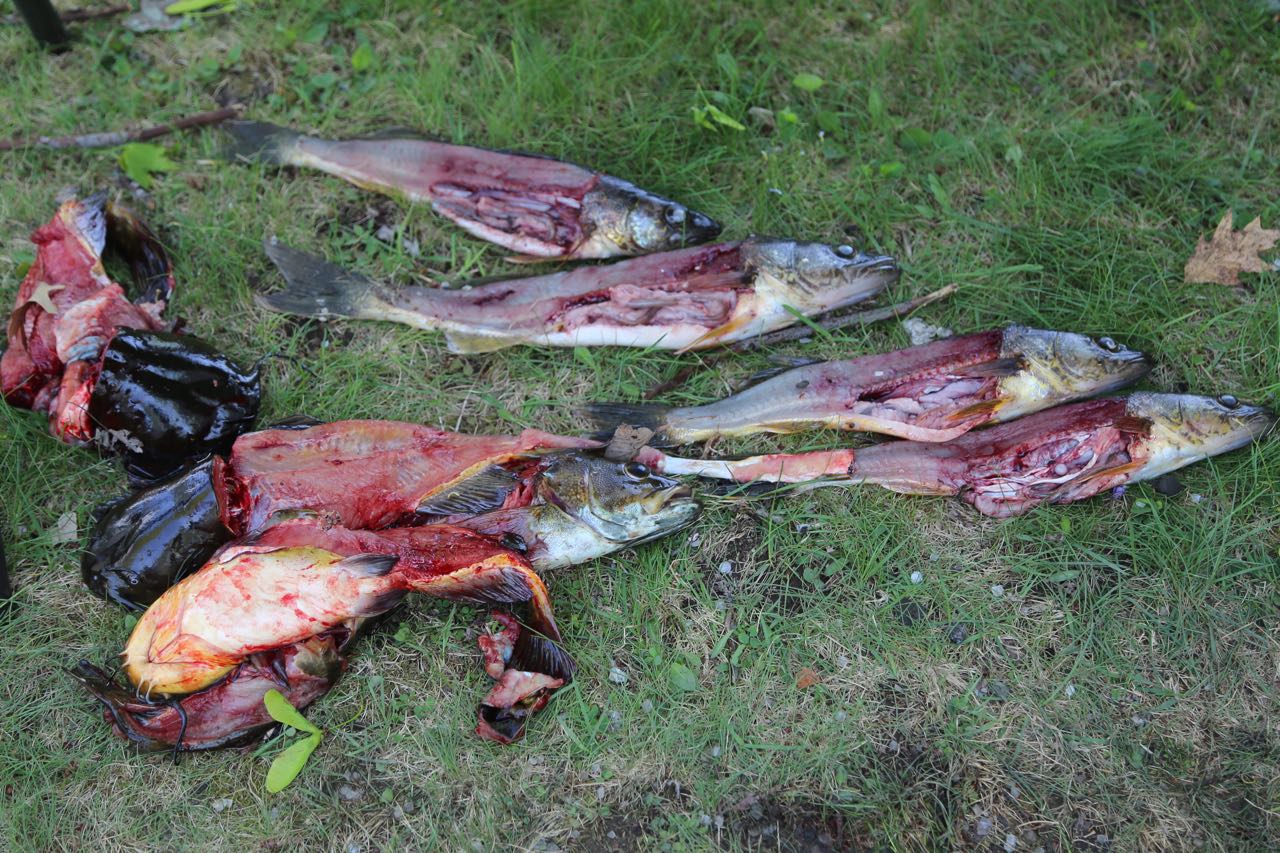
Pile of fish that have had samples taken from them
Pile of fish that have had samples taken from them
Street Excavation

Early in my career as an environmental engineer, I sometimes did field work that involved soil and groundwater sampling. The type of soil sampling I did used shallow coring down to about 15 or 20 to obtain different depth soils to analyze for contamination. Number one rule before coring or digging for any reason, is to have all the utility marked. Most, if not all, states have a single number you can call and request the utility companies come out and mark where their underground pipes, wires, or whatever are. They would come and spray paint lines to denote their utilities, and then the drillers and I would know to avoid those areas. The sites I worked out were fairly simple, and avoiding utilities was pretty straightforward. Then there are old, densely populated cities like New York. I have never done any type of digging in New York City, and I hope I never do. The underground is a maze of pipes and wires and then below that are subways and basements and who knows what else.

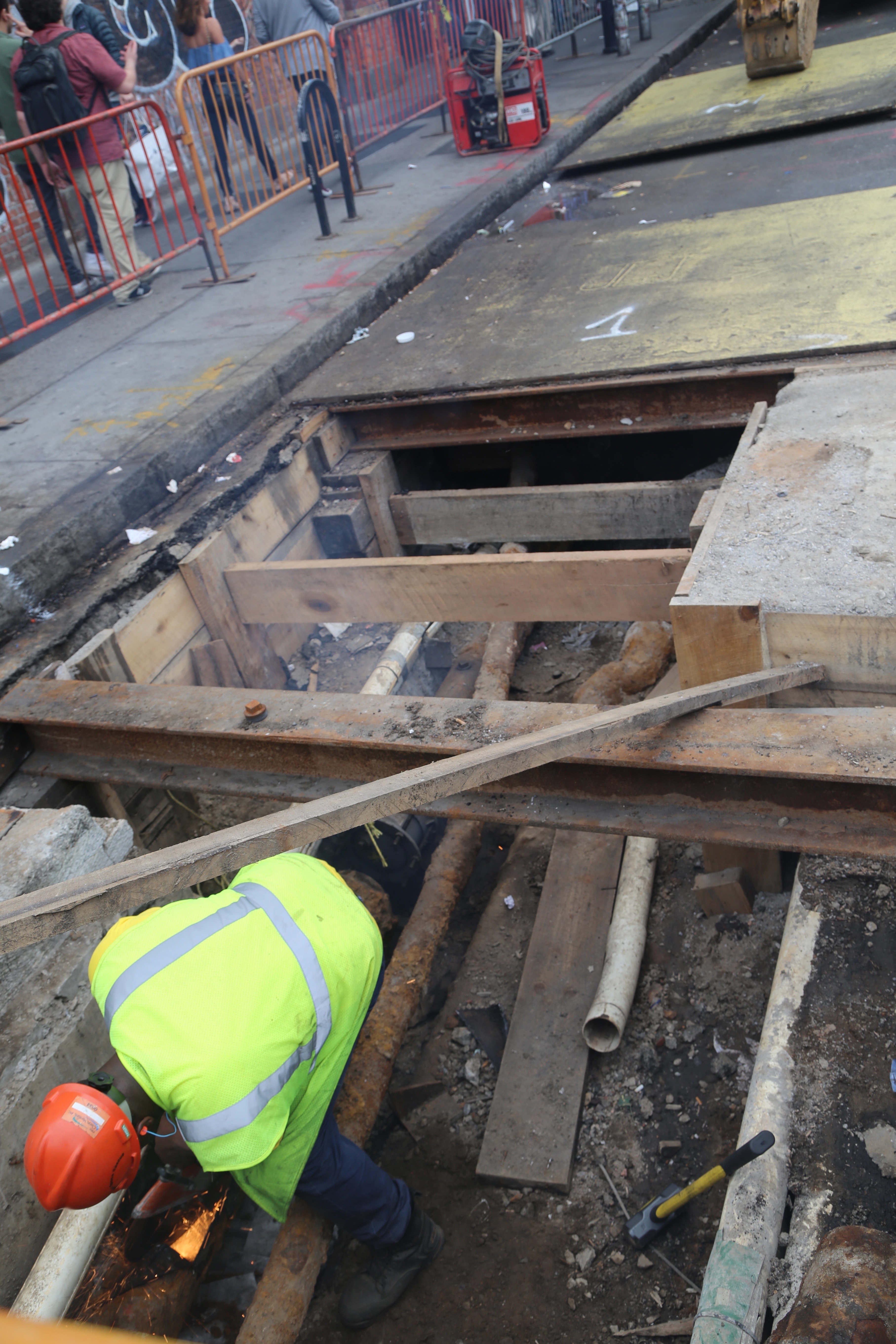
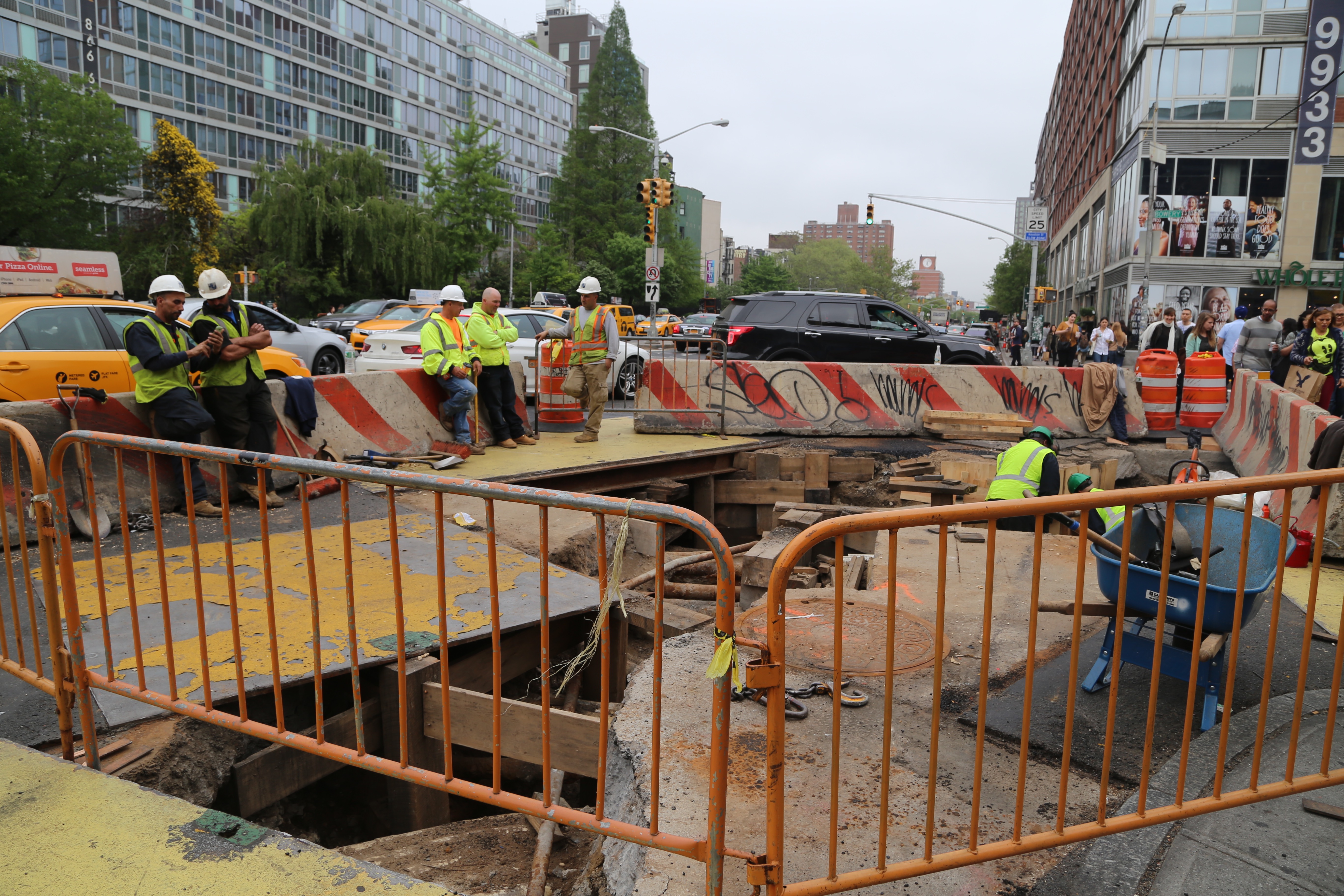
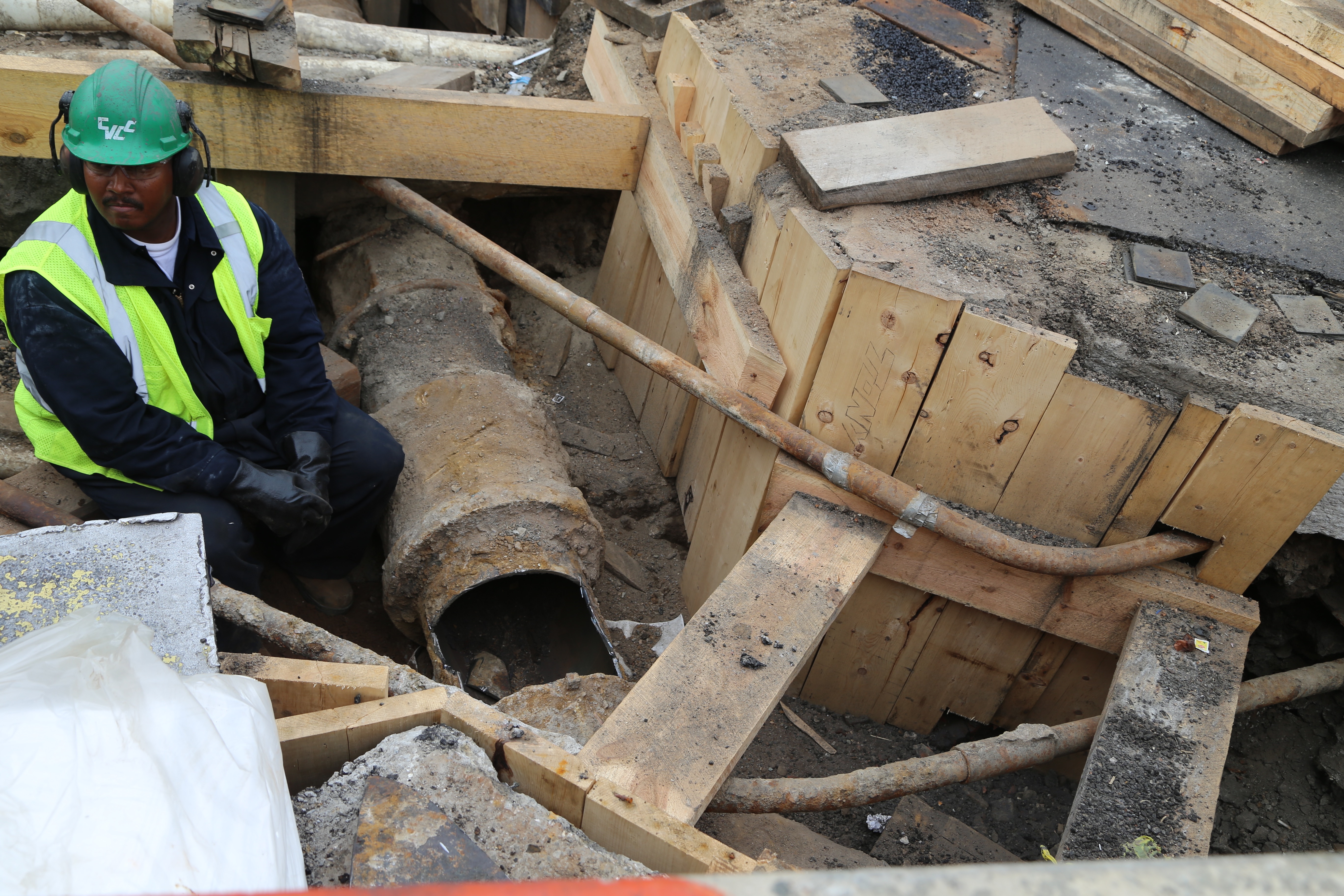
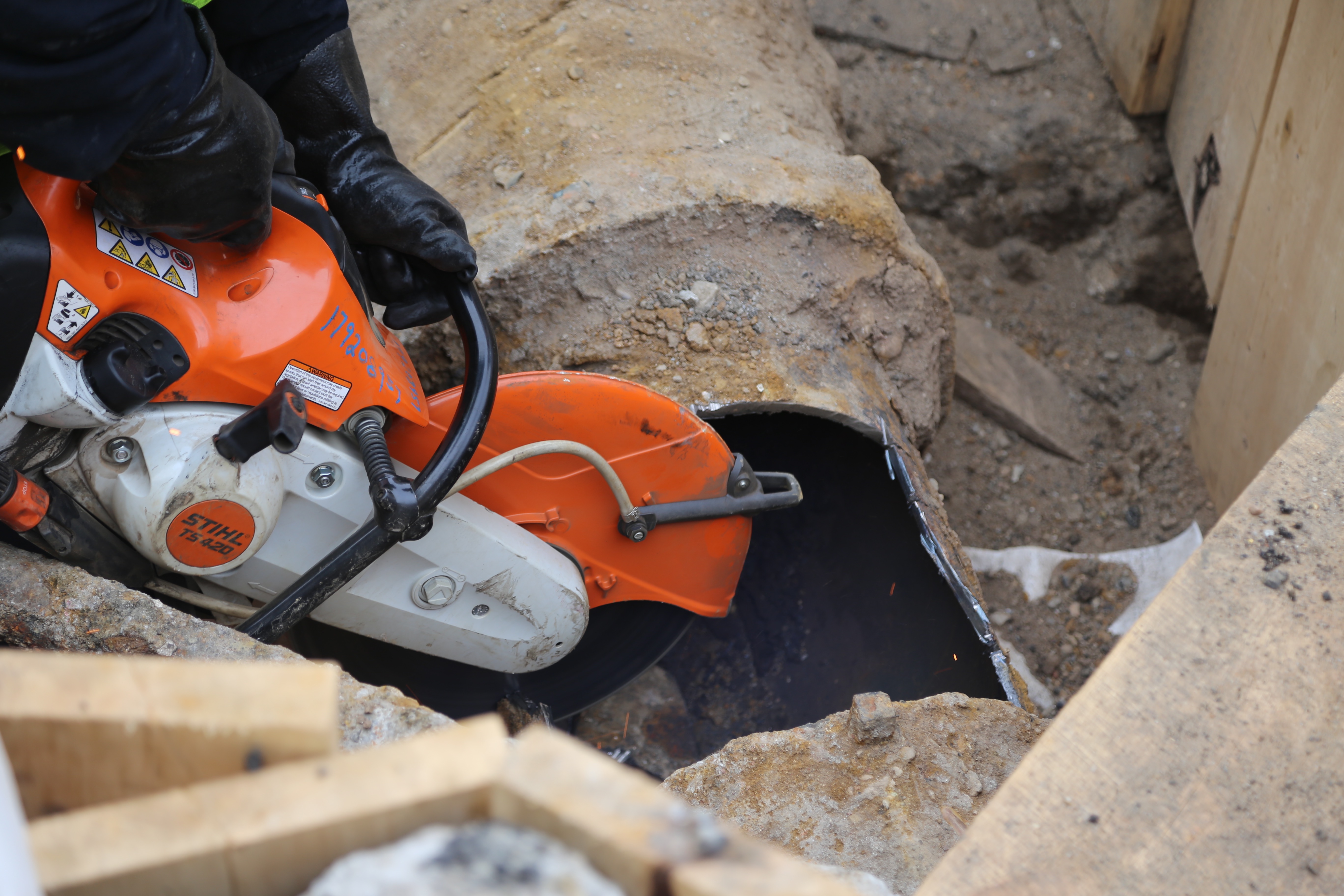
I went to New York City this past Saturday. While walking around, I passed an area where the street had been excavated for utility work of some type. There were four guys cutting holes in a large diameter metal pipe. I asked one of them what the pipe carried, and he said it was for gas, but it had not been used in a long time. Because I am an engineering nerd, I of course had to take a bunch of photos, and what I saw confirmed my desire to never do any digging work there. My hat is off to the people who do. They must have to do the digging by hand, possibly with a tablespoon to get around all the pipes. The shoring looked like some crazy Tetris scene trying to put the beams around the pipes. The guys cutting the pipes had barely any room to work and that is not mentioning how they were bending down to cut.
So if you were ever curious just what types of utilities are below the streets of Manhattan, see below.

Rather large excavation area with many workers

Rather large excavation area with many workers. There were four cutting the pipe, one flagging traffic, and eight standing around, evidently waiting for the next phase or supervising.

Vertical shoring on the cut sides; the pipe the worker was cutting a hole is in foreground

Vertical shoring on the cut sides; the pipe the worker was cutting a hole is in foreground

Worker cutting the large previously decommissioned gas pipe

Worker cutting the large previously decommissioned gas pipe

Worker cutting another part of the pipe in a very cramped area

Worker cutting another part of the pipe in a very cramped area

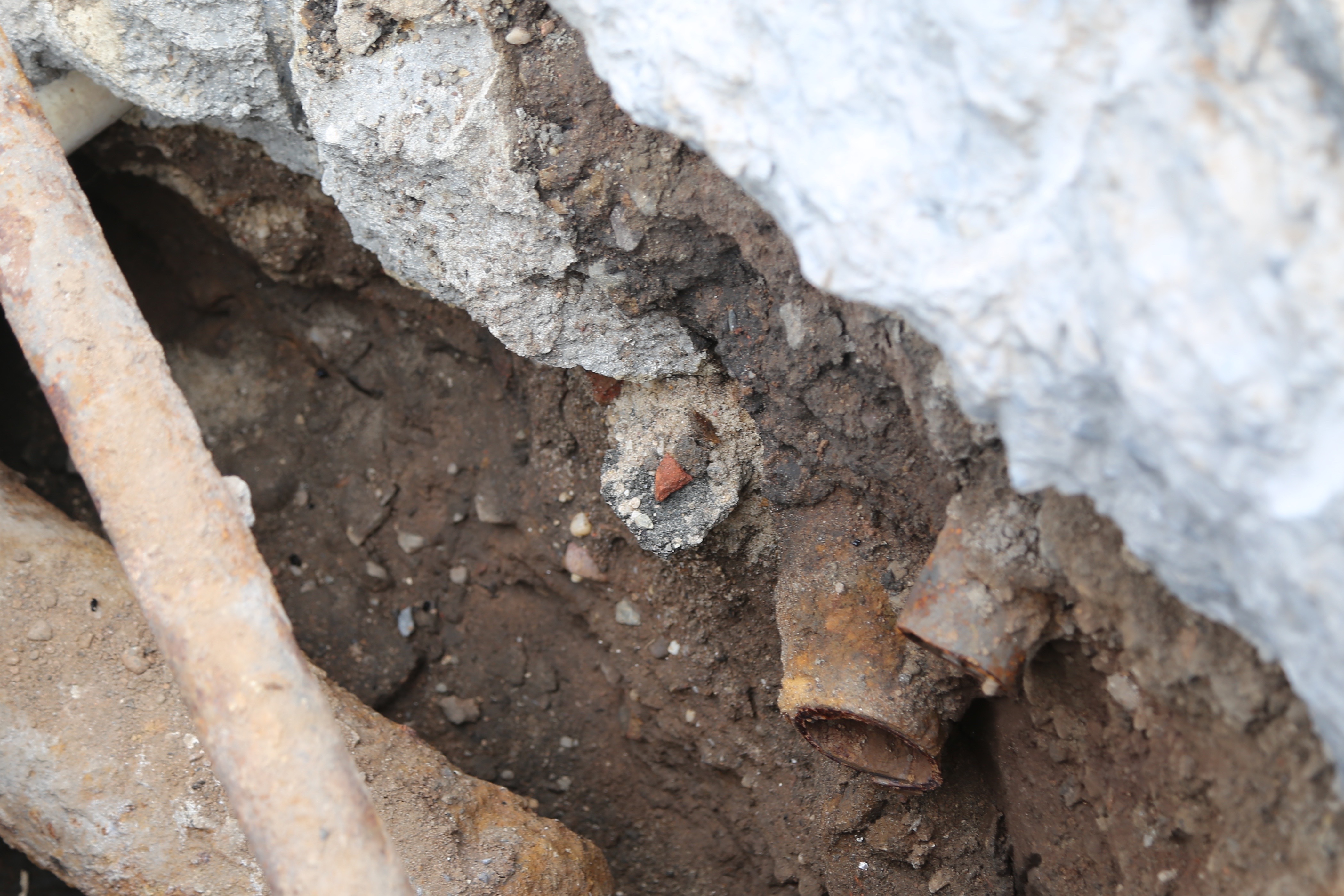
A couple of previously cut pipes in the ground profile

A couple of previously cut pipes in the ground profile

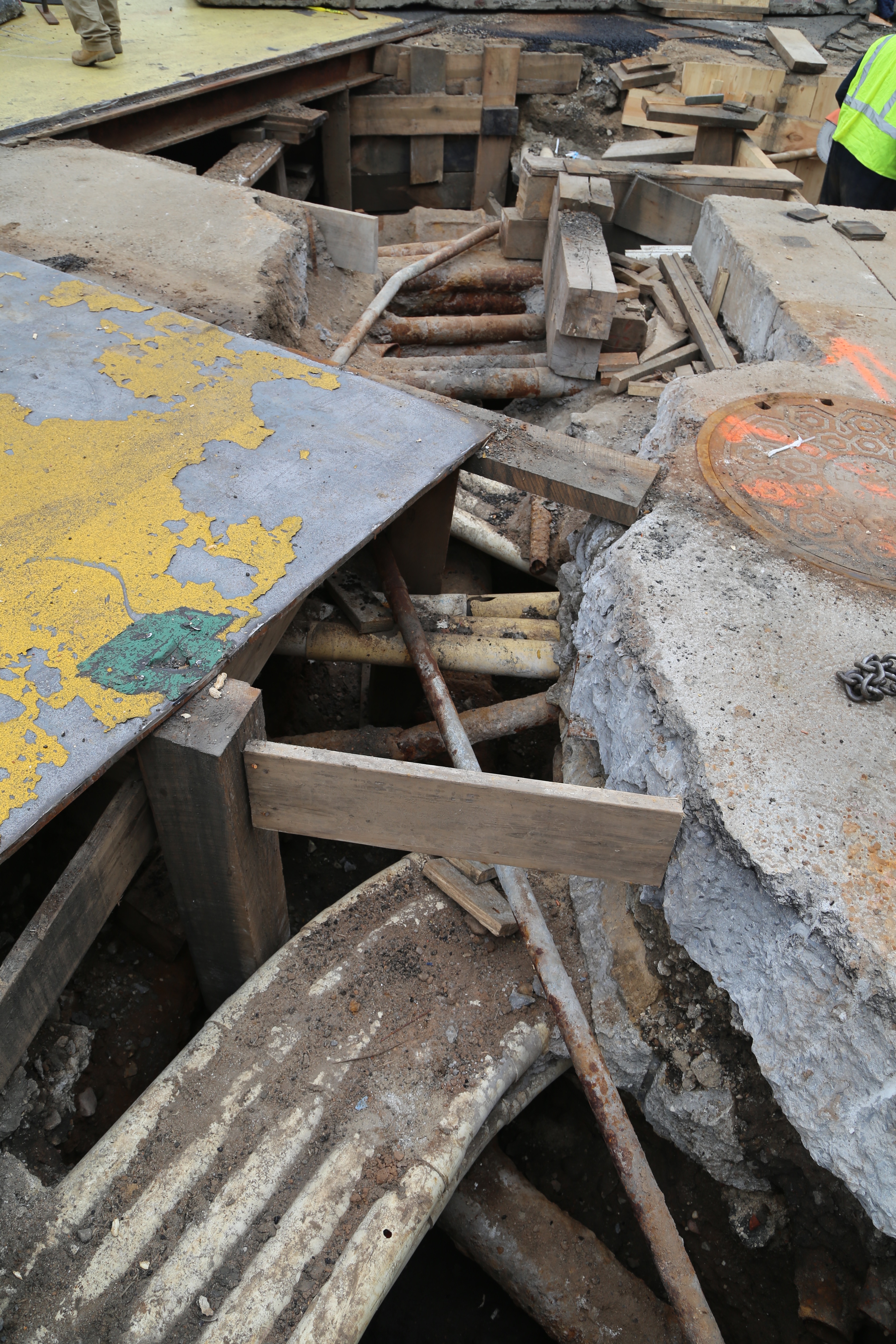
Pipes crossing everywhere

Pipes crossing everywhere

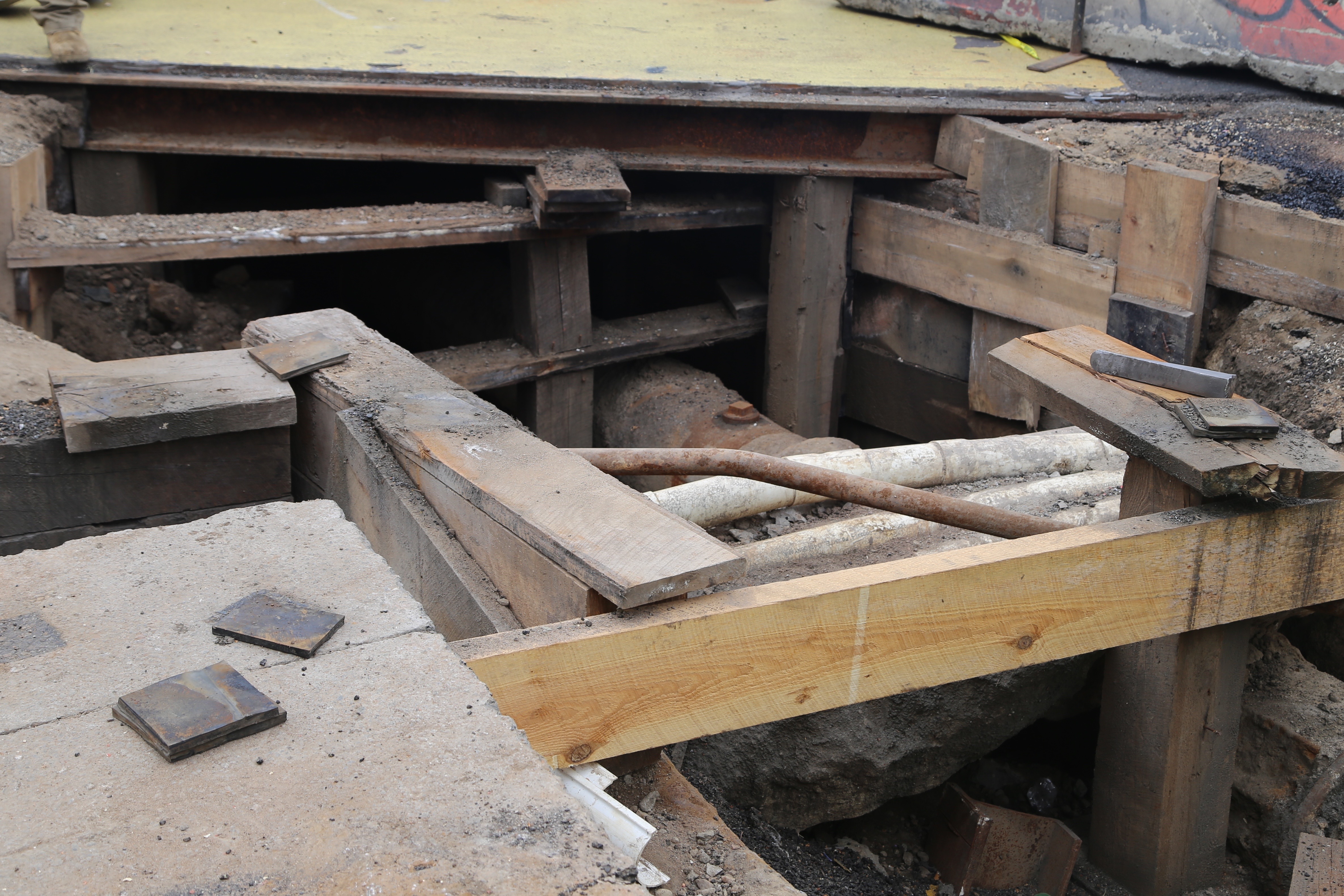
Multiple levels of horizontal shoring

Multiple levels of horizontal shoring

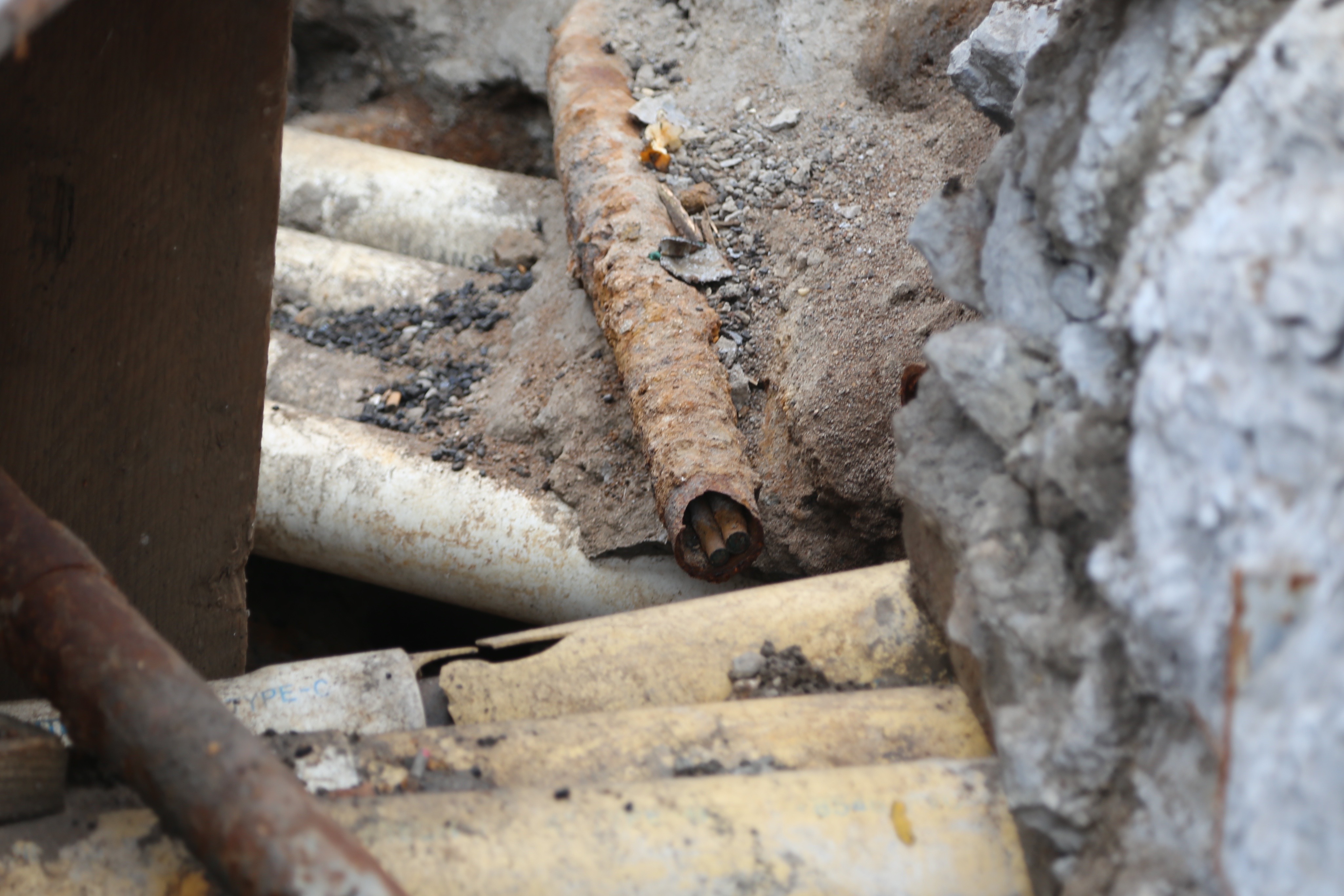
A conduit containing wiring

A conduit containing wiring

Rebecca Kamen: Fundamental Forces

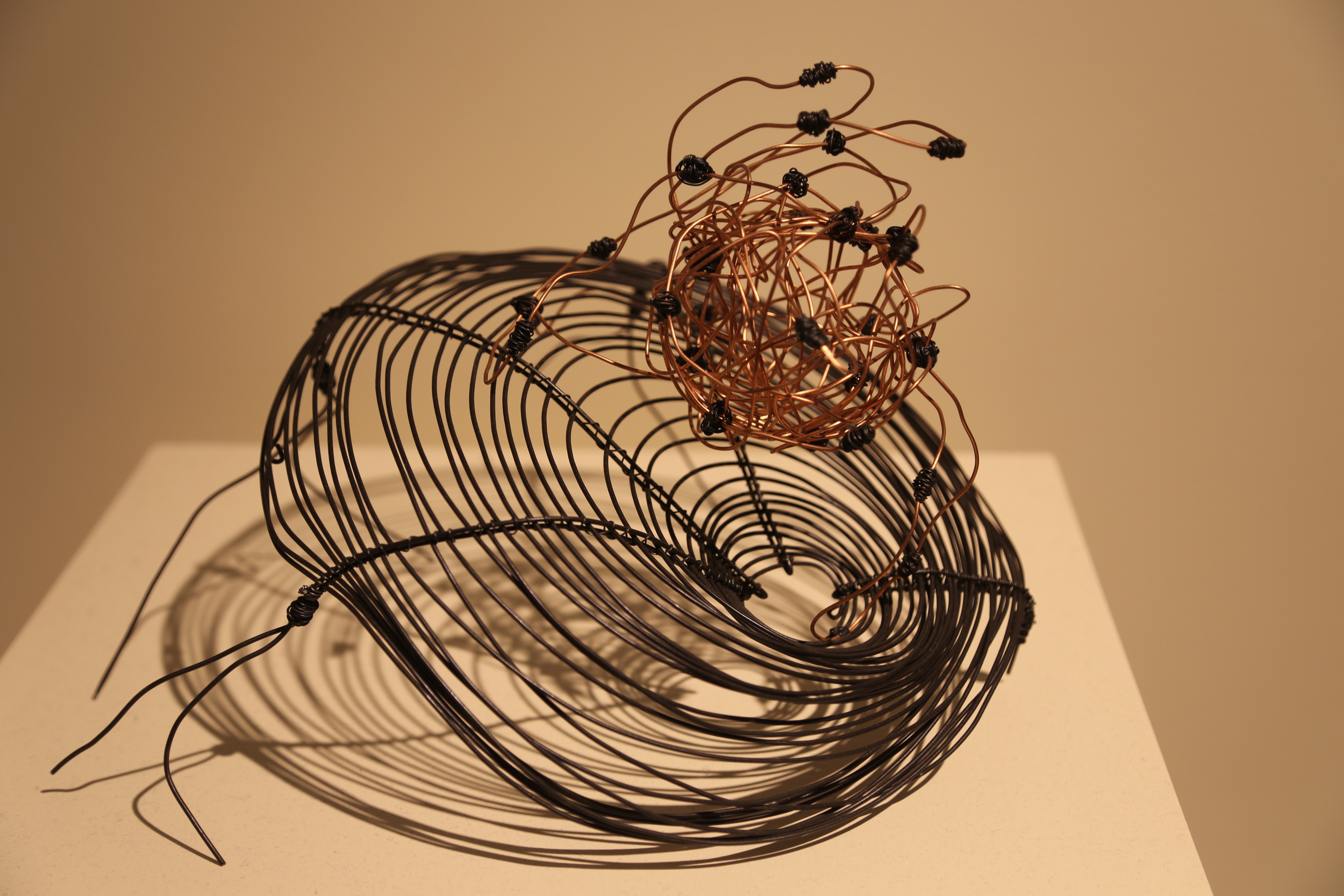
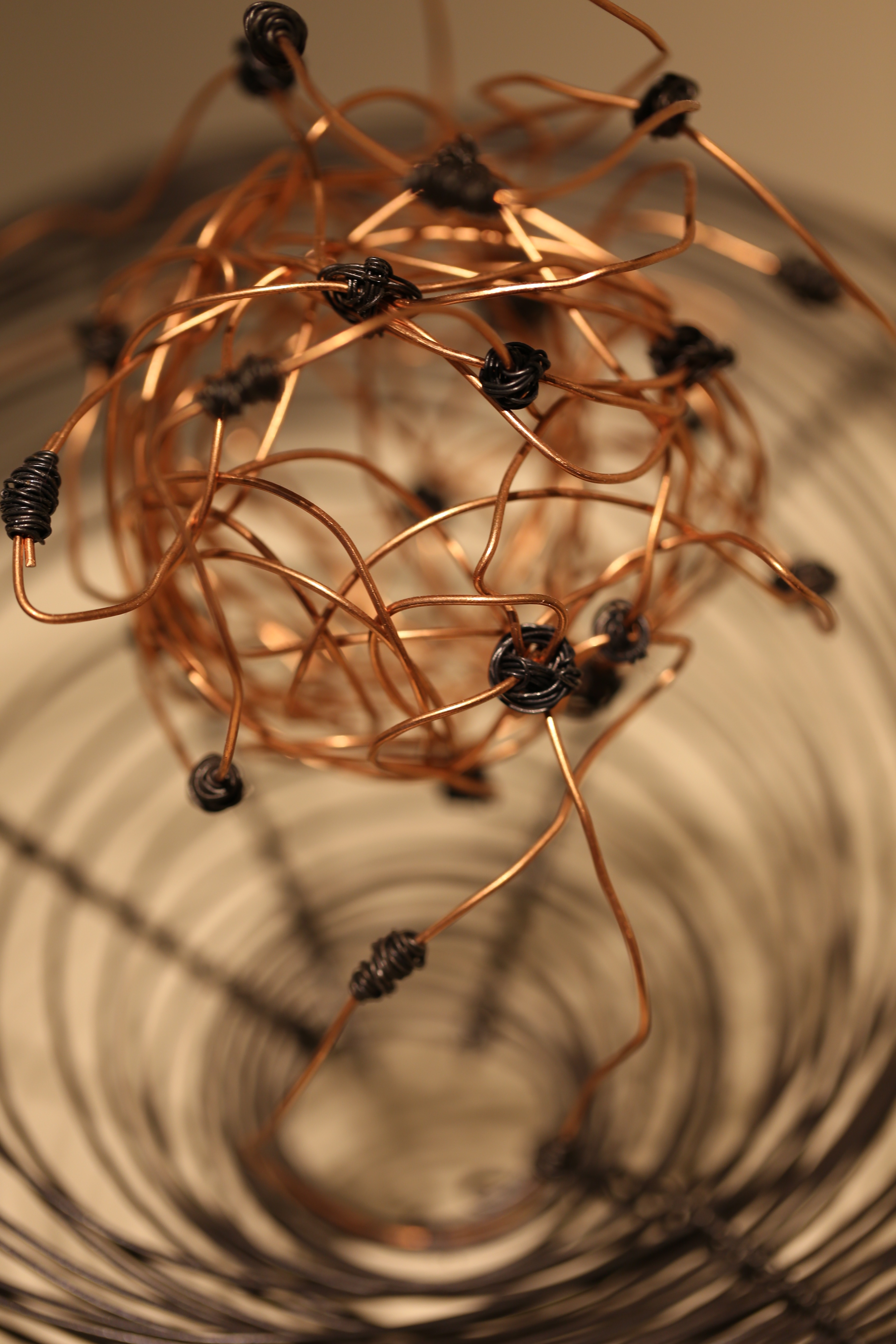
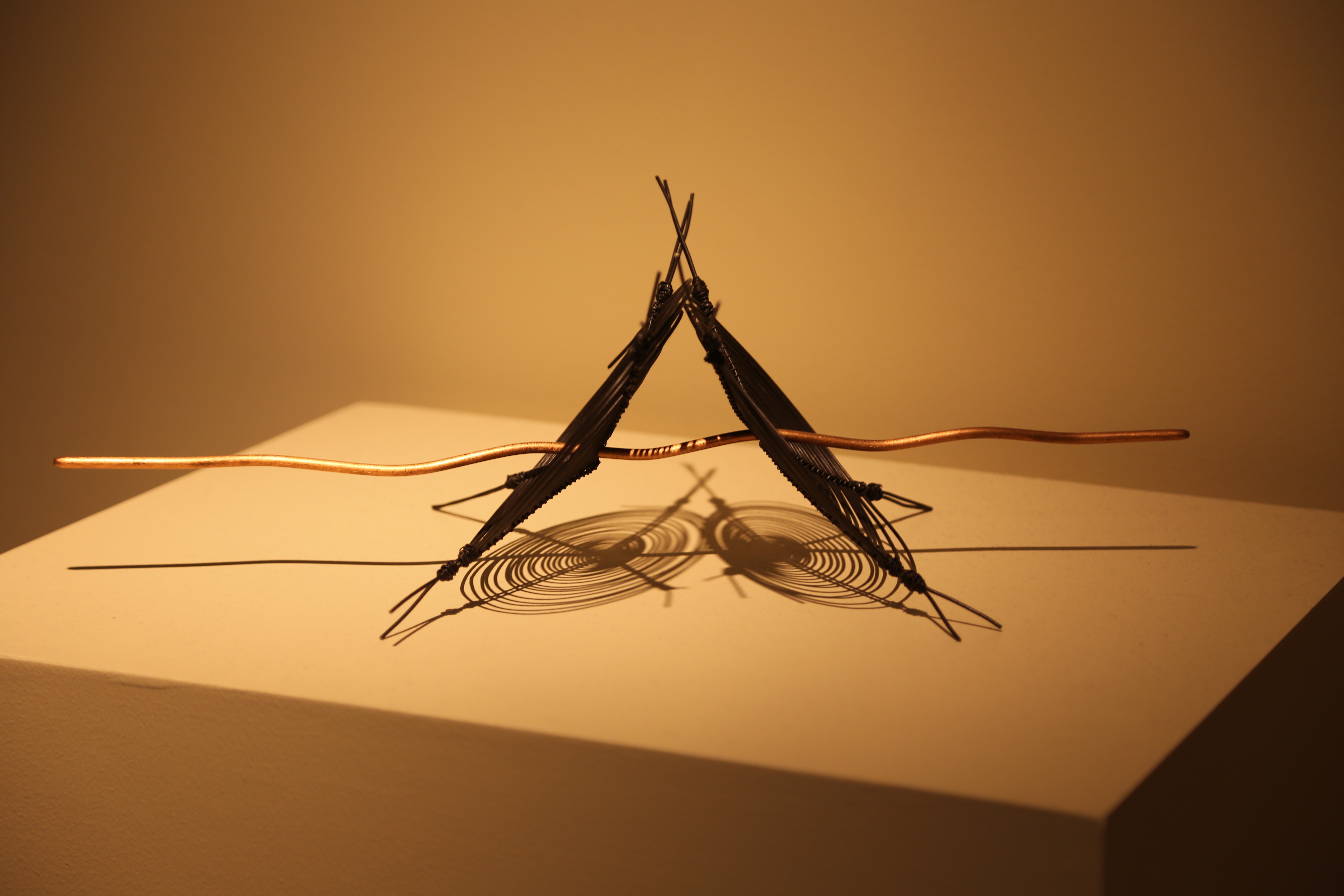
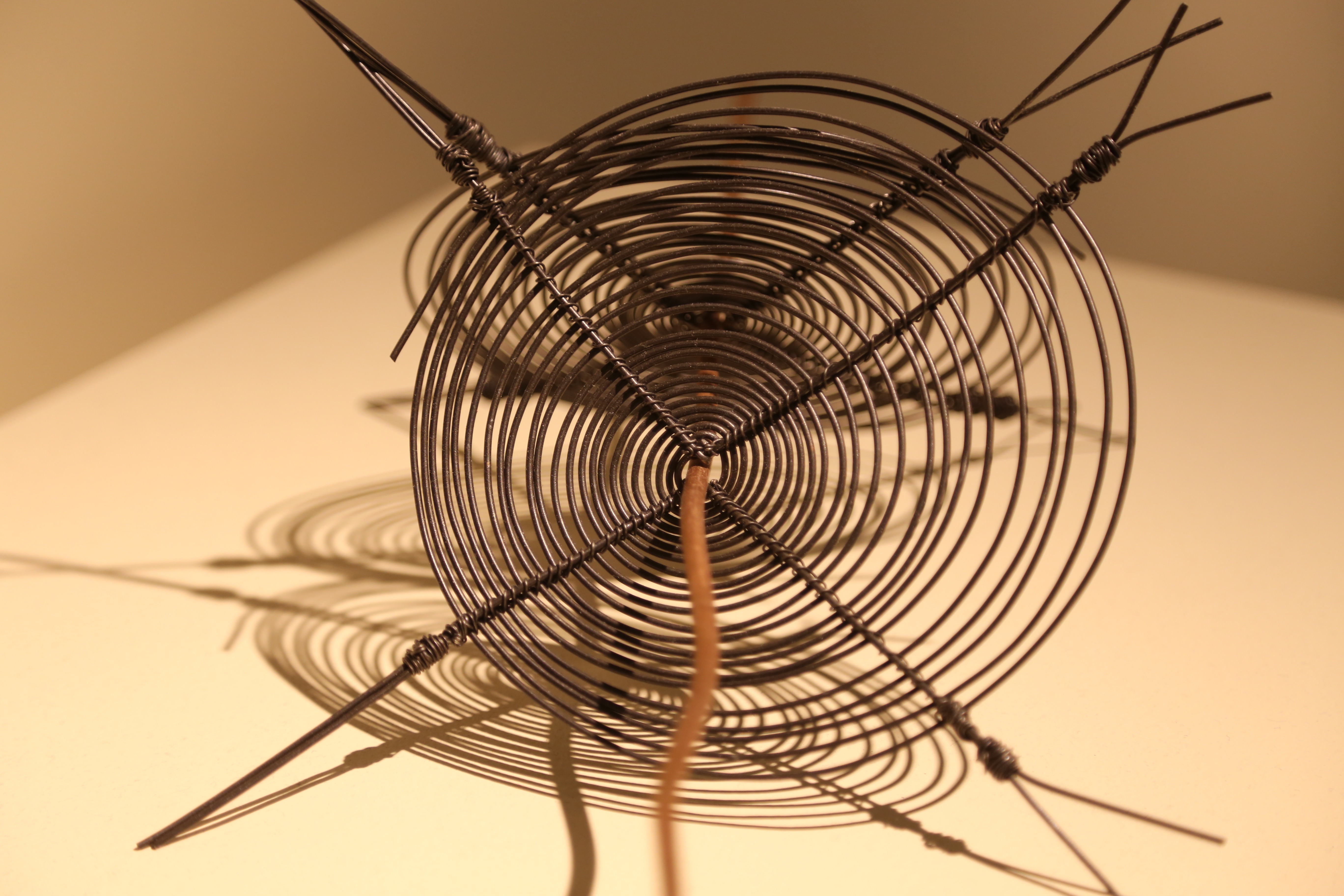
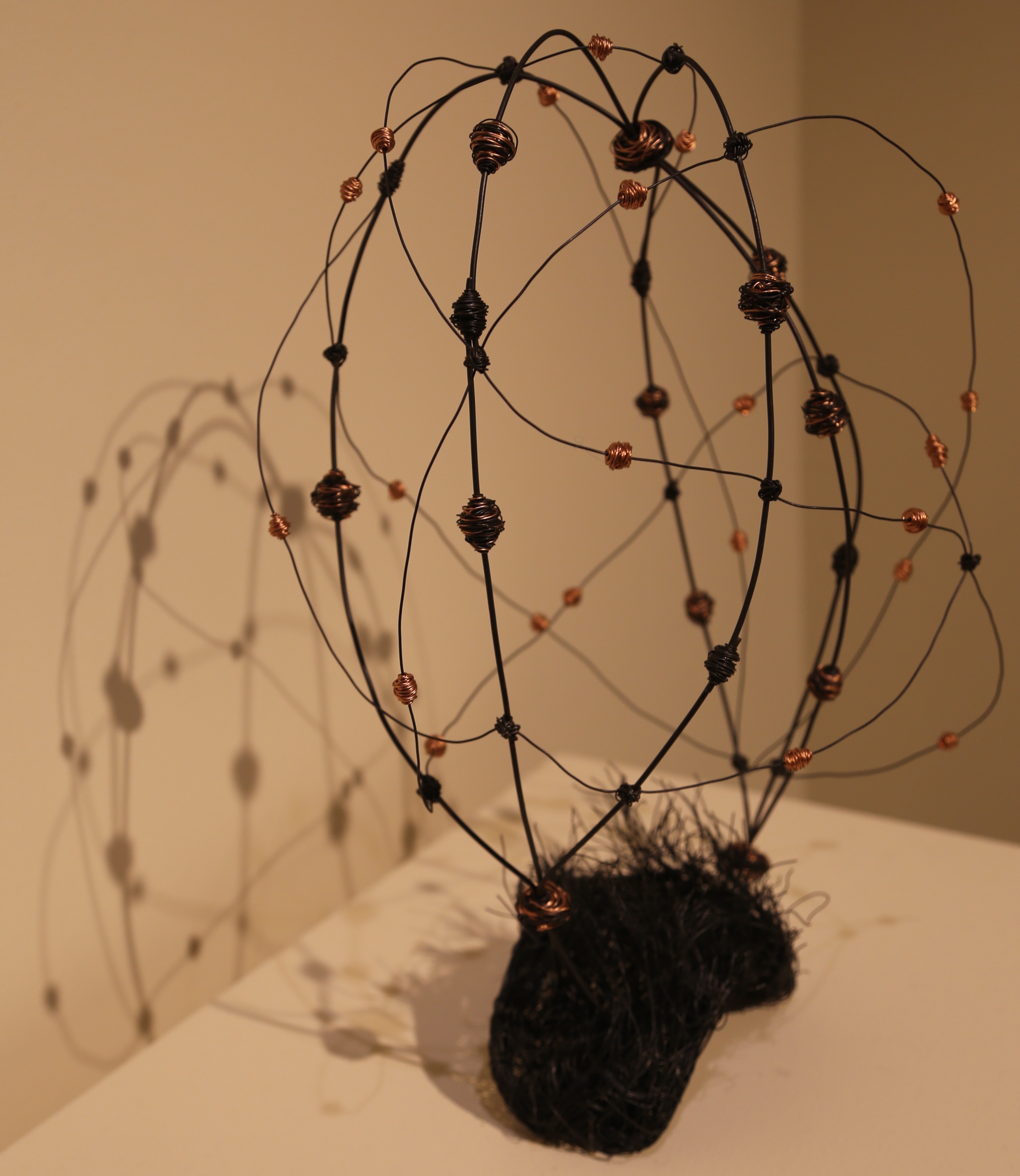
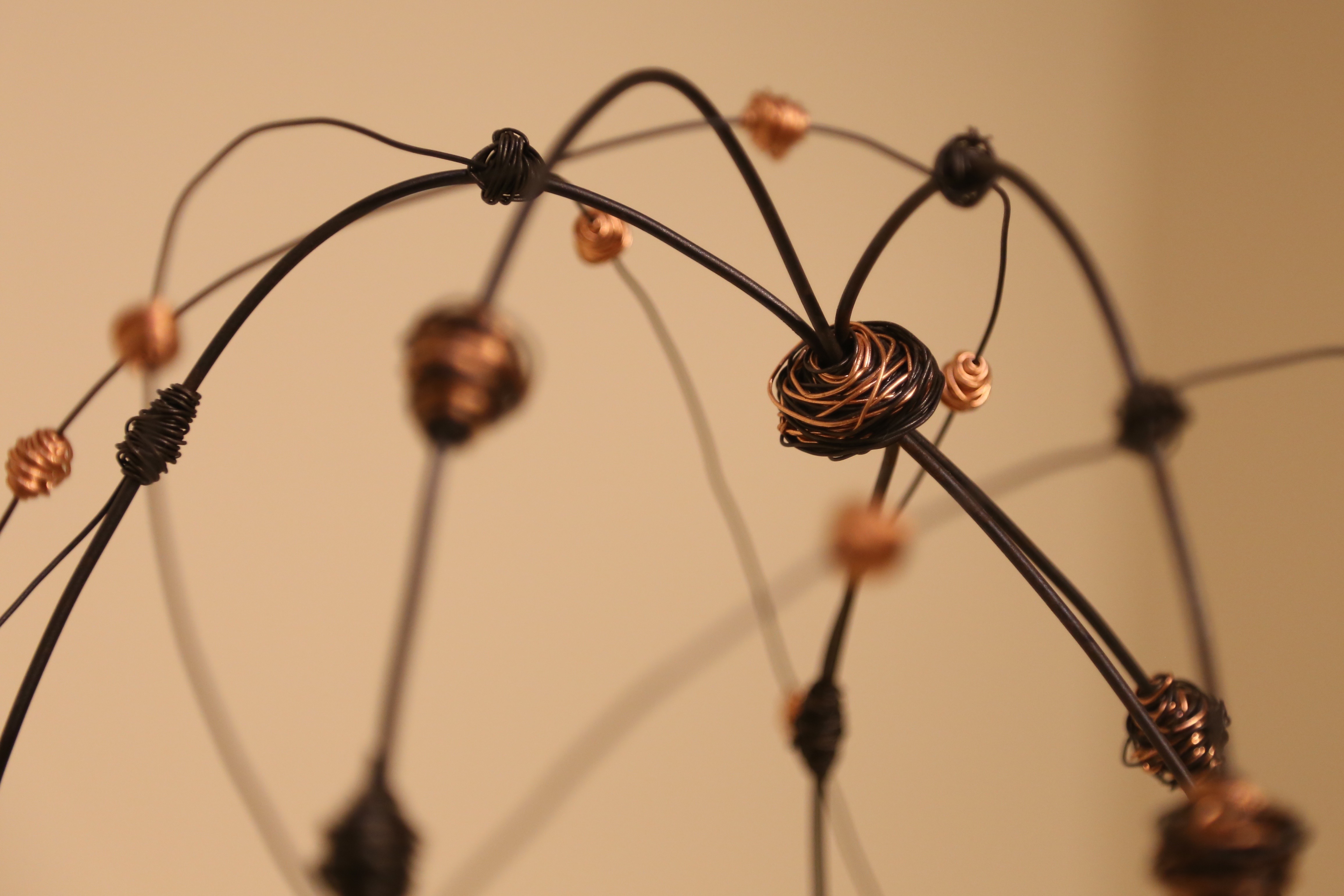
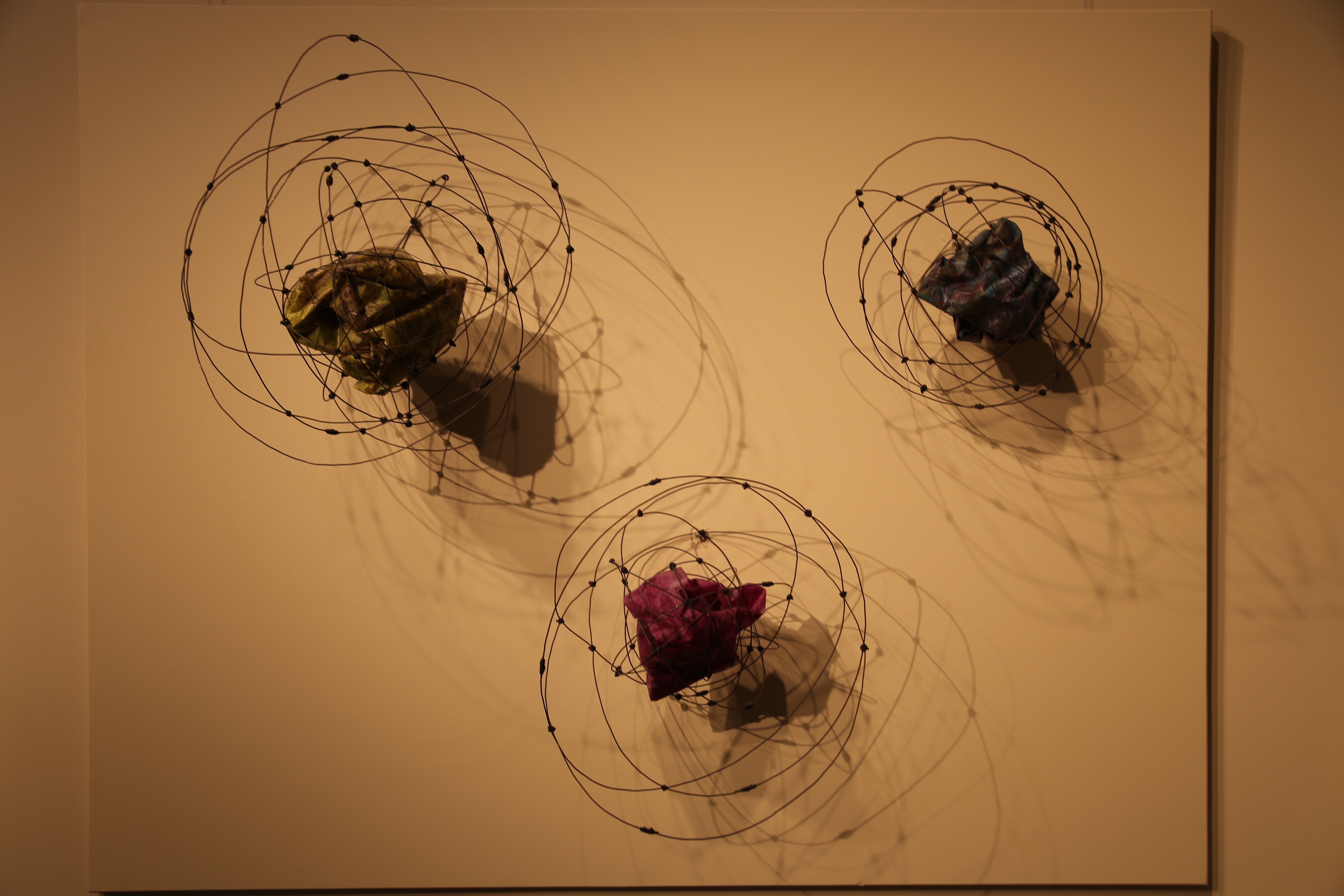
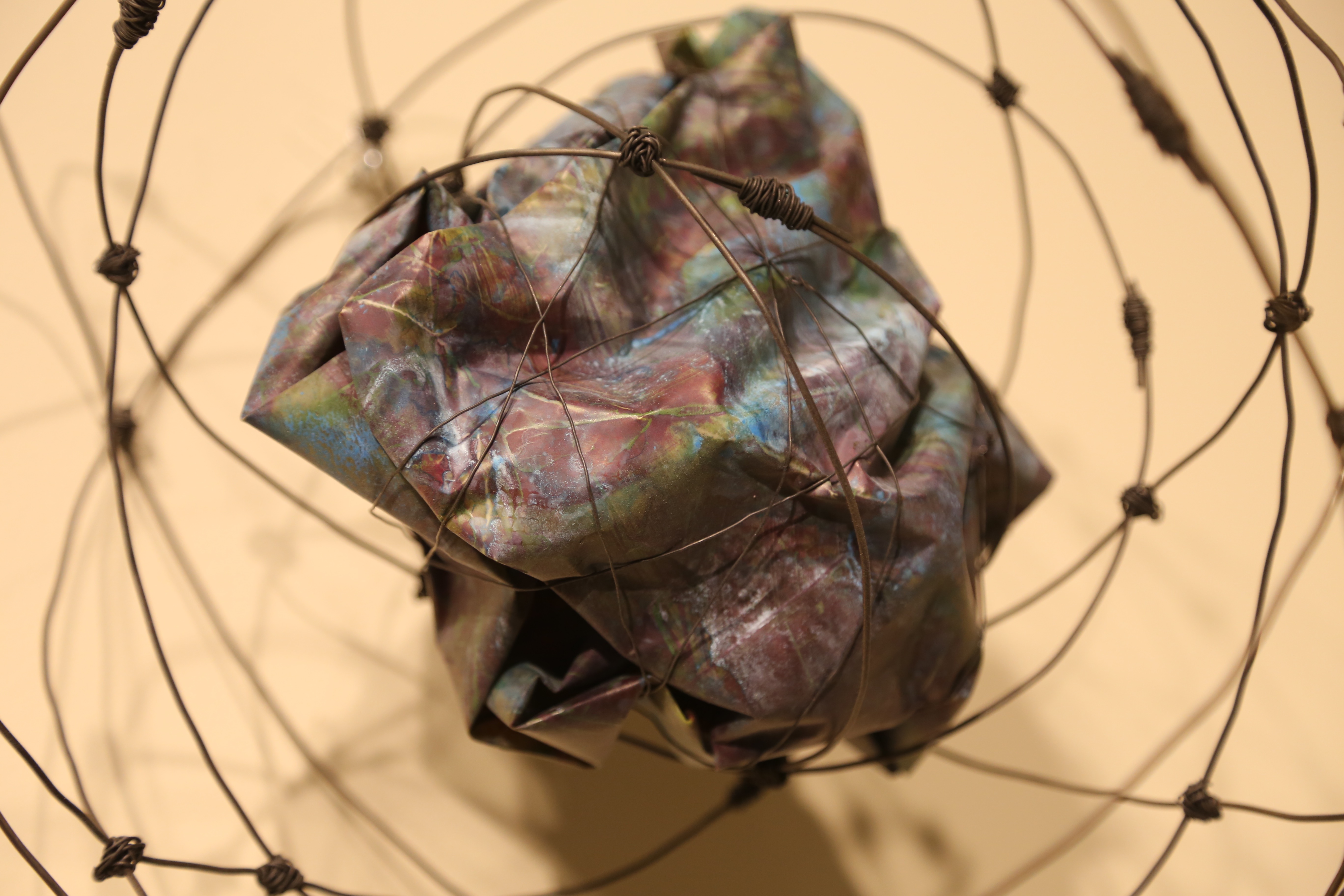
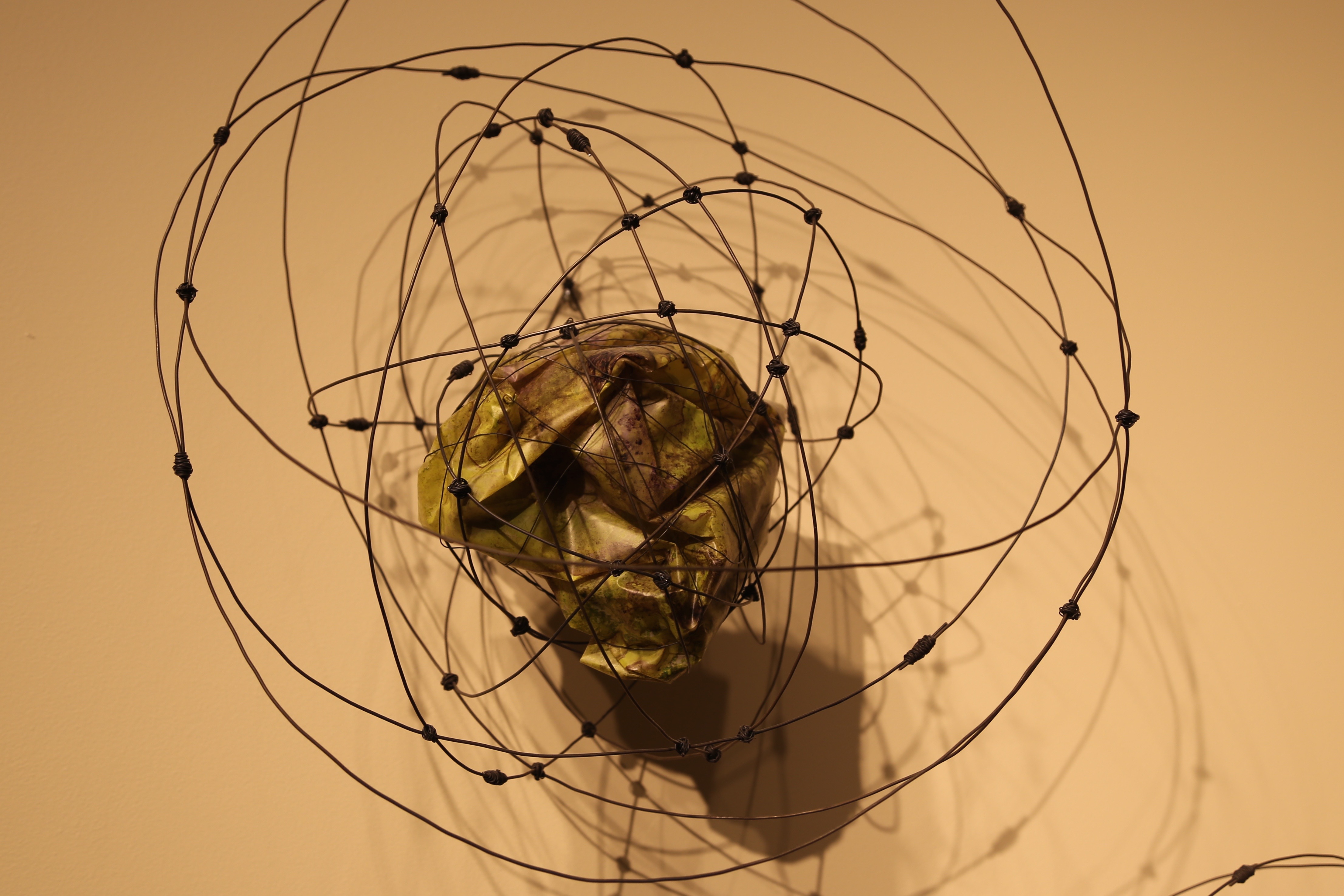
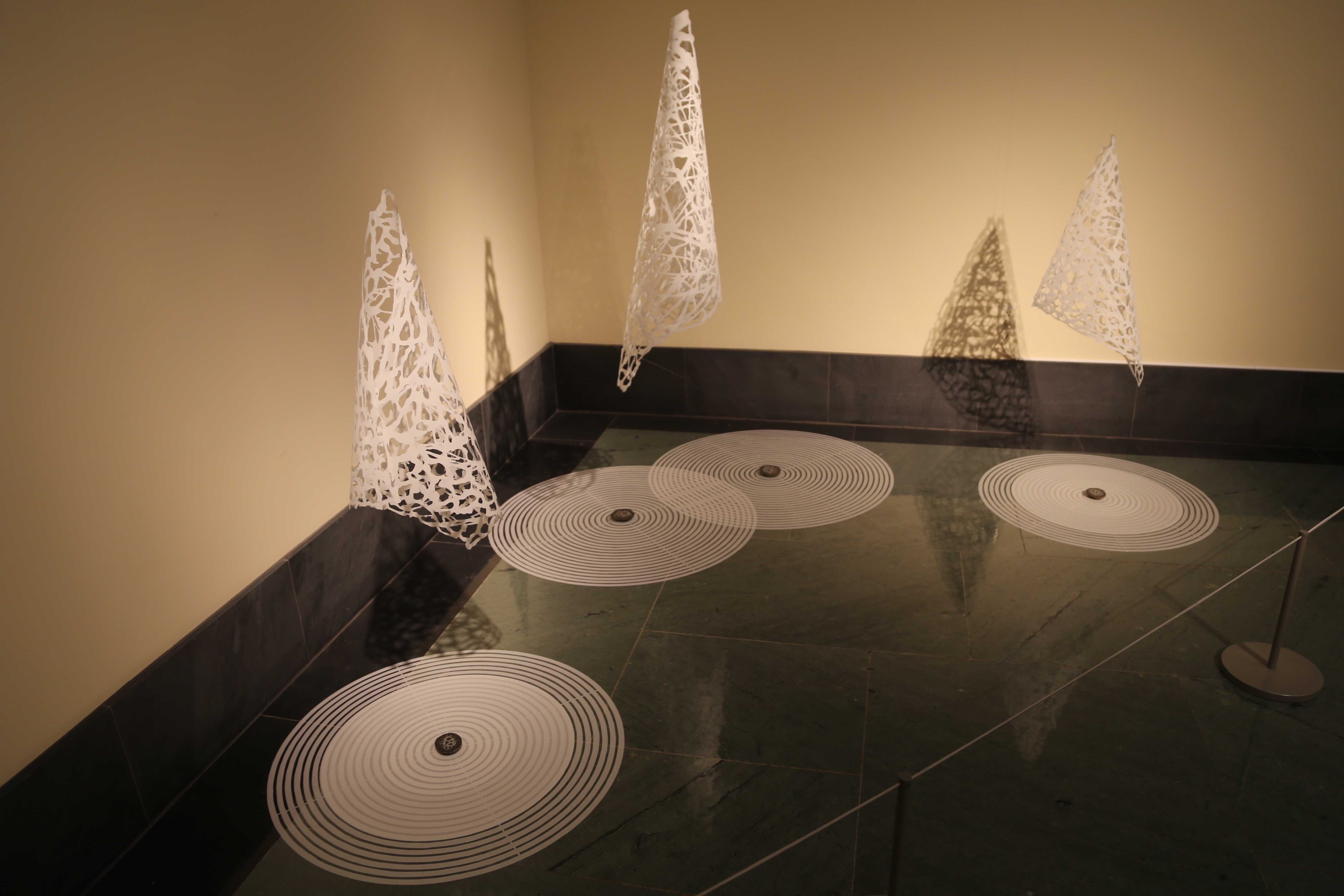
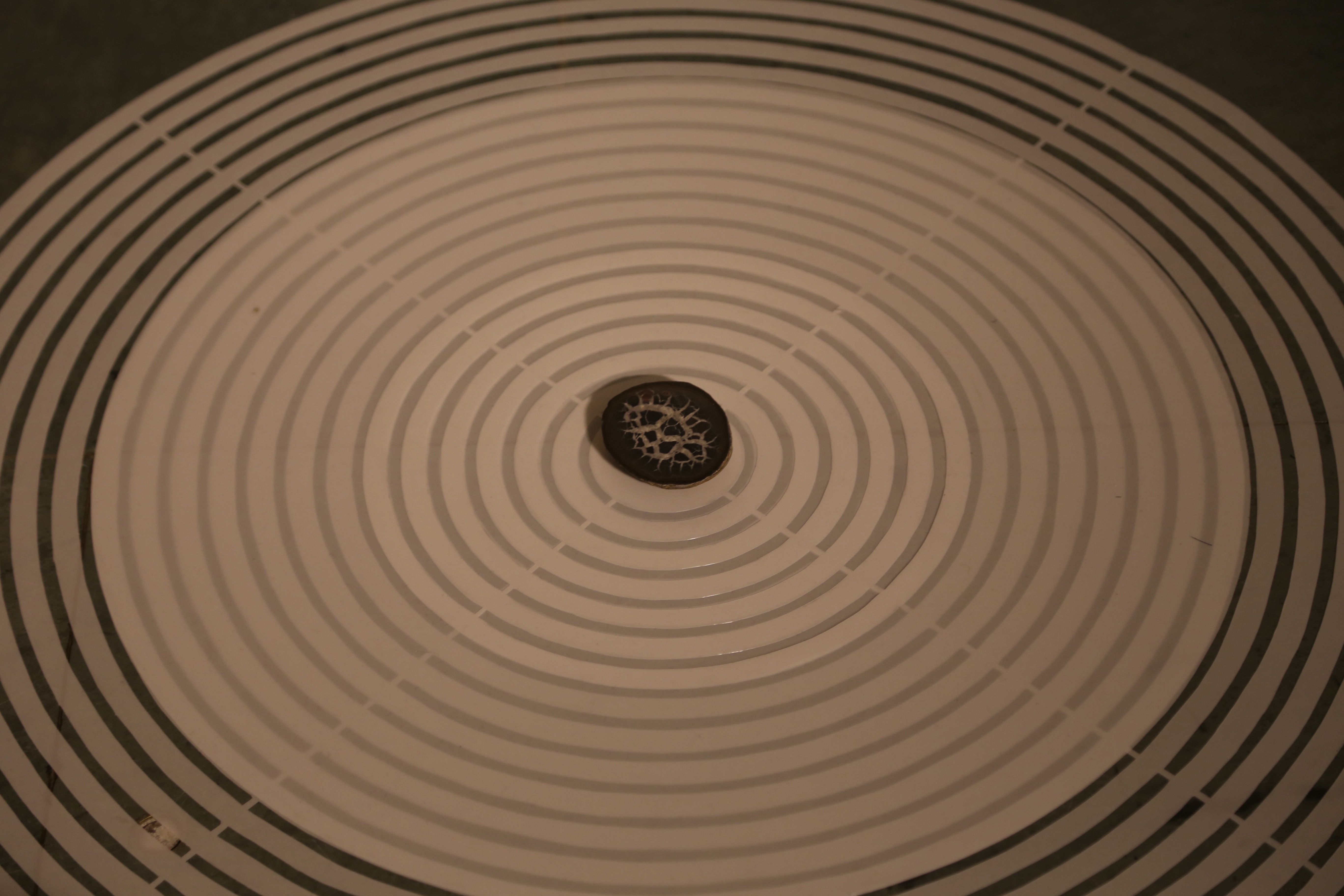
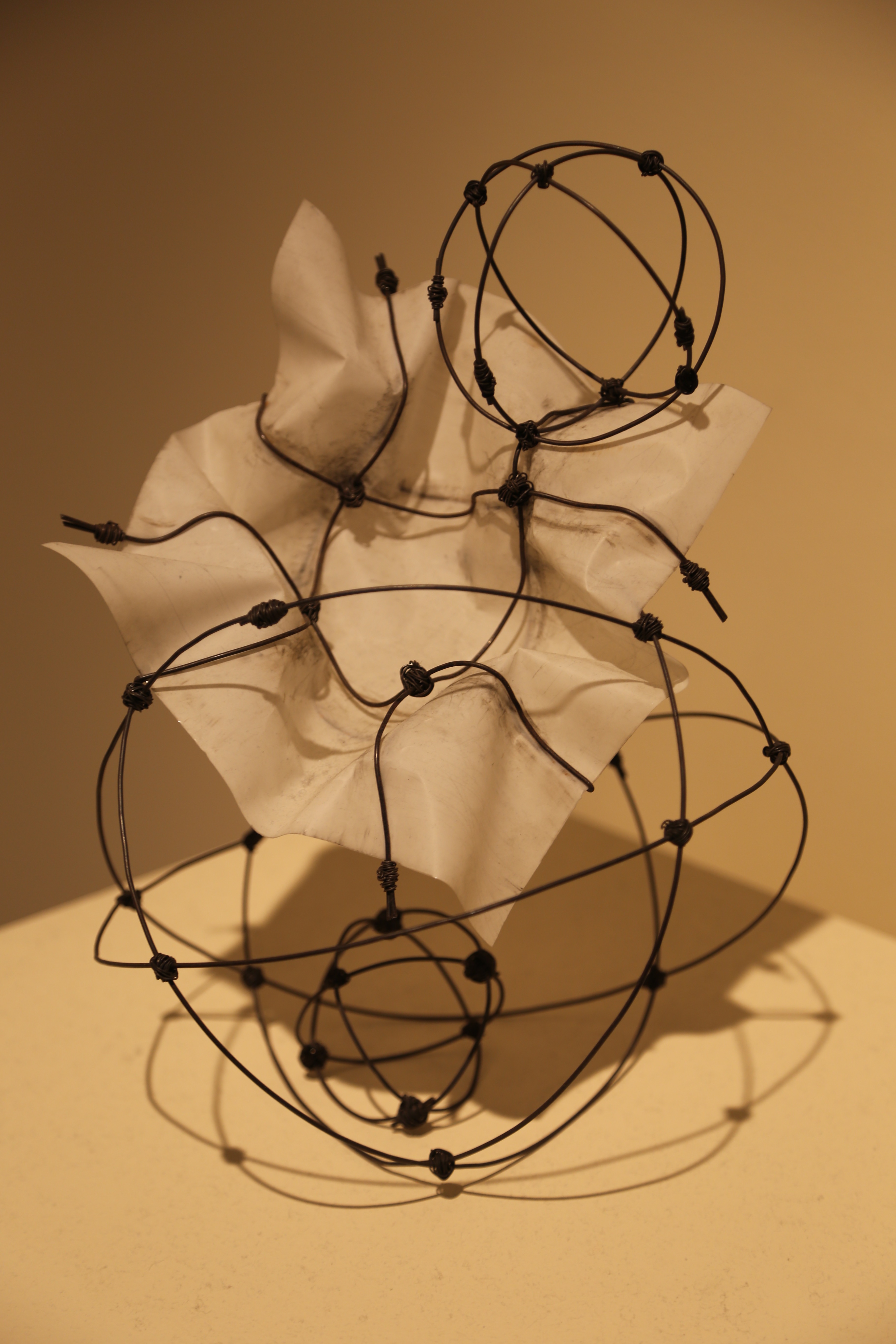
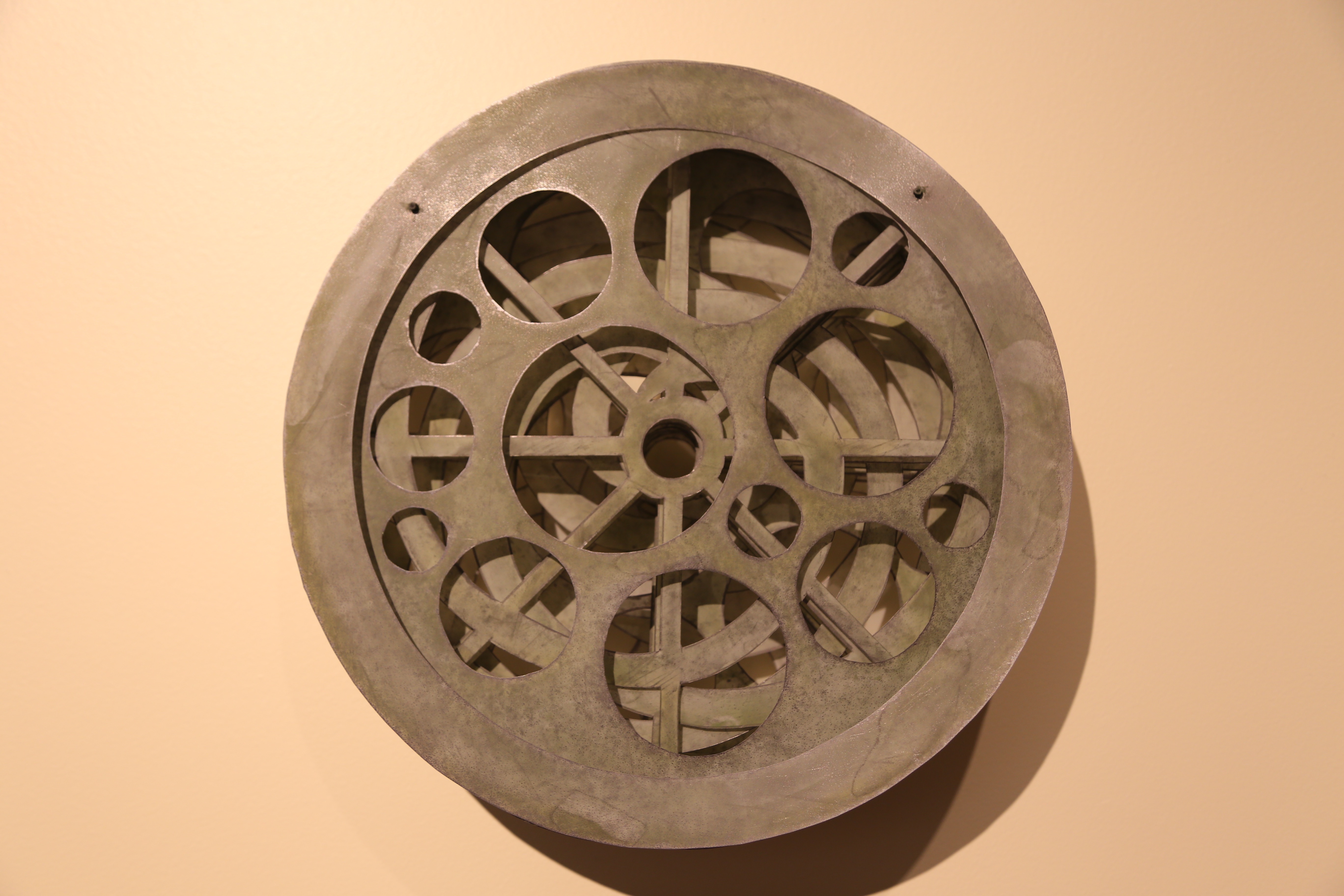
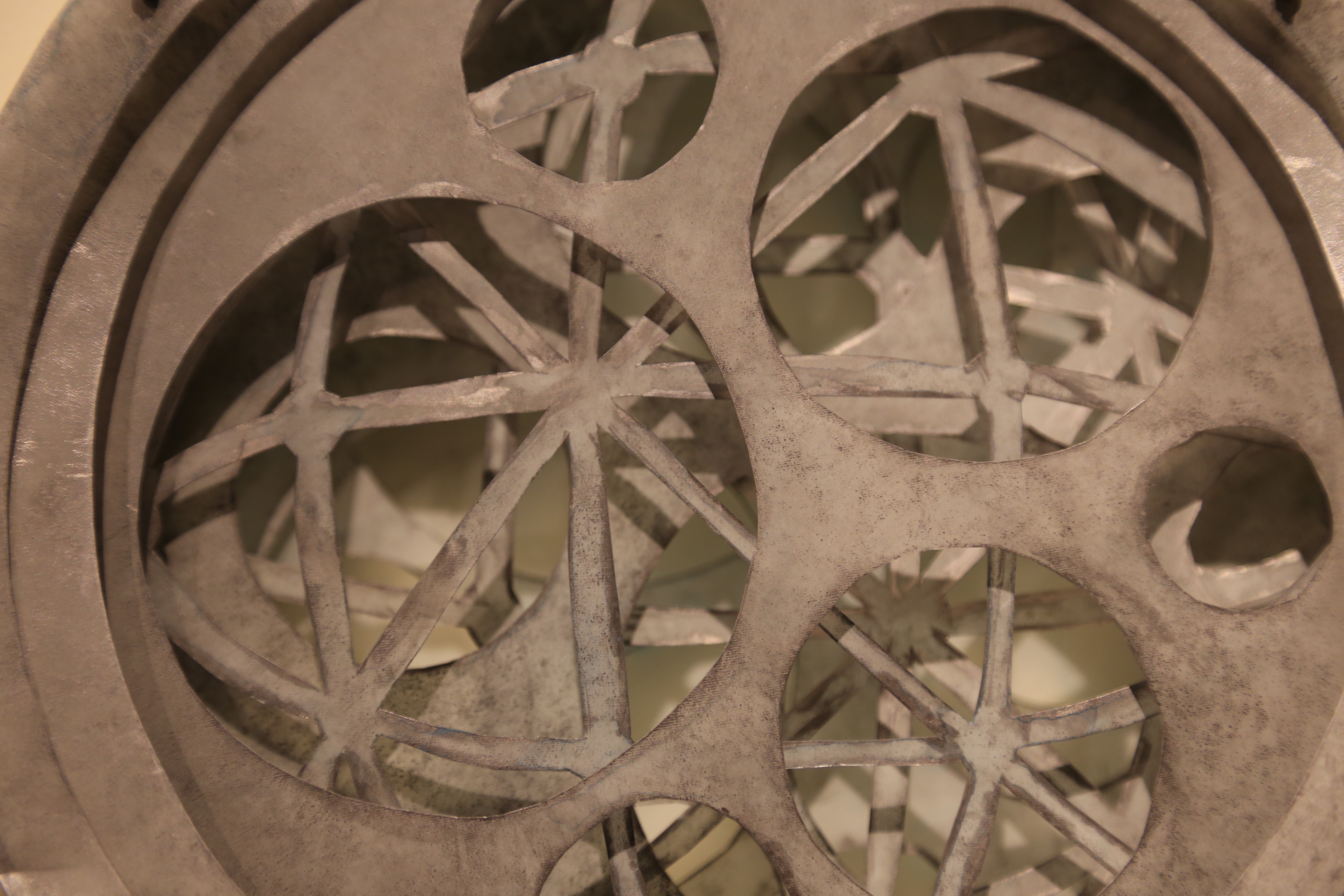
Currently on display at the National Academy of Sciences is Fundamental Forces by Rebecca Kamen. Fundamental Forces is an exhibition of paintings and sculptures inspired  the process of scientific discovery. The title Fundamental Forces refers to fundamental forces in physics: gravity, electromagnetism, and strong and weak nuclear interactions, and in my opinion, the exhibit really does provide a lovely representation of those fundamental forces. I loved the wire sculptures in particular as they were visually interesting  and also looked like things I had studied in chemistry and physics class. Matter Informing Space reminds me of the Bohr model of the atom. The Doppler Effect is an interesting visualization of the Doppler effect, but it also reminds me of a vortex and the Coriolis effect. The sculptures also play with the light in wonderful ways. The shadows created by the wire sculptures and also Portal are incredibly interesting. If you are in the DC area, the exhibit is open until July 6, and it is free to see, so go.

Doppler Effect

Doppler Effect

Doppler Effect

Doppler Effect

Wave Ride for Albert

Wave Ride for Albert

Wave Ride for Albert

Wave Ride for Albert

Cosmos: For Carl

Cosmos: For Carl

Cosmos: For Carl

Cosmos: For Carl

Matter Informing Space

Matter Informing Space

Matter Informing Space

Matter Informing Space

Matter Informing Space

Matter Informing Space

Portal

Portal

Portal

Portal

Portal

Portal

Sky DIary

Sky Diary

Magic Circle of Circles

Magic Circle of Circles

Matrix 1

Matrix 1

Cherry Blossoms

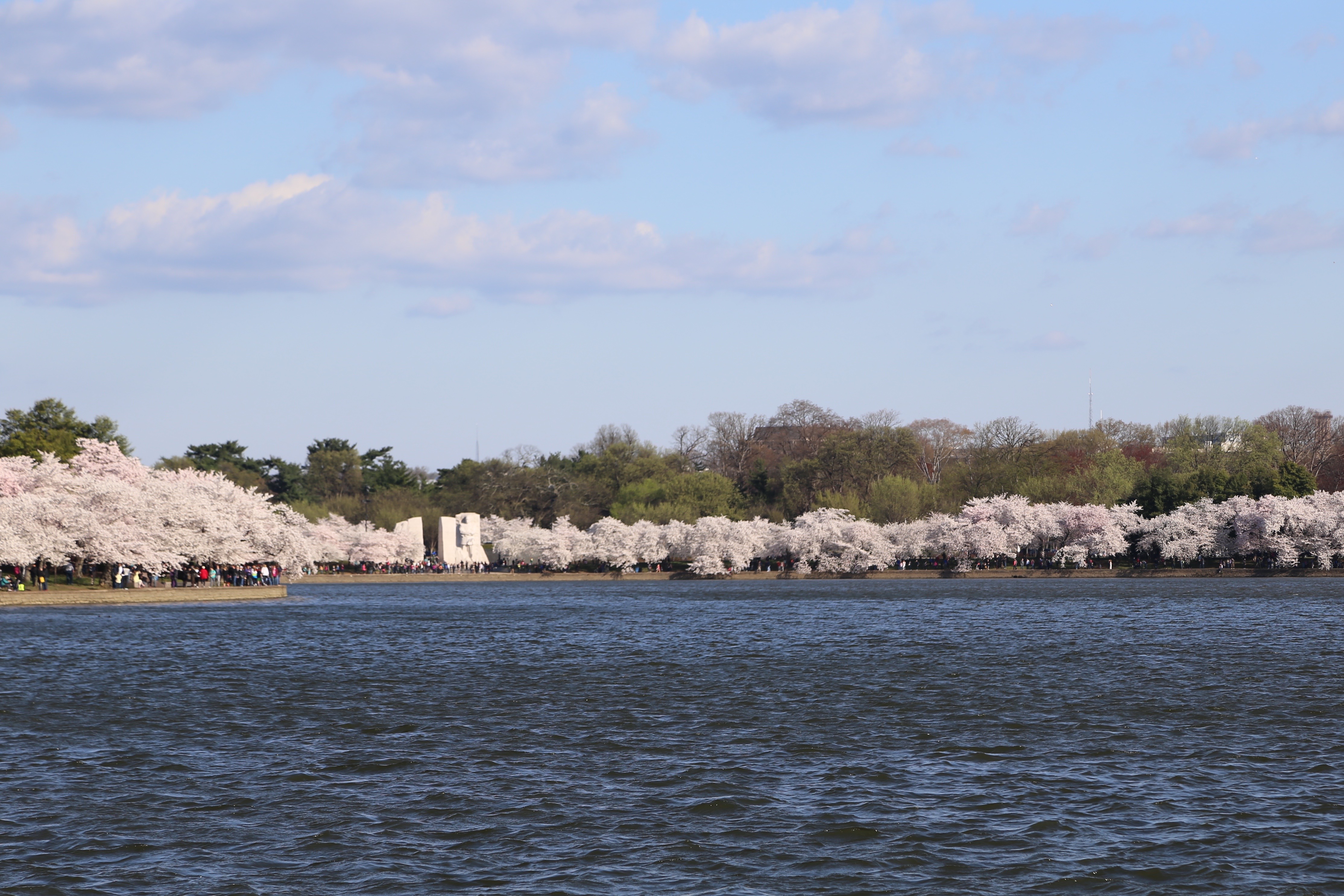
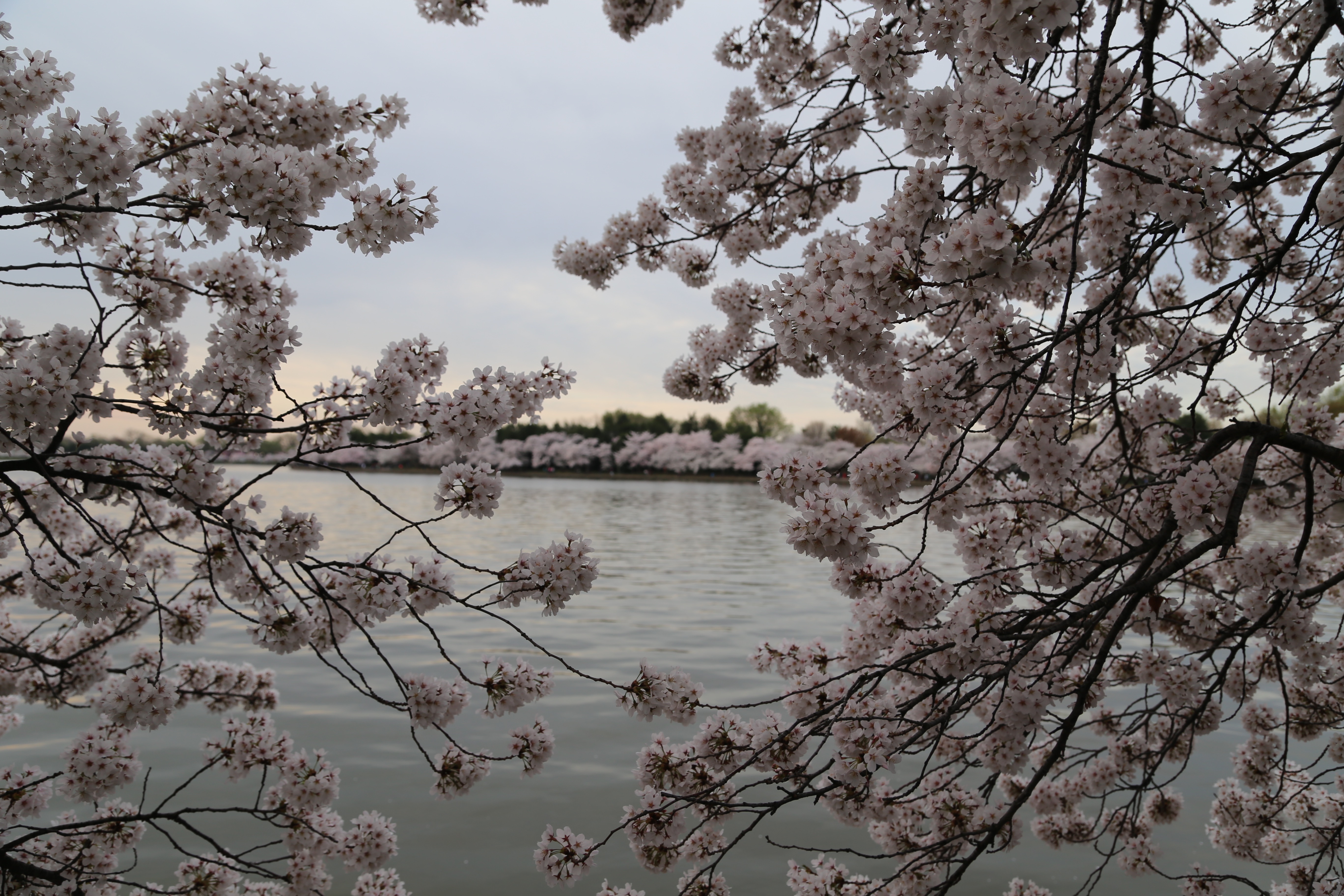
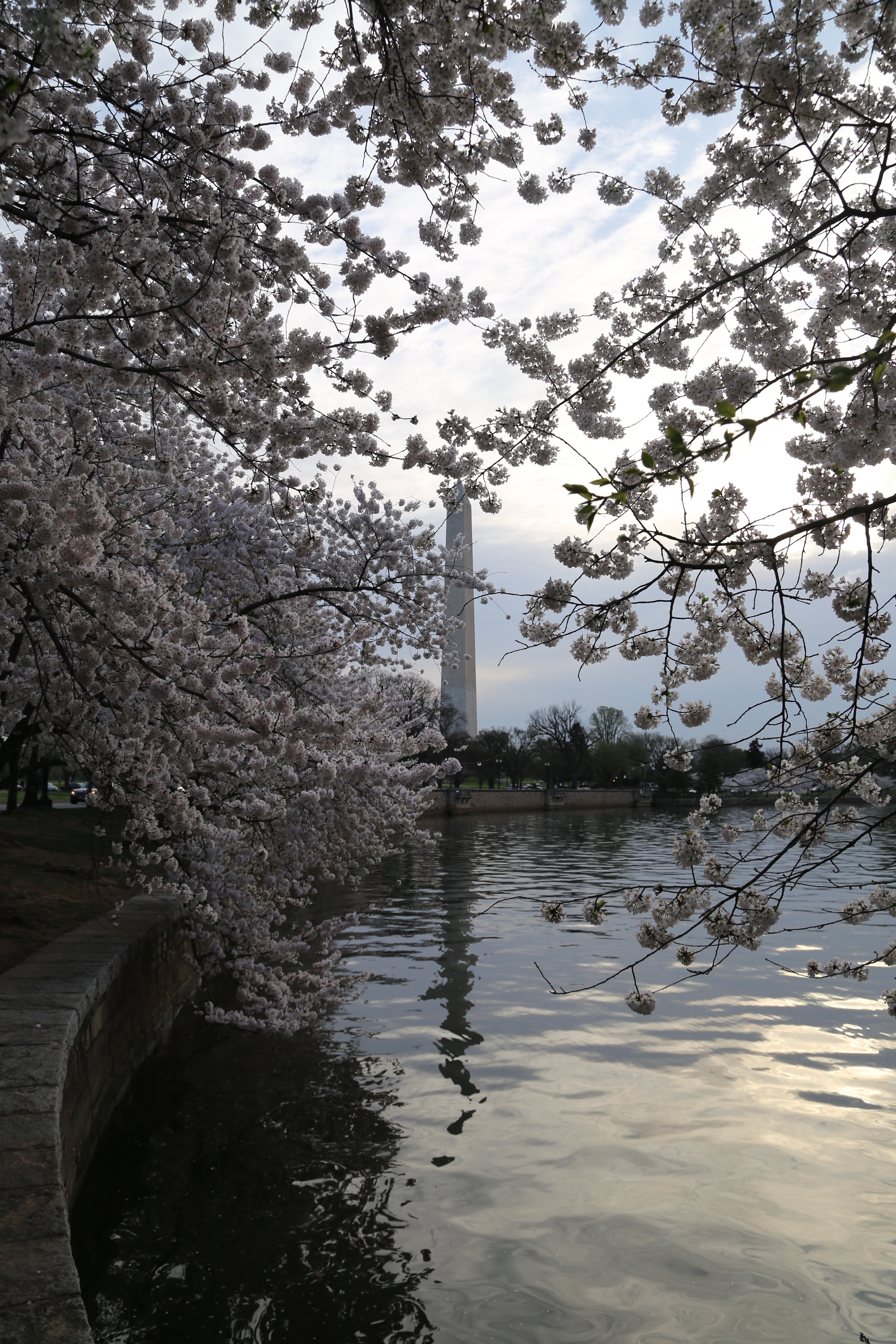
Cherry blossom time is about one of the nicest times of the year in the Washington, DC area. I took two trips to the Tidal Basin to photograph the blossoms during peak bloom. Below are a few of my favorite photos.

Cherry blossoms

Cherry blossoms

Jefferson Memorial and cherry blossoms around Tidal Pool

Jefferson Memorial and cherry blossoms around Tidal Pool

Cherry blossoms

Cherry blossoms

Cherry blossoms

Cherry blossoms

Cherry blossoms around Tidal Pool

Cherry blossoms around Tidal Pool

Cherry blossoms

Cherry blossoms

Cherry blossoms

Cherry blossoms

Cherry blossoms around Tidal Pool (MLK monument is on the left)

Cherry blossoms around Tidal Pool (MLK monument is on the left)

Cherry blossoms

Cherry blossoms

Cherry blossoms around Tidal Pool

Cherry blossoms around Tidal Pool

Cherry blossoms around Tidal Pool

Cherry blossoms around Tidal Pool

Washington Monument with cherry blossoms

Washington Monument with cherry blossoms

Waste to Energy Plant

Last week I got the chance to tour a waste to energy plant. The plant receives non-hazardous, household garbage from municipalities, consumer businesses, government agencies, and international ports. It burns the waste and converts the energy given off during the burning to electricity, which is then put into the power grid. Some of the waste that comes from government agencies need secure destruction, and at the plant, the waste is put directly into the feed stream and burned, so as to allow the needed secure destruction. The waste from international ports, such as nearby airports, must be burned to prevent any pathogens entering the country that may affect agriculture, and so it also is fed directly to the feed stream. Interestingly, the municipalities that send waste to the plant discourage their residents from putting yard waste into the trash. Besides being environmentally unfriendly because yard waste can be composted and nutrients returned to the earth, the yard waste is also not good for the waste to energy process because it produces nitrogen oxides (NOx), which forces the plant to put in more pollution control.

There are 88 waste to energy plants in the US, and 45-46 are Covanta’s, the owner and operator of this plant that I toured. The plant receives about 1000 tons garbage/day and after burning it, produces about 300 tons ash/day, which is 10-15% fly ash and the rest bottom ash. Thus, the plant achieves about a 70% weight reduction and also a 90% volume reduction. The fly ash is sent to monofill, which is like a landfill but only accepts fly ash. Fly ash can be used in making concrete, so evidently there is currently research being done by both the concrete industry and various waste to energy plants as to if this fly ash can be used for concrete and thus also be reused.

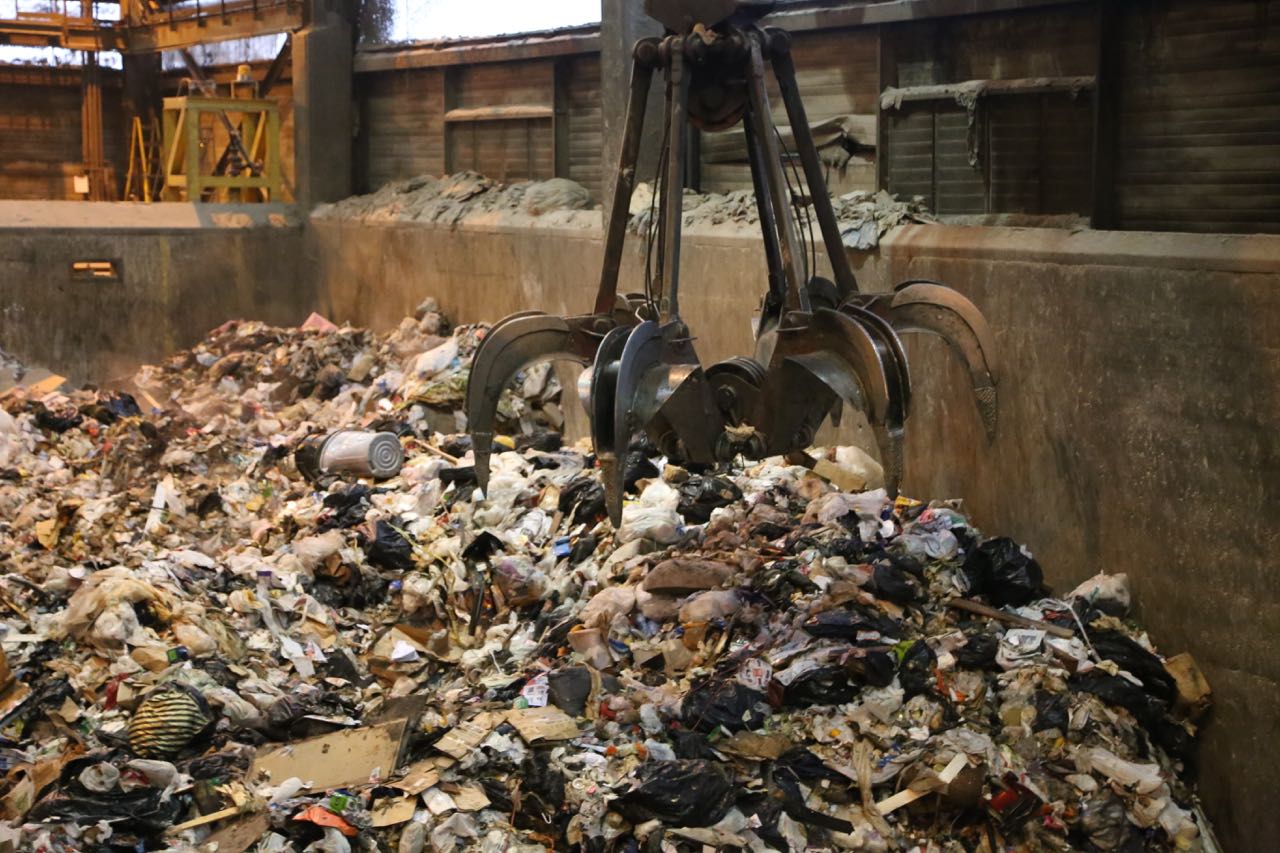
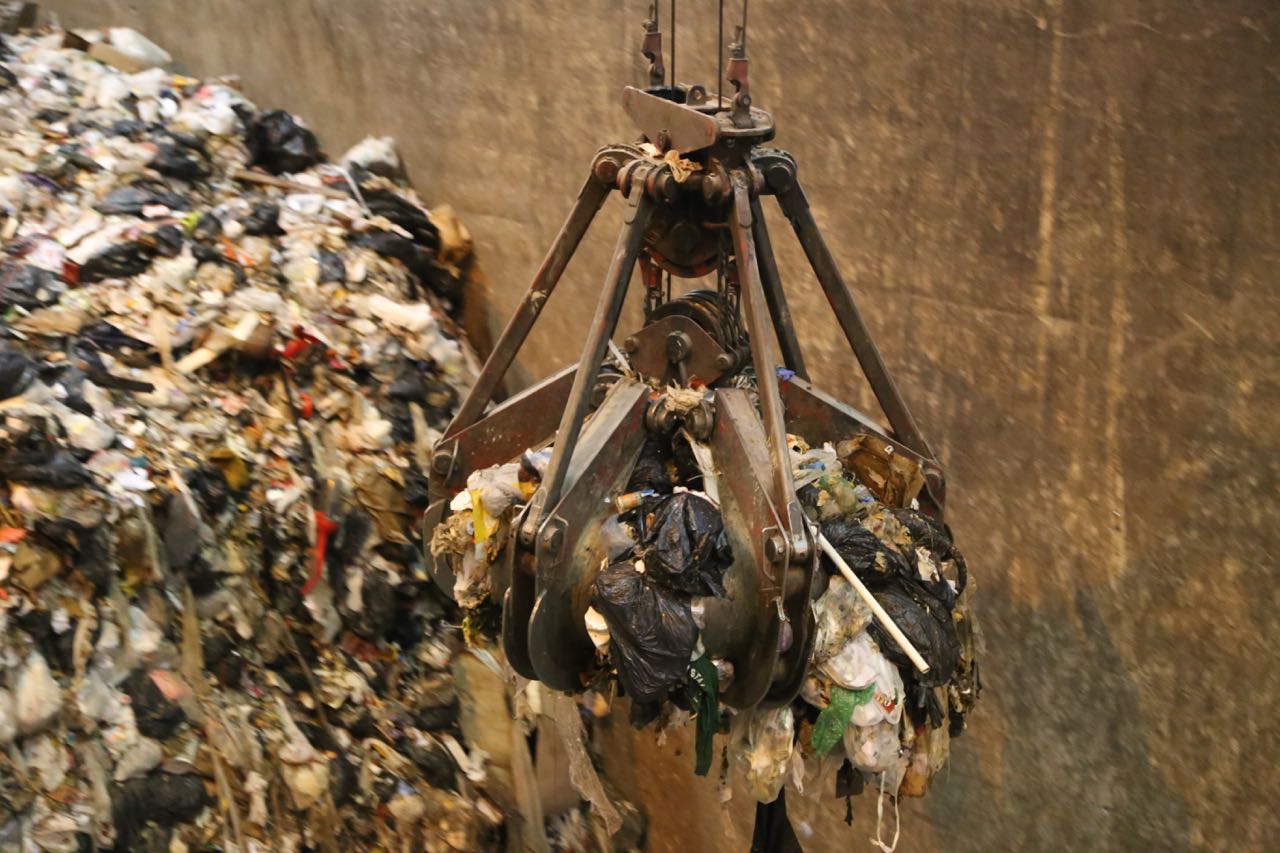
With the exception of the trash that has to go directly into the feed, when it first comes to the plant, the trash is placed on floor where humans look at trash to remove anything that should not be going into the boiler. For example, inert material shouldn’t go into the boiler because not only does it not burn, it is also a heat sink and reduces the efficiency of the process. The trash is then put into a storage pile to be eventually fed into the boiler feed. A large claw moves the trash to piles, mixes the piles, and then moves trash from the piles into the boiler feed.

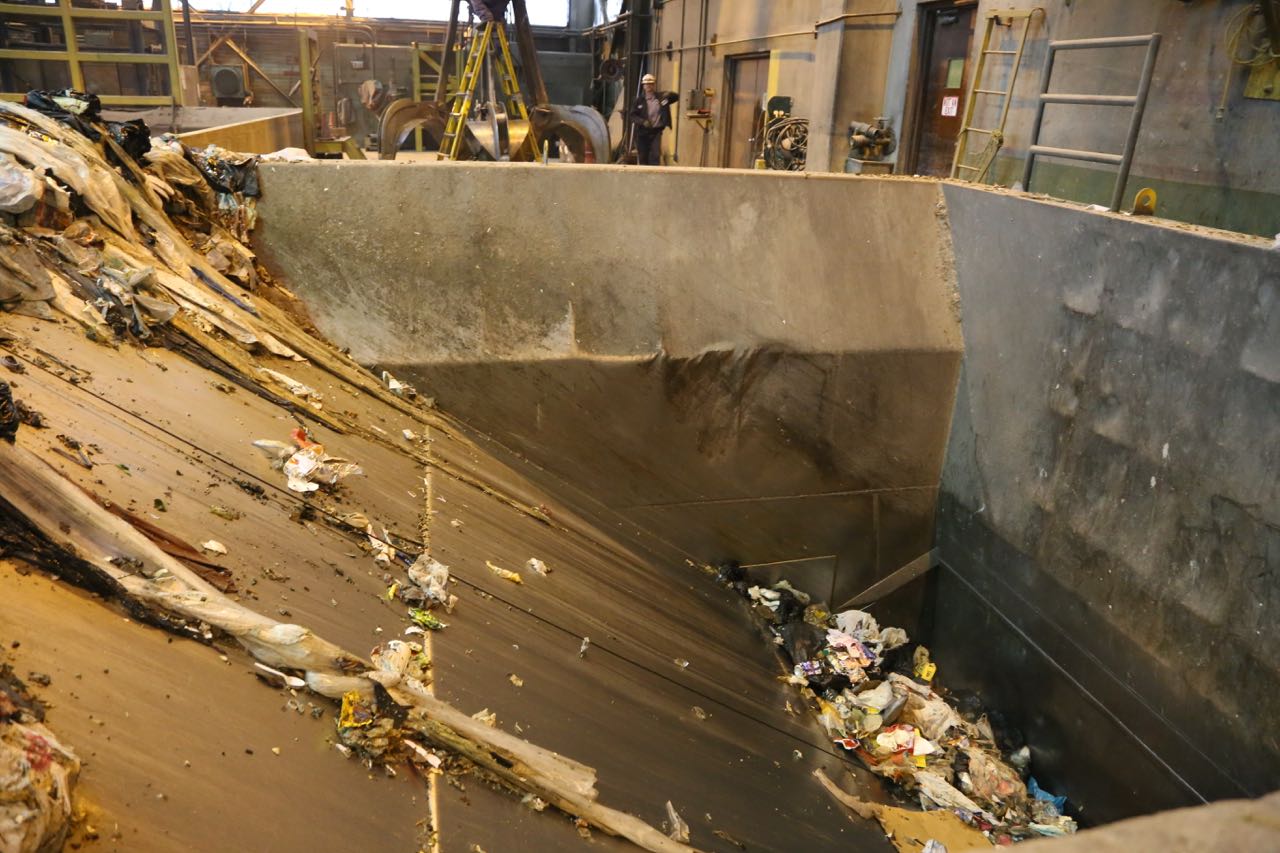
Pile of trash waiting to be burned

Pile of trash waiting to be burned

Large claw picks up trash to put into feed

Large claw picks up trash to put into feed

Trash slides into the entrance to the boiler

Trash slides into the entrance to the boiler

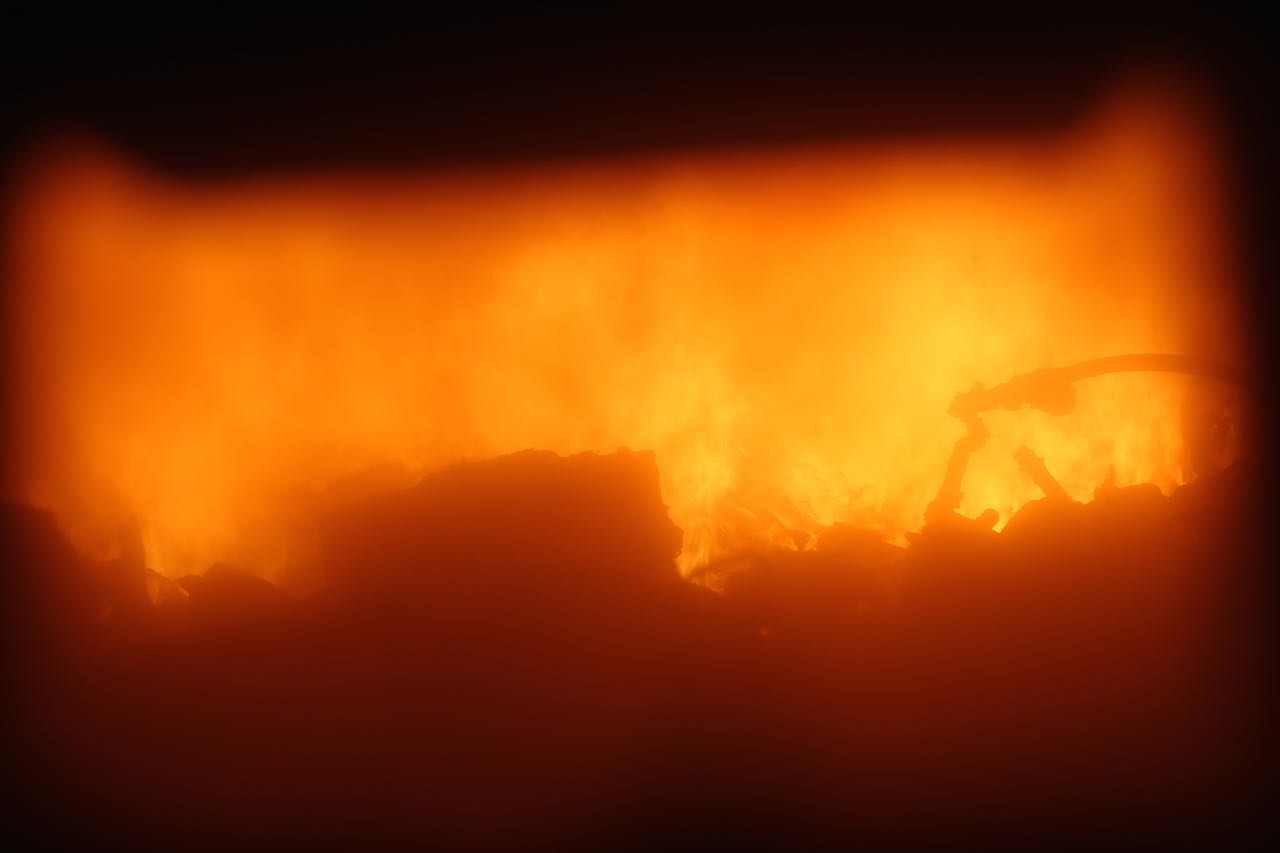
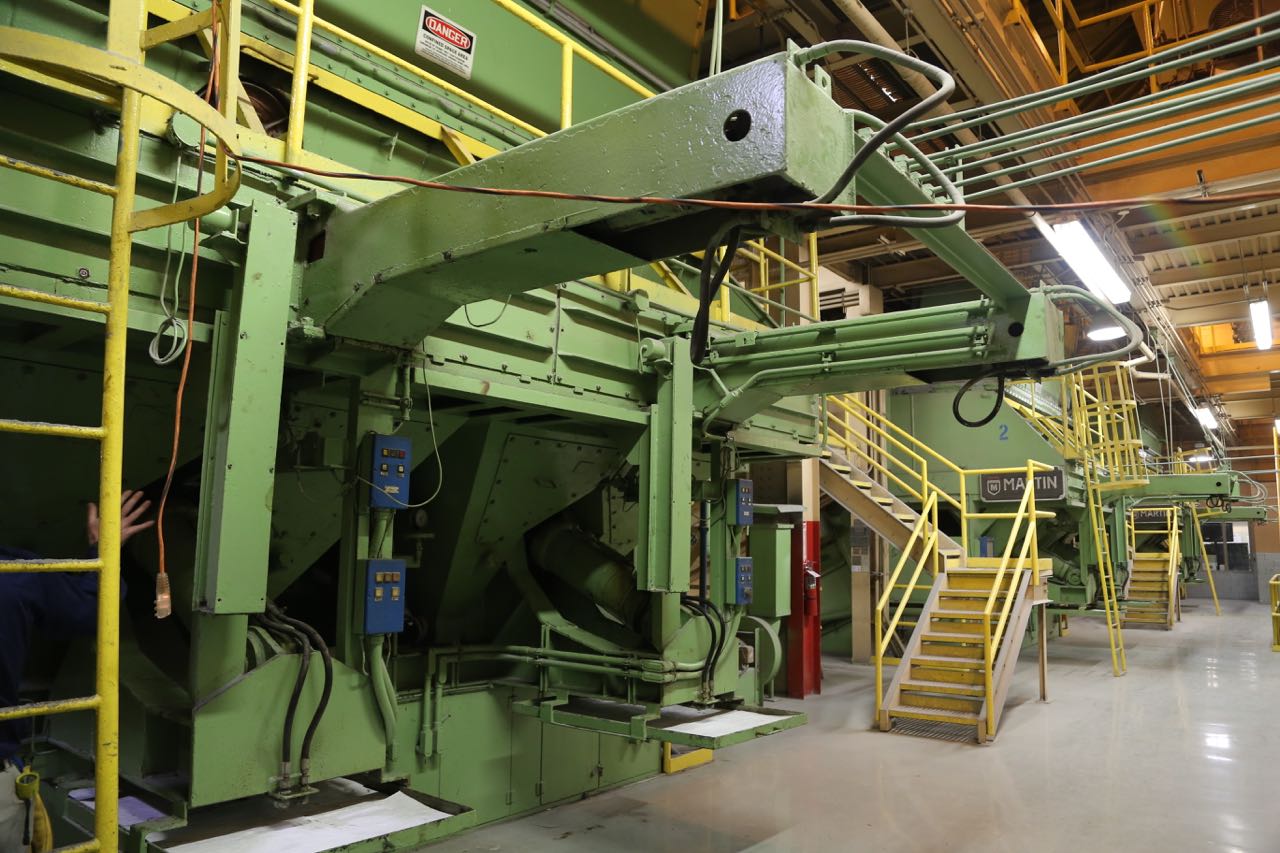
The trash is sent to one of three boilers, each of which has six cells. The boilers burn the trash at 1800-2000°F (1300K). The boilers are initially heated up with diesel fuel, but then the trash sustains the burn. However everyday diesel fuel is used to test the burn.

The boilers

The boilers

View through a boiler's window of the trash burning

View through a boiler’s window of the trash burning

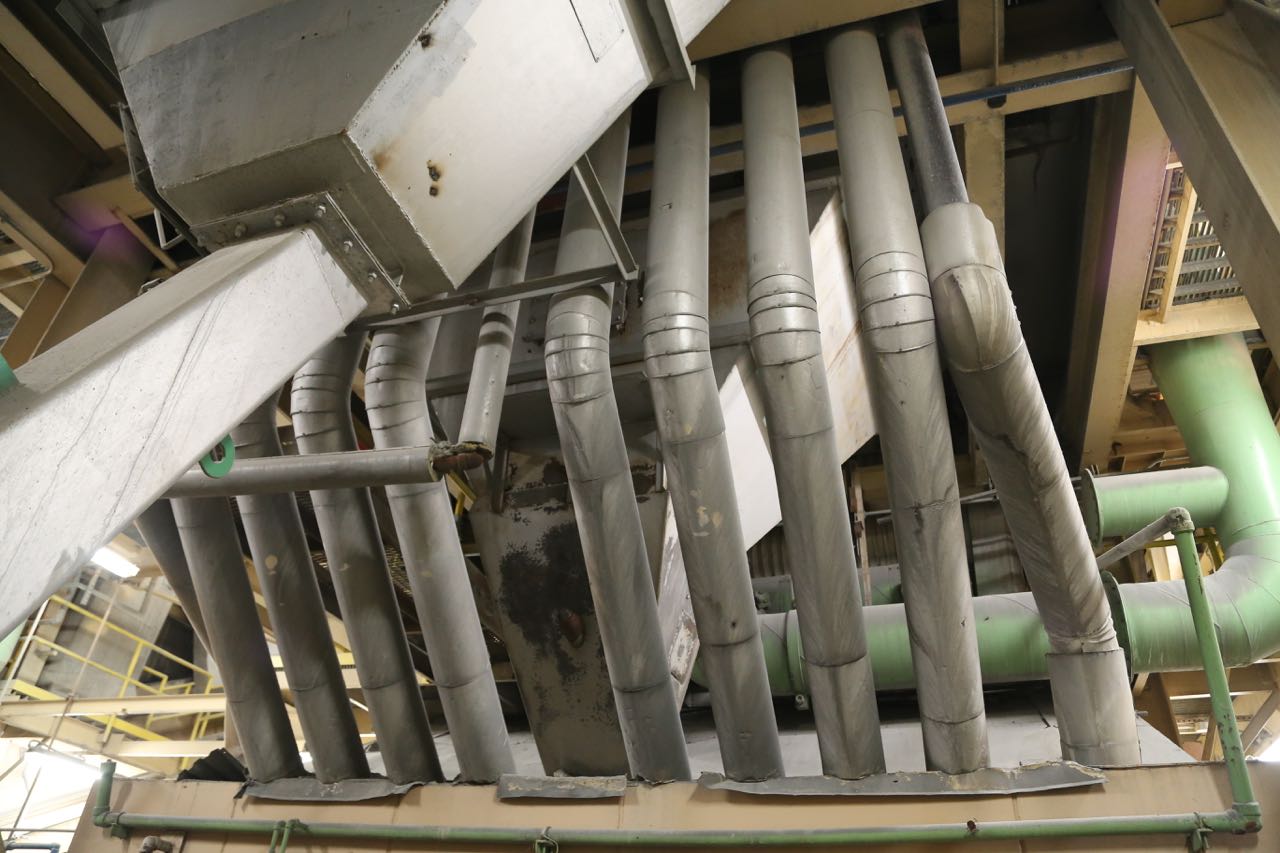
Pipes and ducts everywhere

Pipes and ducts everywhere

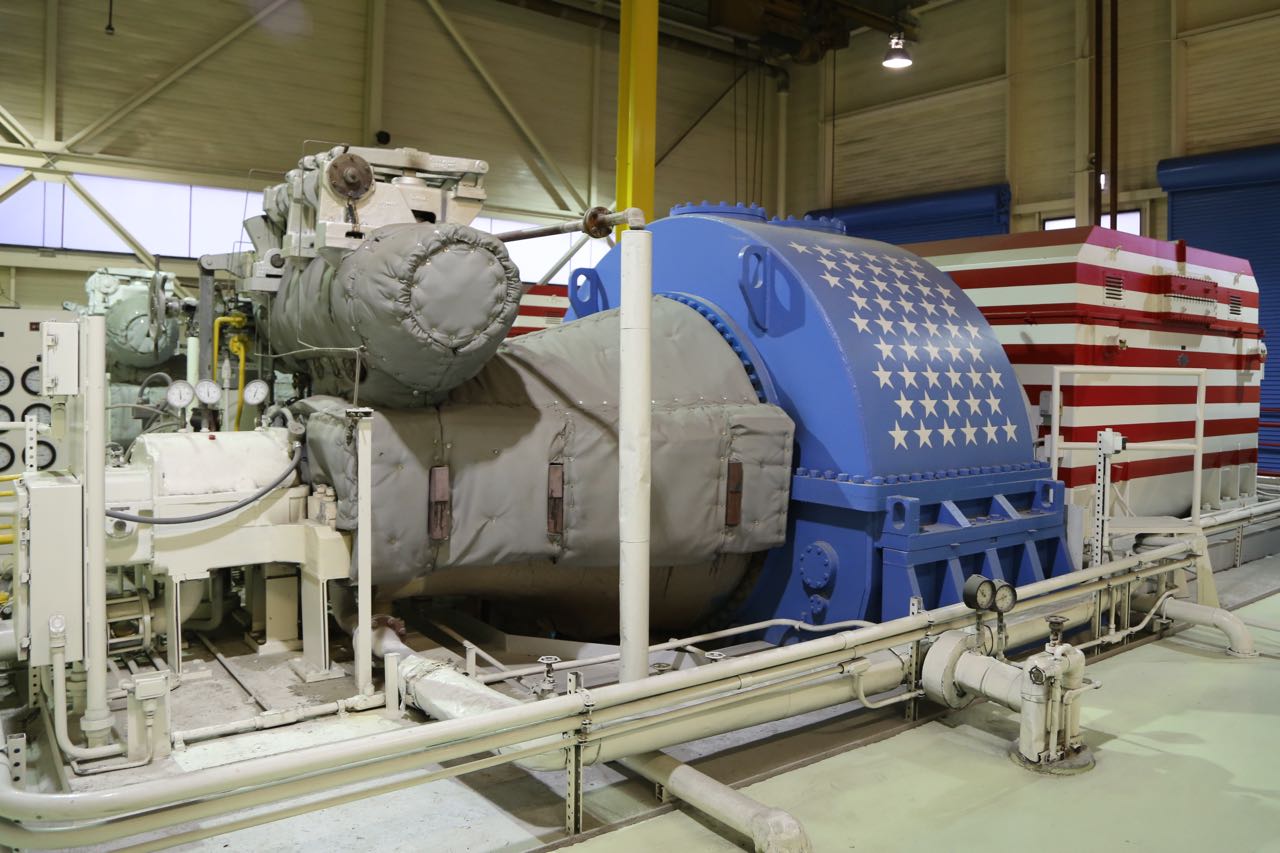
The heat from the boilers is used to heat water to turn it into steam. The water is in a closed loop system, but they use about 20-25,000 gallons of water per day due to loss. [They use another 200,000 gallons/day for the cooling tower and are exploring with the nearby wastewater treatment plant using treated wastewater for this.] The water goes through a reverse osmosis treatment for purity, so nothing damages the turbines and the rest of the system. The produced steam is superheated but drops to 700°F before entering the turbines. There are two turbines with 14 stages. The steam turns the turbines, and that motion is converted into electricity in the generator. They produce 14.5 MW per turbine. Because of the work the steam does on the turbine, the steam enters the turbine at 600 psi and leaves in vacuum in a 10 ft length.

The turbine (gray and blue) and the generator (red and white stripes)

The turbine (gray and blue) and the generator (red and white stripes)

All the gases that leave the boiler pass through a series of air pollution control units. Ammonia, lime slurry, and carbon are used for pollution control. There are probes in the system to sample flue gas for pollution control additives that are needed. The treated gas then goes to a baghouse where particulates are captured. The air is below 300°F before going into baghouse, so it has cooled quite a bit.
The ash from the boiler is sent through a unit to remove all metals. The ferrous metals (attracted to magnets) are separated from the rest of the metals, and all the metals are sold for scrap.
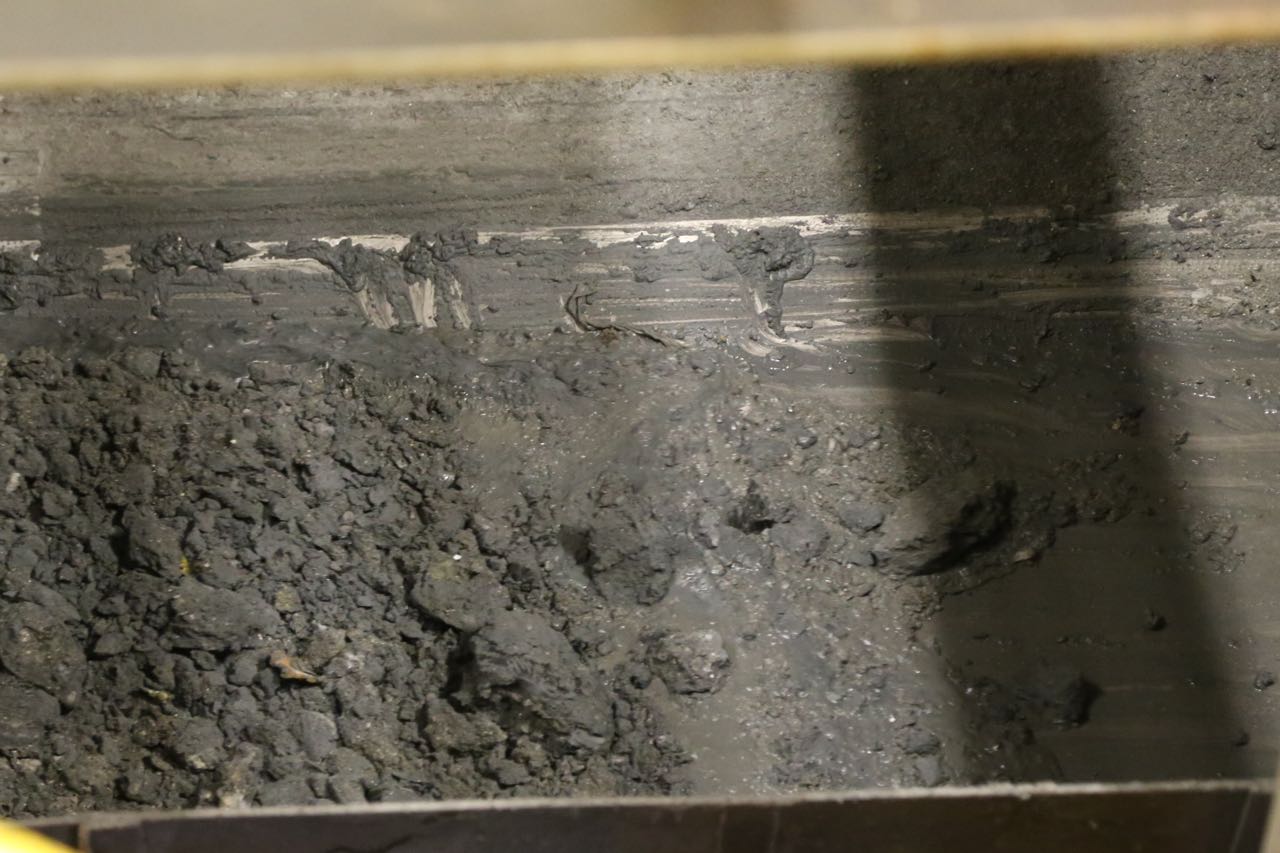
bottom ash

Bottom ash entering the separator

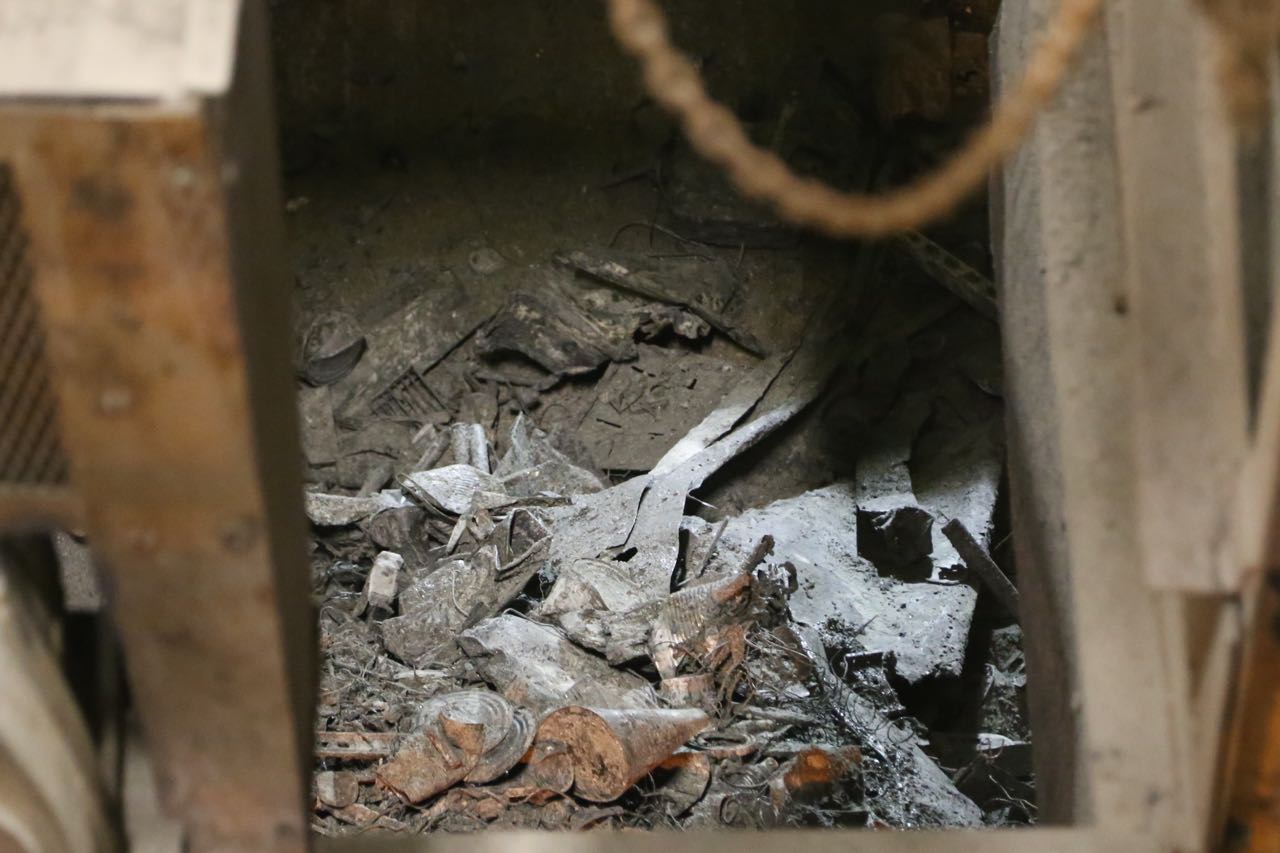
Metal that has been separated

Metal that has been separated

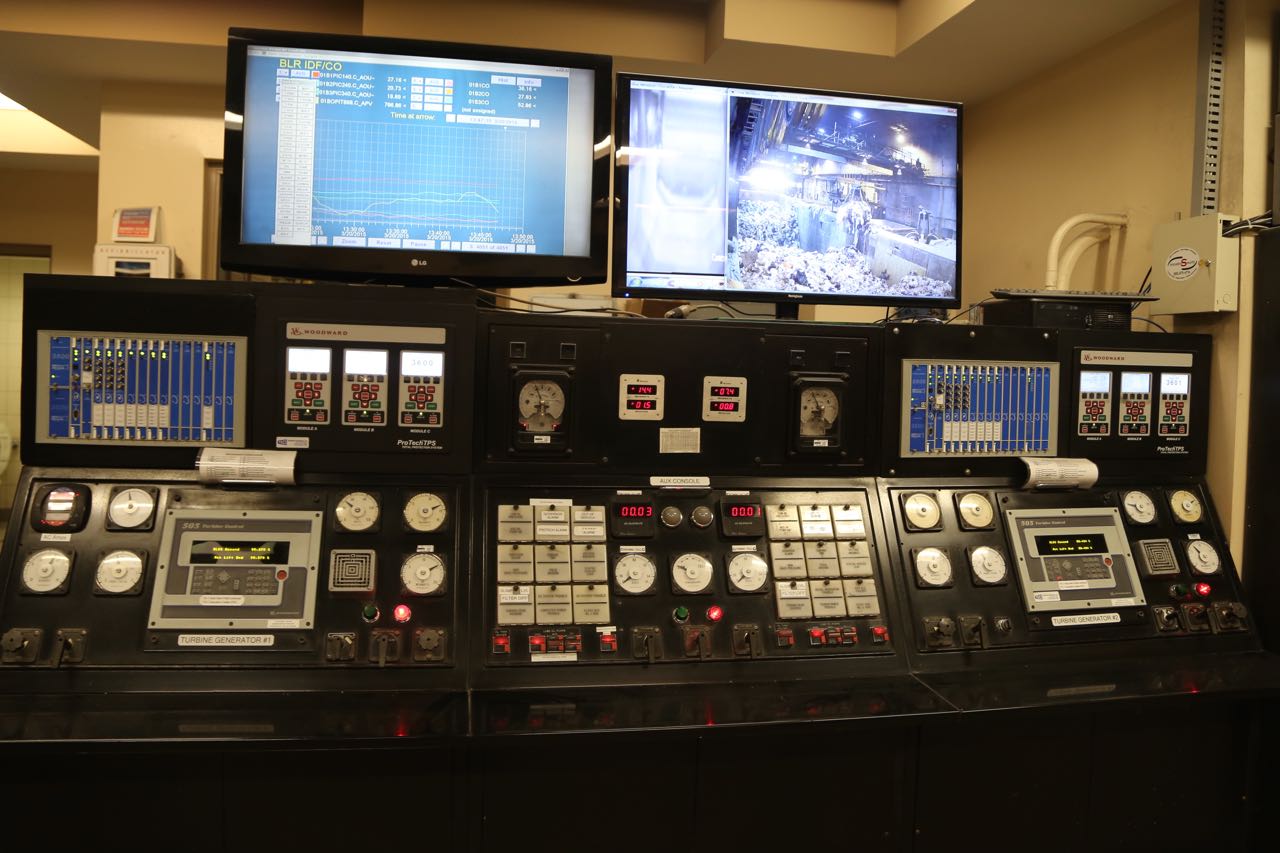
The whole process is monitored in a control room by one or two people. I was amazed at how simple the process was. I, the environmental engineer, was of course geeking out at the whole thing, but it was a really cool process and efficiently run.

Control panel monitors

Control panel monitors

Finally here is a very short video of a few scenes from the plant. This includes waste being loaded into the feed, the fire in the boiler, and bottom ash entering the metals separator.

Snow

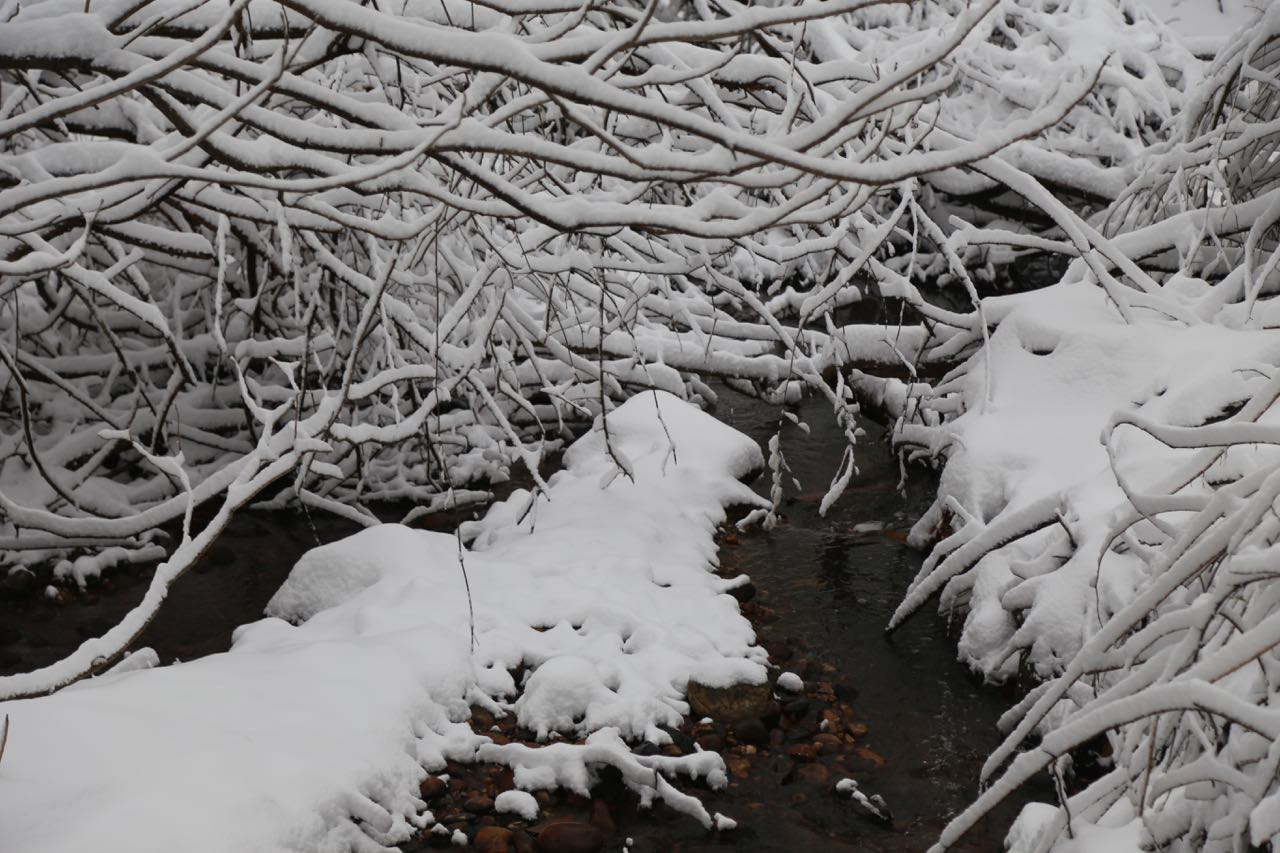
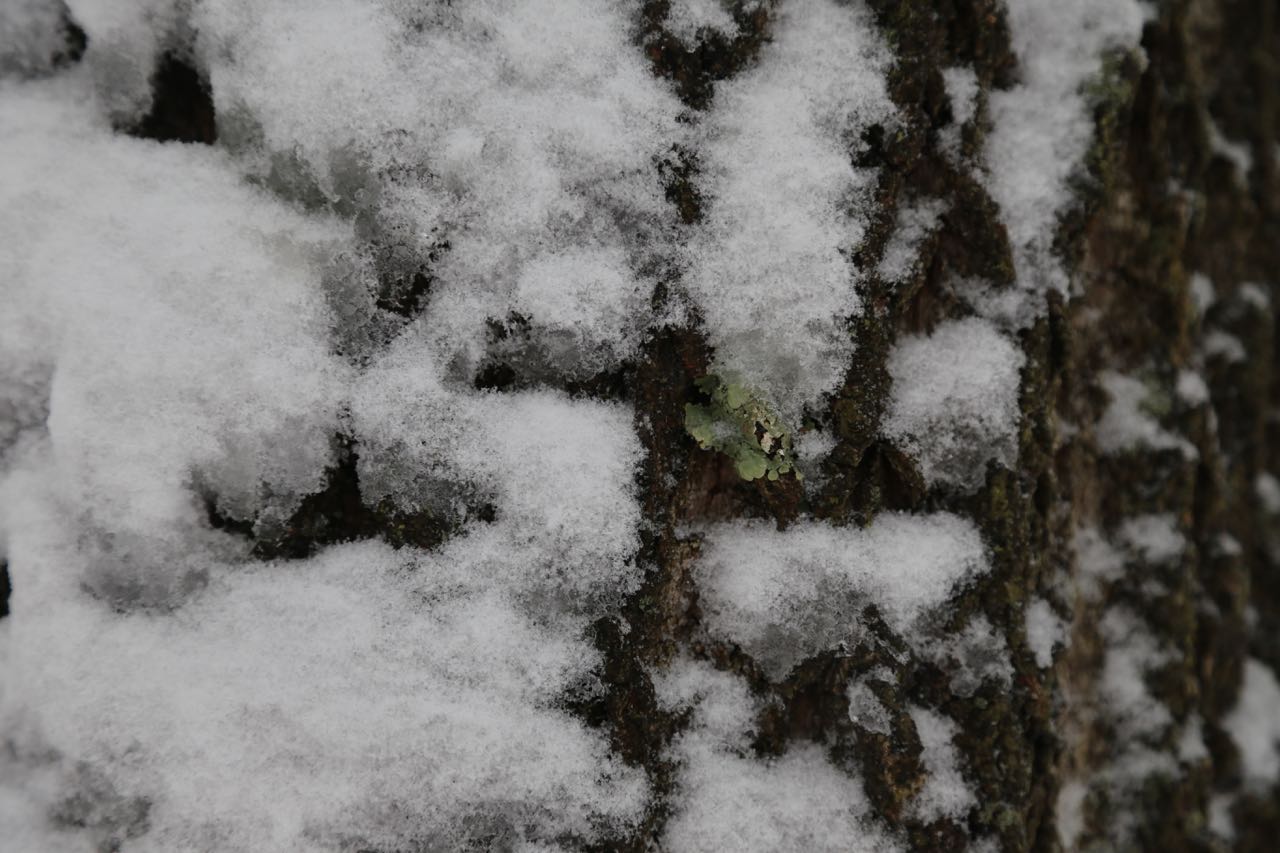
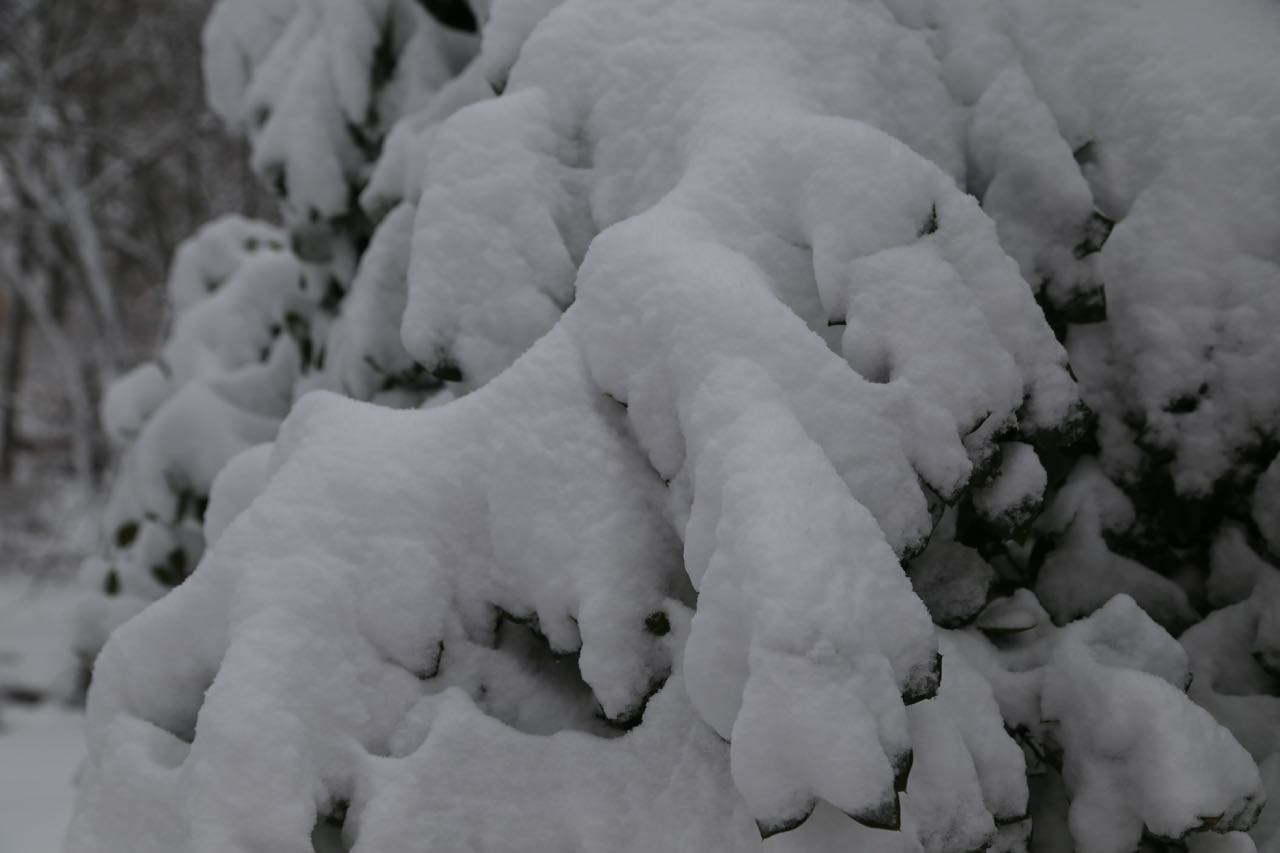
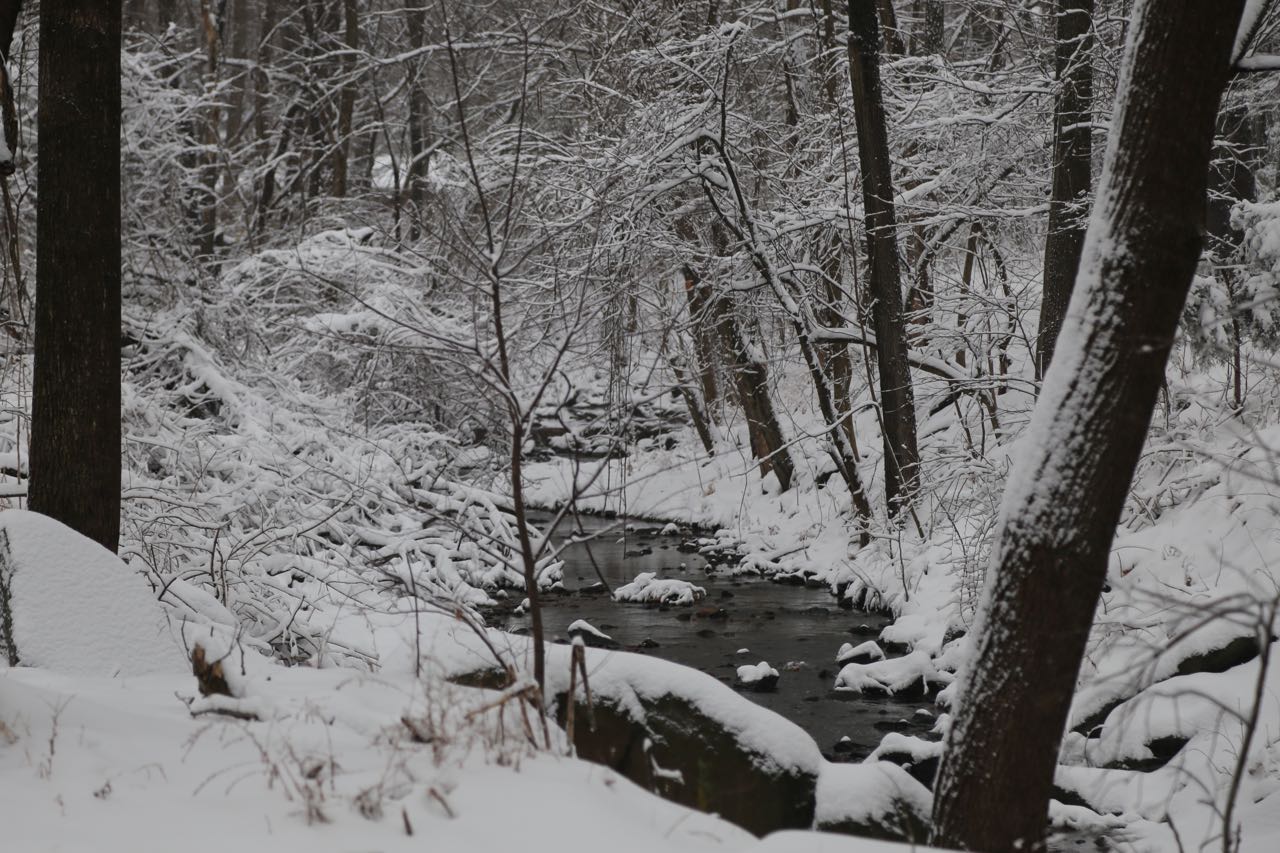
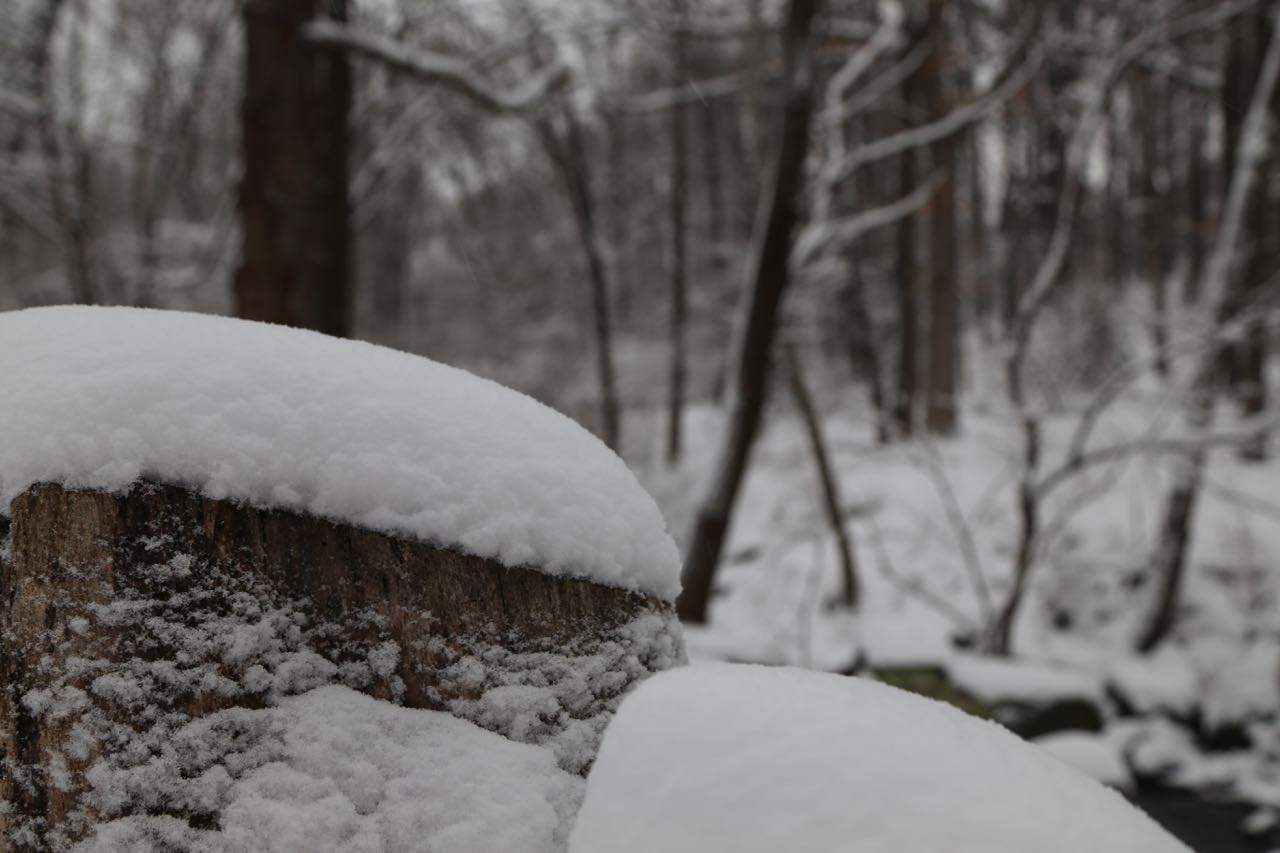
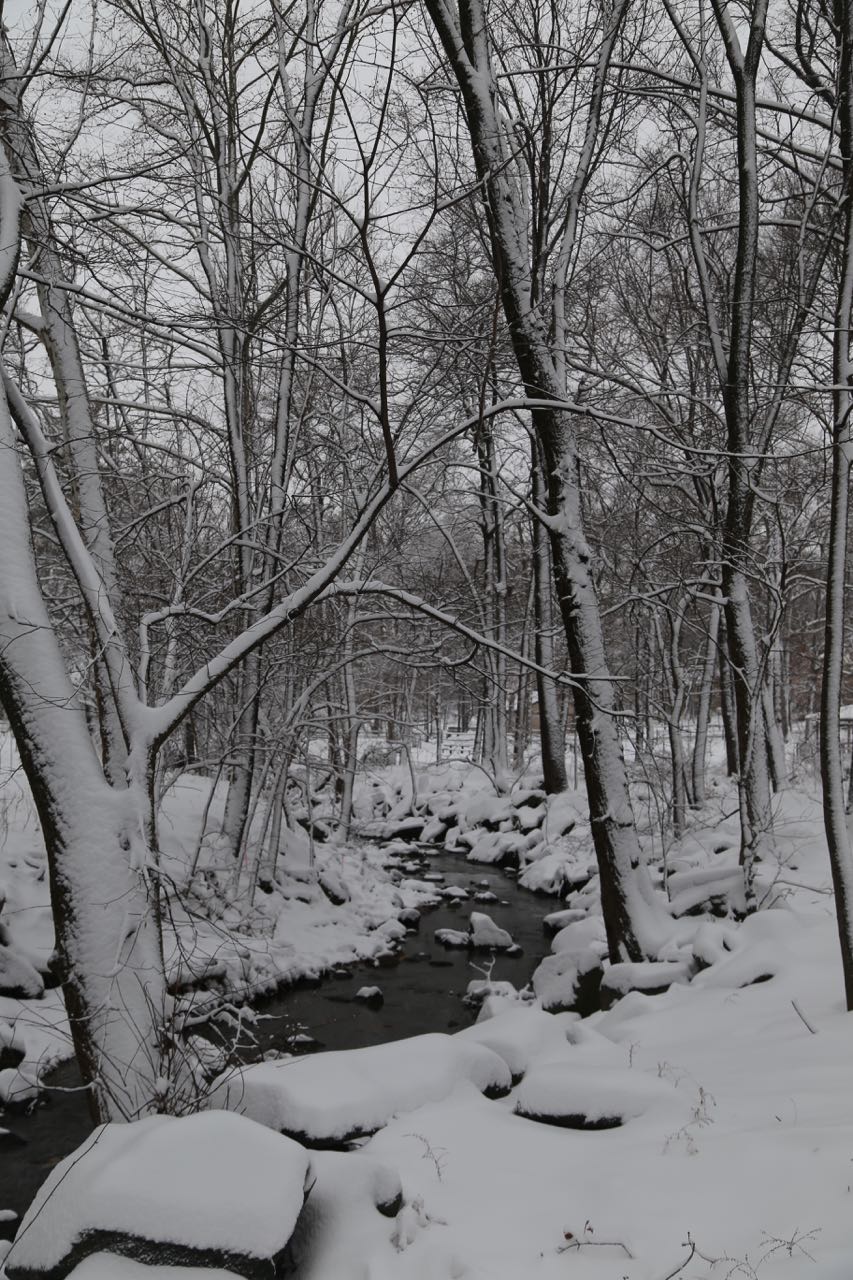
When I took Ferdinand out to play in the snow, I also took photographs of the snow. A fresh coating of several inches of snow has an amazing way of making everything look peaceful and beautiful. I like the way it sort of unifies everything. You are not sure where the grass and plants end and the rocks begin.The snow calls attention to the shape of branches and how thick they are or are not.limbs over stream moss on tree snow covered holly snow covered limbs stream stump stream_v

Ferdinand in the Snow

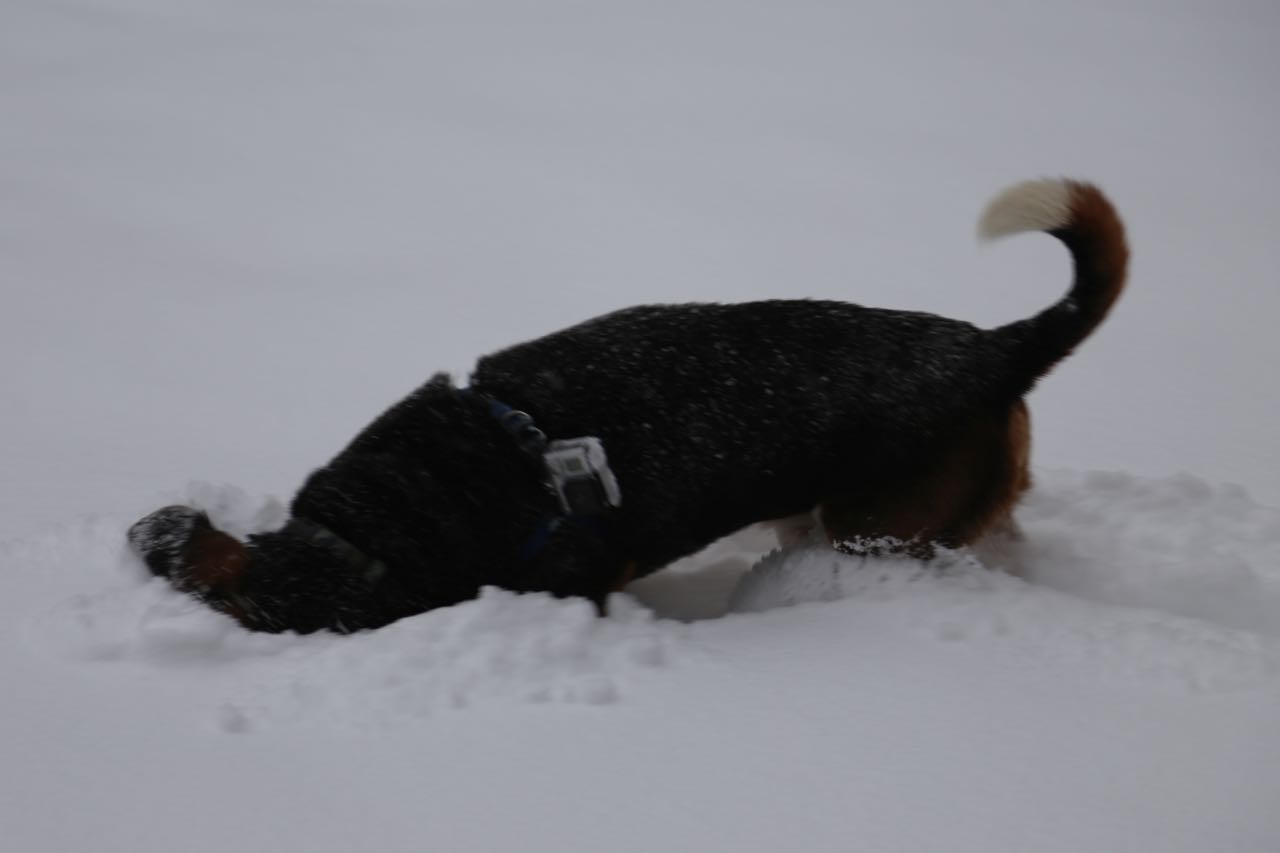
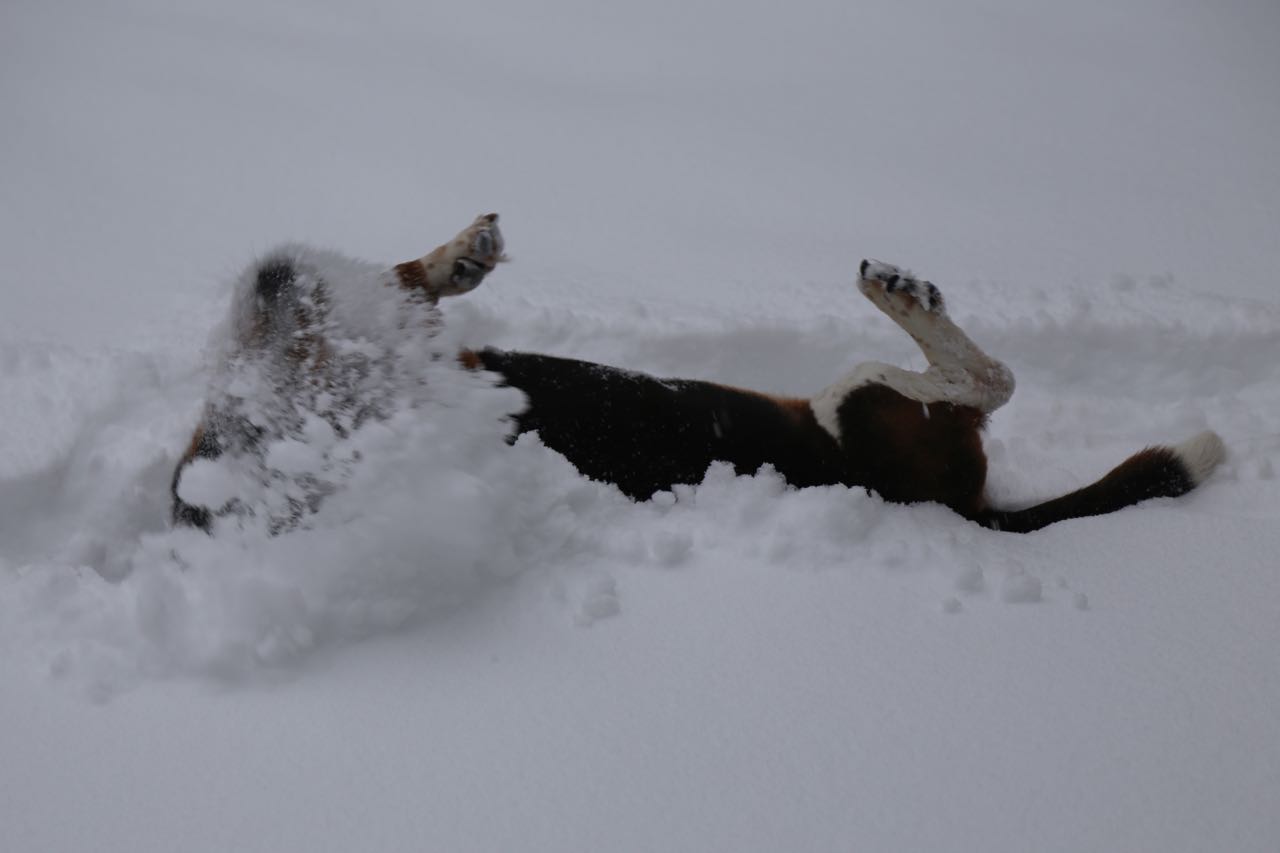
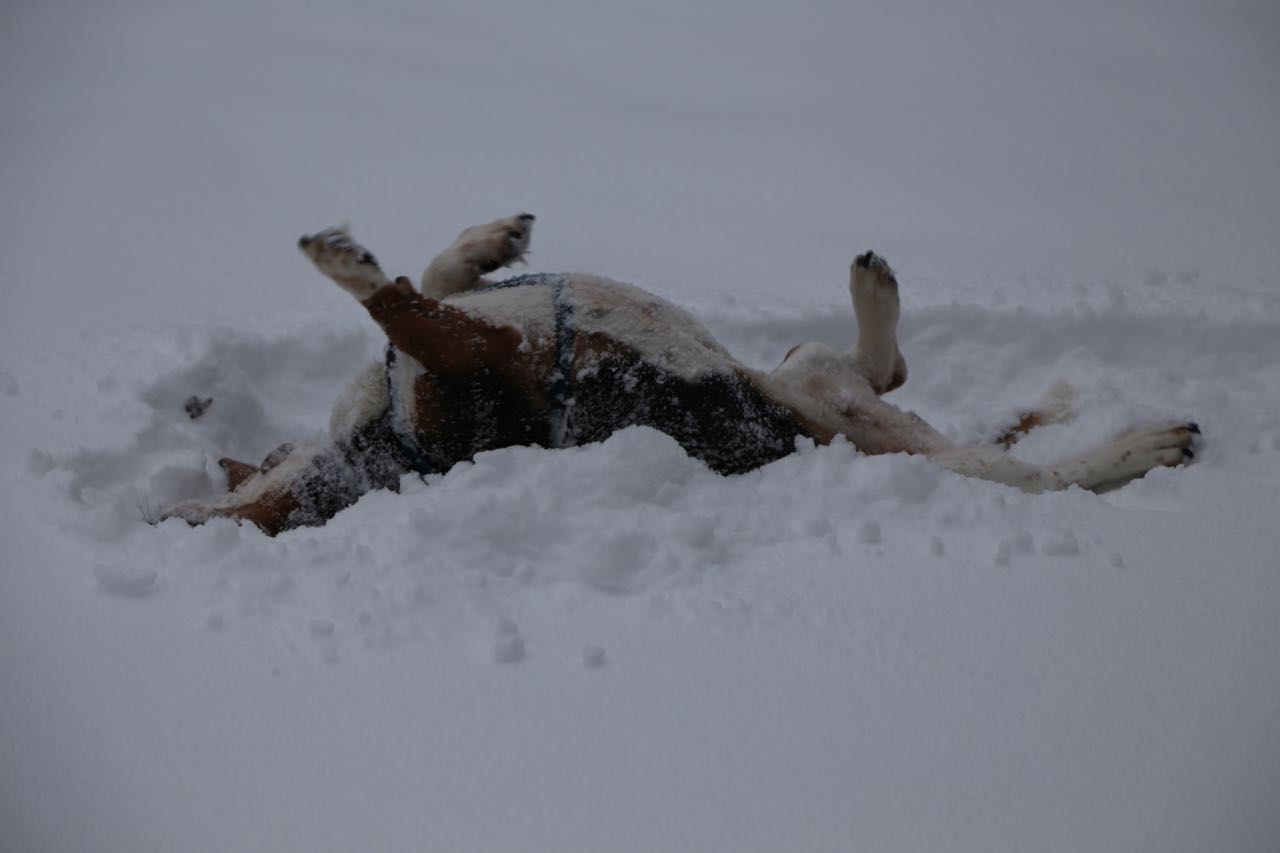
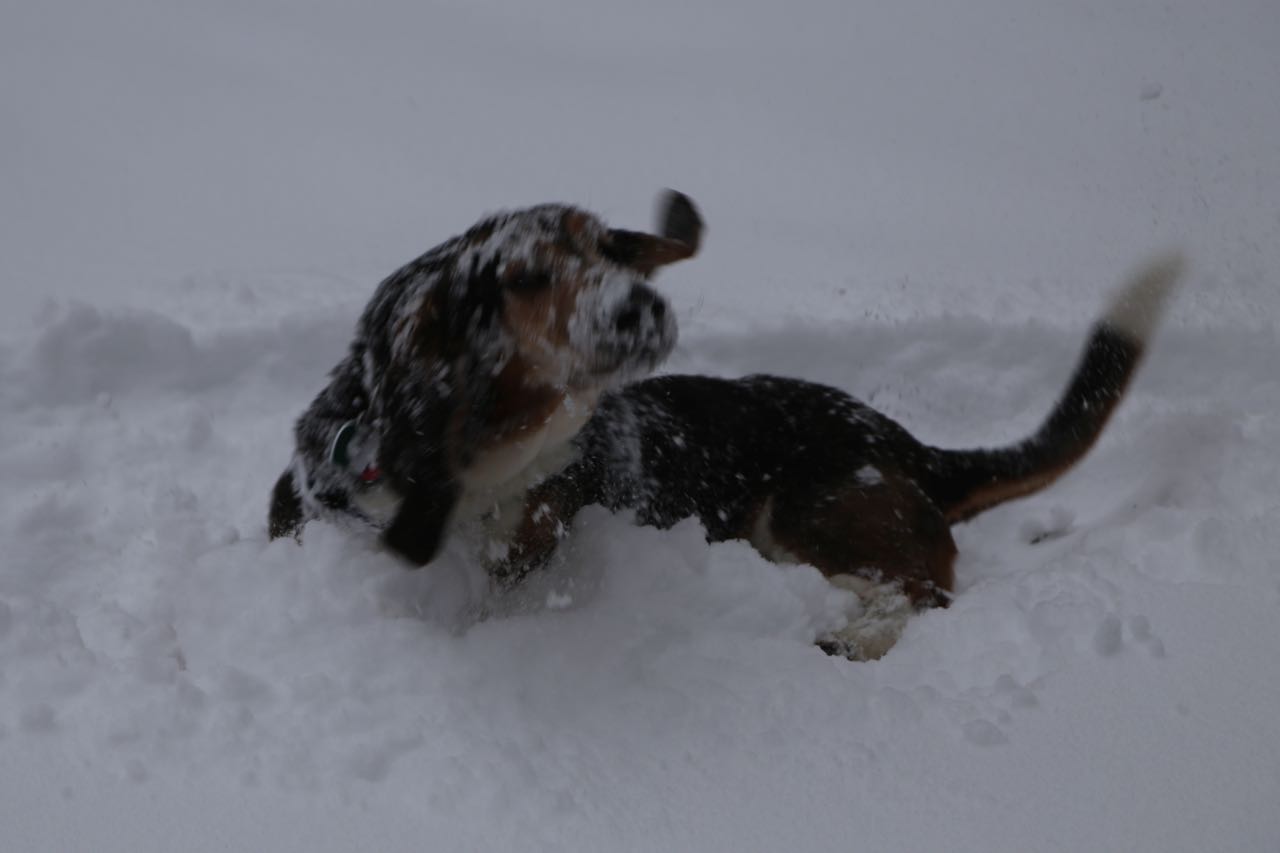
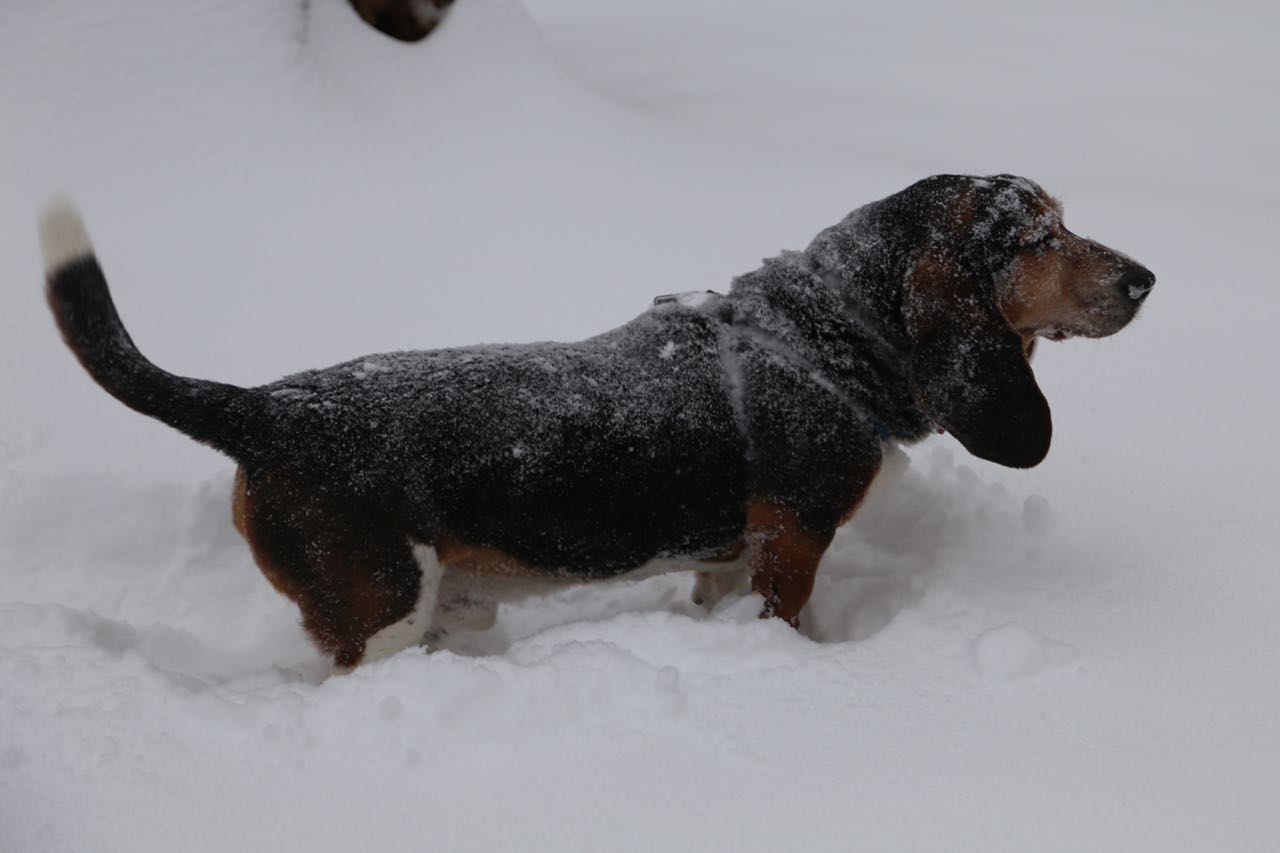
We got about 4 to 5 inches of snow yesterday, so I took Ferdinand out to play in it. The snow went up to his chest. He hates rain but loves snow. I attached a GoPro to his harness just to see what kind of video I could get. Below are photos and video I took of him as well as the video he took.

Ferdinand with a GoPro on his harness

Ferdinand with a GoPro on his harness

Running through the snow

Running through the snow

Running through the snow

Running through the snow

Digging head first into the snow

Digging head first into the snow

Rolling in the snow

Rolling in the snow

Rolling in the snow

Rolling in the snow

Rolling in the snow

Rolling in the snow

Rolling in the snow leads to being covered in snow

Rolling in the snow leads to being covered in snow

The video I took of Ferdinand playing.

The video Ferdinand took with the GoPro on his harness.

Half Bathroom Renovation Finished

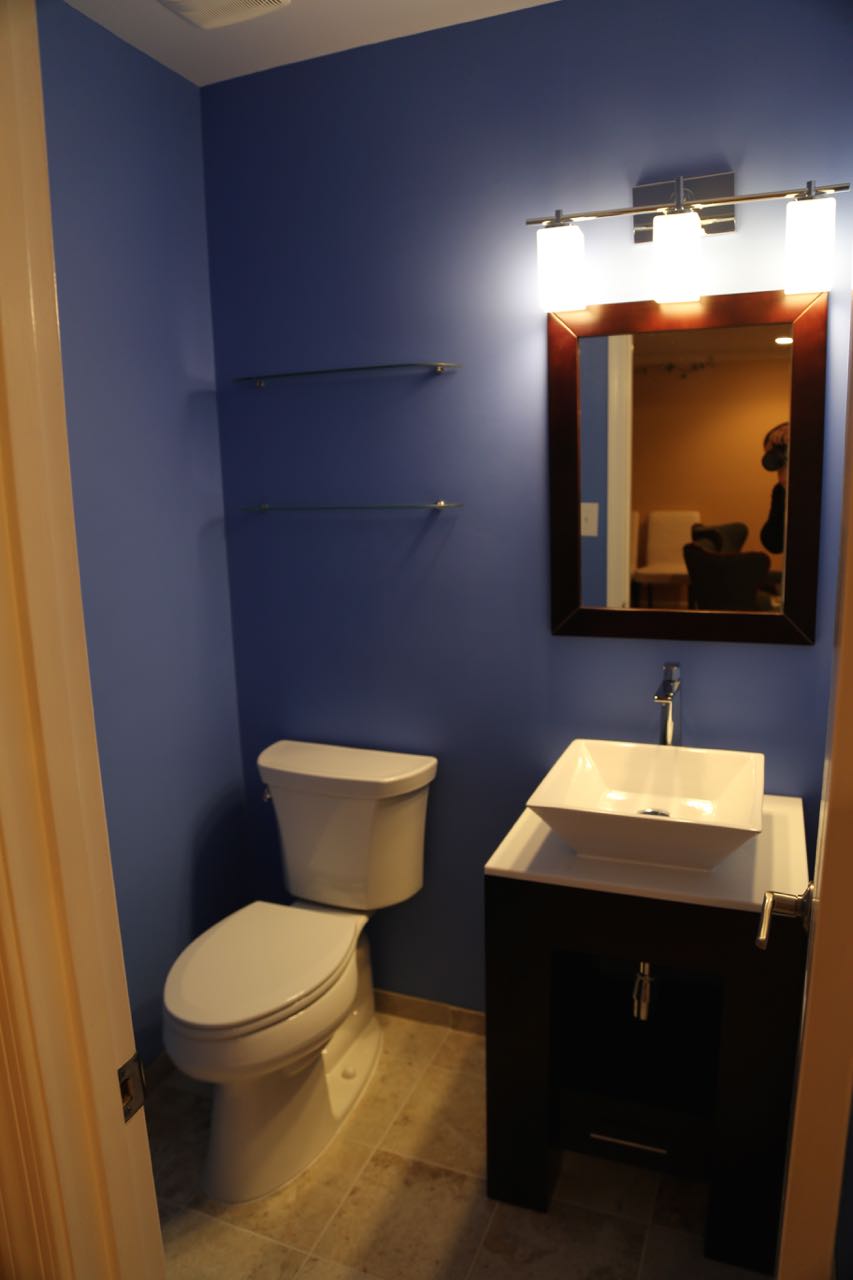
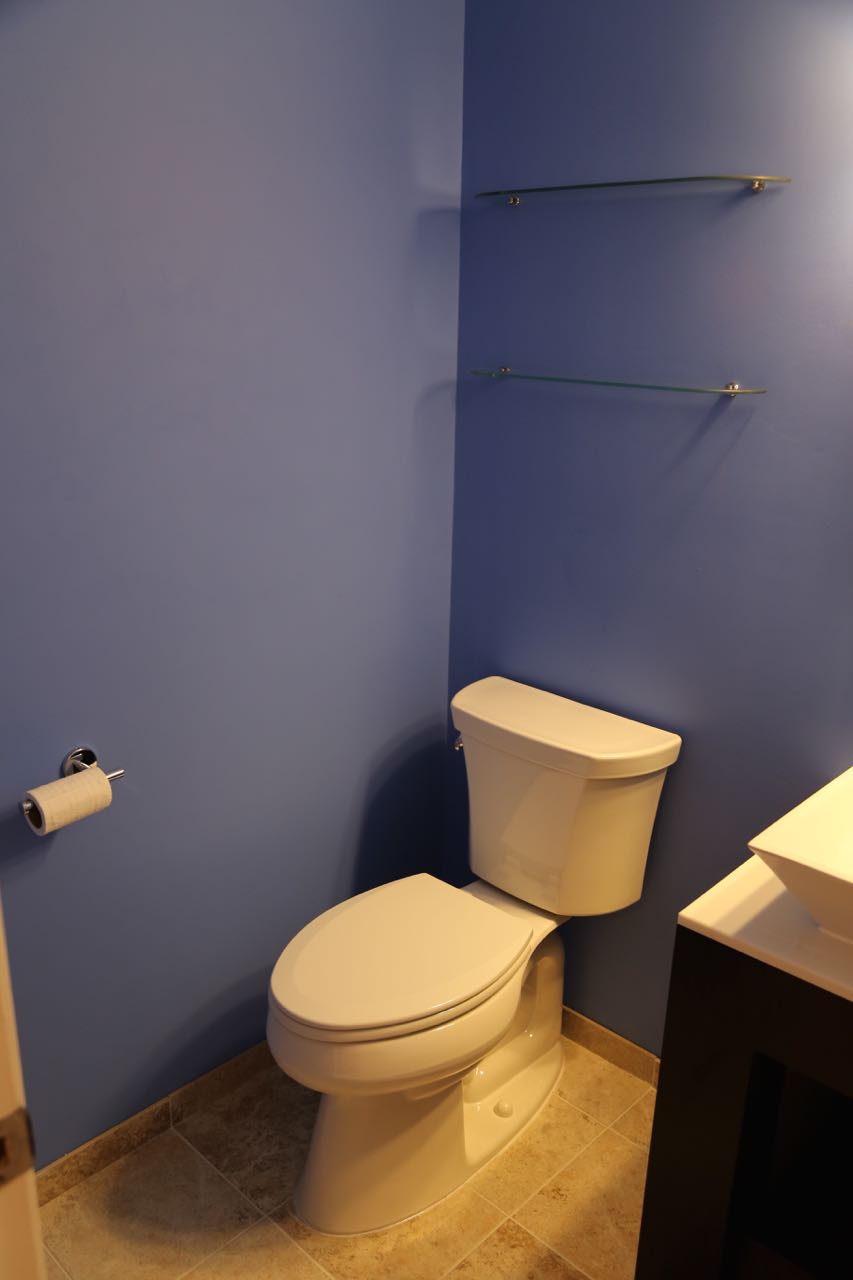
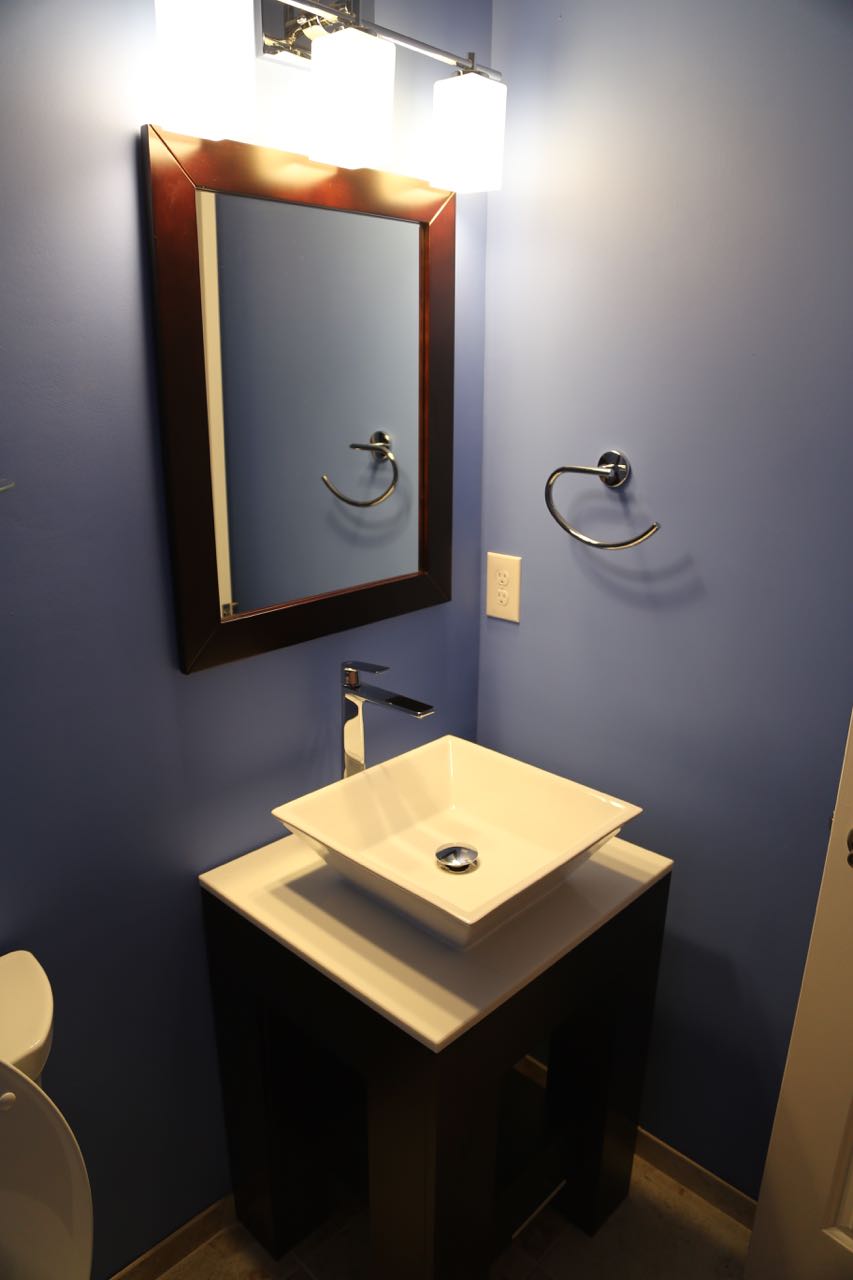
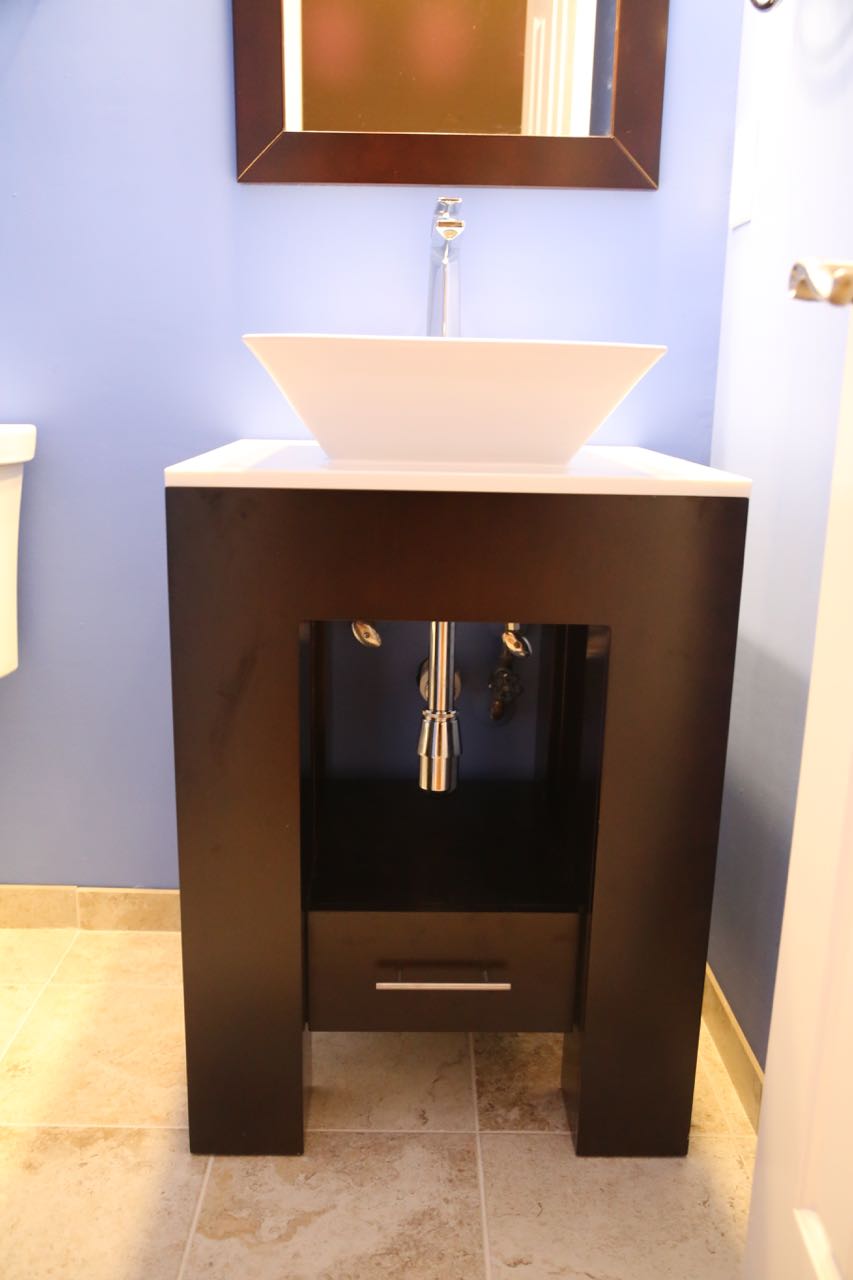
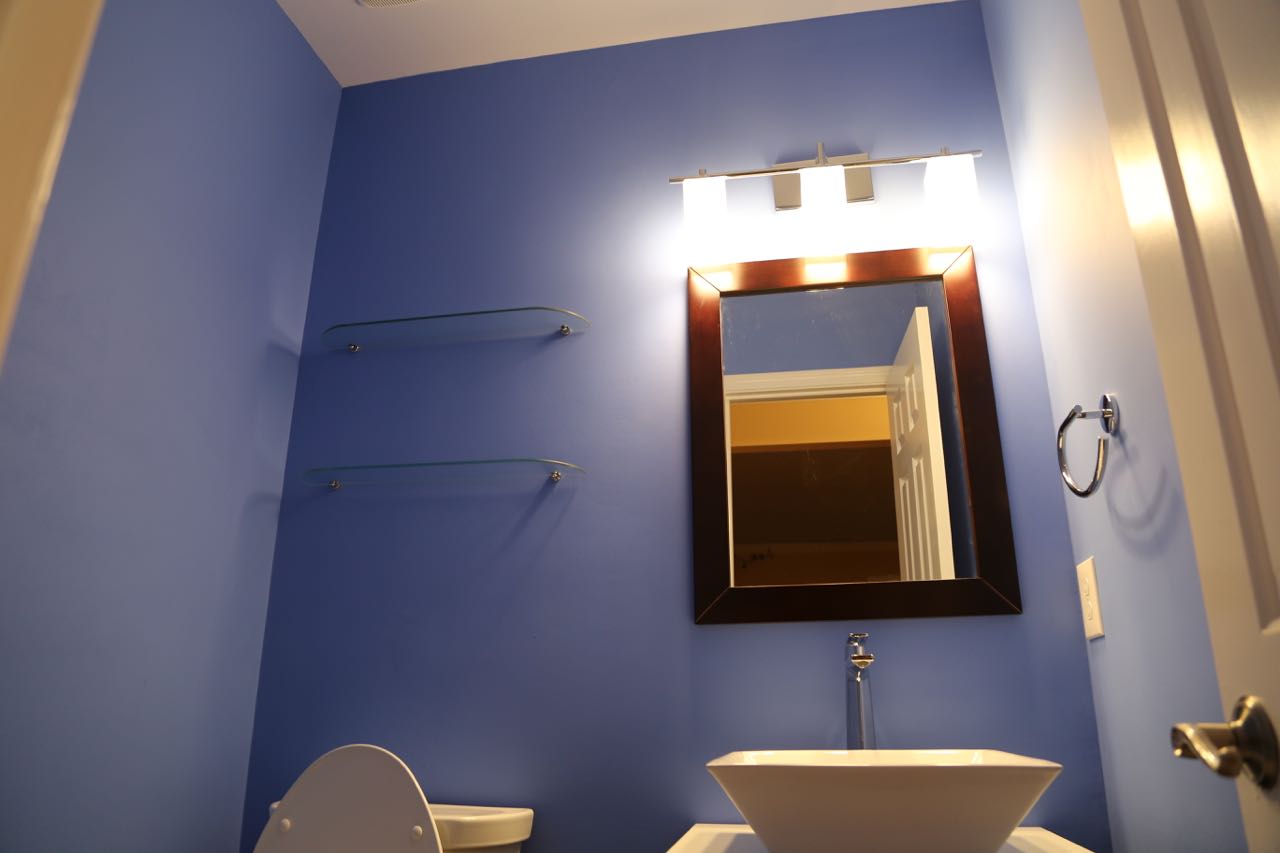
I have finished renovating the half bathroom! It is pretty much the last room in the house that needed renovation. [I say pretty much because I still have a few projects I want to do in the laundry area and storage room.] The plumber installed a new toilet and also the vanity. I bought a vanity that came with a white glass countertop, a white ceramic vessel sink, and a matching mirror. All it needed was the faucet. I installed a new three-bulb vanity light and also replaced the outlet and wall switches for new white ones. I also installed two glass shelves above the toilet. Finally I replaced the door hinges and door knob with hinges and a lever that match the rest of the house.

Full view of half bathroom

Full view of half bathroom

New toilet

New toilet

New vanity and matching mirror

New vanity and matching mirror

New vanity with vessel sink

New vanity with vessel sink

New glass shelves, mirror, and vanity light

New glass shelves, mirror, and vanity light

It’s Not Melting, It’s Dissolving

Time for another post where I get on my science grammar soapbox. Have you ever seen the movie The Wizard of Oz? Everyone has seen that movie, right? Recall the scene where Dorothy throws a bucket of water on the Witch, and the Witch dissolves into a puddle while screaming “I’m melting, I’m melting”? First, don’t ever watch that movie with me. Why? Because every time I see that scene, I scream “you’re not melting, you’re dissolving, get it right.” Ok, it is a movie, a movie that takes place where monkeys fly, there are witches, lions walk and talk like humans, and scarecrows come to life. No, I shouldn’t be looking for realistic science in it. However it drives me crazy that they can’t even get the simple difference between dissolution and melting correct.

In the exact same incorrect way, there is a saying that some people say when their children, dog, whatever, is hesitate to go outside in the rain. “You are not made of sugar, you won’t melt.” There are actually several things wrong with that statement. Sugar, as in table sugar, which is specifically sucrose (as opposed to all the other sugars that exist), does not actual melt at all. At 186°C (367°F), it decomposes to caramel. So even if that saying meant decomposes, if the temperature outside is high enough for sugar to decompose, you have much bigger problems then possibly getting wet. You would die of heat. However, if you were made of sugar, and you went out into the rain, you would not have to worry about melting, you would have to worry about dissolving.

Melting is a physical process where solid turns into a liquid due to heat applied to it. Stick ice into a glass at room temperature. Wait a while. You now have water in the glass. The ice melted into water. But you didn’t apply heat, you might argue. The melting point of ice, the temperature at which solid water, i.e. ice, becomes liquid water is 0°C (32°F). So by simply having ice at room temperature (around 22 °C (72 °F)), heat has been applied to it. The temperature is higher than what the ice needs to stay a solid. Similarly put solid chocolate in a pot and heat slowly to 30°C (86°F). You have liquid chocolate. It has melted. Now don’t waste that chocolate, go eat it with strawberries or cake. [Excuse me for a moment. . .]

Now take that glass of water you made by melting ice at room temperature, and pour just a little salt into it. The salt has dissolved into the water. The water, which is the solvent, has dissolved the salt, the solute, into a solution. When Dorothy throws water on the Witch, the Witch is the solute, the water is the solvent again, and now you have a witch solution in water. Based on the film, witch dissolves quite readily. [It would not matter if she threw boiling water on the Witch, it would still be dissolution because the water is mixing with the witch. The water was quite clearly not boiling anyway.] Other liquids can act as solvents to dissolve solutes, but water is the most common in everyday life. Wiping acetone on nails painted with nail polish removes the polish because acetone, a solvent, dissolves the hardened nail polish, the solute, into a solution. [It is a temporary solution in the sense that acetone readily evaporates, but it forms a solution with the polish long enough to transfer the polish to a cotton ball. The acetone then evaporates leaving behind the polish on the cotton.] An important distinction between melting and dissolving is that melting only involves one substance, water, chocolate, wax, etc. Dissolution involves two substances, water and salt, water and sugar, acetone and nail polish, etc. Dissolution can also involve applied heat, but it isn’t required. There is a much longer explanation for that, and it relates to the solute and solvent and numerous other factors.

To review, melting is one substance changing from a solid to a liquid, and one, and only substance is involved. It is a phase change that must involve a temperature (or pressure) change. Dissolution is one substance becoming part of a solution with a liquid, and two substances are involved. It is two substances becoming one, and temperature change is not necessary for it to happen.

I honestly don’t understand why some people don’t understand the difference. However ignorance of this appears to be wide spread. Evidently the U.S. Special Inspector General for Afghanistan Reconstruction does not know the difference. That Inspector General recently released a report concerning a half-million-dollar U.S.-built police training center in Afghanistan that was so badly constructed that it is literally “melting.” Nope, it is not. It is literally dissolving. If the center had been made of wax, then maybe it might melt. Based on the wording in this article and the accompanying photos, the building is quite clearly dissolving. That is still incredibly appalling construction. As an engineer, I would really like to see the design plans. However, if the Inspector General does not even know the difference between melting and dissolving, then perhaps the Inspector General would do well to have someone on staff who does. It would make for better and more accurate reports.

Half Bathroom Reconstruction

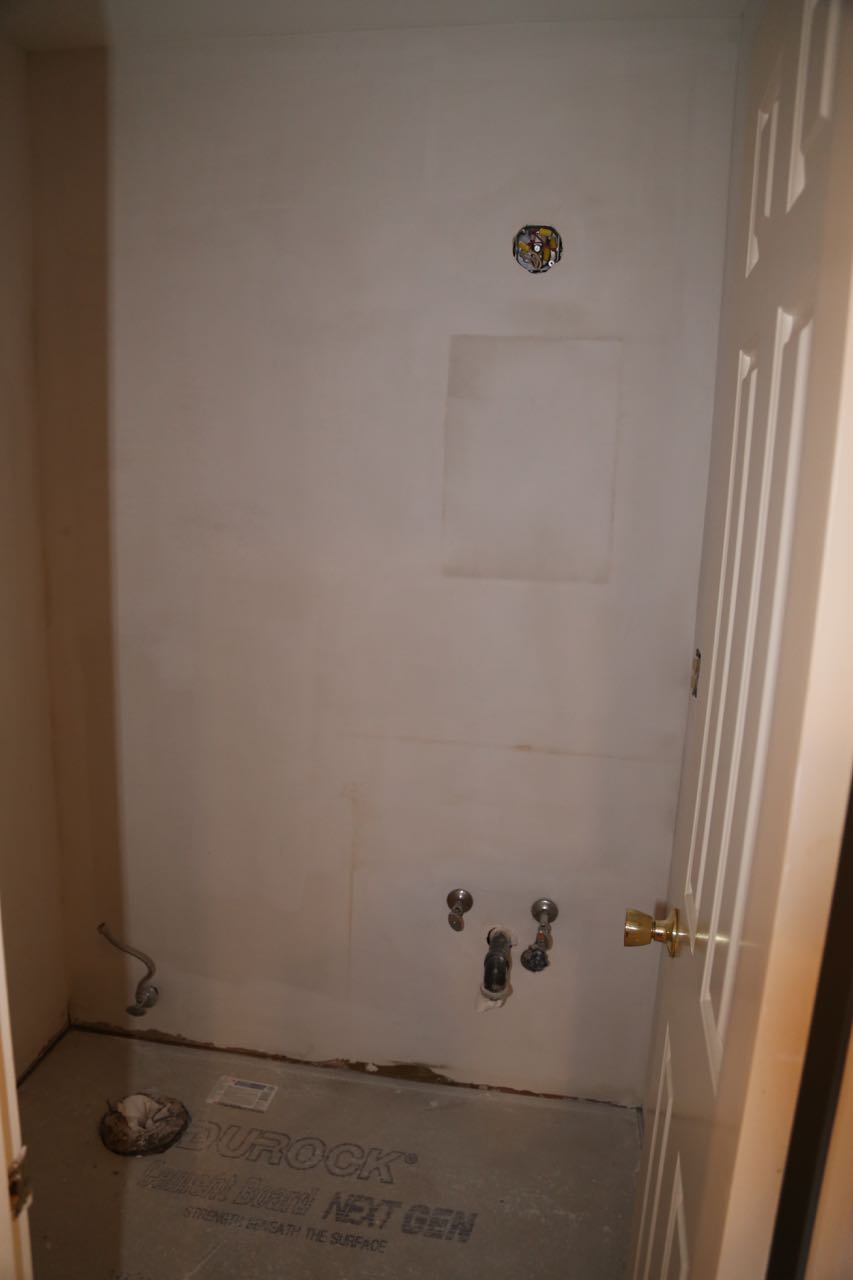
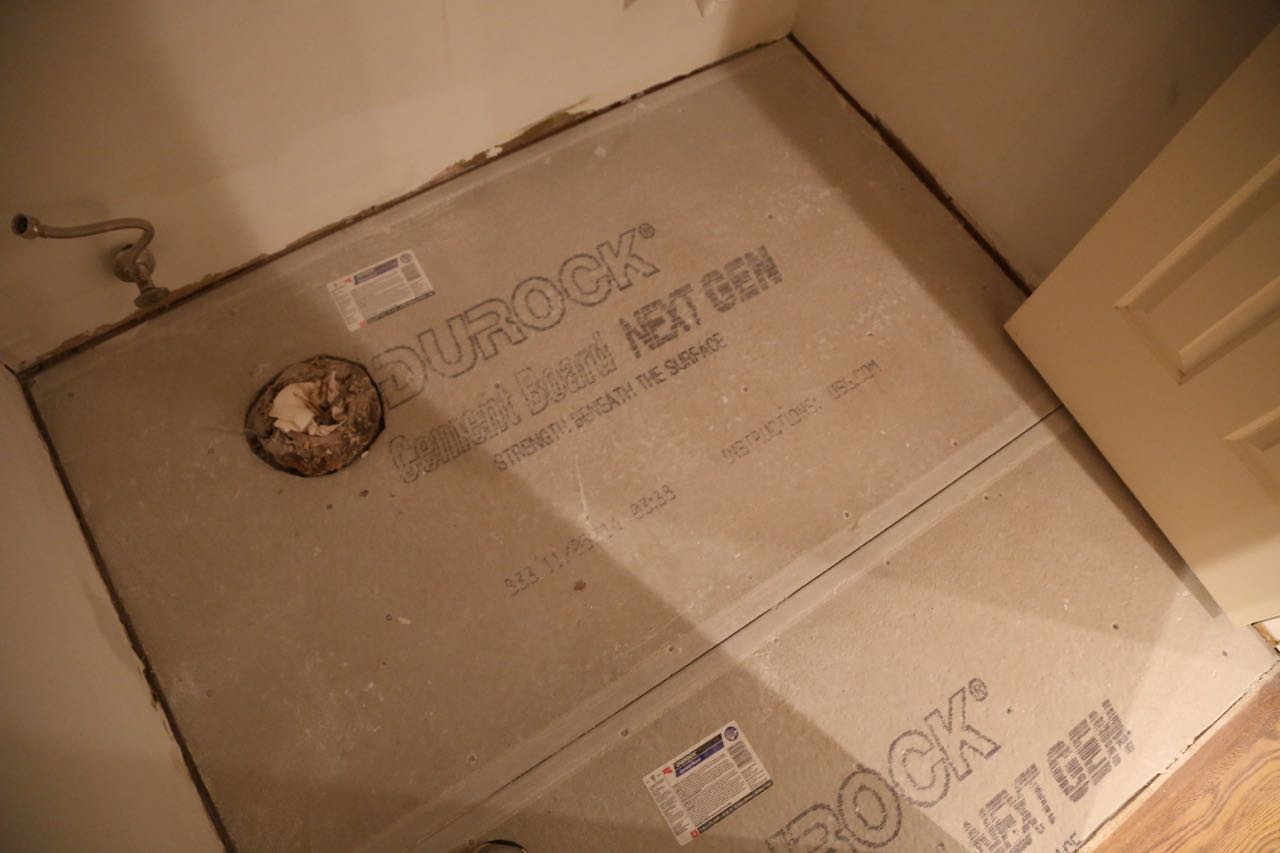
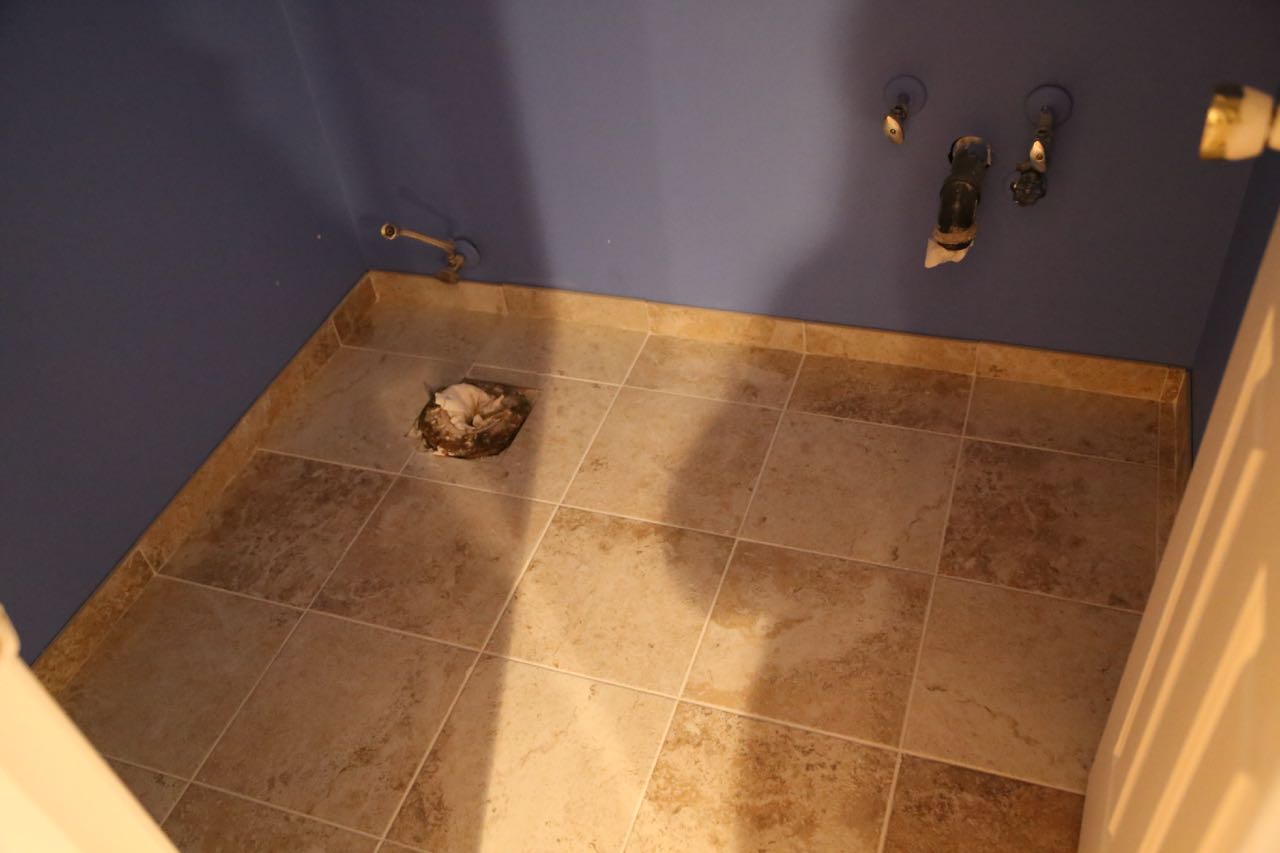
Reconstruction of the half bathroom is partially done. I hired a contractor to remove the second layer of subfloor and then lay concrete backer board so that I could lay tile. The contractor also placed new green board in to fill the whole from the old medicine cabinet and also use drywall mud on the walls to smooth over the texture left from the old wallpaper. After the contractor finished, I primed and painted the walls and ceiling and laid a new tile floor. I painted the walls the same blue color as the accent wall in the dining room, and the ceiling is the same pale blue as the ceiling in most of the house.

Patched and smoothed walls

Patched and smoothed walls

New concrete backer board subfloor

New concrete backer board subfloor

Newly painted walls and ceiling

Newly painted walls and ceiling

New tile floor

New tile floor

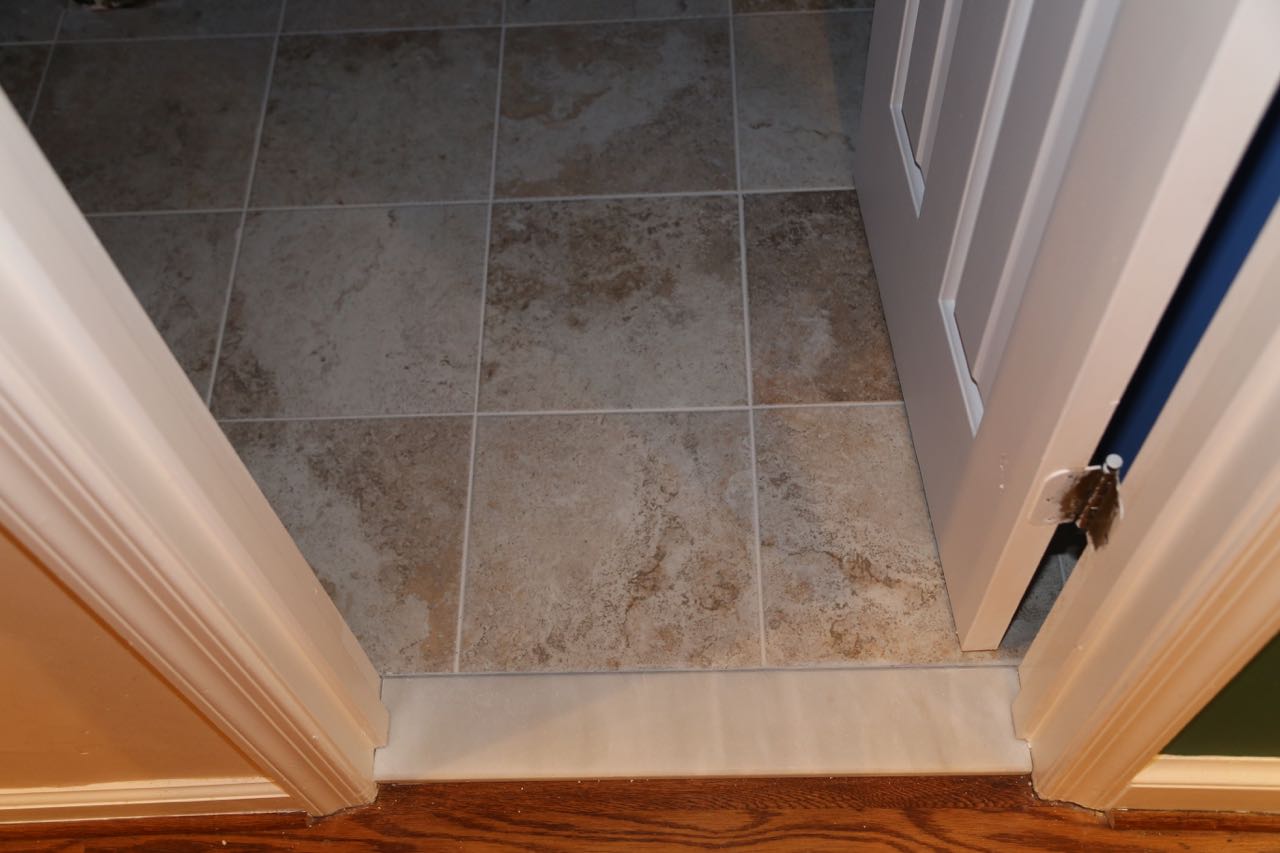
New marble transition and new tile floor

New marble transition and new tile floor