Twitter, Scientists, and Arbitrary Lists

Fairly often some website produces a list of people you should follow on Twitter. Yesterday it was Science with their The top 50 science stars of Twitter. This list, like so many before, is arbitrary, lacks diversity, and is based on, in my opinion, stupid metrics. Many people on Twitter have noted that this list is overwhelmingly white and male. They based the star status on follower count and a completely ridiculous metric called the Kardashian Index,” or K-index, which is about as ridiculous as the people for which it is named. The list also lacks diversity from a field of study standpoint. Also, some people have noted that other “star” Twitter scientists were left off, which according to the article’s author was because they restricted the list to Ph.D.s. I think that is a stupid restriction, and I am a Ph.D. Furthermore, someone noted that one of the accounts on the list is a bot, and another one are simply tweets by the person’s PR person. 

I follow a few people on the list, so obviously I think some of them worth following. However, if you are trying to be more active on Twitter and interact with people, most (but not all) of these people are not the people to follow. The more followers you have, the more difficult it is to interact with them, assuming you are even trying. Don’t get me wrong, some of the people on this and other lists do tweet great information. However, if your goal on Twitter is to network, make friends, learn things, and sometimes get help or advice, then “stars” are not to the people to follow. I have made friends on Twitter, including friends I have later met in person. I have also networked and gotten great advice on work and personal projects. I see tweets on an almost daily basis of scientists helping each other out via tweets. Someone will tweet out asking for advice on some lab protocol or best manner to collect a certain type of sample, and others will reply with advice. Many people, including myself, tweet out a photo of something we are trying to identify. If I know people who know things in that field, I’ll tag them, and via crowdsourcing, we can normally identify the life form or object. That sort of fun learning experience is through interactions with us non Twitter stars.

If you want to use Twitter for things like that, you need to seek out people in your field or fields you are interested in, or just people who tweet out interesting things. Ignore the number of followers they have, and look at what they tweet. The less followers they have, the more likely they will follow you and interact with you. There are wonderful people with tons of followers that are worth following on Twitter, and some of them do a good job of interacting, and there are some worth following even if they don’t interact. I just mean that you can get a lot more out of Twitter if you interact with people. That leads to the obvious question, how do you find these people? Look for Twitter lists such Women Tweet Science Too which was created to in reaction to the lack of women on the above mentioned Nature list. Many people have already created tons of great public lists like this for people in various fields. Follow people on these, and then once you find people you really like on Twitter, see who they follow and with whom they interact.

Furthermore, if you want my personal opinion on how to get people to follow you, which you can take or leave, then see below.

1. Tweet. That may seem obvious, but it you don’t tweet, people are not going to follow you. Tweet links to articles you find interesting. Tweet things you find funny. Tweet about what you are working on, even if you think it is uninteresting or no one will understand what you are doing. Your fellow nerds and geeks will understand and be interested. Even if no one if following you, you have to get started somehow.

2. Have a avatar photo. Having one that represents something about you, even if it is not a photo of you. I rarely follow Twitter eggs.

3. Have a Twitter bio. When someone follows me, I look at their bio. Do they work in a field interesting to me? Do they say something funny? Do they have interests similar to me?

4. Interact with people. Even if a person doesn’t follow you, if they ask a question you can help with, reply to them. Give your input.
Bad Restroom Design Example

Some time ago, I wrote about female public restroom design basics. I am so tired of walking into badly designed female restrooms, and I wanted to give a primer to what women in need in a public restroom. We don’t need fancy. We need functional. Based on the comments to my post and also one of the most hilarious Twitter discussions I have ever had, men’s restrooms are badly designed also.

Last month one day, I was working in an office building that was not the one in which I normally work. It was an older building. I won’t say which office building it was, but it was in Washington, D.C. It was the perfect example of bad public restroom design. It was the perfect example of not updating elements that could be easily updated. Thus, of course, I had to take photos and share with everyone why it is a perfect example of bad restroom design.

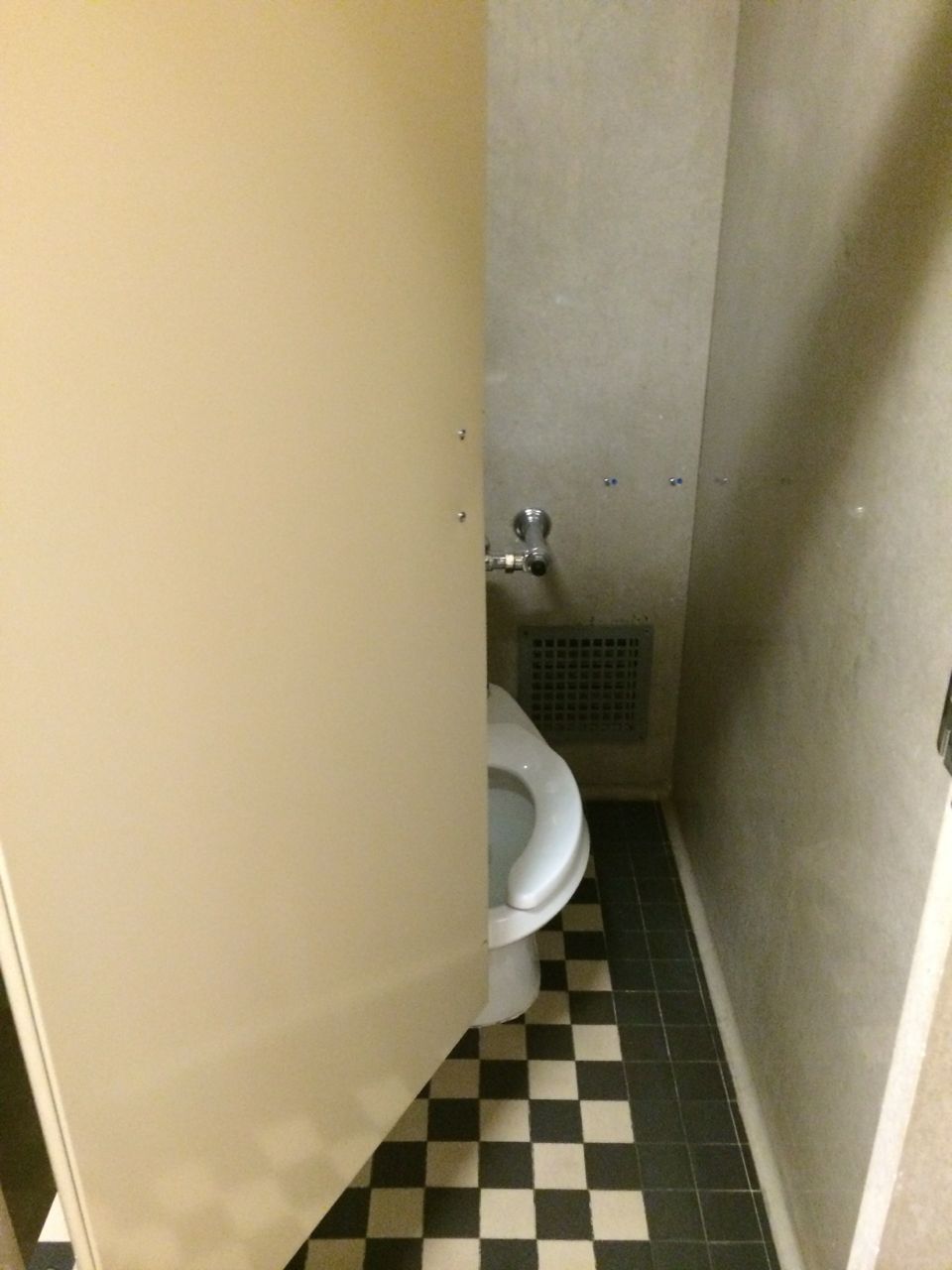
Toilet stall so short, one must climb on the the toilet to close the door

Toilet stall so short, one must climb on the the toilet to close the door

First, it had toilet stalls so short, a woman has to either stand on the toilet or squeezed in between the toilet and the stall wall to close the door. I still don’t understand how the original designers just can’t understand door swing distance and the area of a human footprint needed to be in stall length calculations.

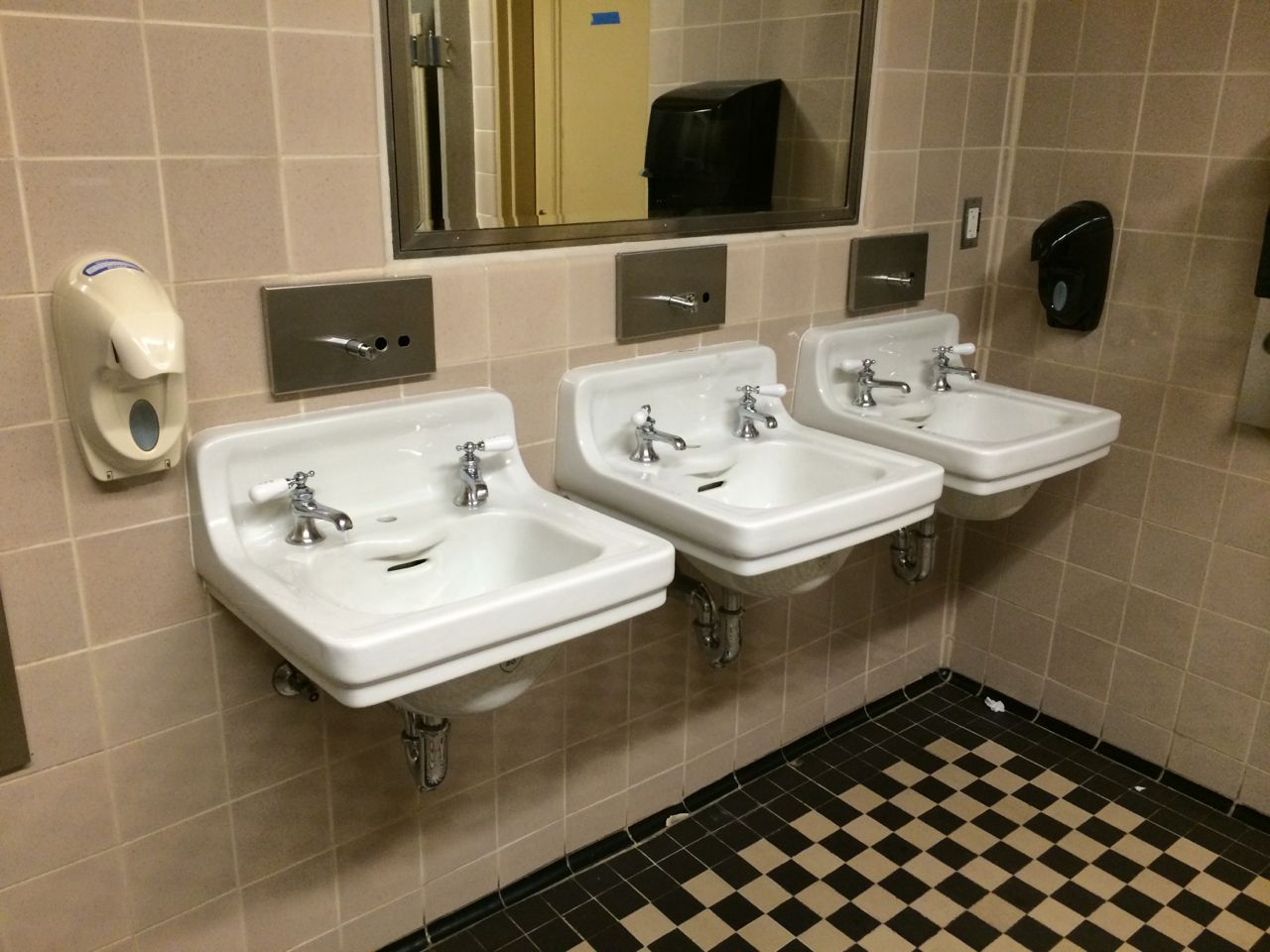
The sinks: 3 sinks with separate hot and cold water faucets and 2 working soap dispensers at the ends

The sinks: 3 sinks with separate hot and cold water faucets and 2 working soap dispensers at the ends

Then it had three sinks with only two soap dispensers, both of which were on the far ends of the sink areas. Thus, a person who uses the middle sink needs to either go to the end or reach across another sink to get soap. In defense of the original design, each sink did originally have a soap dispenser above each, but those are now non-functional. Instead of replacing the non-functional soap dispensers, they just put new ones at the end. It should be noted that by either changing the mirror or finding a smaller soap dispenser, the middle sink could have its own soap dispenser. Thus, the renovators of this bathroom do not get an excuse for the soap dispenser stupidness.

Next, also shown in the above photo, there are separate cold and hot water faucets. I am not sure if separate faucets originated before mixing valves were created, but that is the only reason I can think for their existence. However mixing valves exist now, and thus there is no point to the continued existence of separate hot and cold water faucets in a public restroom sink where a person is never going to be filling the sink with water to then wash their hands in the water filled sink. While it would obviously require taking out the sink and faucets, to change the plumbing to include a mixing valve, it could be done. Depending on the piping, it is possible it would require taking out some tile to change the plumbing, but it could be done, and it is not a massive renovation, and it would make the sinks so much more functional.

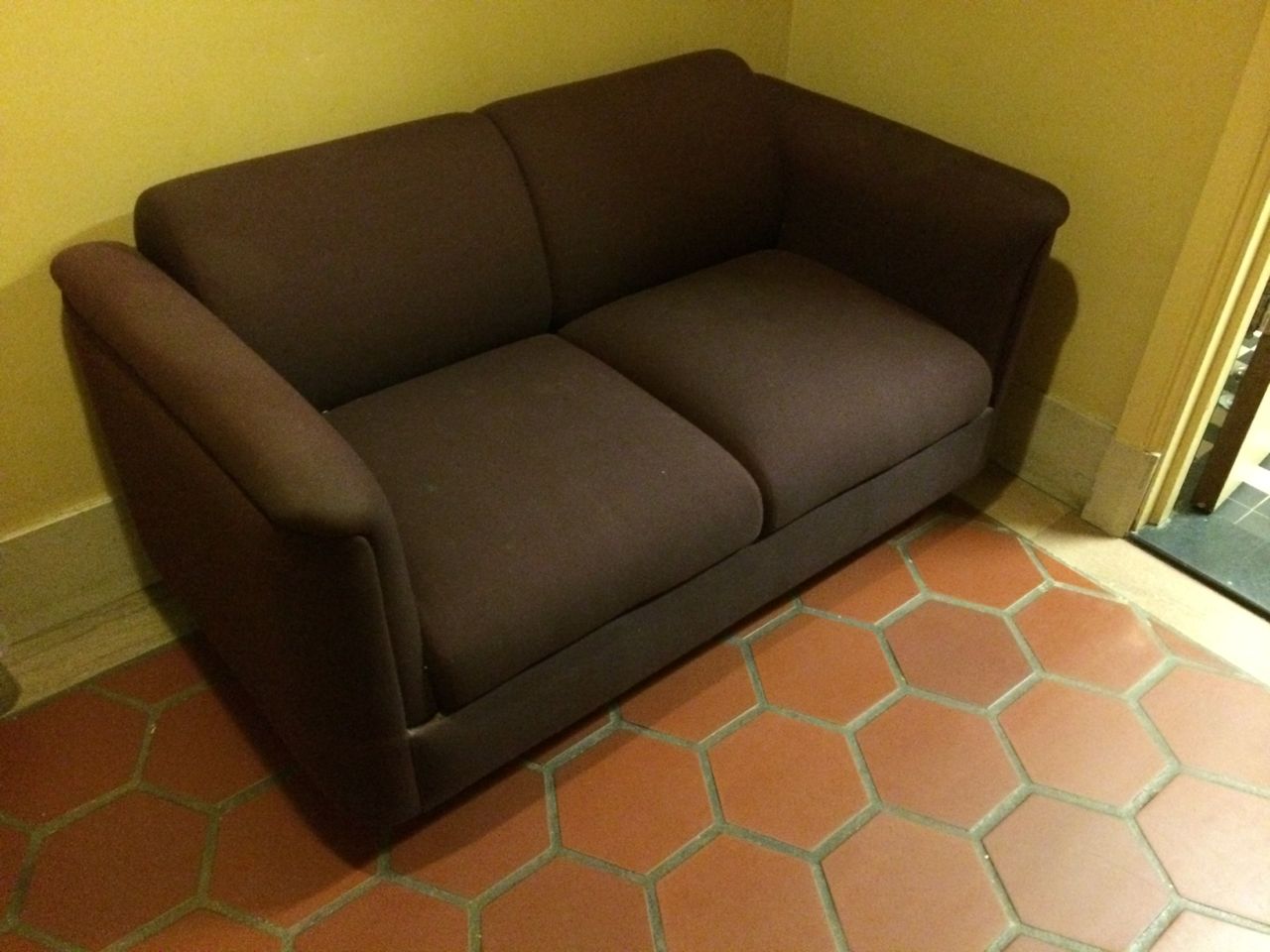
The inexplicable couch

The inexplicable couch

Finally, the restroom had a couch. Old buildings always seem to have couches in the female restrooms. Because women often get the vapors and need a lie down while we clutch our pearls until some savior arrives with smelling salts. Or something like that. Could you lie down on most of these couches? No, they are generally love seats. Would I lie down on any of these couches? No, I would never even touch most of these couches. But it fills the space, which seems to be only point of these couches.

When an engineer gets to comment on building maintenance

One nice thing about where I work is that we get to fill out surveys about how we like the building we work in and comment on it. I have my doubts about how much they act on the survey results, or how much they pay attention to the comments if an employee bothers to give comments, but hey, it’s a great place to vent. I actually for the most part like my building. It is relatively new and doesn’t have the problems that many older buildings that my employer has has. It is kept clean and and looks nice. One big problem I have with it is the same that I have with almost every other office building: the temperature is set at a temperature that is comfortable for men not women. By about 11 am, once the HVAC has fully gotten the ambient air to the set point (as opposed to earlier in the day when it is ramping up after having been off during the night), the vast majority of women are walking around in sweaters, jackets, or blankets that all of us keep at our desk. [Spoiler: When I rule the world, I will dictate two things. Office buildings will be set at temperatures that are comfortable to women, not men. Also, public restrooms will be designed better. In particular, the stalls will be longer so that women don’t have to climb on the toilet to close the stall door. Truthfully there are many things that need to be improved in public restrooms, most of which I and many other people have covered is this somewhat comical, somewhat serious past blog post.] However, the building I work in has some of the worst plumbing issues I have ever seen, especially for a building that is less than ten years old. Ironically it has LEED certification, but whoever certifies it appears to ignore the obvious water wasting issues it has, as I detail below. I’ve decided to share below the comments I gave in the building survey, not because it will really accomplish anything, just as a way to vent and possibly to serve as a warning why if you let an engineer comment on a building with design and maintenance issues, you may get more than you wanted. Thus, my full comments are as follows.

With all the dual flush toilets, only one flush button actually works. With some toilets it is the half flush button, with some the full flush button. However whether or not the working button is actually whichever button it appears to be is unclear, or if they have possibly all been disabled and all converted to full flush. They constantly run. Almost every time I enter a restroom, I have to push the flush button on at least one toilet to get it to stop running. The restroom auto soap and water sinks are like sink roulette. Which sink will give me soap? Which sink will not continuously squirt soap at me? Which sink will give me water? It takes forever to get repairs done on issues in the pantry/kitchens. It took them two weeks or so to put a new aerator in the sink faucet. A part that can be bought at any time at Home Depot. It is not special. Maintenance blames pantry sink issues on reasons that are not the problem. On numerous occasions, water has come bubbling up from the drain pipes into the sink. Sometimes so much water has bubbled up that the sink has overflowed with disgusting brown wastewater. Then maintenance posts signs saying not to put coffee grounds down the drain as that caused issue. While coffee grounds will cause a sink with a bad garbage disposal to not allow the sink to drain (and putting coffee grounds down the drain is a bad idea), it will not cause water to flow up from pipes below. (I’m a chemical engineer I can prove this with fluid dynamics equations!) There is obviously some issue with the drain pipes below our floor, which any competent plumber or chemical engineer could tell you.

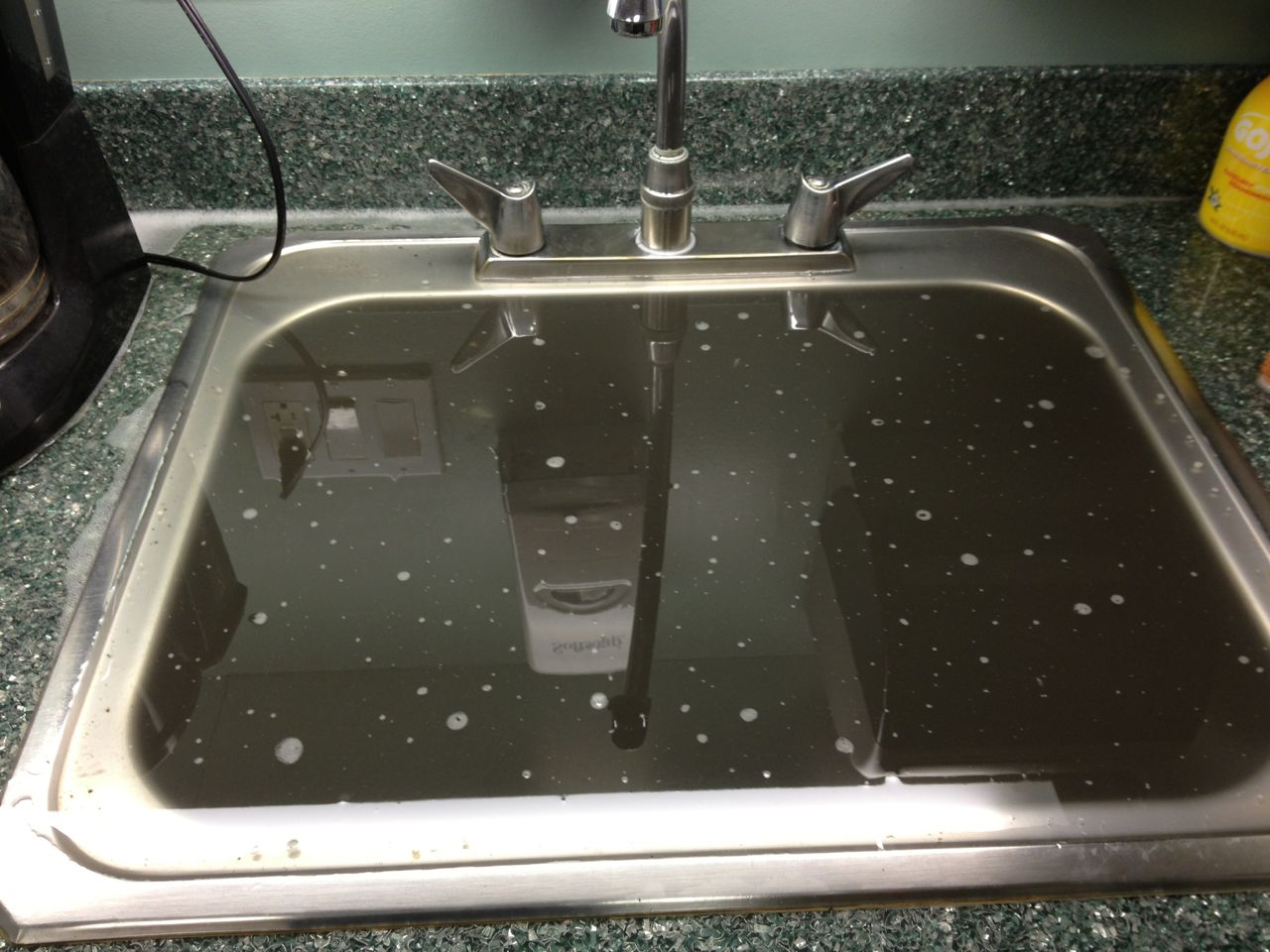
While there was no place to attach photos or videos, below is a photo of the backed up kitchen sink and video of it overflowing.

My office's pantry/kitchen sink when it was backed up and overflowing with wastewater. Photo was taken 1/8/2013.

My office’s pantry/kitchen sink when it was backed up and overflowing with wastewater. Photo and below video was taken 1/8/2013.

HAZWOPER Training

Last week I attended 40 hour HAZWOPER training. HAZWOPER, an acronym for Hazardous Waste Operations and Emergency Response Standard, is OSHA mandated training for employees who may potentially be exposed to hazardous substances and who are engaged in cleanup operations or other certain other activities involving hazardous waste. Normally I work in an office, and the closest I come to hazardous materials or waste is sitting at a computer and analyzing data from hazardous waste sites. However, there is a possibility that I may sometimes be asked to go to a site where HAZWOPER training would be necessary, and I had an opportunity to take the training, so I did.

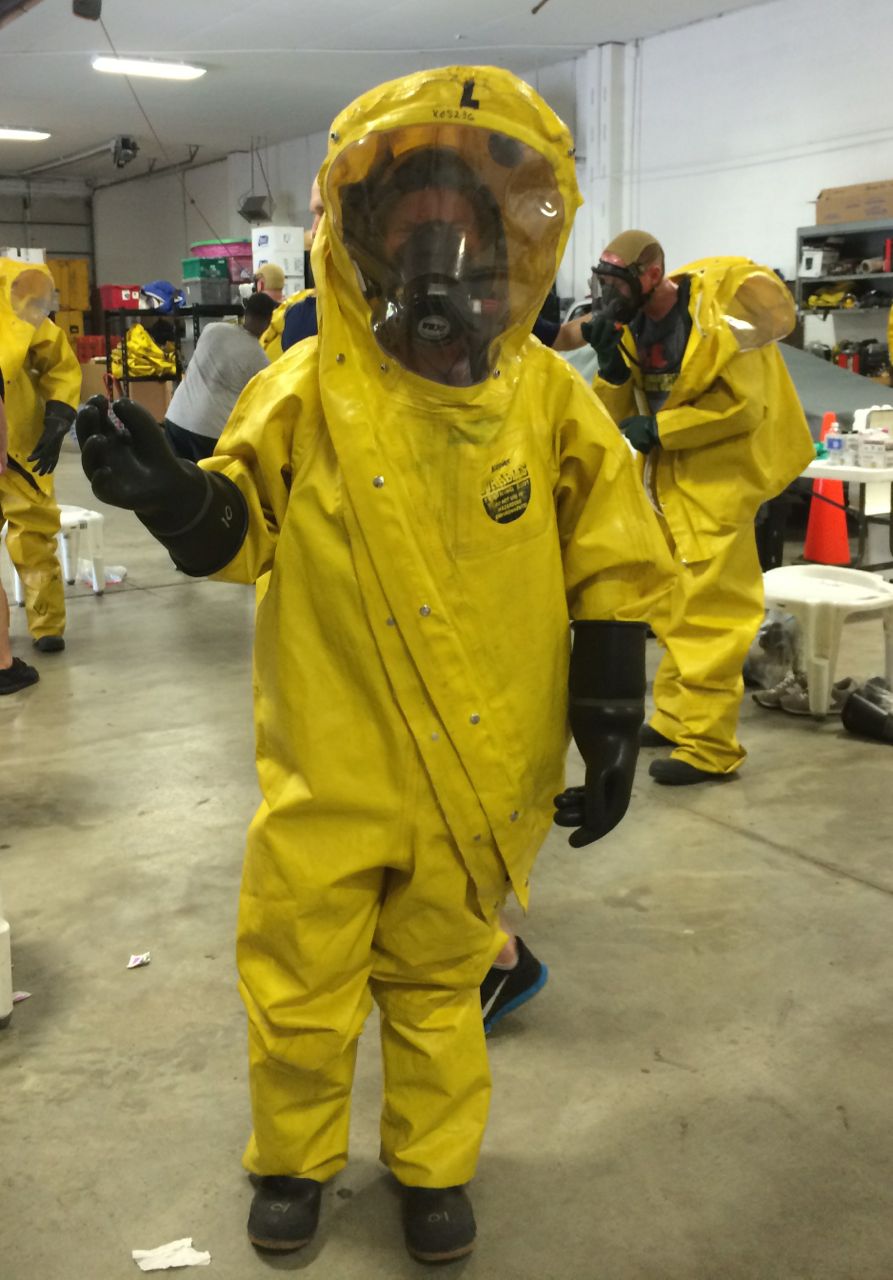
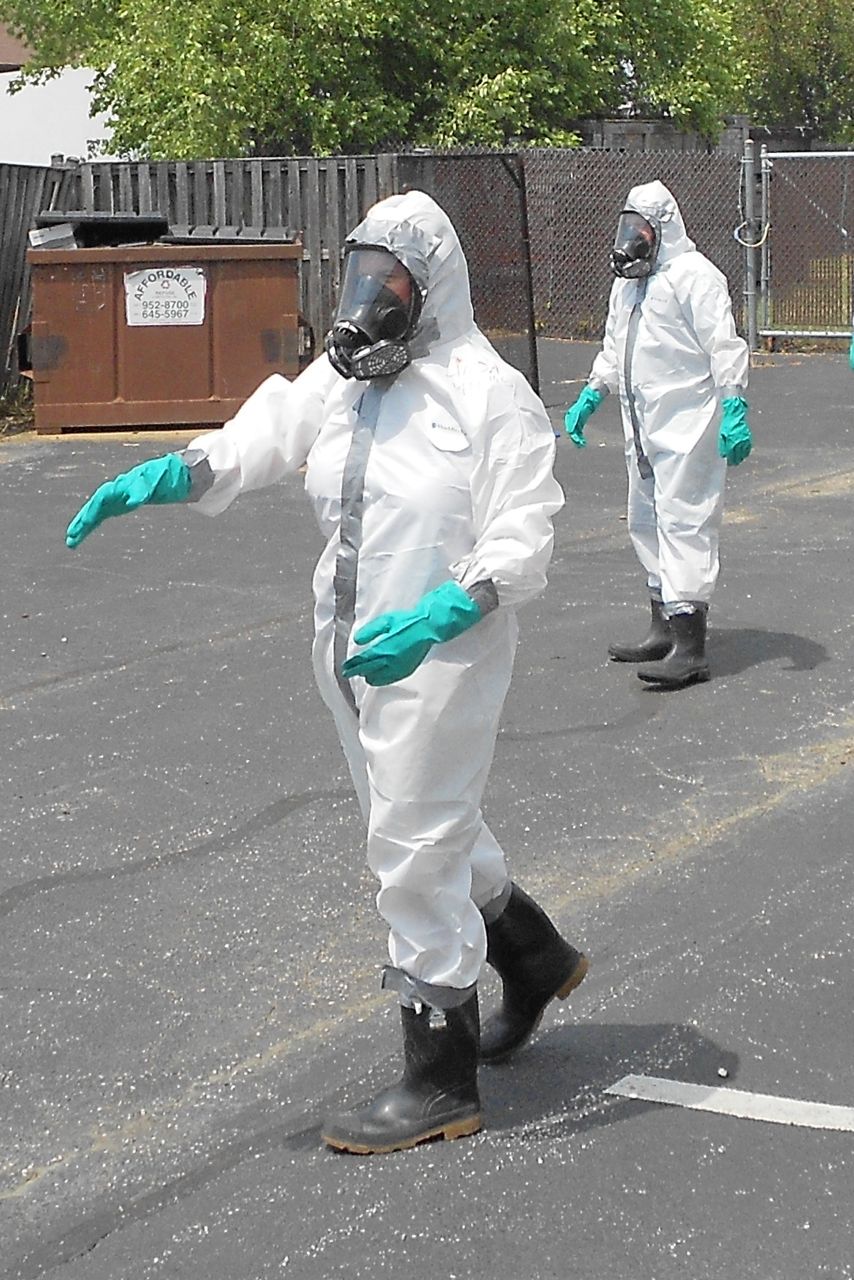
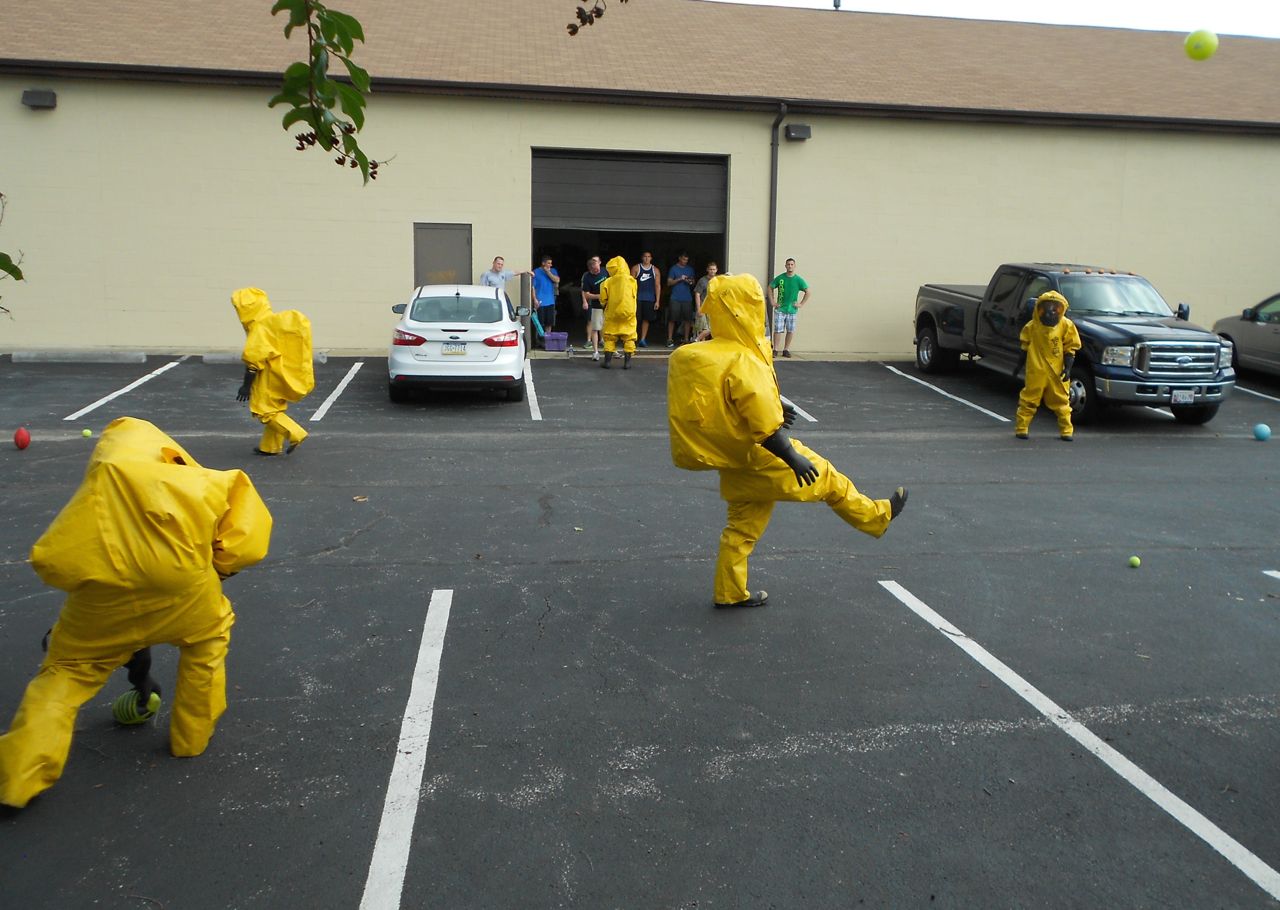
HAZWOPER training includes topics such as basic chemistry, toxicology, biology, radiation, environmental science, analytical sampling, and law and regulations. Truthfully, I could have taught a good portion of the training. It also includes hands on training with some of the sampling methods and instruments that are used in the field. Personally, I think playing with instruments and sampling materials is fun. As part of the training, you are required to get dressed in various personal protective equipment (PPE) that would be required under various circumstances at sites. In general, you look rather ridiculous in the PPE, but of course PPE is not supposed to be fashionable or make you look good, it is supposed to protect you from hazardous materials that could kill you or cause injury or illness. What PPE does not do, is keep you cool. It was in the 90’s °F when we were dressing in the PPE. While the suits protect you from most hazards, ironically they can cause potential health hazards if you over heat. There are different levels of PPE that are used depending on what the potential hazards are. The most protective is Level A, which is a fully encapsulating chemical-protective suit with positive pressure, full face-piece self-contained breathing apparatus (SCBA), inner and out gloves, and boots.

Me in Level A PPE

Me in Level A PPE

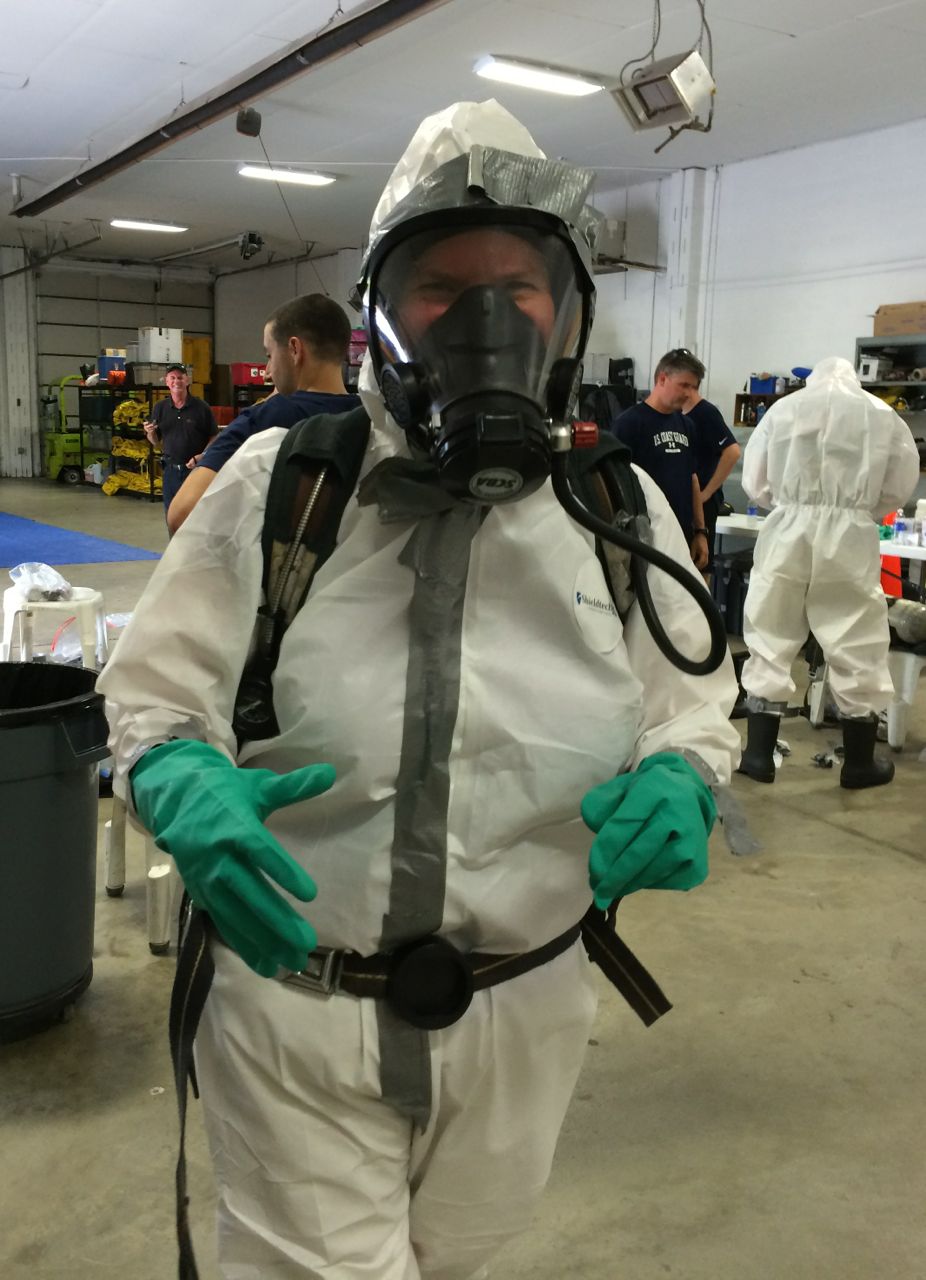
The next level, Level B PPE, is slightly less protective and includes chemical-resistant coveralls instead of the fully encapsulating suit, as well as SCBA, inner and outer gloves, and boots.

Me in Level B PPE

Me in Level B PPE

The next level, Level C PPE, is less protective still. It includes an air purifying respirator instead of SCBA, but other than that is fairly similar to Level B.

Me in Level C PPE

Me in Level C PPE

There is one final level, which is Level D PPE, which is minimal protection from physical hazards but does not include respiratory protection. This may sound strange, but if it is hot, Level A is actually easier to wear than B or C. The fully encapsulating suit is roomier, and the compressed air is continually blowing through your mask and then through the suit itself before it exits an exhaust vent. This air flow helps to cool you. In the chemical resistant suit for Level B and C, I just felt like a turkey that had been baked in a cooking bag. Side note, the SCBA tanks we used were made of a composite material and weighed  about a third of the weight of the metal SCUBA tanks I have worn before. Also, for as cumbersome as it was to get dressed out in all the PPE, I think it was easier to dress in and walk around in the PPE compared to the SCUBA drysuit I was wearing a month beforehand while SCUBA diving Silfra. Obviously once underwater, the tank weight is negligible, and the drysuit becomes less cumbersome, but above water, they are really difficult to get into and move.

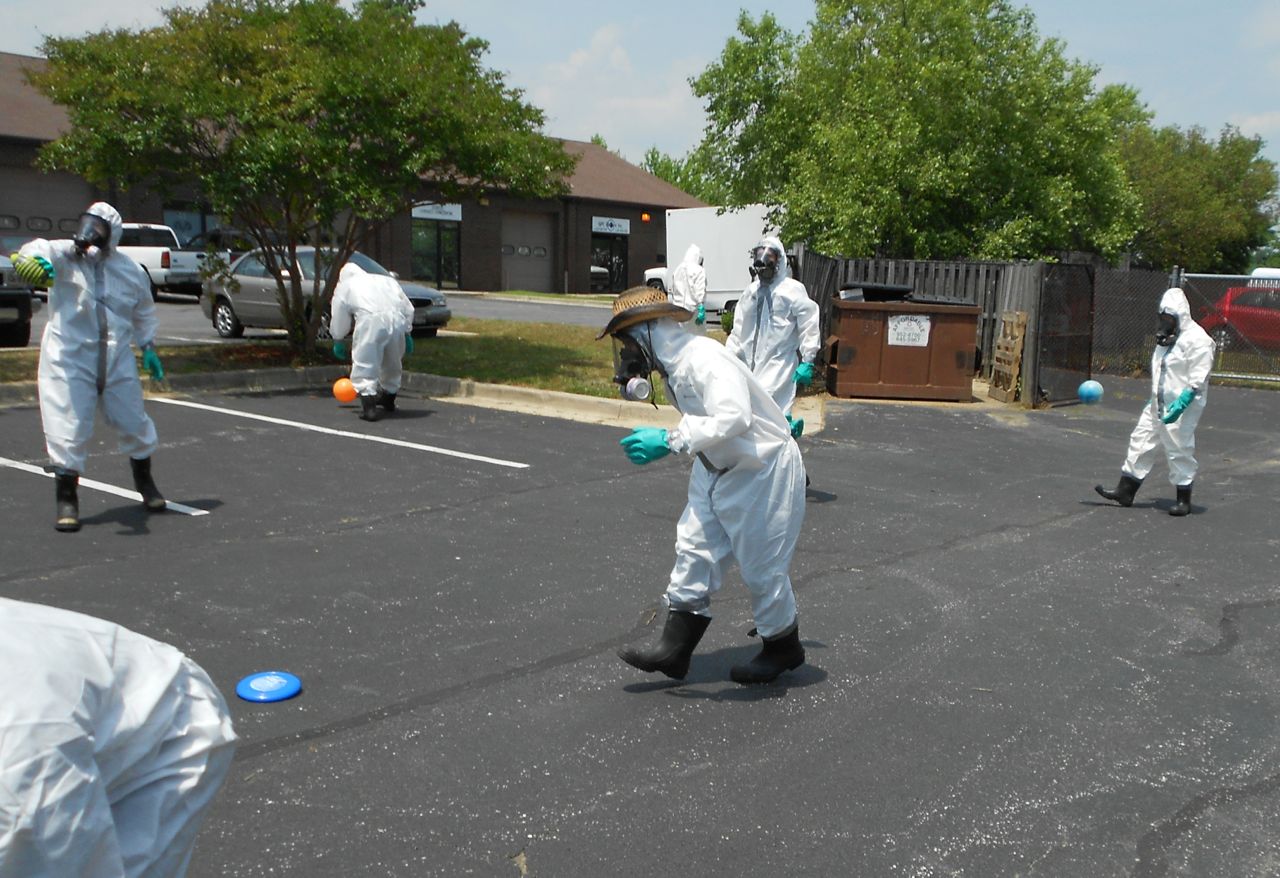
For HAZWOPER training, you don’t just have to get dressed in the different levels, you need to get used to actually moving and doing various tasks in them. Hence, when we first wore them, our tasks were to play with balls, as one would normally do at a hazardous waste site.

Playing ball in Level A PPE

Playing ball in Level A PPE

Playing ball in Level C PPE

Playing ball in Level C PPE

Note in the above photo, the person in the center is wearing proper head protection in the form of a straw cowboy hat. No, he actually just being fashionable. Wearing hazardous material PPE is no reason to not be fashionable.

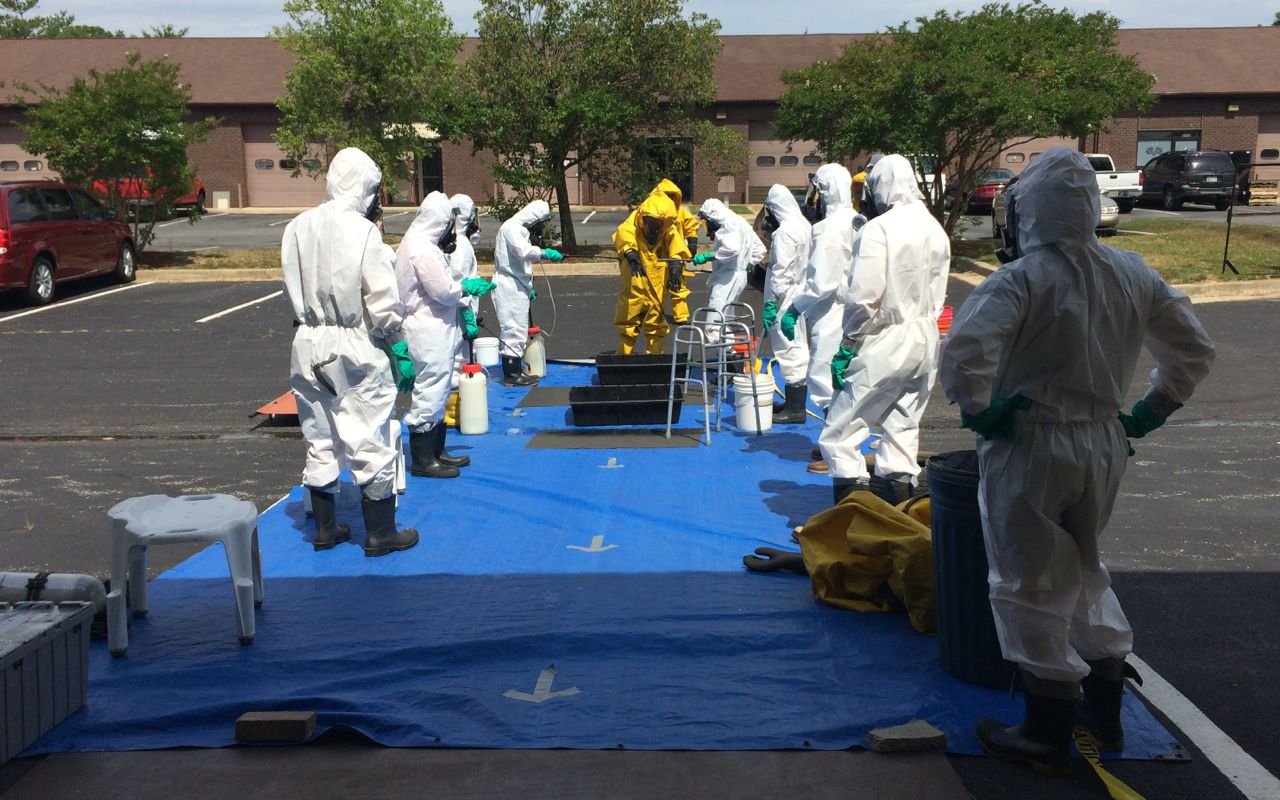
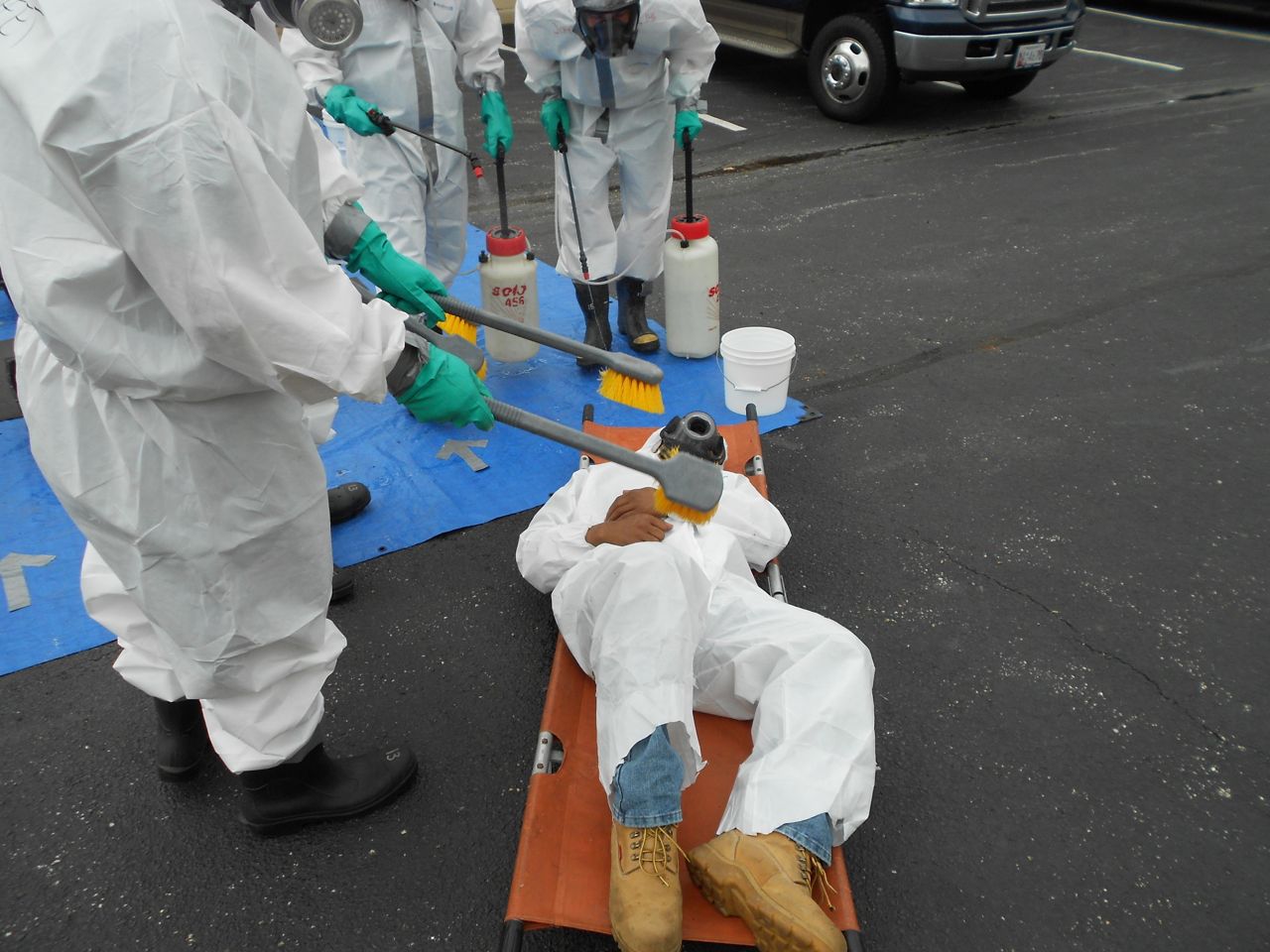
We also did a few exercises to practice tasks at a hazardous materials site, including decontamination. There are set steps and tasks to make sure decontamination is done properly. The first pair of people wash the worker, the second pair wash the worker again, the third set inspect the cleaning, and the fourth set help the worker out of the PPE. Notice the use of walkers for the worker to hold onto while the decontamination team washes the boots. There is no dignity in any of this.

Decontamination practice

Decontamination practice

We also practiced emergency decontamination of an incapacitated worker. We actually did not finish this task. This was due to the fact that after they started decontaminating him, someone loudly said, maybe we will have to do mouth to mouth. At that point, the incapacitated worker suddenly regained conscienness and took off running.

Emergency decontamination of an incapacitated worker

Emergency decontamination of an incapacitated worker

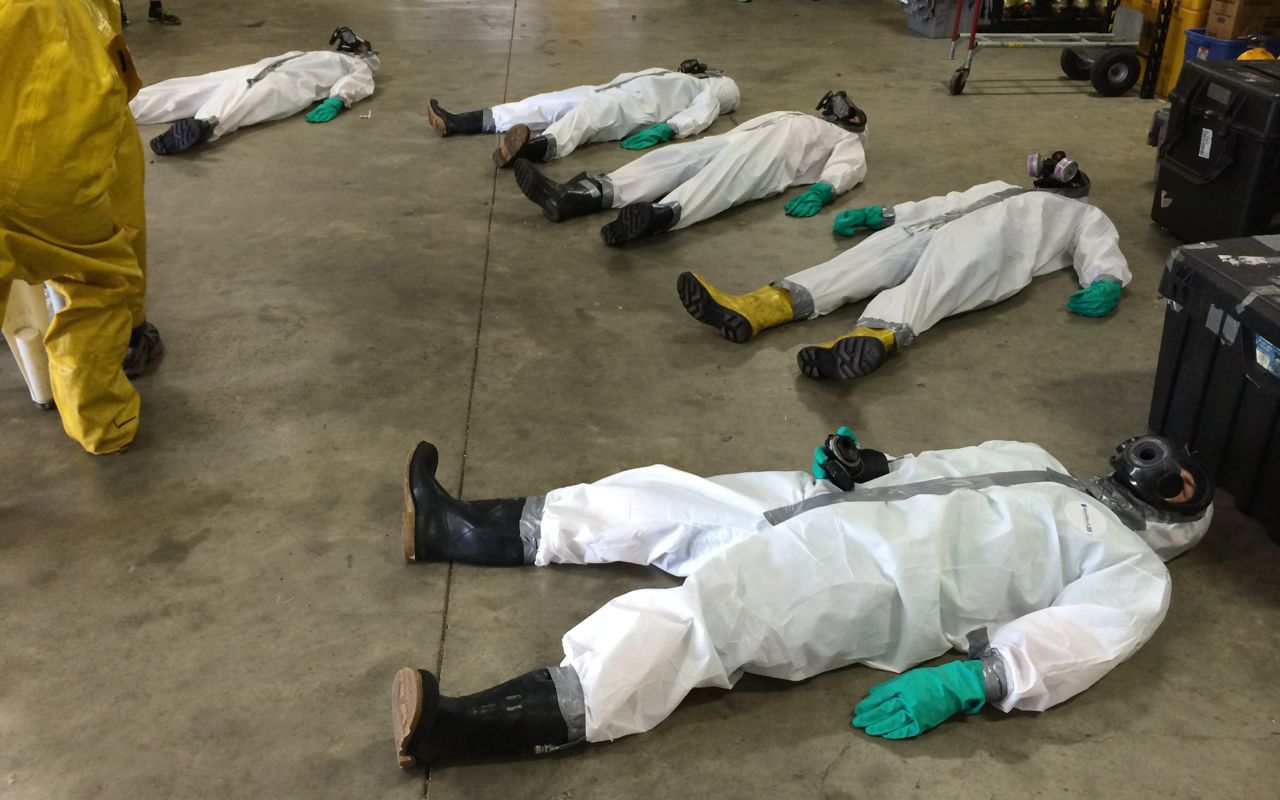
Since this was practice and not a real situation, we did a few things you can’t do on a real site. For example, the decontamination team stayed inside when not needed outside and did various things to stay cool. One thing that we did was lay on the concrete floor because the concrete was cooler than the air, and it absorbed some of your body heat. Sure, we looked like casualties at a hazardous waste site, but it worked and helped keep us cooler.

Cooling off by laying on the concrete floor

Cooling off by laying on the concrete floor

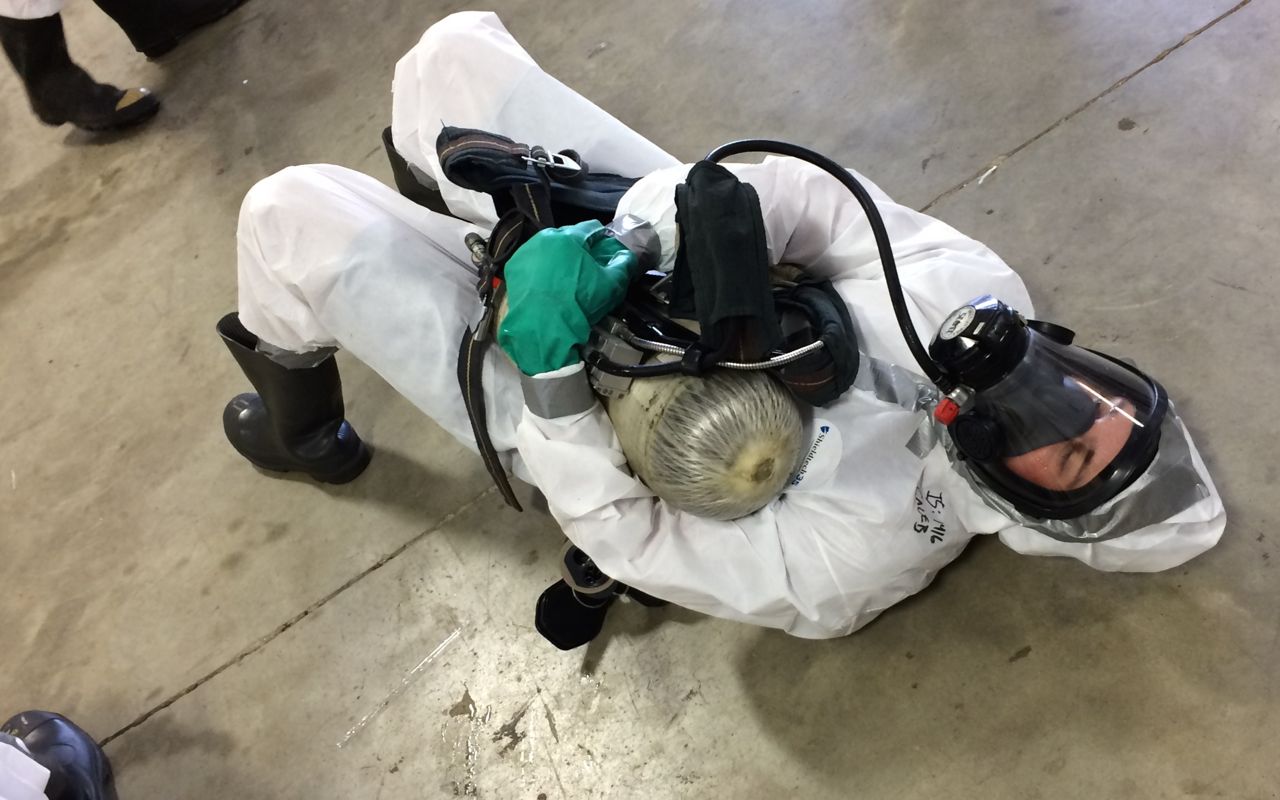
We also took “hits” of the compressed air from the SCBA. The full face masks we wore were interchangeable for either air purifying filters or for the hose from SCBA. In between tasks, we didn’t wear either. However, we would attach the SCBA for short periods of time because the compressed air blowing into your mask helps to cool you.

Cooling off by attaching the SCBA to the mask

Cooling off by attaching the SCBA to the mask

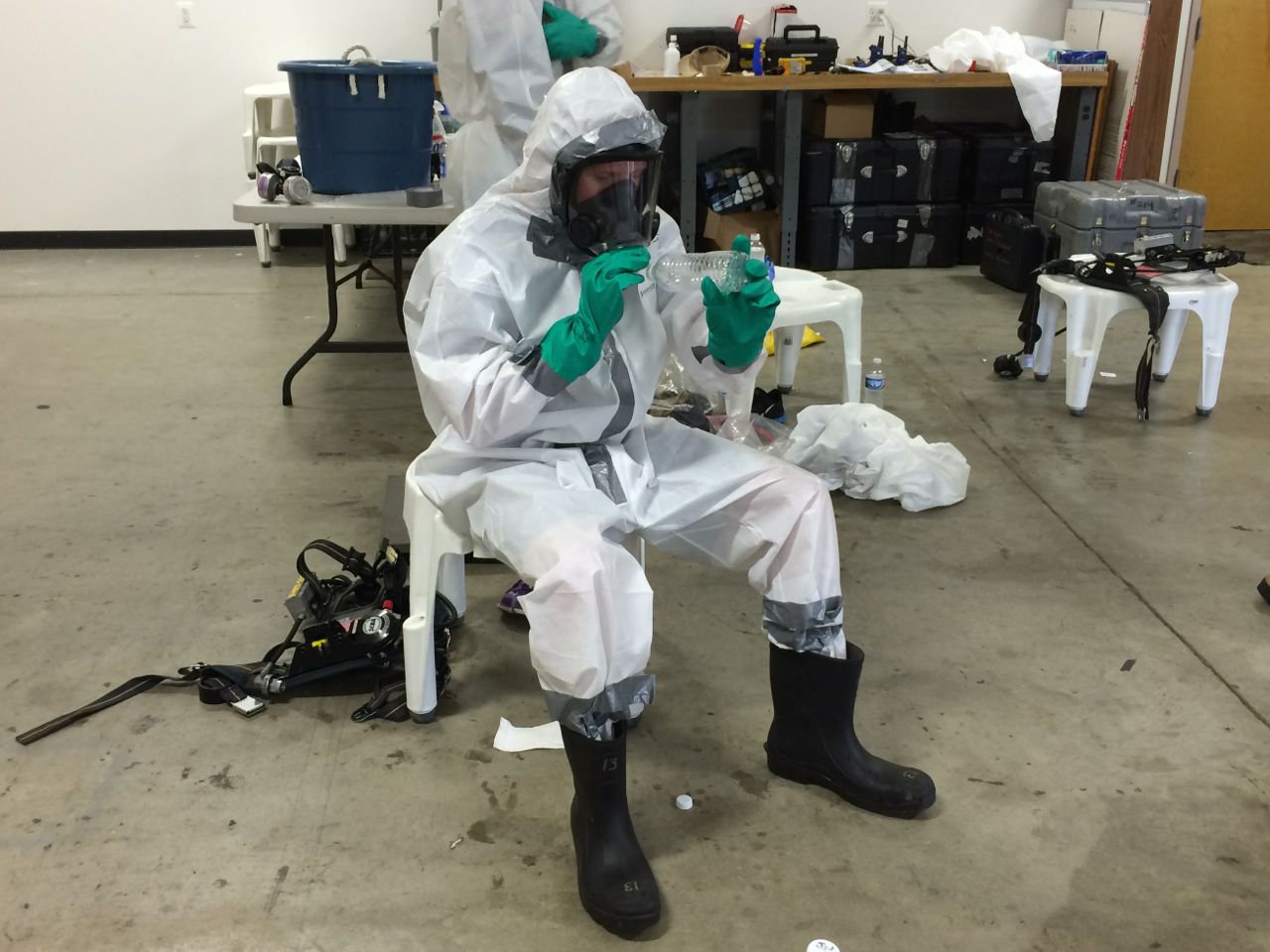
Another thing that should never be done at a real site was drinking water through the mask via a straw. Actually it might be acceptable to do this, assuming someone with clean hands put the straw in the bottle and then into your mask. It is not acceptable if you are doing this with your gloves.

Drinking water through the mask

Drinking water through the mask

For as hot as I was while in some of the PPE, I still had fun. I was out of the office, and that in itself was fun. Also, I learned a bit, and that is always fun.

Thoughts on Iceland

I have been home from my two-week trip to Iceland for two weeks now and finished going through all the photos I took, all 4,500 of them. I pulled the best ones to post in my travel section, and looking at all the photos keeps bringing my thoughts back to Iceland. It was such an amazing trip. I saw many things I don’t normally see like puffins, whales, geysers, waterfalls, and more, more, more, more waterfalls, boiling mud pots, lava formations, beautiful coastline, a natural thermal pool in a cave, a stunningly beautiful historic site sitting at the separation of two tectonic plates, an iceberg filled lagoon at the base of a glacier, a wonderful, major tourist attraction, thermal pool made from a power plant’s wastewater, Iceland’s capital and largest city, its next largest city, several small towns, and so much more. I also experienced many adventures that I don’t normally get to do like SCUBA diving an absolutely gorgeous site in 2°C crystal-clear water and hiking up a glacier in crampons. I also, to a very small extent, got to see some of the differences between the way people in Iceland and the USA live, both from the perspective as an ordinary American and as an engineer. What do I mean, from the perspective of an engineer?

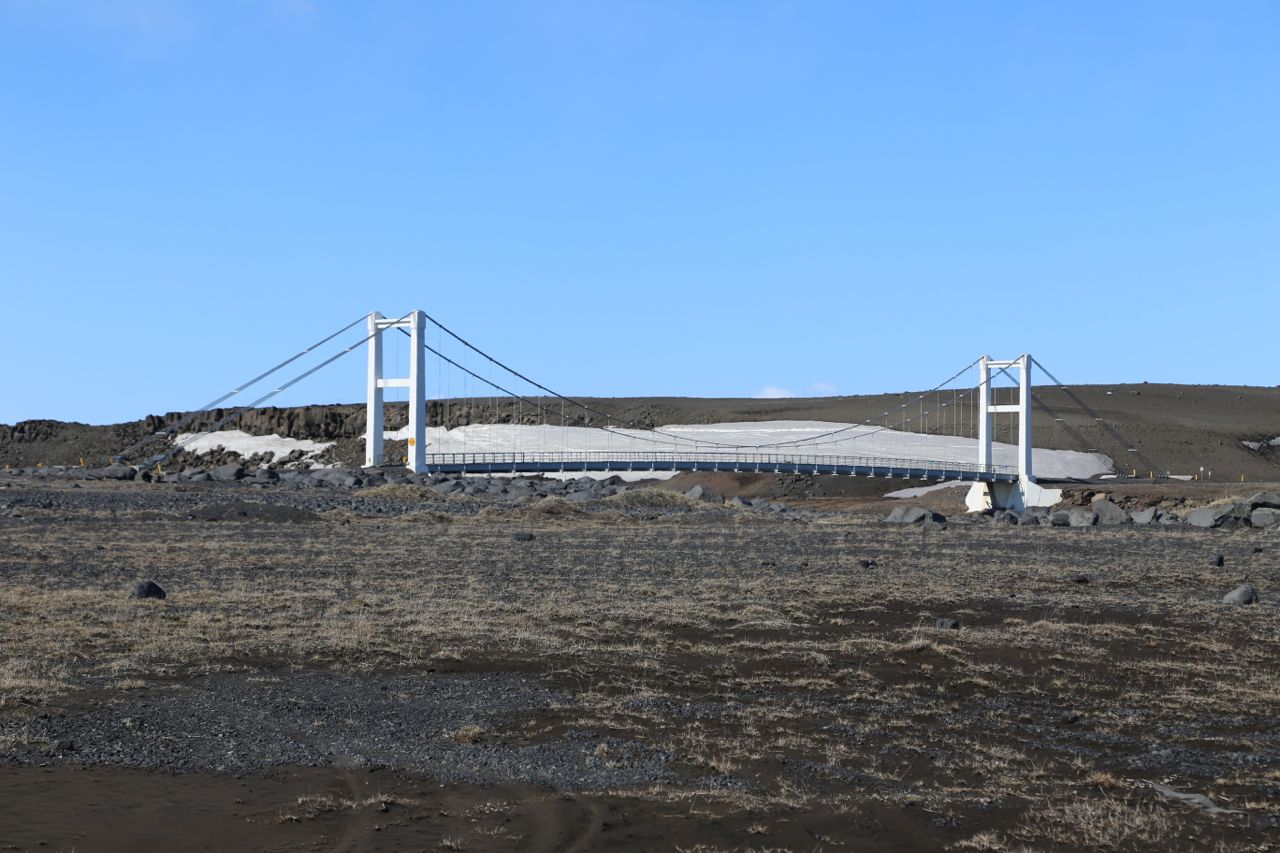
1. Most of the bridges in Iceland are one lane. I find this absolutely fascinating. They obviously did the calculations and decided that the roads, including the Ring Road, the major road that circles the island, get so little traffic that two lanes are not necessary. Also, Icelandic drivers are rather polite. You get to a bridge, and if a car is coming in the opposite direction, you simply wait until it crosses, to cross the bridge. When you approach a bridge, you slow down and make sure no one is coming or if they are, you figure out who will reach the bridge first to decide who goes first. This would never work in the USA.

Even this beautiful suspension bridge over Jökulsá á fjöllum on the Ring Road on the northeastern side of the island is one lane.

Even this beautiful suspension bridge over Jökulsá á fjöllum on the Ring Road on the northeastern side of the island is one lane.

2. Even better than the one lane bridges is the one lane tunnels. I am still flabbergasted by them. There are actually a few one lane tunnels in Iceland, but the one I went through was Vestfjarðagöng. There are three roads that go into and out of Ísafjörður in the Westfjords, and all three go through a tunnel. The road that goes to the south goes through the Vestfjarðagöng tunnel. Leaving Ísafjörður, the tunnel is at first two lanes for about 2 km, and then you get to an intersection. The tunnel has an intersection. I’ve never been in a tunnel with an intersection before. It’s amazing. Then after the intersection, we kept going straight to the south. At that point, the tunnel becomes one lane with a turn off to the right every third km or so (perhaps more). I was driving, and I had to turn off several times for oncoming traffic. I must say to, in the tunnel, it was all the more difficult to determine distances and how soon I needed to pull off. This one lane tunnel lasts for about 3 km. Later that day when we were driving back to Ísafjörður, I encountered oncoming traffic once, and they pulled off before I could figure out if I was supposed to since I would have to cross their lane of traffic to do so. I am still not entirely sure what the rules of the road are in that situation. If I had known something like that existed, I would have studied on rules of the road for it. Again, one lane tunnels would never work in the USA. 

3. Not all their roads are paved, and I don’t mean their tiny, never used private roads. The Ring Road is not paved in sections. I can understand from a maintenance standpoint why, but from a car maintenance and safety standpoint, I can’t.

4. They don’t really believe in guardrails for roads. There were a few spots where they actually did have a guardrail, but they were few and far between. The roads that climb up their mountains going through many switchbacks rarely have guardrails even though there are seriously steep drops on the side. The roads are even more fun when they are unpaved with no guardrails. This does force the driver to take extra care when driving, but it is still scary as hell. Of course they do have helpful little yellow, flexible markers on the side to sort of alert you to the whole don’t fall down the side of the mountain thing.

5. Not only is most electricity generated from geothermal heat, but in some places, the hot water also comes from geothermal heat. In Reykjavik, pipes deliver hot water (groundwater  heated at the geothermal plant) directly to the houses and businesses. There are of course separate pipes for the cold water. How awesome must it be to not need a water heater and get endless hot water?

Those are some things that particularly fascinate me as an engineer. Some other observations include.

6. There are a lot of sheep in Iceland, and the sheep seem to regard fences are mere suggestions. The rural areas of Iceland (i.e. the vast majority of it) has a lot of farms with sheep and other animals. The farms have lovely fences. Most of the animals are in fact behind the fences. However a certain percentage of the sheep don’t really care to be fenced in. As we drove the Ring Road, we constantly saw sheep between the road and fence where the majority of the sheep were safely grazing. We never saw sheep in the road, so evidently the sheep are fairly smart, but still, we found the number of the sheep outside the fence to be funny.

7. Iceland is the land of waterfalls. You can’t go five minutes without seeing one. After a while, you start to ignore the ones that aren’t really big or have some unique feature. We saw so many waterfalls that we started driving right past the “normal” ones. These normal ones being ones that in many places would be their own tourist attraction. We passed many farms with a waterfall in their backyard. The beauty was insane.

8. Shops in Iceland have shorter business hours and are only open from about 9 or 10 a.m. to 5 or 6 p.m. This did not appear to be a thing that changed once it was officially tourist season. While I appreciate the employees and owners wanting a normal work day, from the perspective of a tourist, it was really annoying because if you are sightseeing all day, by the time you return, everything is closed. You need to leave a day to just shop.

9. Food is really expensive there, but the food is wonderful. Also, everyone in Iceland seems to make incredible bread. Also, the Skyr yogurt is awesome. Really, pretty much all the food was great.

10. Icelanders are very nice and helpful. The vast majority of them speak English and are patient, helpful, and have a sense of humor about people trying to say a word or two of Icelandic and, at least in my case, failing miserably. Side note: We read that the closest English way to pronounce Eyjafjallajökull, the volcano that erupted there in 2010 and messed up air traffic across the globe, is “hey I forgot my yogurt.” I relayed this to an Icelander who laughed a great deal and said that was actually not a bad way to learn to say it.

11. There is evidently very little crime in Iceland. I saw a total of 8 police cars the entire time I was there. In several cities, we did pass what was clearly the police station, but seeing an actual police officer or car was rare.

In summary, Iceland is incredible. Go visit if you can.

Blue Lagoon

Day 1 in Iceland. I think I got about 20 minutes sleep on the plane. We drove to the western edge of the Reykjanes Peninsula to see the lighthouses in Garður. Then it was on to Iceland’s most visited tourist attraction the Blue Lagoon. Some genius turned what was a pool formed by wastewater from a geothermal power plant into a rather expensive, somewhat posh hot pot to which all tourists flock. It is really cool though. The water color is this gorgeous, cloudy sky blue. Also, they give excellent massages while you lay on a float in the lagoon. When you’ve been on a plane for six hours with no sleep, walking around a wonderfully heated pool and then getting a massage is quite frankly, a great cure for your exhaustion. Walking around the lagoon is great exfoliation for your feet, and they have buckets of silica from the lagoon to rub on your face for a facial. From a geology standpoint, the pool is really neat because you can walk through micro heat spots, not to mention to entire heated by geothermal heat thing. In some areas the pool is warm and in some areas, the pool is hot. The lagoon was also a great place for me to play with my new GoPro camera, which can be used underwater.

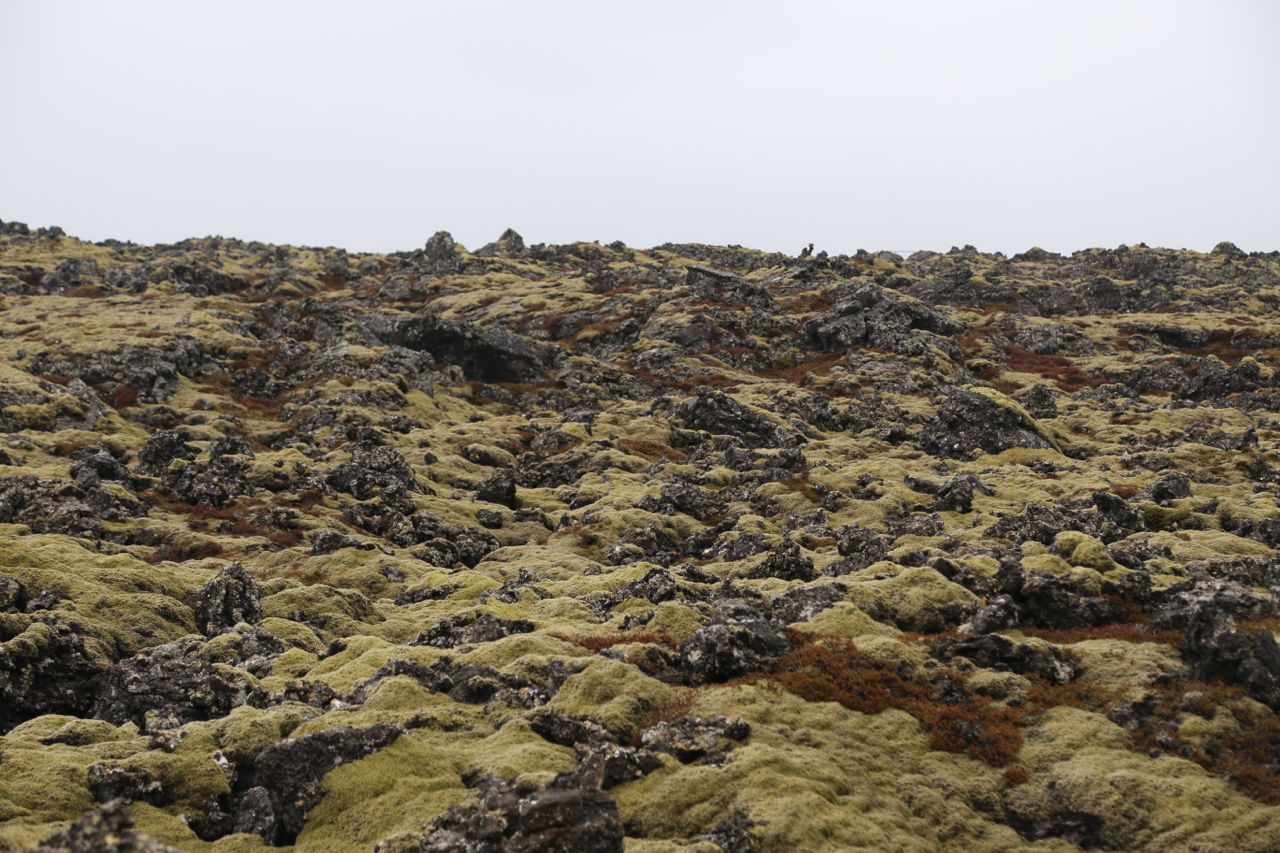
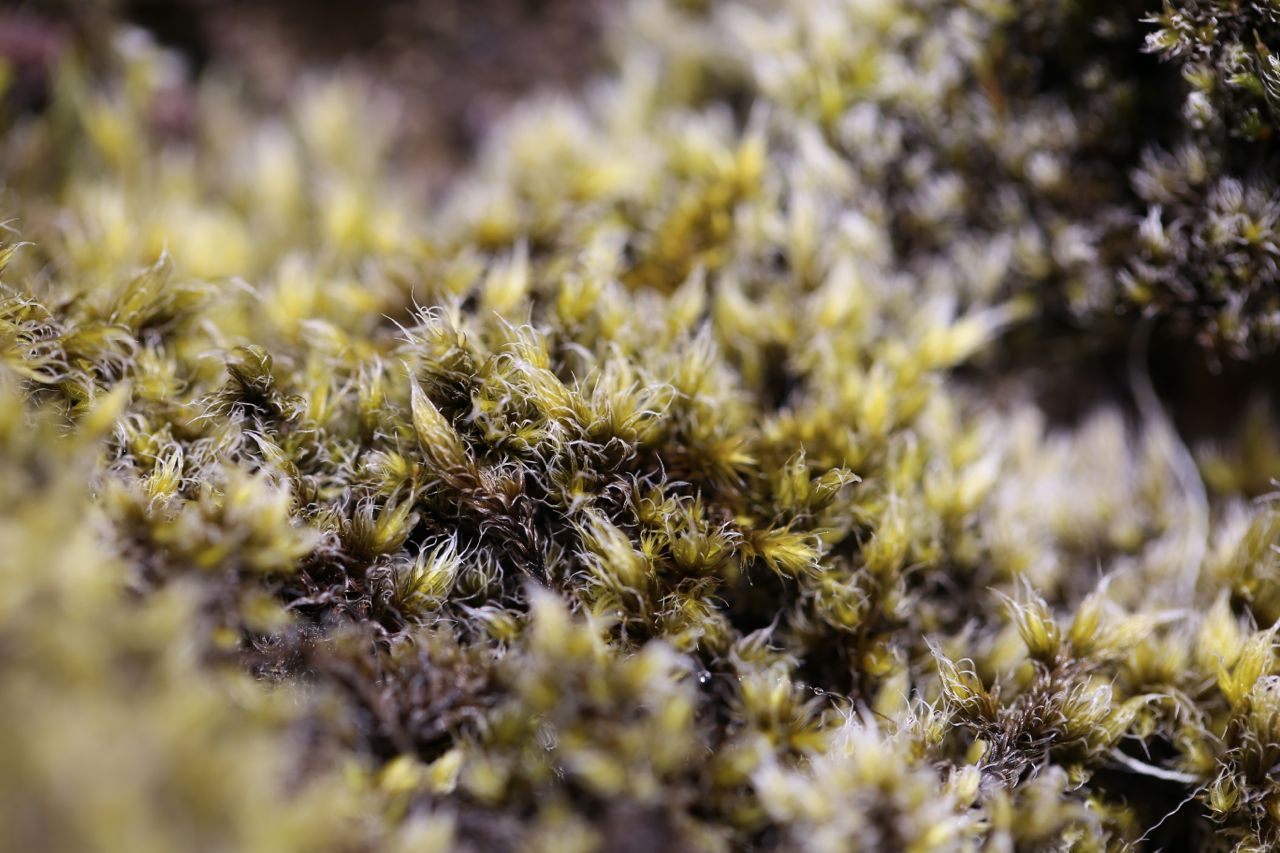
The area around the lagoon is bizarrely pretty. It is dark craggily, sharp volcanic rock that is covered with this lush, soft in appearance, green plant. I am guess the green is actually lichen or a moss, but I need someone to educate me on what it actually it.

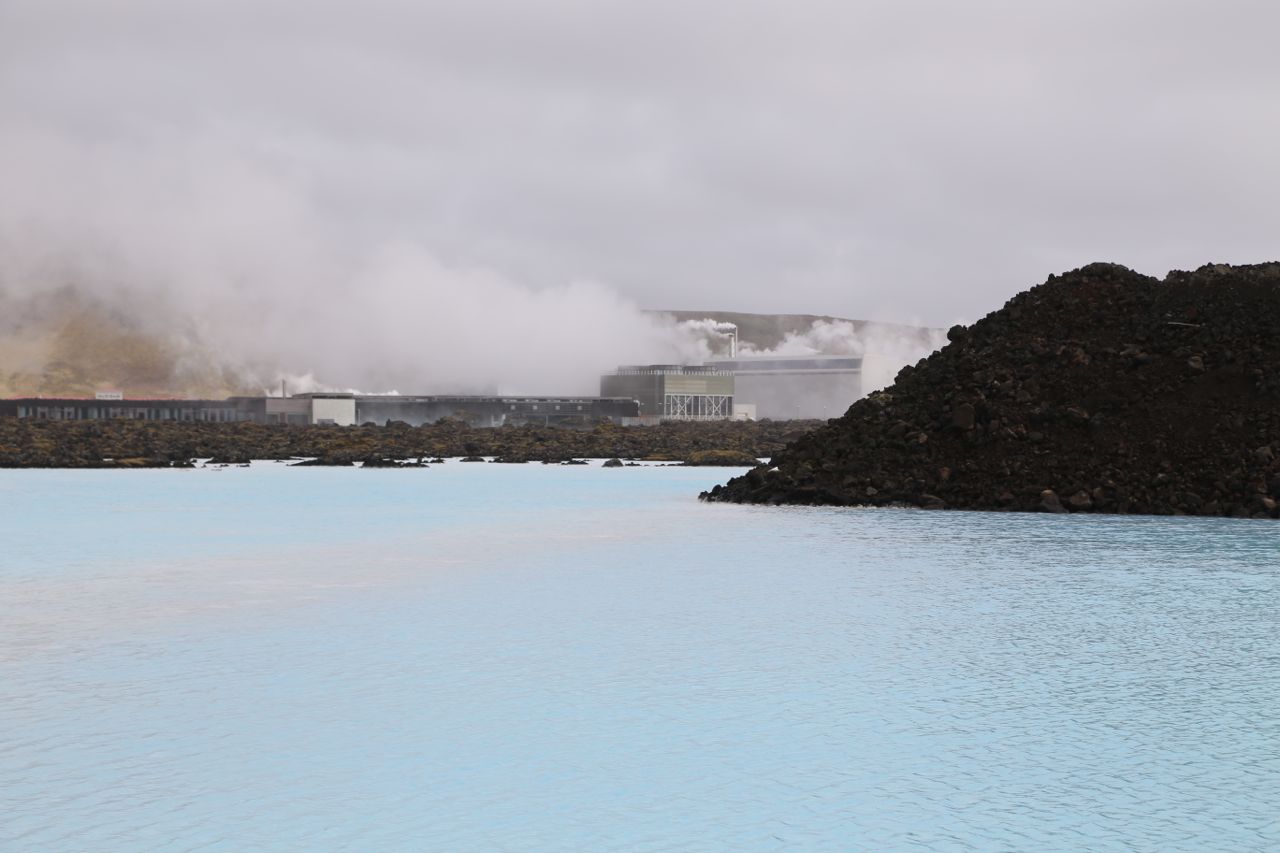
Power plant which caused the Blue Lagoon to form

Power plant which caused the Blue Lagoon to form

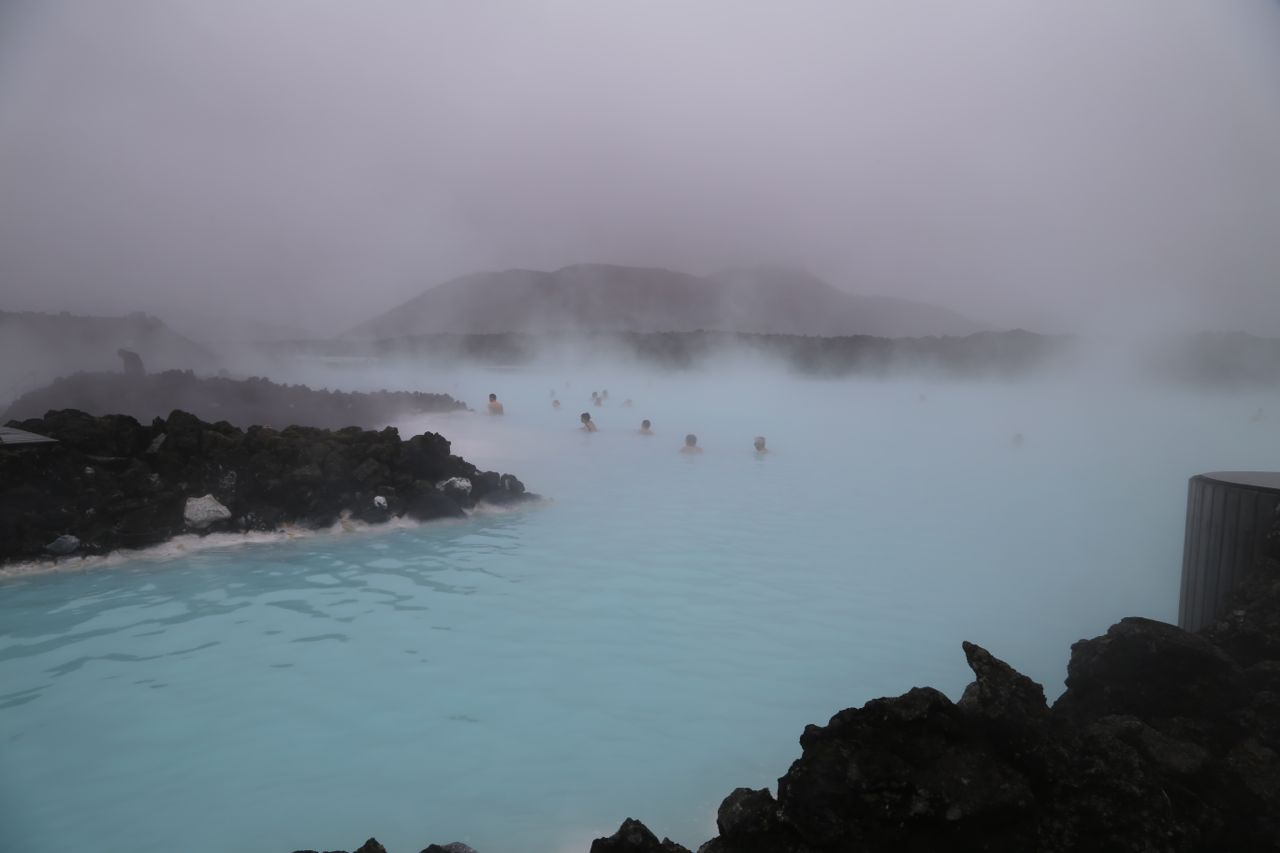
Blue Lagoon

Blue Lagoon

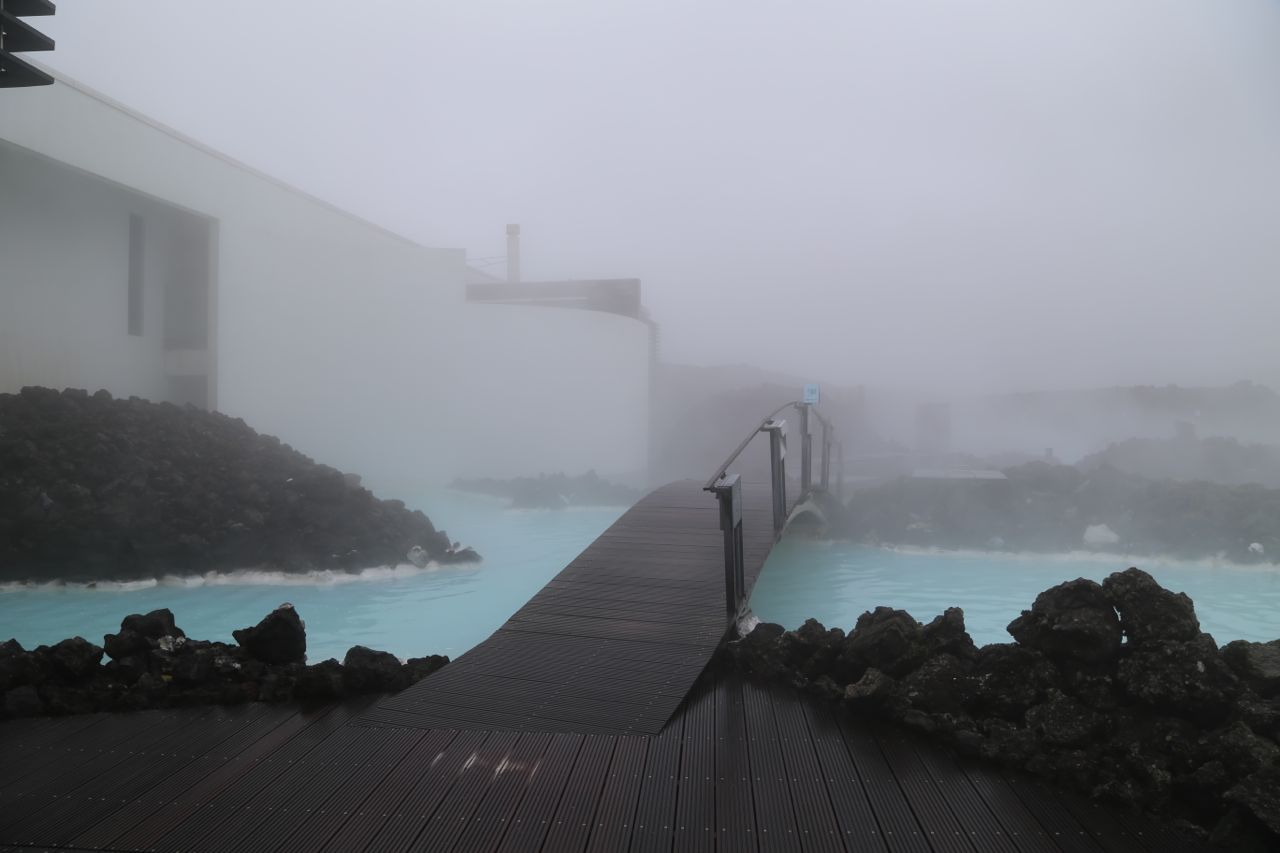
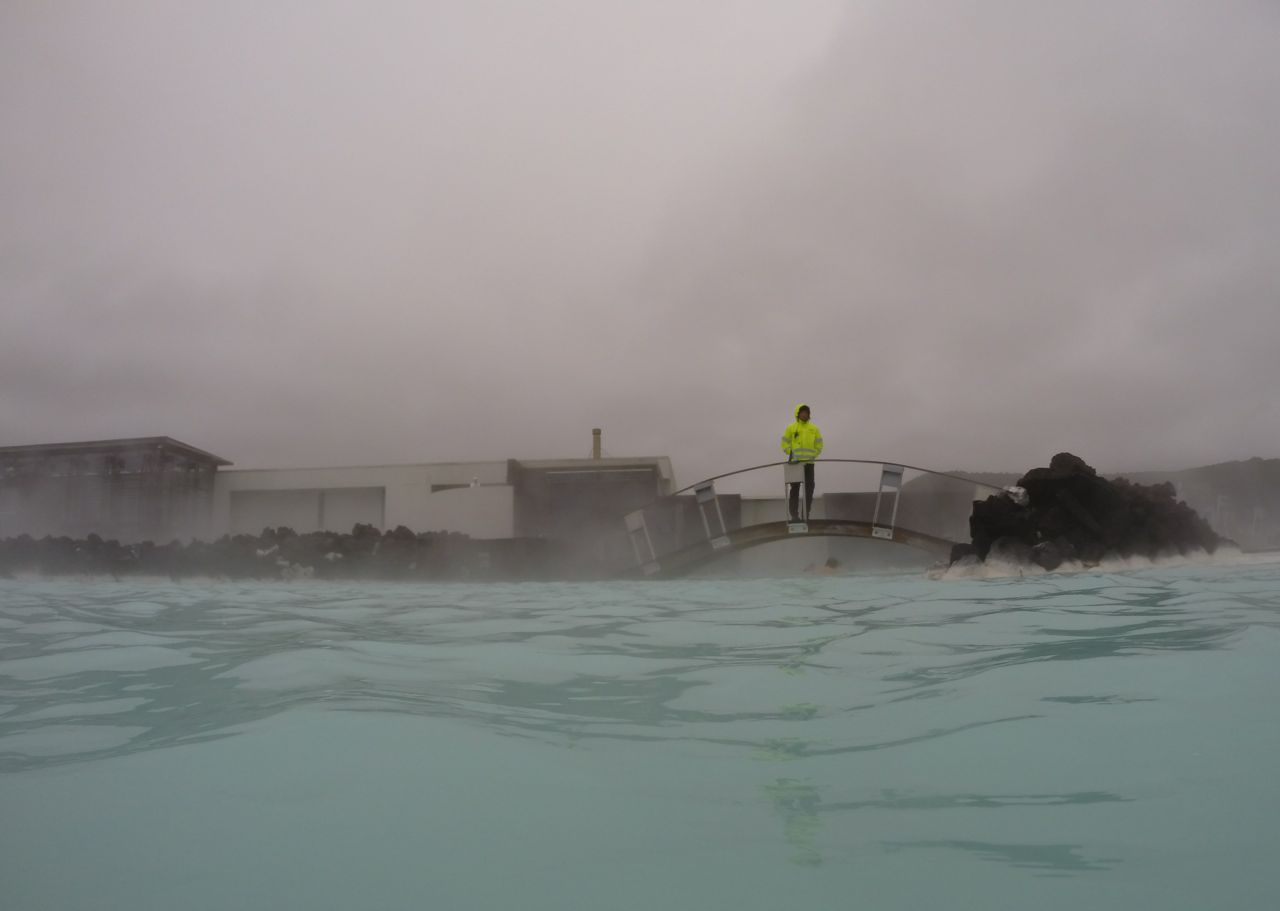
Bridge over Blue Lagoon

Bridge over Blue Lagoon

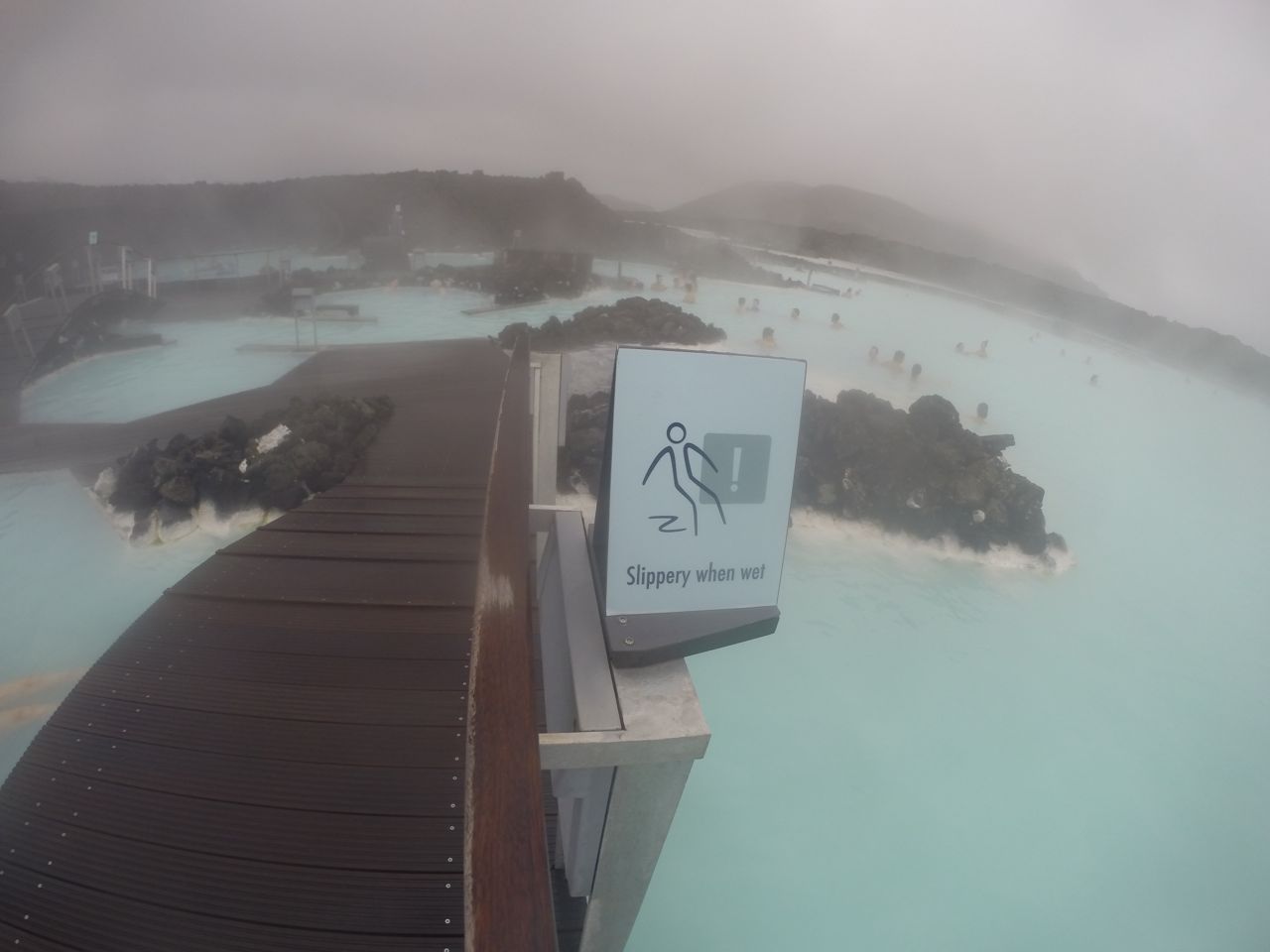
I'd be curious to know if this bridge is ever not slippery

I’d be curious to know if this bridge is ever not slippery

Not often you see a lifeguard dressed like that

Not often you see a lifeguard dressed like that

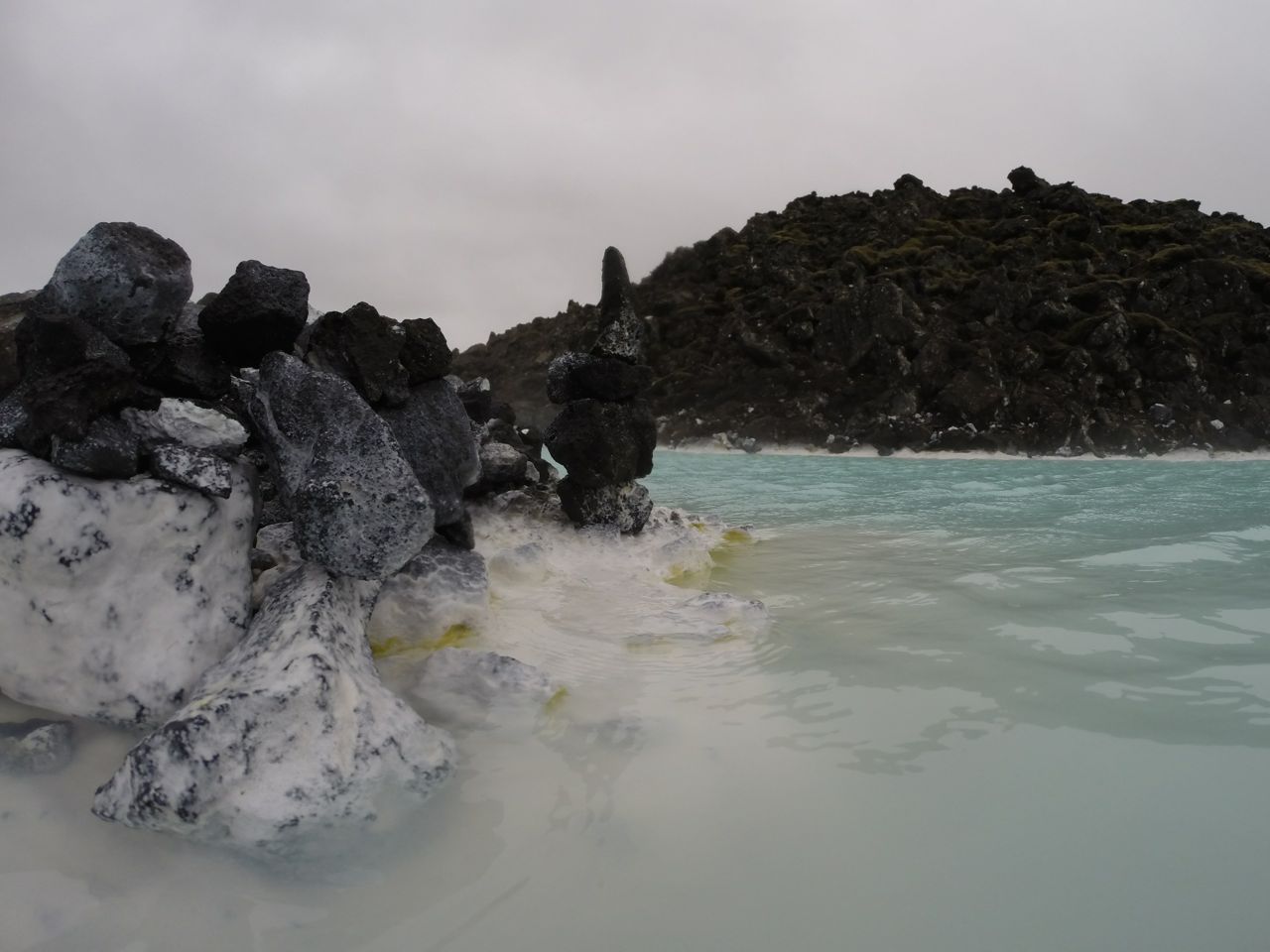
Rock edge of Blue Lagoon

Rock edge of Blue Lagoon

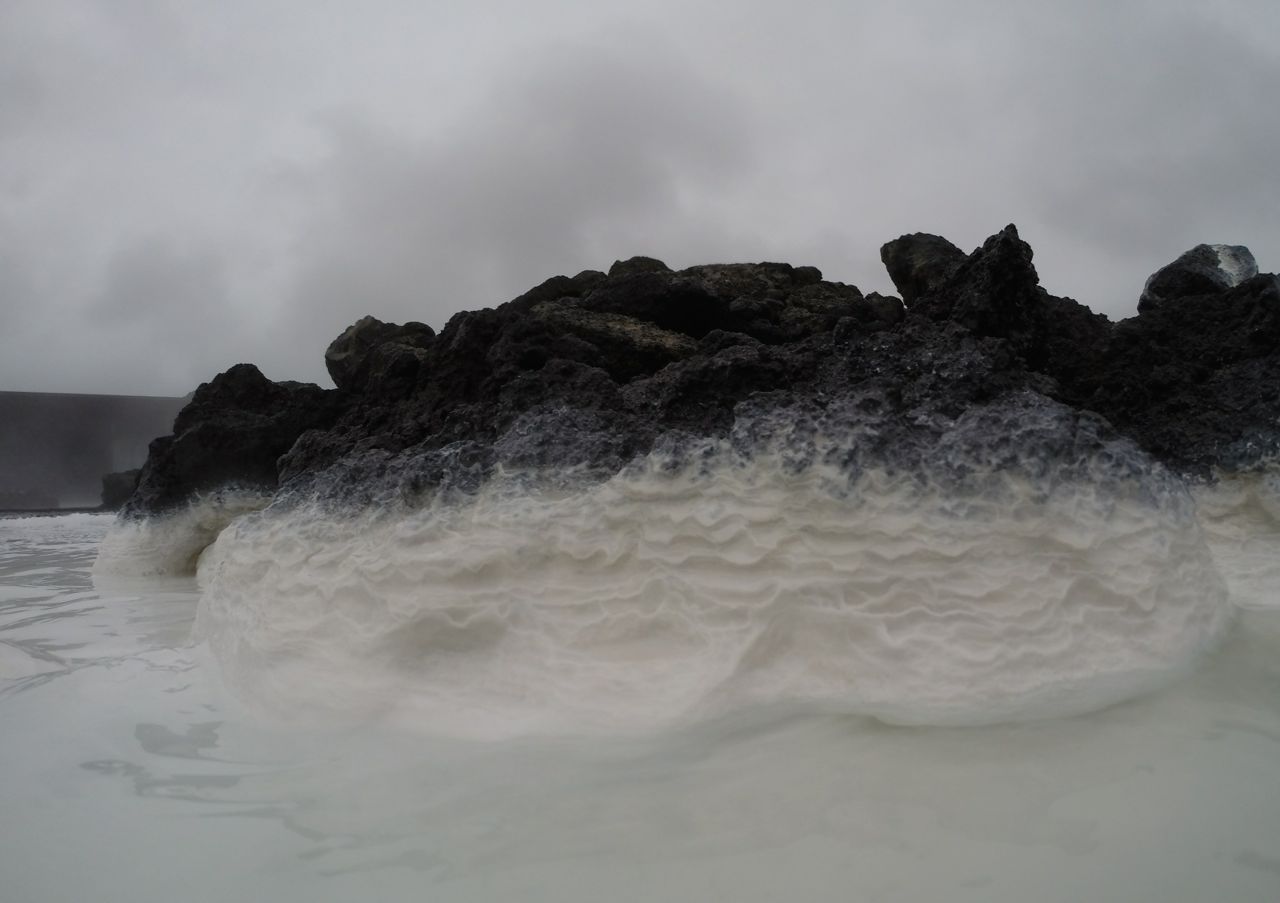
Precipitate on rocks

Precipitate on rocks

Surrounding terrain

Surrounding terrain

Lichen? Moss? It covers the volcanic rock

Lichen? Moss? It covers the volcanic rock

Concrete Crushing

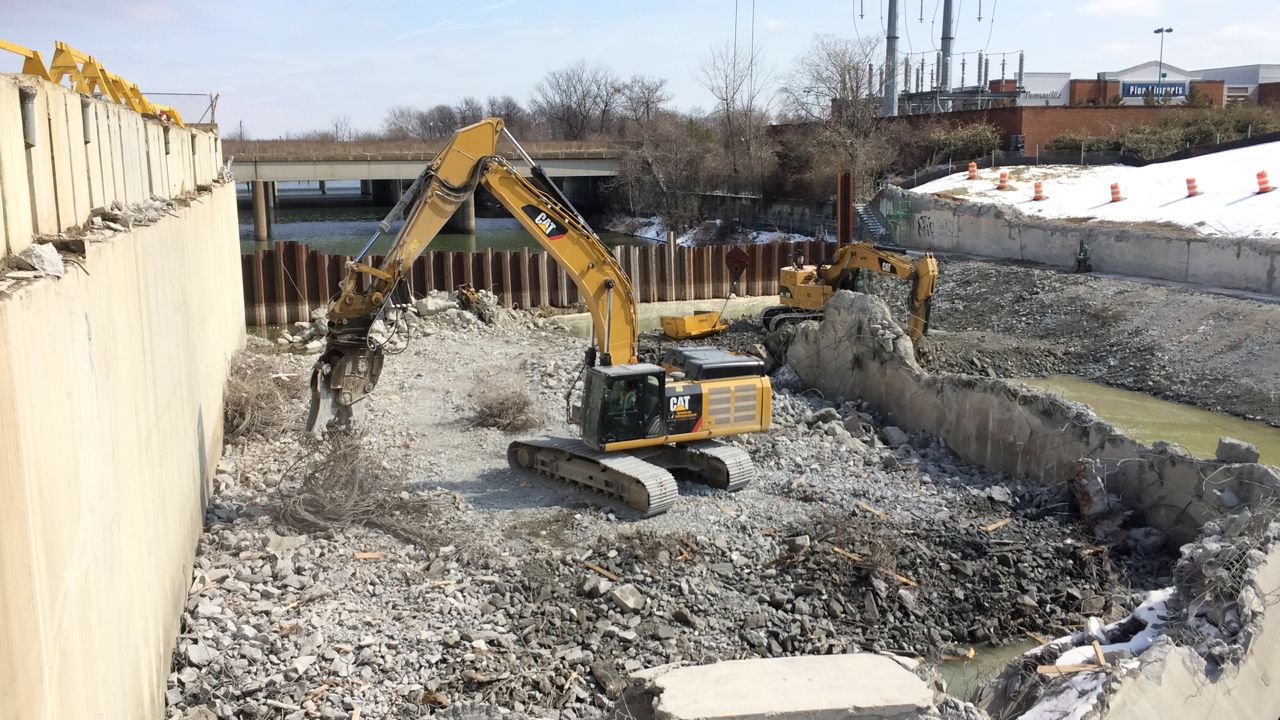
Excavators with concrete crushers attachments are badass. They just chomp concrete like most of us chomp on walnuts. The claw closes around the concrete, then chomp, and then there is rebar and small bits of concrete.

There is an old railroad bridge being destroyed over Four Mile Run between Arlington and Alexandria, Virginia. Here is video I shot of an excavator destroying what is left of a pier from the bridge.

Shower is Finished

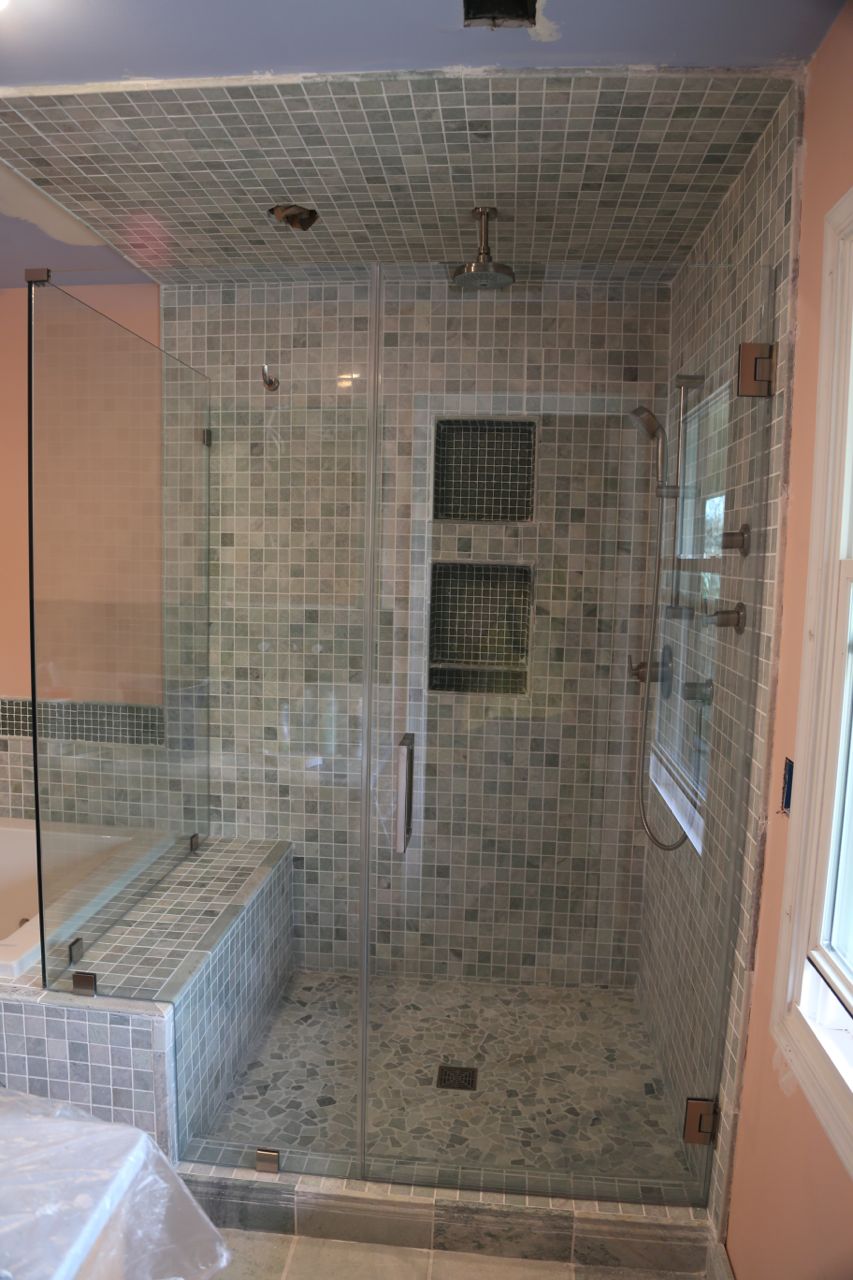
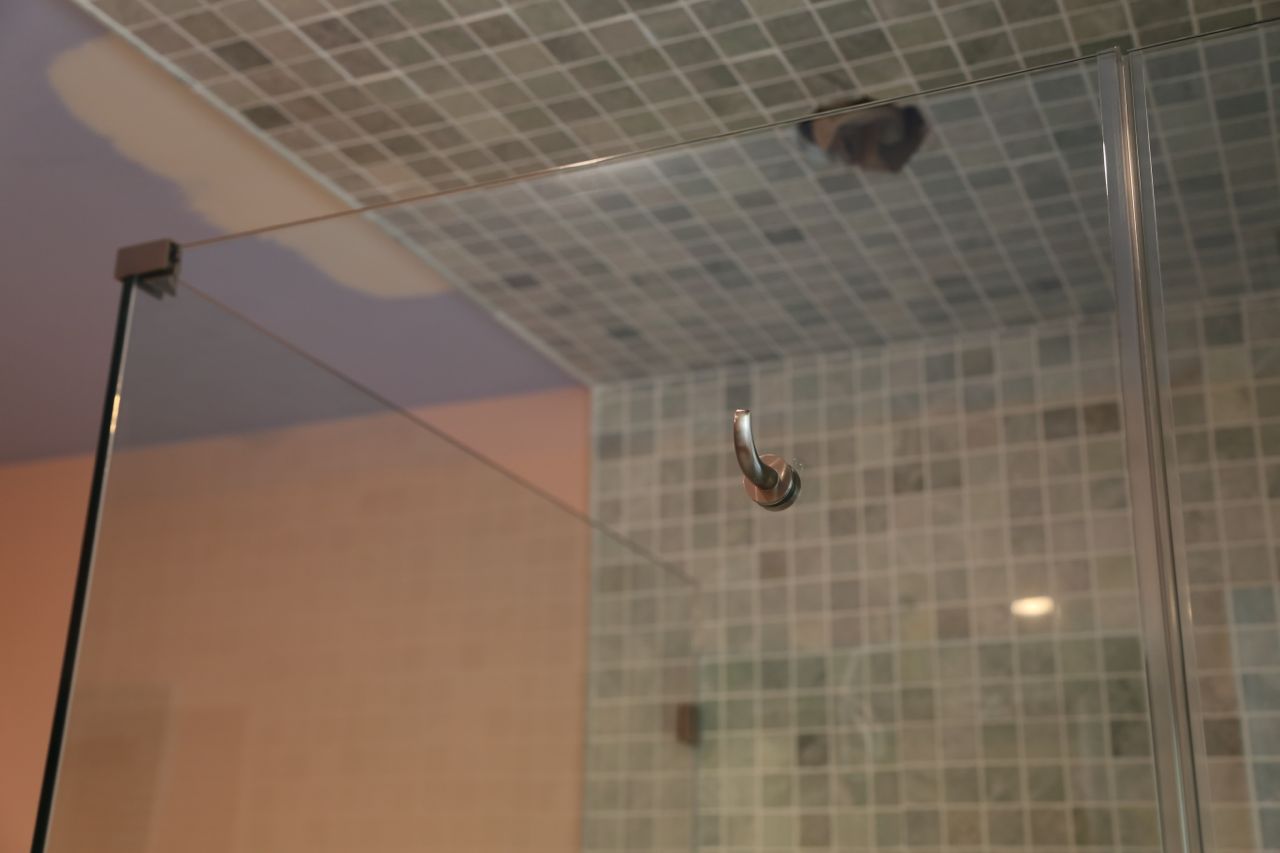
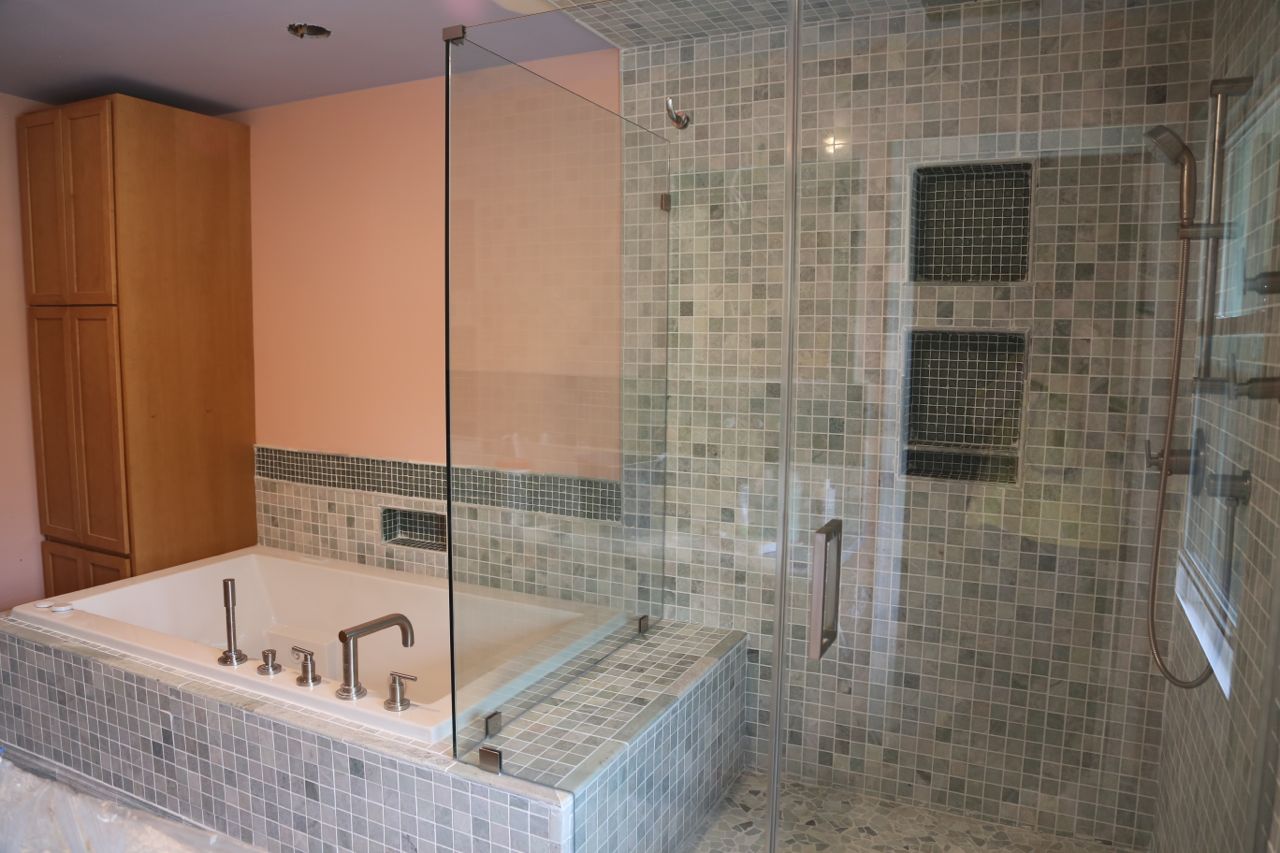
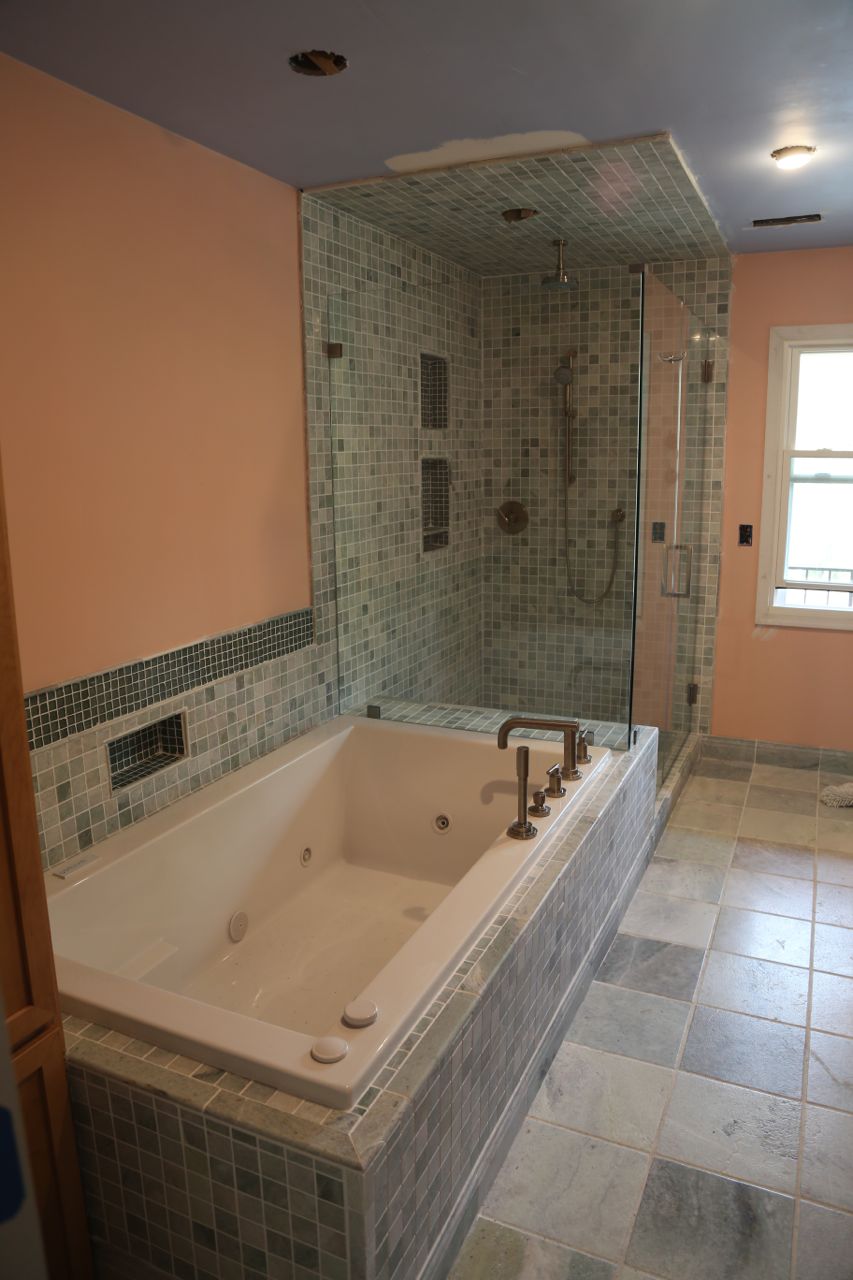
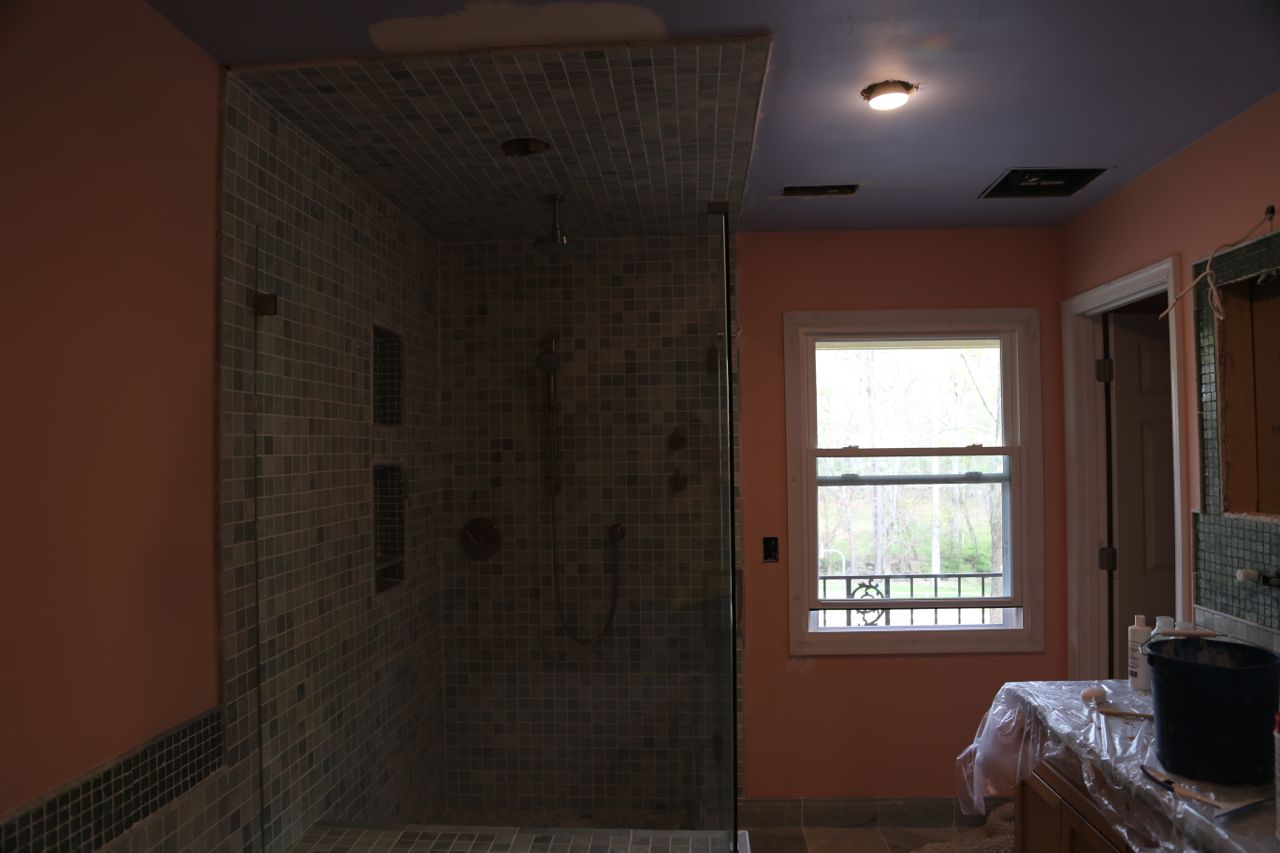
The frameless glass shower wall and door have been installed. I had the glass company place a floating robe hook on the shower wall next to the door, so I could easily grab a towel when I get out of the shower. Also, on the glass front, the new bathroom window has been installed.

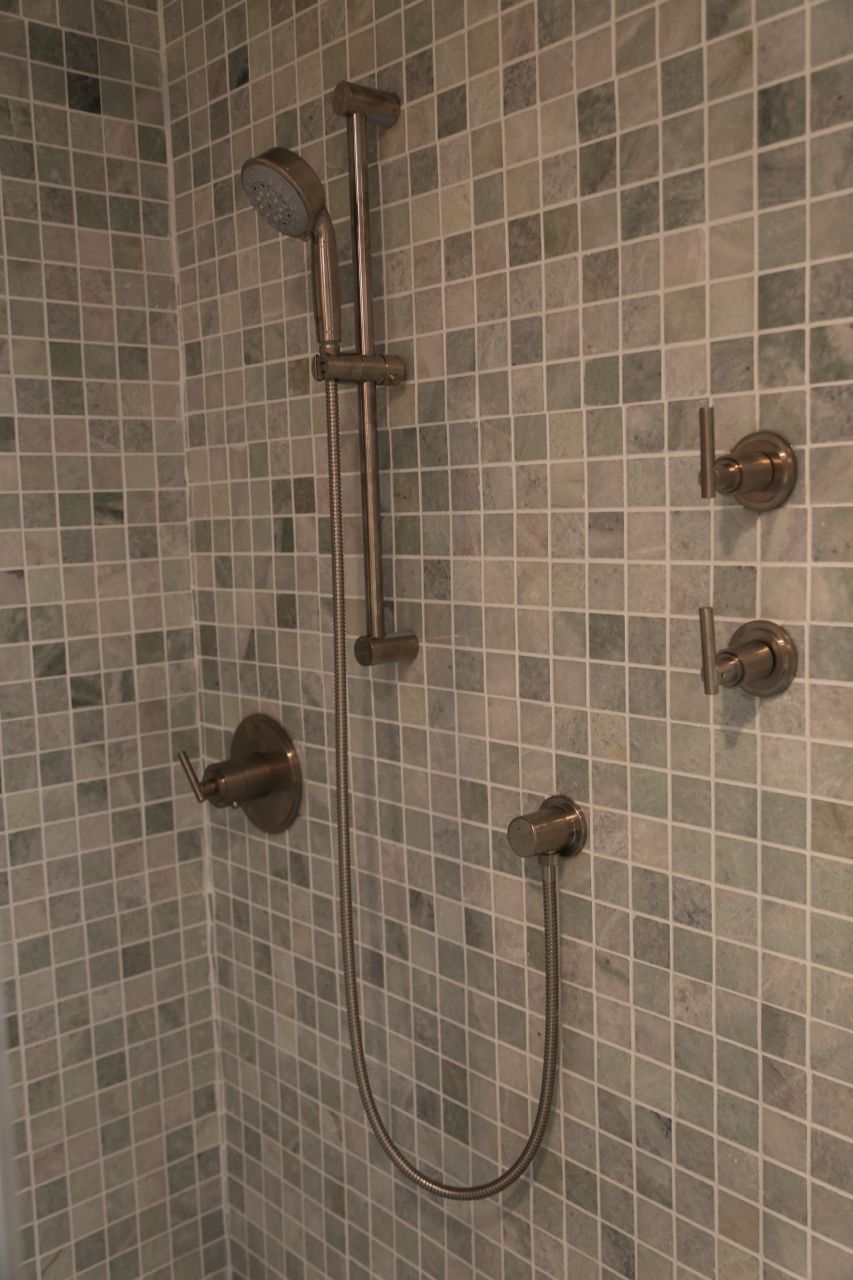
All the shower plumbing fixtures have also been installed. Most of the fixtures come from Grohe’s Atrio line. There is an multifunction rain shower head placed in the ceiling and a handheld shower head on a adjustable bar. In the photo below, the valve on the far left is the thermostatic valve that adjust the temperature for both shower heads. Then on the right are the flow valves that turn the shower heads on, the top one for the overhead head and the lower one for the handheld head. Thermostatic valves are a really nice feature because you don’t have to constantly find the right temperature in between showers, and they ensure the same temperature water comes out of multiple heads. I have already used my new shower, and it is glorious! The area is wonderful, nice and spacious but not so big to be insane, and the the bench is a necessity for any woman who shaves her legs.

Shower fixtures

Shower fixtures

Shower glass wall and door

Shower glass wall and door

Shower glass wall robe hook

Shower glass wall robe hook

Shower glass wall and door

Shower glass wall and door

Shower glass wall and door in place

Shower glass wall and door in place

New window

New window

Driving Pilings

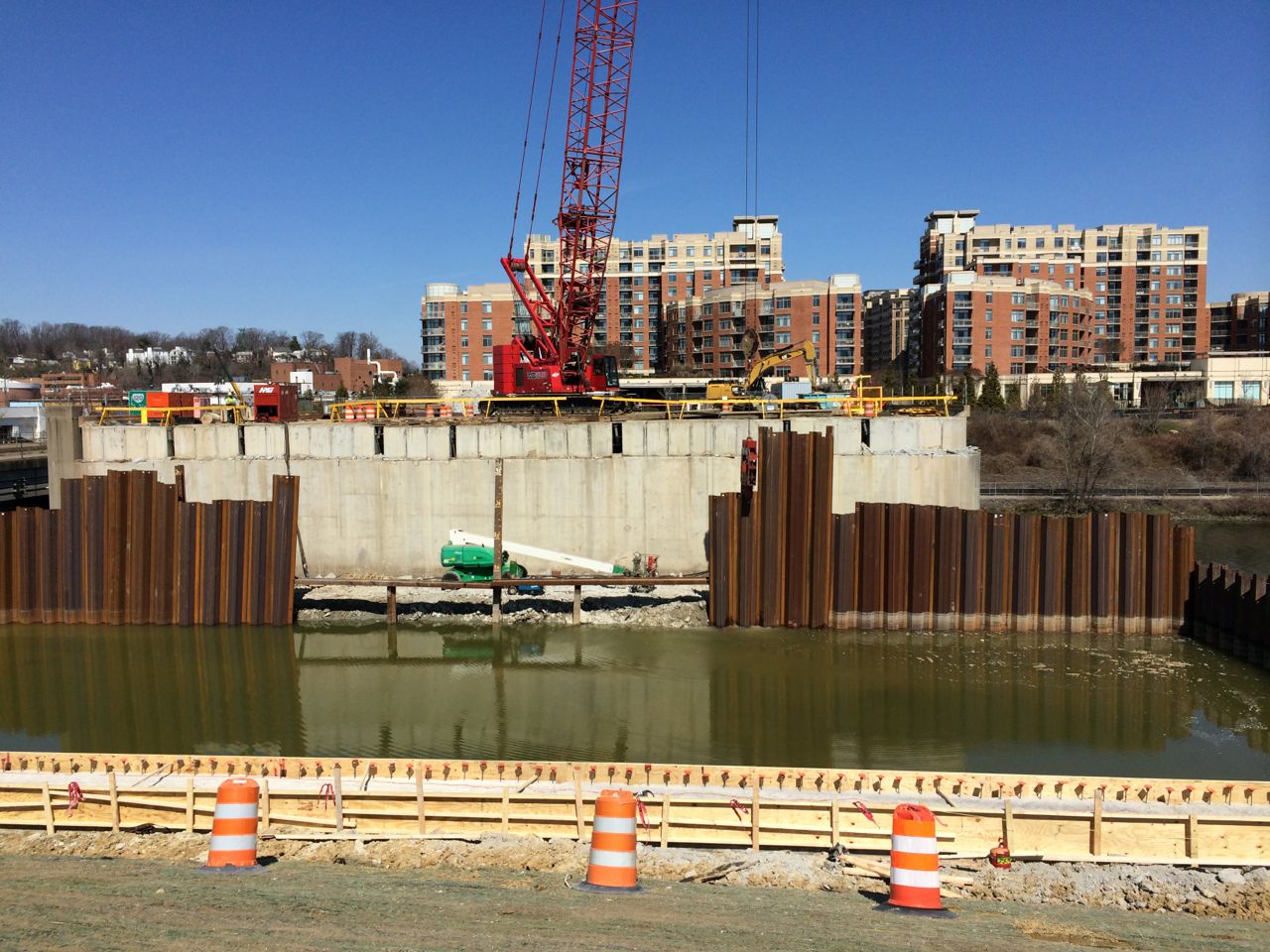
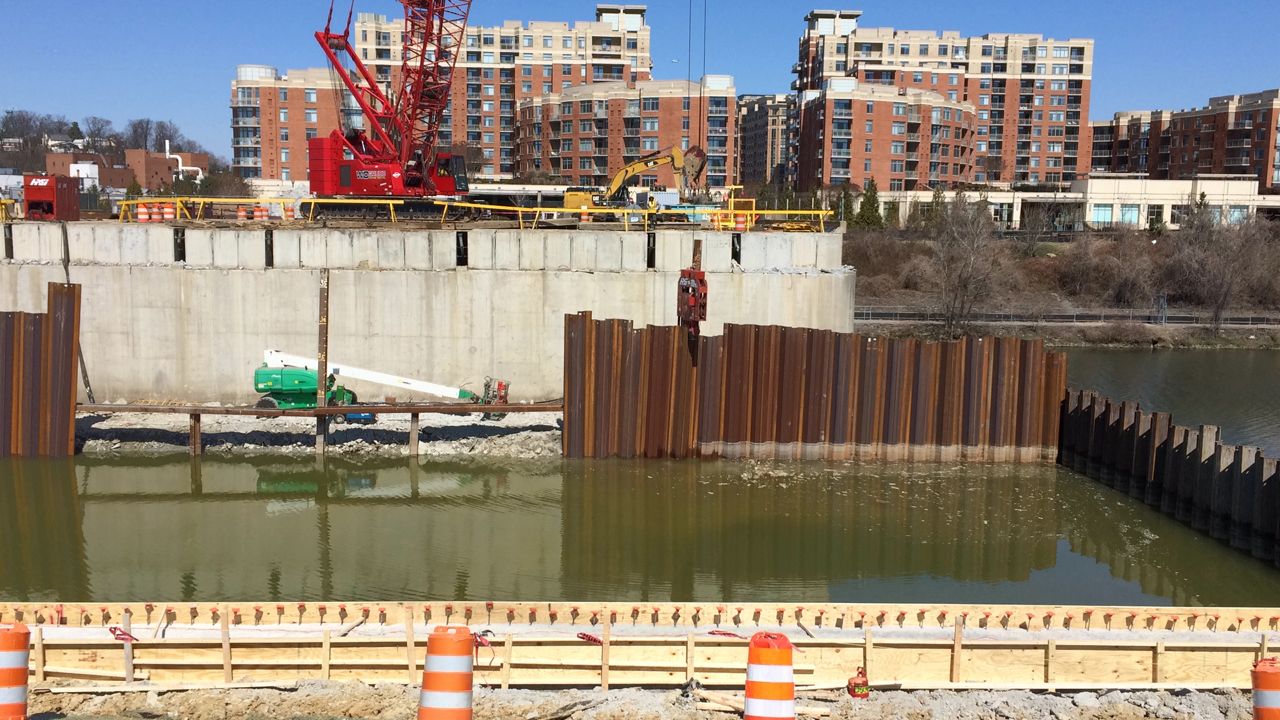
There is a bridge that is being demolished near my office that is now my destination and entertainment on my daily lunchtime walks. I previously posted video of the demolition of a concrete column. The other day during my visit, a crane with a hanging vibratory hammer was driving steel sheet pilings into the riverbed to form a cofferdam. There was already a cofferdam around one of the bridge piers, which has now been demolished. I am assuming this new cofferdam will surround the next pier, so it can be removed. The before and after photos of the pilings being driven are below as well as video of it happening.

Driving pilings, before

Driving pilings, before

Driving pilings, after

Driving pilings, after

Excavator Destroys a Concrete Column

Excavator with concrete crusher twirling rebar

Excavator with concrete crusher twirling rebar

There is a bridge over Four Mile Run that connects Alexandria and Arlington, Virginia that is being destroyed. I love walking over near the site and watching the destruction take place. Today I took some video of (what I am fairly sure is) an excavator with a concrete crusher pound and crush the concrete of a former column. It then separated the rebar and twirled it like ribbon to consolidate it. So very cool to watch.