Very Model of a Modern Engineer-Scientist

This is one of those times, where I have a very silly conversation, and then I take it even farther than it really should go. I can’t exactly explain how it started, other than Biochem Belle from Twitter, noted she was waiting for the song Modern Major Scientist from Chemjobber. I chimed in with a few lines from “I Am the Very Model of a Modern Major-General” only one of which did I manipulate for a scientist. I realized that about half the lines of the song would not have to be altered for a scientist as opposed to a military person. So here is where I take it too far, with apologies and great respect to Gilbert and Sullivan.

I am the very model of a modern Engineer-Scientist,
I’ve information vegetable, animal, and mineral,
I know the kingdoms taxonomy, and I quote the sci papers historical
From The Lancet to Ecology, in order categorical;
I’m very well acquainted, too, with matters mathematical,
I understand equations, both the simple and quadratical,
About binomial theorem I’m teeming with a lot o’ news,
With many cheerful facts about the square of the hypotenuse.
I’m very good at integral and differential calculus;
I know the scientific names of beings animalculous:
In short, in matters vegetable, animal, and mineral,
I am the very model of a modern Engineer-Scientist.
I know our engineering history, Imhotep and al-Jazari;
I understand acoustics, I know all types of VOCs,
I quote in equations all the laws thermodynamical,
In conics I can graph ellipses, hyperbolas, and parabolas;
I can tell undoubted amethyst from fluorite and lepidolite,
I know the croaking chorus of the Xenopus laevis!
Then I can name a chemical after I’ve seen its mass spectrum chromatograph,
And calculate its concentration with an internal standard added.
Then I can design a incinerator for hazardous waste destruction,
And tell you ev’ry detail of exposure risk reduction
In short, in matters vegetable, animal, and mineral,
I am the very model of a modern Engineer-Scientist.
In fact, when I know what is meant by leukotriene and histomine,
When I can tell at sight a purine from a  pyrimidine,
When such units as furlong and stones I’m more wary at,
And when I know precisely what is meant by ANSI hard hat,
When I have learnt what progress has been made in modern technology,
When I know more of statistics, microbiology, and toxicology –
In short, when I’ve a smattering of hydrogeology –
You’ll say a better Engineer-Scientist has never sat a gee.
For my science knowledge, because I’m nerdy and geeky,
Is never enough and I must always satisfy my curiosity;
But still, in matters vegetable, animal, and mineral,
I am the very model of a modern Engineer-Scientist.
About Those Rail Ties, WMATA

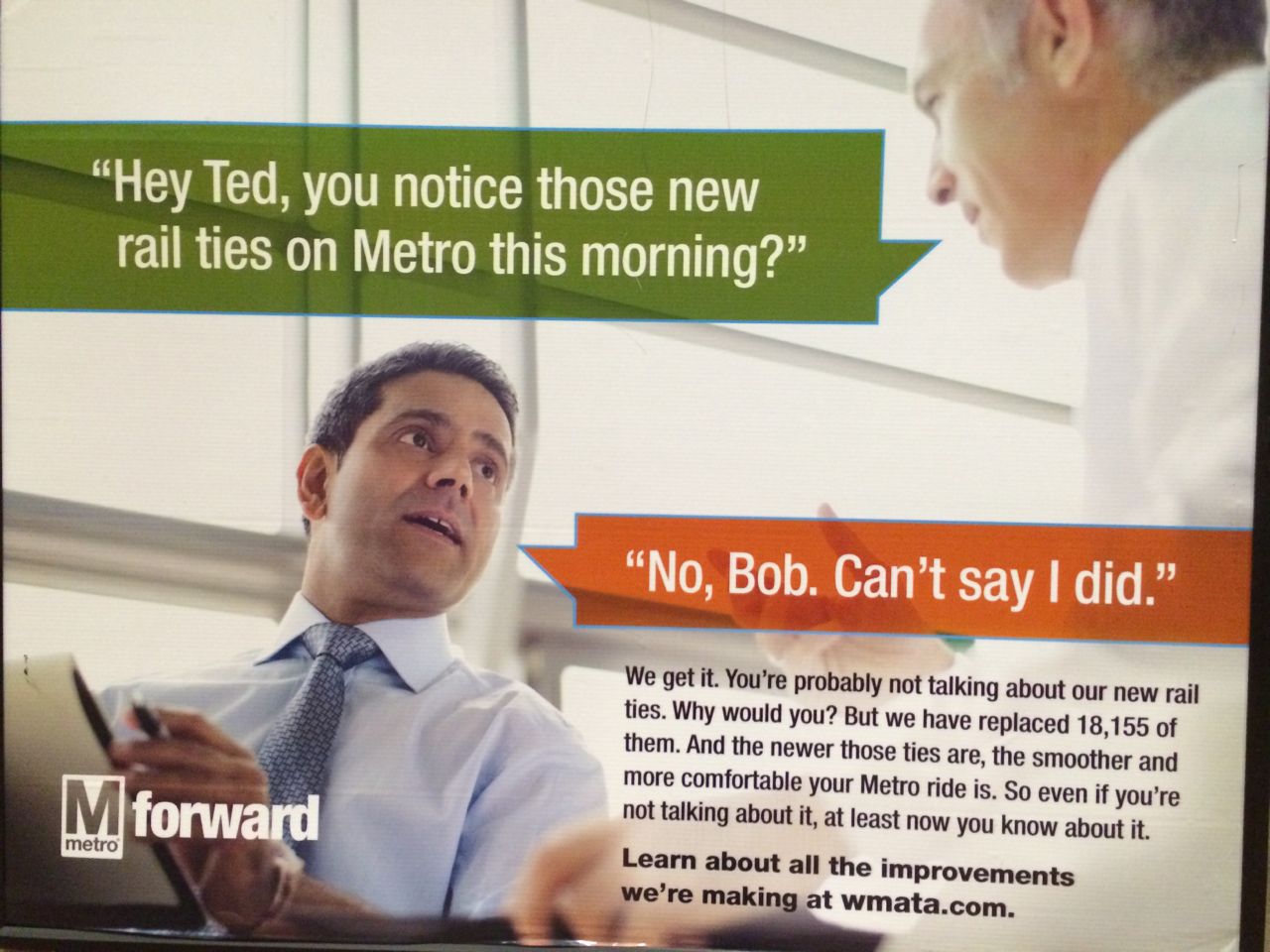
WMATA's new rail ties ad

WMATA’s new rail ties ad

Dear WMATA,

I saw your new ad while I walking into the Metro the other day. That is, the new ad where you tell your riders that your installing new rail ties to give us a more comfortable rise. Considering the purpose that rail ties serve, I am hopeful this type of maintenance will also give us customers a safer ride, but I’m not going to quibble on that. First, I would like to thank you for at least not insulting your customers, making an incredibly sexist stereotype, or presenting a vague statistic with absolutely no context that really conveys nothing in this ad, like you did in a certain ad from this new series of ads. I would also like to commend you on doing actual maintenance on your rail system. As an engineer, I am more aware than many of how important and needed regular maintenance is, and from what I have heard in the news, you weren’t actually aware of this fact until several years ago.

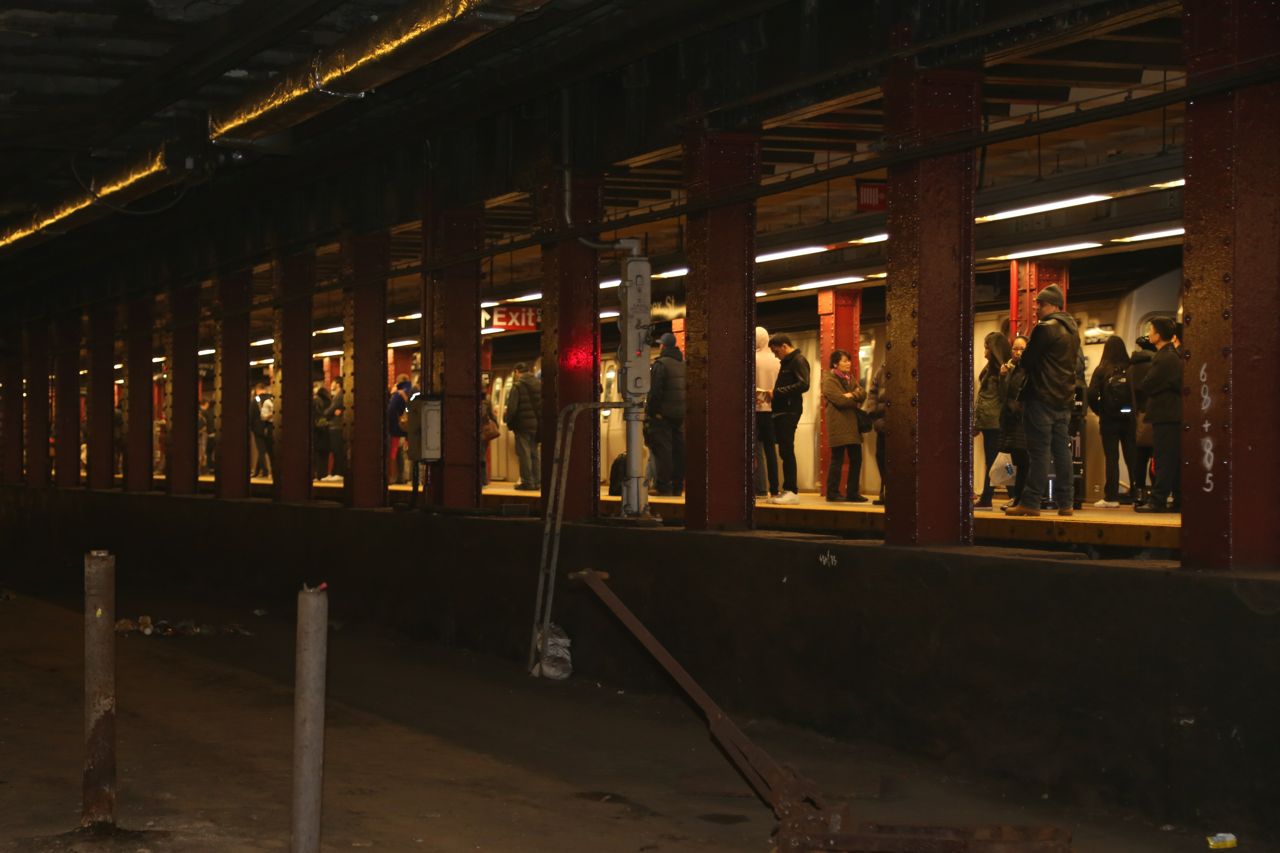
However, I do have a question for you about these new rail ties that you admit that we, the customers, might not notice. Exactly how would you like to your customers to notice these fantastic new rail ties? I mean this in all seriousness. After I saw this poster, I made a point of looking at the rail ties while I was standing on the platform waiting for my train. Both my originating and destination stations on this particular day were underground, and what I noticed is that there were no rail ties underneath the track in front of the platform. The rails were held in place by metal bracing of some sort that was attached directly to the concrete beneath the tracks and did not tie the two tracks together. As my name Geeky Girl Engineer might suggest, I am in fact a geeky engineer, and thus I became intrigued by this metal bracing holding the tracks at the platform. Thus far my internet searches have not led me to information as to what these braces are called, but since the braces only hold one track, they don’t seem to actually be rail ties. However, I could be wrong, and if you would like to educate me on what they are called, I would be happy to learn about it (in all seriousness).

The other thing I noticed about the track in the station, is that it is really hard to notice the rail ties or braces. To begin with, the station is dark. Second, the area where the track is, is mainly different shades of black as it’s rather dirty. I wouldn’t expect it to be clean, but the darkness makes it difficult to see any level of detail. Also, the platform tile closest to the edge is rather textured, and this makes it uncomfortable to stand there for very long to examine the tracks. I realize the textured tile is a safety design to make people realize how close to the edge they are and to keep people from standing there while waiting for the train and thus potentially falling onto the track. I think this is a good safety, and I am certainly not arguing against it. I am just pointing out that between the textured tile and simply not wanting to get too close to the edge, conditions are not really conducive to a person examining or admiring your new rail ties.

As for the rail ties that are under track between stations, well, those are kind of hard to see also. The Metro, as you are of course aware, is underground a significant portion of the time. There is no way to view rail ties at all while the train is underground. There is no way to view anything outside the train while the train is in motion underground. Quite frankly, you should be aware of this. I also looked at the track while the train was in motion above ground. I was able to view the track and see that there are wood ties holding the track in place, but that honestly was about it. Again, the train was in motion making it difficult to really examine details of the ties. I couldn’t say whether the ties I viewed were new or old. I’m not actually sure how I would be able to tell the difference. I’m fairly sure that old ties would be dirtier and probably darker than new ties, but I am not sure to what degree. Presumably if I saw an old and a new one side by side, I could tell the difference, but except for that case, I am not sure how I would. Thus, it would be nice if your ad touting your new rail ties would have educated me on how to tell the difference.

Again, I commend you for your maintenance work. I thank you for not insulting me or stereotyping me. However, I think you might want to rethink your ad. For safety reasons, I think it would be best if you did not encourage your customers to examine your rail ties.

Your observant and educated customer,

Geeky Girl Engineer

Warning: Engineer Renovating Her Home

Sometimes I think I should come with a warning label: “Warning: Micromanaging, long-term planning, detail obsessed, anal retentive, constantly questioning engineer.” At the very least, when it comes to home maintenance and renovation, I should warn people of that. In truth, I think some of my personality traits that can probably be annoying at times, also make me a good engineer. Engineers have to think both short and long term. We have to look at both the big picture and all the tiny details. Sometimes, in my personal life, I am just not sure people are prepared to deal with those traits. I am not actually saying I would change myself if I could; I’m just saying sometimes people are unprepared to deal with someone like me.

I am currently planning for Phase 3 Home Renovation. I actually started planning for it during Phase 2. I changed the layout of the second floor of my house during Phase 2, and part of those changes were to prepare for Phase 3. One of my overall goals with my home renovation was to create a nice master bedroom closet and bathroom with a tub. The original closet was two reach-in closets that barely had enough space for two people, and the original master bathroom was tiny. It had two sinks on a small counter space, a small shower only stall, barely any storage space, and a toilet. I really wanted a nice whirlpool tub and more space. The master bedroom is next to the living room, where I had wanted to open the space up with the dining room and kitchen. Therefore, while planning for Phase 2 where I renovated the living room, dining room, kitchen, and family room, I drew, redrew, and kept redrawing the configuration of the second floor until I could have an open layout with the common rooms and also a nice master closet and bathroom that I wanted. In the final plan, I stole a six foot wide space the length of the living room from the living room and used that space to form a new master closet and a new water closet (for the toilet) that will connect to the new master bathroom. That new space was created during Phase 2. I also moved the doorway to the old master closet and bathroom to prepare for Phase 3. The door needed to be moved to fit the new bathroom configuration. I moved the doorway during Phase 2 because Phase 2 was when I was having all structural work done, and the doorway is in a structural wall. I created a 3 ft by 6 ft dead space behind the new master closet, between my master bathroom and living room that will become the water closet.

Thus, I planned the new master bathroom when I was planning Phase 2, even though the bathroom would not be constructed until Phase 3. Now I just need to get the details planned. The cabinetry will be constructed by a custom cabinetry company, so that is no issue. Much to my surprise, main problem I have found has been finding a bathtub. I really want one with both a whirlpool and air massage, i.e. one with both a water pump and air blower. Finding one with both is not that difficult for dimensions I have, but finding one with the pump and blower on the left side of the tub is. Evidently, everyone is supposed to configure their bathrooms to have them on the right side. [In case you are not familiar with these types of tubs, you have to have access to the pump and blower in case they need service.] I am dumbfounded quite frankly that everything is configured for things on the right. With the vast majority of tubs, I can’t simply rotate the tub 180° because the drain has to be in a location that the plumber can reach to hook it up to the piping. Rotating most tubs would cause the drain to be in a location that the plumber simply wouldn’t be able to reach. After much searching, I finally found a tub where the manufacturer custom makes all tubs and with several models, they can reconfigure it to put the pump on the left side. Now I need to know the access size that is required for their tubs because I am planning to have tall cabinet to the left of the tub platform. The bottom of the cabinet will essentially have a false side that will give access to the pump and blower. The cabinetry company said they can figure out how to do it; they just need the dimensions. Therefore today, I’m on the phone with the plumbing supply salesperson who is helping me find a tub. I’ve got it narrowed down to one brand, and I’m asking a bunch of questions. I’ve downloaded the specifications and other information from the manufacturer’s website, but I still can’t find the exact access size that is needed. The salesperson finally says he is just not sure, so he is going to conference call me with a guy from the manufacturer. It was perfect, and the manufacturer guy went through all the details I needed. He said once I am finally ready to order, it would be best to get a specifications drawing and mark it up to show exactly where my cabinet will be and how much access I am leaving, and they can move the pump and blower a bit to give the best access. Now I need to take their specs sheet and mark it up and send it to the cabinetry company so that they can do the same.

This is why I don’t use general contractors. I hire all the contractors: carpenters, plumbers, electricians, etc. I buy almost all the supplies, or at least the supplies that affect the design and aesthetic. I micromanage everything, and when I have used general contractors in the past, I generally drive them crazy. There is no point to me hiring a general contractor because I micromanage everything so much I am not getting my money’s worth from them since the point of having a general contractor is that they manage all the sub-contractors and details. Also, I do a lot of the work myself, so I don’t need a general contractor to manage me. I plan long term ahead to make sure everything will work. I try to plan for every single detail. I will if necessary demand that I speak to the actual person on the factory floor to get the detail I need to know that affects the next detail. I will repaint a wall three times until I get the color I want, but I’m not going to tear up tile, so I want the space planned out correctly from the beginning. I call the county’s building permit department and speak to the inspectors myself to make sure I know what code requires, and sometimes I demand that contractors do things that go beyond code when I don’t think code is enough. In most of my renovation work, I tear a room down to the studs and subfloor because in this house, I just don’t trust anything that was done beforehand. Sometimes it is just easier to start all over anyway. Yes, I should come with a warning sign.

Amtrak Viewliner Roomette

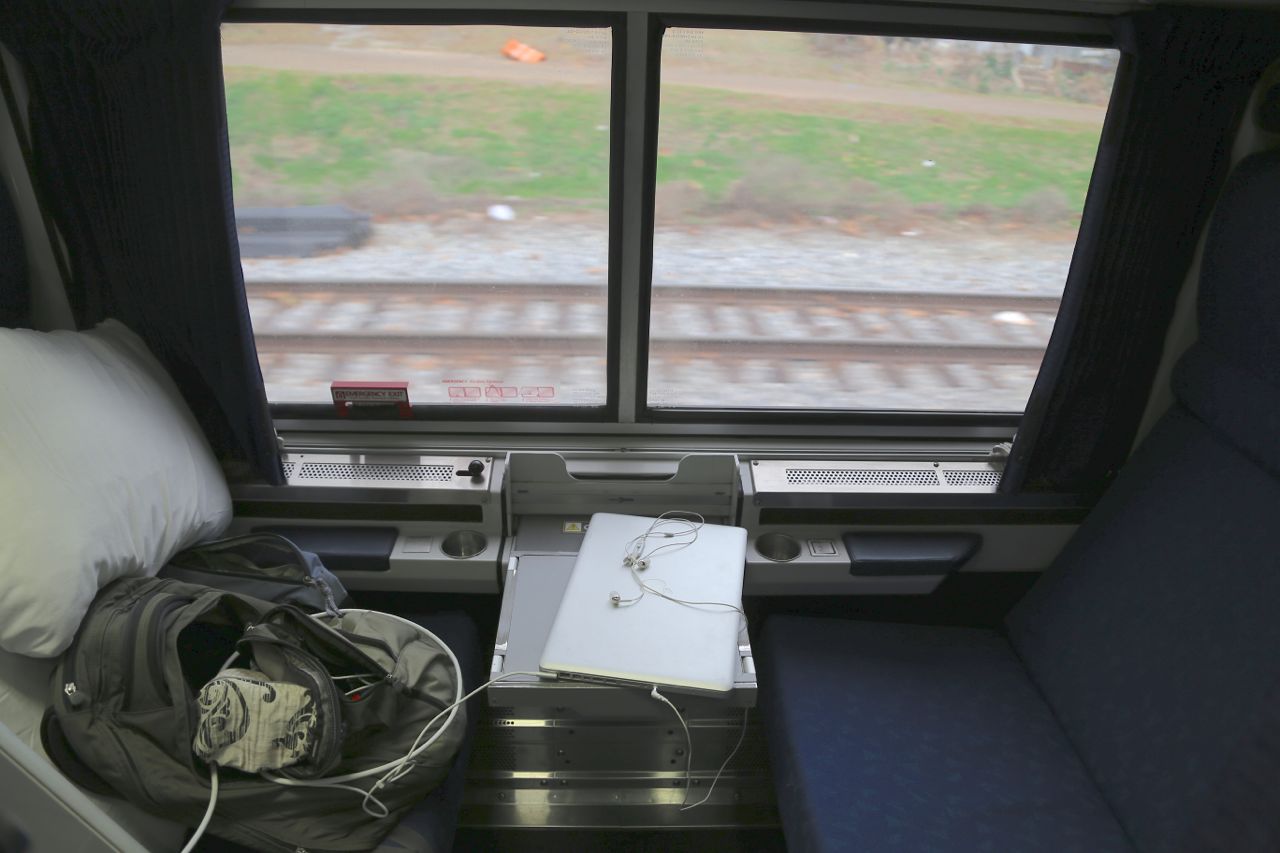
This past Christmas I took Amtrak to visit my family in Houston. I took the Crescent down to New Orleans, then after a short stay in New Orleans, I went on the Sunset Limited to Houston. Since the trip between DC and New Orleans is about 25 hours, I decided to get a room instead of just a coach seat. Yes, it is a long trip, but I love train rides. It gives me a chance to sit and read and just watch the world go by.

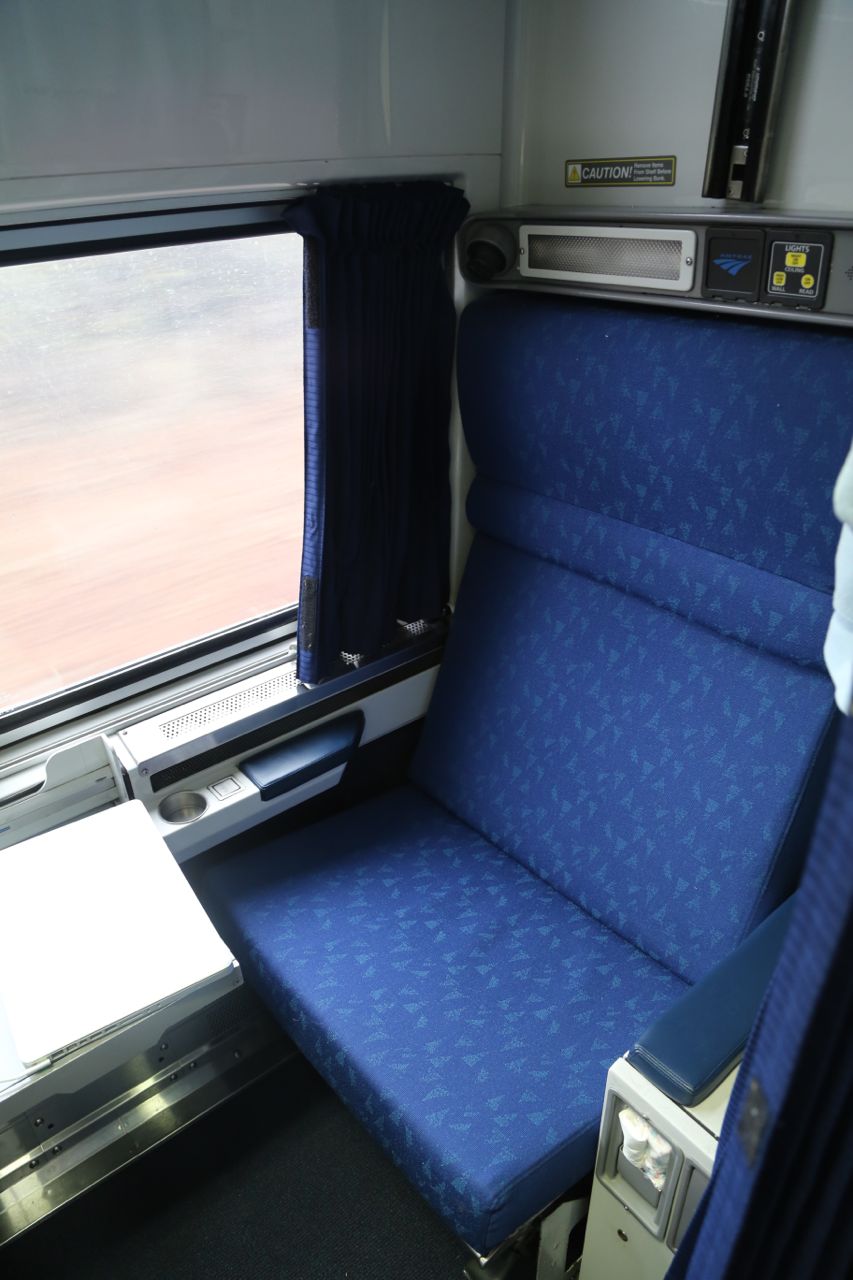
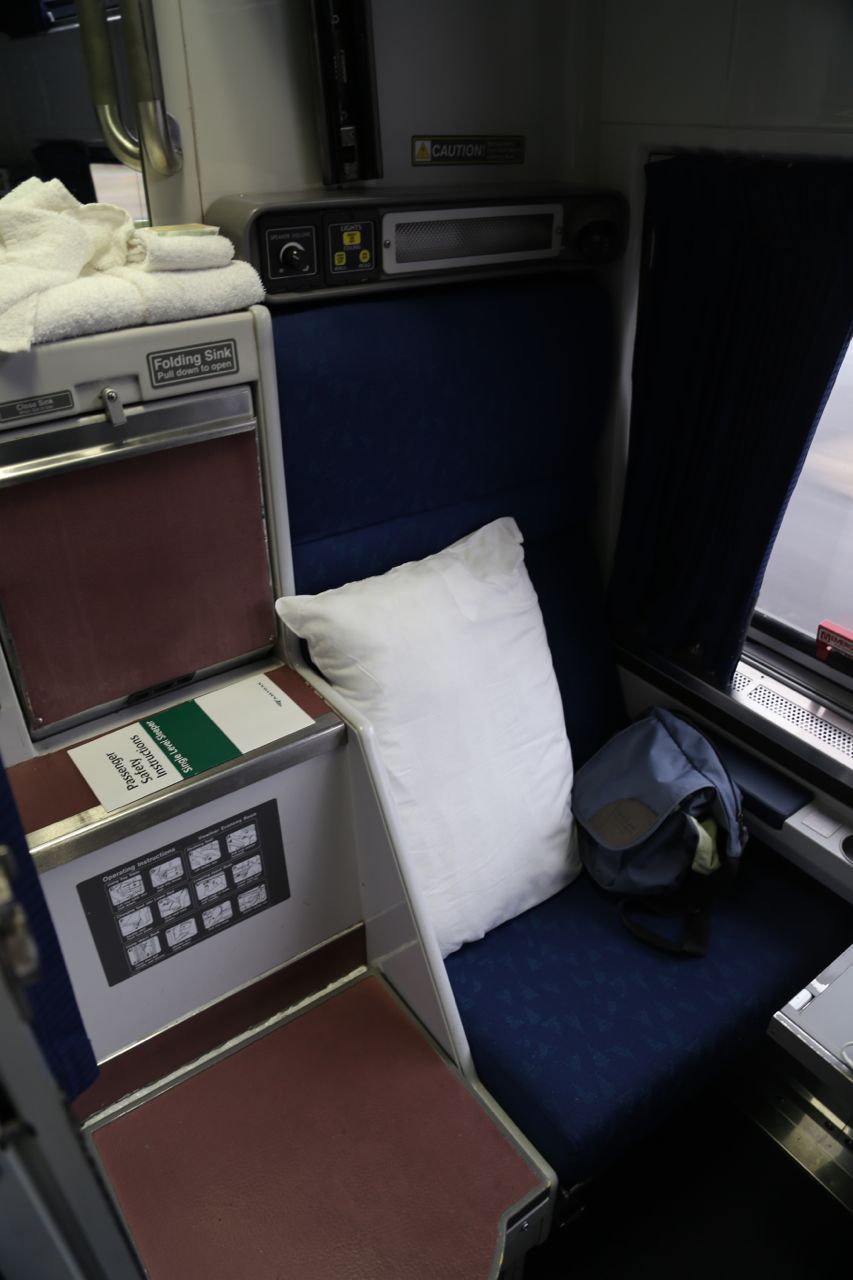
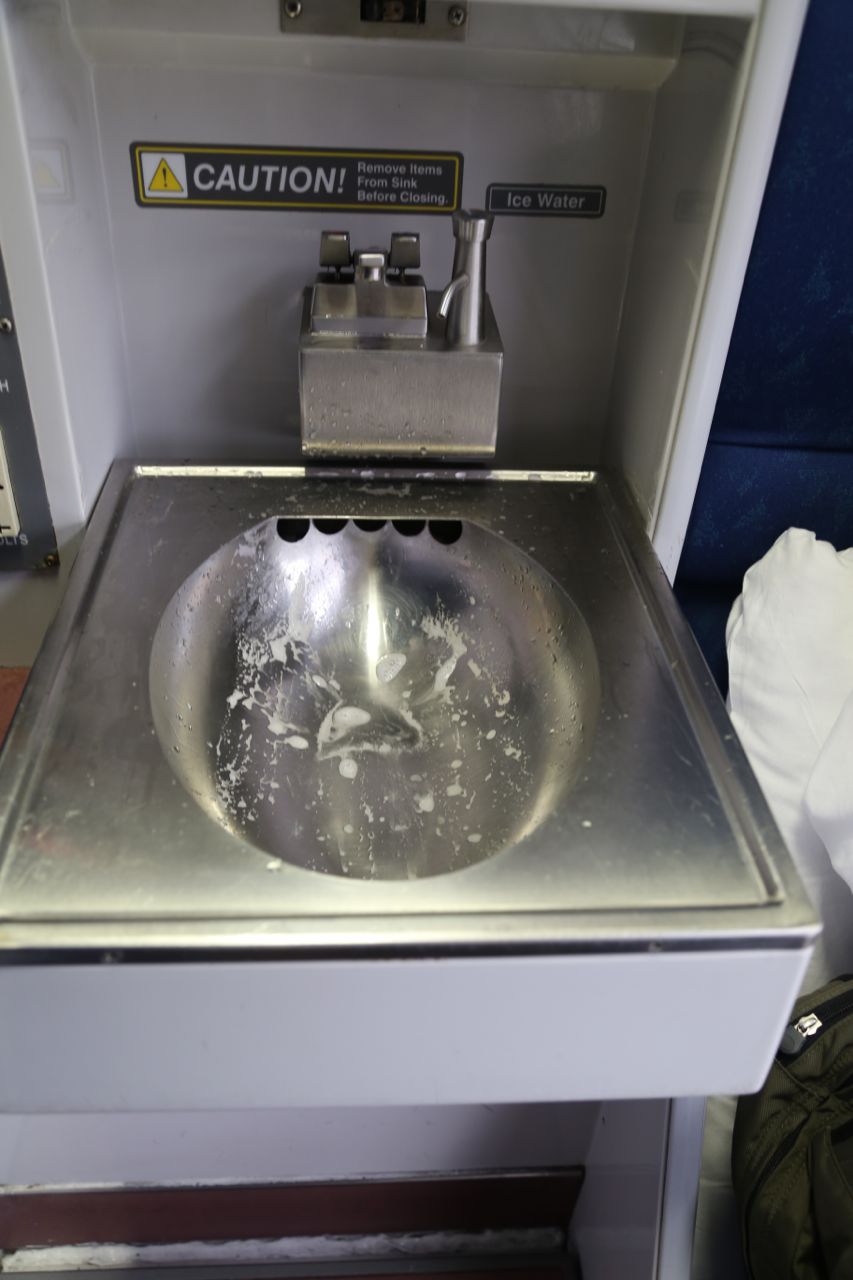
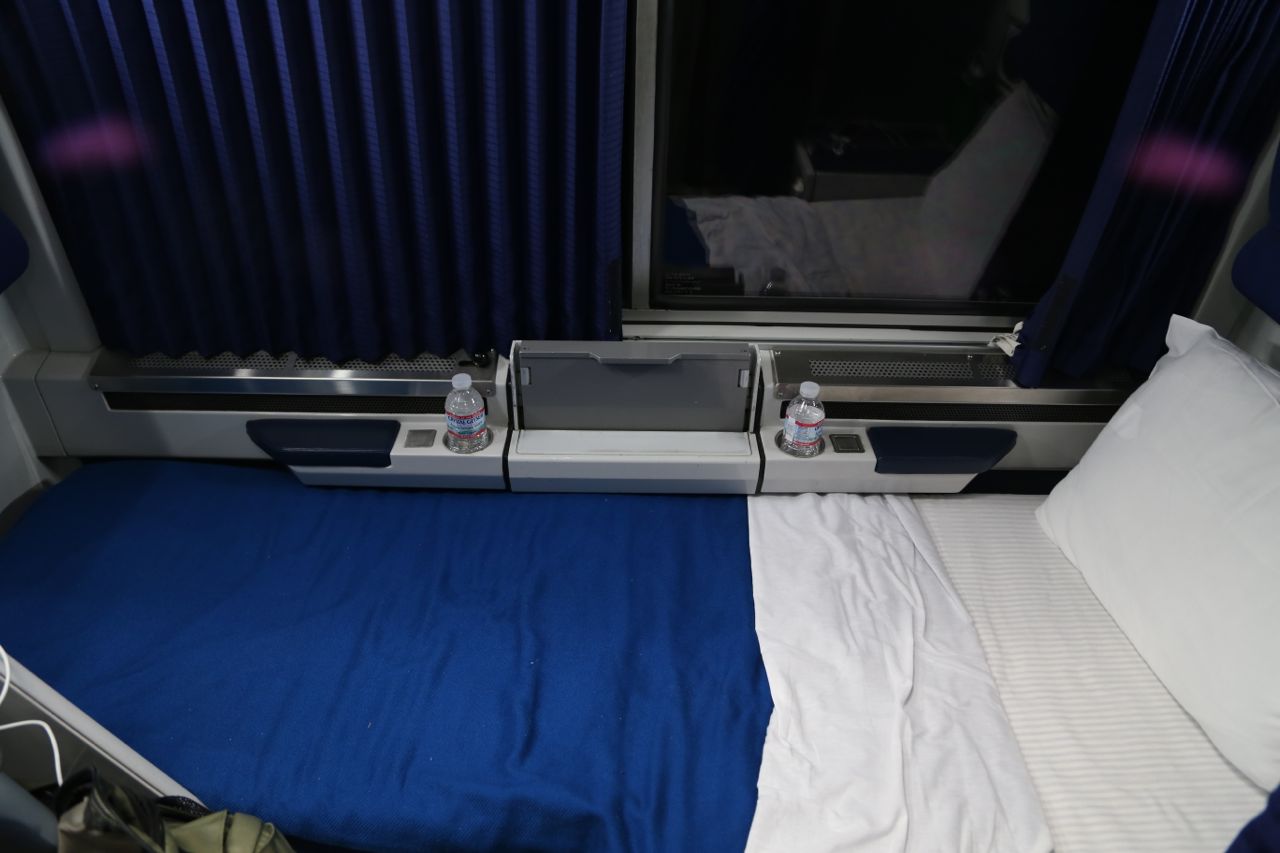
The train rooms are, in my humble opinion, marvelously designed. The designers managed to fit a whole lot of features in a tiny little space. The features also have to be designed for the constant movement on the train. During the day, the room as two comfortable seats with a fold-down table. At night, it can be transformed to give two comfortable beds. The room also has a toilet, sink, and small storage area. The room is tight, but it has almost everything you need, and there is a shower down the hall.

Both seats with fold down table between them

Both seats with fold down table between them

Right seat

Right seat

Left seat with sink (in closed position) and toilet

Left seat with sink (in closed position) and toilet (also closed)

Fold down sink

Fold down sink

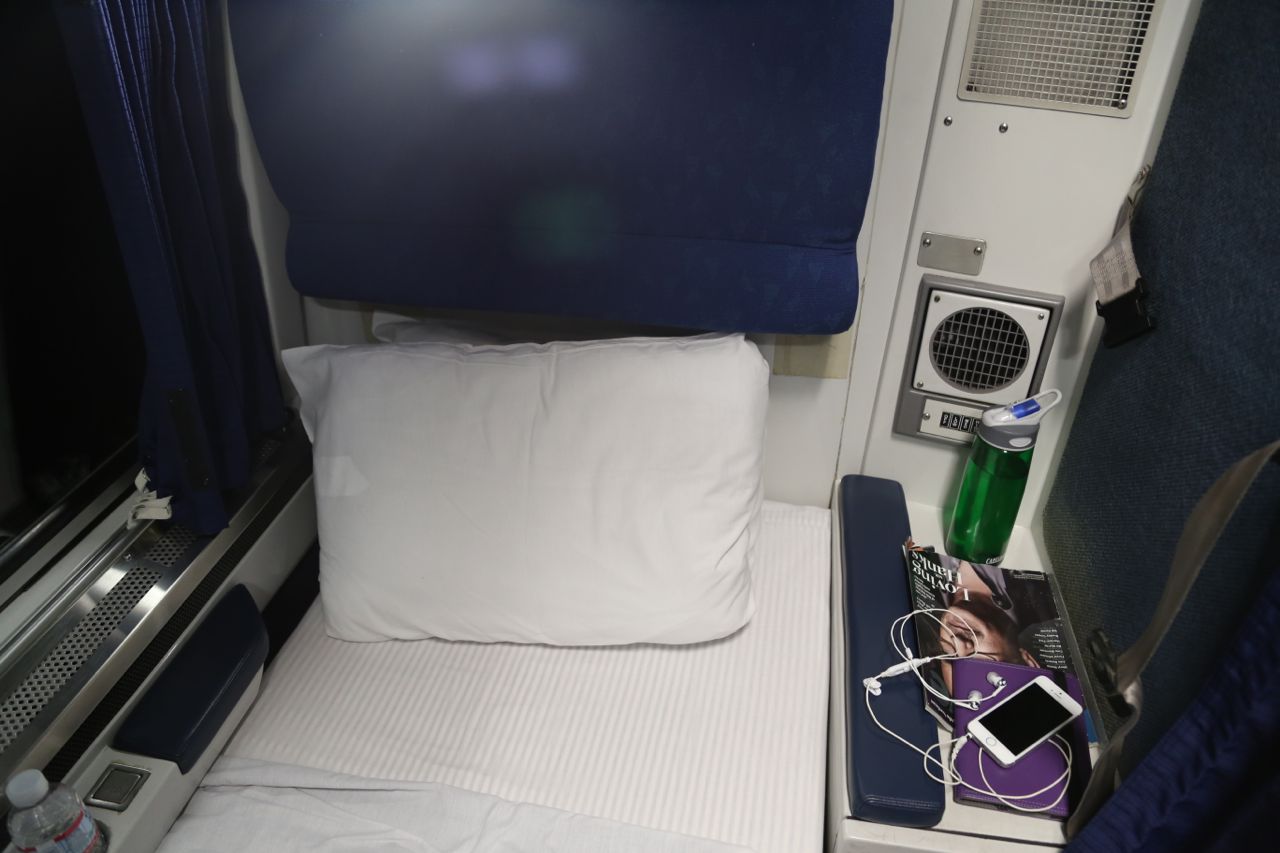
Lower bunk created from the chairs pulled down.

Lower bunk created from the chairs pulled down.

Head of lower bunk

Head of lower bunk

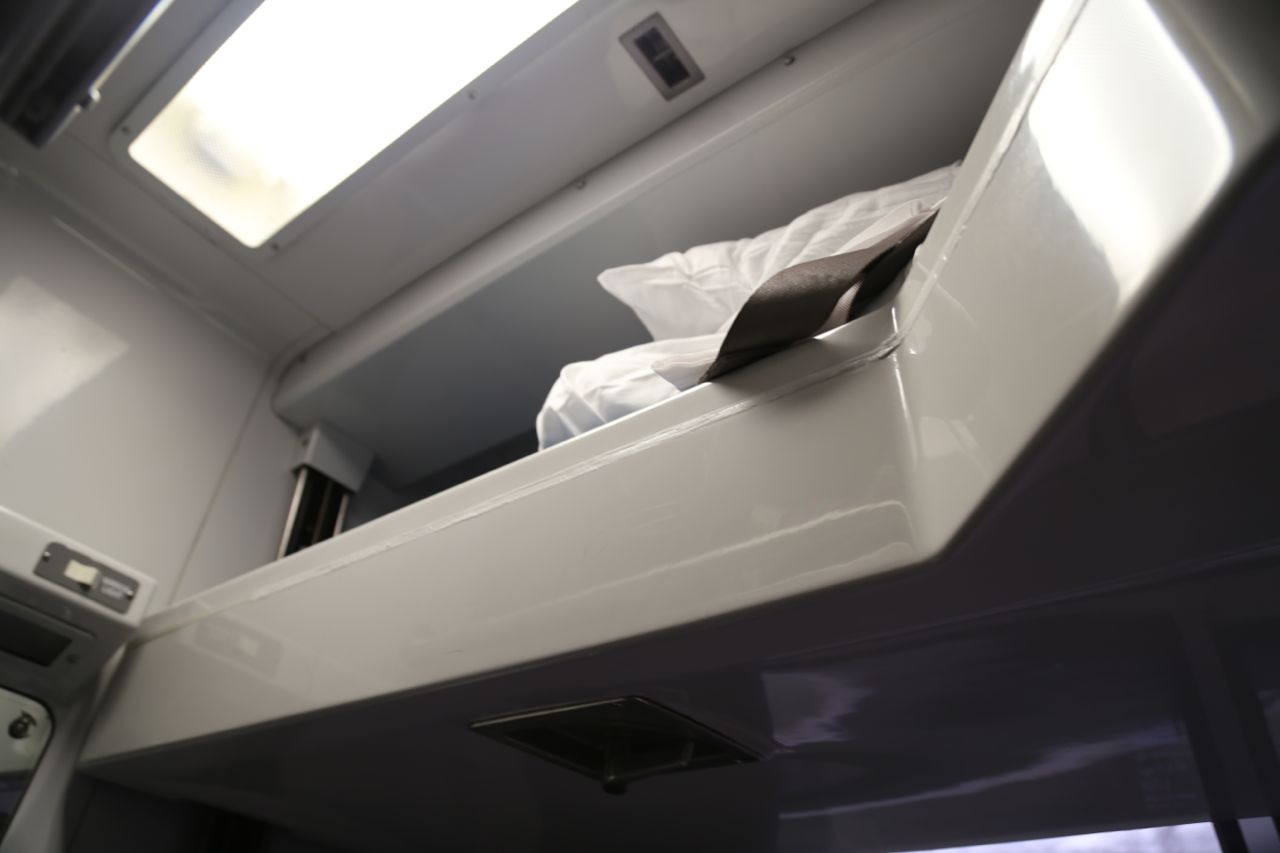
Upper bunk which can be lowered

Upper bunk which can be lowered

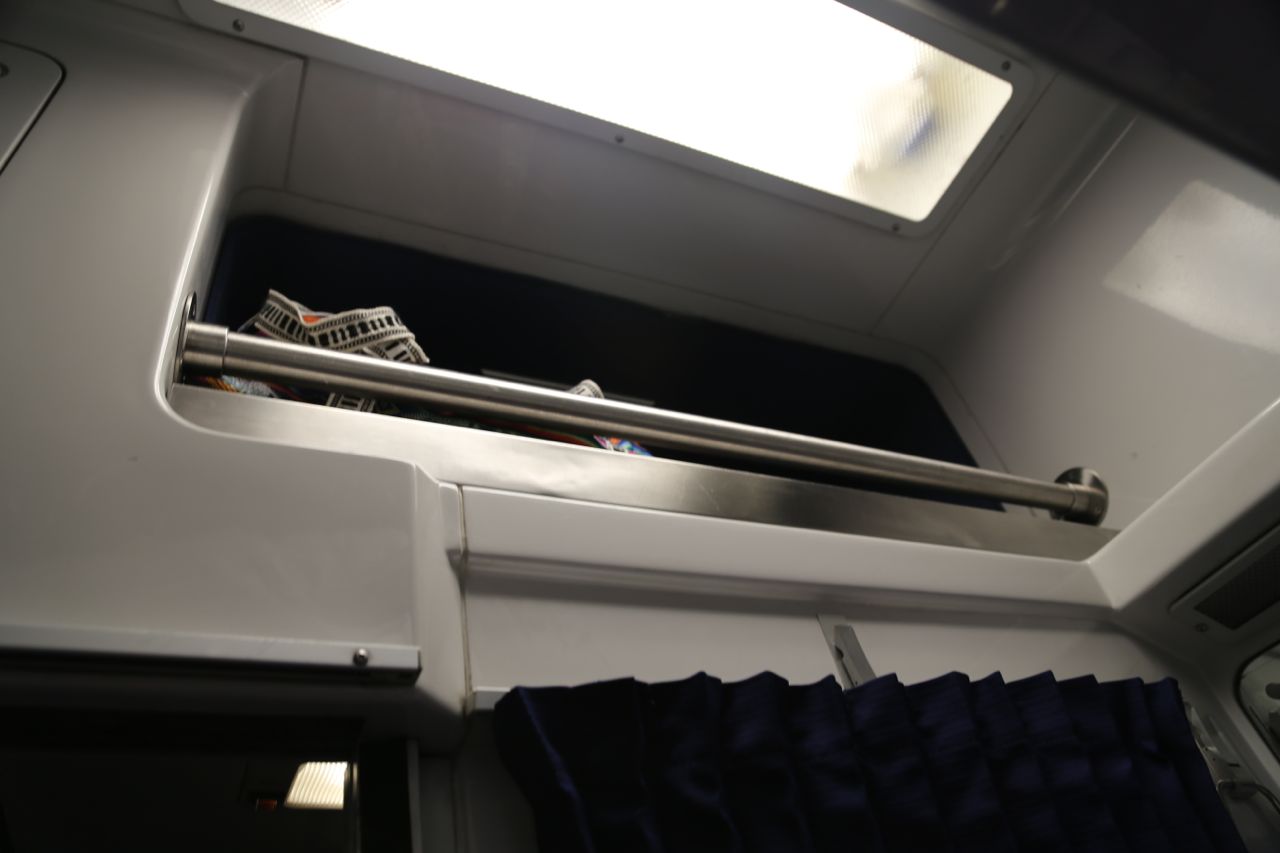
Storage area

Storage area

Let’s Talk Stats, WMATA

The Washington Metropolitan Area Transit Authority (WMATA) has problems. Lots and lots of problems. They’ve had an ad campaign called “Metro Forward” for a while now trying to let people know how they are using the money that customers pay to improve the system and do much needed upgrades and renovations. The customers, including myself, want a reliable safe system, not a PR campaign though. Recently they have unveiled a few new ads that in most people’s opinions are sexist, stupid, and somewhat confusing. The ads consist of posters with either two men or two women talking. A few examples that I have been able to find:

Woman 1: “A Metrobus travels 8,260 miles between breakdowns. Didn’t know that, did you?” Woman 2: “Can we just talk about shoes?”

Man 1: “A Metrobus travels 8,260 miles between breakdowns. Didn’t know that, did you?” Man 2: “Can we just talk about sports?”

Man 1: “When we take Metrobus, do you think we’ll get to ride the new 32-foot Orion model, or the latest Xcelsior model?” Man 2: “Dude, it’s a bus.”

Woman 1: “I love the way the tamping process aligns and elevates the rails for Metro, don’t you?” Woman 2: “I have no idea what you just said.”

Man 1: “So Bobby, did you catch all those new rail fasteners on Metro today?” Man 2: “No Billy, not so much.”

So WMATA, I’d like to speak to you as a woman and as an engineer. First, the last two ads that I have listed, about the tamping process and rail fasteners, I don’t even understand these. I have a vague understanding what these mean, and if I bothered to spend time on the internet researching, I have no doubt I would understand it better. However the average customer is not going to know what this means, and quite frankly, nor should they be expected to know. Furthermore, these posters seem to insinuate that there is something wrong with them because they don’t know. If things work properly in engineering and technology, people never know how things work, and there is nothing wrong with that. It is only when people’s ignorance of how things work can mess up a system, that engineers really care that they are ignorant. [Example, people who pour grease down the drain and not understanding the problems in the wastewater pipes to which this can lead.]

As for the ad where Man 1 asks which type of bus they will be on, Man 1 is clearly a bus geek, and Man 2 clearly is not. I respect Man 1’s geekitude, even though I don’t share it about buses. Man 2 does not respect the geekitude. How are they friends?

Now, let’s address the ad that is causing the most trouble for you WMATA. The one about the average bus breakdown rate. Most women think this is sexist because Woman 2 just wants to talk about shoes. So let me be clear, it IS a sexist ad. However, in your defense, the male version makes Man 2 look shallow also, so I guess that’s a win-win at making both sexes look stupid. I mean I like shoes. Most women like shoes. I like sports, not as much as many men and women, but I can have a conversation about it. Here’s the thing though. Shoes are not my sole interest. I am I nerd, and I would love to talk about the breakdown rate of your buses. That’s what you say you want, to get people to talk about the system’s reliability. So let’s talk about it.

You claim that “a Metrobus travels 8,260 miles between breakdowns.” Is that the mean or the median? What is the standard deviation? Can you give me a plot of the data? Are the data normally distributed? What is the skewness and kurtosis of the data? I would be willing to bet that your bus breakdown data has some really nice skewness. I bet your new buses work rather nicely, and your old buses don’t. Hence, your new buses probably can go much longer than 8,260 miles between breakdowns, but your old buses probably can go much less. Is one or the other skewing the mean and by how much? How does this lovely statistic that you are presenting to us compare with other DC area buses like those of ART, CUE, DASH, etc.? How does it compare with the breakdown statistics of other large metropolitan bus systems like New York, Los Angeles, Chicago, Houston, etc.? You are presenting a statistic in a vacuum, and it is almost meaningless.

To get past that breakdown statistic, what are your on-time statistics, you know those statistics your customers actually care about? Most WMATA riders really don’t care what kind of bus they are on. They just want a bus runs on time, and actually picks them up at their bus stop, instead of leaving them because either the bus is too full or for reasons the customer never finds out, the bus just doesn’t show or stop. [Yes, this has happened to me several times.]

Speaking as a customer, I don’t want a PR campaign at all. I most definitely don’t want a PR campaign that makes my fellow riders look like fools. I want a system that works. I want a transit authority that actually responds to customer complaints. I want a transit authority that does more than send a automatic form response when I submit a complaint about a driver running a red light. I want to know that things will actually change and improve, and right now WMATA, you just keep failing at that, and this PR campaign does nothing to improve things. In fact, it makes things worse.

Old NY City Hall Subway Station

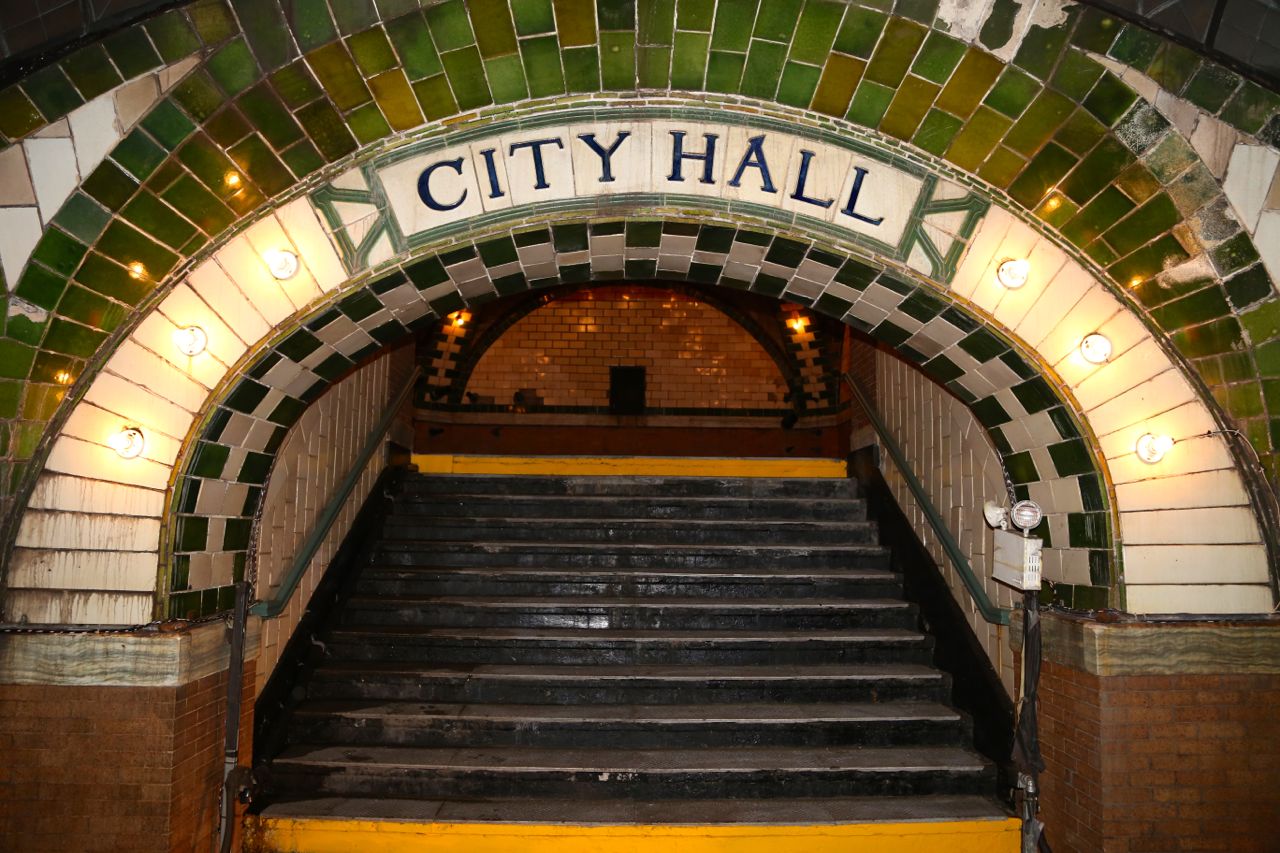
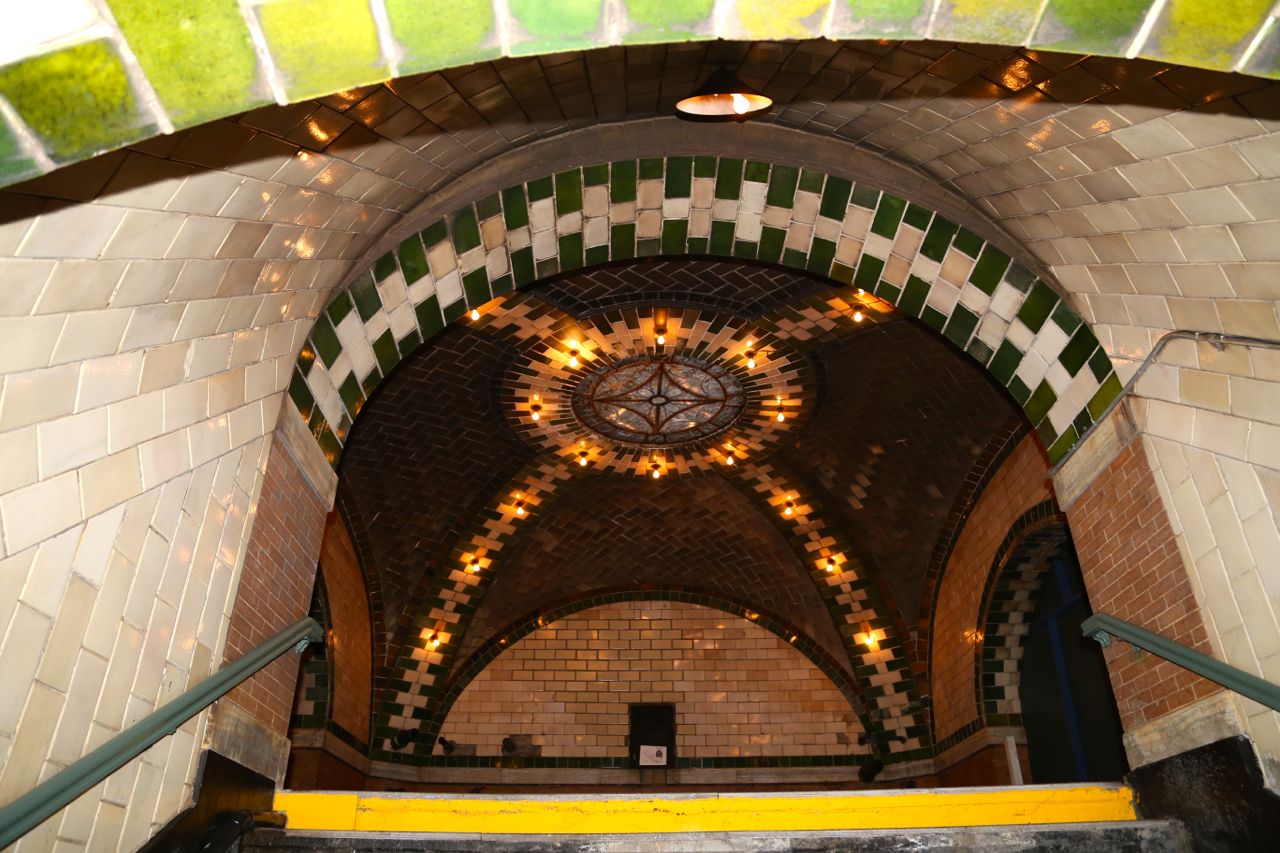
Entrance from platform to mezzanine level

Entrance from platform to mezzanine level

Saturday, I got to tour the abandoned New York City Hall subway station. The New York Transit Museum gives tours of it a few times a year, and this tour is completely worth the membership in the museum. The old City Hall subway station was originally the southern terminal of the original Interborough Rapid Transit (IRT) subway route. The station is located on a single 600-foot long track loop that is located south of the current City Hall/Brooklyn Bridge subway station. The track loop is still used by the #6 subway line. After a #6 train drops off passengers at the City Hall/Brooklyn Bridge station from a southbound route, it then uses the loop to return to that station as a northbound train. For our tour, we met at the southern end of the City Hall/Brooklyn Bridge subway station, and then once all passengers had been offloaded from a southbound #6 train, we got on for the short trip to the old City Hall station.

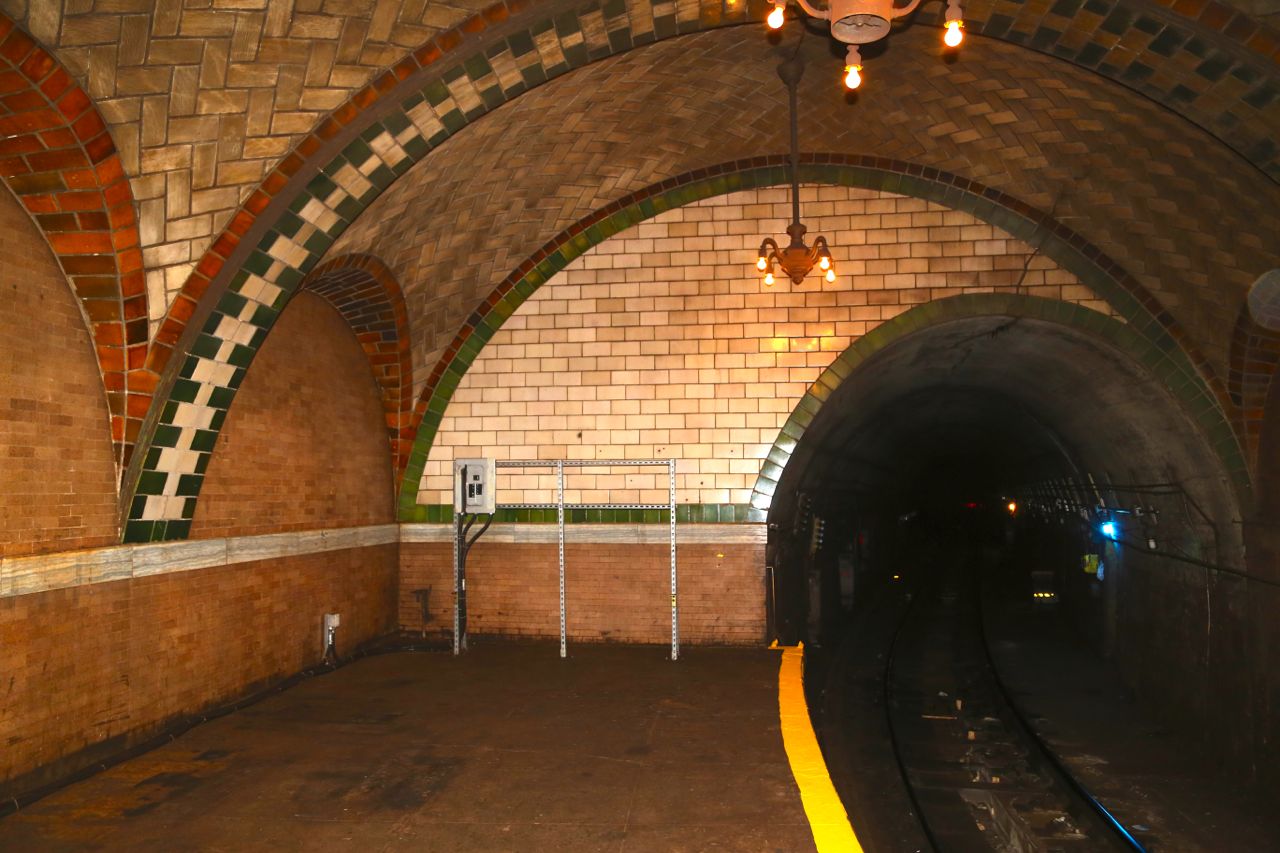
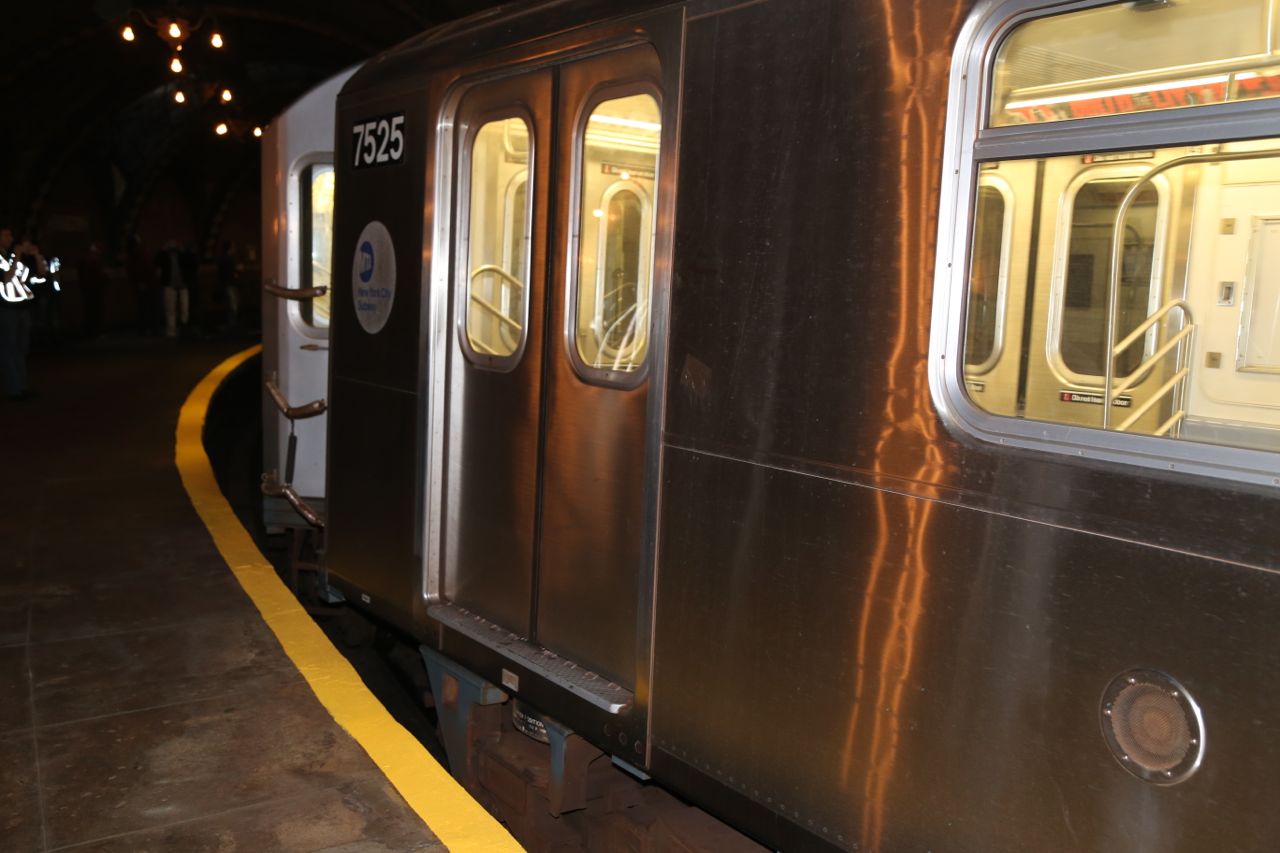
The old City Hall station has a platform that is 400-feet long and is completely curved. This short and completely curved platform is part of the reason why the station is no longer used. The ten-car trains now used don’t fit in the station, and it is a serious hazard stepping off the train to that platform. [Our MTA guides used a short wooden platform to allow us to easily and safely get off the train onto the platform.] The station was closed in 1945 because passengers preferred the Brooklyn Bridge station due to its longer and straight platform and also because both local and express trains stopped there.

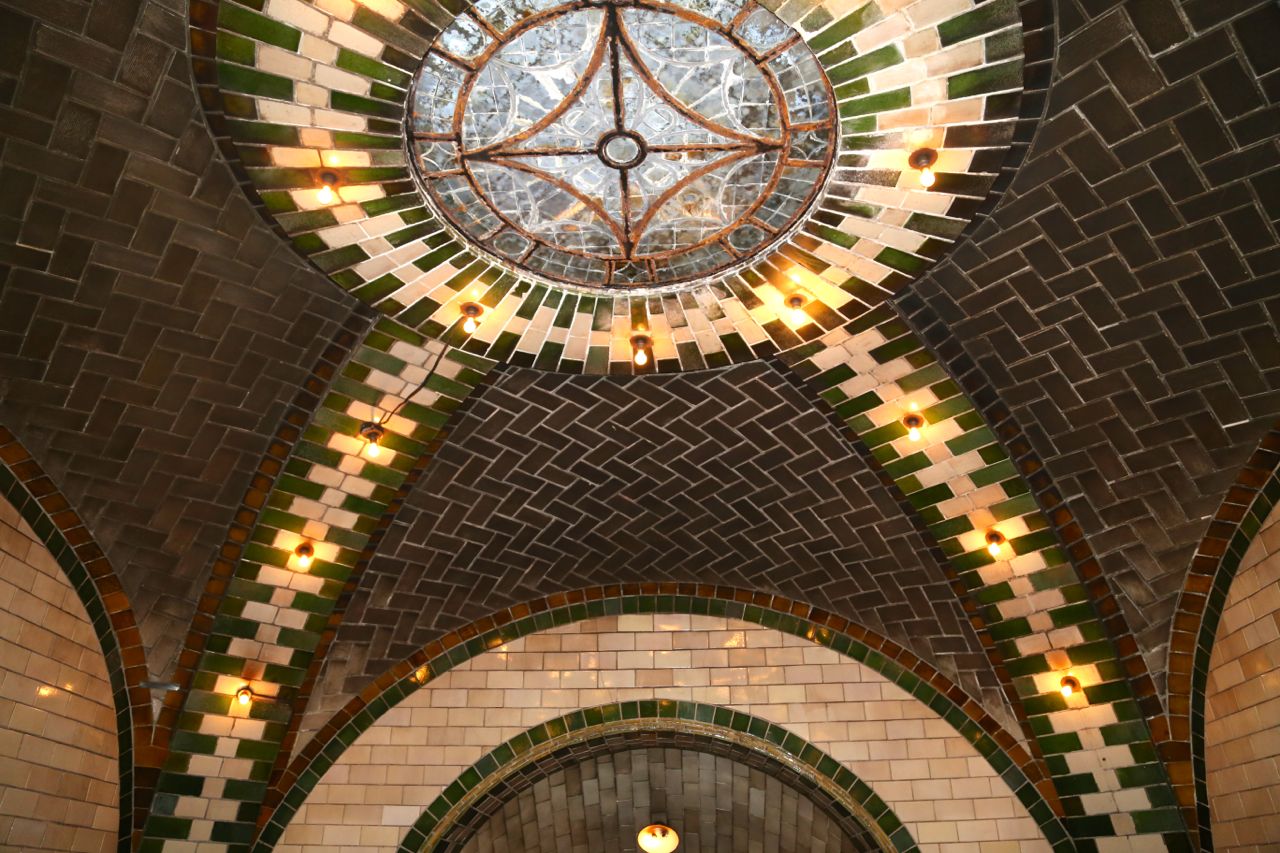
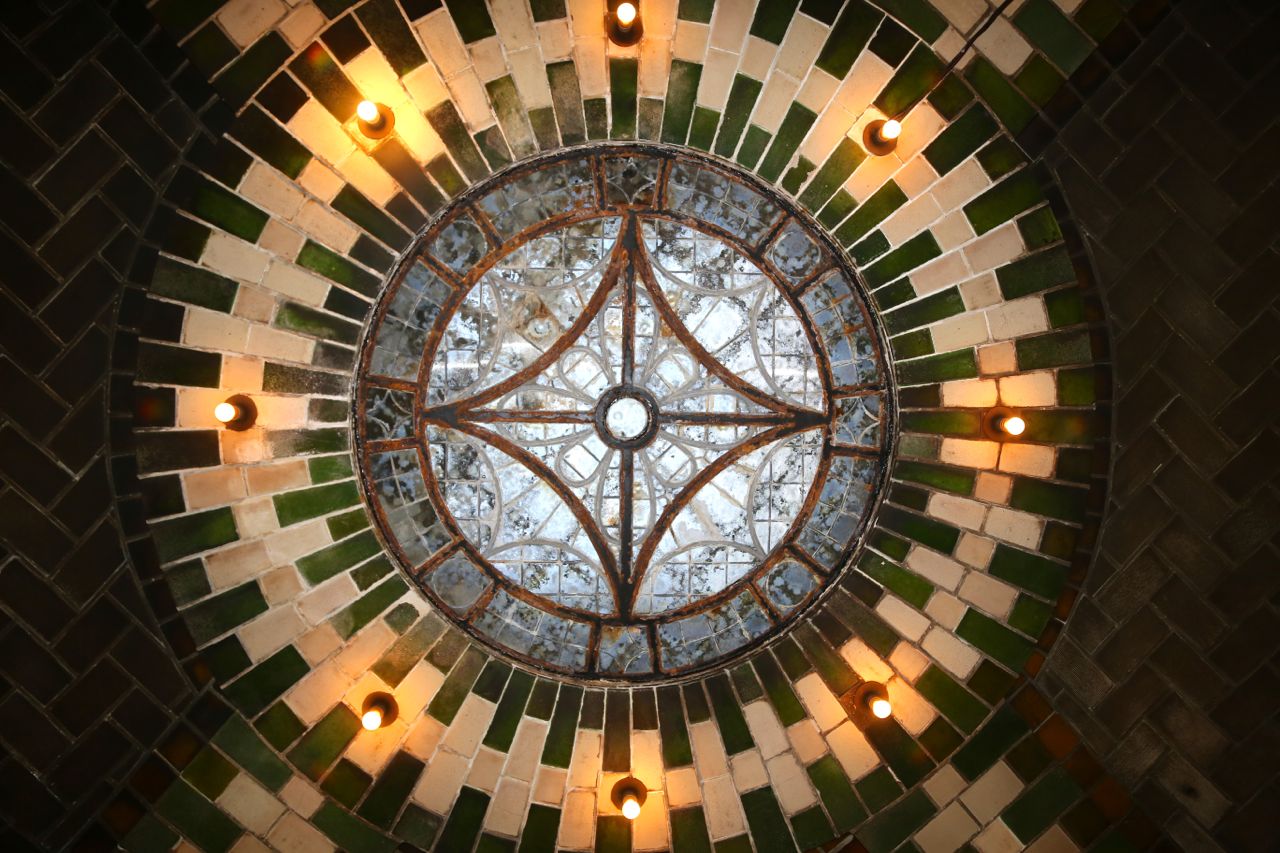
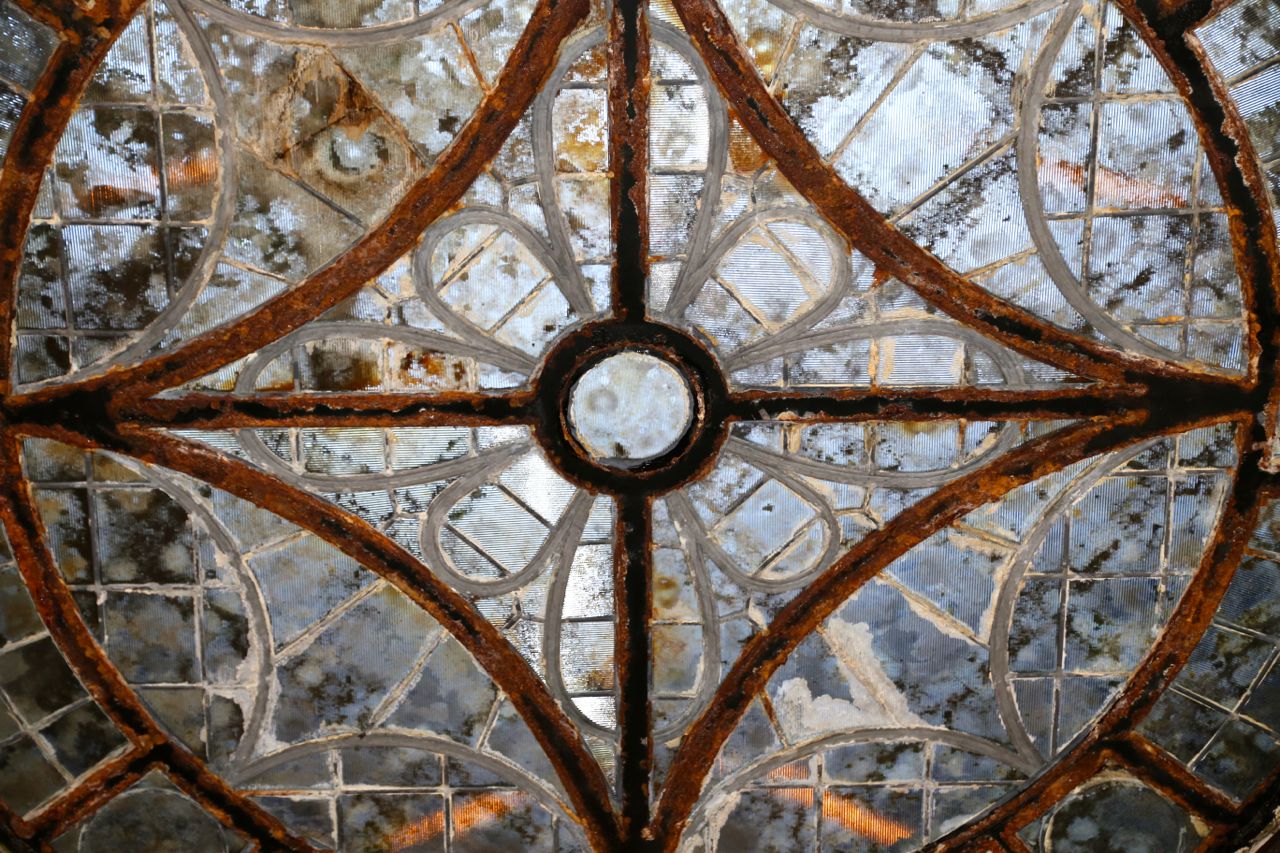
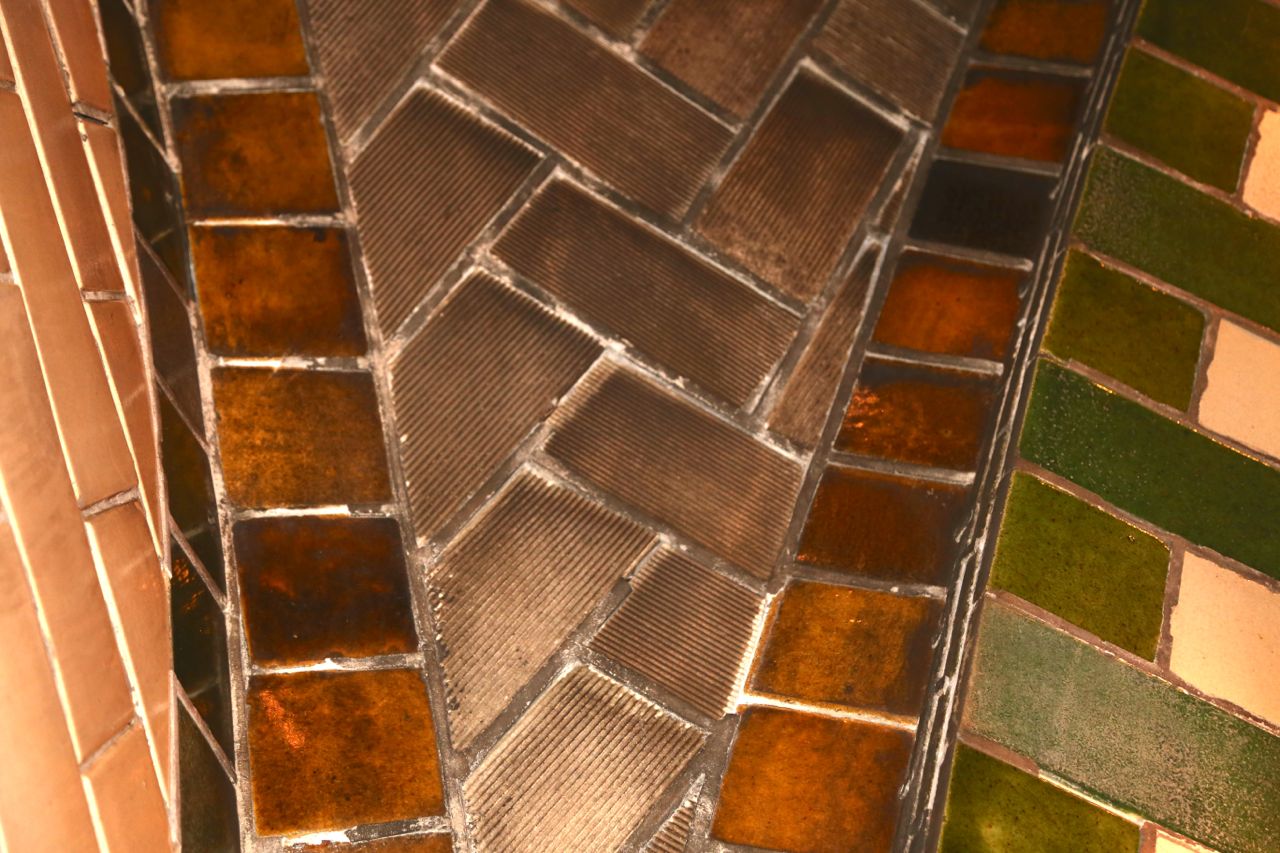
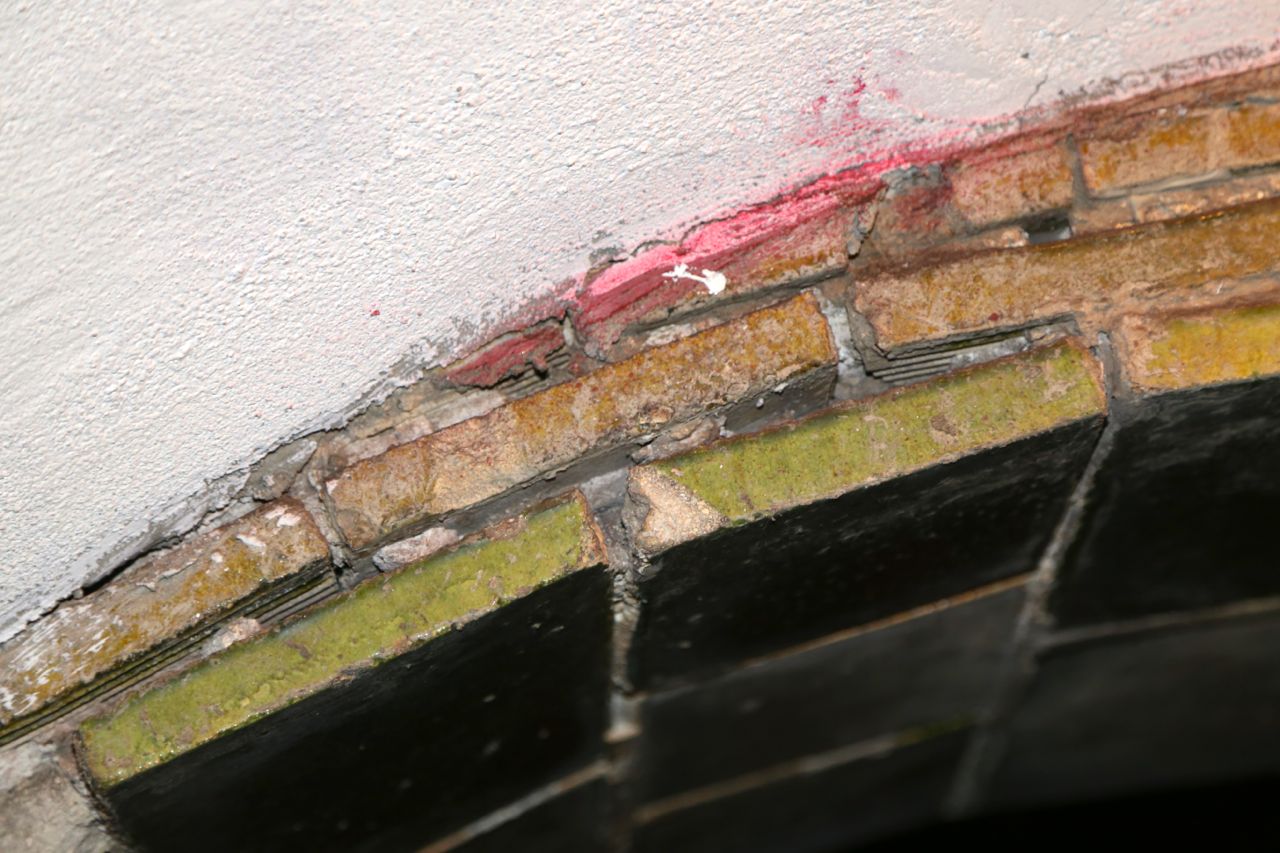
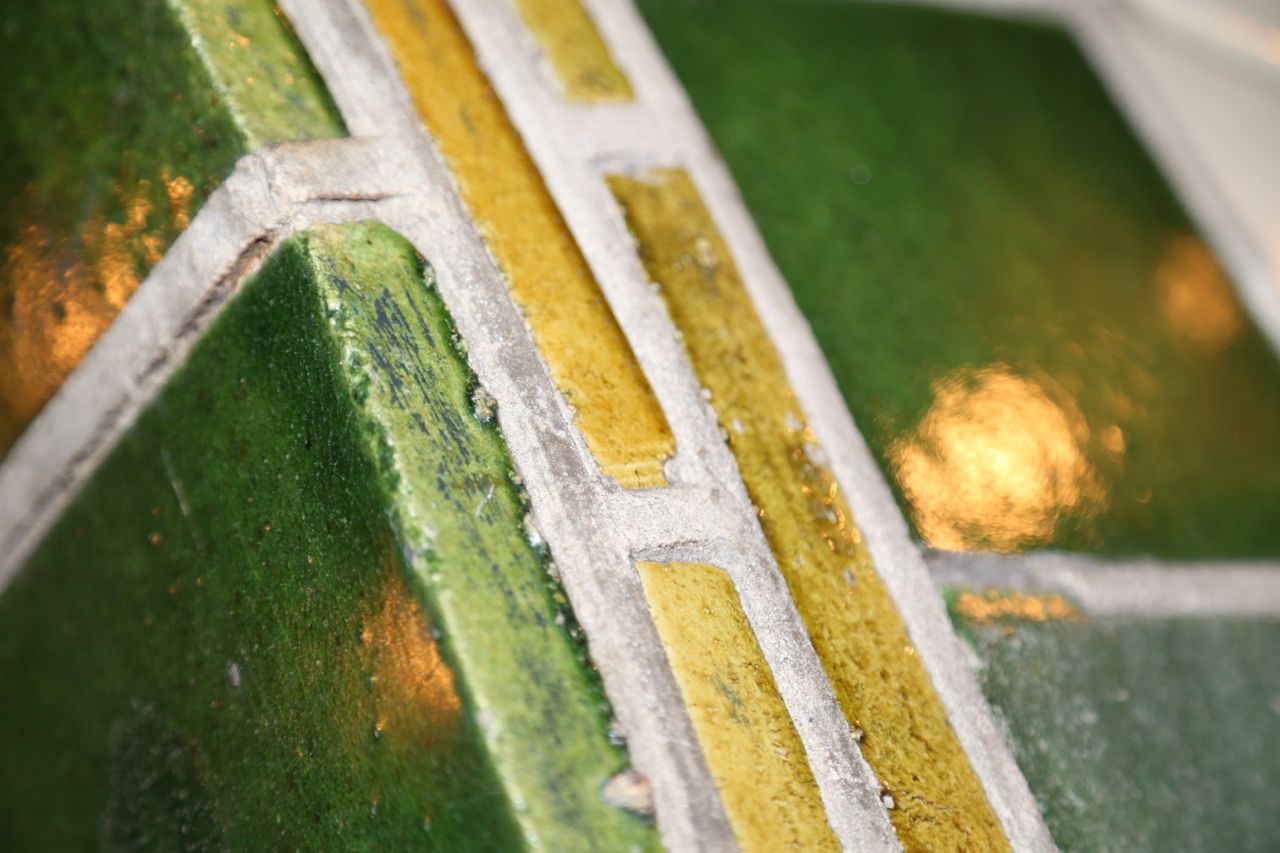
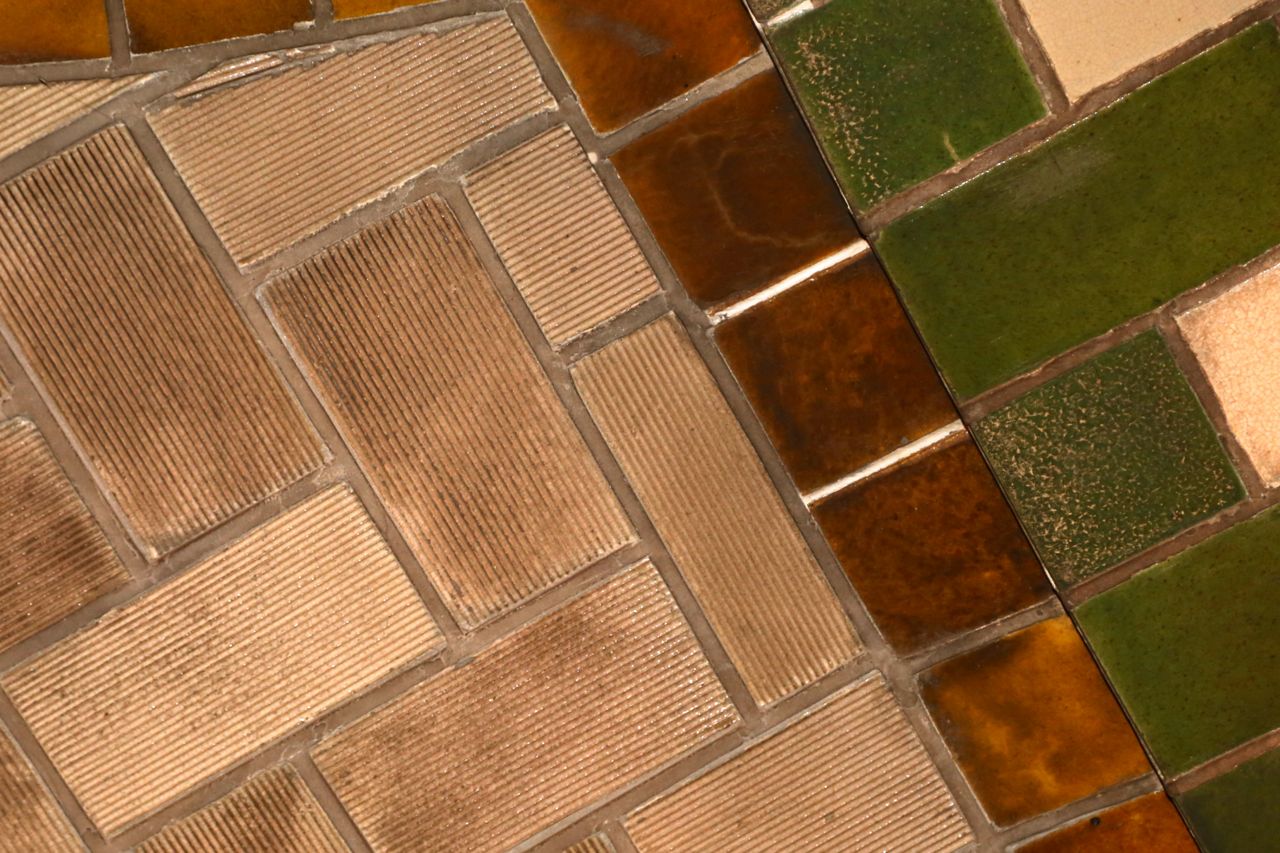
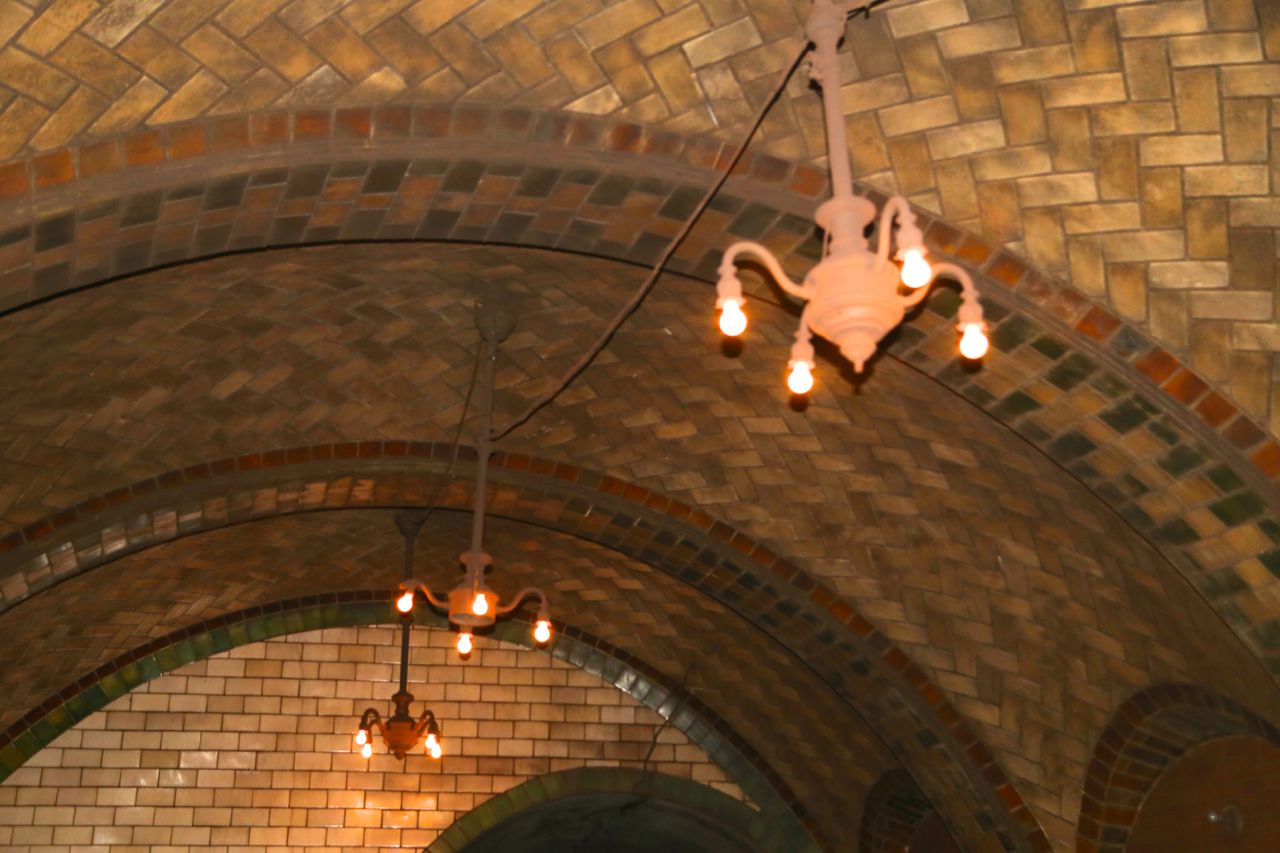
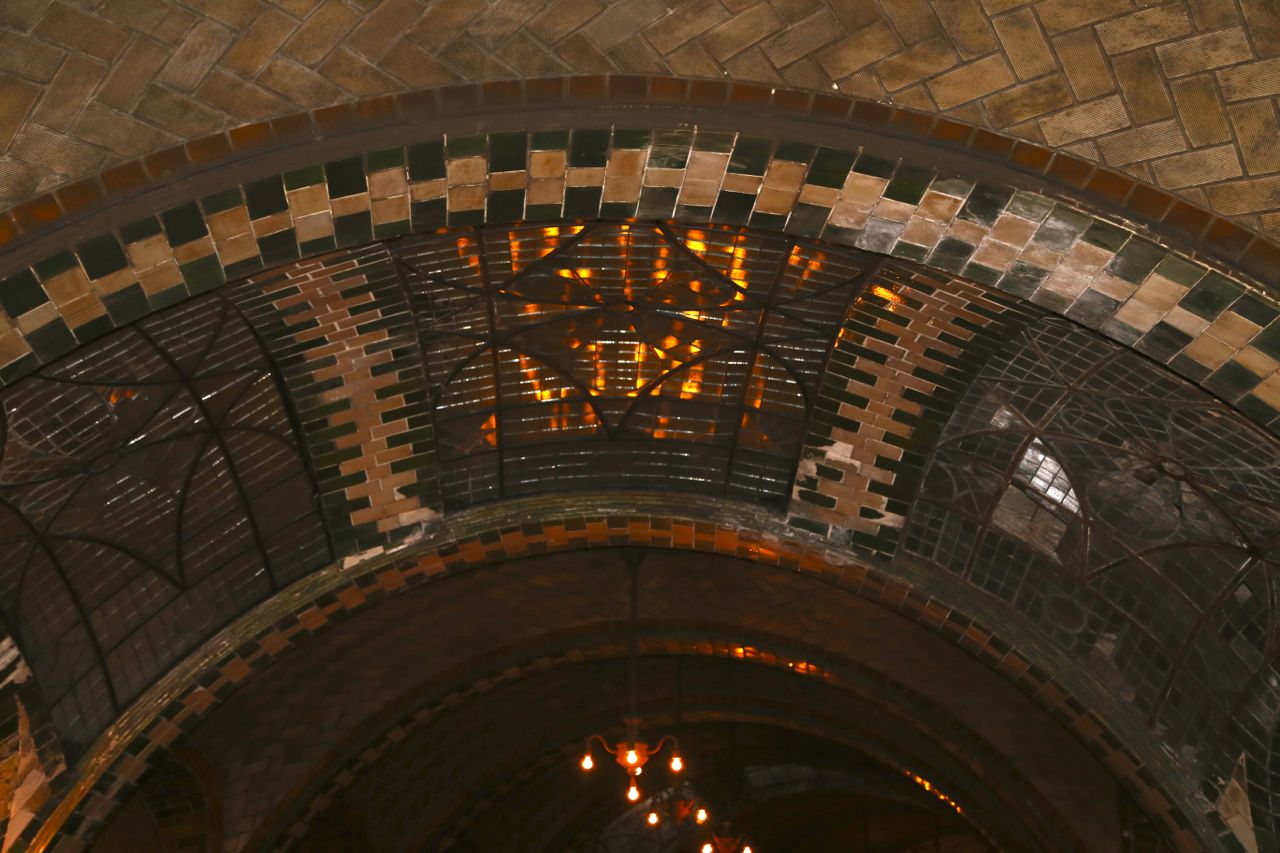
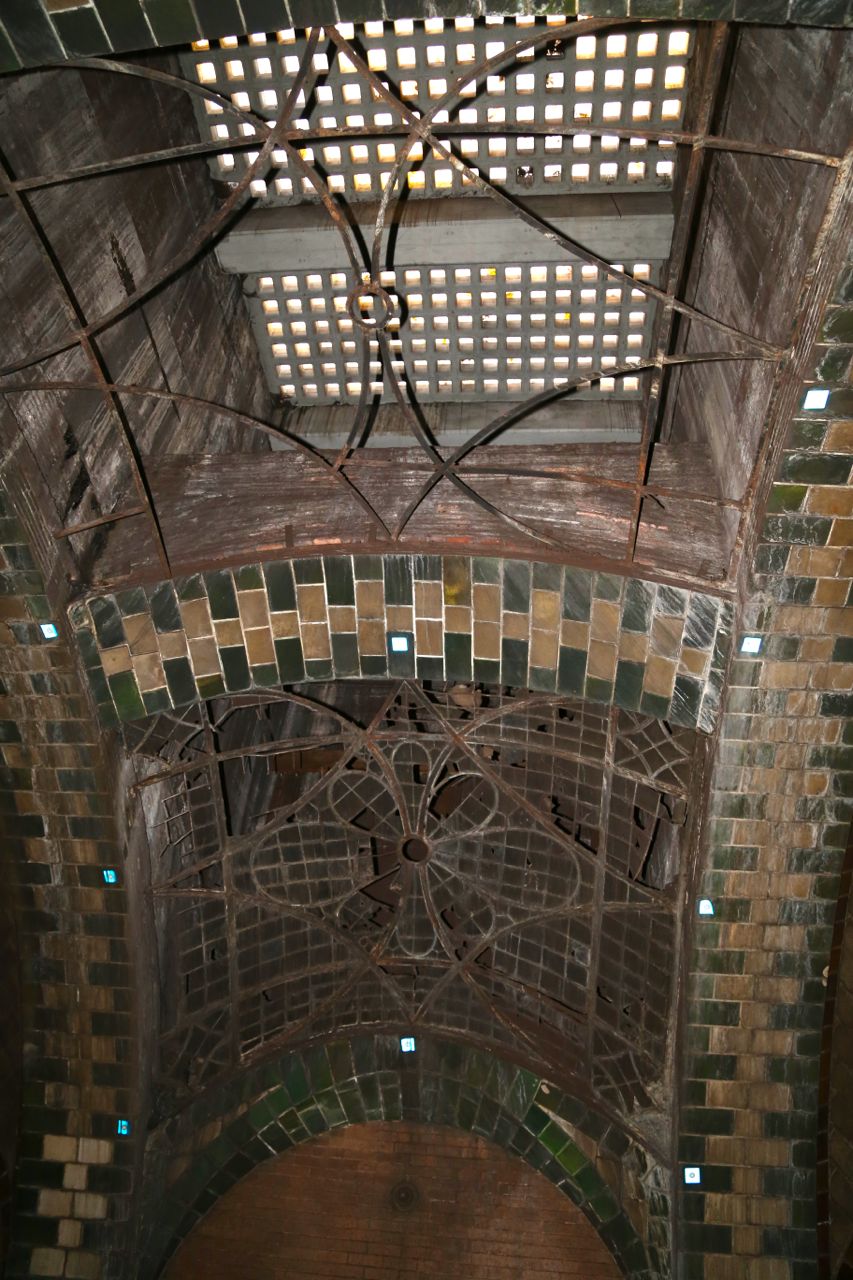
The station is completely gorgeous. There is a mezzanine level where passengers would buy tickets. The mezzanine is square with four arches that form each of the walls, and an arched ceiling joins the four arched walls. At the center of the mezzanine ceiling is a glass skylight. One of the arches of the mezzanine forms a passageway that leads down to the platform. The platform is then made of 15 more arches. Three of the arches have three glass skylights each. Electric chandeliers hang from each of the arches to provide light. All of the arches are created by Guastavino tile arches. The walls and ceilings are covered in green, brown, and cream tile. Interestingly, much of the cream tile is unglazed and rigged. Evidently this tile was never supposed to be exposed, it was rigged and unglazed because it was supposed to be covered with cement, and the ridges would provide more surface are for the cement to stick, in the same way as when tiling, the ridged side of a trowel is used to create ridges in the cement before placing the tile. However once the tile was placed, the station architects liked how the exposed ridged tile looked.

On stairs from platform looking up to mezzanine

On stairs from platform looking up to mezzanine

Mezzanine ceiling

Mezzanine ceiling

Mezzanine skylight

Mezzanine skylight

Mezzanine skylight glass

Mezzanine skylight glass

Stairs from mezzanine to surface. Doors now close off the exit.

Stairs from mezzanine to surface. Doors now close off the exit.

Tiles on the mezzanine walls

Tiles on the mezzanine walls

Arch of passageway to surface. The Guastavino tile arch system can be seen easily.

Arch of passageway to surface. The Guastavino tile arch system can be seen easily.

Close up of tile on arched passageway from mezzanine to platform

Close up of tile on arched passageway from mezzanine to platform

Tile on mezzanine wall. Ridges on unglazed white tile can be seen.

Tile on mezzanine wall. Ridges on unglazed white tile can be seen.

Skylight above the arch that leads from the platform to the mezzanine

Skylight above the arch that leads from the platform to the mezzanine

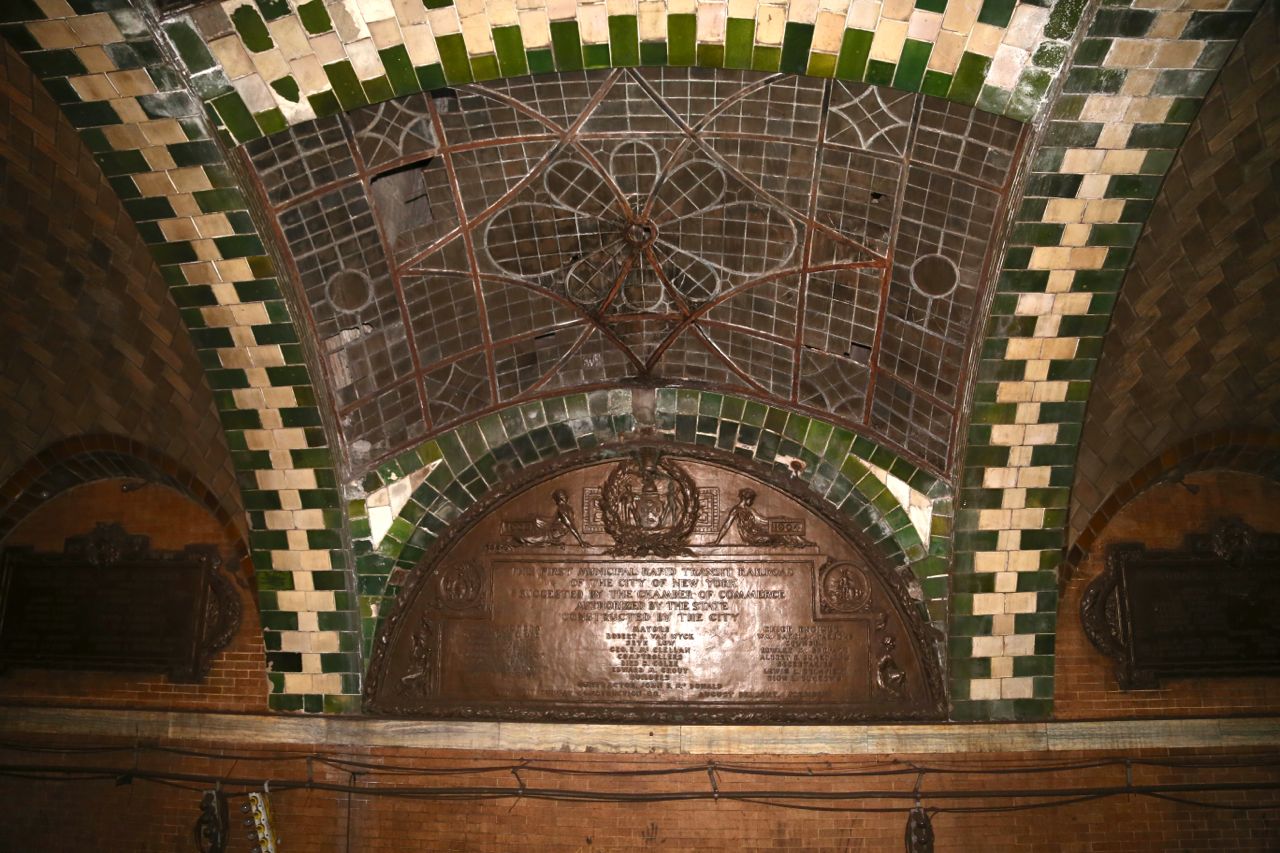
The middle arch on the platform where the passageway from the mezzanine ends. The arch has three skylights. Opposite the passageway are three plaques commemorating those who helped in the station's creation.

The middle arch on the platform where the passageway from the mezzanine ends. The arch has three skylights. Opposite the passageway are three plaques commemorating those who helped in the station’s creation.

The platform. It is completely curved.

The platform. It is completely curved.

The end of the platform.

The end of the platform.

Chandeliers hang from each platform arch

Chandeliers hang from each platform arch

The skylights in one of the platform's arches.

The skylights in one of the platform’s arches.

One of the platform's skylights. The glass has fallen out of one of them, and the glass in the street level concrete can be seen.

One of the platform’s skylights. The glass has fallen out of one of them, and the glass in the street level concrete can be seen.

A #6 train passing through the station. A huge gap exists between the train and platform edge.

A #6 train passing through the station. A huge gap exists between the train and platform edge.

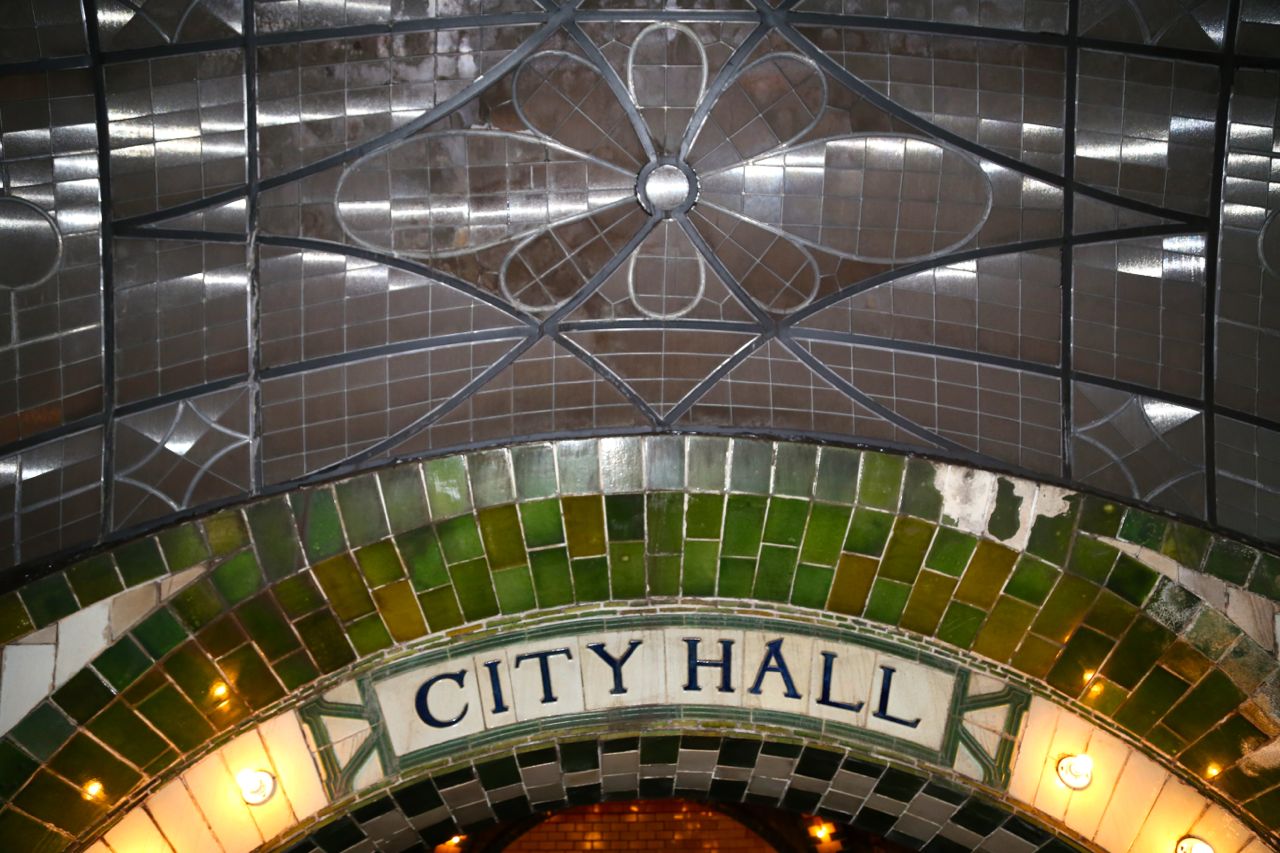
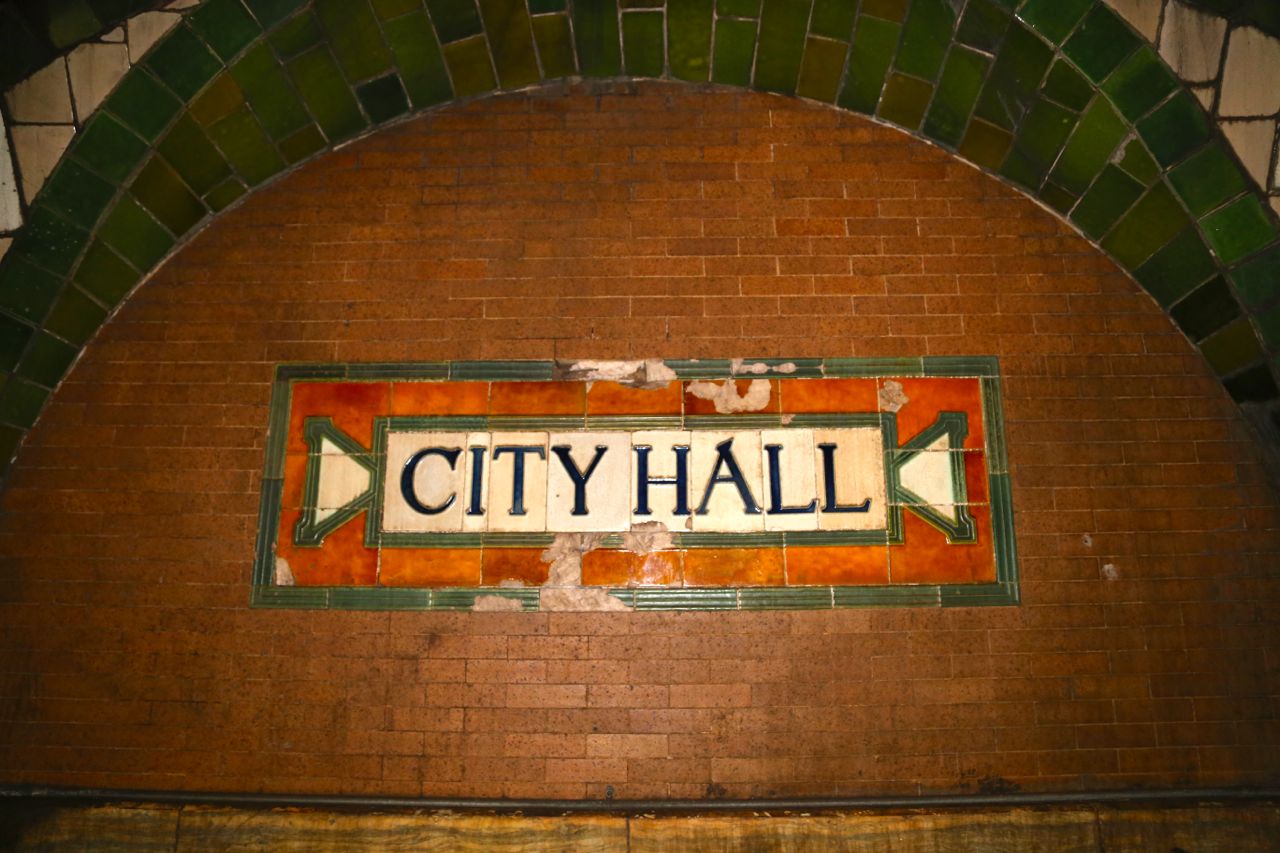
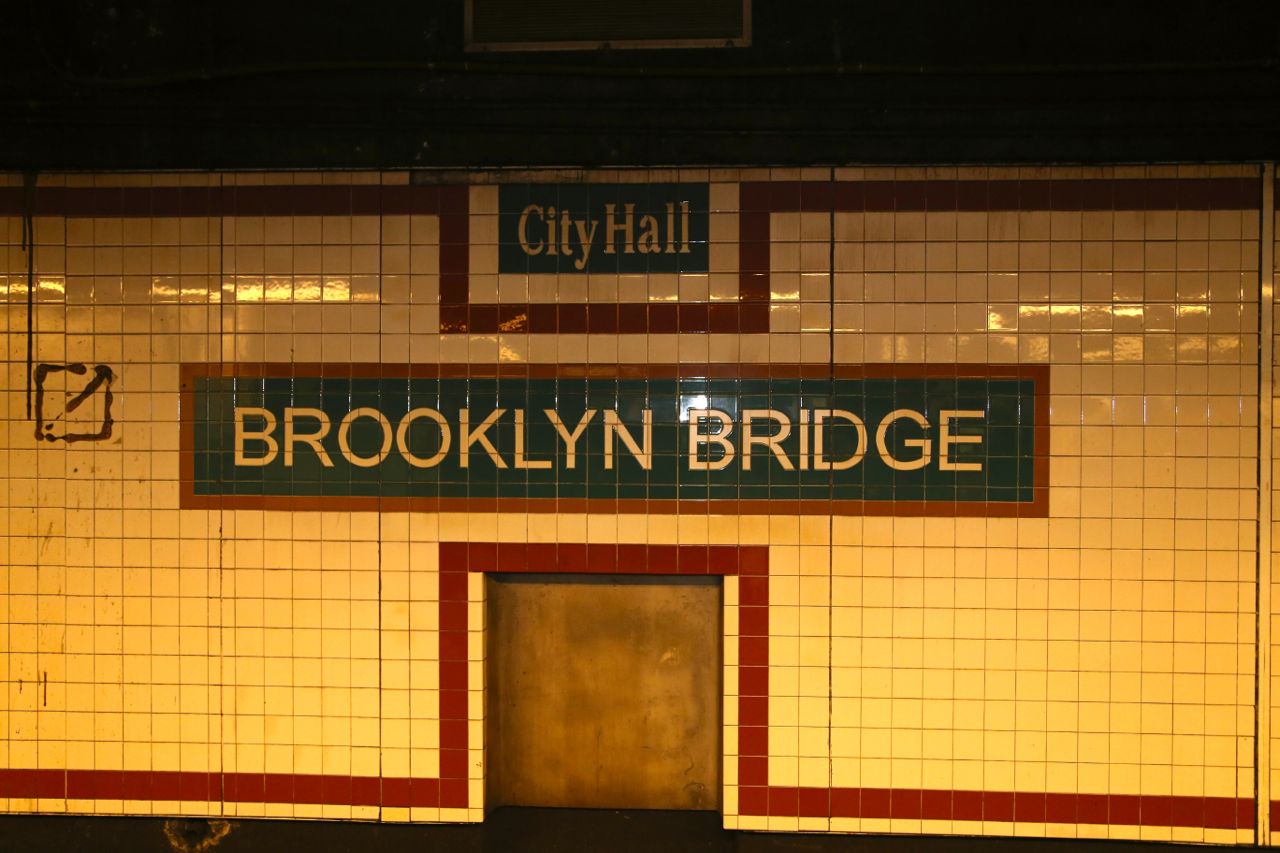
One thing I have always appreciated about the New York subway system is the tile work. All the stations have tile work, and generally each station has a somewhat unique tile work for at least the station signs. Some stations have really unique and beautiful tile work for example the Times Square and American Museum of Natural History stations. The tiles themselves in the old City Hall station are not gorgeous, but the way they are placed together in the arches are. Therefore for final comparison, below are the station signs at the old City Hall station and the new City Hall/Brooklyn Bridge station.

Old City Hall station sign

Old City Hall station sign

Modern City Hall/Brooklyn Bridge station sign

Modern City Hall/Brooklyn Bridge station sign

Delancey Williamsburg Bridge Rail Terminal

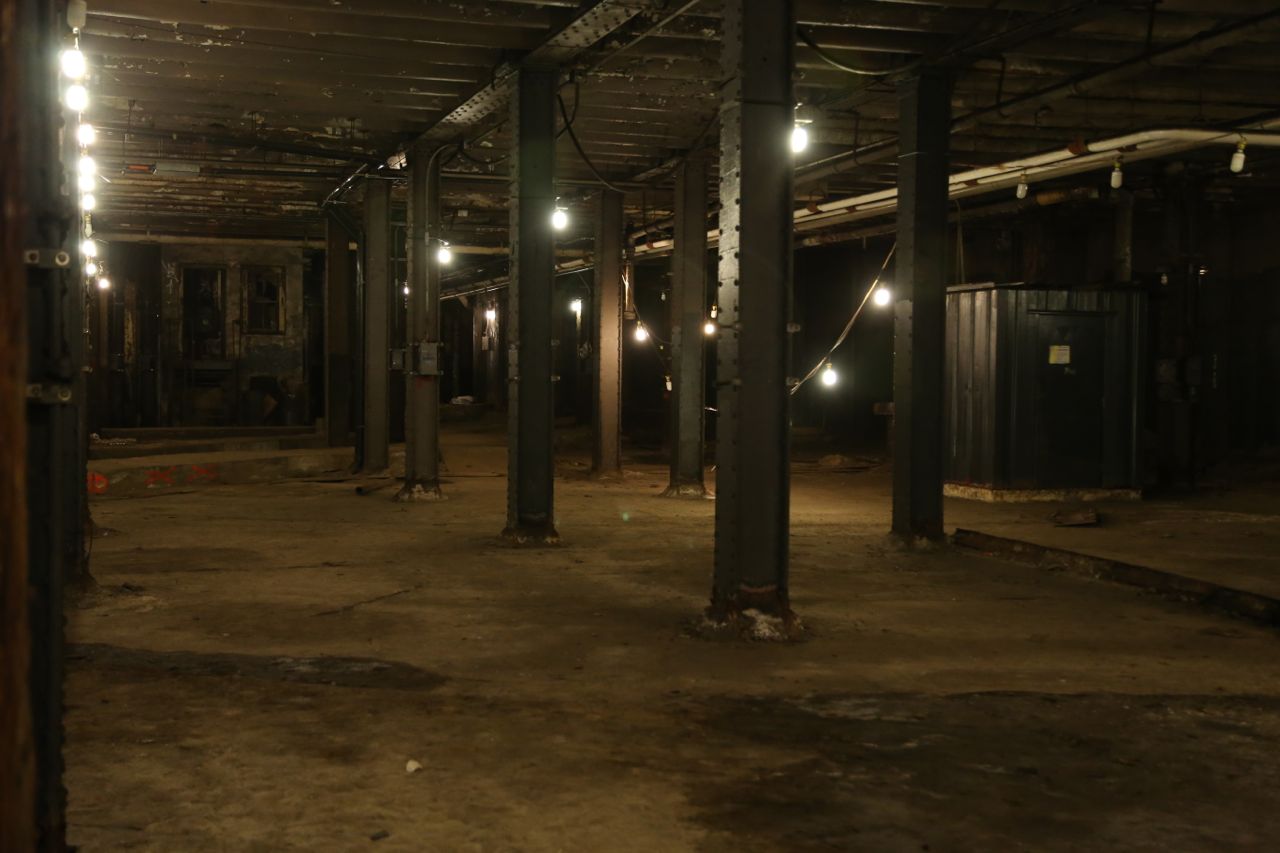
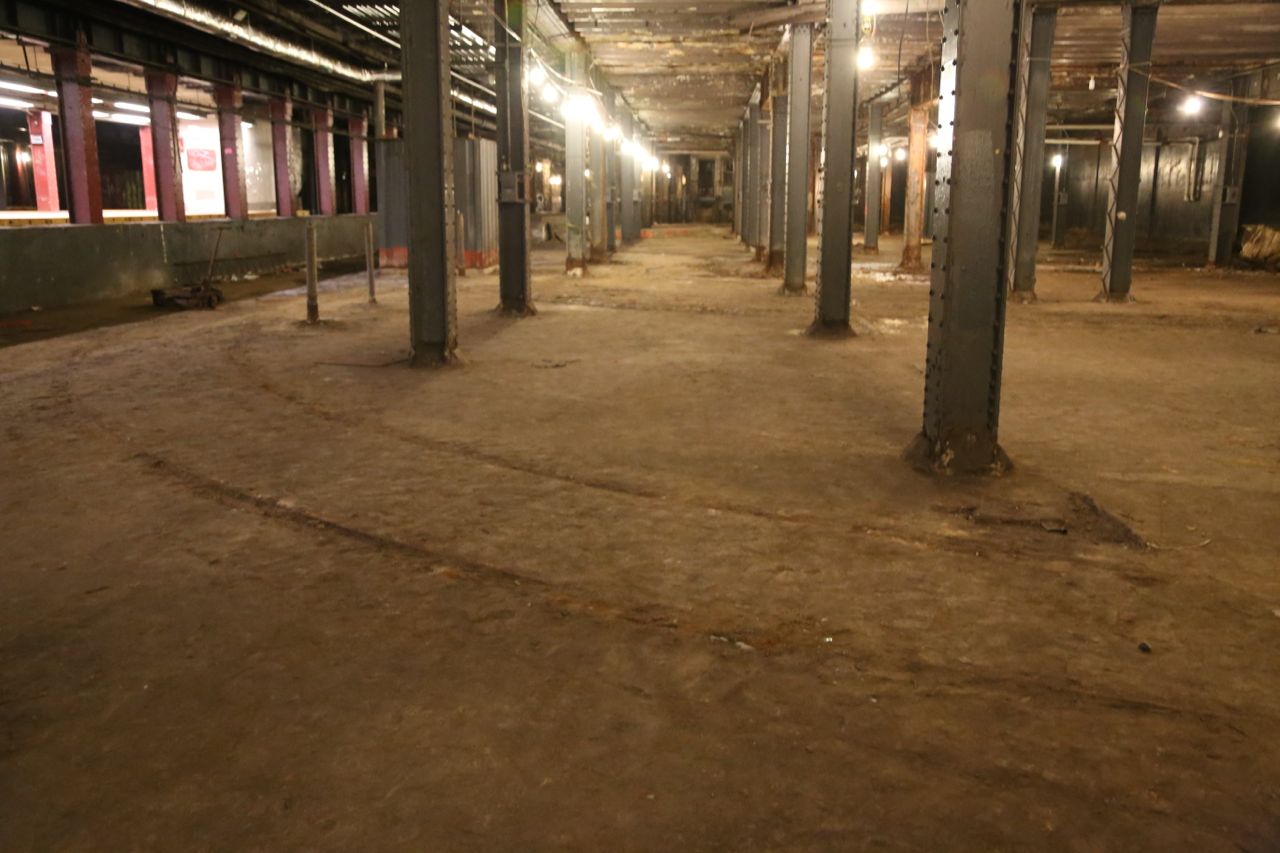
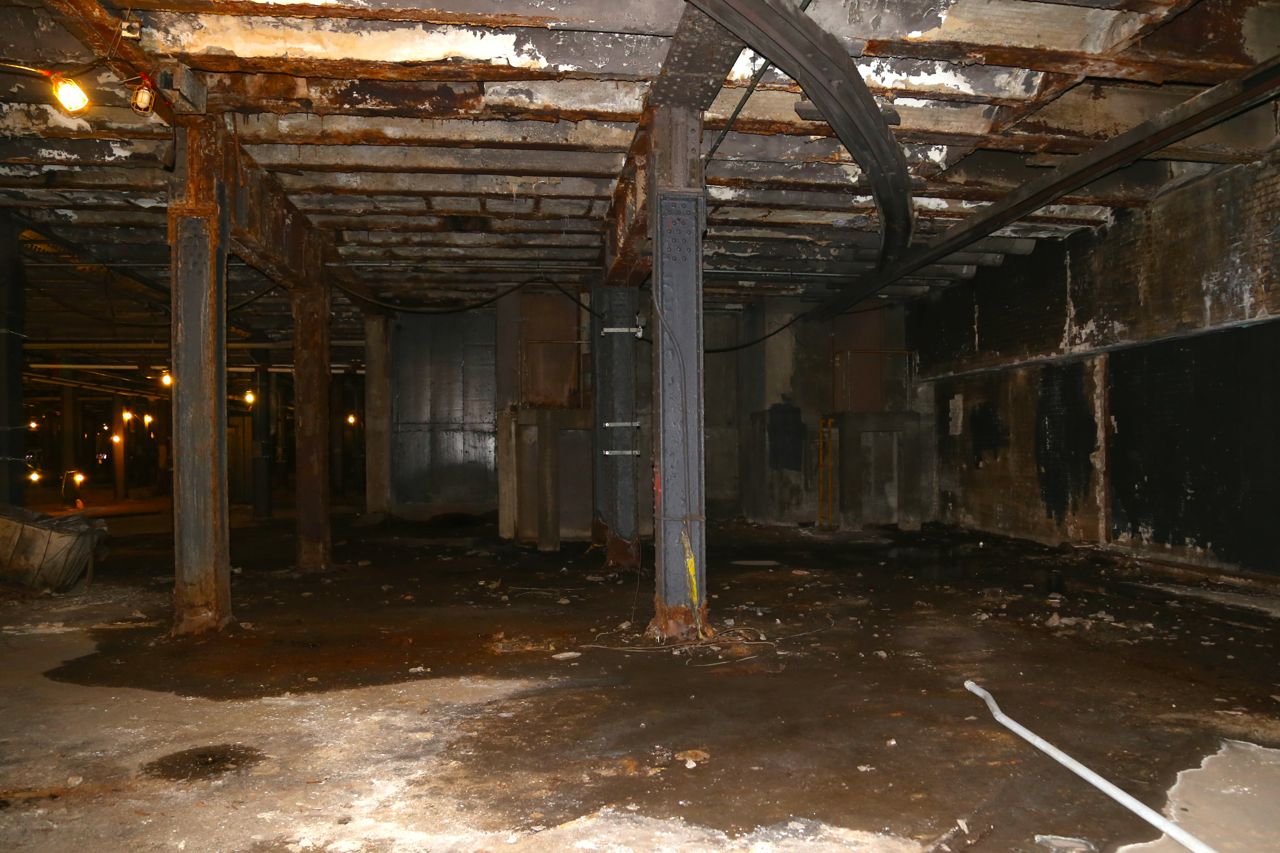
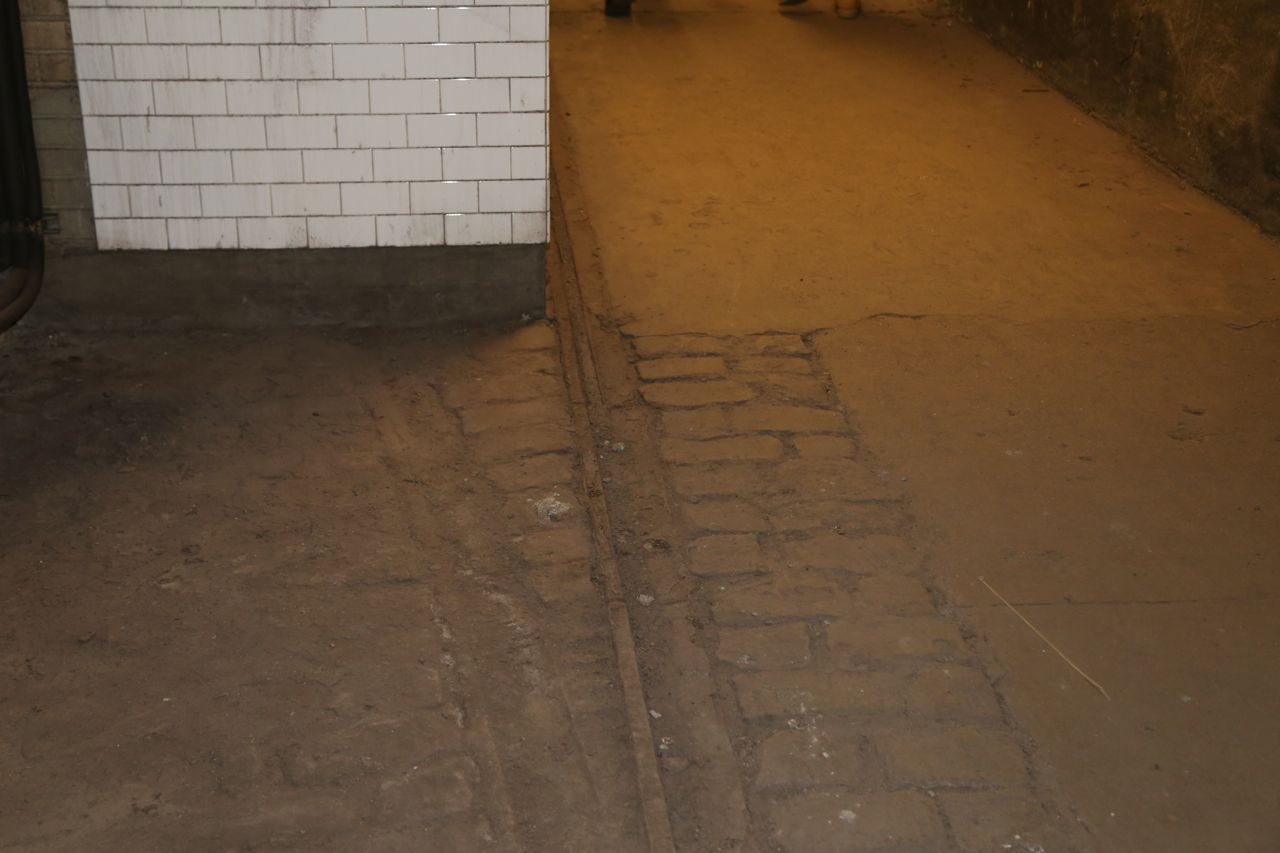
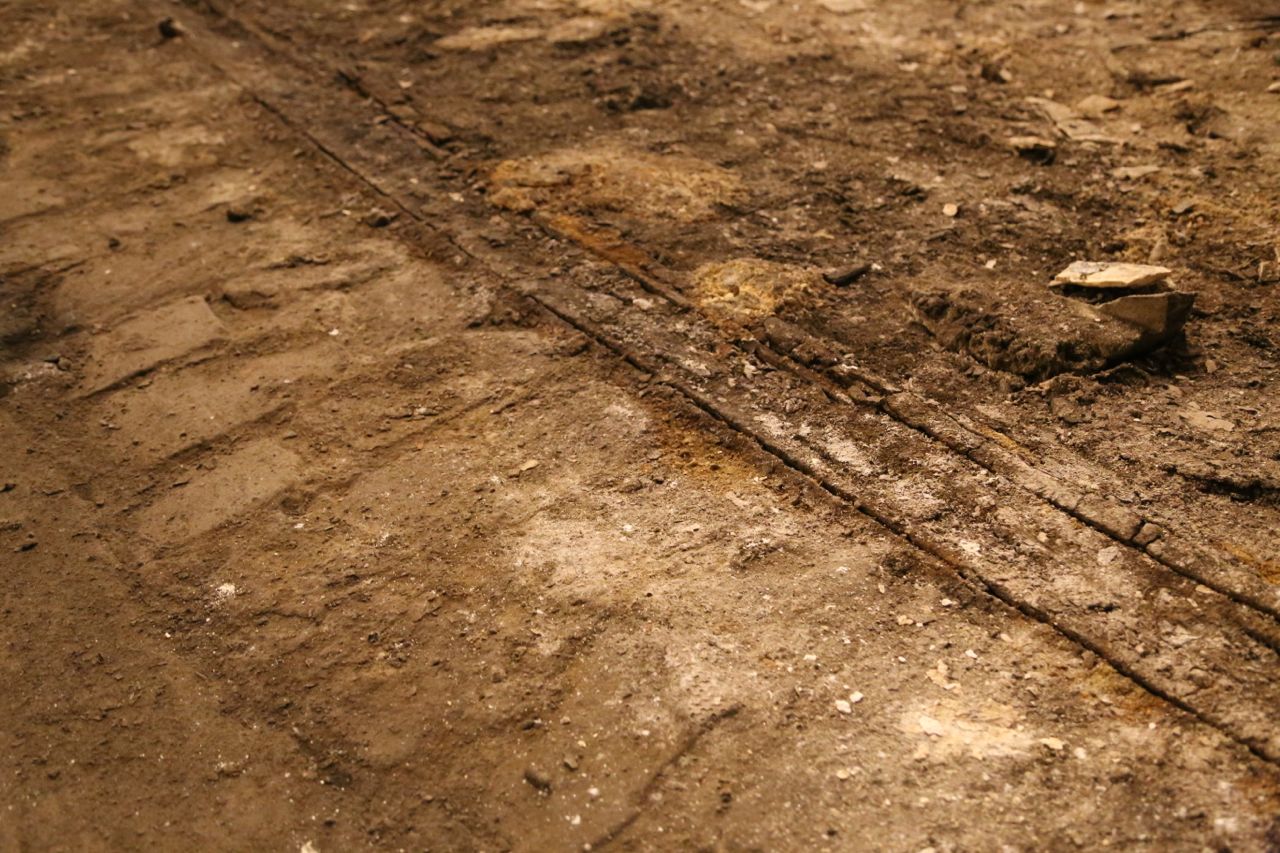
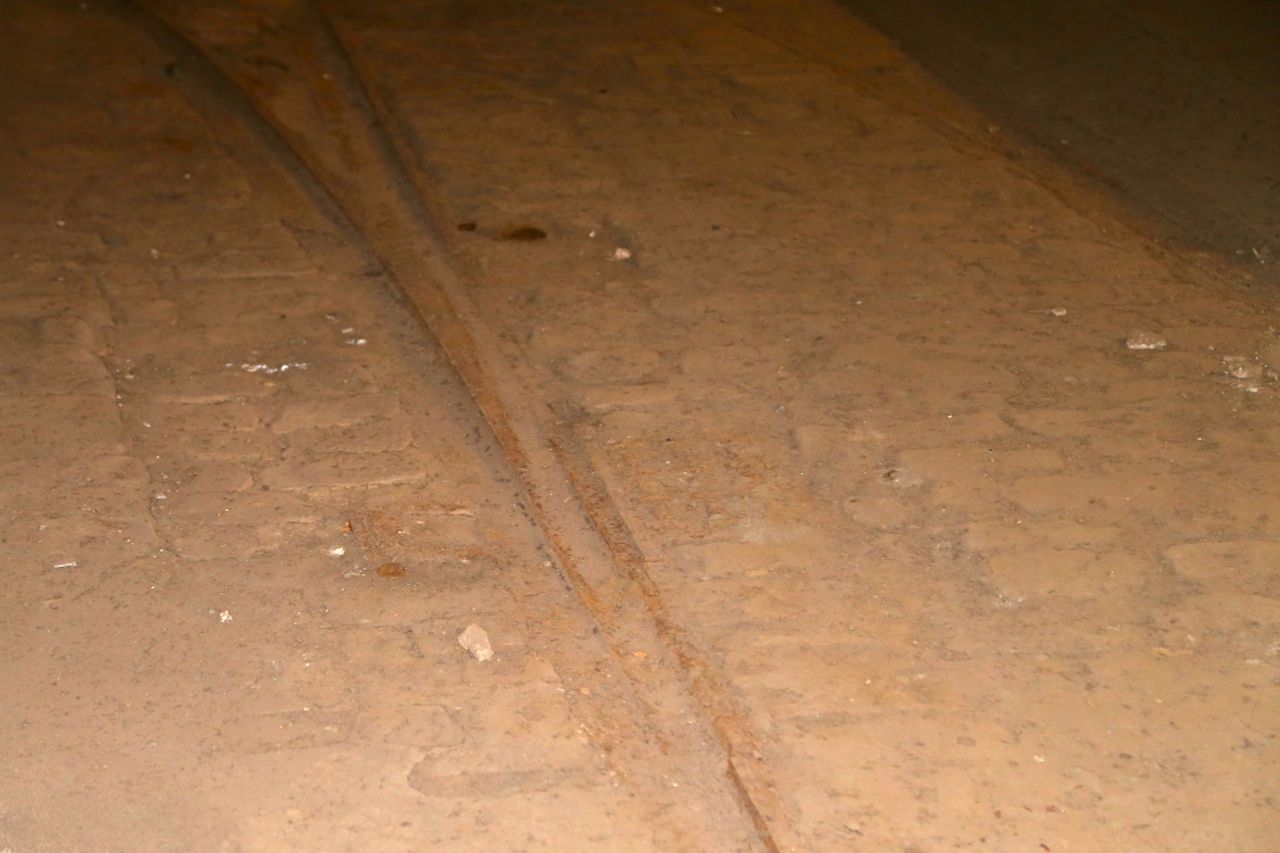
I joined the New York Transit Museum this year so that I could go on some of their members only tours of some real cool transit places. Today I toured one of those places, the old Essex/Delancey trolley terminal from the Williamsburg Bridge. Trolleys from Brooklyn came across the Williamsburg Bridge to Manhattan and then turned around in this terminal. Trolleys in Brooklyn were evidently on a different rail system type and thus couldn’t continue onto the Manhattan rails. I won’t try to give the history, as so many places can be found, which do it much better, such as this one. The terminal is right next to the Delancey and Essex subway stations and can be seen from part of the platform. Inside the terminal area, some of the old tracks, paver stones, and rails can be seen. While I found those interesting, I also just loved being able to walk in a behind-the-scenes area that the general public usually can’t access.

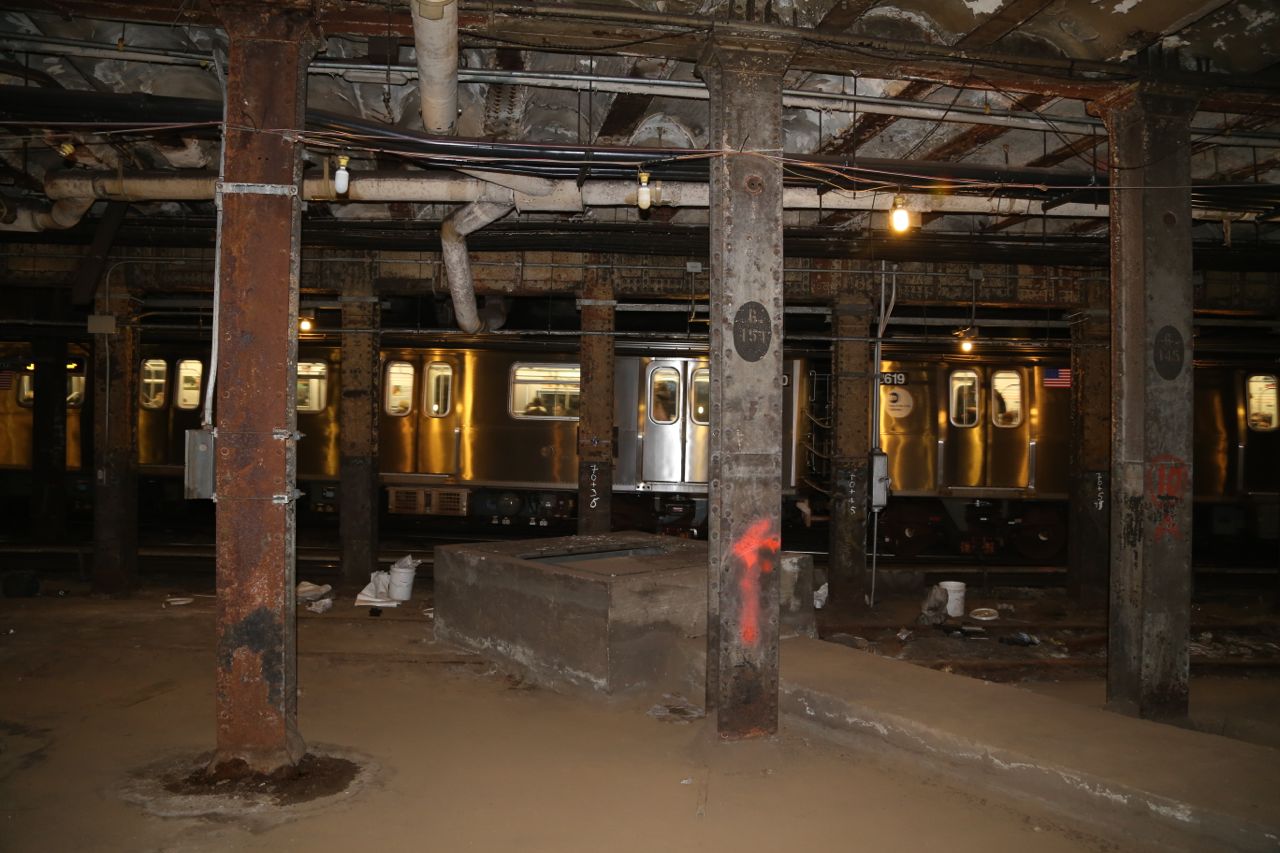
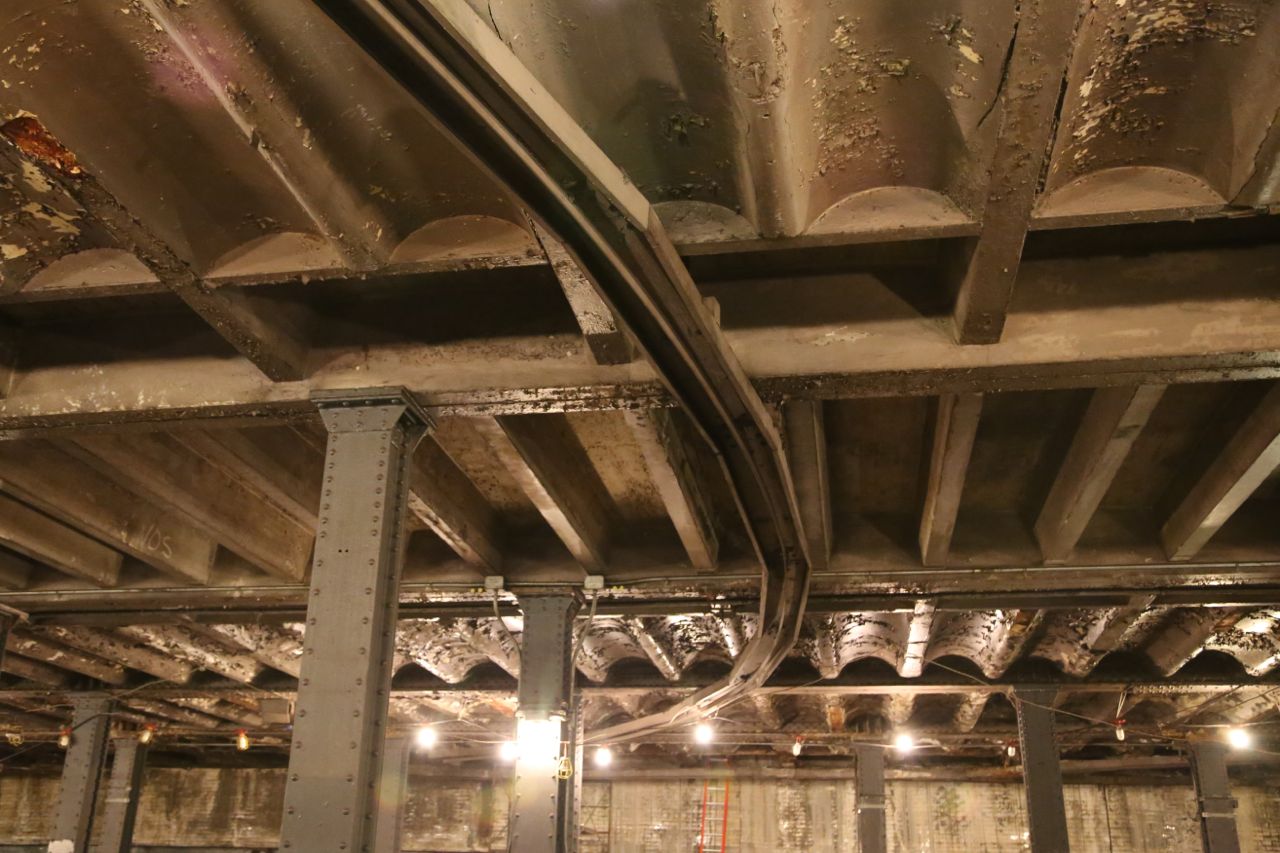
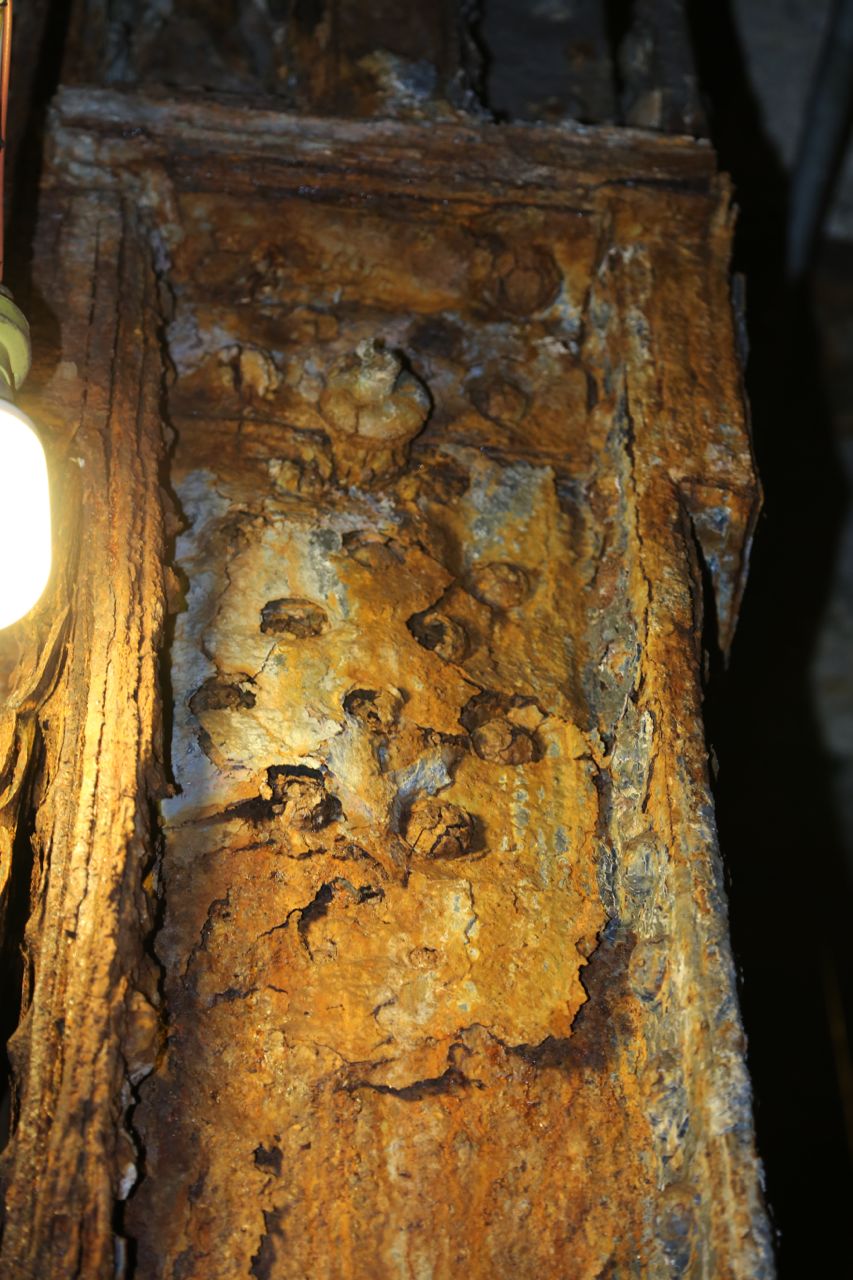
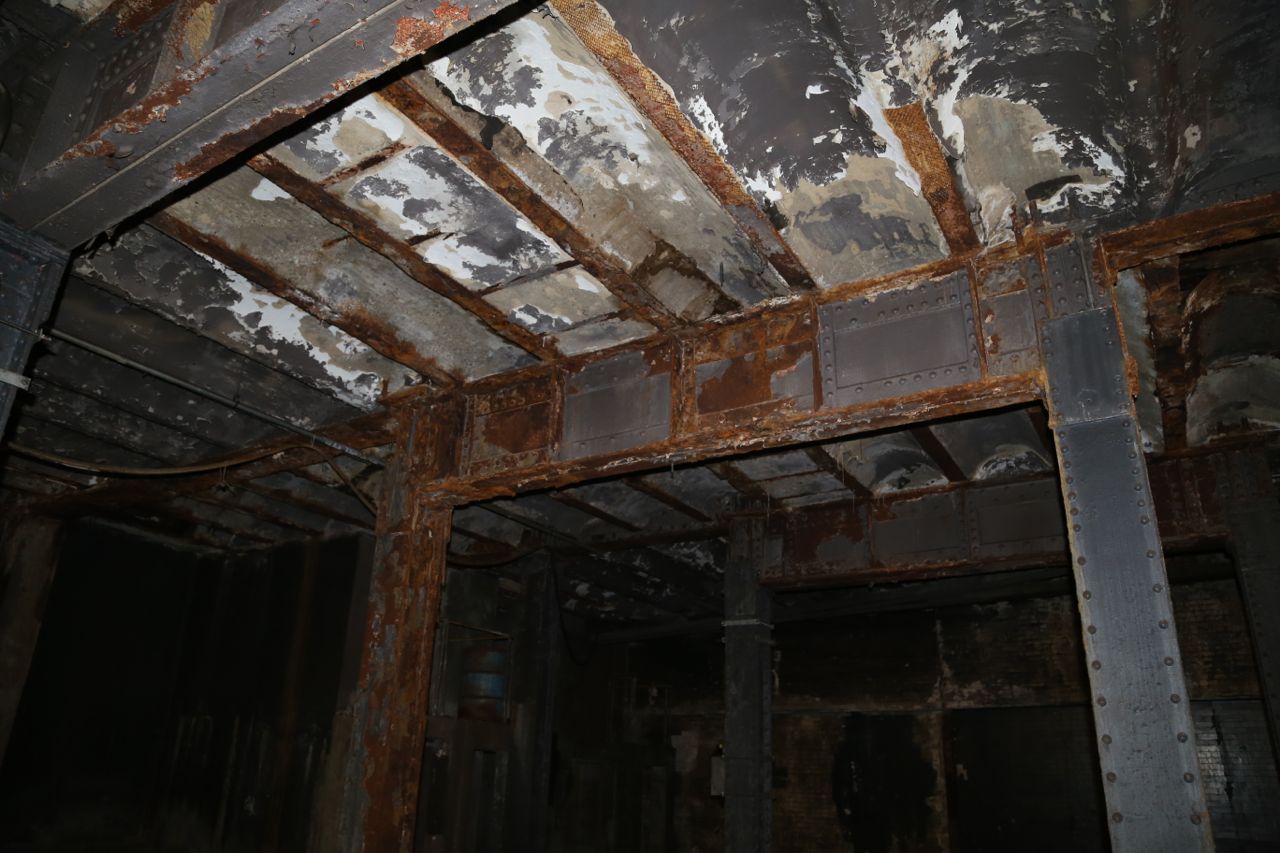
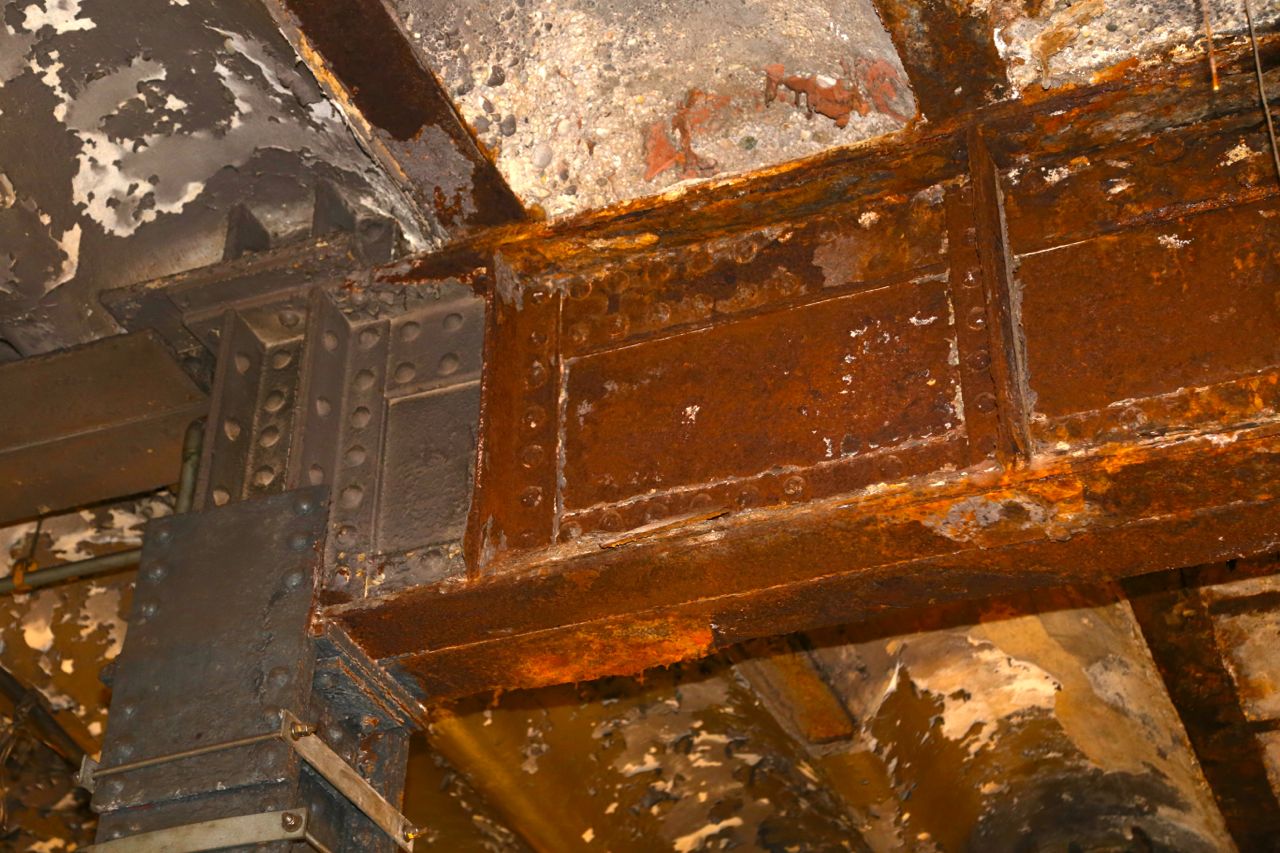
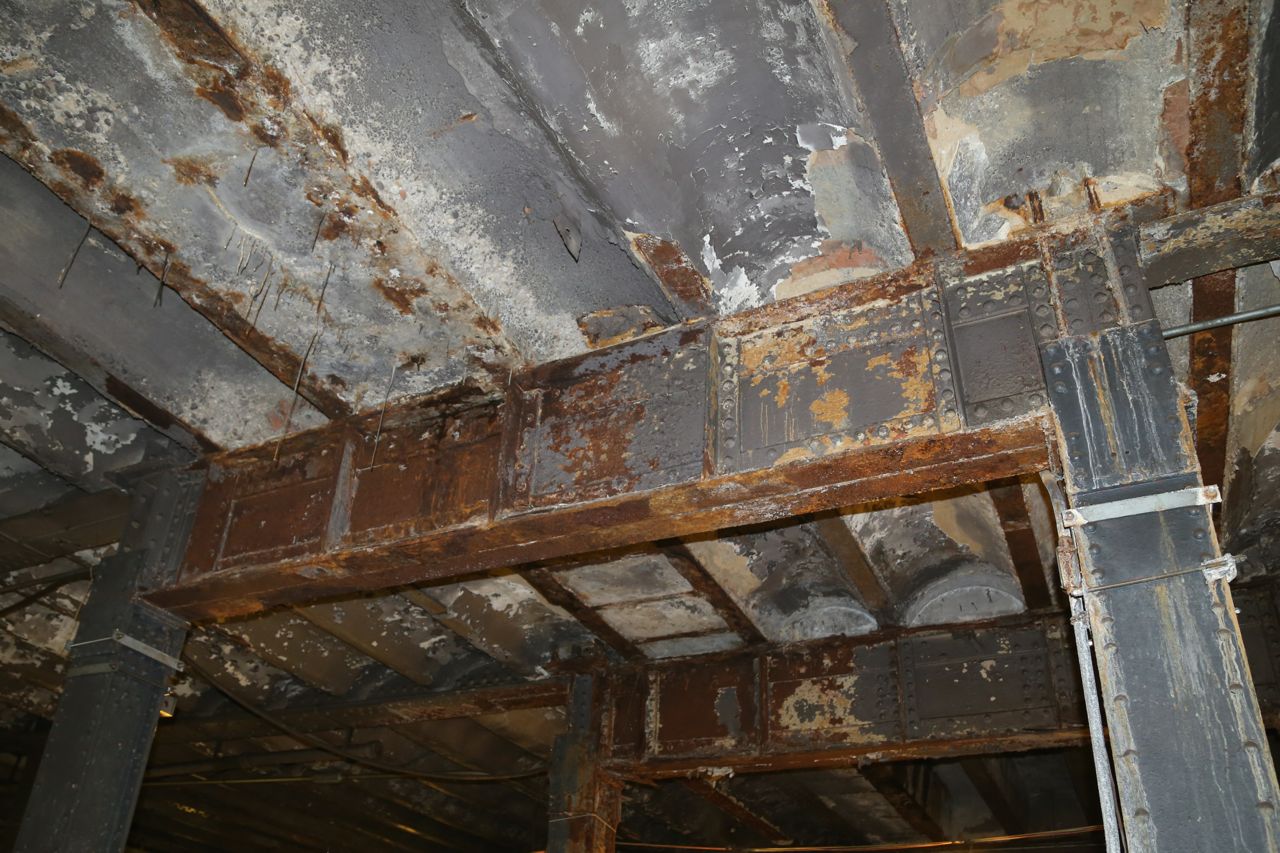
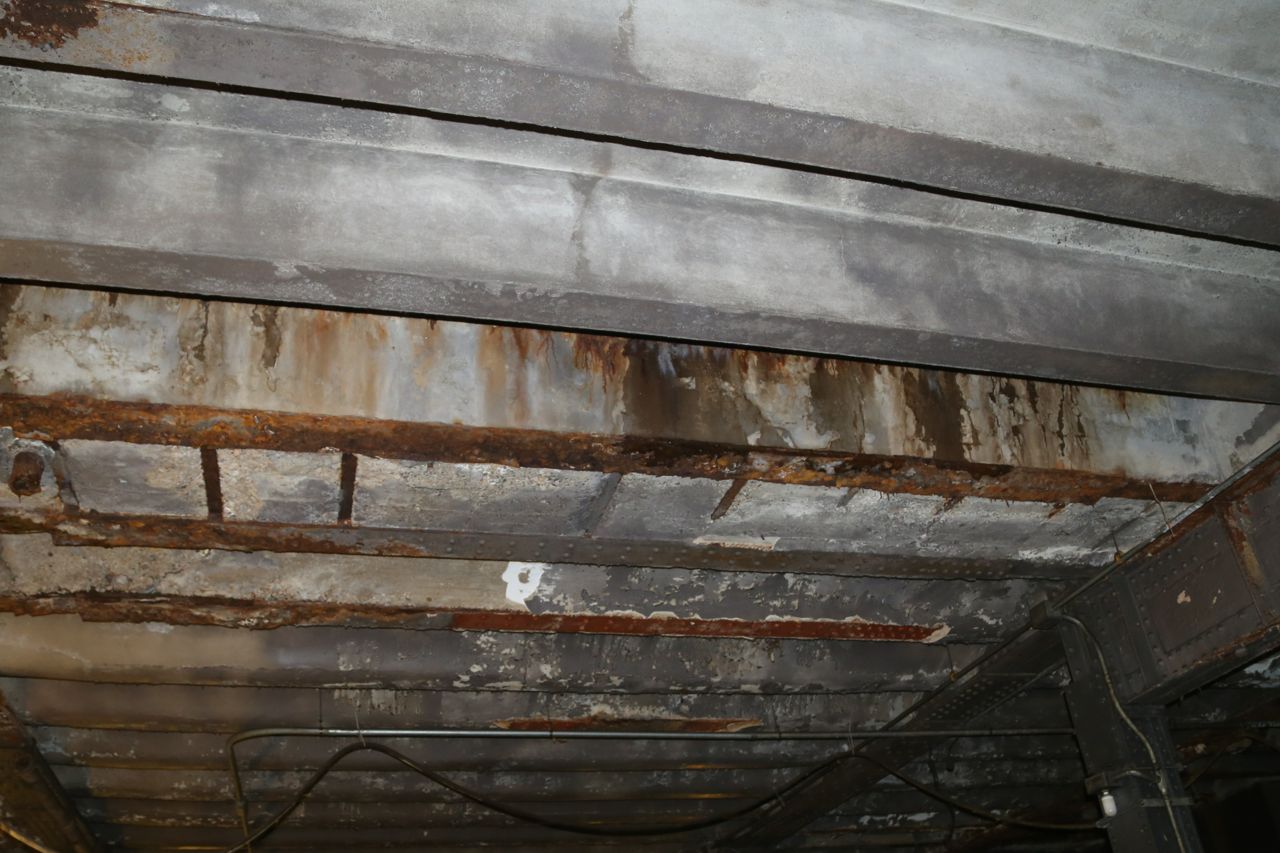
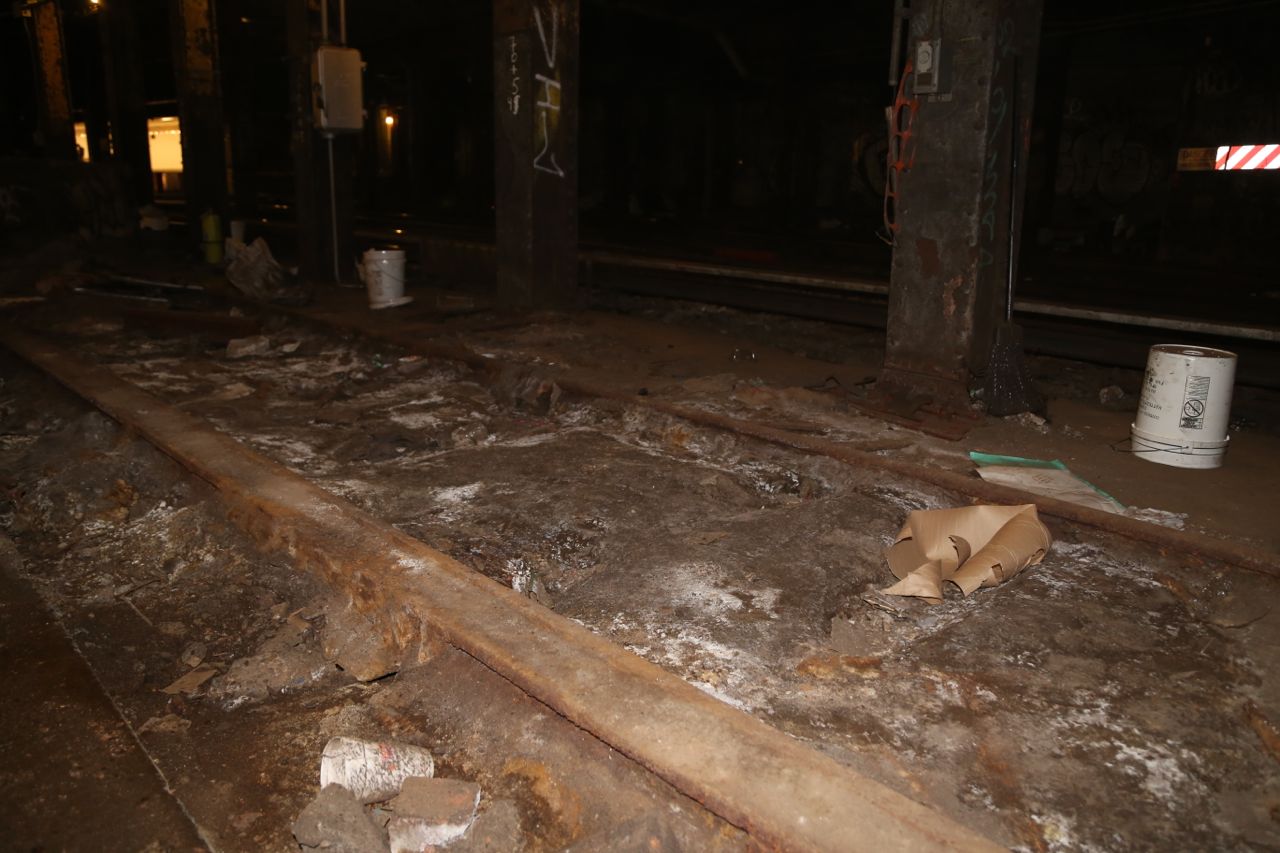
Another thing I found interesting was the condition of the columns and beams. Like almost all parts of the New York underground, the area is continual being eroded by water that seeps in from groundwater and storm water that flows through various cracks in the utility areas. Thus much of the metal support structures were badly rusted. Some parts of the area have been rehabbed but not all. It was a stark reminder of how continual maintenance is needed on essentially everything humans build. If you are not an engineer, you can be forgiven for not understanding that once something is built, it still needs maintenance. It can’t just simply be left to itself to continually function properly for all eternity. Unfortunately most politicians, who hold the purse strings to maintenance funding, don’t seem to understand this.

There is an idea or plan by some to turn the area into an underground park called the Lowline. It would be incredibly interesting to see that if it happens. In the meantime, I’m glad I got a look at this piece of New York’s transportation history.

View of Delancey Terminal from subway platform

View of Delancey Terminal from subway platform

View of subway platform from the Delancey Terminal

View of subway platform from the Delancey Terminal

Subway train passing by Delancey terminal

Subway train passing by Delancey terminal

Wide view of Delancey terminal with old track monitoring office in background

Wide view of Delancey terminal with old track monitoring office in background

Wide view of Delancey terminal

Wide view of Delancey terminal, old tracks can be seen in foreground

Wide view of Delancey terminal parts of which are wet from normal seepage

Wide view of Delancey terminal parts of which are wet from normal seepage

Old track in paver stones terminating at a more modern tiled wall

Old track in paver stones terminating at a more modern tiled wall

Old track in paver stones

Old track in paver stones

Old track in paver stones

Old track in paver stones

Old tracks

Old tracks

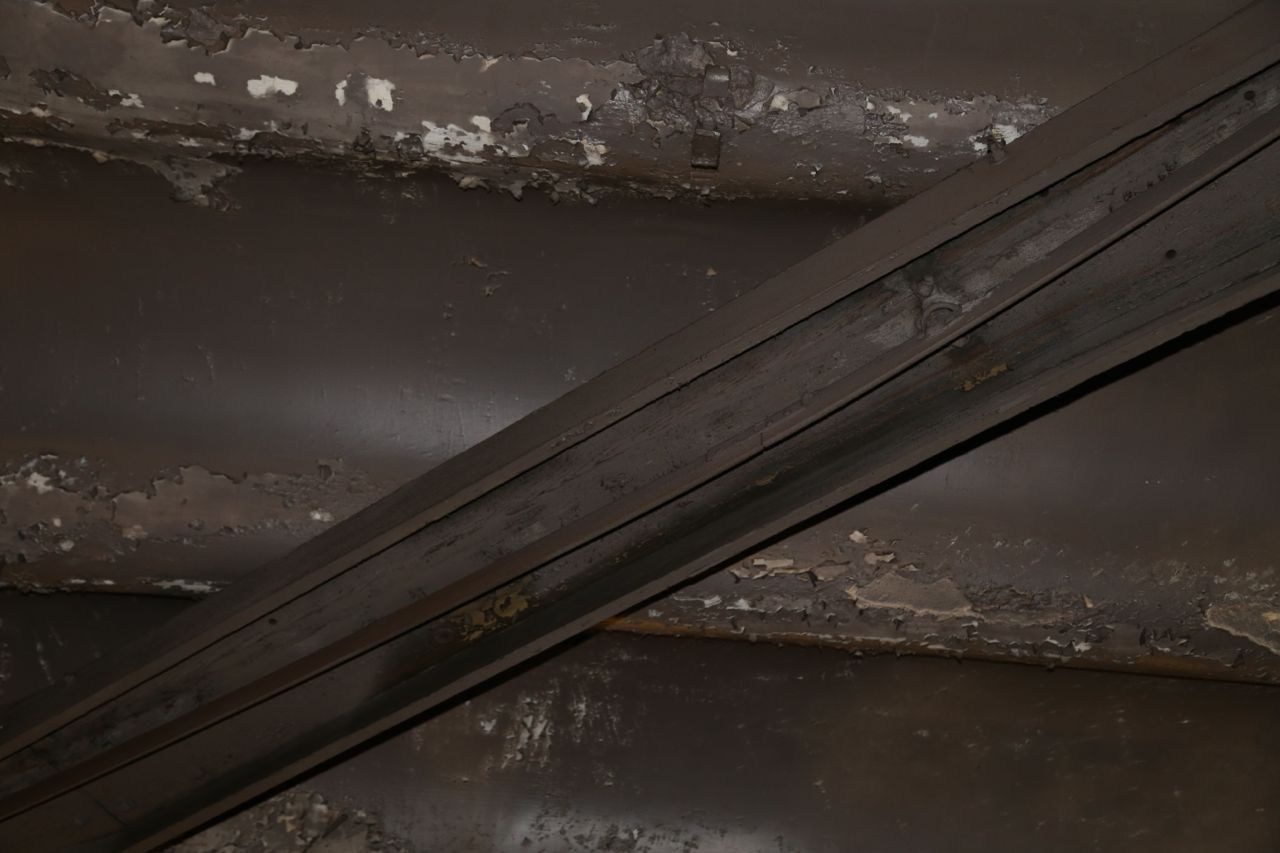
Old rail, which is held inside a wooden casing. Wood was used since it doesn't conduct electricity, and rail was electrified.

Old rail, which is held inside a wooden casing. Wood was used since it doesn’t conduct electricity, and rail was electrified.

Old rail, which is held inside a wooden casing. Wood was used since it doesn't conduct electricity, and rail was electrified.

Old rail, which is held inside a wooden casing. Wood was used since it doesn’t conduct electricity, and rail was electrified.

Rusted column

Rusted column

Rusted beams and columns

Rusted beams and columns

Rusted beam

Rusted beam

Stalactites from water seepage near rusted metal

Stalactites from water seepage near rusted metal

Rusted and rehabbed beams

Rusted and rehabbed beams

Washington Monument in Scaffolding

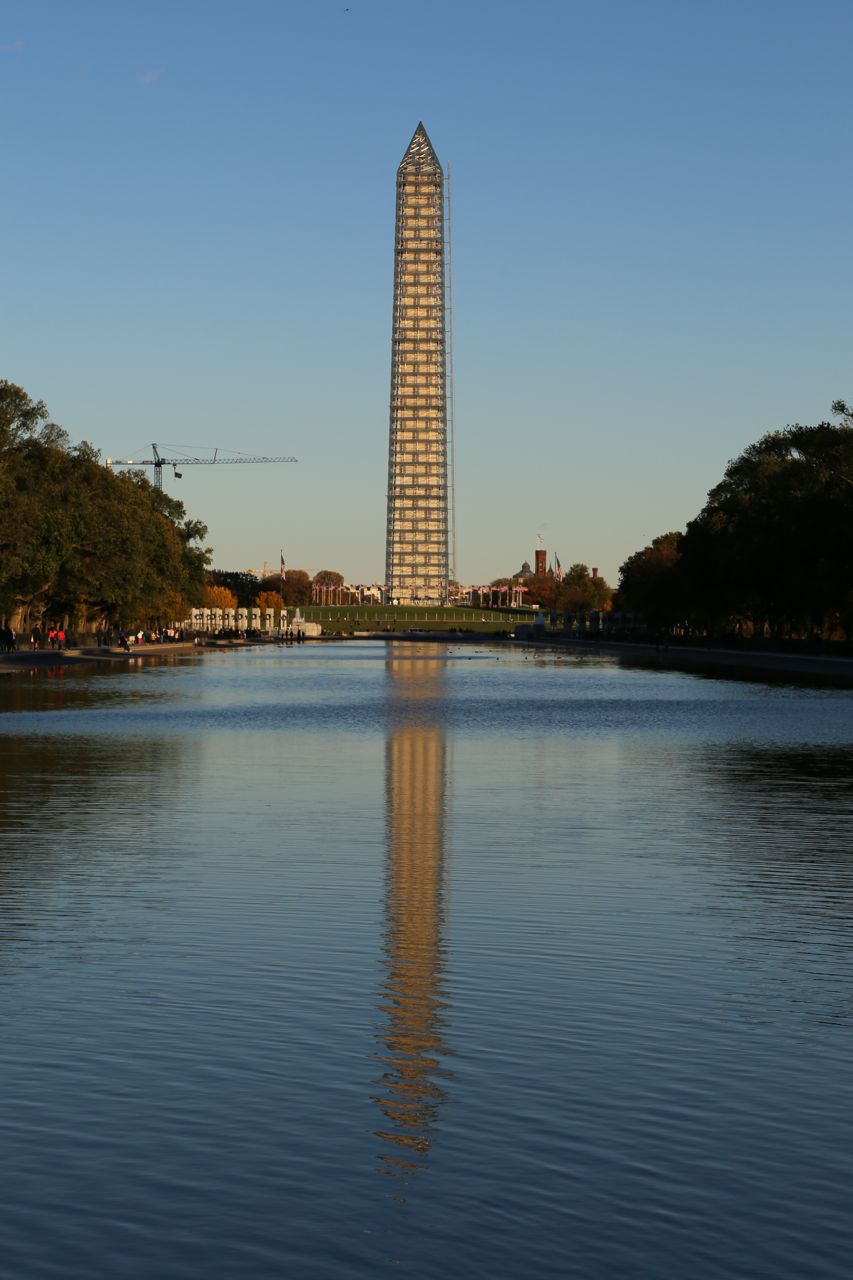
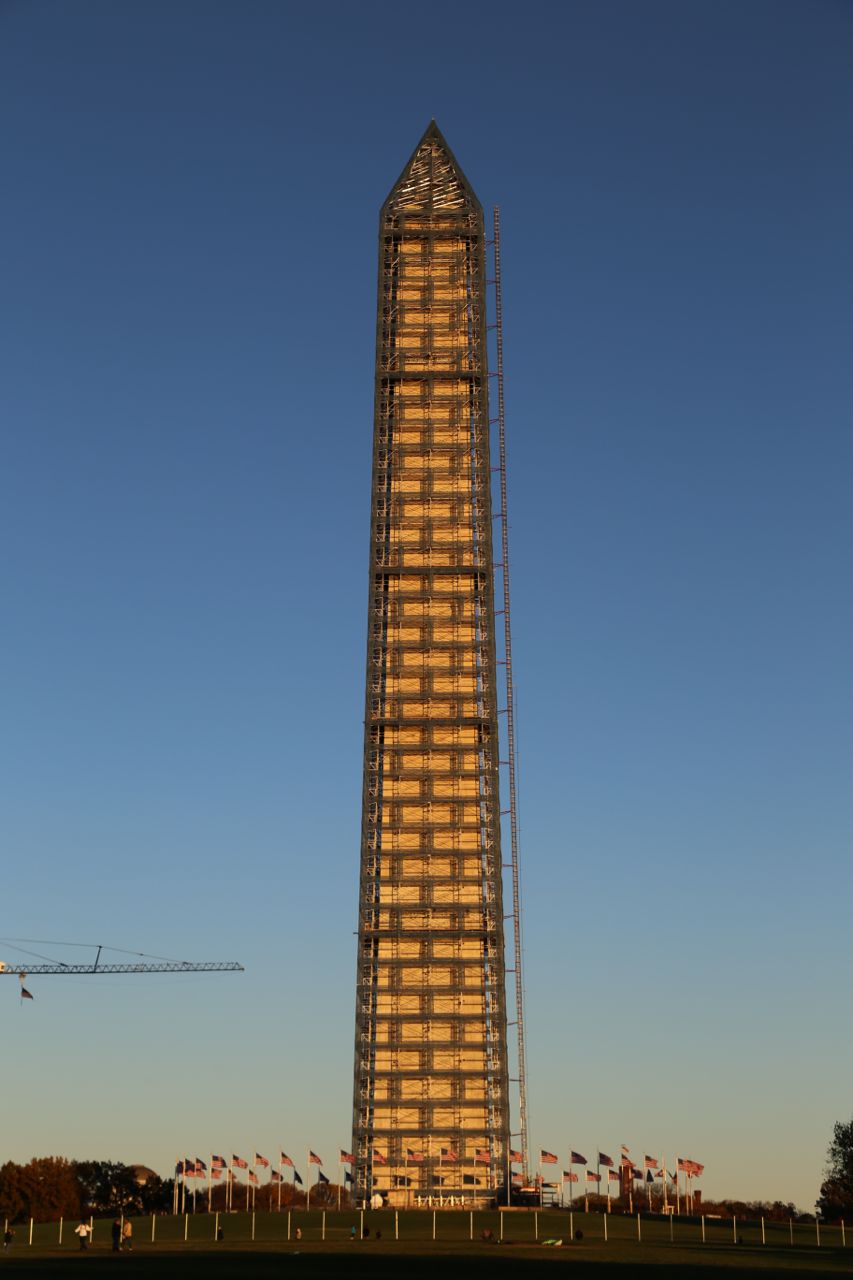
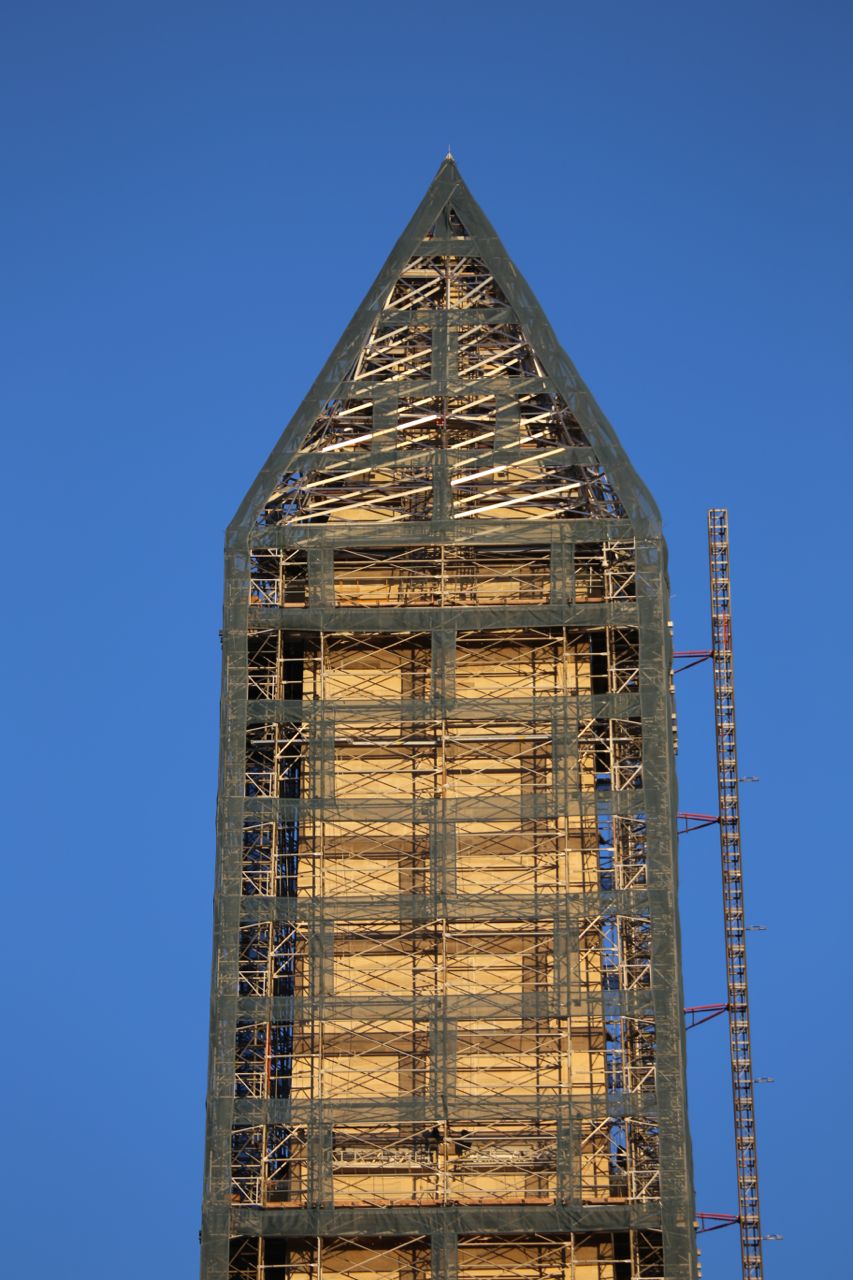
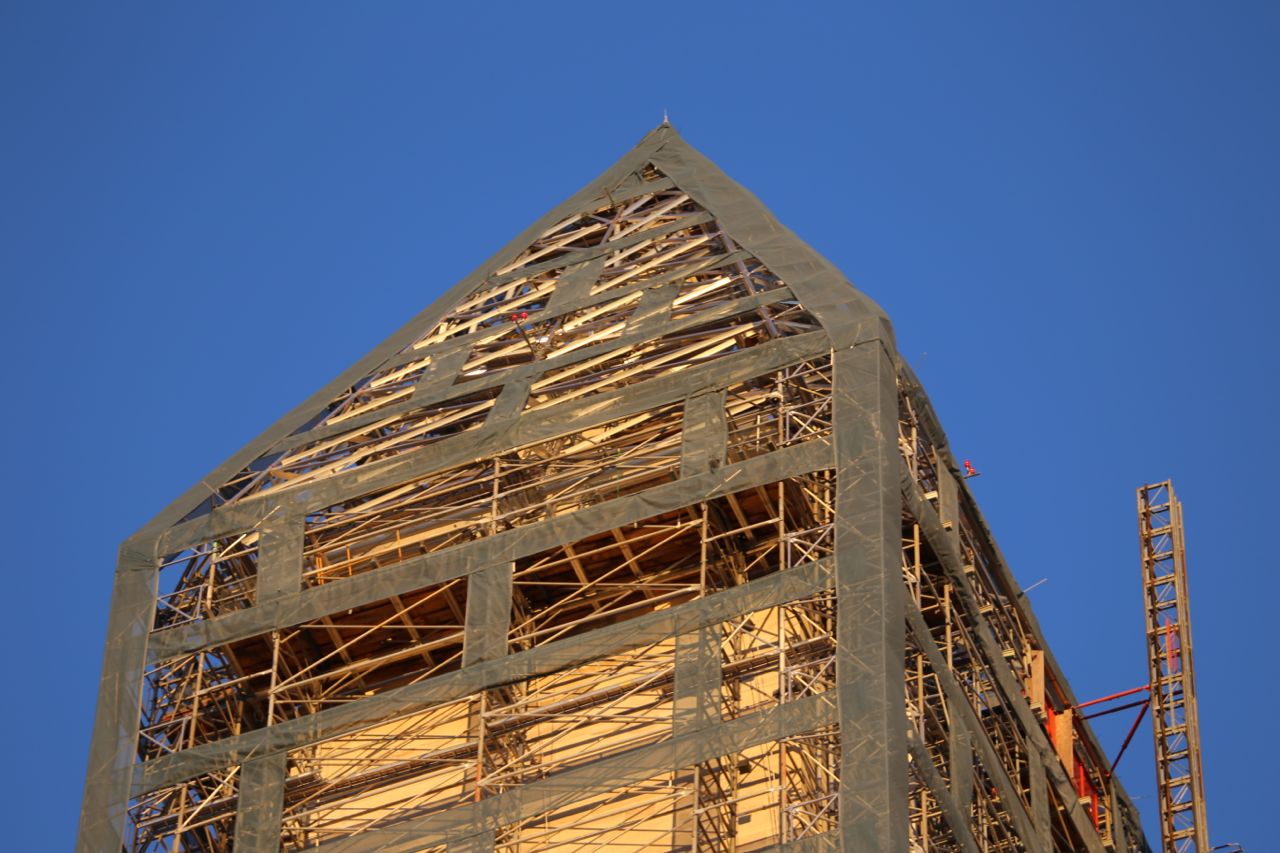
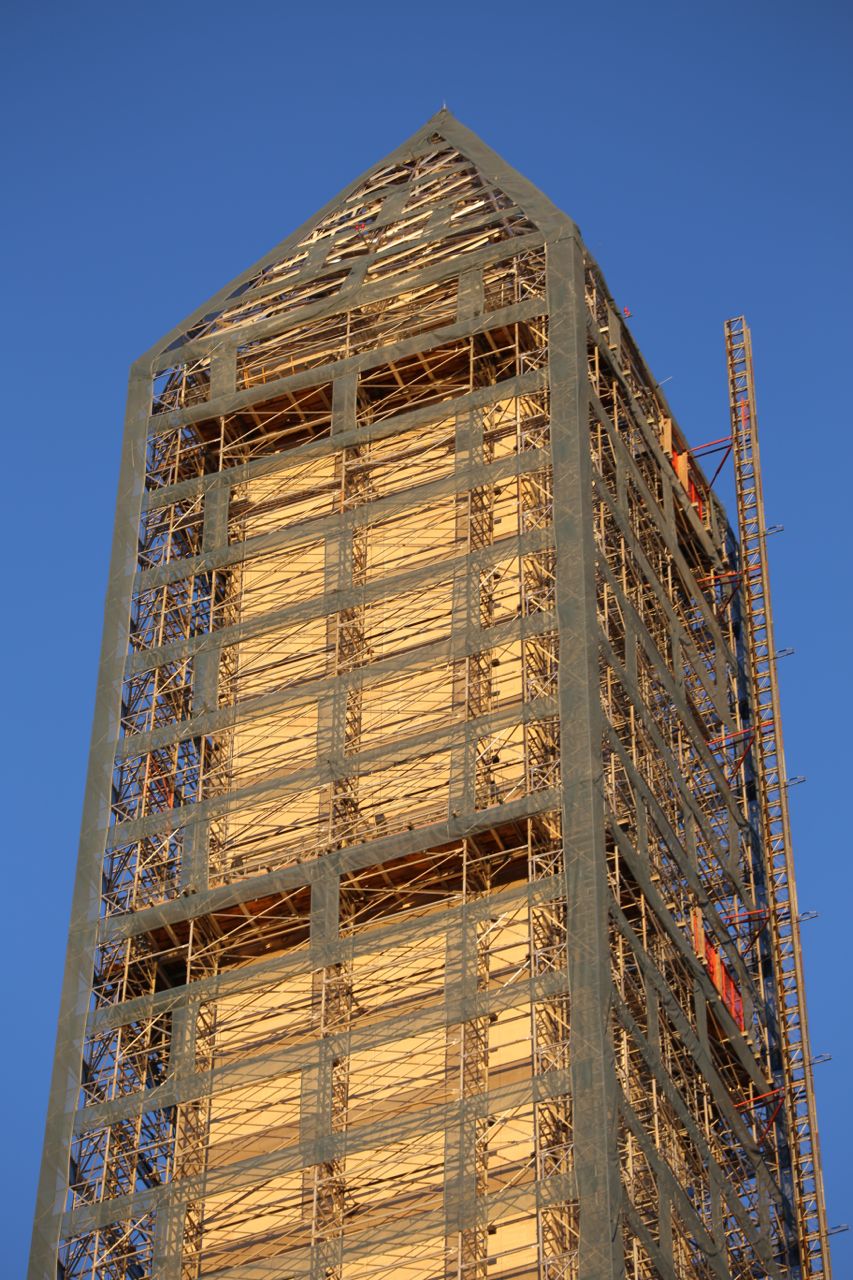
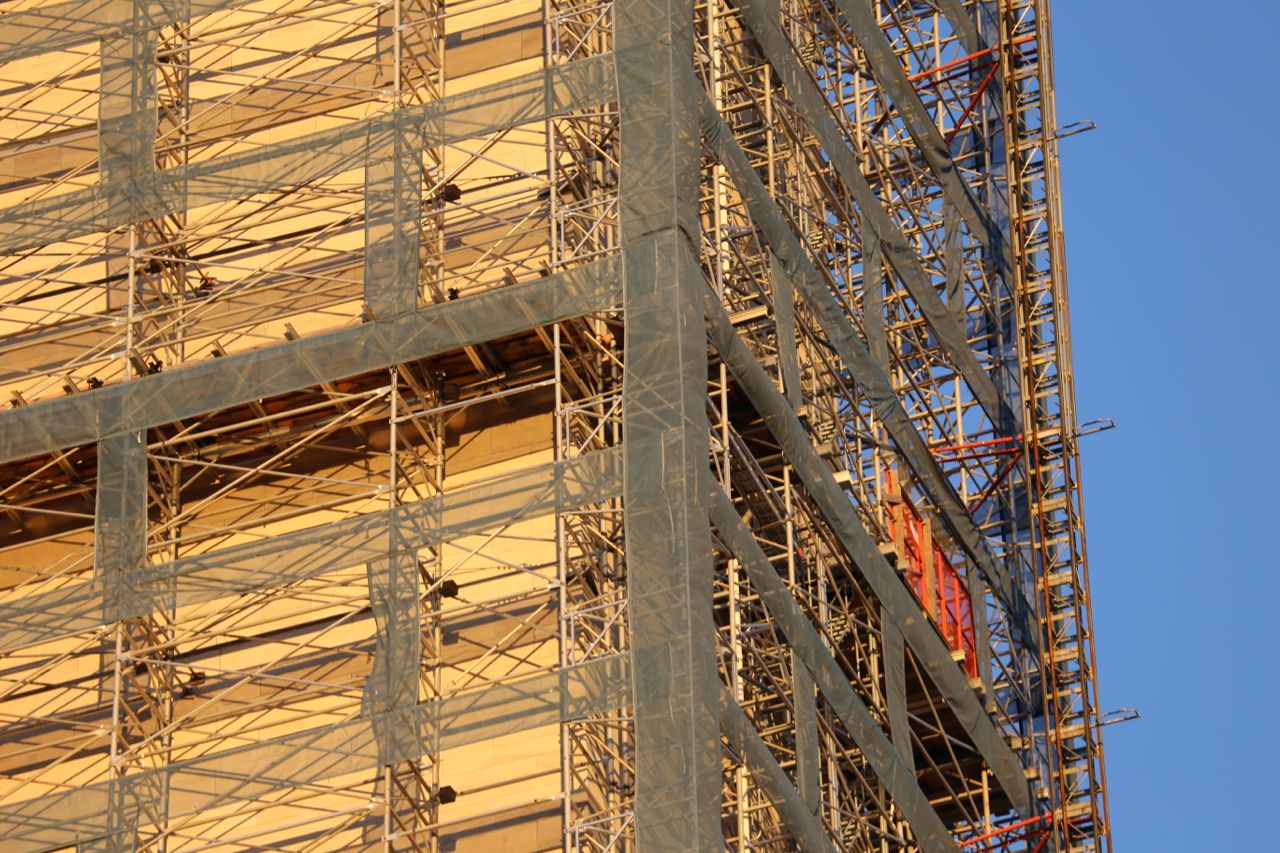
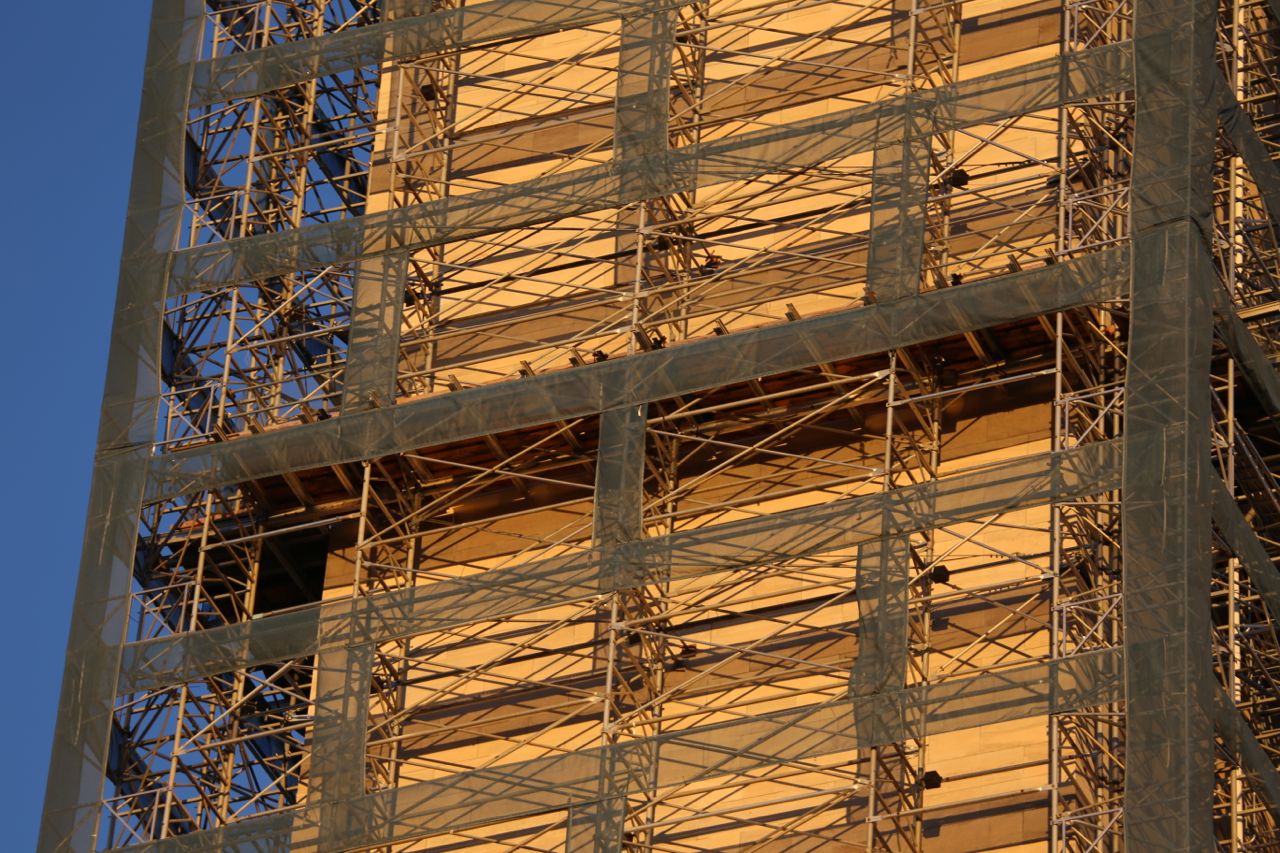
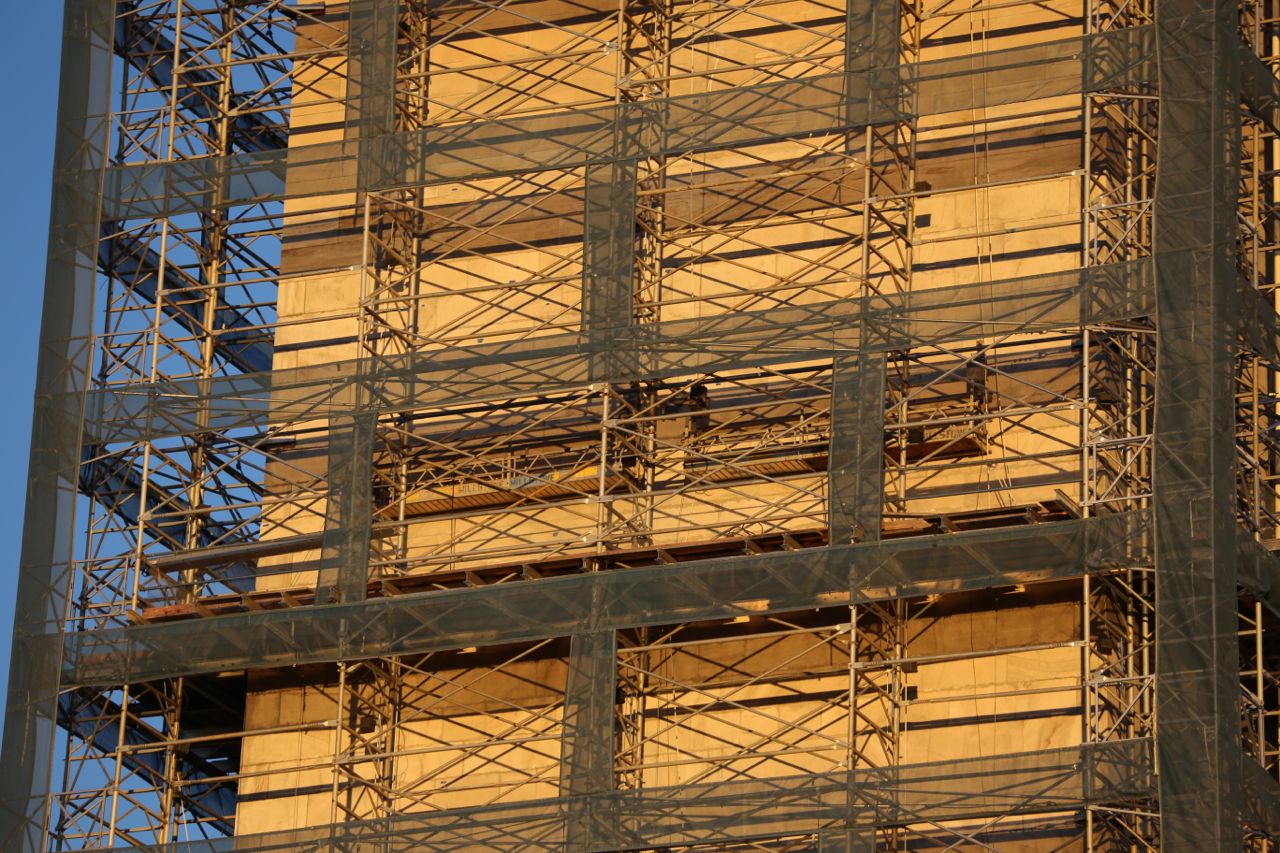
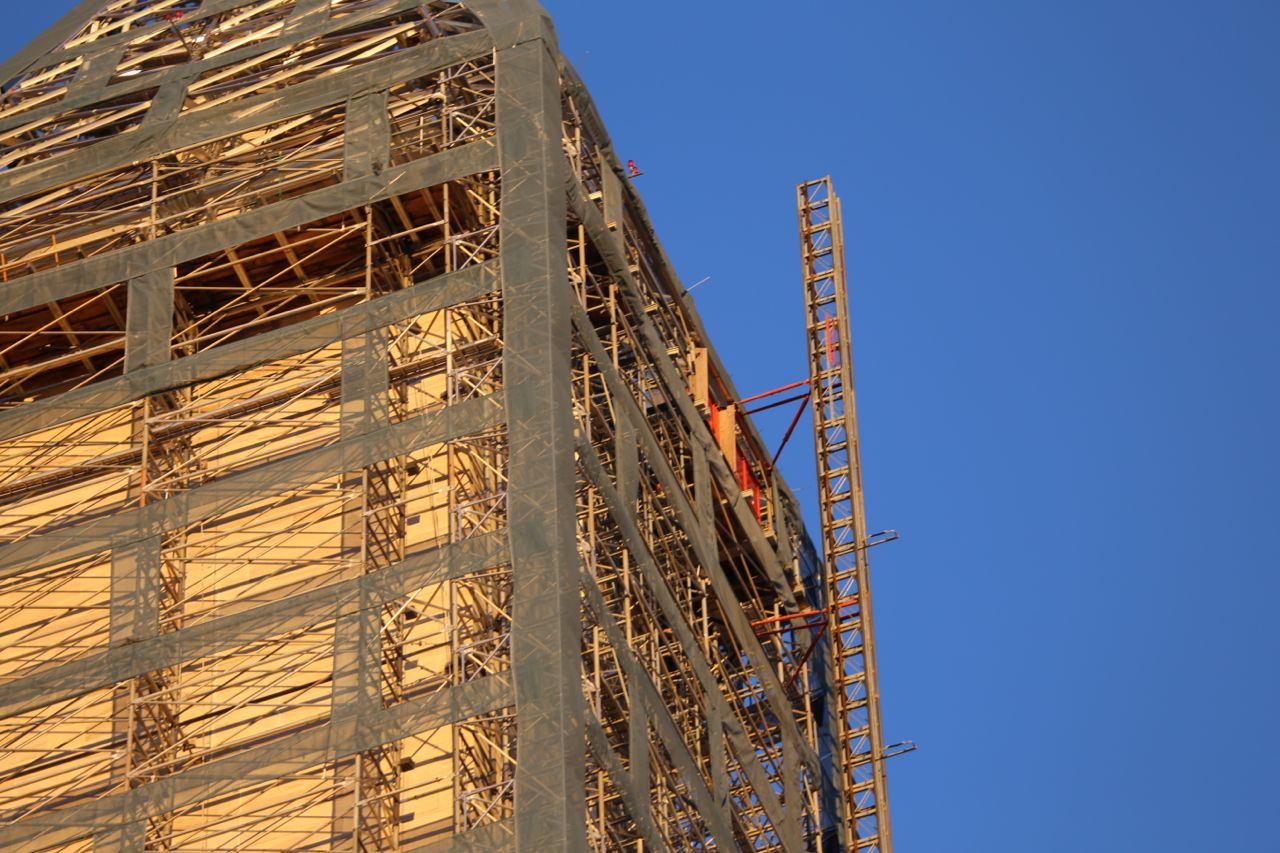
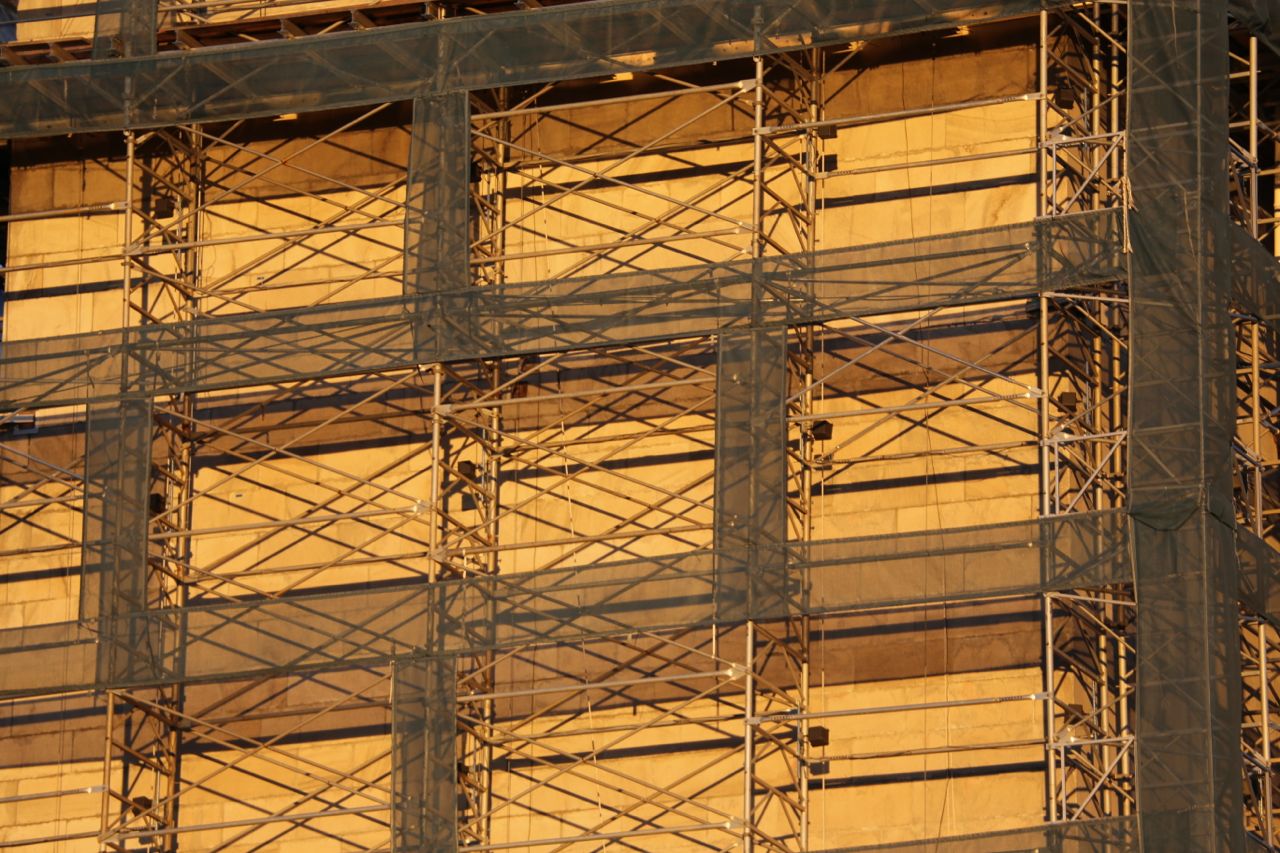
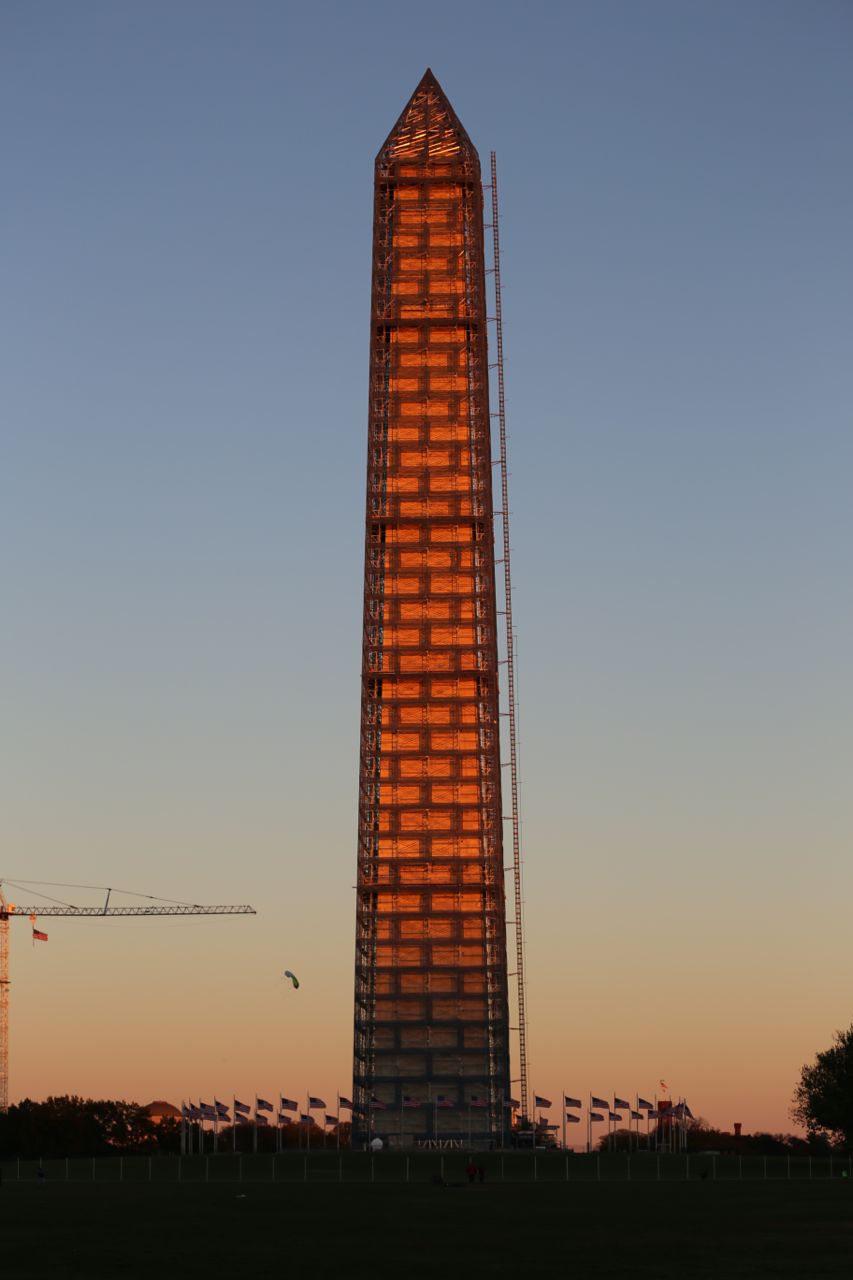
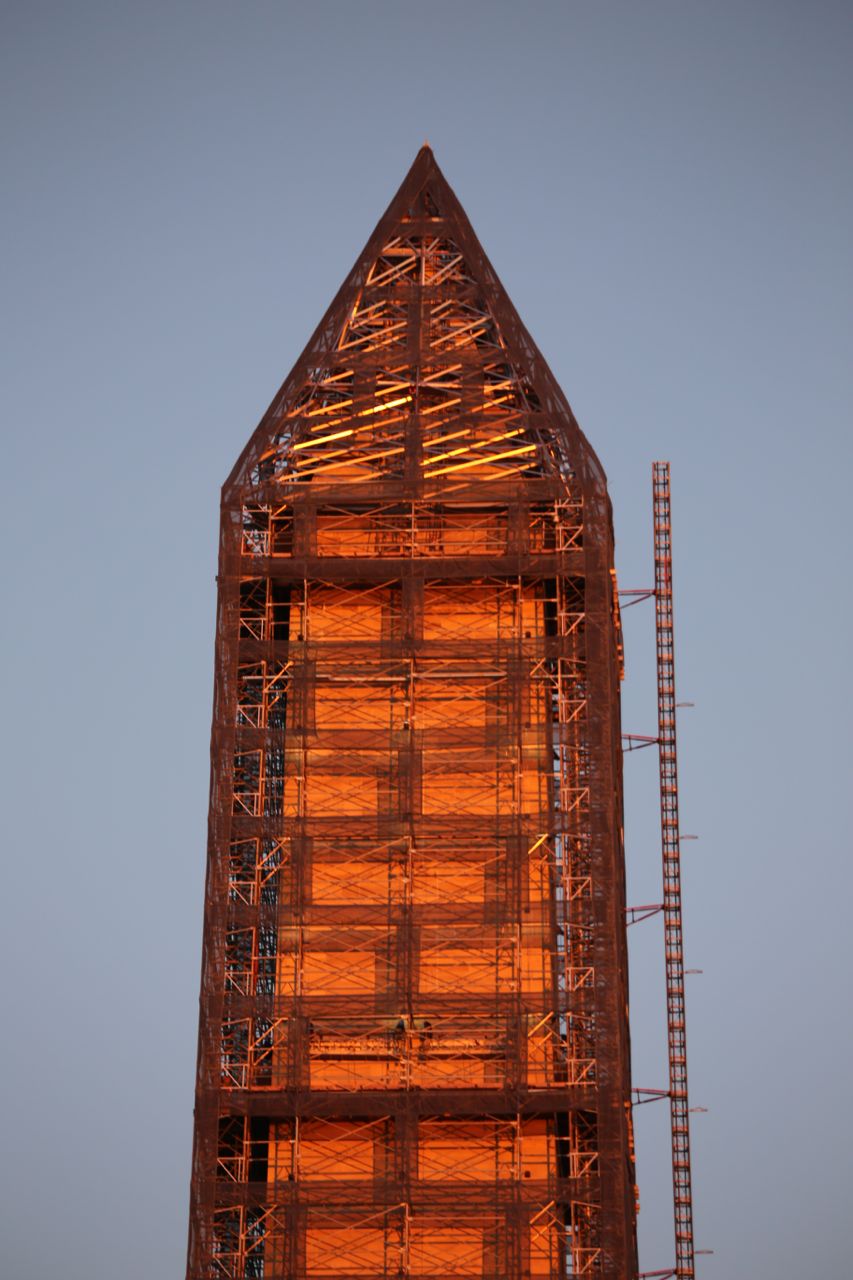
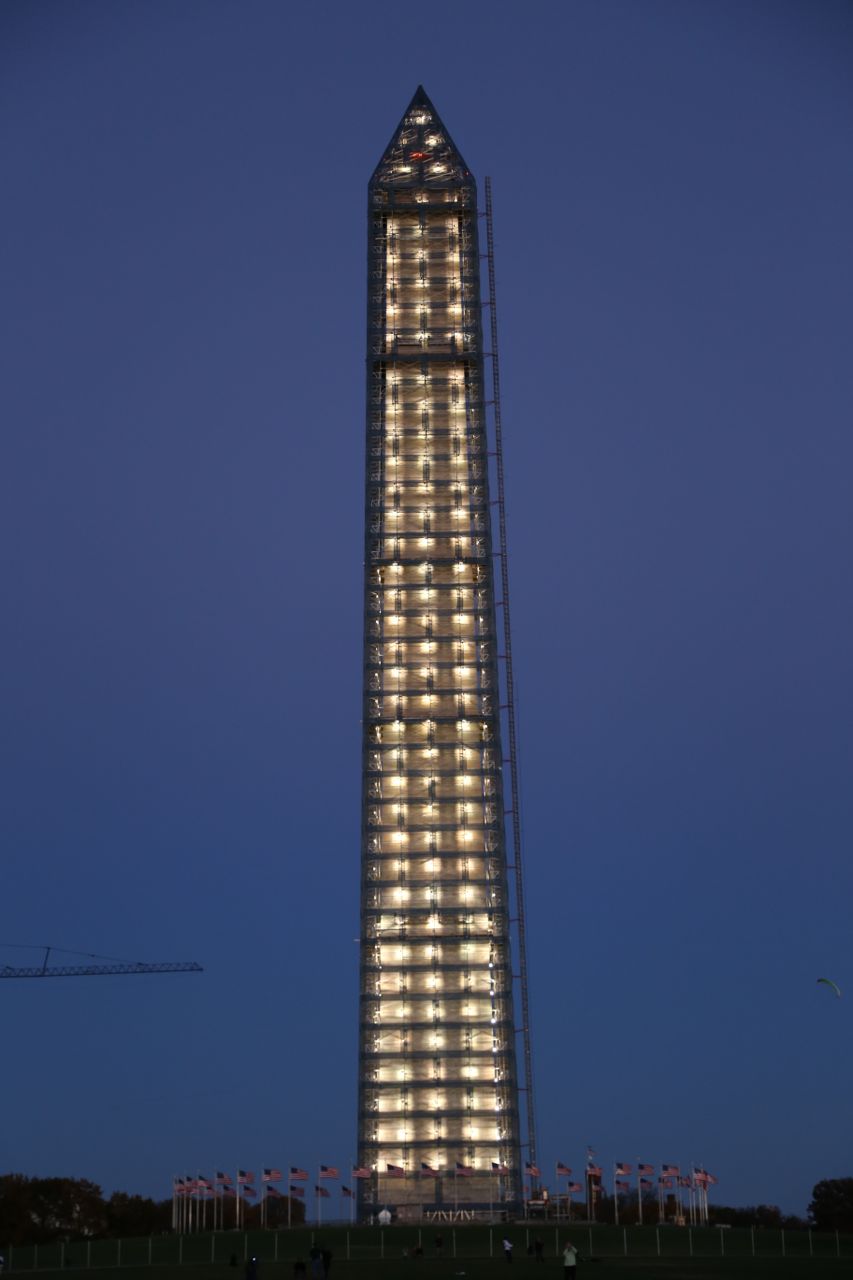
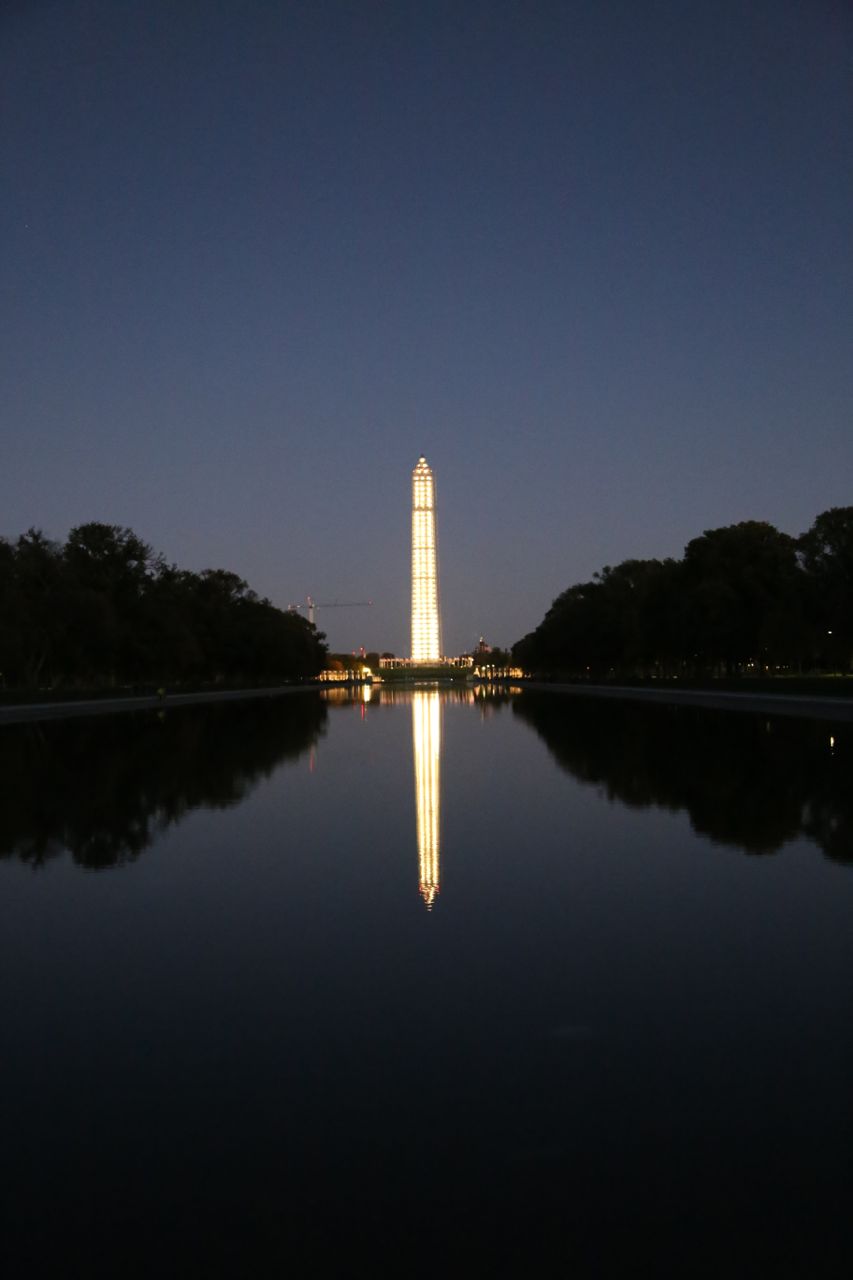
The Washington Monument is currently covered with scaffolding while it is repaired for damage from the 2011 earthquake. Perhaps I am biased because I am an engineer, but I think the scaffolding surrounding it is both an engineering feat and a work of art. It is also amazing to view. In one of the photos below, you can see how they actually have suspended scaffolding within the supported scaffolding, which I think is totally cool. They have been lighting it up at night, but tonight is the last night it will be lit. They are almost done with the repairs, and the lights need to be removed to finish repairs. I finally got out today to photograph the Washington Monument with the scaffolding. Personally while I will be happy when they finish repairs, I also think it is beautiful now.

Reflection on the Potomac River

Reflection on the Potomac River

Reflection on Lincoln Memorial Reflecting Pool

Reflection on Lincoln Memorial Reflecting Pool

In scaffolding

In scaffolding

Washington Monument under repair with construction cranes

Washington Monument under repair with construction cranes

Scaffolding

Scaffolding

Scaffolding

Scaffolding

Scaffolding

Scaffolding

Scaffolding

Scaffolding

Scaffolding

Scaffolding

Suspended scaffolding within the supported scaffolding

Suspended scaffolding within the supported scaffolding

Scaffolding

Scaffolding

Scaffolding

Scaffolding

At sunset

At sunset

At sunset

At sunset

Scaffolding Lighting

Scaffolding Lighting

Reflection on Lincoln Memorial Reflecting Pool

Reflection on Lincoln Memorial Reflecting Pool

Reflection on Lincoln Memorial Reflecting Pool

Reflection on Lincoln Memorial Reflecting Pool

#StandingwithDNLee

I’m privileged. I know I am. I have been my whole life. I’m a white woman who grew up in middle class suburbia. I went to good public schools through high school, and I went to very good public colleges and universities for my Bachelor’s, Master’s, and Doctorate. I grew up in the South, which I know many associate with racism, but I went to school with plenty of minorities. My one and only “disadvantage” is that I am female, in particular a female engineer and scientist. I do not consider being female a disadvantage, but females tend to get discriminated against as if we are less then males somehow.
This morning much of my Twitter timeline was filled with fellow scientists and then many other people getting very mad at Scientific American over its treatment of one of its bloggers, Dr. Danielle N. Lee. I encourage anyone who reads this post first to go read Isis the Scientist’s blog post about what happened to Dr. Lee, which includes Dr. Lee’s original post. The original post was on Scientific American but now is no longer there, which you can read about in Isis the Scientist’s follow up post. The extremely short version of all this is that an editor a scientific blogging website asked Dr. Lee to write some articles for free and Dr. Lee said no, the editor called her a whore. [Seriously, go read Isis’s blog posts.] My first thought upon reading about all this was, so you think calling a woman a whore is the way to persuade her to do what you want? Really? Does that work for you normally?
Somewhere is the incredulous, anger, and sympathy and respect for Dr. Lee upon learning all the details of these events, I thought how lucky I am. I spent the better part of my childhood in Texas, which has more than its share of racist, sexist pigs, yet I can’t actually remember a time I truly had to deal with one on a personal basis. Last year, I wrote about how lonely it can be to be a female engineer, both in school and in the workplace. I’ve been surrounded by men in the classroom and workplace, since pretty much my freshman year of college. Truthfully though, with one glaring exception, all the men I’ve studied or worked with have for the most part treated me as an equal. Maybe they didn’t, and I was just too oblivious to notice.

The one glaring exception was at the company where I had my first full time job after finishing my Bachelor’s and Master’s degrees. My manager, a senior engineer, would occasionally make some remarks that made 26-year-old me rather uncomfortable, but I didn’t think were truly sexual harassment, and it has been so long ago, I don’t even remember what they were. Then shortly before my birthday, the other female engineer in the office and the female secretary happen to be in the copy room with him when upon the female engineer exclaiming “oh, it’s [GGE]’s birthday next week,” he said, “does that mean we get to spank her?” I was not in the room at the time, but this was a tiny office of about nine people. There are no secrets in an office that small, and I was good friends with the secretary. I heard about this comment pretty quick. To say this comment made me uncomfortable would be putting it mildly. I went to one of the other senior engineers, who happen to have previously been my manager, and I told him what was going on. I told him I didn’t want to make a big deal out of any of it, but I really wanted the comments to stop both for my and every other female’s sake. He assured me he understand, thanked me for coming to him, and promised to take care of it. Within a week or so, a human resources person from the company’s corporate office was in the office, and everyone was taking mandatory sexual harassment training. My former manager had my back. He took care of it, or really he made sure the company took care of it. Whether this engineering company that was definitely dominated by men took care of it because they seriously won’t take this kind of behavior, or if they were more motivated by fear of a sexual harassment lawsuit, I don’t know. What mattered was, they took me seriously, and they reacted exactly the way they should have.

So to return to Dr. Lee, I was thinking how lucky I have been to only have had one bad experience in my personal and professional life. Scientific American seems to not have her back, and the one time I had a problem, my company had my back. Then I stopped to think, why am I lucky to have only had to deal with one sexist idiot in my career? Why should a woman have to be lucky to not be called a whore? Why should I consider myself lucky for be treated like an equal in school and work? Why should I consider myself lucky for people respecting the career decisions I have made and for whom I would and wouldn’t work? Perhaps that is why I am a feminist because I am confident in the notion that I AM AN EQUAL. I have respect for myself. Calling me names will not induce me to do what you want. I will respect you if you respect me. Isn’t that what we learned in Kindergarten? Treat others the way you want to be treated? As for Scientific American, I cannot understand why they took down her post. I cannot understand why they are not supporting her. Their explanation makes no sense, especially to a regular reader of their blogs. They failed Dr. Lee, and they failed their readers by not supporting her. Their silence on her being called a very ugly name is deafening. People and companies who do not stand up against racism and sexism only allow it to continue. Until Scientific American apologizes publicly to Dr. Lee, I will be boycotting them. I am sure not going to go anywhere near the blog website whose editor called Dr. Lee a whore. I wish I could do more. I wish racism and sexism would end, but until they do, I intend to stand up for myself and anyone else who face them.

Book Review: “Conquering Gotham”

This isn’t really a proper book review but really more of a book recommendation. I’m not a writer or literary critic. I’m just an engineer who just finished reading a book about the history of one the greatest engineering feats in the early twentieth century and want others to know how interesting a book it is. The book is “Conquering Gotham: A gilded age epic: The construction of Penn Station and its tunnels” by Jill Jonnes (Penguin Group, 2007).

The book chronicles some of the history of various people and companies who tried to link Manhattan Island and New Jersey via bridge or tunnel. When the book starts, the Brooklyn Bridge, which was an engineering feat in itself, has been built, but the only railroad connection to Manhattan Island was via New York Central and its bridge over the Harlem River. Thousands of commuters, other people, and cargo must use ferries across the Hudson River everyday to get to Manhattan from New Jersey. Dewitt Clinton Haskin unsuccessfully attempts to build a tunnel underneath the Hudson River, but due to construction and financial problems, the tunnel was abandoned. [Decades later the tunnel would be completed and in present day is used for PATH trains.] Gustav Lindenthal unsuccessfully tried for decades to build a bridge across the Hudson River but was never successful due to an inability to get funding. Pennsylvania Railroad (PRR) under the leadership Alexander Cassatt is determined to get their trains into Manhattan in some manner instead of having their tracks end in New Jersey and their passengers needing to take ferries across the river.

The book describes how PRR explores the possible ways to get their trains to Manhattan Island and finally settles on an audacious plan to build two tunnels underneath the Hudson River, two tunnels under and through Manhattan, a grand station in a not so nice section of Manhattan, and four tunnels underneath the East River to further expand their tracks into New England. Completing this audacious plan is fraught with many engineering and financial difficulties and is further complicated by the need to deal with the corrupt New York City Tammany Hall politicians, which put about as many delays on the project as the difficult engineering. The history is fascinating, and Jonnes describes it really well. The book is not a dry history textbook. She describes the engineering obstacles in a way in which a non-technical person will understand and be interested, although as an engineer, I actually would have liked more details about some of the engineering issues, particularly with the tunnels.

The final chapter describes some of the post-completion problems, including the eventual decline of the railroads due to automobiles and then aviation. The modifications made to Penn Station after its completion and finally its destruction and replacement with the atrocious Madison Square Garden are also discussed. I have traveled on Amtrak trains many times via the Hudson River tunnels and twice via the East River tunnels. I have a much better appreciation for the difficulties in their construction now. I am also now even more sad to have never seen Penn Station in its original glory. In my humble opinion, the current Penn Station with Madison Square Garden is the ugliest and most ill-designed train station ever, and New York City deserves so much better. Of course, New York City is partially to blame for the destruction of the original and the construction of the current Penn Station.

If you are at all interested in history, transportation, or engineering, I highly encourage you to read this book. It is a great read. [I received no compensation for this recommendation, and I checked this book out from my local library.]