Ford Piquette Plant

Today my cruise of the Great Lakes stopped in Detroit, and I took an excursion to the Ford Piquette Plant. It is a privately owned museum in the first building Henry Ford owned and operated as a plant. The first Model T’s were built at this plant. The museum has a great selection of early Ford Motors on exhibit including numerous Model T’s and earlier models, which is essentially the alphabet before the letter T. The museum has some old cars that were competitors of Ford Motors also. We had a wonderful tour guide who is a retired Ford Motors engineer and explained how these cars worked. His explanation of how car lights work, which I will not attempt to explain, quite frankly scared me. It just seemed like a disaster waiting to happen. One thing I found really interesting was the realization that the cars before the Model T had the steering wheel on the right side. Our guide explained that for a variety of reasons, the steering wheels were all initially on the right side, but with the Model T, the company rethought if it should be on the right and changed it to the left. For about ten years after that, Ford’s were built with the steering wheel on the left, but other companies put theirs on the right. Then at some point, everyone decided to standardize it on the left.

Among the examples of other company’s cars is where a couple designed for women, including the Detroit Electric 75 Brougham, shown below. The car was amazingly electric (considering we still don’t have that many electric cars), and the interior was quite unusual. The driver would sit in the back seat. According to our guide, it was rude for a high class lady to speak to the back of another lady’s head, so the front seat is turned to face the back seat, so all the women are facing each other.

In summary, it is a fascinating museum.
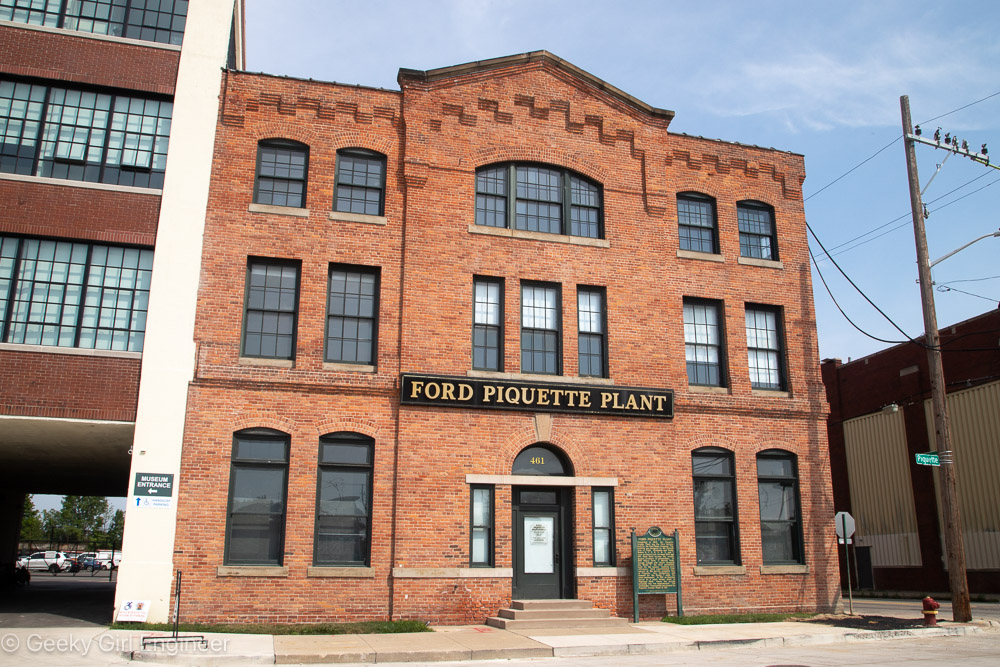
Ford Piquette Plant
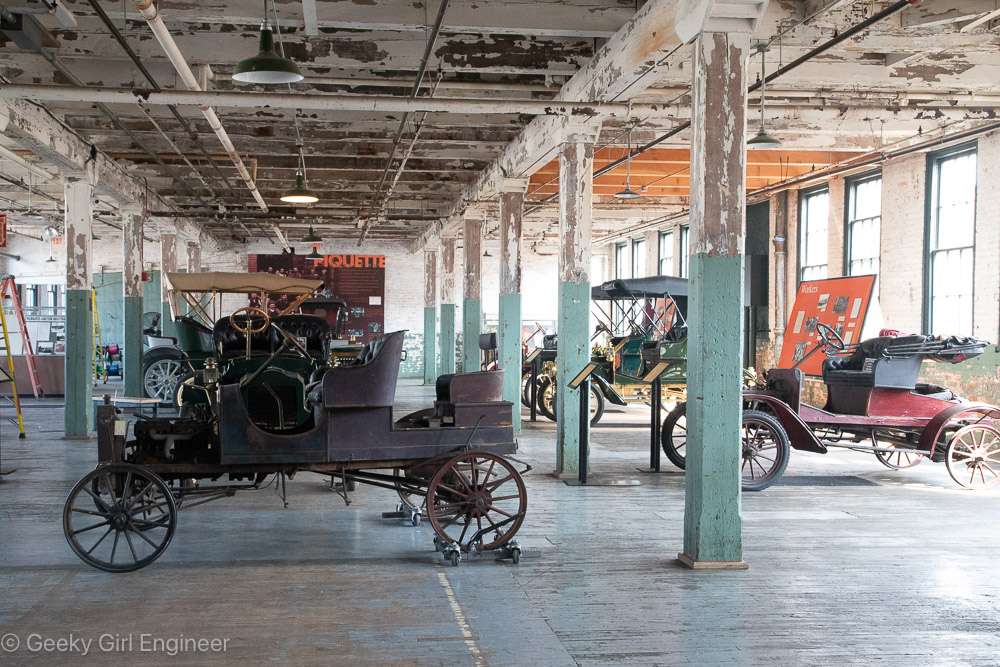
Ford Piquette Plant
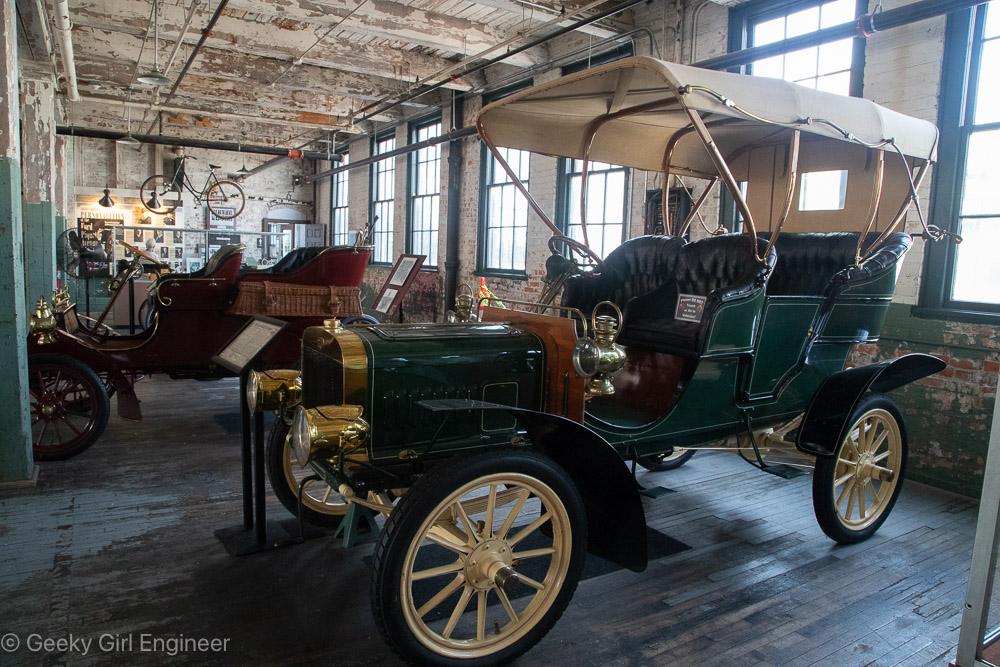
Ford Model B Tonneau
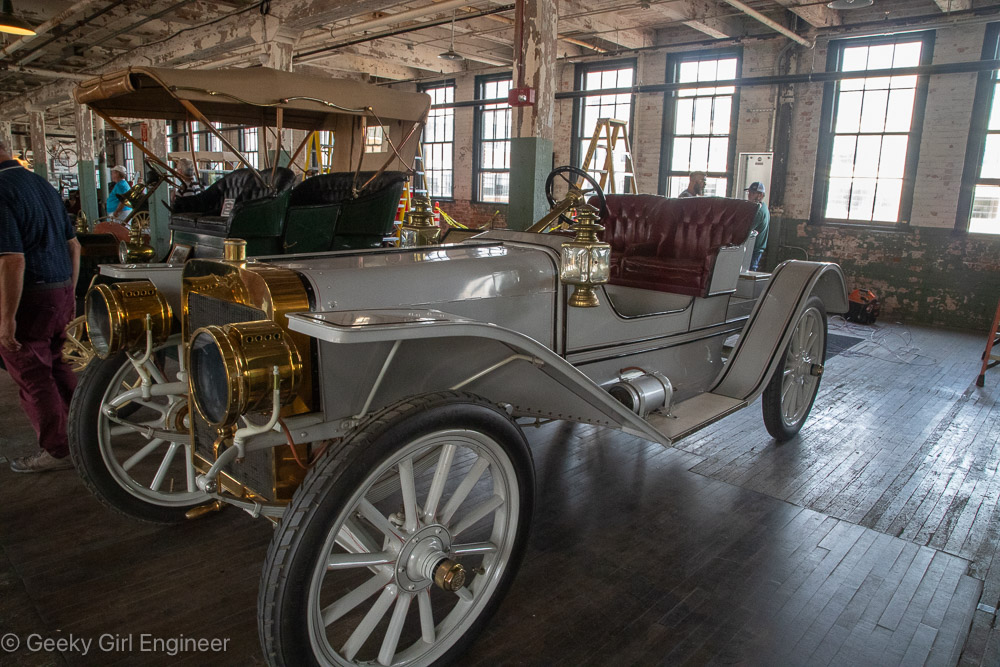
Ford Model (?)
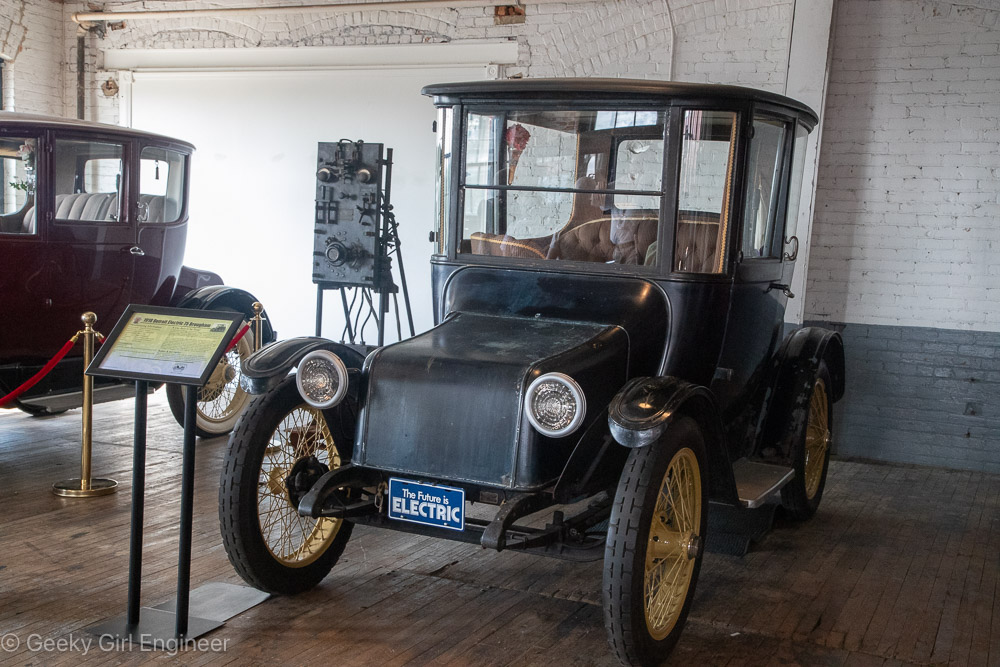
Detroit Electric 75 Brougham
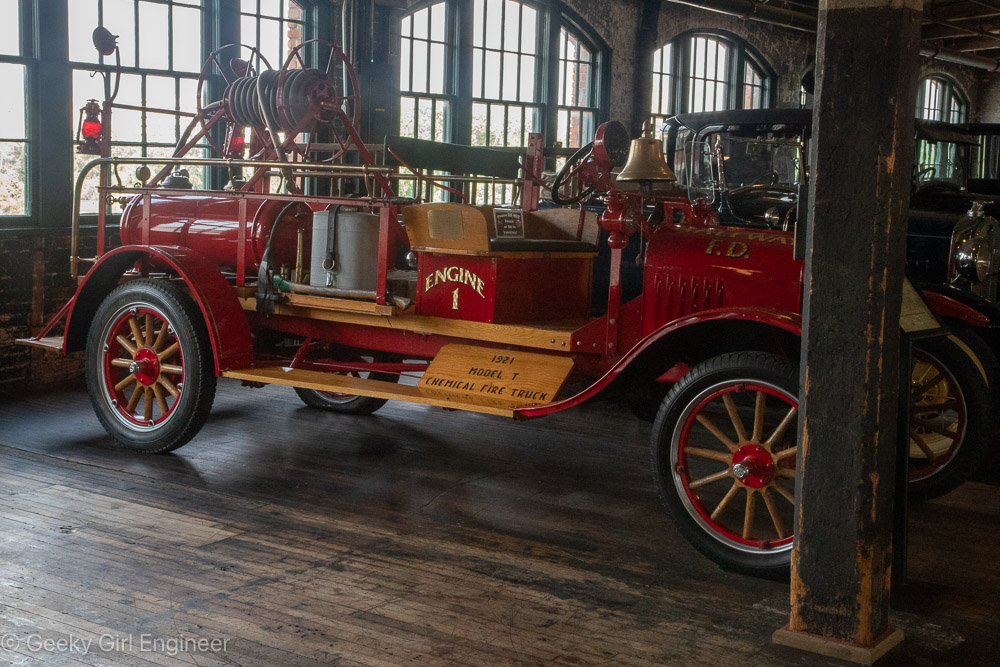
Ford Model T chemical fire truck
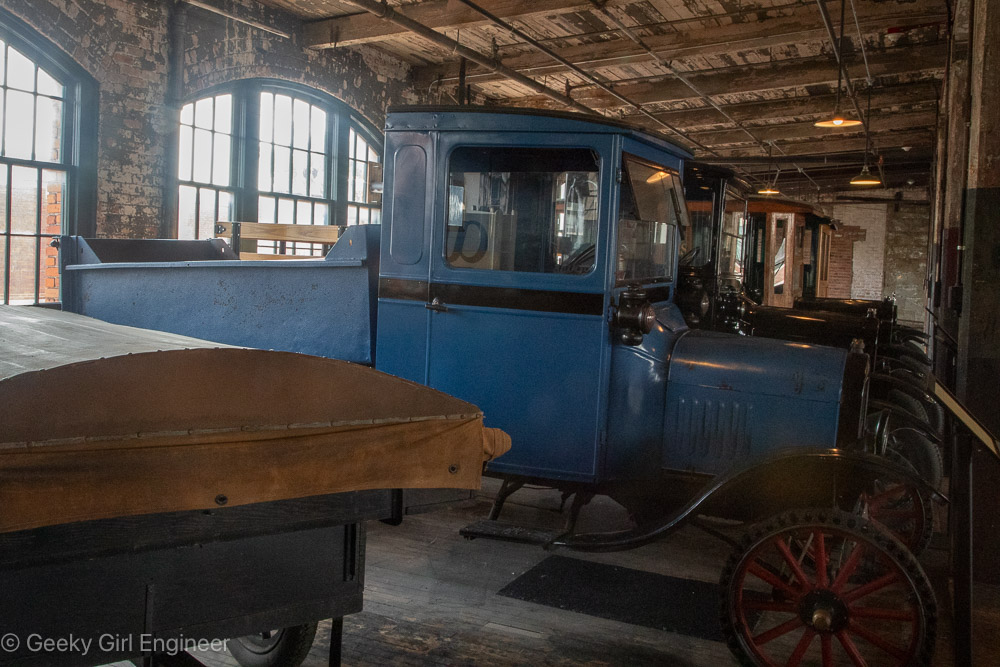
Ford Model T dump truck
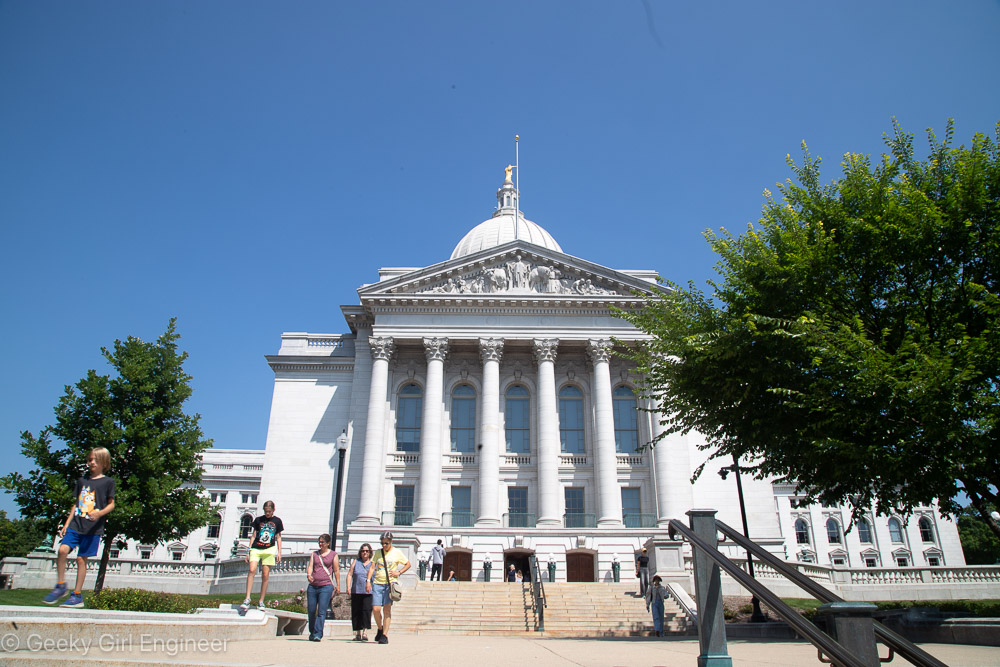
Wisconsin State Capitol

I am in Wisconsin before I start a cruise of the Great Lakes, so I took the opportunity to tour another state capitol. I am sad to report that this tour was one of the worst ones I have taken. Virginia remains the worst state capitol tour I have ever taken. The reason this was bad is first because the Assembly room was closed for some special event, so it could not be toured, nor could you go in the galley. Second, the tour guide was rude, but more importantly, she was not a very good tour guide. More on that later.

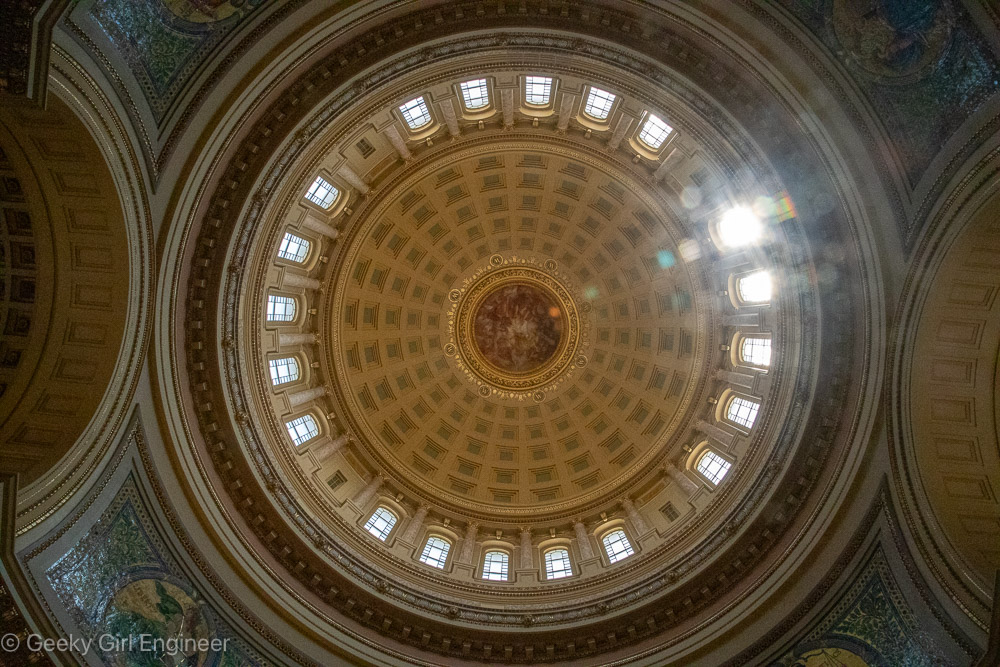
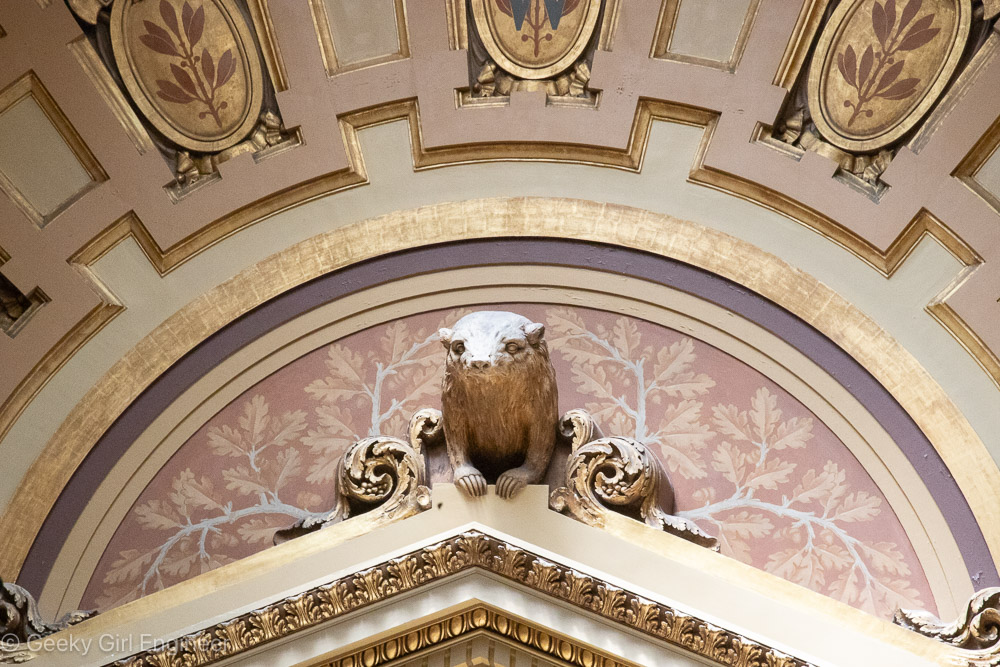
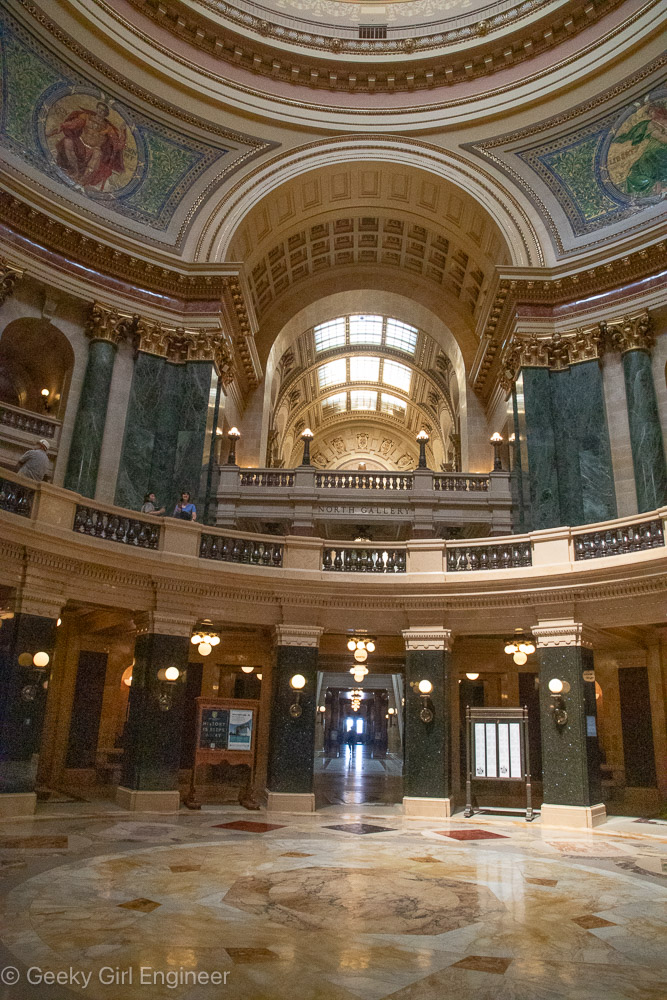
The Wisconsin capitol is similar to many other capitols. It has a large rotunda with decorated dome. It was constructed with a whole lot of beautiful stone, which our tour guide spent a whole lot of time talking about. It has a whole lot of decorations. Some of the decorations clearly had symbolism as our tour guide discussed it, but there was other decorations that the tour guide didn’t discuss and didn’t really allow for questions while walking way too quickly to various rooms. [Hence one of the reasons she was a bad tour guide.] An example of this, is there were some wall decorations featuring leaves and branches of some type, but I couldn’t find out what type and if there was a symbolism for that specific type.

I liked the layout of the building in that it essentially has four wings, and in the four wings are the Assembly, which is the equivalent of the House I think, the Senate, the Supreme Court, and an extra meeting room. Another thing the tour never mentioned was the Governor, and if the Governor has an office or any type of room in the Capitol.

Finally before presenting the photos, I feel the need to explain why I think this tour guide was bad. I have been on enough guided tours, and I personally know enough tour guides, to strongly believe that the number one responsibility of a tour guide is to know where are all the people on your tour are and make sure they can find you and hear you. The guide did not seem to think any of this is true. When we started the tour, she asked if everyone could use the stairs. We all said yes, so we started up the stairs. Very soon after starting, my mom decided that for various reasons, she felt safer taking the elevator. At this point, our guide was already near the top of the stairs, not looking back, and completely out of ear shot. My mom turned around and was able to find a nice police officer who had been near tour desk, and he was able to help her. Meanwhile, I was slowly making my way up the stairs. I can climb them, but I am slow. By the time I got to the top, the tour guide and all the people had not only made it to the top but were nowhere to be seen. I basically had to wander around until I found them, then immediately turned around to try to find the elevator and my mom. She and the police officer came a minute later, and we rejoined the group. When we rejoined the group, it was clear that not only had the tour guide either not noticed or simply did not care that not everyone was there, but she had not stopped talking. Hence my mom and I missed at least five minutes of her tour. About half through the tour, she said she now needed a count of the people on the tour. Why would you wait until halfway through? Perhaps if she had counted at the start, she might notice when people are not able to keep up with her. She also never once bothered to ask if people in the back could hear her. I could go on, but I won’t. It just left a bad impression on me, which is ironic because ever since I arrived in Wisconsin, everyone I have met has been really nice, and when they learn this is my first visit, they have all volunteered information of places to visit and where to eat.
Wisonsin State Capitol

Rotunda

Dome

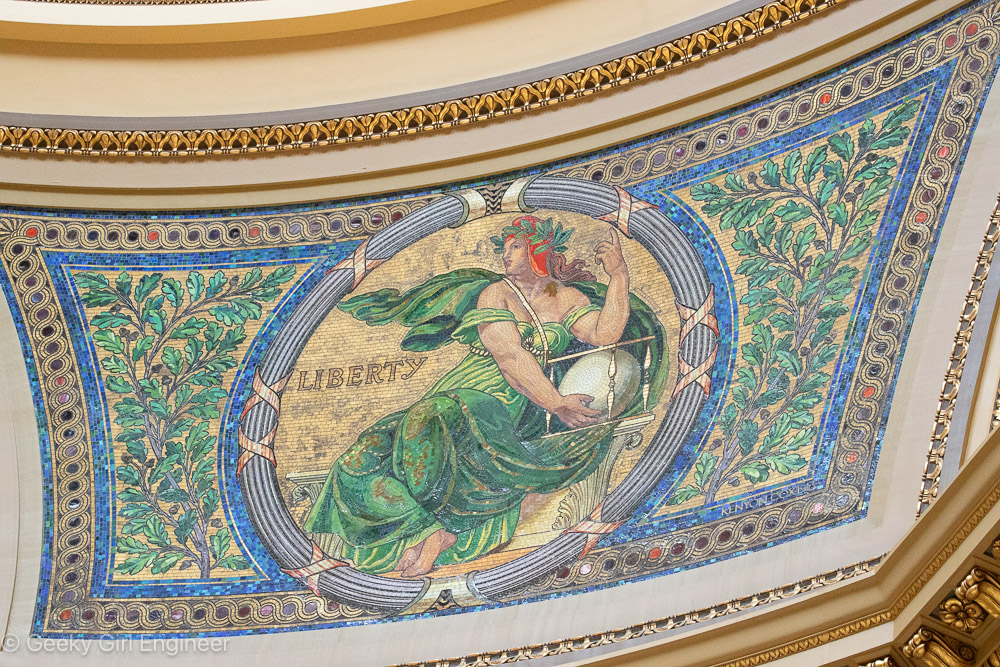
Just below the dome, on four sides are fours beautiful glass mosaics representing the four parts of government: Liberty (shown below), Justice, Government, and Legislation.

Liberty mosaic

Badger statue

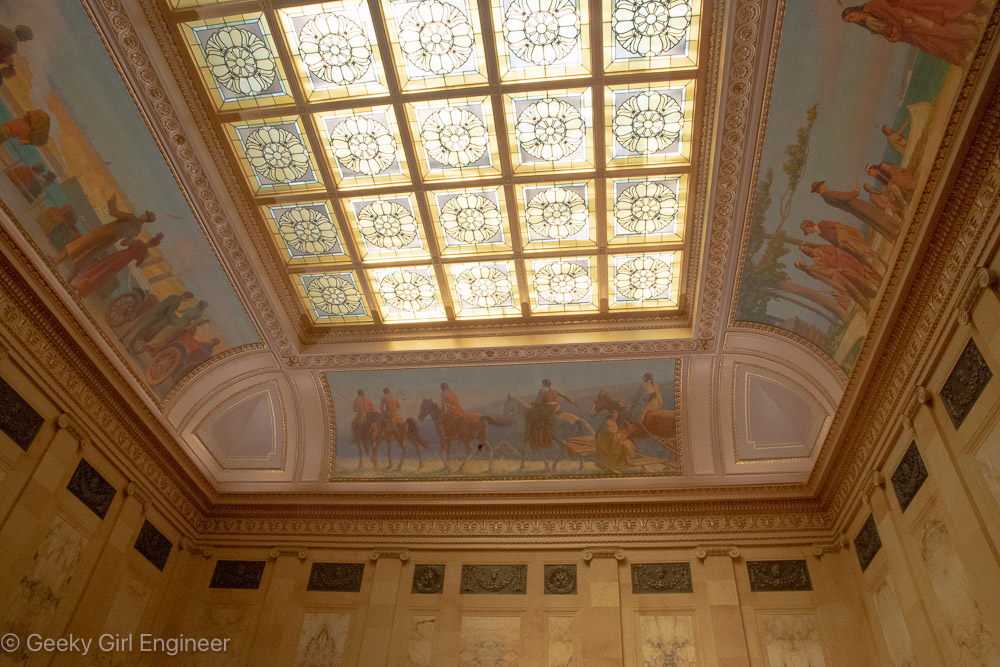
There is an extra meeting room that was evidently designed as an extra room. All the murals depict transportation.

Meeting room

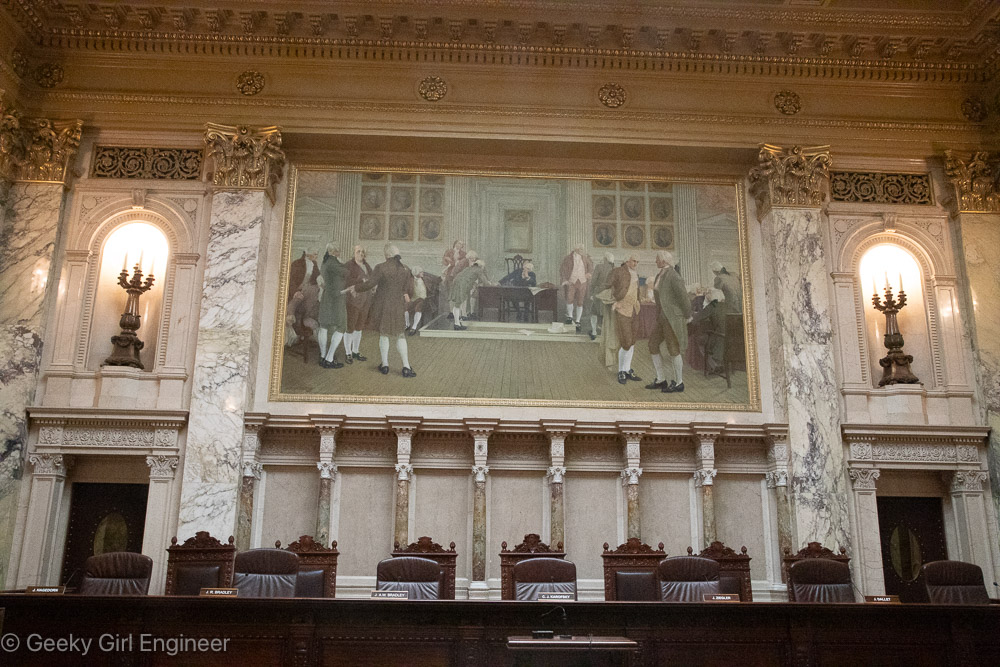
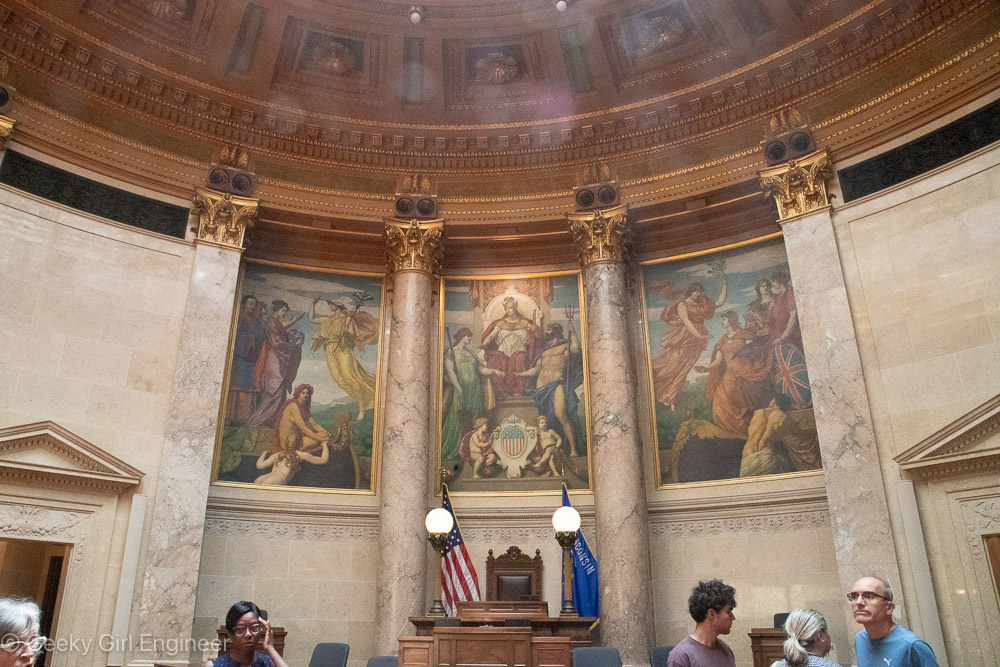
In the Supreme Court room, there are three murals that depict scenes when great decisions were made.

Supreme Court

Senate Chambers

Pendleton Underground

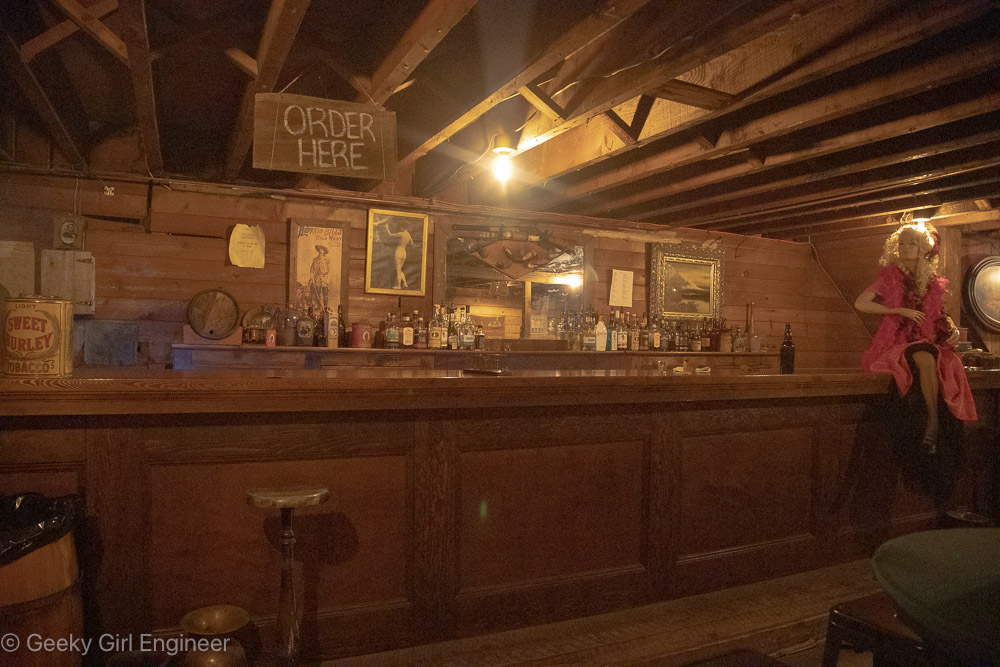
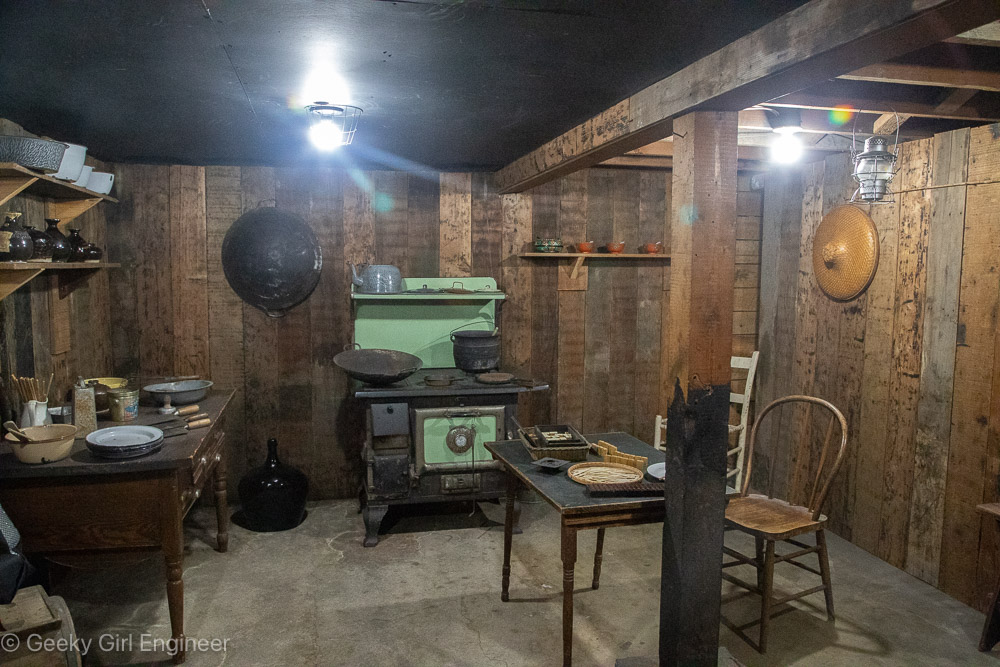
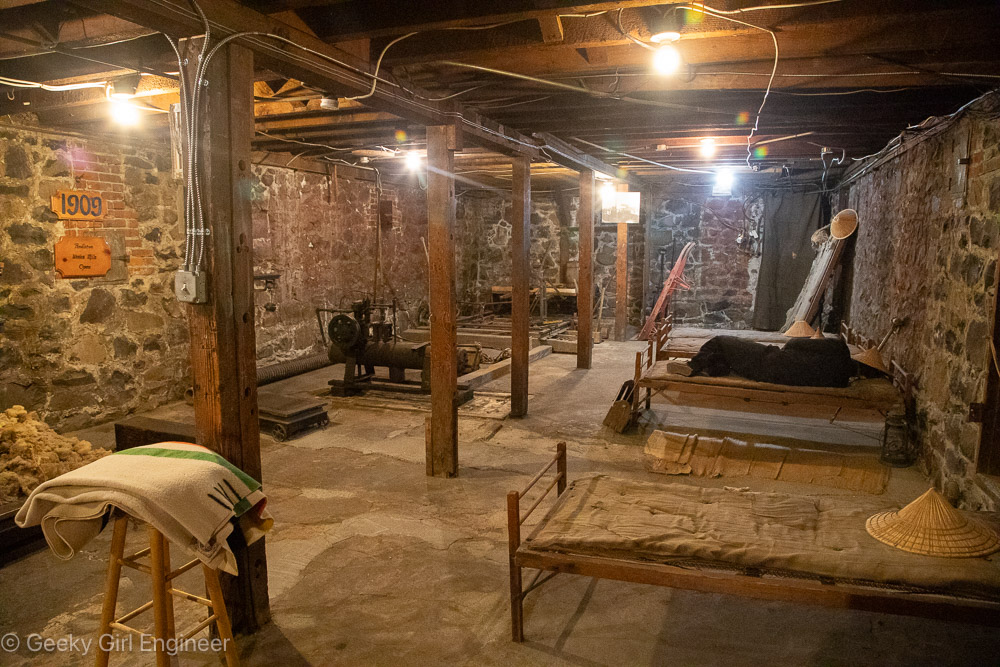
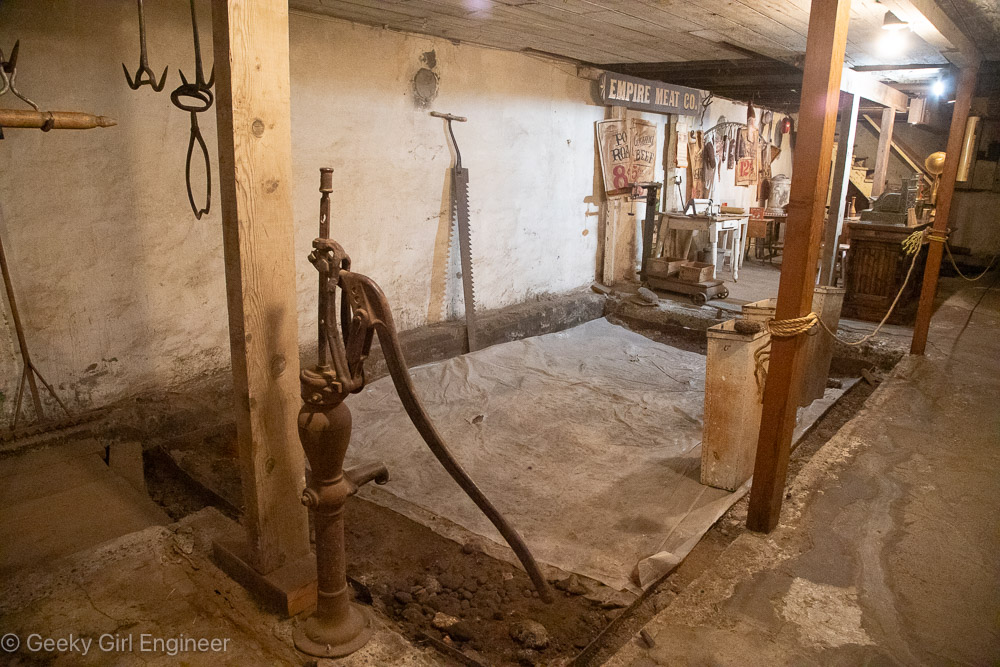
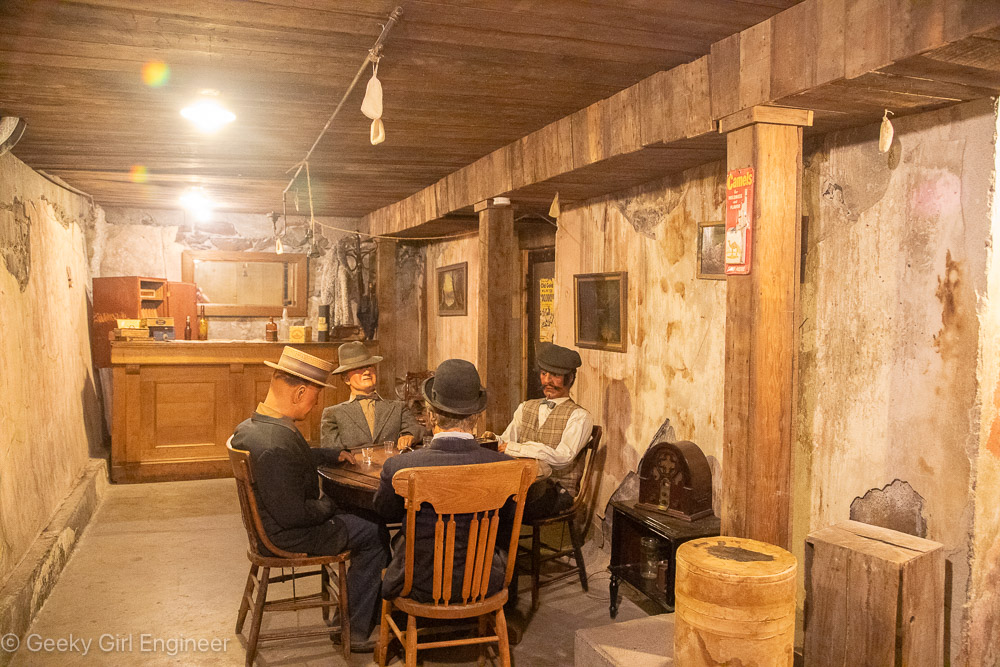
As part of the cruise of the Columbia and Snake Rivers that I am on, today some of us went on an excursion to Pendleton, Oregon. The main purpose of the excursion was to tour an underground portion of Pendleton. They started building portions of the underground in the 1800s. Underground tunnels allowed them to safely carry gold and other goods from one location to another to prevent theft. Later many bars were below ground as well as businesses. We were shown an area where a Chinese man had a thriving business washing and ironing people’s laundry. There was an old shed of sorts that was well insulated to store ice for an ice cream parlor above. There was also of course the expected speak easy used during Prohibition.
I’ve taken a few underground tours before, similar to this one. This one felt somewhat disjointed. It covered numerous time periods. They also had some examples of things that weren’t actually underground, but I guess they needed to fill the area, and also show a little above ground history. However, it got somewhat confusing understanding what had and had not actually been underground.

Bar

Example of living area

Example of sleeping area and equipment used for trade

Groundwater pump and icemaking area used by well known butchers

Speak easy with moth balls hanging from ceiling to overpower smell of alcohol

Hanford Reactor B

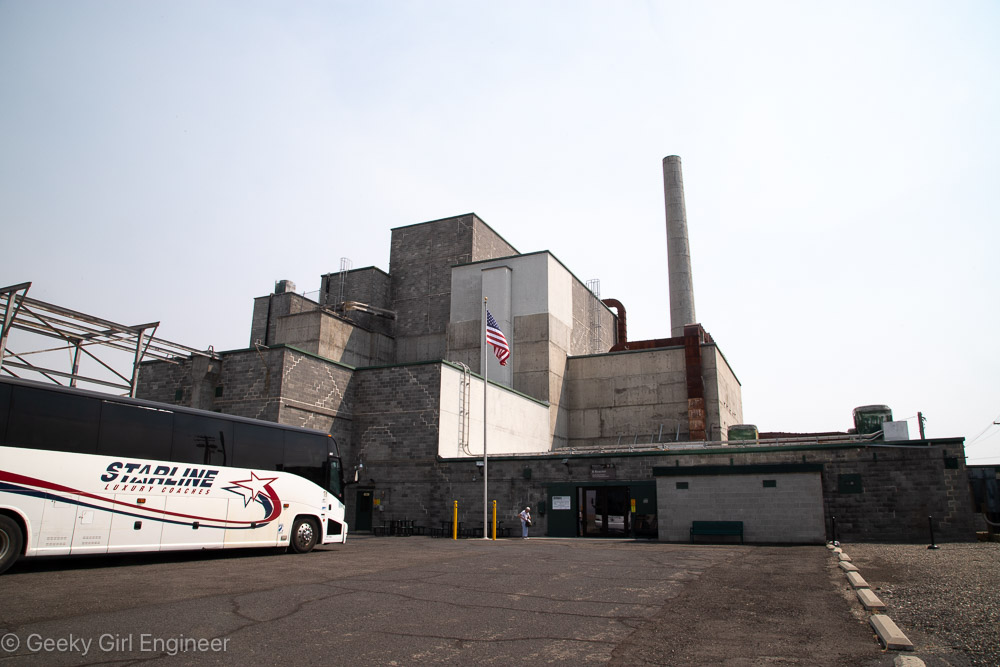
Yesterday I went on what is pretty much a nerd tour of Hanford Reactor B. Hanford is the Department of Energy facility where they made plutonium to make nuclear bombs, and Reactor B was the first reactor built during World War II to make plutonium. It is now a National Historic Landmark. The tour included a long bus ride to the site, which gives you a better understanding of just how big Hanford is. The tour then includes several hours to wander around the building, and several presentations by docents. I still can’t quite get over the fact that the public can tour a building where they used to make plutonium, which is rather radioactive and toxic.

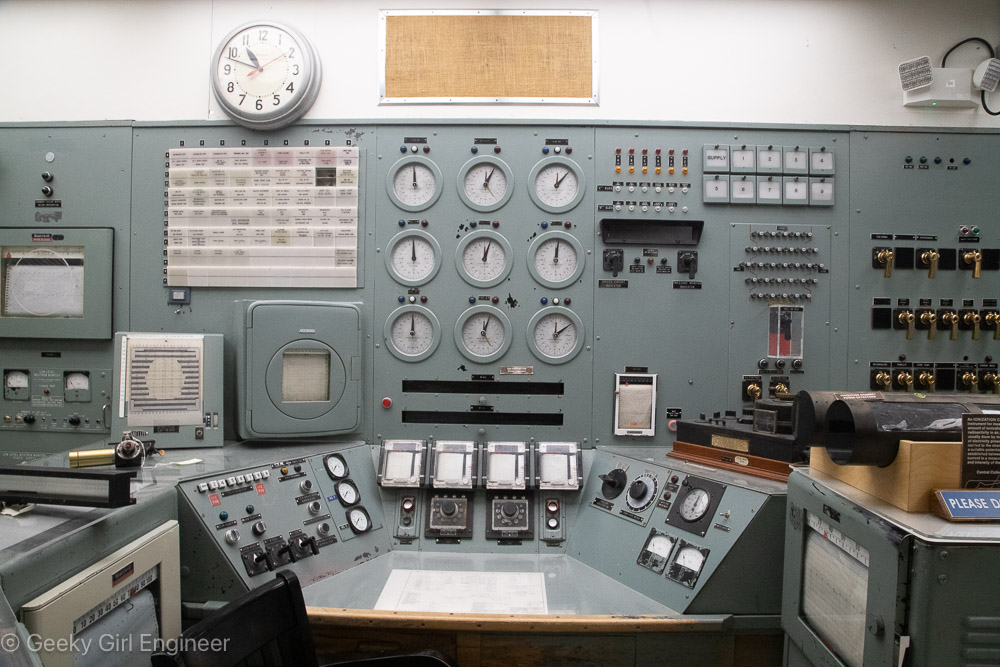
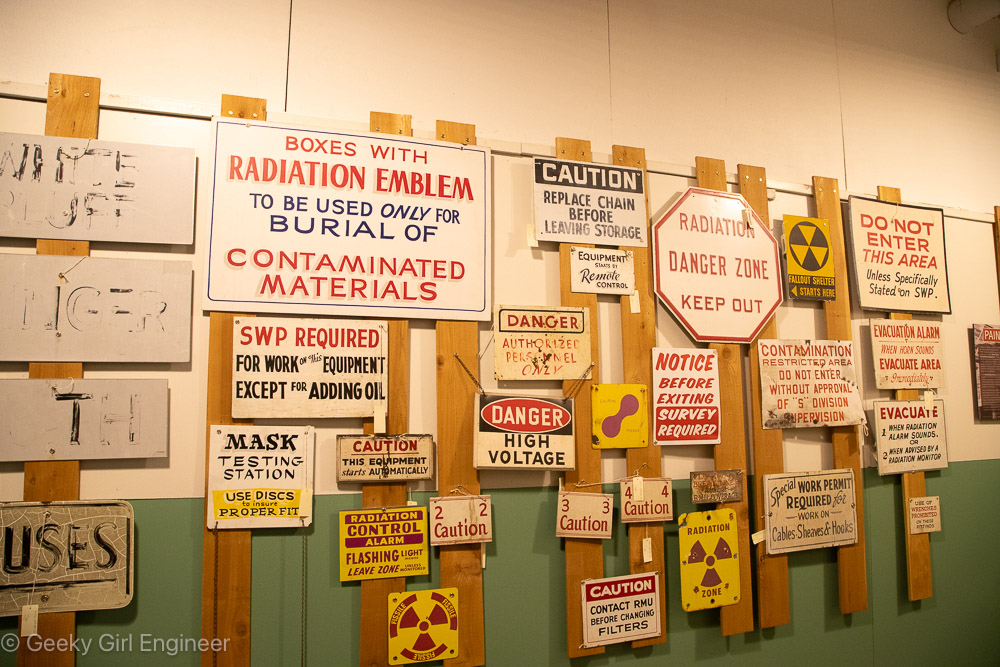
The science and engineering behind the facility was impressive, and I also enjoyed looking at 1940s era technology and signage. I don’t if it was that era, or the facility, or what, but there were some fun signs all over the place. There were also some hidden historical signs, like all the clocks were stopped at 10:48, which was time on the night of September 26, 1944 when the reactor achieved fission for the first time. I don’t know why, but I was amused that almost every room had a “broom” station, which were pegs on the wall where a broom and dustpan were hung. I think I only saw one room where there was actually a broom in its proper station. I guess they do less sweeping now, or they have moved onto vacuum technology.

I really appreciated that you could wander around and spend your time looking at everything. Most of the areas have decent signage to indicate what you are looking at, although the engineer that I am, I would prefer perhaps a bit more detail. My one criticism of the tour was that they completed glossed over the amount of environmental contamination created at Hanford. In an intro video we watched before taking the tour, they briefly mention that waste was buried to be dealt with later. The docent at one point said they are cleaning up the site, which is an understatement. I know enough about the site to feel like they just didn’t want to admit the contamination they caused. Signs of remediation are present in the building. There were plenty of pipes that obviously had asbestos, and the pipes had clearly been abated to encapsulate the asbestos, so it would not become airborne and thus a hazard. There were dosimeters on the walls everywhere, which were clearly been analyzed frequently.

Hanford Reactor B

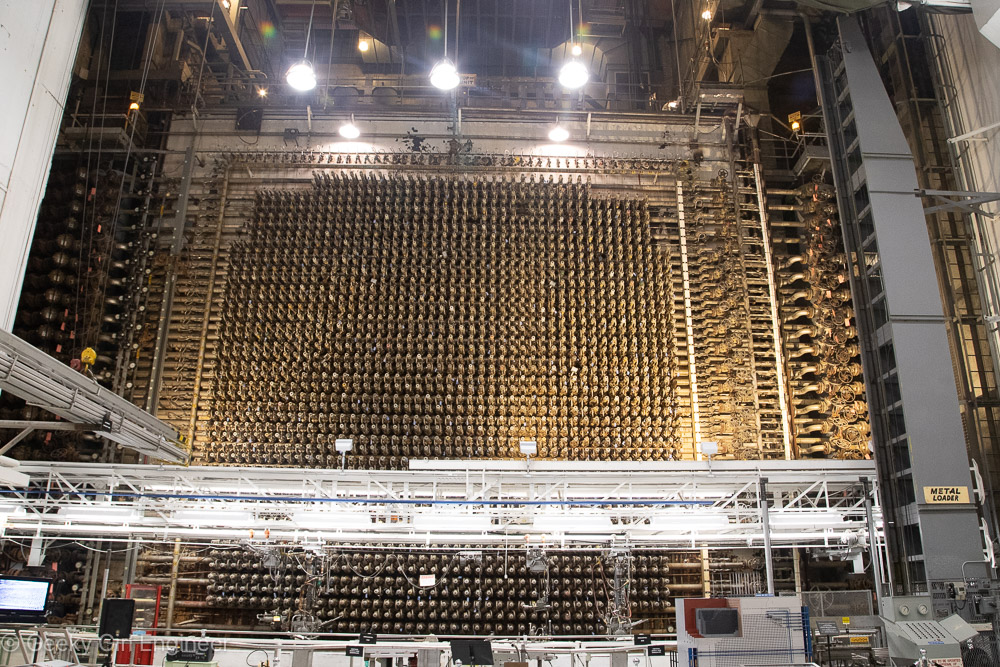
Front Face where fuel rods were loaded into reactor, which is behind the front face

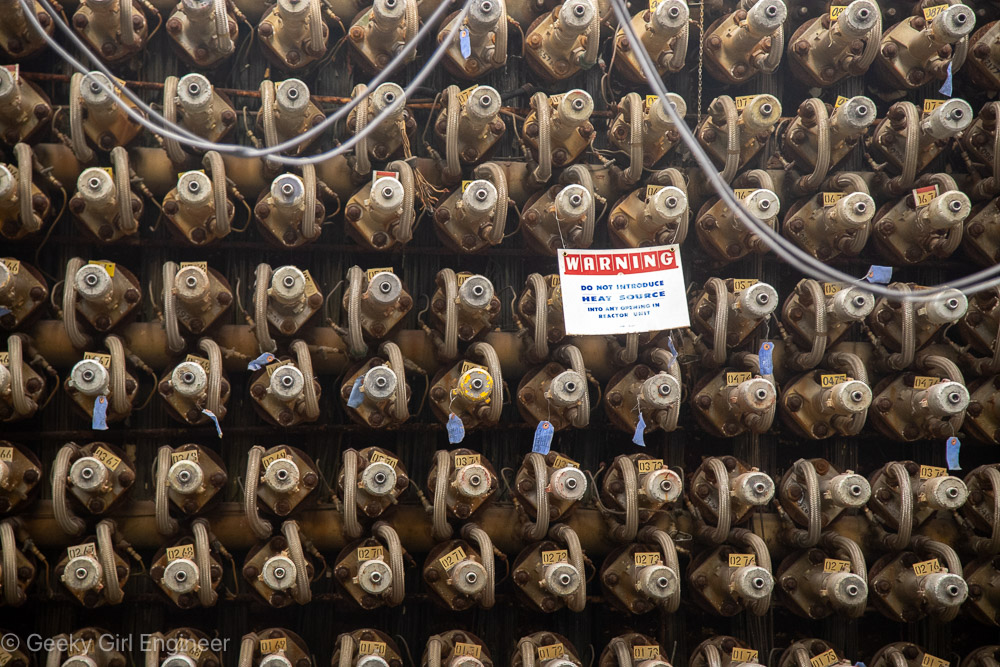
Warning Do Not Introduce Heat Source into any opening in reactor unit

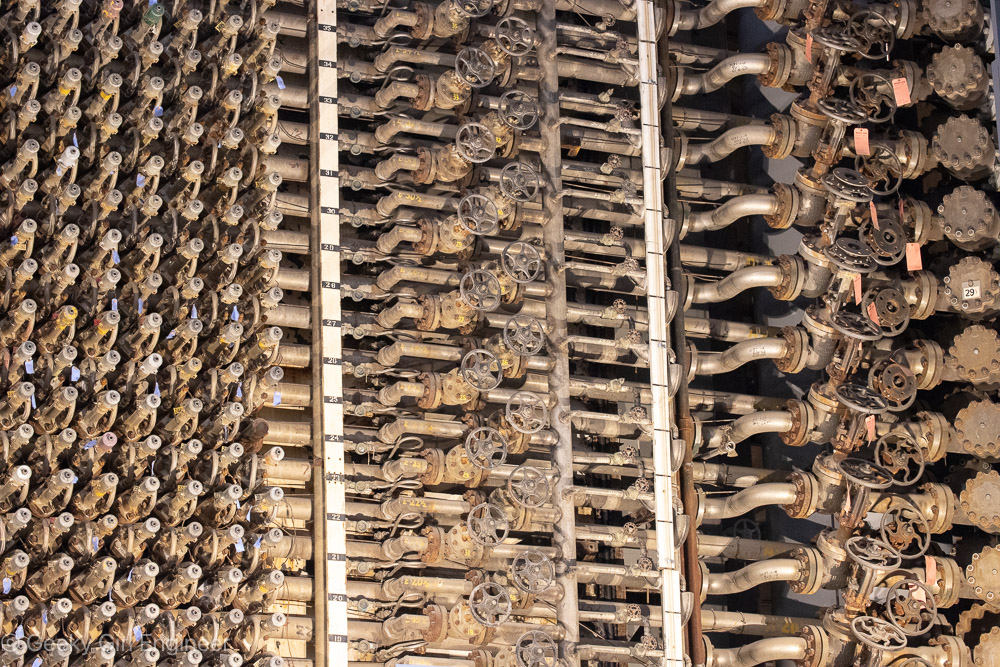
Front face close up fittings

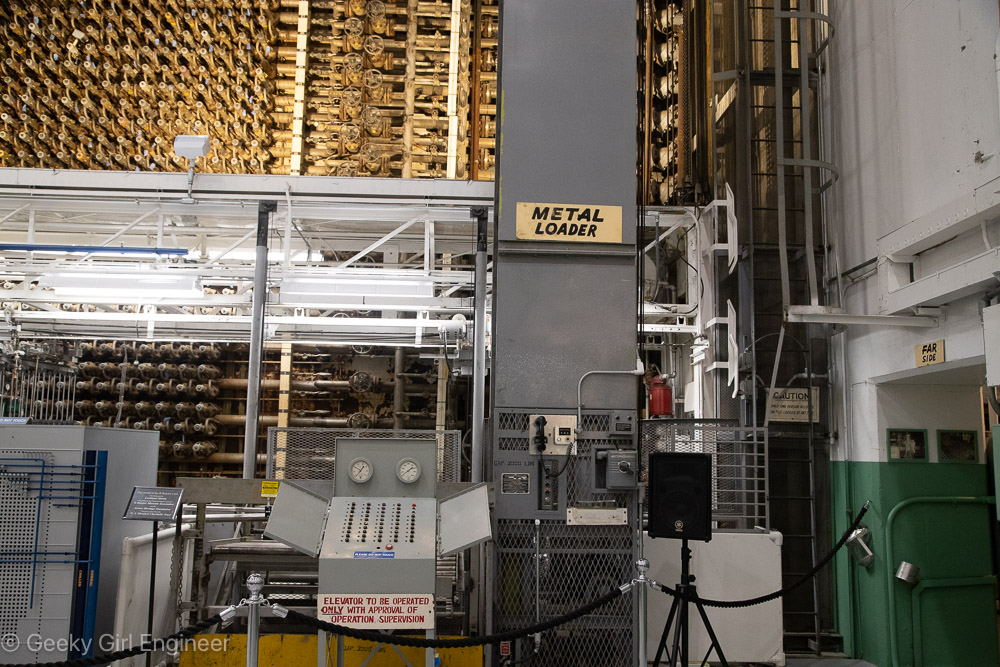
For security reasons, it was called the metal loader instead of uranium loader

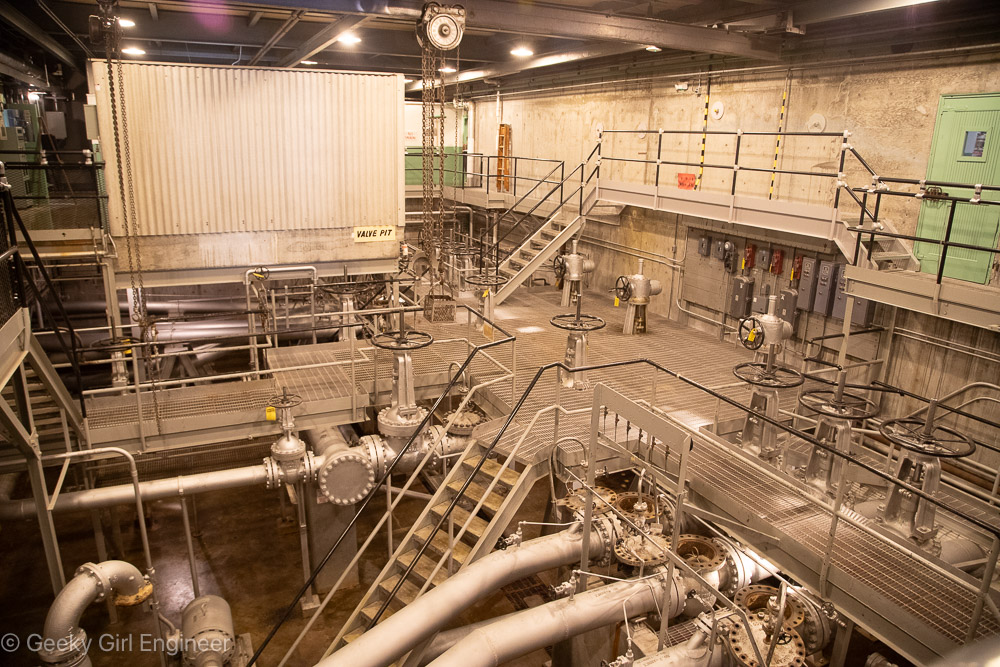
Valve Pit Room; notice in lower right, tops have been removed from access openings; tops were removed at Russian inspectors’ request to prove no water was going through pipes as part of treaty to reduce nuclear weapons

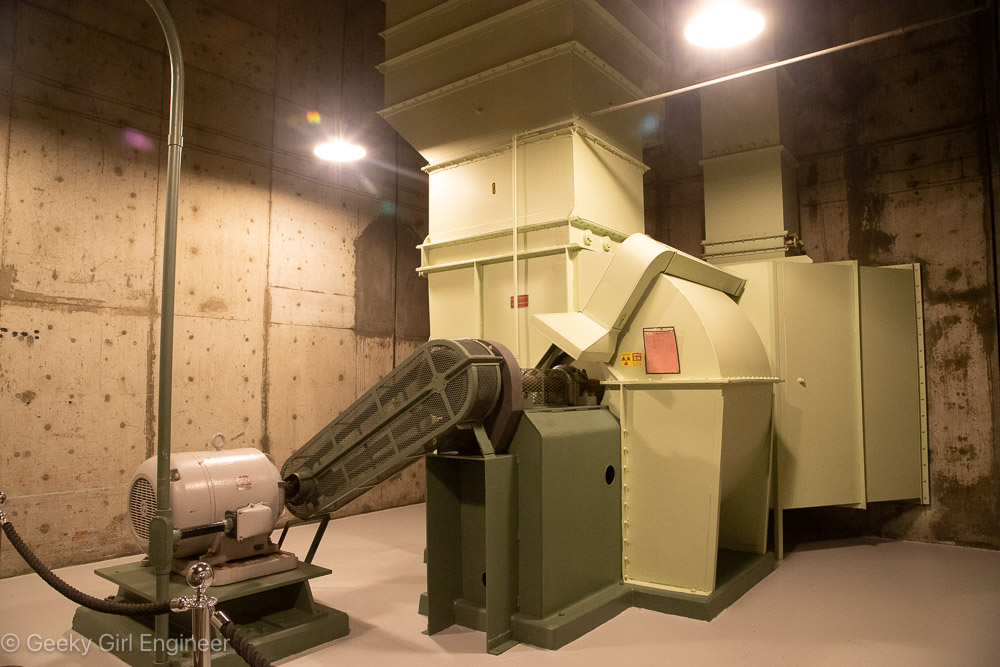
Exhaust Fan

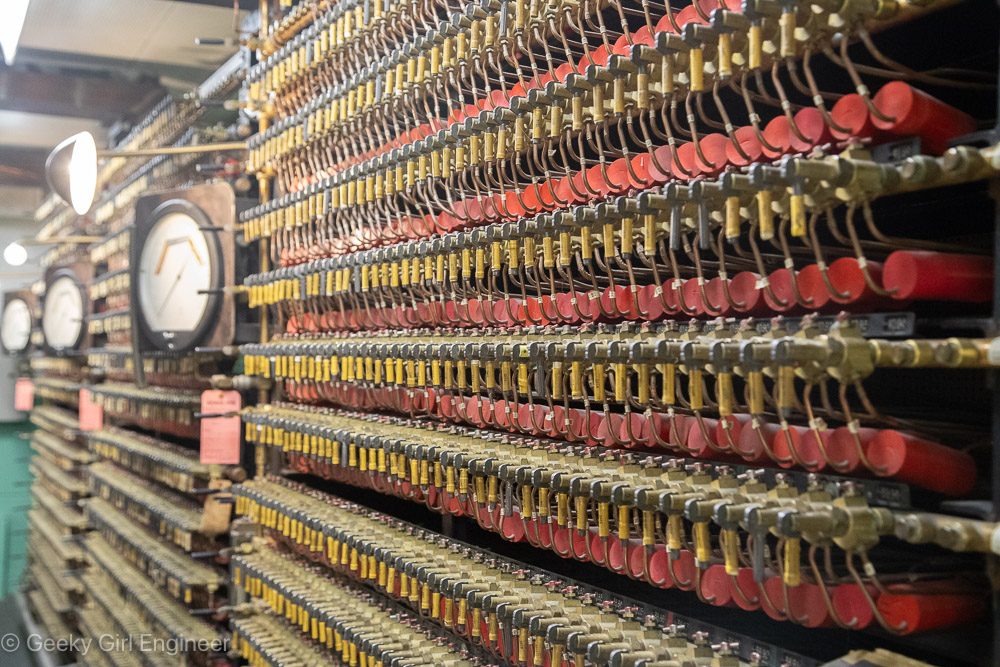
Wall of something in control room

Control Room, telephone switchboard equipment was used to monitoring equipment

Control Room where operator sat

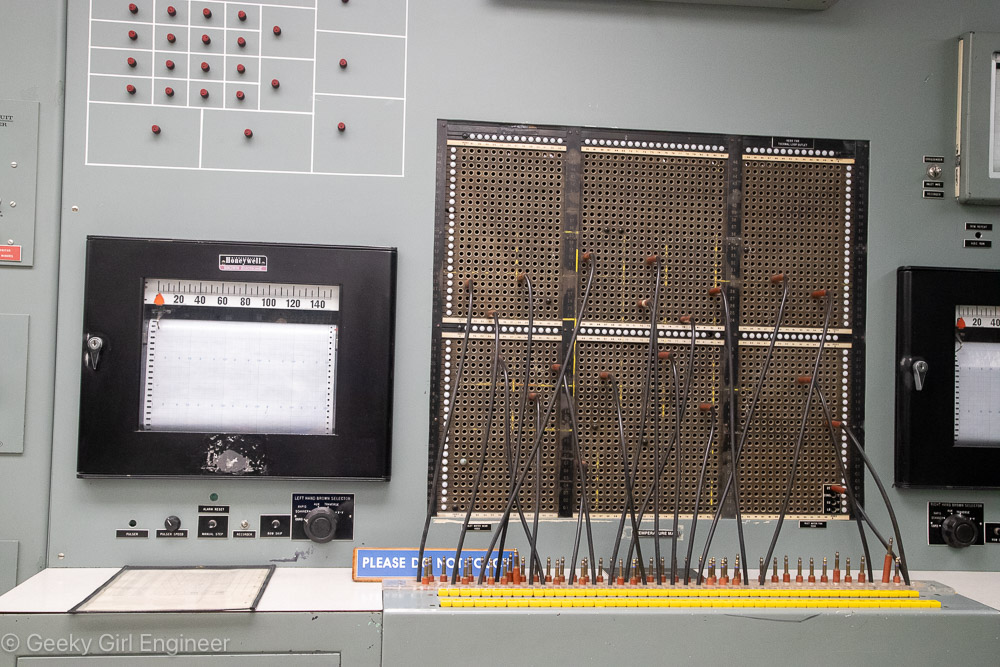
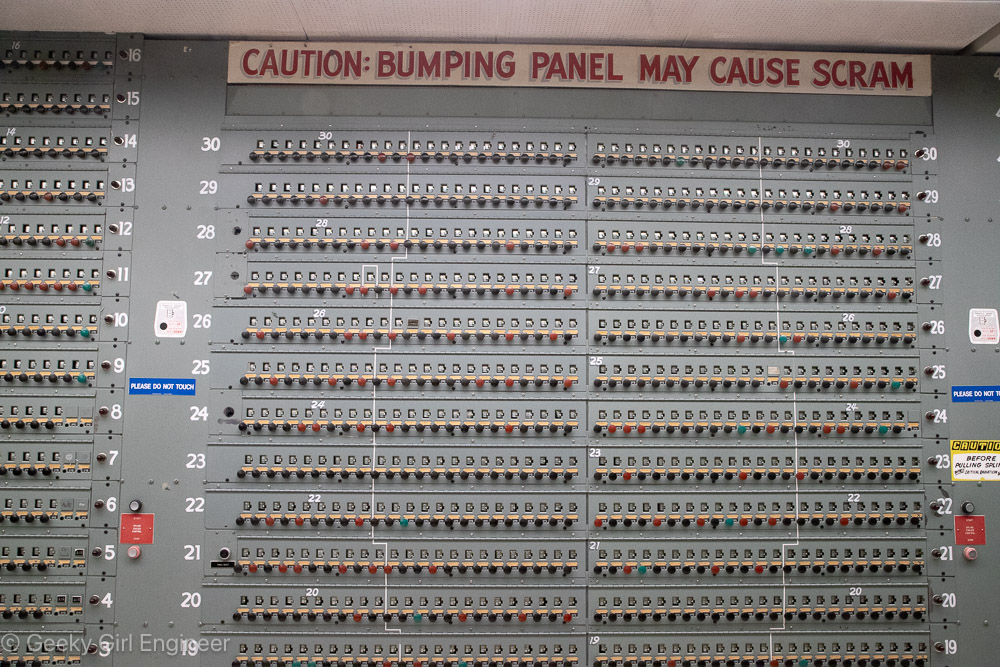
Control room board with warning “Caution: bumping panel may cause scram”

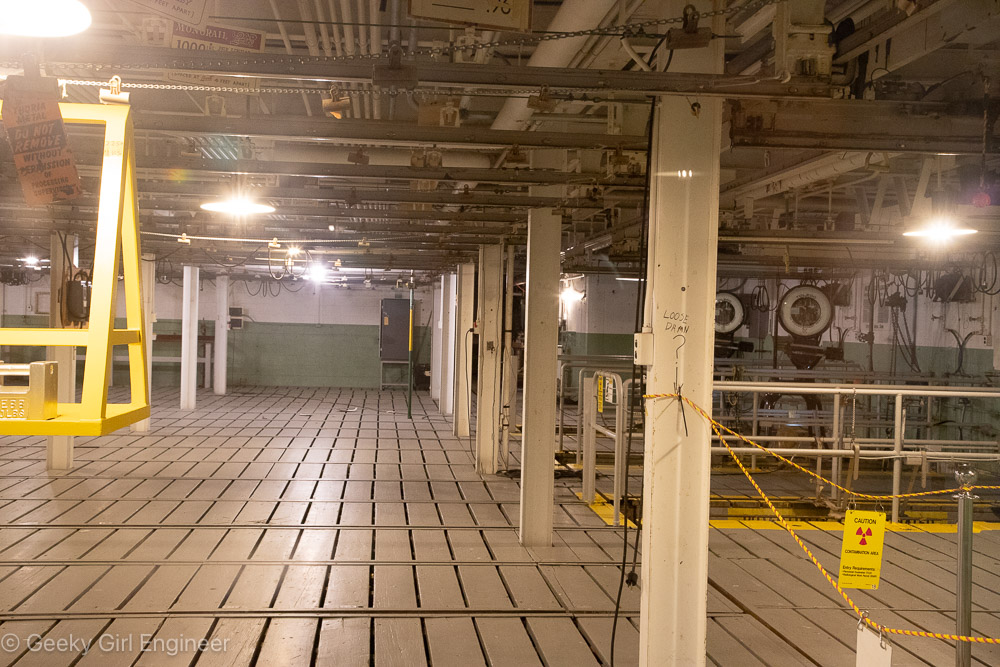
Fuel Storage Basin, there used to be water underneath the wooden boards where the used fuel was stored temporarily 

Wall of old signs

Old sign (my favorite)

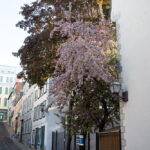
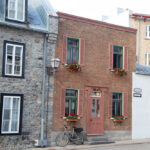
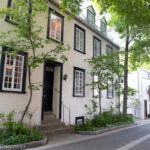
Old Quebec City

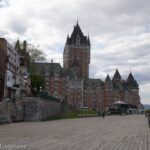
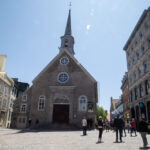
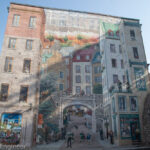
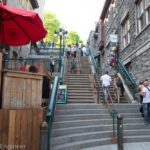
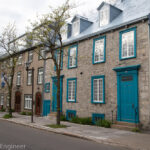
I have been in old Quebec City for three full days, and it has been a lovely visit. Old Quebec is compact and walkable with the exception of the fact that old Quebec is really just a series of stairs and slopes. Thus something may be just four blocks away, but it is also the equivalent of eight stories higher, so plan accordingly. The old town is surrounded by its original fortification walls, with a citadel at the highest point. Many of the streets are cobblestone, and most of the buildings are clearly original.

National Assembly of Quebec

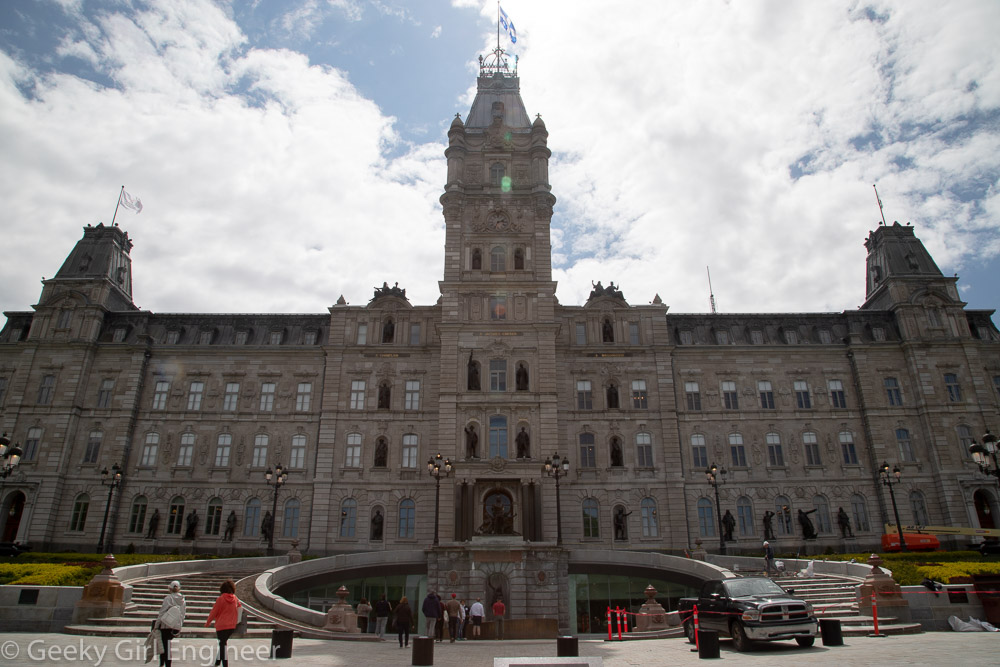
I have noted before that I want to see all the U.S. state capitols. I am in Quebec, so I decided to see its provincial capitol and add that to my list. They call their capitol the National Assembly of Quebec. It consists of one chamber. They used to also have the Legislature Council, which was akin to the British House of Lords. I am sure it was explained on the tour why and when they got rid of it, but I missed it. In any event, the current capitol is the fourth one. I have noticed a theme with U.S. state capitols that they are not in the original buildings. In many cases, they need a bigger building, but in many cases, the capitol burned down. Quebec has a combination of those reasons. The first one was too small, and the second and third buildings burned down. The current building also was a bit too small evidently as they added onto it. We only saw a small portion of the building, and the new entrance for visitors is underground and then connects to a new building, which connects to the old building.

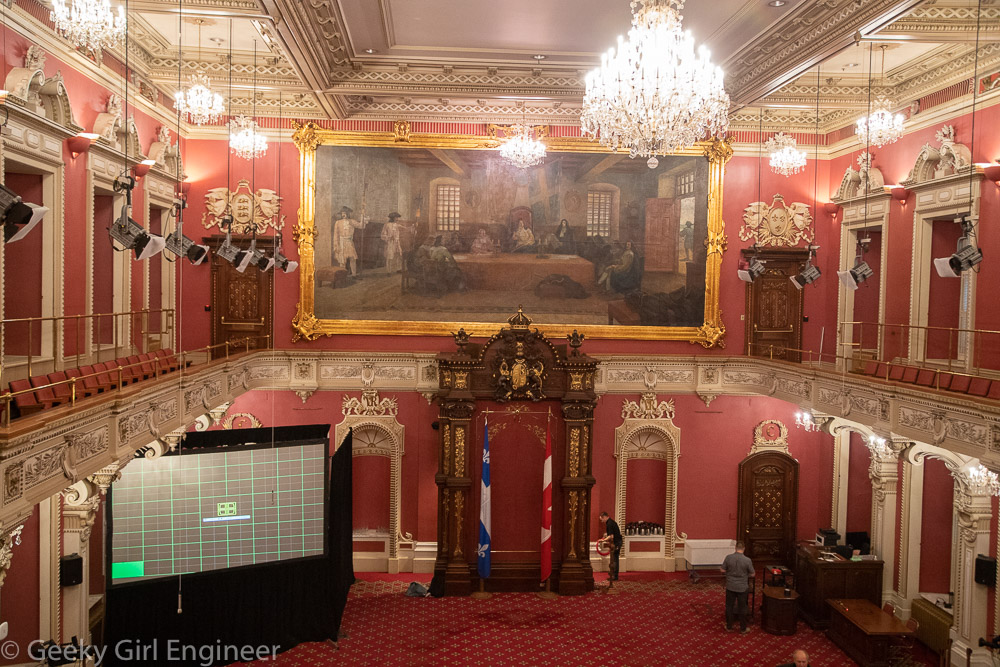
The building is very French in style. Inside, there is symbolism one would expect, including French and British. The chambers are modeled after the British House of Commons and House of Lords. My favorite bit of trivia I learned was that the National Assembly room was originally green like the House of Commons, but when proceedings started being televised, the politicians didn’t like the way they looked with all the green in the room, so the room was repainted blue with all other accents changed from green to blue. The blue works well with the Quebec flag, but it wasn’t changed because of the flag. It was changed because politicians didn’t think they looked good with a green background. The two chambers are mirror images, except the color, artwork, and furniture. They wouldn’t let us take photos in the National Assembly room, which really disappointed me. They had photos of each room outside, so I am including a photo of their photo.

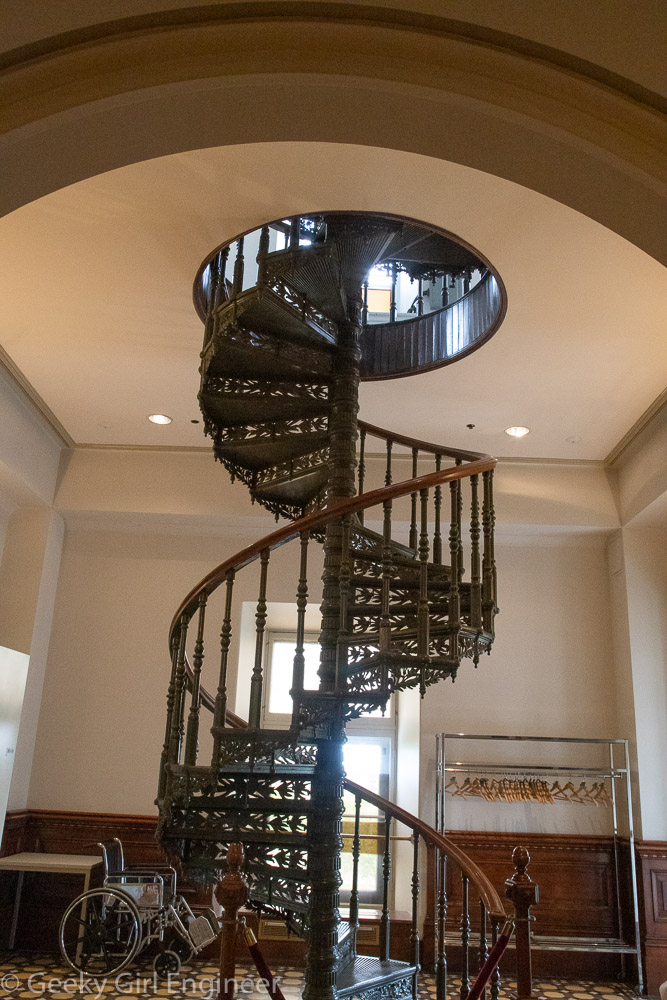
National Assembly of Quebec, circular stairs was original entrance to building

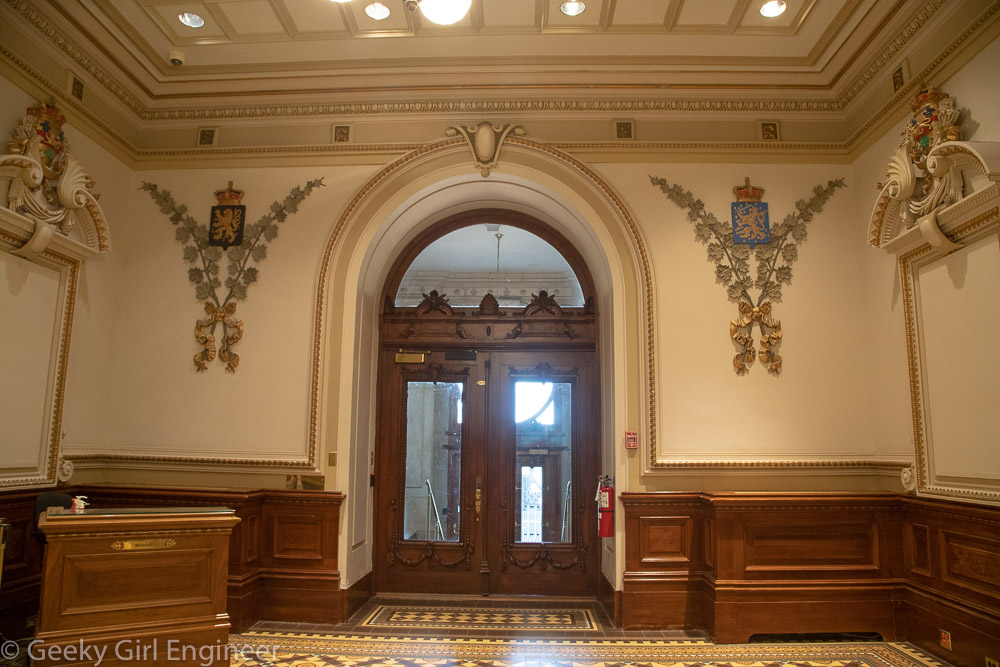
Original entrance to the building with English coat of arms on the wall with maple leaves

French coat of arms with maple leaves, along the ceiling are an English rose, Scottish thistle, and Irish shamrock

Entrance to restaurant in new part of building

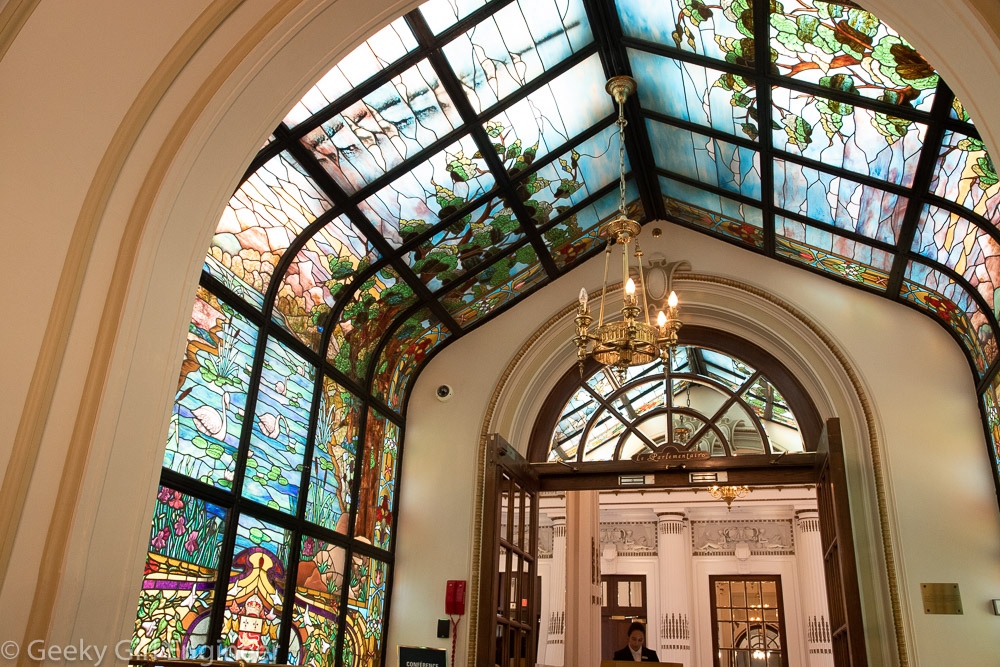
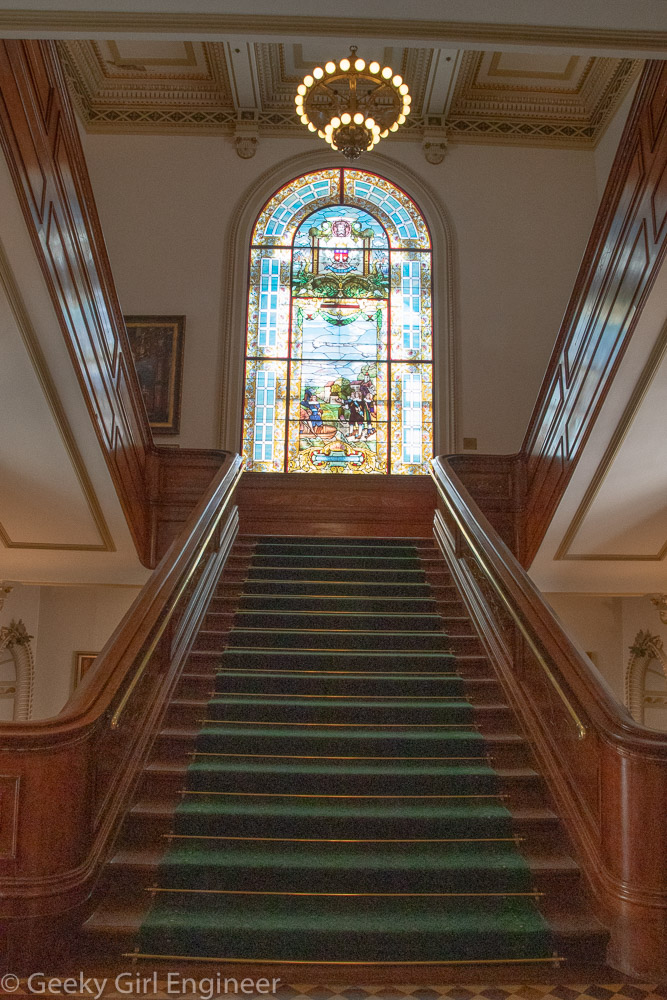
Stained glass in stairwell

Legislature Council room which is now used as a hearing room, conference room, or for presentations

Photo of National Assembly room; they wouldn’t let us take photos inside

Stairwell to tower

Tunnel connecting new entrance to original building with light art

Montreal Museum of Archaeology and History

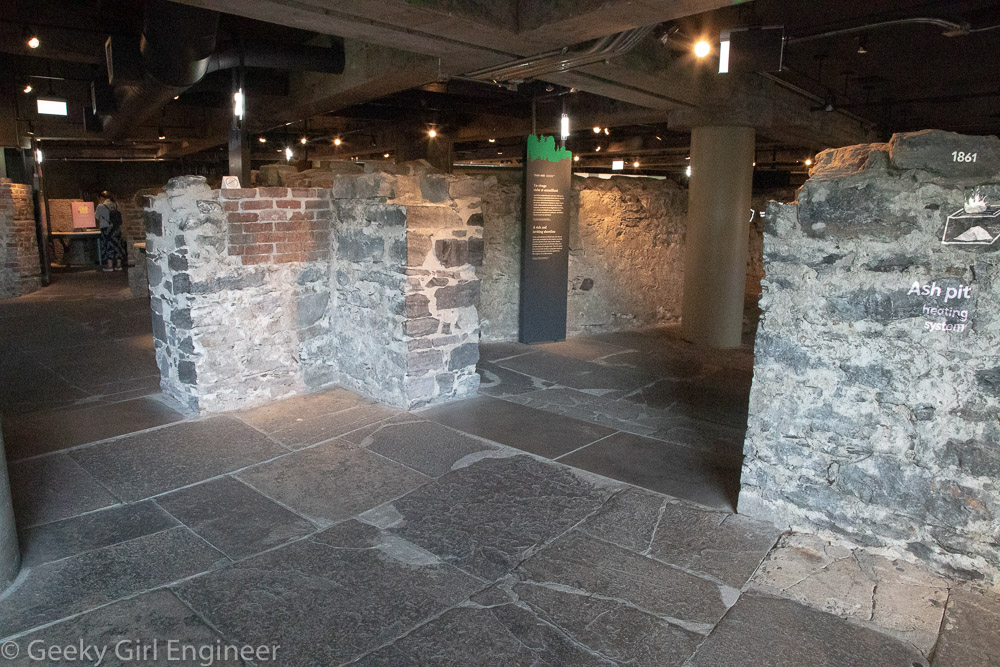
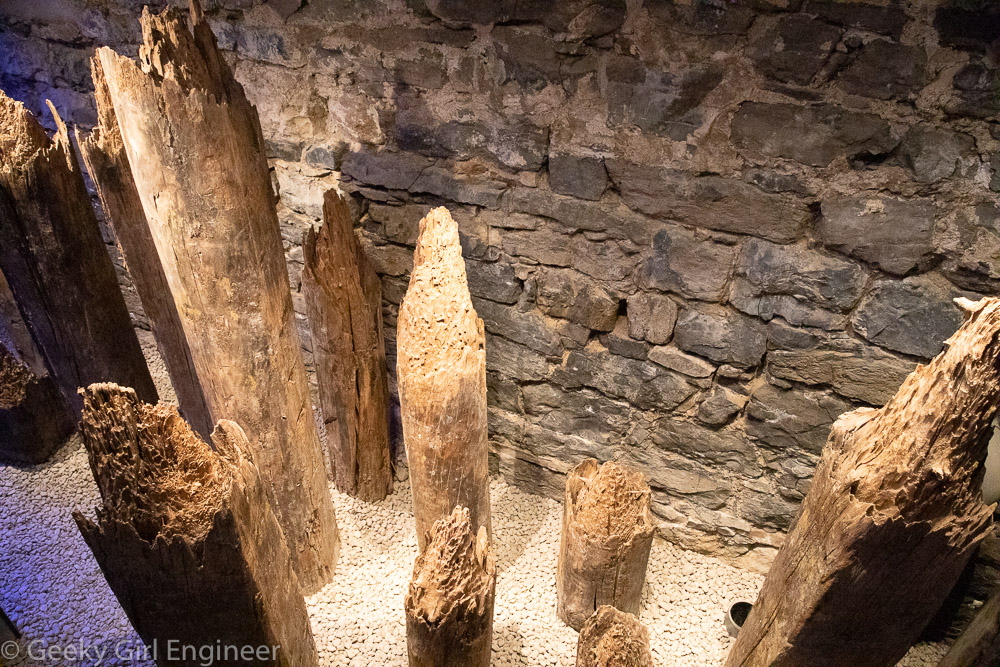
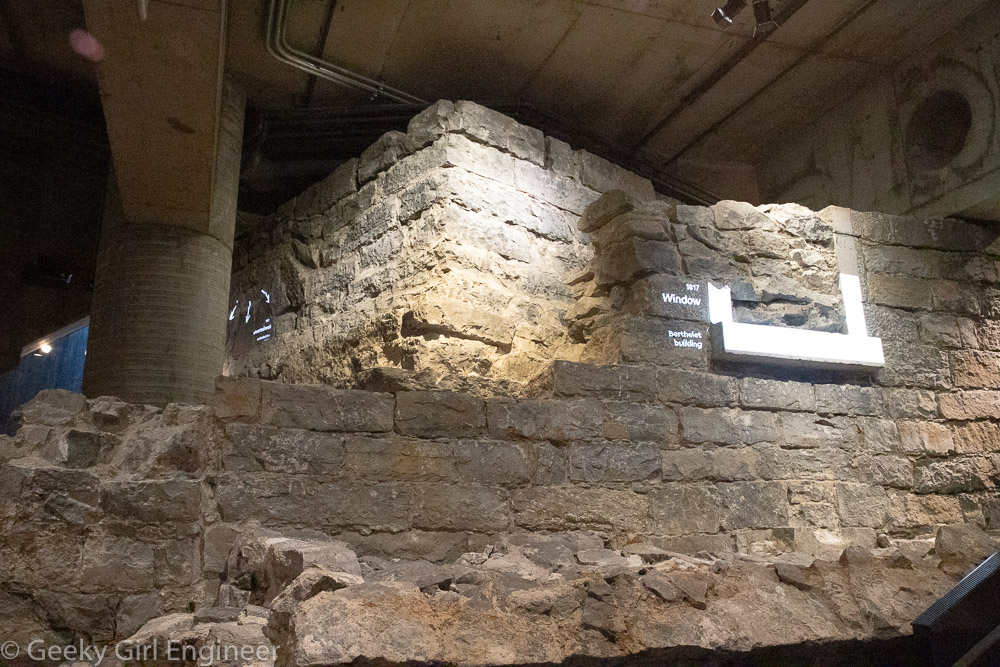
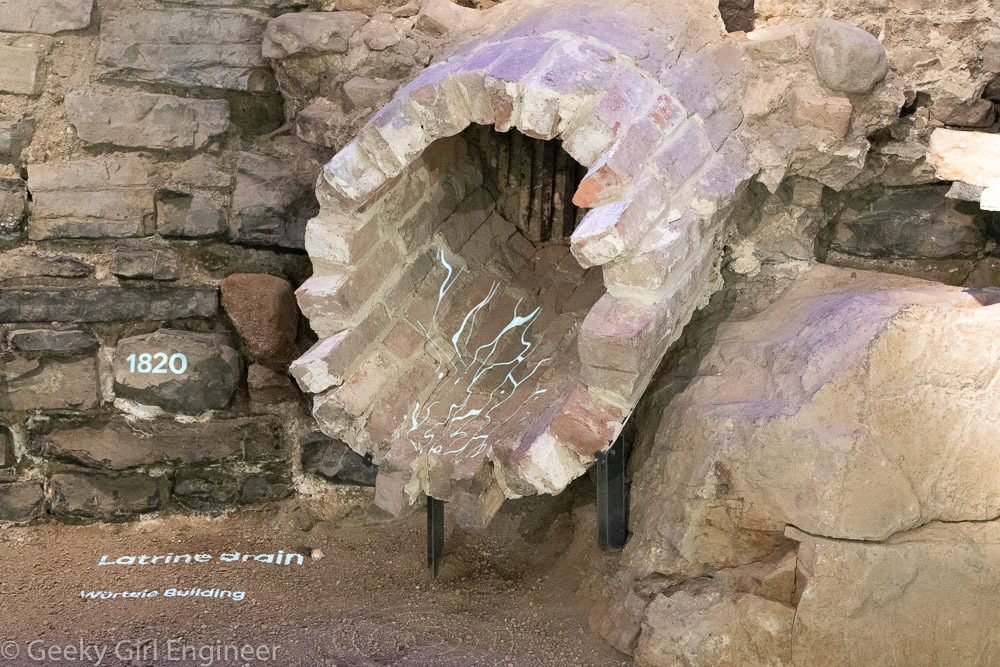
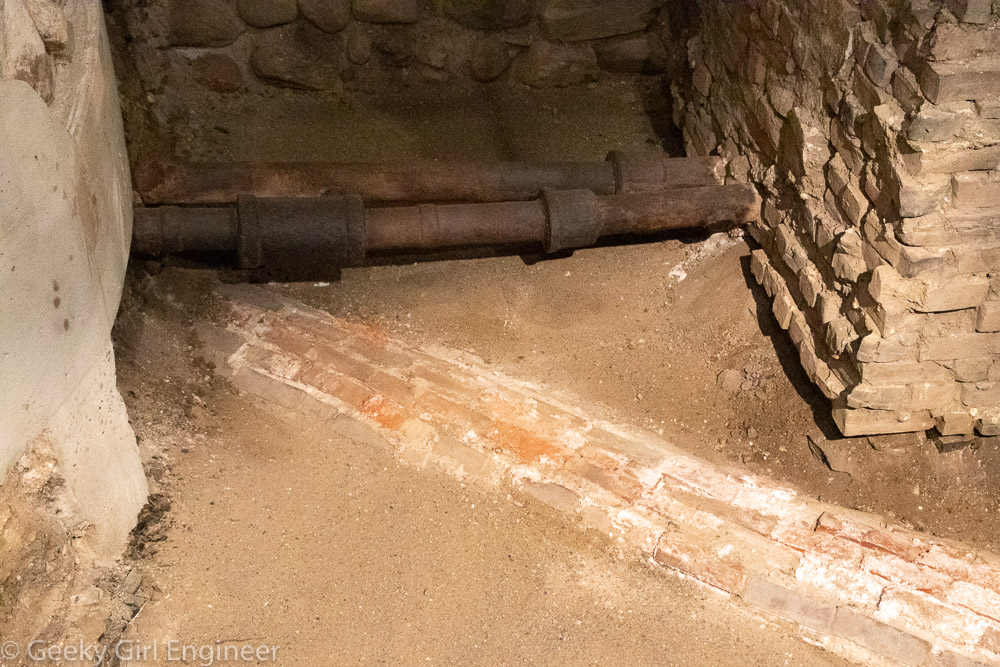
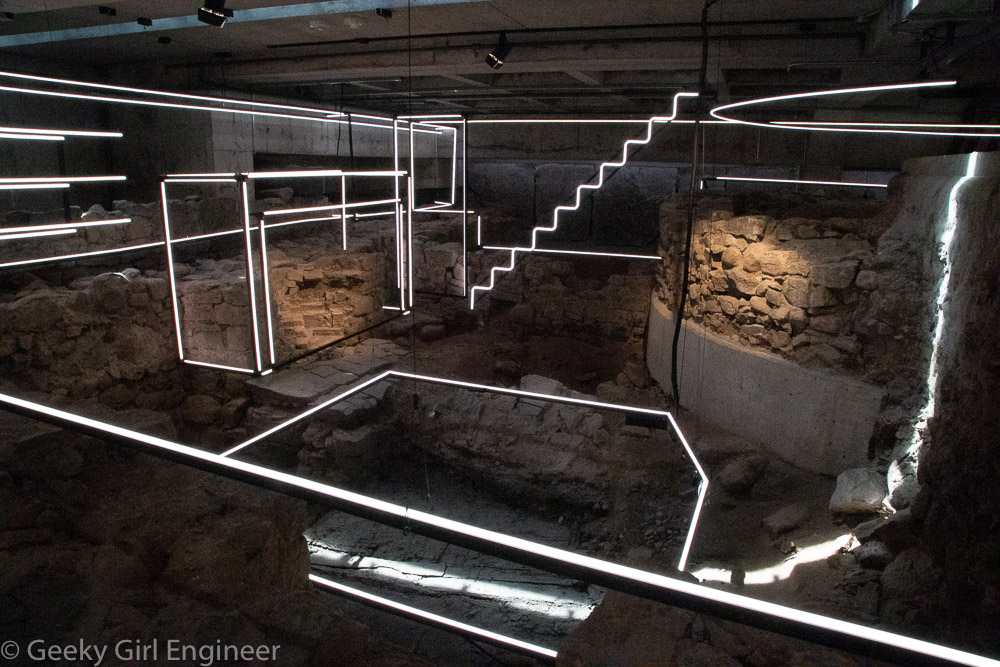
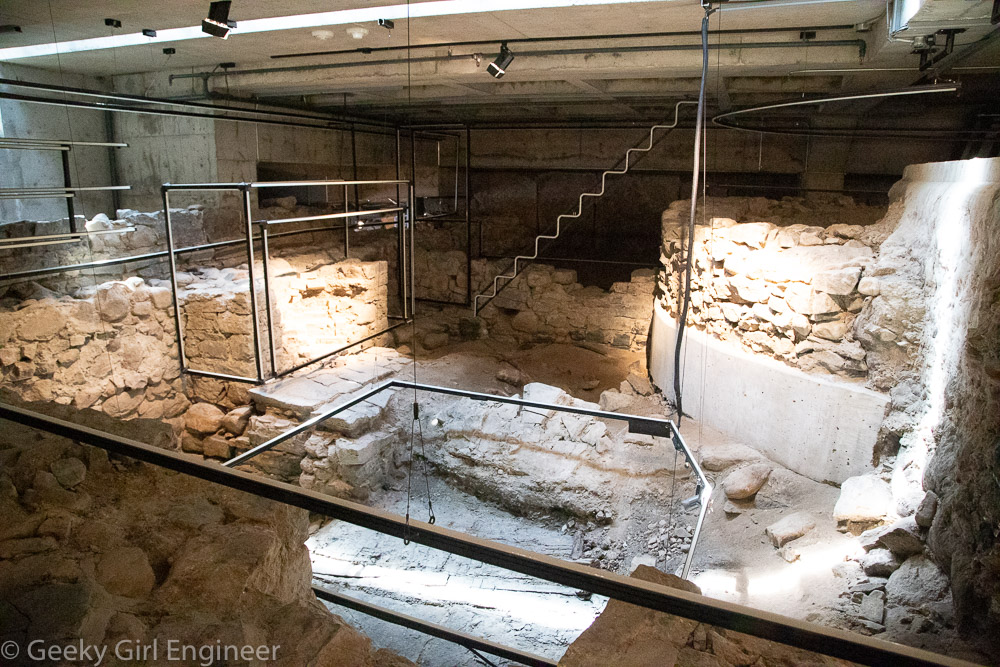
I am currently in Montreal for the second time. The first trip was short, but I visited the Montreal Museum of Archaeology and History, and I really liked it. This trip is also short, but I had time to visit the museum again. Most of the museum is underground in an archeological site of old Montreal. You can walk around the stone walls of buildings that used to stand on the site. The museum does a really nice job of projecting onto the ruins lines and text, so you can understand at what you are looking. They also have stairs, so you can climb on top of ruins and look down onto them without damaging them. Further, in some areas, they have lights hanging from the ceiling that light up during an audio explanation of what is at the site, so the lights emphasize what the used to be at the site based on the ruins.

Floor and walls of the former Royal Insurance building

Foundation of the former Royal Insurance building

Foundation of the former Royal Insurance building with a projection showing the inverted arch of the foundation

Foundation of the former Royal Insurance building and projection showing window of Berthelet building

Old latrine drain with projection indicating how water ran

Old pipes in archeological site

Exhibit lights suspended over archeological site to indicate what is present

Exhibit lights suspended over archeological site to indicate what is present; lights are turned off in this photograph so site is detail can be seen

Powerhouse Arts

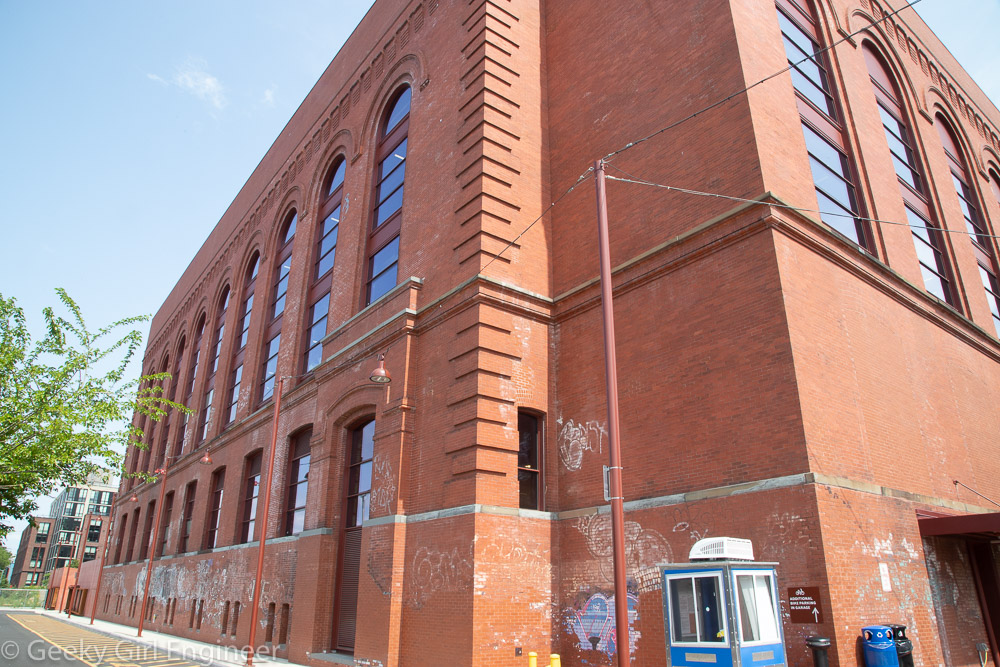
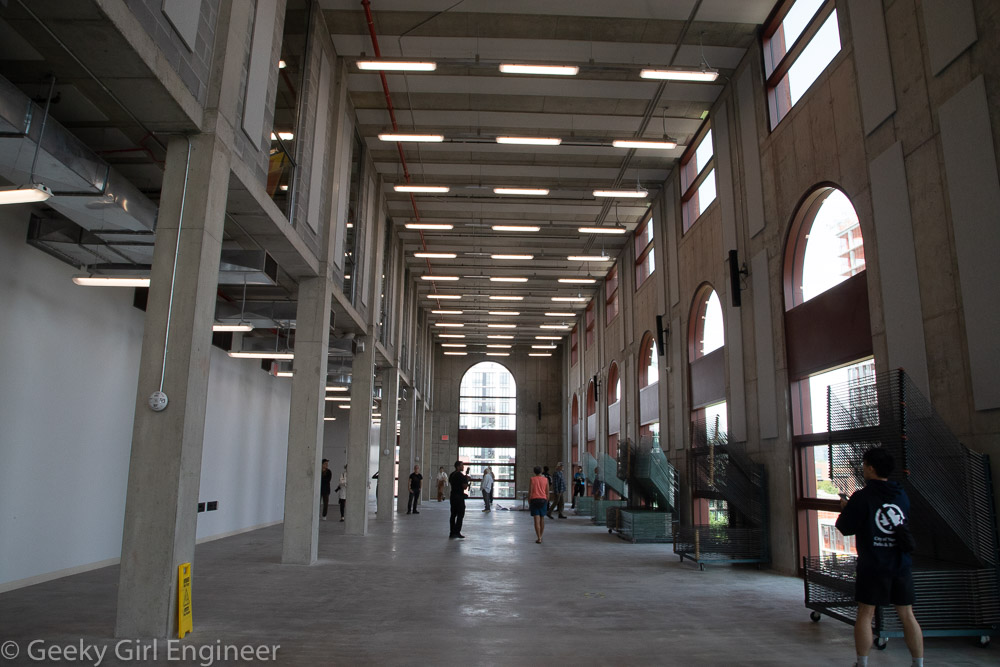
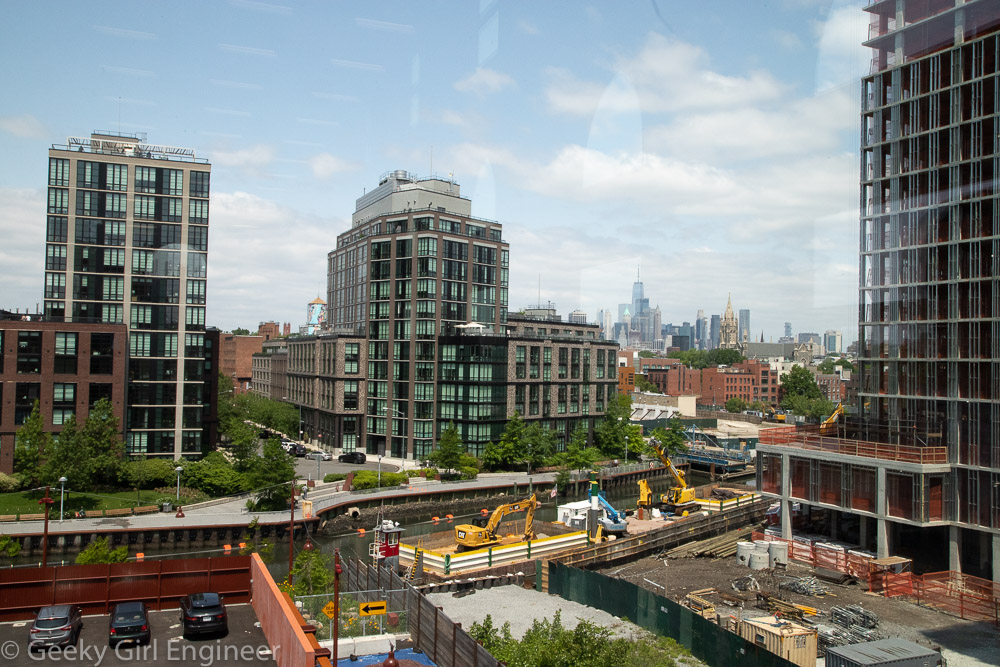
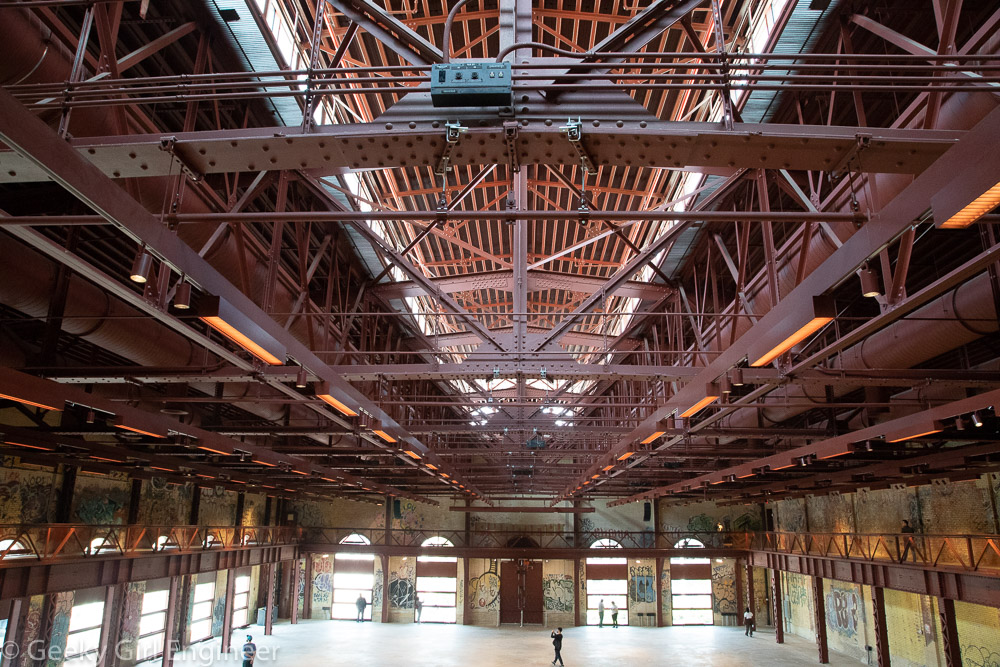
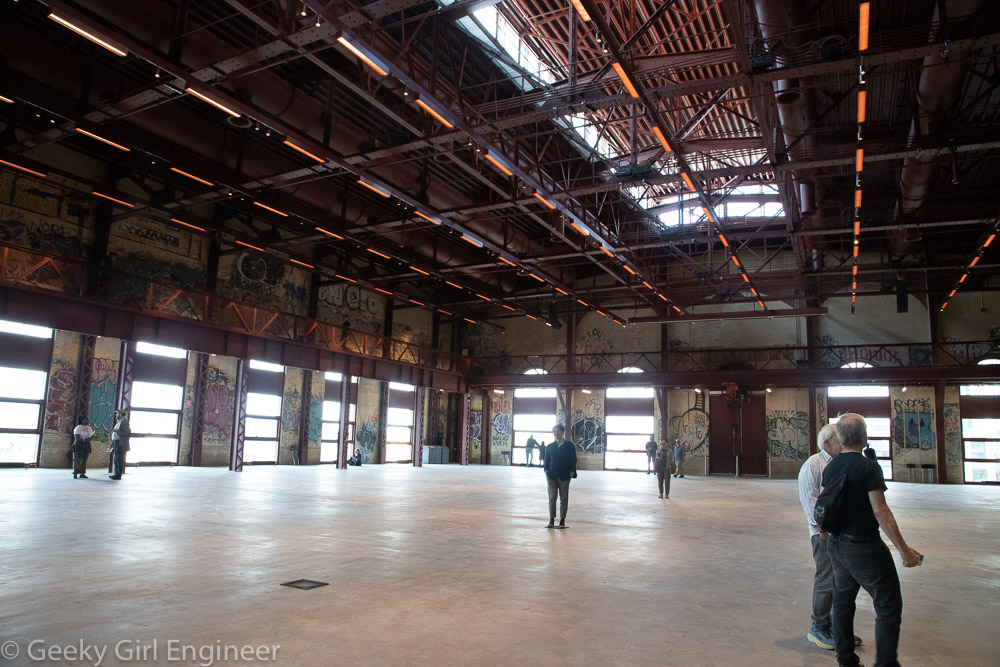
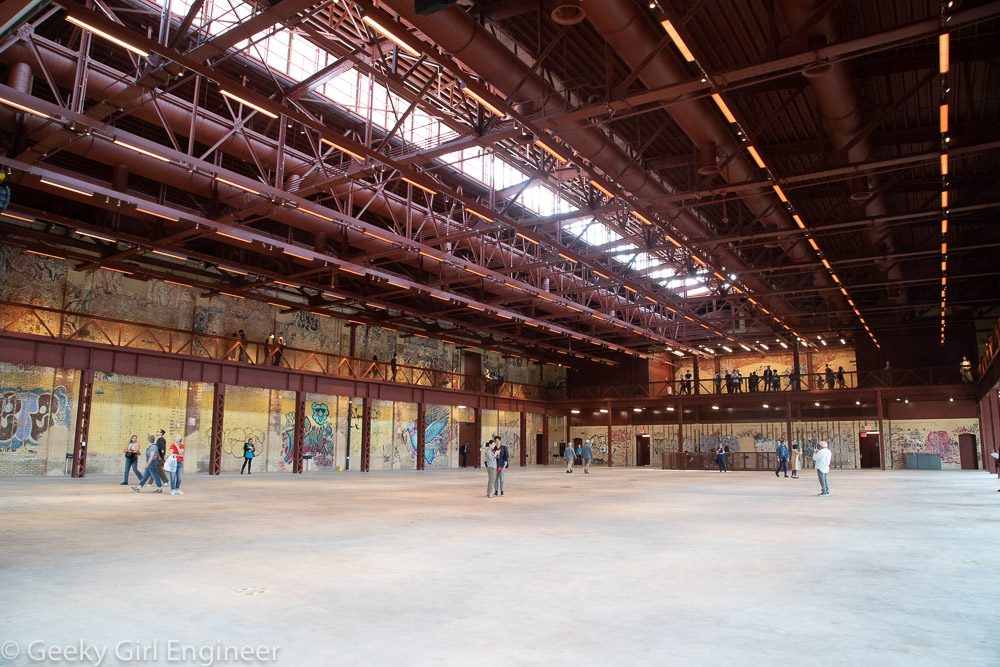
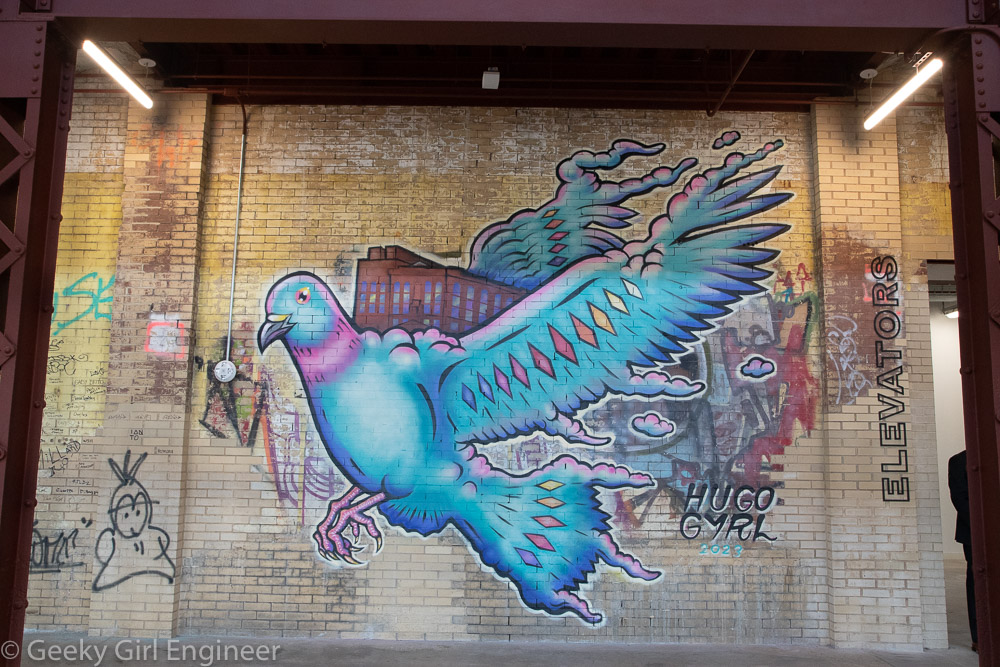
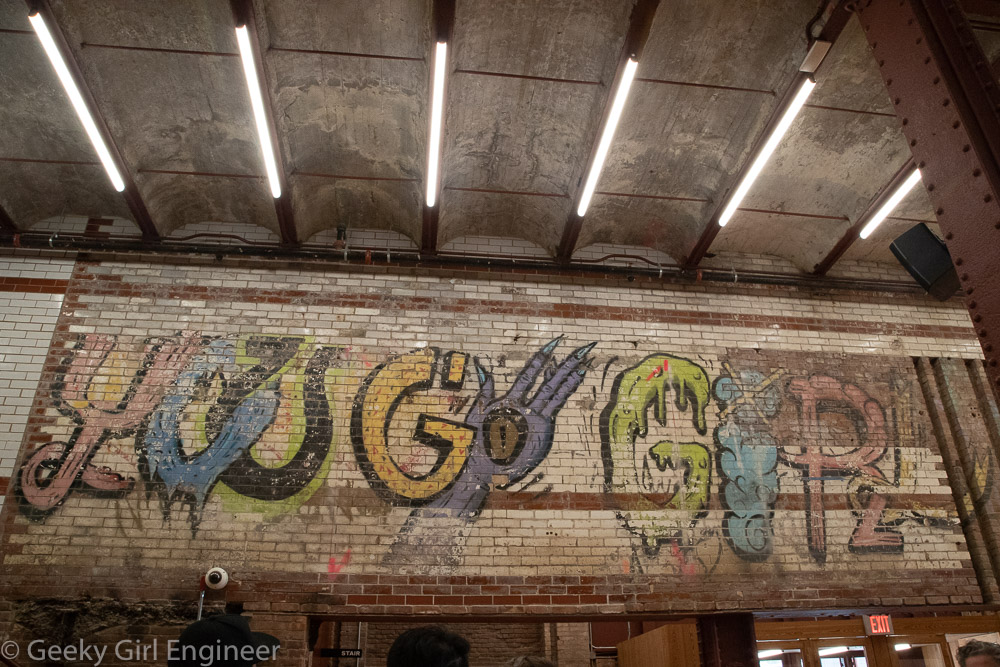
Powerhouse Arts is a new arts and fabrication studio and rental venue housed in a renovated power station in Brooklyn, New York, and they hosted an open house today through Open House New York.The building has been completed renovated, but they have left some of the graffiti on the walls from when the place was essentially abandoned, and squatters lived there. The facility now houses several different art studio areas like a ceramics area and print shop. It also has huge spaces that can be rented. The facility is right on the Gowanus Canal, and it has wonderful views of Brooklyn and Manhattan.

Powerhouse Arts located in an old power station

Former steam production area

Downtown Manhattan and the Gowanus Canal can be seen

Former turbine hall

Former turbine hall

Former turbine hall

Newly commissioned artwork in the Grand Hall

Graffitti in entrance hall

Historic Richmond Town, Staten Island

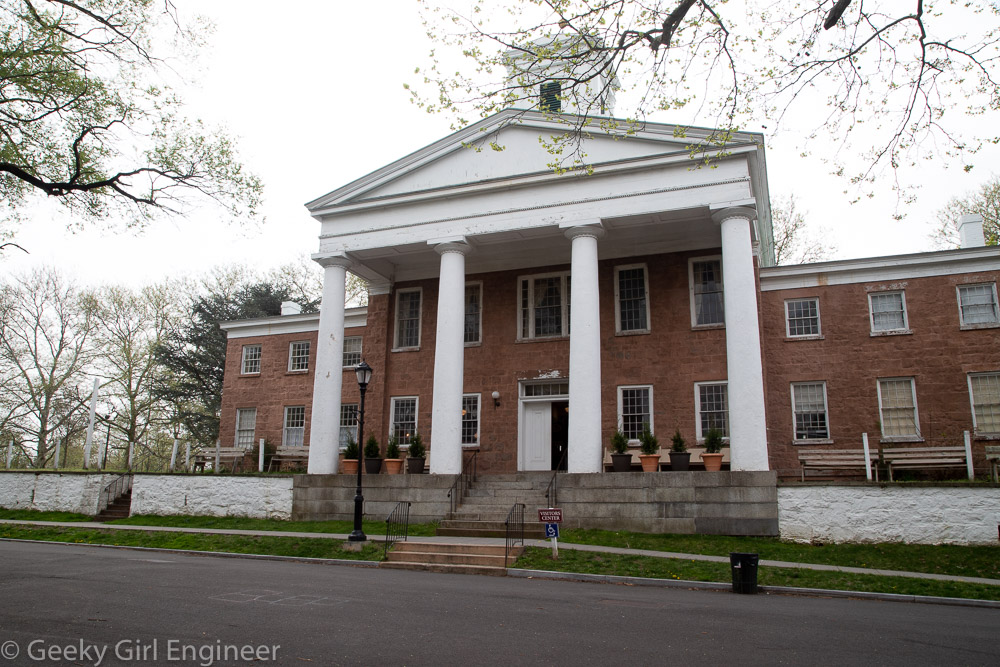
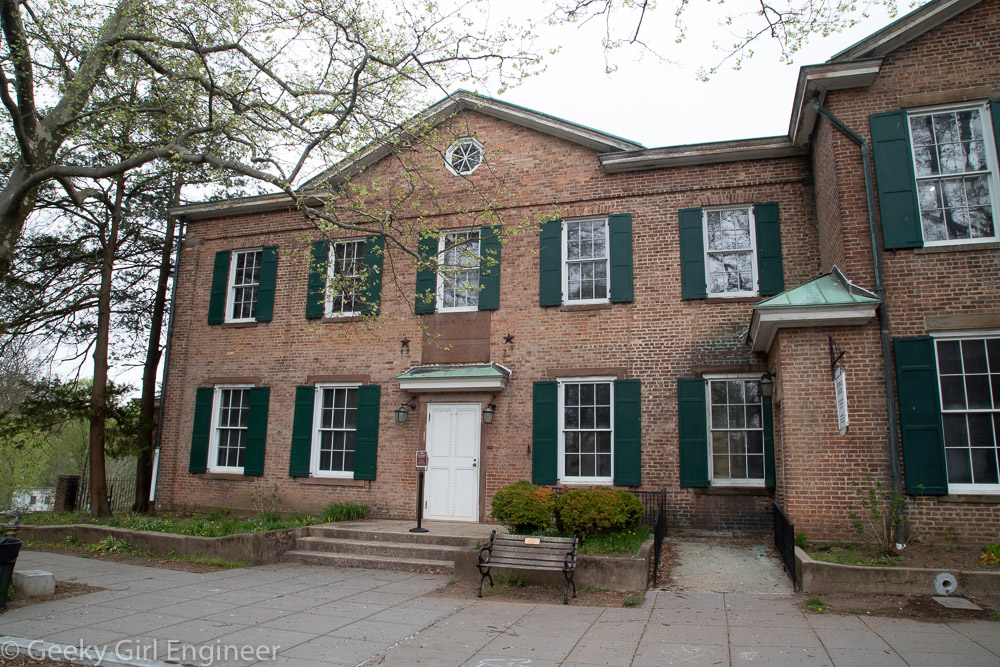
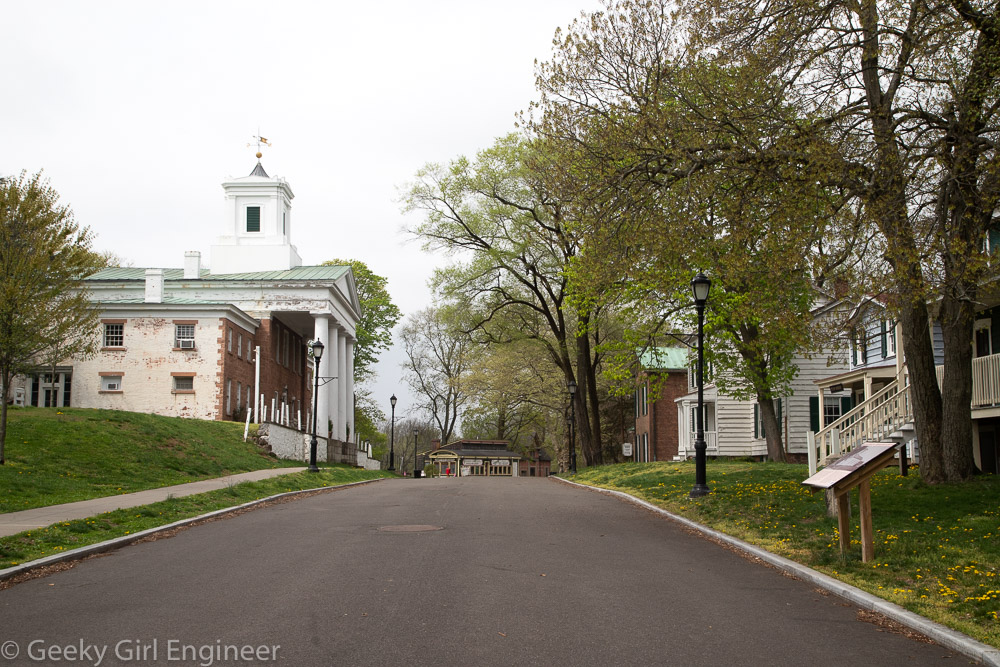
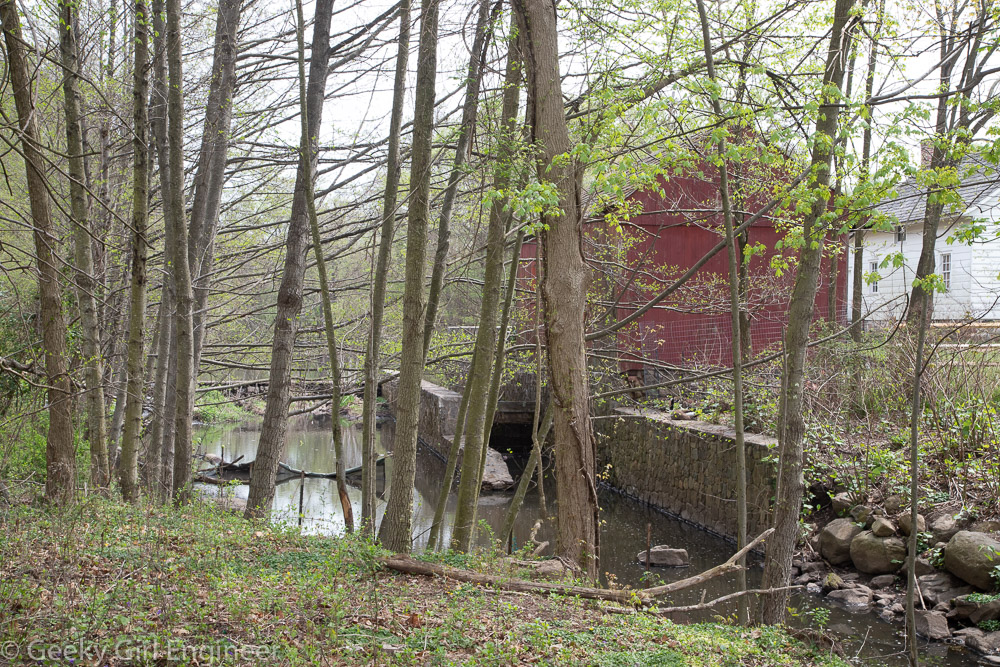
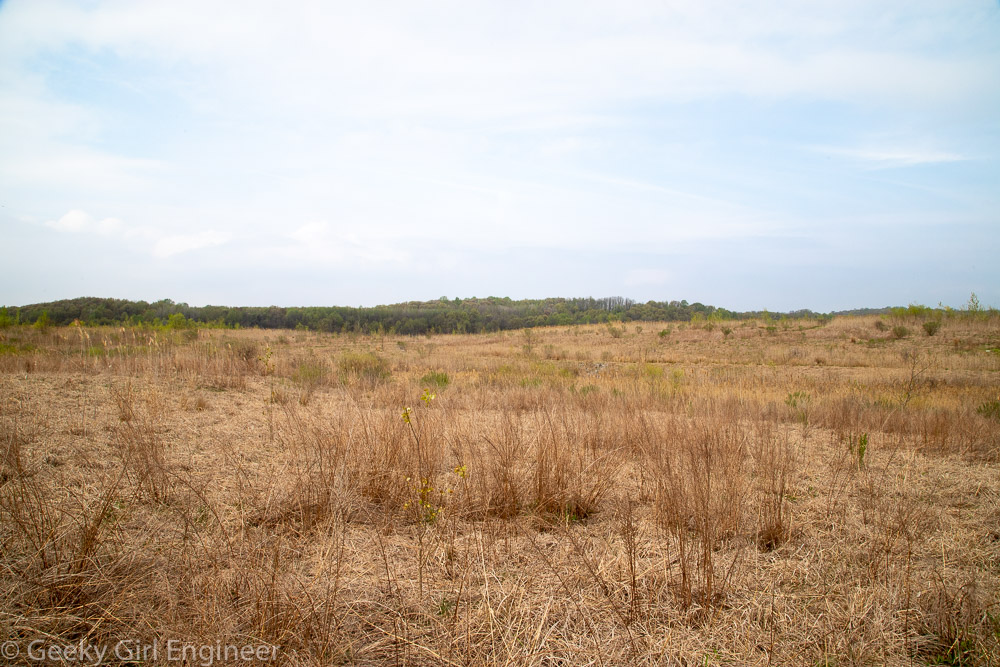
Last week, I went for a guided walk with NYC H2O of historic Richmond Town, Staten Island to hear about the history there, in particular how the water affected the history. Historic Richmond Town is a neat little area as it is a park of historic buildings. If I read the information correctly, some of them were moved there to be part of the preservation area. There is a mill there that operated off the creek that runs by the area. Nearby and also part of our walk is Brookfield Park, which is a former landfill. From an environmental engineering perspective, it is nice to see what the landfill has become. Although it is not clear if remediation is ongoing, as the landfill was rather old, so it is not clear what engineering, if any, went into it.

Third County Courthouse

Former County Clerk’s and Surrogate’s Office

Tin Shop

Historic Richmond Town

Old Mill

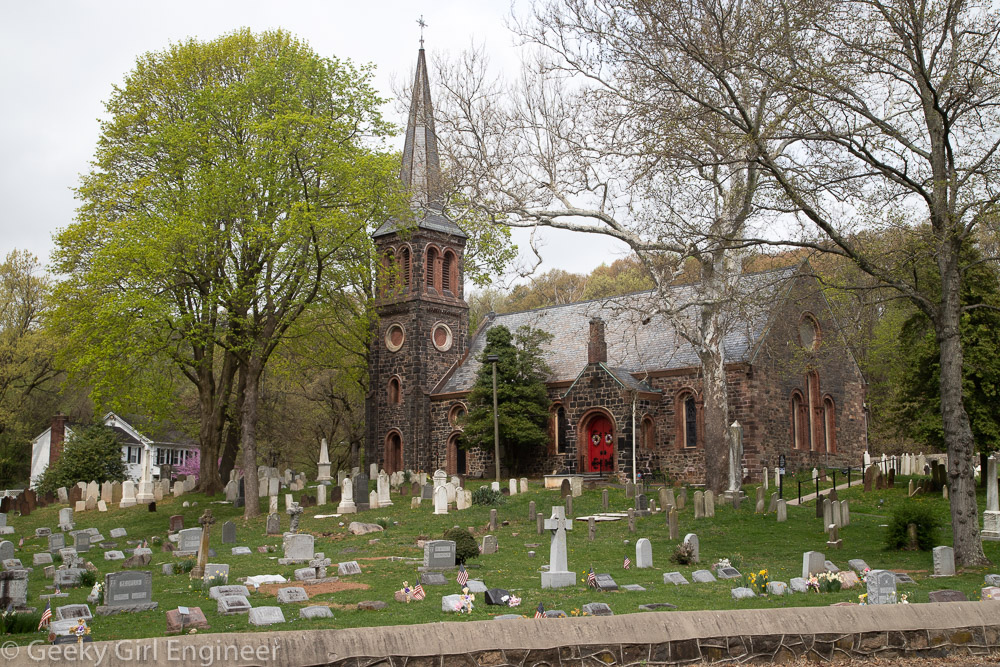
St. Andrew’s Church

Brookfield Park

Brookfield Park

Bletchley Park

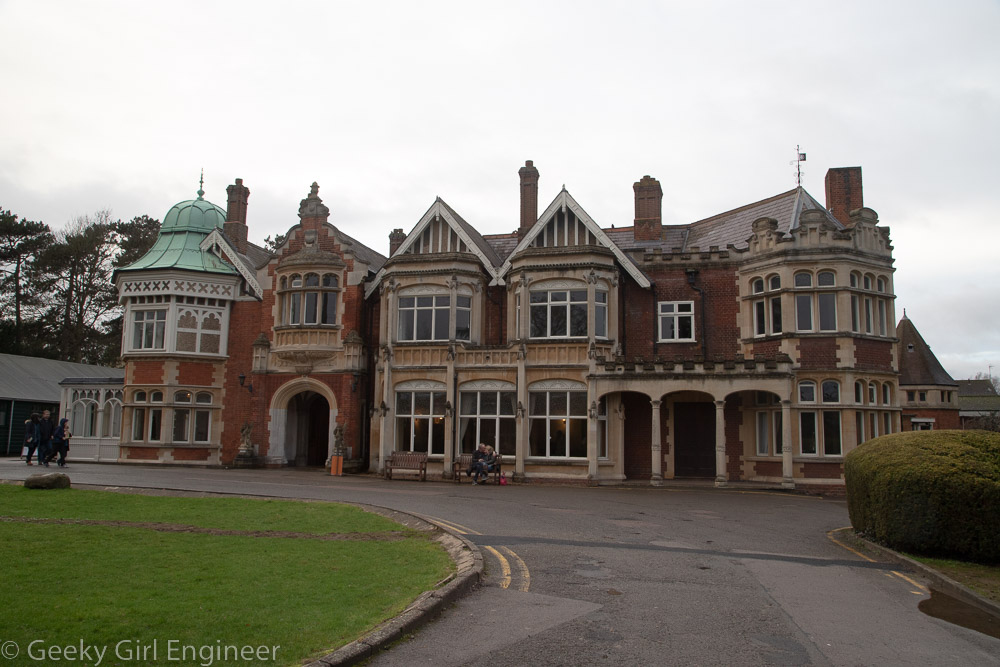
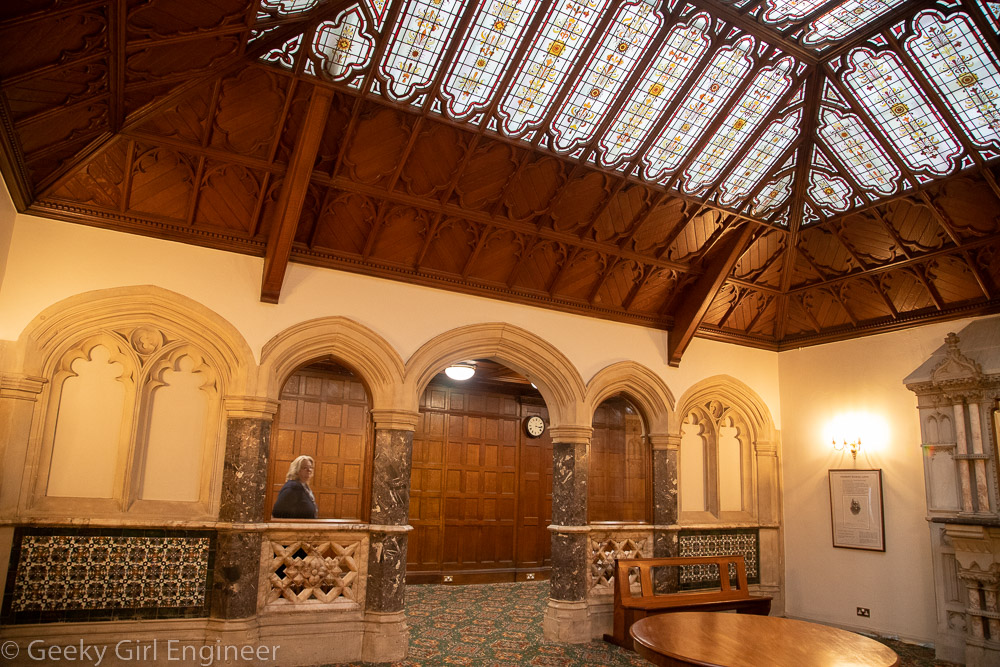
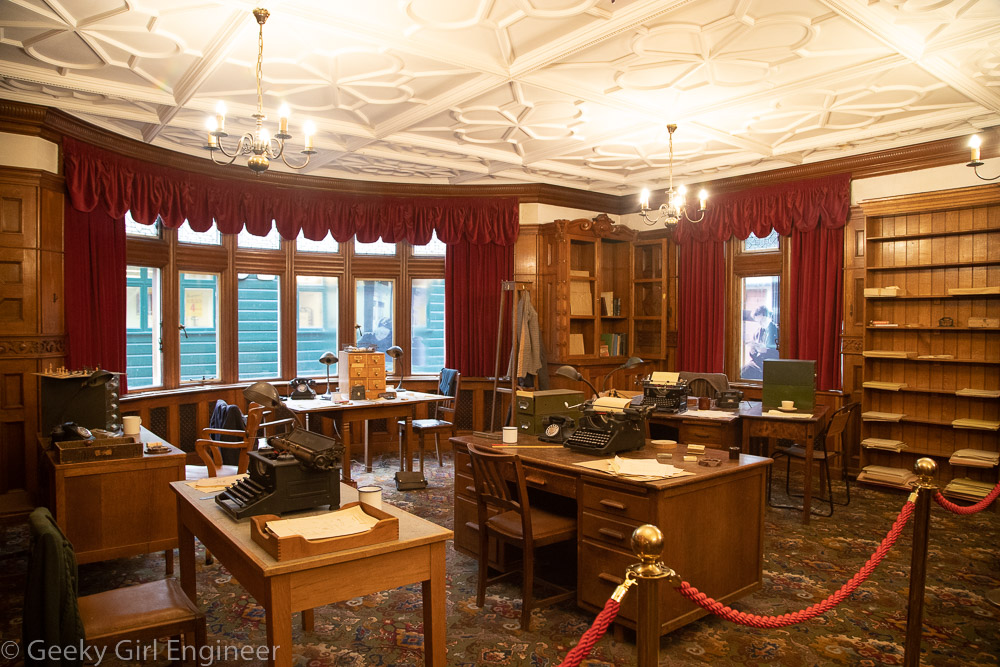
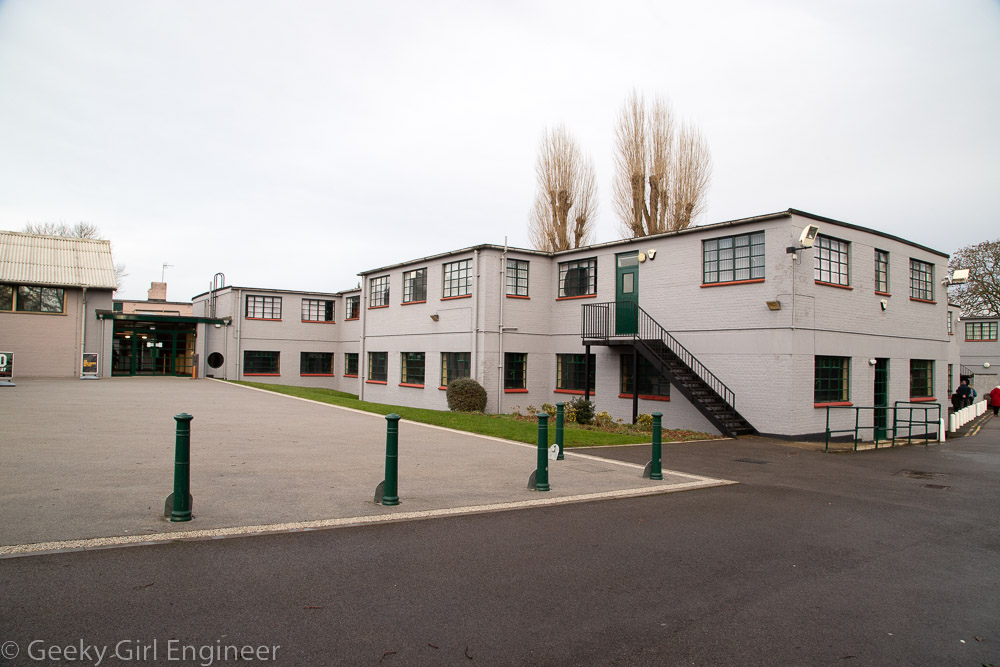
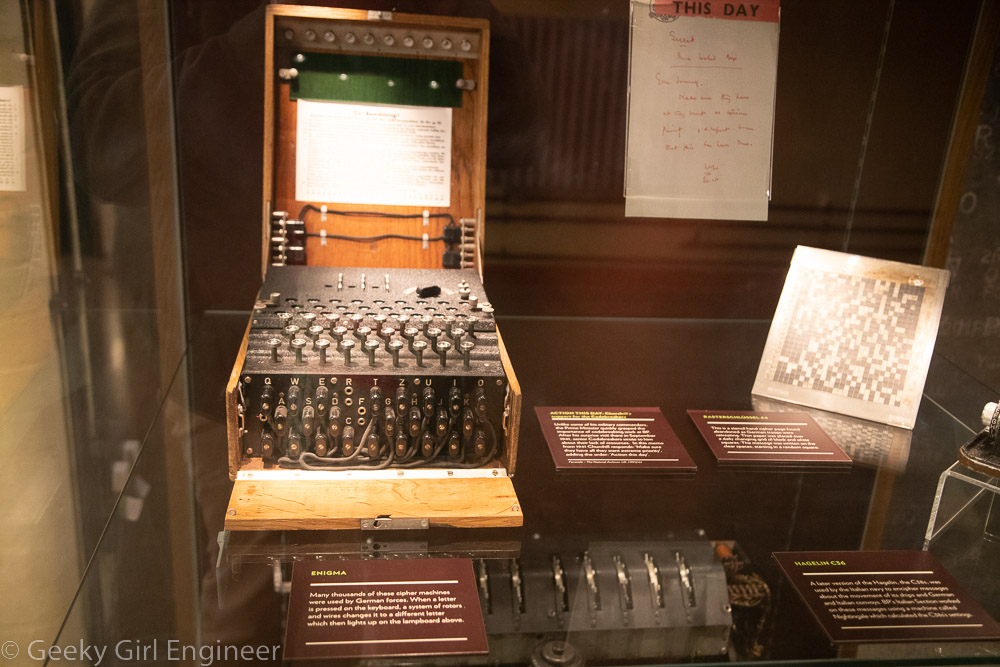
As I am in London, I took a short train to Bletchley Park to see where the British codebreakers worked during World War II. I had read about this place before, so it was neat to see it in person. You can tour the mansion where they originally worker as well as most of the other buildings that were added on later. They also have exhibits explaining how they decrypted codes and machines that were built to aid in decryption. To be honest, even though I understand the basics of decryption, I still had trouble following much of what was explained. However, it was still interesting to see. Also the mansion is beautiful, and the newer buildings are pretty much what you would expect of a WWII government building.

Bletchley Park the original mansion

Bletchley Park inside

Bletchley Park ballroom

Bletchley Park offices

Bletchley Park new building

Enigma machine

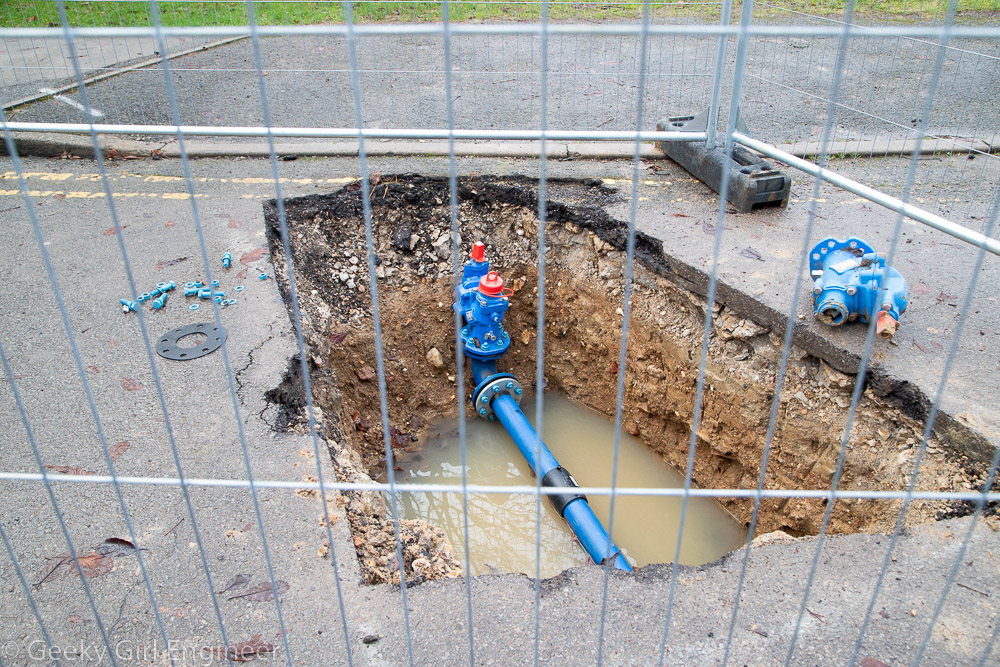
While walking to the mansion, there was a fenced off area where there was a hole, so of course, I had to investigate. I’m walking around this historic site reading about cryptography, and I, being me, have to go investigate any hole in the ground, especially when pipes are involved.

Maintenance on pipes underneath