West Virginia State Capitol

I continue in my quest to see all the state capitols. Today, I checked off West Virginia. The current, sixth, and final state capitol is gorgeous but not overly ornate. As just stated, it is the sixth capitol, and the short history of why West Virginia has had that many is one of the reasons why guided tours of capitols are so worth it. The original capitol was in Wheeling from 1858-1870. The Legislature decided to move it to Charleston. According to my guide, Wheeling then stated they would build a wonderful new building and pay for it if they moved the capital back to Wheeling, which they did in 1875. [This sounds like cities competing for sports franchises.] People evidently complained about how far away Wheeling was from the rest of state, and most wanted one more centrally located. Then there was a state wide vote, and Charleston won, and the capital moved back there in 1885. [At this point, you have to wonder if there was niche market for move the capital by steamer business.] Now, I get to the best part of this story, which is about the fourth capitol (and second Charleston capitol). The state had confiscated a whole lot of ammunition, gunpowder, and other material from protestors and/or strikers in coalfields. At least one version of the story I found says the ammunition belonged to police. The capitol was rather large, and evidently they had a bunch of storage space, so with what was thought a good idea at the time, they stored it in the capitol. It caught fire somehow, and the building burned for three days. The fifth capitol was then built really quickly after that, and then they built the current building.

The building is like most capitols with lots of marble and other natural stone. The central dome is really pretty. I like the contrasting colors. The dome and each of the chambers have crystal chandeliers on which the state did not skimp. The senate chamber is red, but the house chamber is more pinkish red. The senate has a small dome with skylight, but the house has larger square skylight. It may have just been the time of day I was there, but the house chamber had more light from the skylight. The exterior of the central dome has lots of real gold, according to my guide, and I think the gold is contrasted nicely with the blue paint.
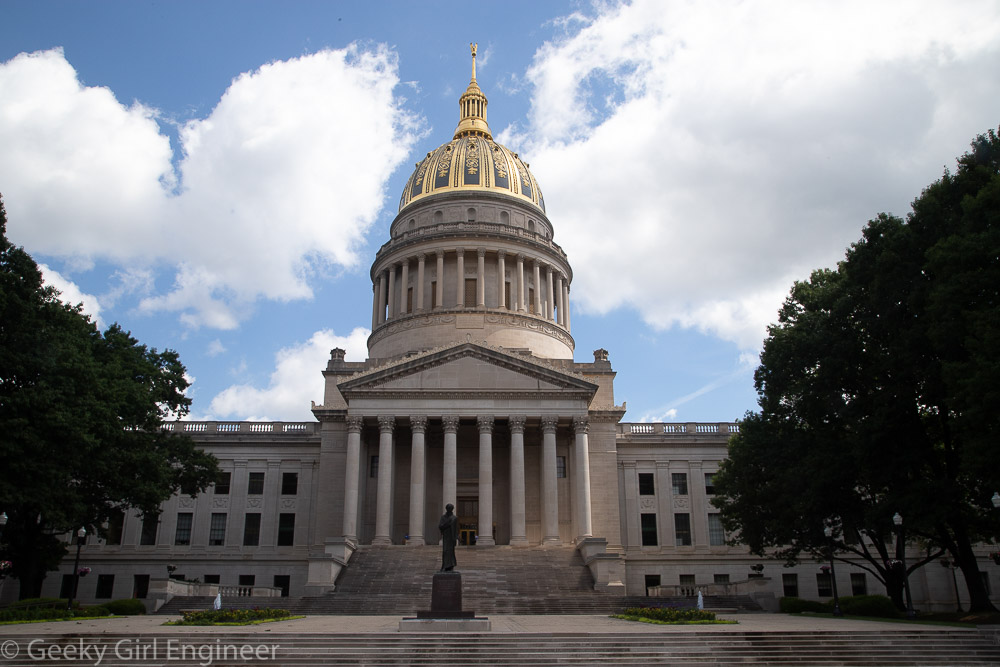
Capitol exterior
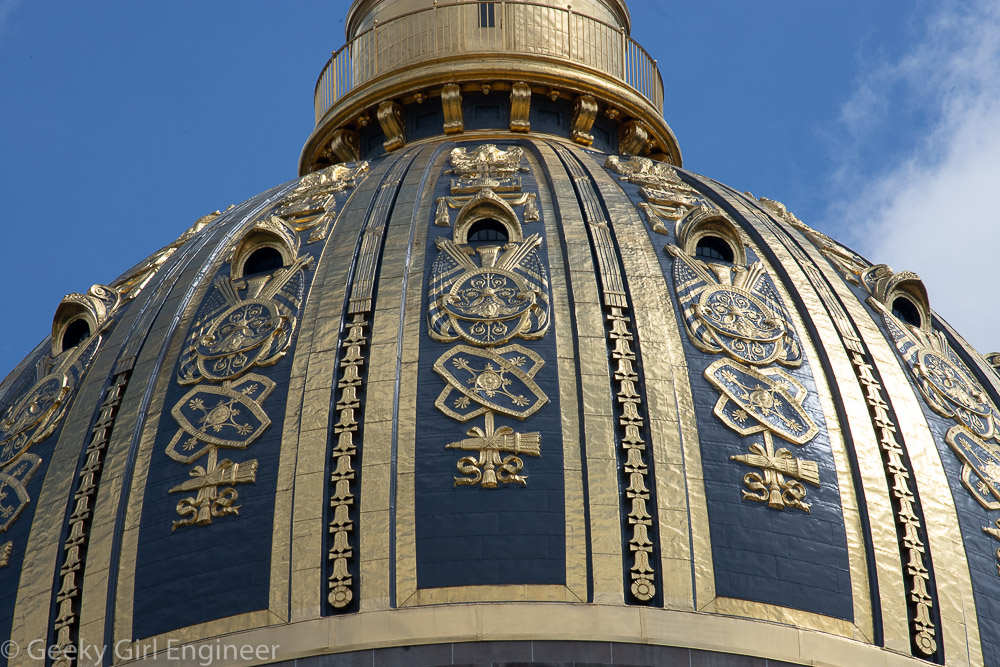
Capitol dome exterior
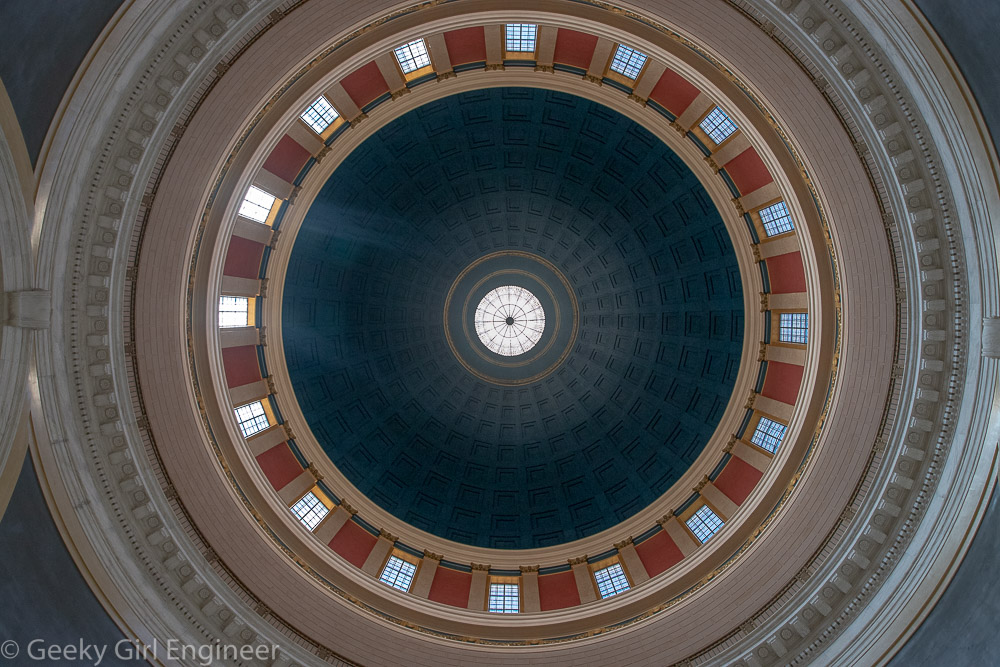
Capitol central dome
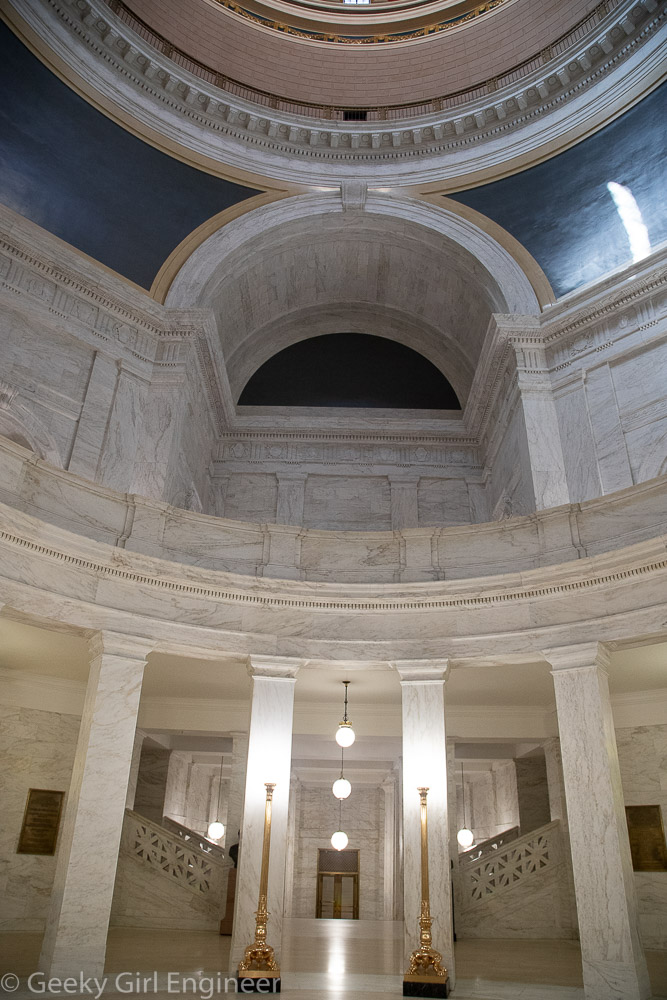
Capitol dome area
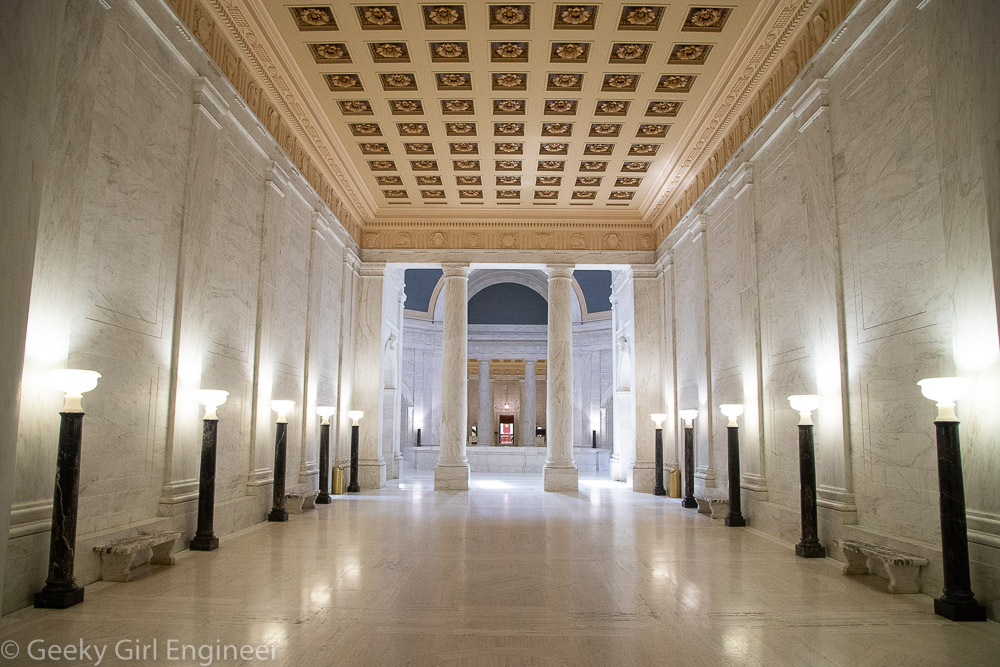
Upstairs hallway
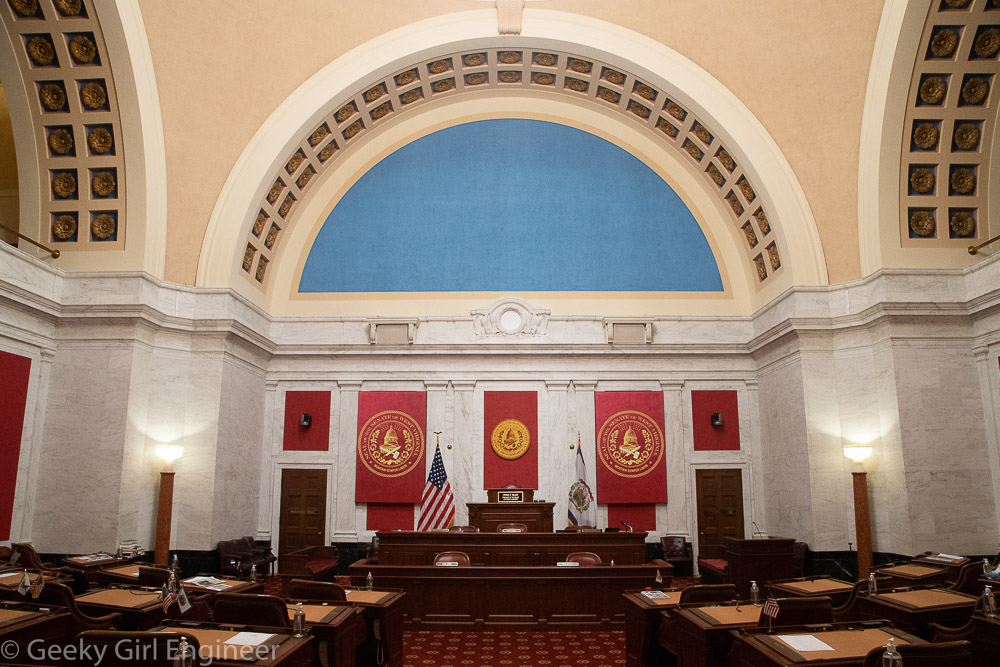
Senate Chamber
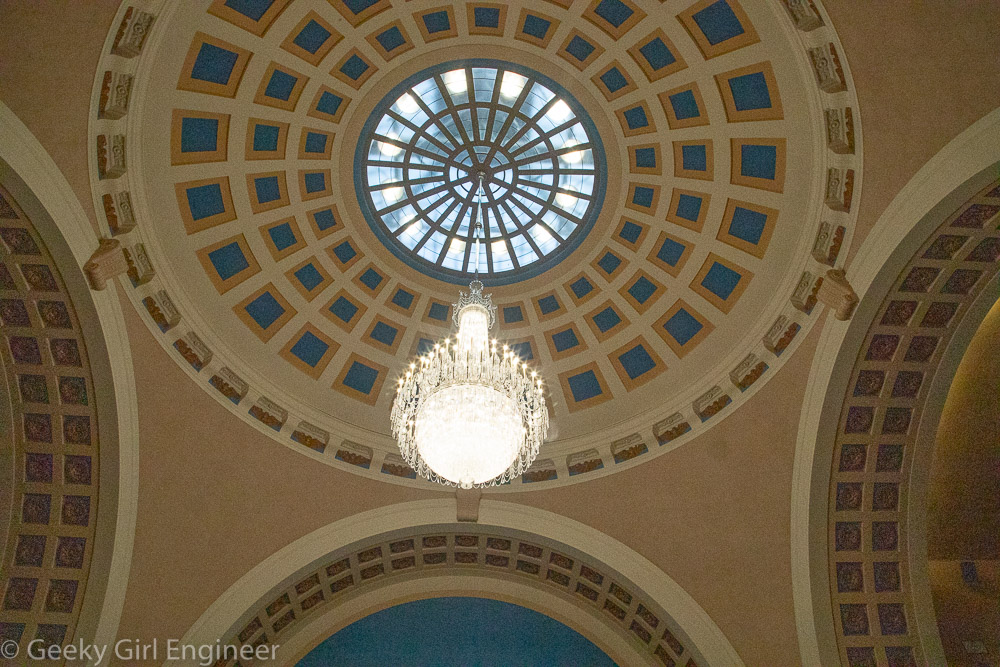
Senate Chamber dome
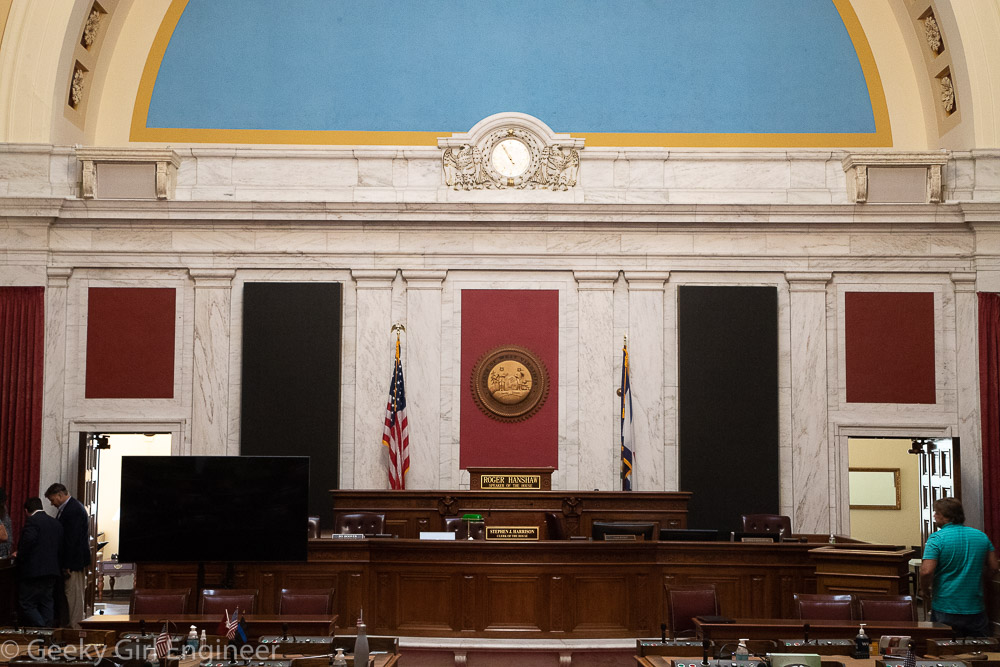
House Chamber
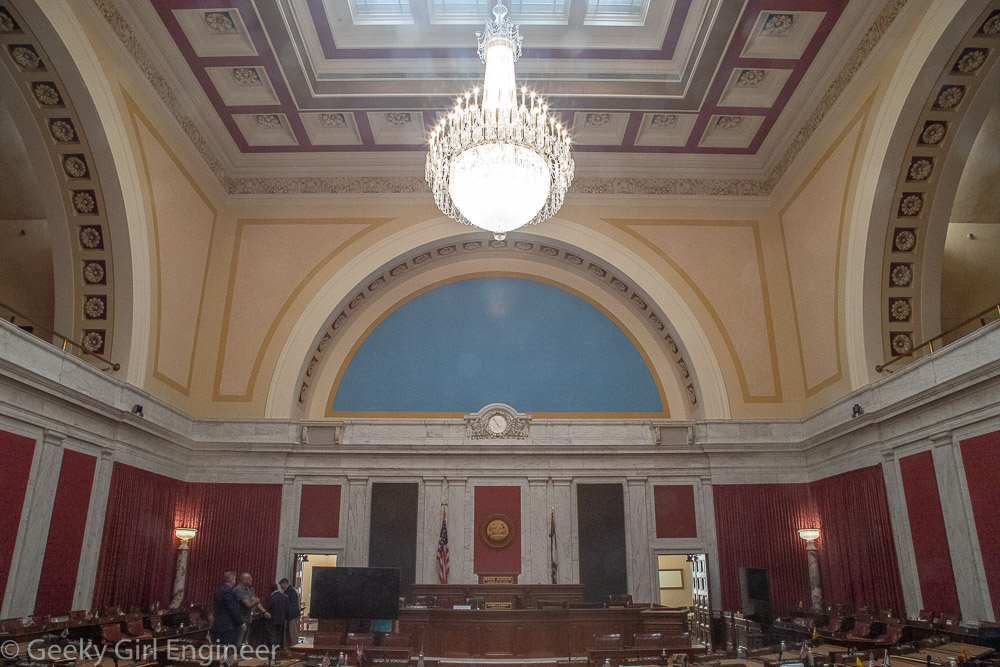
House Chamber
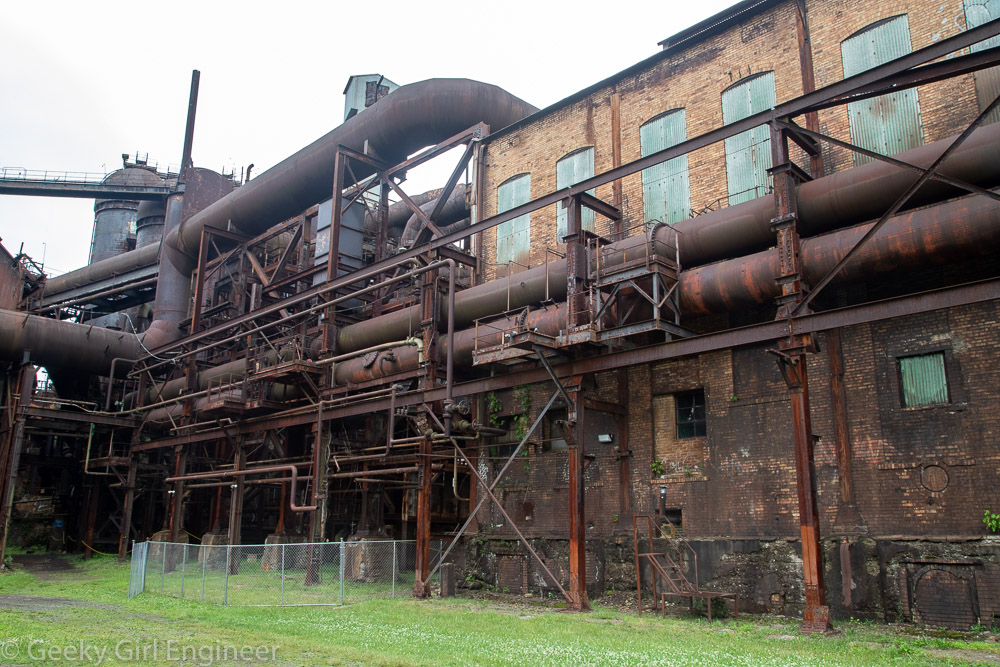
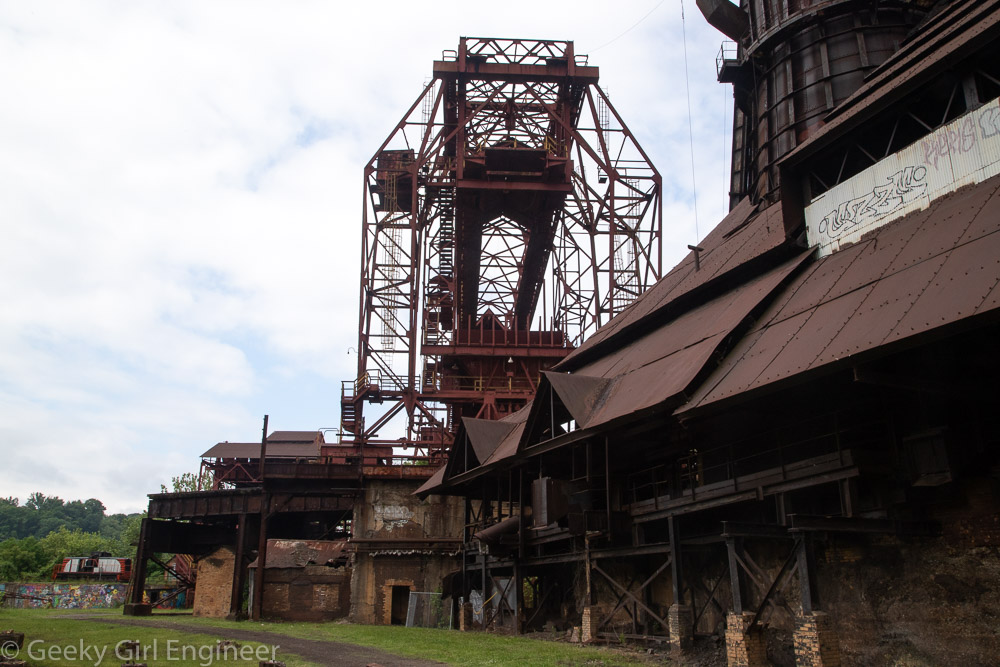
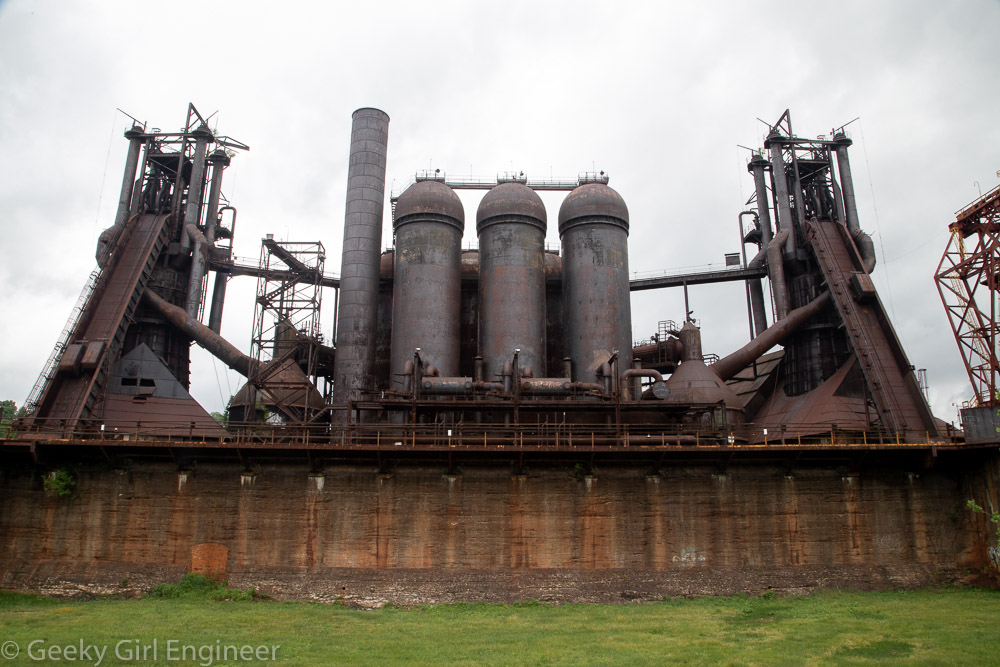
Carrie Blast Furnaces

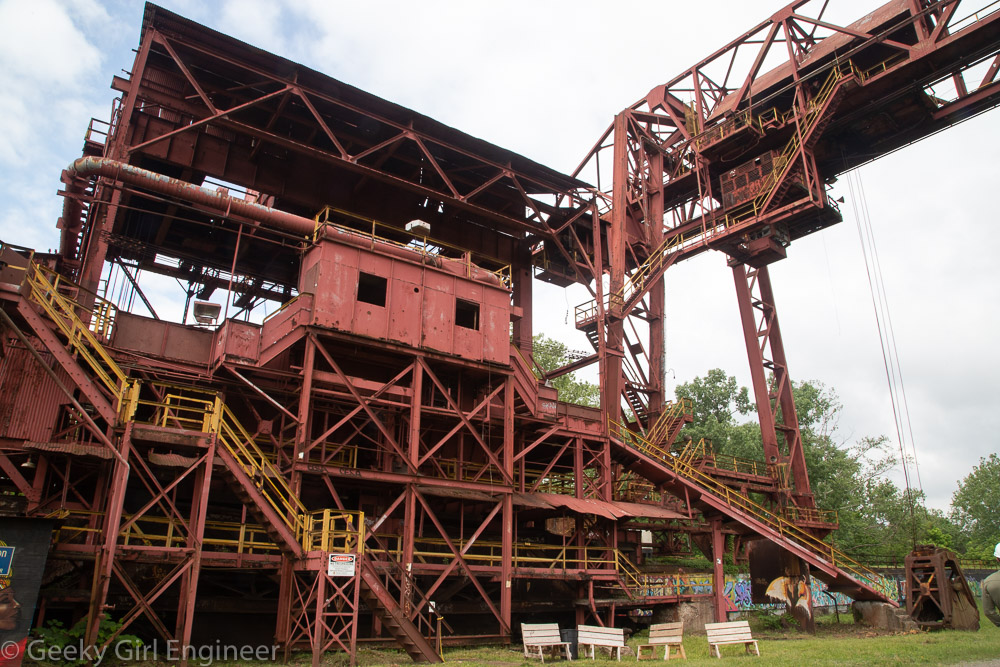
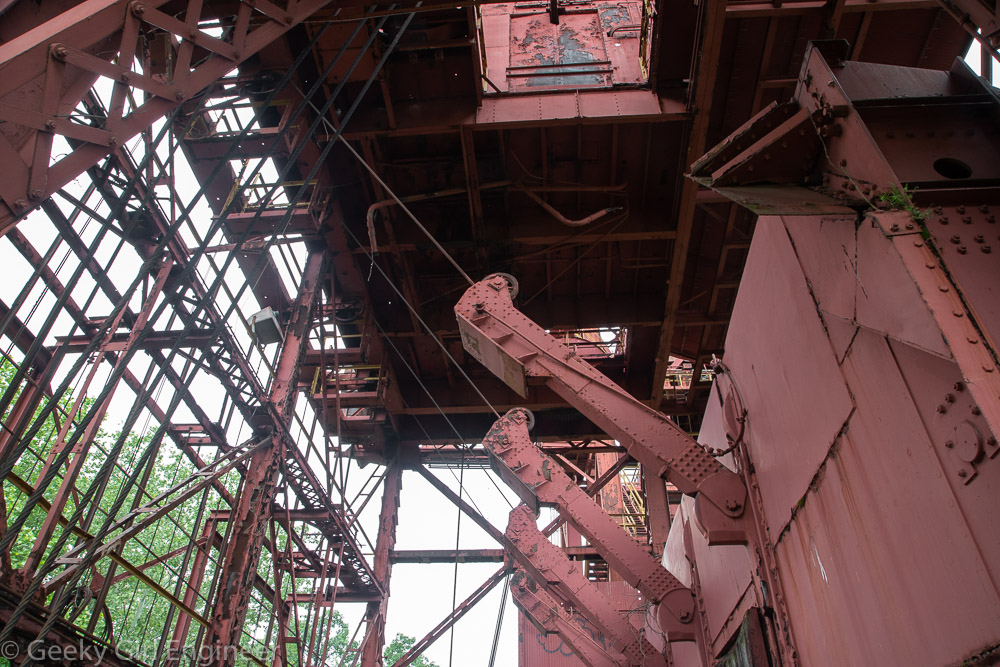
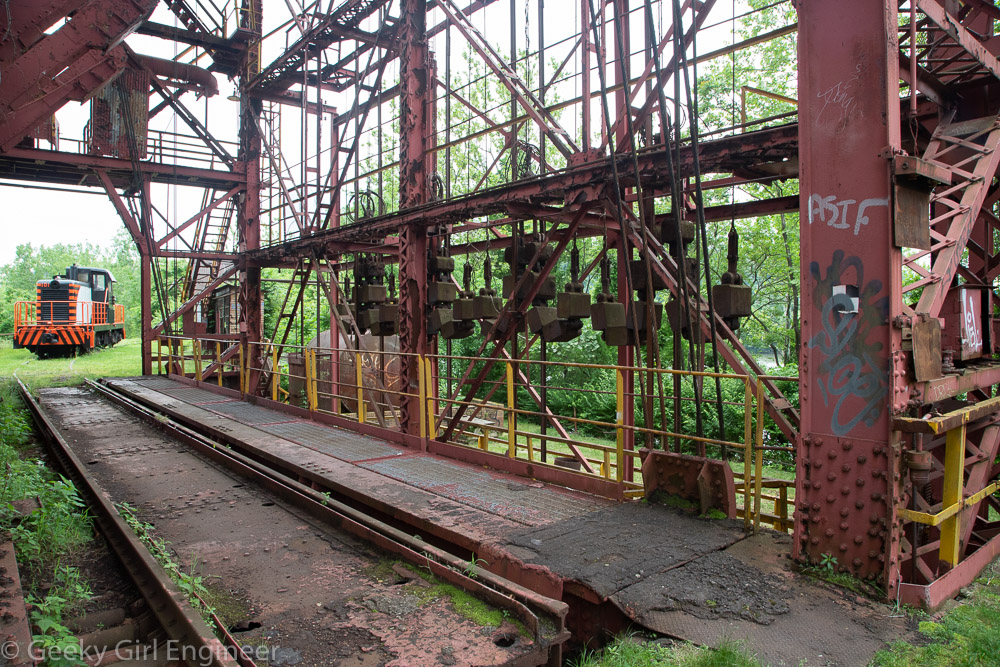
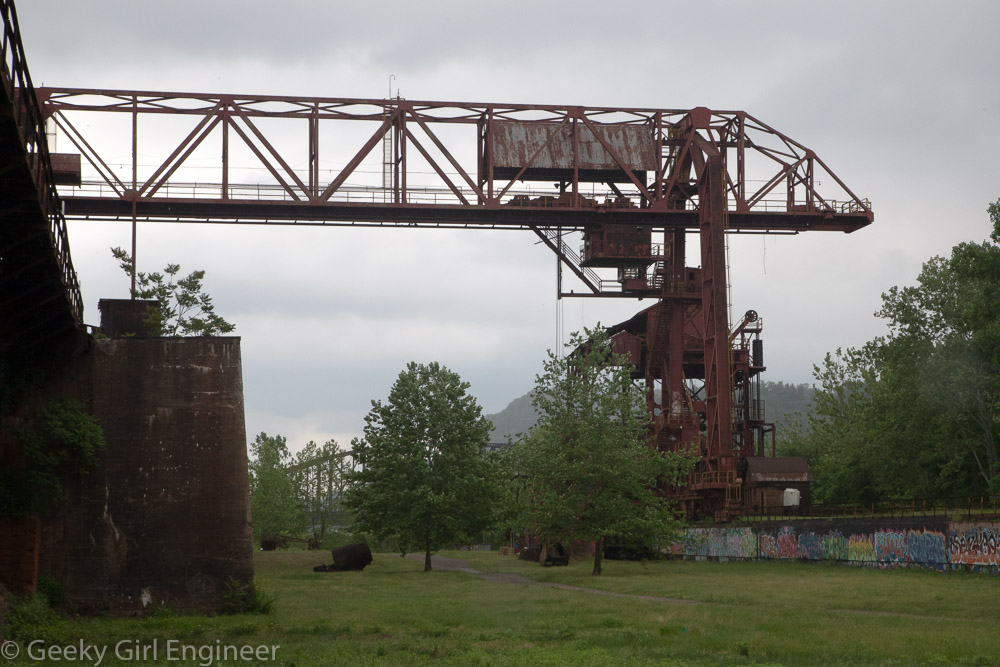
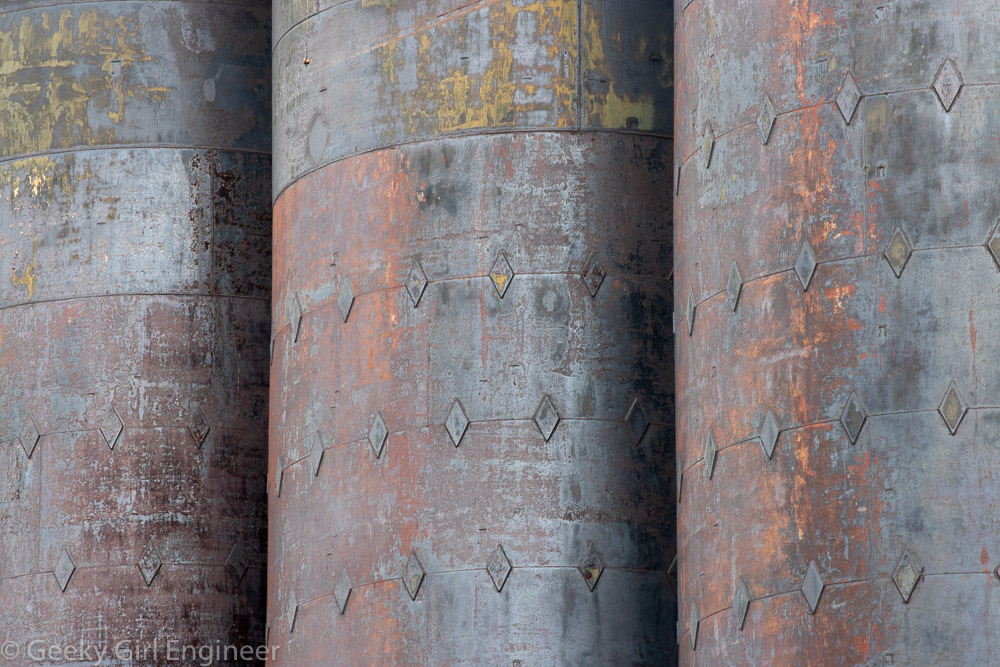
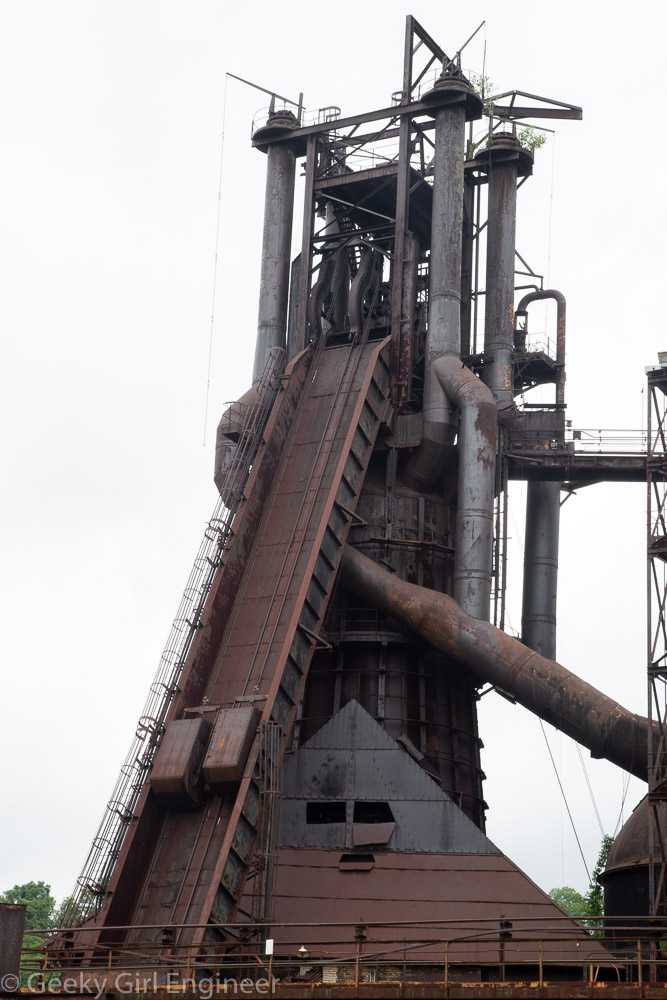
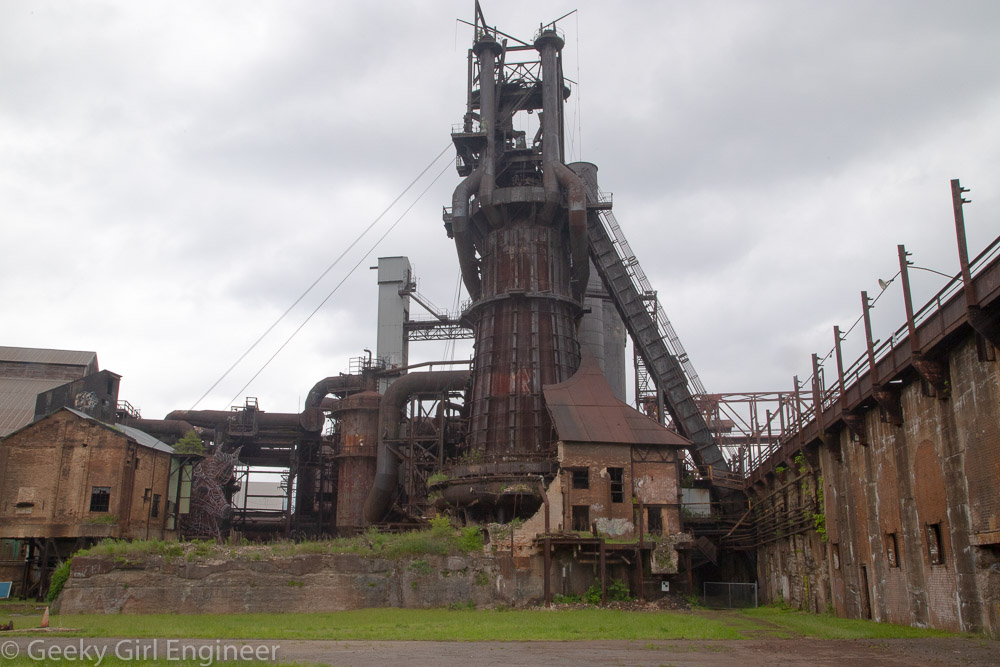
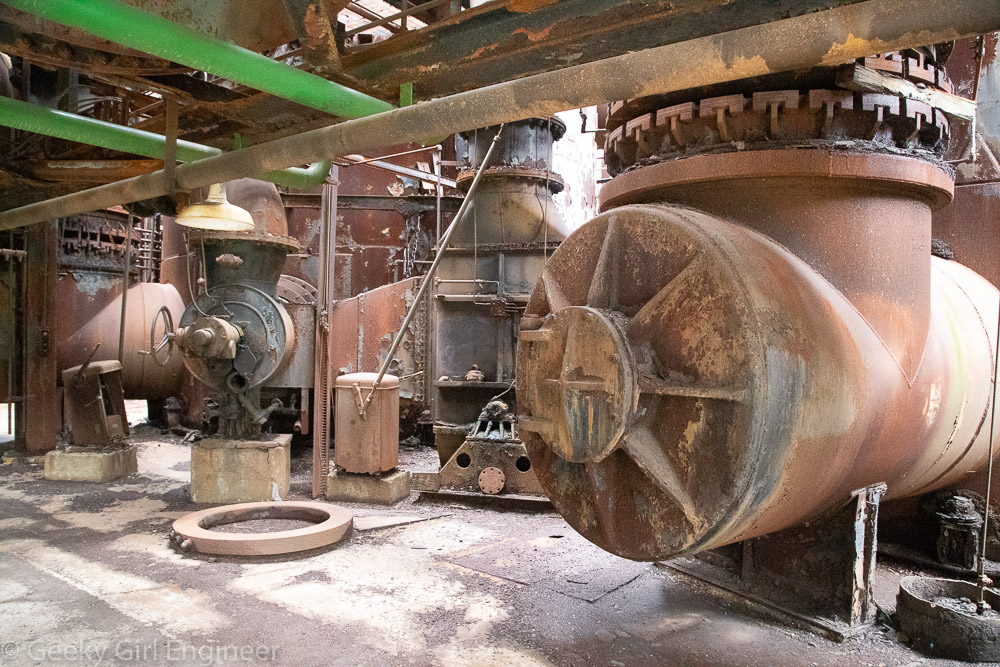
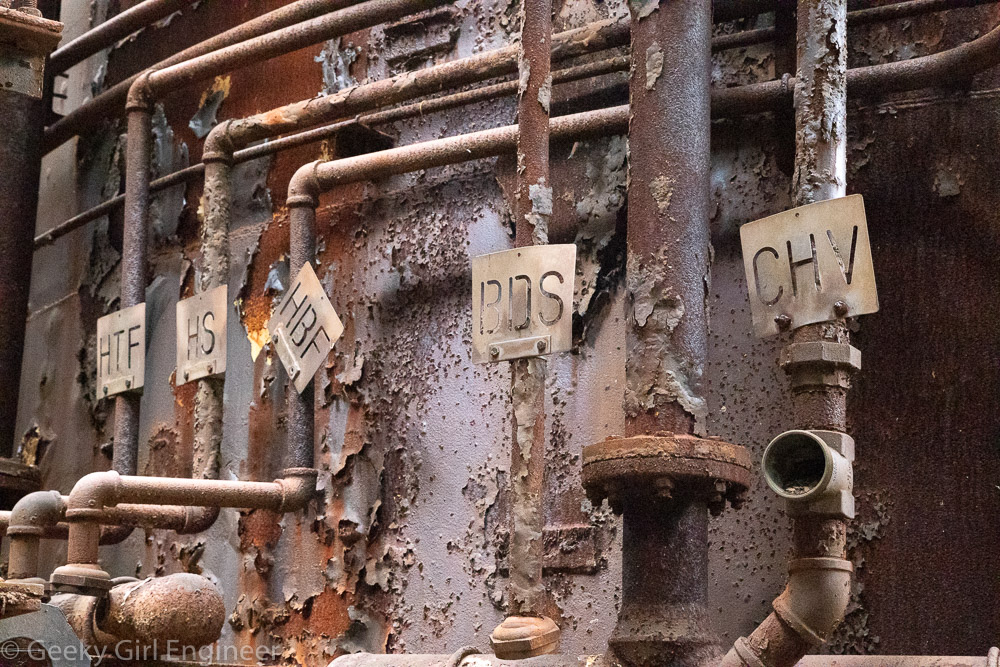
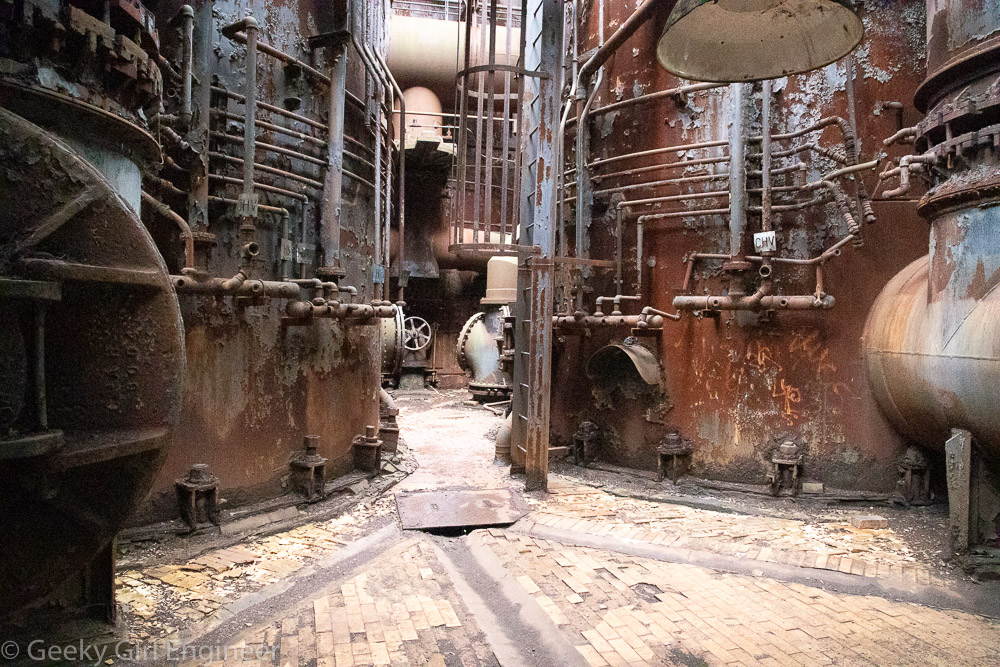
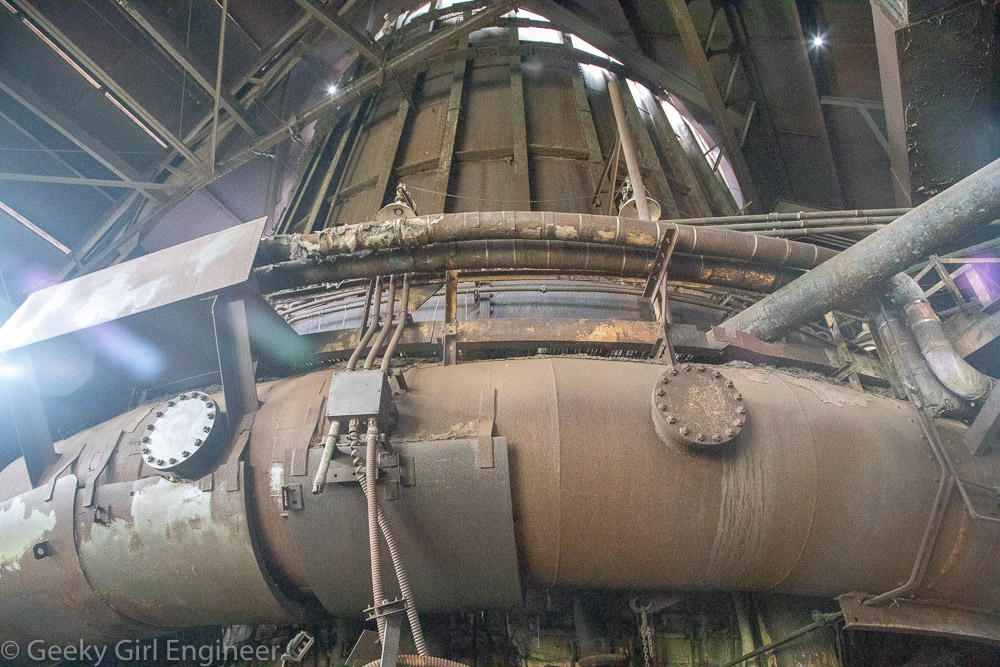
I’m in Pittsburgh for the long weekend. Today I took a tour with Rivers of Steel of the Carrie Blast Furnaces. The area is part of the former U.S. Steel Homestead Steel Works. Blast Furnaces #6 and #7 and the accompanying equipment is all that remains of the site. The site is really interesting, and the tour was lead by a former iron worker who used to work at a similar type of facility. It was rather amazing to hear such first hand knowledge. I admit I did not catch everything, but the tour was fascinating. It was also incredibly interesting and fun to photograph. I’ve tried to name things in the captions of the photos below, but I may have gotten some of it wrong. I should have taken notes while on the tour. If you are in Pittsburgh, I highly recommend the tour. It is a wonderful tour of some incredible history.

Generator building

Blast furnace in foreground and supply crane in background

Supply train area

Supply train area

Supply train area

Crane

Carrie Blast Furnaces

Close up of stoves

Skip Bridge

Blast furnace

Near stoves

Near stoves

Near stoves

Bottom of blast furnance

Iron notch

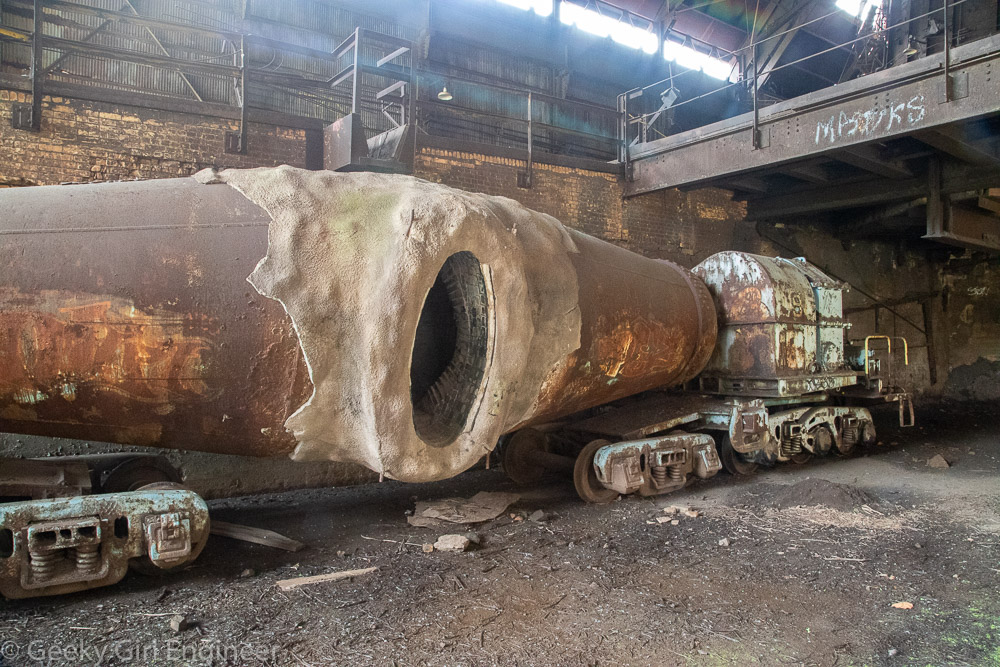
Molten iron car

Ellis Island

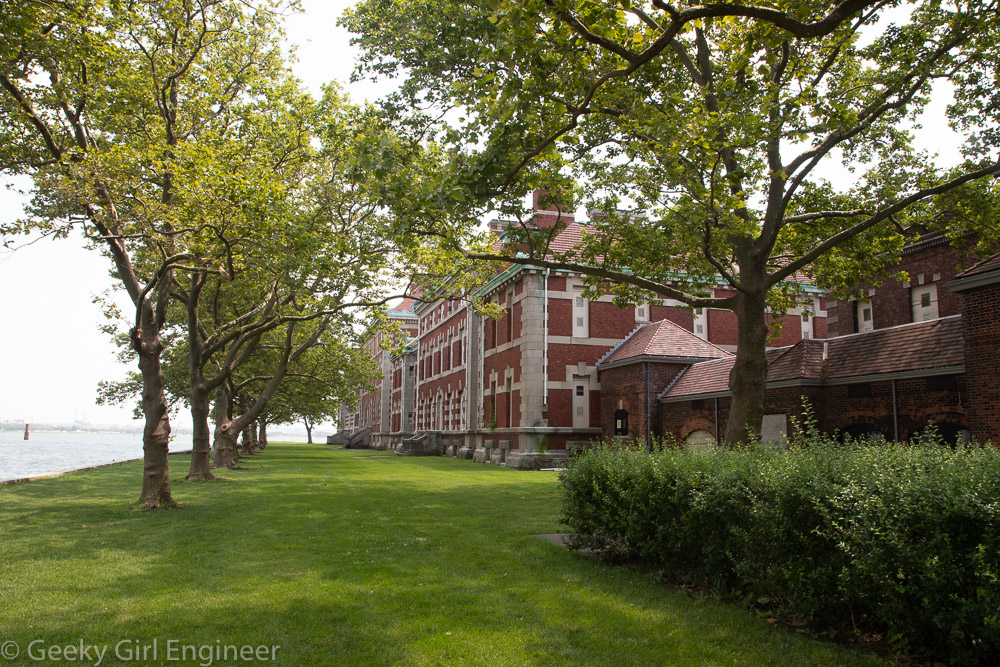
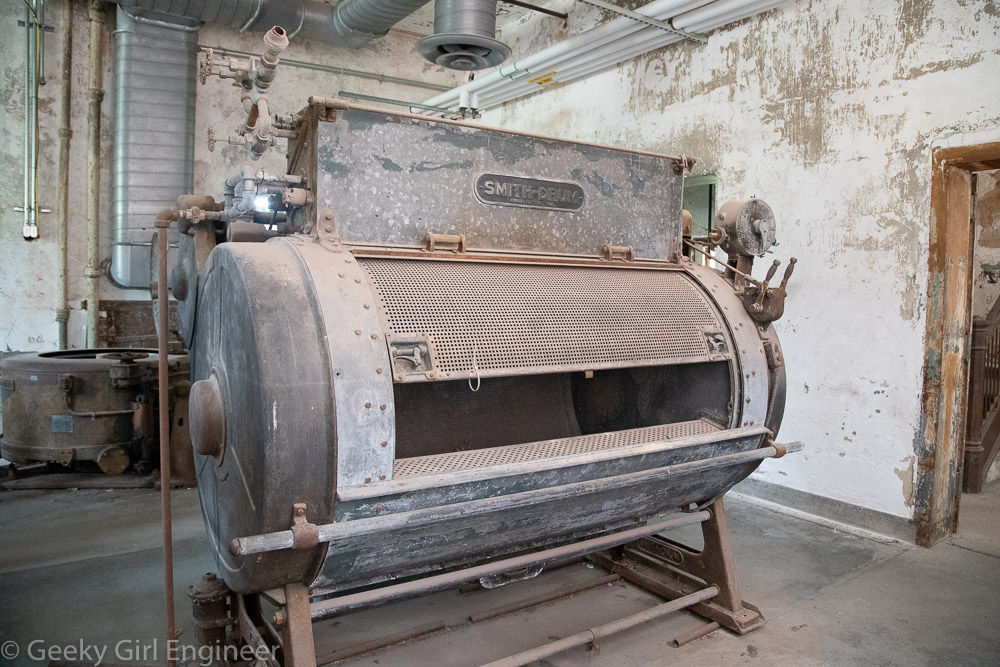
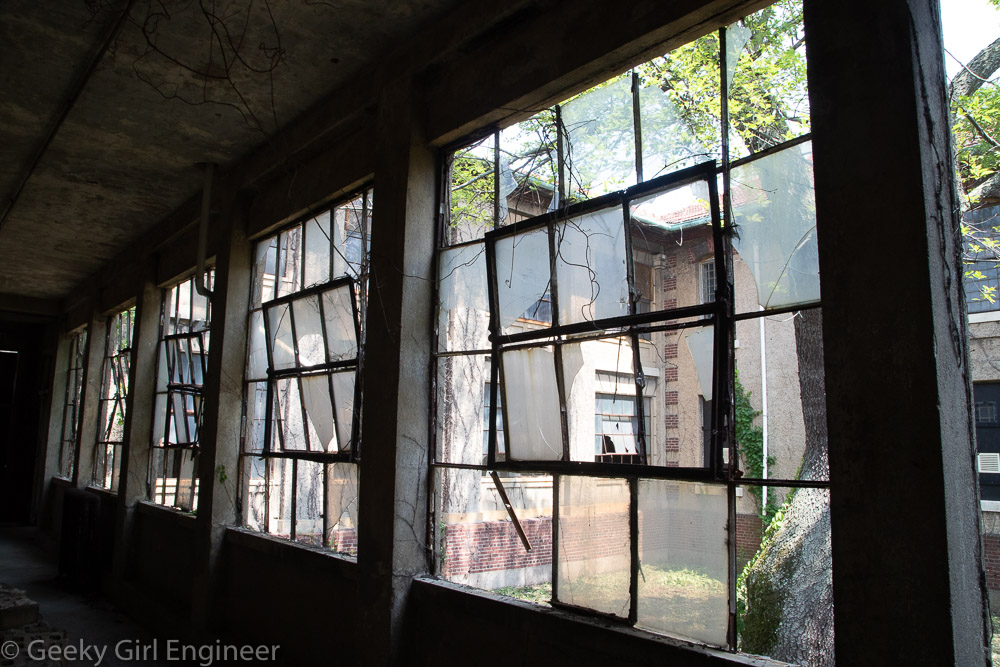
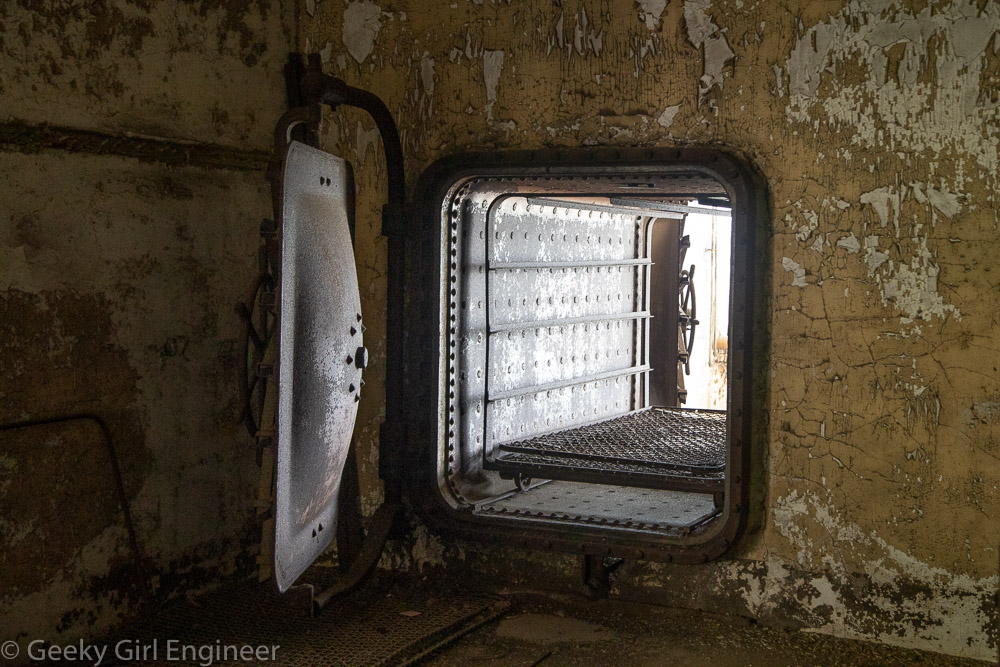
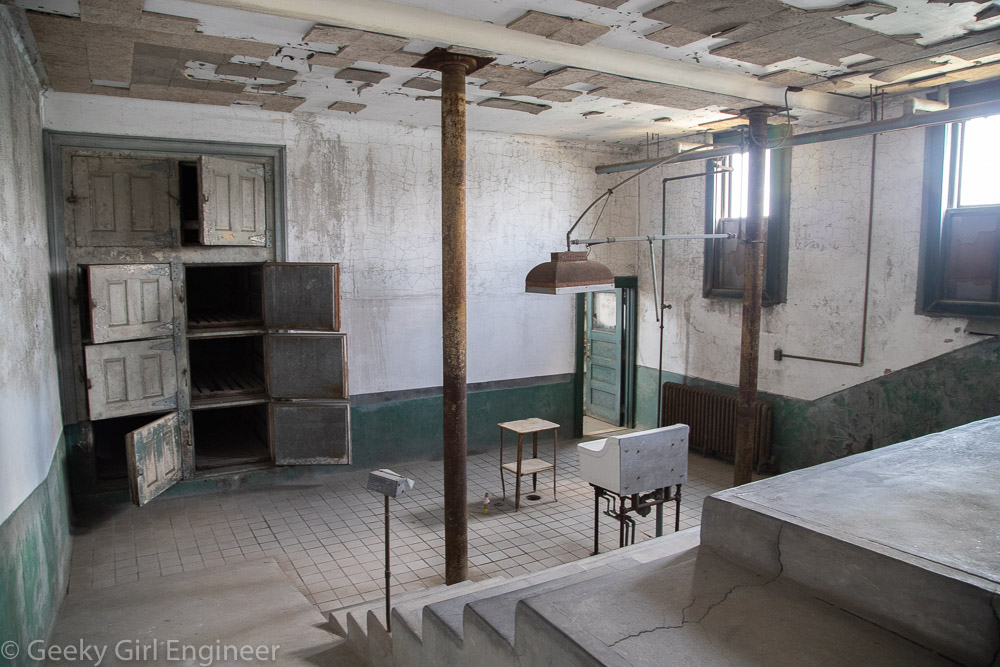
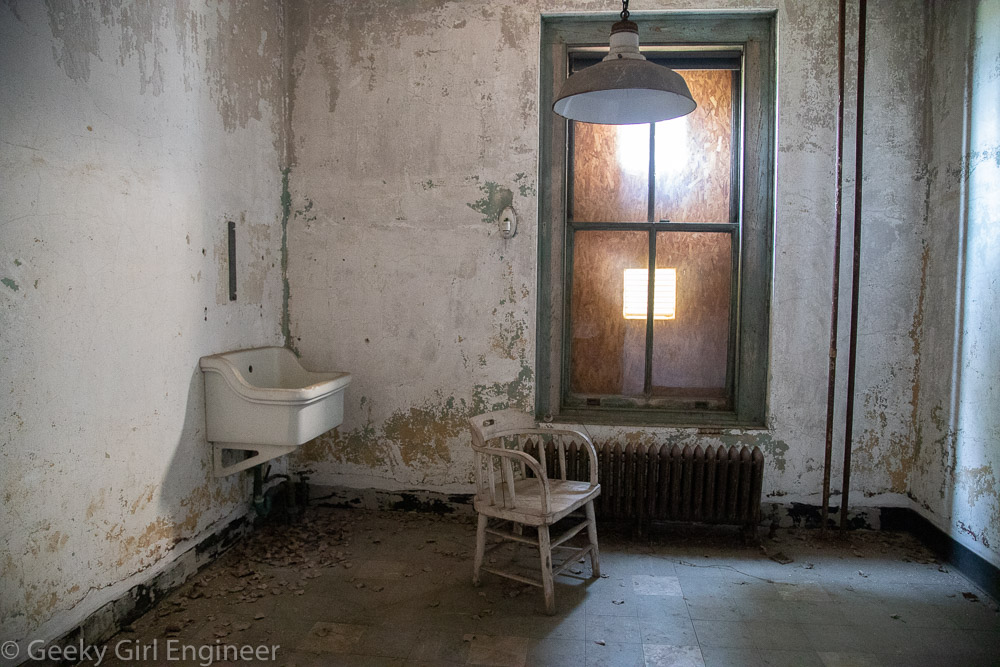
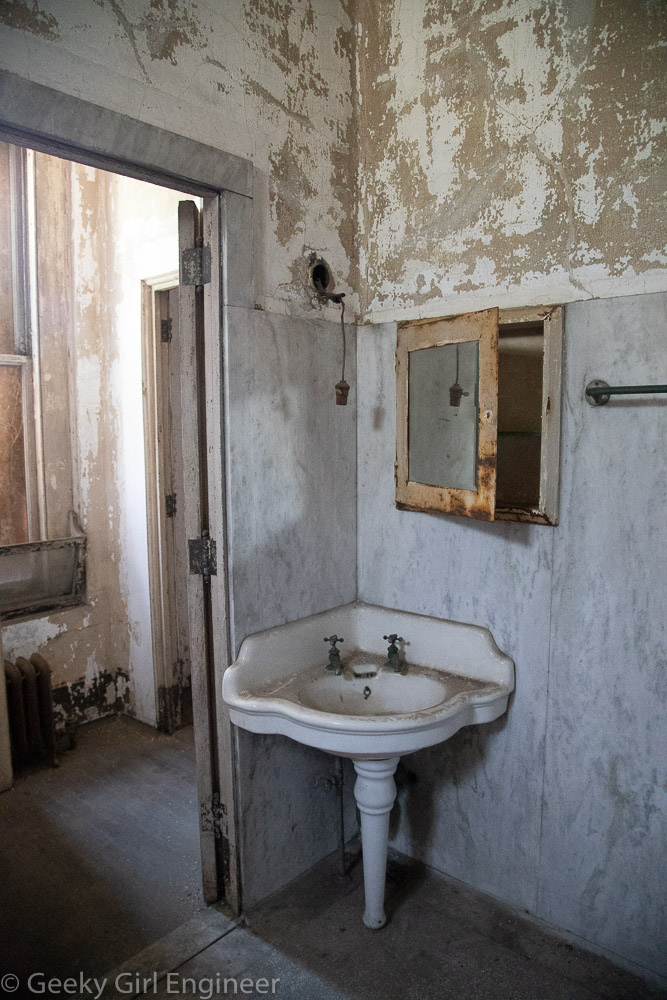
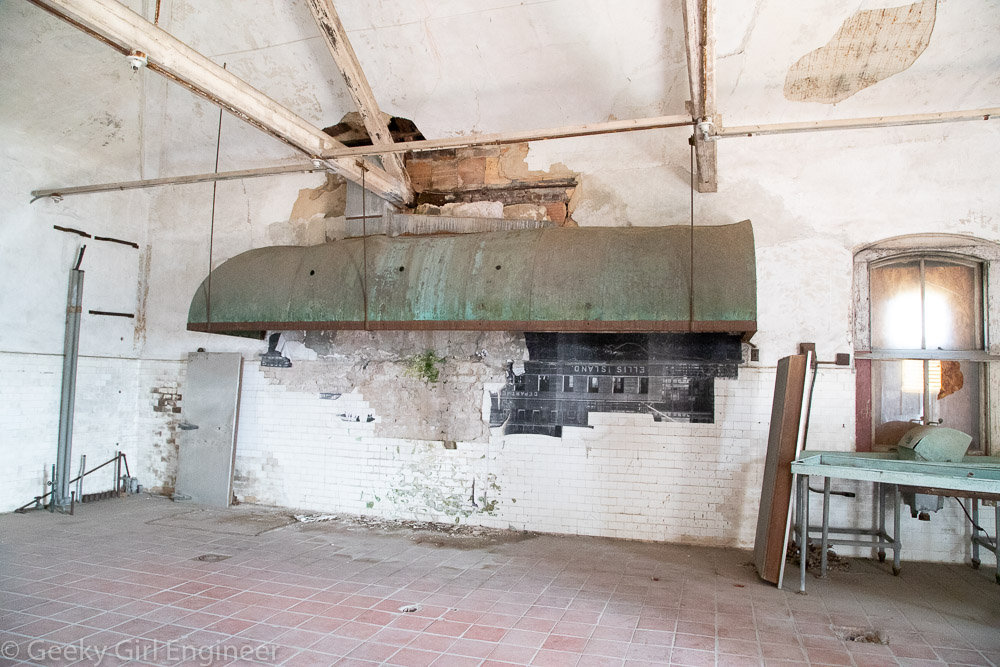
I went to New York City for a quick trip and finally did one of those tourist things that are generally on the last of my list to do. On several occasions, I have traveled to tour a wastewater treatment plant or landfill or some other engineering work, but pure tourist locations are things I go to if I can fit them into my schedule. I visited the Statue of Liberty a couple of decades ago, and I would like to go again. However, for this trip, I visited Ellis Island, partly because they had spots on the hard hat tour of the work being done there available. An interesting historic site plus engineering work definitely fits the bill of my interests. The original Ellis Island immigration building is open including the restored Great Hall (i.e. Registry Room) with numerous interesting exhibits. The hard hat tour however allows you to tour parts of the hospital on the other side of the island that are being stabilized and restored. The buildings are fascinating, especially from a modern viewpoint. [This immediately makes me wonder how someone in 100 years will view our buildings such as hospitals.] I also find the work being done to restore the buildings fascinating. The hard hat tour is a great way for the National Park Service to highlight work that is being done and needs to be done when there is funding. The tour is very informative, but I have to admit the tour could be a lot better. The main problem with the tour is trying to hear the tour guide. There is no audio technology used. It was only how loud the guide talked, and the guide I was with did never bothered to find out if those at the back could hear what he was saying. He rarely waited for everyone to catch up before talking, and as I was generally in the back trying to get photos, I missed half of what he was saying. The audio problem is compounded by the fact that area being toured is an active worksite, so there were also lawnmowers, banging, and other equipment noise in the background. Still, touring the area was fascinating and informative.

Note with the photos below that most of the buildings being restored have had all their windows covered with plywood that has a small plastic window and a ventilation panel. The plywood prevents the elements from getting in and further degrading the structures, and the window and ventilation panel helps prevent mold from growing inside the buildings.

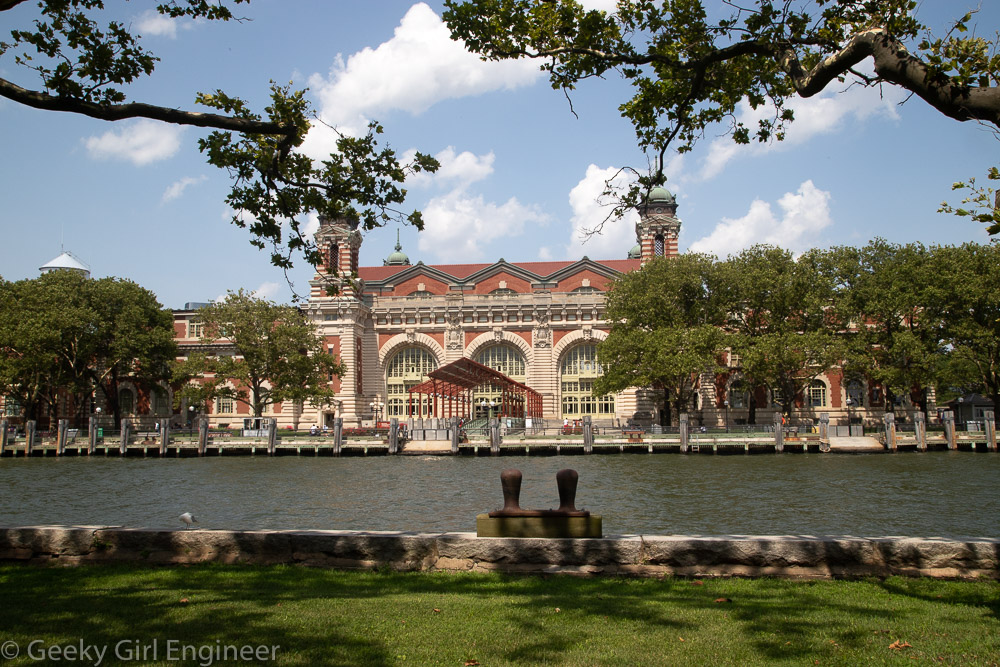
On hospital side of island looking at the original building where the Great Hall is

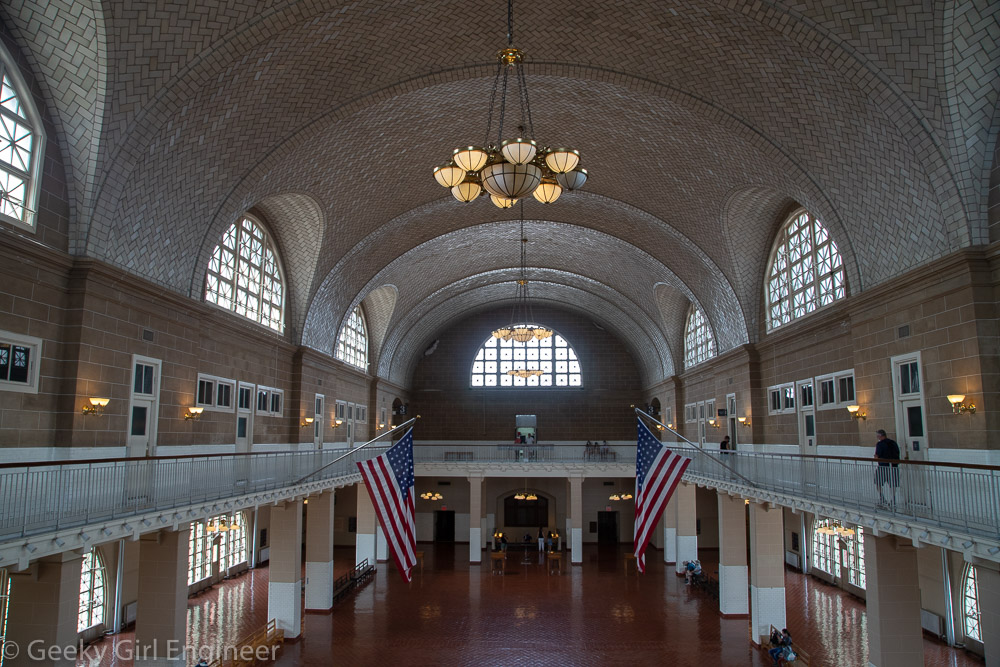
Ellis Island Great Hall (aka Reception Room)

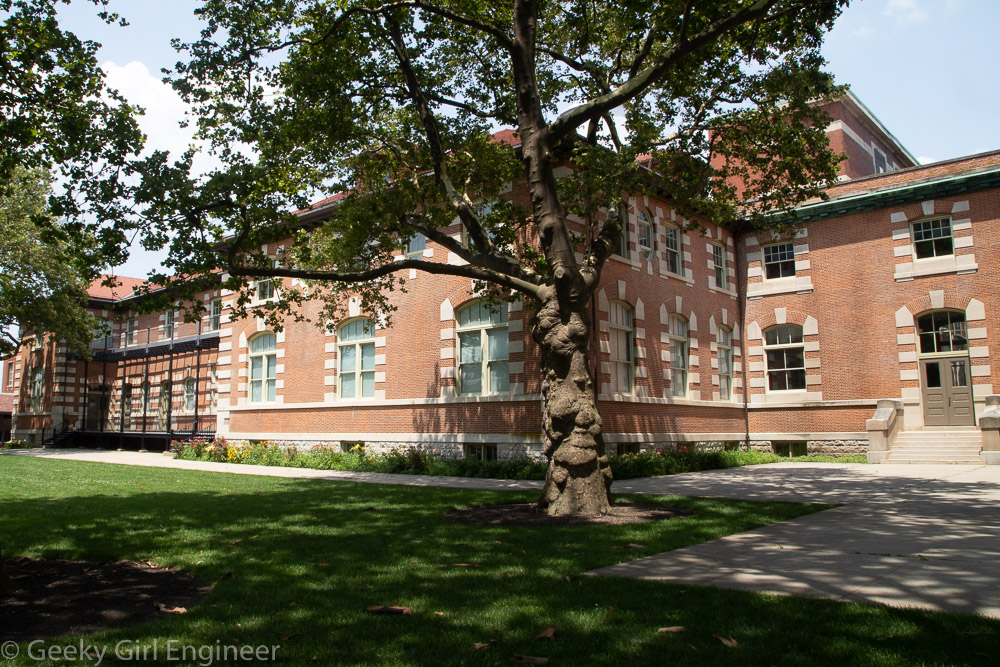
Building on administrative side of island

Hospital buildings

Laundry room

Hospital buildings

Hallway in hospital

Incinerator

Morgue

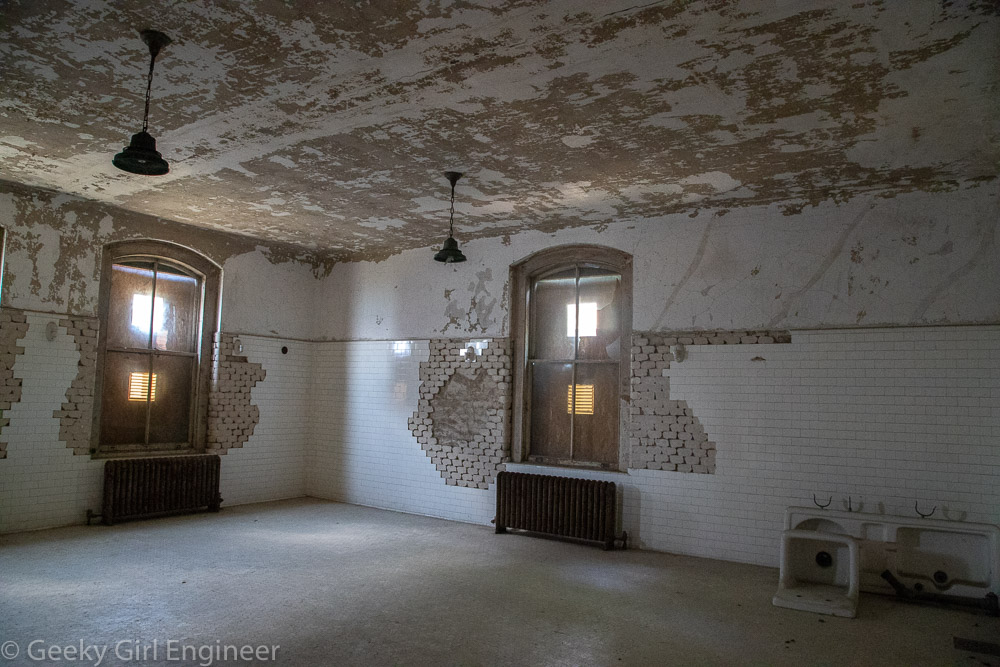
Hospital room

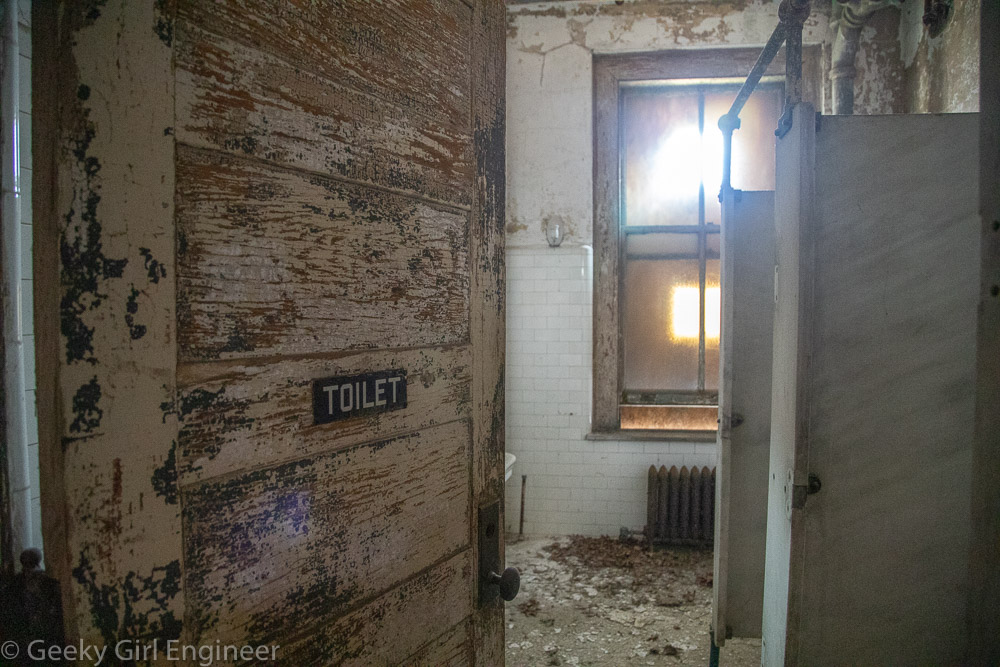
Bathroom in hospital

Hospital kitchen

Fixtures in a hospital room

Bathroom in hospital

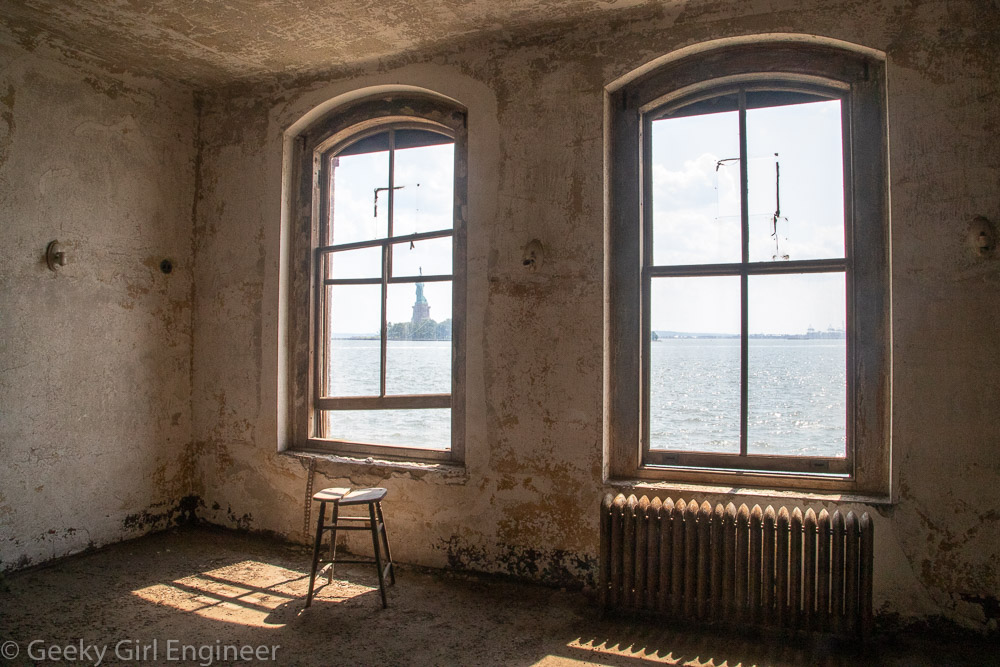
Hospital room looking towards Liberty Island

Room in contagious disease hospital

Alaska State Capitol

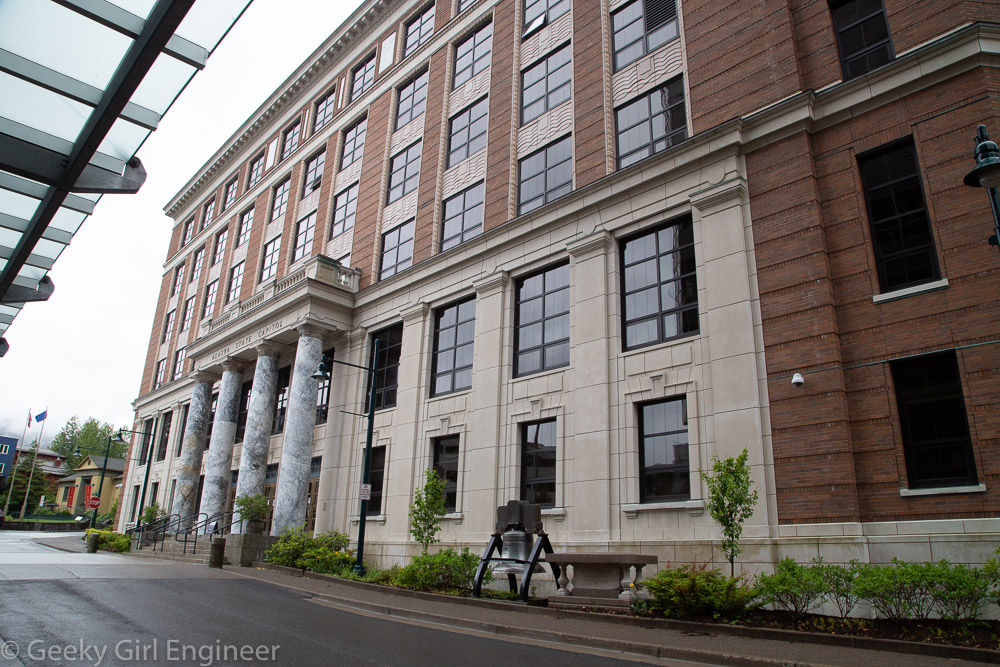
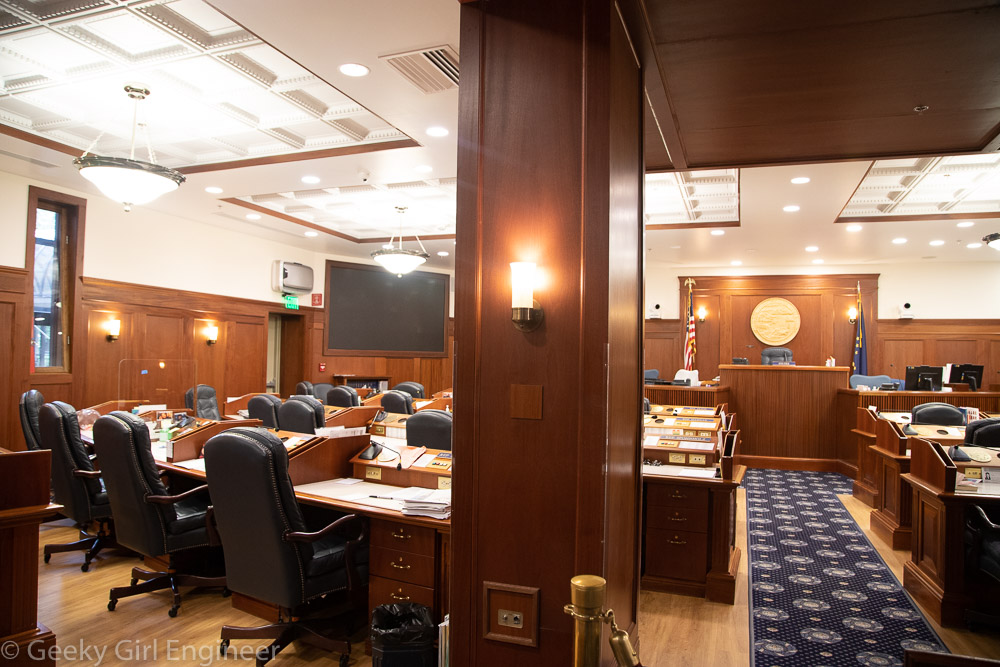
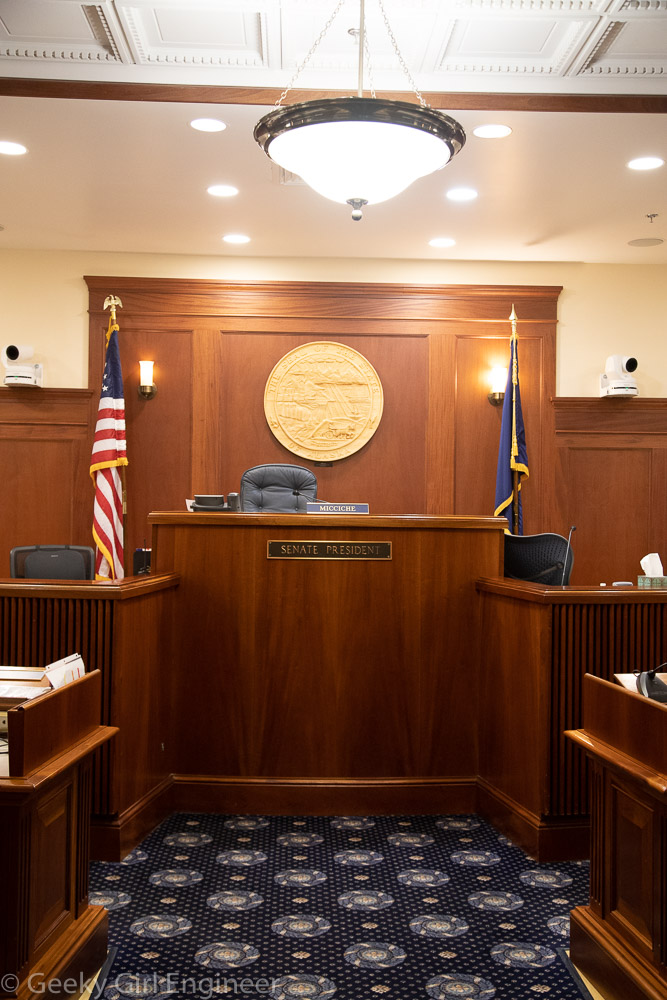
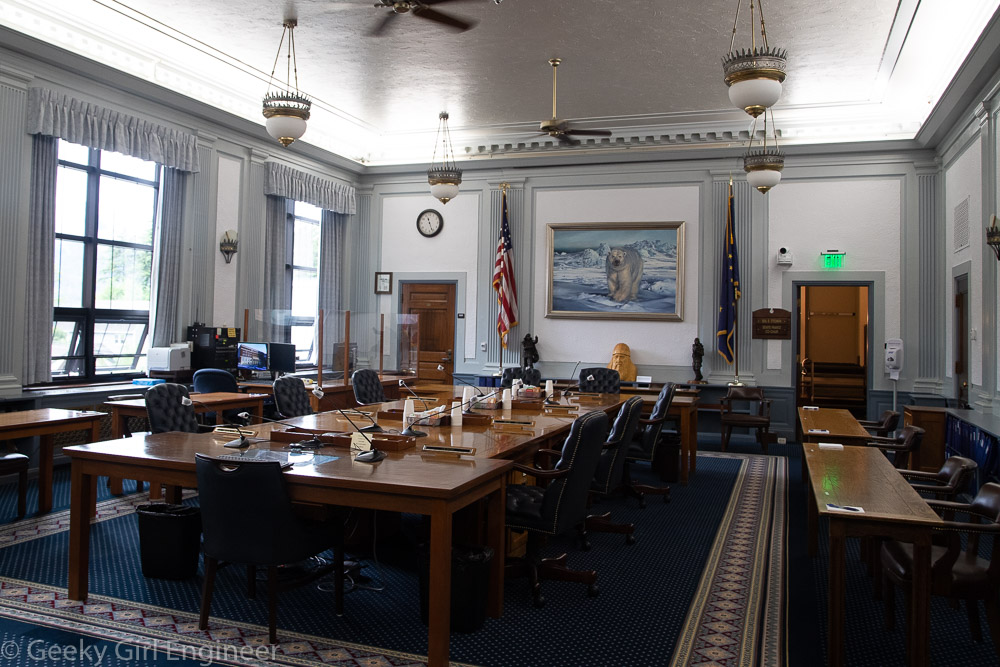
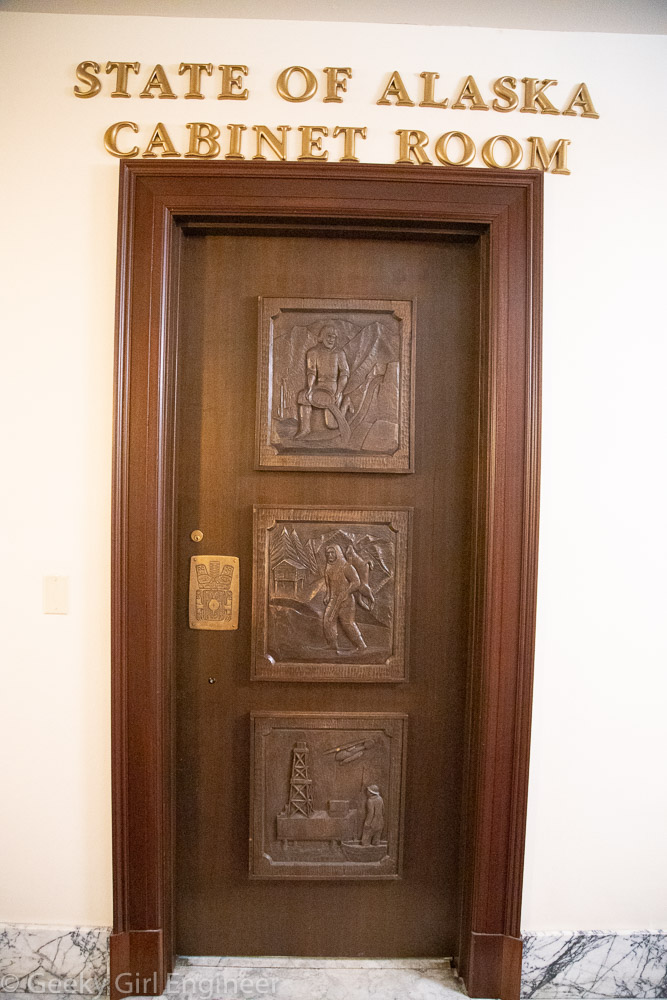
With this Alaska trip, I was able to accomplish one of the more difficult tasks in my quest to see all 50 state capitols, as Juneau is not the easiest capital to travel to. I also lucked out because it only opened less than a week ago before which it was closed because of COVID. The Alaska State Capitol is one of the, or perhaps the, least fancy state capitols. The building was formerly a courthouse, and then they turned it into the capitol. There is no dome or other fancy halls. It is an office building. It is lucky for the state, in a way, that they have so few residents because the senate and house chambers are small and used to be courtrooms. There are also quite a few old photos and lots of Alaska Native art, which are quite nice to see.

Alaska State Capitol exterior

House of Representatives Chamber

Senate Chamber
Senate Finance Committee Room

Alaska Natives carved door

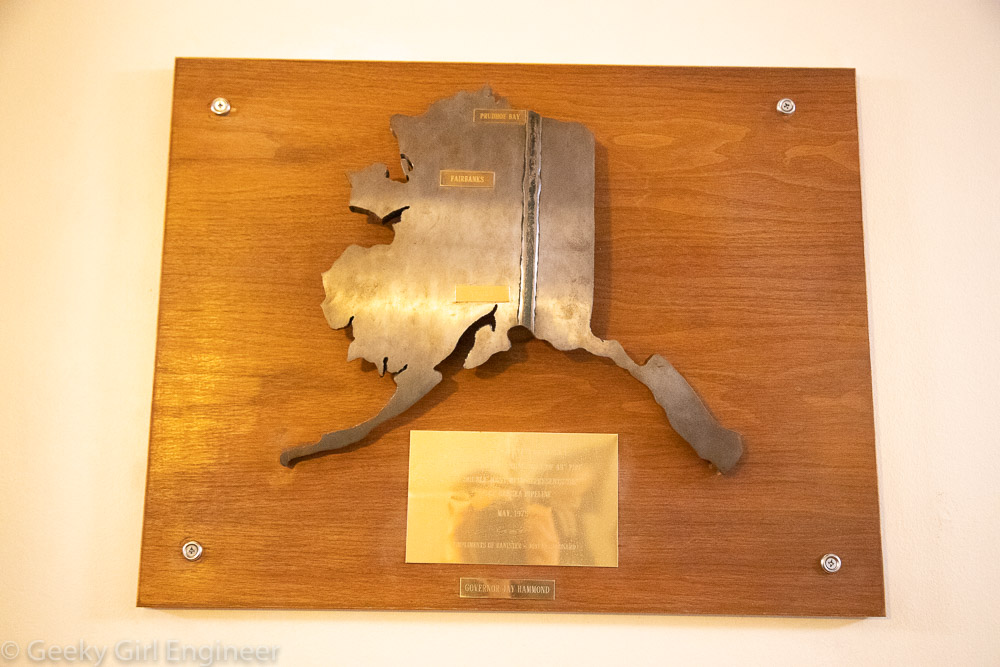
Map of Alaska cut from piece of 48 inch pipe used to construct Trans-Alaska pipeline. Weld represents 800-mile route of the pipeline from Prudhoe Bay to Valdez.

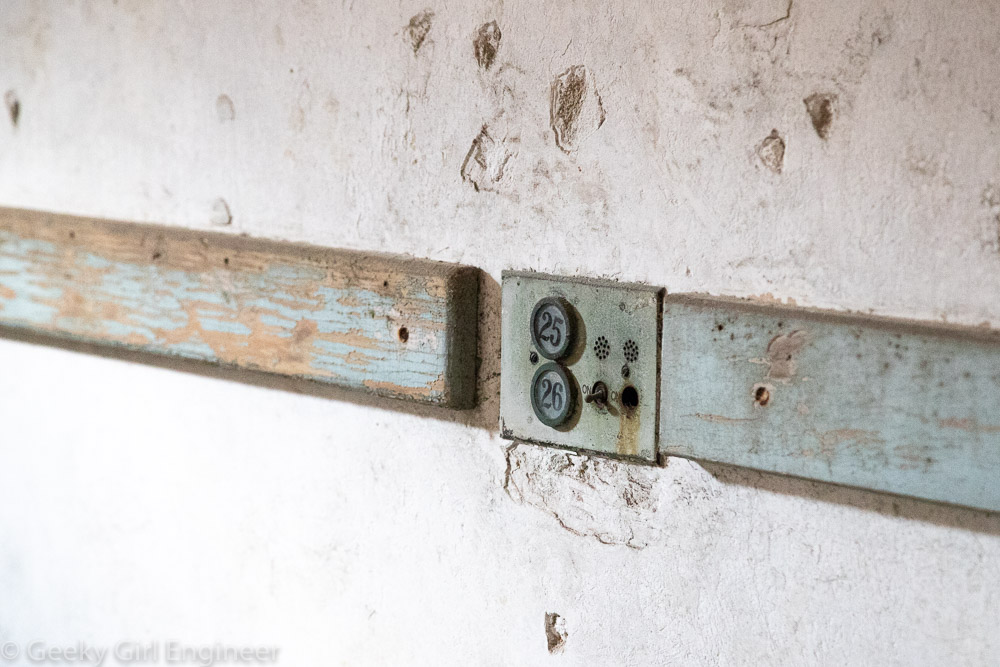
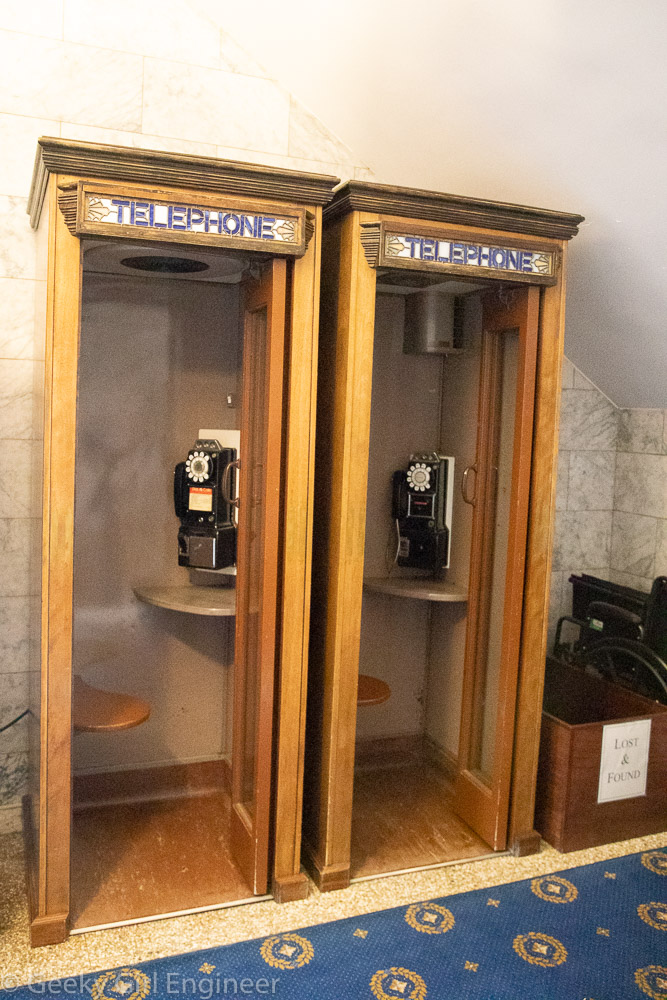
Phone booths (phones do not work, I checked)

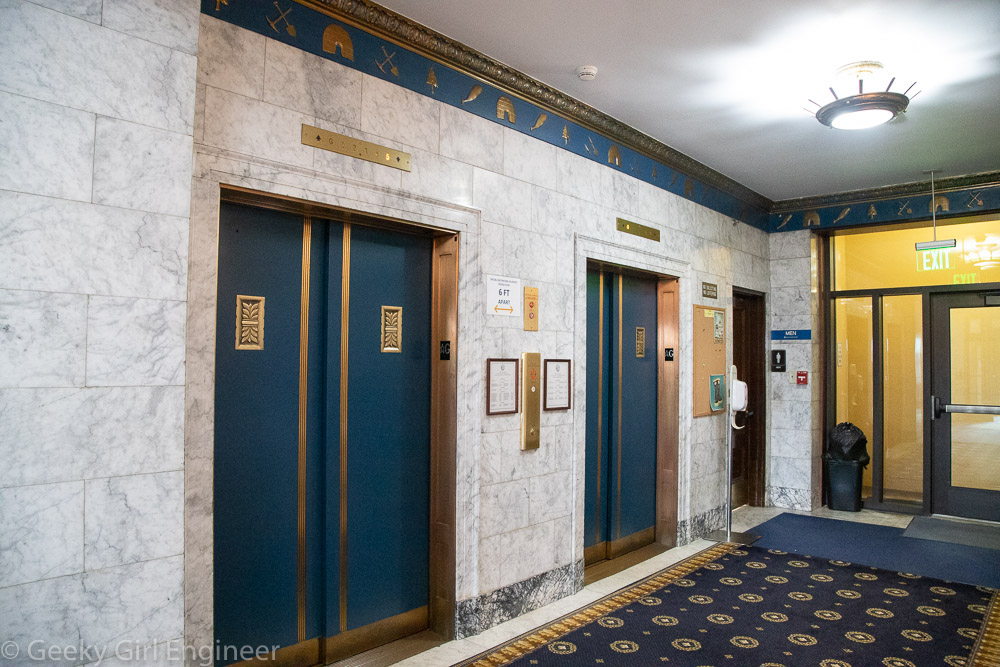
Elevator bay

Totem Bight State Historical Park

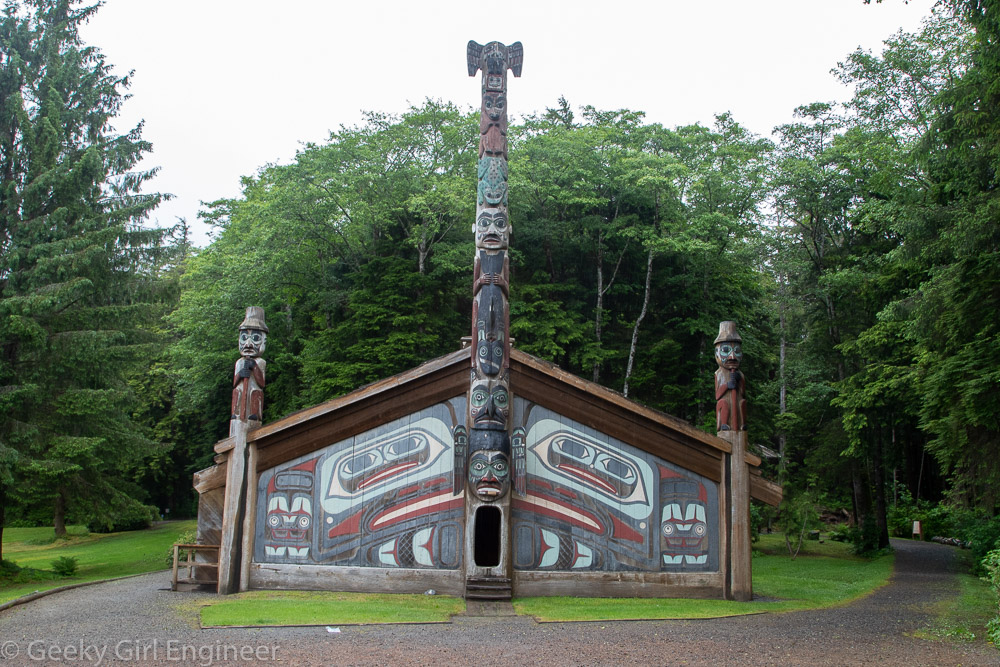
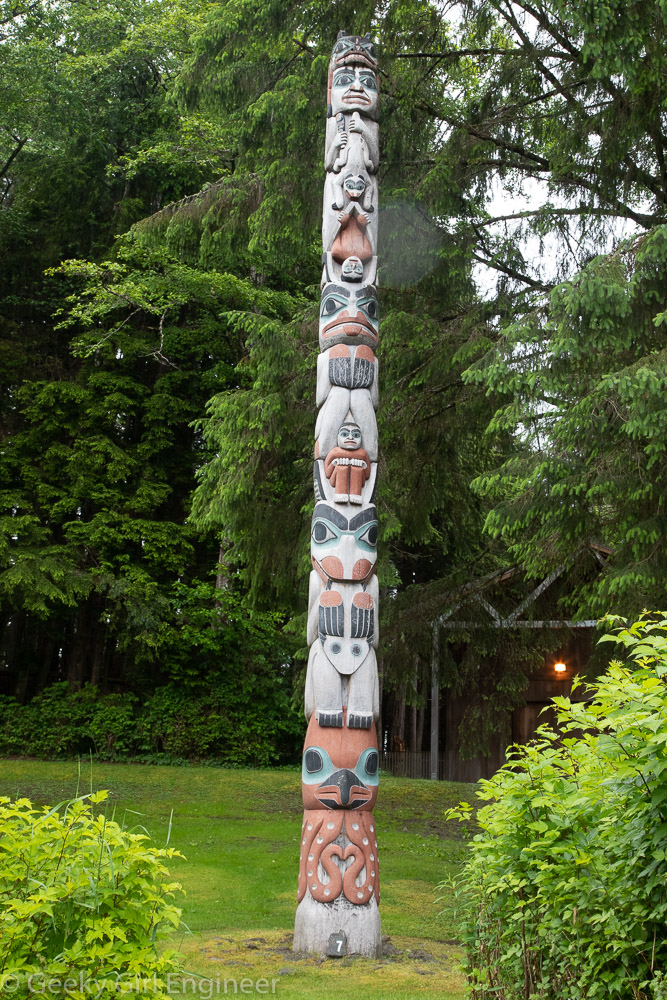
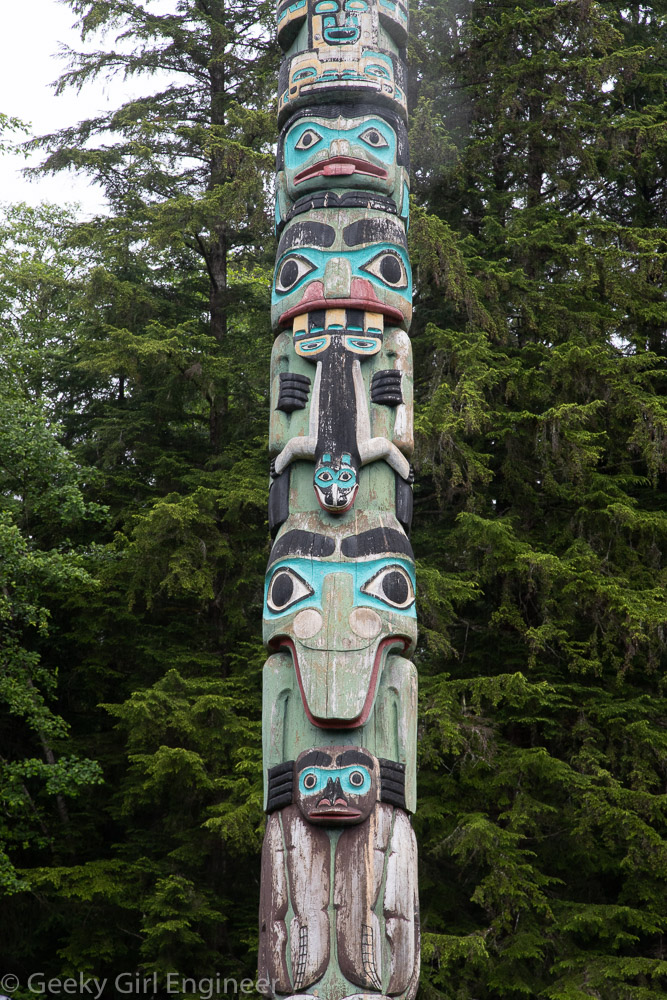
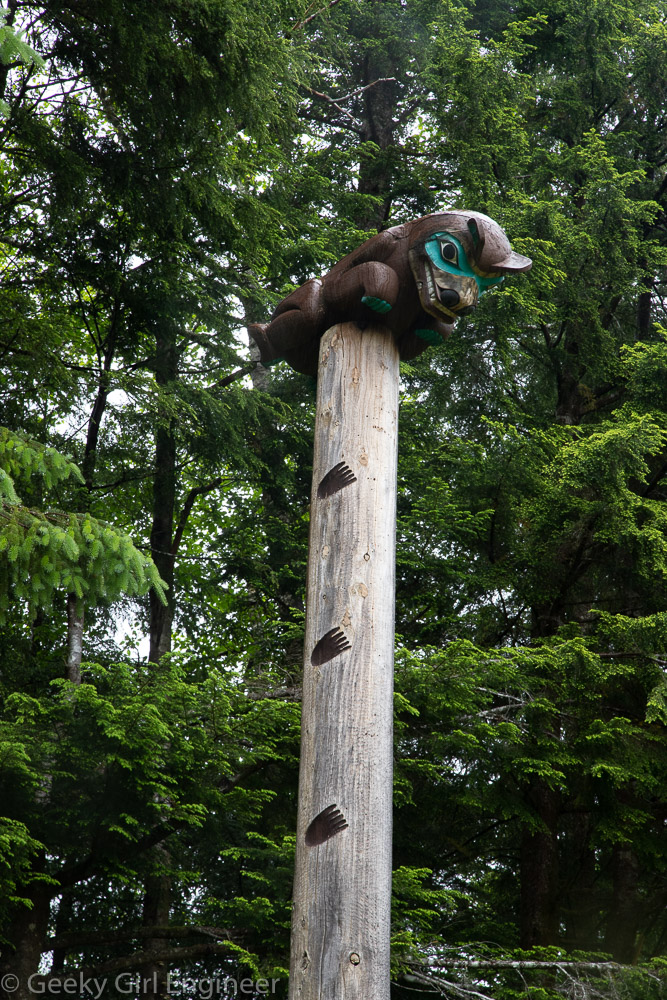
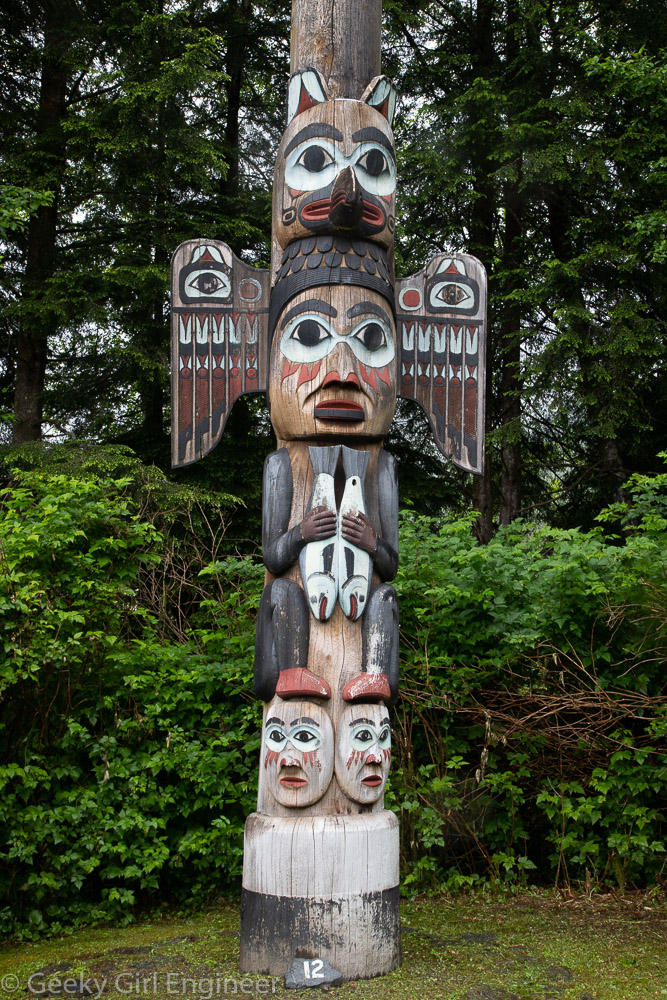
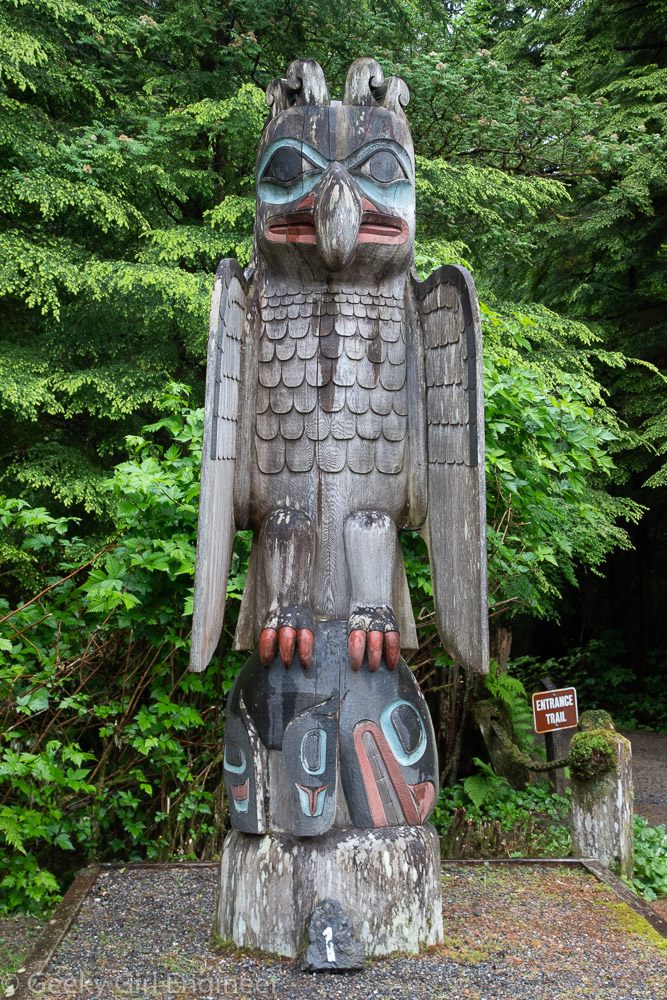
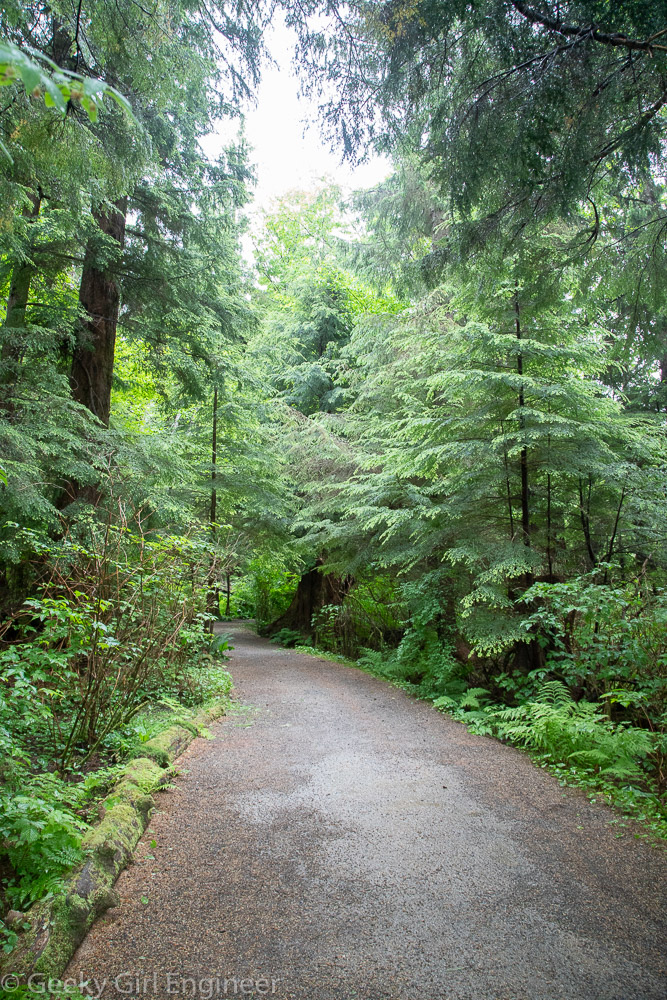
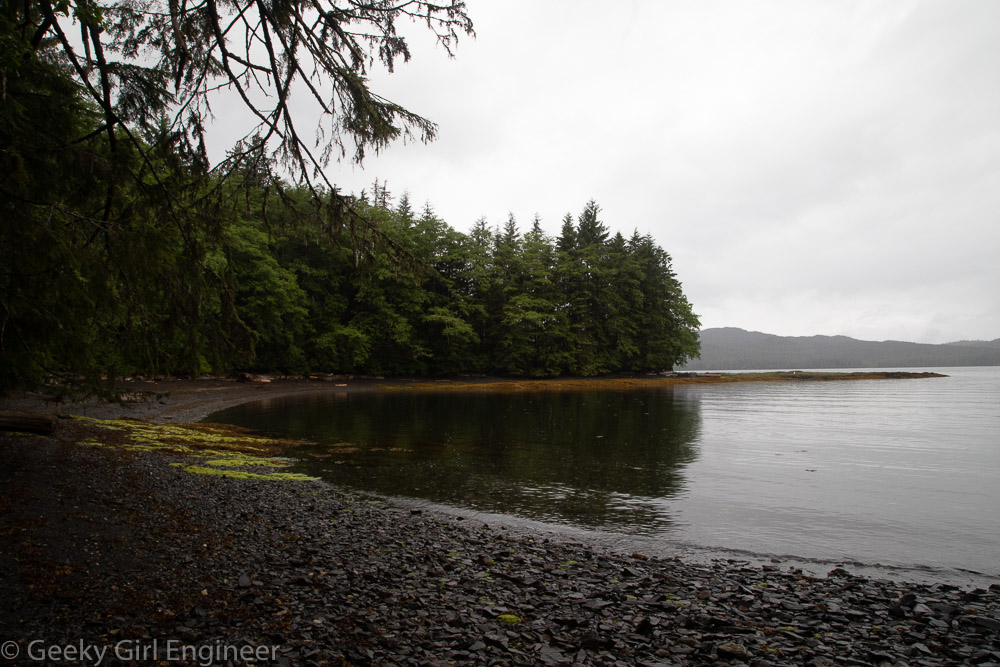
I visited Totem Bight State Historical Park in Ketchikan today. It contains numerous totem poles, some of which are reproductions and some of which are inspired by older totem poles. Because they are newer, they are still colorful, which helps in understand both their meaning and also what the original poles looked like. There is also a gorgeous clan house, which you can go in. The park also features a short but nice walk through the temperature rainforest and also a beach.
Clan House

Land Otter Pole

Sea Monster Pole

Kaats’ Bear Wife

Kadjuk Bird Pole

Thunderbird and Whale

Trail

Beach area

Bergamo, Italy

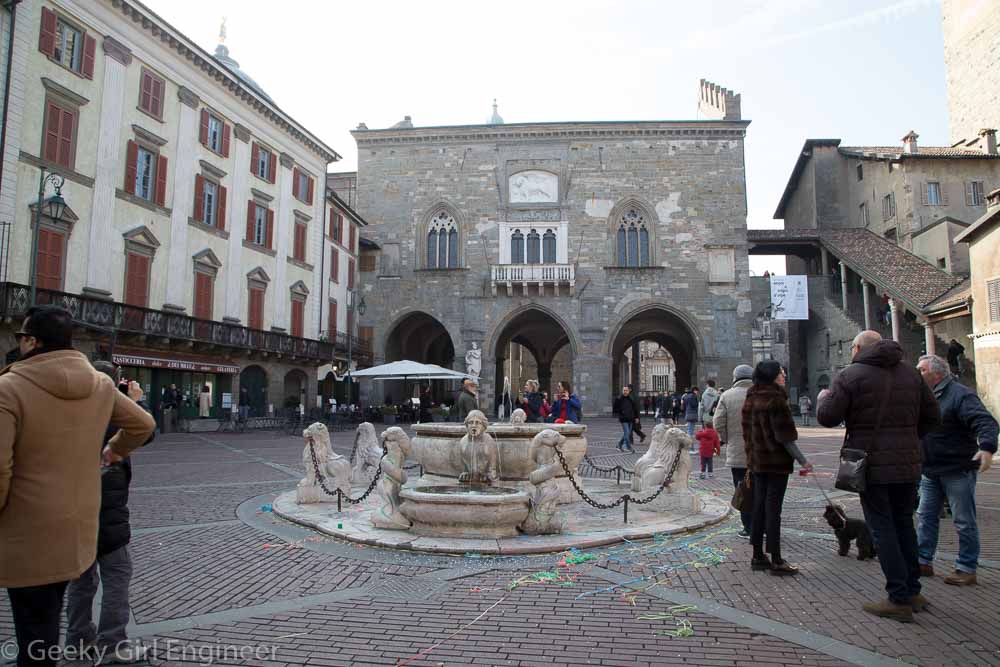
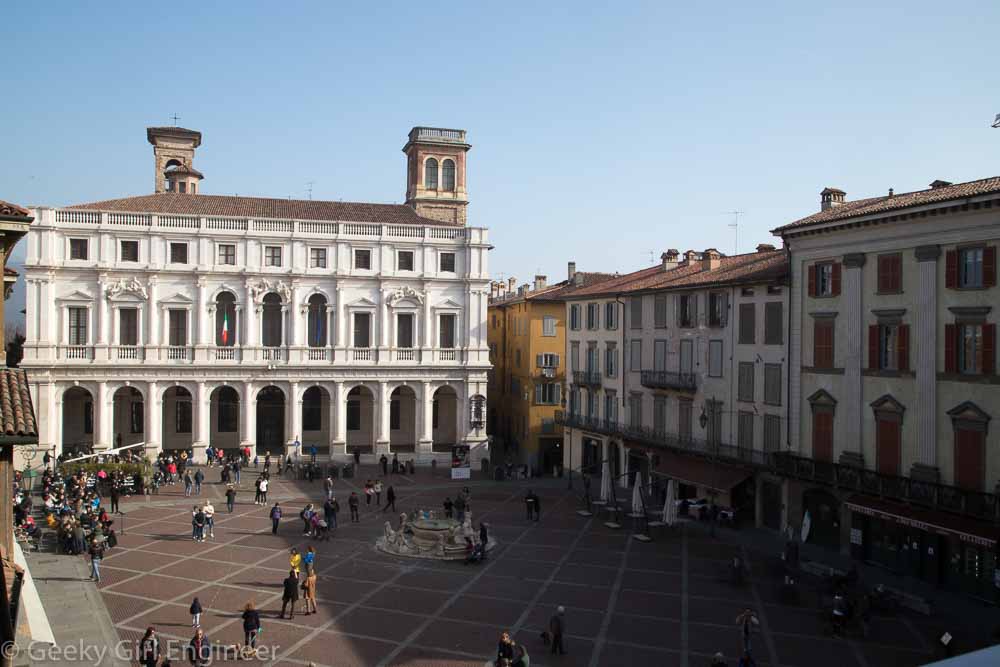
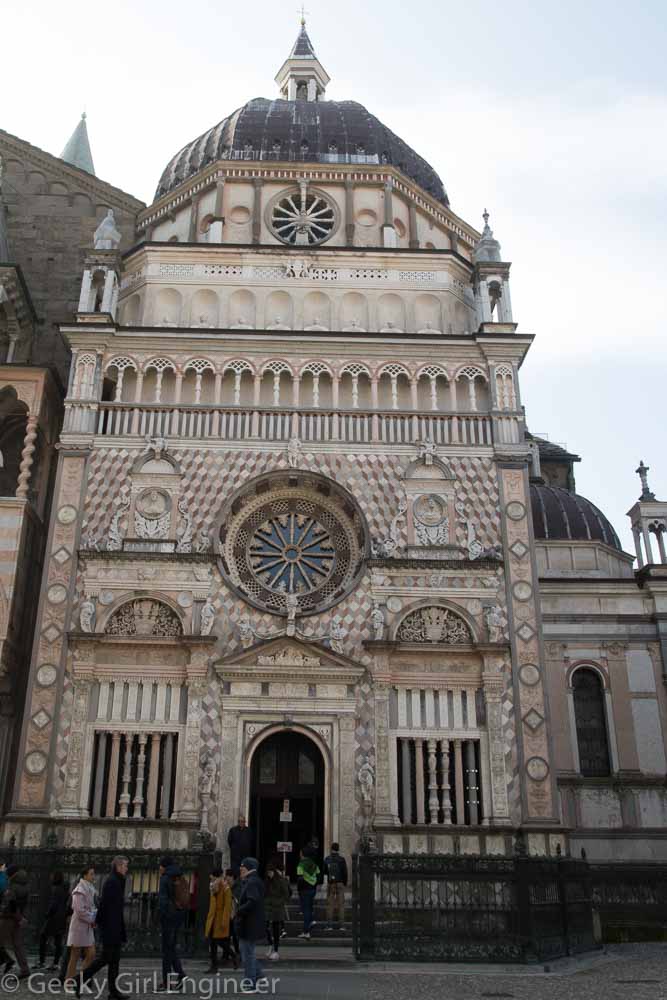
Today, my tour group left Verona for Como. We spent a couple of hours in Bergamo along the way. The new area of Bergamo is in the lower (elevation wise) part of the city. The older part of Bergamo is on top of a hill surrounding by a wall because everything old seems to be surrounded by a wall in these parts. I now believe I understand just how much the Romans were all about the walls. Bergamo is a cute little town that has two real important parts. First, it has a gorgeous chapel that is a mausoleum for a rich military man named Bartolomeo Colleoni, who evidently switched sides between Milan and Venice, and importantly is not to be confused with the fictional Corleone family of The Godfather. [Our tour guide was clear on this point.] Second, it was the birthplace of Pope John XXIII, and the cathedral has a permanent exhibit about this including his coffin, but not his body.

Bell tower
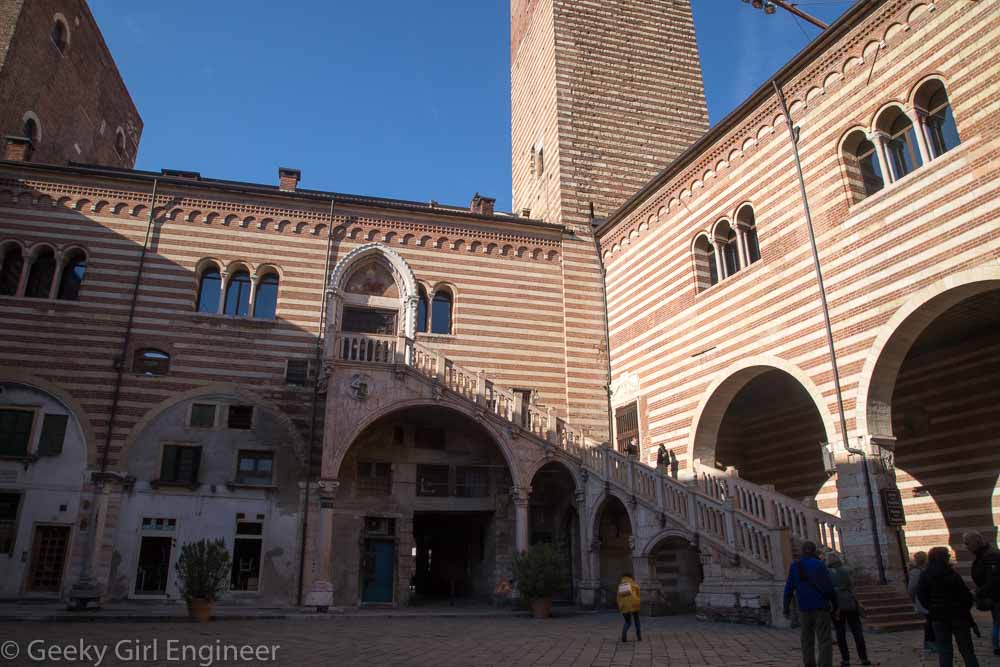
Palazzo della Ragione
Piazza Vecchia
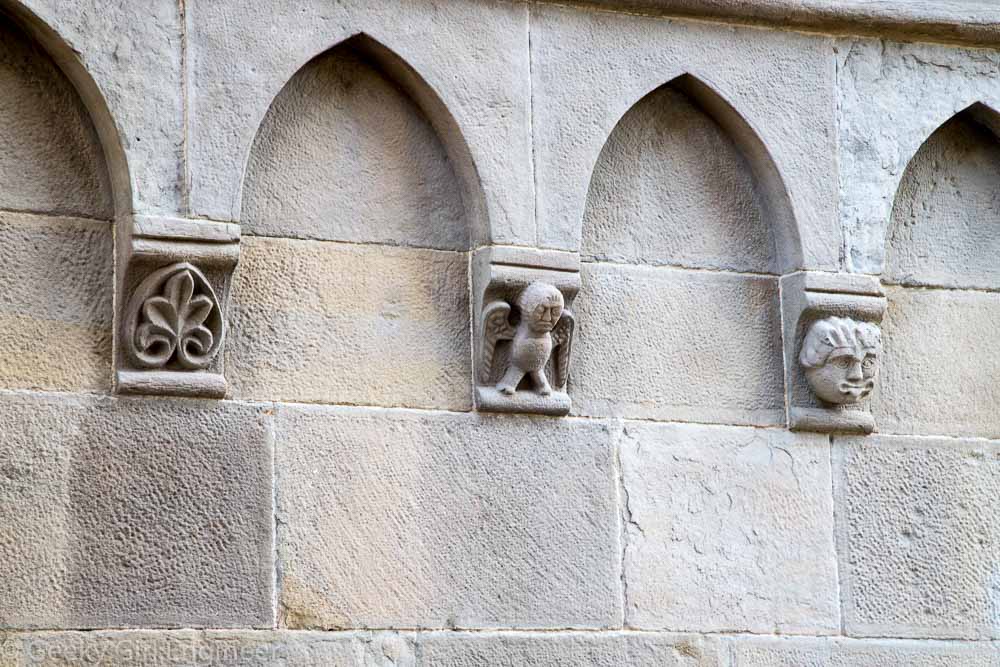
Palazzo della Ragione. The middle carving has me thinking of questions.
Cappella Colleoni
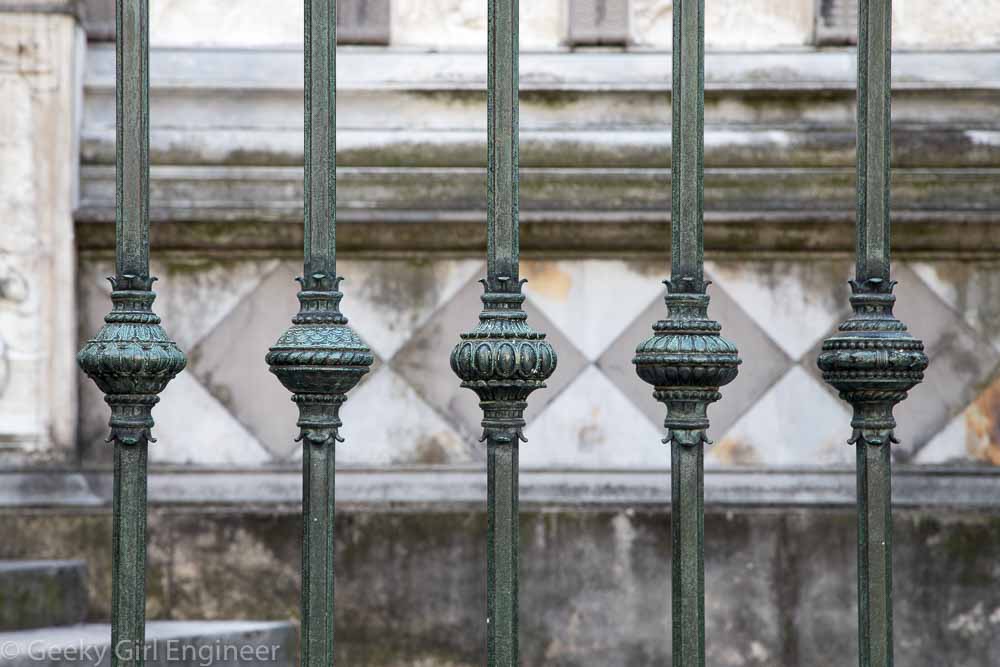
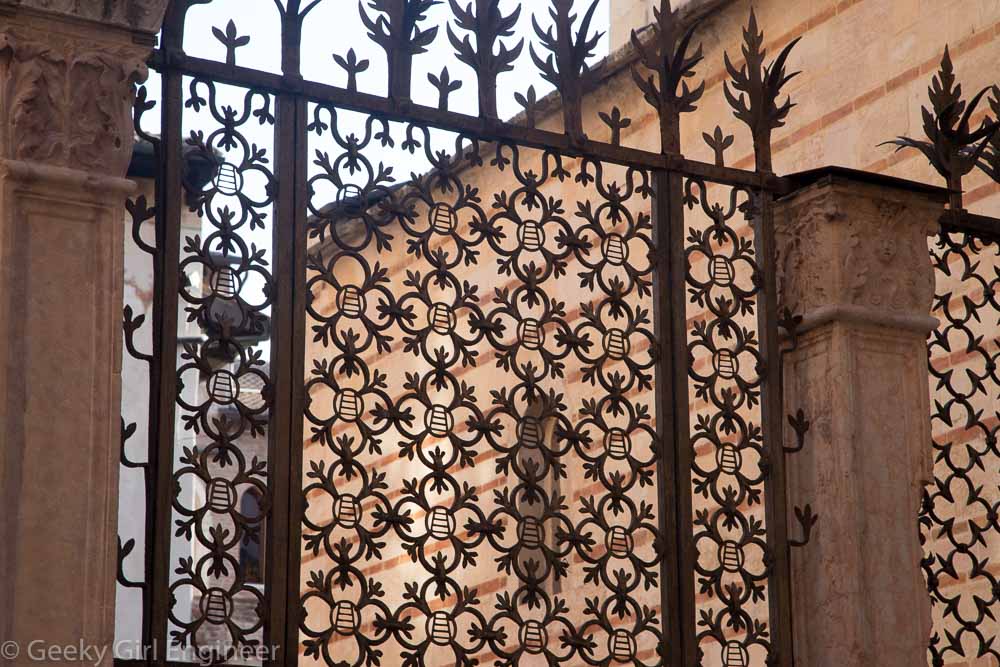
Cappella Colleoni fence
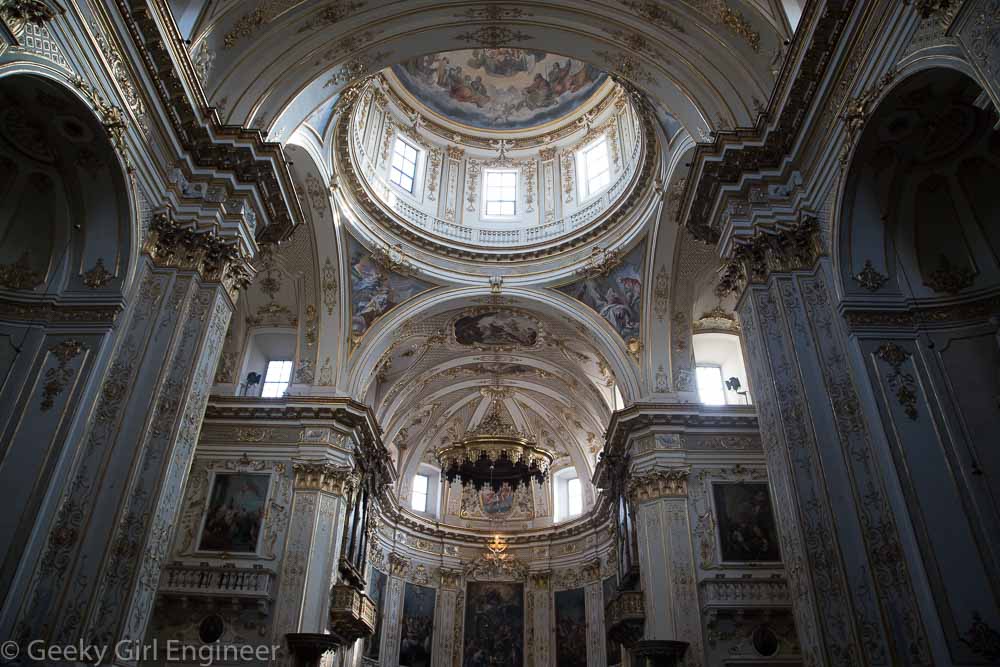
Interior of Duomo di Bergamo

Sirmione, Italy

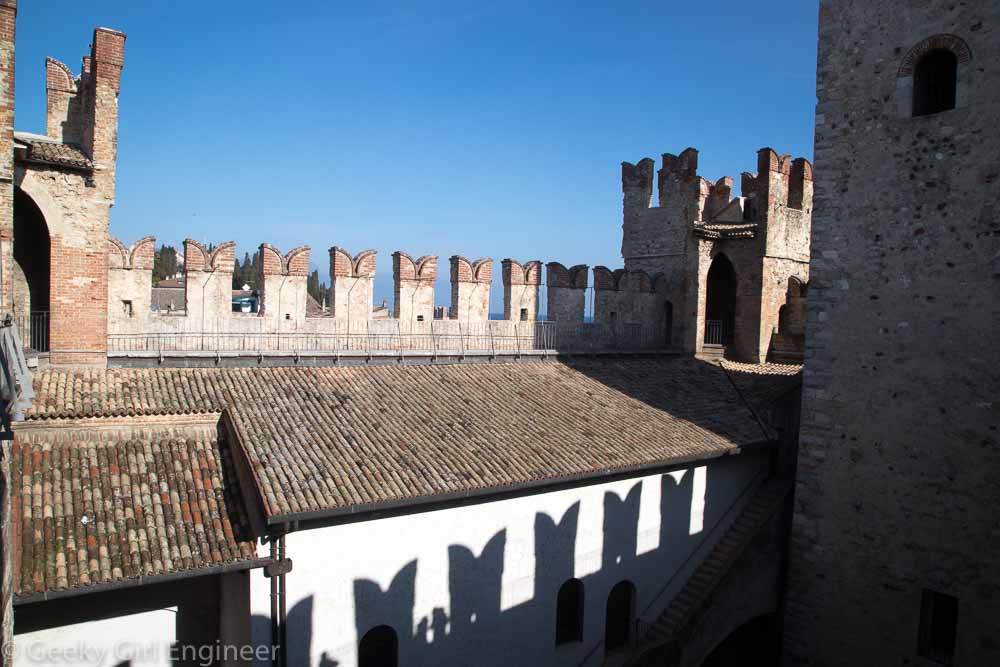
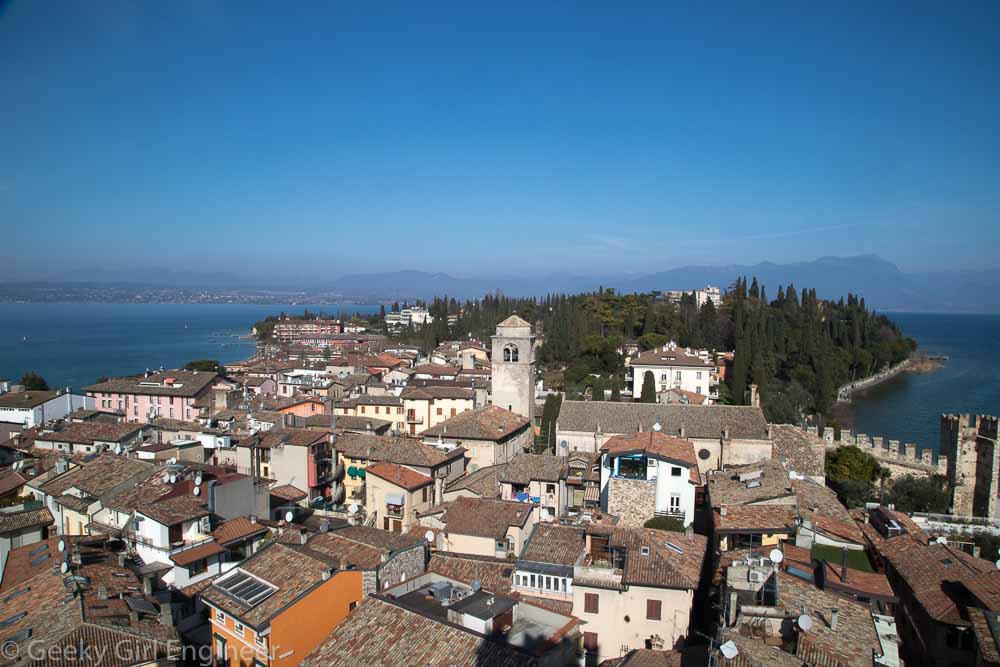
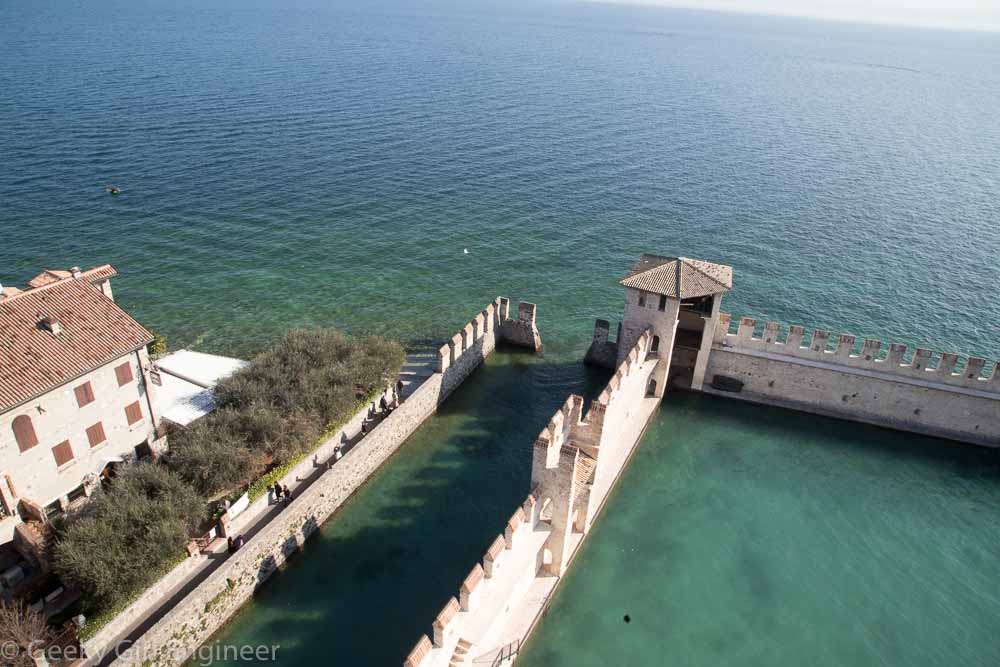
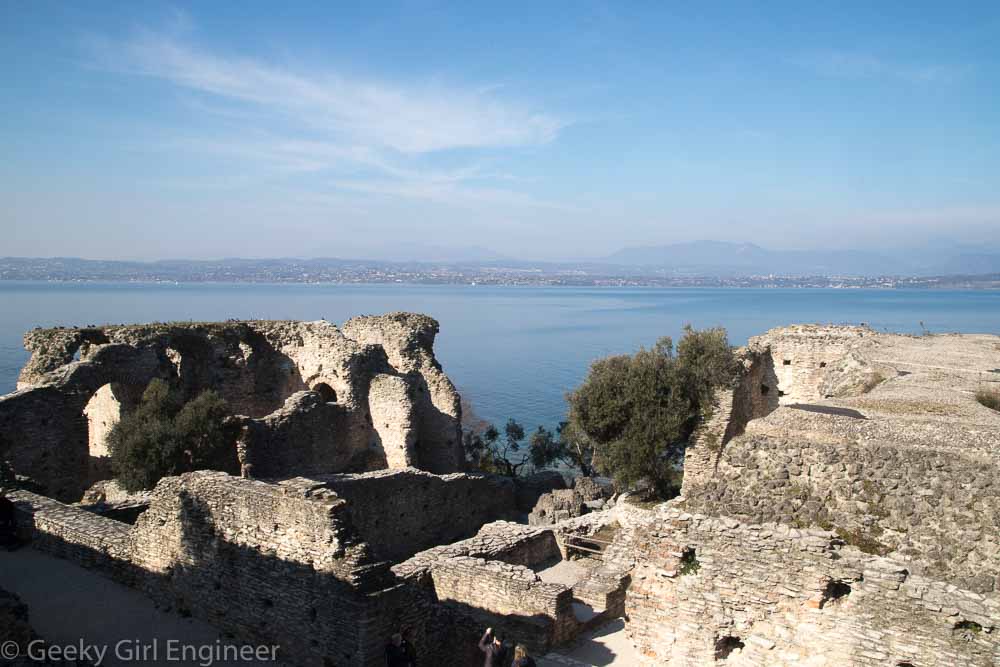
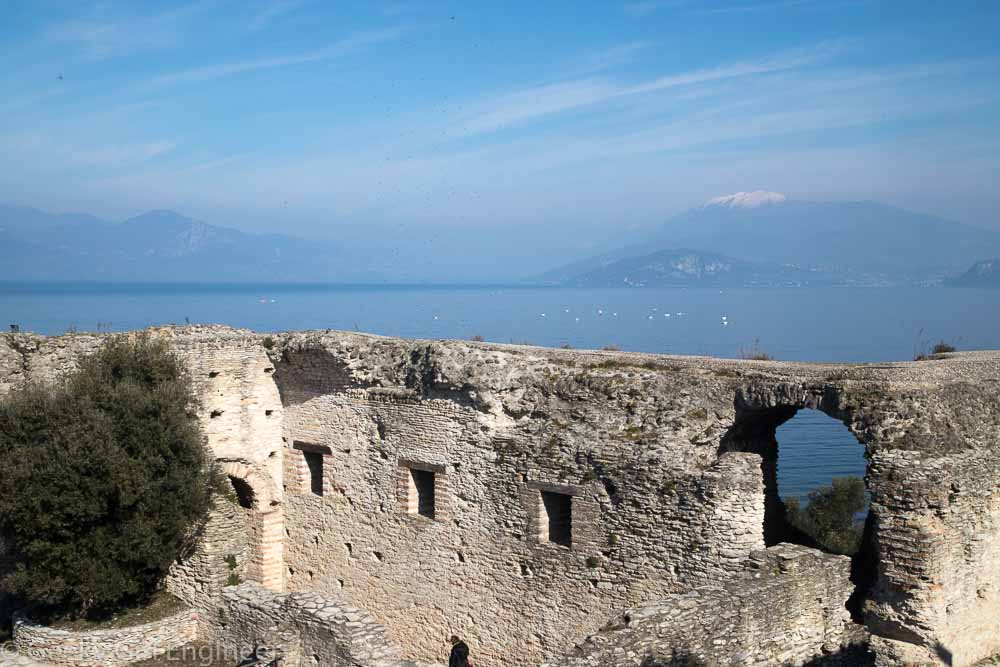
Today, my tour group visited Sirmione, which is a little town at the end of a tiny peninsula in Lago di Garda (Lake Garda). There is a well preserved castle there and an archeological site from the Roman era. There are also many hotels and spas in between. Climbing to the top of the tower of Castello di Sirmione provides amazing views of the lake and surrounding area including the mountains to the north. The archeological ruins appear to be of a pleasure villa at the very end of the peninsula, so it seems the area has been used for the same reason since the Romans.

Castello di Sirmione
view from Castello di Sirmione
Castello di Sirmione
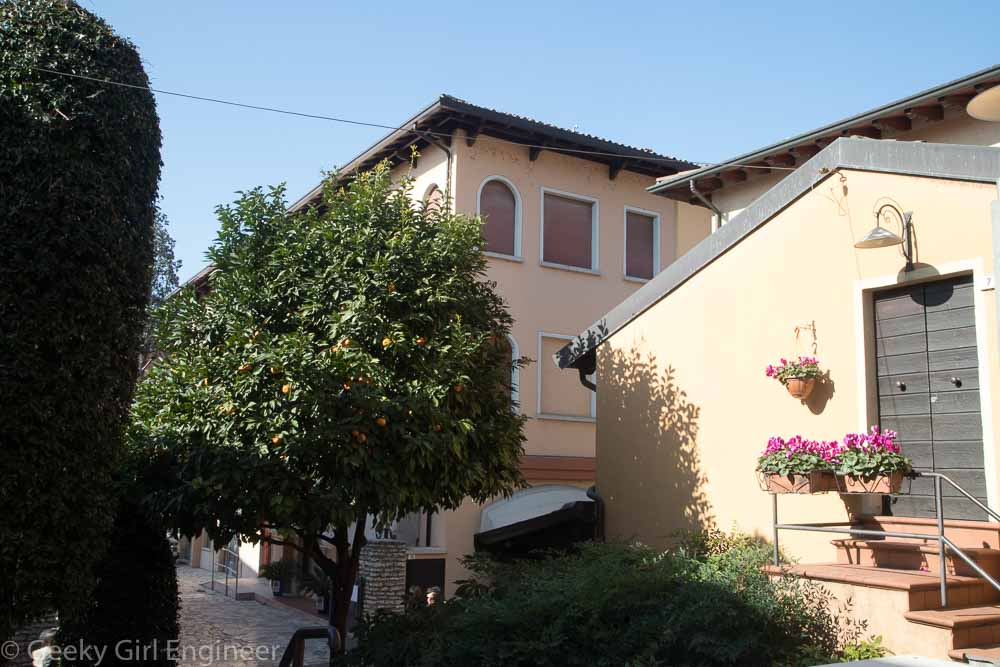
Sirmione
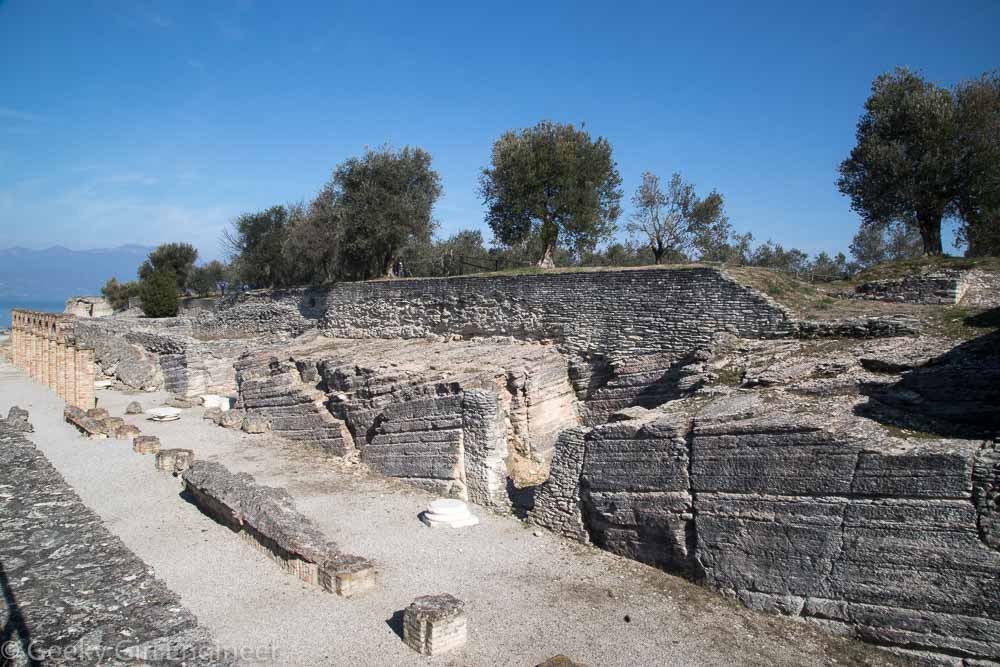
Archaeological site of Grotte di Catullo

Verona, Italy

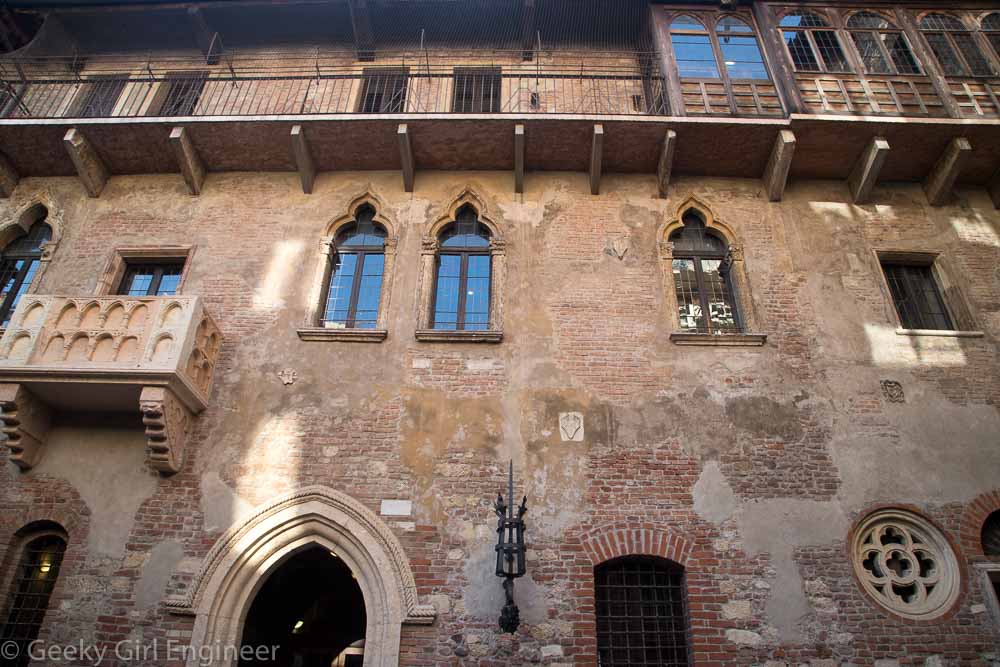
Yesterday, my tour group arrived in Verona, and today I had the whole day to explore it. Verona is a lovely, old city. It has remnants of when it was part of the Roman Empire, and it also has Venetian influences, as well as others. The city is the setting for Romeo and Juliet, and it fully embraces it. [It is also named in the title of The Two Gentlemen of Verona and part of its setting, but the city doesn’t seem to care about that.] According to our guide, Romeo and Juliet seems to be a mix of myth and truth. There were two families who lived here named Cappello and Montecchi, and there may have been teenagers from those families who committed suicide after falling in love. Short stories were written about it, and supposedly Shakespeare used those as starting material. Interesting note, Juliet is very popular here, and people write letters to her, and everyone goes to see a balcony that did not exist before Shakespeare that was supposed to be hers. [Juliet having a balcony seems to be partially a translation issue, as in the play, she was probably opening her window shutters.] Anyway, Romeo doesn’t seem to be nearly as popular as Juliet. Hardly anyone writes him letters. Poor Romeo.

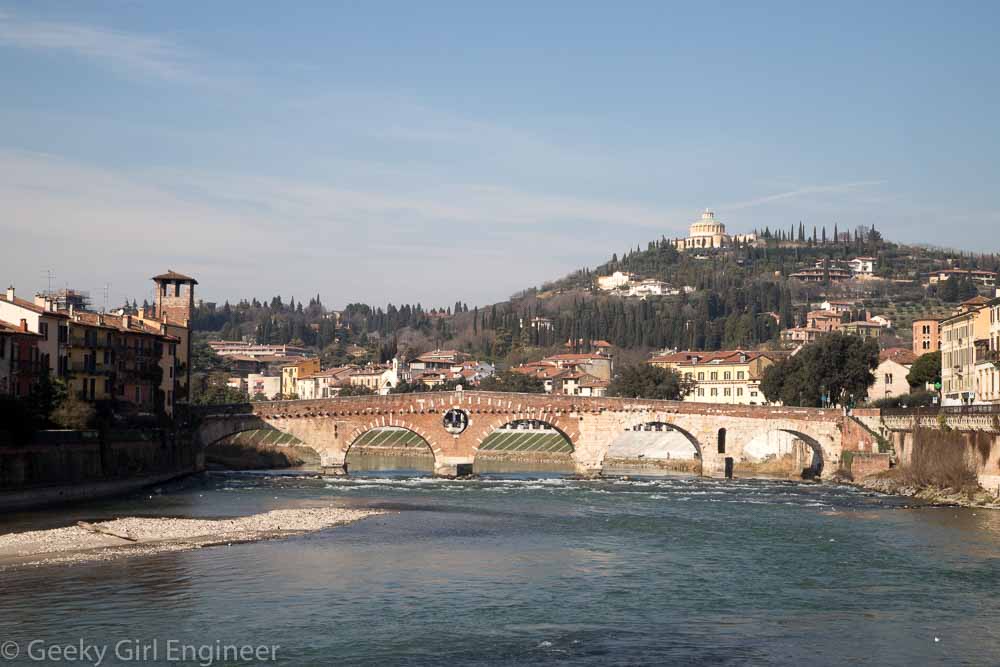
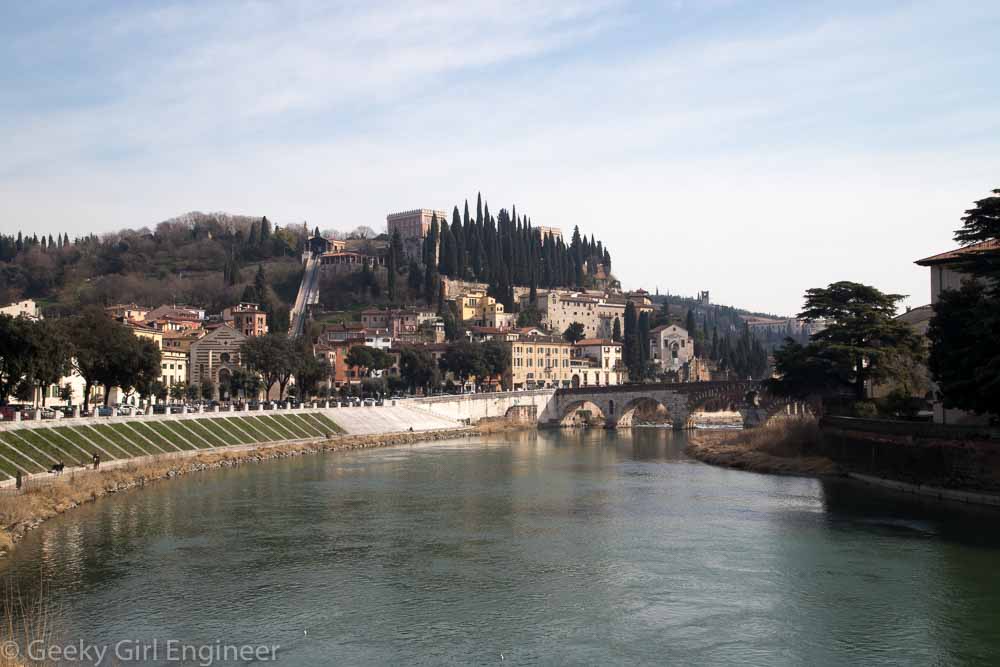
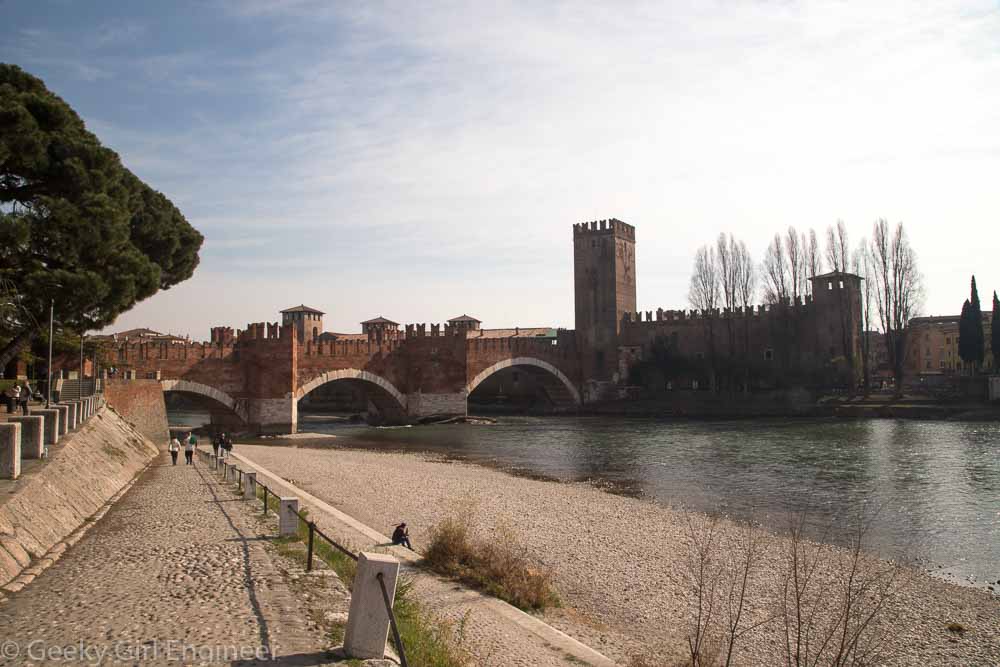
Besides Romeo and Juliet, the old part of Verona is lovely to walk around. The Adige River flows around the old part of the city, and walking along it provides lovely views of the city and surrounding area.

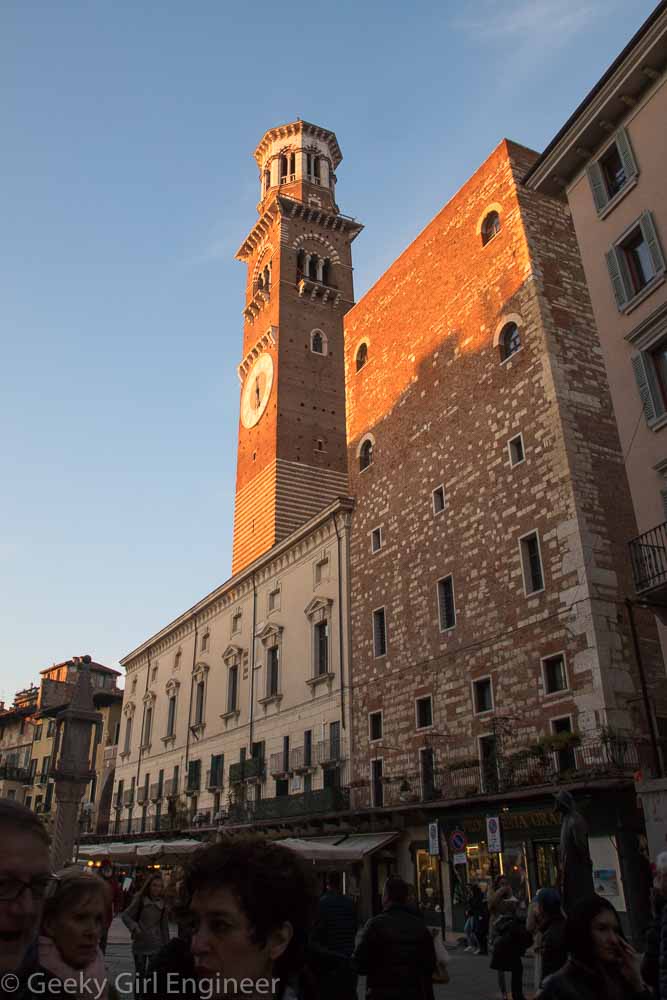
Palazzo della Ragione tower
Palazzo della Ragione
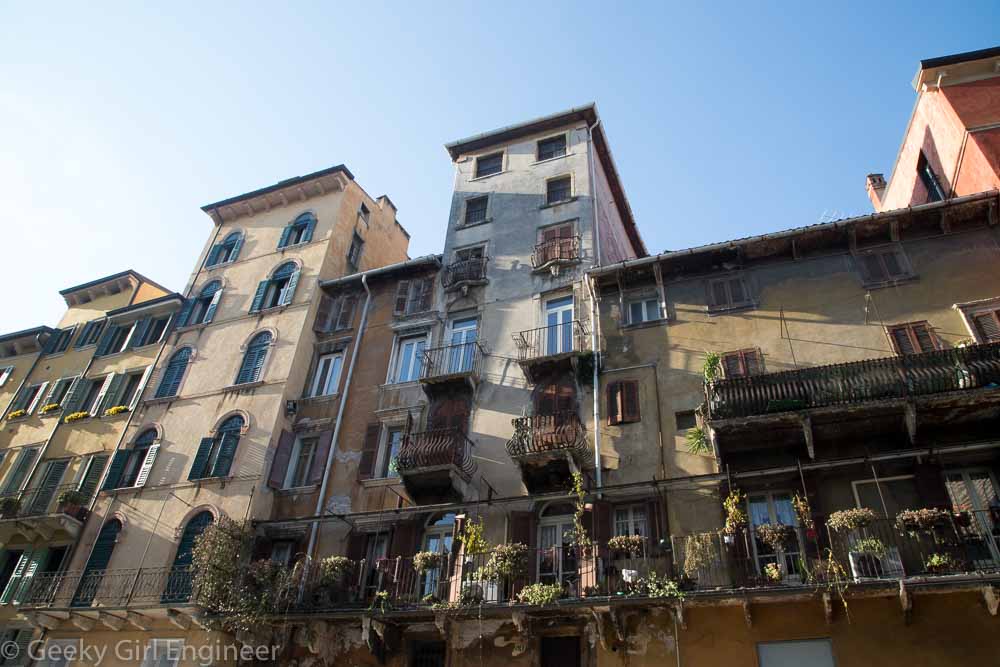
Piazza delle Erbe houses
Juliet’s house. The balcony on the left is Juliet’s balcony. It was added later, and it is made from a sarcophagus as the artist was trying to show the beginning and end of life.
Gate to Scaliger Tombs
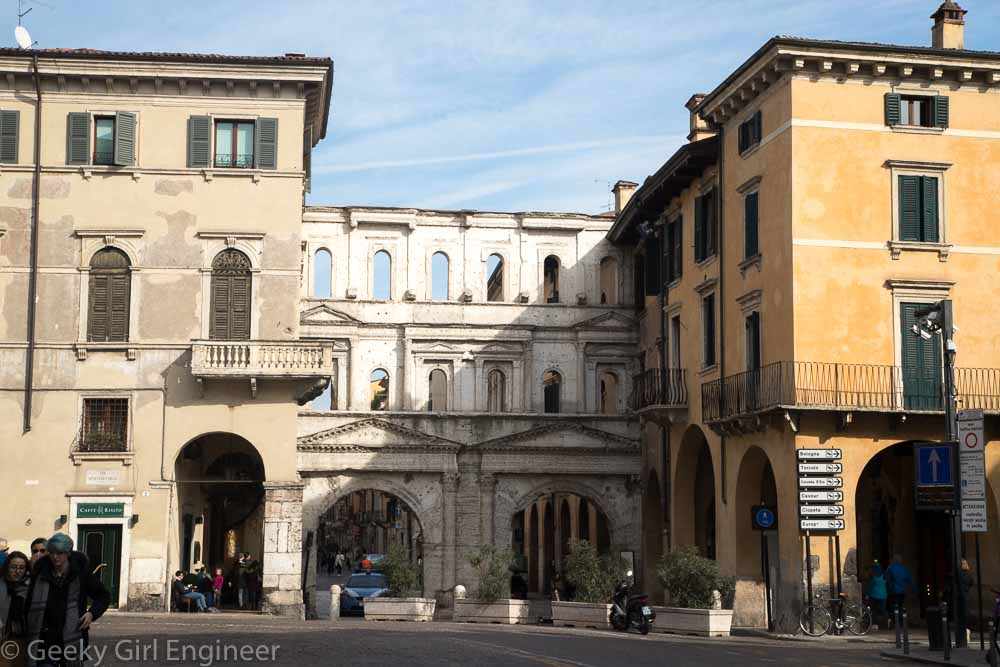
Porta dei Borsari
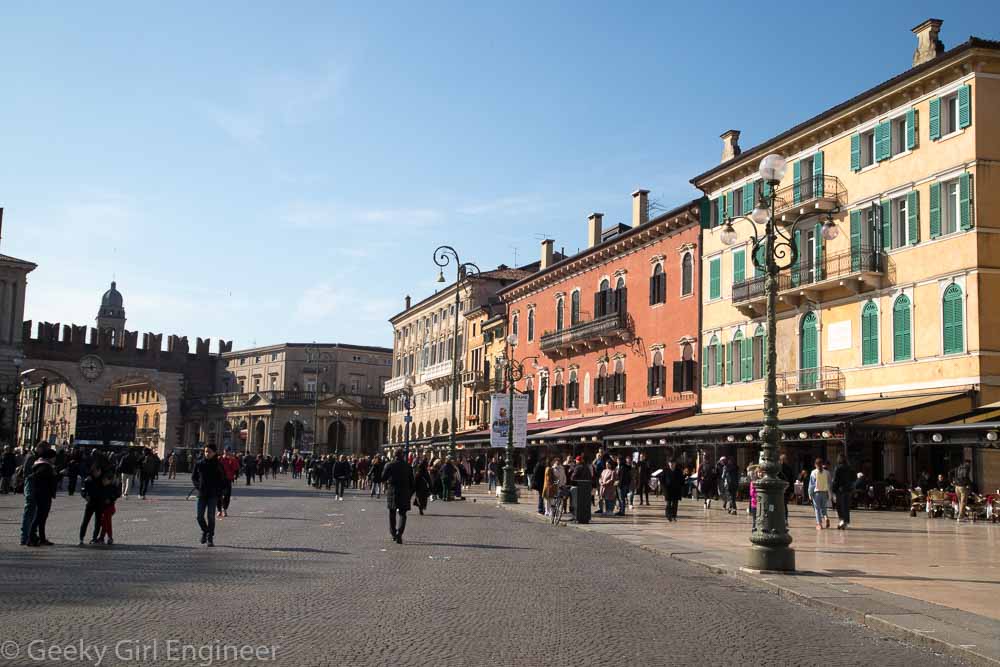
Piazza Bra with Porta Nuova on the left
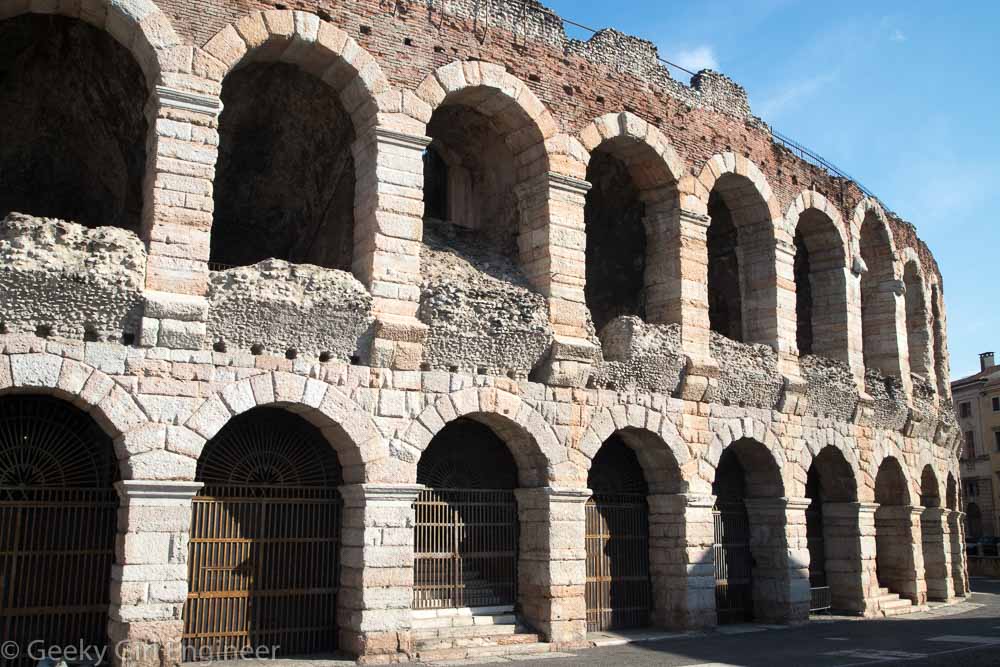
Verona Arena
Ponte Pietra
Adige River with the Roman Theater at the base of the hill in the center
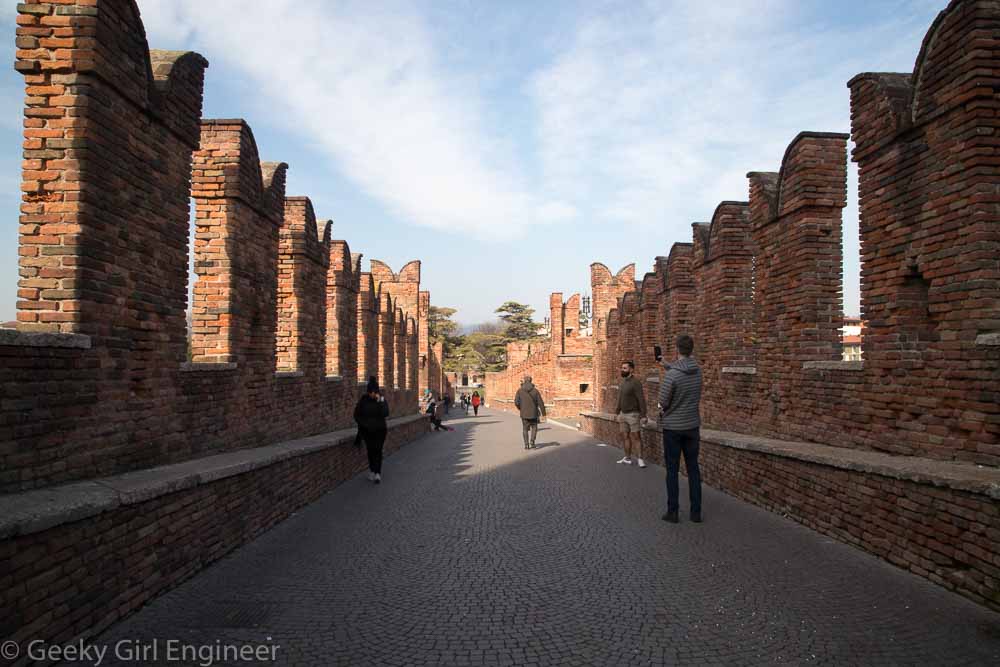
Ponte di Castelvecchio

Trieste, Italy

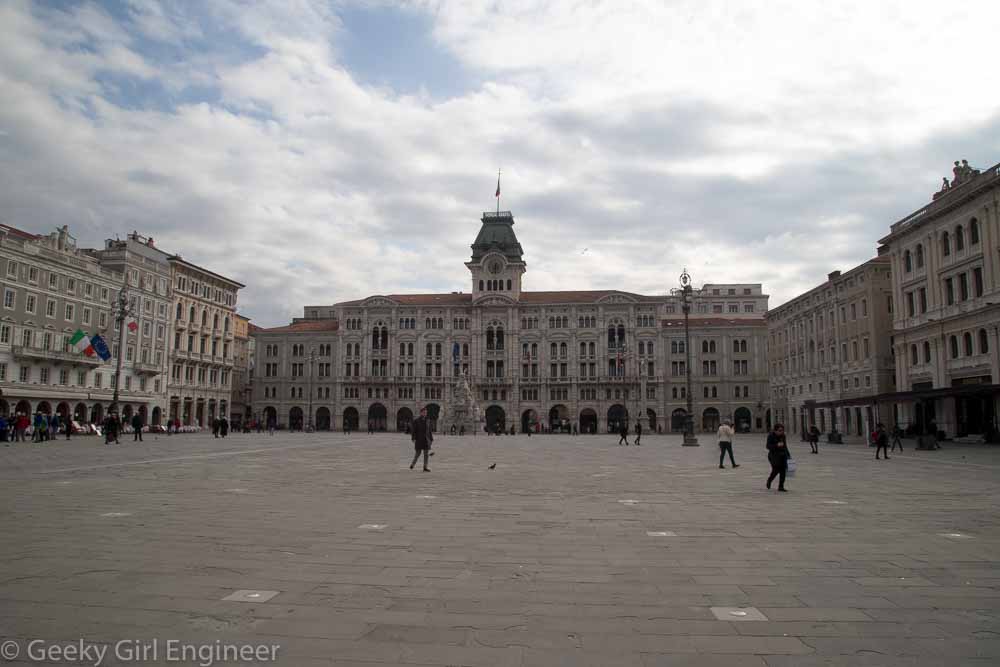
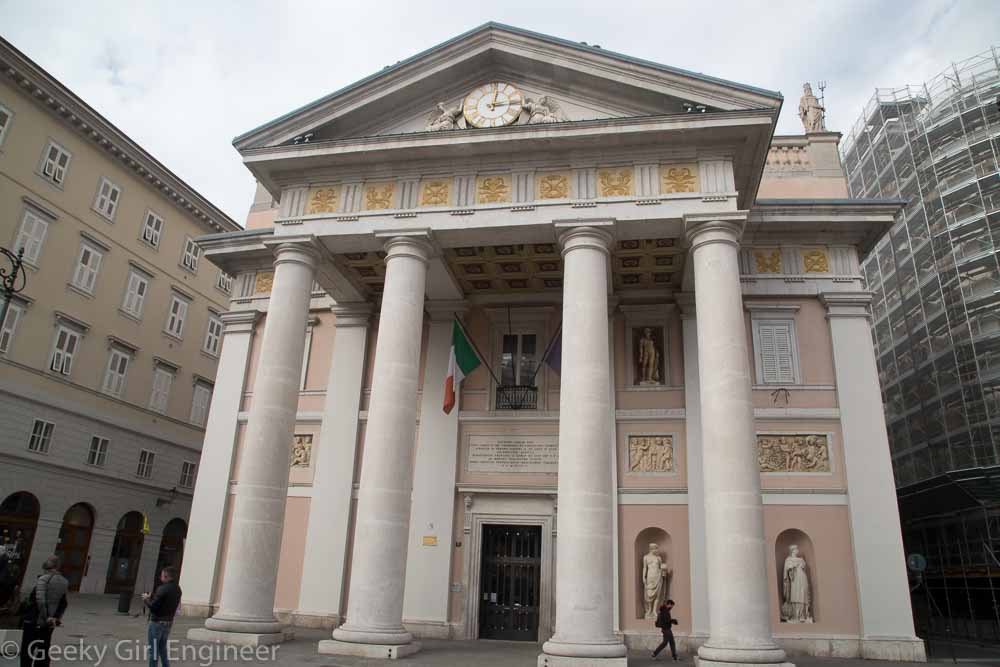
Today my cruise visited Trieste. Trieste is an interesting city. The more touristy area near the water feels far more like central Europe, especially Austria. This makes sense since the area was part of the Austrian empire until after World War II. Further away from the older part of the city, the city loses much of its charm as it looks like a modern European city.

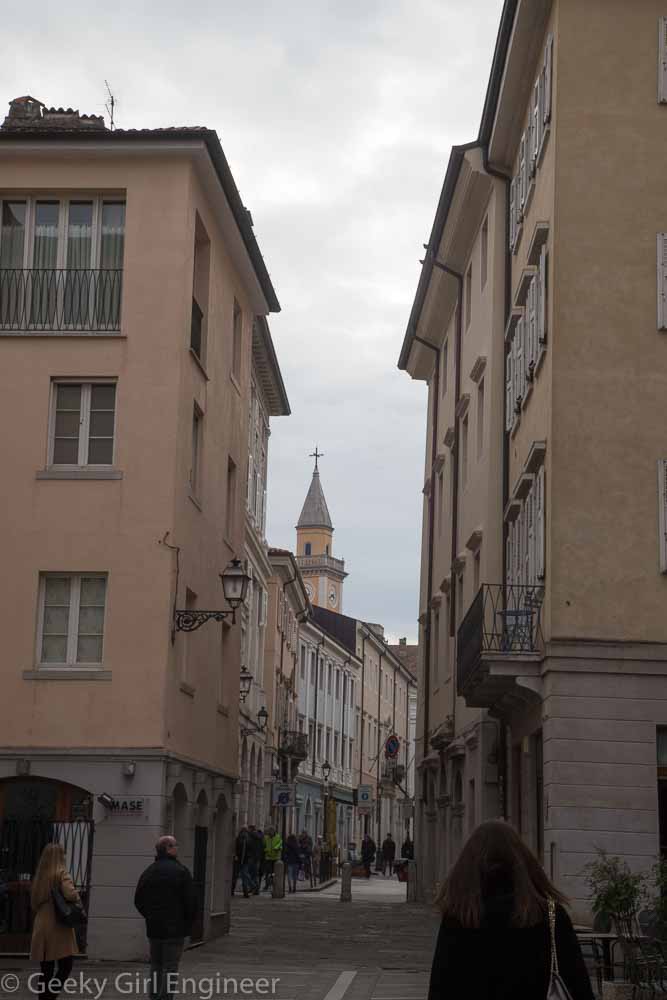
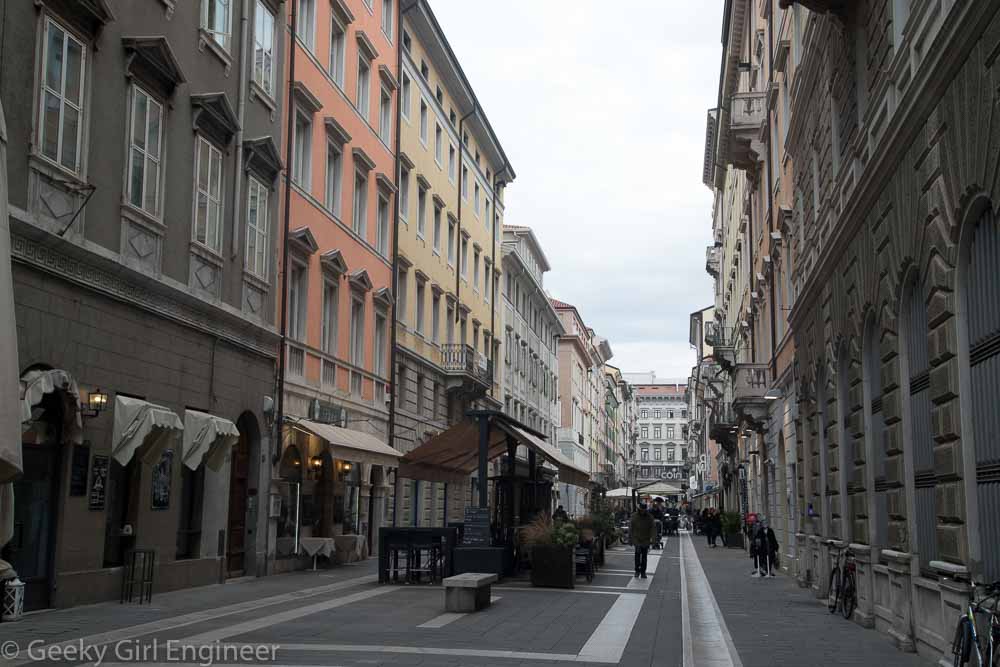
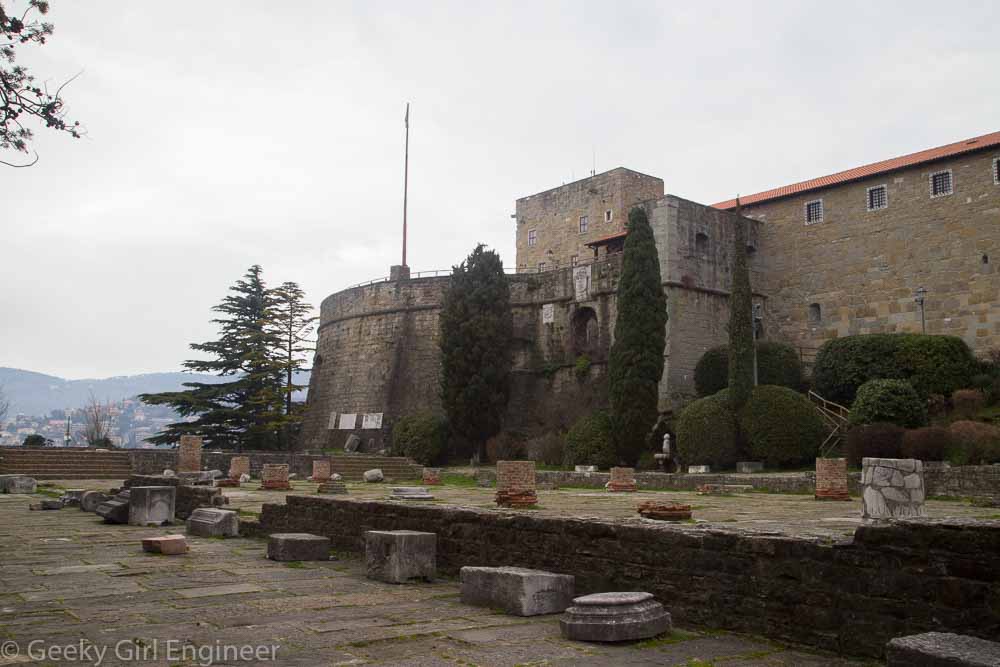
Our group visited an old church on top of a hill close to the city center where there are some Roman ruins. We also visited a Nazi concentration camp, Risiera di San Sabba. I am not posting any photos of that as the visit was a little overwhelming. The we wandered through parts of the older city center with its beautiful buildings.

Piazza Unità d’Italia
Piazza della Borsa
Pedestrians walk through some of the older parts of the city center
Pedestrian area near city center
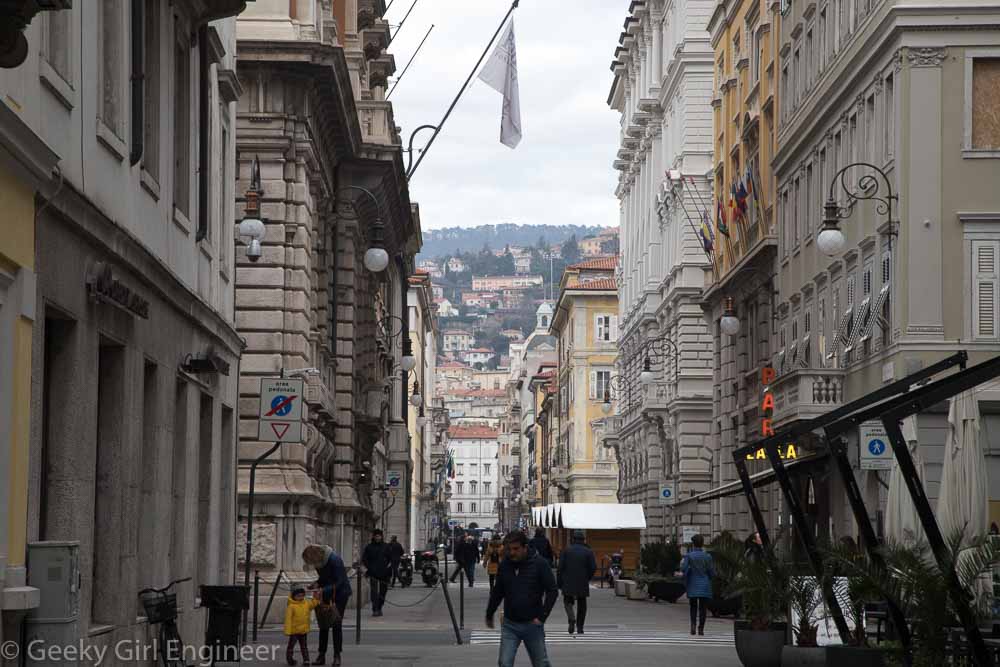
Pedestrian area near city center with views to surrounding hills
Castello di San Giusto

Duino Castle

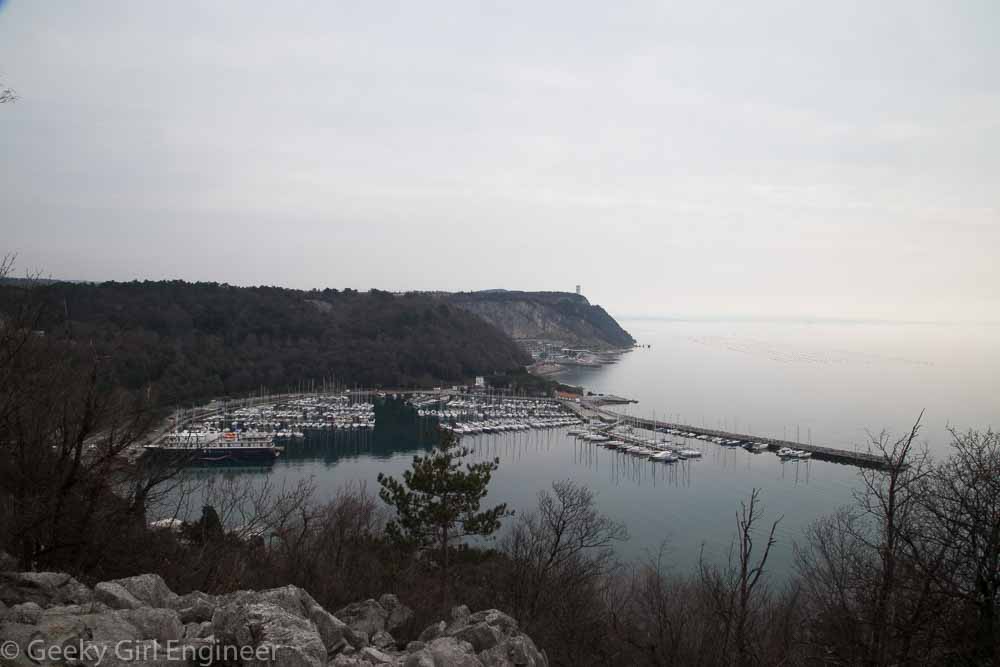
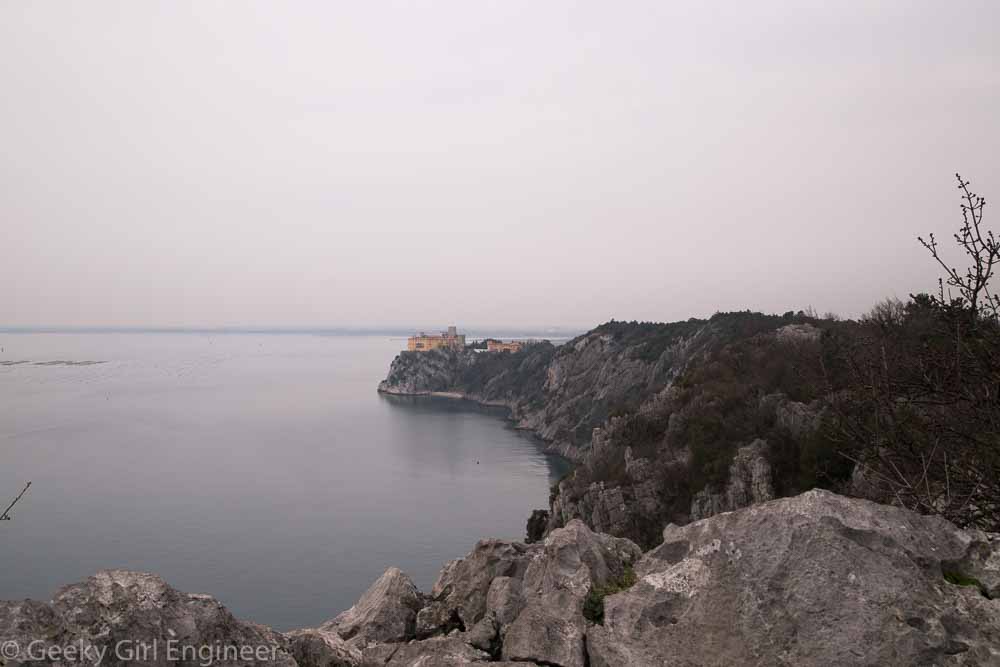
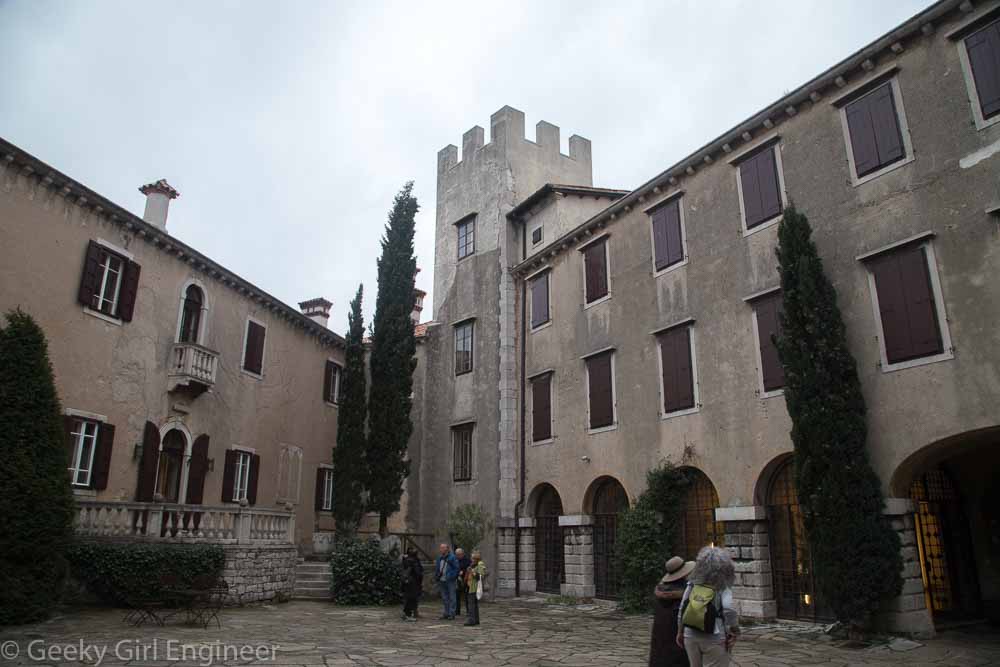
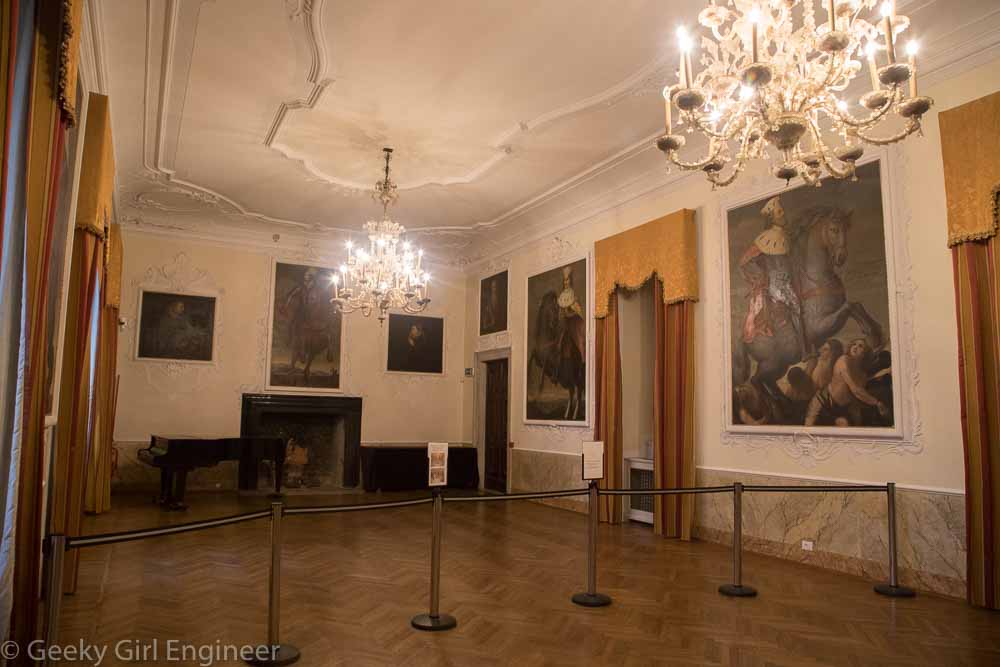
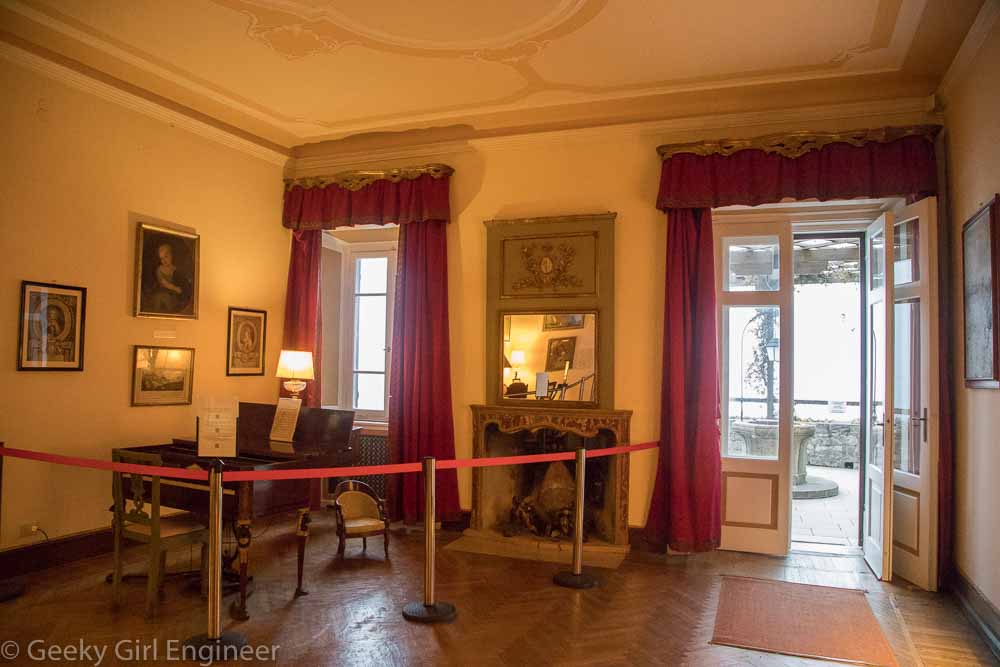
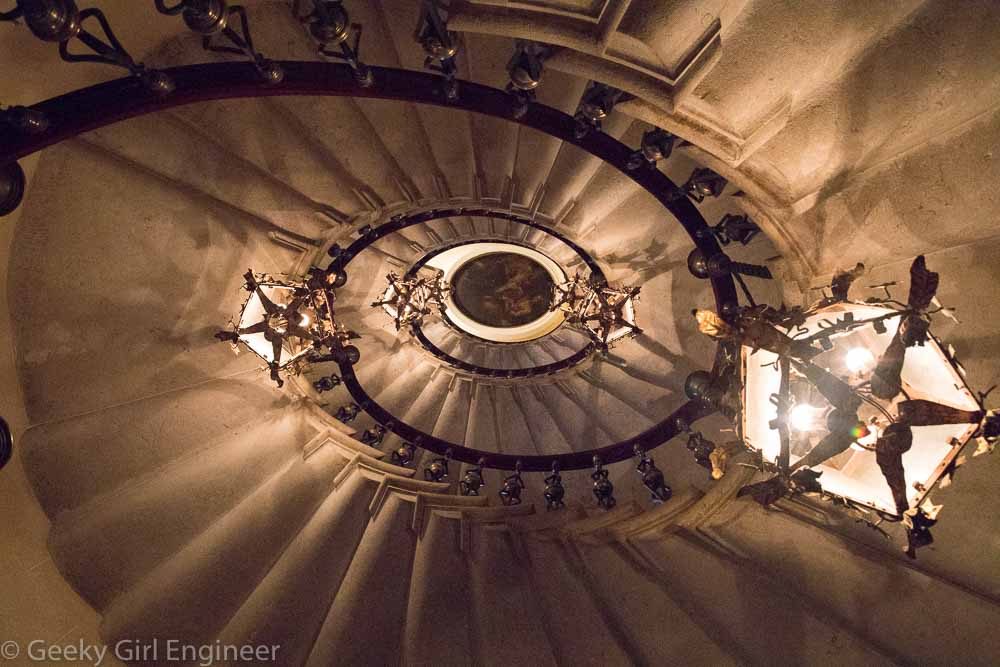
Today we were in Sistiana, Italy. In the afternoon, we hiked along the dolomite cliffs to Duino Castle. The hike provided some great views of the bay as well a little exercise. Along the hike, I saw some caterpillars as well as some some nice trees and rocks. The views were outstanding. The castle itself was nice, but I think I preferred the cliff. That is just a personal preference though.

The start of the hike allowed nice views of Sistiana’s bay. The small cruise ship on the left is the ship I am on.
Looking to Duino Castle somewhat near the start of the hike.
Zoomed in view of Duino Castle
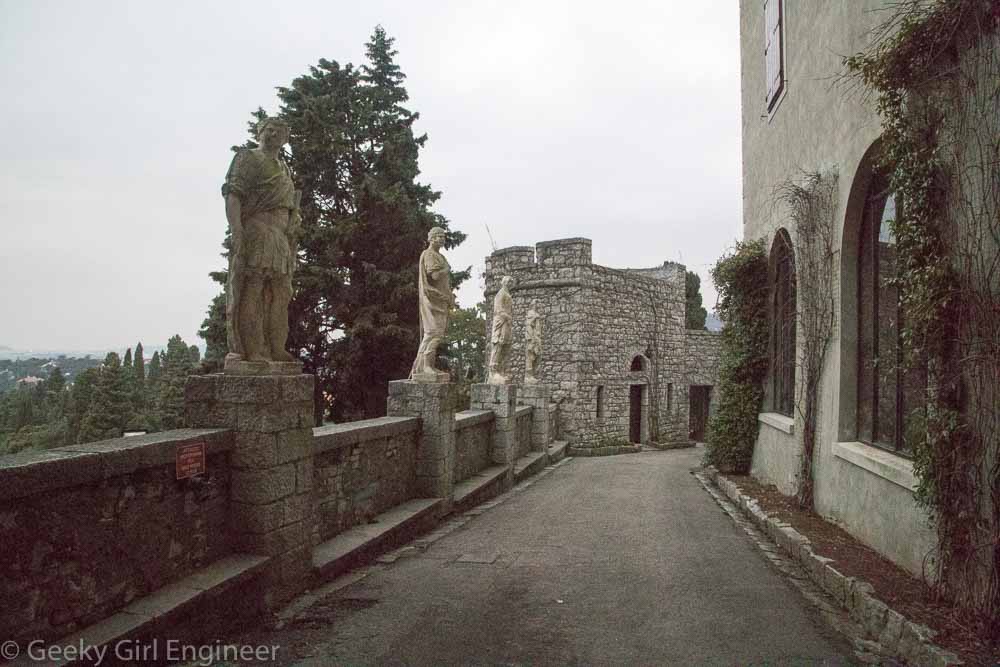
Looking down the path from the castle once we already entered the grounds
The castle’s interior courtyard
The castle’s ballroom
The castle’s music room
Looking up the castle’s oval shaped spiral stairway