Making chocolate

I took a tour of Che’il Mayan Chocolate, which included an organic cacao farm and a tiny factory where they make chocolate. I am not sure it qualifies as a factory, but they make do make a small amount of chocolate there as well as some chocolate products like nibs, cocoa powder, and cacao tea. The tour was fascinating, and the following is a brief synopsis. It all starts off with a cacao tree.
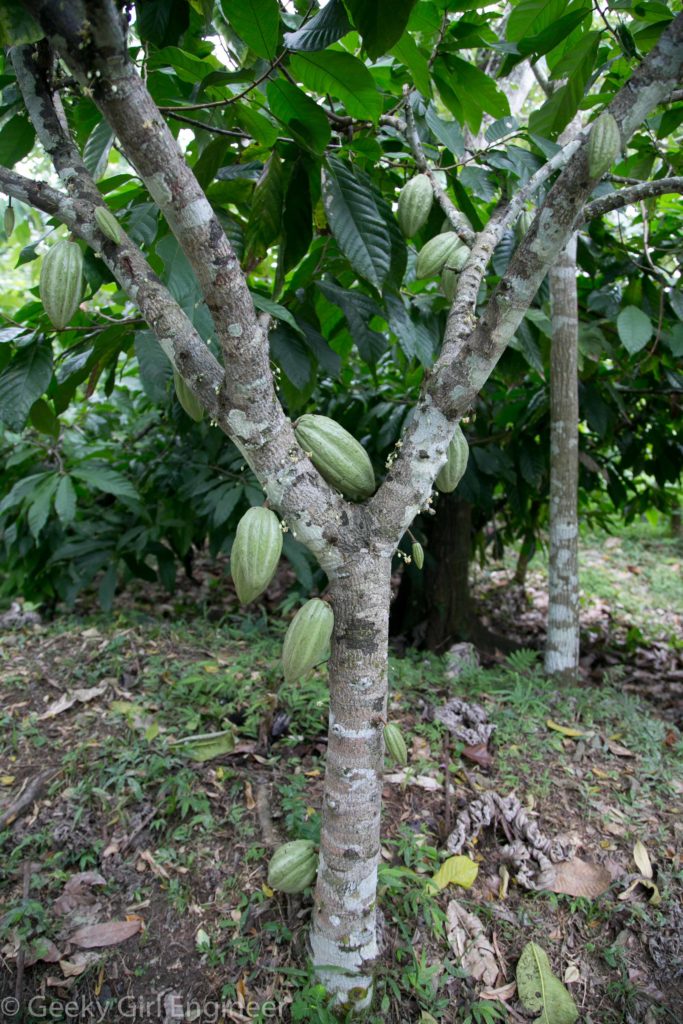
Cacao tree

Cacao tree

The beginning of the deliciousness that is chocolate starts with a tiny, little flower.
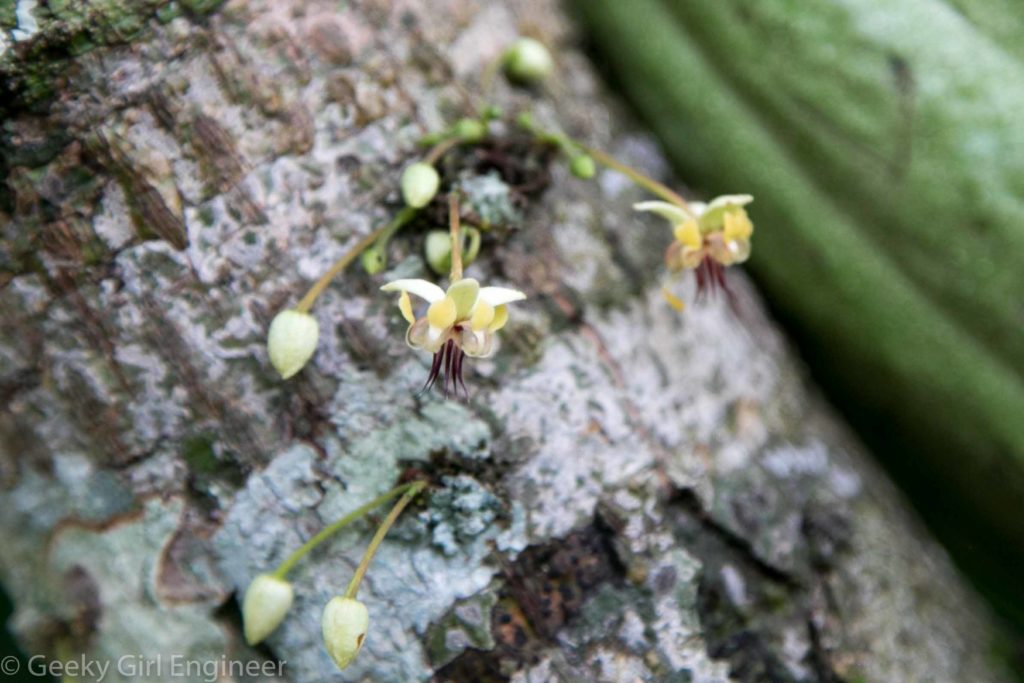
Cacao flower

Cacao flower

When the flower is fertilized, a giant fruit or seed pod forms. The flowers bloom for months, and hence seed pods form and grow at different times.

Unripe cacao fruit or seed pod

Unripe cacao fruit or seed pod

The seed pods ripen to a yellow or red color depending on the specific cacao tree species.
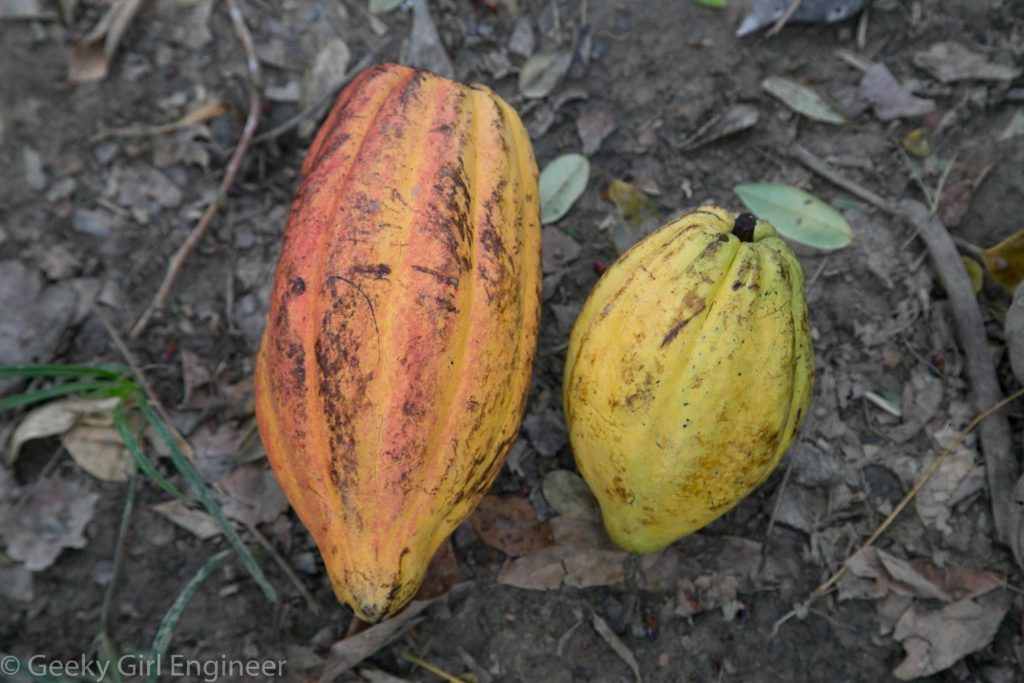
Ripe cacao fruit or seed pods

Ripe cacao fruit or seed pods

Inside the seed pods are cacao beans covered in a white pulp. We got to take a bean and suck the pulp. The pulp was quite tasty with sort of a creamy, light fruit taste.
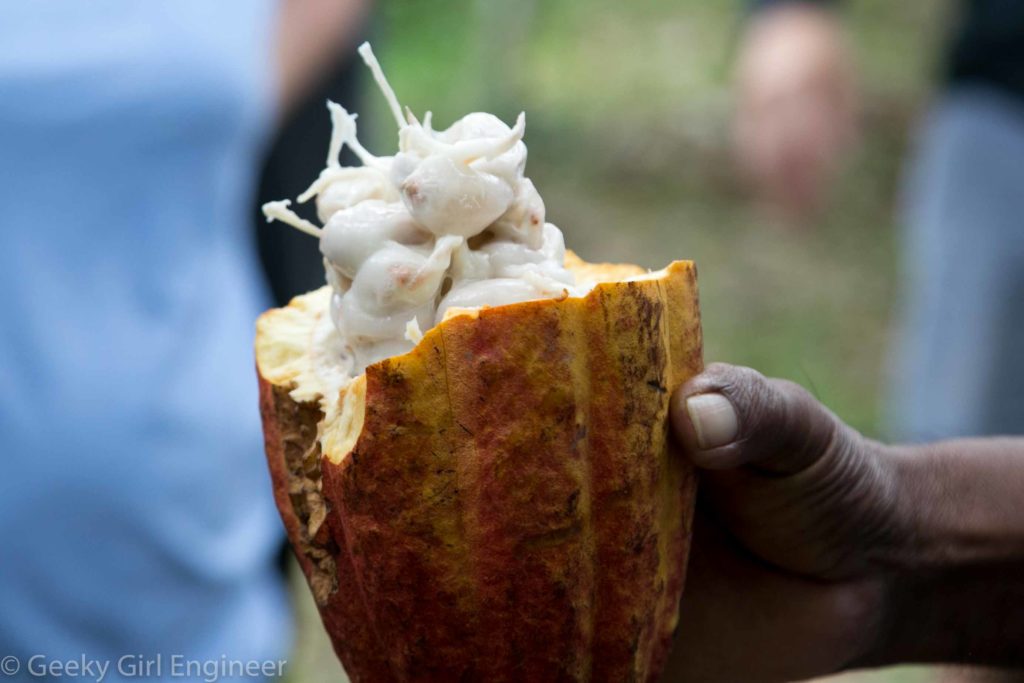
Cacao seed pod with seeds covered in white pulp

Cacao seed pod with beans covered in white pulp

The beans have a dark brown interior.
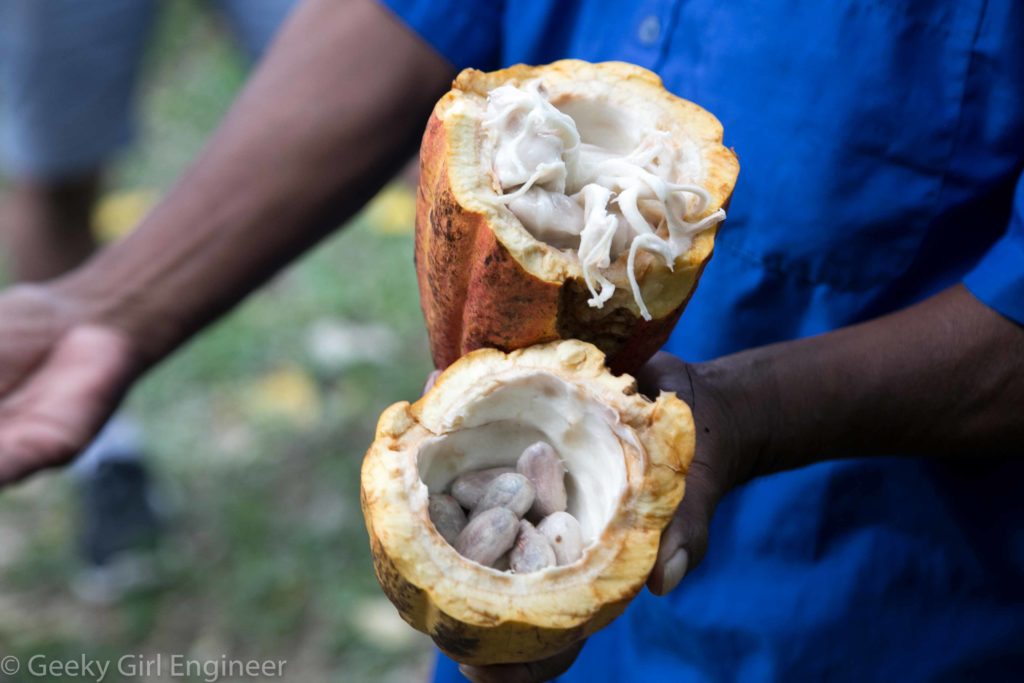
Cacao seed pods with seeds covered in pulp in upper half and seeds we sucked pulp off of in lower half

Cacao seed pods with beans covered in pulp in upper half and seeds we sucked pulp off of in lower half

The beans are first fermented in a box for several days. They are then roasted over low heat. In the photo below, the light beans (on the traditional Mayan grinding stone) are the beans that have not been roasted. The dark ones in the middle front bowl have been roasted. Cocoa butter is in the white bowl, and the bowl right in front of it are the shells from de-shelled beans. The shells are removed from the beans before roasting. After roasting the beans, they are ground into nibs, which can be seen in the bowl to the left of the cocoa butter.
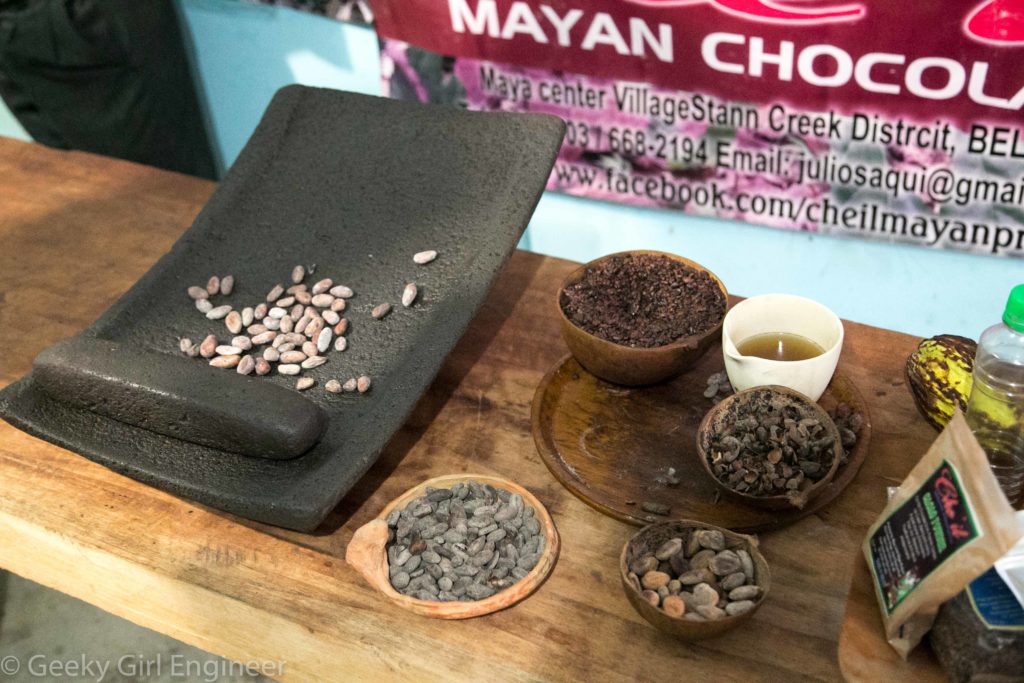
Cacao seeds

Cacao beans

The nibs are placed on the stone and crushed.
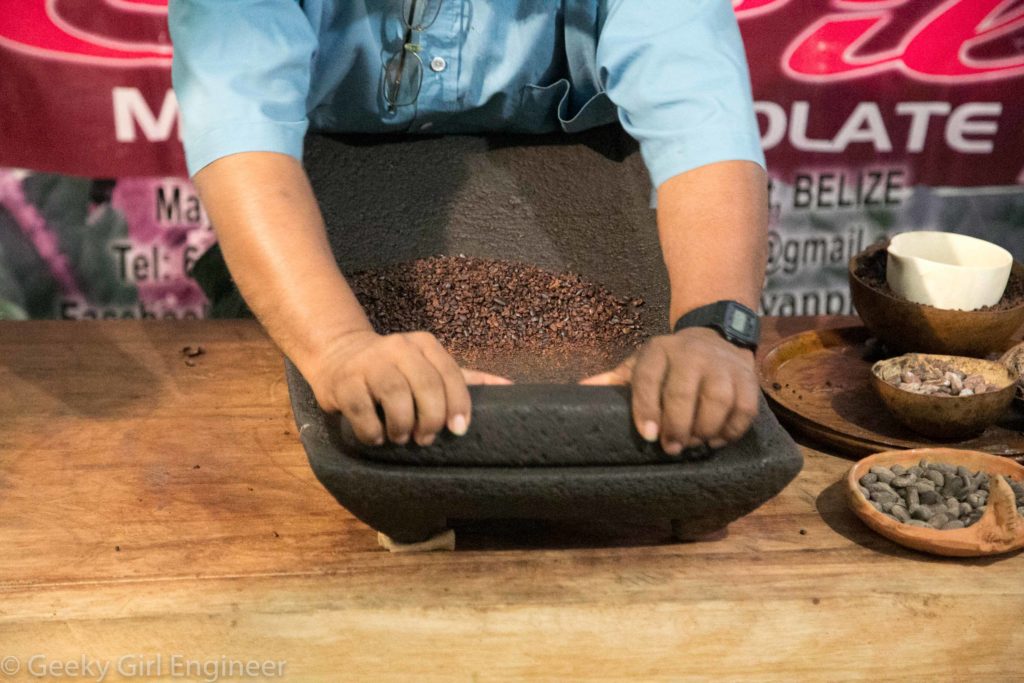
Crushing cacao nibs
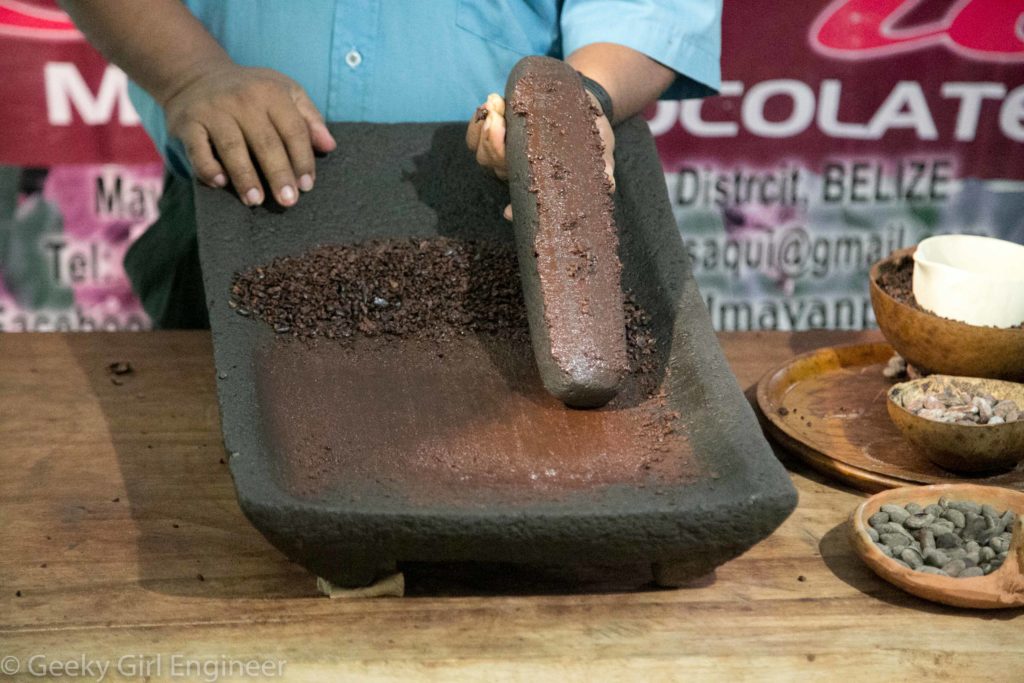
Crushing cacao nibs

Crushing cacao nibs

Crushing cacao nibs

The grinding motion with the stone pulverizes the nibs, and the pressure causes heat, which starts to melt the oils in the nibs. We got to taste it at this point, and the chocolate is rather bitter.
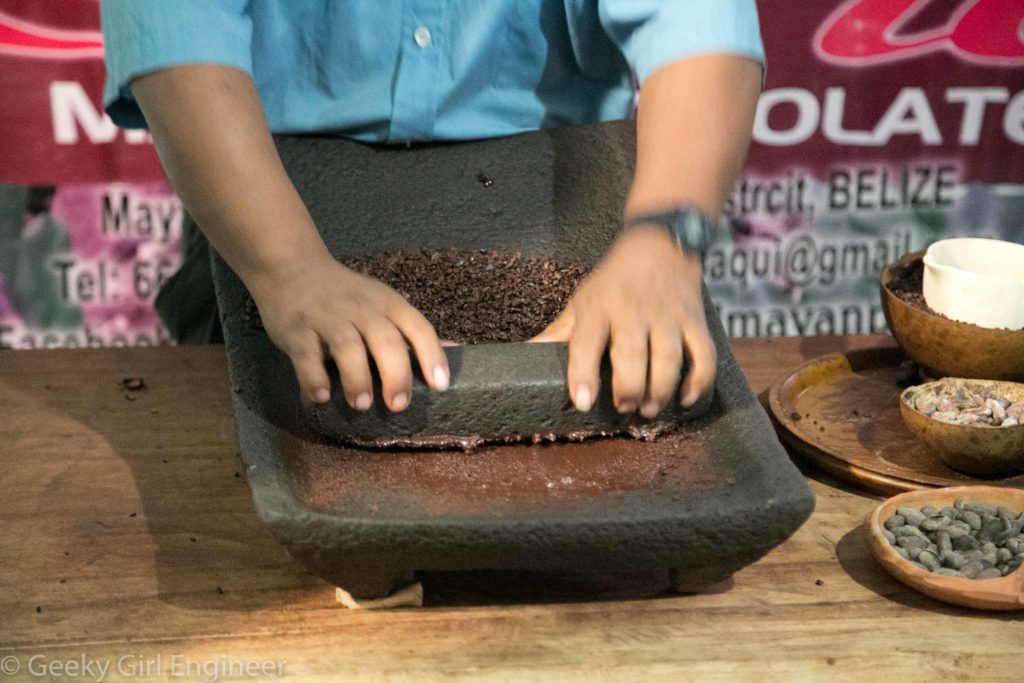
Crushing cacao nibs with liquid starting to form

Crushing cacao nibs with liquid starting to form

After quite a bit of grinding of the nibs, only liquid remains. Sugar and cocoa butter is added.
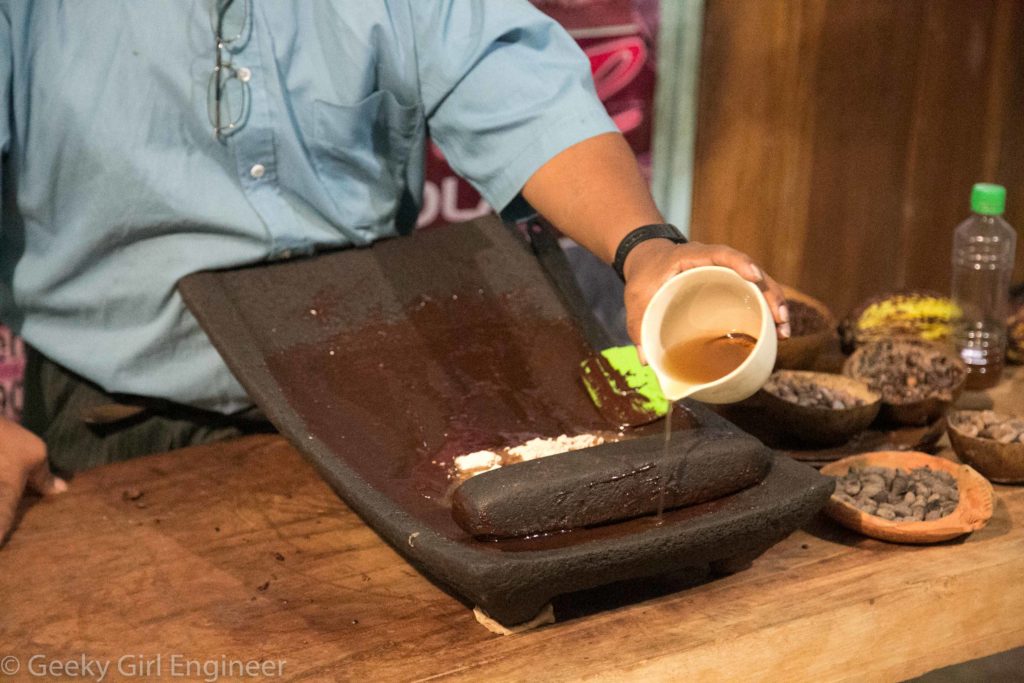
Adding sugar and cocoa butter

Adding sugar and cocoa butter

The mixture is ground more to mix everything. We got to taste the finished chocolate at this point again. It definitely was sweeter with the sugar, but to me, it still had a bitter after taste.
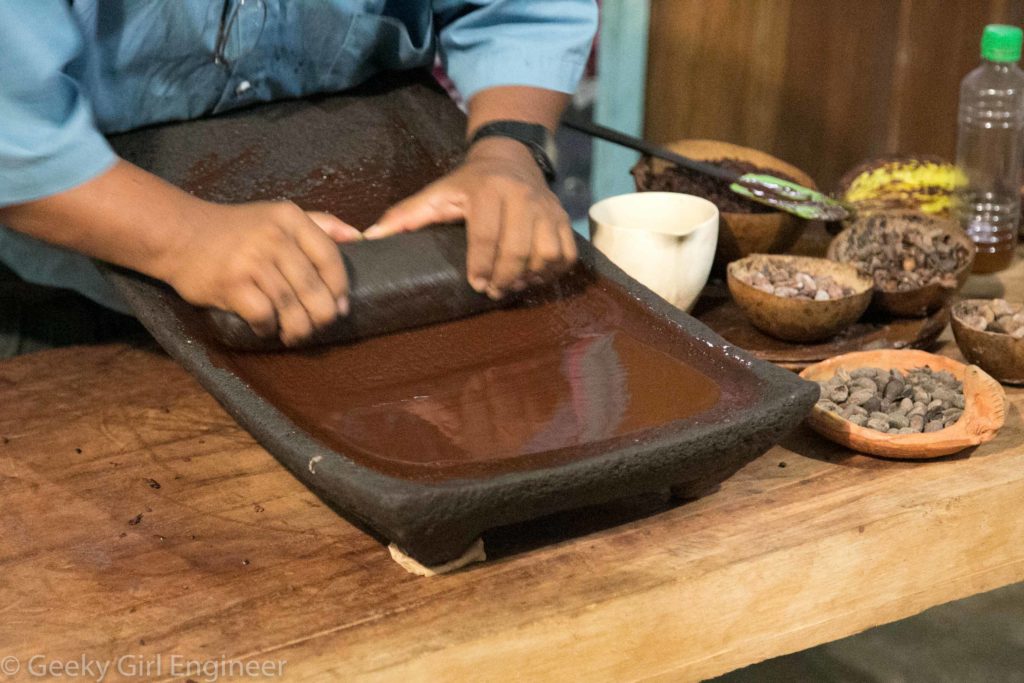
Finished dark chocolate blend

Finished dark chocolate blend

The liquid is then poured into forms and allowed to harden. These were put into a fridge to harden quickly.
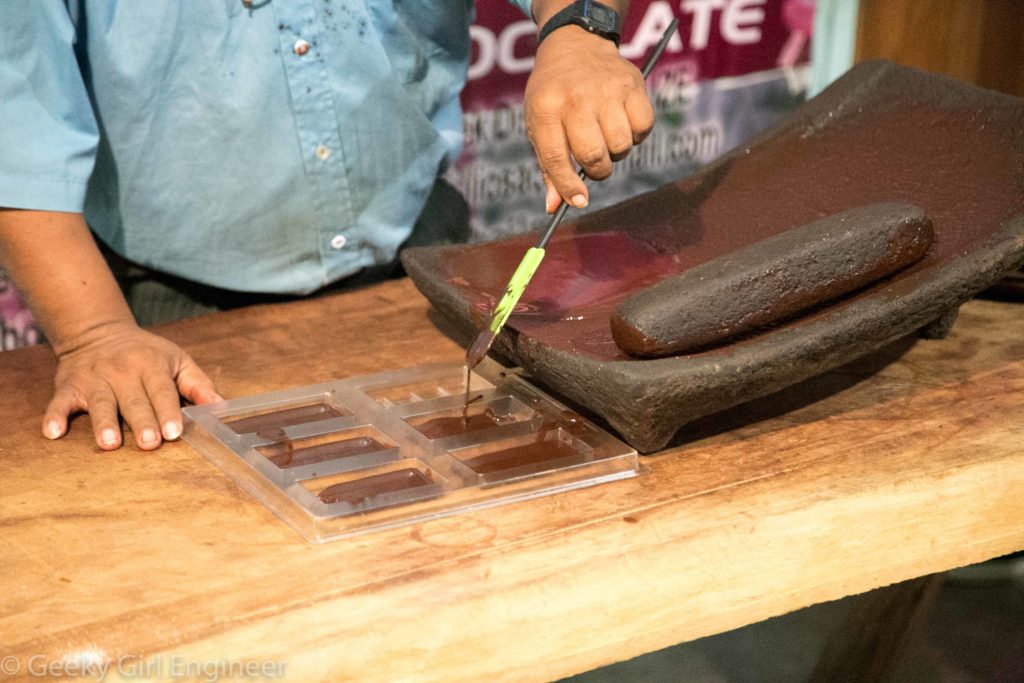
Pouring chocolate into forms

Pouring chocolate into forms

The finished product. The mixture made was 70% cacao. It tasted a bit different from the dark chocolate I have had before. It also melted very quickly in my hands compared to store bought chocolate, which must have stabilizers or something. Interestingly, even though this was the same mixture as what I tasted before it was poured into the forms, after cooling and hardening, it had lost most if not all of the bitter after taste that I tasted with the liquid.
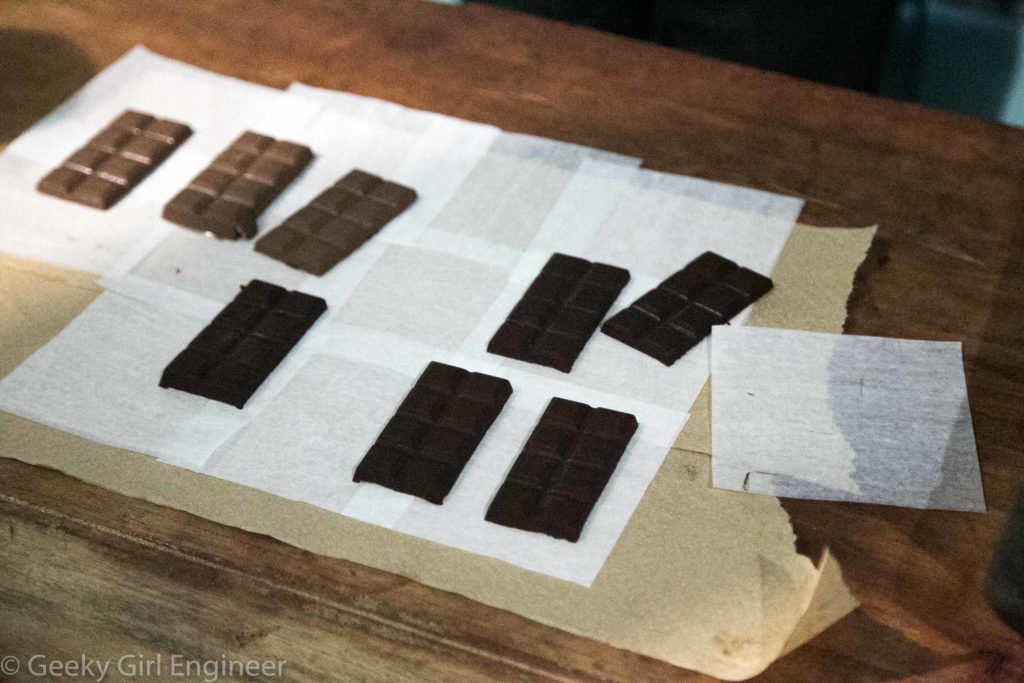
Finished chocolate bars
Finished chocolate bars
Houston Cistern

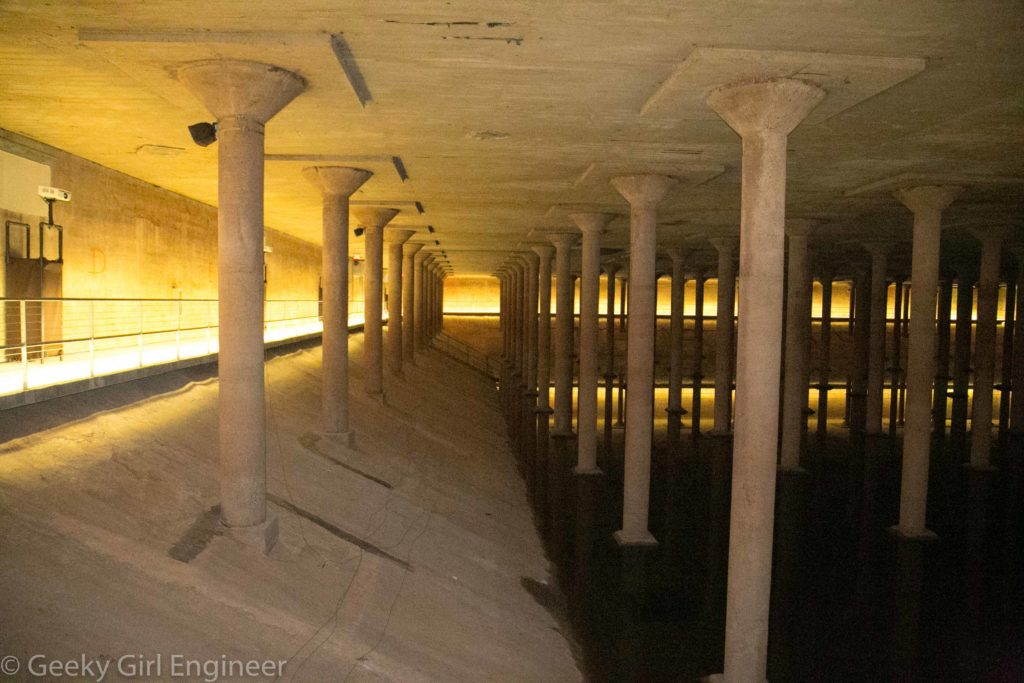
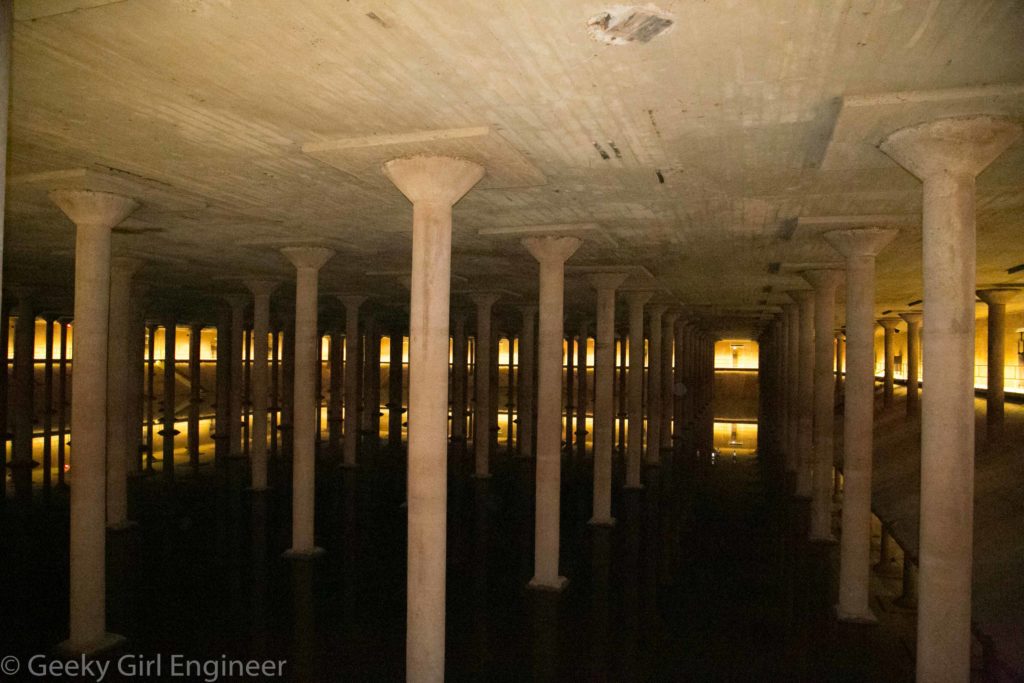
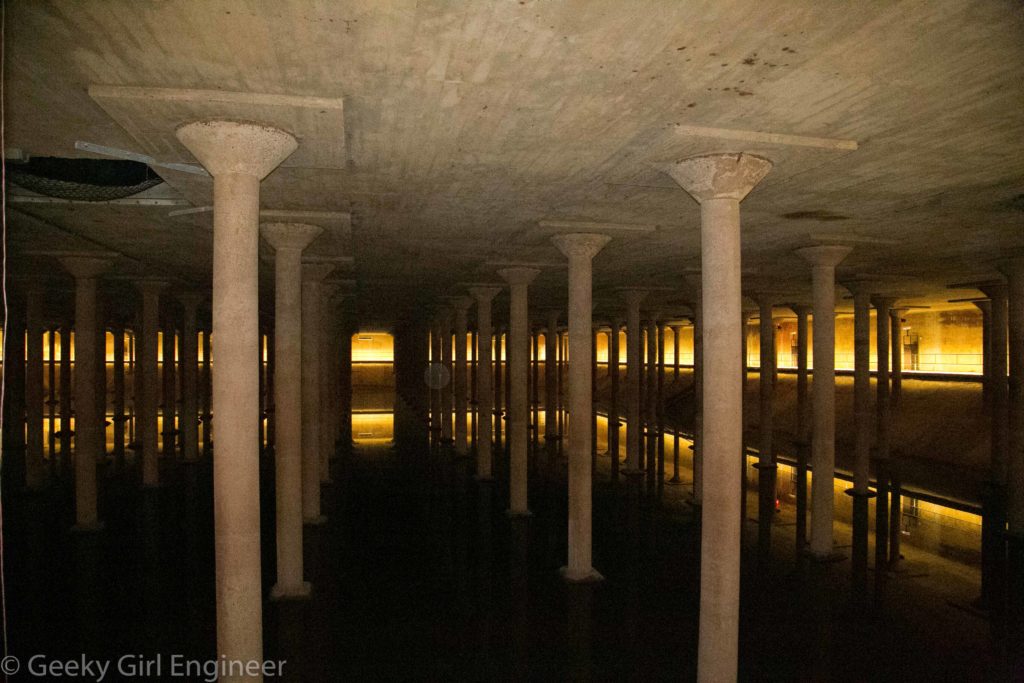
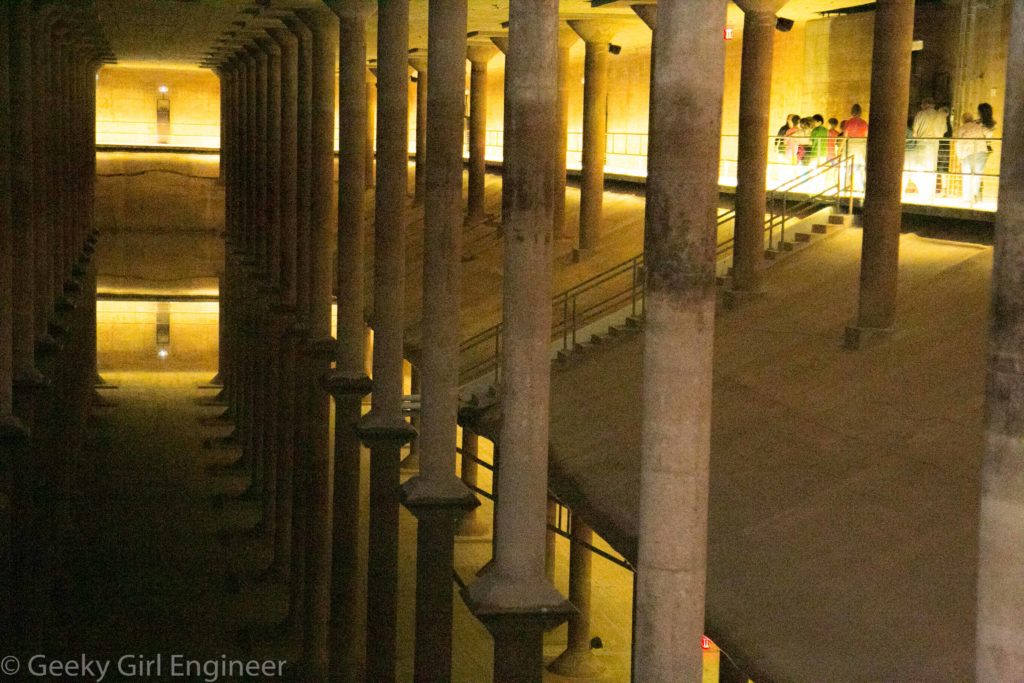
I love hidden places. I love places that you can just walk by and not have any idea are there. It just makes them more magical. I recently found out that Houston has an underground drinking water storage reservoir, a cistern. I have passed by this place so many times not having any idea it was there. The cistern was decommissioned in 2007 after an irreparable leak was discovered. Buffalo Bayou Partnership and the City of Houston turned it into space for people to visit and learn about the history of it and also a space that can be used for art installations. When functioning, the reservoir could hold 15 million gallons, but now it just has about 6 inches of water across. Enough water is there just for a neat reflection of the columns in it.

Houston Cistern

Houston Cistern

Houston Cistern

Houston Cistern

Houston Cistern

Houston Cistern

Houston Cistern

Houston Cistern

Houston Cistern

Houston Cistern, the dark round object seen on the left side of the roof is a new access shaft

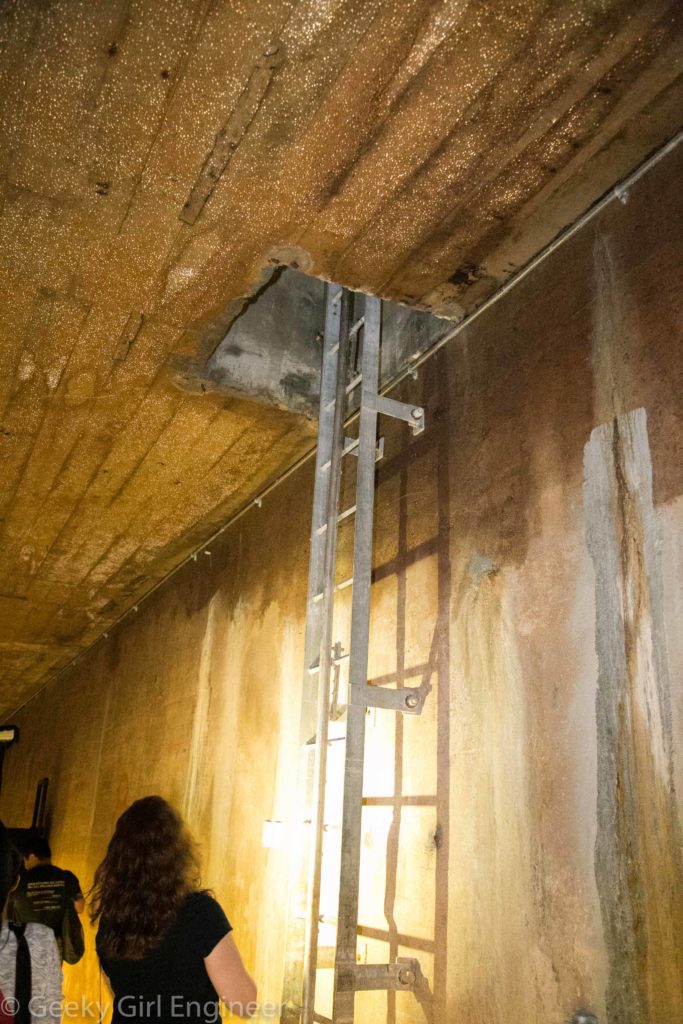
Houston Cistern, when it was operational, this was the only access to it

Houston Cistern, when it was operational, this was the only access to it

The cistern sits below the grass. In the foreground in an access shaft to the cistern.

The cistern sits below the grass. In the foreground in an access shaft to the cistern.

Coney Island Creek

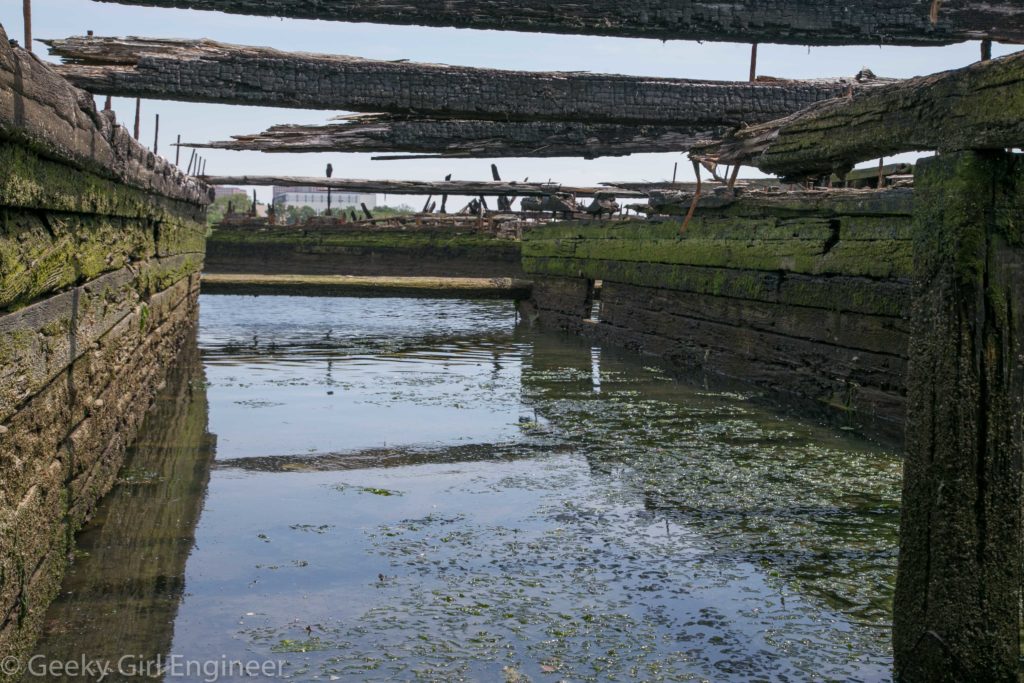
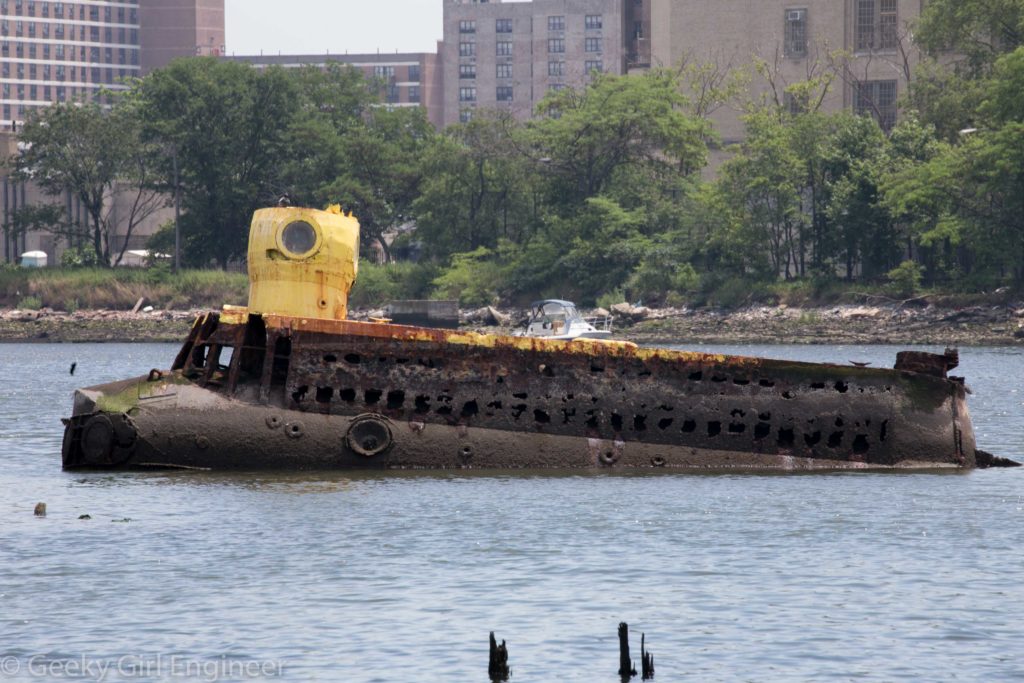
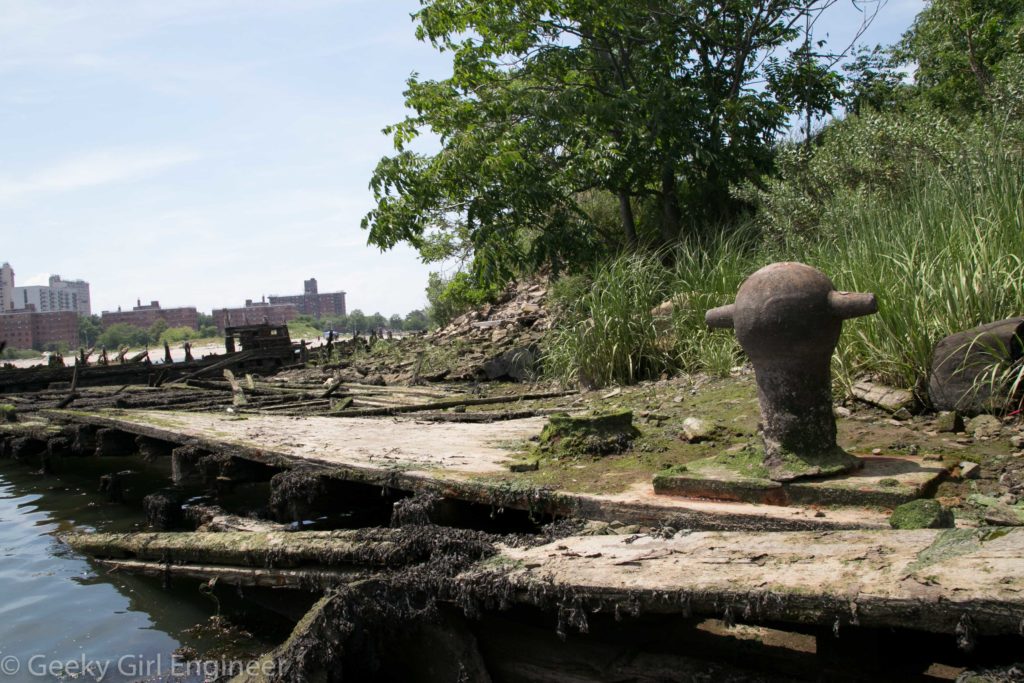
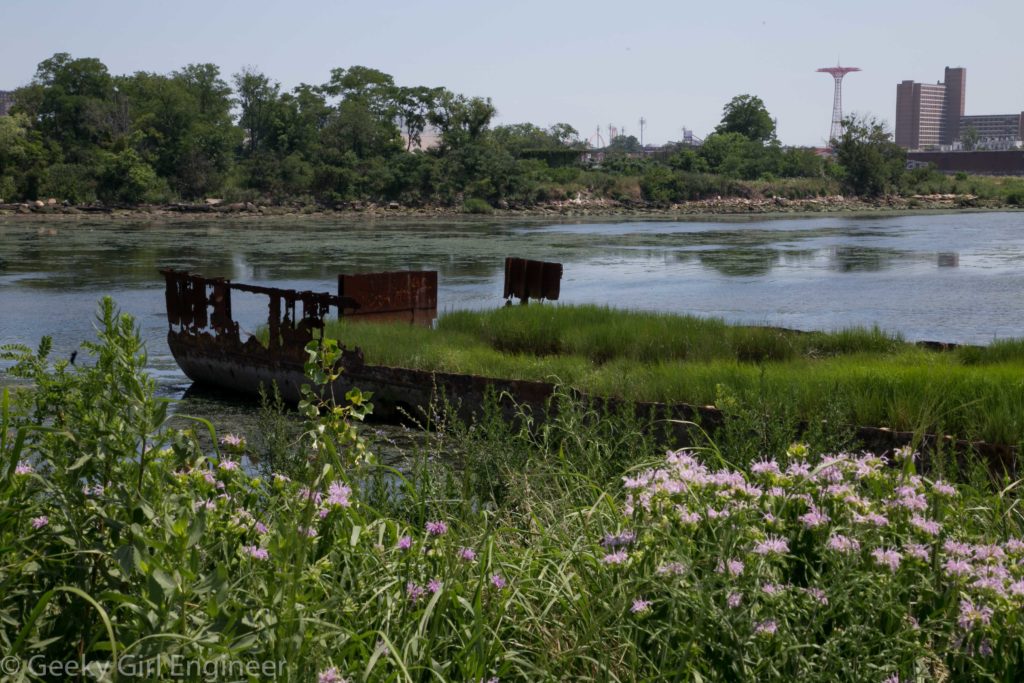
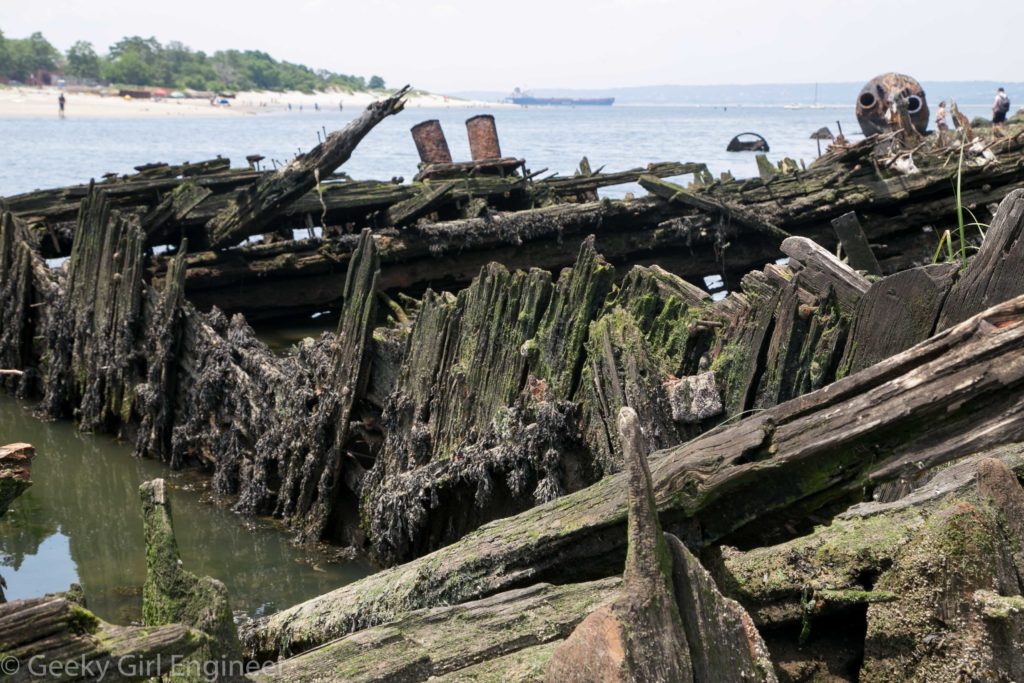
I went on a hike along Coney Island Creek with Atlas Obscura and Underwater New York to see its virtual ship graveyard. The tour did not disappoint. There were a multitude of shipwrecks, including the famous yellow submarine. We walked along the shore during high tide. The shore was quite mucky, and I was thankful for my waterproof hiking boots, while trying not to think about what was in that muck. There was lots of algae and seaweed of some type. We spotted a few fishermen and men who appeared to be hunting for oysters or clams or sometime of shellfish (are they called fishermen also?). I have serious doubts the fish are safe to eat on a regular basis, simply based on the history of pollution in that area. I can only hope I am wrong for their sake.

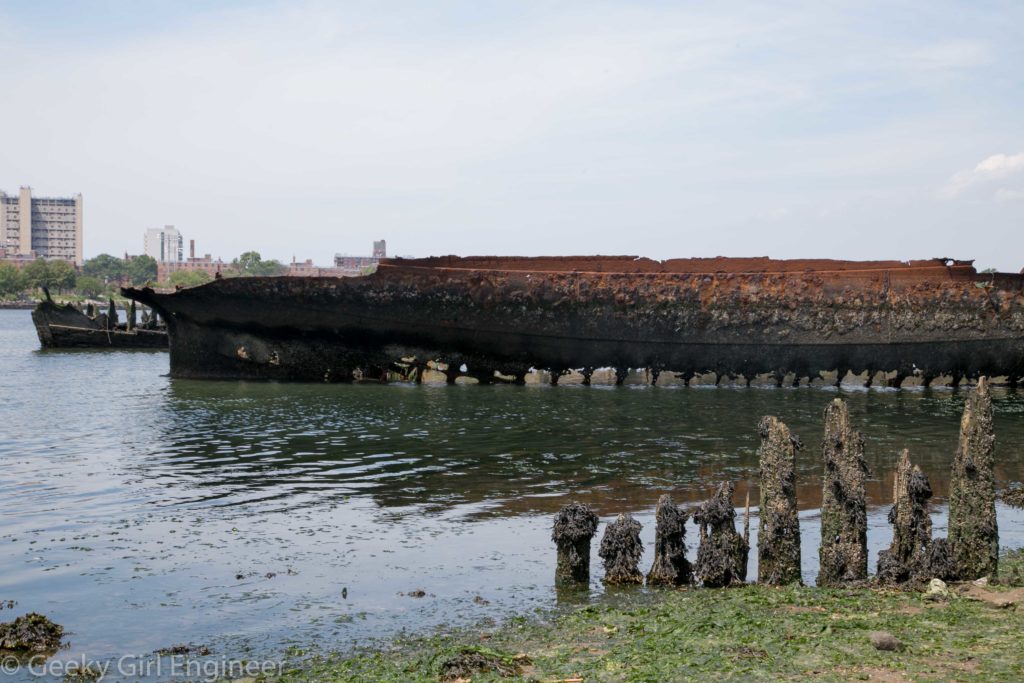
Metal shipwreck

Metal shipwreck

Seaweed and barnacles on piers

Seaweed and barnacles on piers

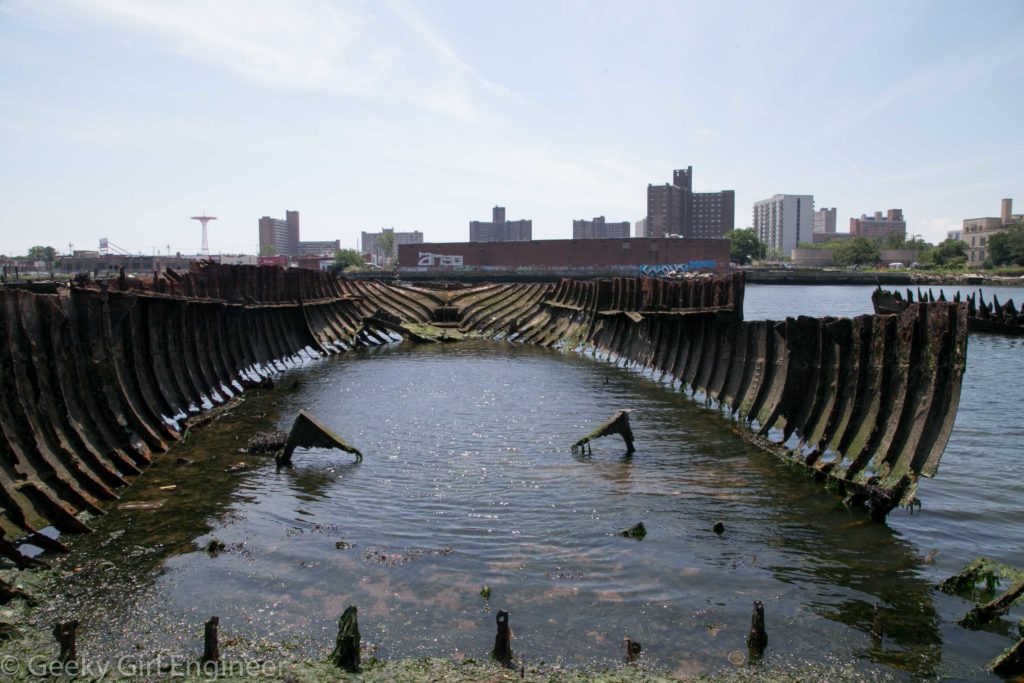
Inside a metal shipwreck

Inside a metal shipwreck, Coney Island Parachute Jump tower can be seen in left background

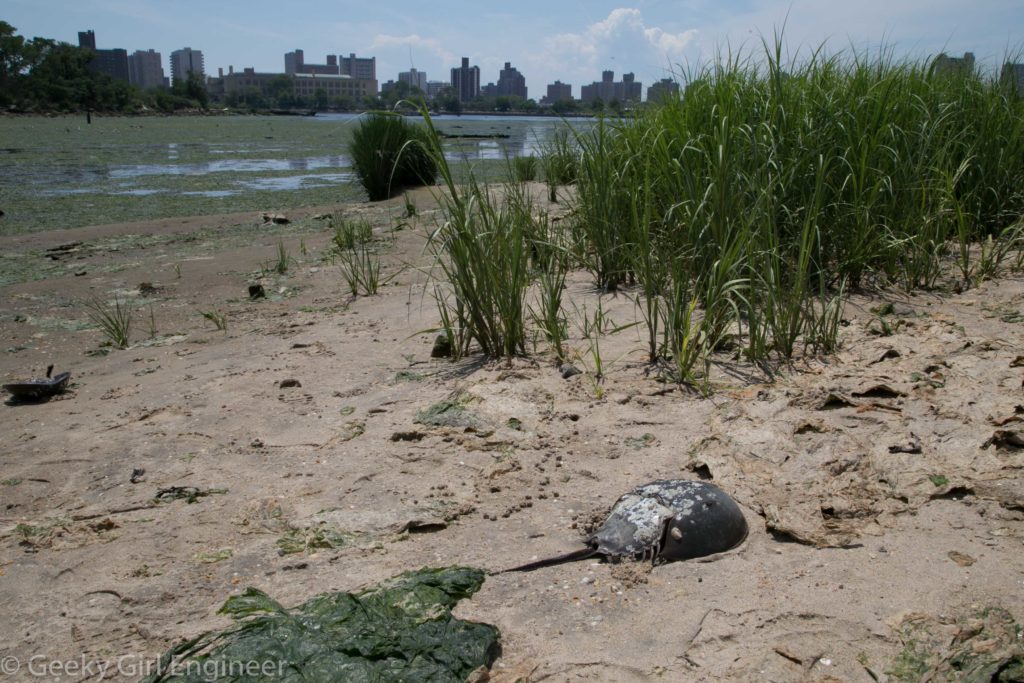
Horseshoe crab remains

Horseshoe crab remains

Wooden shipwreck

Wooden shipwreck

Famous yellow submarine

Famous yellow submarine

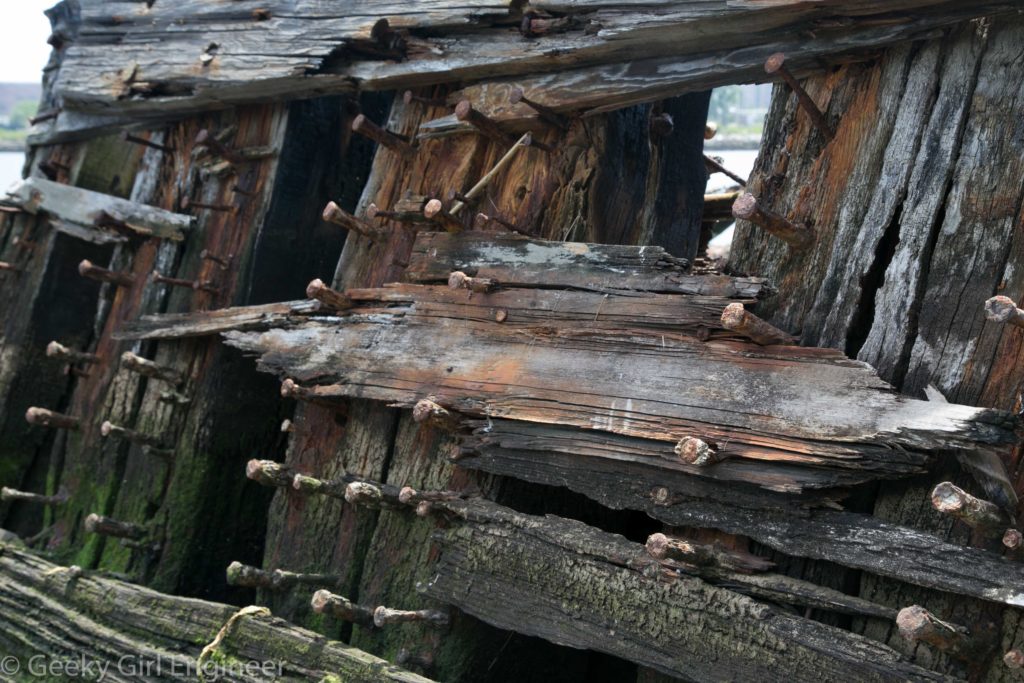
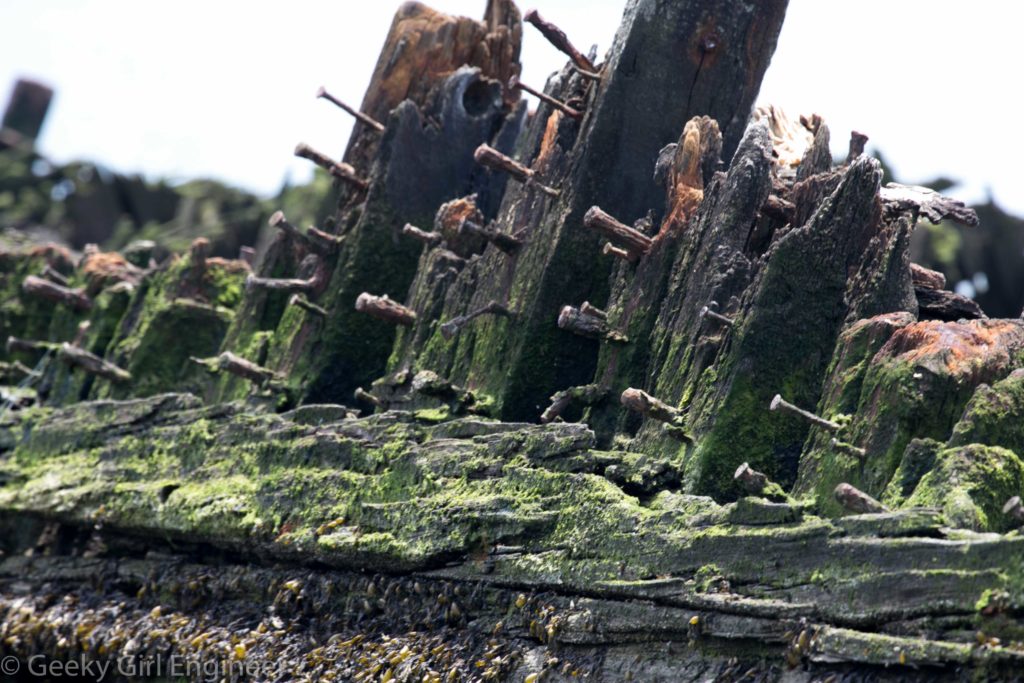
Metal nails in a wooden shipwreck

Metal nails in a wooden shipwreck

Wooden shipwreck with large modern tanker ship in background

Wooden shipwreck with large modern tanker ship in background

Wooden ship remains

Wooden ship remains

Old pier

Old pier

Metal shipwreck that is now a giant planter

Metal shipwreck that is now a giant planter

Cass

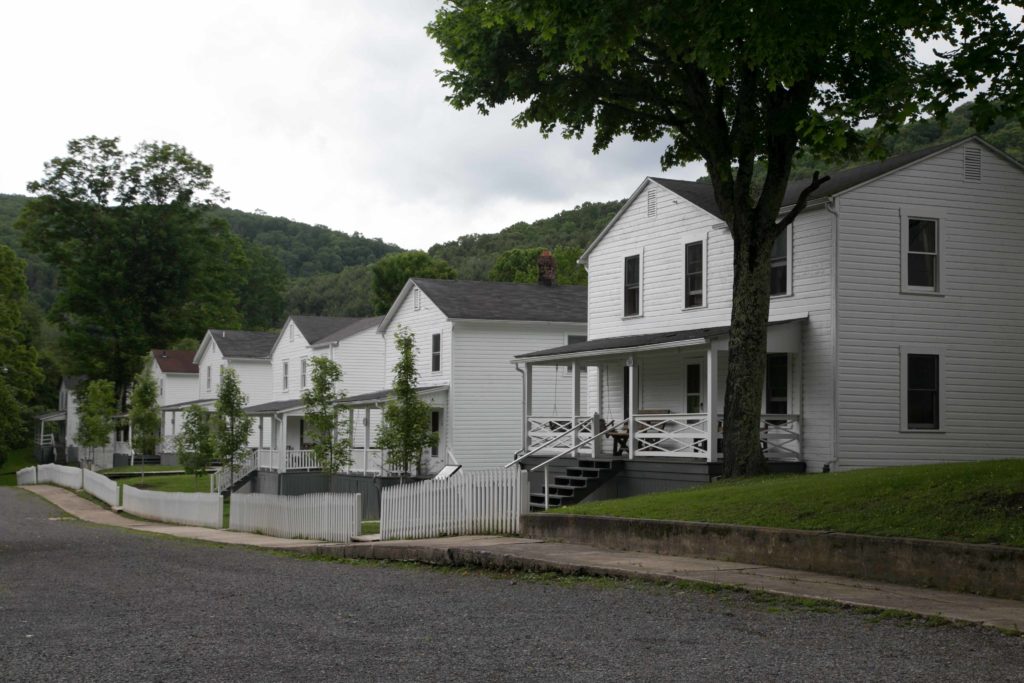
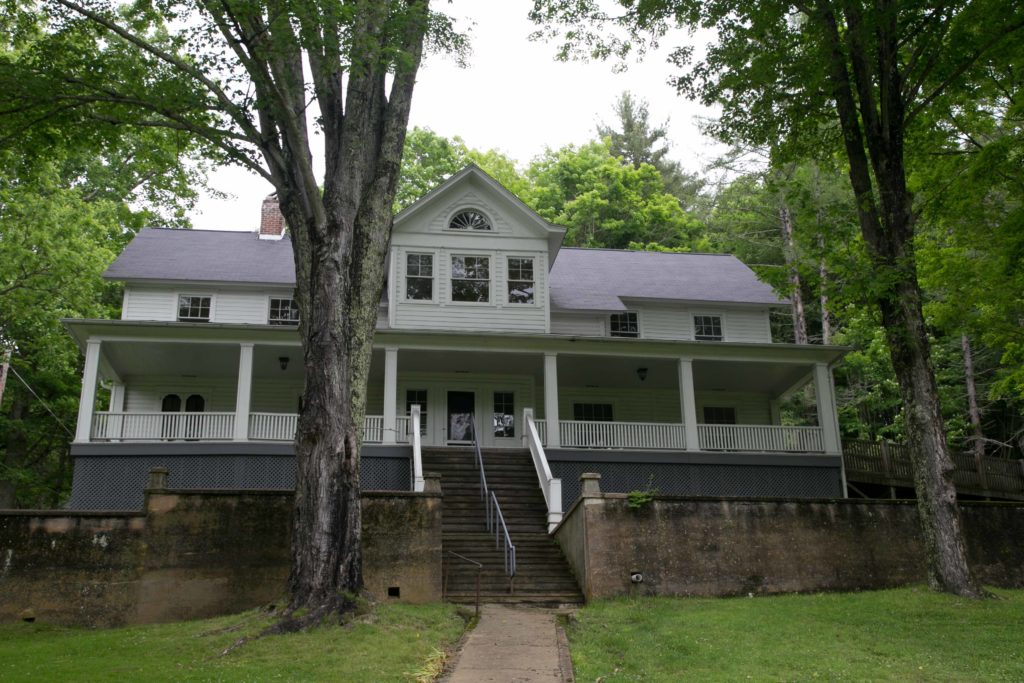
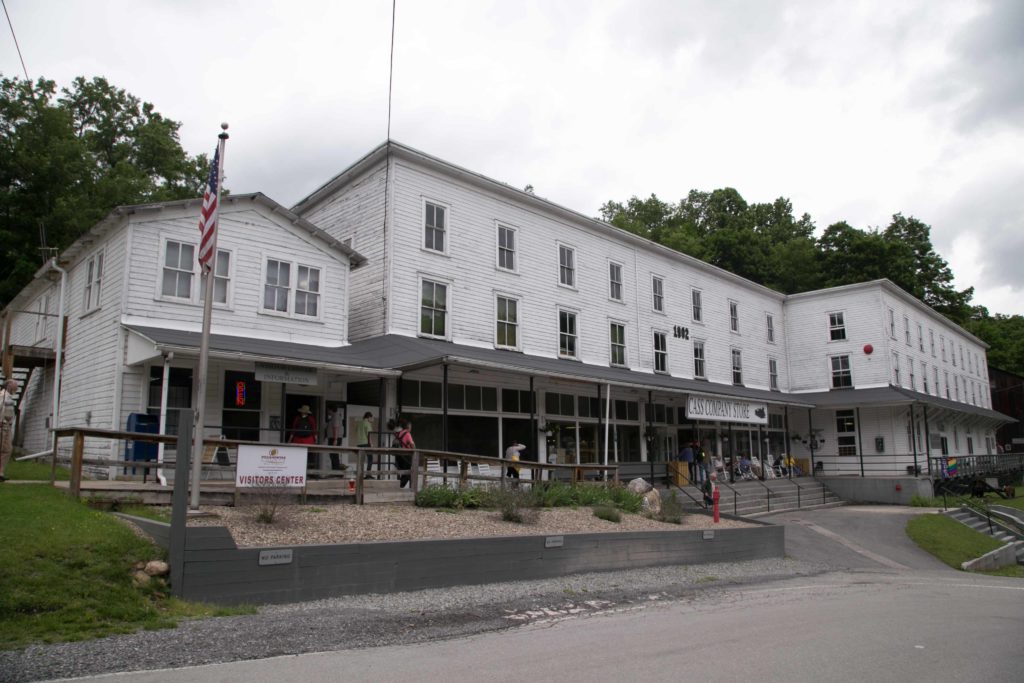
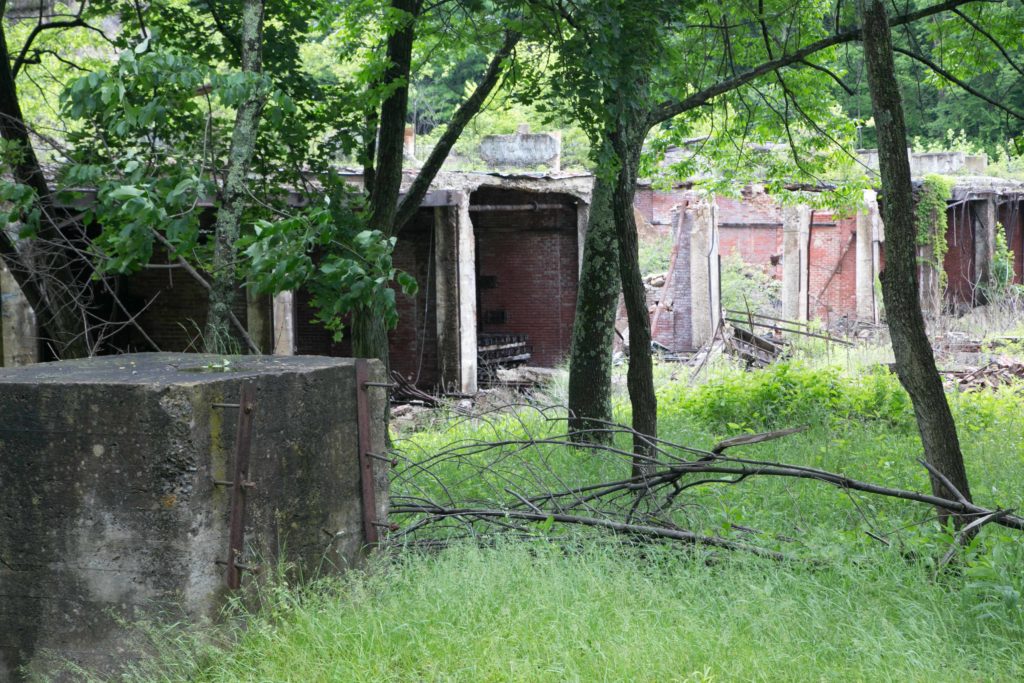
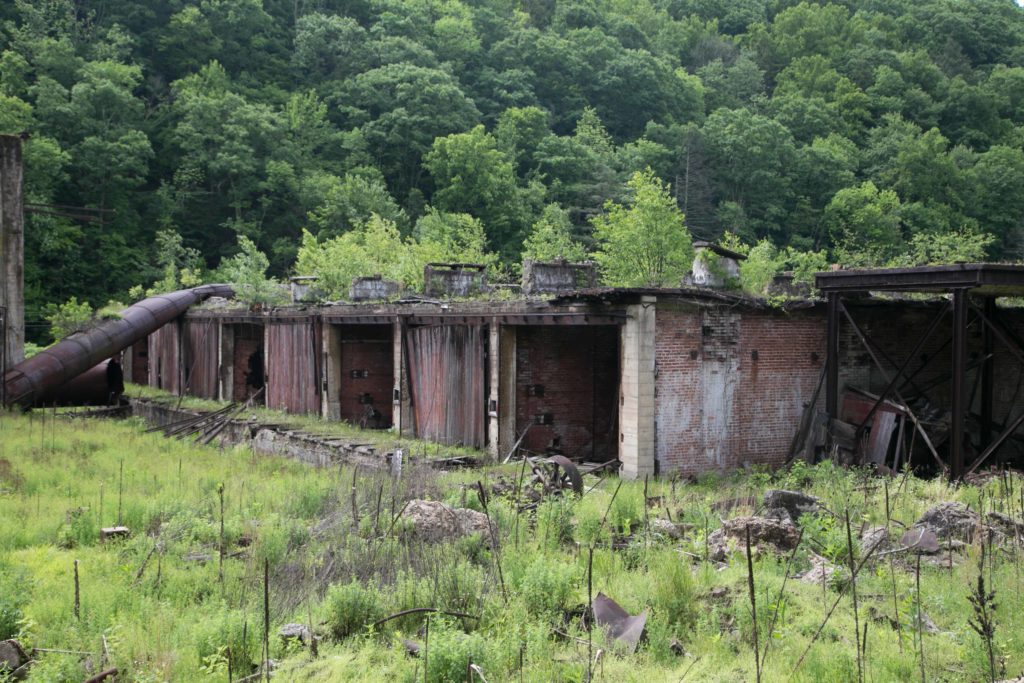
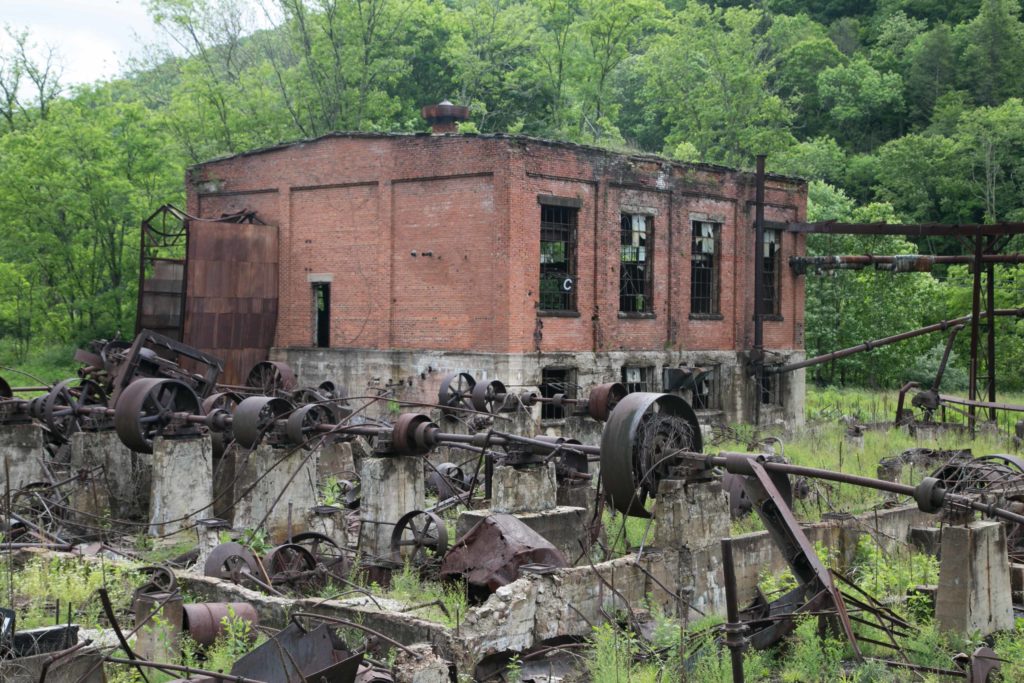
To wrap up my trip to scenic railroads in West Virginia, my tour group visited Cass, where the Cass Scenic Railroad is based. Cass is now a state park, but it once was a company town, built to support the logging operations and mill. The company store and many of the  company houses are still standing. All the company houses were built the same and are basic, yet today, they still look charming. Cass was famous for having wooden sidewalks on all its streets. The town still does have wooden sidewalks, but obviously they are not the original ones. The mill burnt down, but remnants of it still remain. A newer train shop is there also, and if you are lucky like me, you can get a tour.

Cats company houses

Cass company houses

Cass jail in the basement of the building that has the mayor's office and council chambers on the top floor. [There is a modern day political joke in there.]

Cass jail in the basement of the building that has the mayor’s office and council chambers on the top floor. [There is a modern day political joke in there.]

The nicest house in Cass, originally built for the company owners.

The nicest house in Cass, originally built for the company owners.

Cass Company Store

Cass Company Store

The ovens of the former mill. In the third oven, stacks of wood are present. The mill was closed so suddenly that the wood was left still in the over.

The ovens of the former mill. In the third oven, stacks of wood are present. The mill was closed so suddenly that the wood was left still in the oven.

The ovens of the former mill.

The ovens of the former mill.

Part of the former mill

Part of the former mill

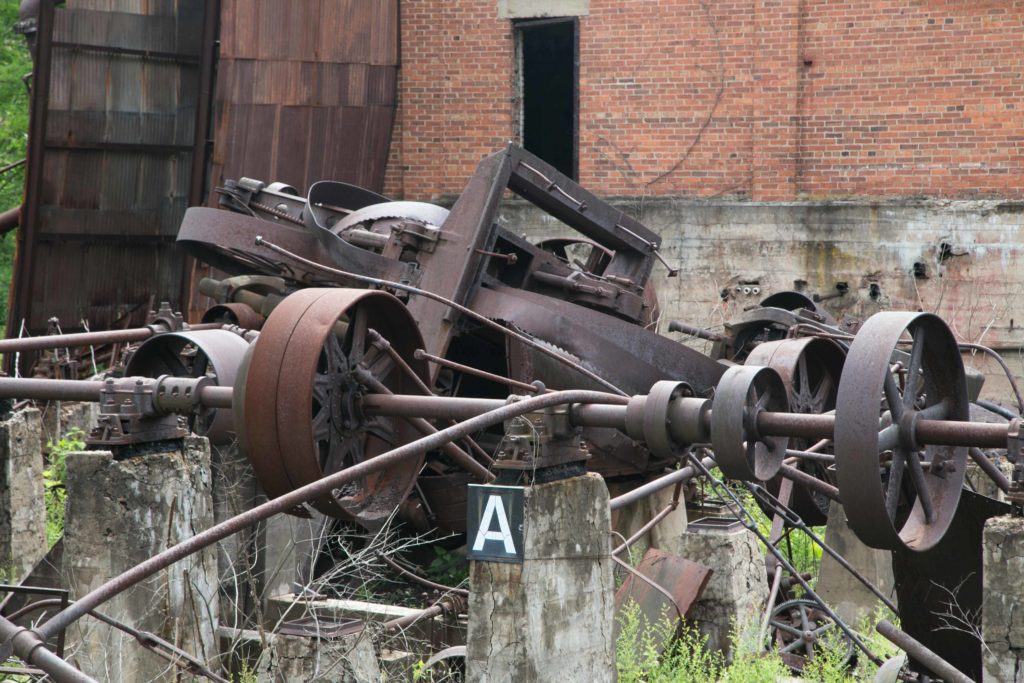
Mechanical rolling parts of the former mill. A metal saw used to cut the wood is in there.

Mechanical rolling parts of the former mill. A metal saw used to cut the wood is in there.

Part of the former mill

Part of the former mill

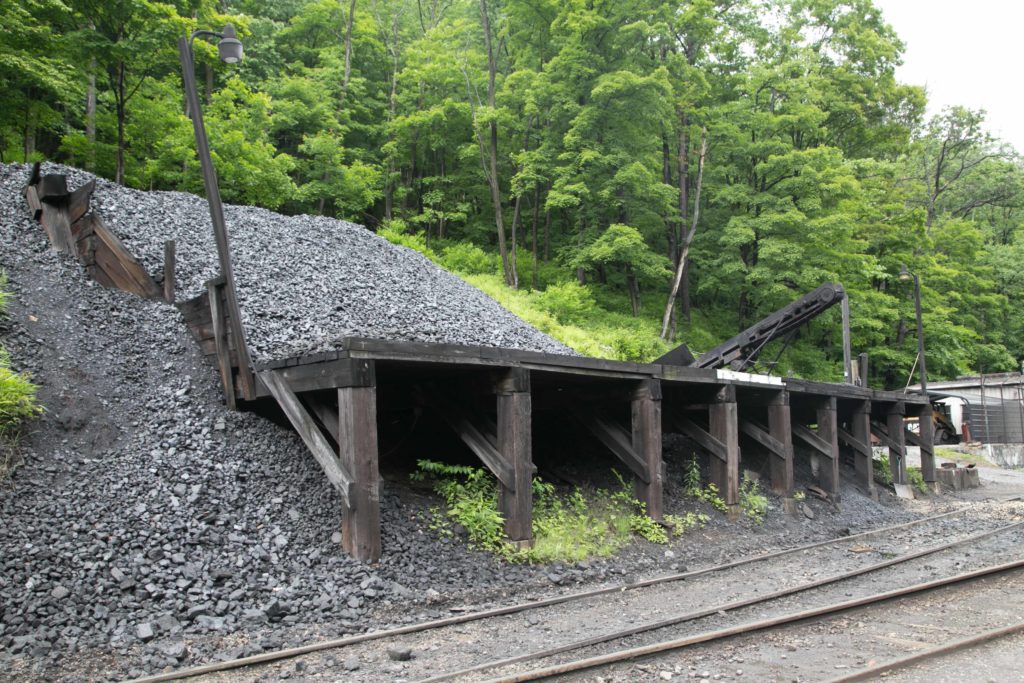
Coal pile to supply the Cass Scenic Railroad train

Coal pile to supply the Cass Scenic Railroad train

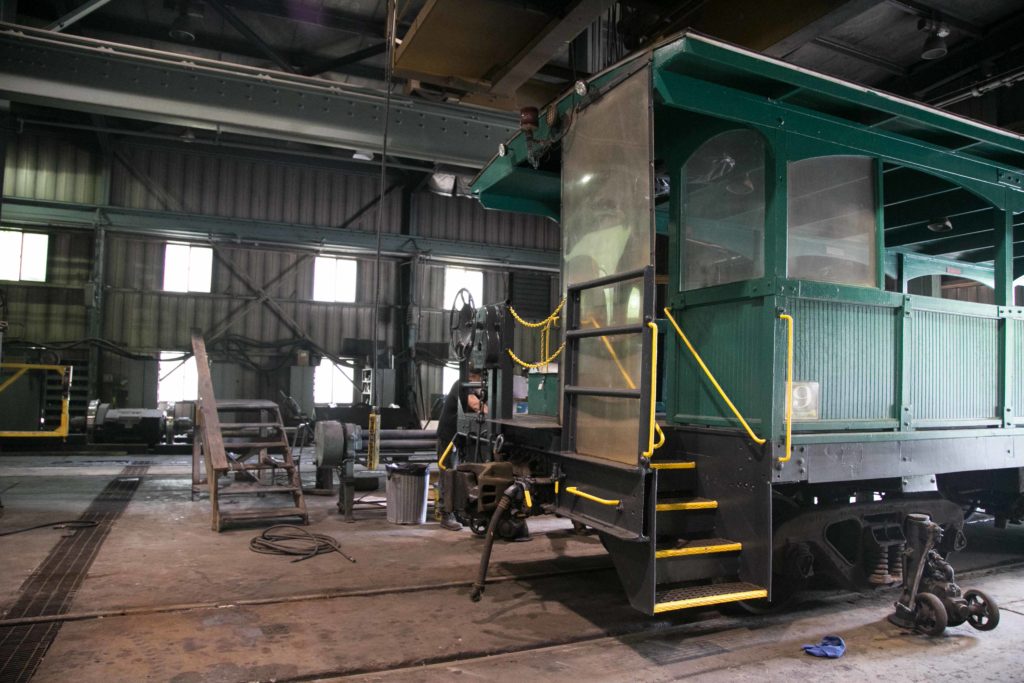
Inside the Cass shop

Inside the Cass shop

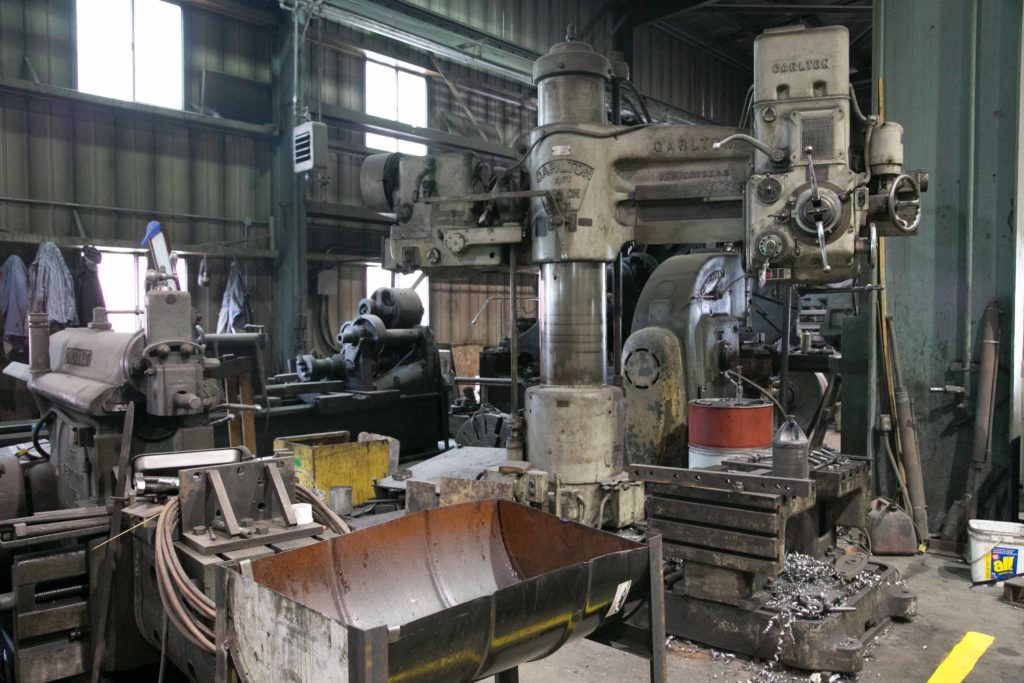
Inside the Cass shop with many machines to make replacement parts that can no longer be bought

Inside the Cass shop with many machines to make replacement parts that can no longer be bought

A short video of the Cass Scenic Railroad rolling to the station and stopping to pick up water.

Durbin Rocket

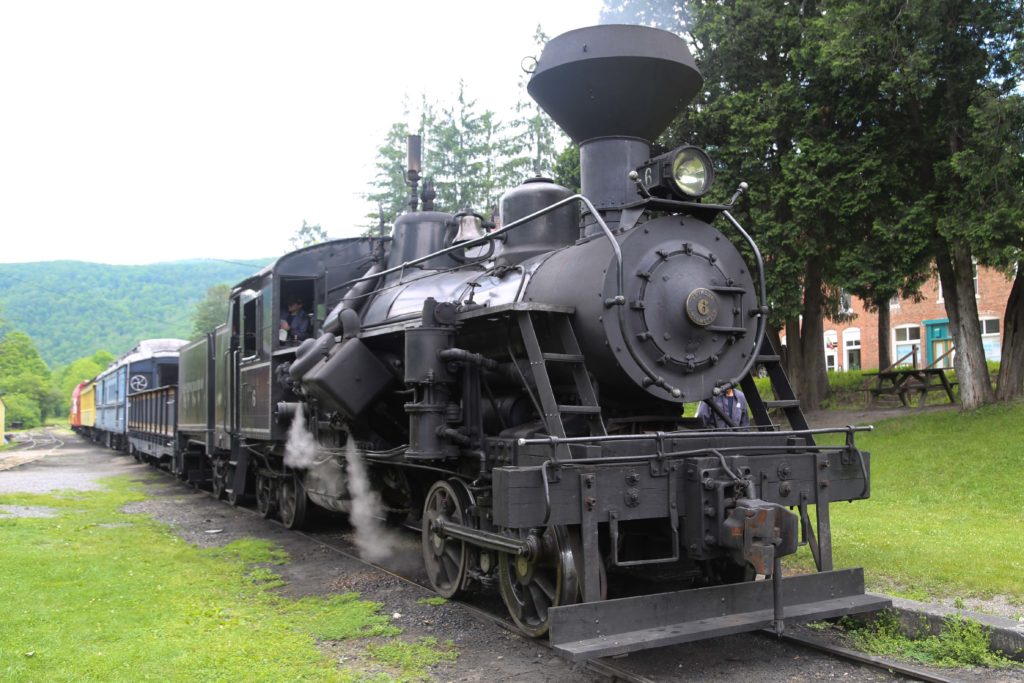
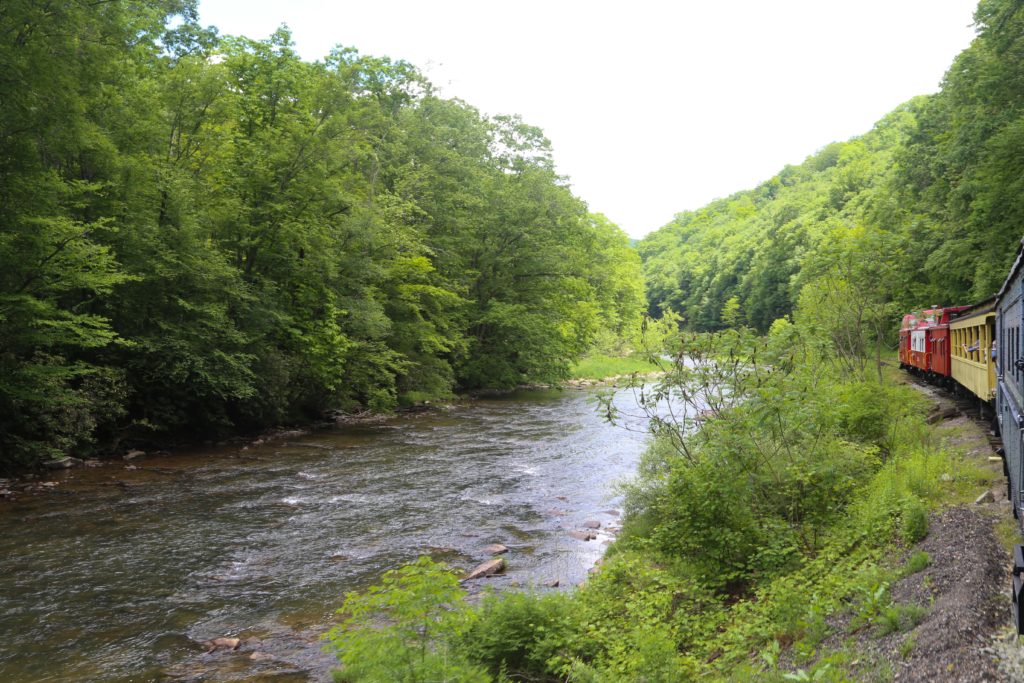
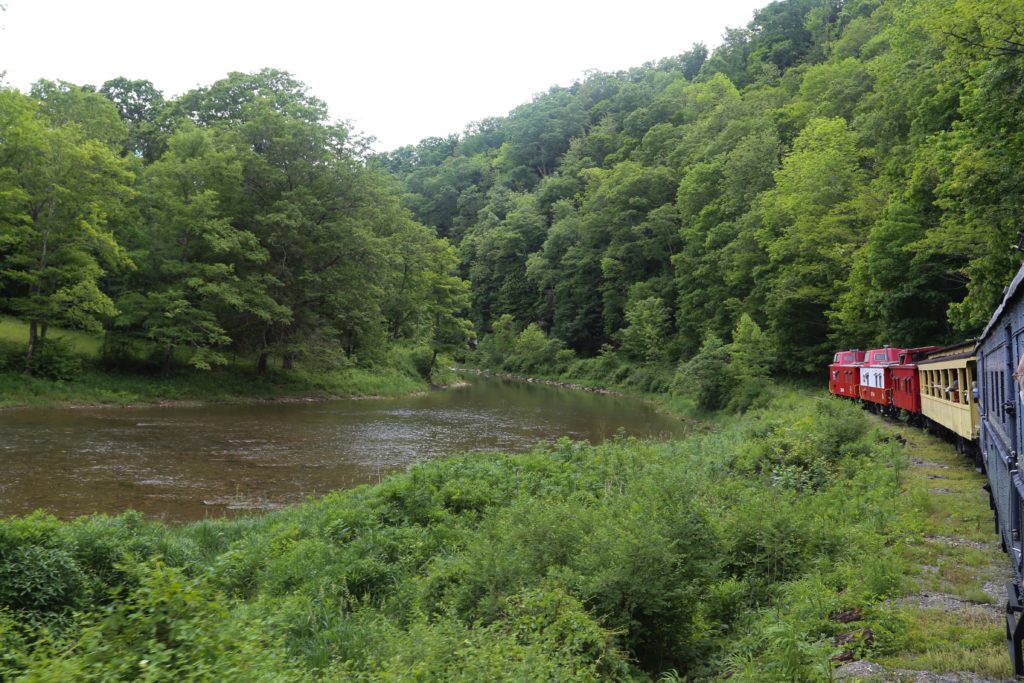
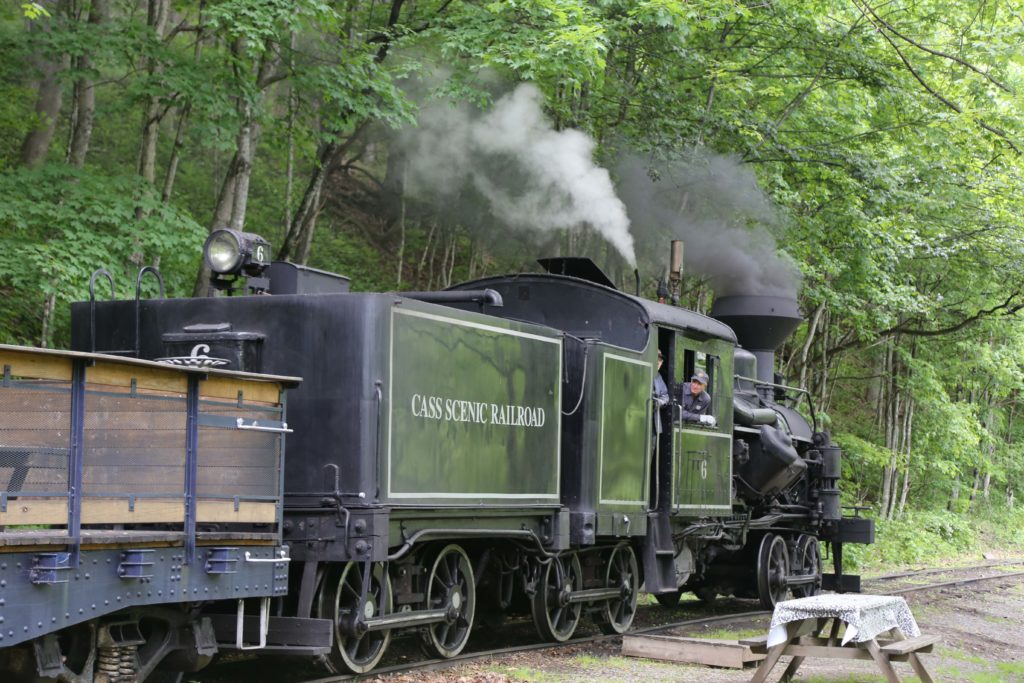
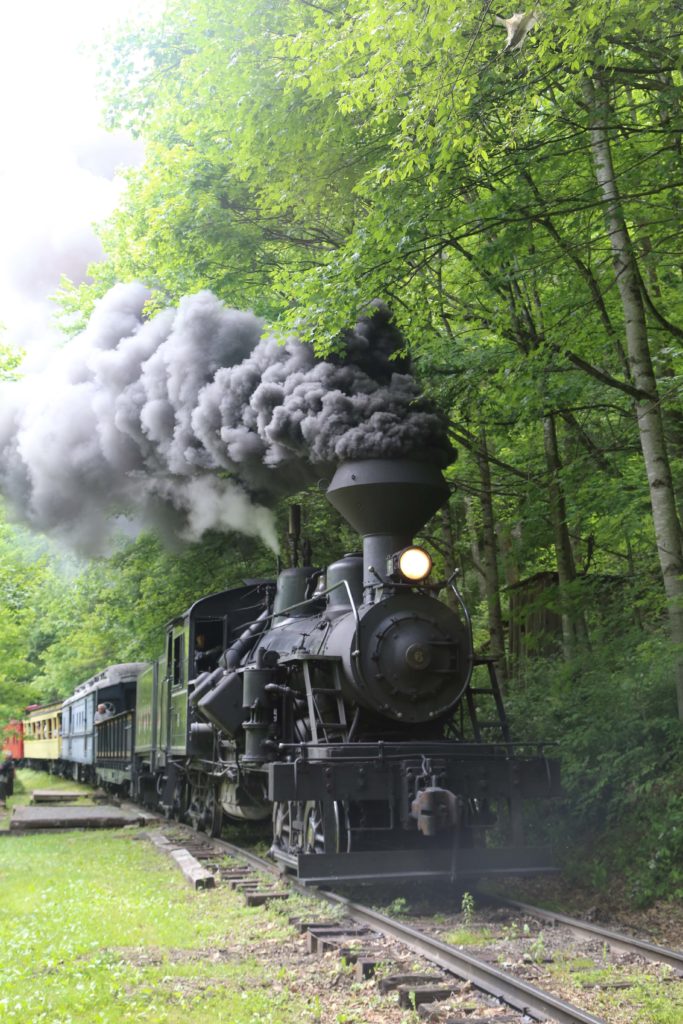
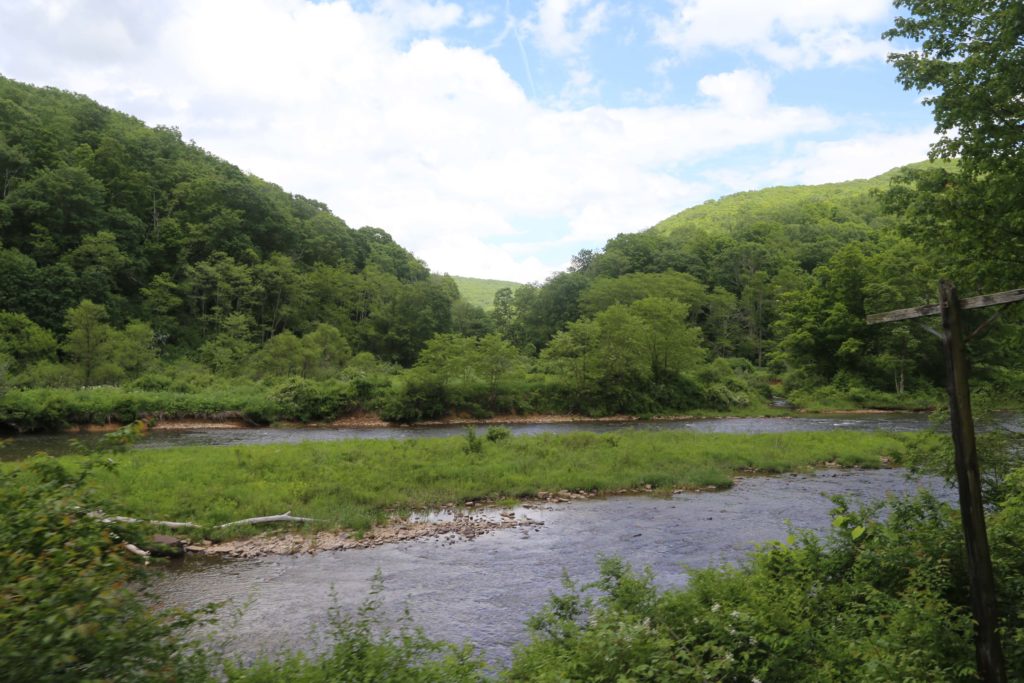
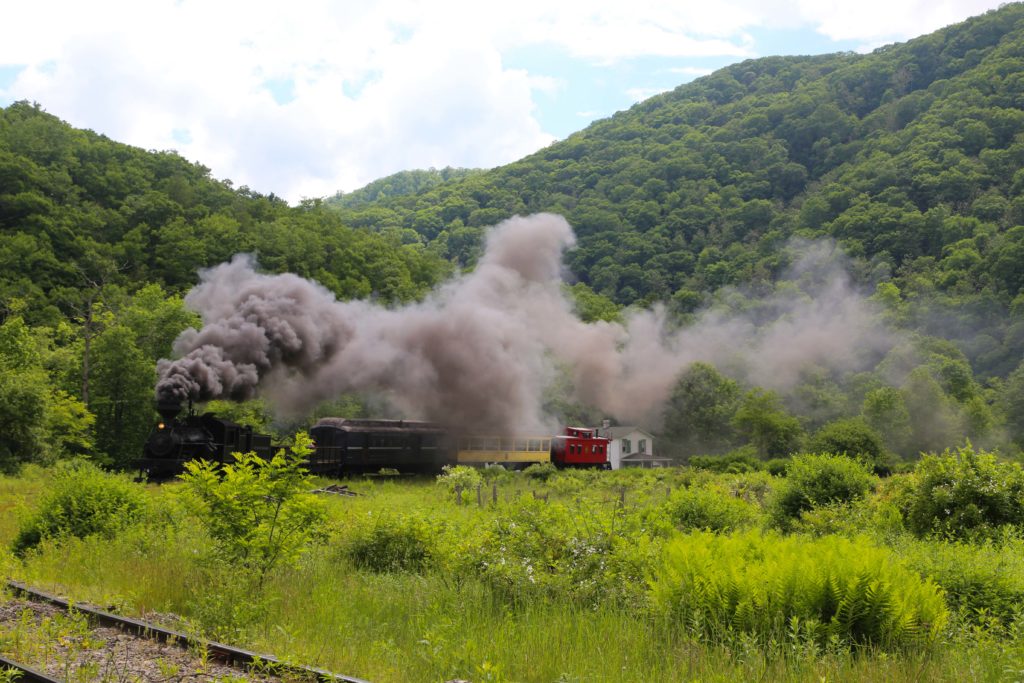
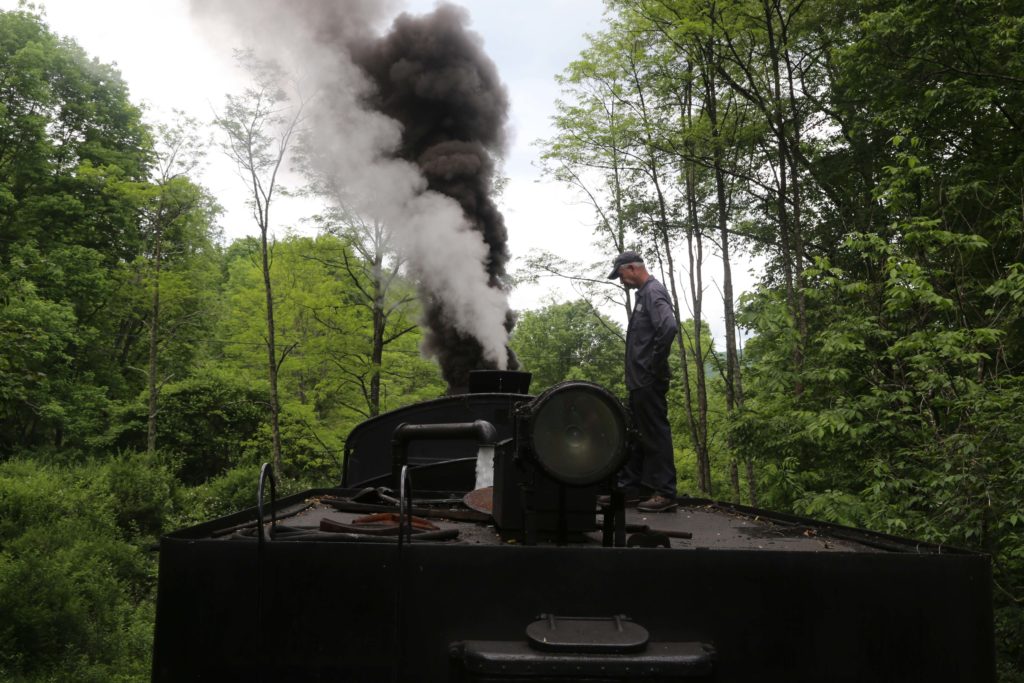
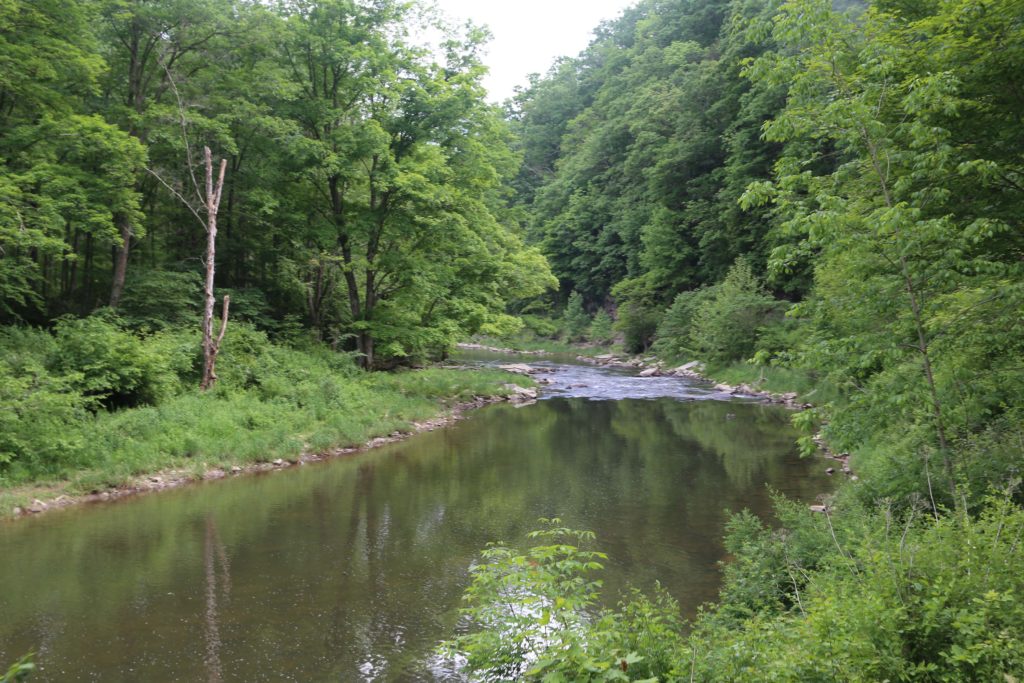
I took a ride on the Durbin Rocket this afternoon. The Climax geared logging locomotive was built in 1910 and powers a vintage train, including an old postal car. The train is indeed a rocket, as it moves along at a whopping 8 miles per hour. At one point a butterfly passed us. The roundtrip route from Durbin, West Virginia, however is gorgeous as it follows the Greenbriar River in the Monongahela National Forest. The only problem is after seeing all the smoke the coal burning created, I feel the need to go plant an entire grove of trees.

The locomotive

The locomotive

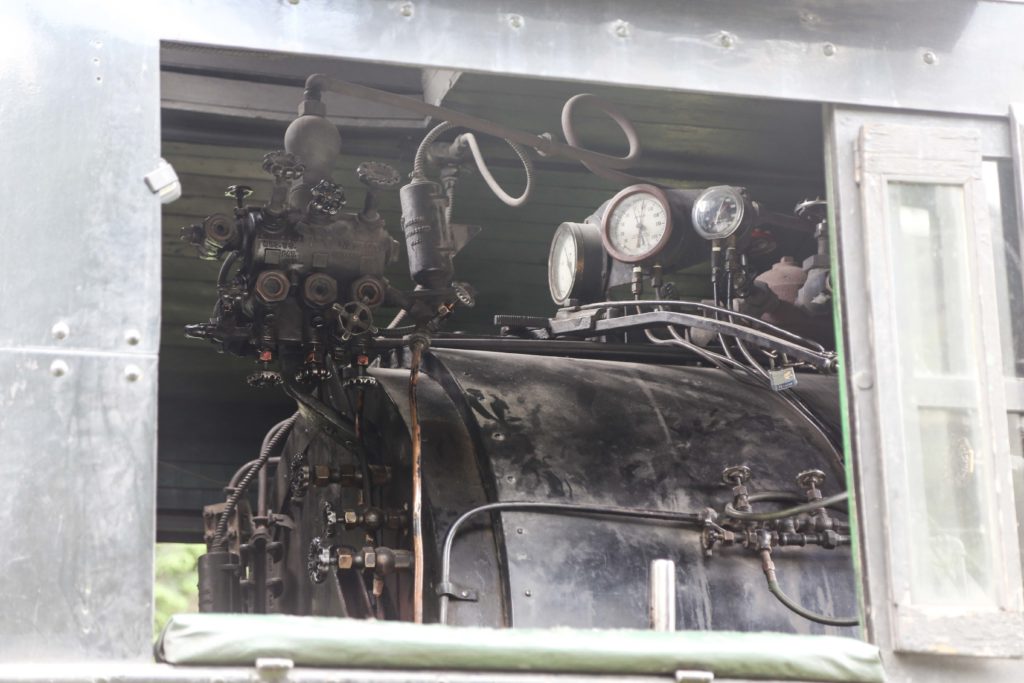
A look inside the locomotive

A look inside the locomotive

Greenbriar River

Greenbriar River

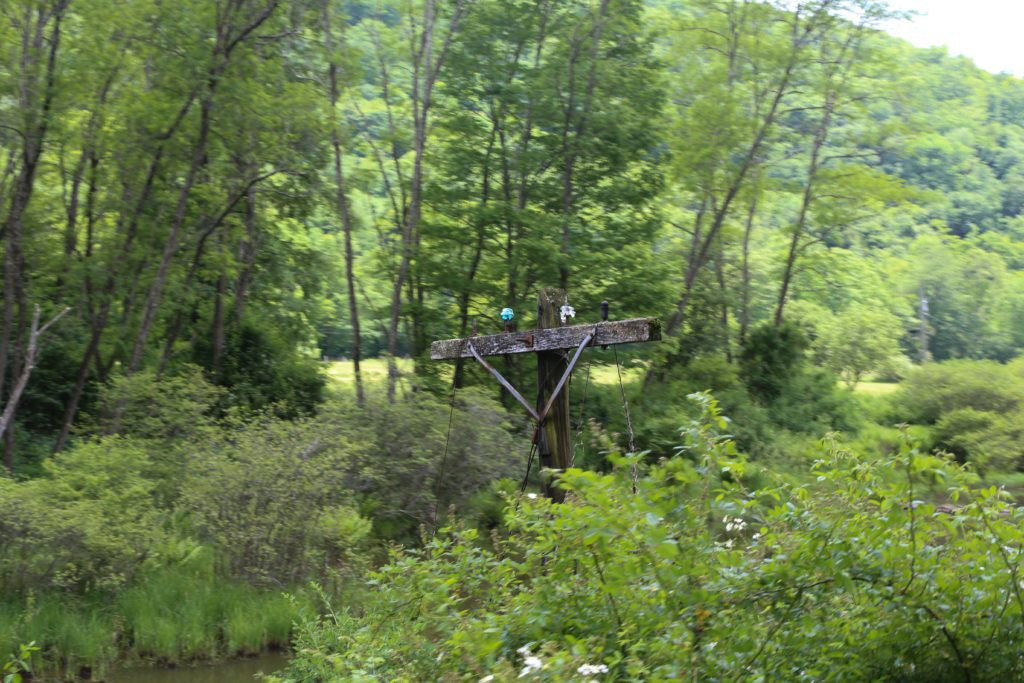
An old telegraph pole

An old telegraph pole

Greenbriar River

Greenbriar River

Locomotive and coal supply car

Locomotive and coal supply car

Coal fired steam engine blowing smoke

Coal fired steam engine blowing smoke

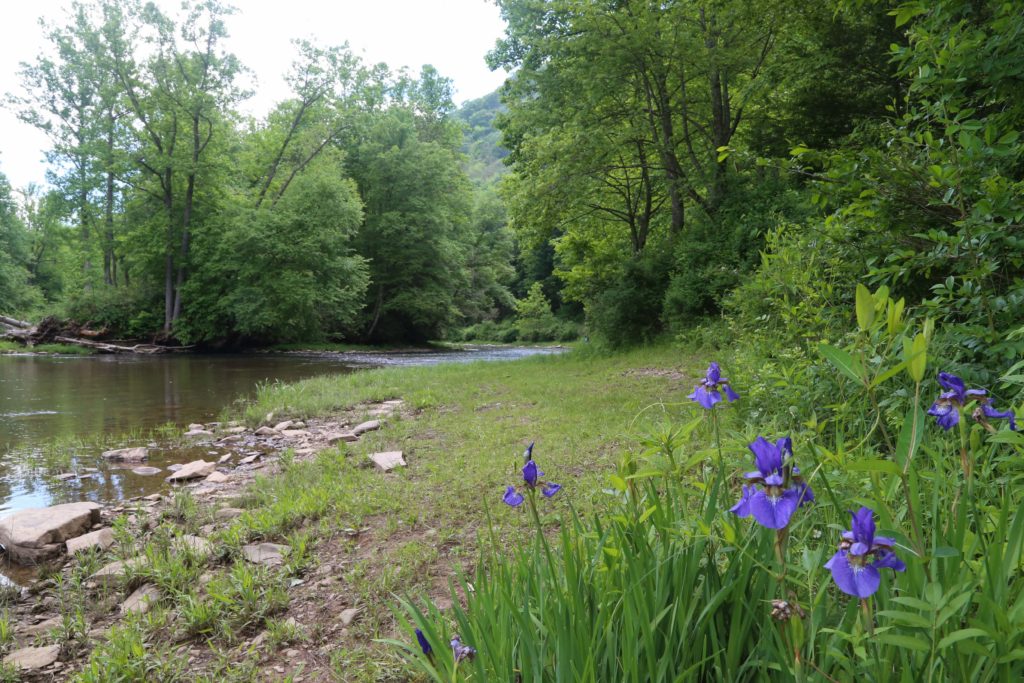
Irises by the Greenbriar River

Irises by the Greenbriar River

Greenbriar River

Greenbriar River

Durbin Rocket traveling by a field

Durbin Rocket traveling by a field

Refilling the locomotive with water on the return trip

Refilling the locomotive with water on the return trip

Stream where train stops to refill water for engine

Stream where train stops to refill water for engine

Greenbriar River

Greenbriar River

Life Today

Another day, another mass shooting in the United States. When I was a child, I can remember fire drills. I remember tornado drills. Active shooter drills did not exist. Now they do.

Today I spent part of my work day completing a whole bunch of mandatory training. One training was on information technology security. In my opinion, the training was stupid, but then again I am more informed than others. I know not to share my password with anyone.  I know not to open unknown files. I take many precautions to protect my sensitive information, like shredding even vaguely sensitive documents. The irony of the training being that it was in fact my employer and its inadequate security that was hacked months back and allowed my personal information to be stolen. My social security number may have been compromised. My employer is now paying for credit monitoring for me. When I was in college, professors posted our social security numbers with our grades as a way to allow us to find our grades and keep them anonymous. Now, posting social security numbers wouldn’t be allowed. They are too sensitive. Because of the internet, there are things I have to worry about that I never did as a child, but I still love the internet. I don’t want to go back to life without it.

I am not one of those people who likes to talk about how things were better when they were young. I love the internet. I love my smart phone. I love my energy efficient light bulbs and appliances. I love indoor plumbing. I love that I can be and am a female engineer. I love that I live in a country with clean air and water, and I don’t have to worry if my drinking water is safe or if the food I buy is contaminated. I love that vaccines exist. A hundred years ago women couldn’t vote. Until the mid-1800s, slavery existed. So, no, I don’t want to go backwards. The world has never been perfect. We have always had violence. People have always stereotyped and hated people for stupid reasons. People have always blamed others for whatever problem. We don’t seem to be able to get rid of violence or prejudice or hatred. This makes me very sad. We have made technological progress. We have made astounding progress in medicine and public health. We have made progress in civil rights. Why can’t we make progress in ending the hatred and violence? Why must we keep killing each other?

More San Juan

I enjoyed my visit to San Juan, Puerto Rico and just need to post a few more photos from my trip. Viejo San Juan really is a lovely area to just walk around and absorb the atmosphere.

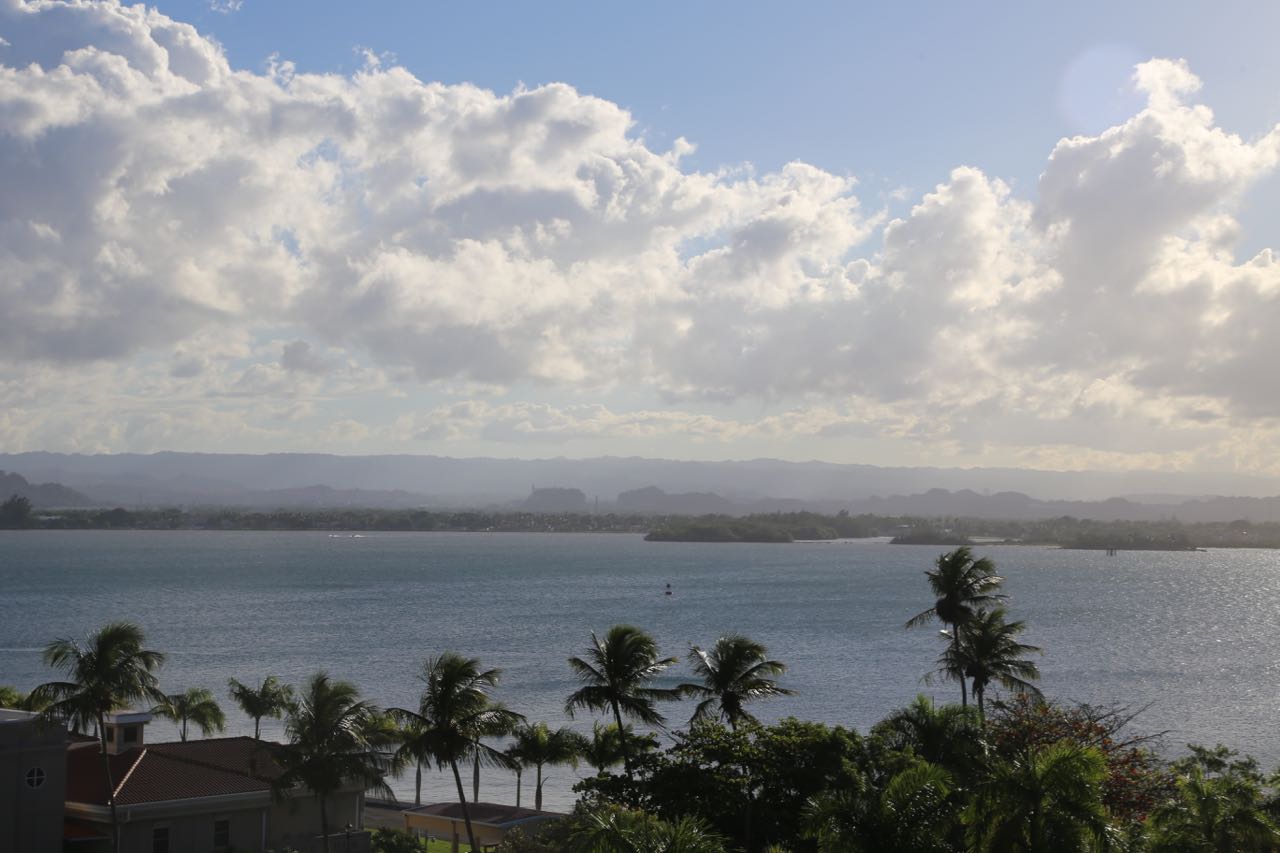
View of San Juan Bay

View of San Juan Bay

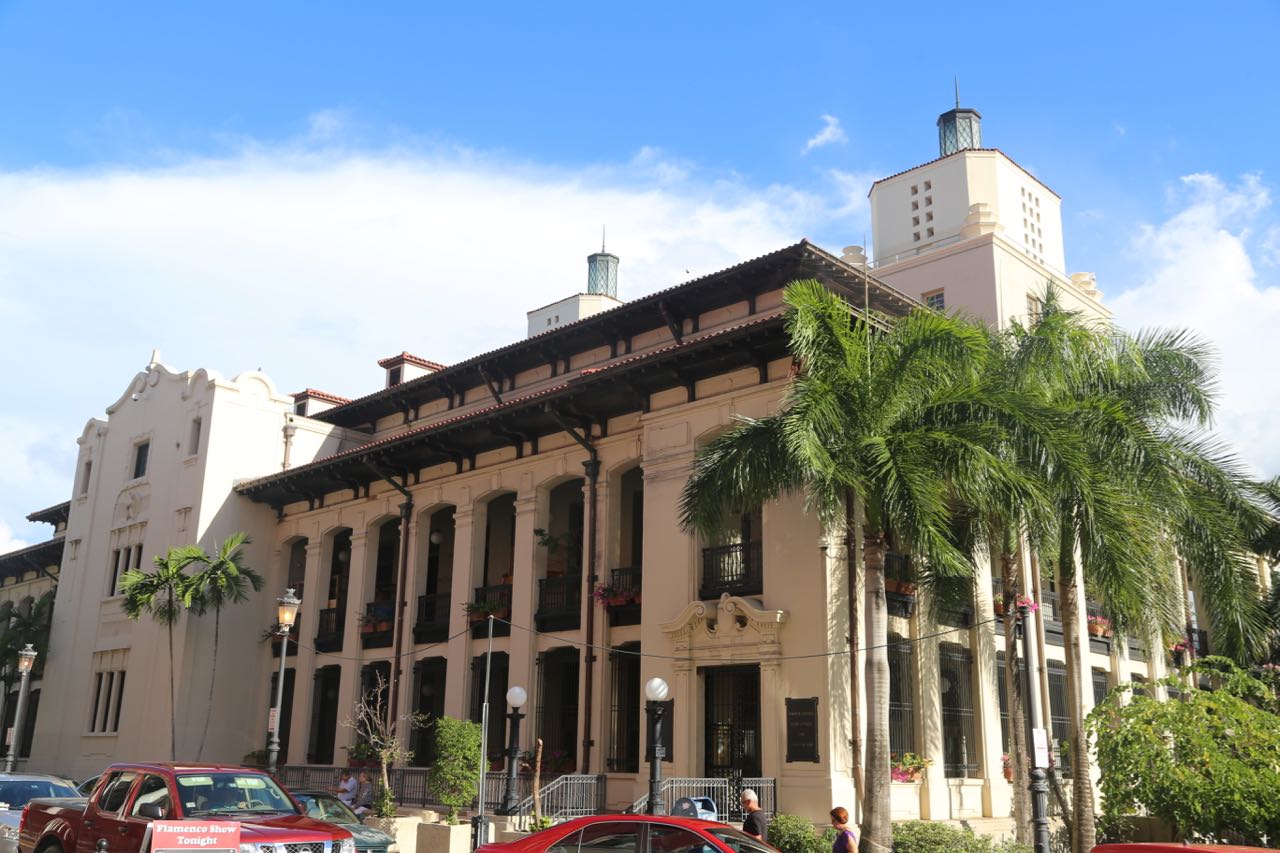
Courthouse and US Post Office

Courthouse and US Post Office

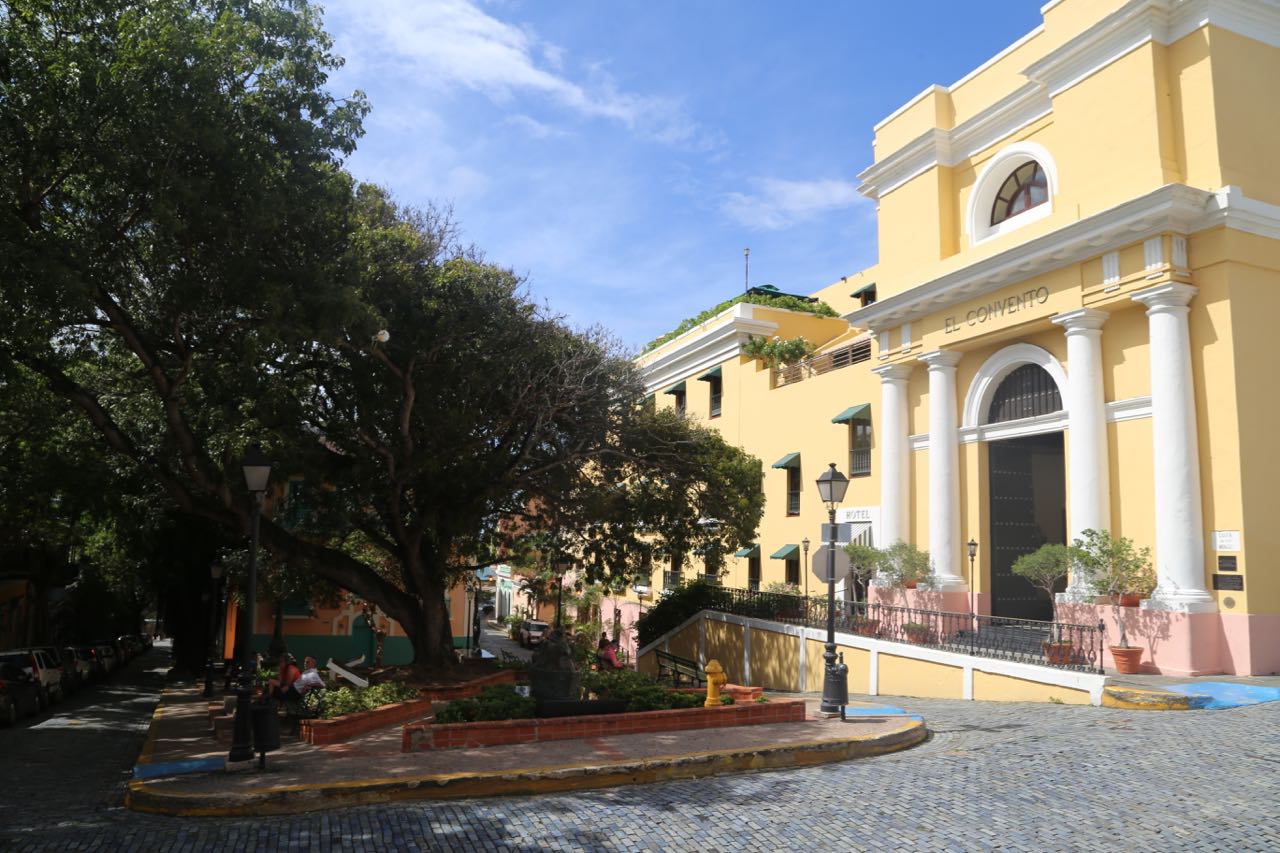
El Convento, originally a convent and now a lovely hotel

El Convento, originally a convent and now a lovely hotel

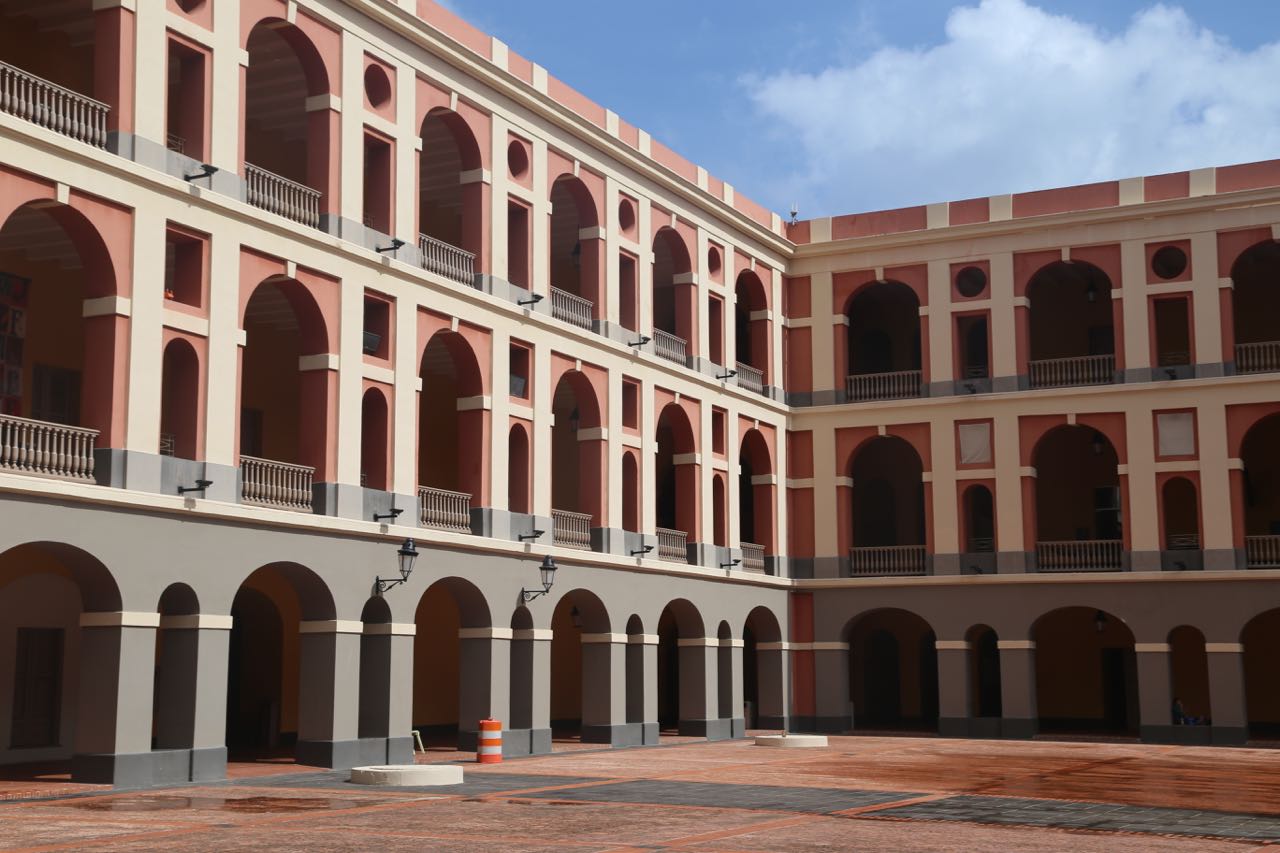
Cuartel de Ballaja

Cuartel de Ballaja

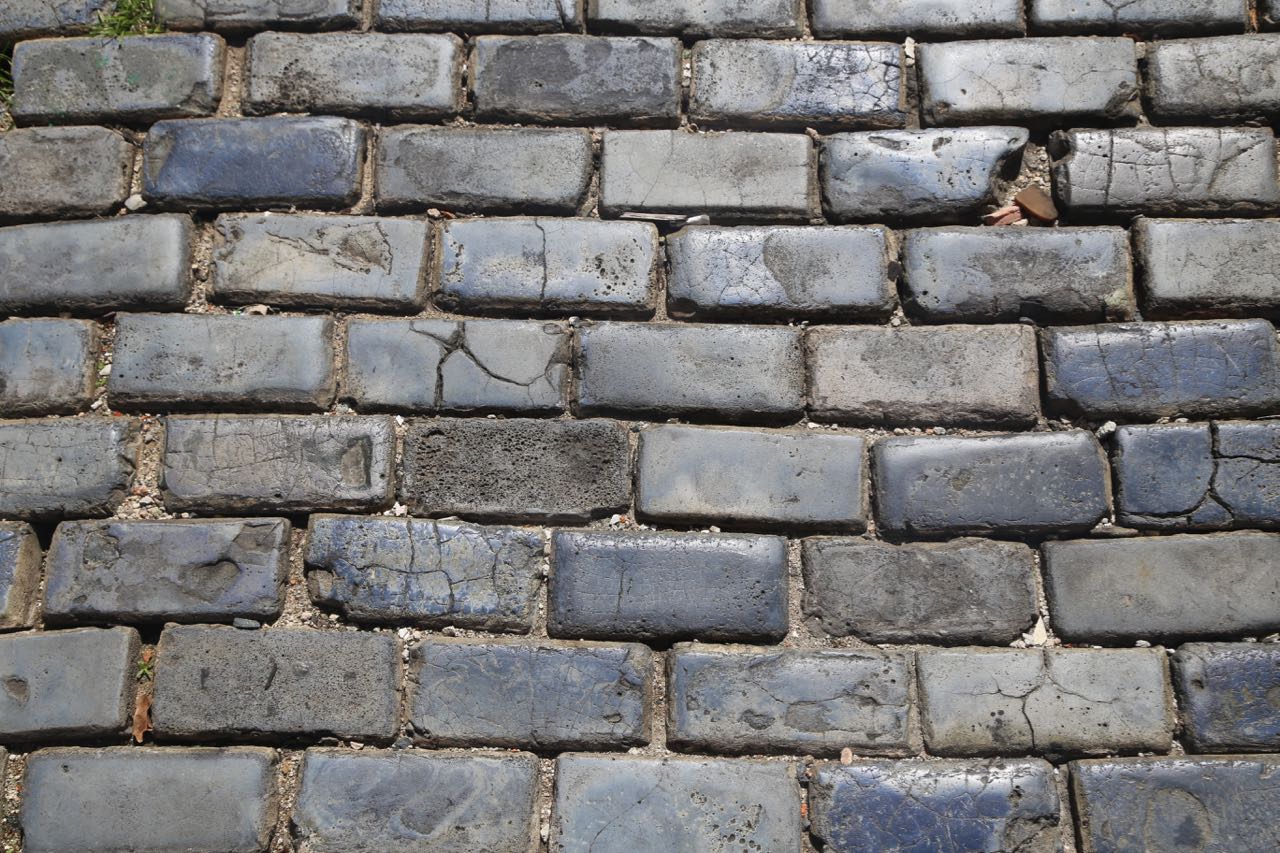
Viejo San Juan's famous blue cobblestone streets

Viejo San Juan’s famous blue cobblestone streets

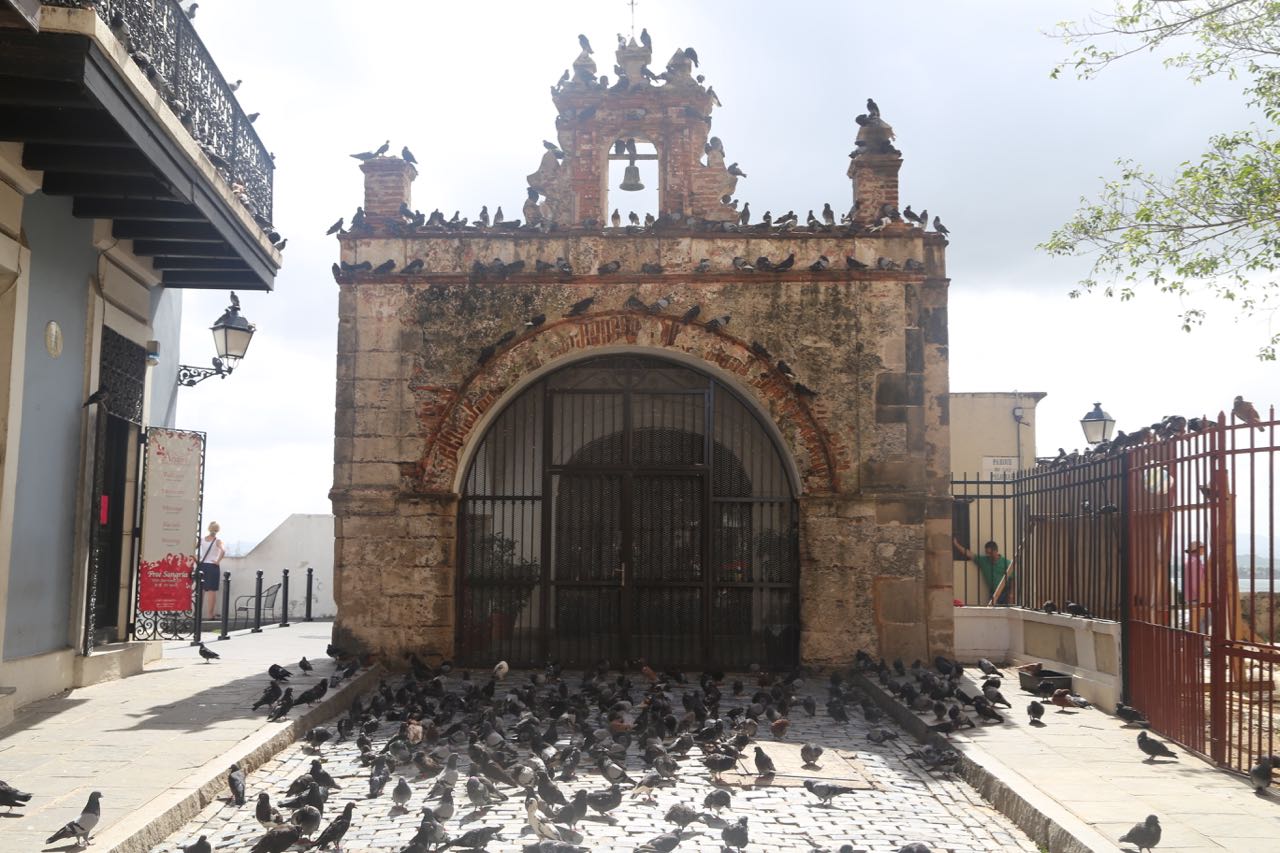
Cristo Chapel, next to Parque de las Palomas

Cristo Chapel, next to Parque de las Palomas

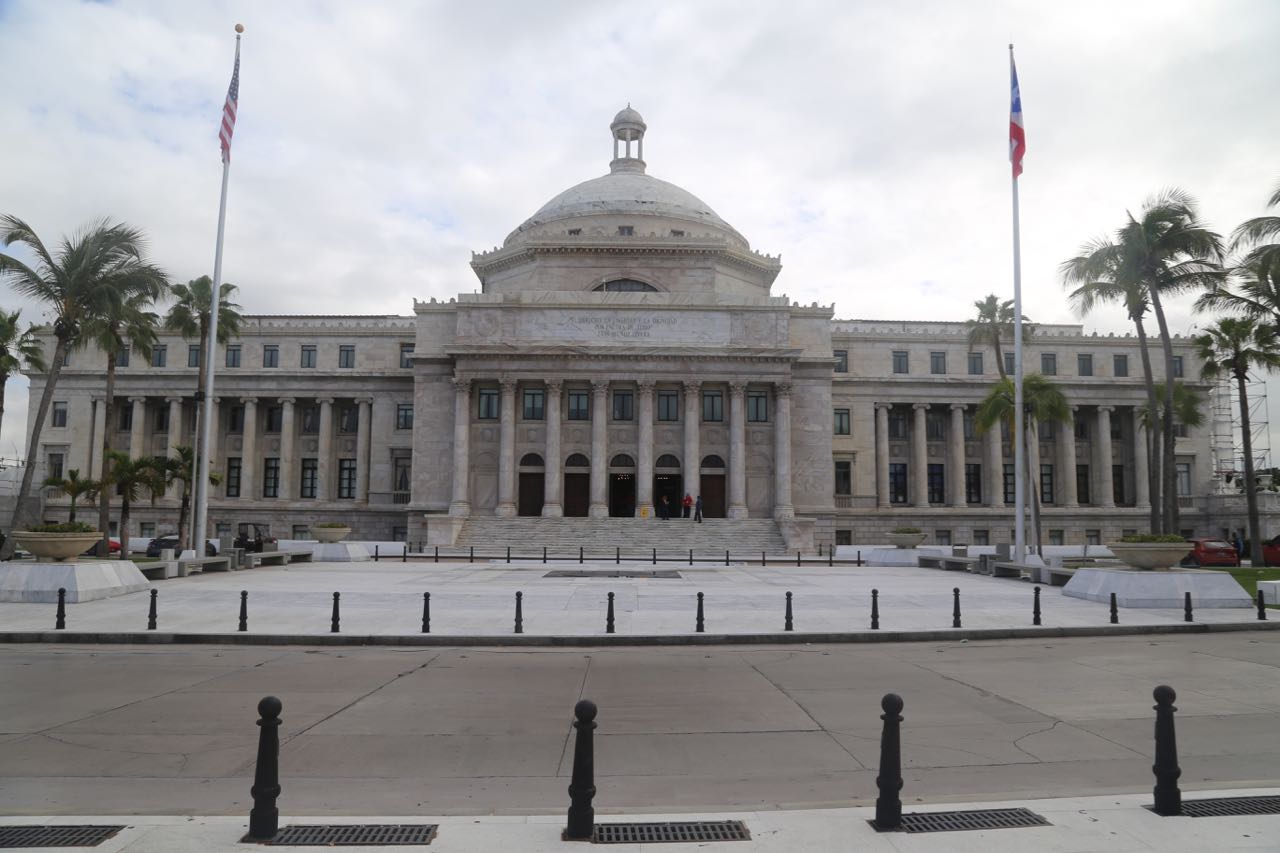
Capital of Puerto Rico (El Capitolio de Puerto Rico)
Capital of Puerto Rico (El Capitolio de Puerto Rico)

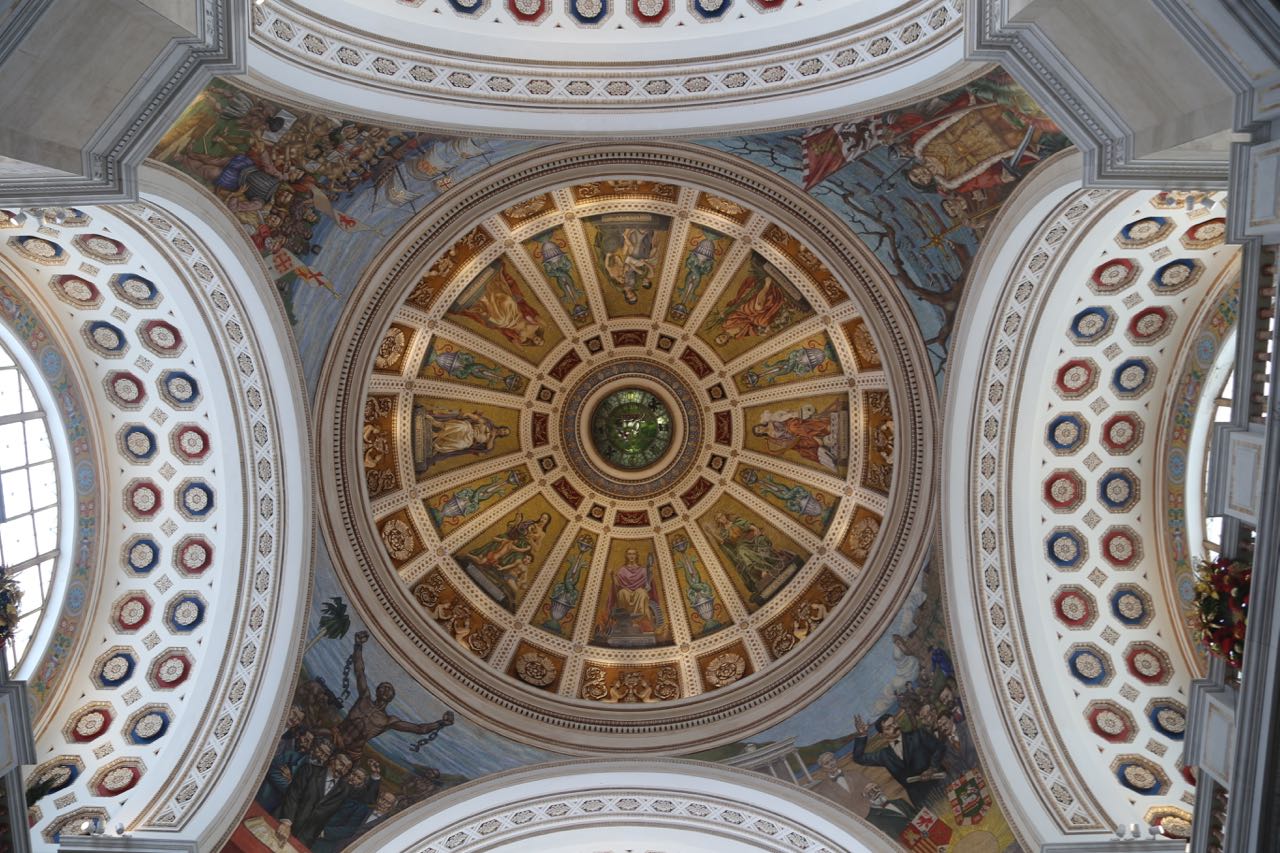
Central dome of Capital of Puerto Rico

Central dome of Capital of Puerto Rico

Castillo San Cristobal

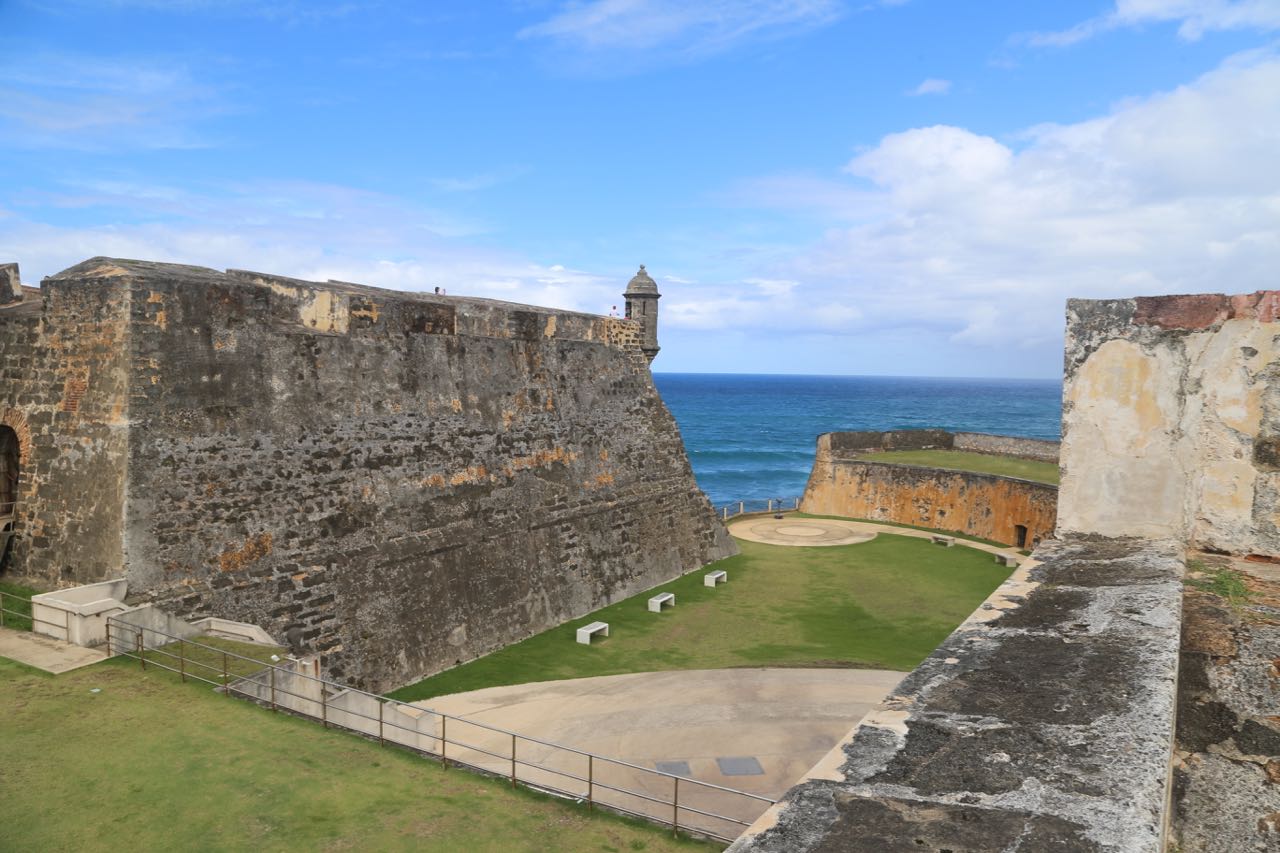
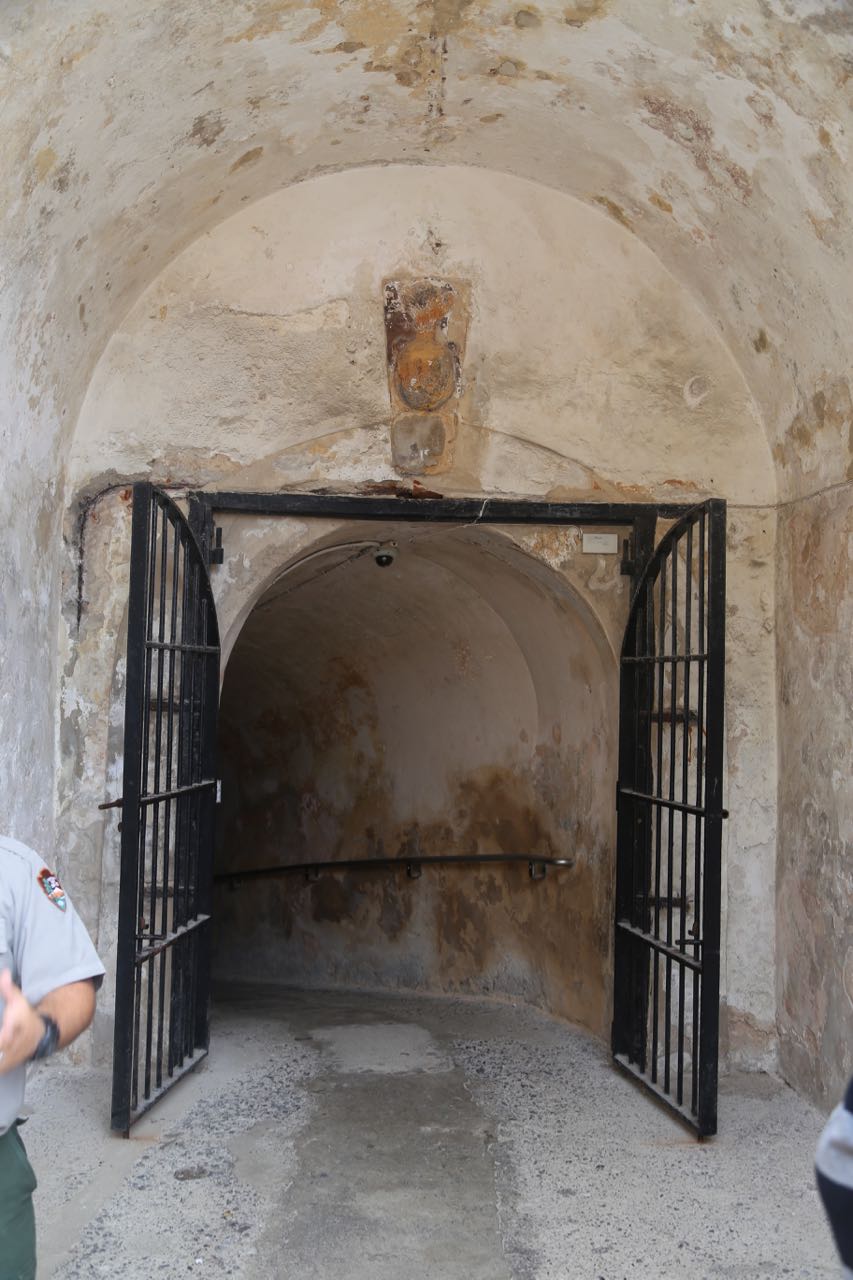
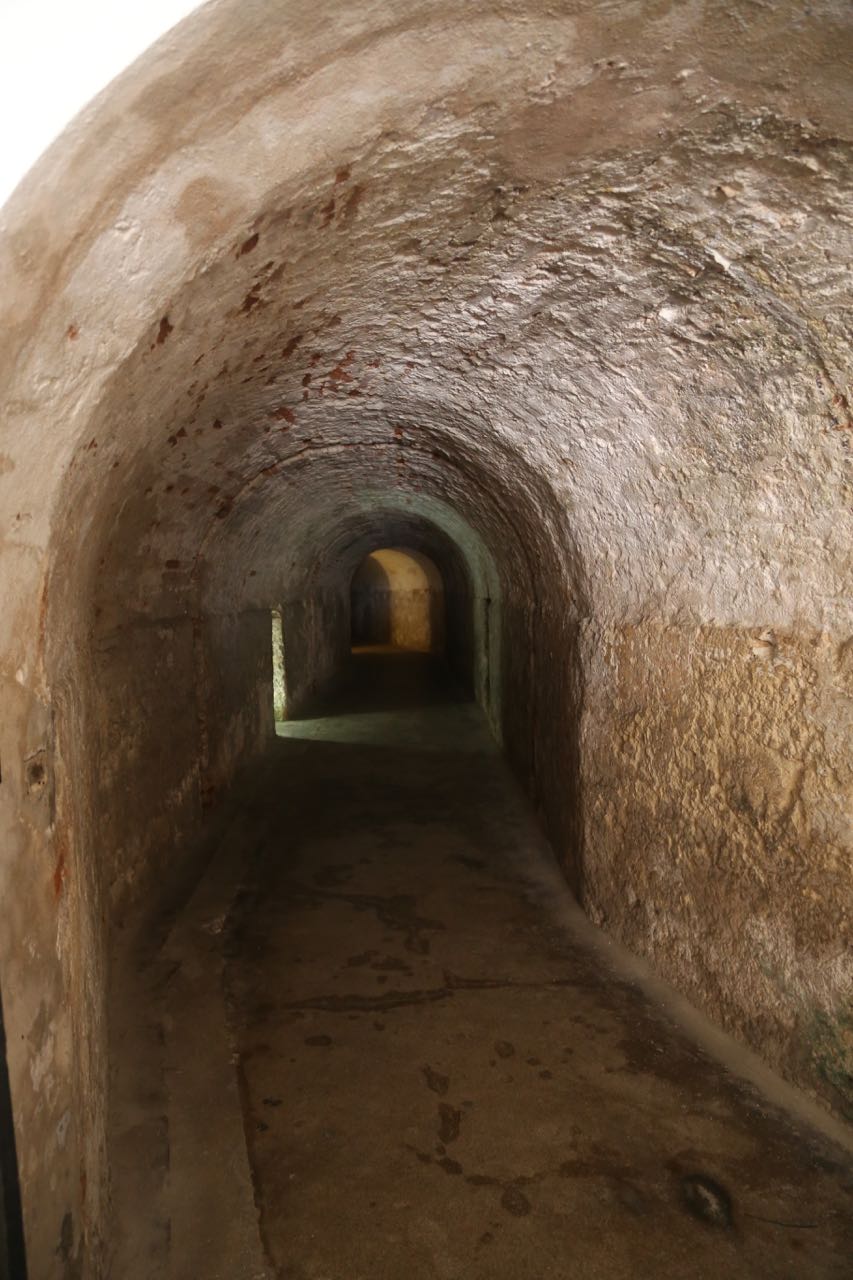
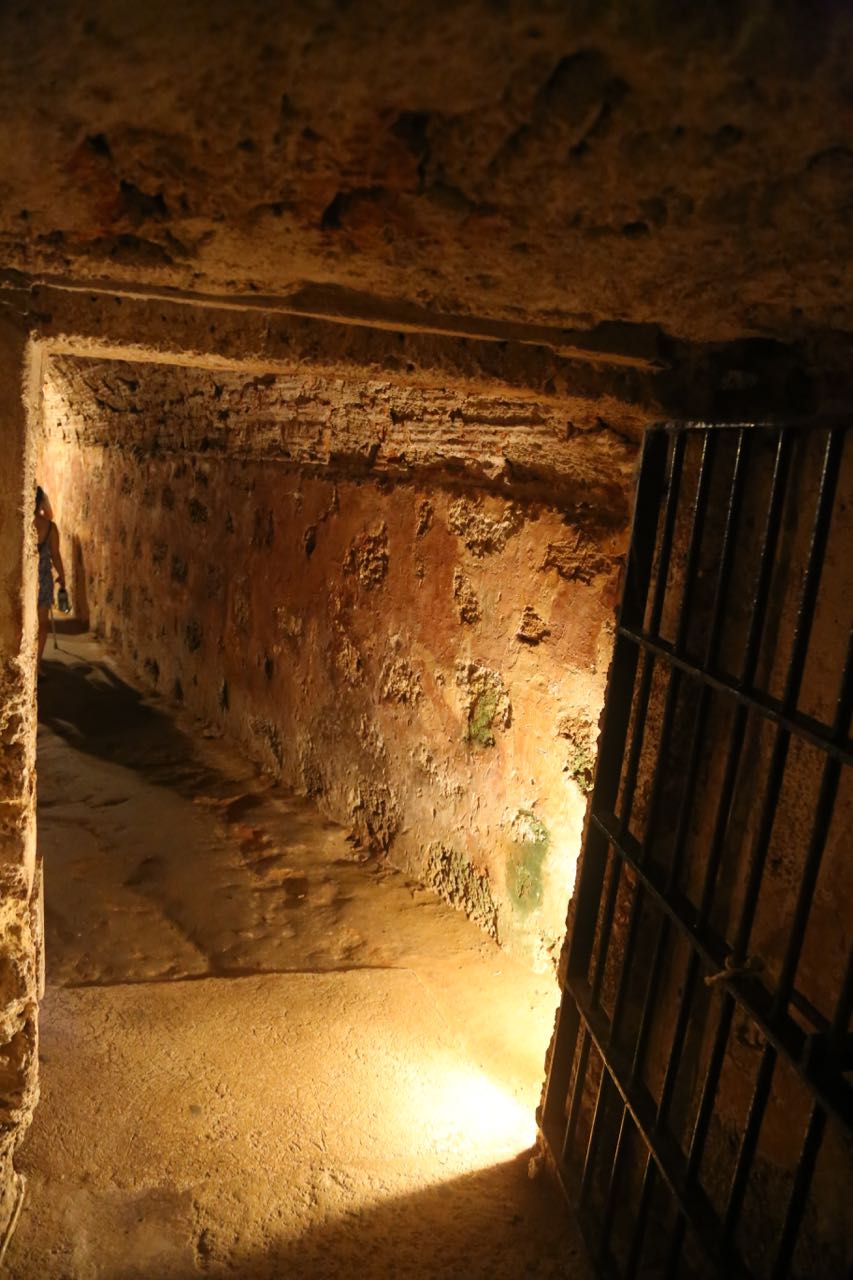
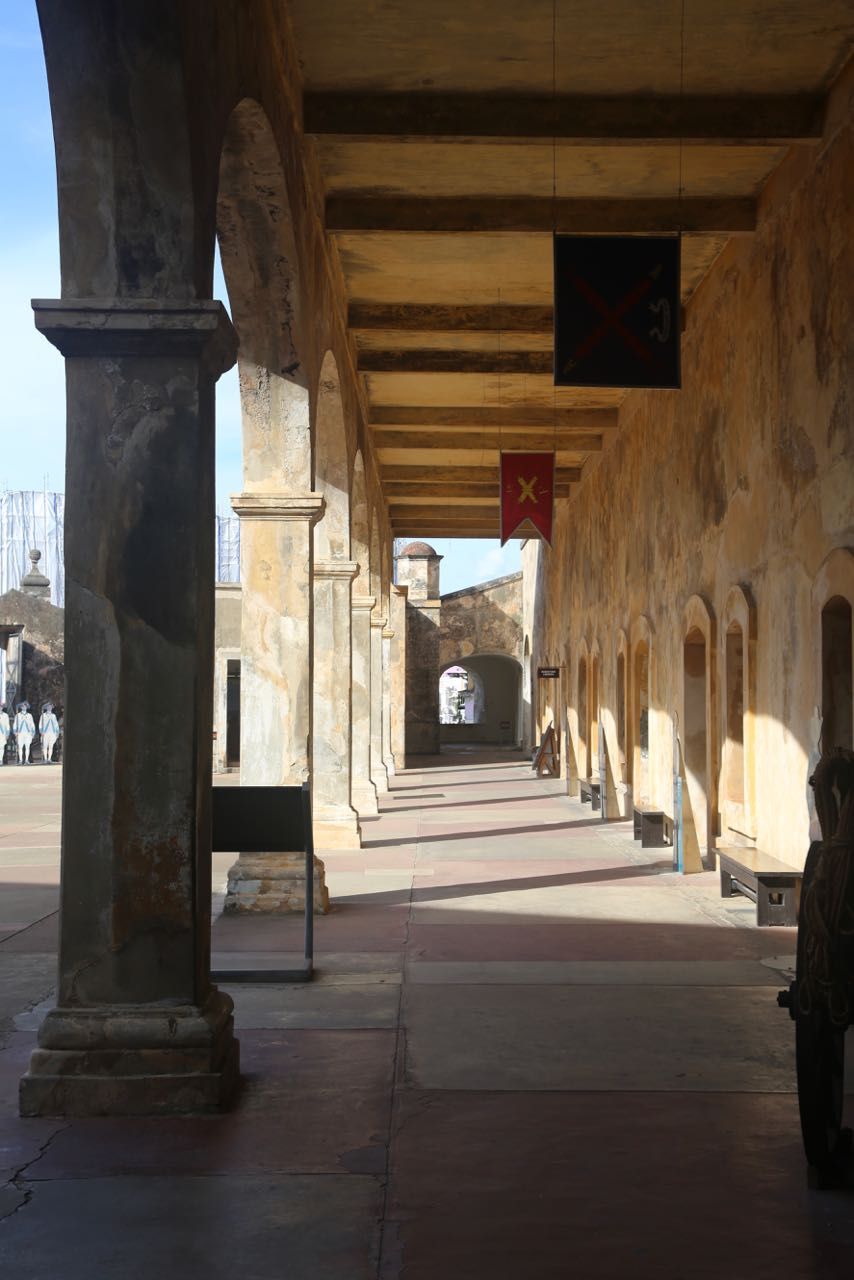
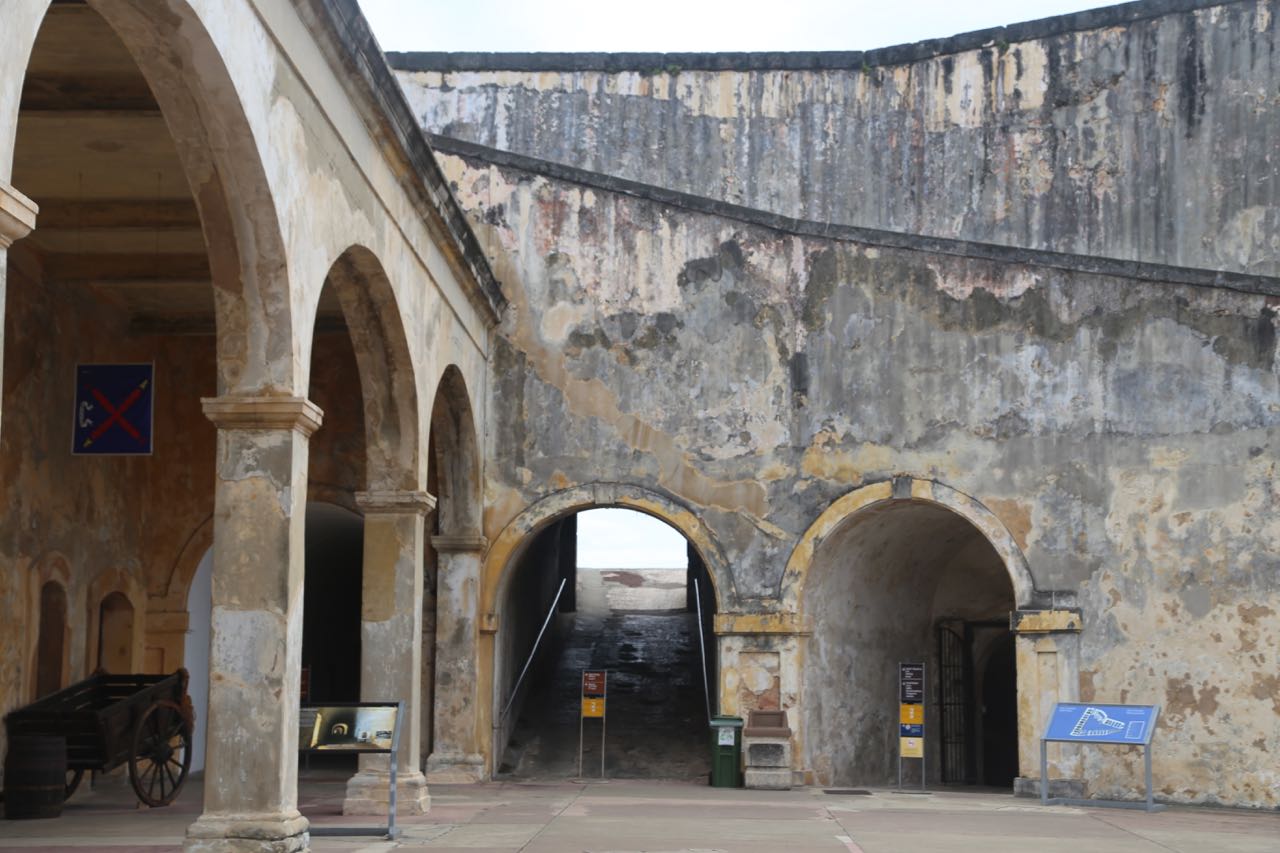
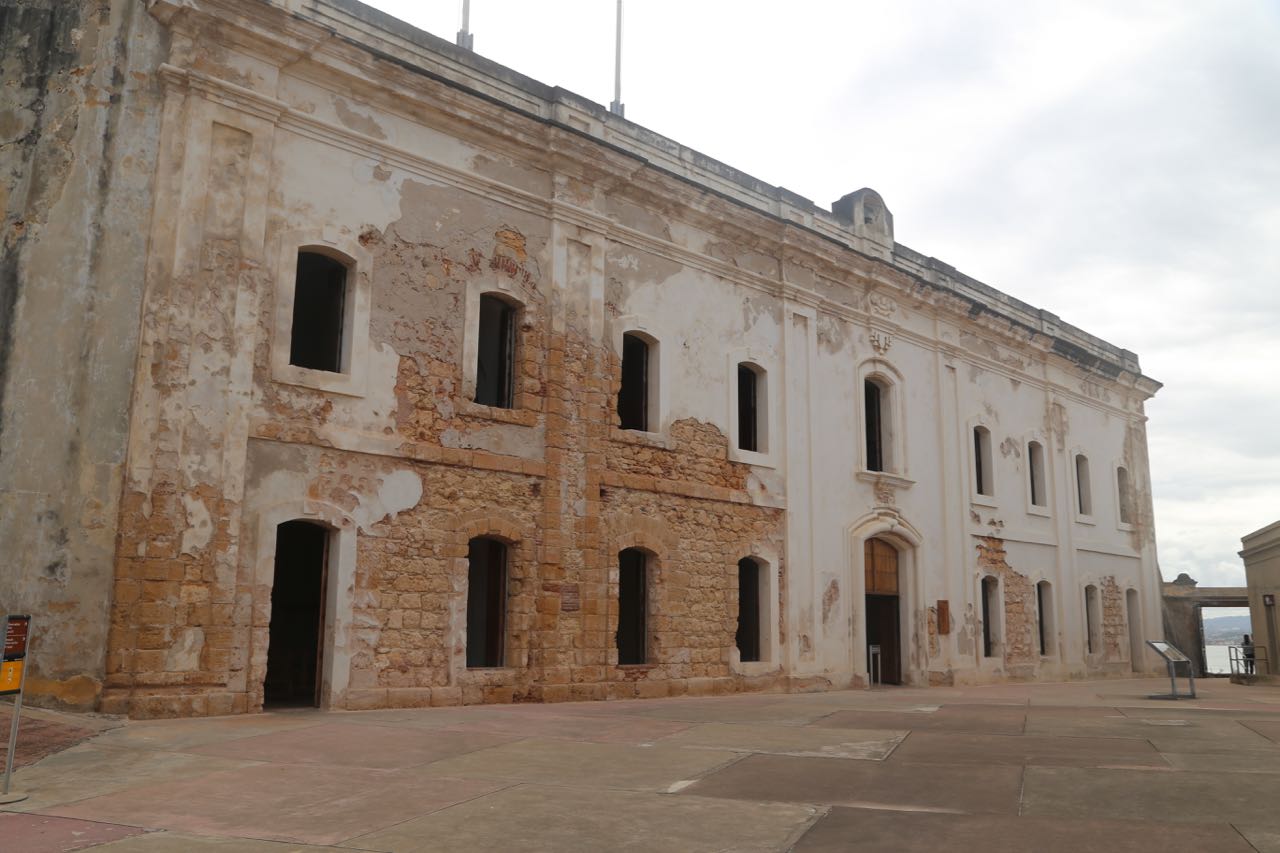
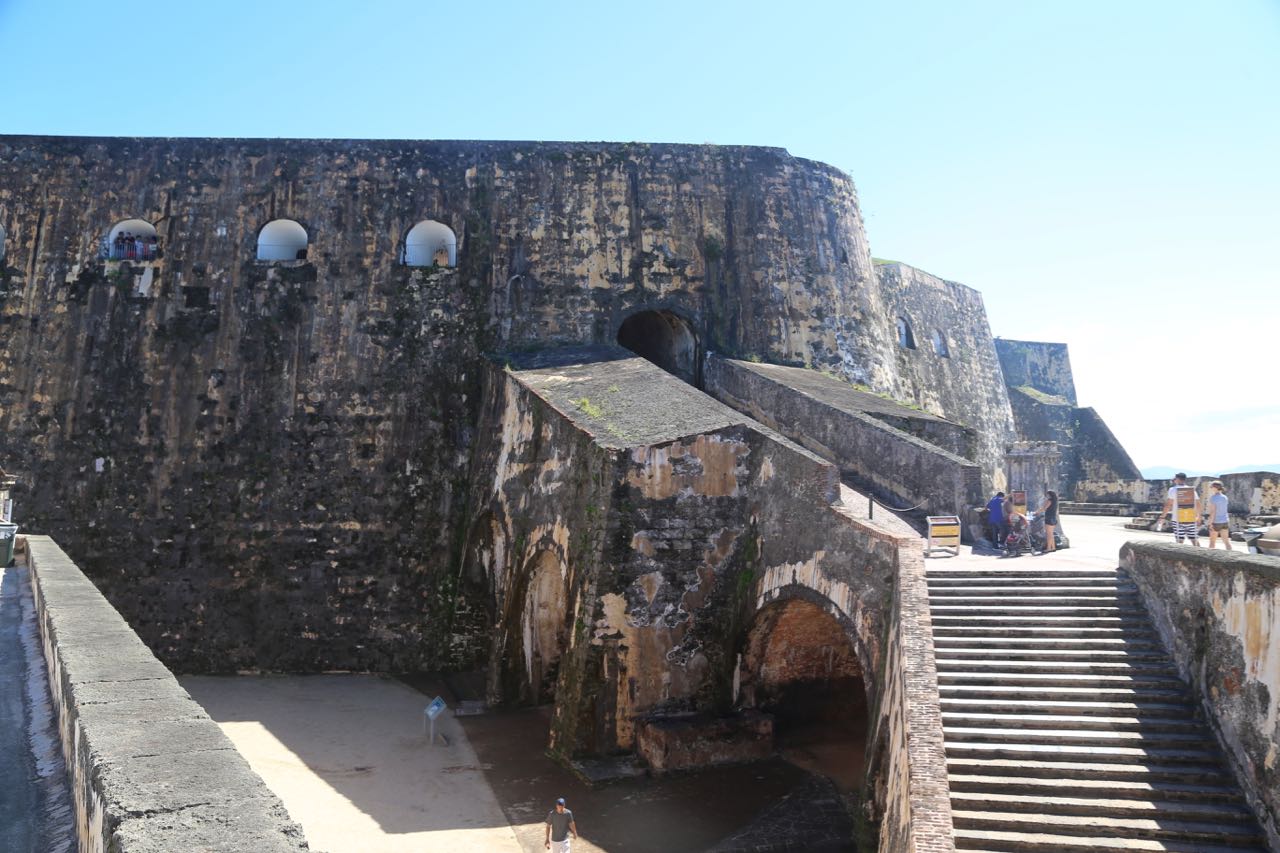
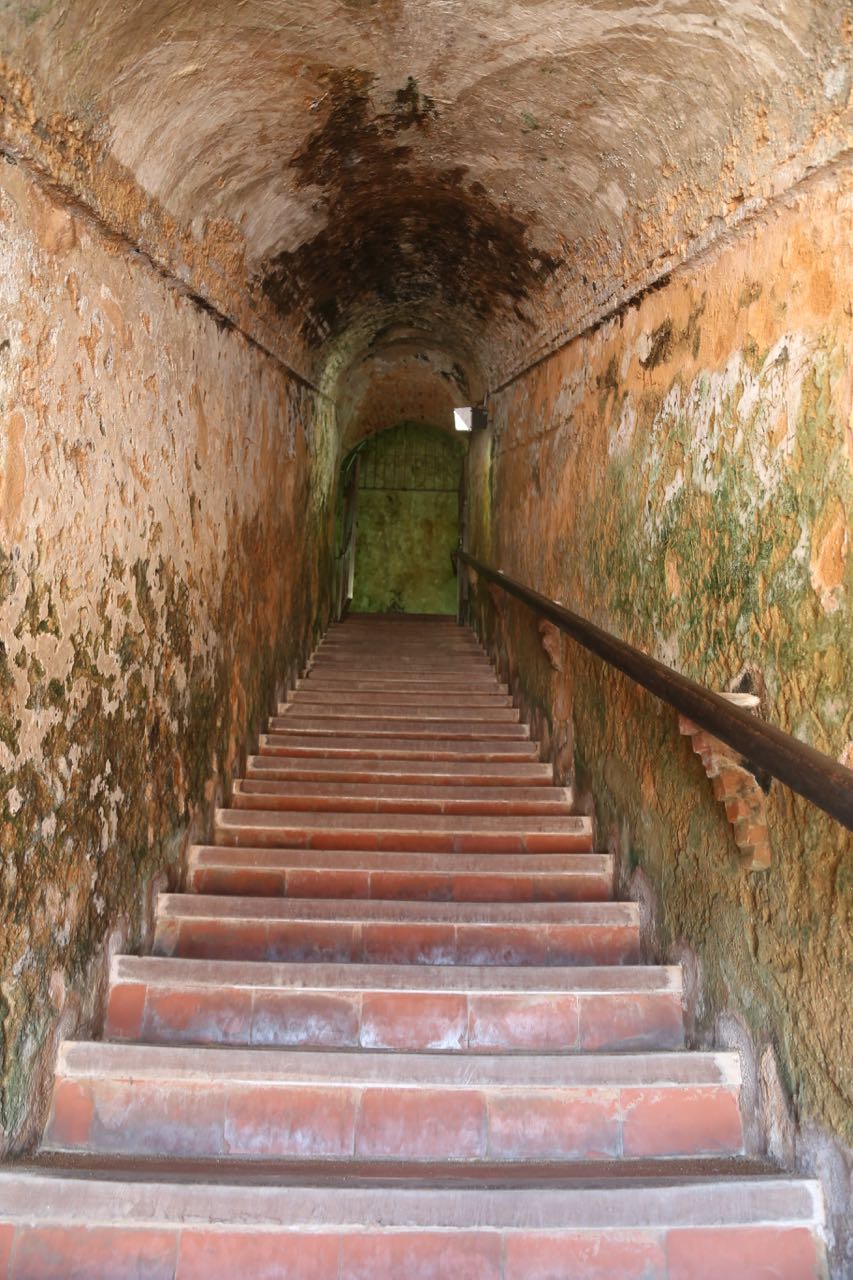
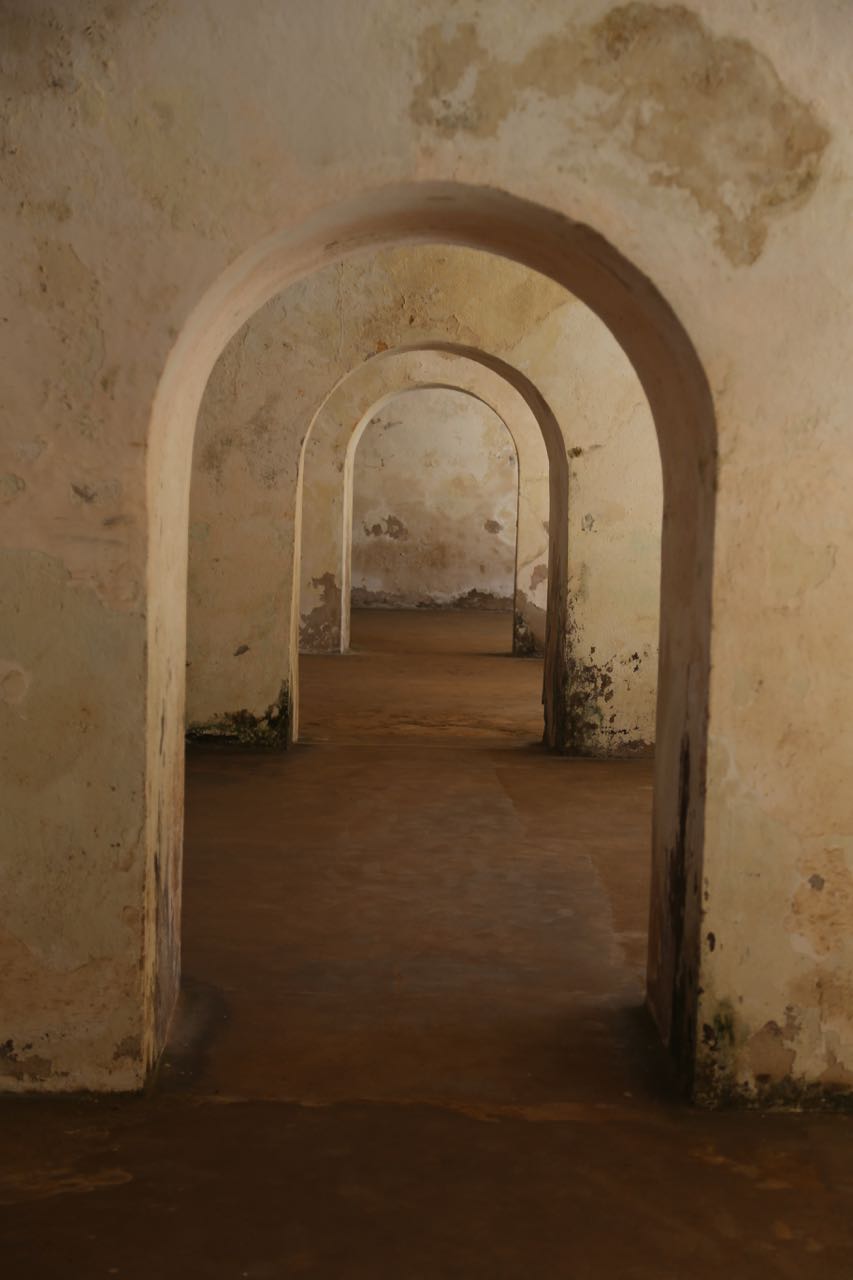
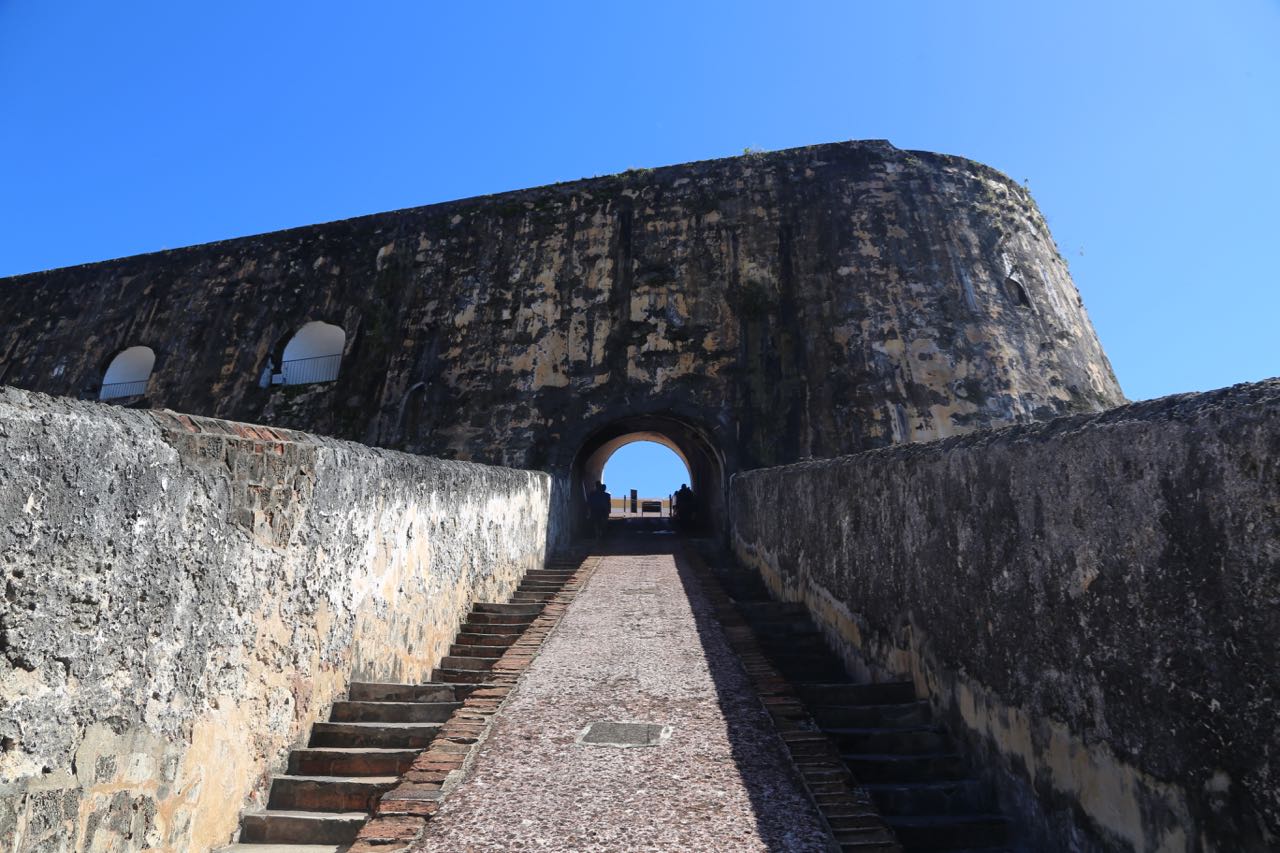
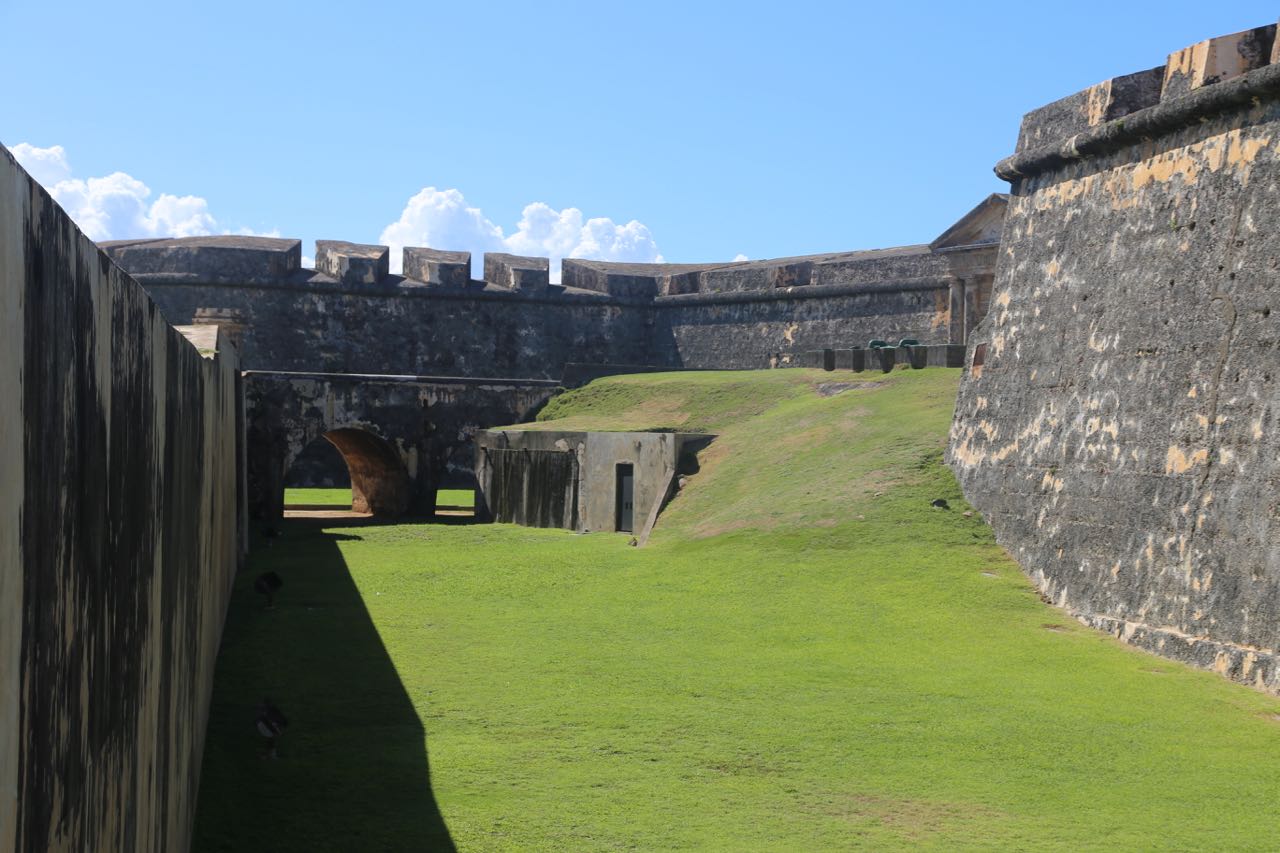
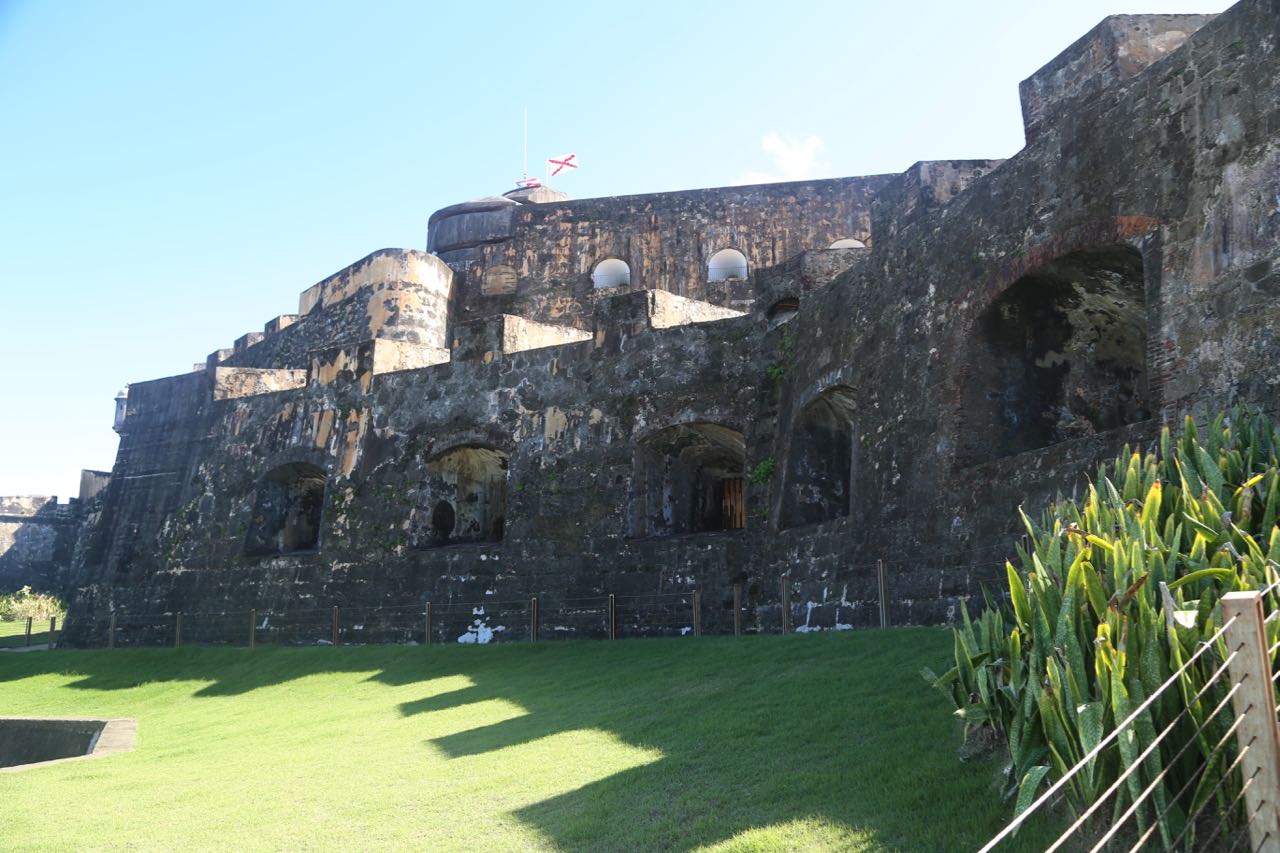
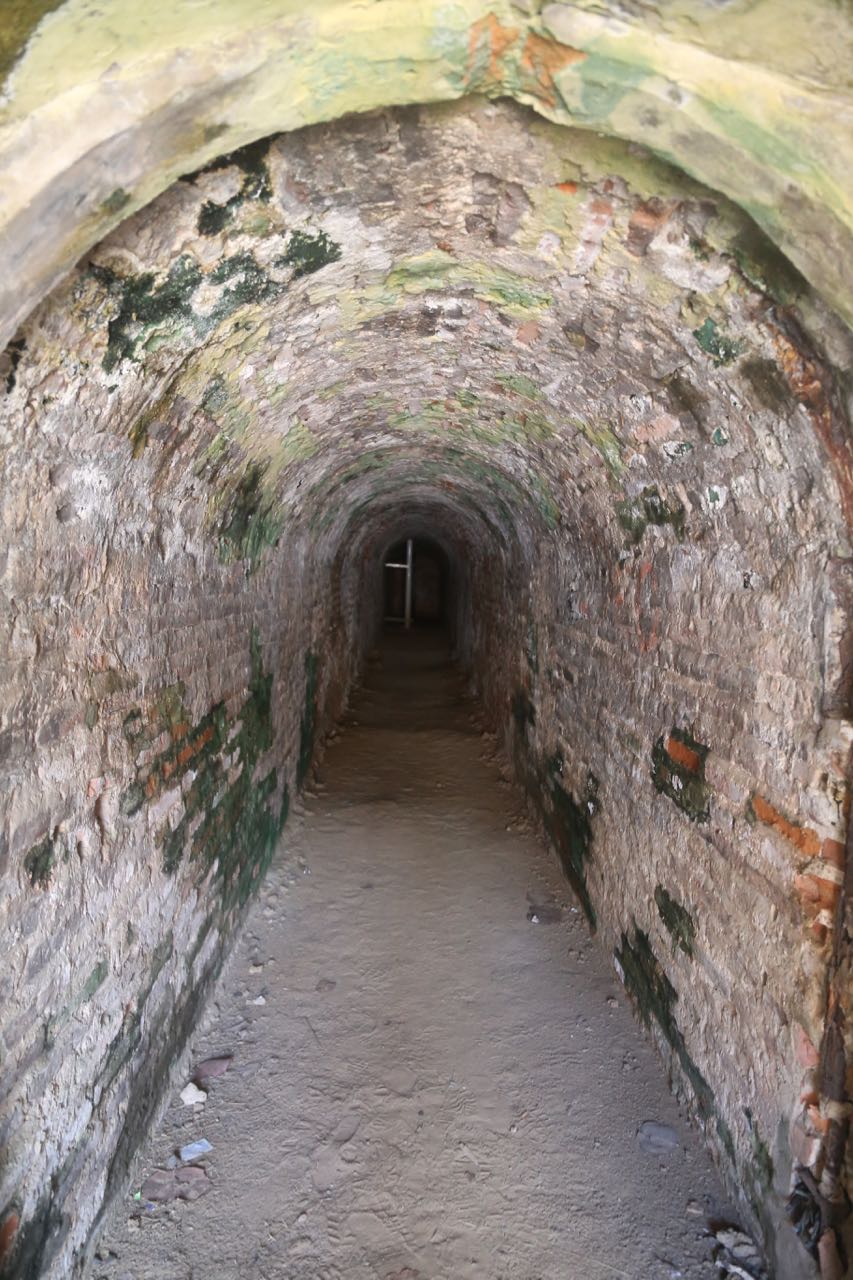
On my last day in Puerto Rico, I explored Castillo San Cristobal, a fort built by the Spanish to protect San Juan from attack by land. It was built between 1634 and 1790, and then the U.S. added a few concrete additions during World War II. The fort is huge and has a series of tunnels. Some of these tunnels are huge, connecting the different levels and areas of the fort, and were designed to have defensive explosives. Some of the tunnels are really small, and you have to stoop to move through them. If you ever get a chance to visit, try to get one of the ranger guided tours of the tunnels. Those tours besides being very informative, let you go inside some of the really small tunnels in which you normally aren’t allowed.

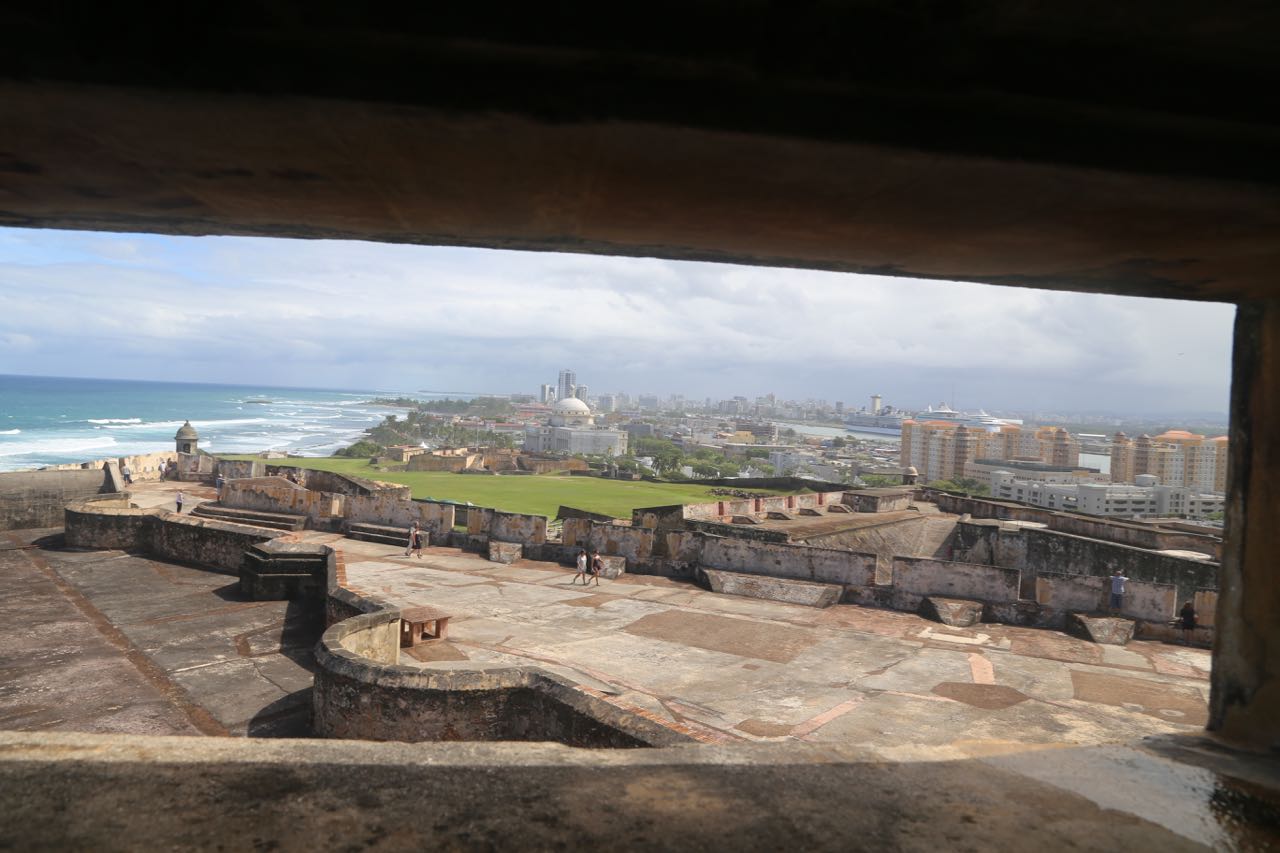
View from top level

View from top level

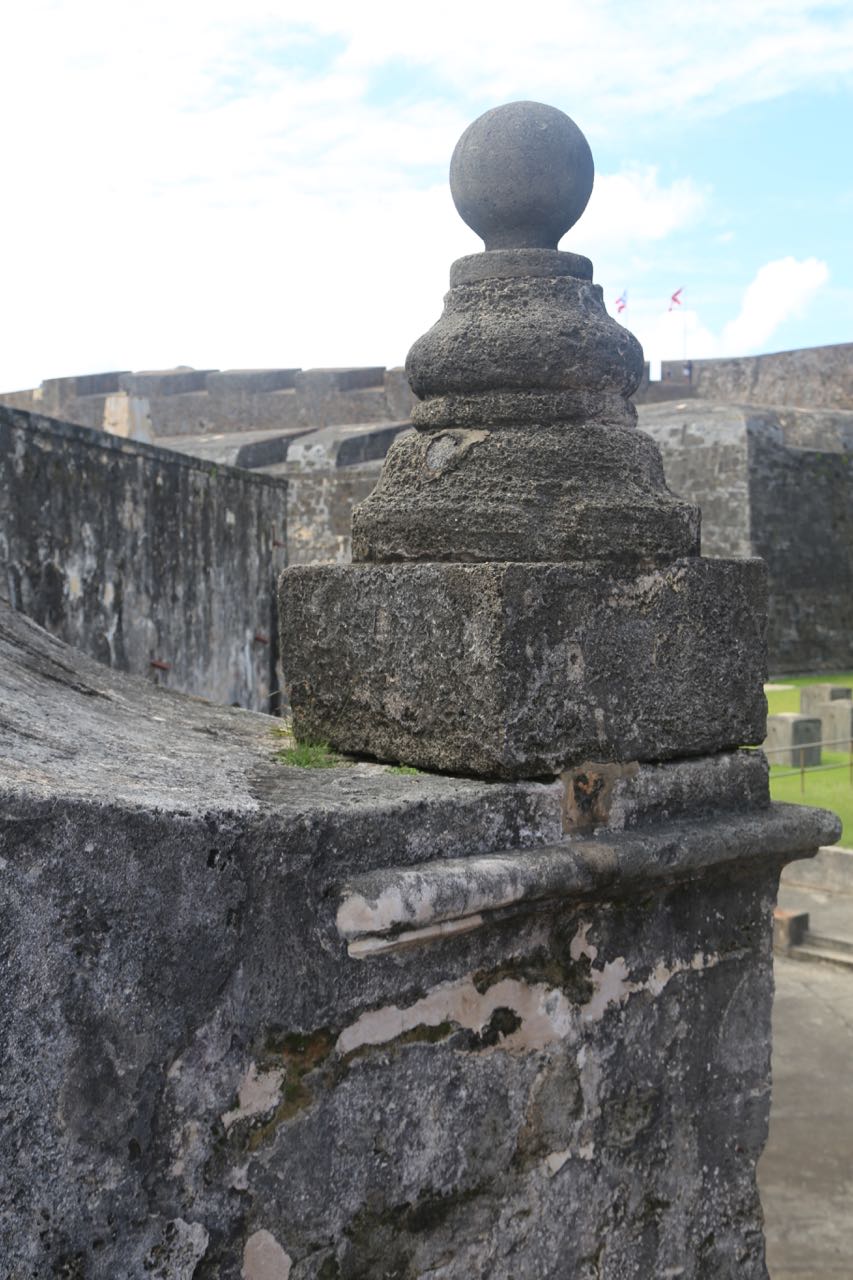
Old stone design

Old stone design

Upper level

Upper level

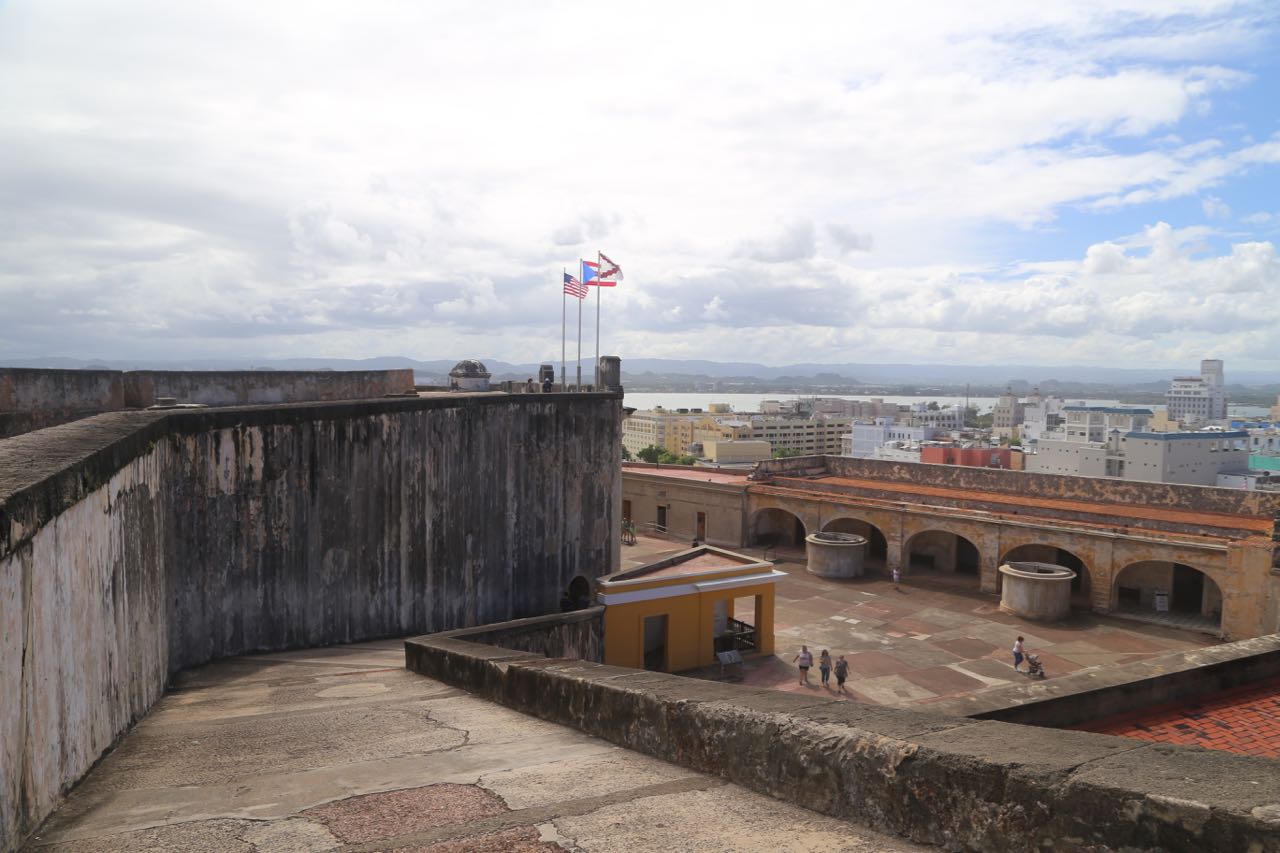
Upper level looking into courtyard

Upper level looking into courtyard

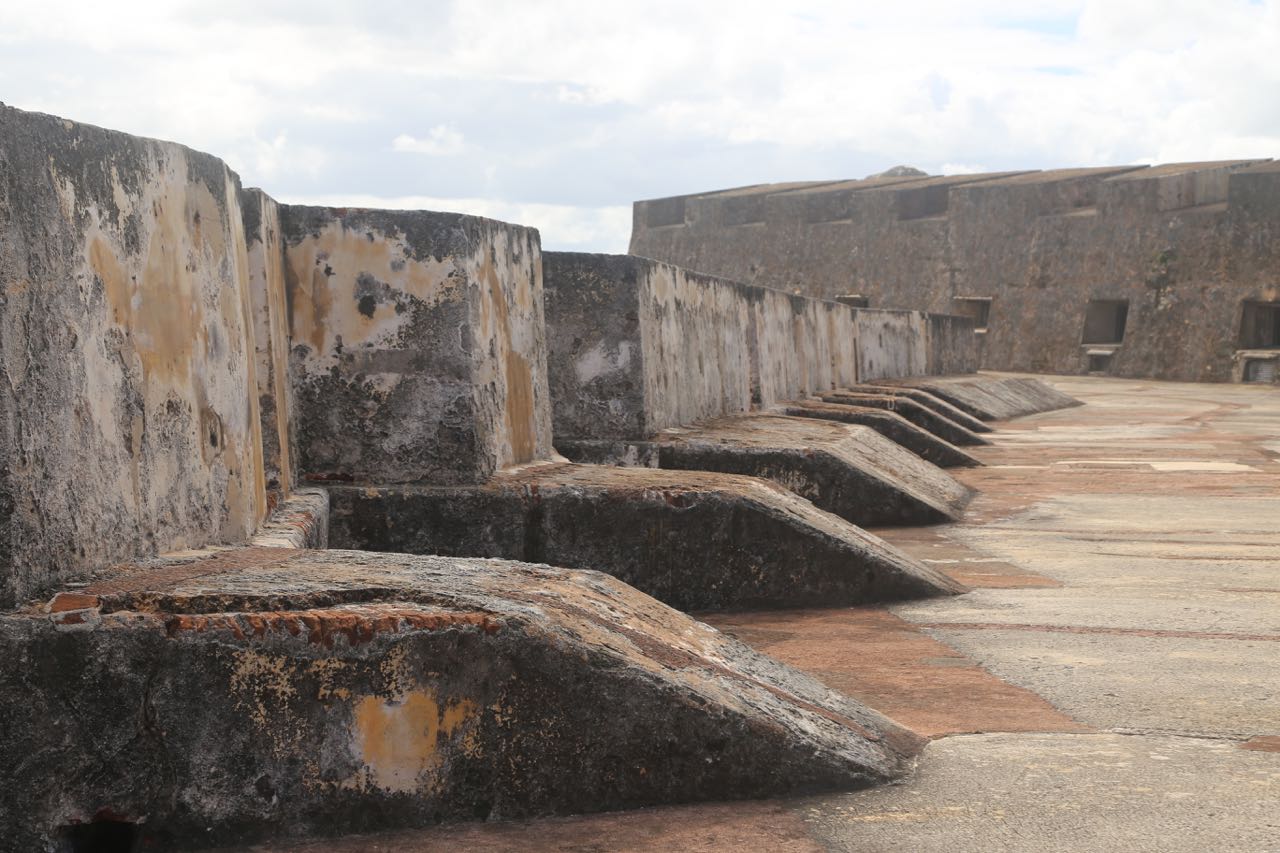
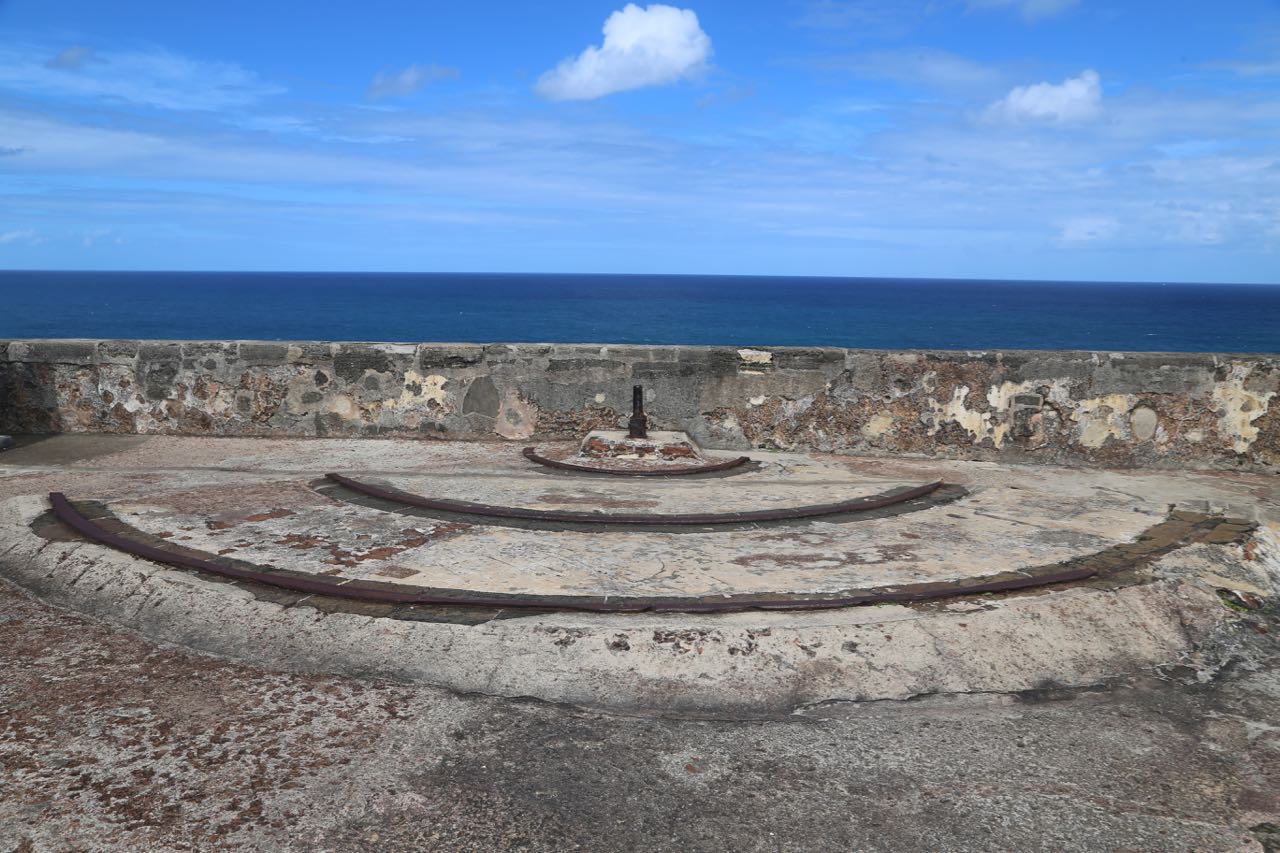
Upper level artillery foundation

Upper level artillery foundation

View from newer concrete WWII lookout

View from newer concrete WWII lookout

Entrance to small, normally inaccessible tunnel

Entrance to small, normally inaccessible tunnel

Small, normally inaccessible tunnel

Small, normally inaccessible tunnel

View from courtyard

View from lower, exterior courtyard

Entrance to lower tunnel with symbol on top warning of explosives

Entrance to lower tunnel with symbol on top warning of explosives

Inside a tunnel

Inside a tunnel

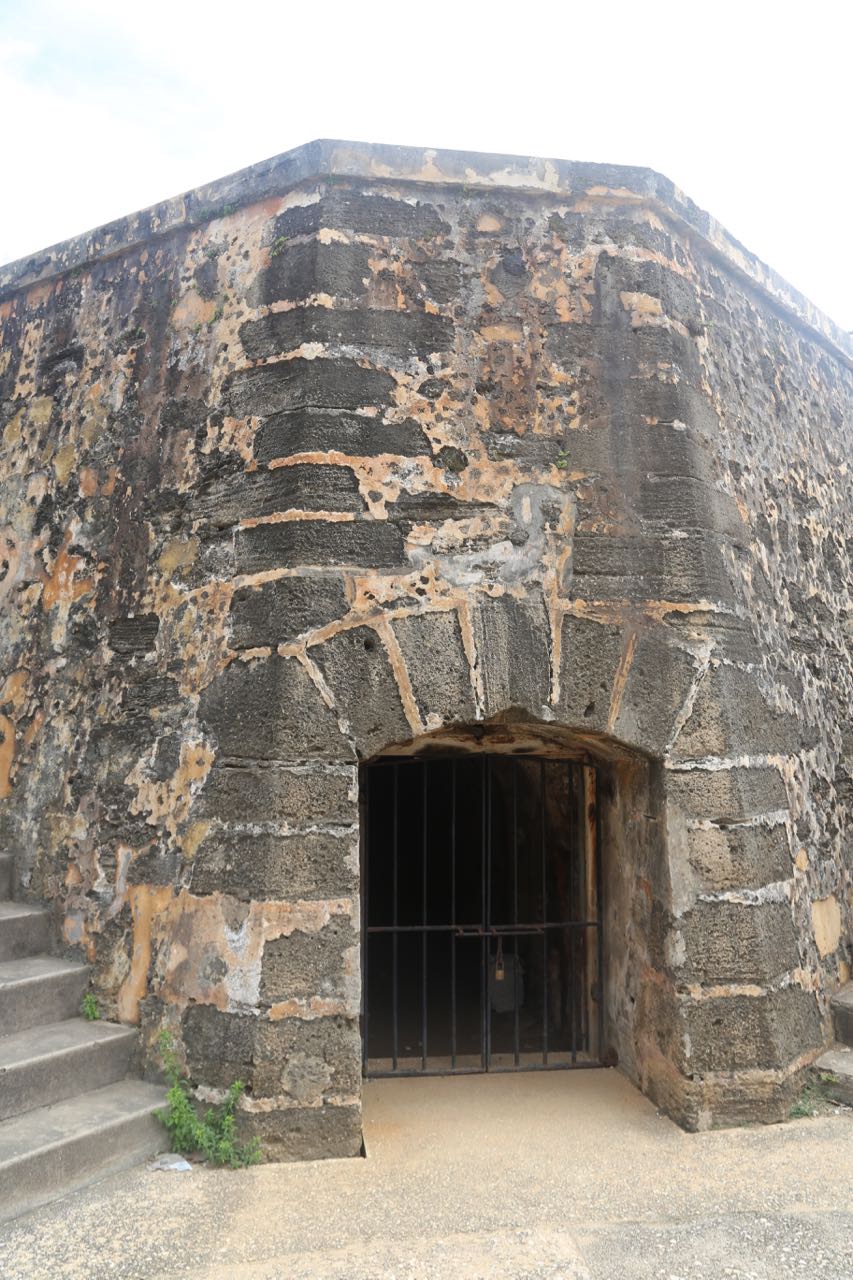
Dungeon entrance

Dungeon entrance

Courtyard with view to city through window

Courtyard with view to city through window

Main courtyard

Main courtyard

Entrance to the main tunnels

Entrance to the main tunnels

Soldiers' quarters

Soldiers’ quarters

Officers' quarters

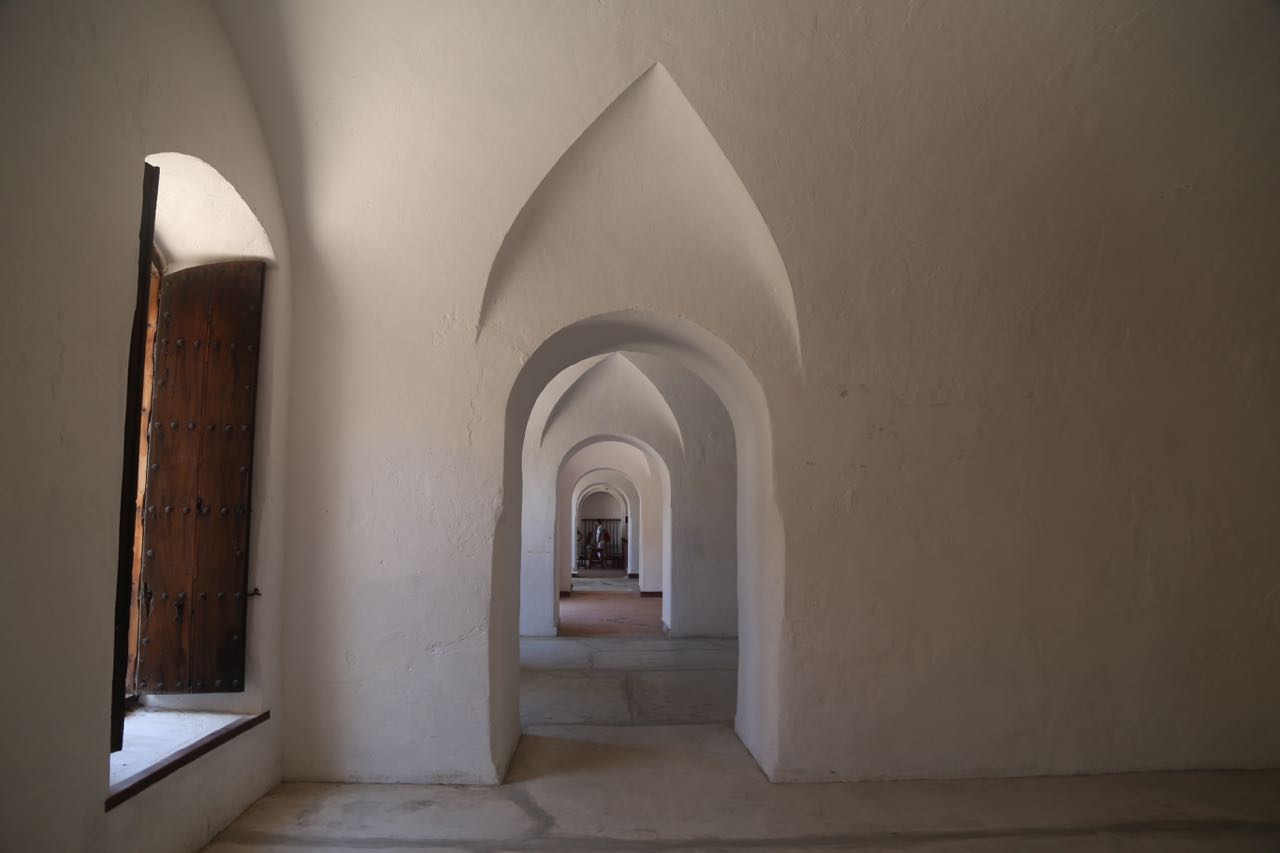
Passageways in soldiers’ quarters

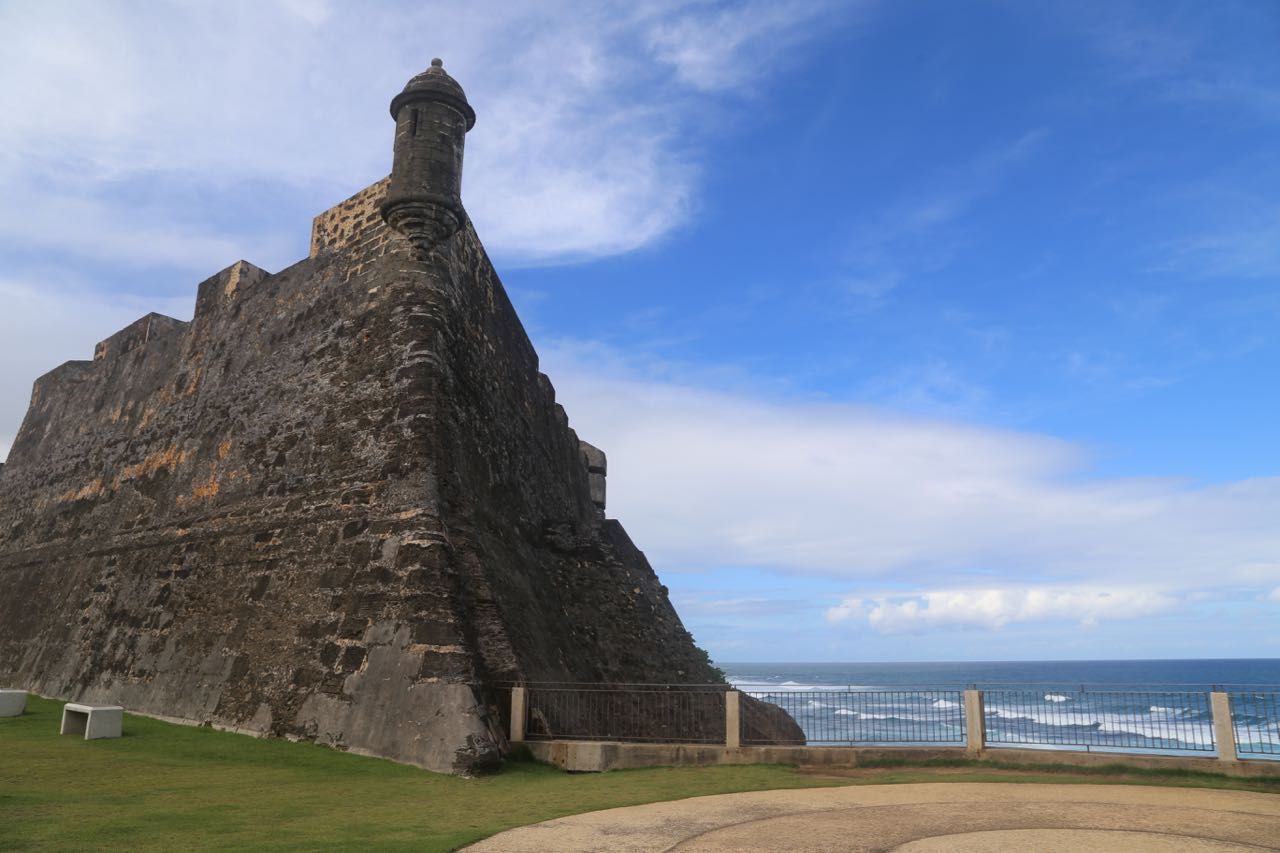
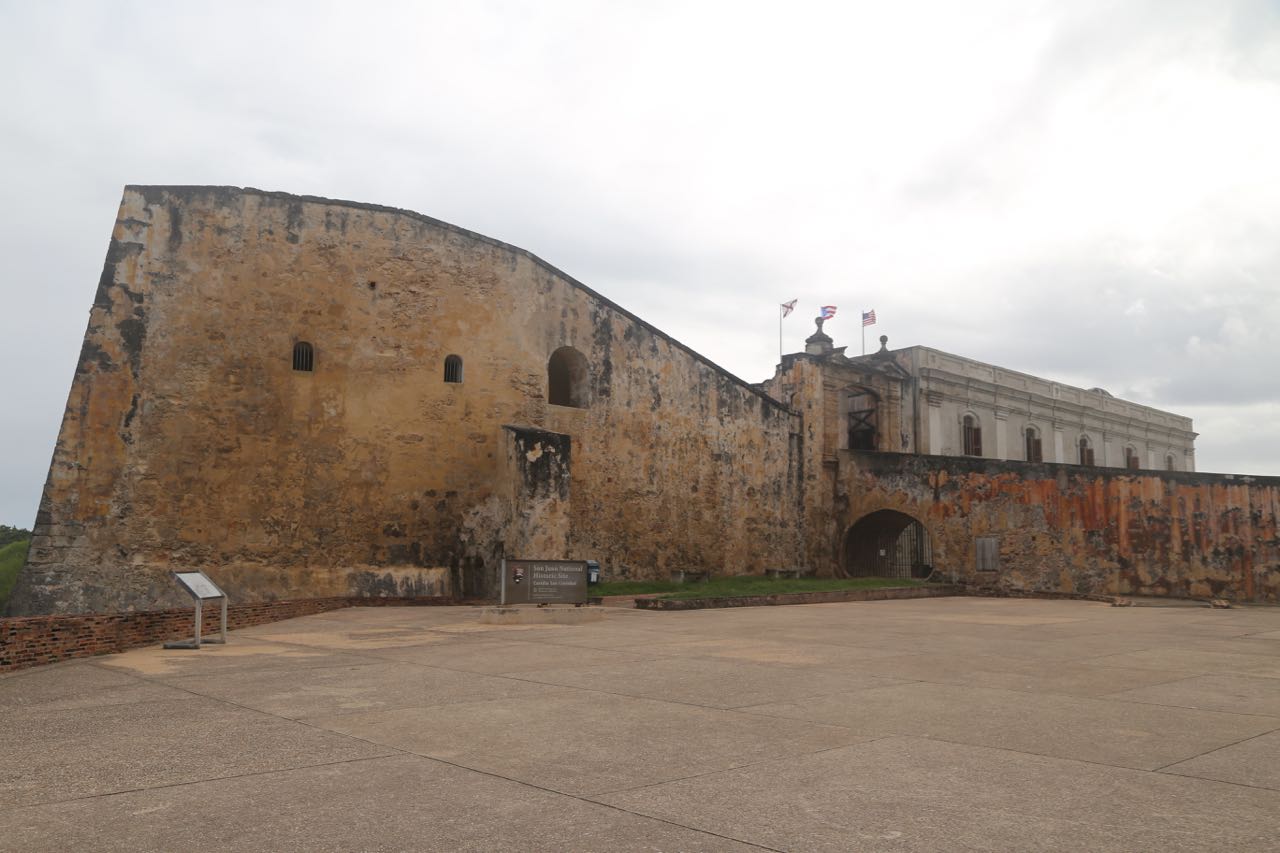
Exterior of fort

Exterior of fort

Viejo San Juan

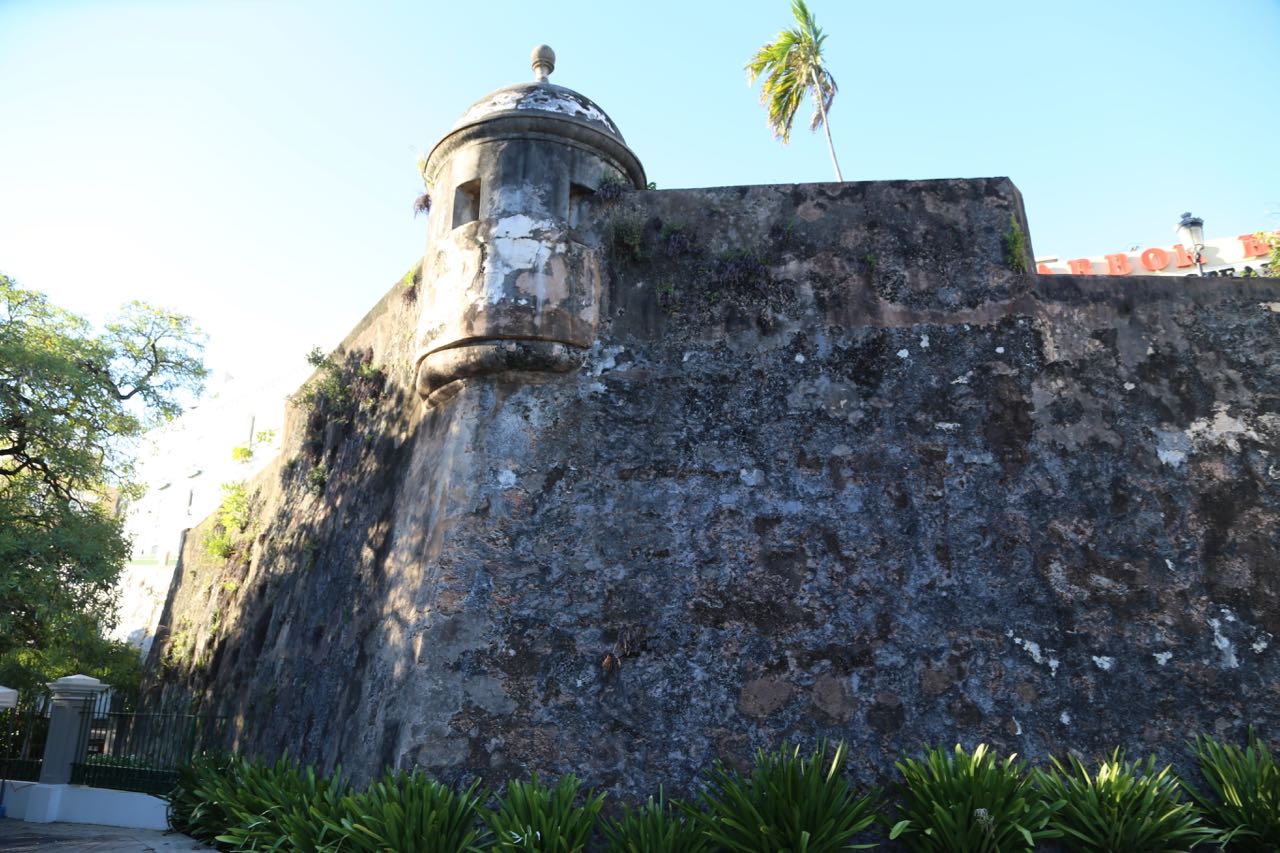
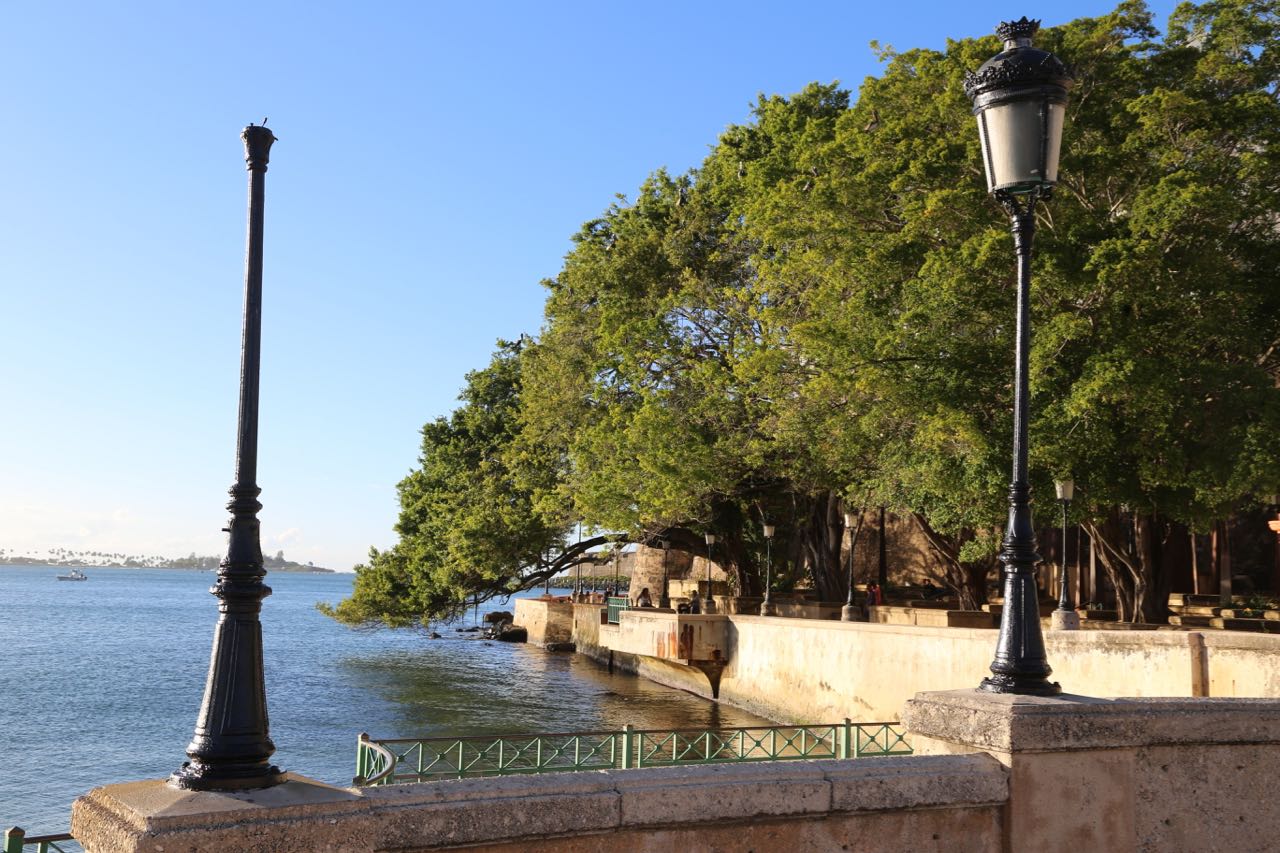
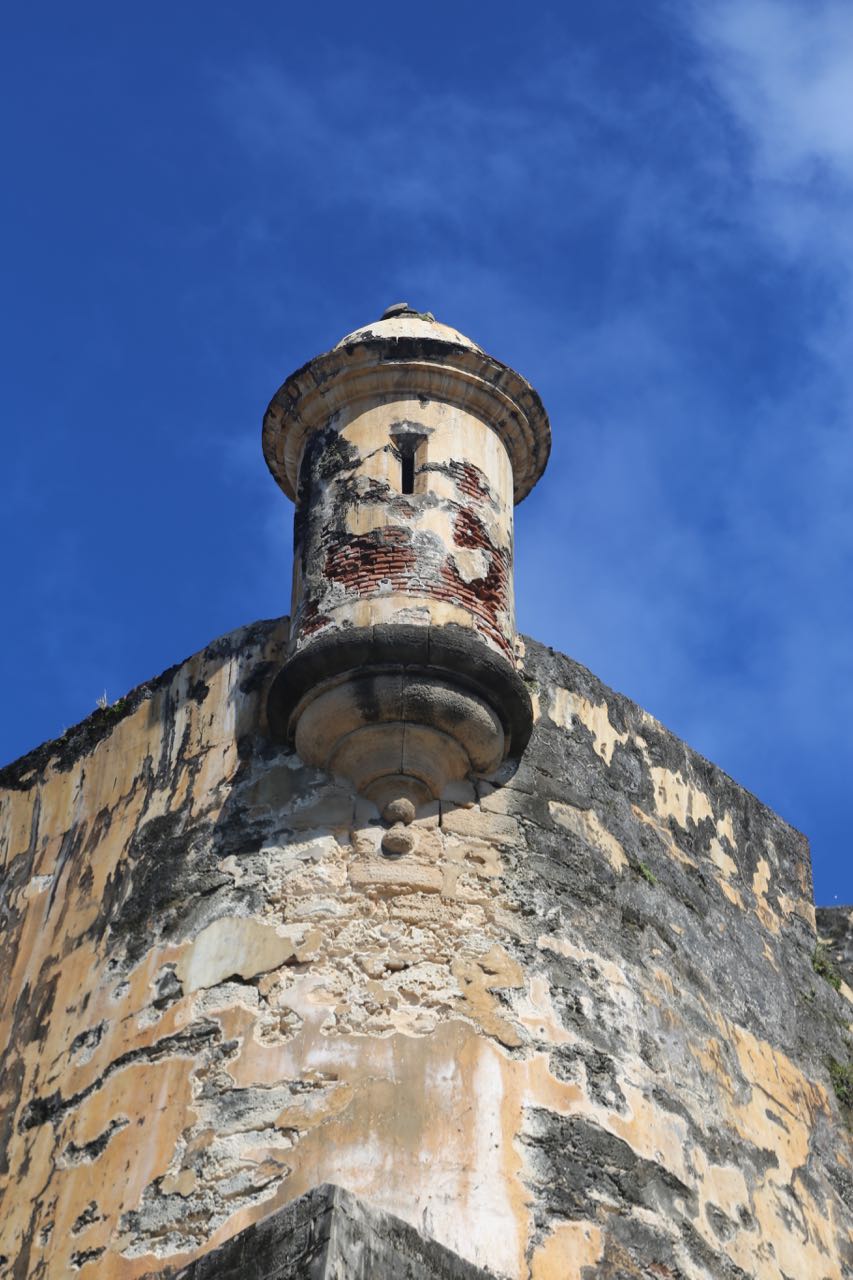
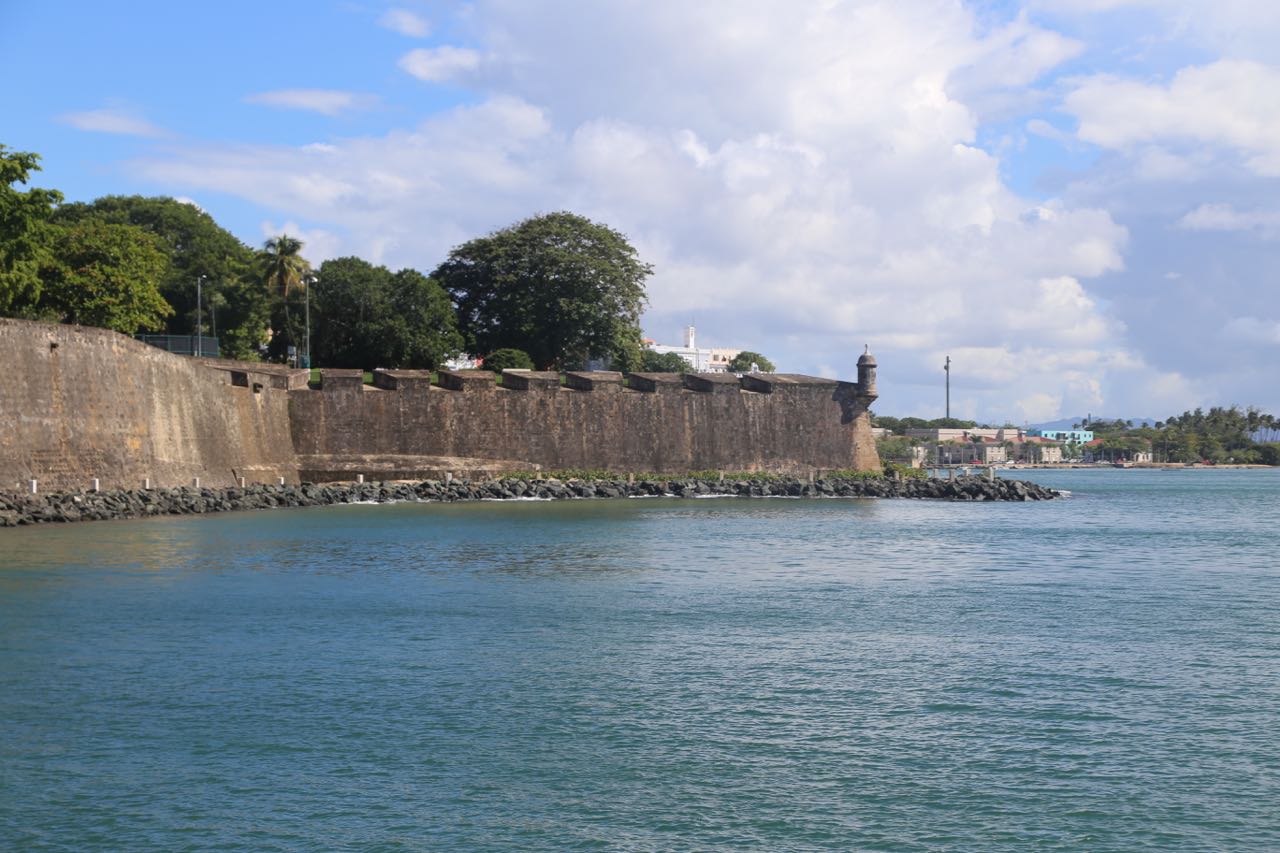
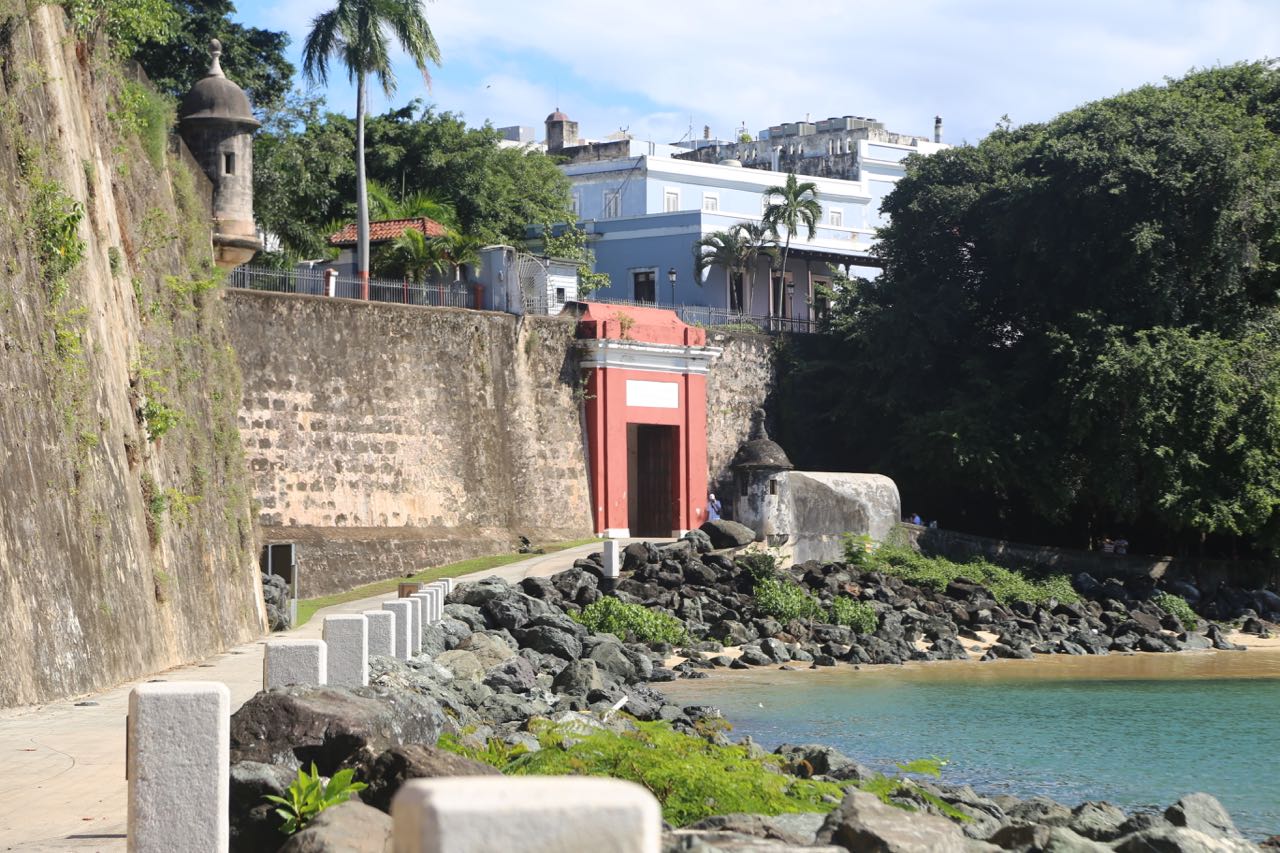
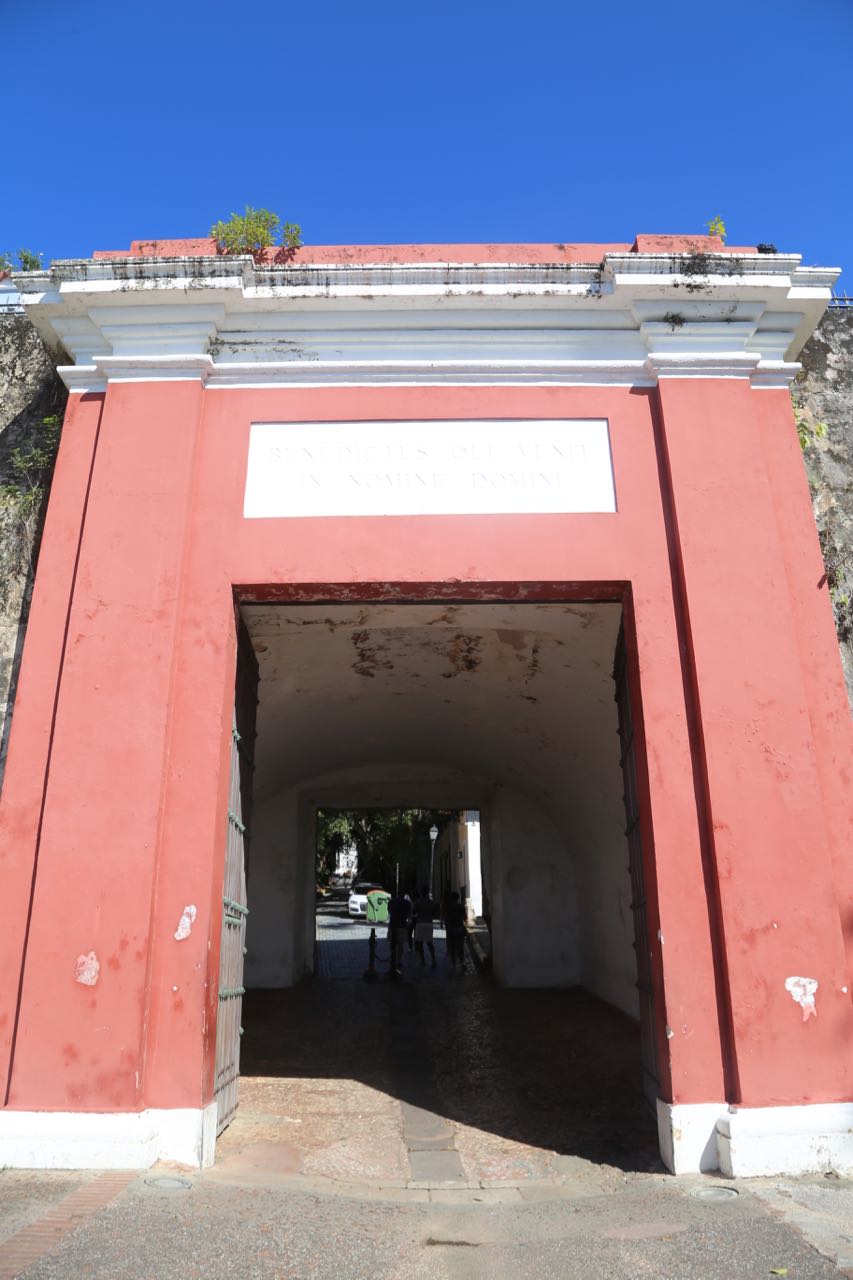
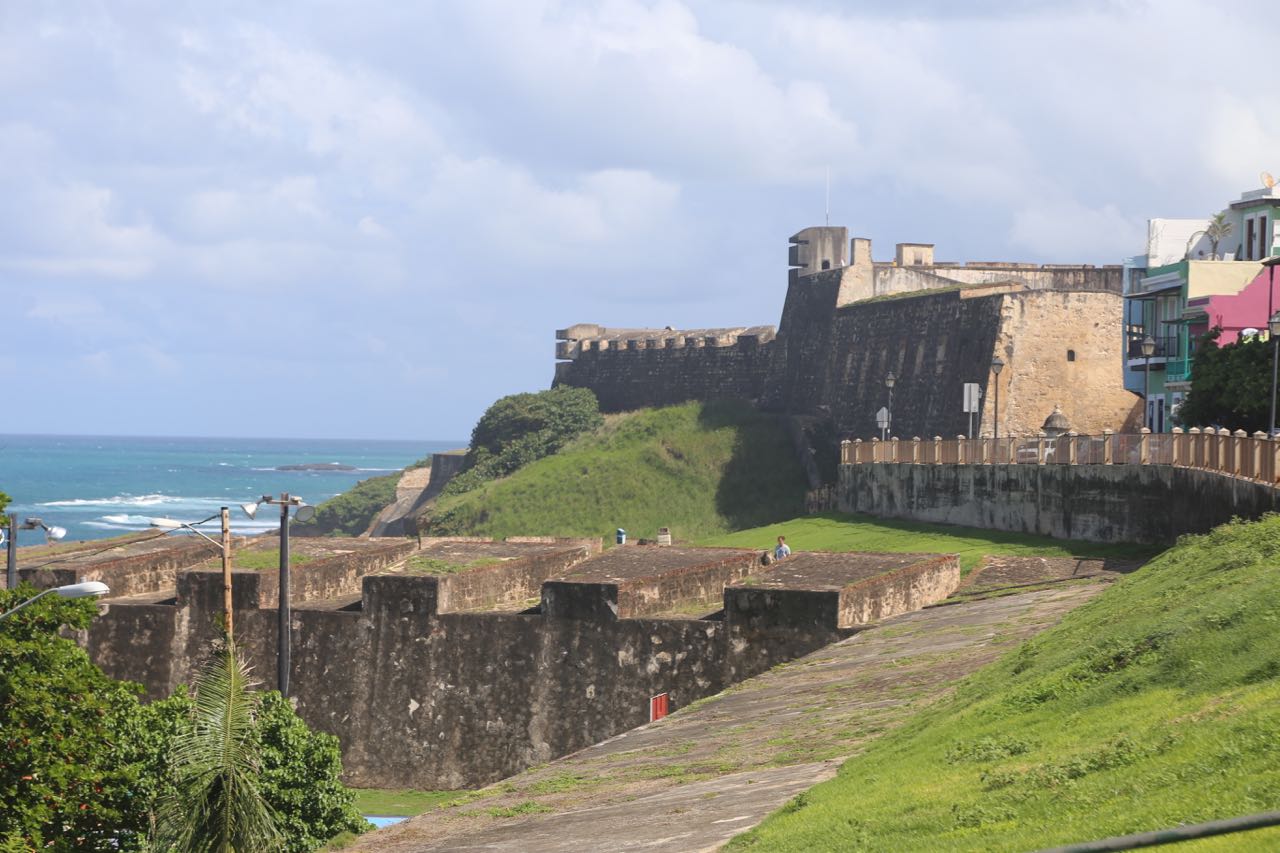
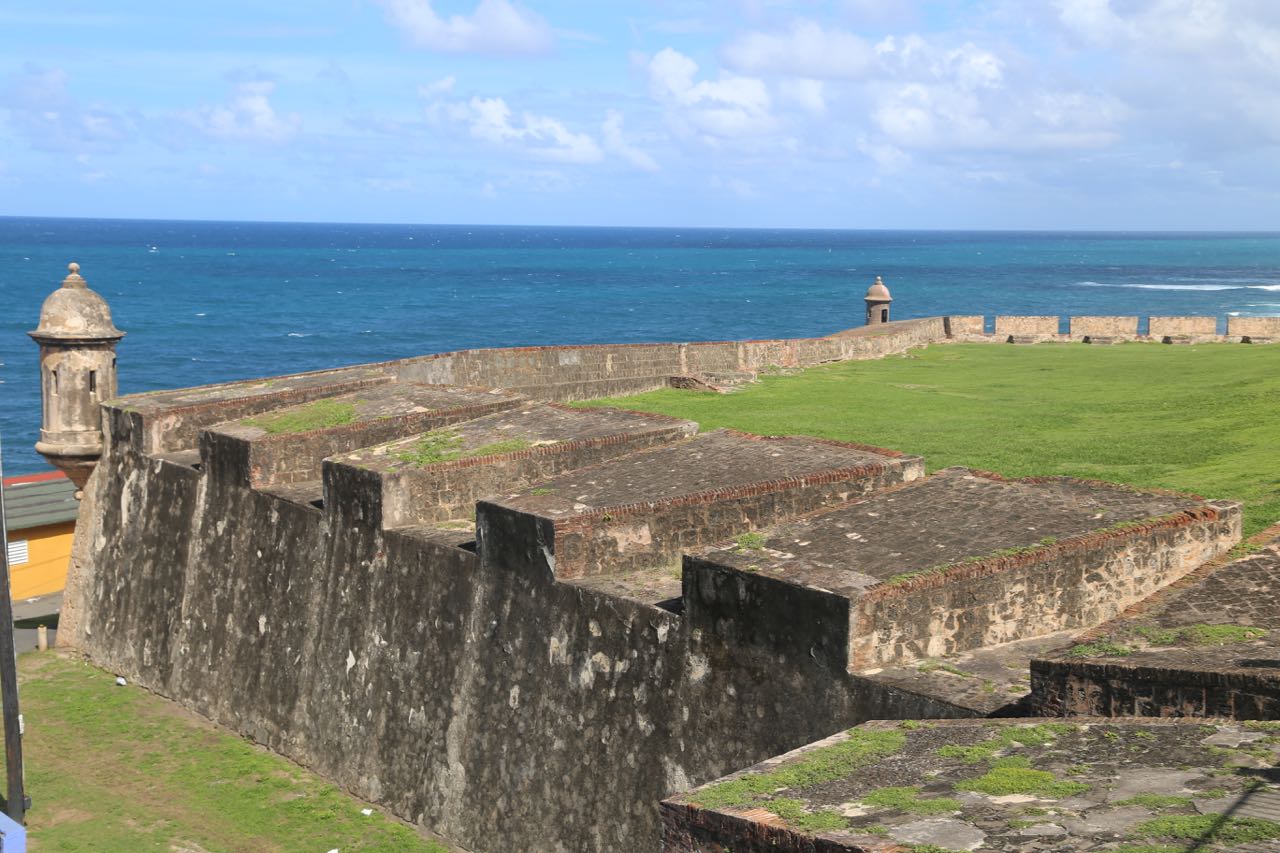
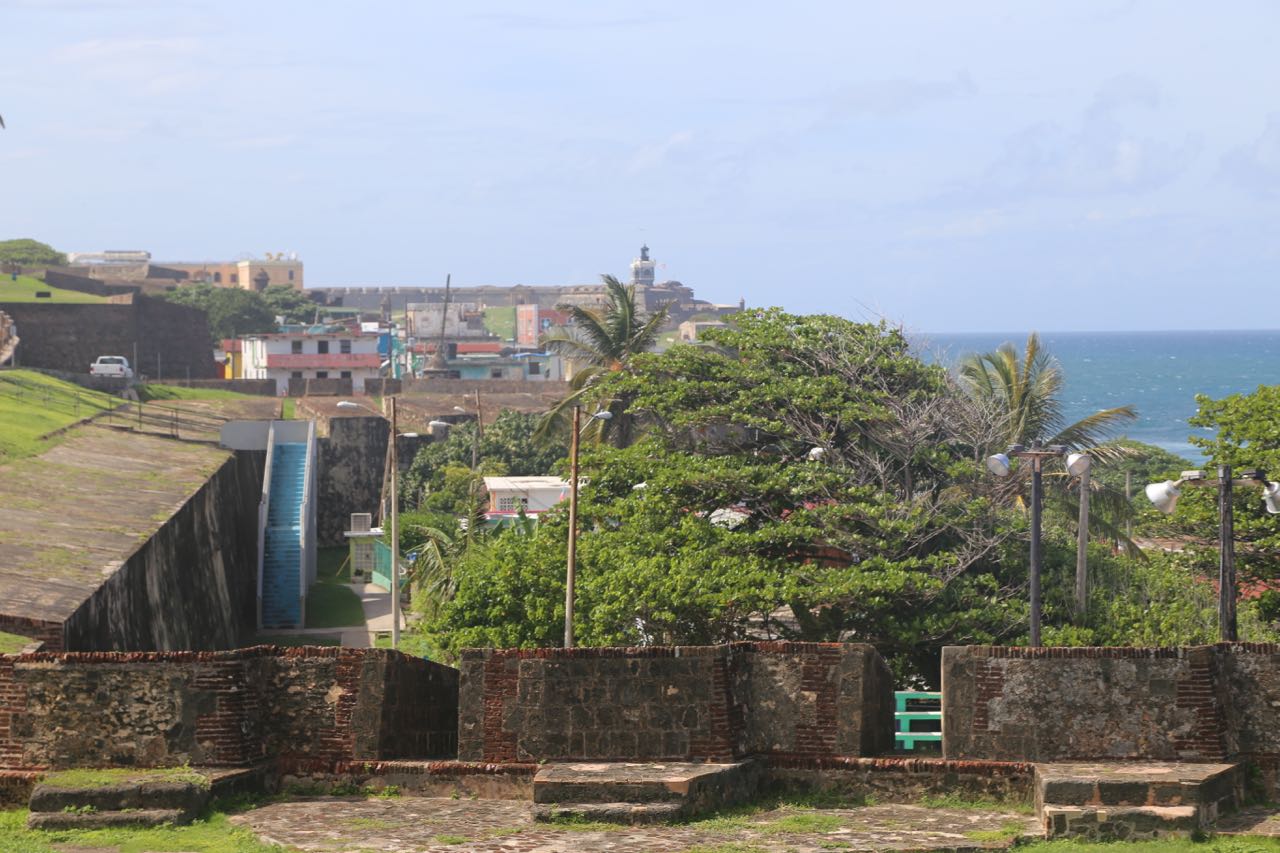
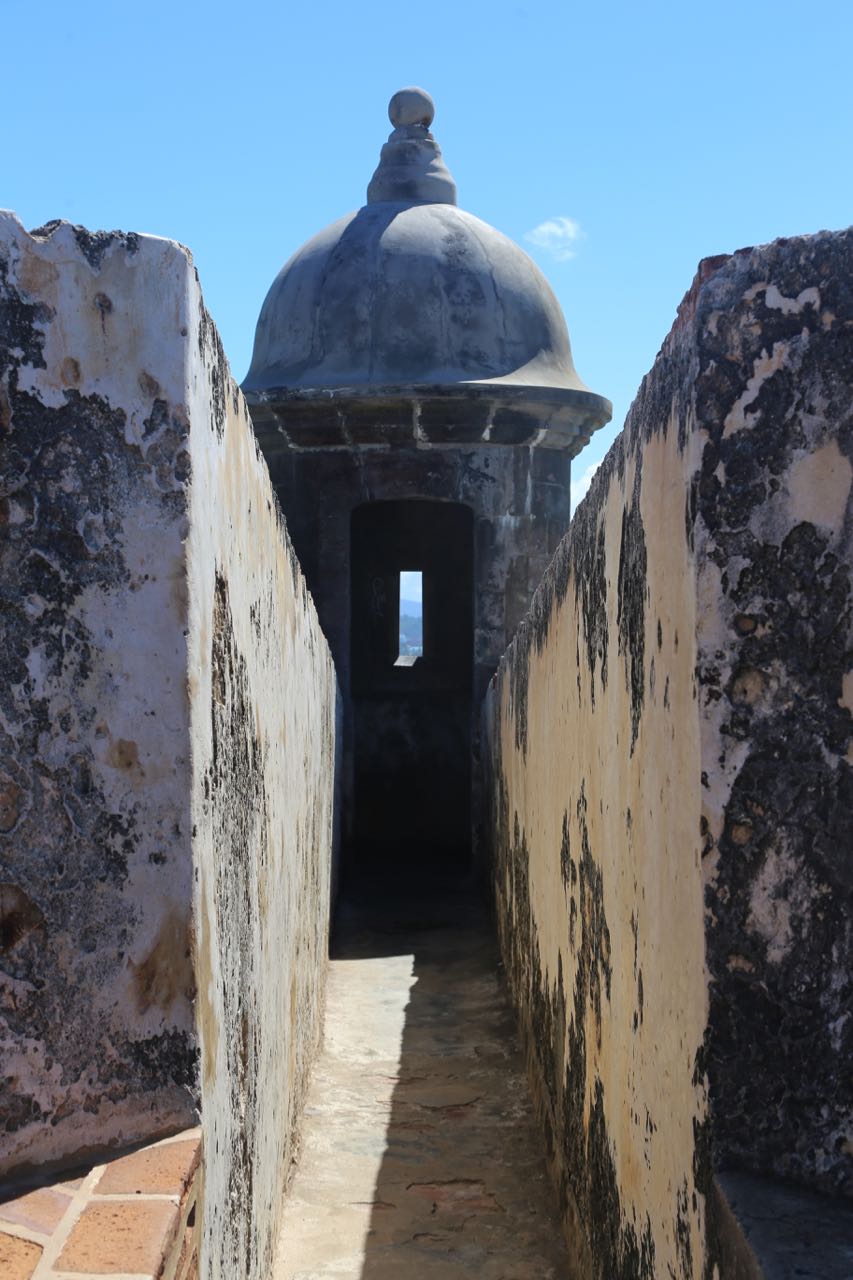
It wasn’t until I walked around Viejo (Old) San Juan, especially the perimeter of it, that I realized how it really is a walled city. El Morro guards the entrance to the bay, but the fortifications encircles the entirety of the old city. One of the few ways, and the historic way, from the sea level to the city is through La Puerta de San Juan. Walking through the La Puerta, you realize the fortification is serious fortification, as La Puerta is almost a tunnel in terms of the distance you must walk to go from the sea side to the city side. The fortification is truly impressive with the wall thickness and garitas and small openings for guards to stand ready. One modern day bonus of the fortification is that it must help protect Viejo San Juan from any hurricane storm surge. There is a promenade that follows the wall from its beginning on the bay side and ends on the ocean side of El Morro. It gives spectacular views of the fort and the water as well.

Beginning of bay side wall

Beginning of bay side wall

End of Paseo de lan Princesa

End of Paseo de lan Princesa

Bay side of El Morro

Bay side of El Morro

Garita

Garita

Bay side wall

Bay side wall

La Puerta de San Juan

La Puerta de San Juan

La Puerta de San Juan

La Puerta de San Juan

Ocean side wall

Ocean side wall

Ocean side wall

Ocean side wall

Ocean side wall with El Morro is background

Ocean side wall with El Morro is background

El Morro

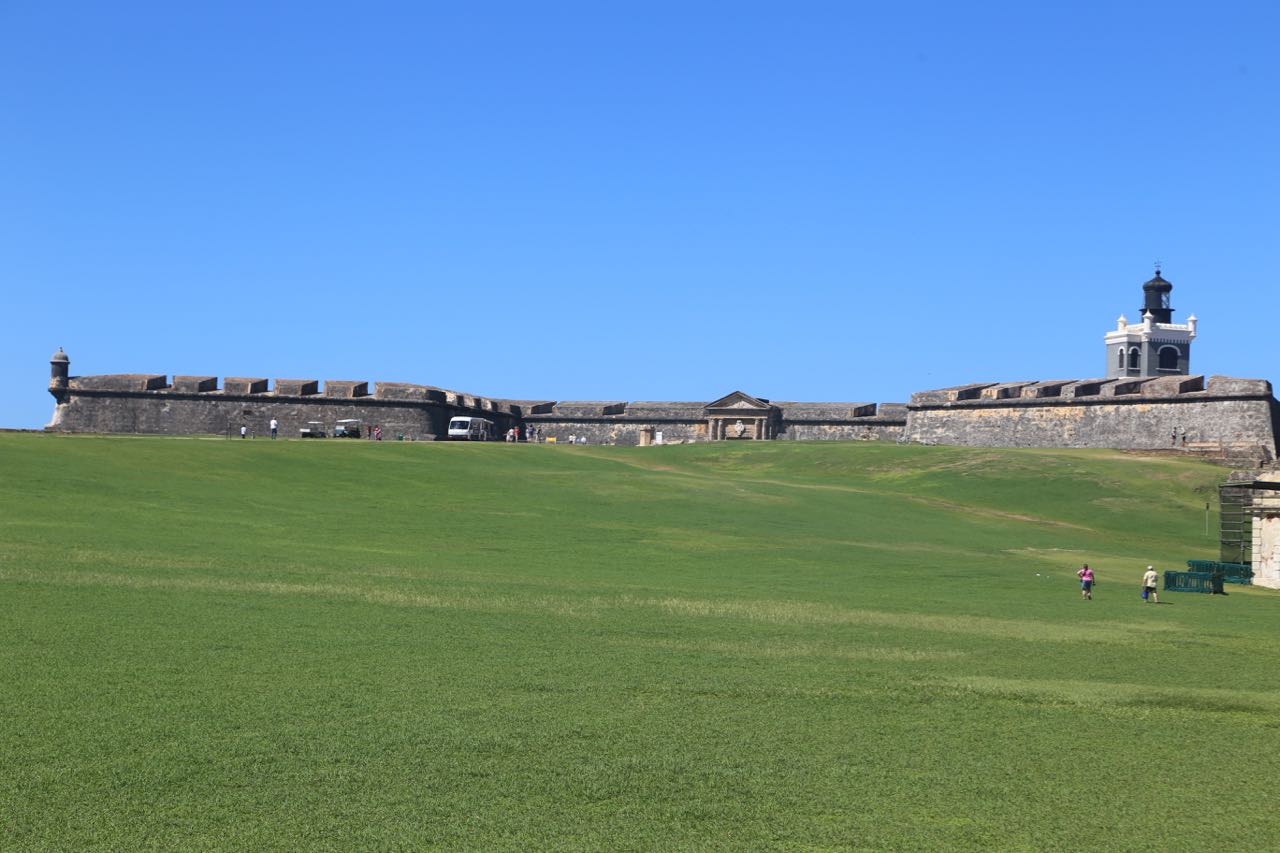
I’m on my first visit to San Juan, Puerto Rico. Today we visited Castillo San Felipe del Morro (El Morro), a fort originally built by the Spanish to guard the entrance to San Juan Bay. The original foundation was laid in 1539, and it was modified and enlarged over 250 years. The United States then added to it during World War II. Finding out that a fort this old was modified and used during WWII surprised me. I was born long after WWII, so I forget that our military has advanced a great deal in terms of technology used since then. The fort is impressive. It has six different levels and is incredibly well built. I am impressed with those people who built it with the amount of stone and brick that must have been laid.  Currently it is maintained by the National Park Service and guarded by iguanas, who by the way like to have their photos taken.

Castillo San Felipe del Morro (El Morro)

Castillo San Felipe del Morro (El Morro)

Garita

Garita

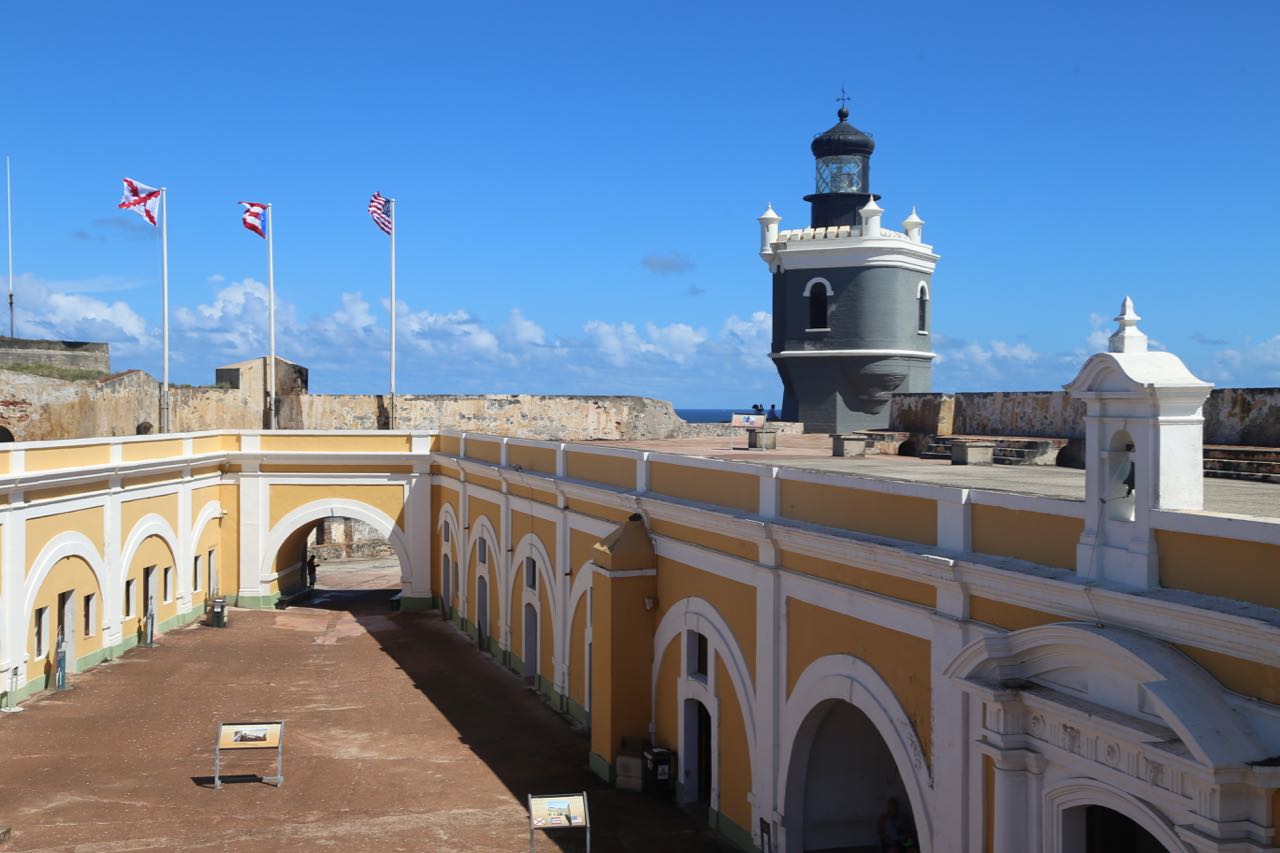
Main level

Main level with lighthouse

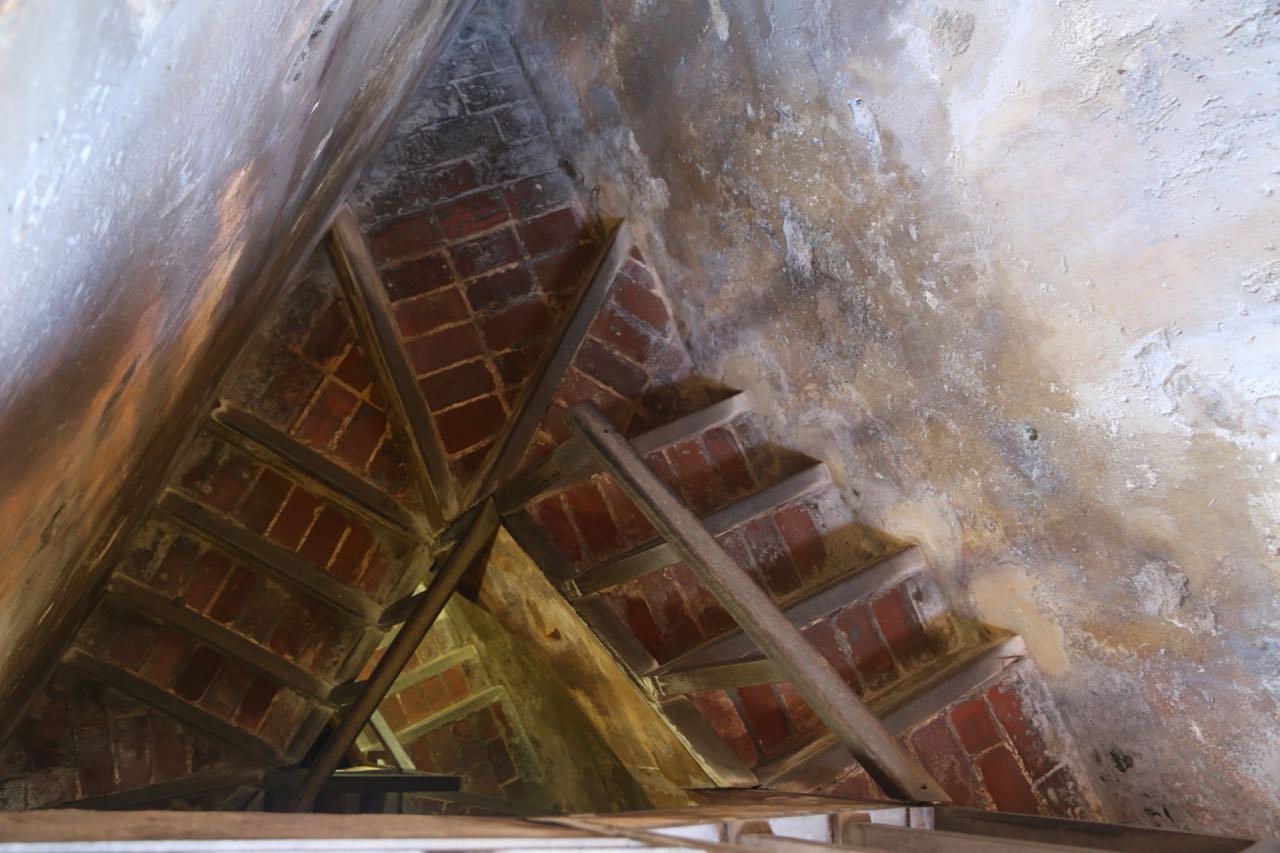
Triangular staircase

Triangular staircase

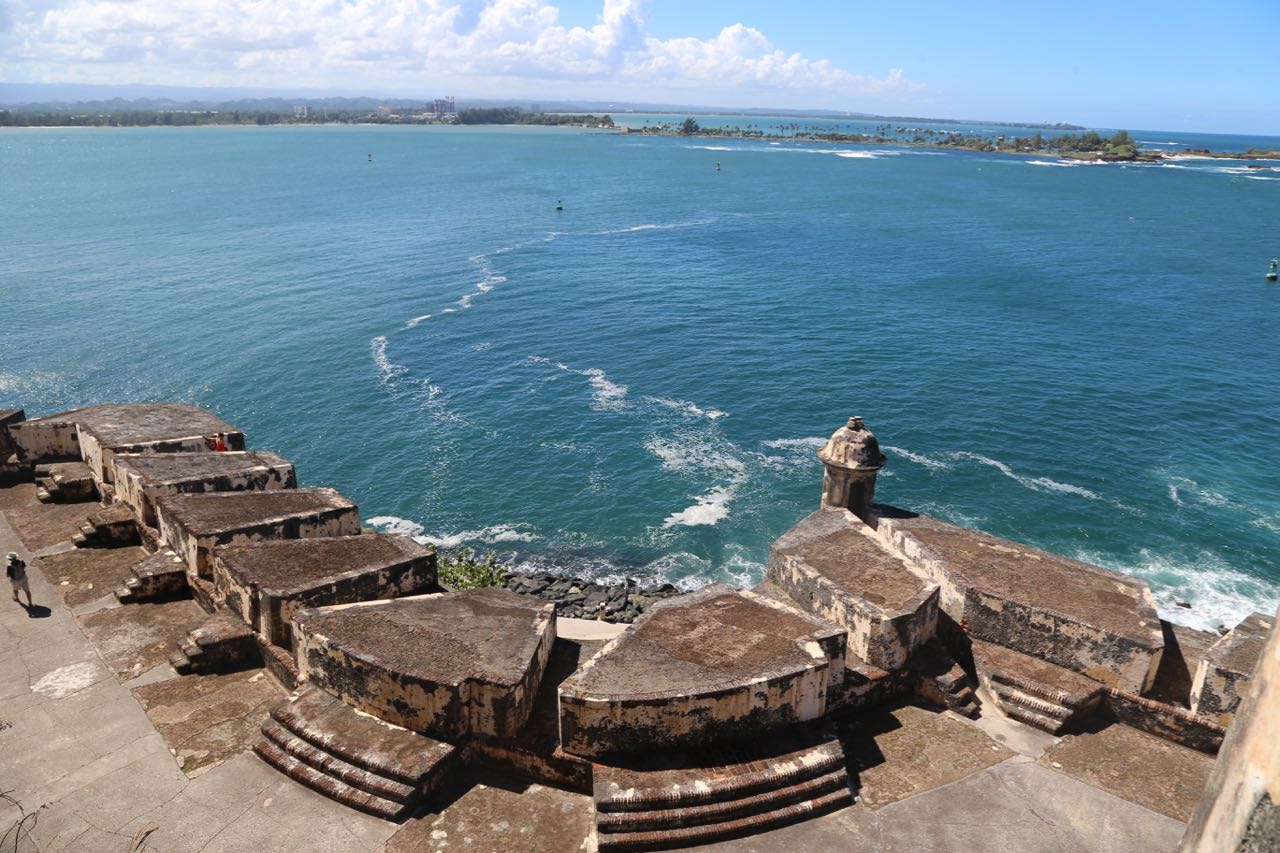
View of the entrance to the bay

View of the entrance to the bay

El Morro

El Morro

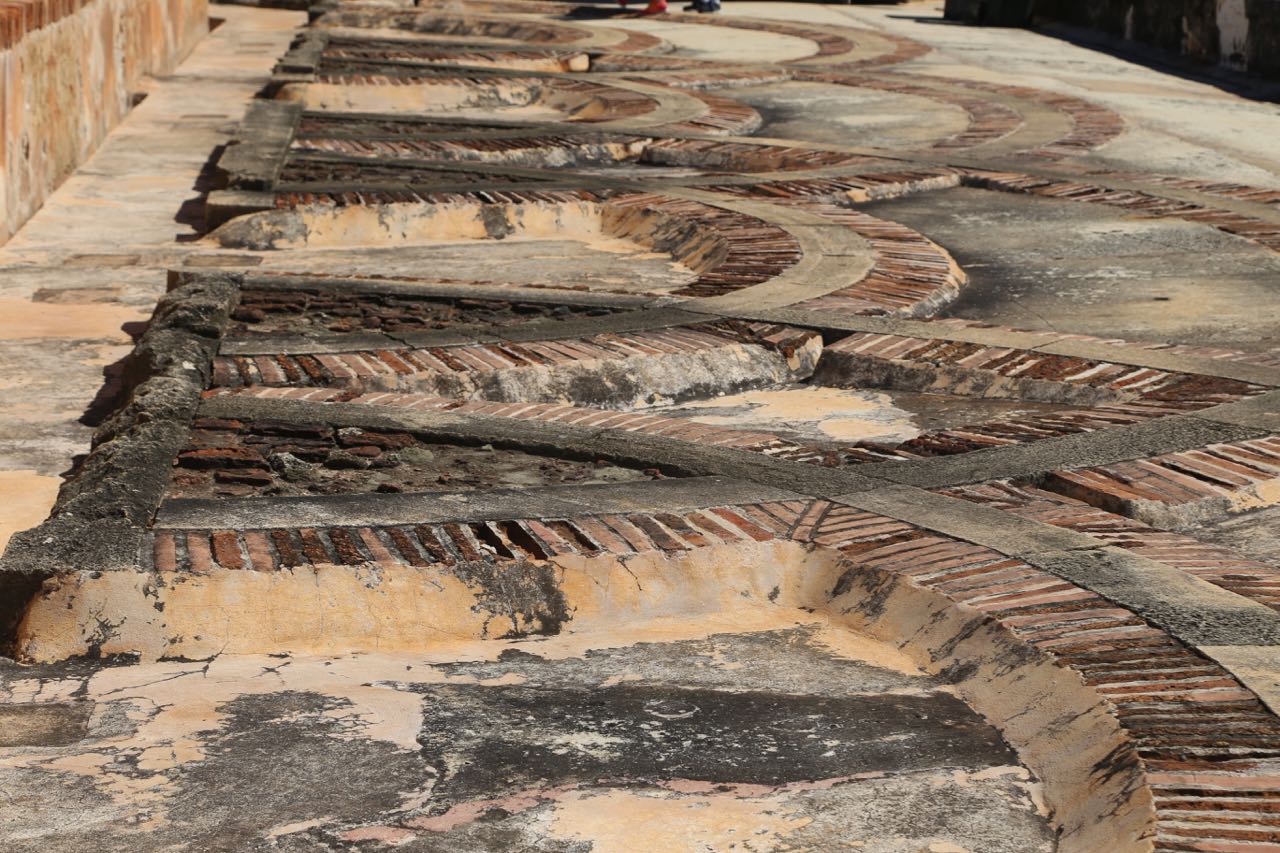
Foundation for artillery

Foundation for artillery

Stairs connecting levels 3, 4, and 5

Stairs connecting levels 3, 4, and 5

Staircase from level 1 (ocean front) to level 2

Tunnel staircase from level 1 (ocean front) to level 2

Series of doorways

Series of doorways

Ramp from level 4 to 5

Ramp from level 4 to 5

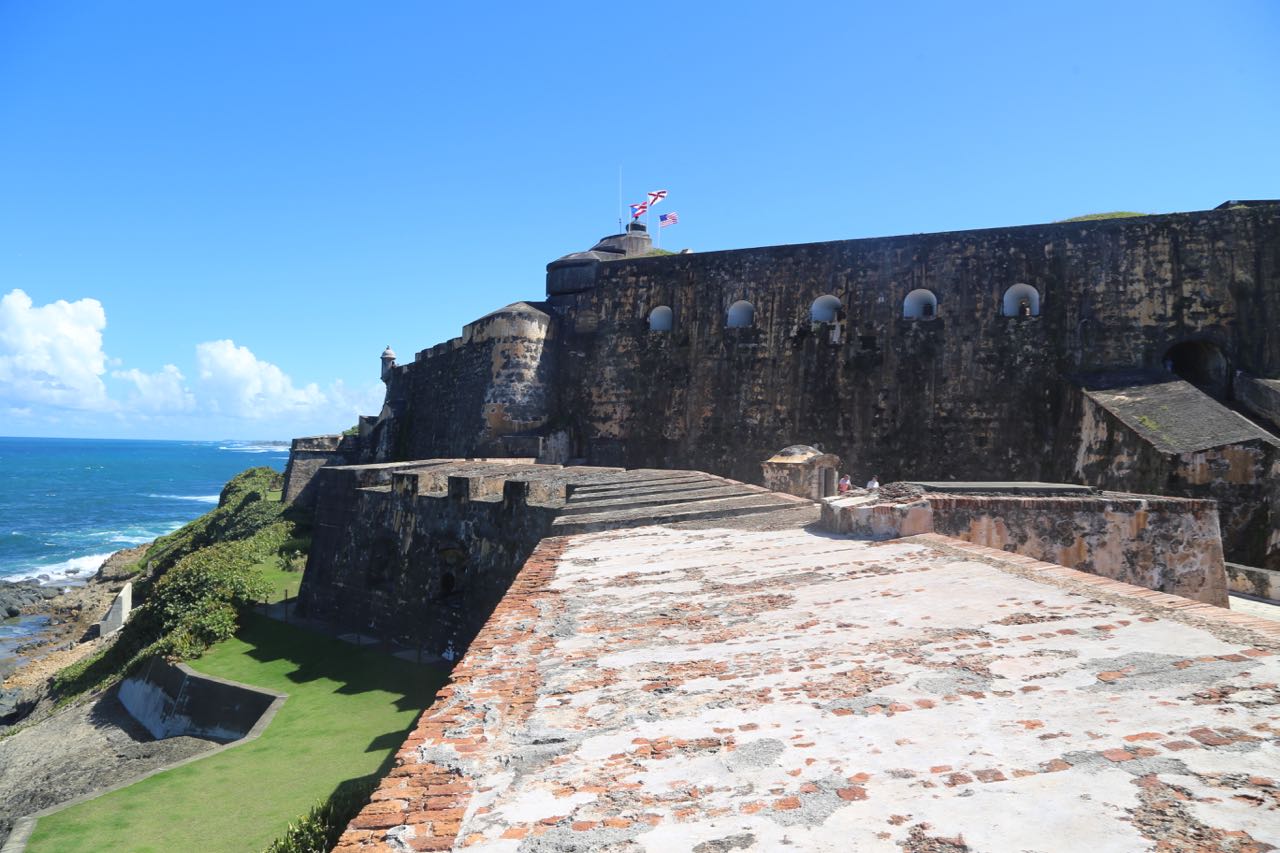
Land side of El Morro

Land side of El Morro

Ocean side of El Morro

Ocean side of El Morro