Legislative Assembly of Ontario

My cruise of the Great Lakes has ended in Toronto, which means vacation is almost over. I am spending one night in Toronto before heading home, so I decided to take advantage of that by visiting the Legislative Assembly of Ontario. I still have lots of state capitols to visit, but since I am here, I decided to visit a Canadian providence capitol, similar to my visit to the National Assembly of Quebec. The Legislative Assembly of Ontario building is beautiful, but it felt somewhat small. It is also slightly but ingeniously deceptive. I say that as it looks like the vast majority of the interior is wooden, but our tour guide pointed out that many of the columns that appear to be wood are actually cast iron with a covering. The assembly room itself looks like the United Kingdom’s House of Parliament, including the green color scheme. Presumably that was very intentional.

Of note, one of my standard questions now when touring a capitol or other similar building is how do they change the lightbulbs. The chandeliers in the assembly room are lowered closer to the floor by a person who goes up into the attic to lower them.

Legislative Assembly of Ontario

Legislative Assembly of Ontario
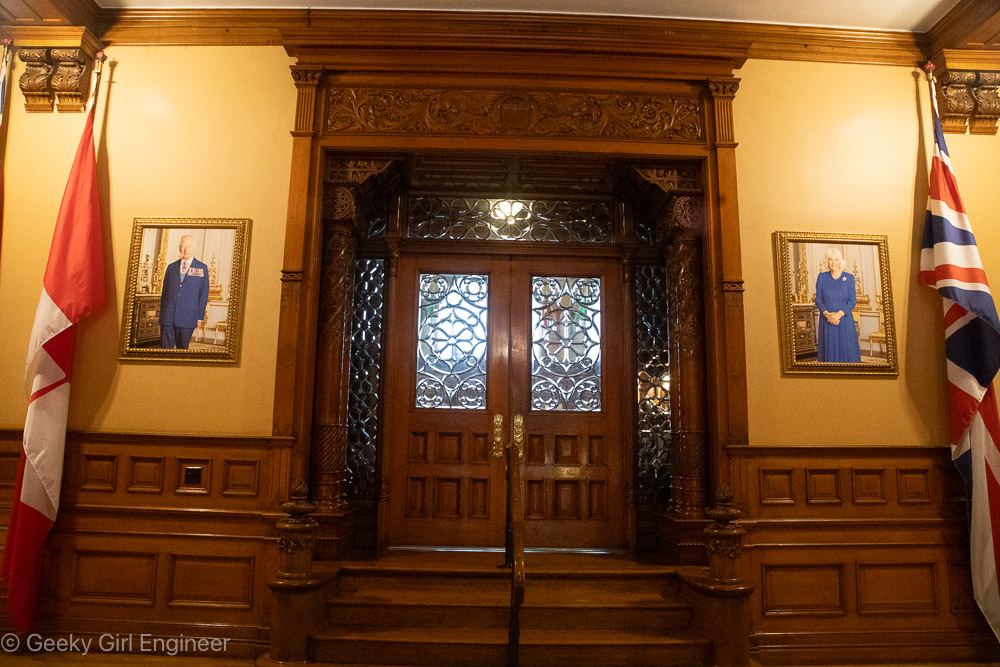
Door to Legislative Chamber

Legislative Chamber
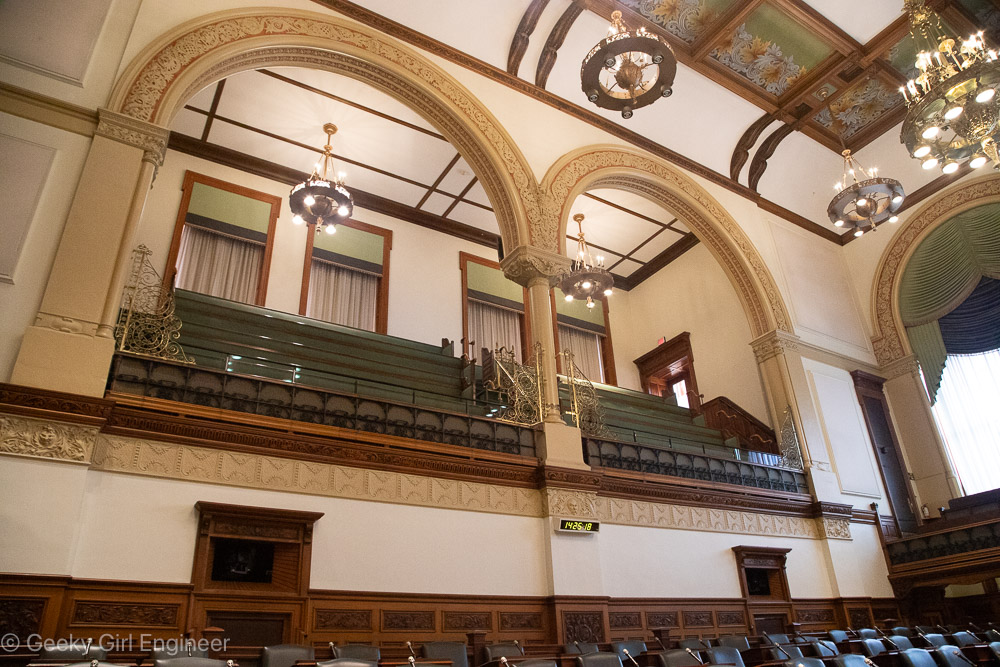
Legislative Chamber public galleries
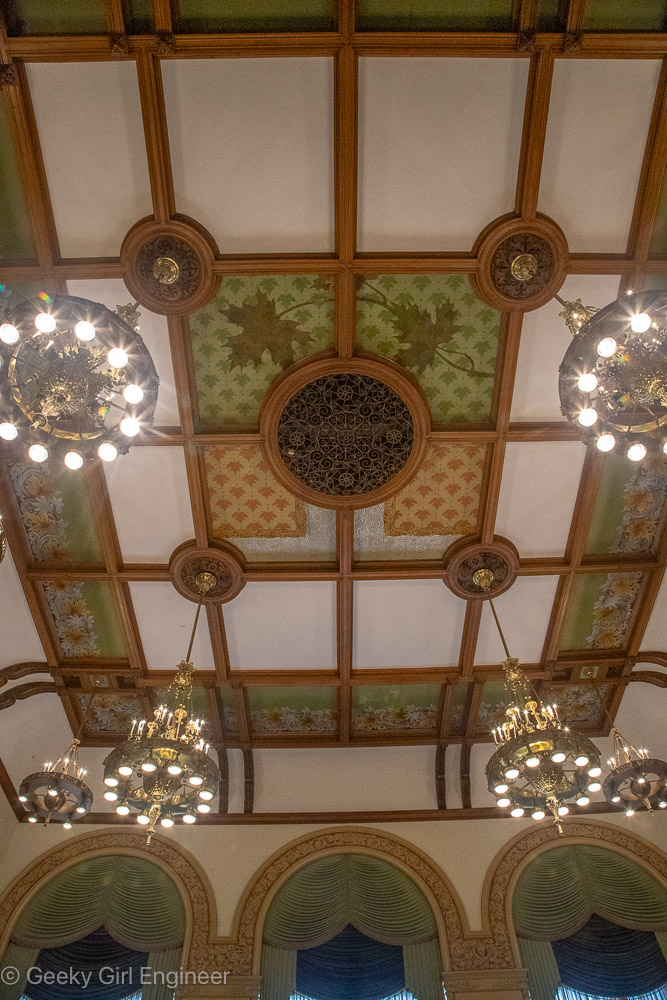
Legislative Chamber ceiling
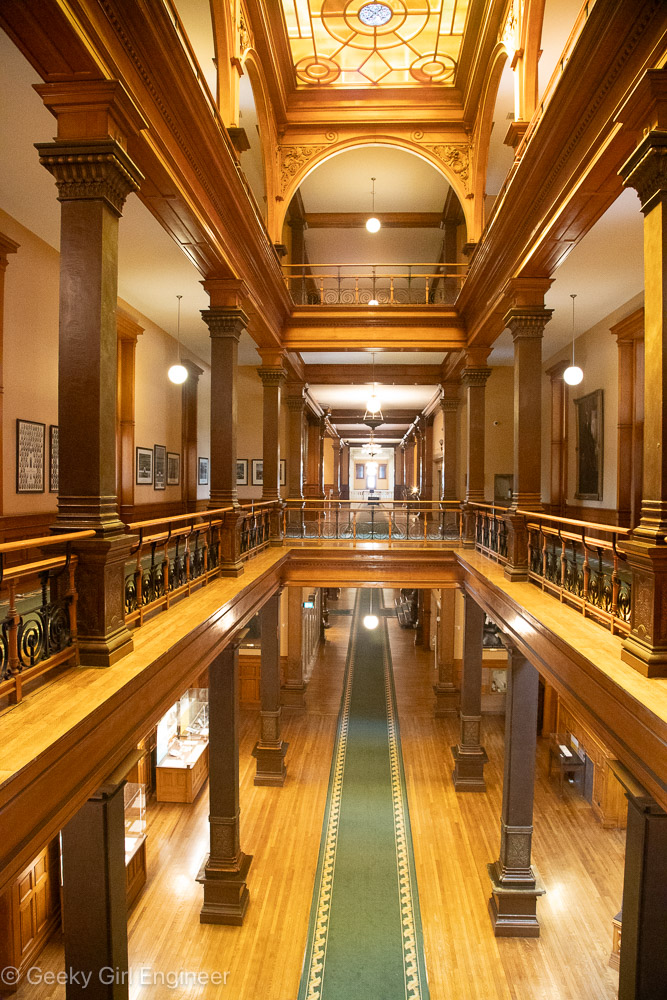
Hallway
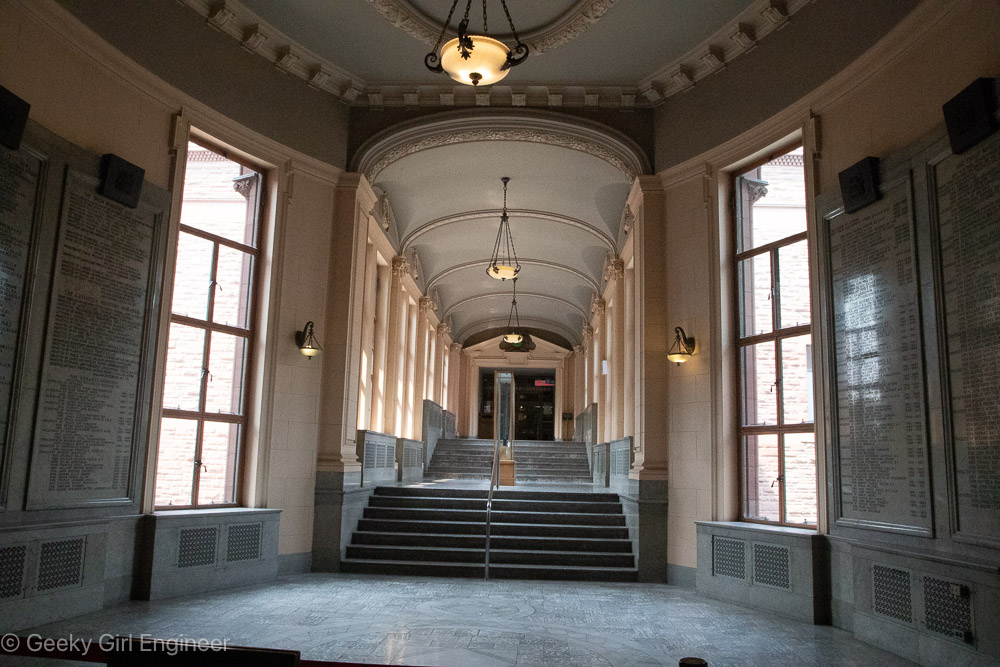
Hallway to Legislative Library
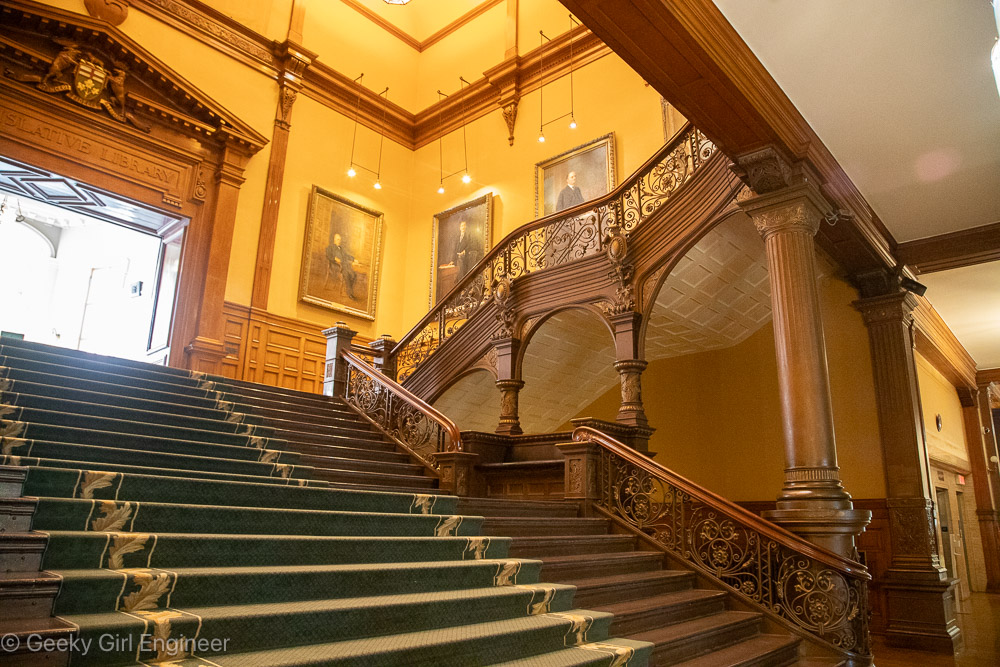
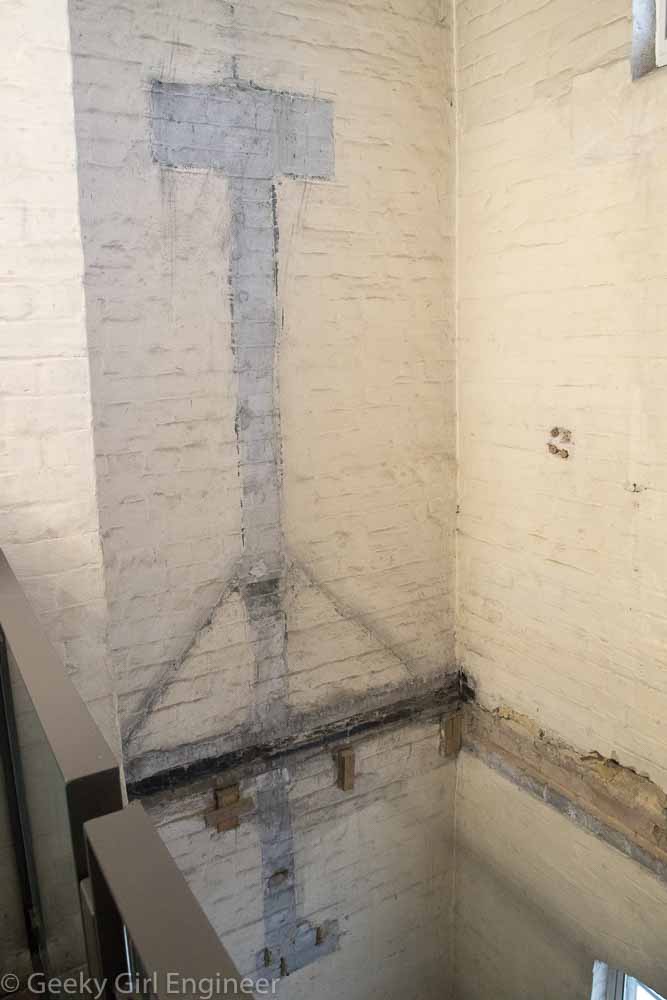
Stairwell
Welland Canal

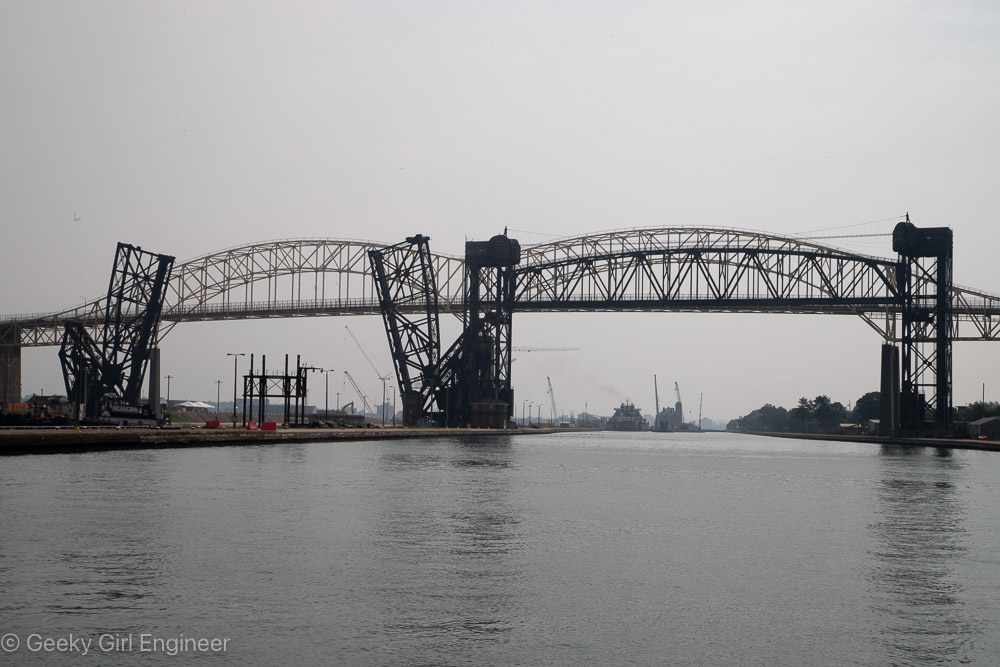
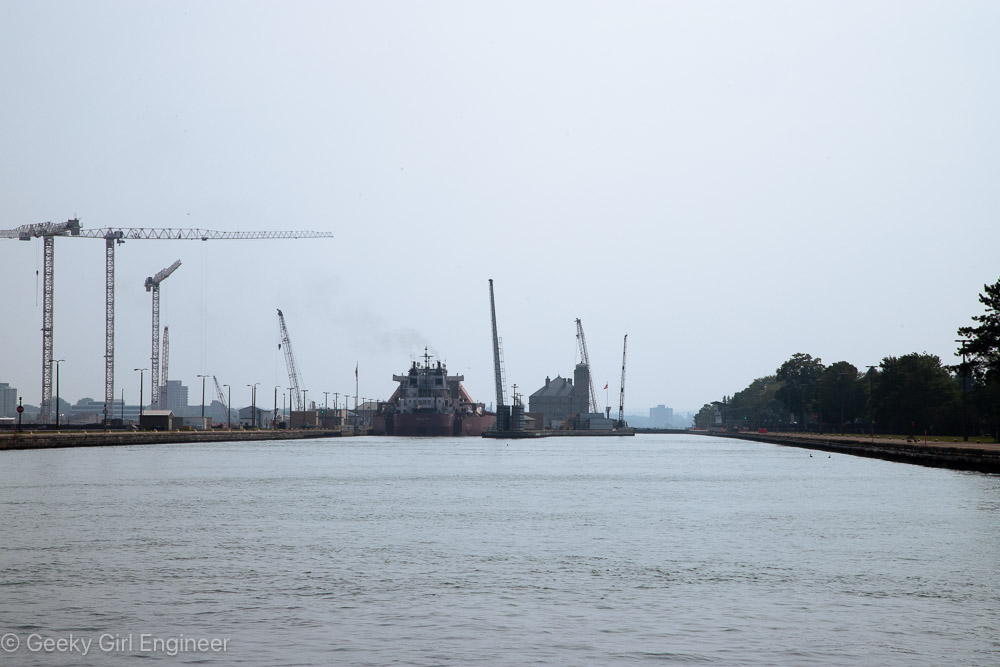
The ship I am on cruising around the Great Lakes is docked at Port Colborne, Ontario, which is at the entrance to the Welland Canal from Lake Erie. The Welland Canal connects Lake Ontario and Lake Erie and allows ships to bypass the rather inconvenient Niagara Falls. We are docked right in front of Bridge No. 21 of the Welland Canal, which has given me and some of the other passengers frequent entertainment in watching the bridge go up and down and large cargo ships enter and leave the canal. When you are on a ship less than 100 feet from a giant cargo ship, it just doesn’t seem possible that the giant cargo ship will fit in the canal or under the bridge, but of course it does. The below slide show is a collection of a series of photos I took from my cruise ship when the Algoma Buffalo entered the canal.

Detroit River

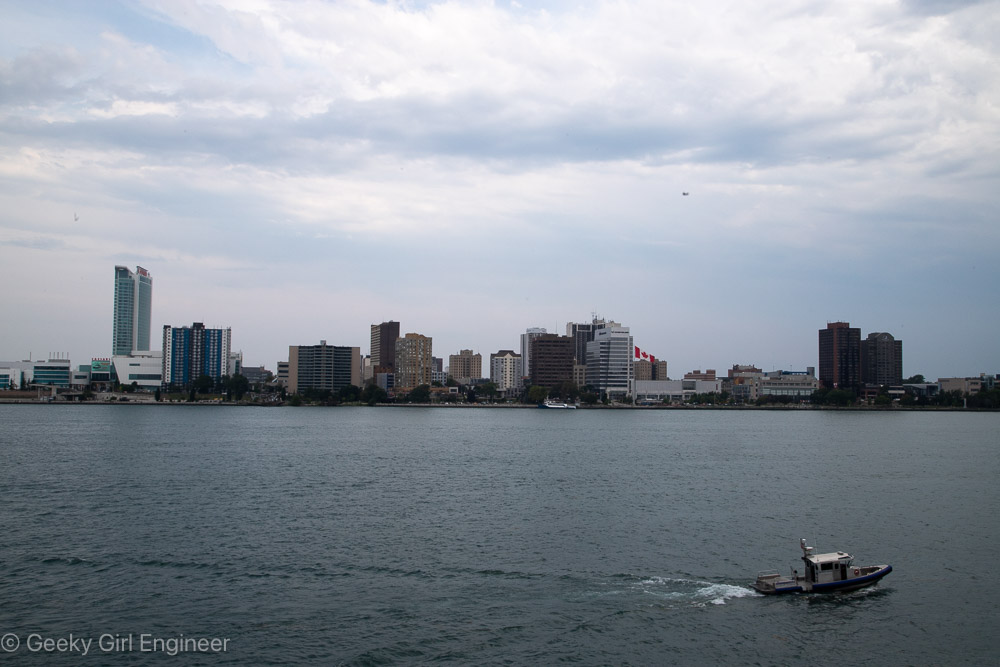
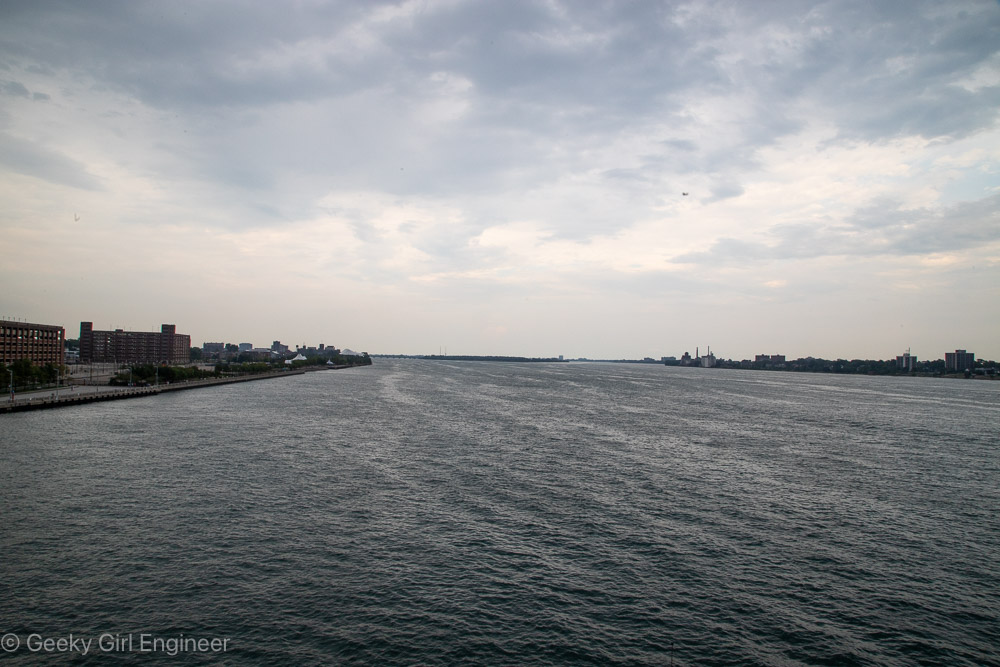
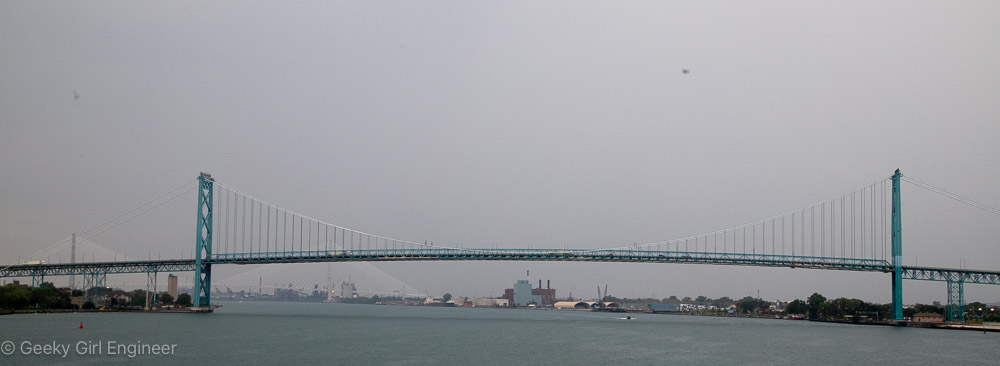
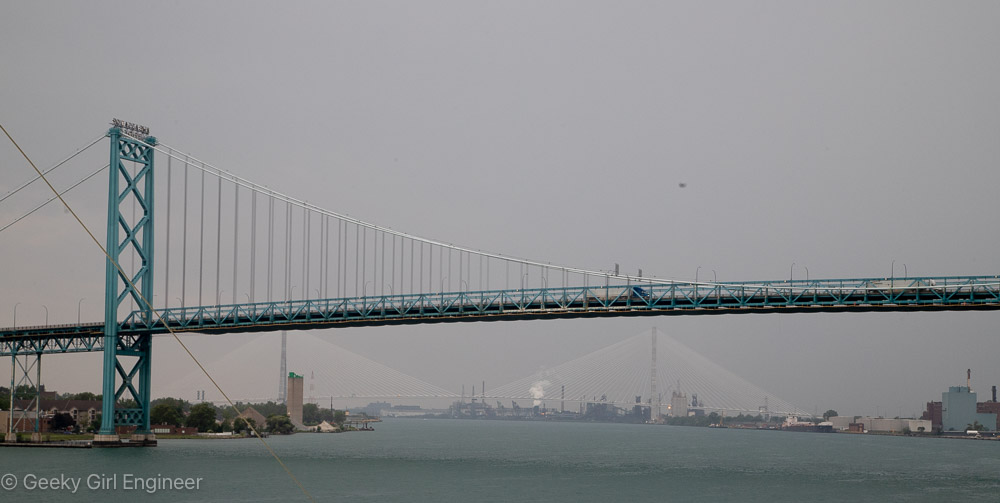
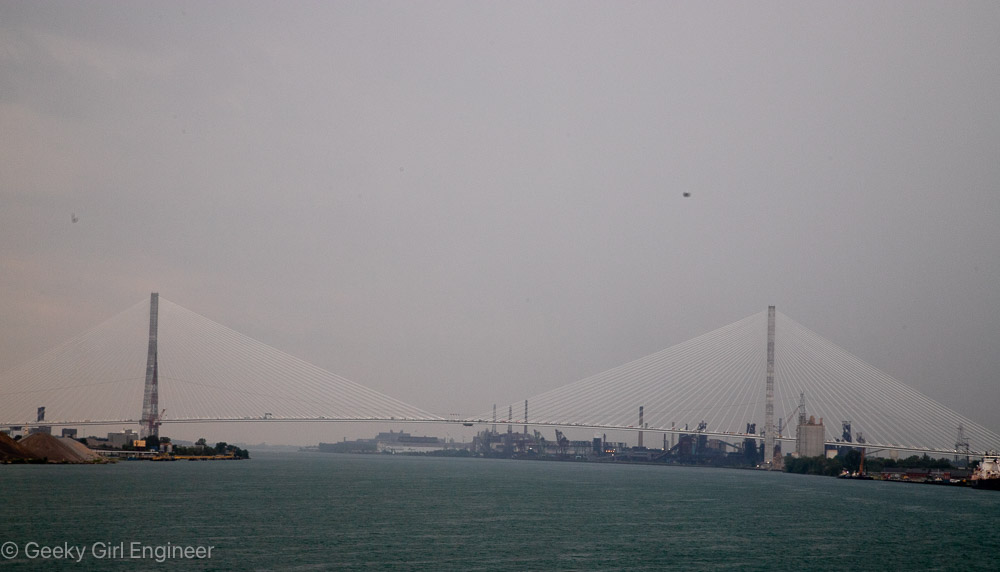
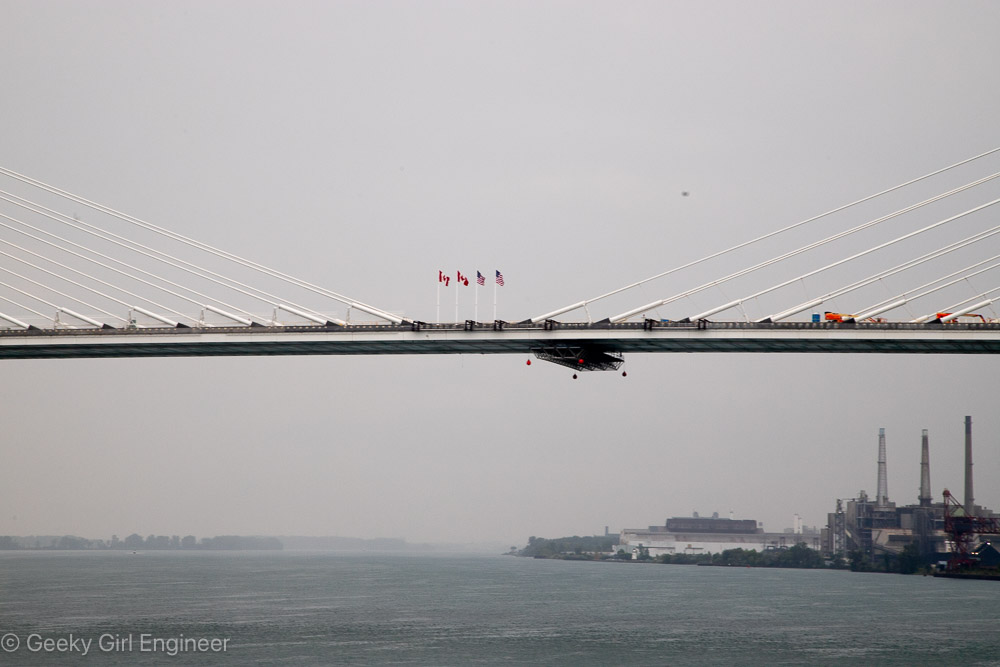
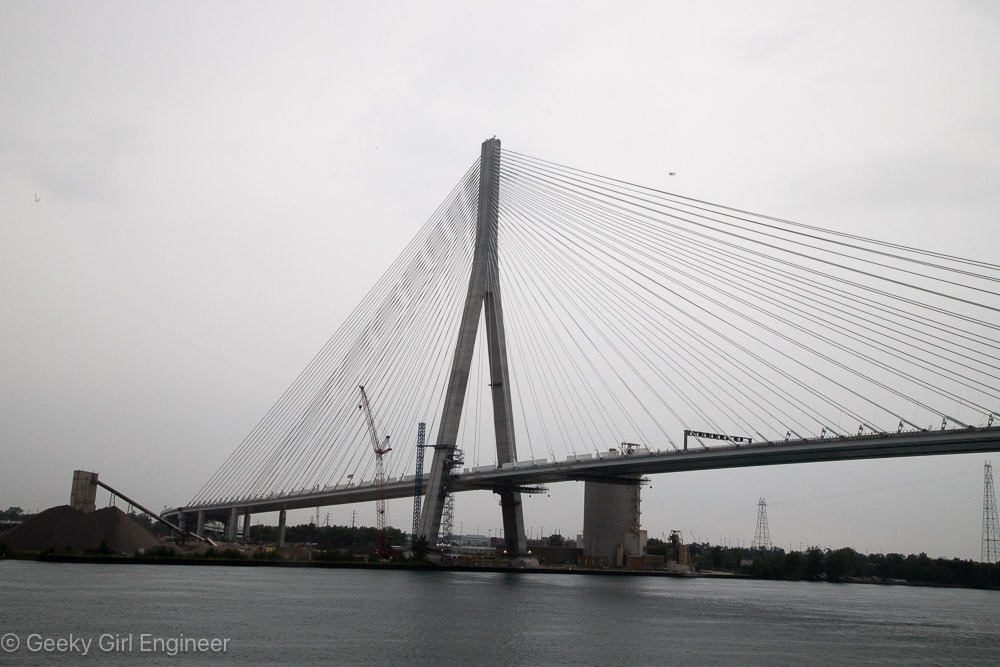
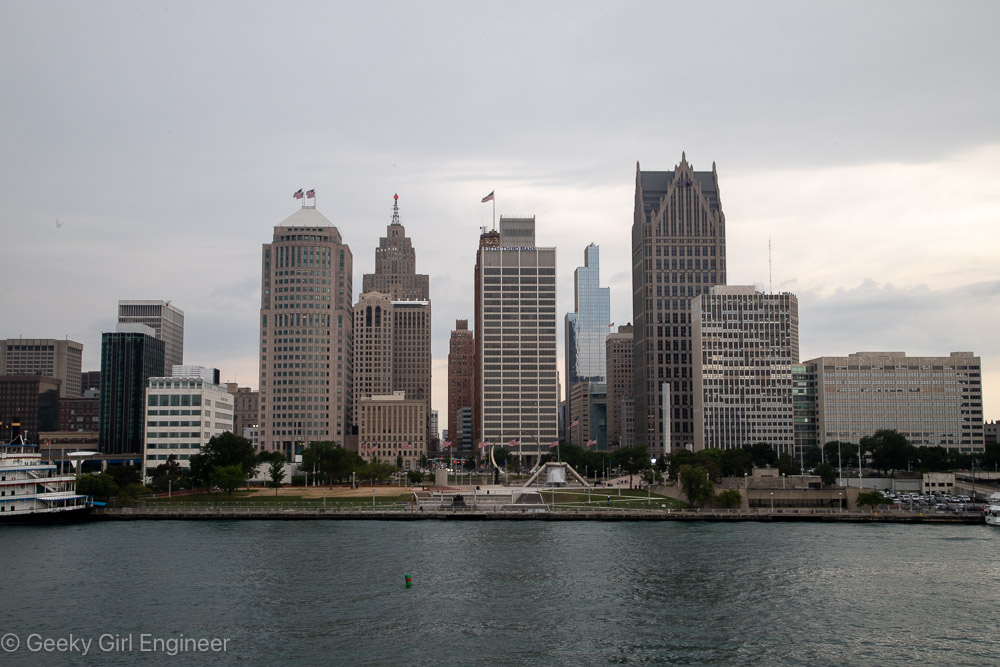
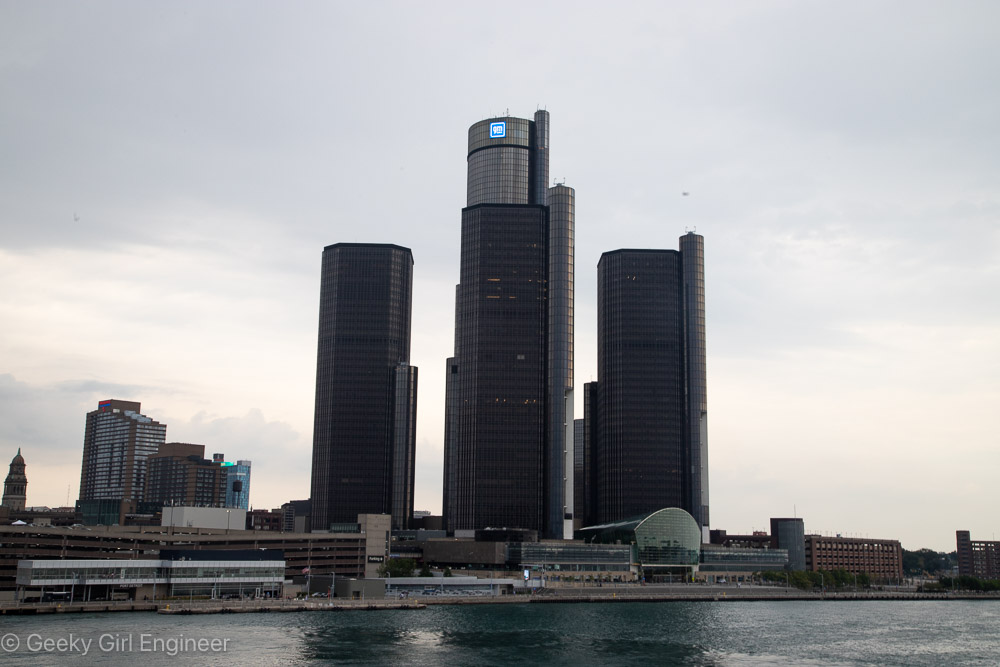
Yesterday, my cruise of the Great Lakes left Detroit headed south. We left while there was still daylight, which allowed me to get some good photos of Detroit, Windsor, and the bridges over the river.

Downtown Detroit

Renaissance Center

Windsor

Detroit River looking north from downtown Detroit

Ambassador Bridge

Ambassador Bridge with Gordie Howe International Bridge in background

Gordie Howe International Bridge

Gordie Howe International Bridge

Gordie Howe International Bridge

Parry Sound

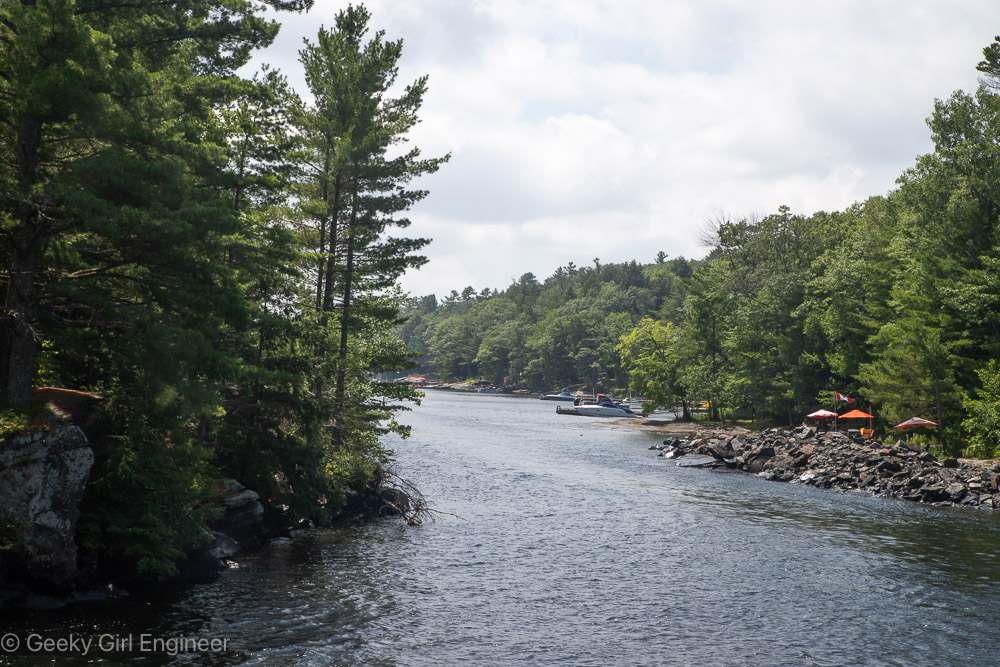
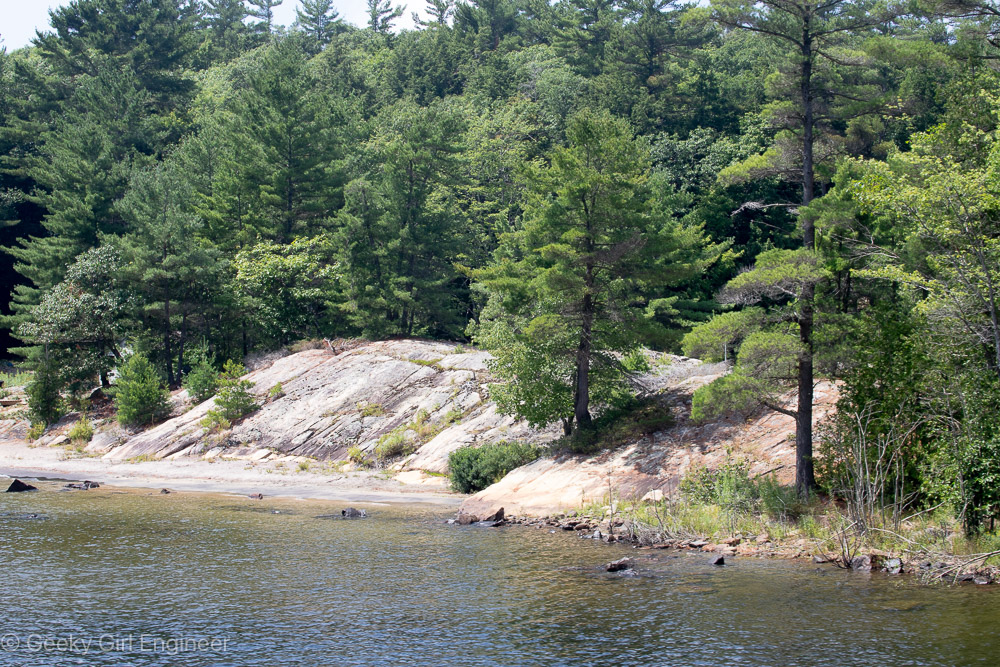
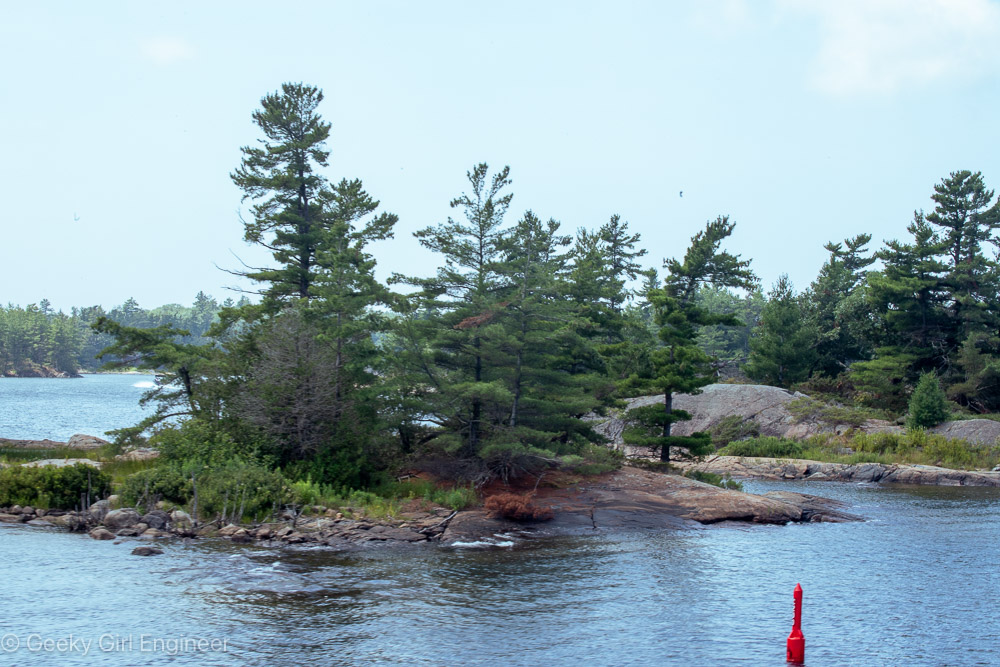
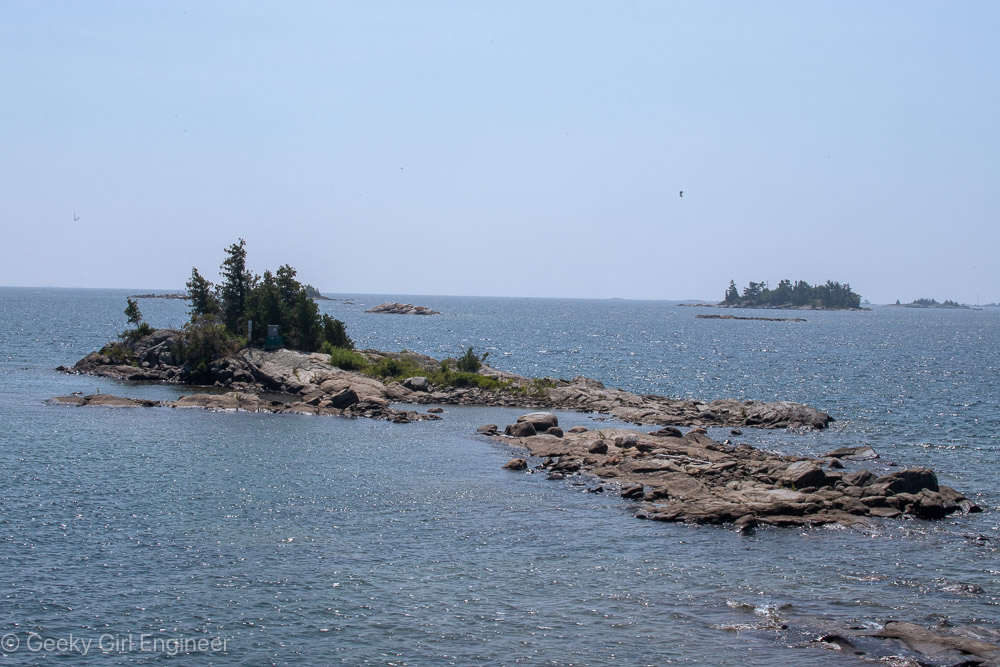
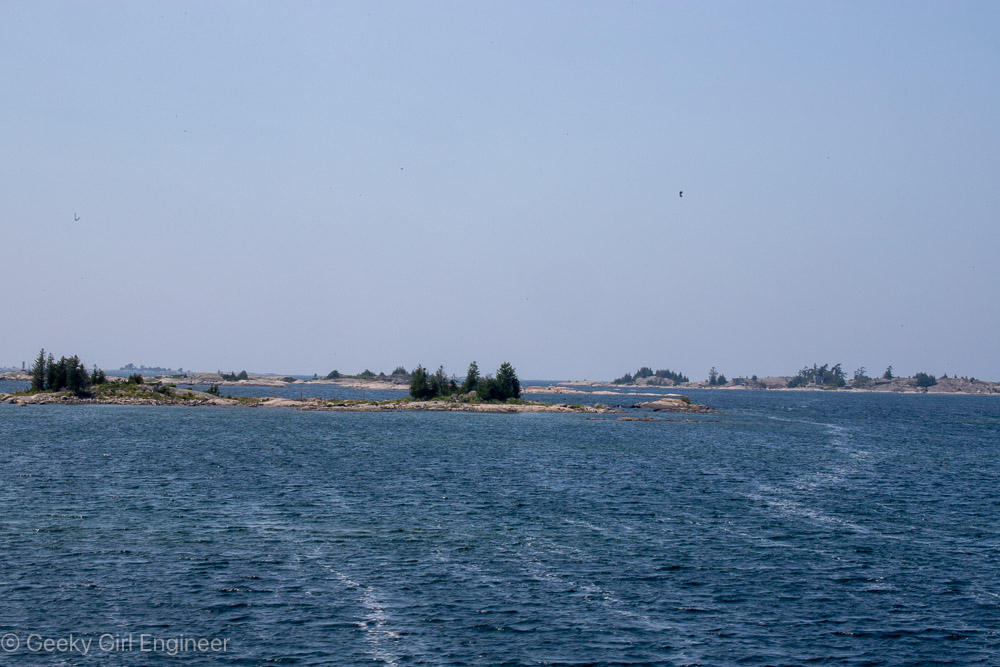
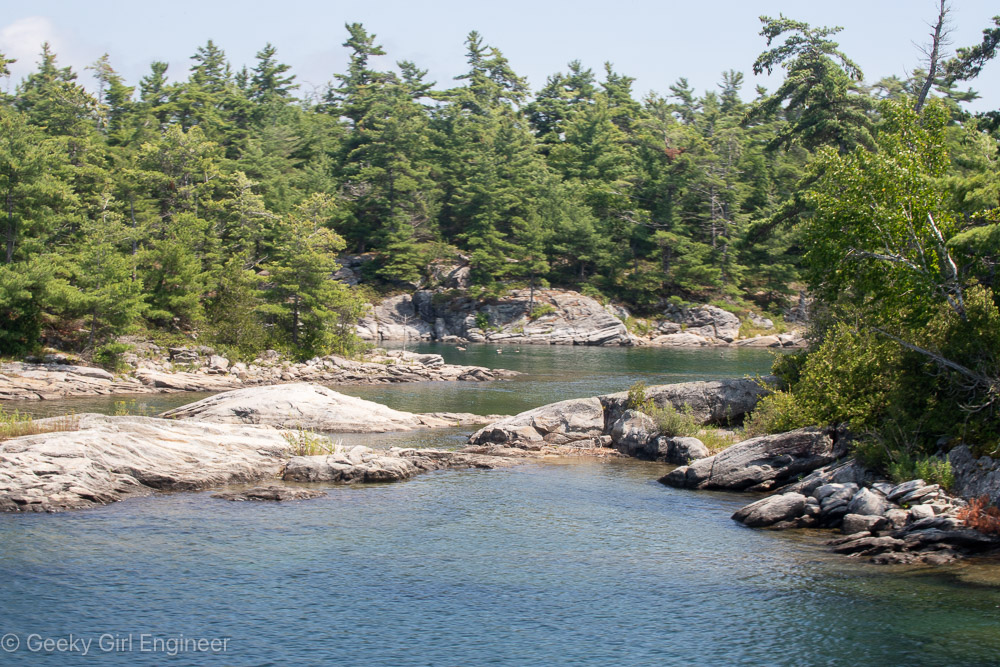
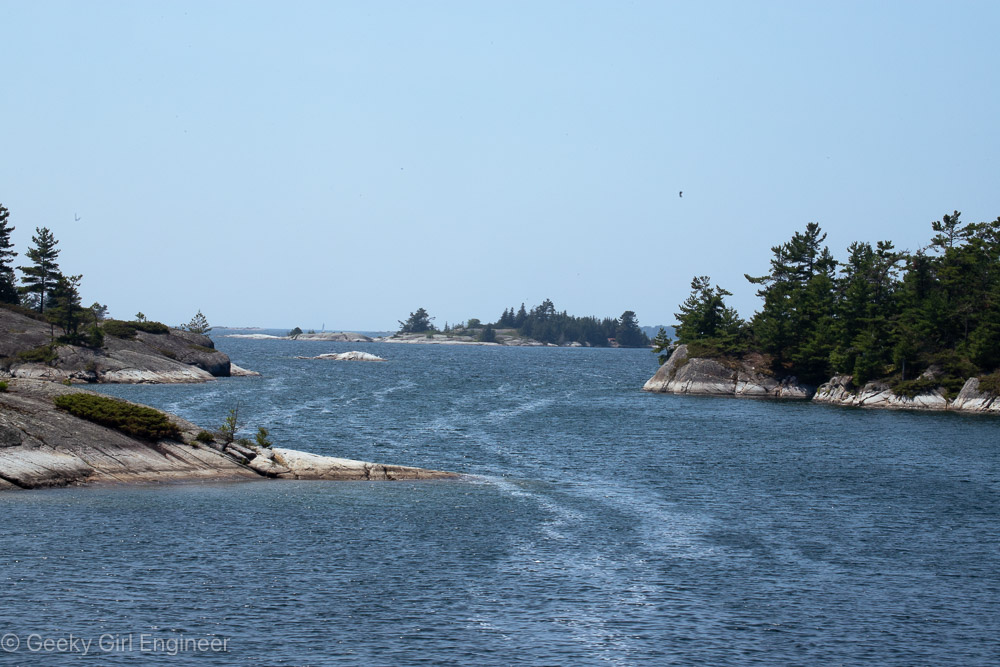
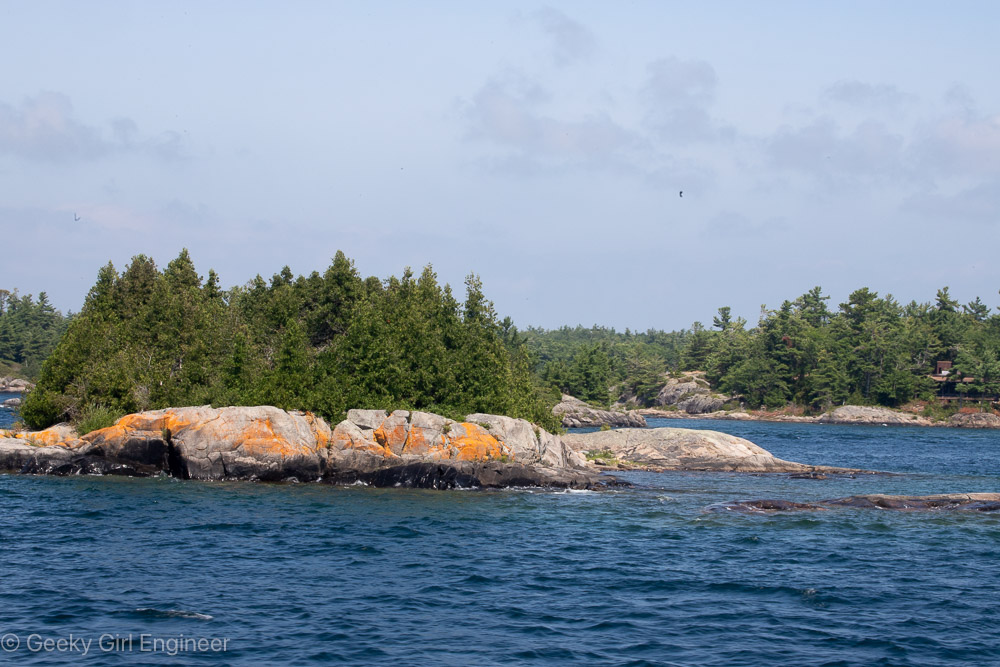
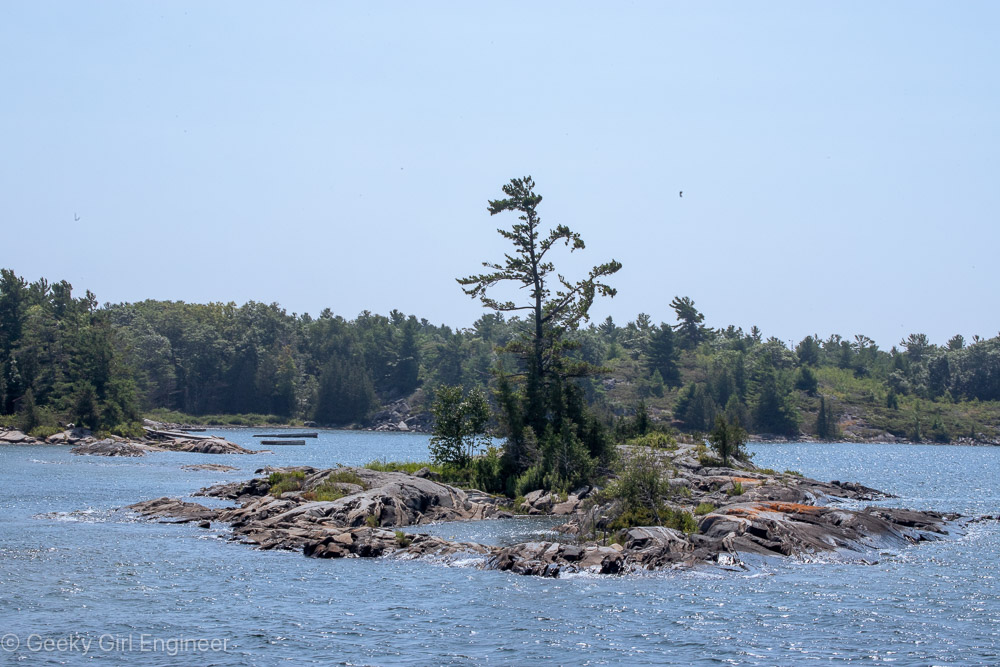
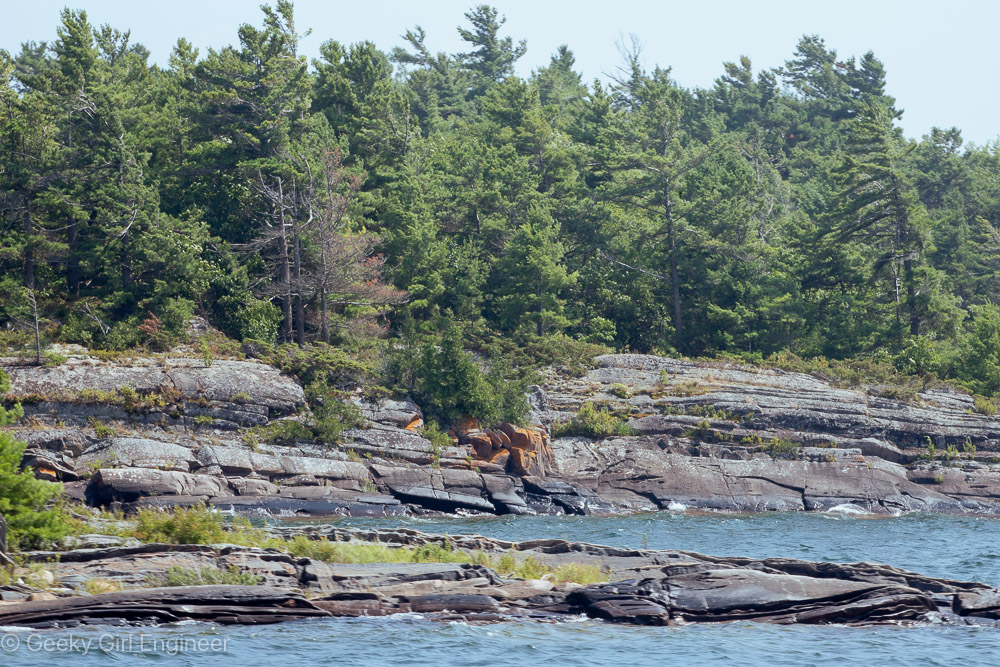
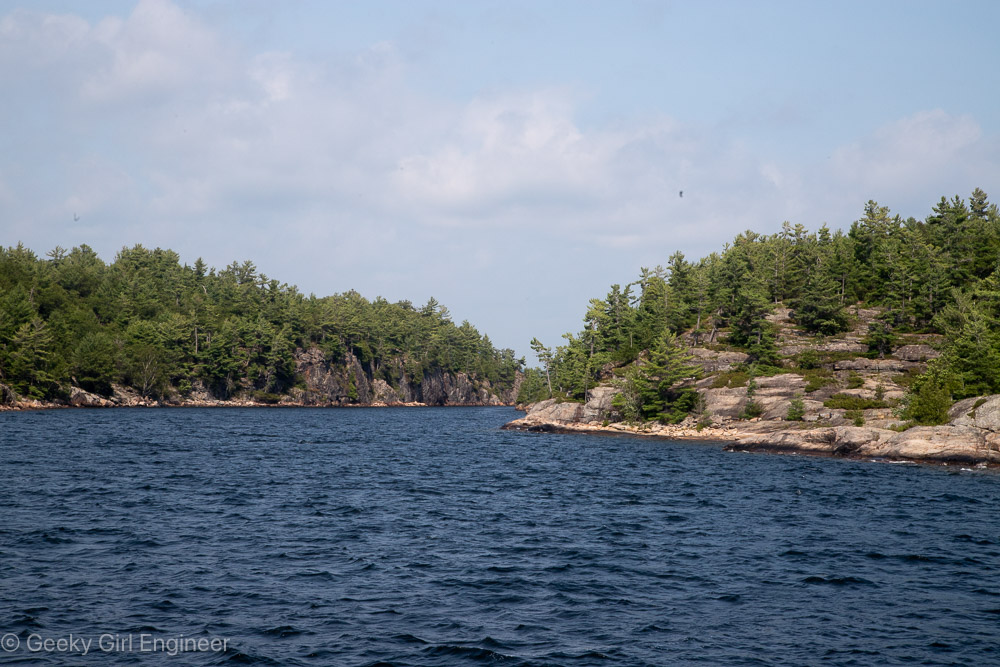
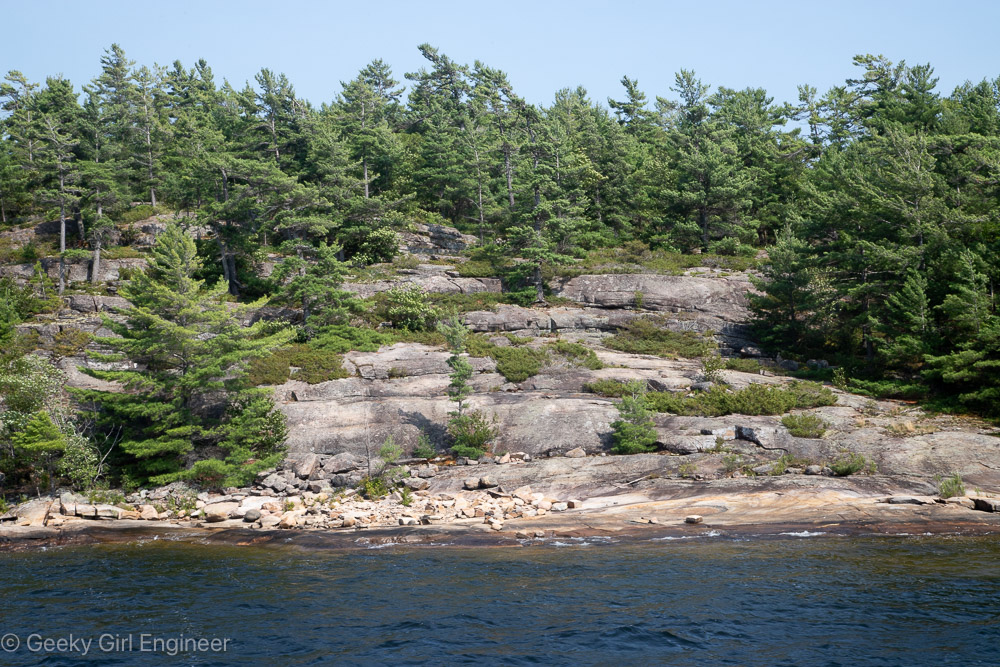
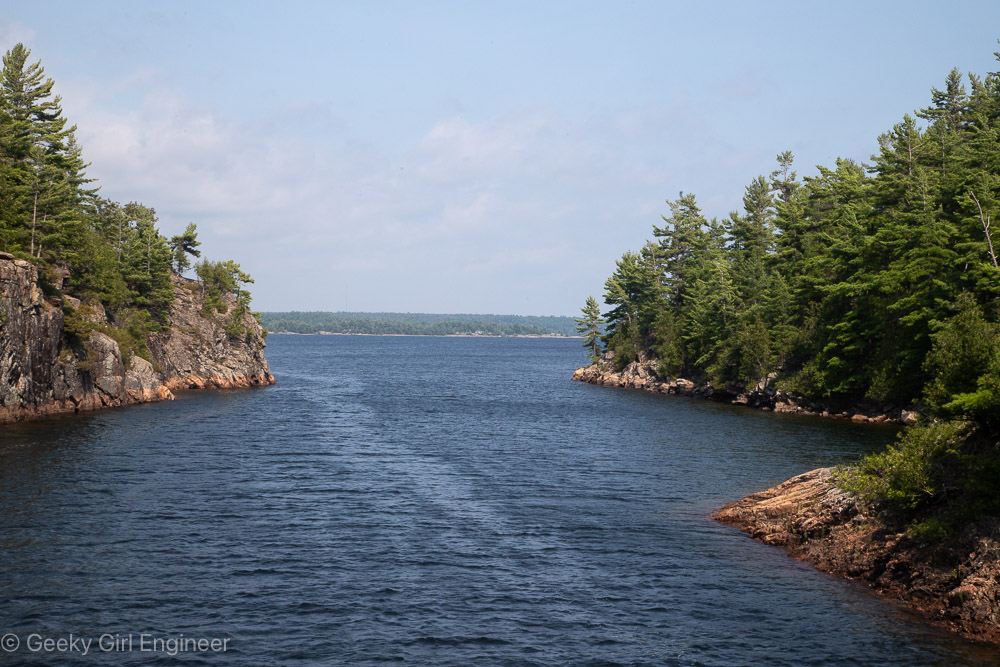
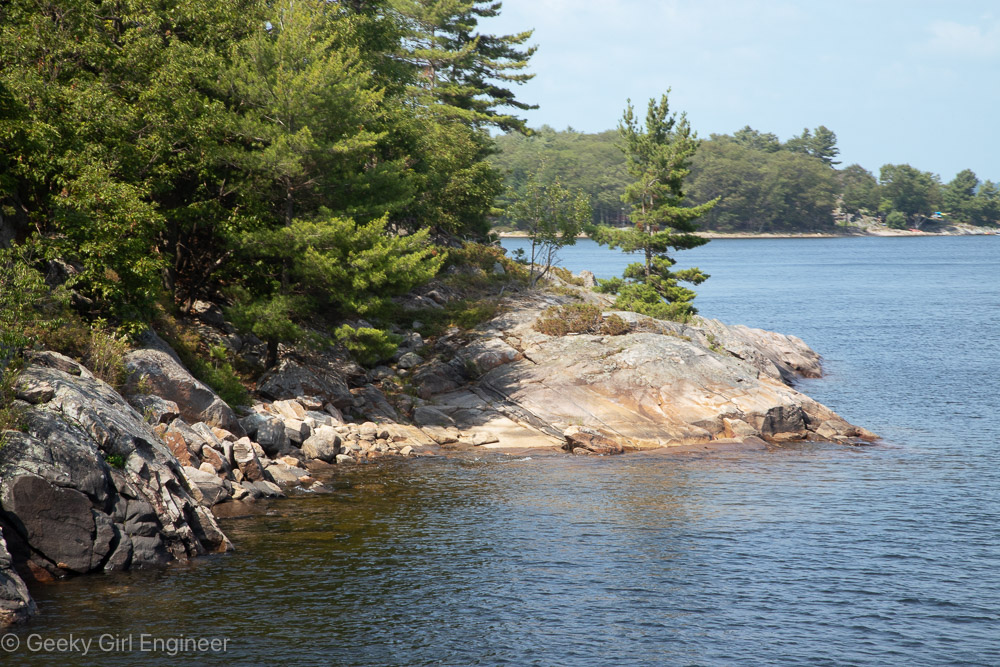
Today, my Great Lakes cruise arrived in Parry Sound. The town of Parry Sound is small, and I did not do too much exploration. However, in the afternoon, I and several passengers went on a three hour cruise of the 30,000 island area as it is called. The cruise looped around Parry Island and along the way went through some ridiculously narrow channels. Words cannot describe the beauty of the area, and I don’t even think my photos below do it justice. The are is simply gorgeous. The islands are part of the Canadian shield and are pure bedrock of what appears to be mainly gneiss. Plants, including conifers, are defiantly growing straight out of the rock. It is simply beautiful.

Narrow channel near Rose Point

Trees growing out of rock

Small islands

Small islands

Islands as far as the eye can see

Small inlets

Narrow channel

The orange on the rocks is lichen

Small islands

More bedrock

Approaching Hole in the Wall

Side of Hole in the Wall

Cruising through Hole in the Wall

At the exit of Hole in the Wall

Sault Ste. Marie

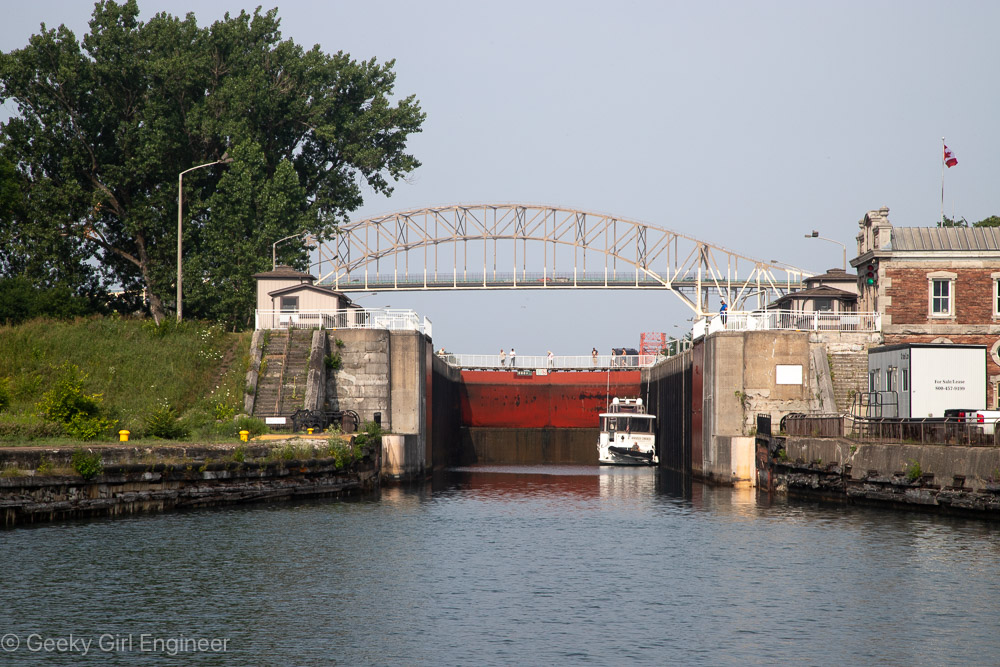
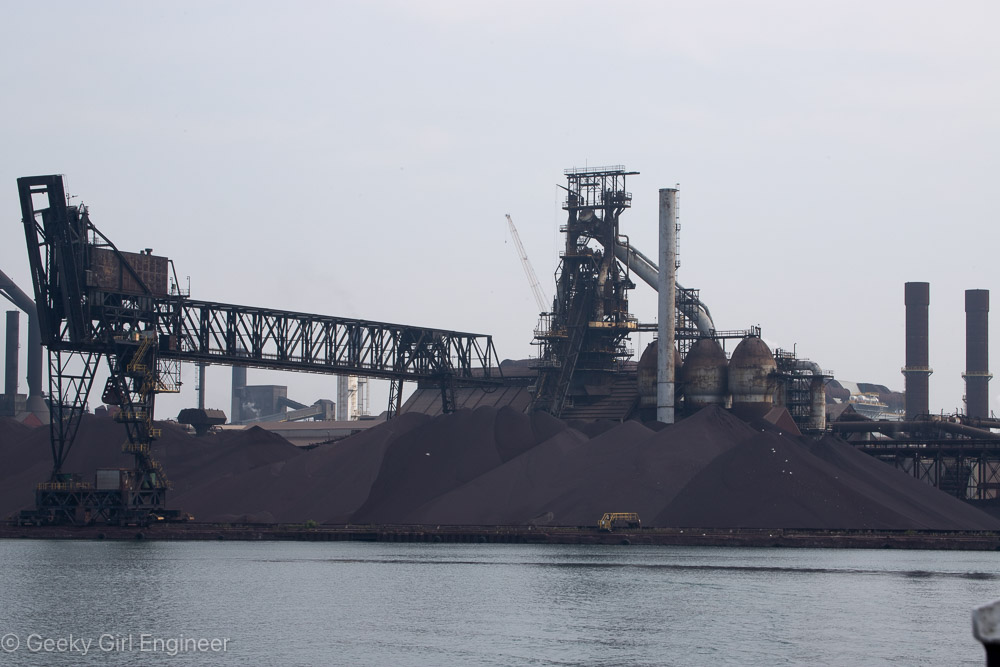
Today our cruise visited Sault Ste. Marie, which is the name of the city on both the Michigan, U.S. side and on the Ontario, Canada side. We docked though on the Canadian side in the St. Mary’s River on the Lake Huron side or elevation. I never actually went into town though. I boarded another boat with many other guests for a lock tour. We sailed through the Canadian lock into the Lake Superior side or elevation then made a giant semicircle to return to the Lake Huron elevation via the MacArthur Lock on the U.S. side. We then sailed downstream a little bit before returning to the dock. It was a really enjoyable cruise, and I always love locks. Besides going through the locks, I enjoyed seeing the steel plant on the Canadian side. I also was fascinated by the Sault Canal Emergency Swing Dam on the Canadian side. I had never heard of such a thing, so I appreciated learned about it.

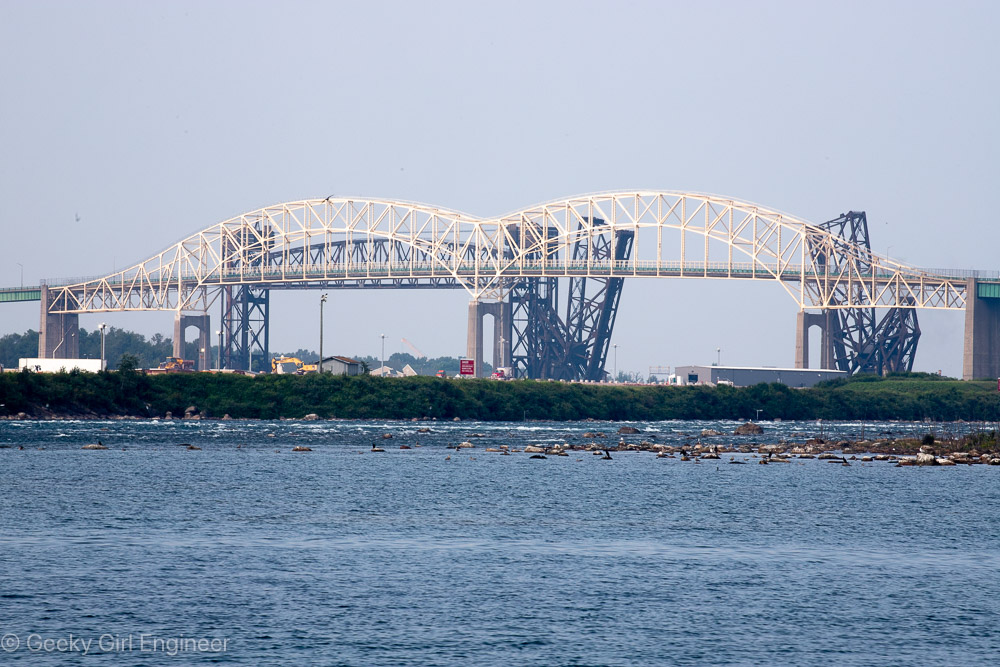
International Bridge with some of the St. Mary’s River rapids in front

Canadian Lock

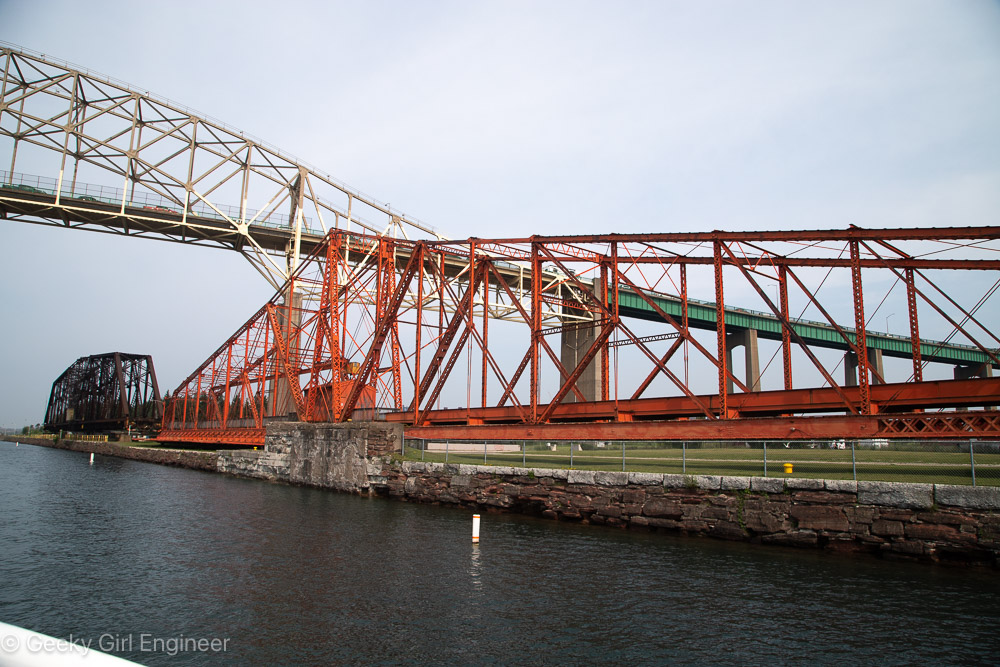
Sault Canal Emergency Swing Dam

Algoma Steel

International Bridge and railroad bridge

U.S. Lock with construction of new lock visible on left

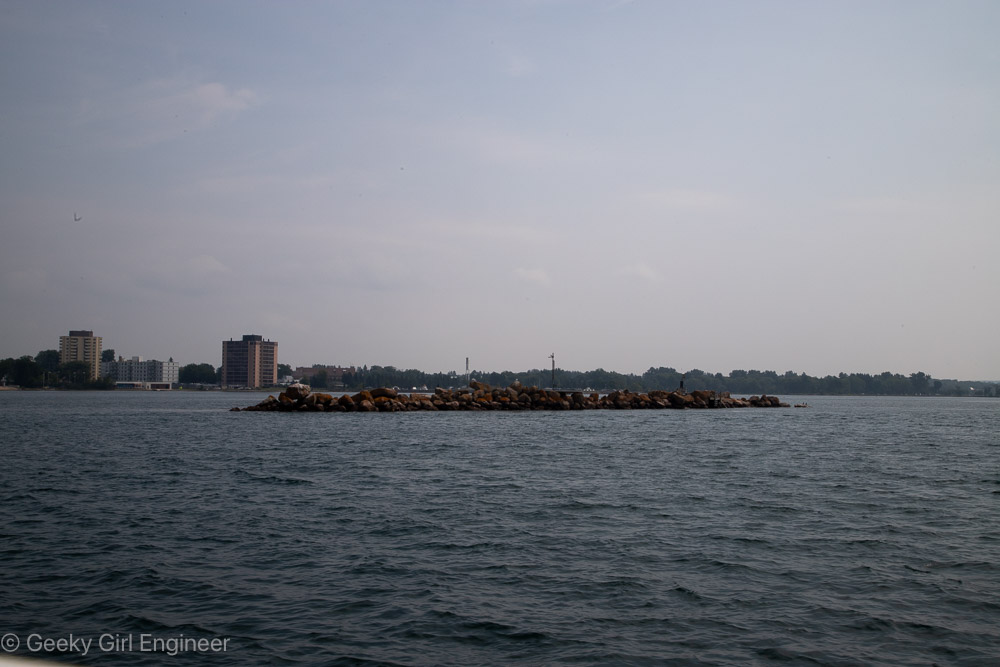
Rock pile indicating Canada/U.S. border in St. Mary’s River

Historic Don Jail

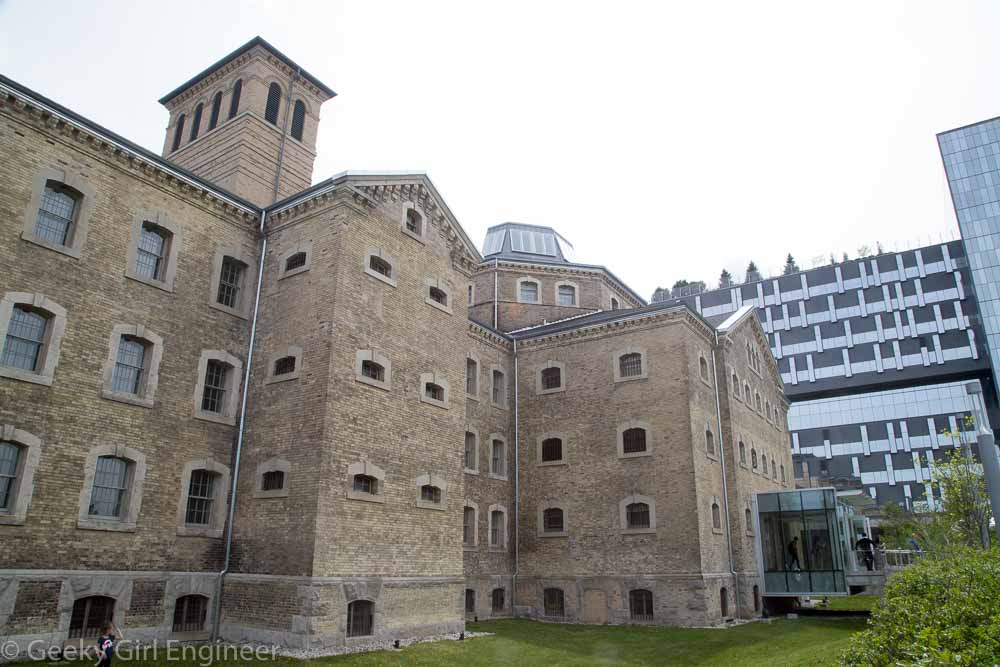
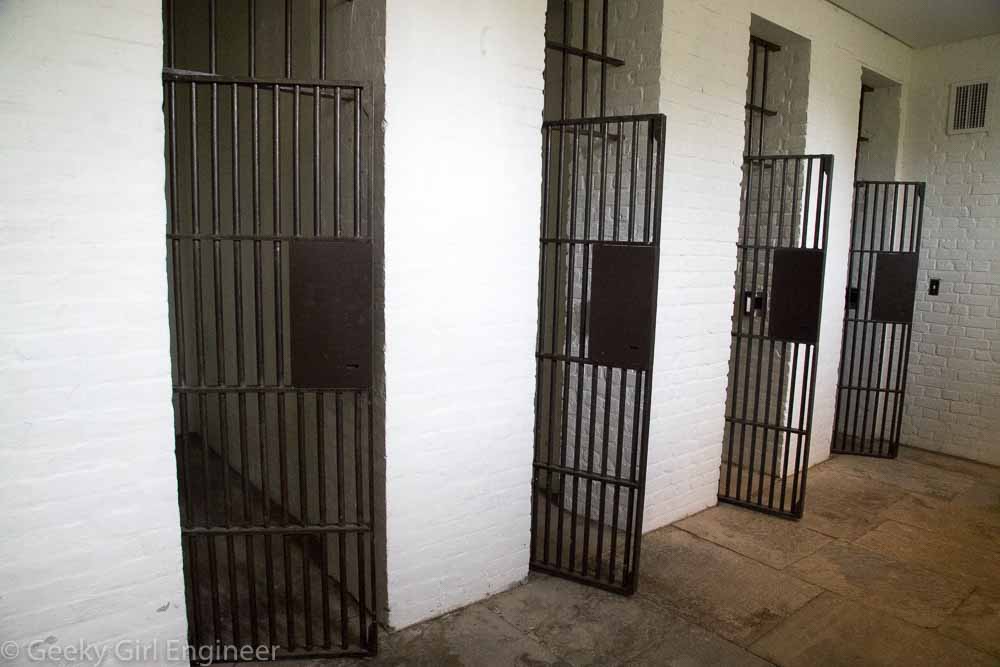
One of the buildings open for Doors Open Toronto was the historic Don Jail, which now houses Bridgepoint Active Healthcare Administration Building. The jail was built between 1800-1866 and closed in 1977. I have not toured that many old jails, but this building has ornamentation that I honestly did not think would ever be in a jail. It was built as a reform jail, and evidently sunlight was part of that idea. The cells, or at least the doorways I could see, were still pretty darn tiny though. Architecturally, it is something to behold.

After it closed, the jail evidently sat unused for a while because really, what do you do with an old jail? Bridgepoint purchased it to turn it into an administrative building next to their hospital. They preserved its historic elements. It does seem like some of the offices must be nice, but I can’t imagine working in an old jail no matter how many fresh coats of paint are put on it. There is even a closed off area, which was open for photos, where the gallows were. The are offices across the hall for the gallows room. I really don’t think I could work on that hallway.

Historic Don Jail exterior
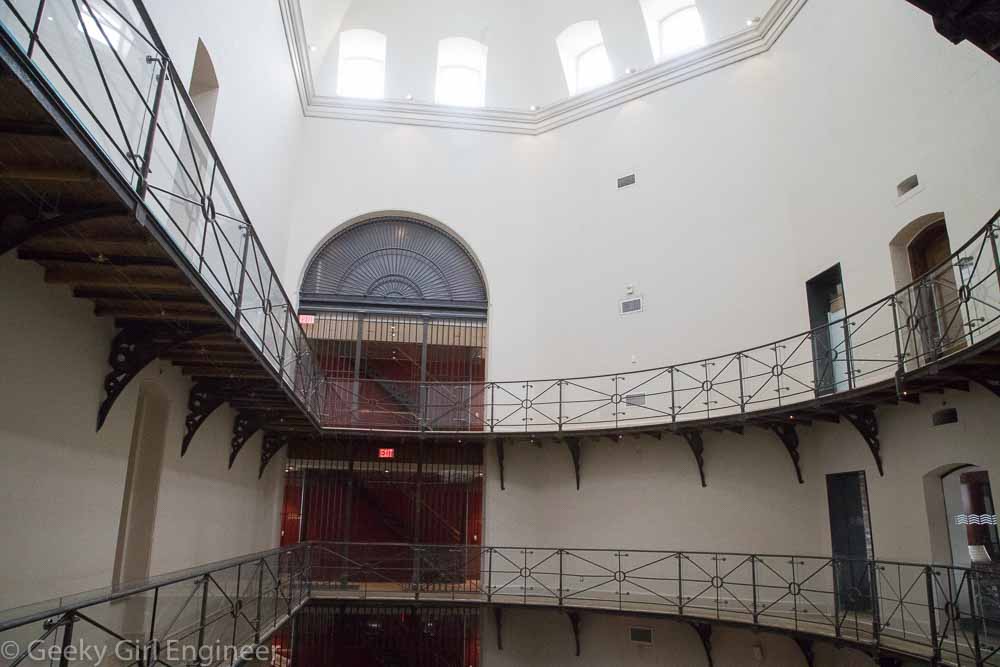
Atrium which is shaped as half an octagon.
Atrium view from second floor
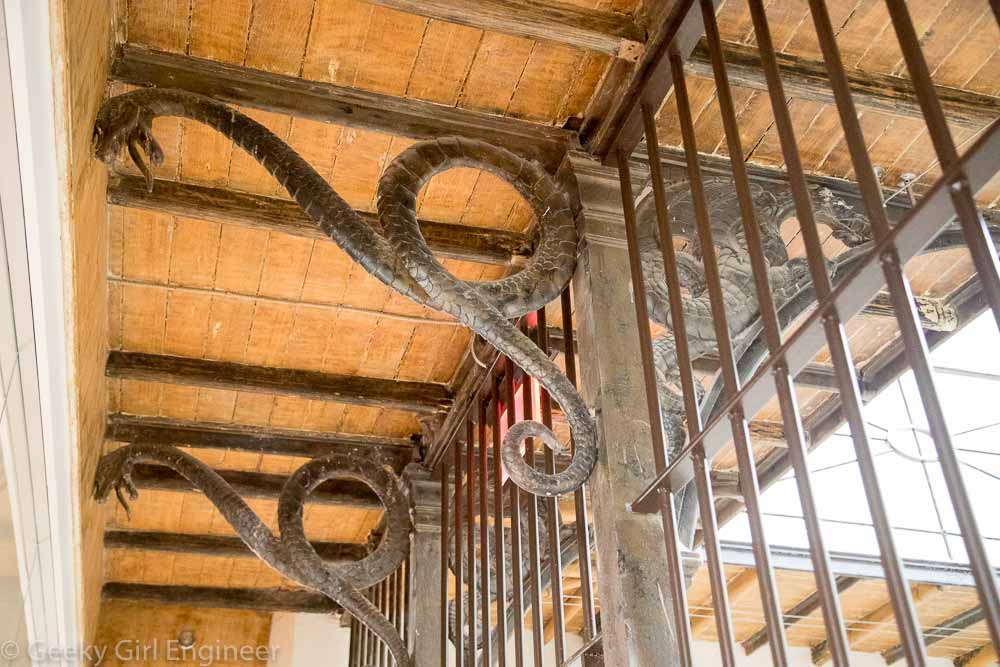
The atrium balconies are help up by really ornate brackets shaped like dangerous animals like servants and dragons
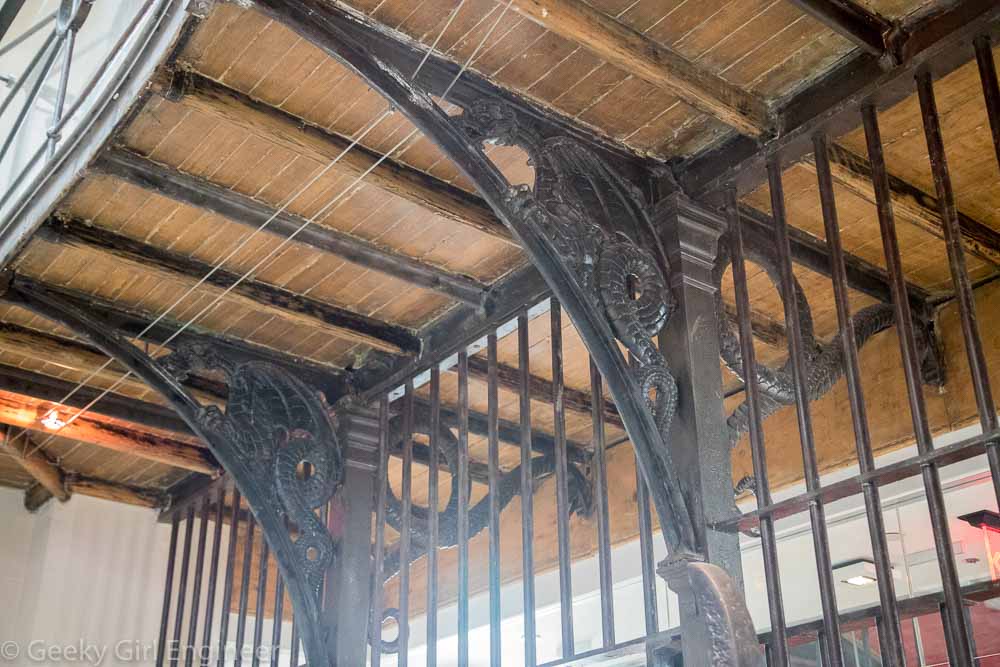
A better view of the dragon brackets supporting the balconies
Isolation cells for punishment were about a cot’s width
Cells that have been turned into offices
Gallows area. The outline of where the wood gallows were was left visible.

F.J. Horgan Water Treatment Plant

The F.J. Horgan Water Treatment Plant was one of my top two reasons for coming to Doors Open Toronto. Sadly, no wastewater treatment plants were open for the event, as I find them more interesting than water treatment plants. However, water treatment plants are still interesting. This plant was even more interesting than I initially thought it would be because I am fairly this is the first water treatment plant I have been to where they use ozone for the initial disinfectant. This is the second water treatment plant I have visited in Toronto. The first Doors Open Toronto I came to, I visited the absolutely magnificent R.C. Harris Water Treatment Plant. F.J. Horgan Water Treatment Plant is not as beautiful, but it is interesting none the less.

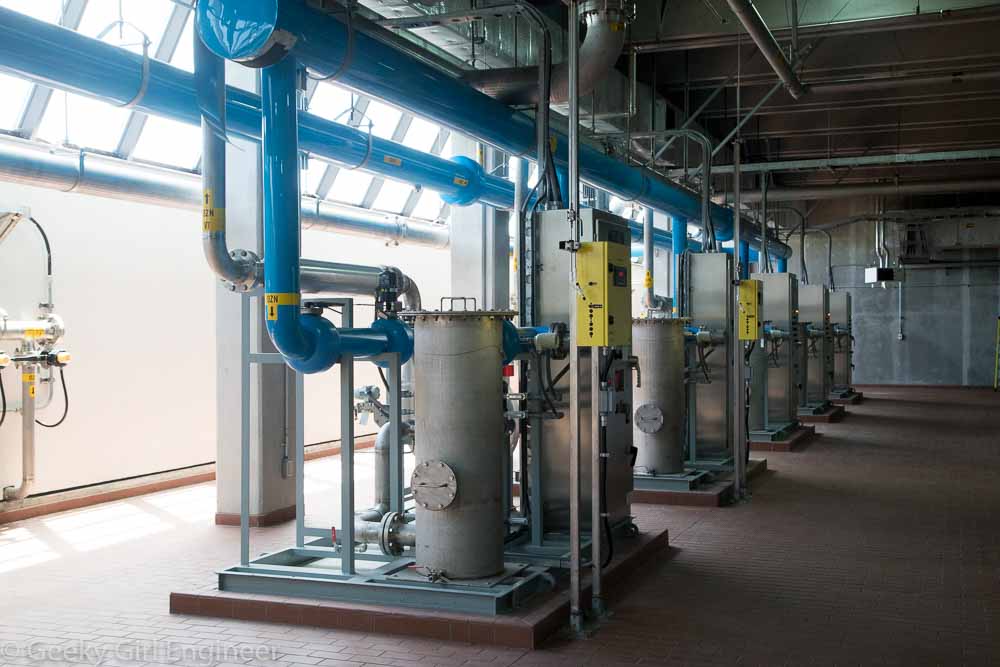
The plant’s water intake is from pipes in Lake Ontario over 2 km from shore. It is then pumped to the plant and then up from the pipes which are (I think) nine stories below the surface. The plant sits on cliffs high above the water surface. Ozone is added to the water. Ozone disinfects the water. The ozone is made at the treatment plant from liquid oxygen. Before the water leaves the tanks where is contacts ozone, sodium bisulfite is added to remove any left over ozone.

Ozone generation unit from liquid oxygen and electricity
Ozone is piped to water contact units

Coagulant is then added to the water. Coagulant causes certain ions and tiny particles to start to come together to make bigger particles, which are easier to filter out. The water is pumped to sediment filters. The filters have a lower sand layer topped with a carbon layer. The filter tanks are huge, but so are the pipes in the building.

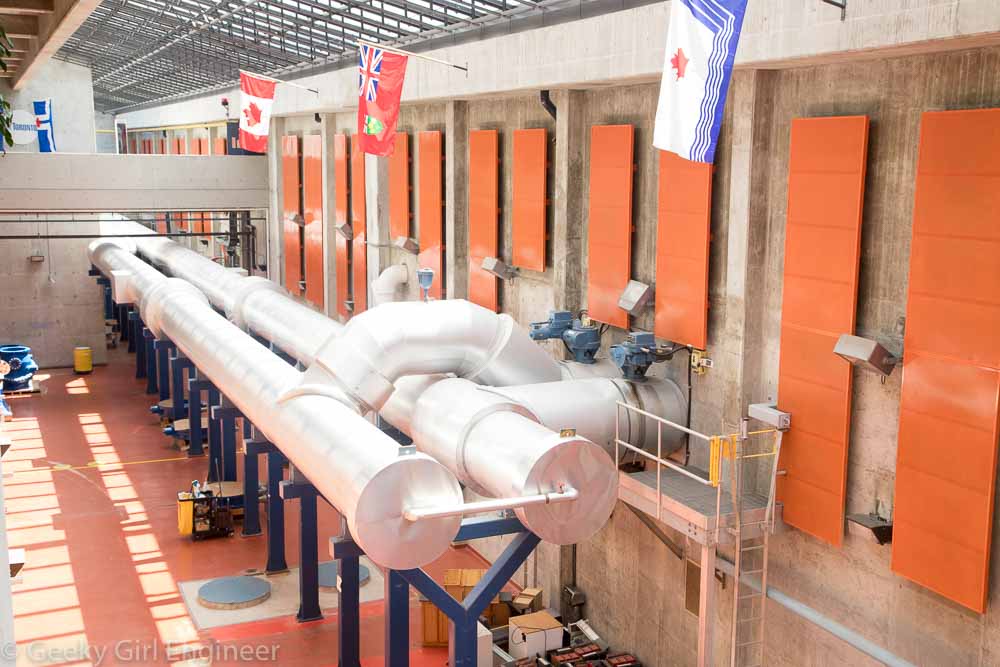
Gigantic water pipe conveying water (I think) to the filter tanks
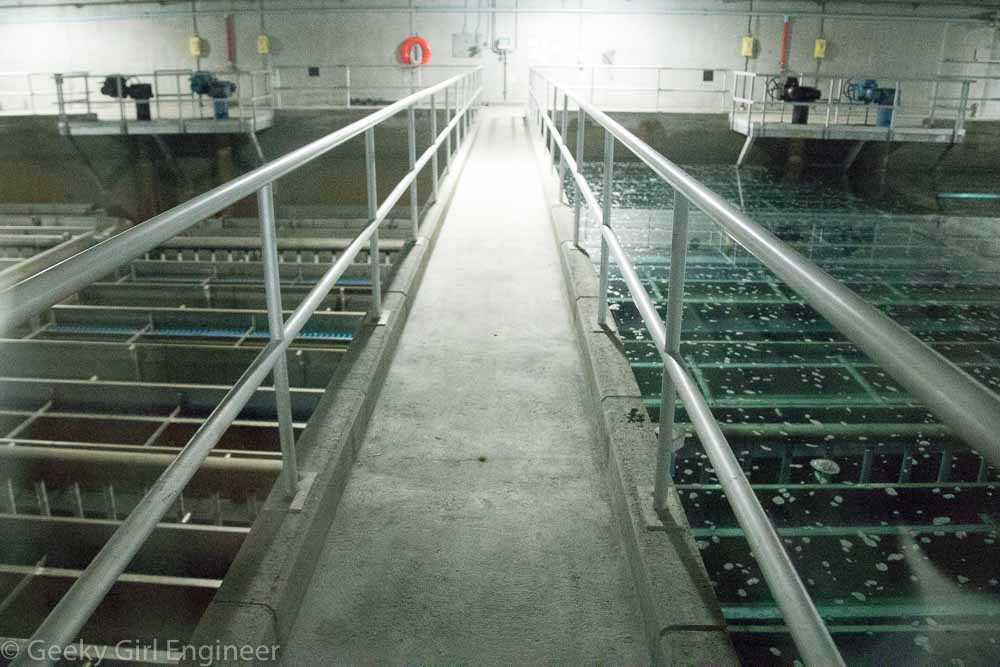
This is a horrible photo because is taken through glass with wire lining, but that is water in the filter tanks. The filters are at the bottom, and I think blue plastic thing is the trough where the backwash goes when the unit is backwashed.
Another horrible photo taken through glass, but on the left side is an empty filter tank, and on the right side is a filter tank with water.
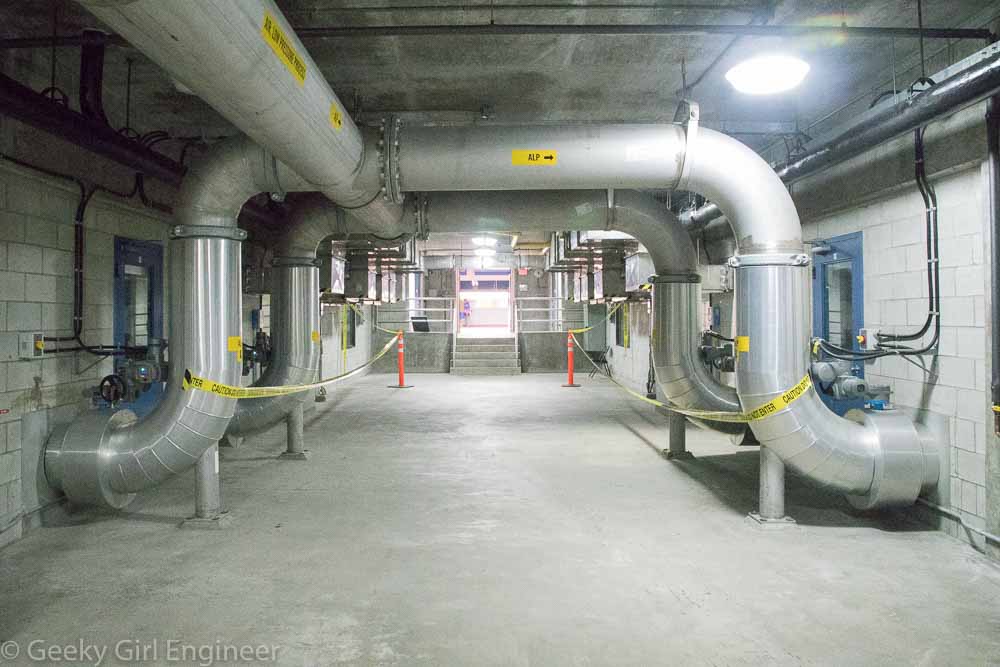
Low pressure air pipes in the filtration gallery
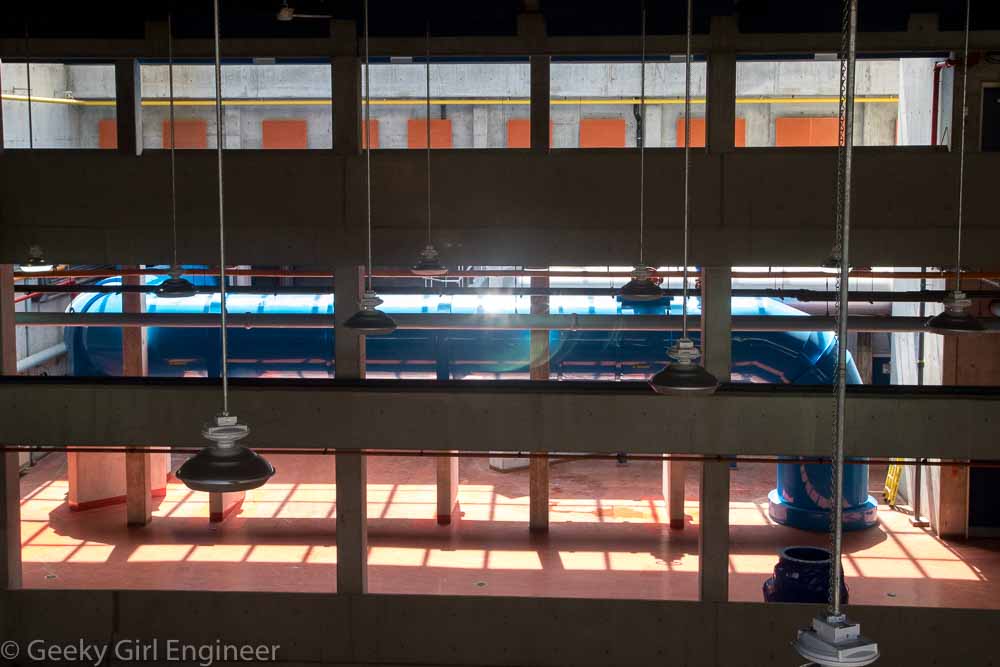
Gigantic air pipes running through the main part of the building

After the water has been cleaned, chlorine is added. The water has already been disinfected at this point, but a residual disinfectant is needed to kill any bacteria the water may encounter in the distribution system on its way to customers.

Bay Lower Subway Station

Another site I visited with Doors Open Toronto was an abandoned subway station. When the Bay Subway Station was built, there was an upper and lower level. According to the Doors Open Toronto website “When Line 2 officially opened in 1966, Bay Lower was in full use. Alternate trains used the Wye connection, which allowed customers to travel from Line 1 to Line 2 without changing trains. The TTC tested this system for six months and also tested the two separate subway lines for six months. Following testing, the TTC decided that two trains worked best and Bay Lower was closed.” If like me, you do not live in Toronto, that means very little or nothing. Having studied the Toronto subway map for a little bit of time, I think I now understands what it means, but to be perfectly honest, it sounds like it was a dumb idea from the start. Yes, yes, hindsight is 20/20, but it just seems overly complicated, and I know how long it took me just to understand New York City’s local versus express lines, so this seems like it might have made things easier for some but confused the heck out of others. It also sounds like something that carried not insignificant risks for train operation and train traffic control.

The lower level was not used for very long, but it has been used ever since by TTC for testing and training. It has also been used by the television and movie industry quite a bit for shooting scenes. The signs they had displayed seem to indicate that it has been a stand in for many U.S. city subway lines. Ever since I visited the lower level, I have been trying to think how many U.S. cities actually have a subway, as in trains that run underground. There are not that many, and furthermore, not many look like this station. Then again, the movie industry may not always care about things like that. But I digress.

In any event, it was kind of neat to walk around the platform. They had a train on either track with all doors open, so you could walk around the trains. They also let people visit the conductor’s seat/booth/area/I don’t what it is called. Today I learned, when given the opportunity to visit this area, people both young and old, really, really, really like to honk the horn. How the employees watching everything were not developing headaches from the horns constantly going off in the confined station where the noise really bounces around, I have no idea.

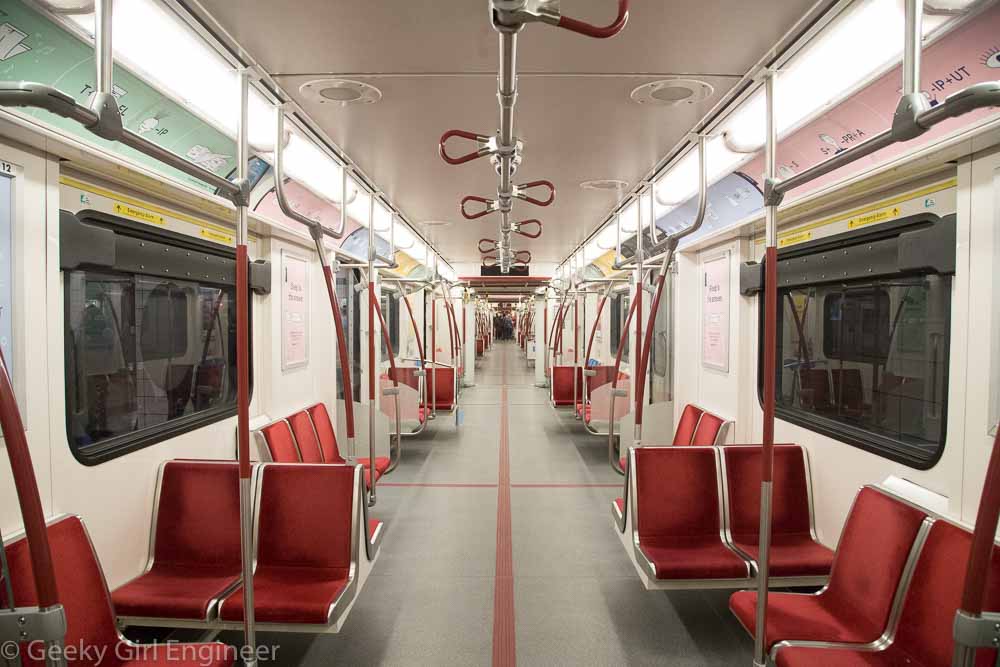
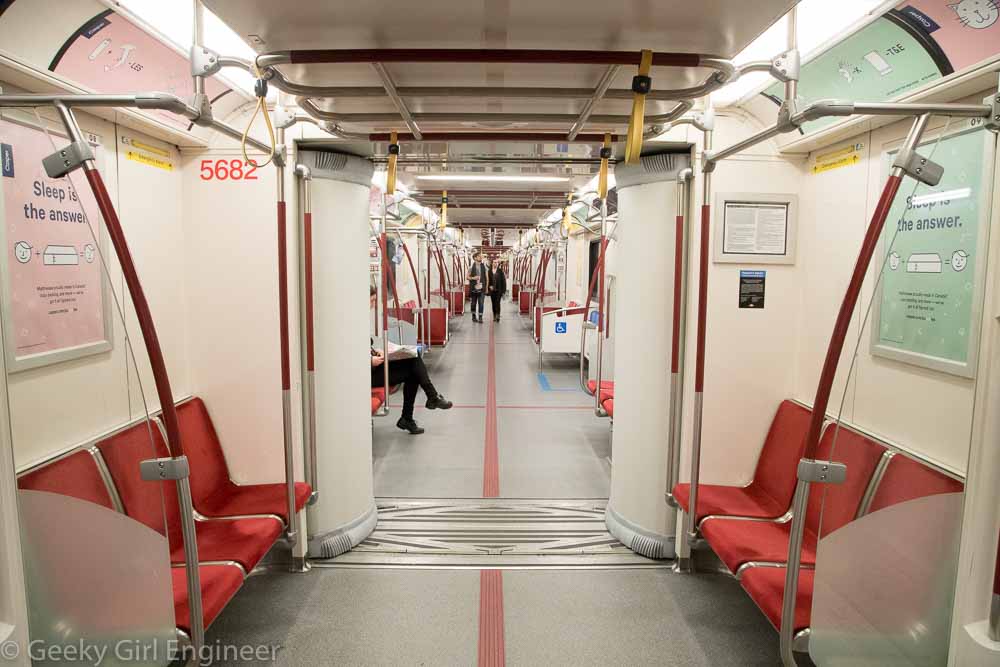
One final observation. I am rather fascinated by Toronto’s subway trains because the individual cars are all connected into one true train where you can walk very easily between all the cars. I don’t how many other systems have cars like this, but I was fascinated by it. I am most familiar with the Washington, D.C. and New York City subway systems where walking between cars requires going outside and is rather frowned upon or difficult. It would seem likely this would make it rather difficult for trains to be taken apart should only one or two cars need service, but I am not sure how often cars are taken apart and reconfigured on other systems where visually at least, it would appear to be easier.

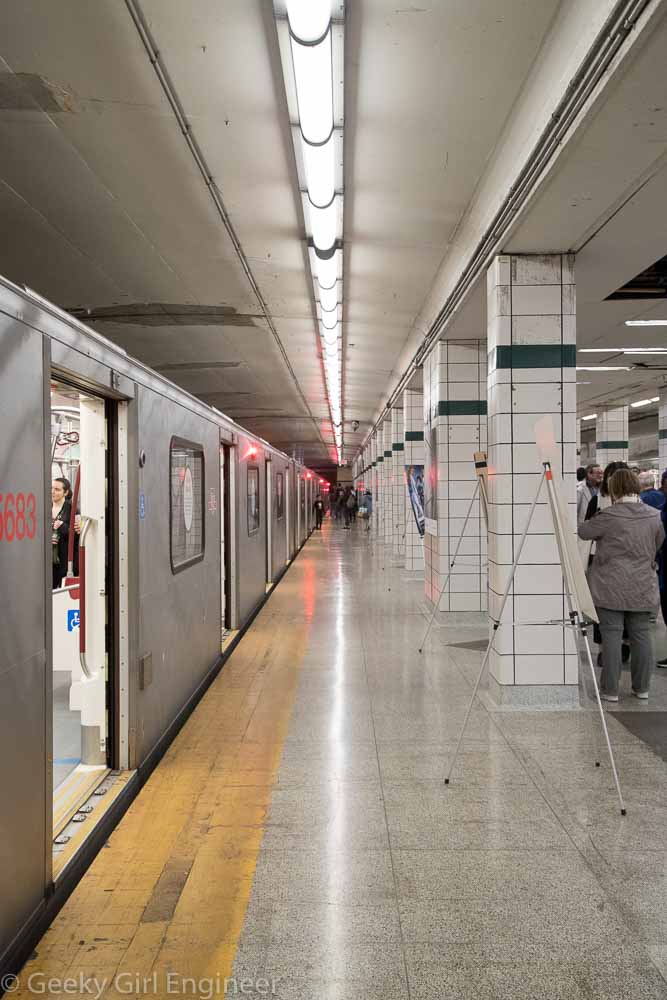
Bay Lower Subway Station
One of the trains at the Bay Lower Subway Station. You can easily walk the entire length of the train.
One of the trains at the Bay Lower Subway Station. In the foreground is where two cars are joined, and you can walk in between.
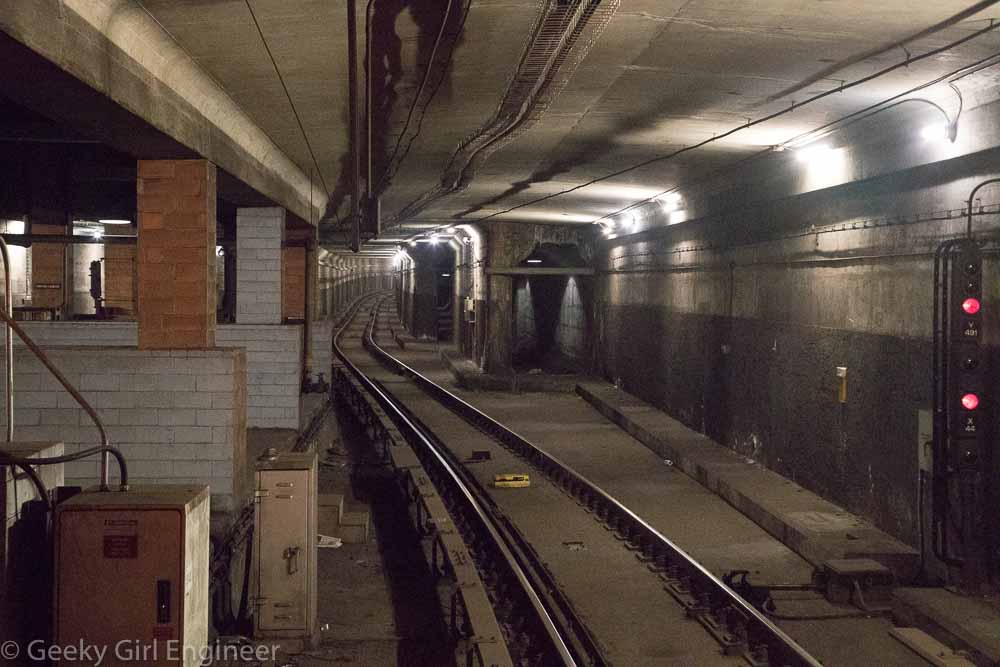
View from the end of the Bay Lower Subway Station platform into the tunnel.

City of Toronto Archives

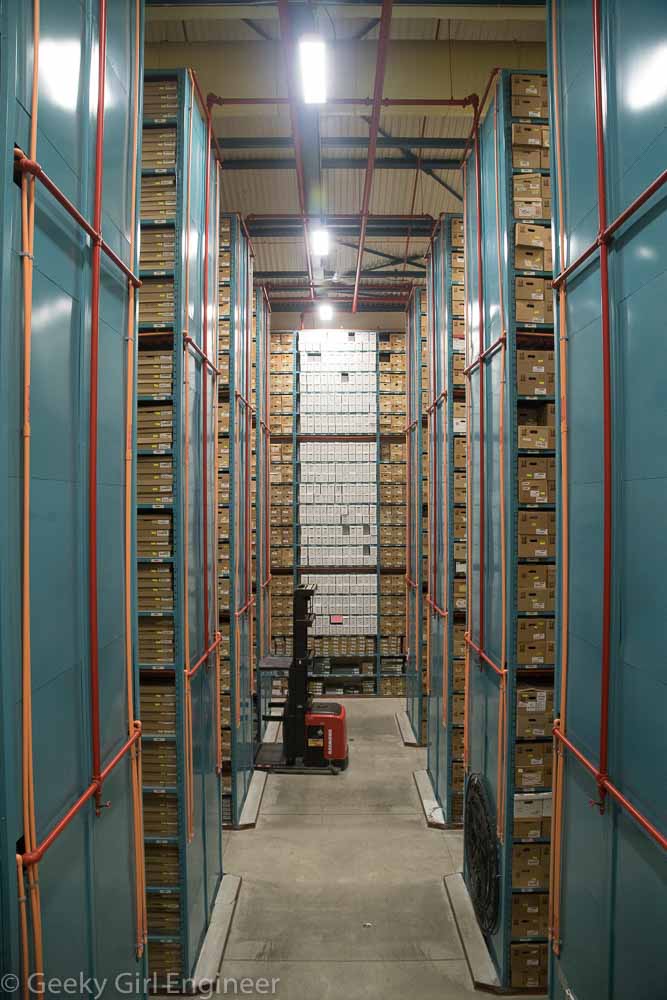
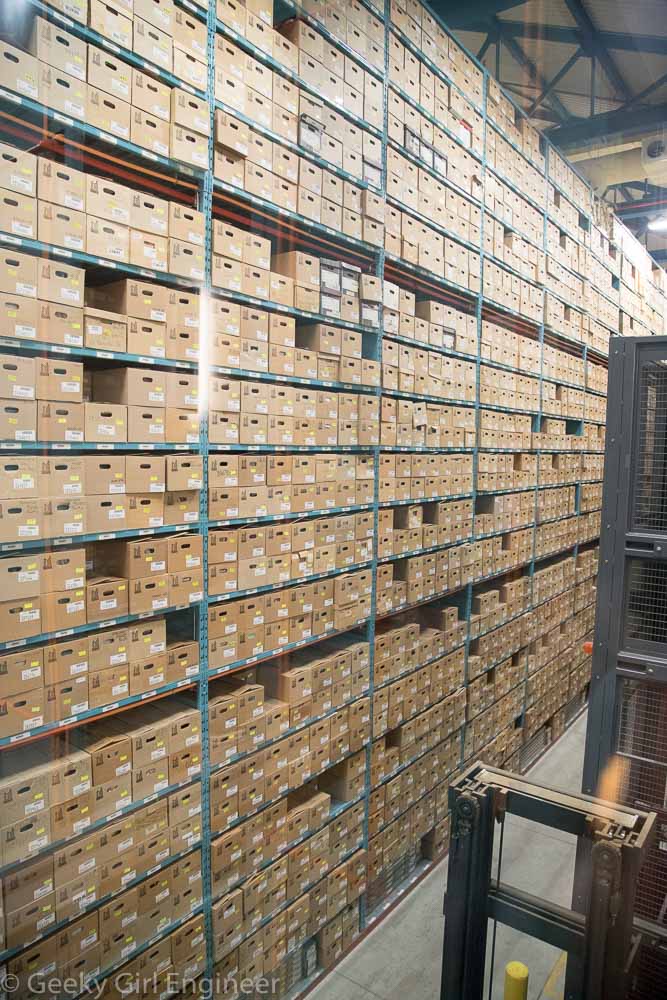
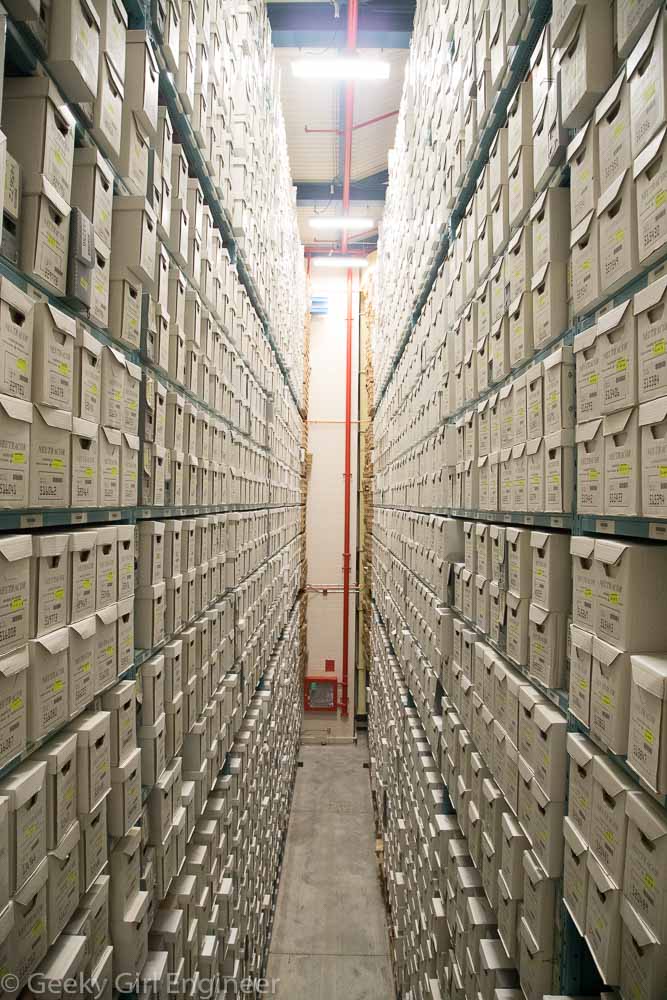
One of the places I visited for Doors Open Toronto was the City of Toronto Archives. The main reason I wanted to visit was a photo I had seen on the website, which once I got there was the viewing gallery. All the photos taken below were taken from there. It is a really neat area where you can look to see the stacks of archive boxes. Well, you can see some of the archives box because there are a LOT of archive boxes, and you can’t see them all. They are kept in a climate controlled area with fire protection. I honestly wanted to learn more about the engineering of the climate control and fire protection, but there didn’t seem to be anyway to ask.

However, while there, I ended up spending quite a bit of time looking at some photographs from their files. I also talked with man who worked with the archives about the restoration and digital scanning of archives. It was fascinating. They scan and also photograph archives depending on the piece. They also had a lot of information about vinegar syndrome, which sounds rather funny, but happens to cellulose acetate film and causes irreversible damage once it starts occurring. They keep cellulose acetate film in a freezer to try to prevent it.

City of Toronto Archives. The lift equipment in the middle is what employees use to retrieve the high boxes, which doesn’t sound the least bit scary.
City of Toronto Archives

Eglinton Maintenance and Storage Facility

I am in Toronto for Doors Open Toronto. When any city allows people to visit a rail yard or water or wastewater treatment plant, I will be there. One of the places that was on the top of my list to visit is the Eglinton Maintenance and Storage Facility. It houses the Crosstown Light Rail Vehicles where they are inspected, cleaned and maintained. It only opened in January 2019, which was evident because it is still very clean and looks barely used. It is a well designed facility that appears to have been designed with the human worker in mind.
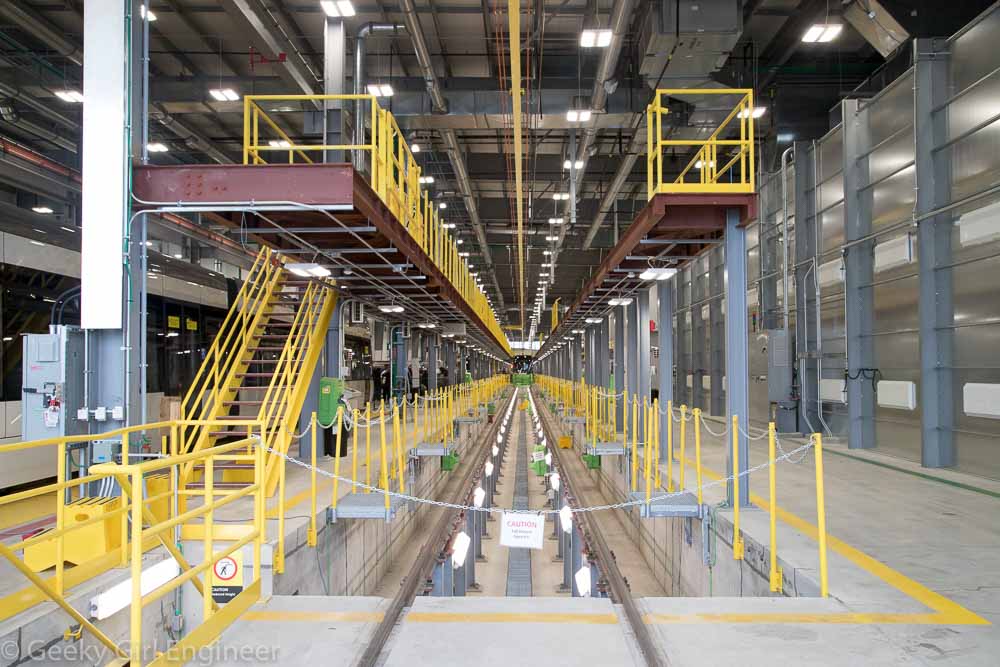
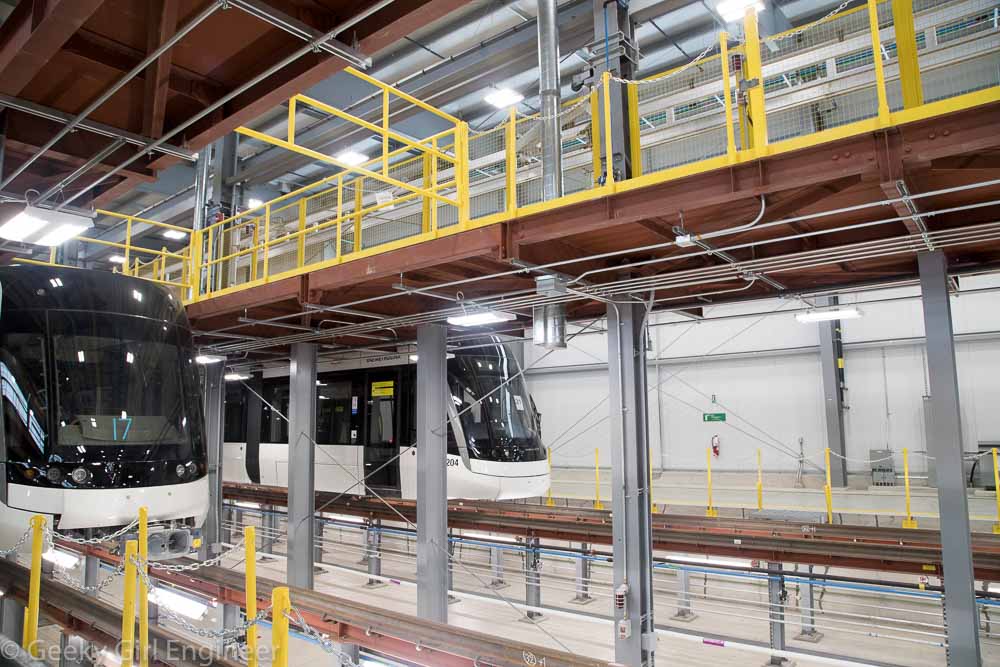
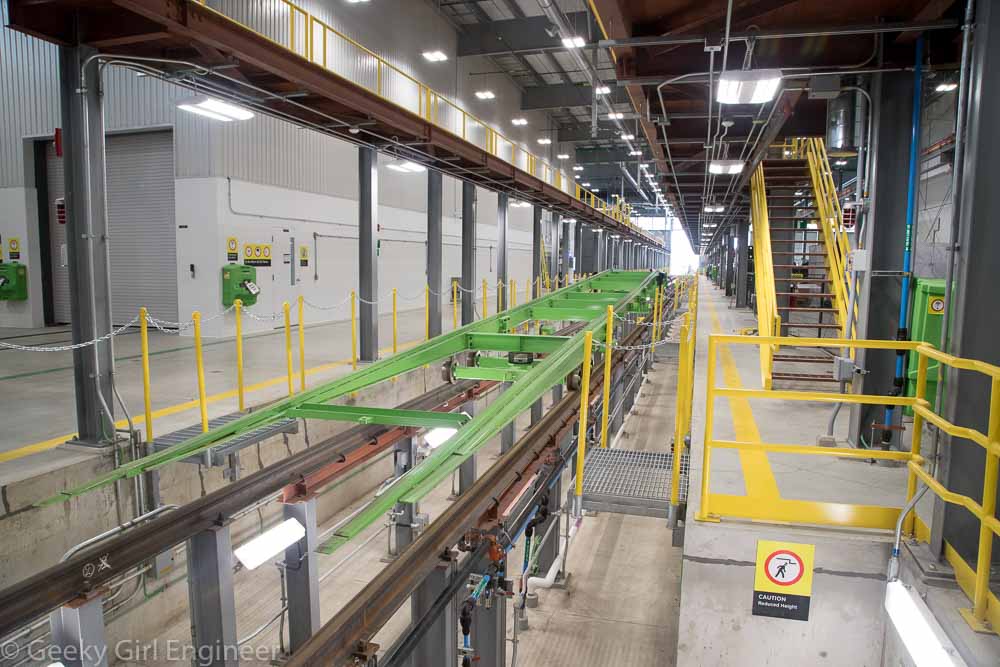
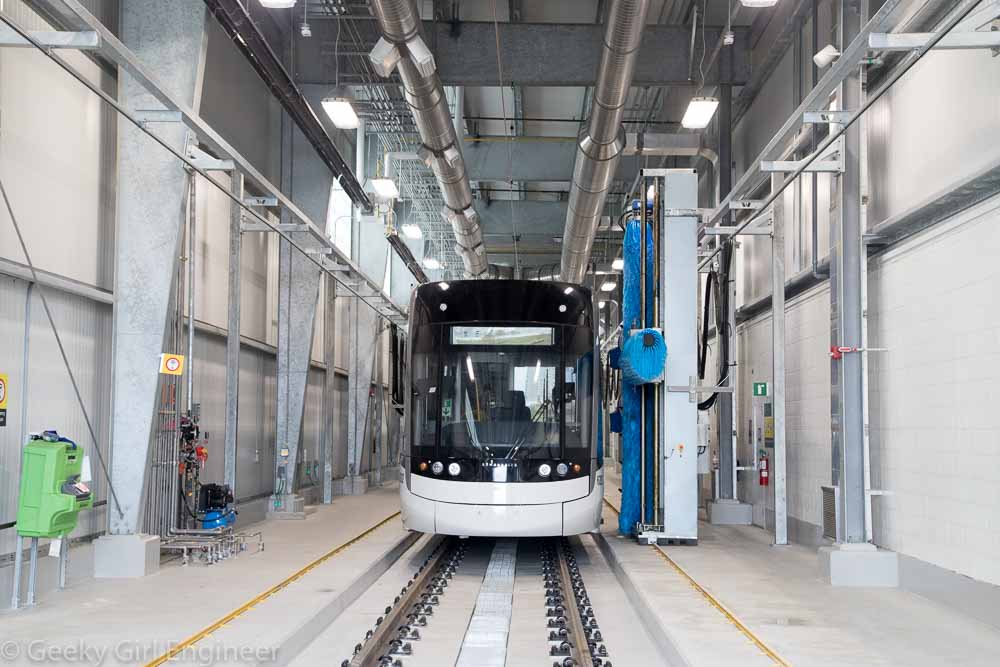
The facility has a train wash, paint booth, and numerous bay for maintenance. The maintenance areas have pit to work underneath the trains besides the platforms to work on the side or inside the trains, but it also has balconies so that the workers can get to the top of the trains.

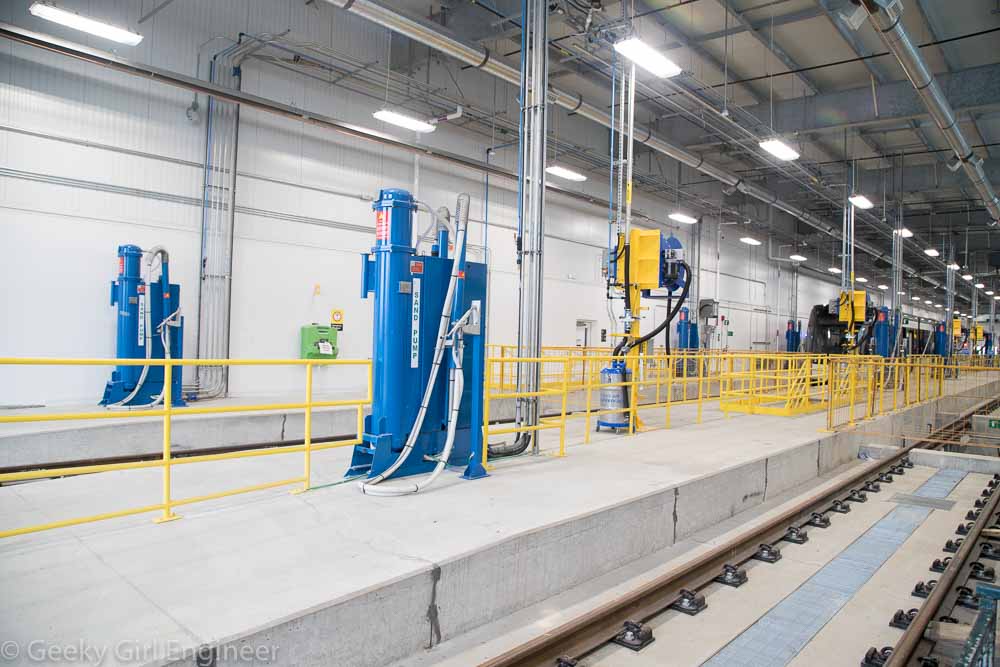
In one area, there are several sand pumps. The trains carry sand, and if the tracks are really wet or if there is snow or ice, then the driver sprays sand to increase traction on the tracks.
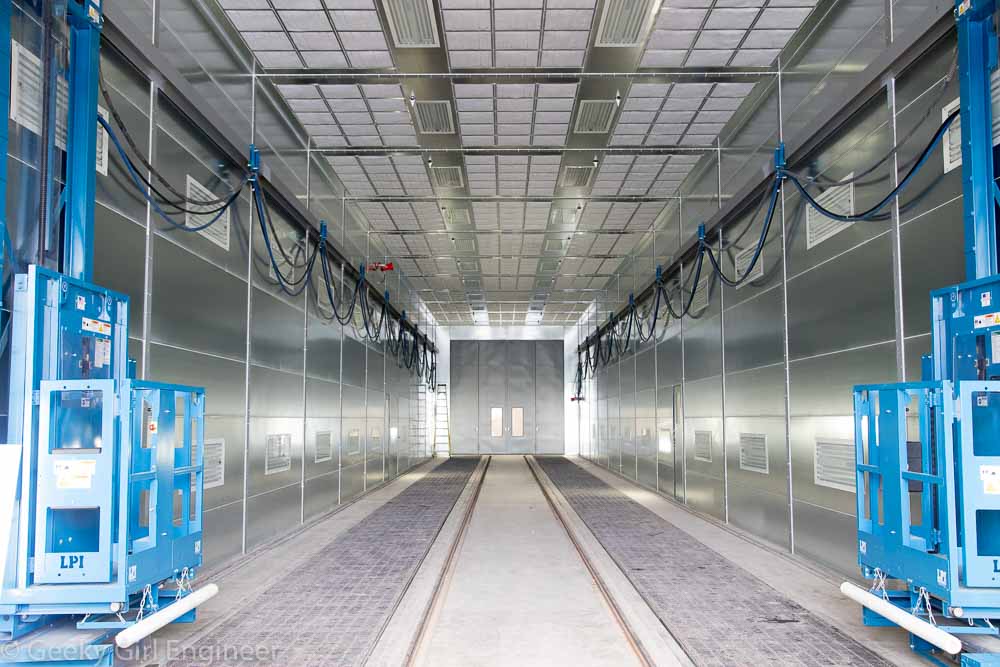
The paint booth where two workers can work, each on their own lift.
The large maintenance bay with balconies
One of the trains in the maintenance bay
Trains in the maintenance bay
More of the maintenance bay. I did not find out what the green carriage is for.
Train wash area
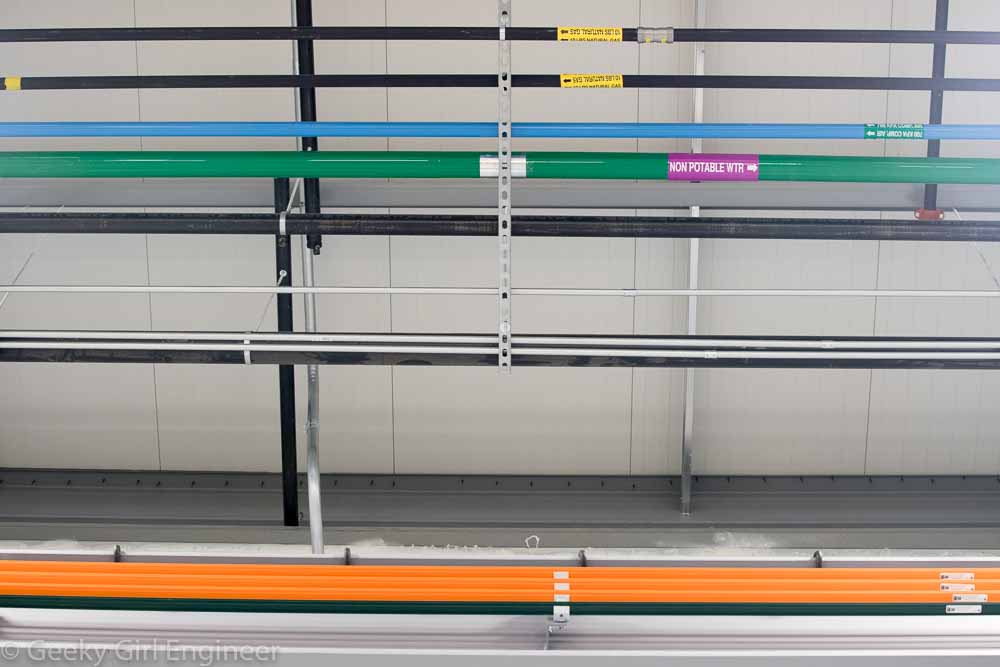
Nicely labeled and color coded pipes and conduits