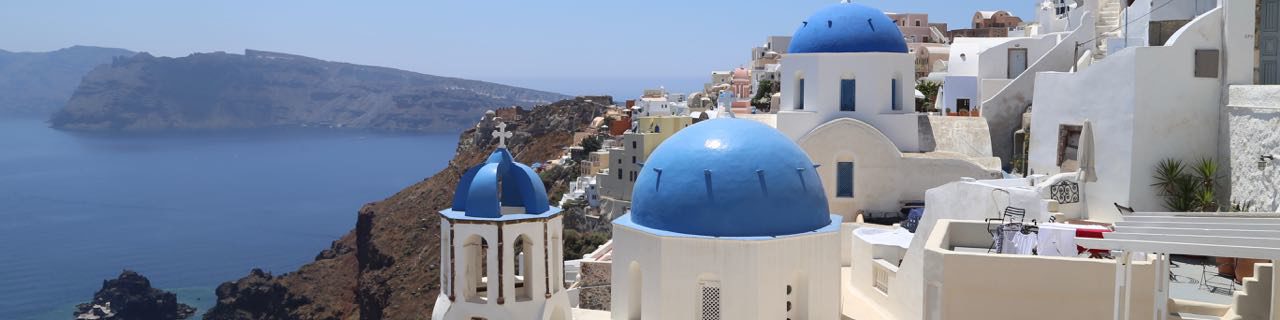
Detroit River

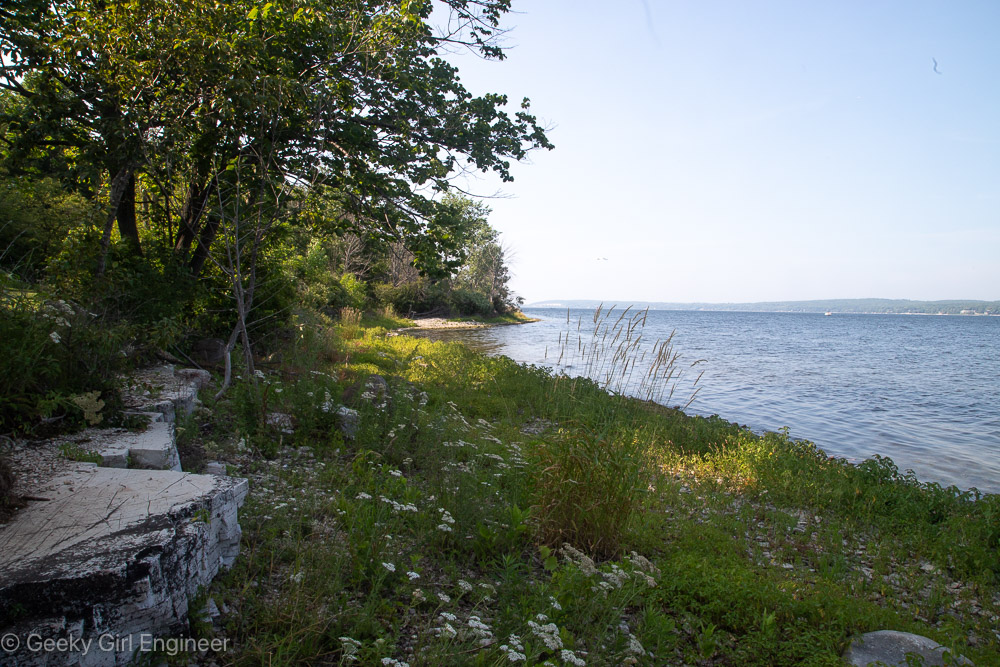
Yesterday, my cruise of the Great Lakes left Detroit headed south. We left while there was still daylight, which allowed me to get some good photos of Detroit, Windsor, and the bridges over the river.
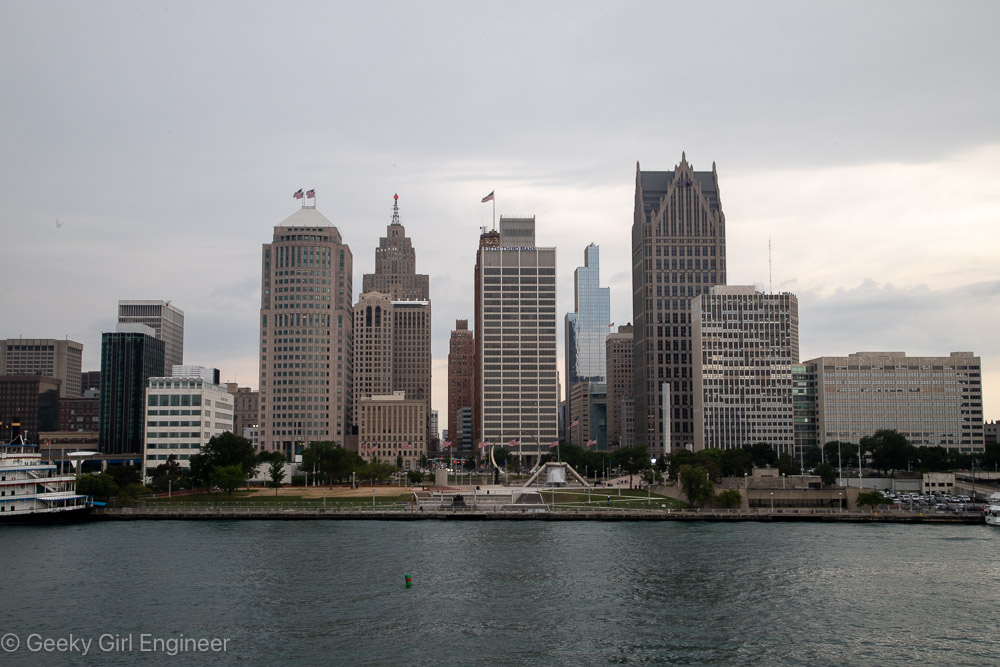
Downtown Detroit
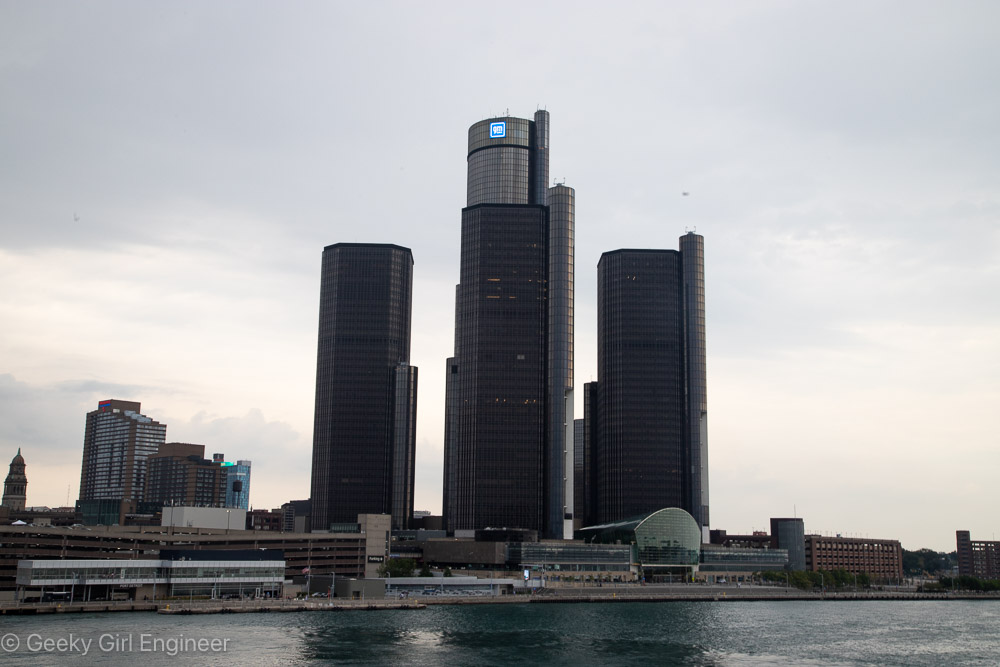
Renaissance Center
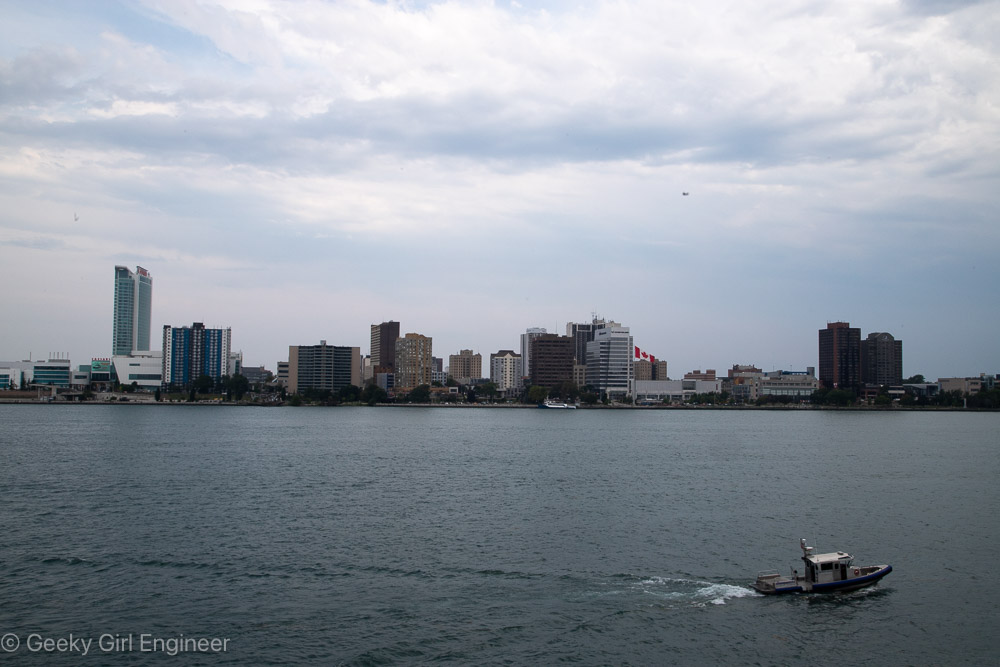
Windsor
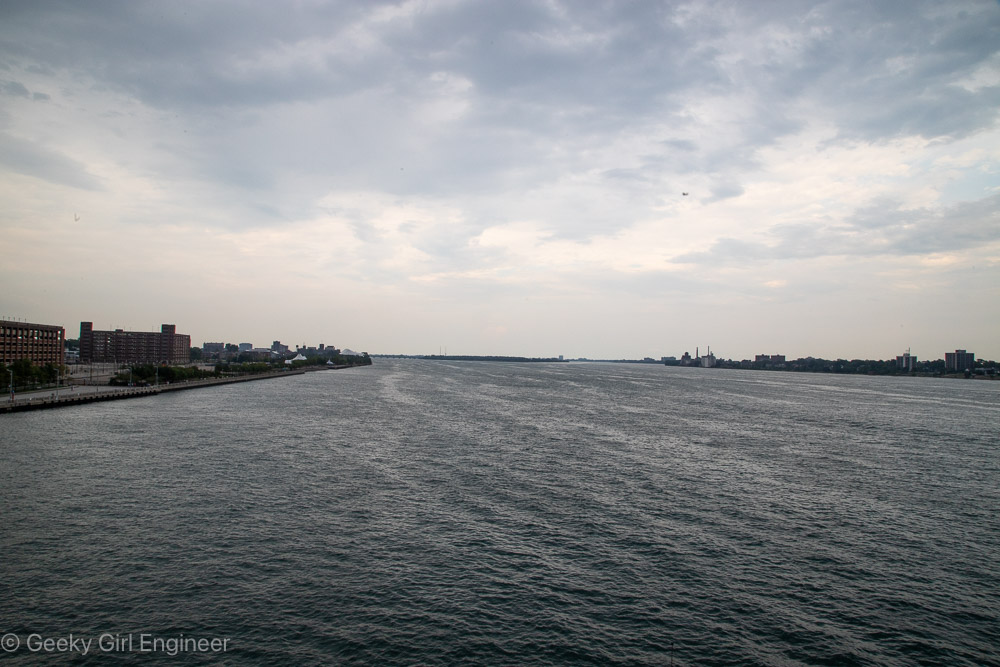
Detroit River looking north from downtown Detroit
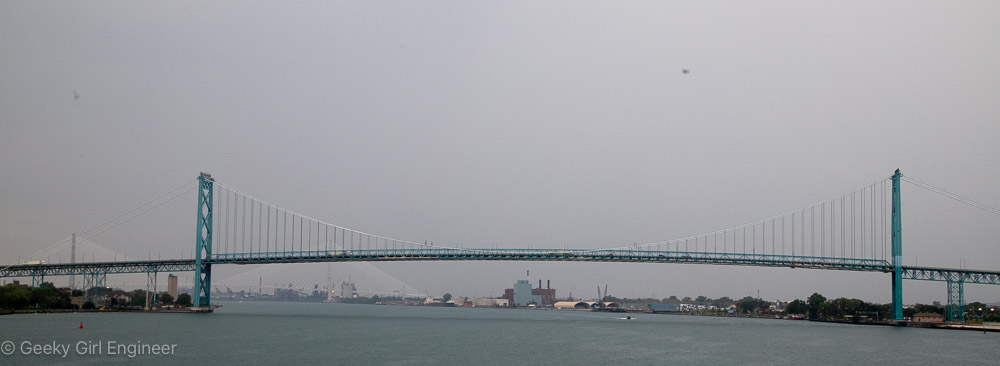
Ambassador Bridge
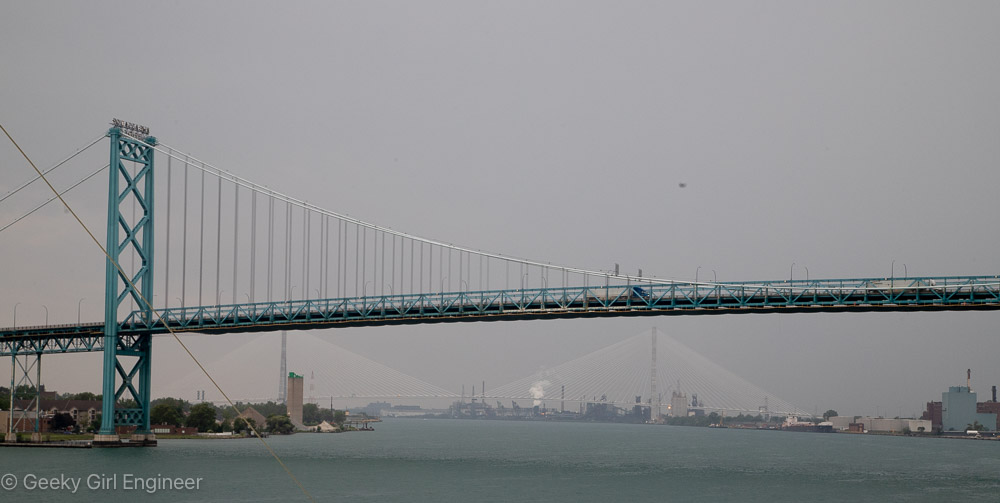
Ambassador Bridge with Gordie Howe International Bridge in background
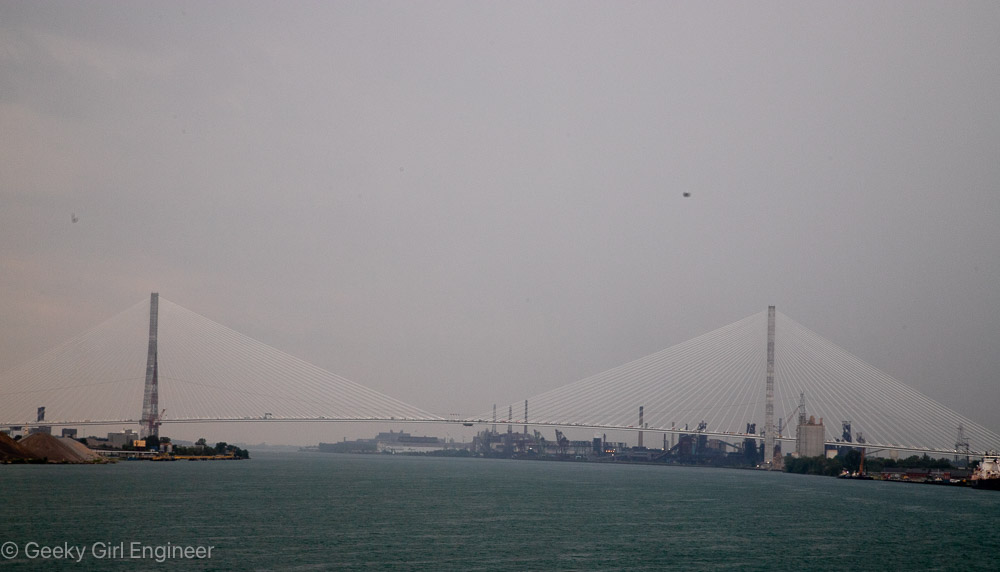
Gordie Howe International Bridge
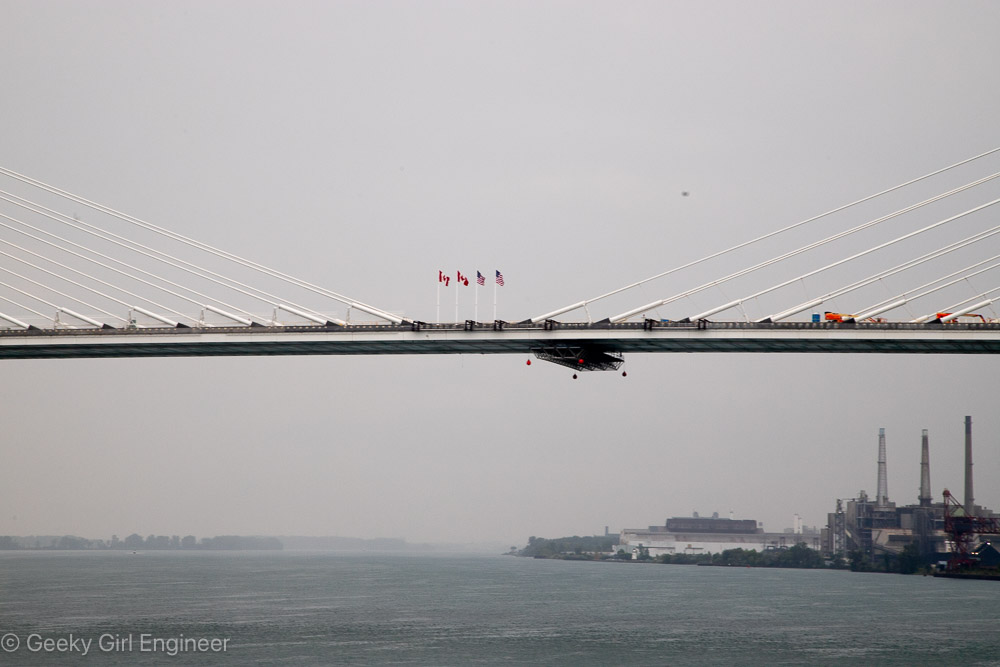
Gordie Howe International Bridge
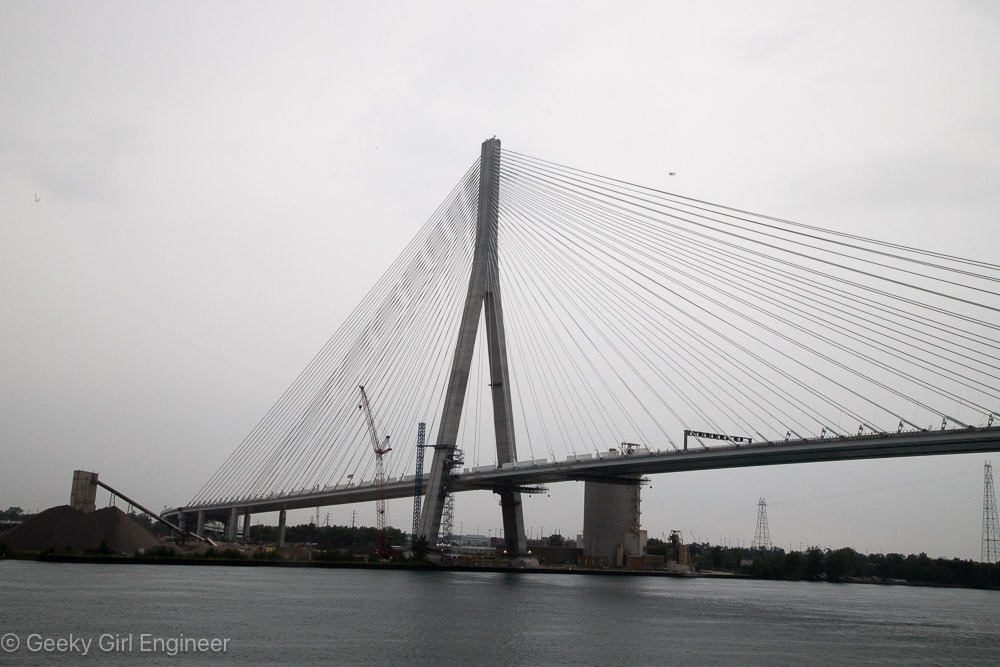
Gordie Howe International Bridge
Parry Sound

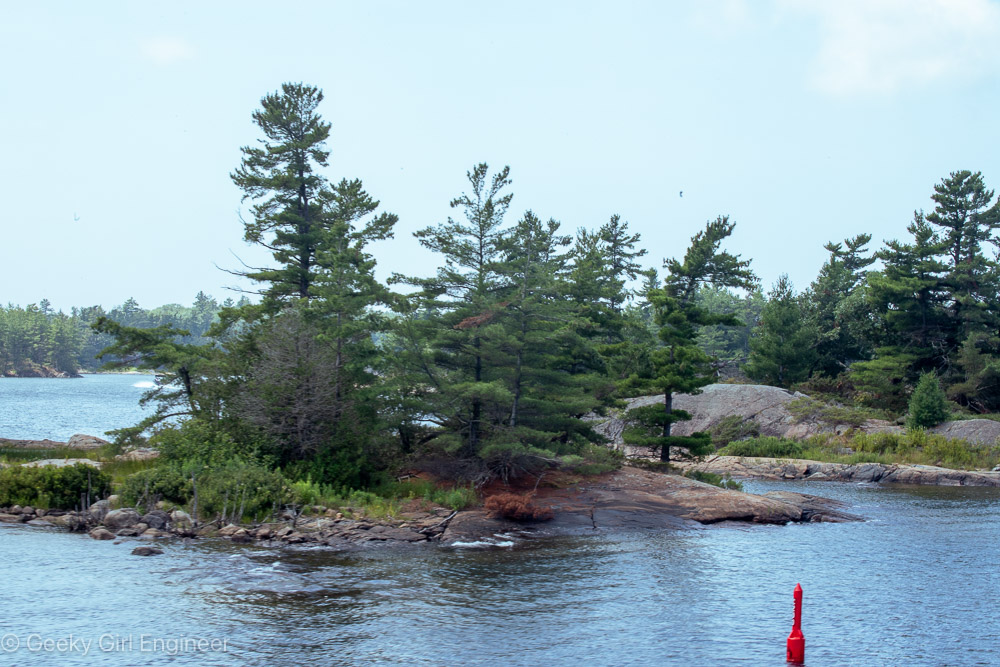
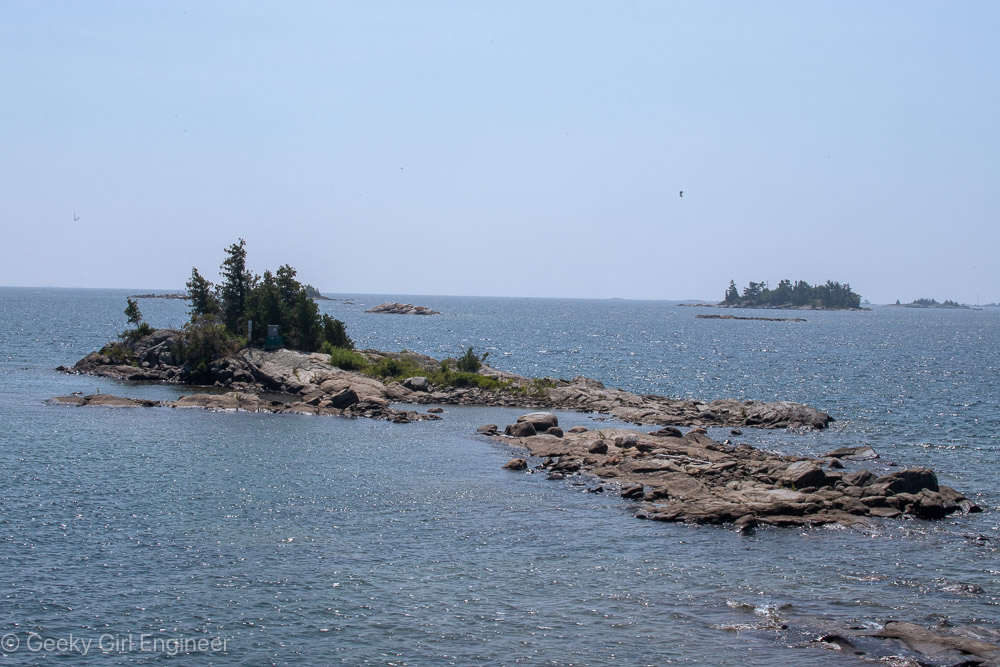
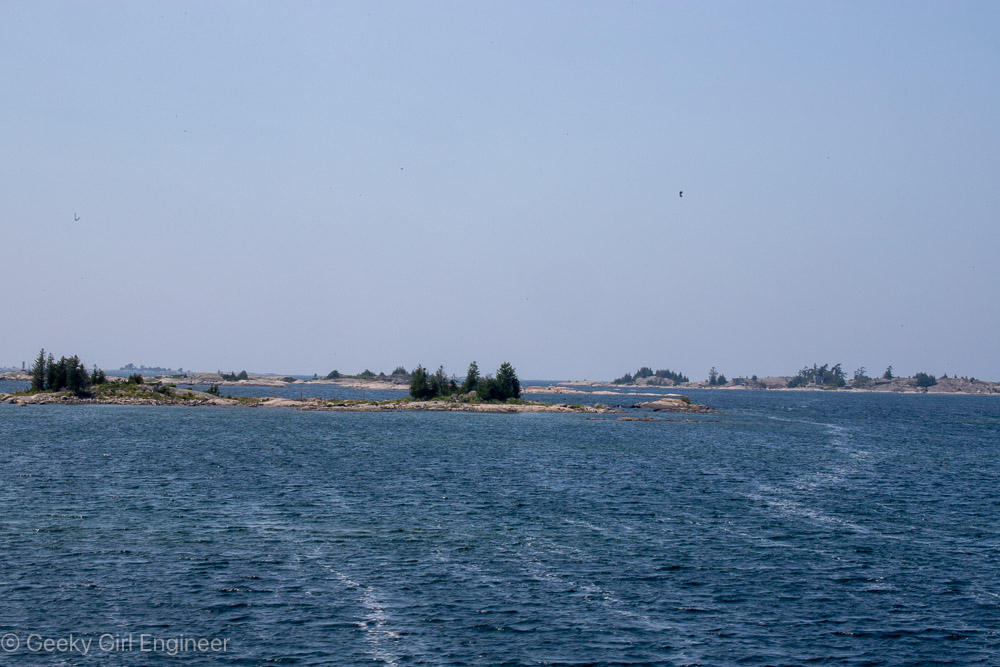
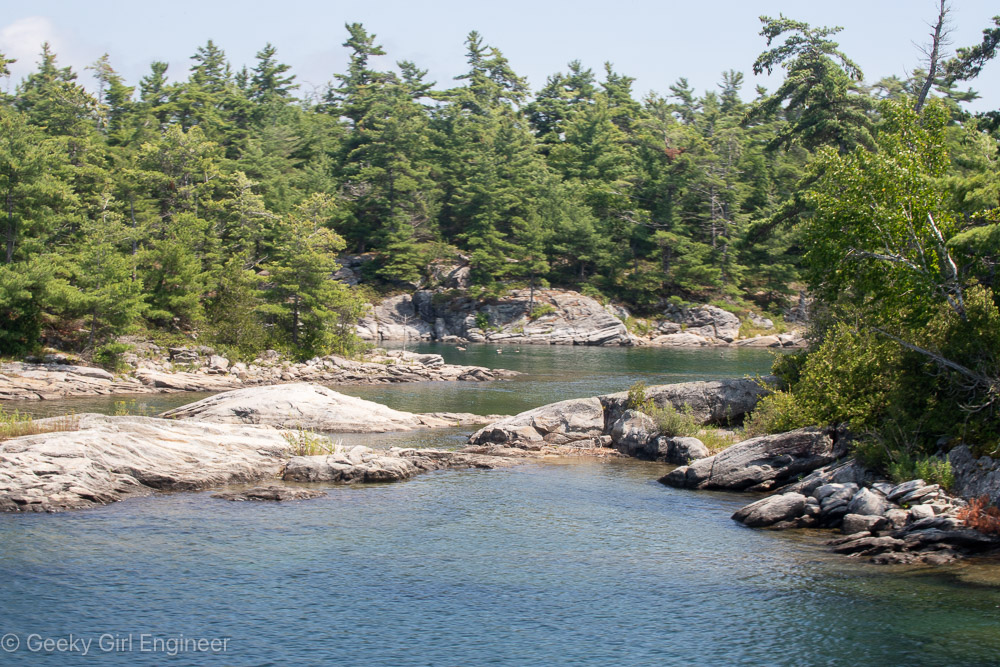
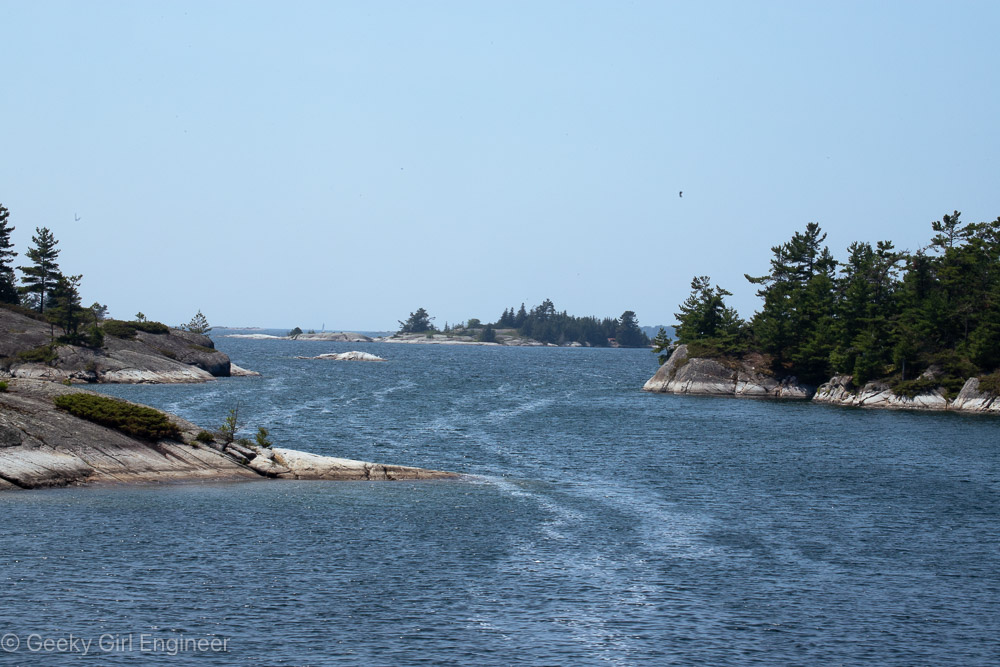
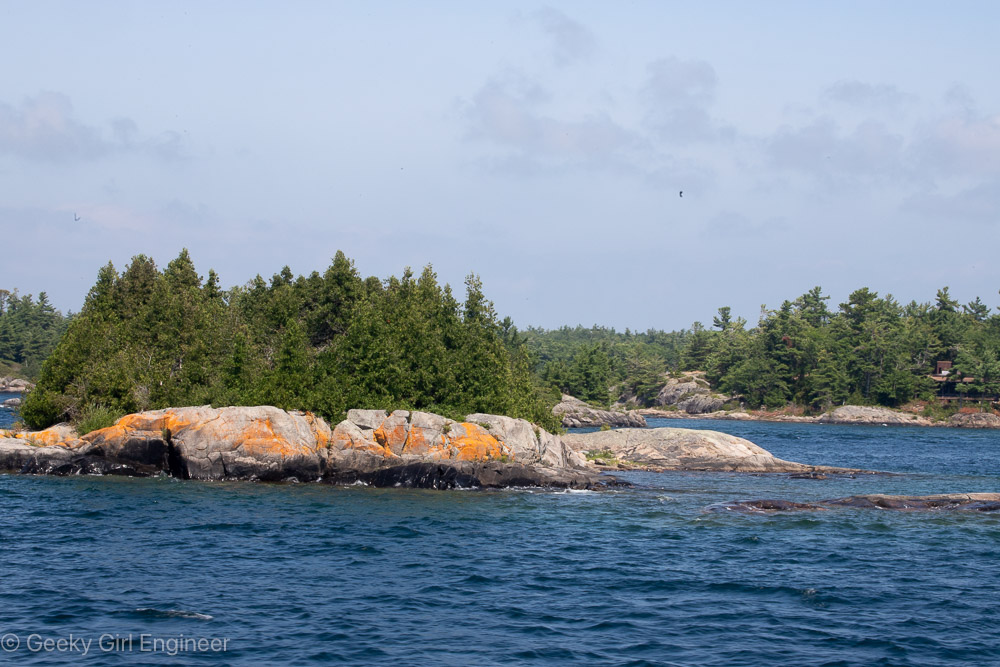
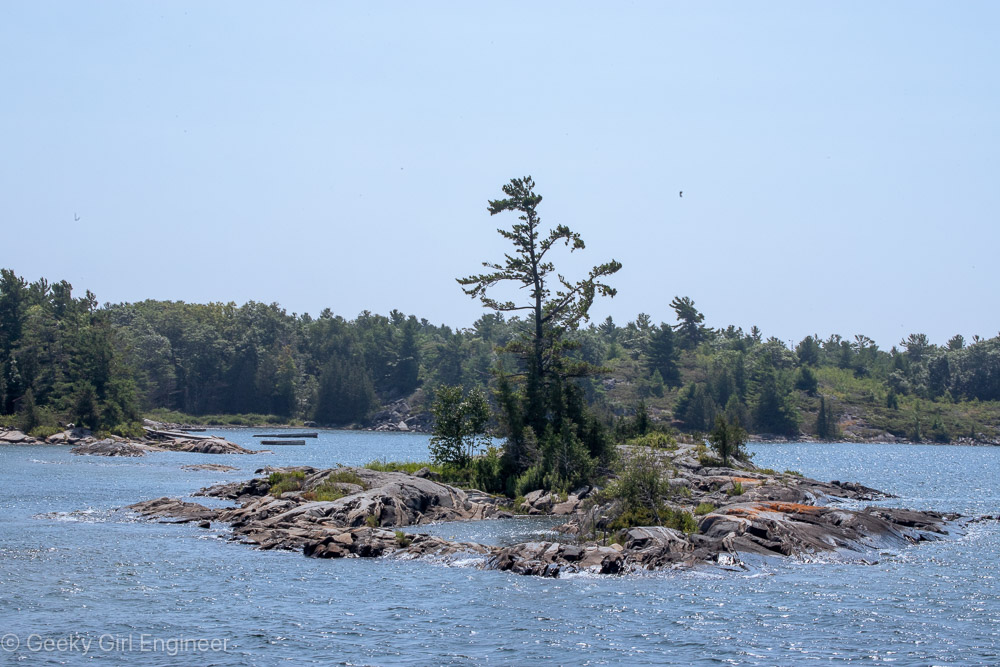
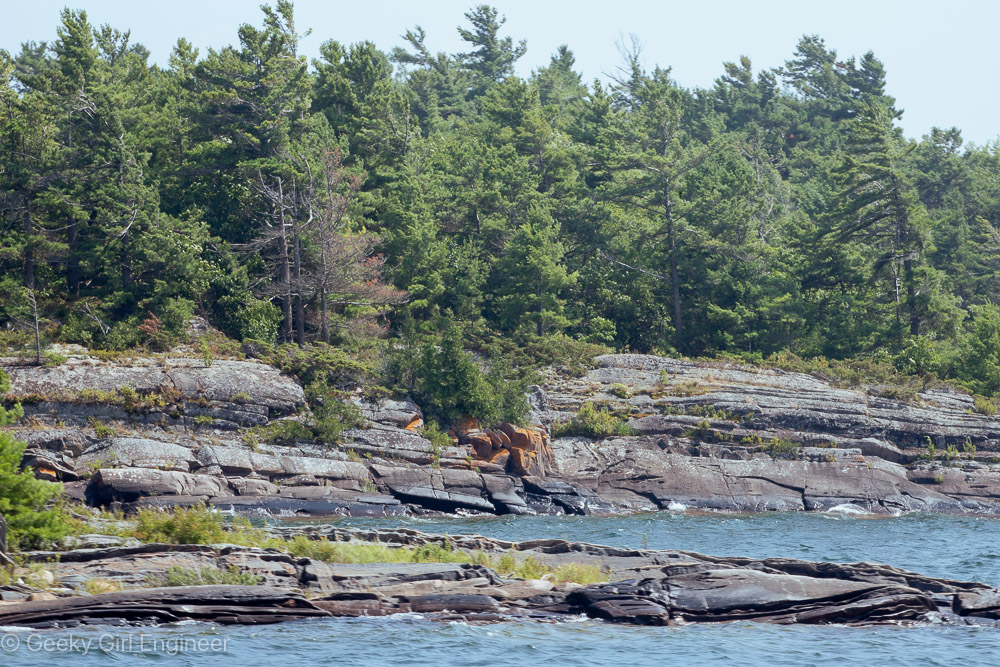
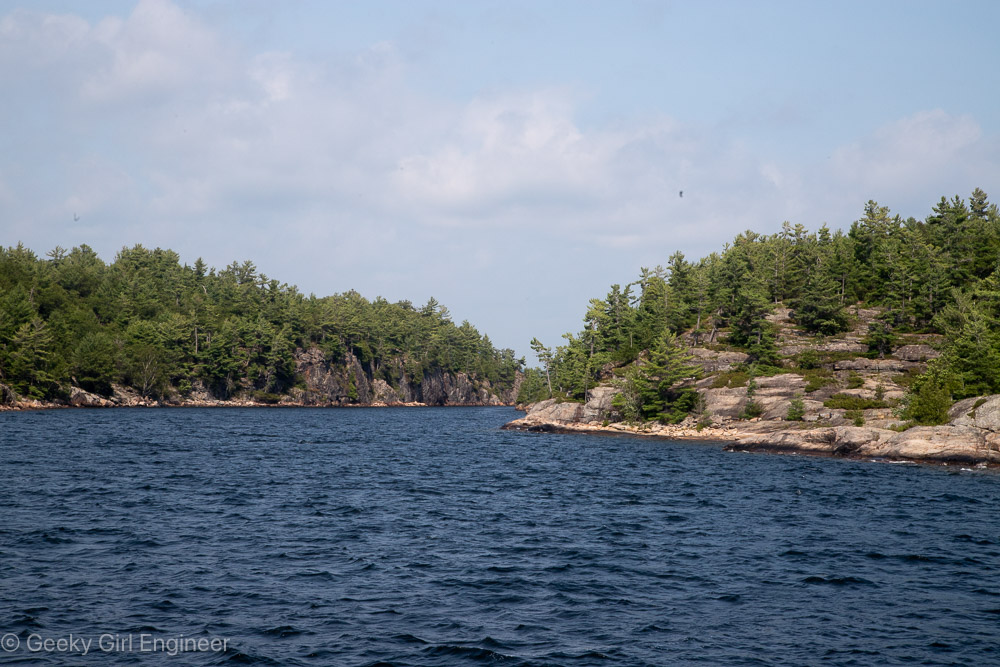
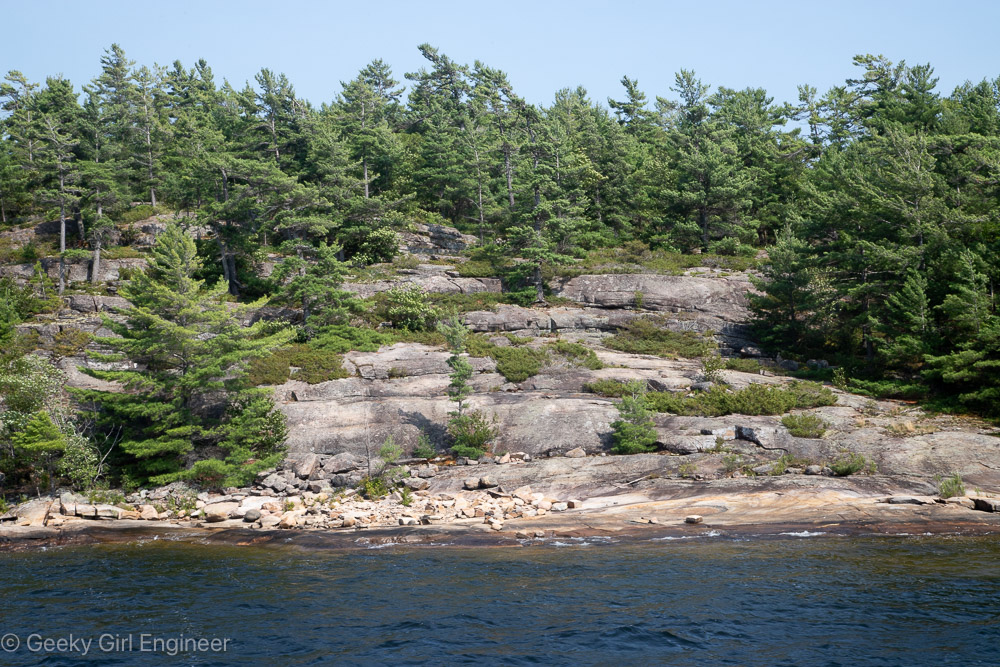
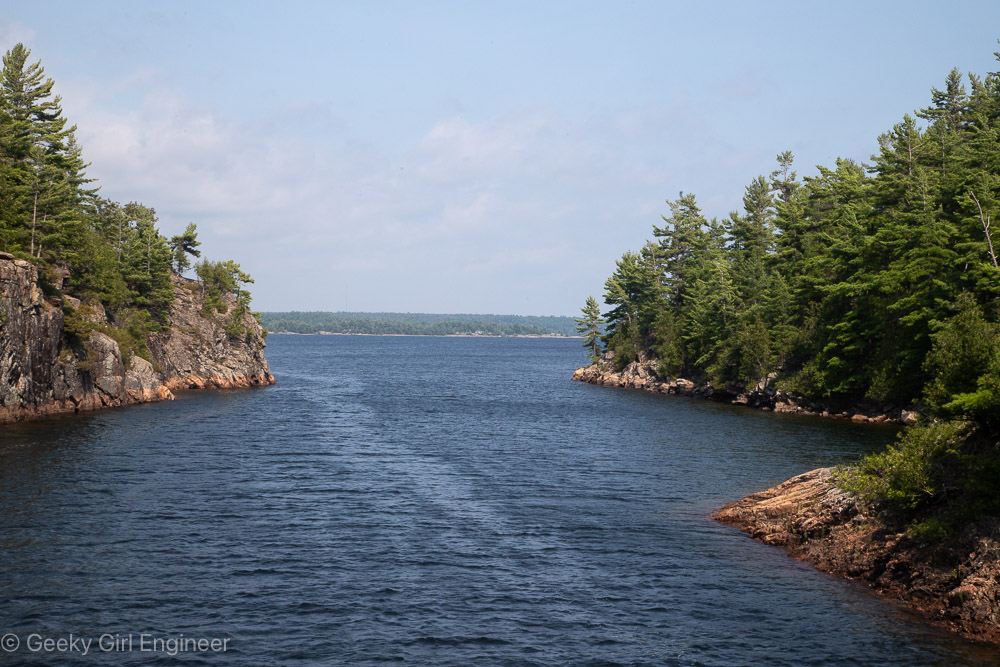
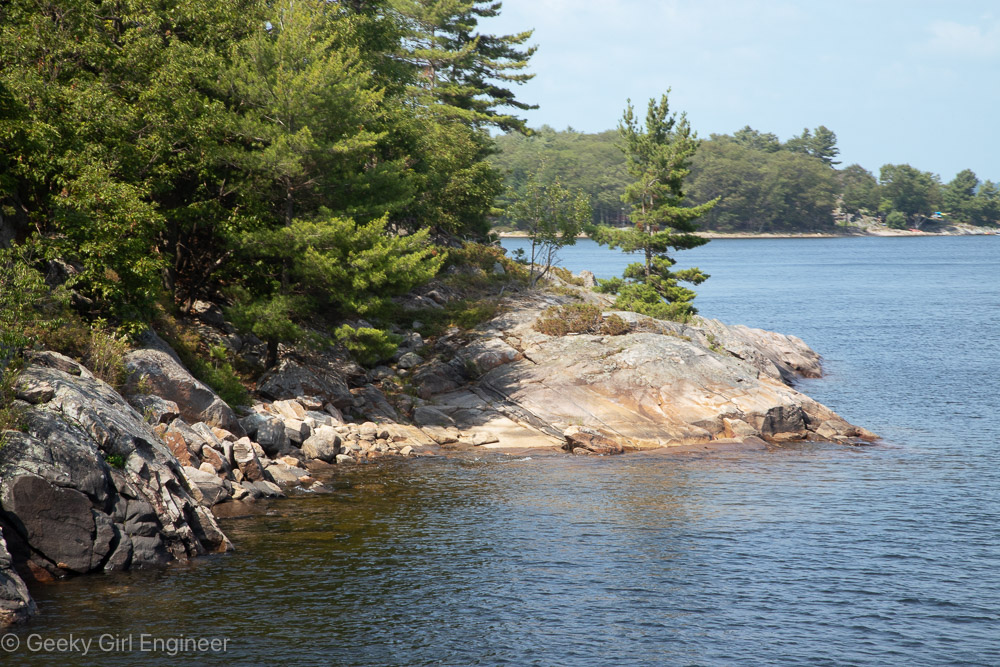
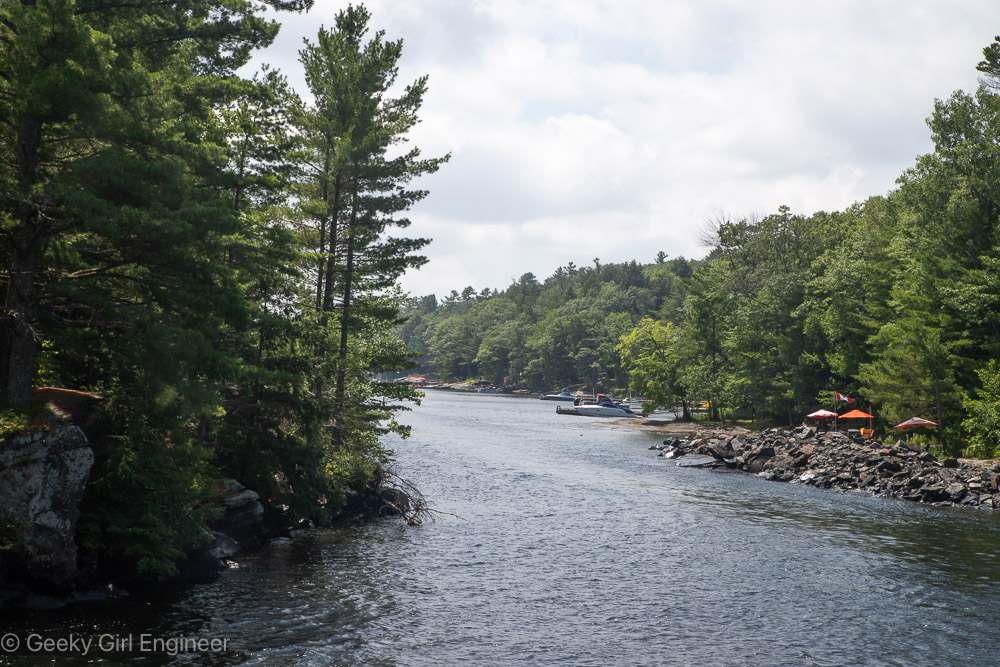
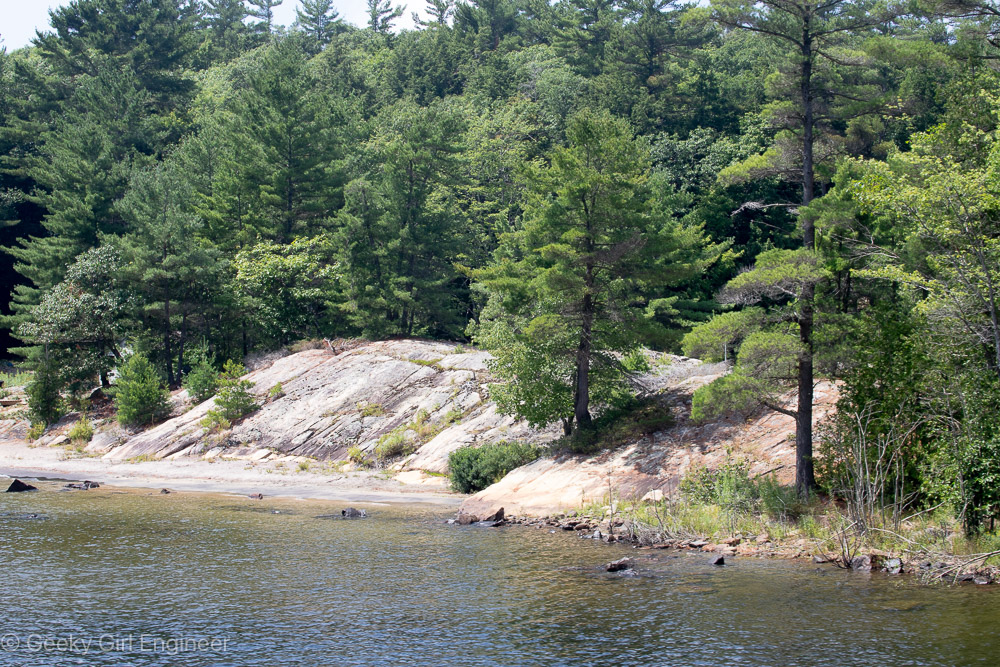
Today, my Great Lakes cruise arrived in Parry Sound. The town of Parry Sound is small, and I did not do too much exploration. However, in the afternoon, I and several passengers went on a three hour cruise of the 30,000 island area as it is called. The cruise looped around Parry Island and along the way went through some ridiculously narrow channels. Words cannot describe the beauty of the area, and I don’t even think my photos below do it justice. The are is simply gorgeous. The islands are part of the Canadian shield and are pure bedrock of what appears to be mainly gneiss. Plants, including conifers, are defiantly growing straight out of the rock. It is simply beautiful.

Narrow channel near Rose Point

Trees growing out of rock

Small islands

Small islands

Islands as far as the eye can see

Small inlets

Narrow channel

The orange on the rocks is lichen

Small islands

More bedrock

Approaching Hole in the Wall

Side of Hole in the Wall

Cruising through Hole in the Wall

At the exit of Hole in the Wall

Wisconsin

I spent three days in Wisconsin, which is not near enough to really see the state. However, I was able to at least see a little bit of it by exploring outside of Milwaukee where we were staying. We drove to Madison to see the capitol, then further to the Spring Green area, as I had been told that was a nice place to see the Wisconsin River. We took the back roads and had a wonderful time driving through the small towns and seeing the rural areas. We also drove northeast to Sturgeon Bay, which is a lovely little town. I would have loved more time to go even further north and explore Door County, but we just didn’t have the time. We again took the back roads and saw the rural areas. Wisconsin really has some lovely areas to explore.

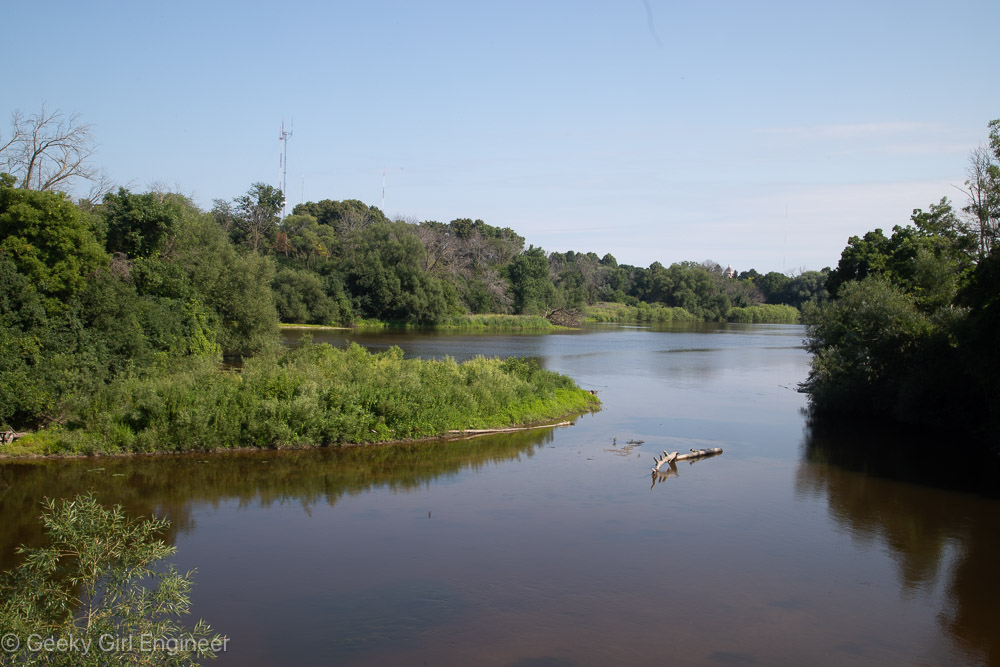
Milwaukee River on the north side of Milwaukee

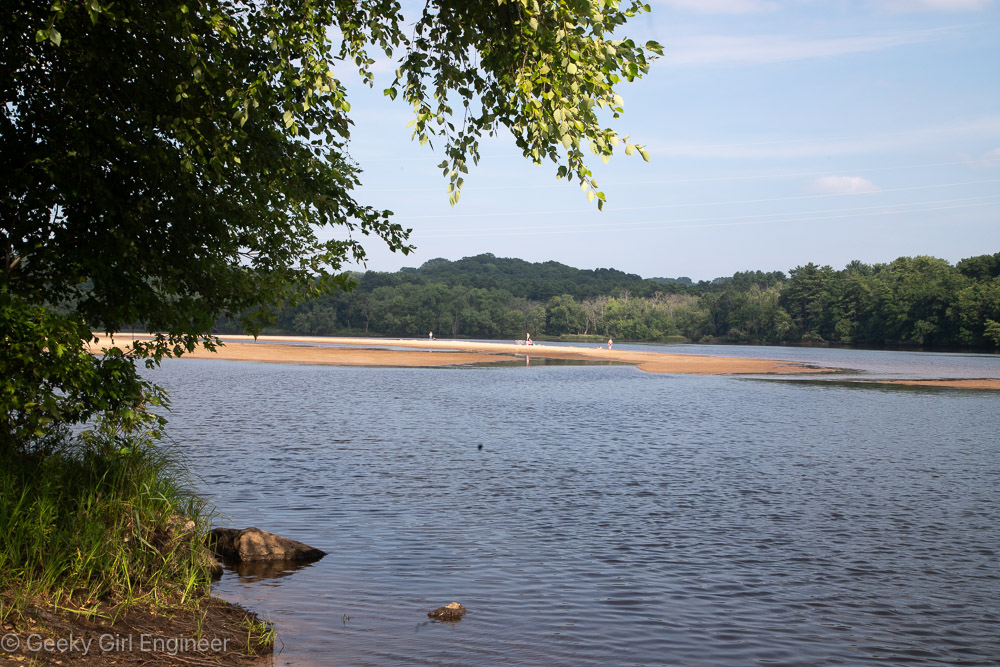
Wisconsin River near Spring Green

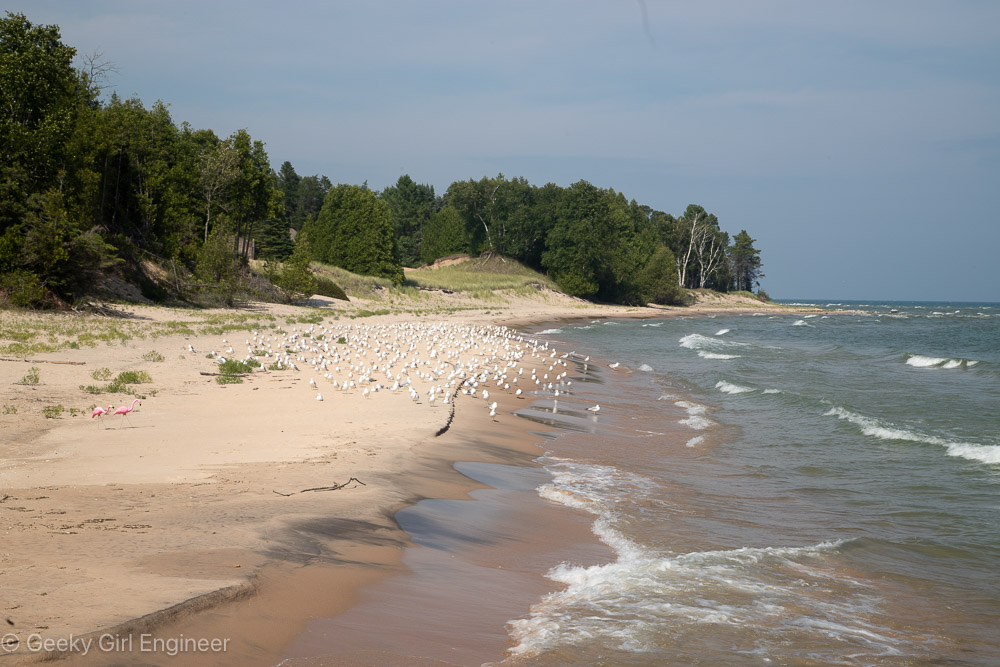
Lake Michigan near Sturgeon Bay Ship Canal

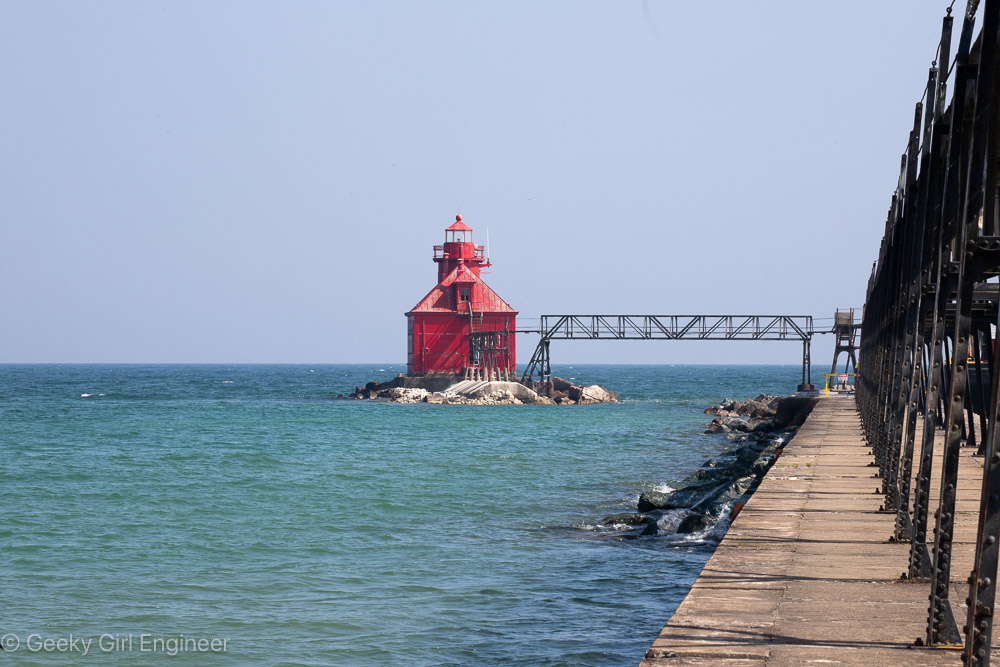
Sturgeon Bay Ship Canal Pierhead Front Lighthouse

Potawatomi State Park

Multnomah Falls

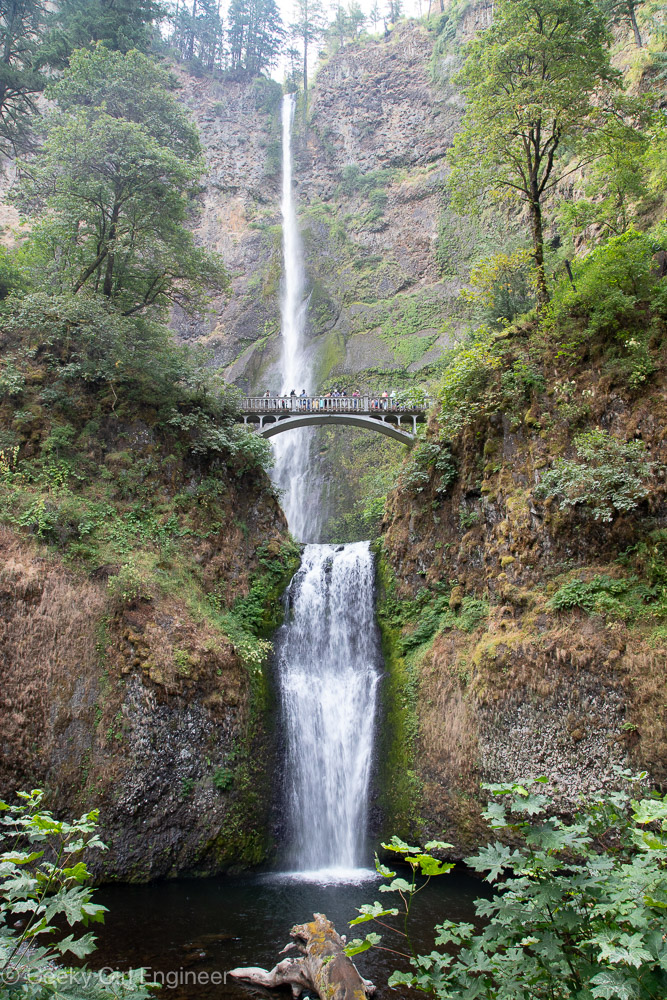
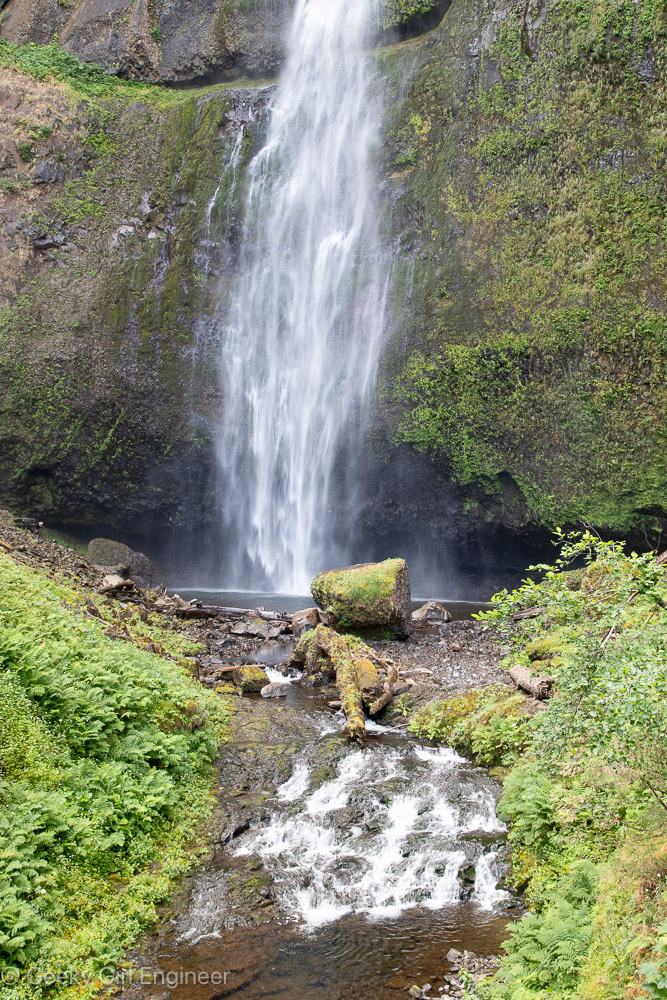
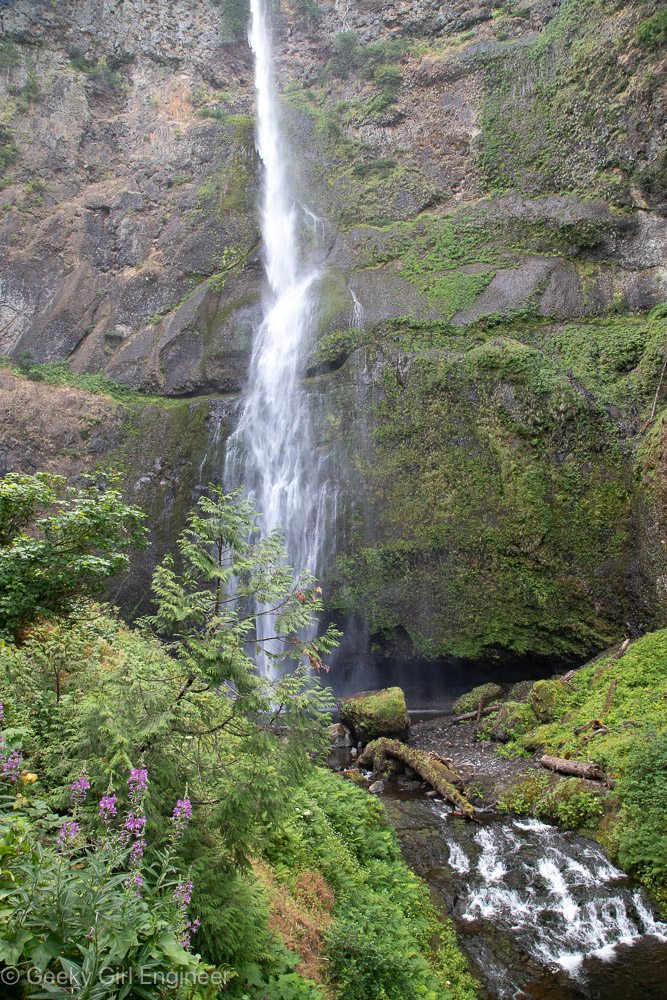
I visited Multnomah Falls today while on a cruise of the Snake and Columbia Rivers. I have seen this waterfall in I don’t know how many pictures because it is rather photogenic, especially with the foot bridge that crosses in front of the upper portion of it. The area around the falls are rather pretty and what most people generally think of with the northwest. It is a 0.2 mile hike up from the first viewing area to the footbridge and not too bad of a hike.
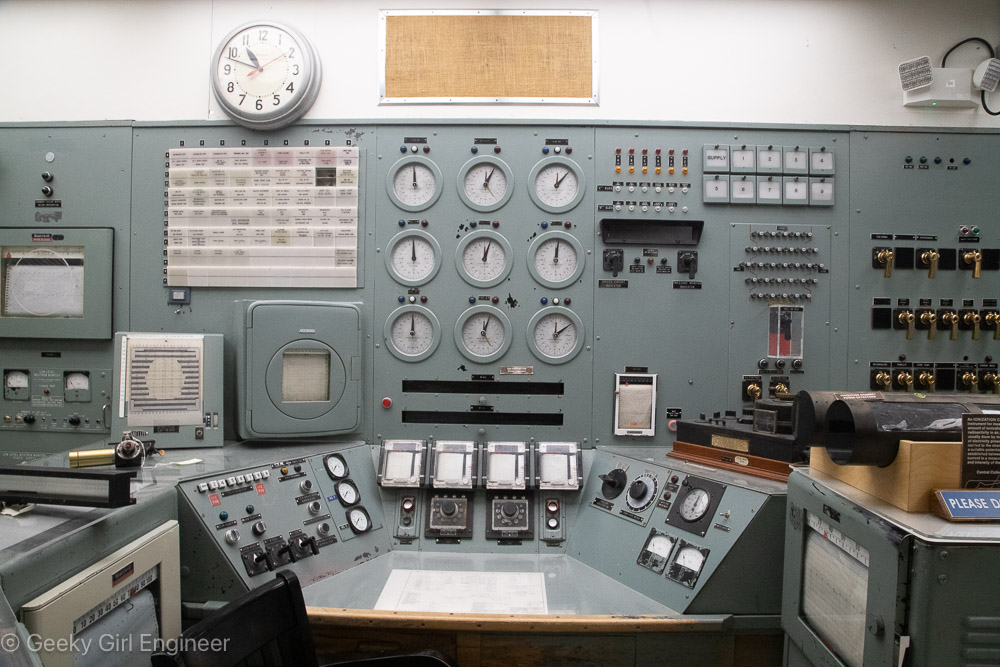
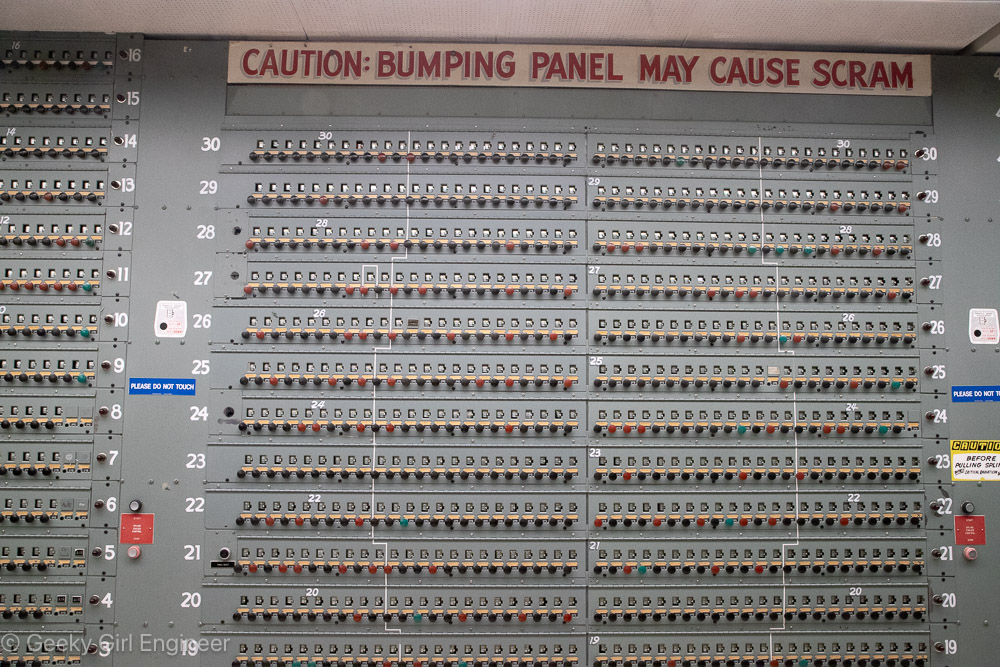
Classic photo of Multnomah Falls with the footbridge across it in frame
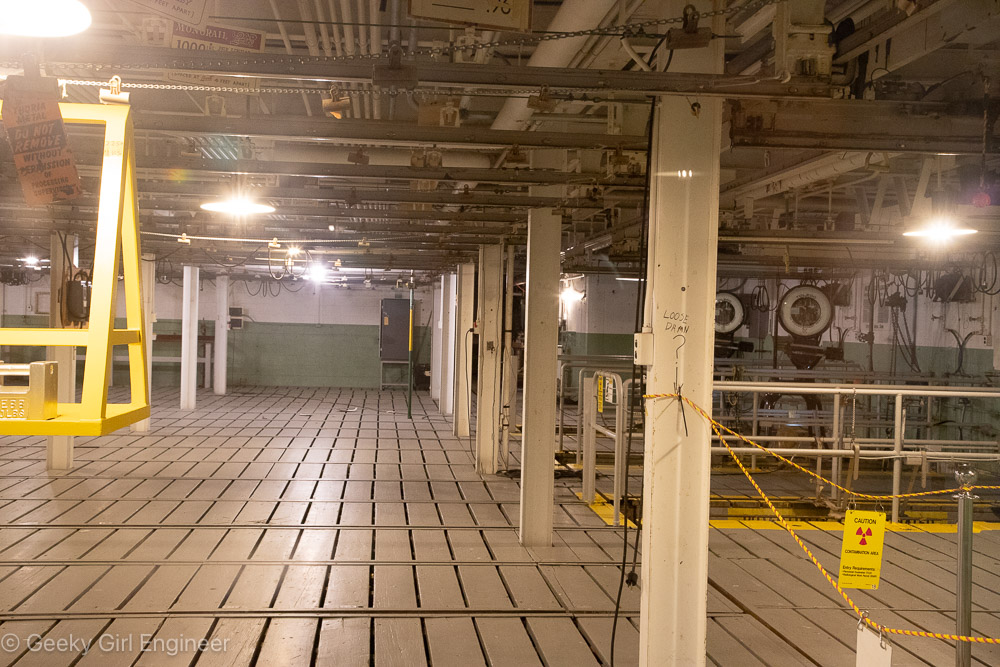
Pool at upper portion

Upper falls

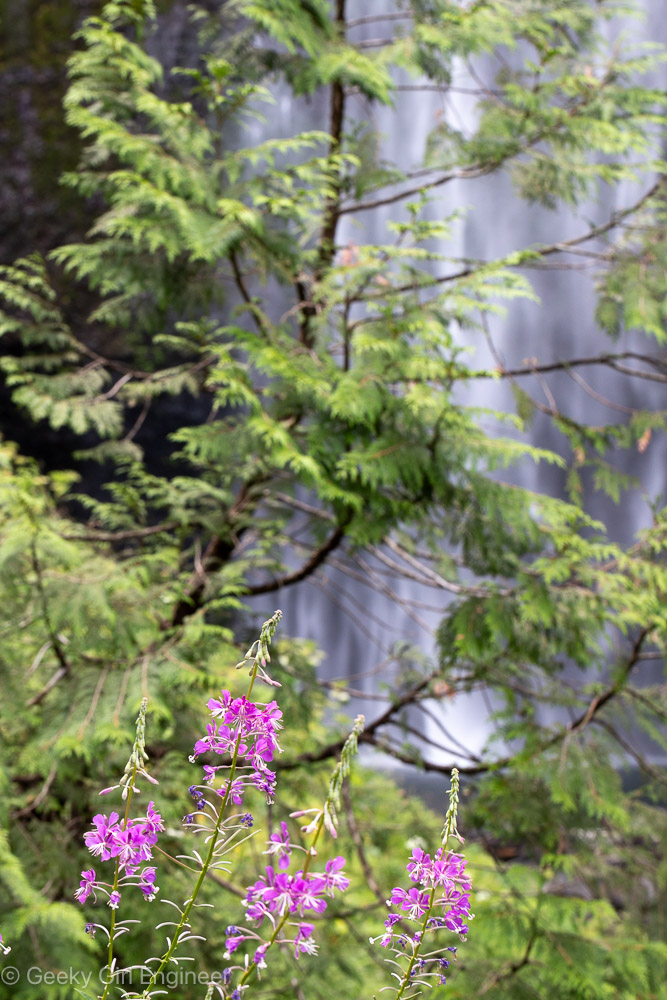
Fireweed near falls

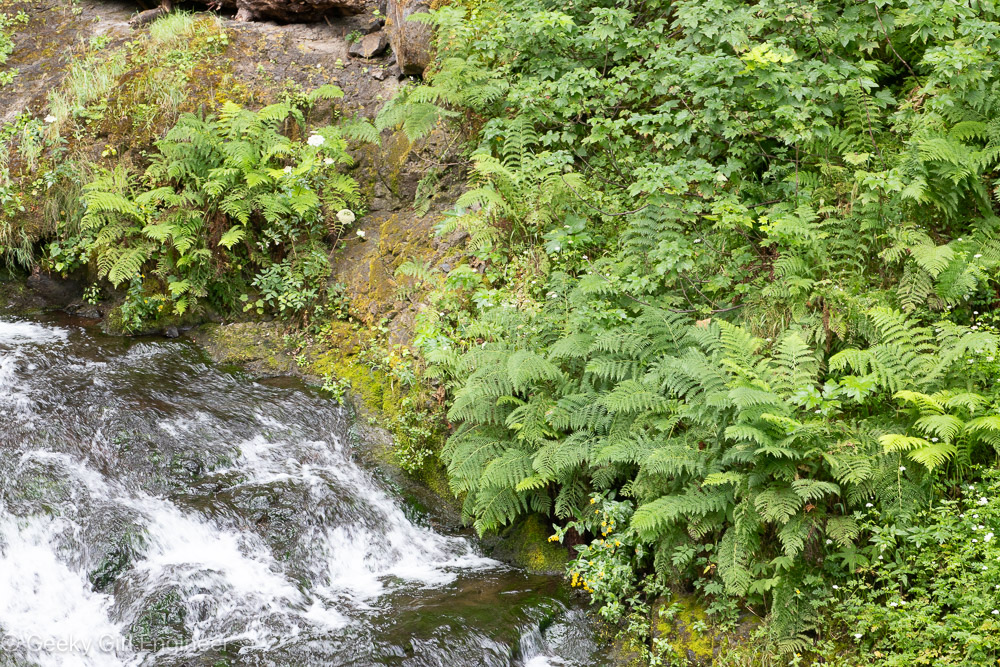
Short stream between upper and lower waterfalls

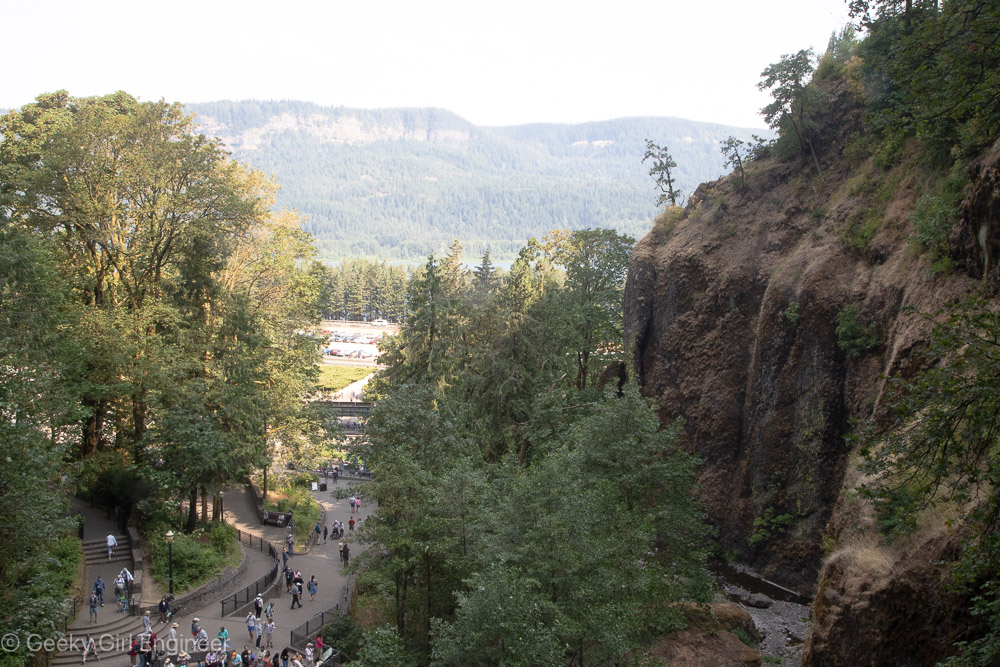
View from pedestrian bridge of creek fall terminates into and viewing platform with Columbia River in background
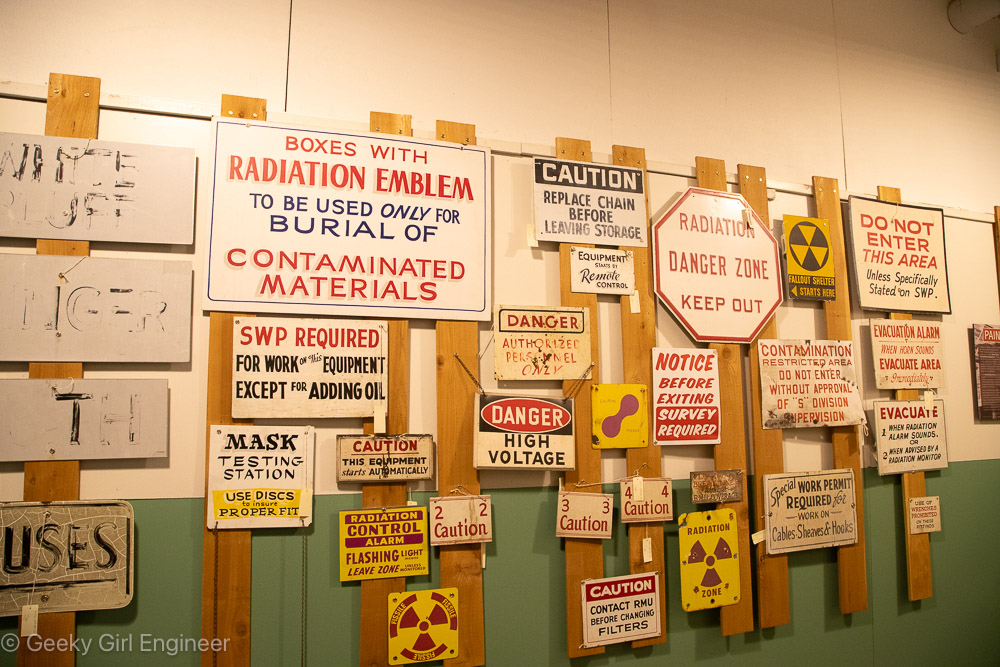
Hanford Reactor B

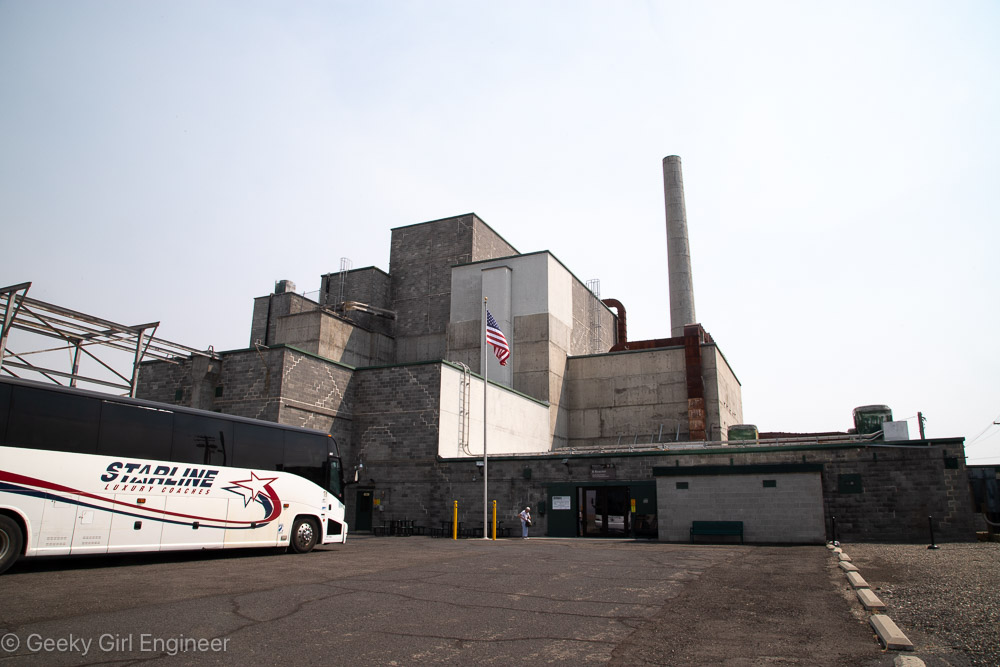
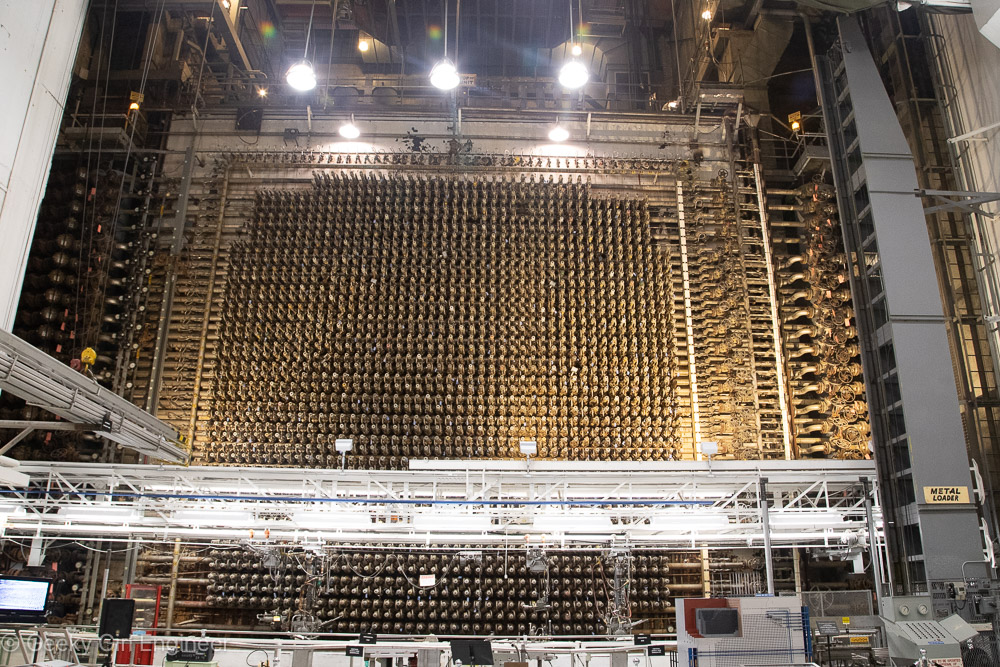
Yesterday I went on what is pretty much a nerd tour of Hanford Reactor B. Hanford is the Department of Energy facility where they made plutonium to make nuclear bombs, and Reactor B was the first reactor built during World War II to make plutonium. It is now a National Historic Landmark. The tour included a long bus ride to the site, which gives you a better understanding of just how big Hanford is. The tour then includes several hours to wander around the building, and several presentations by docents. I still can’t quite get over the fact that the public can tour a building where they used to make plutonium, which is rather radioactive and toxic.
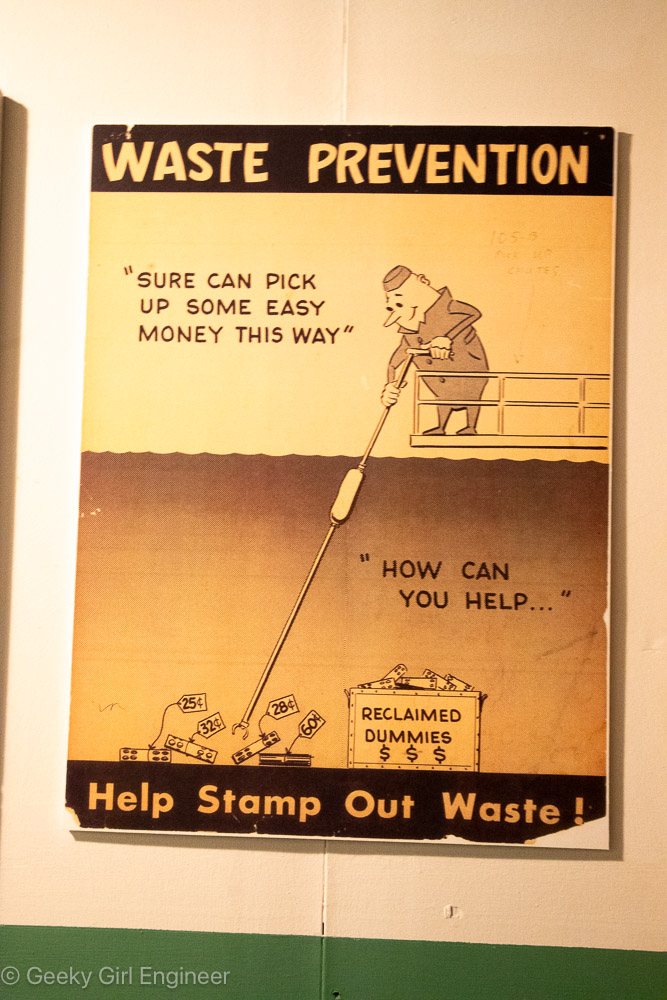
The science and engineering behind the facility was impressive, and I also enjoyed looking at 1940s era technology and signage. I don’t if it was that era, or the facility, or what, but there were some fun signs all over the place. There were also some hidden historical signs, like all the clocks were stopped at 10:48, which was time on the night of September 26, 1944 when the reactor achieved fission for the first time. I don’t know why, but I was amused that almost every room had a “broom” station, which were pegs on the wall where a broom and dustpan were hung. I think I only saw one room where there was actually a broom in its proper station. I guess they do less sweeping now, or they have moved onto vacuum technology.

I really appreciated that you could wander around and spend your time looking at everything. Most of the areas have decent signage to indicate what you are looking at, although the engineer that I am, I would prefer perhaps a bit more detail. My one criticism of the tour was that they completed glossed over the amount of environmental contamination created at Hanford. In an intro video we watched before taking the tour, they briefly mention that waste was buried to be dealt with later. The docent at one point said they are cleaning up the site, which is an understatement. I know enough about the site to feel like they just didn’t want to admit the contamination they caused. Signs of remediation are present in the building. There were plenty of pipes that obviously had asbestos, and the pipes had clearly been abated to encapsulate the asbestos, so it would not become airborne and thus a hazard. There were dosimeters on the walls everywhere, which were clearly been analyzed frequently.

Hanford Reactor B

Front Face where fuel rods were loaded into reactor, which is behind the front face

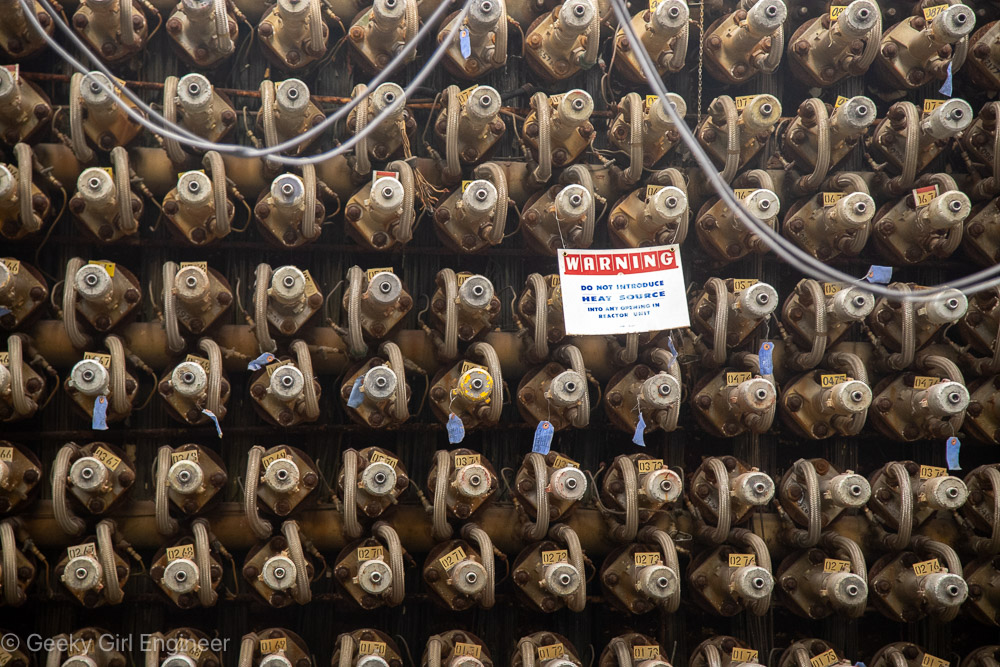
Warning Do Not Introduce Heat Source into any opening in reactor unit

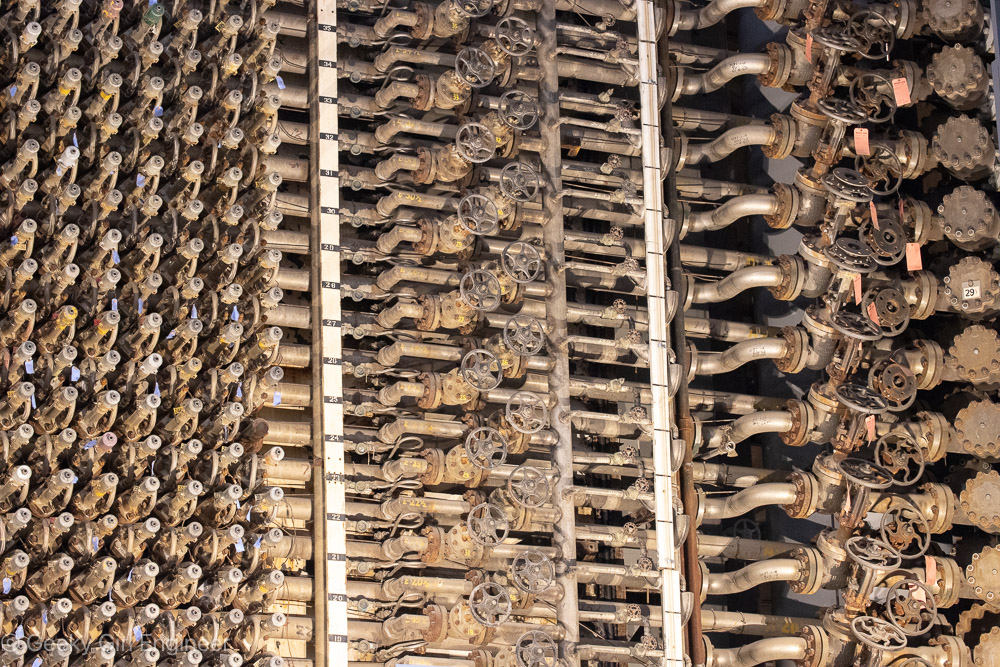
Front face close up fittings

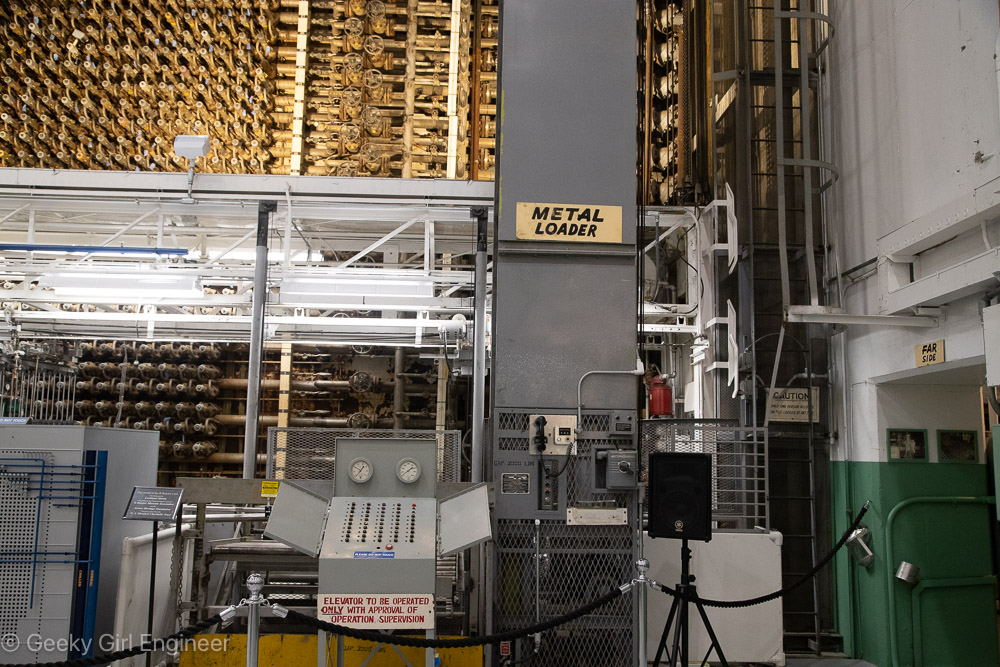
For security reasons, it was called the metal loader instead of uranium loader

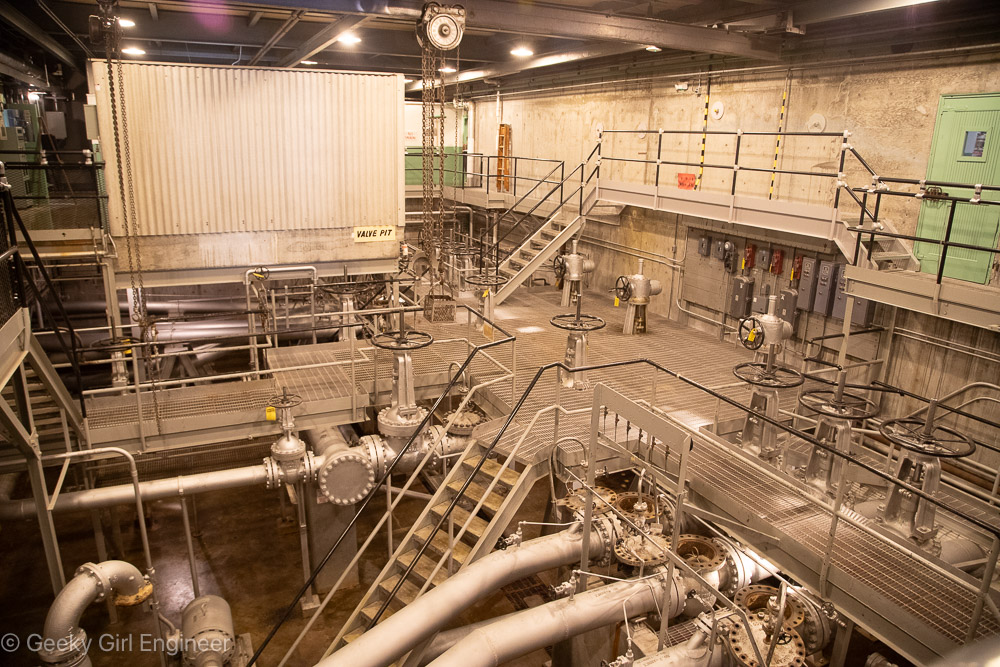
Valve Pit Room; notice in lower right, tops have been removed from access openings; tops were removed at Russian inspectors’ request to prove no water was going through pipes as part of treaty to reduce nuclear weapons

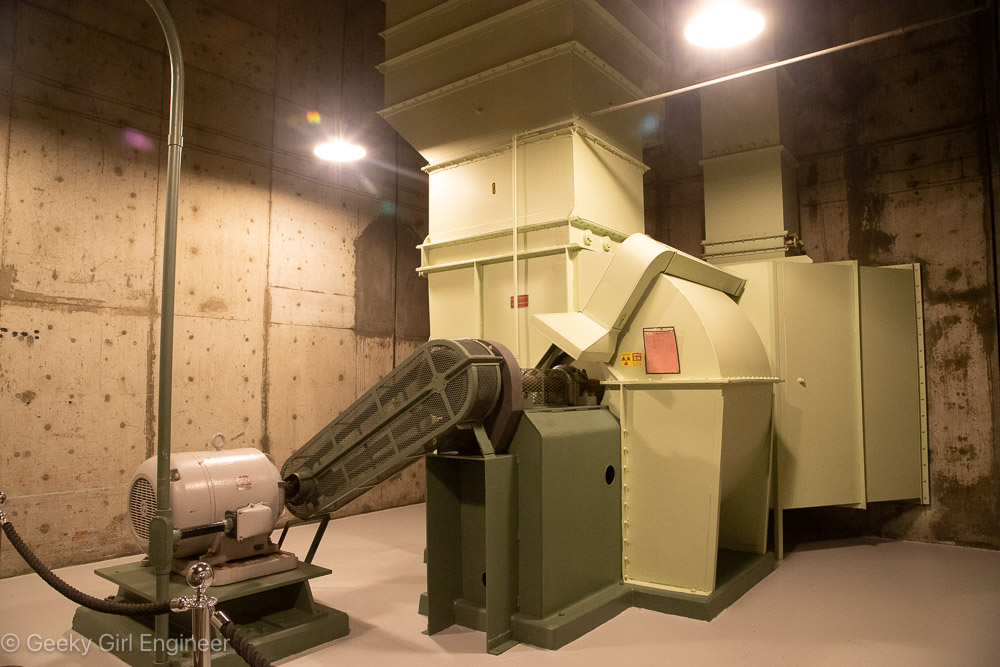
Exhaust Fan

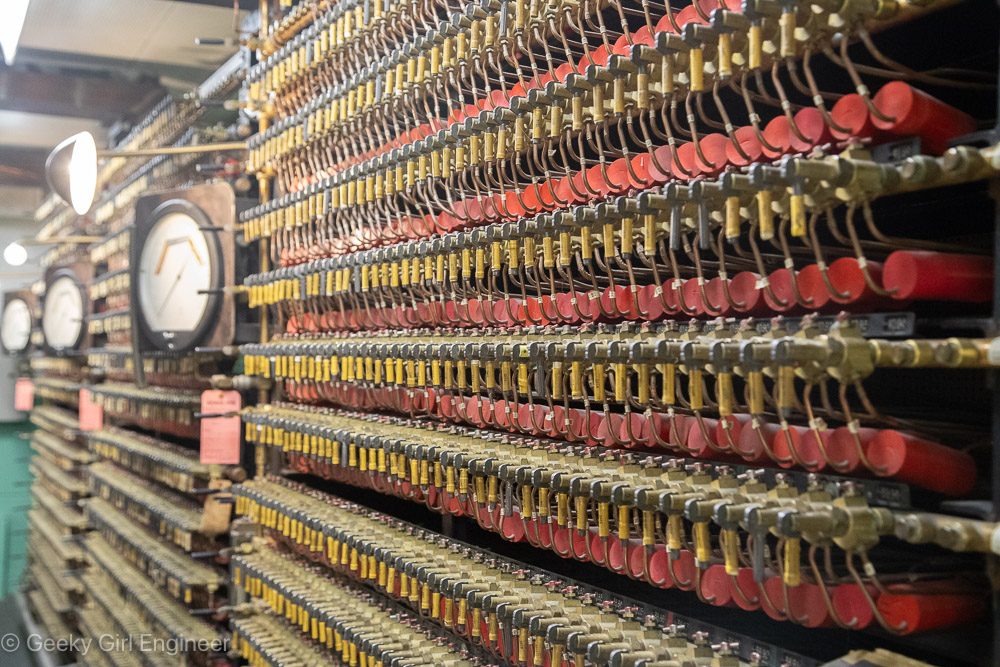
Wall of something in control room

Control Room, telephone switchboard equipment was used to monitoring equipment

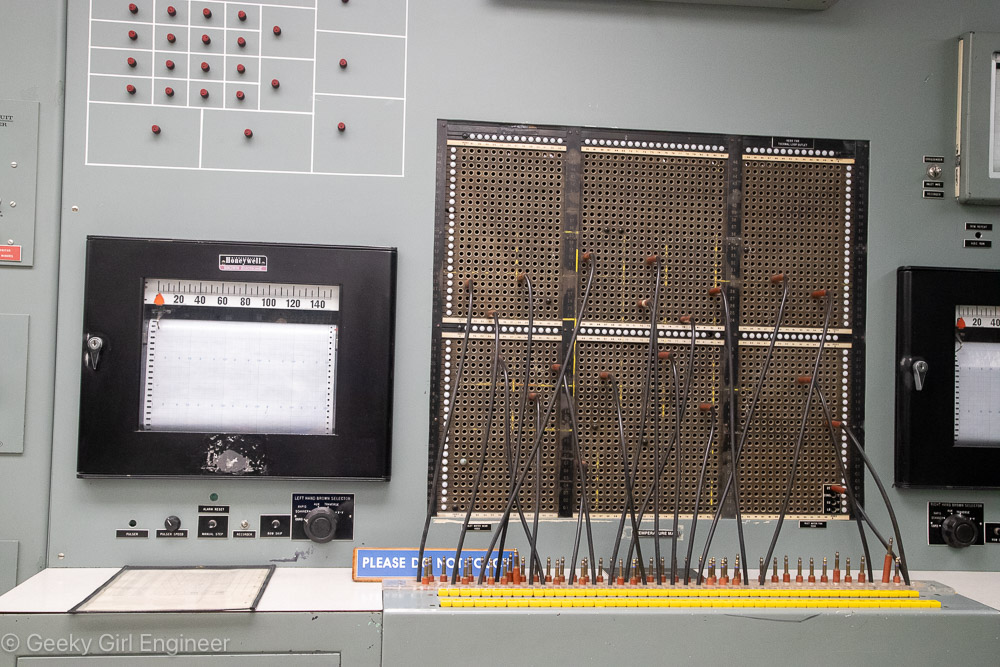
Control Room where operator sat

Control room board with warning “Caution: bumping panel may cause scram”

Fuel Storage Basin, there used to be water underneath the wooden boards where the used fuel was stored temporarily 

Wall of old signs

Old sign (my favorite)

Camera bag

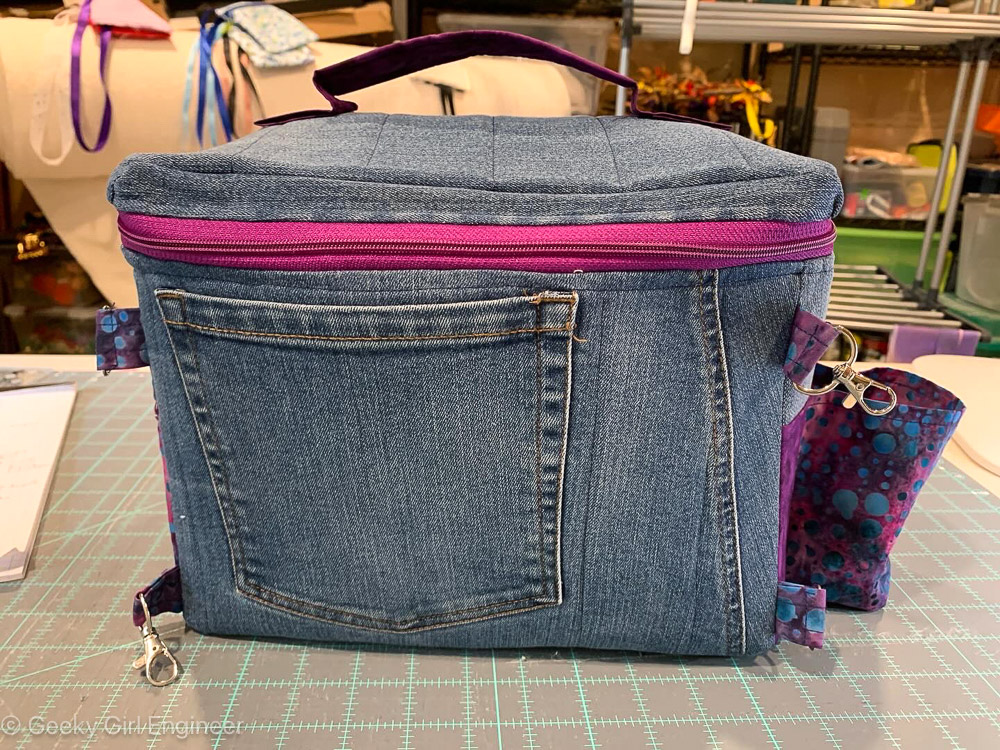
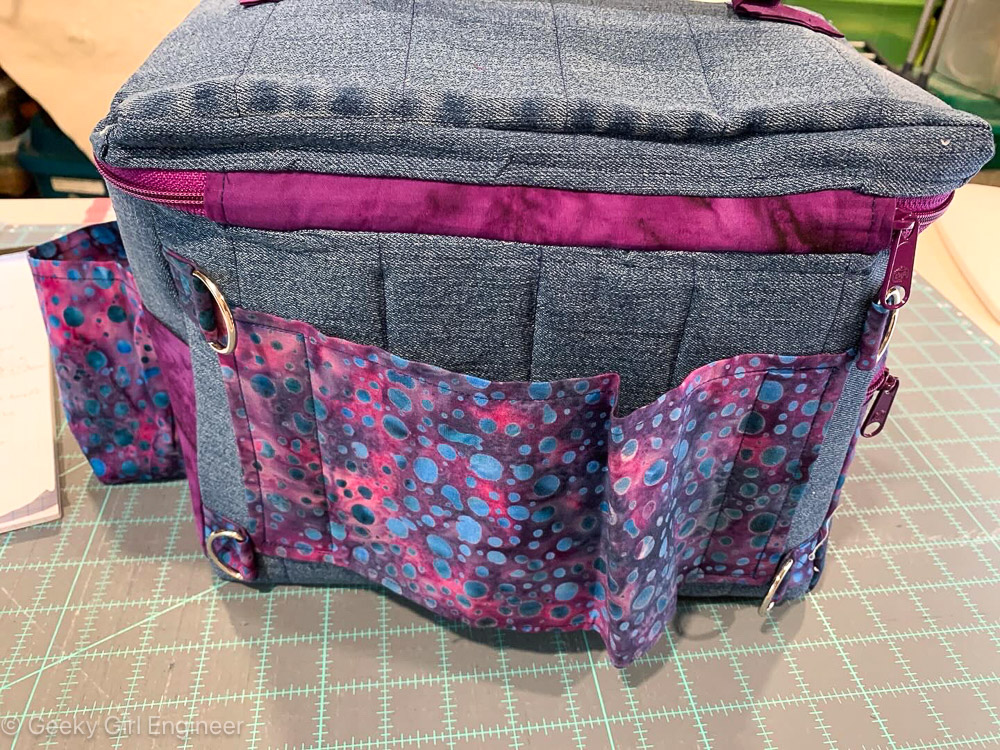
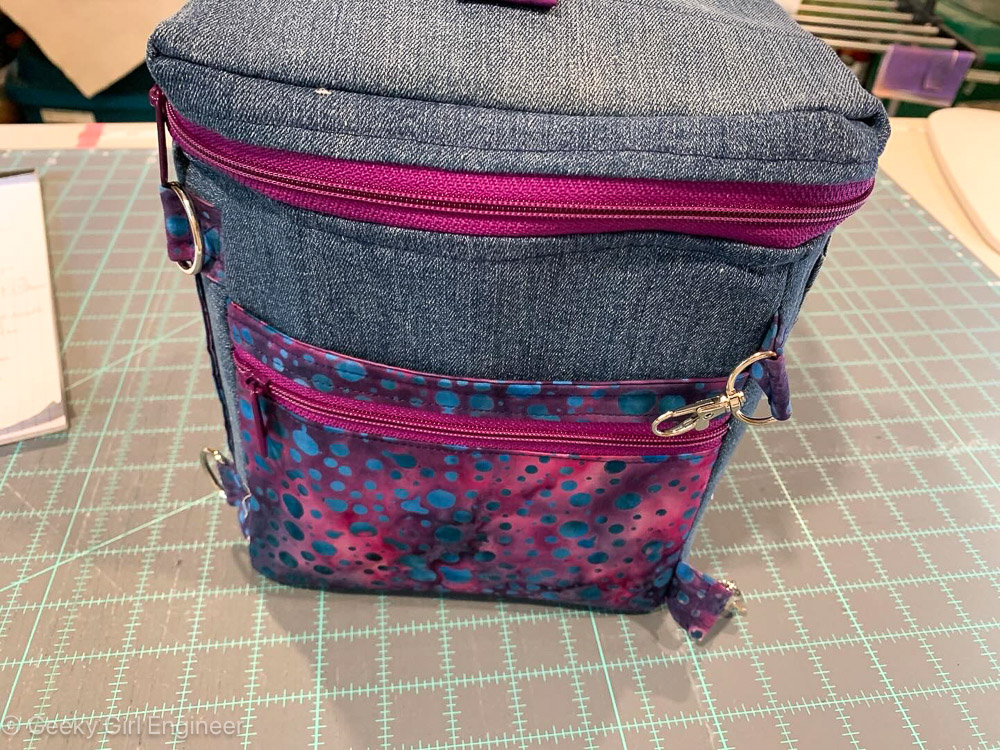
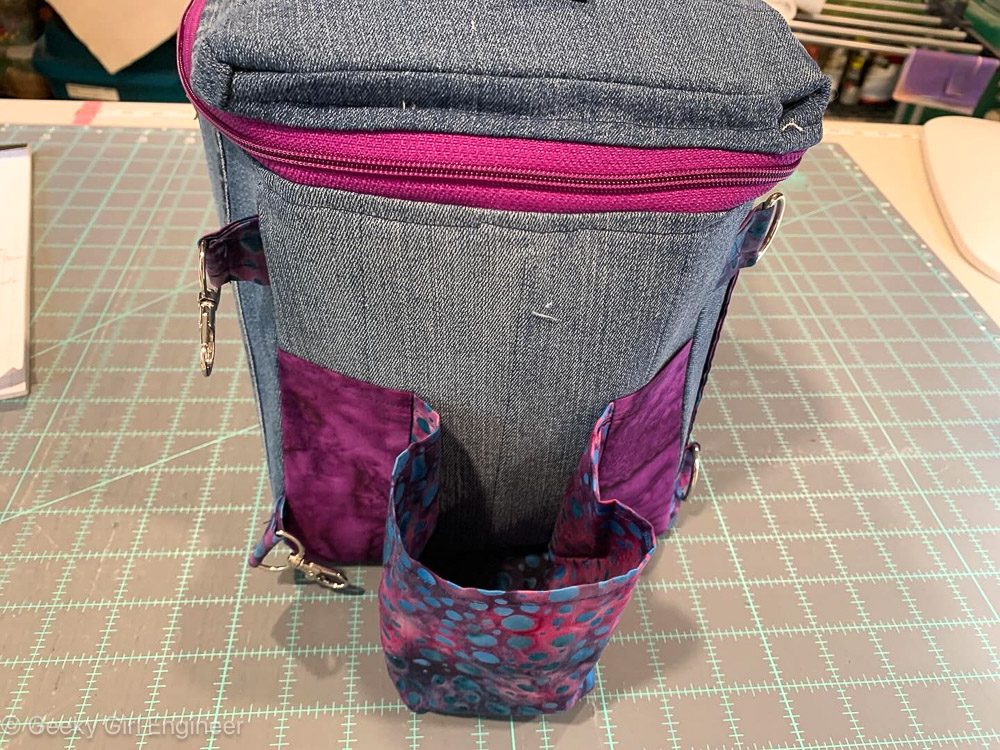
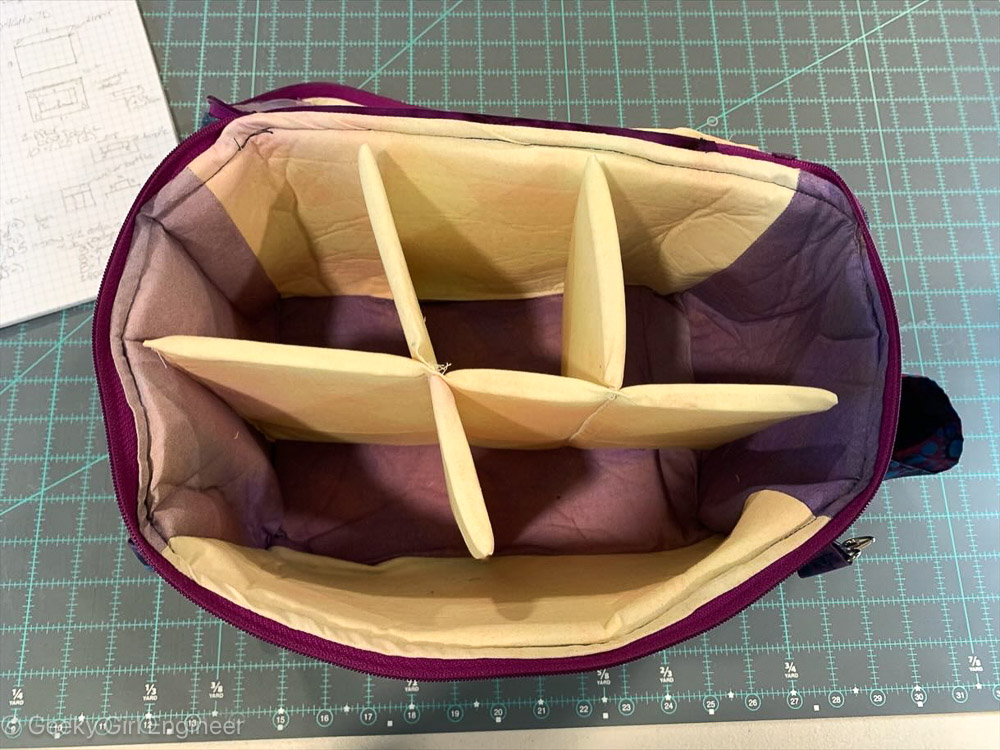
One of the things I like about making things, especially with sewing, is that I can design the thing to my exact specifications. I am going on vacation soon, and I wanted a better camera bag. I have one, but it is heavy, and it is not easy to wear. It also lacks certain features that I wanted. I wanted a lighter weight bag that would still cushion my camera and would travel easier. I also wanted to be able to wear it across my torso or as a backpack. Thus, I designed and built my own. I used denim from an old pair of jeans for the exterior fabric, as I think denim is fairly tough. I also plan to coat the bag with a fabric wax to protect my camera in case of precipitation. I have loops, so I have option on how to wear it. I also created a sleeve, so I can slip it over a luggage handle and travel with it easier. Finally I created a couple of pockets, including one for a water bottle. I cut the denim such that I got an extra pocket from one of the jeans’s back pocket.

Front of camera bag

Back of camera bag with luggage handle sleeve

Came bag side pocket

Camera bag side pocket for water bottle

Inside of camera bag with foam dividers to protect lenses and camera body

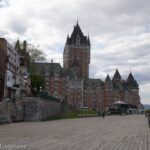
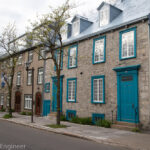
Old Quebec City

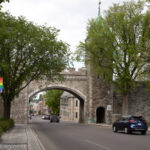
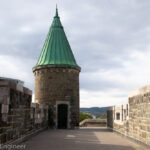
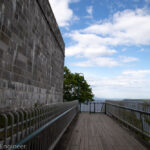
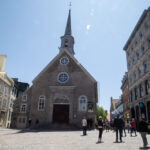
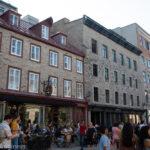
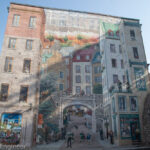
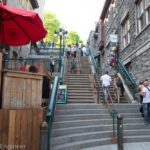
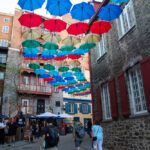
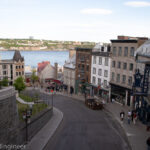
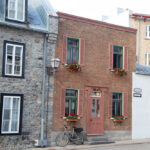
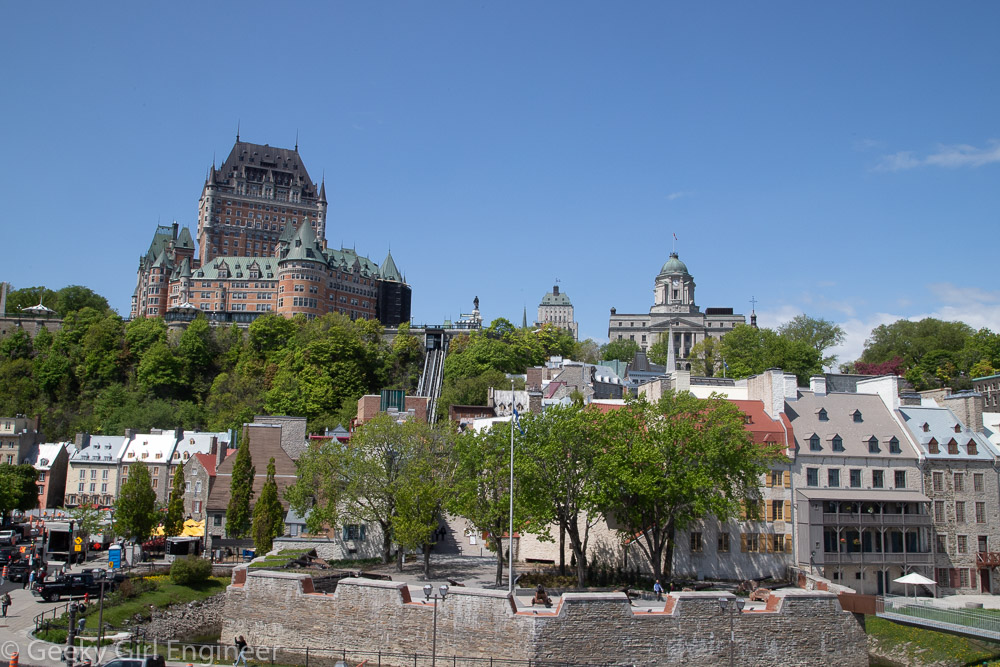
I have been in old Quebec City for three full days, and it has been a lovely visit. Old Quebec is compact and walkable with the exception of the fact that old Quebec is really just a series of stairs and slopes. Thus something may be just four blocks away, but it is also the equivalent of eight stories higher, so plan accordingly. The old town is surrounded by its original fortification walls, with a citadel at the highest point. Many of the streets are cobblestone, and most of the buildings are clearly original.

Montmorency Falls

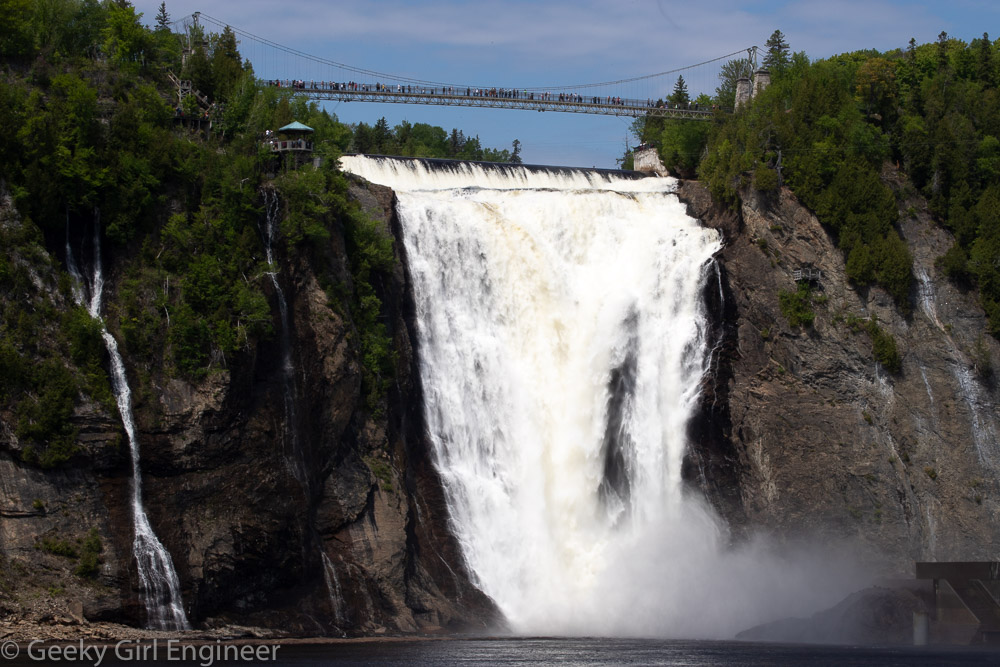
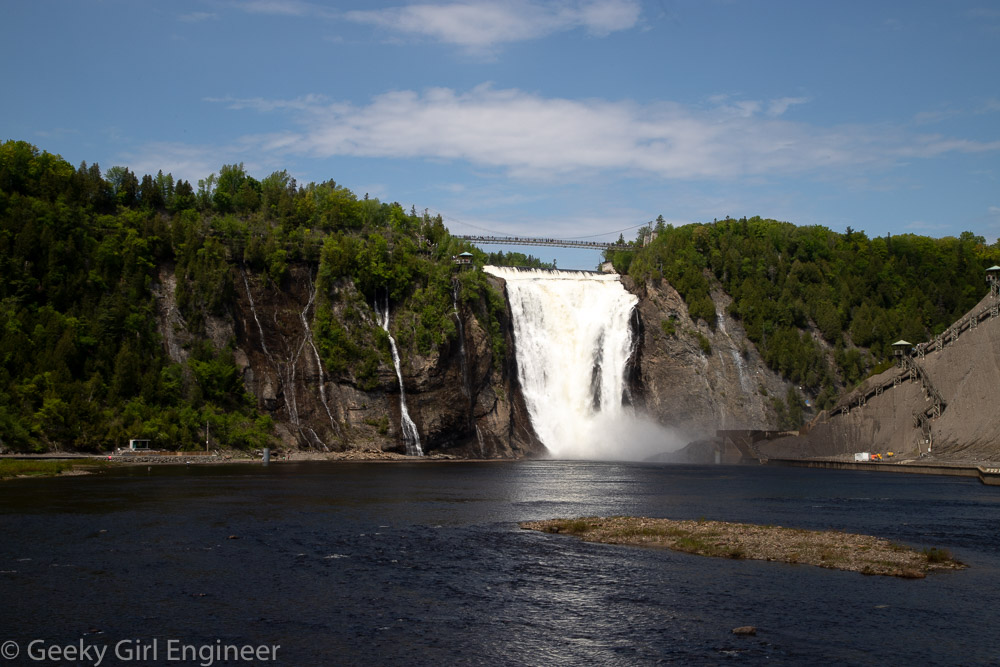
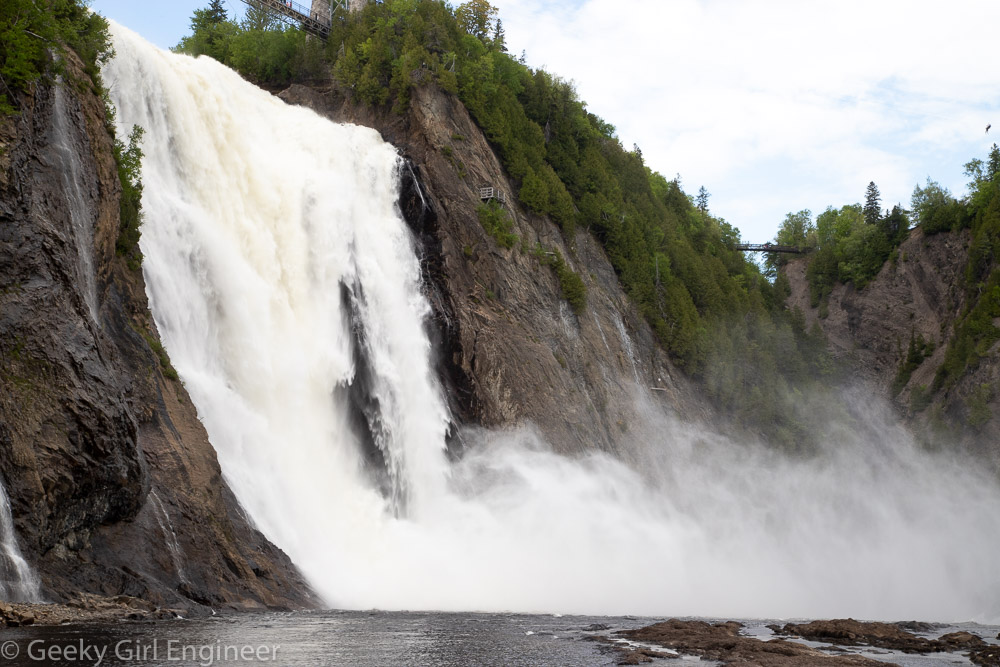
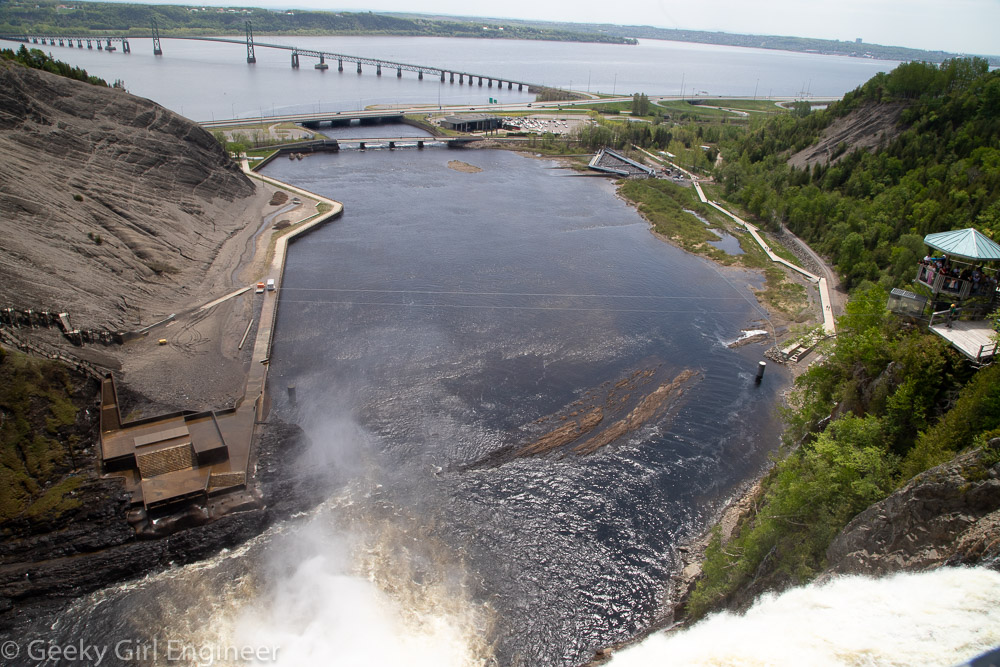
Just outside of Old Quebec City, (as in 15 minutes by car or 40 minutes by public bus), is Montmorency Falls, or Chute Montmorency, which I prefer. The falls are beautiful, and there is a park around it. There is a pedestrian bridge across the top of the falls, and a cable car from the top to the bottom. There are boardwalks at the bottom, and they appear to be building more or possibly renovating the old ones, as currently you can only access one side plus a boardwalk across the river at the base of the falls.

View of the falls from the boardwalk across the river flowing from the falls

View of the falls from the boardwalk across the river flowing from the falls

View of falls from boardwalk near base of falls

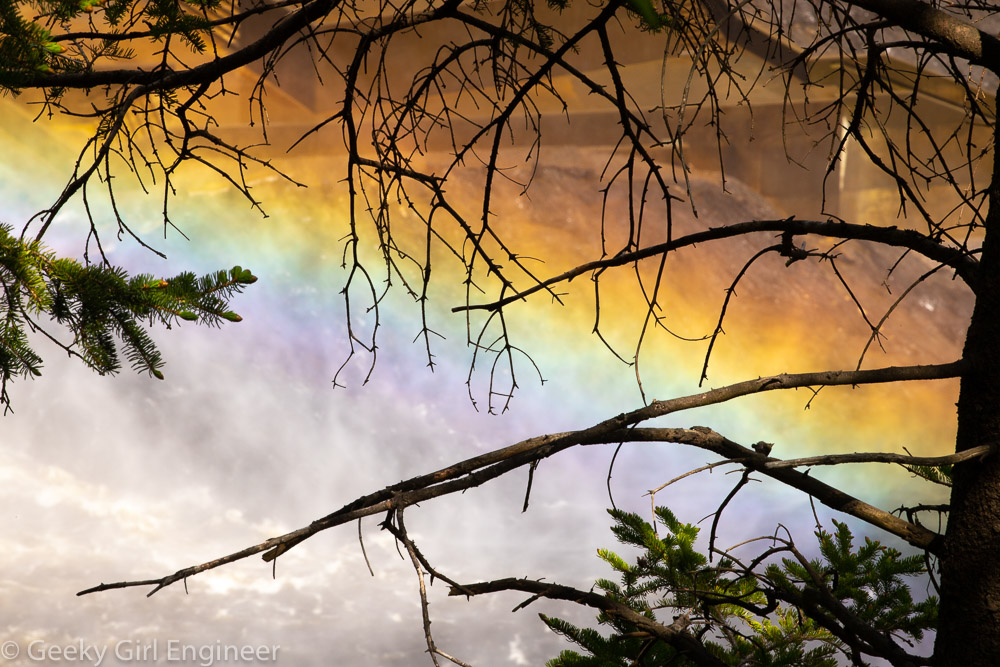
Rainbow formed in mist at base of falls, photo taken from observation walk near top of the falls

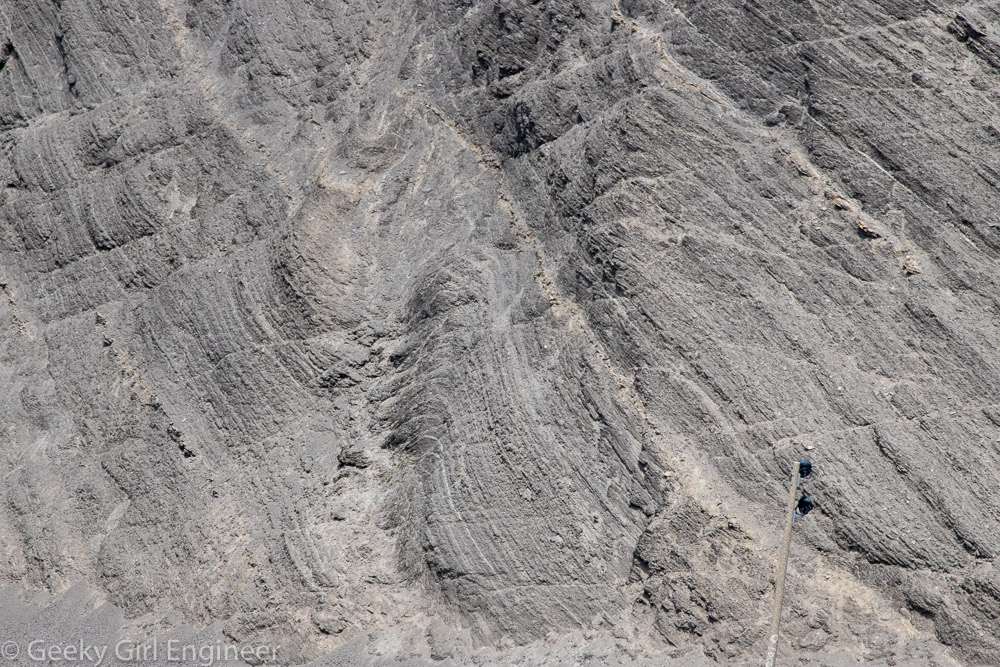
Closeup of east side of falls showing geological layers and folding


Crossing pedestrian bridge above falls

Crossing pedestrian bridge above falls; downstream and outflow into St. Lawrence River

Québec City Sightseeing Cruise

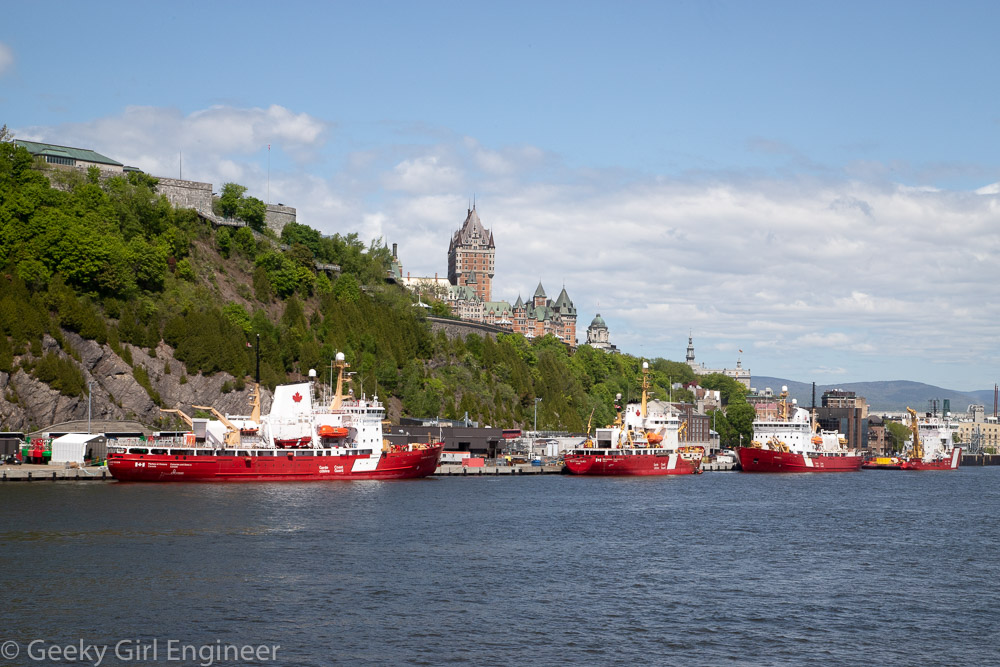
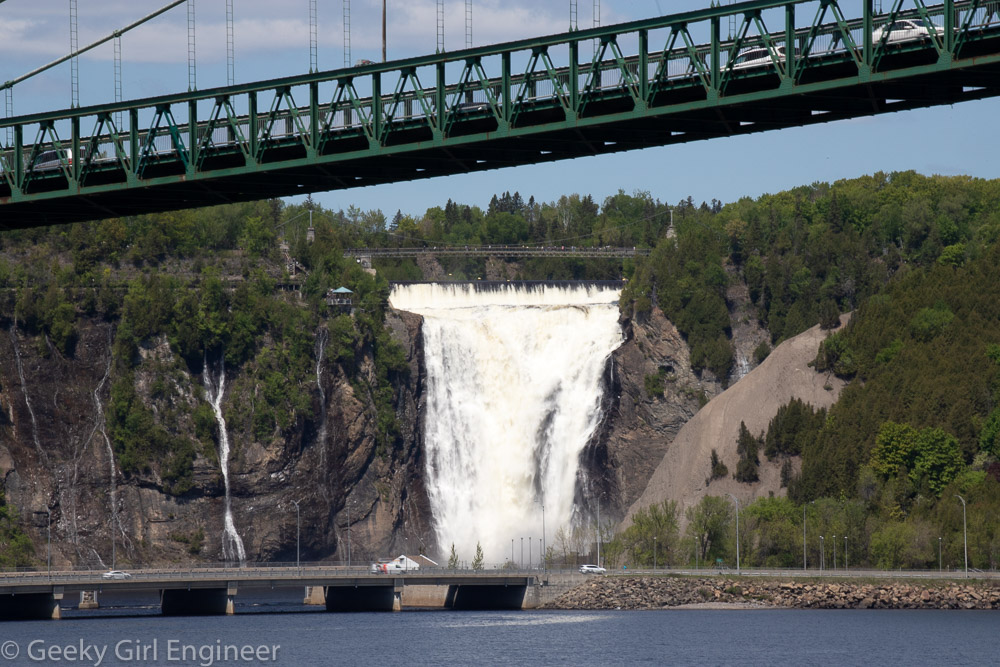
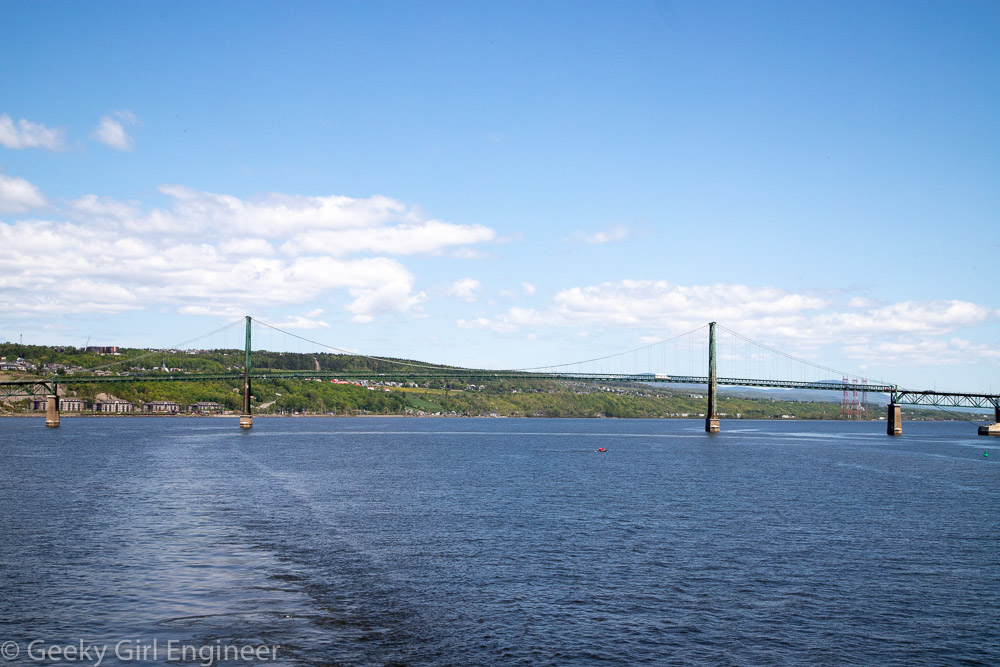
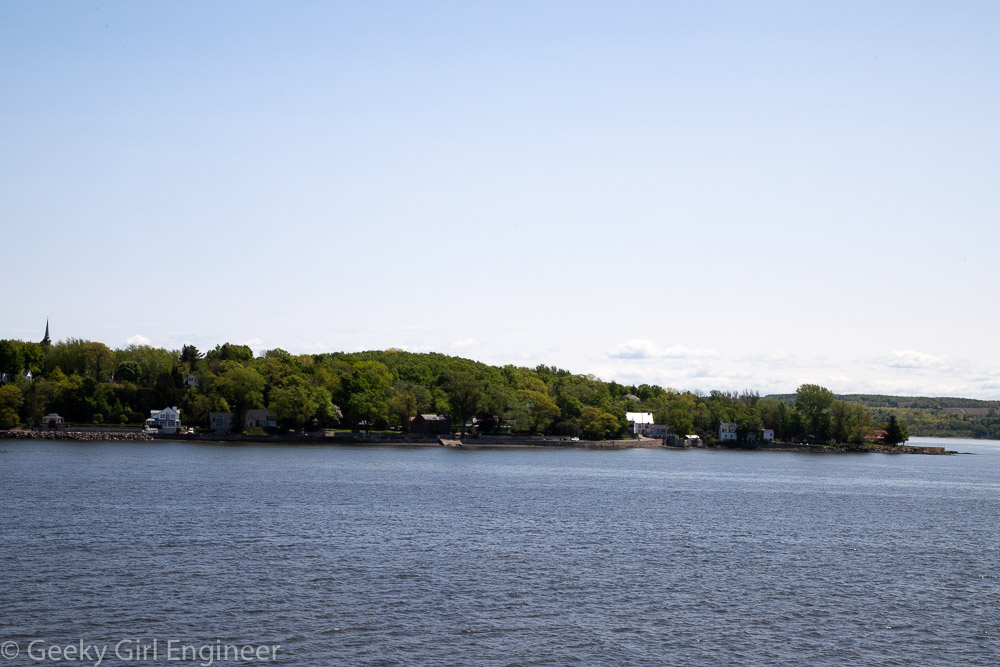
Québec City (Ville de Québec) sits on the St. Lawrence River, which is (surprisingly to me) a huge river. A company offers short sightseeing cruises along the river that go as far as the bridge to Orleans Island (l’Ile d’Orleans). Right where the boat turns around, you can get pretty good views of Montmorency Falls (la chute Montmorency). [My knowledge of French is pretty much limited to words from ballet and Louisiana and words that are similar to my rudimentary Spanish and Latin knowledge. I am starting to enjoy specific French words like “chute.”] The cruise also provided lovely views of the port of Québec City (Port de Québec), l’Ile d’Orleans, and Lévis, which is across the river from Québec.

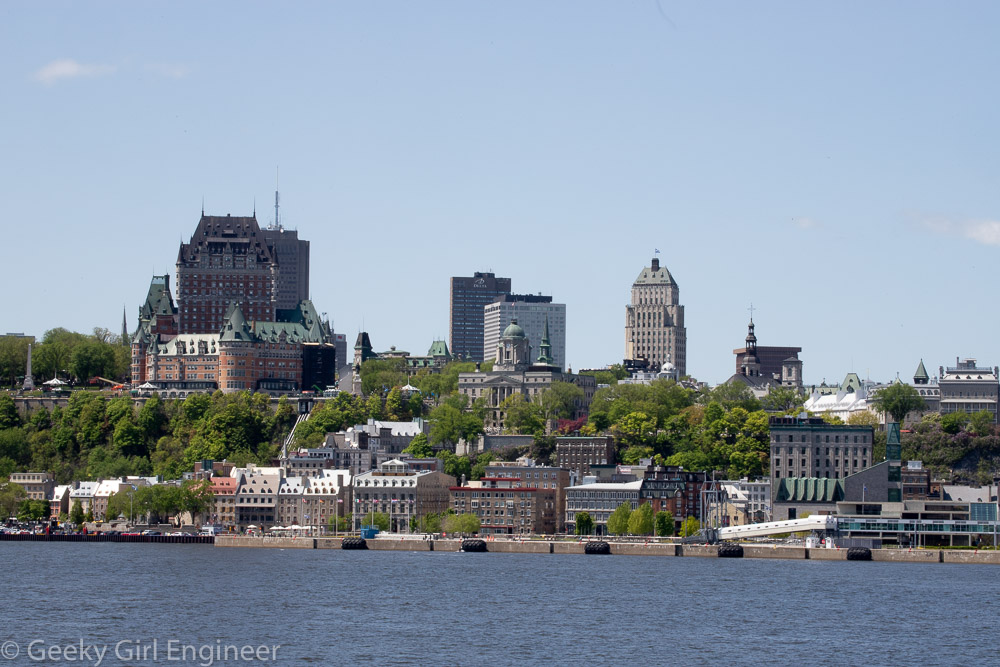
Royal Battery and old Quebec

Canada Coast Guard ice breakers

old Quebec City

Montmorency Falls

Orleans Island bridge

Orleans Island

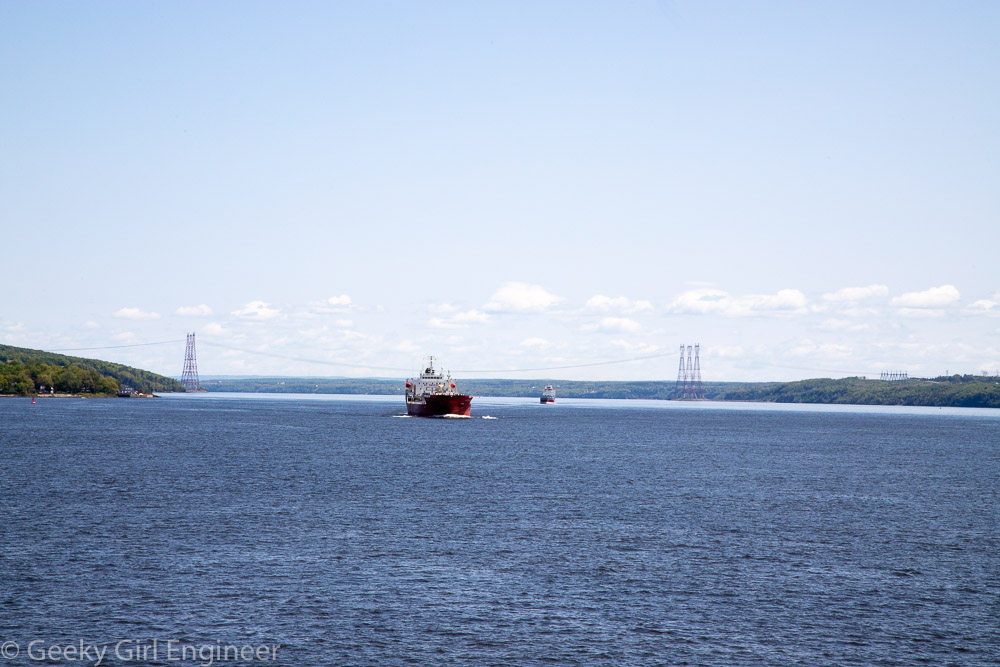
Large ships headed west on the St. Lawrence River

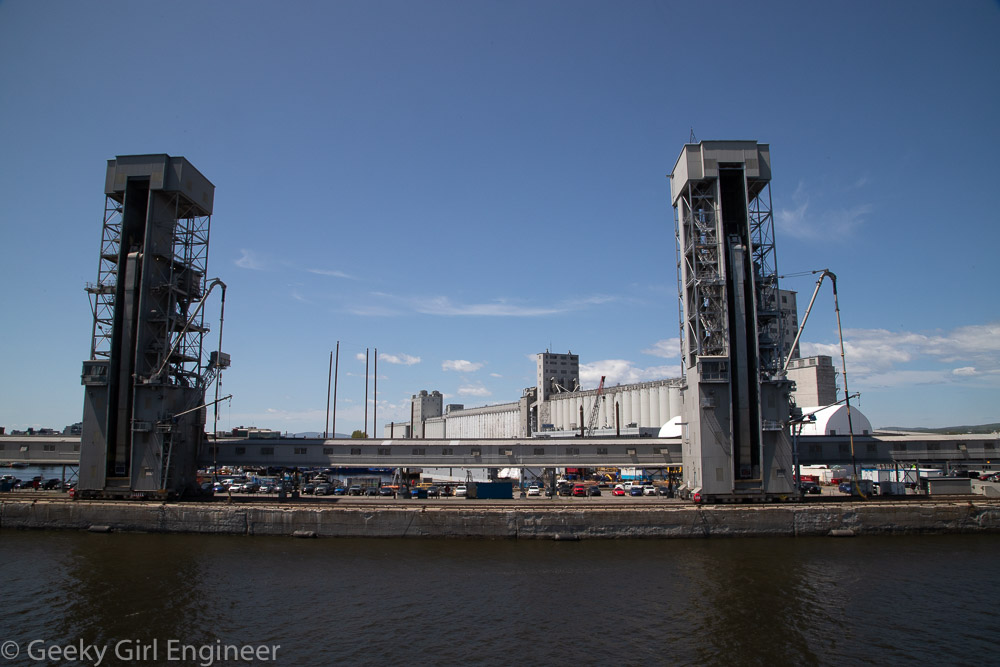
Port of Quebec

National Assembly of Quebec

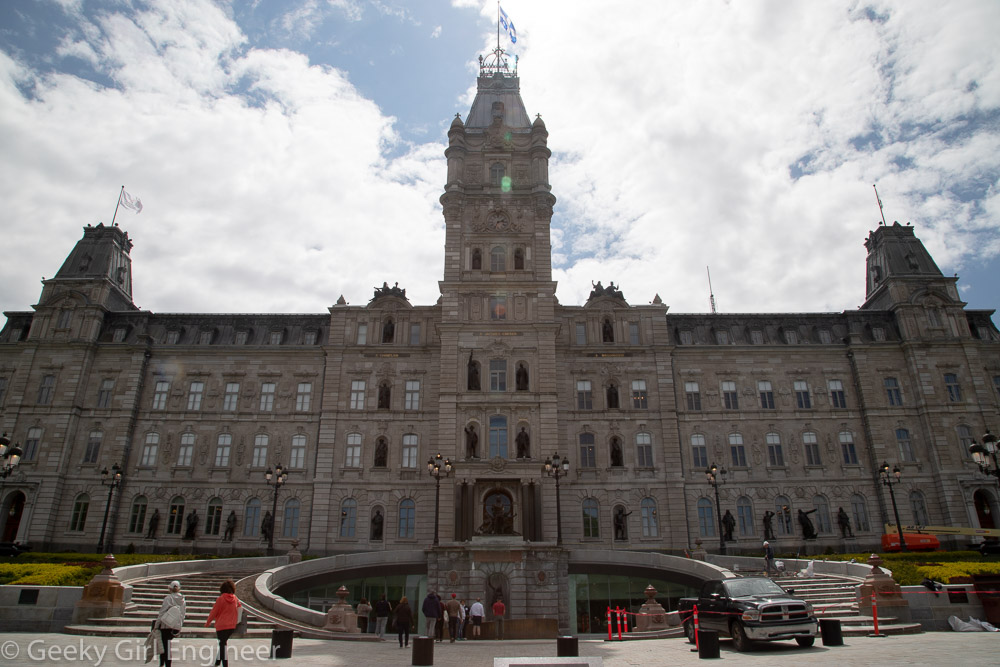
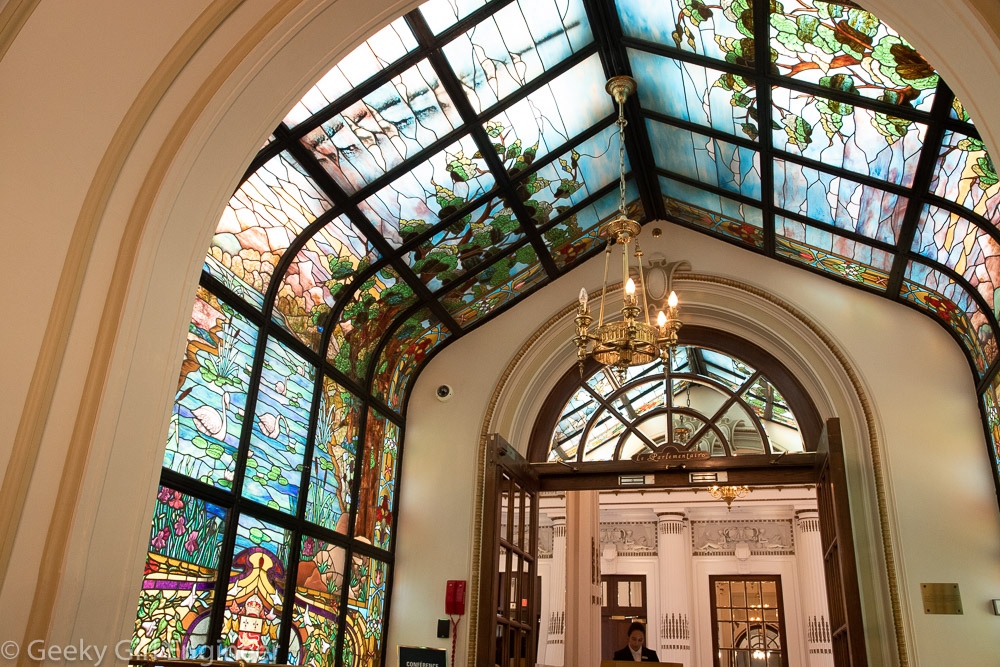
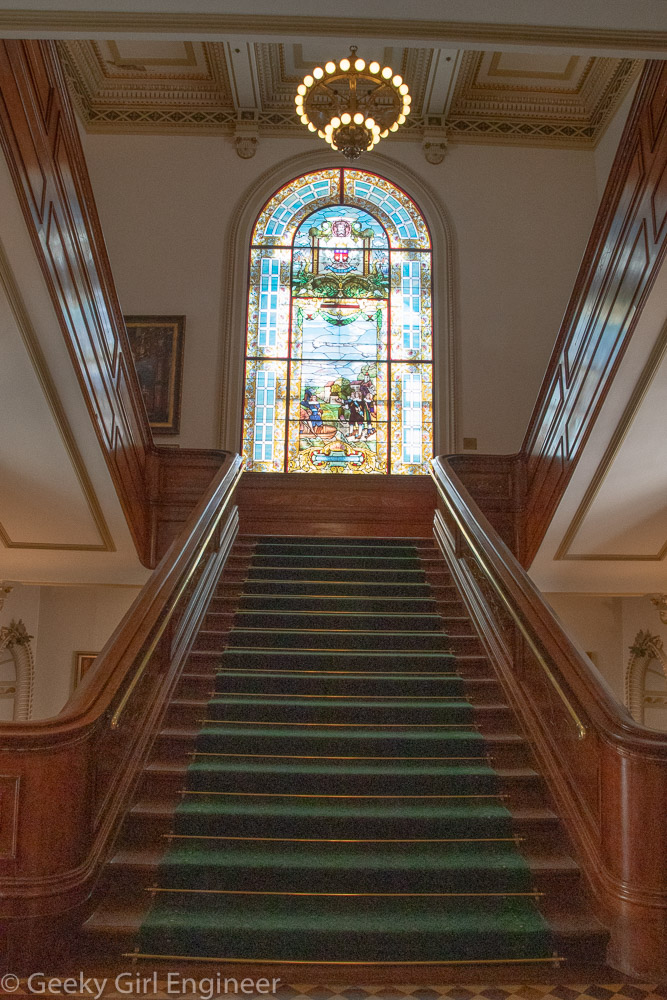
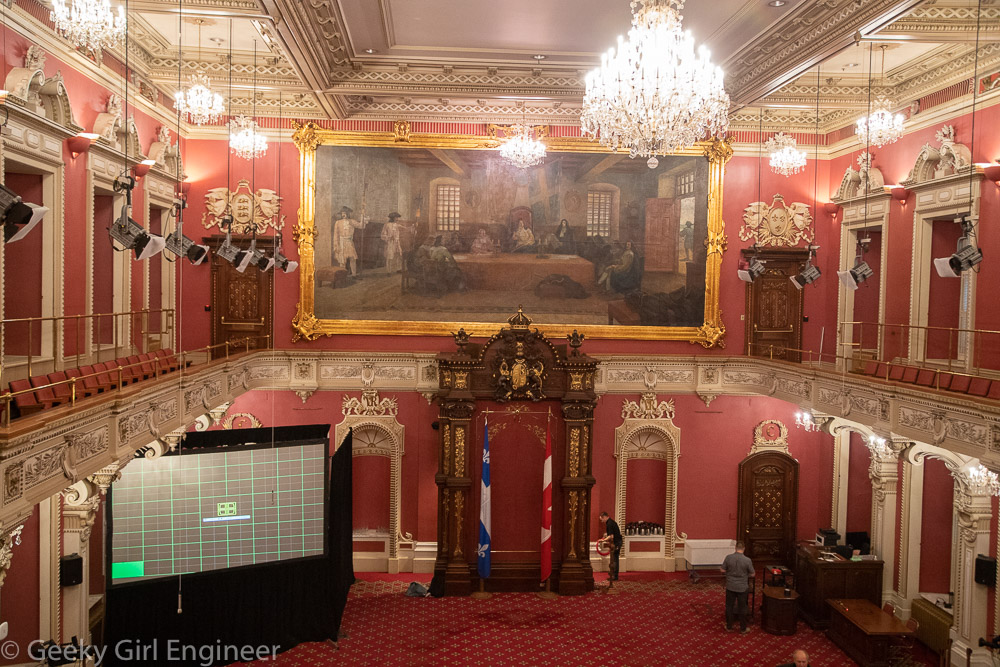
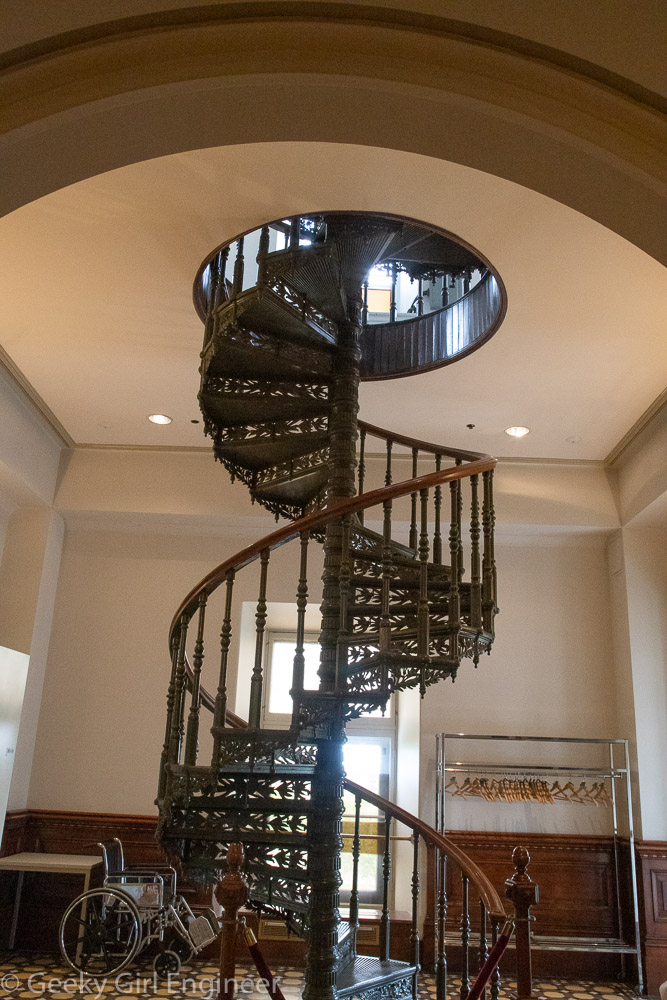
I have noted before that I want to see all the U.S. state capitols. I am in Quebec, so I decided to see its provincial capitol and add that to my list. They call their capitol the National Assembly of Quebec. It consists of one chamber. They used to also have the Legislature Council, which was akin to the British House of Lords. I am sure it was explained on the tour why and when they got rid of it, but I missed it. In any event, the current capitol is the fourth one. I have noticed a theme with U.S. state capitols that they are not in the original buildings. In many cases, they need a bigger building, but in many cases, the capitol burned down. Quebec has a combination of those reasons. The first one was too small, and the second and third buildings burned down. The current building also was a bit too small evidently as they added onto it. We only saw a small portion of the building, and the new entrance for visitors is underground and then connects to a new building, which connects to the old building.

The building is very French in style. Inside, there is symbolism one would expect, including French and British. The chambers are modeled after the British House of Commons and House of Lords. My favorite bit of trivia I learned was that the National Assembly room was originally green like the House of Commons, but when proceedings started being televised, the politicians didn’t like the way they looked with all the green in the room, so the room was repainted blue with all other accents changed from green to blue. The blue works well with the Quebec flag, but it wasn’t changed because of the flag. It was changed because politicians didn’t think they looked good with a green background. The two chambers are mirror images, except the color, artwork, and furniture. They wouldn’t let us take photos in the National Assembly room, which really disappointed me. They had photos of each room outside, so I am including a photo of their photo.

National Assembly of Quebec, circular stairs was original entrance to building

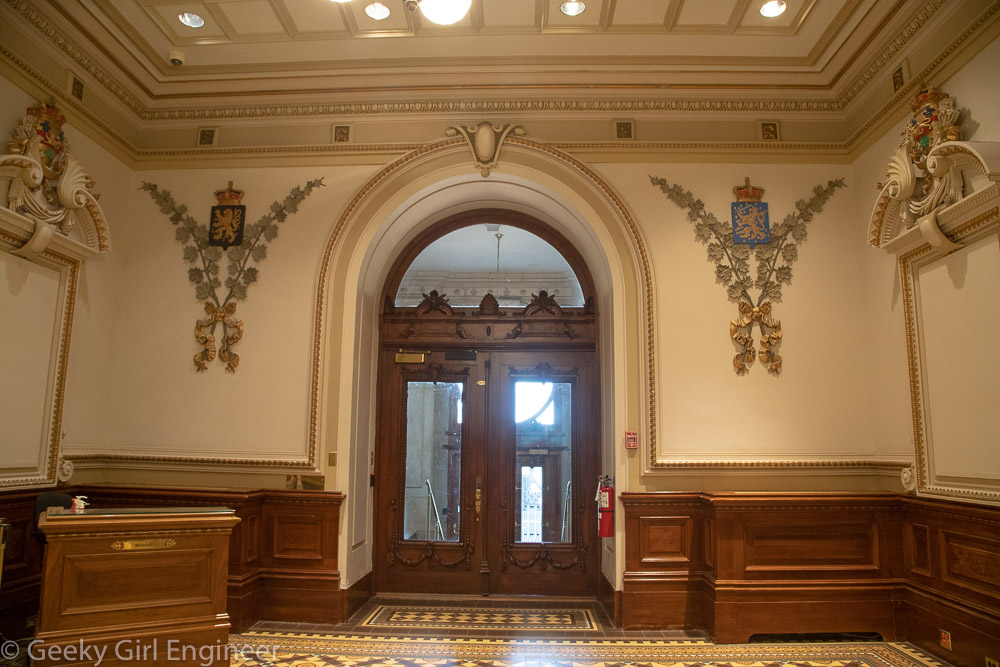
Original entrance to the building with English coat of arms on the wall with maple leaves

French coat of arms with maple leaves, along the ceiling are an English rose, Scottish thistle, and Irish shamrock

Entrance to restaurant in new part of building

Stained glass in stairwell

Legislature Council room which is now used as a hearing room, conference room, or for presentations

Photo of National Assembly room; they wouldn’t let us take photos inside

Stairwell to tower

Tunnel connecting new entrance to original building with light art