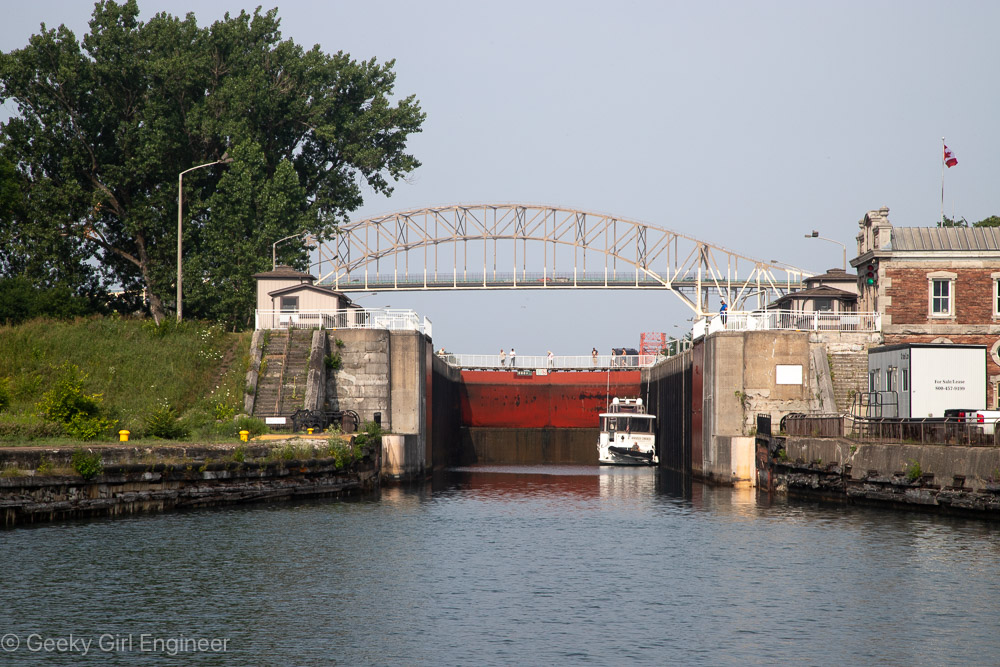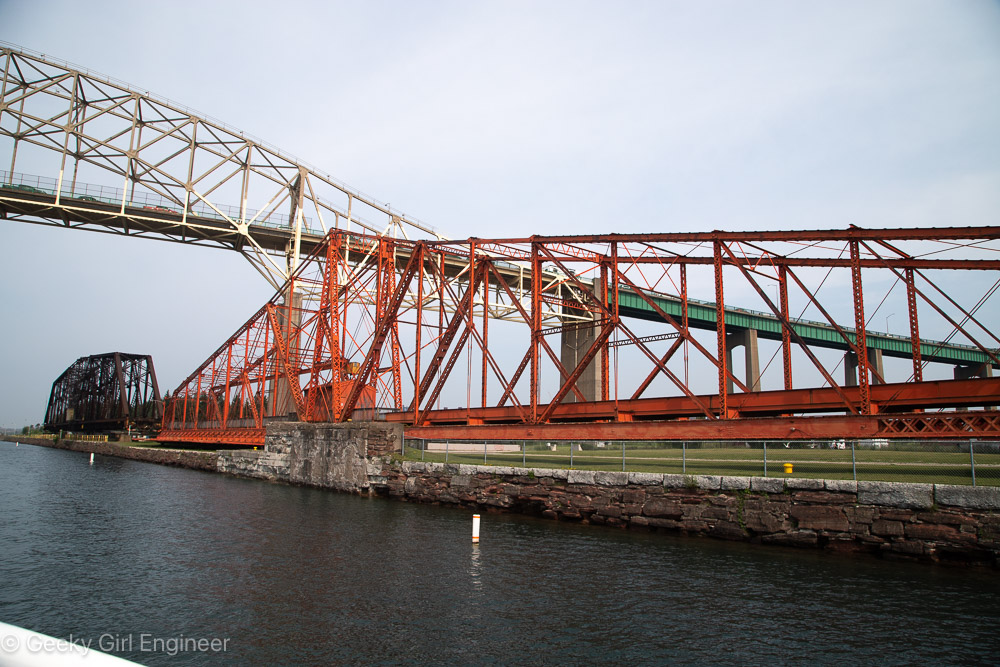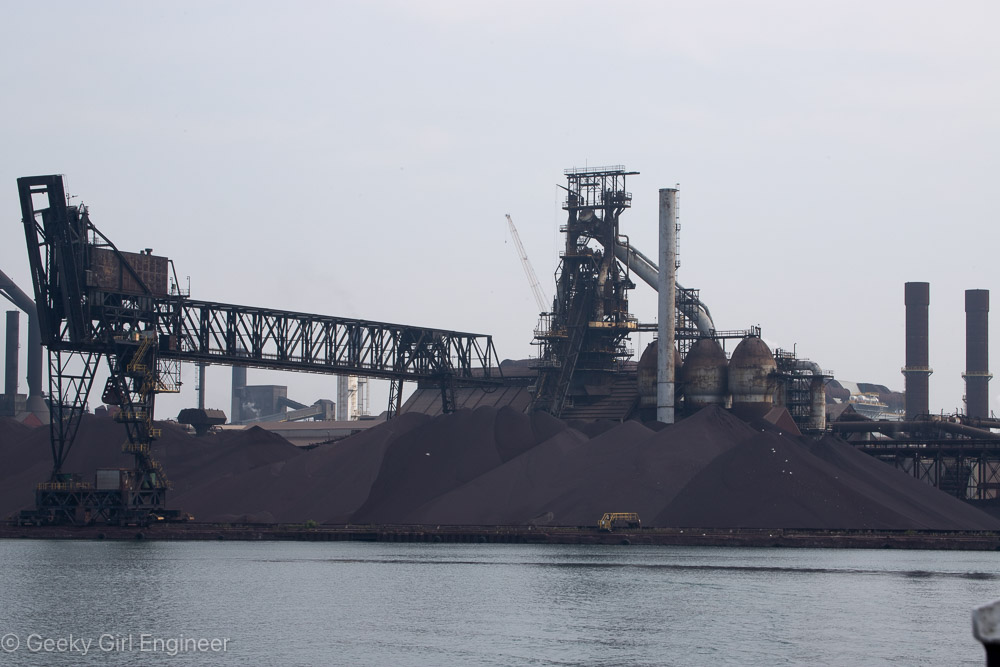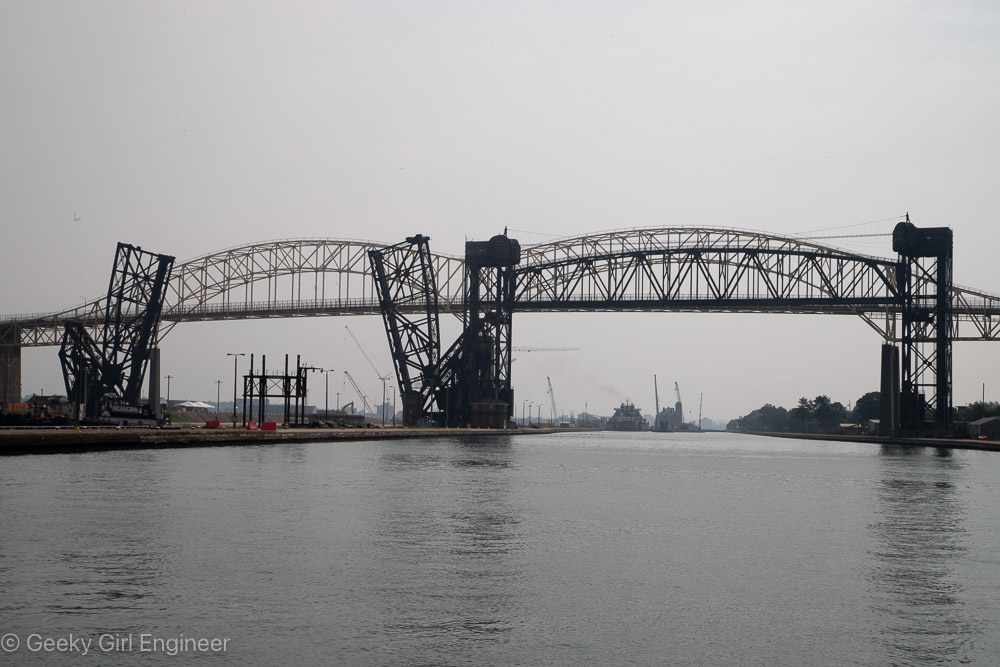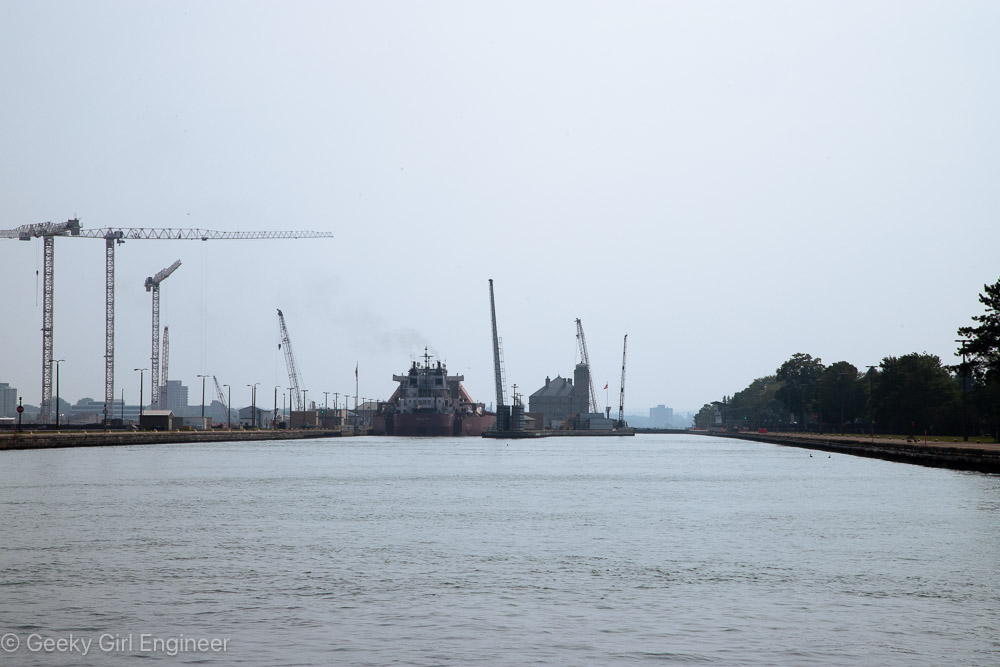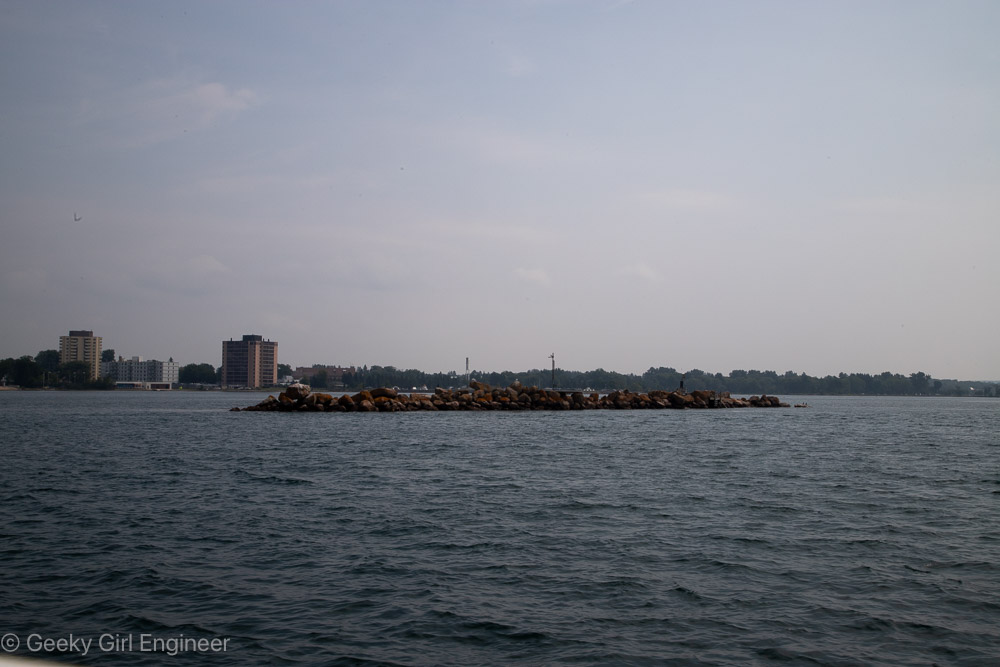
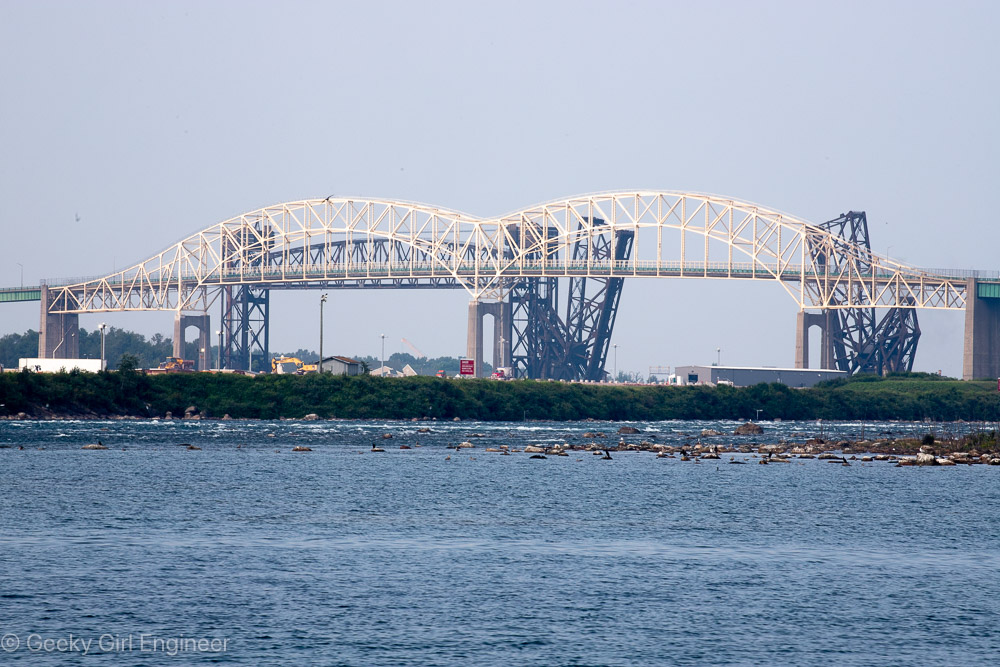
Today our cruise visited Sault Ste. Marie, which is the name of the city on both the Michigan, U.S. side and on the Ontario, Canada side. We docked though on the Canadian side in the St. Mary’s River on the Lake Huron side or elevation. I never actually went into town though. I boarded another boat with many other guests for a lock tour. We sailed through the Canadian lock into the Lake Superior side or elevation then made a giant semicircle to return to the Lake Huron elevation via the MacArthur Lock on the U.S. side. We then sailed downstream a little bit before returning to the dock. It was a really enjoyable cruise, and I always love locks. Besides going through the locks, I enjoyed seeing the steel plant on the Canadian side. I also was fascinated by the Sault Canal Emergency Swing Dam on the Canadian side. I had never heard of such a thing, so I appreciated learned about it.
Tag Archives: transportation
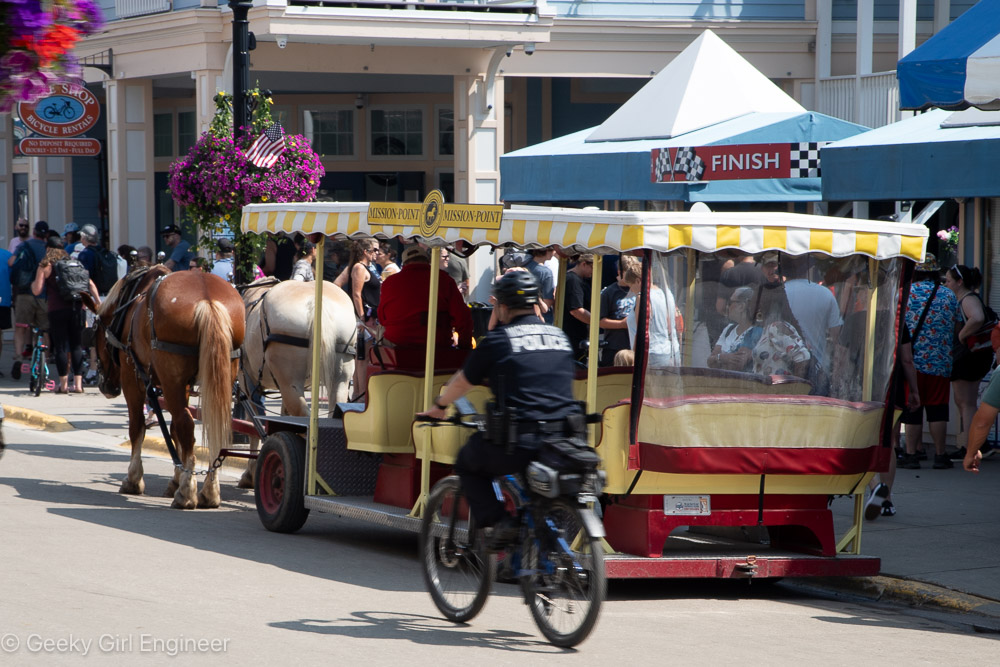
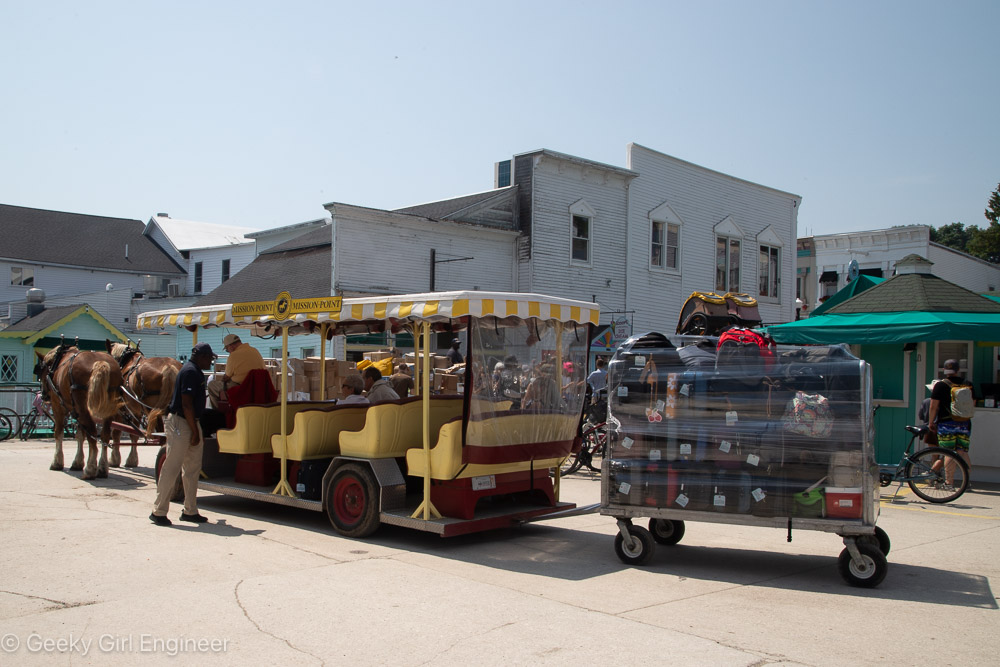
Mackinac Island Transportation
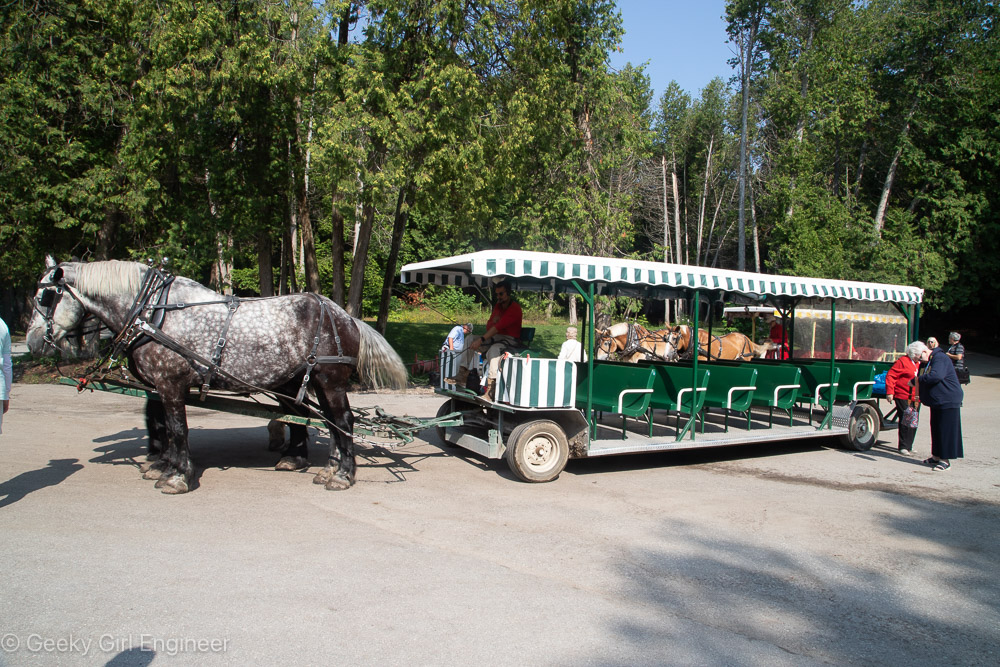
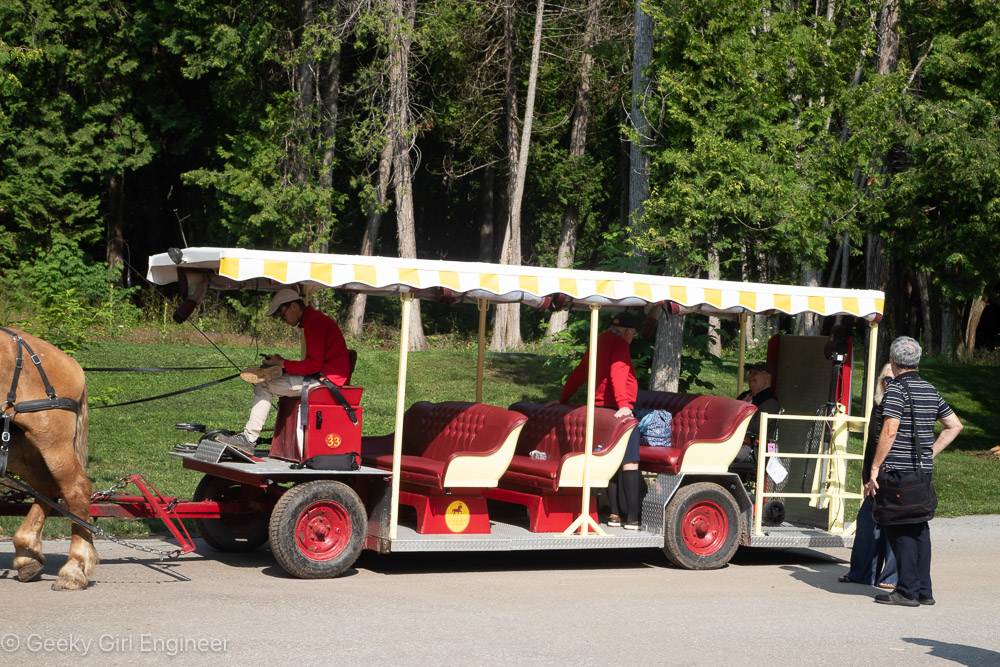
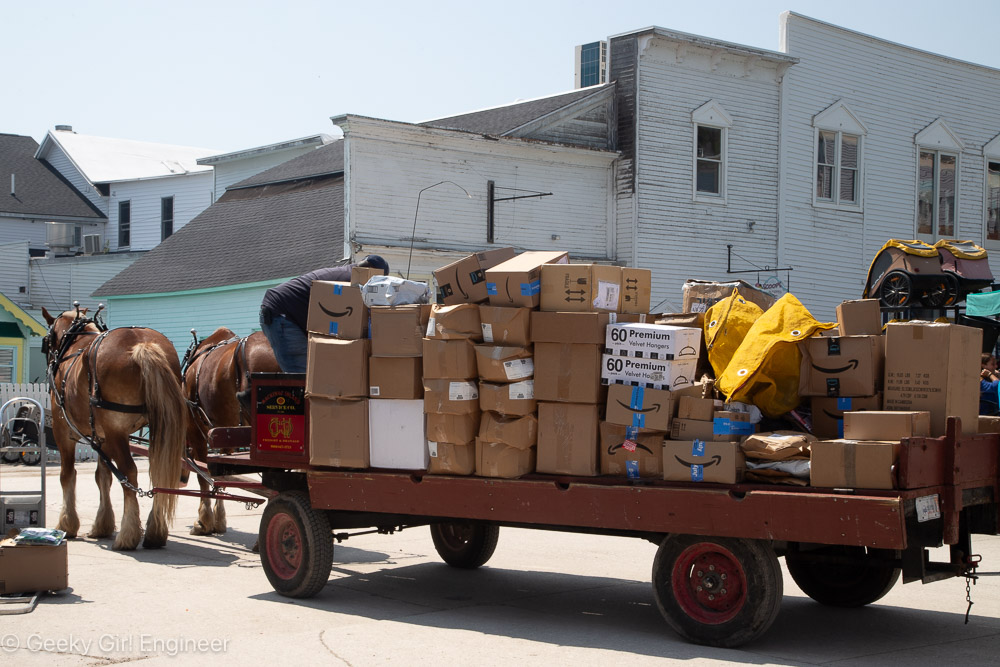
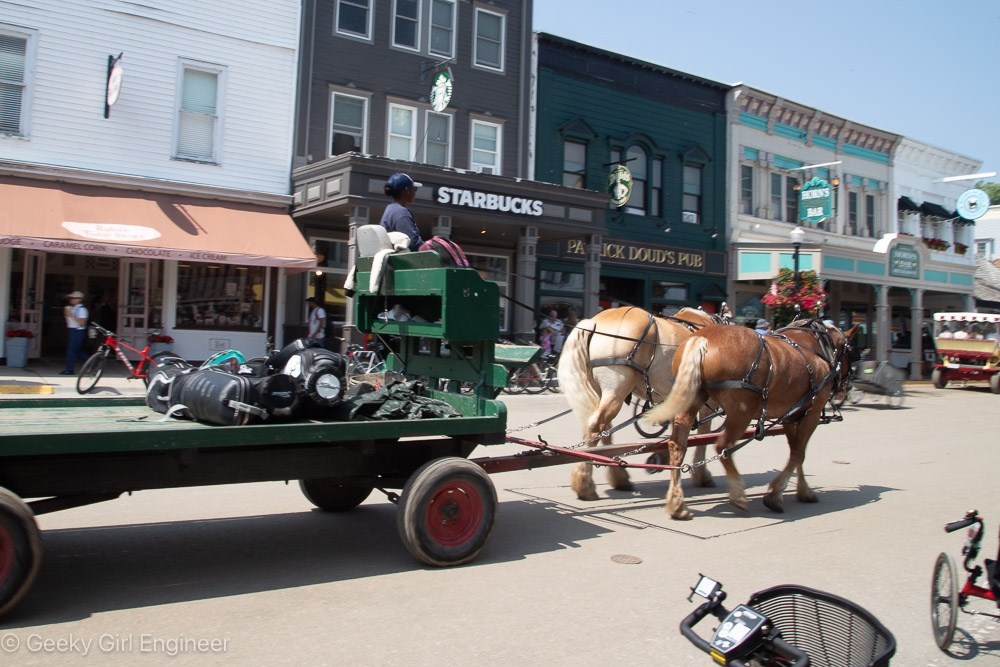
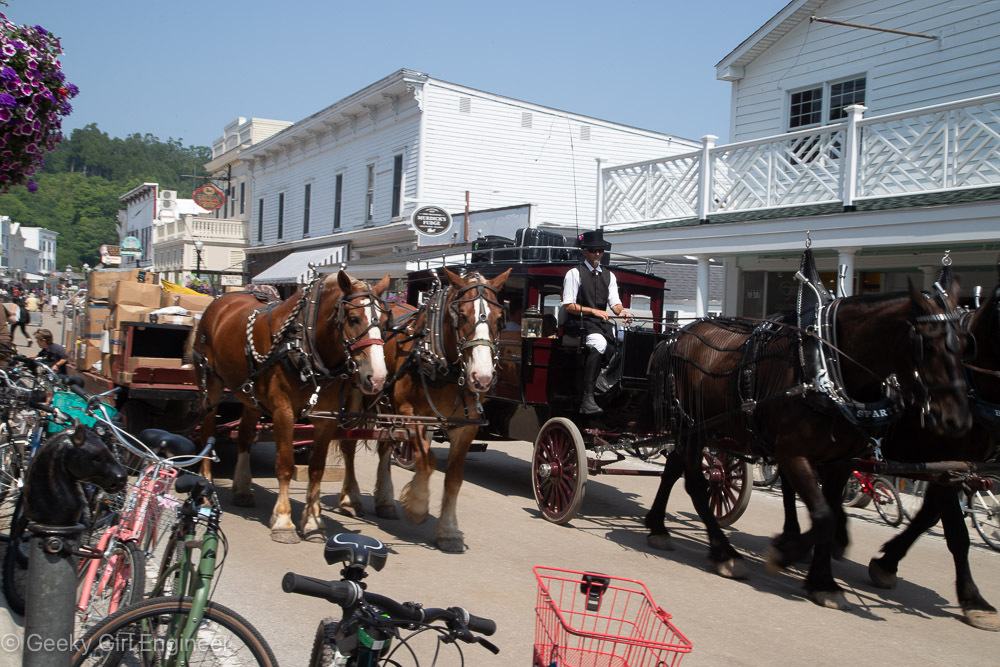
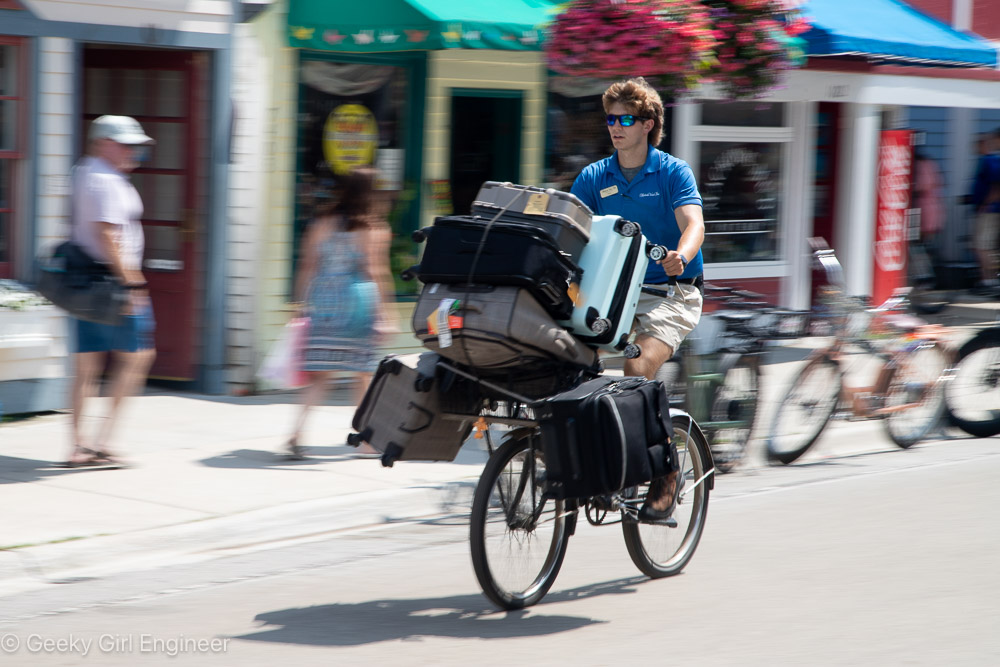
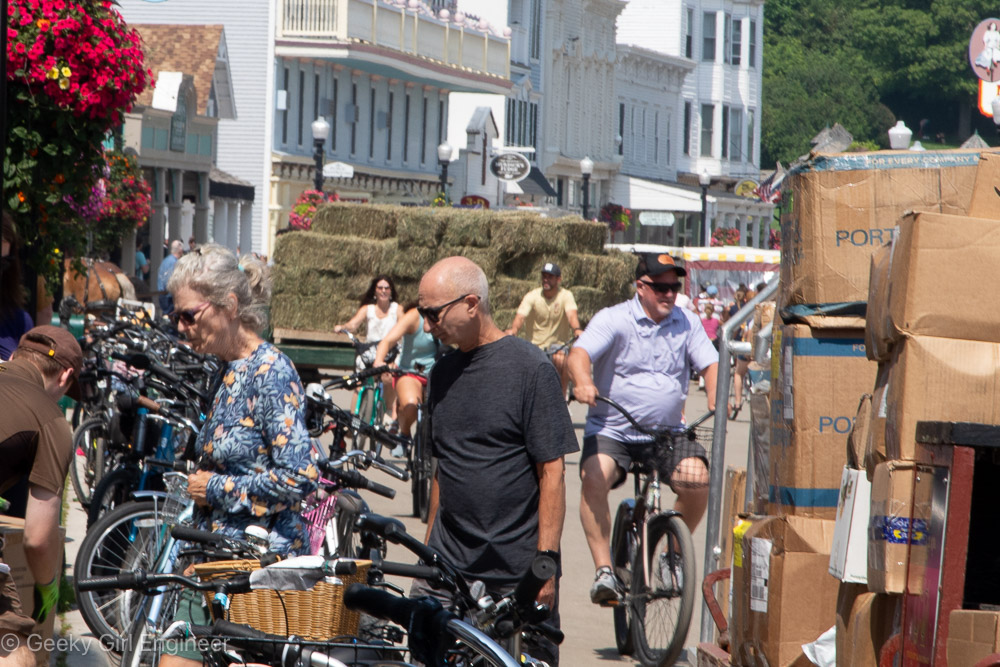
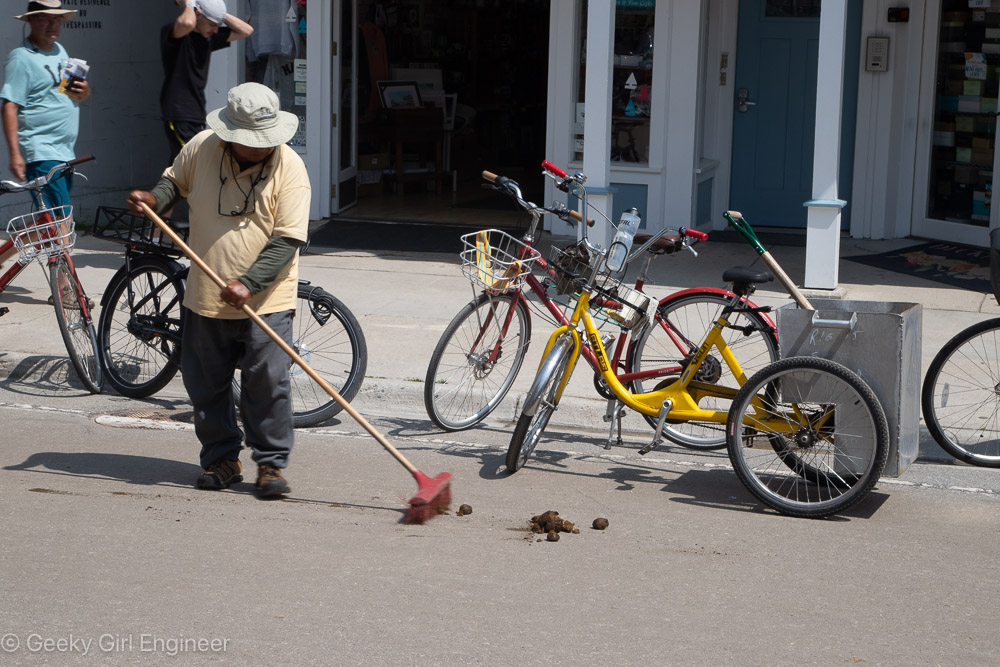
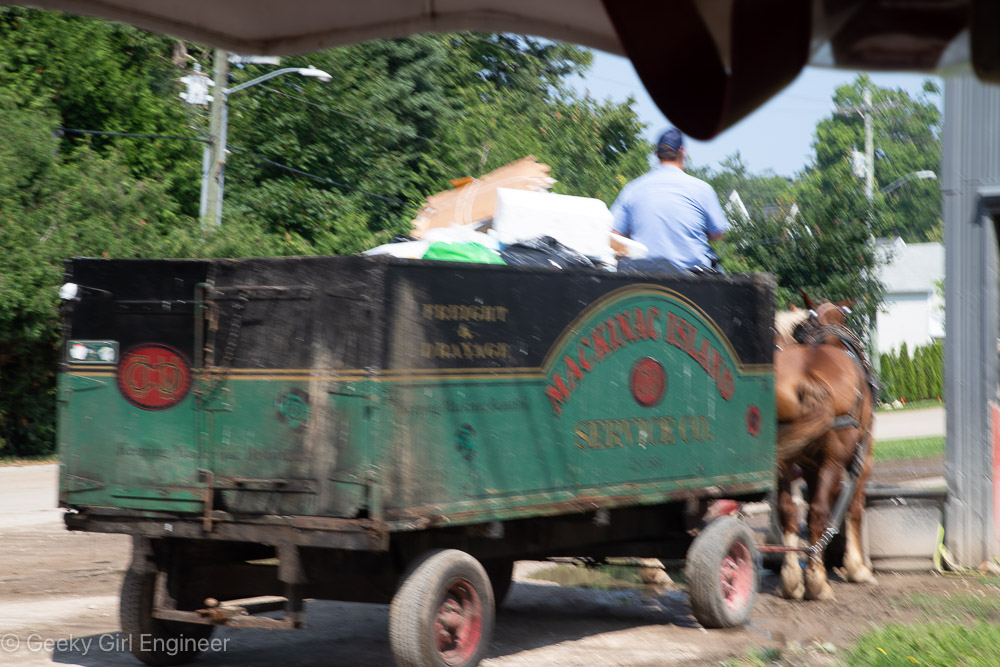
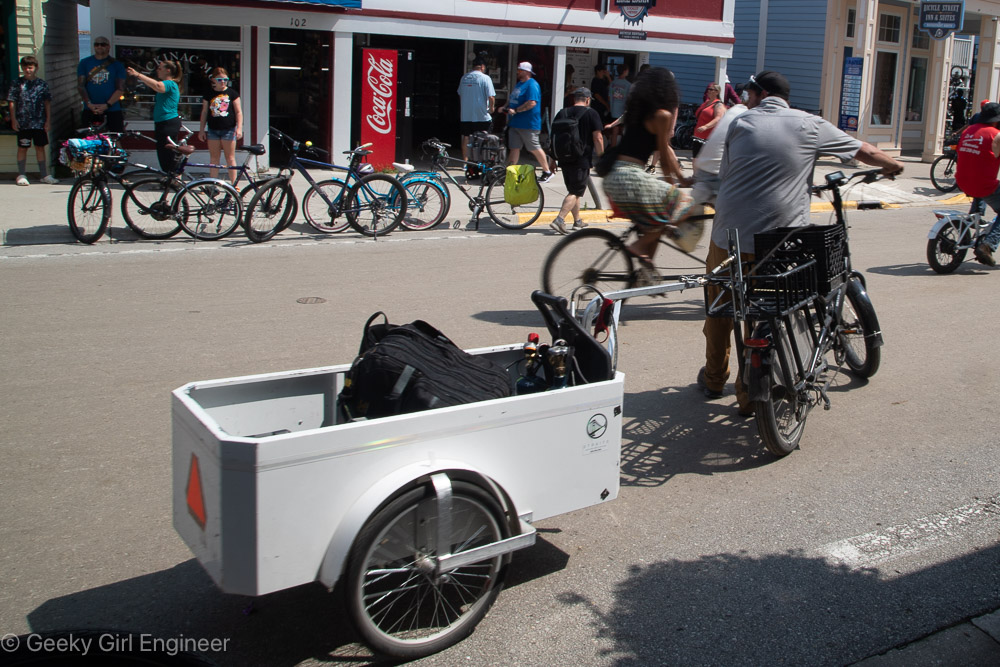
When I was in Venice, I was obsessed with how all transport was done via walking or boats, including utilitarian and emergency services. On Mackinac Island, with the exception of emergency vehicles, everything is done via bike or horses. I couldn’t get pictures of all of it, but I had fun catching photos of as much as I could being done bike or horse, as opposed to what I am used to via car or truck.
Mackinac Bridge
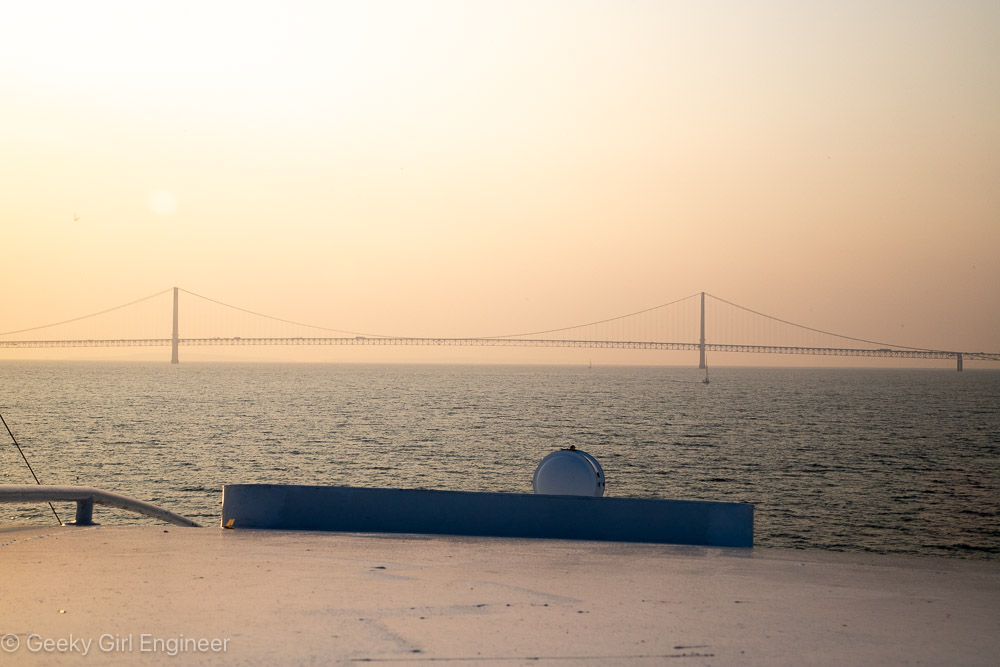
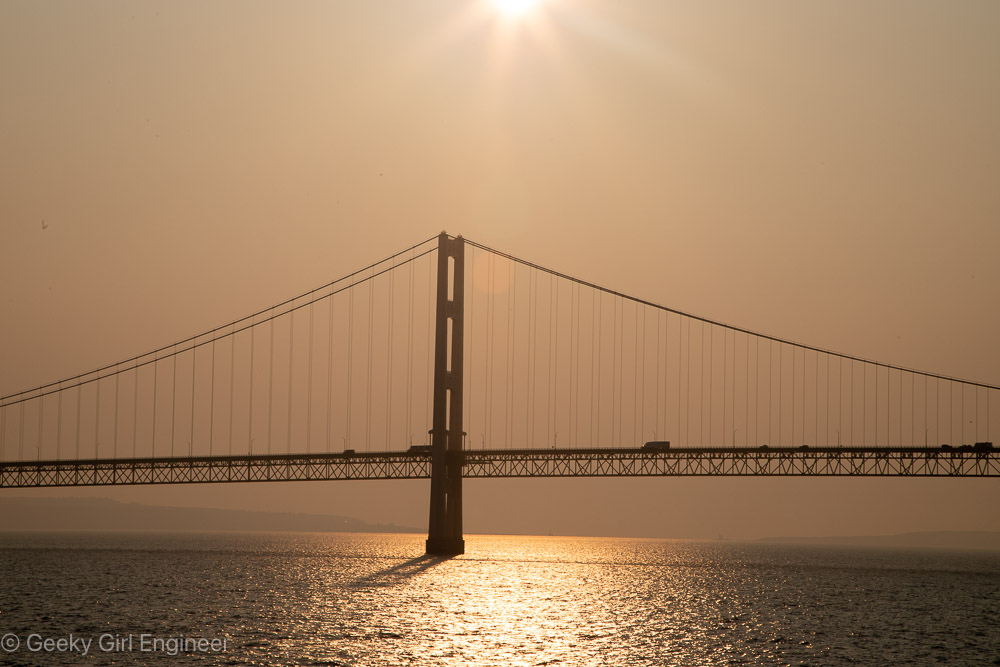
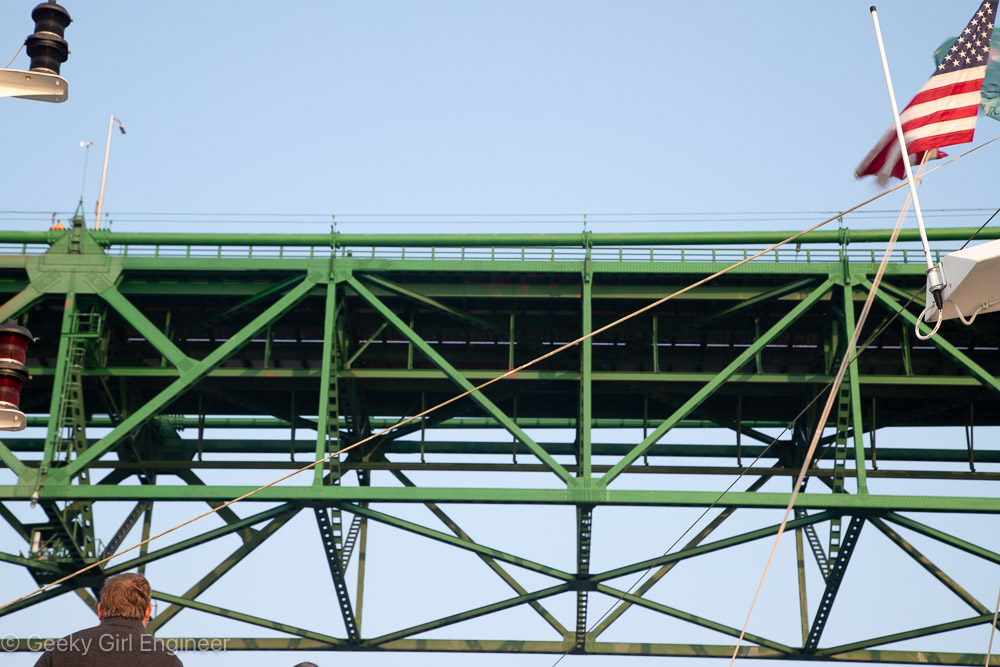
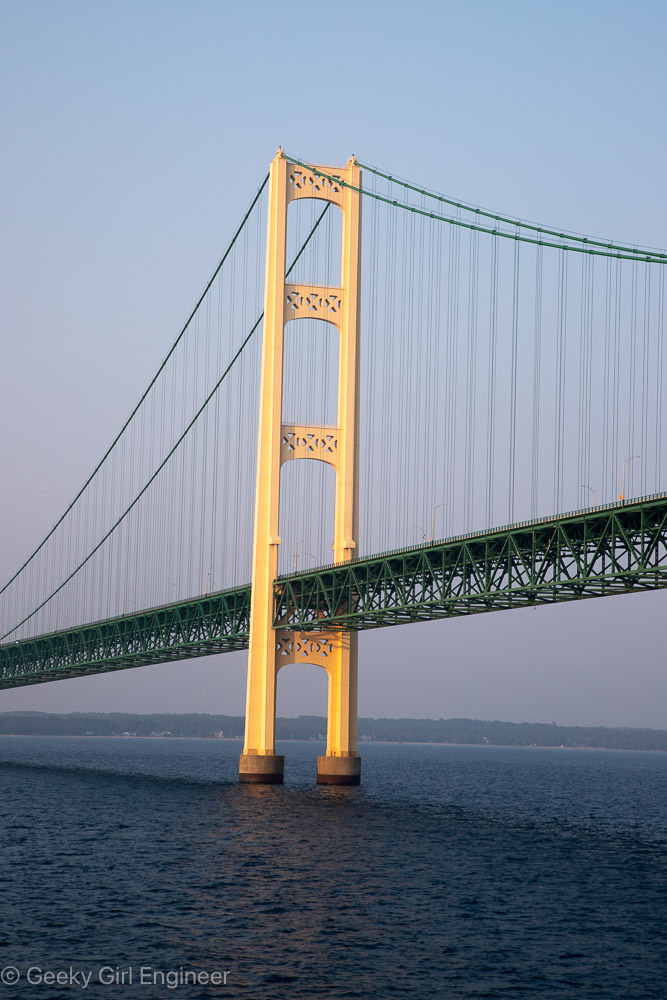
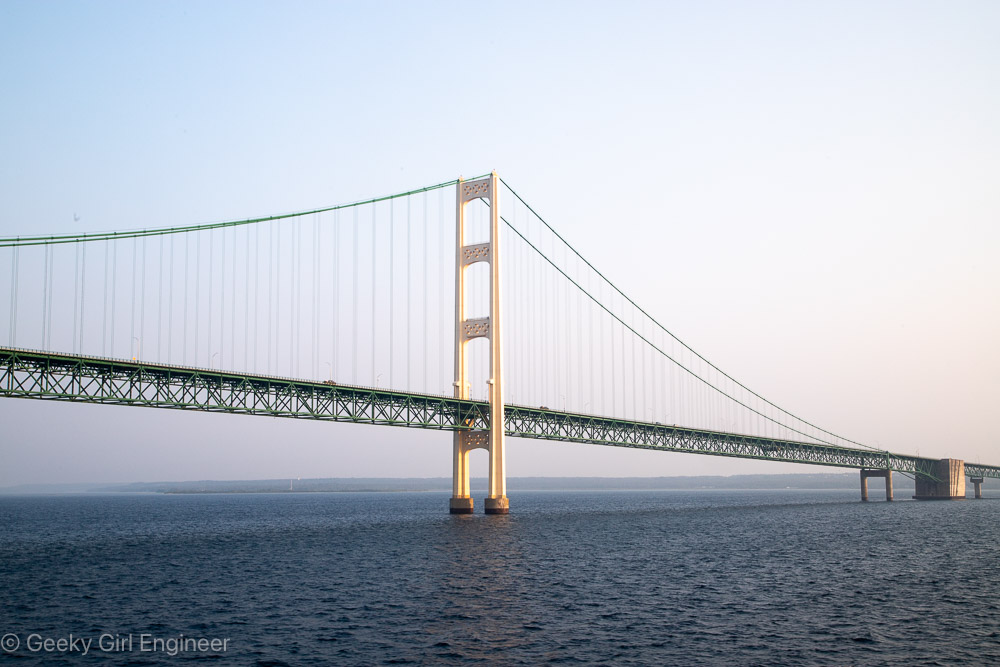
Today my cruise of the Great Lakes arrived at Mackinac Island. On the way there, shortly after sunrise, we passed under the Mackinac Bridge. It is a gorgeous suspension bridge with green metal work. They clearly do maintenance on it as it was built in 1957, and it looks great. Naturally half the passengers on my cruise were outside on deck to watch us pass under the bridge. I was definitely among them. Below are some photos of the bridge.
Alaska Railroad Denali Star
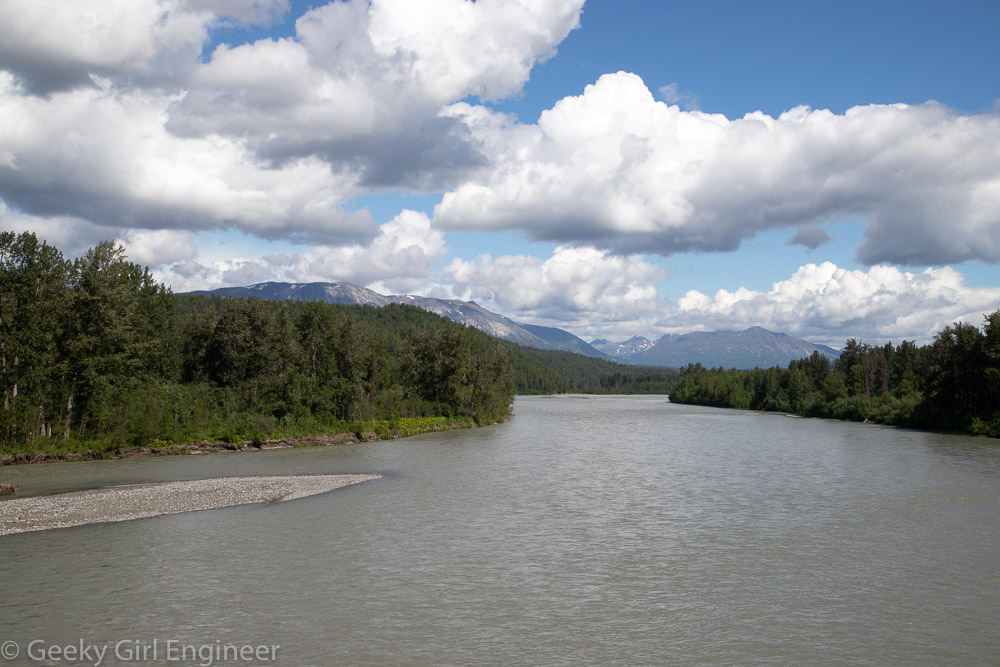
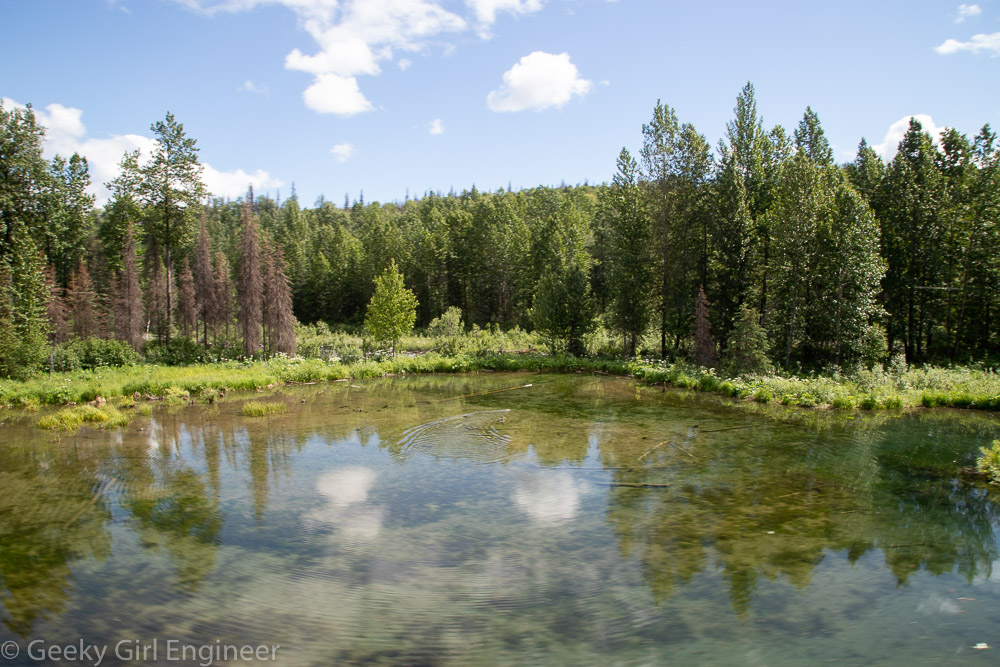
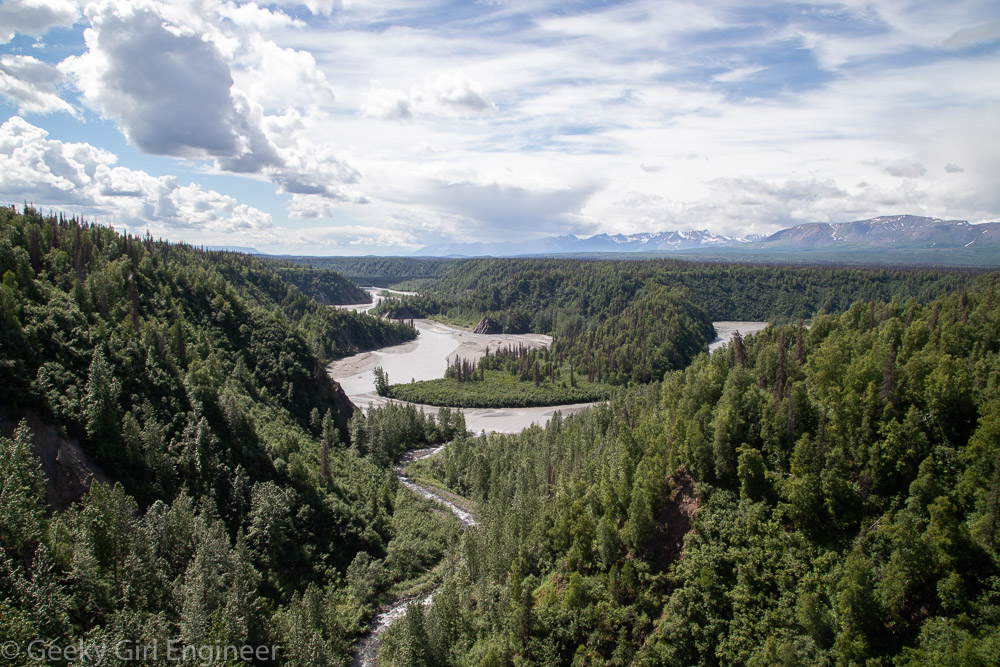
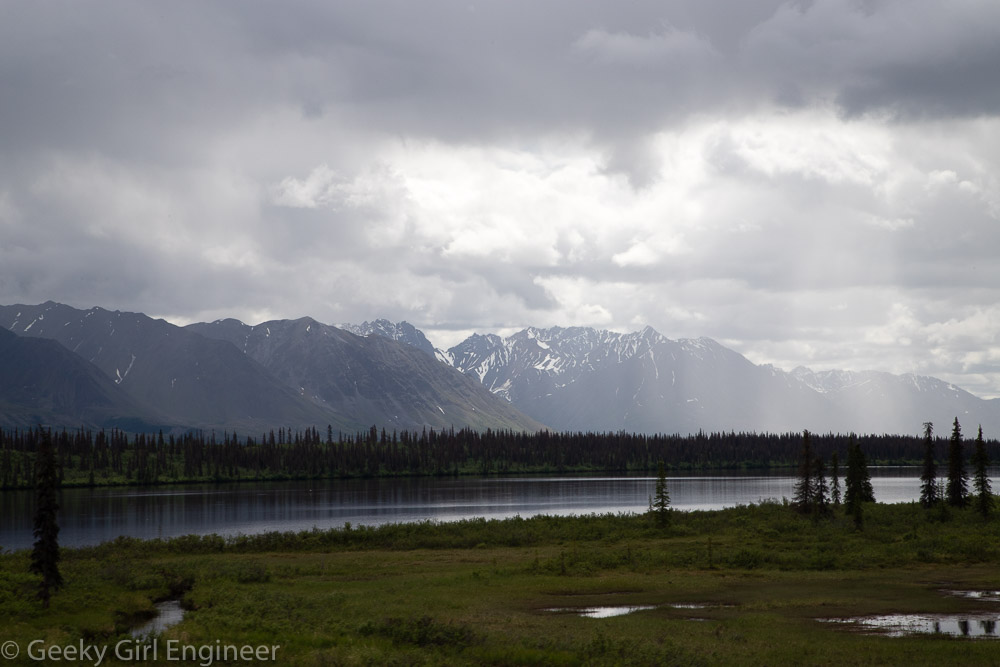
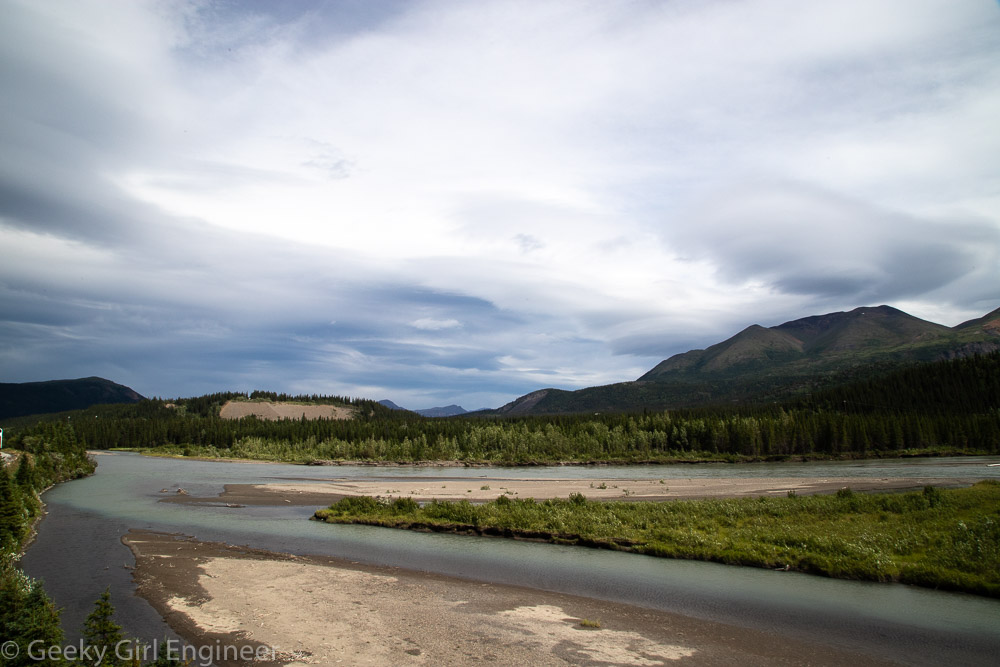
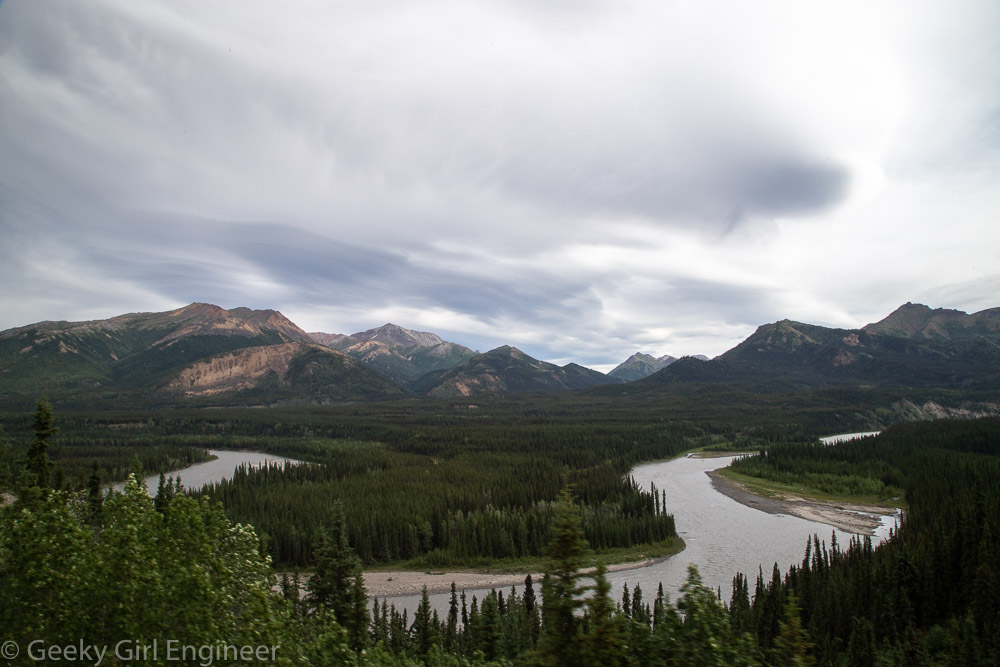
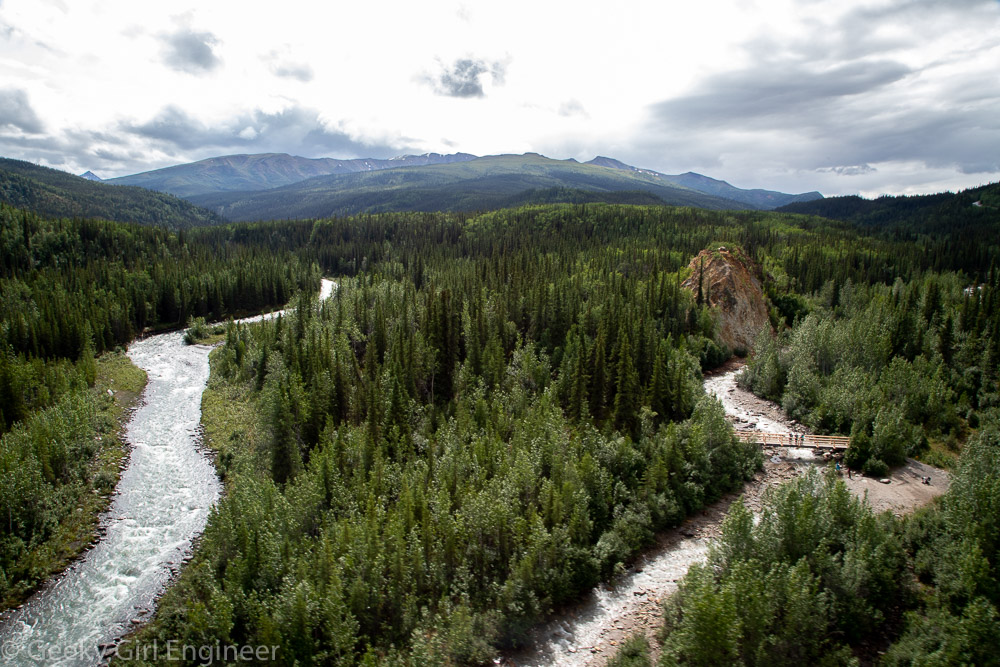
We took Alaska Railroad’s Denali Star to get to Denali from Anchorage and also took it back to Anchorage. The route is just gorgeous. It goes along mountain creeks, glacial valleys, river gorges, and lakes. I was also somewhat obsessed with the clouds and the atmospheric features on both trips because the mountains were creating incredibly interesting skies. Note: the photos below are a mix of photos from the trip to Denali and the trip back to Anchorage. Also, some of the photos below include the Nenana River on which I went rafting. Also, a different view of the Hines River, featured in the photo at its confluence with the Riley River, can be seen in my photos from hiking in Denali National Park.
As this is my second round trip on Alaska Railroad, with the trip to Seward being the first, I highly recommend paying extra for Goldstar seats if you are a photographer. Besides the free meals and glass-dome ceilings on the cars, the Goldstar cars also have an outside platform passengers can go out onto at anytime, which obviously makes for much better photos. Also of note, there is an Alaska Railroad employee pointing out places of interest along the journey and letting you know when you might want to get a photo. I found it very helpful, but for reasons that are beyond me, on the Denali trip, they kept pointing out gravel pits as points of interest. I’m a geeky engineer, and even I can’t figure out why they think we all find gravel pits incredibly interesting.
Alaska State Ferry: MV Kennicott
Thirty years or so ago, I took a cruise to Alaska starting in Vancouver and ending in Whittier through the inside passage. I wanted the cruise portion of that trip again, that is, the part where the boat takes you through the inside passage. However, I wanted more time in some of the cities to explore. The solution I came up with was to take the Alaska Marine Highway System, i.e. the Alaska State Ferry to a couple of cities then because the schedule is a bit infrequent for parts of the trip, to fly for a portion of the trip.
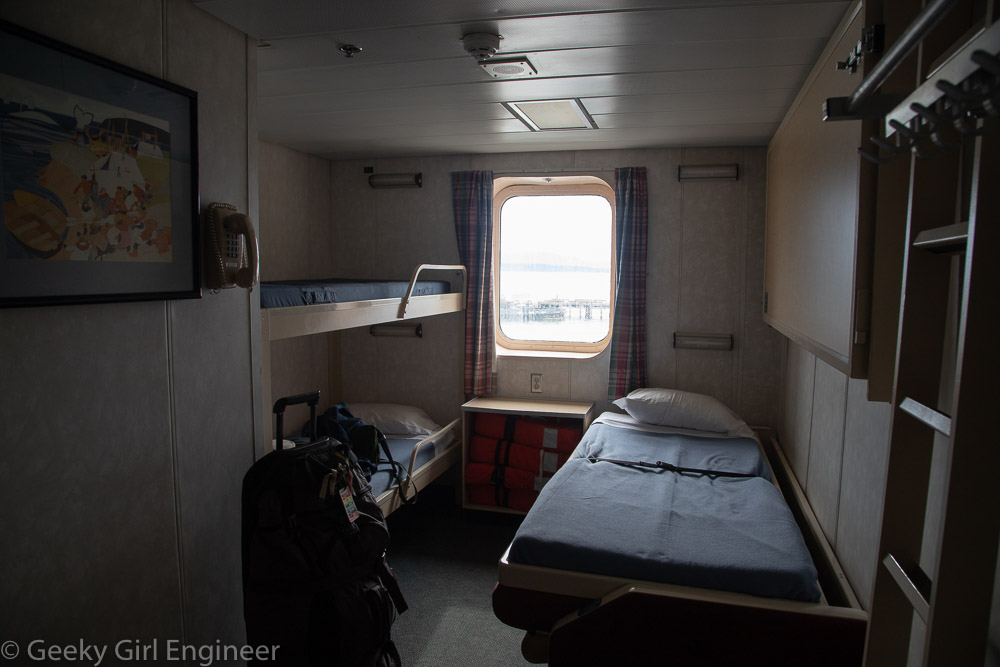
The ferry goes as far south as Bellingham, Washington. I flew to Seattle and then took a bus to Bellingham. There is an Amtrak train and also a bus that drops you off about a block or so from the ferry. Then after a lovely lunch in Bellingham, I boarded the ferry, in this case the MV Kennicott. We reserved a four berth cabin. There are only two of us traveling, but the two berth cabin does not have a private bathroom. We splurged for the four berth for the private bathroom and extra room. The room is rather small, unsurprisingly. It is rather spartan really. Cruise ship cabins are small, but generally they are well designed with lots of drawers, shelves, and other areas to unpack things. The ferry was not designed for that. The ferry cabin was designed for you to sleep but not really for you to place your luggage anywhere.
We didn’t spend that much time during the day in the cabin though. They have a cafeteria for meals, but you can also bring your own food and use their microwave or their hot water. The food is ok, but if you have any dietary issues, you need to bring your own food. There is not that much choice with the food.
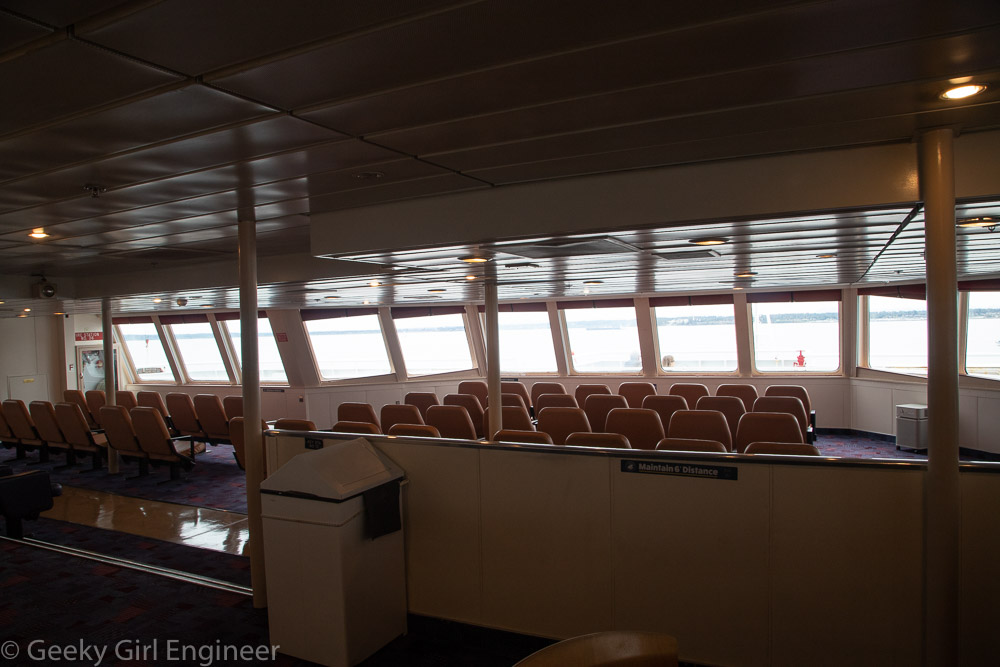
Also, there are a couple of sitting areas, including the popular forward observation seating area. The front observation seating area is set up like a theater, so you can relax and see where the ship is going.
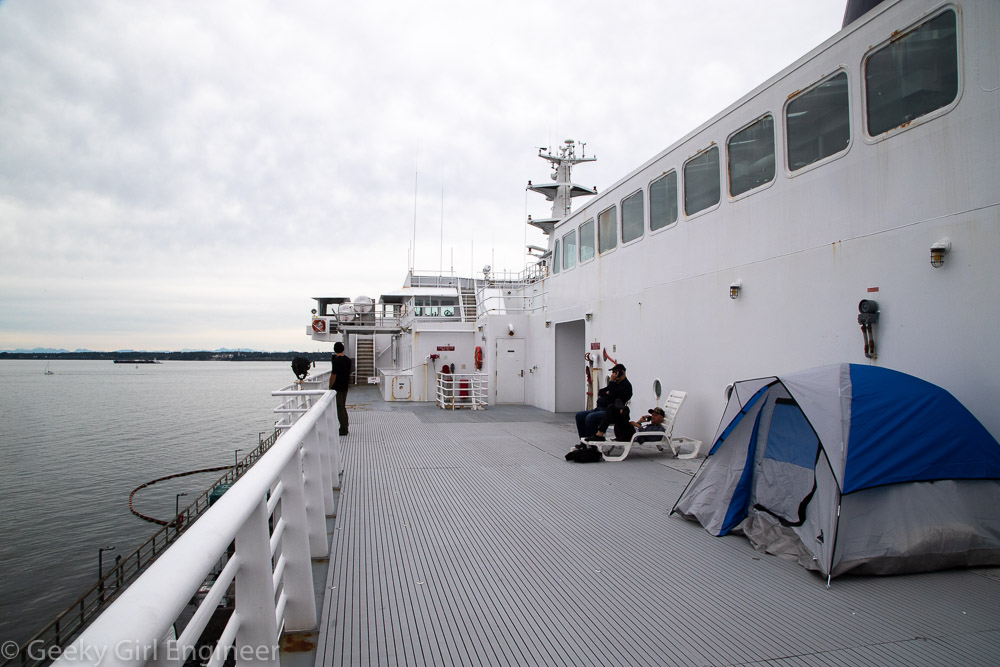
There are also several outside decks where passages can go. Many people choose not to pay extra for a cabin and camp on the ship. There were camping tents set up in on several of the wider outside decks. Some people had rather fancy set ups for their tents.
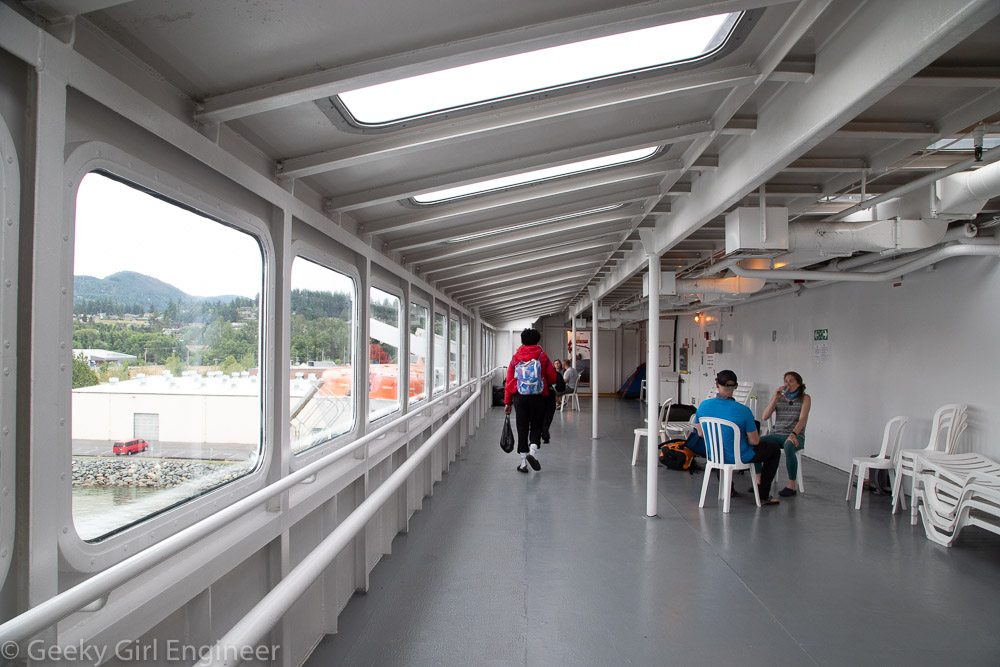
There was also a large enclosed solarium where people camped. The area was quite warm, so people might be able to camp there without an actual tent.
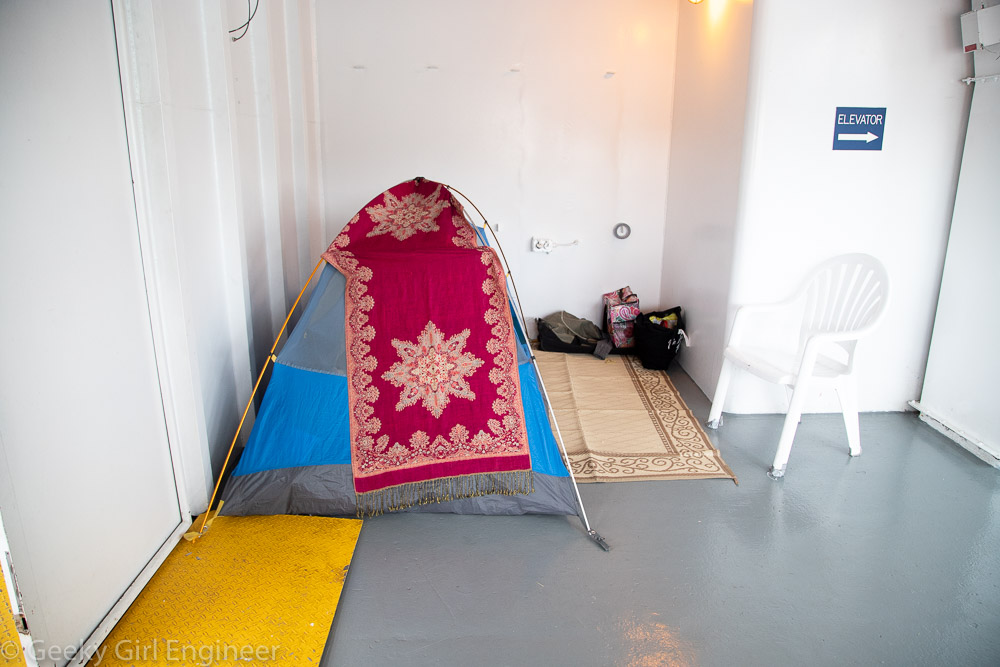
People’s camping areas in some cases were involved. One had an entry rug. One hung a hammock between poles. There were clearly experienced campers on the ferry.
The ferry is definitely not luxury travel. However the route is wonderful and allow you to cruise the inside passage without having to be tied to a cruise ship’s schedule of one day per port.
Venice: All the boats
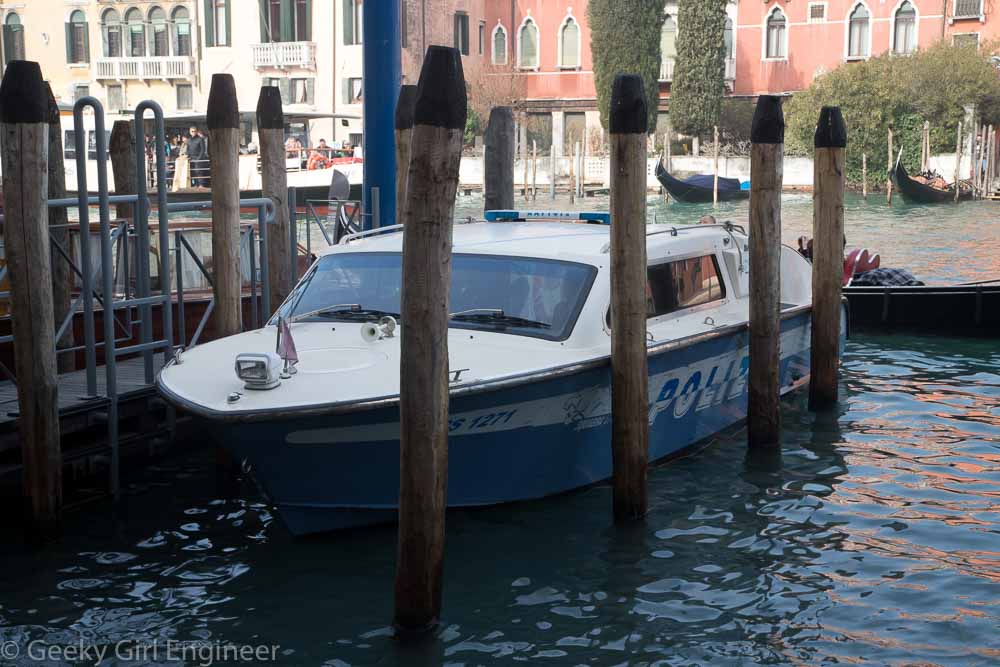
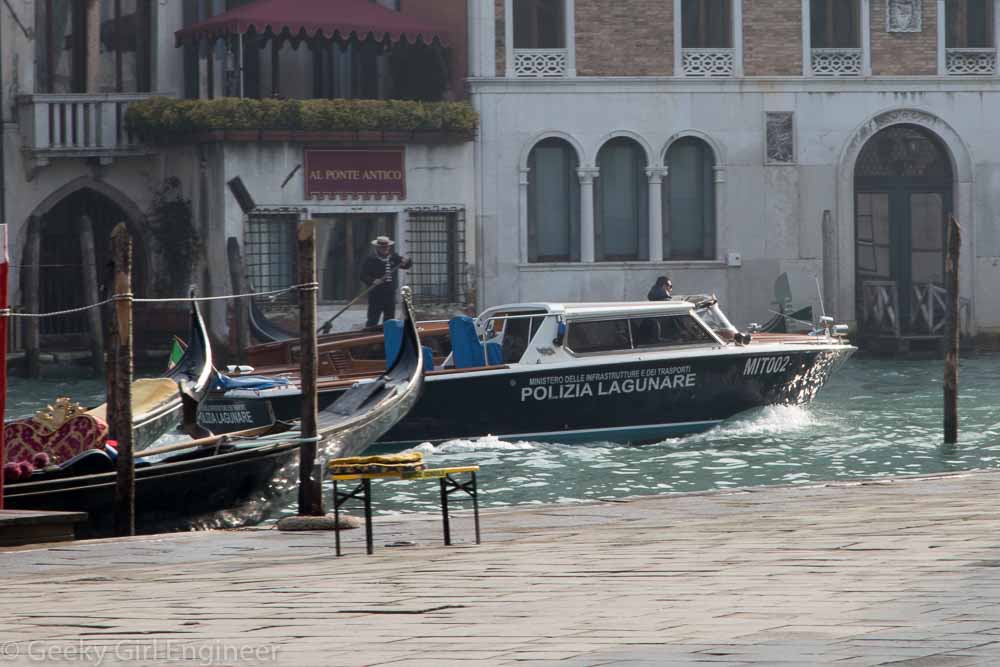
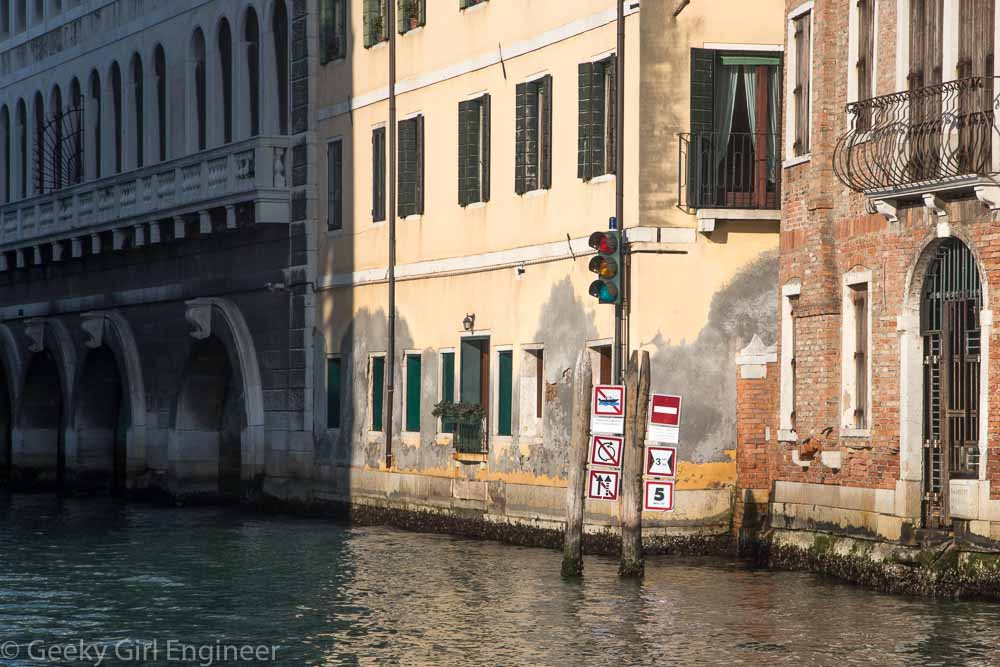
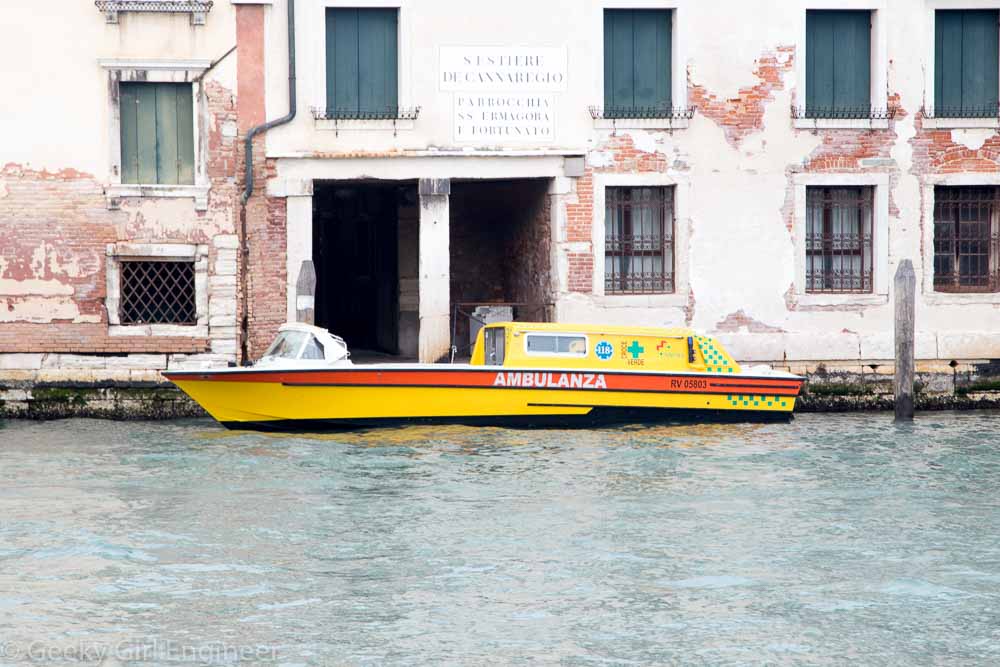
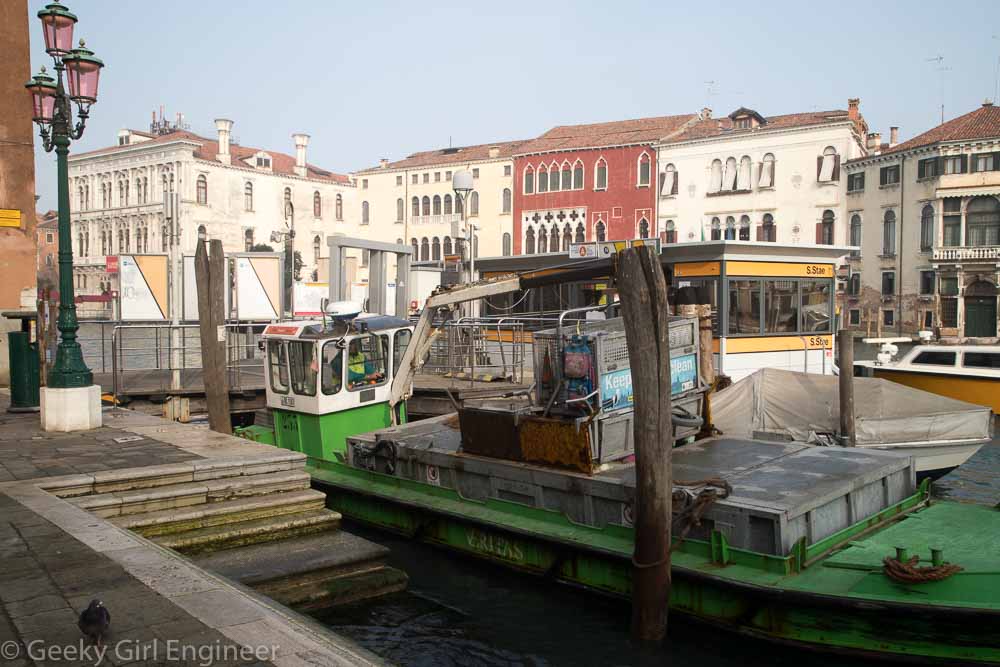
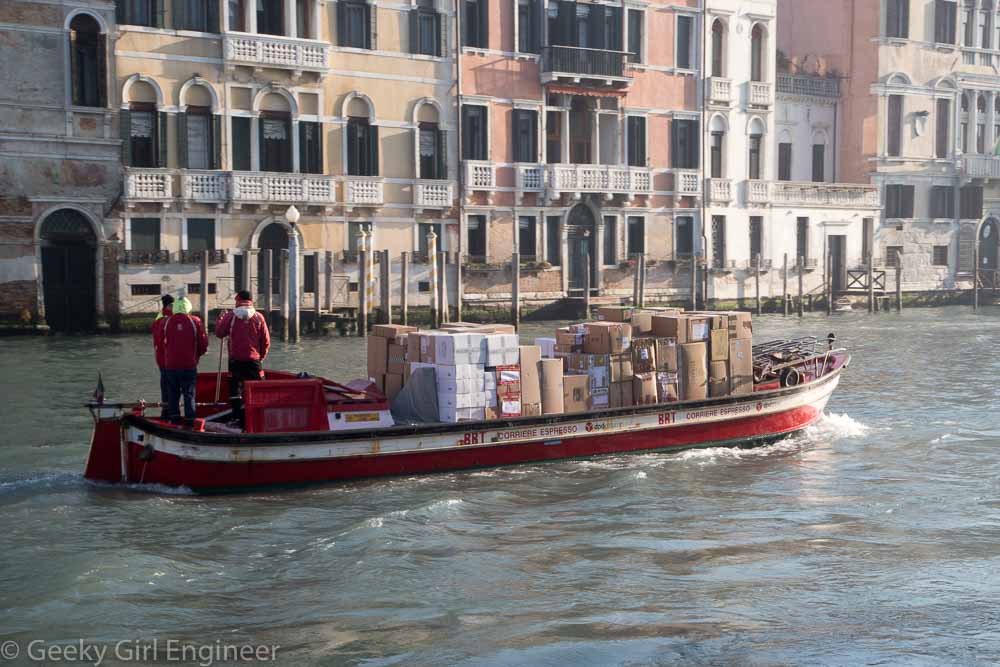
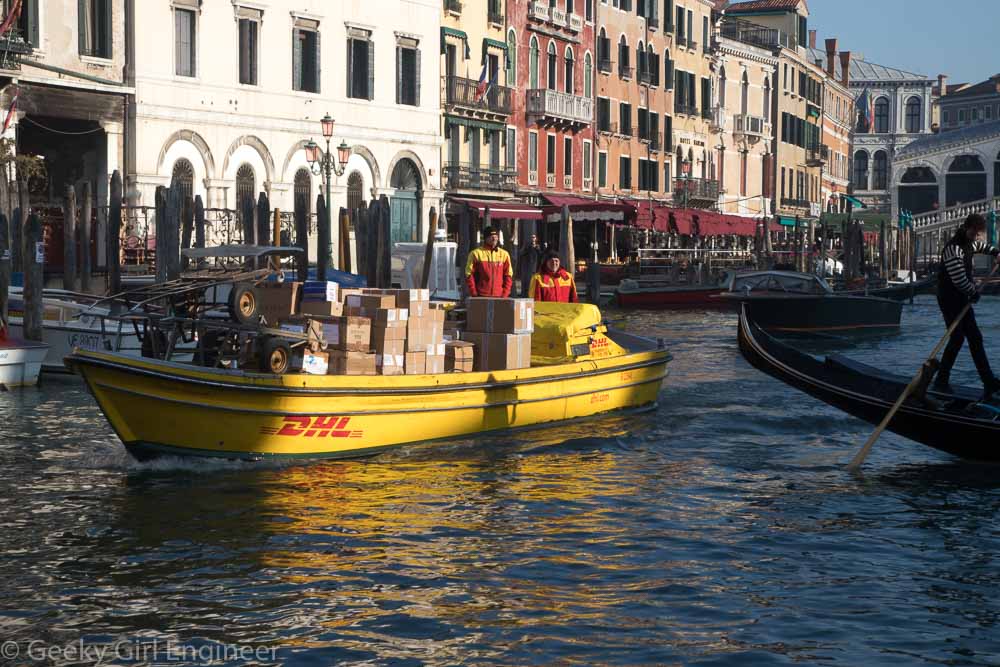
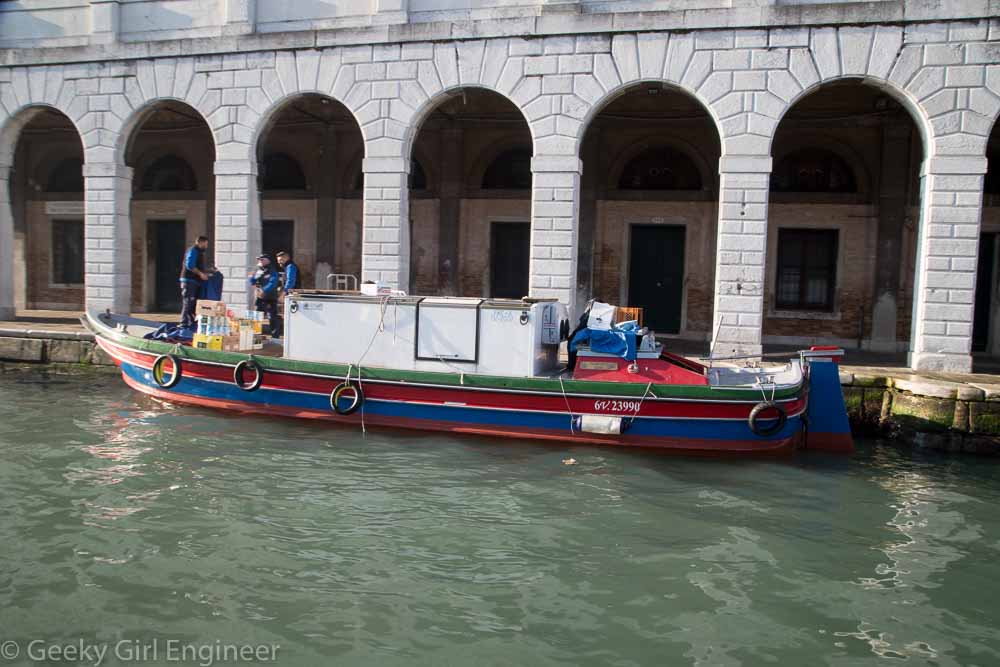
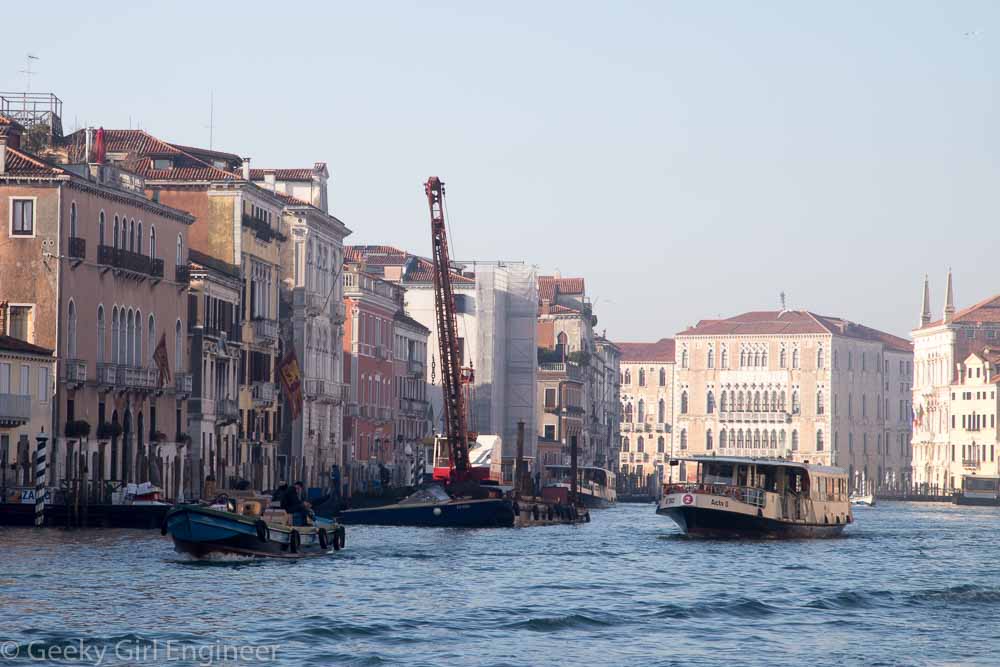
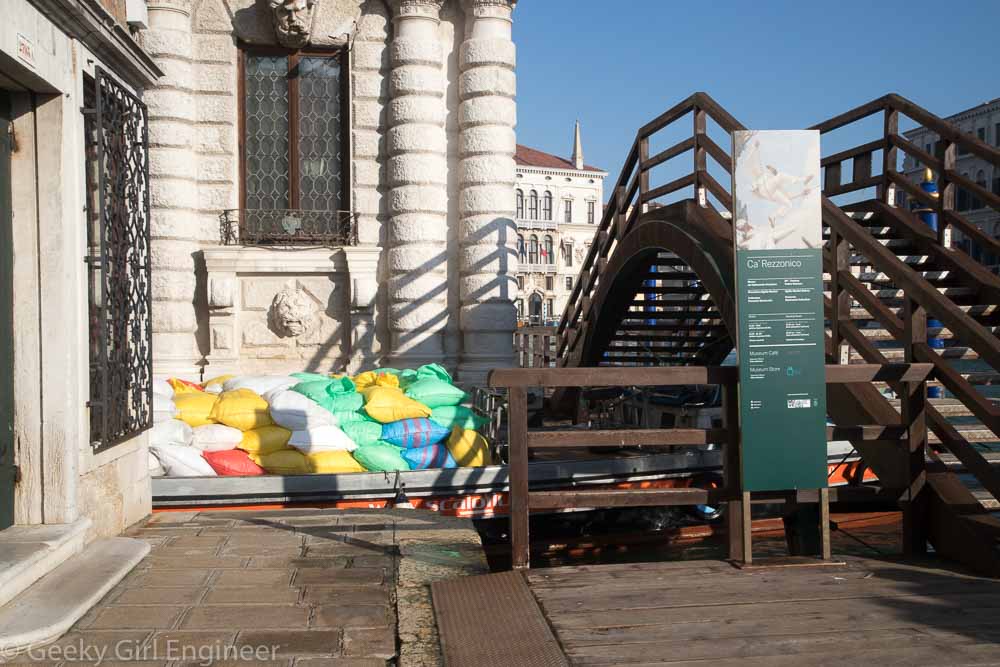
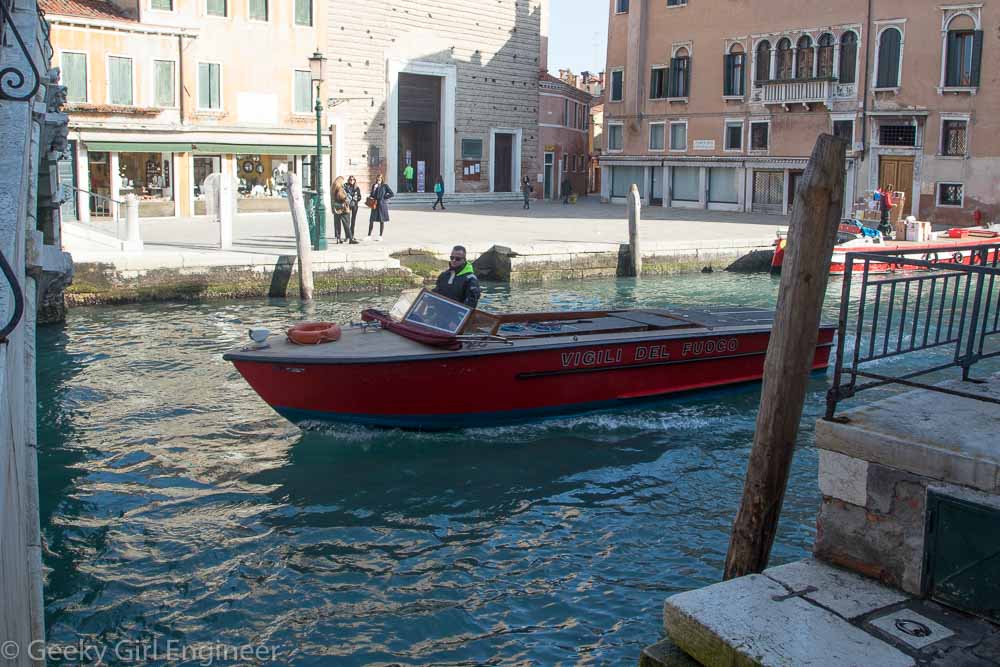
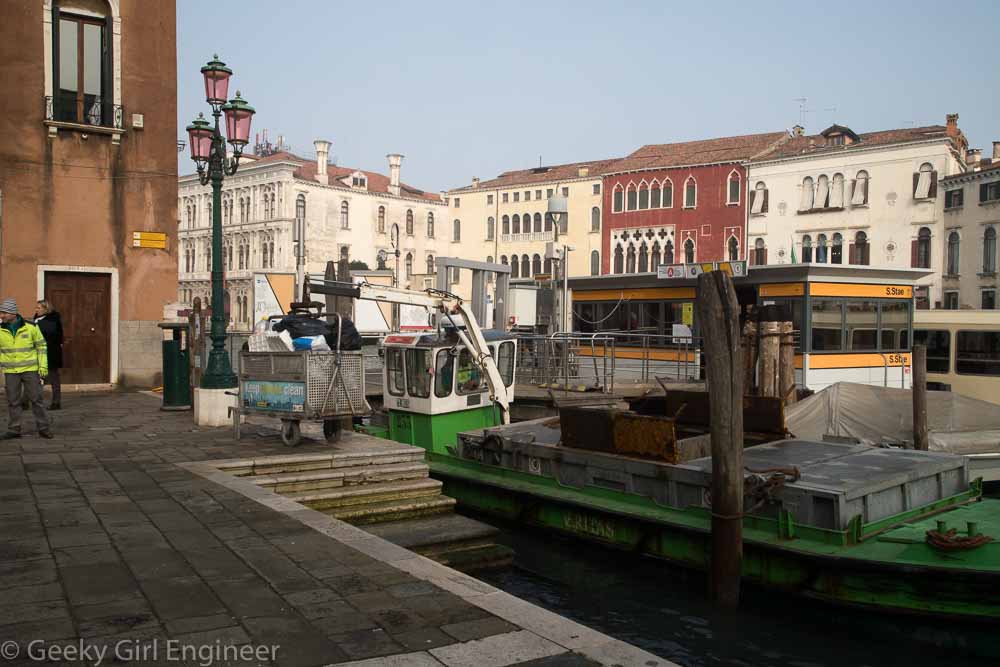
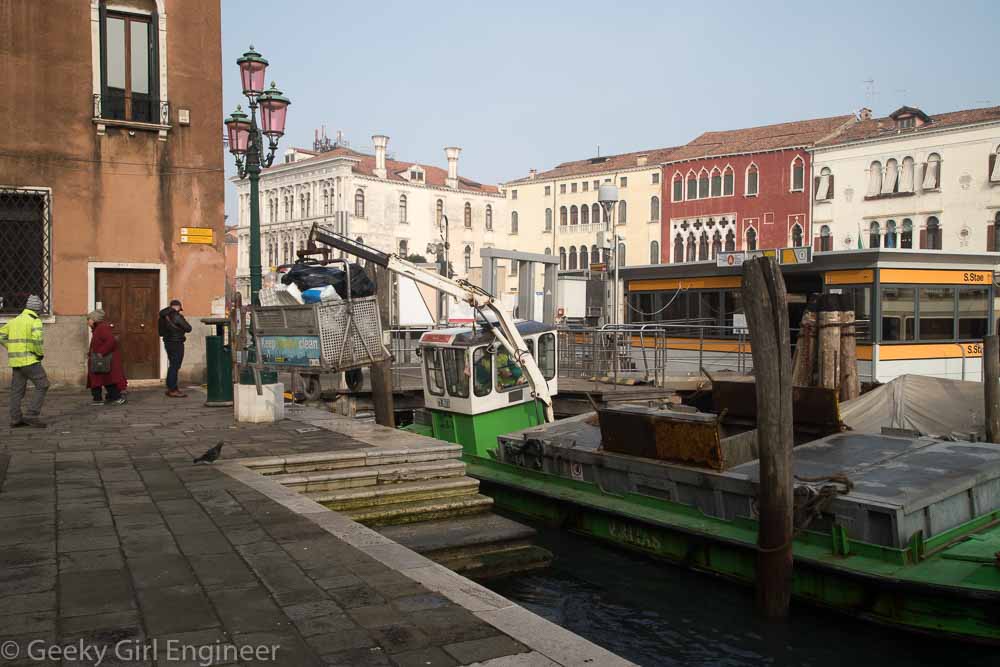
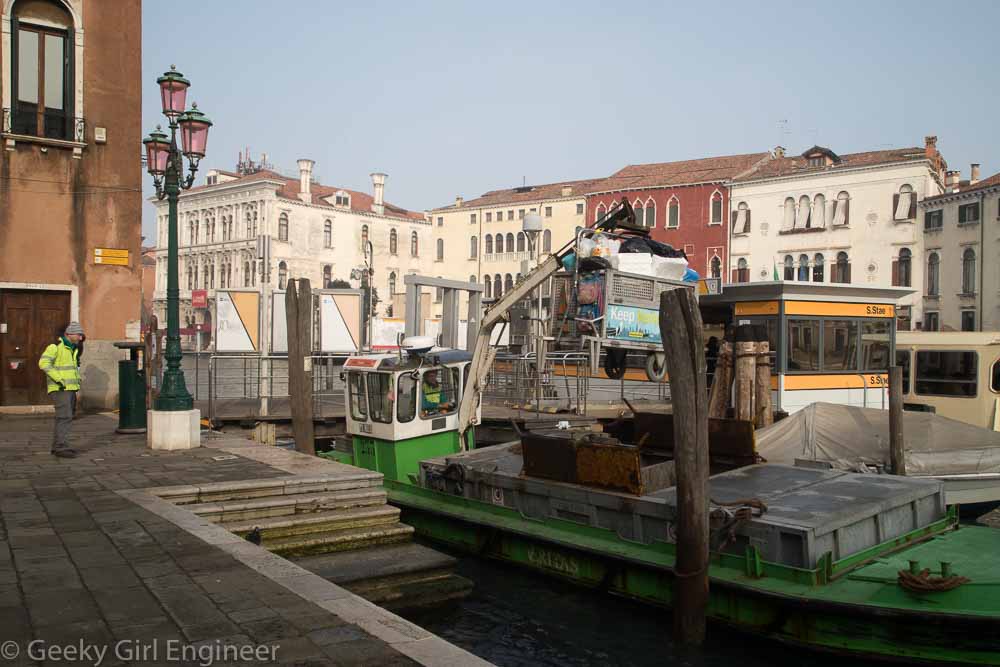
I am somewhat obsessed with the infrastructure of Venice, including transport. There are no cars, nor any other powered land-based vehicles. Everything is transported by land on foot or water by a boat of some type. Everyone gets around by foot or boat. I am unclear how the firefighters get the hoses to a fire. However, I was lucky enough to see the garbage boat in action taking a garbage basket that a garbage worker had brought to the canal.


Venice: Gondolas
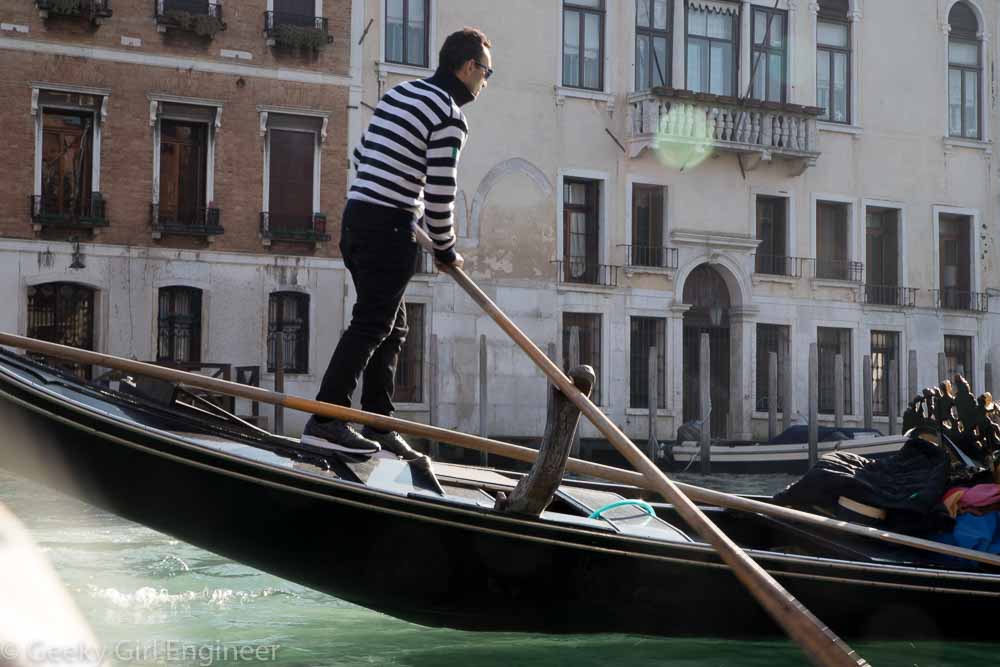
Today in Venice was Gondola Day. We started the day by going to a place where they make gondolas, restore old ones, and do maintenance on them. Then we went to a shop where they make certain pieces for the gondolas. We followed it up with a gondola ride through some canal with musicians.
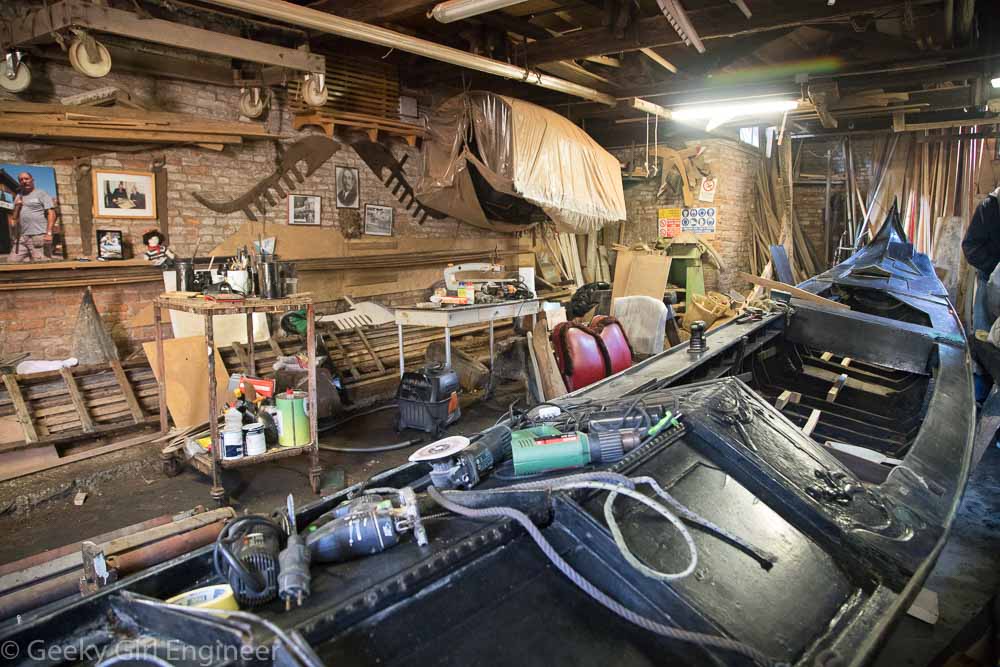
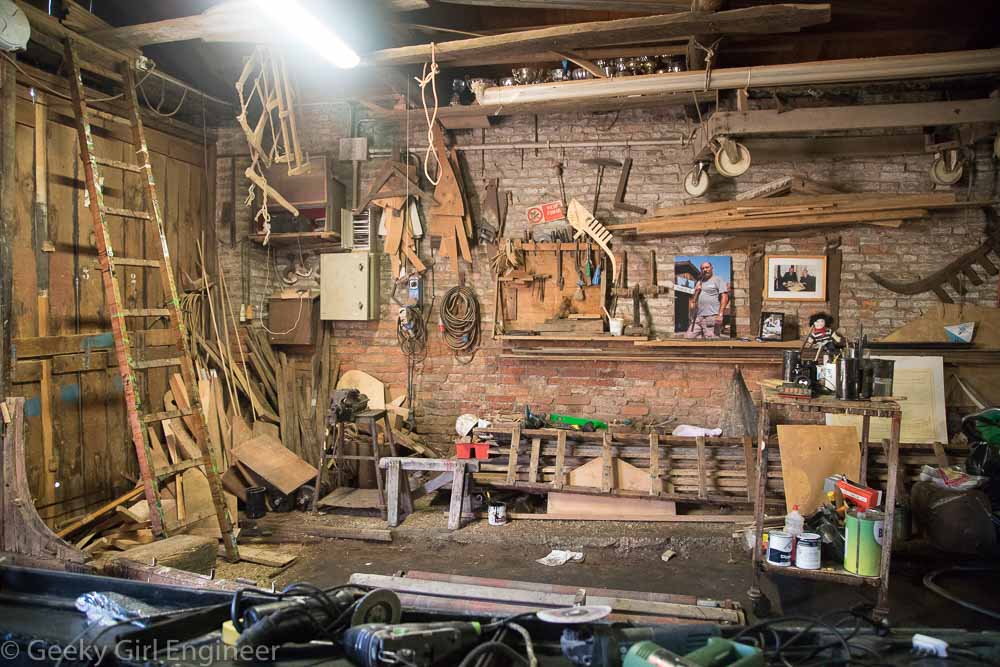
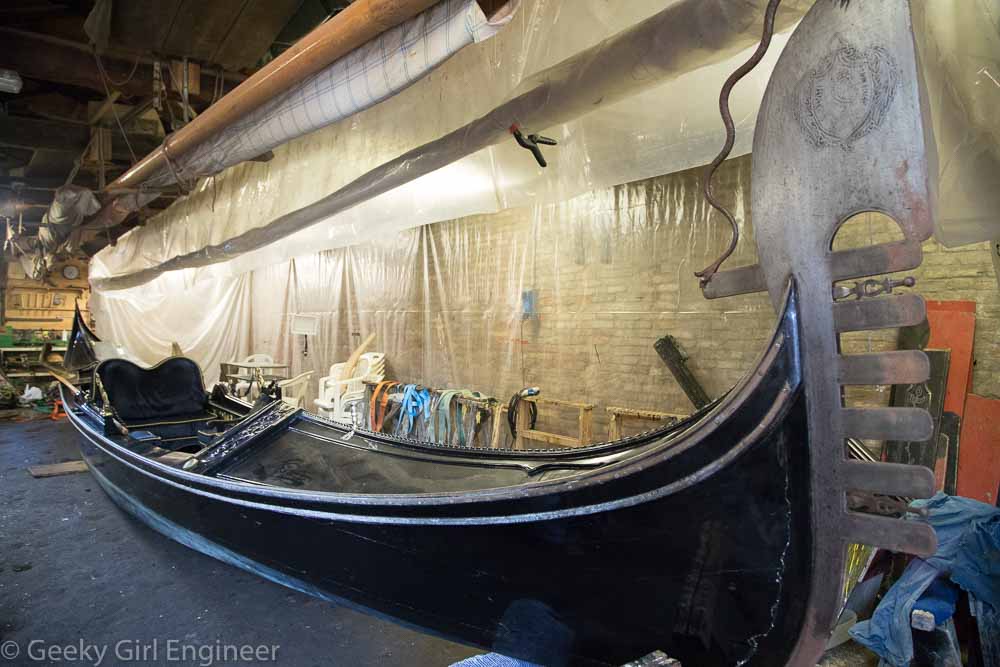
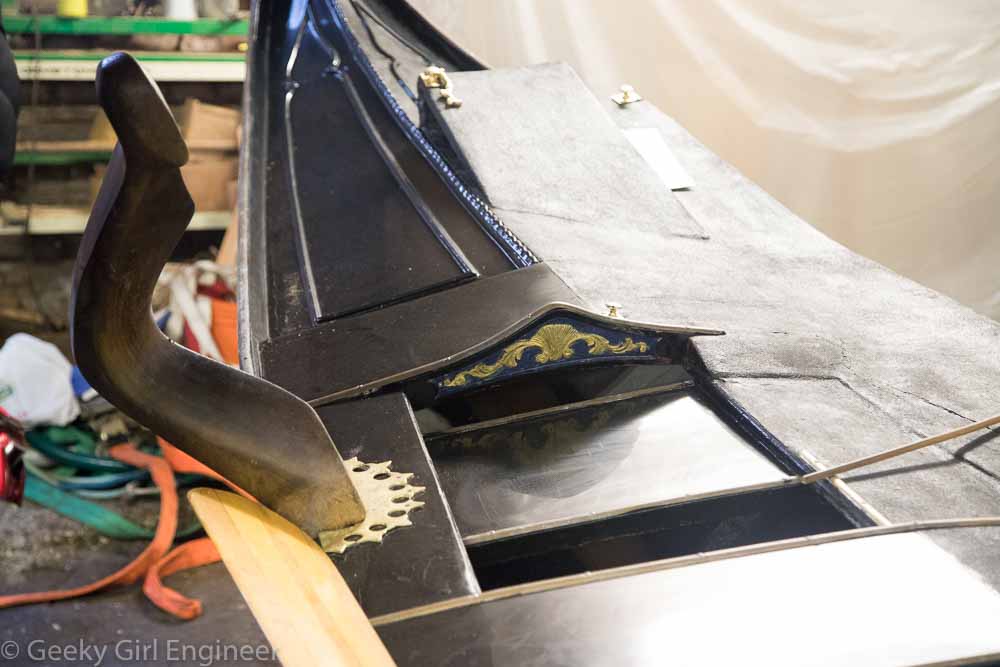
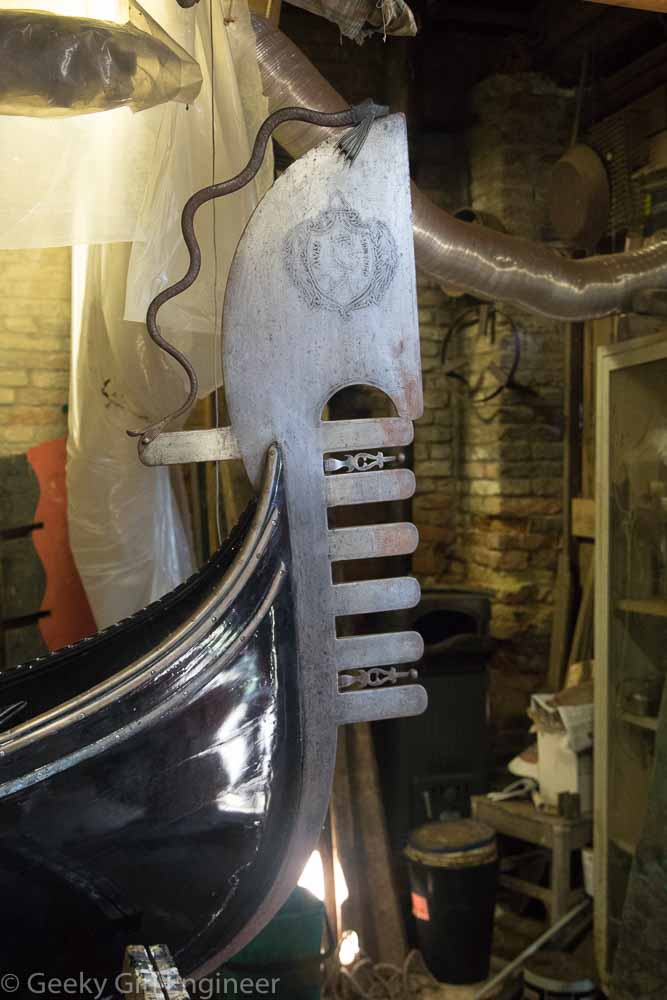
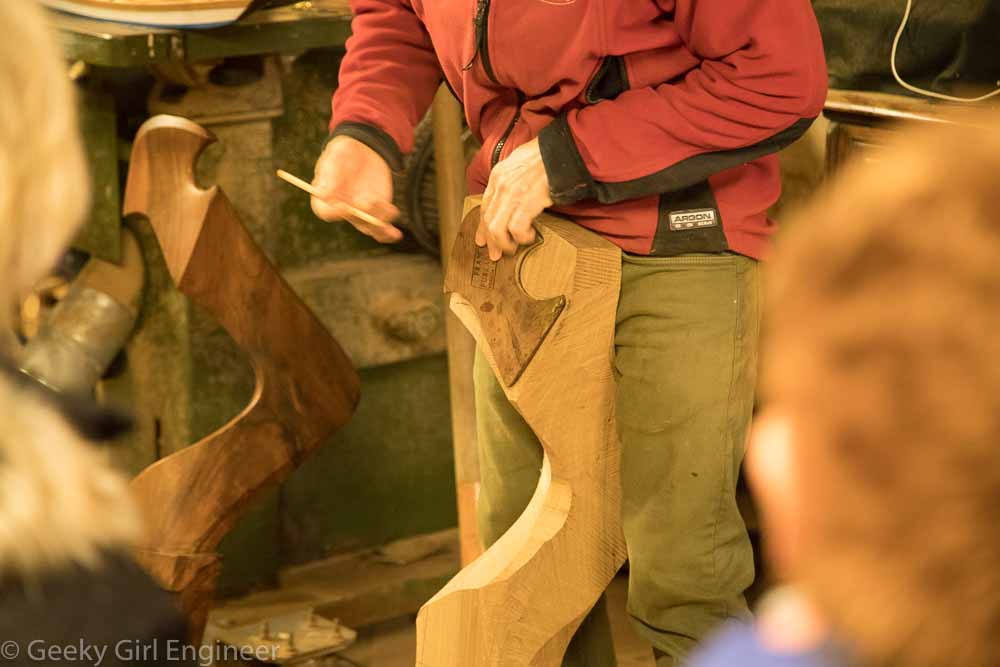
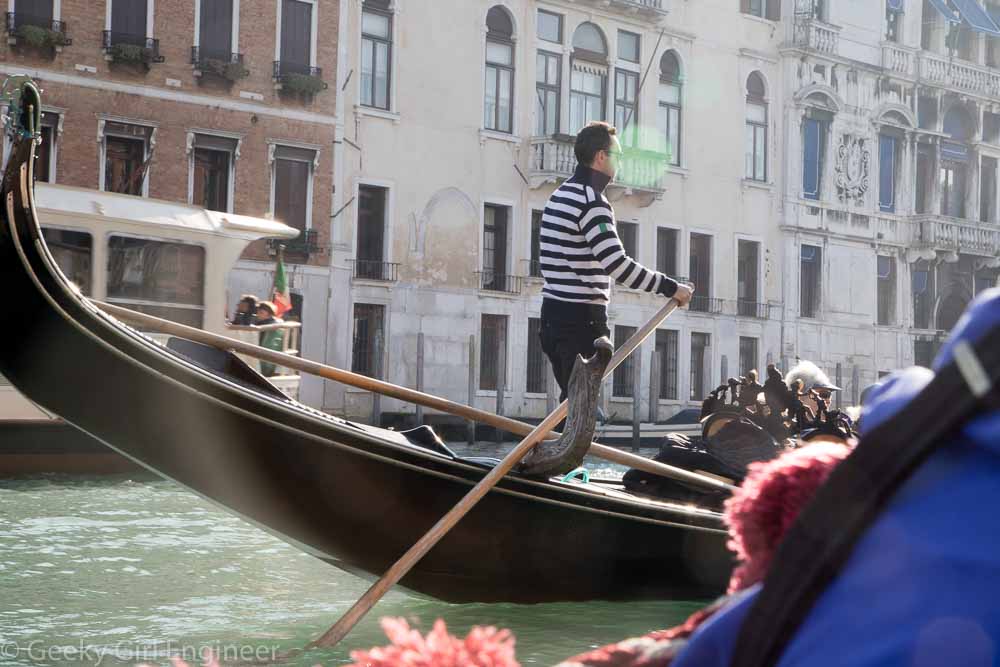
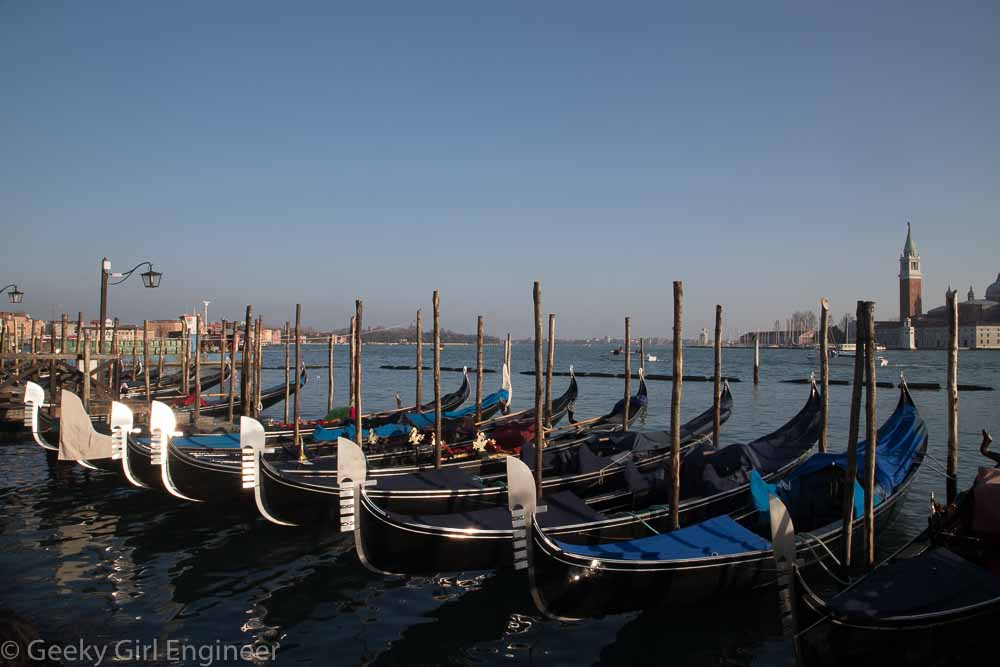
First, we went to Squero Tramontin (Domenico Tramontin e Figli) where they make new gondolas, restore old ones, and do maintenance on currently used ones. The company is currently owned by two sisters, who inherited it from their father. It has been a family business for five generations, since 1884. Elena Tramontin explained to us how they make a gondola and the history of them. Originally gondolas were used for everything in Venice including police, ambulance, etc. They were also originally operated by two gondoliers, but the shape was changed so that one gondolier can operate it. All gondolas are completely flat bottom, and in fact all boats that operate in Venice’s lagoon are flat bottom. The gondolas only need 10 cm of water depth. They are made of mahogany, cherry, and oak. The wood is dried naturally and needs about a year too dry. The wood is bent with water and fire. They are coated with six coats of paint, and finished with 24 carat gold leaf accents. It takes about five to six months to complete one. The government decreed that all gondolas be black centuries ago. The edging was brass, but now steel is used. The counterweight at the front is iron and has symbolic meaning (see photo below). The gondolas are built to last 30 years, but they need maintenance every 50 days or so to remove barnacles and such. However, in the shop when we visited were much older gondolas.


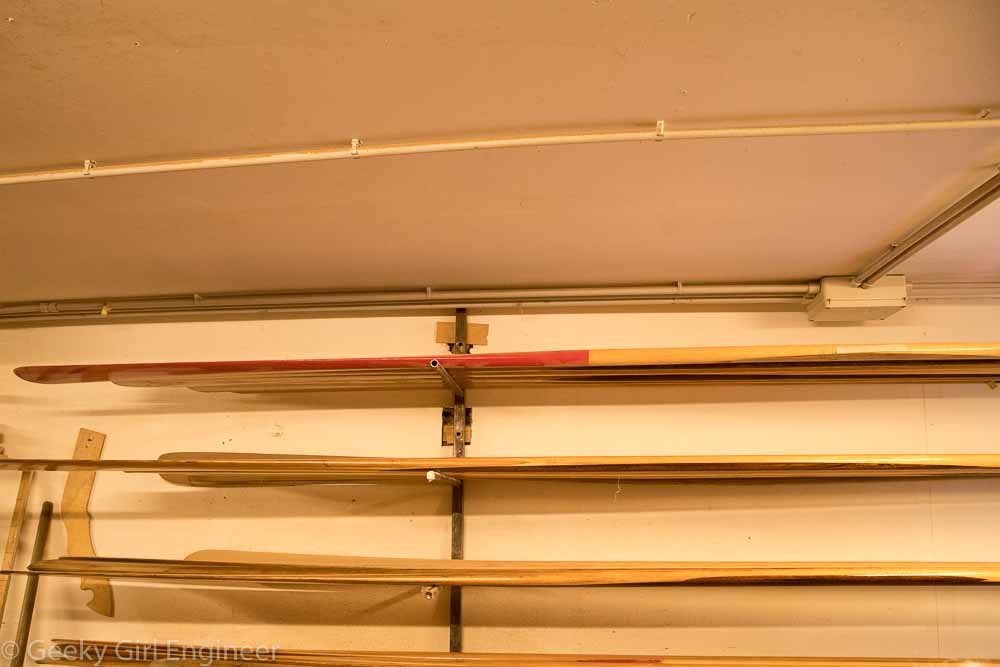
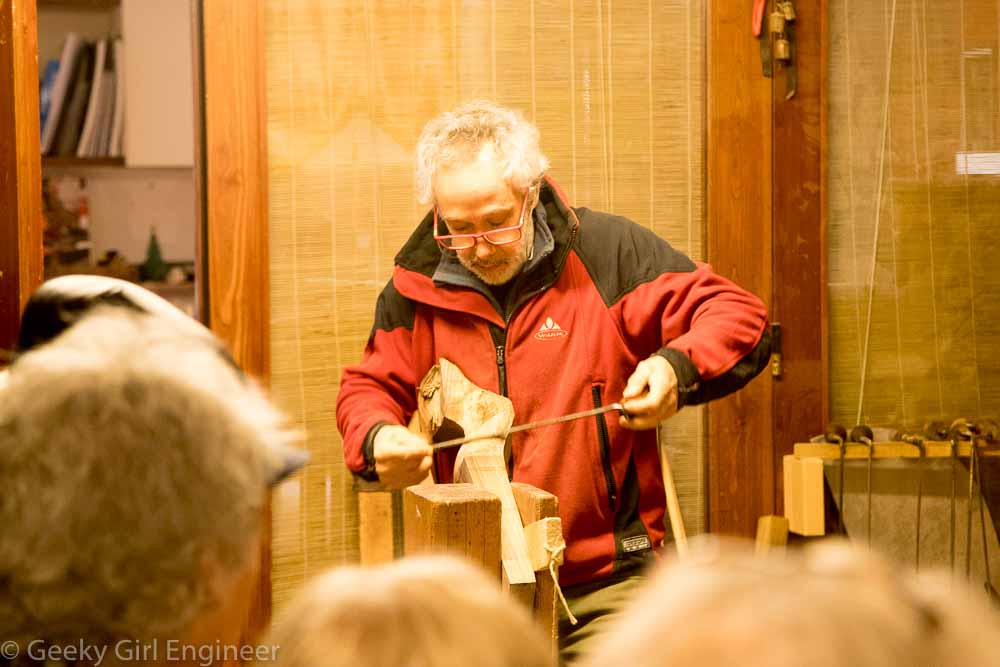
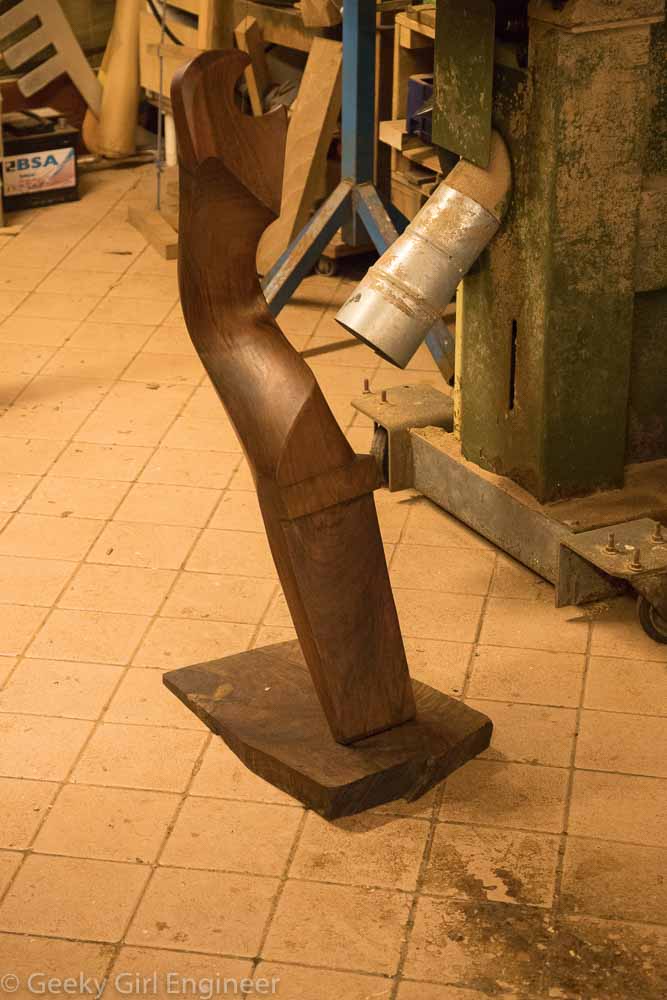
After visiting the squero, we then visited an artisan who makes some of the special wooden pieces for the gondola including the all important forcula. They are made by hand. He now sells more of them around the world as art pieces than as their historical use in gondolas. He has another shop on the mainland, where once he acquires wood, he cuts it into smaller pieces and allows it to dry naturally. Each forcula is built specific to the customer, based on customer height and such. The pieces are finished with oil. The bottom part of the forcula is finished last once the gondola is built, so that is fits securely into the gondola.


We then went for a gondola ride, and I started paying attention to how it was operated. The gondola ride was quite nice and relaxing.


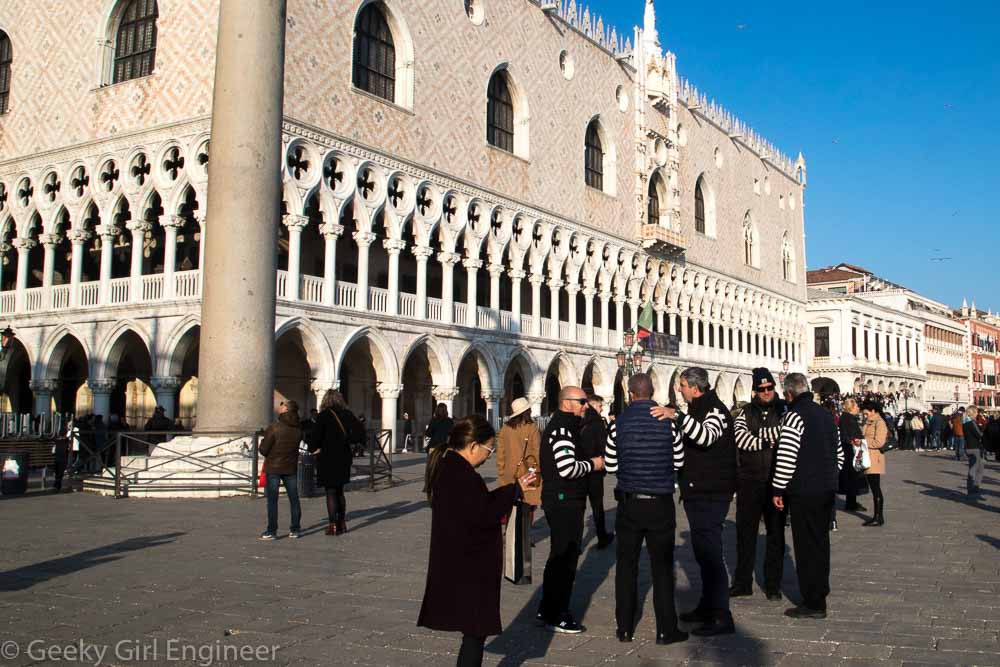
A few final notes. There are 433 licenses for gondoliers, and only one is held by a woman. There is a waiting list to get one. We were told there are about 500 gondolas working now, which numerically doesn’t add up. We were told there are extra for loaners during maintenance. However, since we were told they are made specific to the gondolier, I am not sure how loaners work.


Bay Lower Subway Station
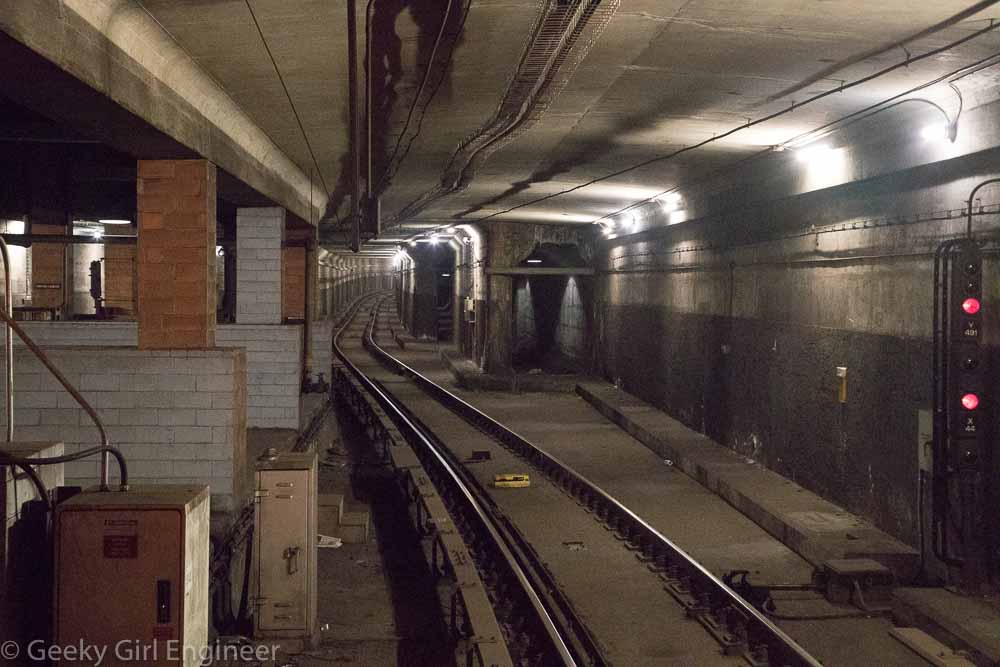
Another site I visited with Doors Open Toronto was an abandoned subway station. When the Bay Subway Station was built, there was an upper and lower level. According to the Doors Open Toronto website “When Line 2 officially opened in 1966, Bay Lower was in full use. Alternate trains used the Wye connection, which allowed customers to travel from Line 1 to Line 2 without changing trains. The TTC tested this system for six months and also tested the two separate subway lines for six months. Following testing, the TTC decided that two trains worked best and Bay Lower was closed.” If like me, you do not live in Toronto, that means very little or nothing. Having studied the Toronto subway map for a little bit of time, I think I now understands what it means, but to be perfectly honest, it sounds like it was a dumb idea from the start. Yes, yes, hindsight is 20/20, but it just seems overly complicated, and I know how long it took me just to understand New York City’s local versus express lines, so this seems like it might have made things easier for some but confused the heck out of others. It also sounds like something that carried not insignificant risks for train operation and train traffic control.
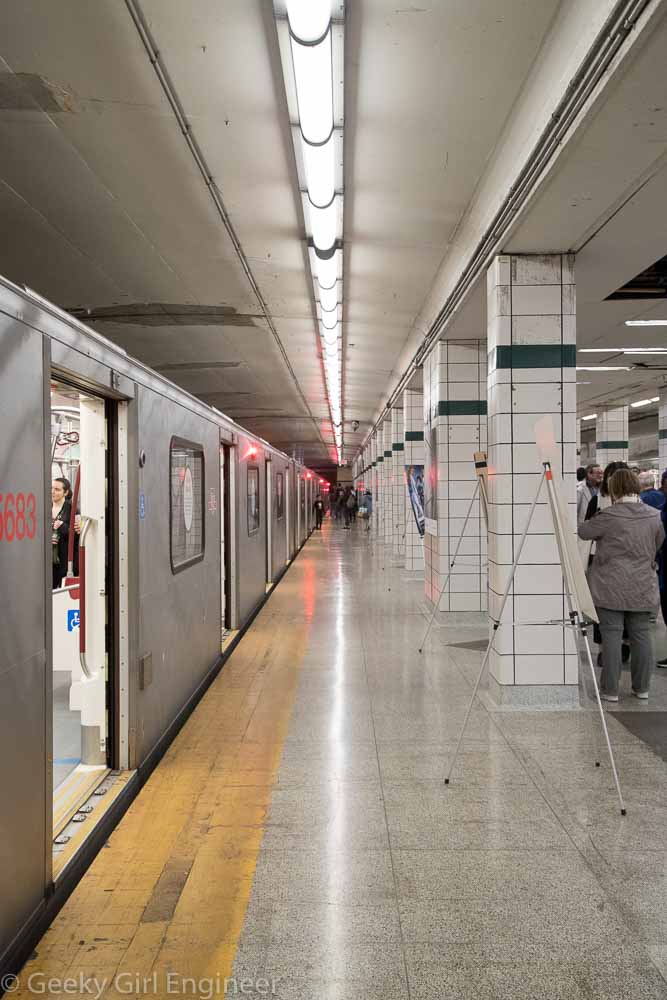
The lower level was not used for very long, but it has been used ever since by TTC for testing and training. It has also been used by the television and movie industry quite a bit for shooting scenes. The signs they had displayed seem to indicate that it has been a stand in for many U.S. city subway lines. Ever since I visited the lower level, I have been trying to think how many U.S. cities actually have a subway, as in trains that run underground. There are not that many, and furthermore, not many look like this station. Then again, the movie industry may not always care about things like that. But I digress.
In any event, it was kind of neat to walk around the platform. They had a train on either track with all doors open, so you could walk around the trains. They also let people visit the conductor’s seat/booth/area/I don’t what it is called. Today I learned, when given the opportunity to visit this area, people both young and old, really, really, really like to honk the horn. How the employees watching everything were not developing headaches from the horns constantly going off in the confined station where the noise really bounces around, I have no idea.
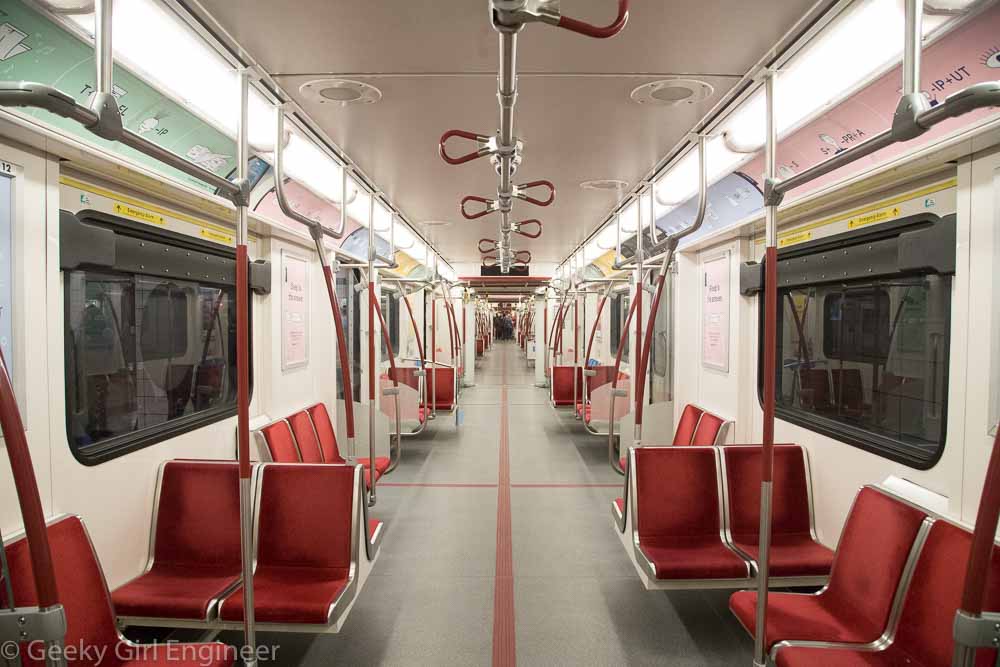
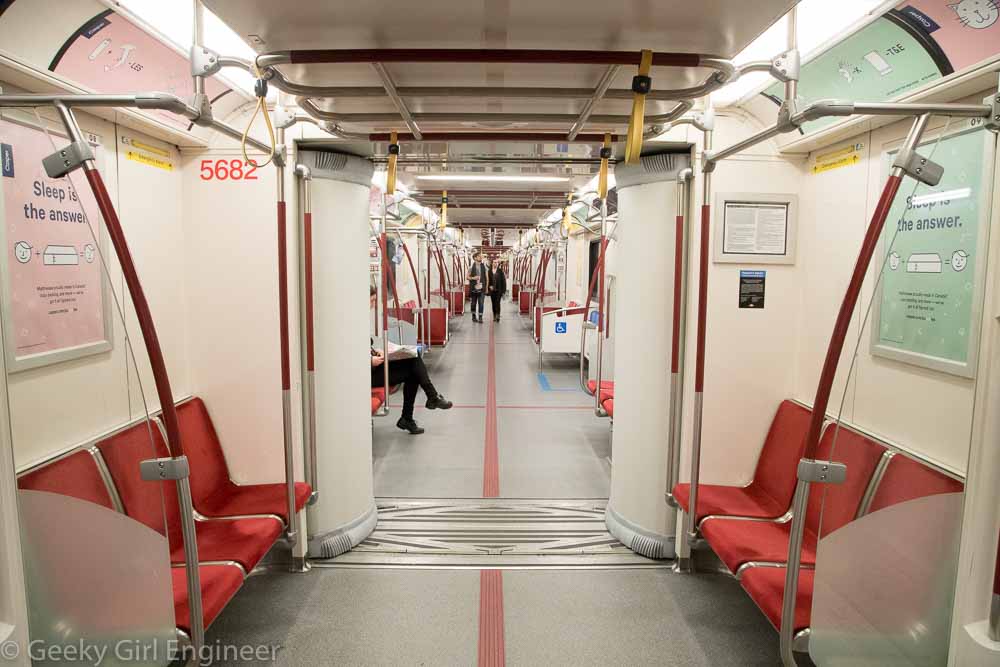
One final observation. I am rather fascinated by Toronto’s subway trains because the individual cars are all connected into one true train where you can walk very easily between all the cars. I don’t how many other systems have cars like this, but I was fascinated by it. I am most familiar with the Washington, D.C. and New York City subway systems where walking between cars requires going outside and is rather frowned upon or difficult. It would seem likely this would make it rather difficult for trains to be taken apart should only one or two cars need service, but I am not sure how often cars are taken apart and reconfigured on other systems where visually at least, it would appear to be easier.


Eglinton Maintenance and Storage Facility
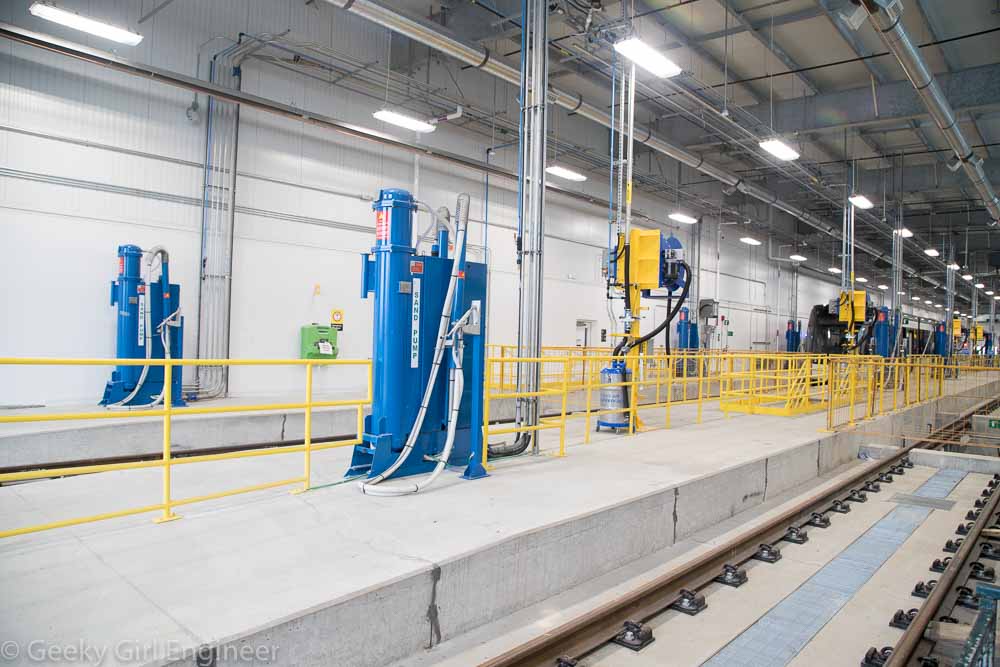
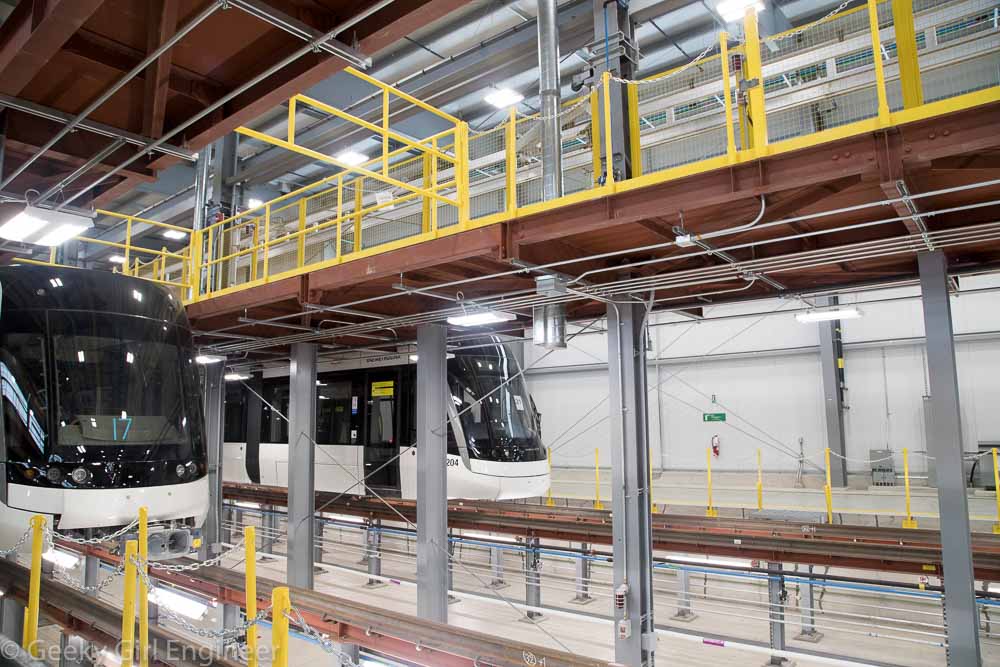
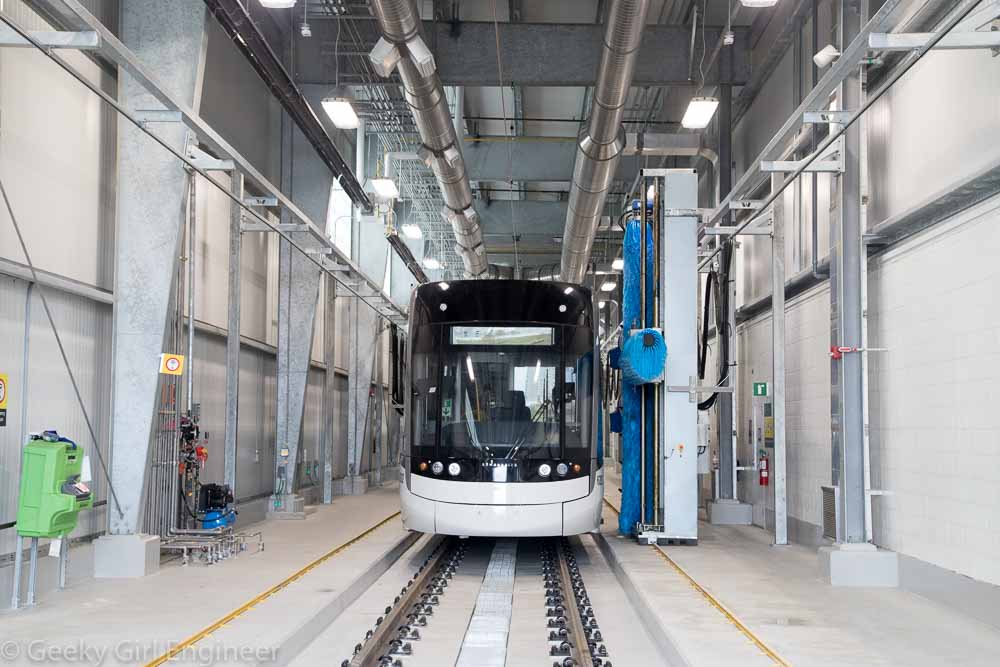
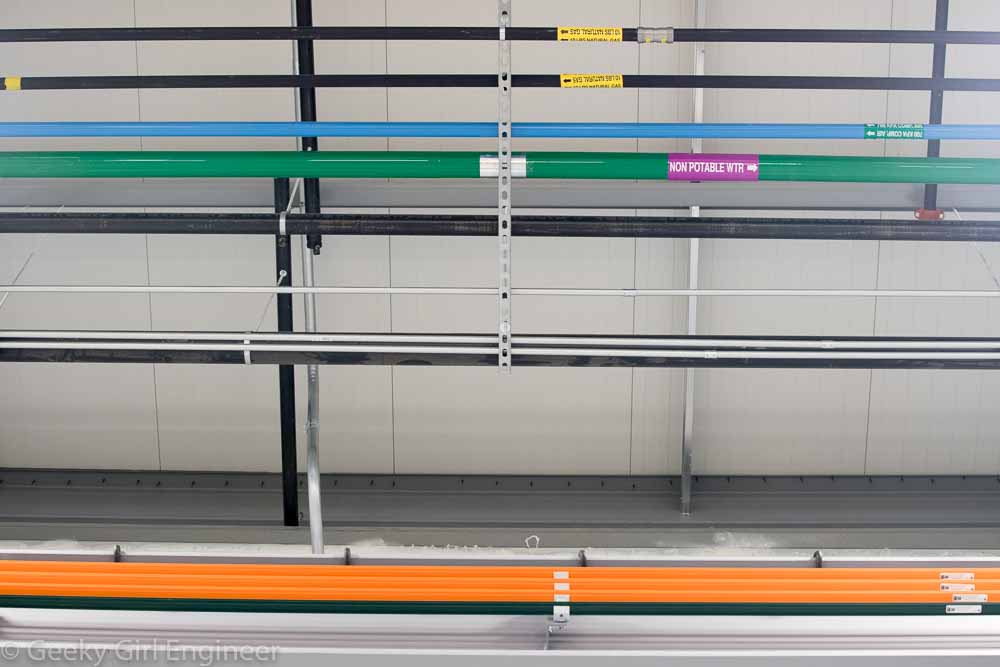
I am in Toronto for Doors Open Toronto. When any city allows people to visit a rail yard or water or wastewater treatment plant, I will be there. One of the places that was on the top of my list to visit is the Eglinton Maintenance and Storage Facility. It houses the Crosstown Light Rail Vehicles where they are inspected, cleaned and maintained. It only opened in January 2019, which was evident because it is still very clean and looks barely used. It is a well designed facility that appears to have been designed with the human worker in mind.
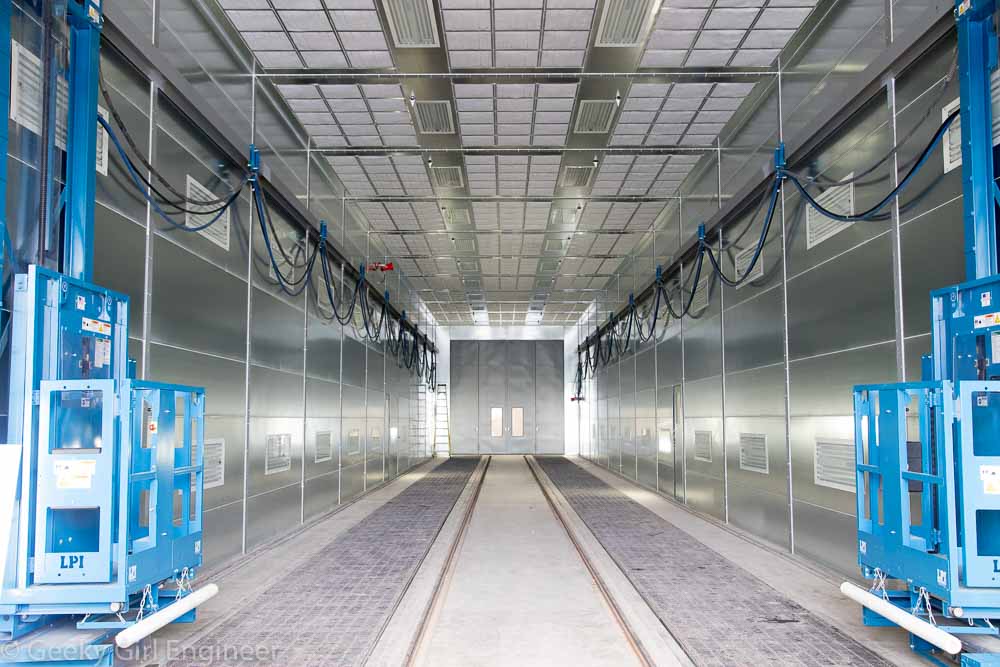
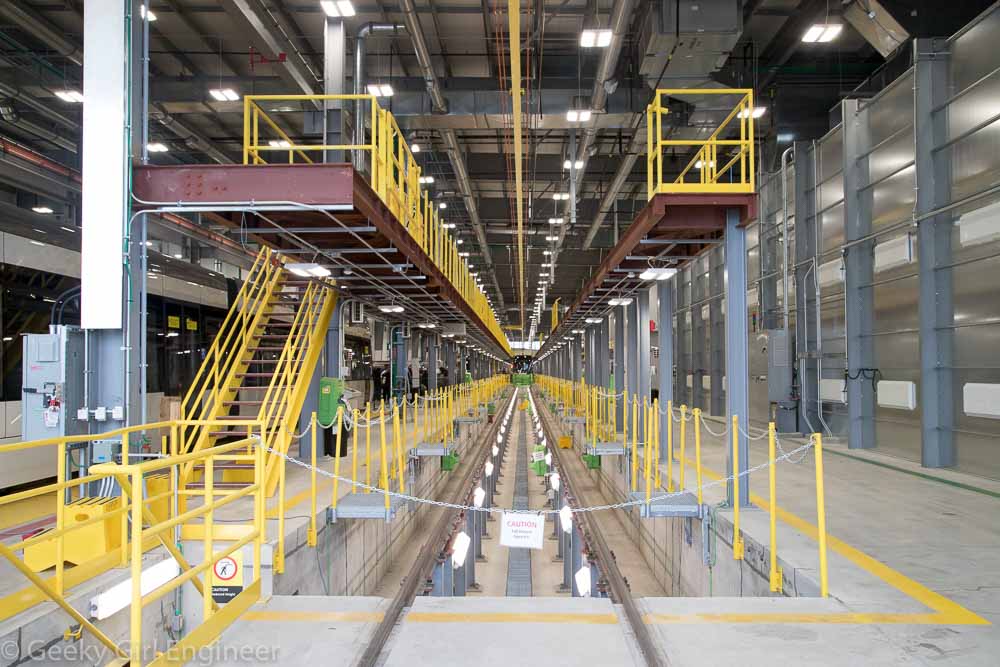
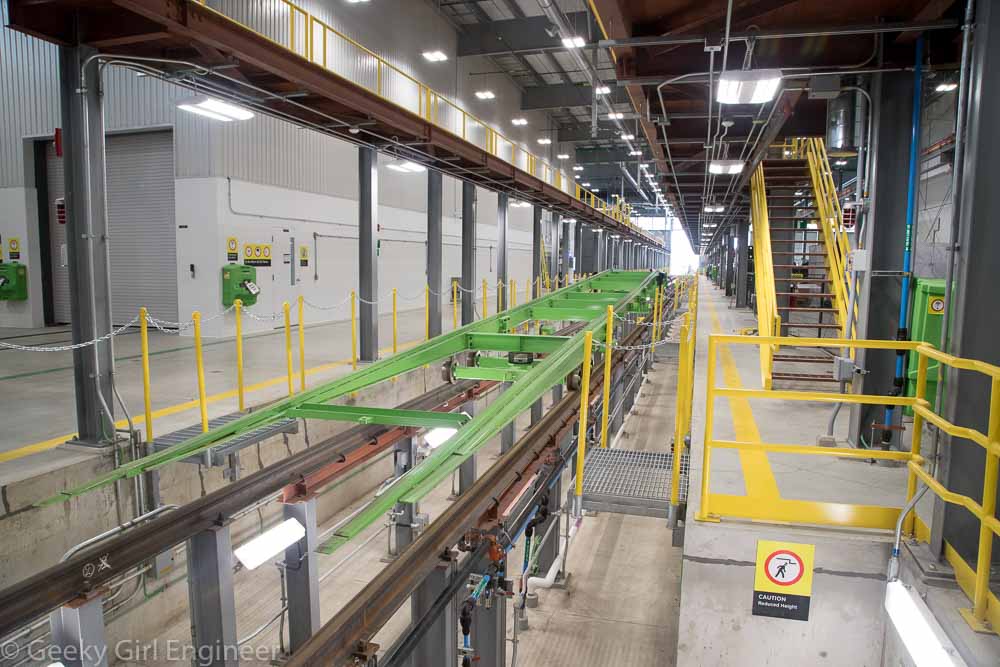
The facility has a train wash, paint booth, and numerous bay for maintenance. The maintenance areas have pit to work underneath the trains besides the platforms to work on the side or inside the trains, but it also has balconies so that the workers can get to the top of the trains.


Mother Clara Hale Bus Depot
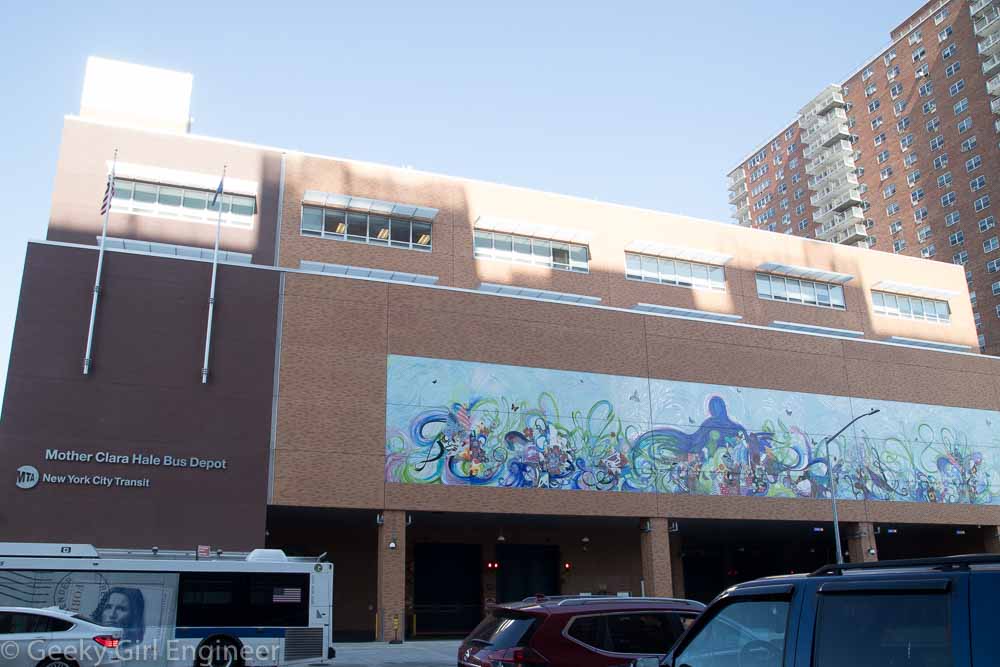
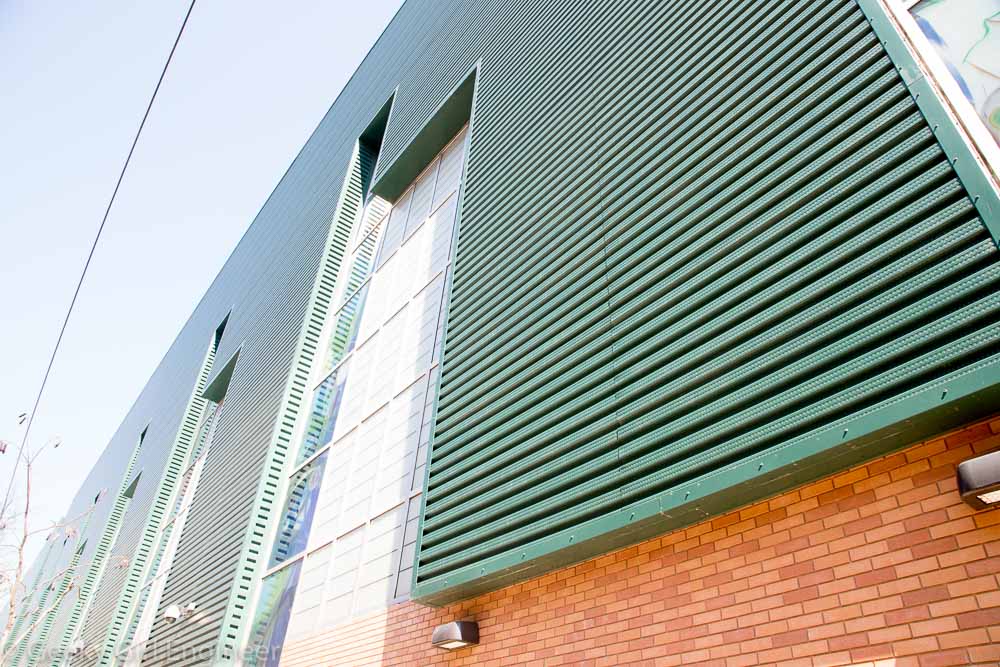
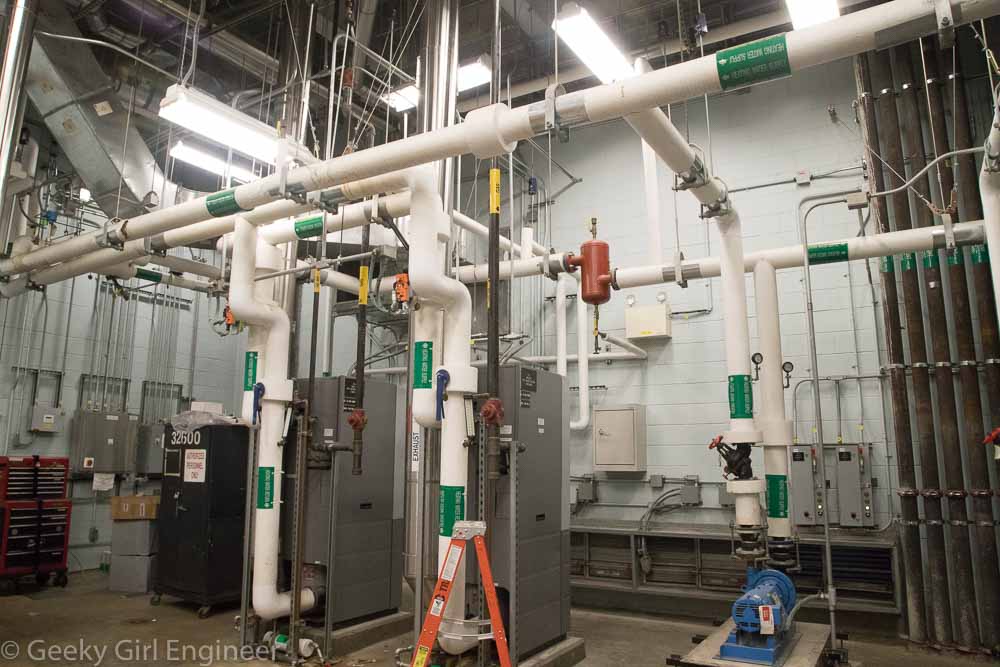
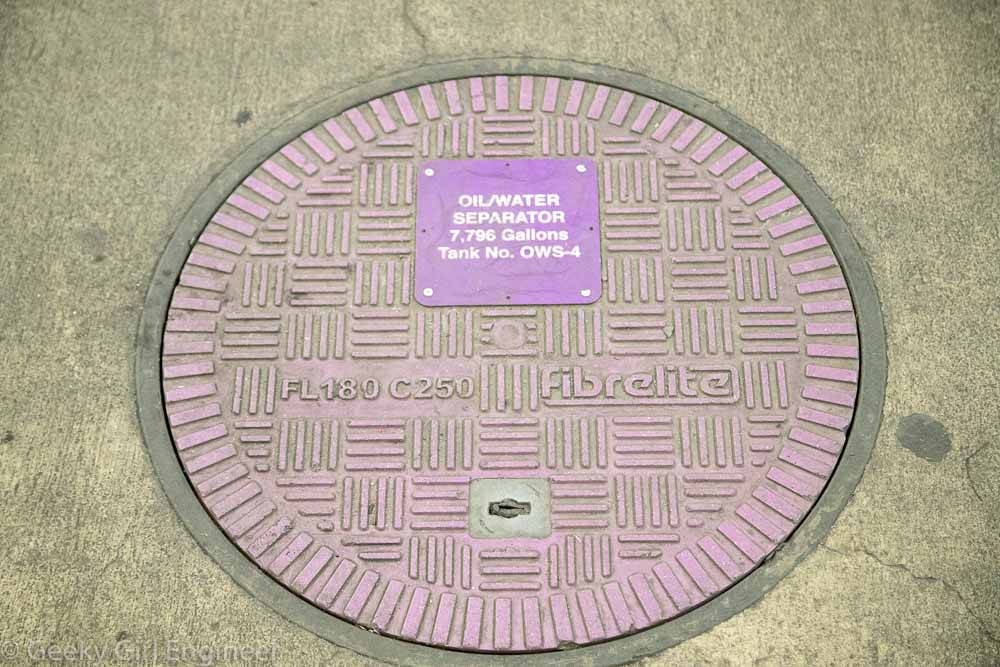
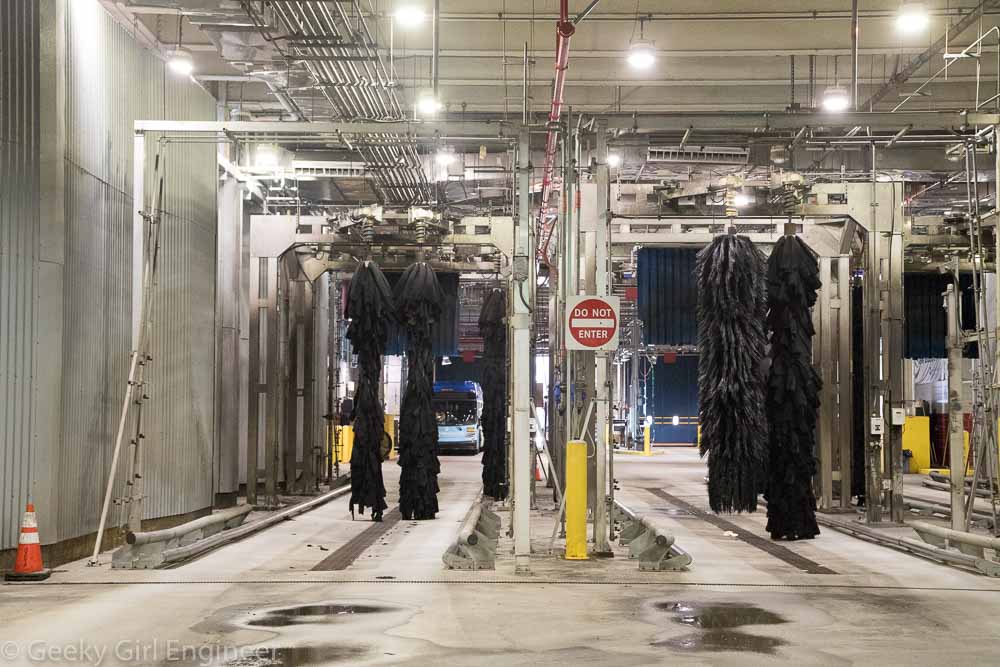
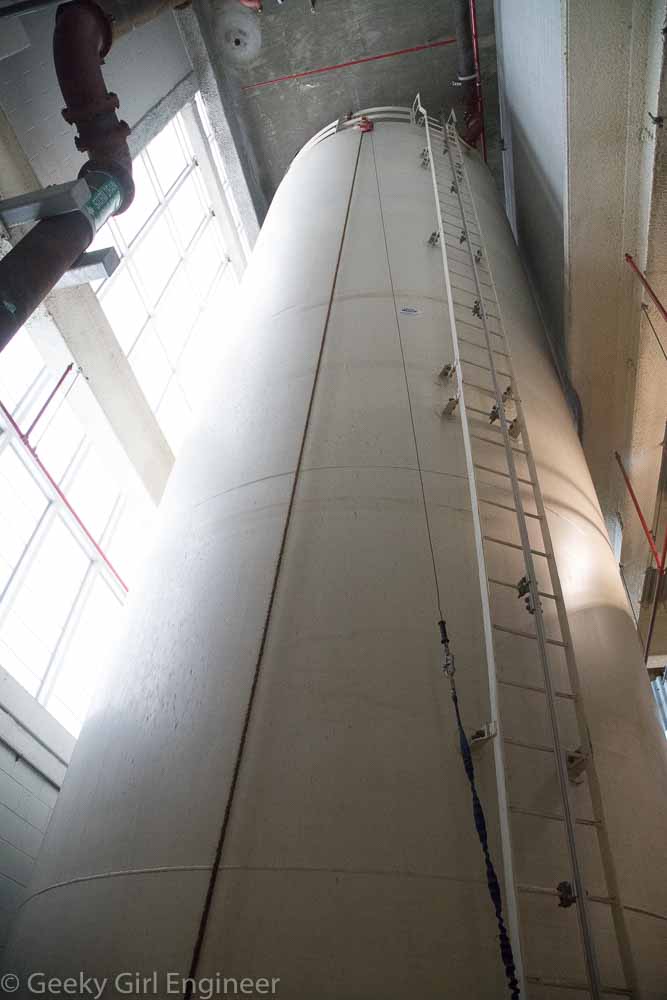
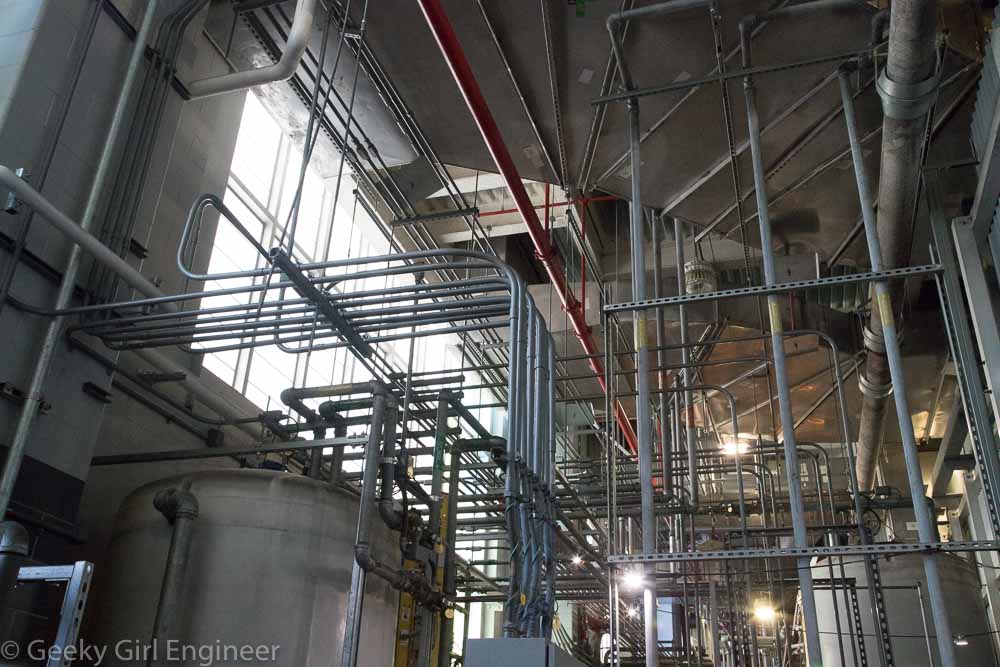
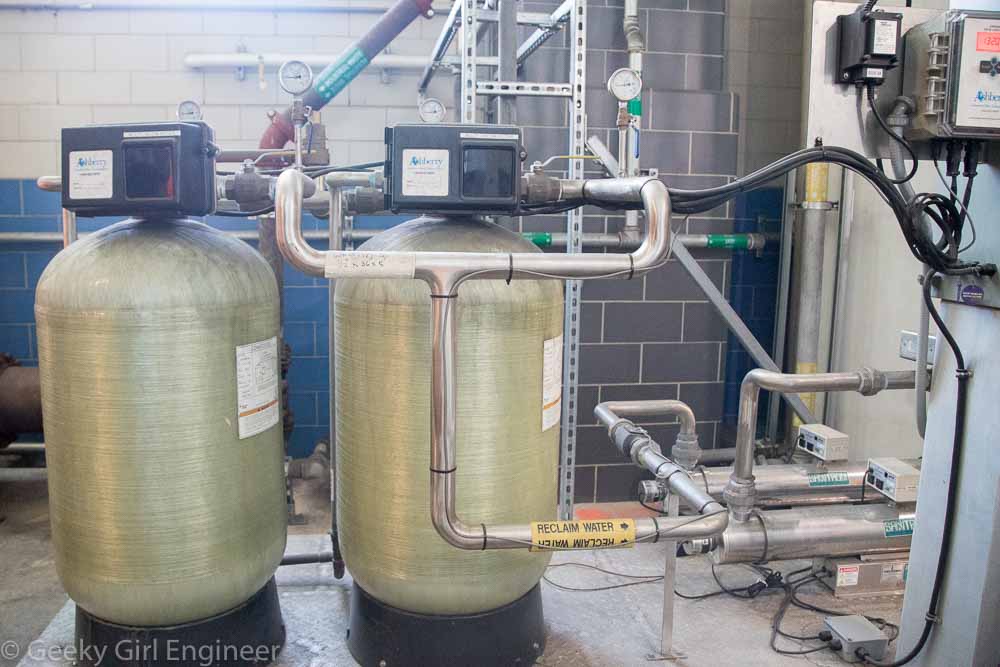
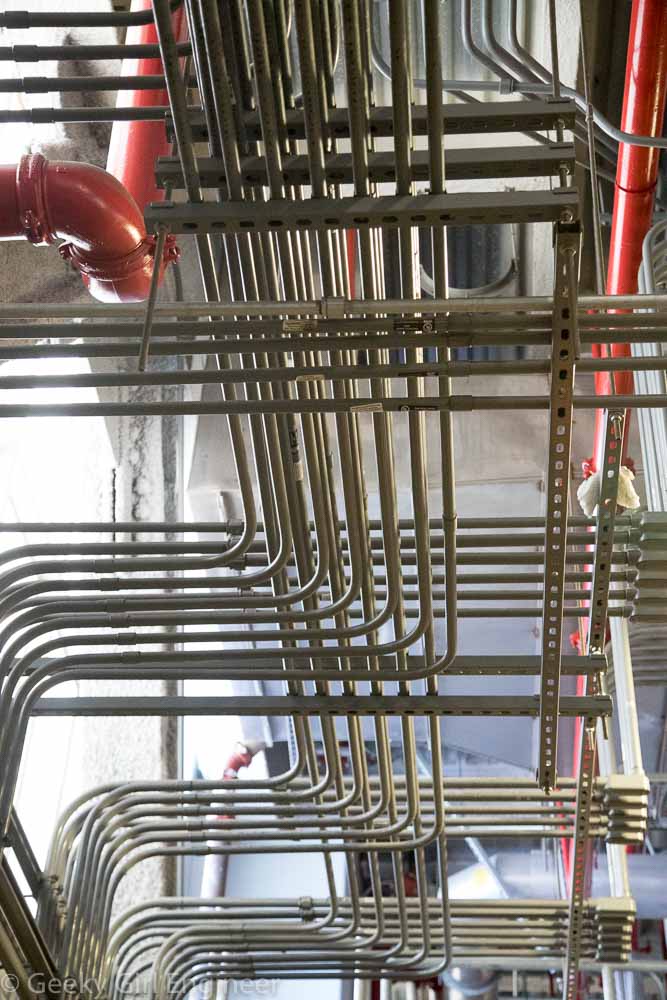
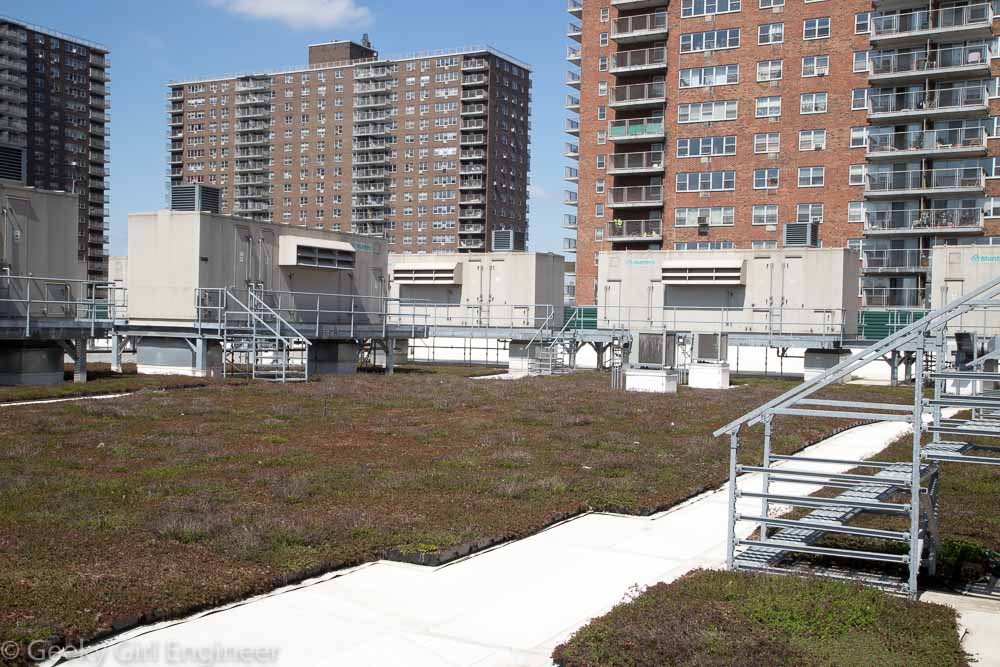
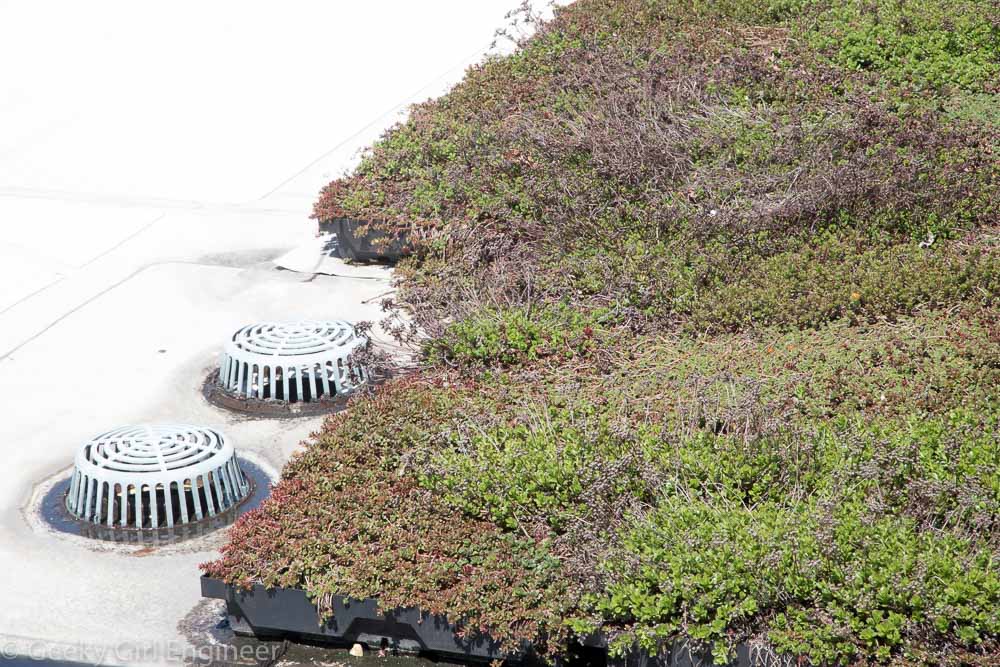
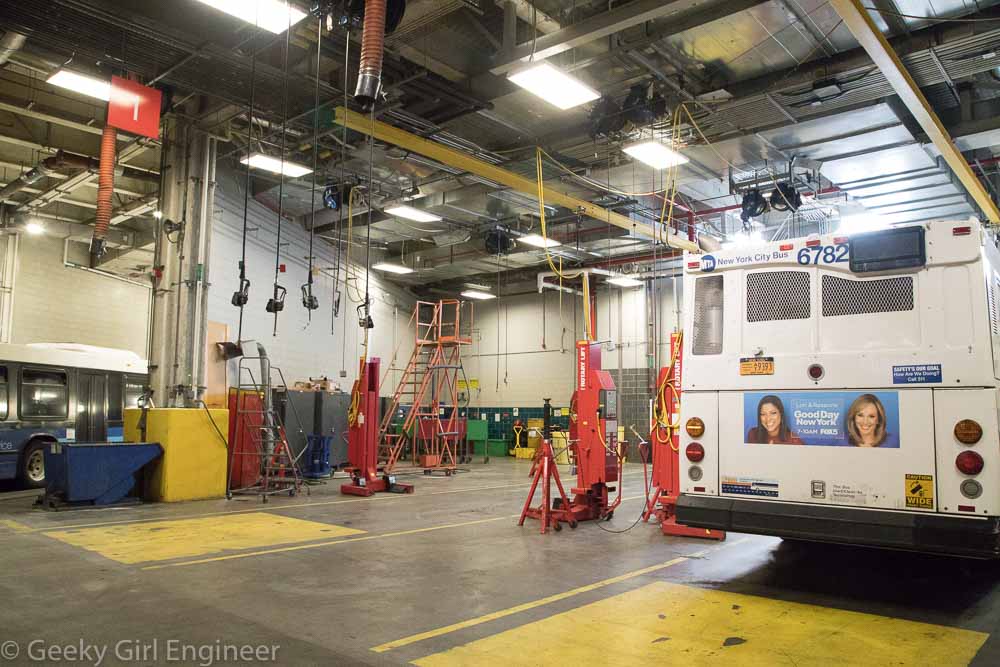
I recently got the opportunity to tour New York’s MTA’s Mother Clara Hale Bus Depot with the New York Transit Museum. It is the newest bus depot in New York, and it features many innovative and environmentally friendly design. It has a green roof. Stormwater from the roof in reused in the facility for bus wash. It has a thermal wall that absorbs heat in the winter. It is a really well designed facility, and it is huge. There are also many buses at the bus depot because of course the bus depot is for maintenance and repairs.