Man Swims the Gowanus Canal

I was planning to come to New York for the weekend, and by pure chance this was the weekend Christopher Swain announced he was going to attempt to swim the Gowanus Canal again. He tried in April but the threat of rain and then actual lightning, which caused the New York Police Department (NYPD) to order him out of the canal, prevented him from swimming the entire length. This time he was successful. He said he did it to raise awareness of the pollution of the Gowanus Canal. When being interviewed by reporters, he said he was concerned this would be perceived as a stunt. He said they would actually be collecting data that would be given to school kids, so they could help solve the problems affecting the Gowanus.

As an environmentalist, I appreciate him bringing awareness to the plight of the Gowanus. I even appreciate him wanting to bring awareness to school kids. Honestly though, as an environmental engineer, who works in the field of cleaning up hazardous waste sites, I can’t see what he is doing as anything other than a stunt. I seriously can’t think of any information he could gather that couldn’t be gathered from a person in a boat, a person who would not be exposing herself or himself to the risk that Mr. Swain is. At one point, Mr. Swain stopped swimming to collect data and told anyone listening that the water had a temperature of 64ºF and had a pH of 7.5. He started by saying “for the scientists out there” and then said he wished he had studied science harder or something to that effect. First, both those two pieces of data could easily be collected from a boat. Second, neither of those pieces of data tell me anything about the state of the Gowanus. The temperature just reflects that it is fall, and a pH of 7.5 is close to neutral and what is expected for a body of water. [Yes, thermal pollution, where water that is too hot is released into a body of water, is a thing that can affect water bodies because hot water has less oxygen, and the reduced oxygen would affect any wildlife in the water, but it is not a concern for the Gownaus.]

Also, I fail to see what school kids are going to do to help solve the problem. I completely agree in bringing awareness of environmental issues to children, but it is environmental professionals and perhaps community organizers who are going to solve the pollution problem with the Gowanus. The Gowanus has two main issues. First, it has hazardous pollution from years past that needs to be cleaned up. This is where the US EPA and Superfund comes in. Hazardous waste includes PCBs, heavy metals, and whatever other fun chemicals might be polluting the canal. Second, it has wastewater pollution from the past and current that needs to be cleaned up. New York City, like many old cites, has a combined wastewater system. This means that wastewater, the stuff that flows from your toilet and sink drain, and stormwater, the stuff from street drains, flows to the same destination. When it is not raining, it is not an issue. The wastewater all flows to various wastewater treatment plants where it is treated before being released to a river or ocean. During rain events, there can be a problem because the wastewater treatment plant may not be able to handle all the water flowing to it. In this case, untreated wastewater is generally directed to some location (technical term is outfall) where it enters a body of water, like the Gowanus. This is actually the main immediate risk to Mr. Swain. Most of the hazardous pollution is in the sediment at the bottom of the canal, and drinking one mouthful of the Gowanus water probably will not kill you, in terms of the hazardous chemicals, or at least not immediately. [DO NOT TRY THIS. THIS IS AN EDUCATED GUESS.] However, because of the untreated wastewater that flows into the Gowanus, the canal has a lovely concoction of viruses, bacteria, and who knows what other pathogens having their own little party. This would be my more immediate concern for him or anyone else who might accidentally ingest Gowanus Canal water, getting an infection of who knows what pathogen. [According to news reports I’ve seen, after the swim, he stated that he swallowed three mouthfuls. My advice is to go see a medical doctor.] It is also not clear to me if there is other pollution concerns to Gowanus, like outfalls from nearby business or stormwater from the nearby area that may contain things they shouldn’t.

The Gowanus Canal absolutely needs to be cleaned up, and regulatory authorities and the community are already working on it. It may not be proceeding at the speed Mr. Swain and the community would like. I completely understand that. Cleanups, such as the Gowanus Canal, take time and money. It takes professionals, the regulatory authorities, the groups being regulated, and the community to determine the best path forward. Unfortunately, it generally takes patience also. My completely biased opinion is that not enough money is dedicated by politicians to cleaning up all the different pollution in this country. Hence even more patience is needed. One final note, in all the news reports, Mr. Swain and the reporters keep making reference to the Gowanus Canal being a Superfund site. It is, but the issue of untreated wastewater being released into the canal and causing, in my opinion, the more immediate risk to him or anyone else who wants to go for a dip, does not normally fall under Superfund regulation. Superfund (aka CERCLA) regulates hazardous waste, and pathogens are not hazardous waste. However, when the U.S. EPA finalized the Record of Decision for the Gowanus Canal Superfund site, they did require the City to build two very large tunnels to capture combined sewer overflow during rain events. [Edited to correct my statements regarding Superfund and the untreated wastewater contamination.]
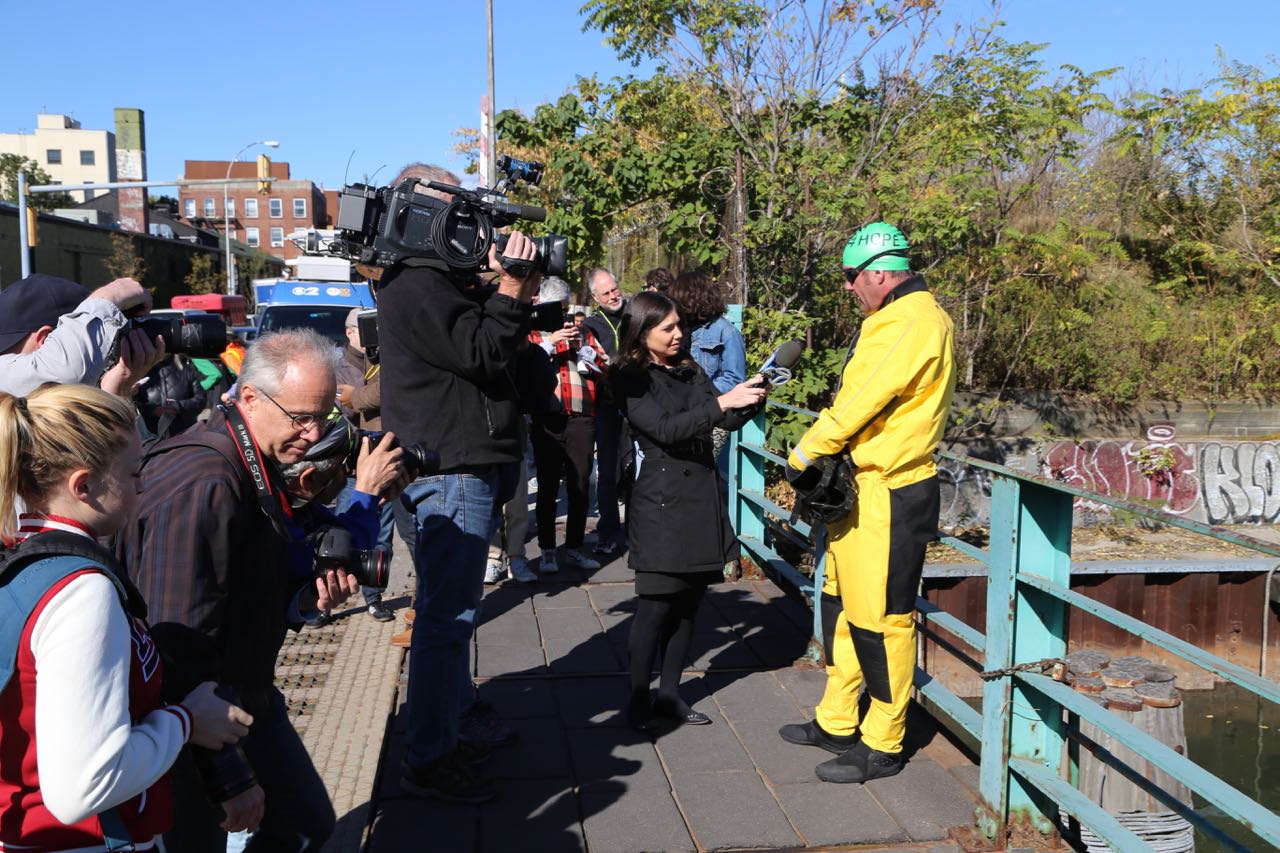
Christopher Swain being interviewed before his swim
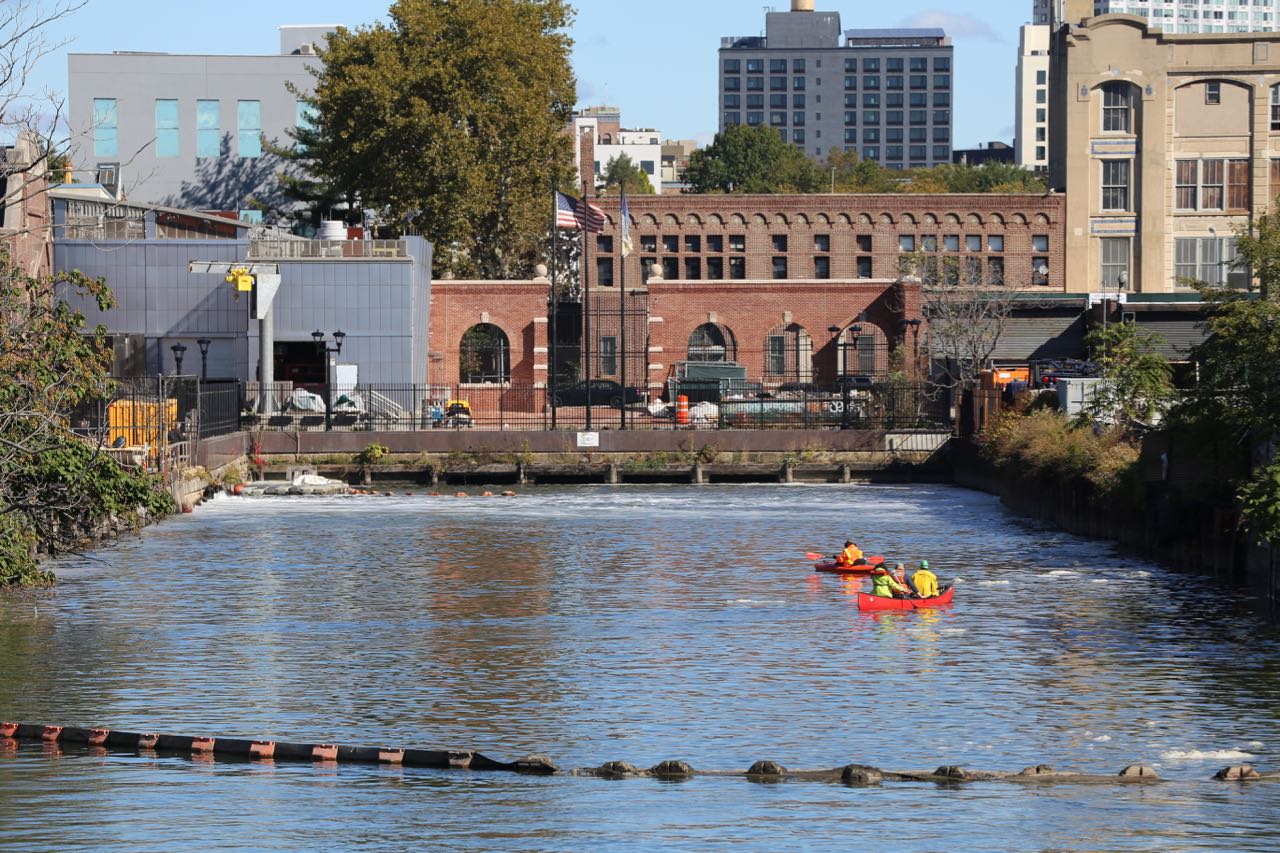
Christopher Swain being interviewed before his swim

Mr. Swain and his support crew paddled to the start of the Gowanus Canal before he entered the water.
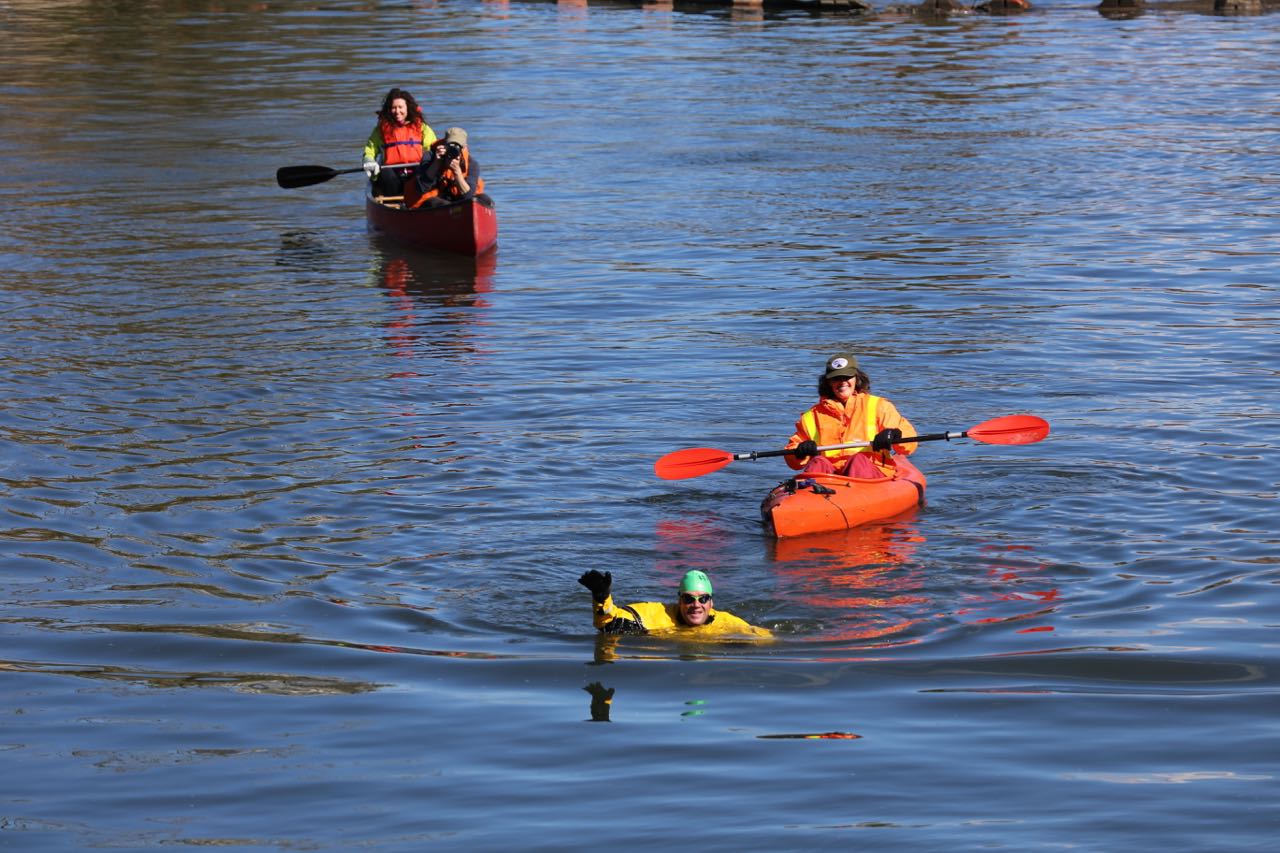
Mr. Swain and his support crew paddled to the start of the Gowanus Canal before he entered the water.

Christopher Swain swimming with his support crew behind him
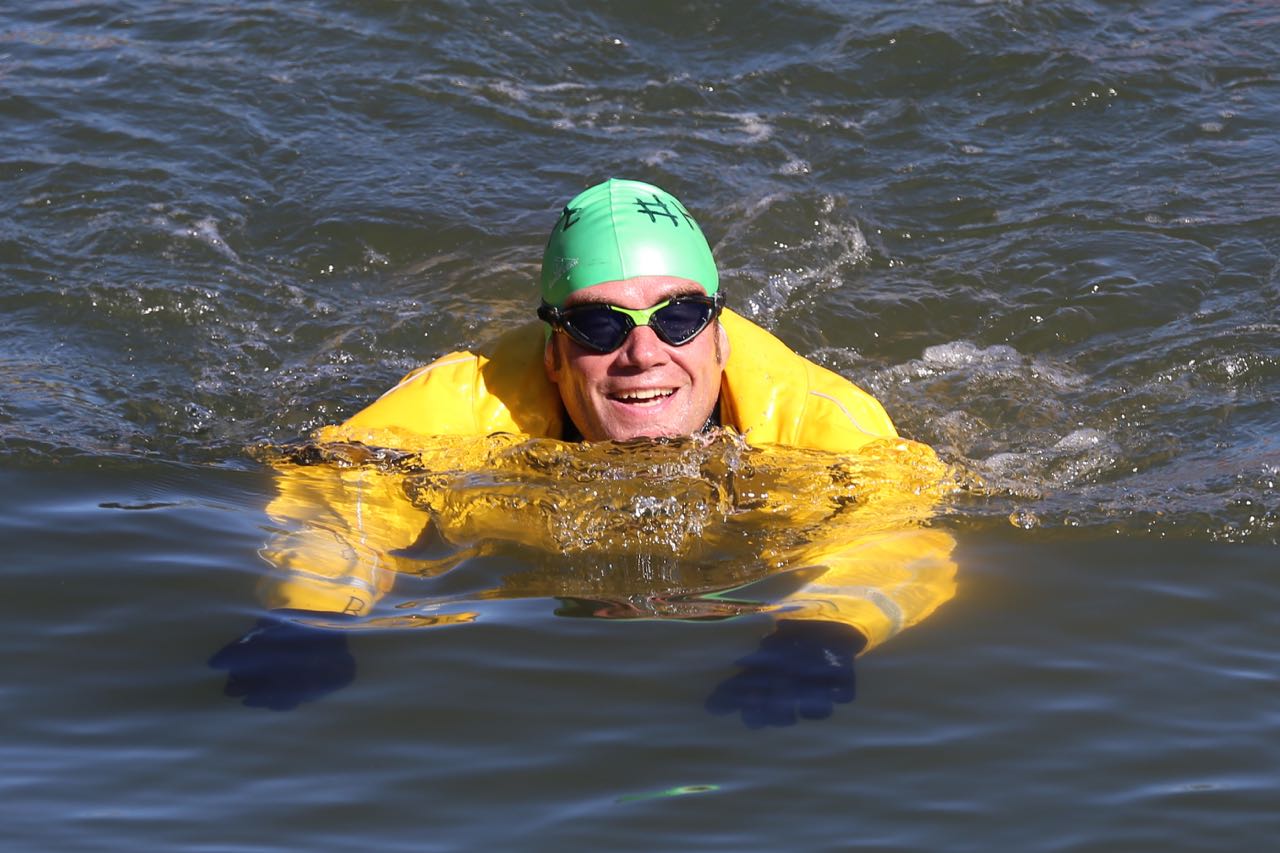
Christopher Swain swimming with his support crew behind him

Christopher Swain swimming the Gowanus Canal in a dry suit.
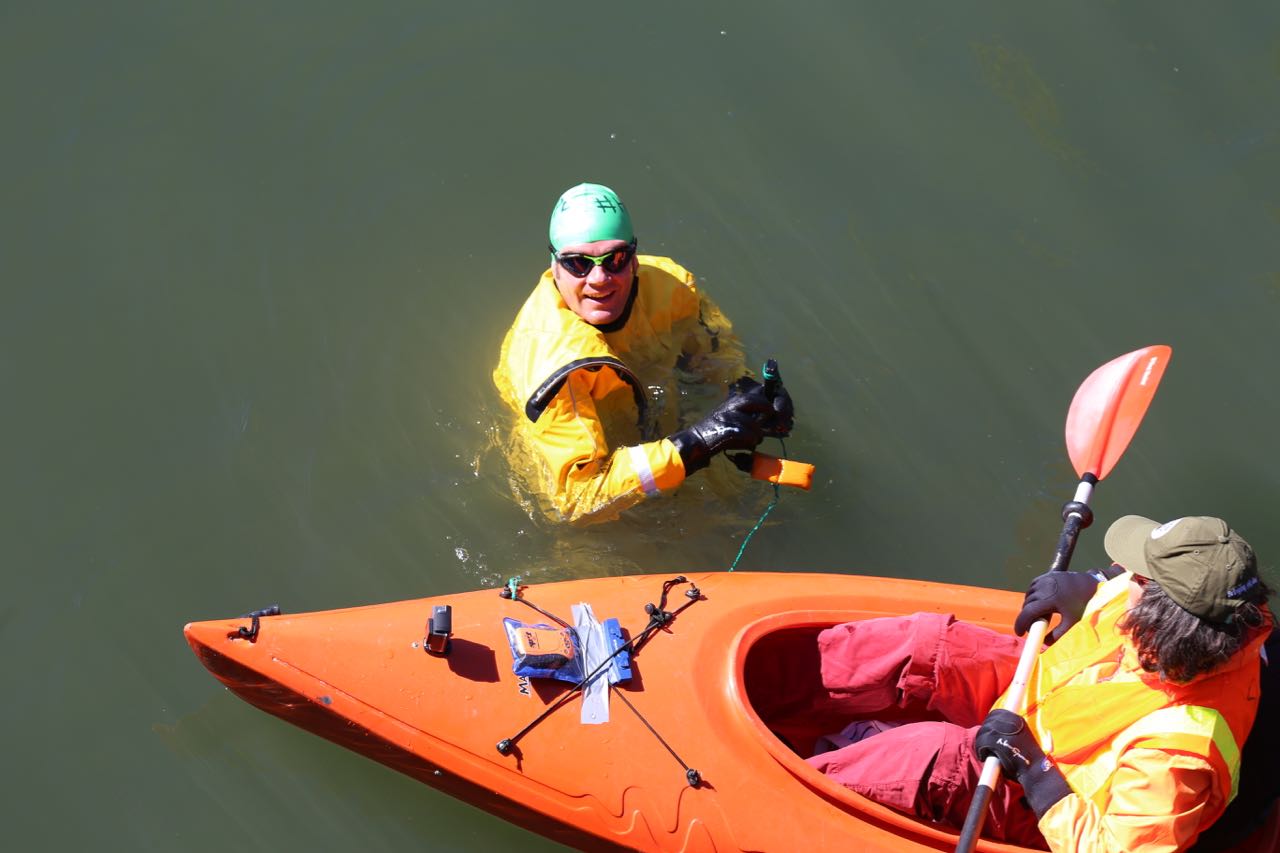
Christopher Swain swimming the Gowanus Canal in a dry suit.

He takes measurements of the water.
He takes measurements of the water.

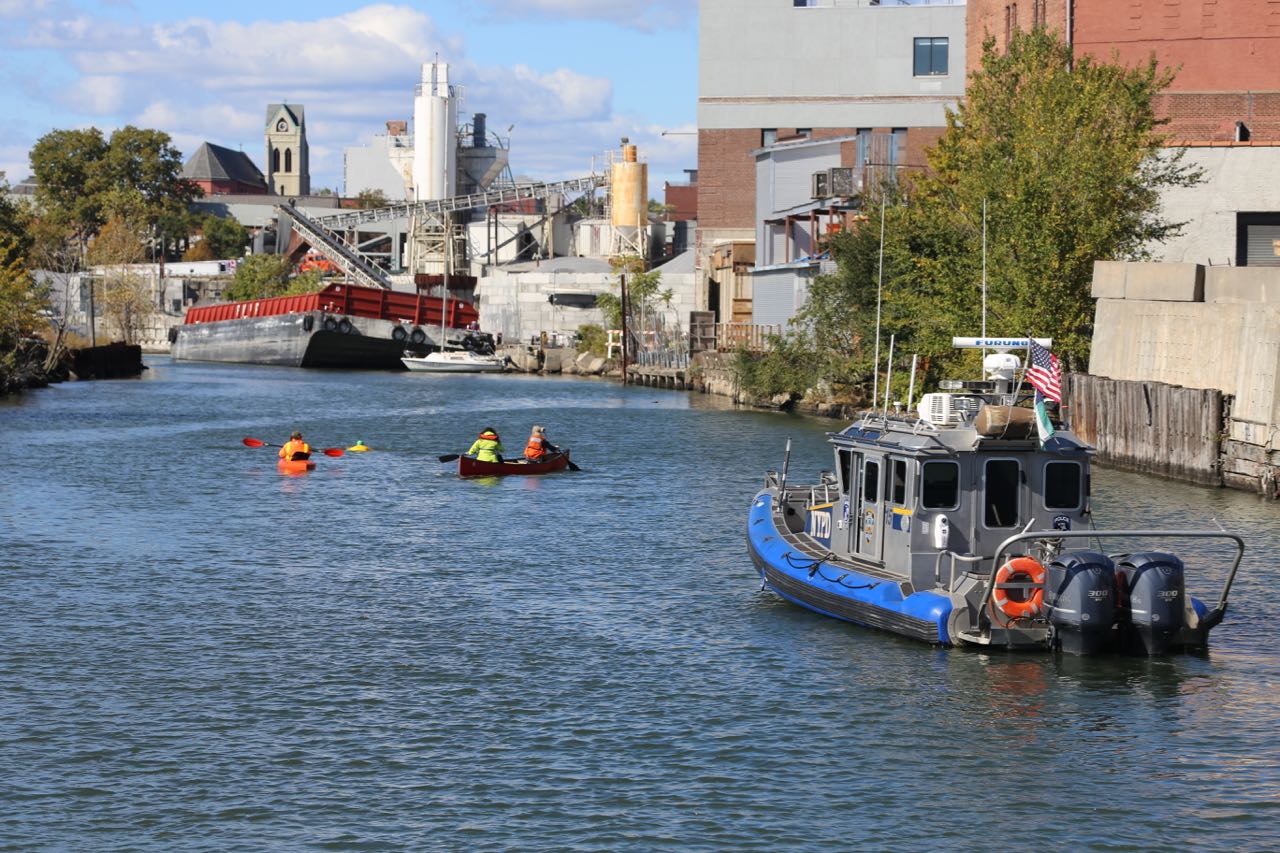
After he reached the 3rd Street bridge, the NYPD provided an escort (either the water wasn't deep enough or the bridges prevented it before).

After he reached the 3rd Street bridge, the NYPD provided an escort (either the water wasn’t deep enough or the bridges prevented it before).
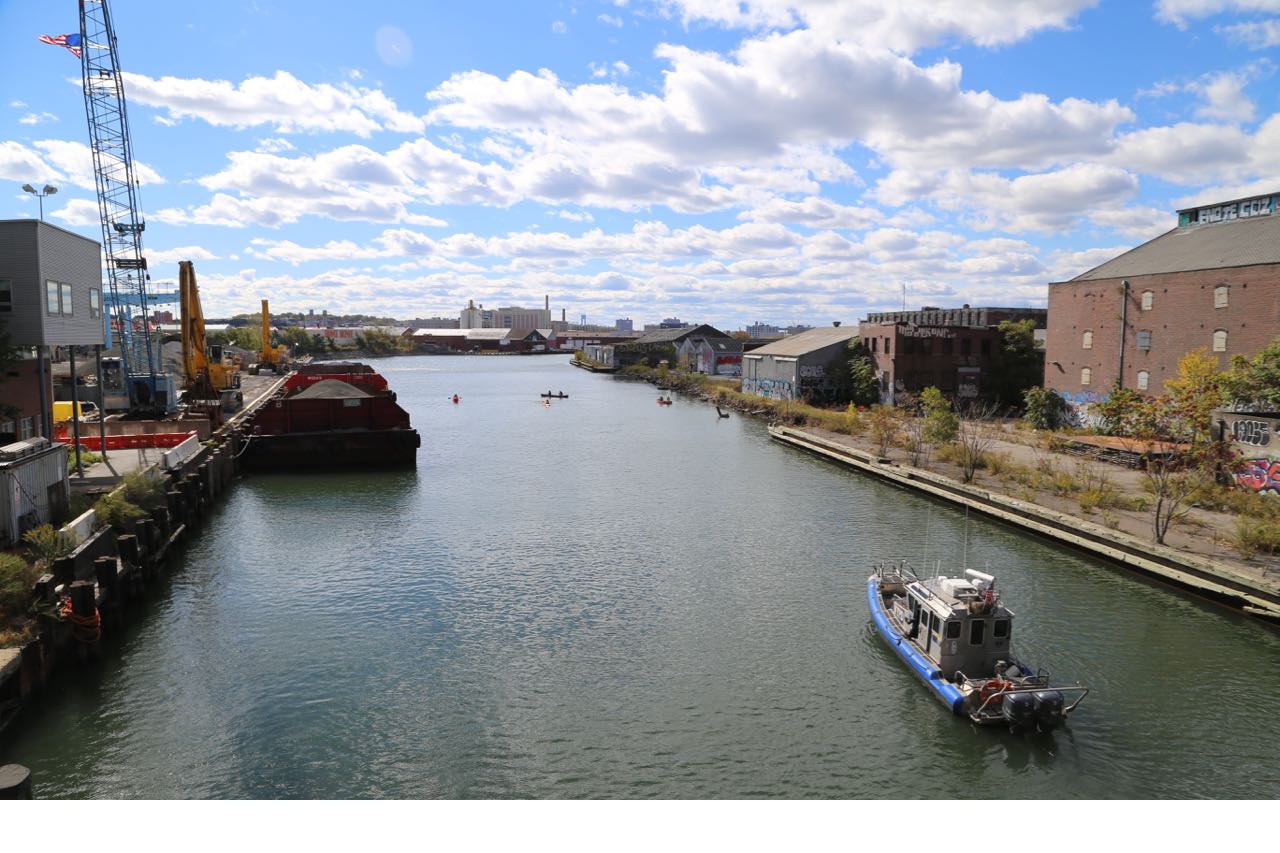
Mr. Swain and escorts nearly at the end of the Gowanus Canal, just after the Gowanus Expressway bridge.
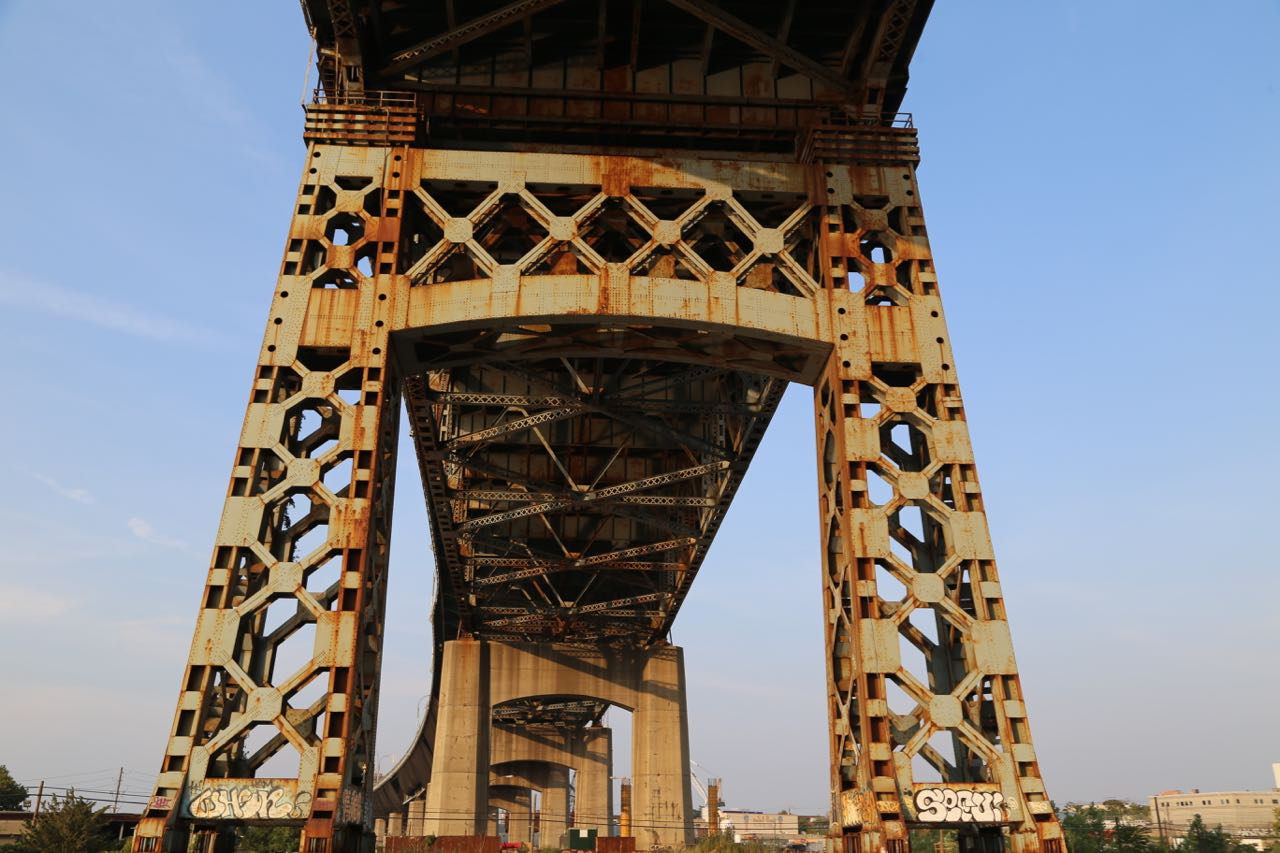
Mr. Swain and escorts nearly at the end of the Gowanus Canal, just after the Gowanus Expressway bridge.
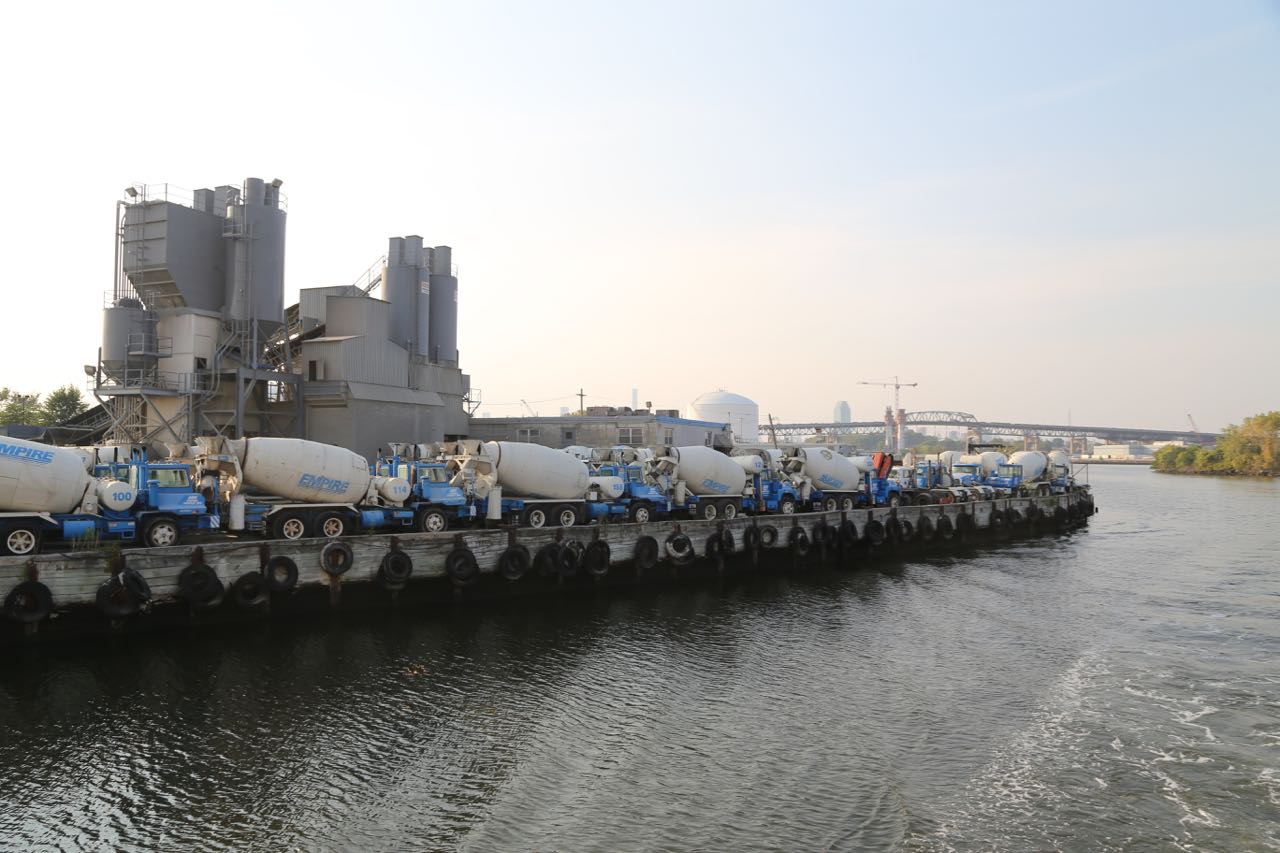
Newtown Creek

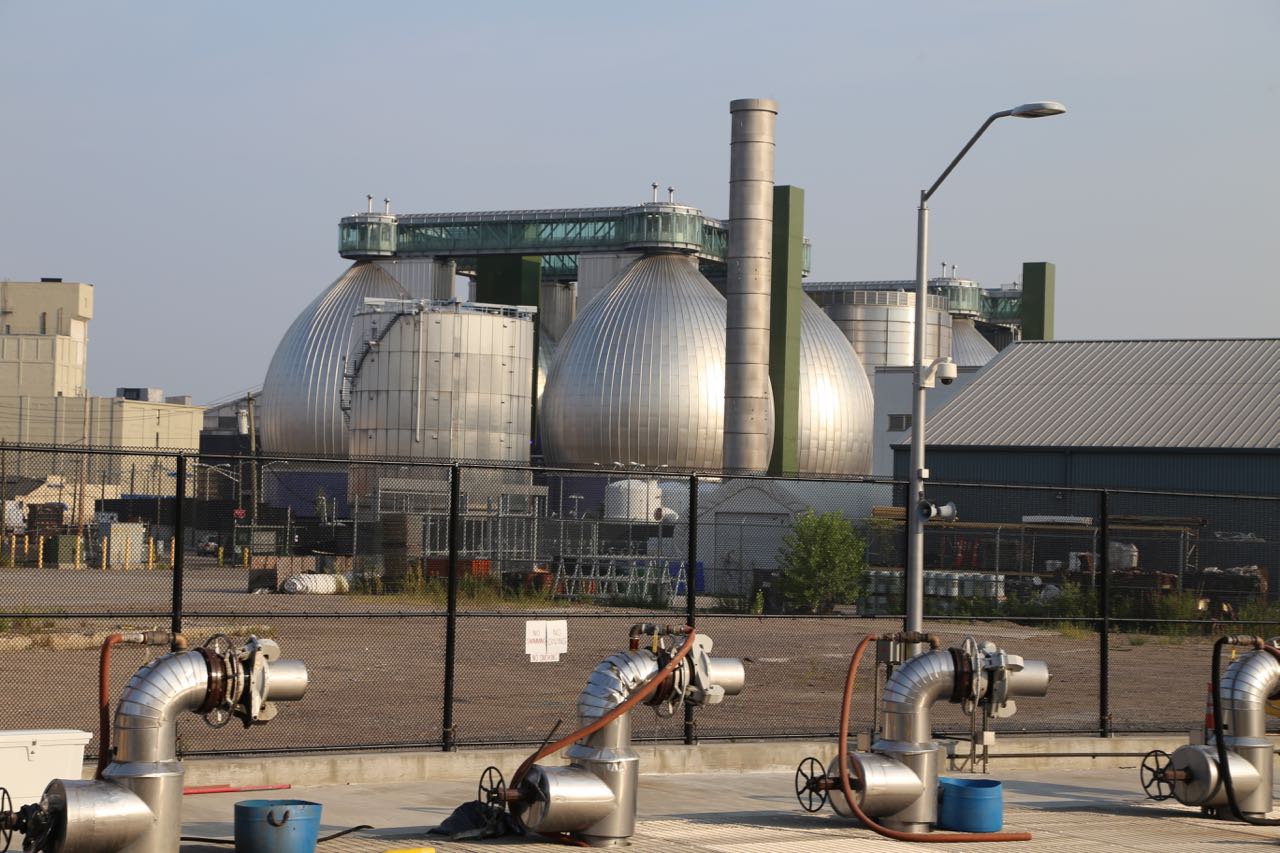
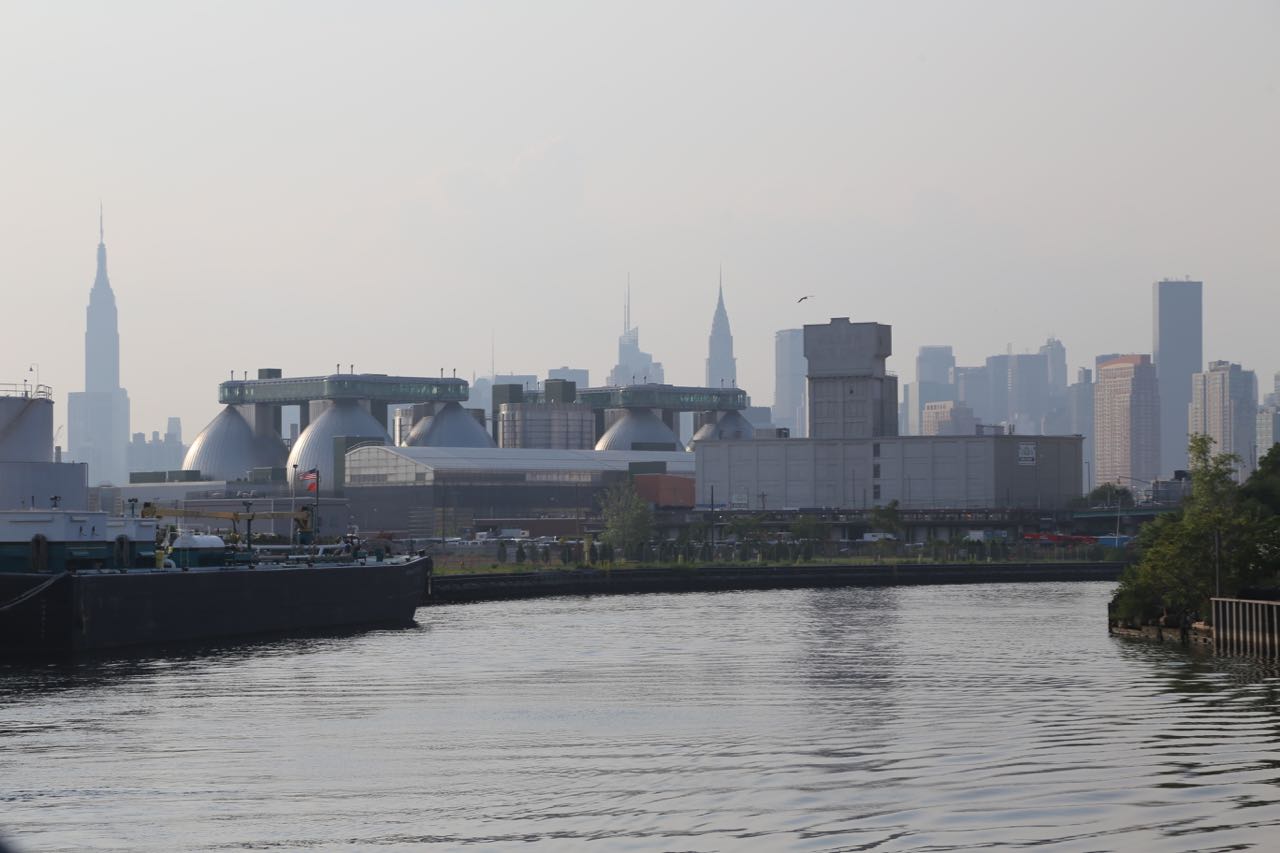
Manhattan skyline behind Newtown Creek Wastewater Treatment Plant

Manhattan skyline behind Newtown Creek Wastewater Treatment Plant

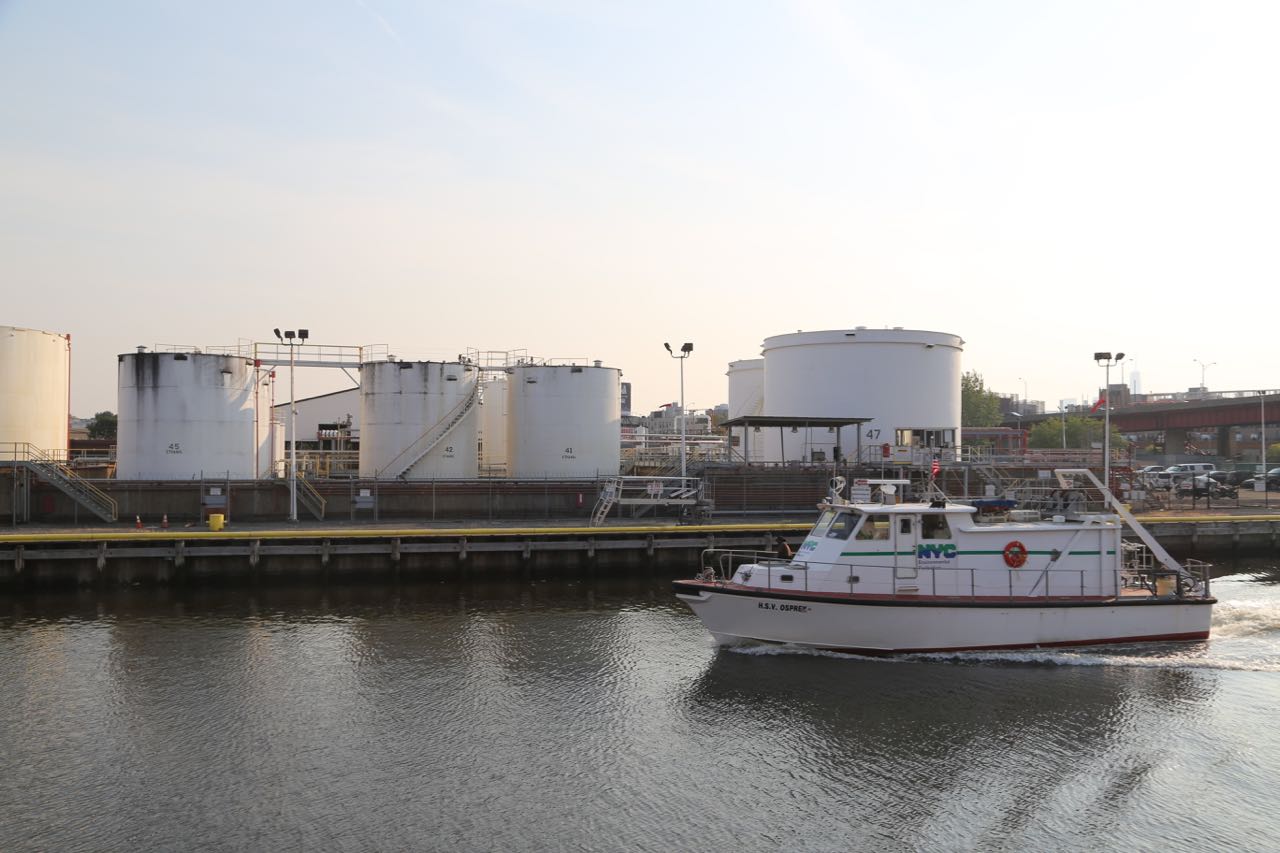
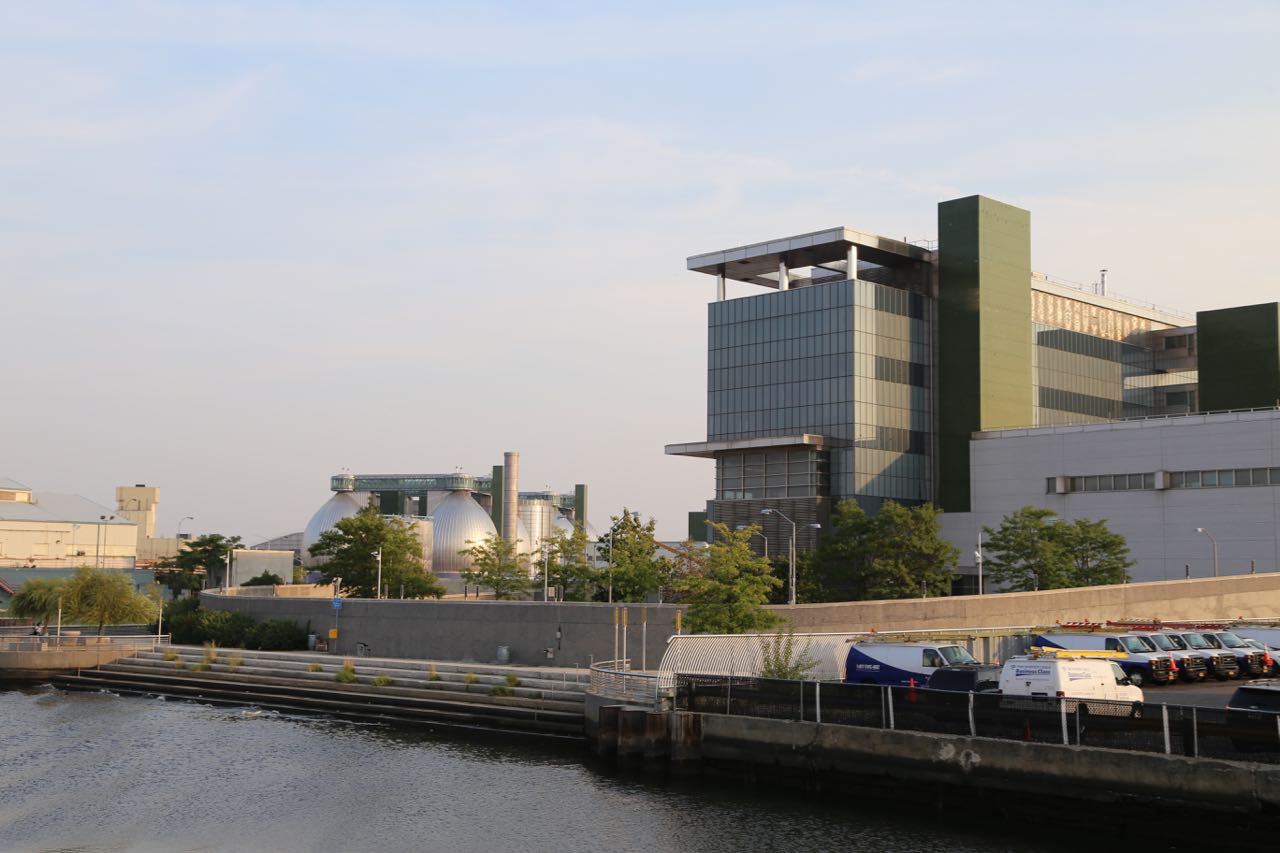
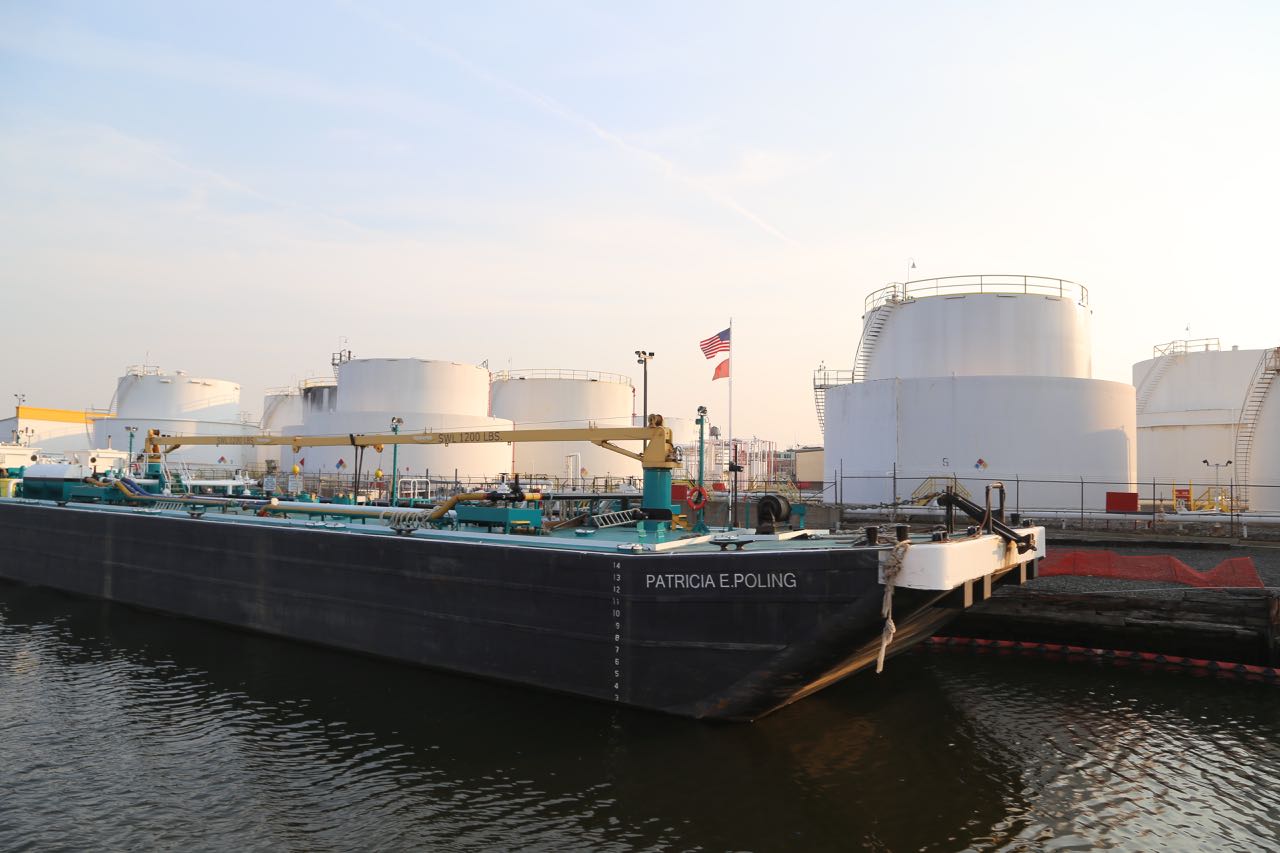
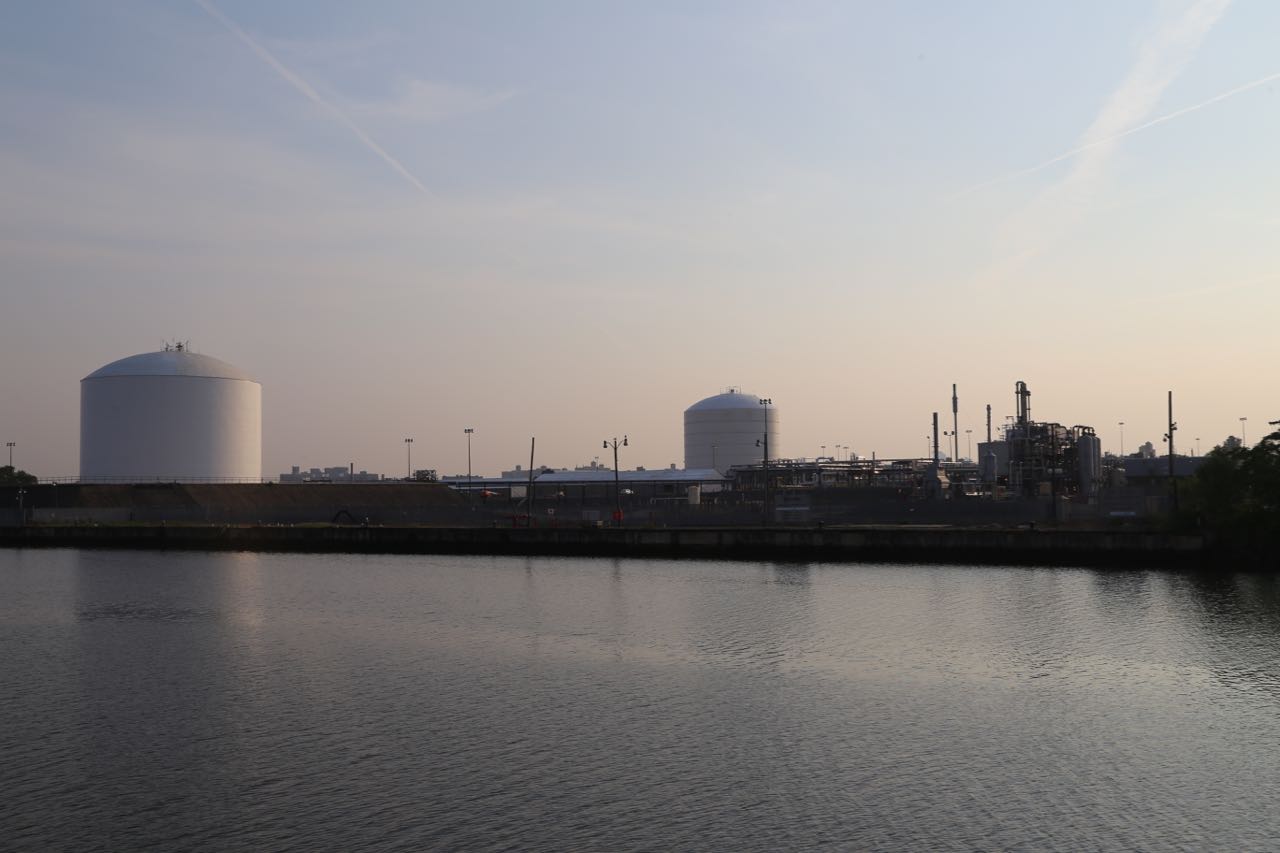
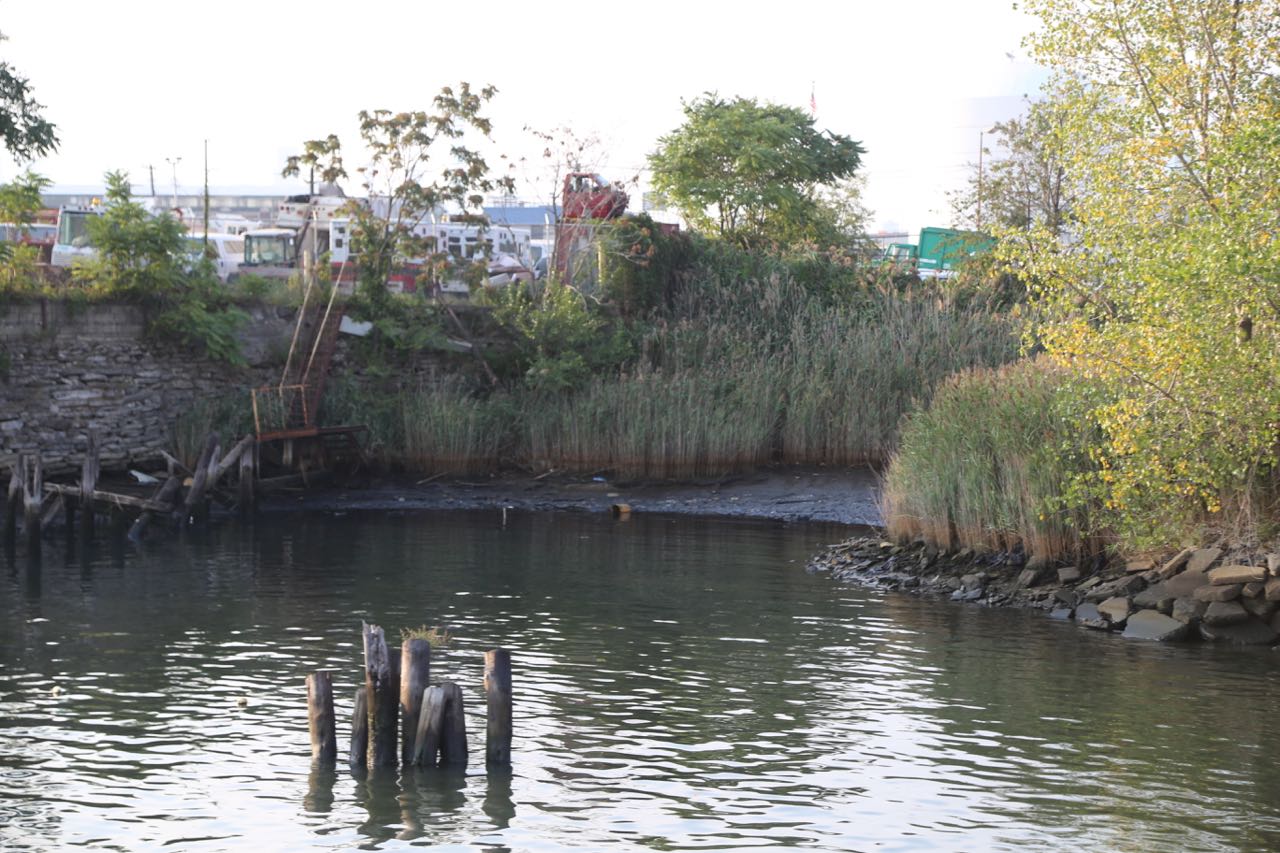
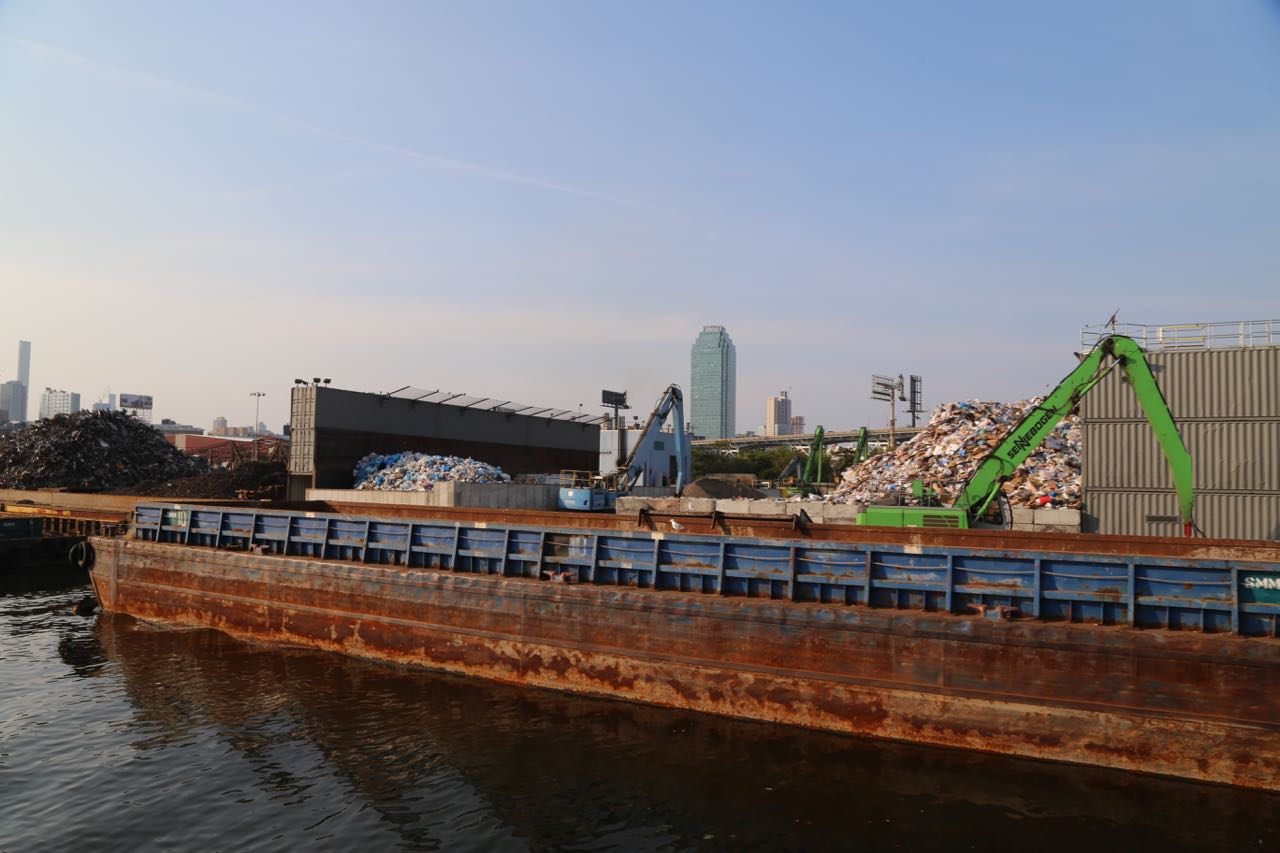
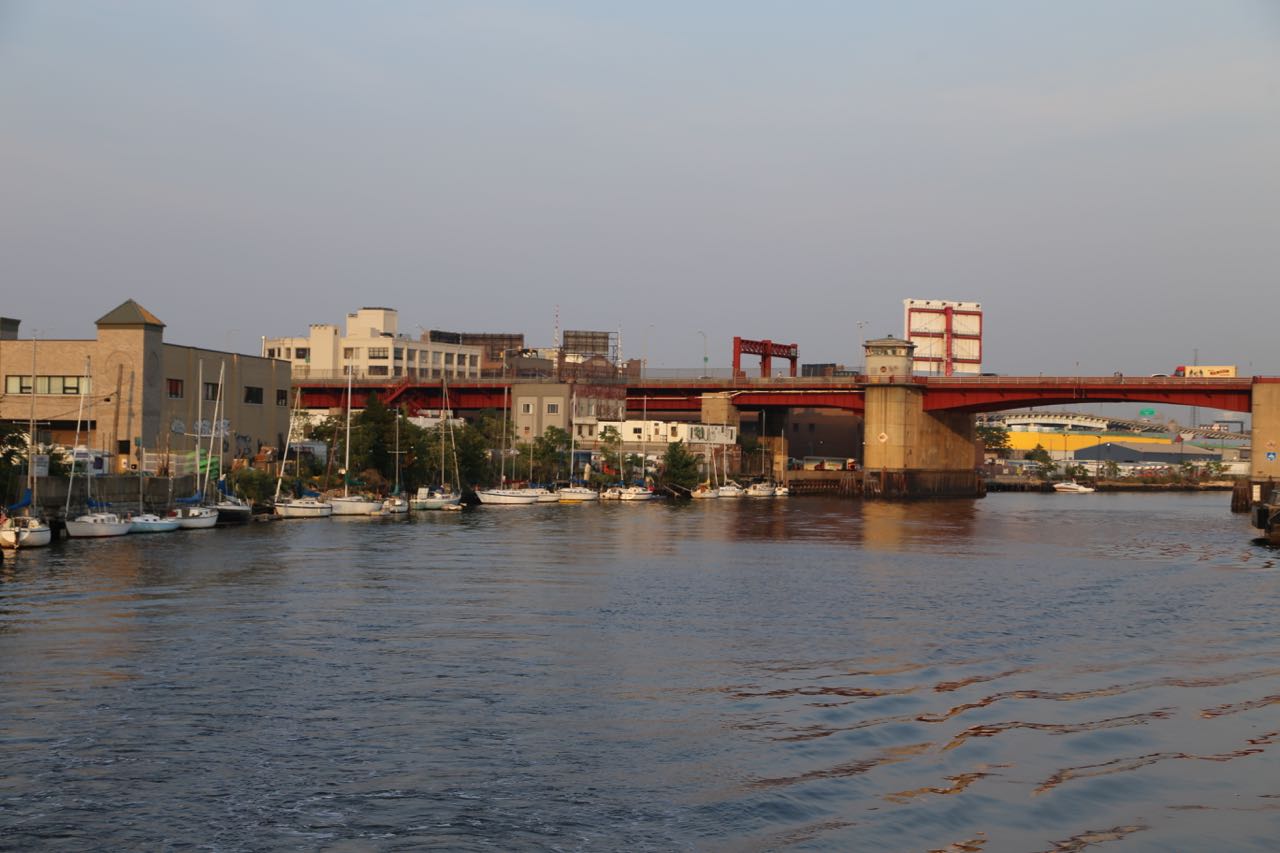
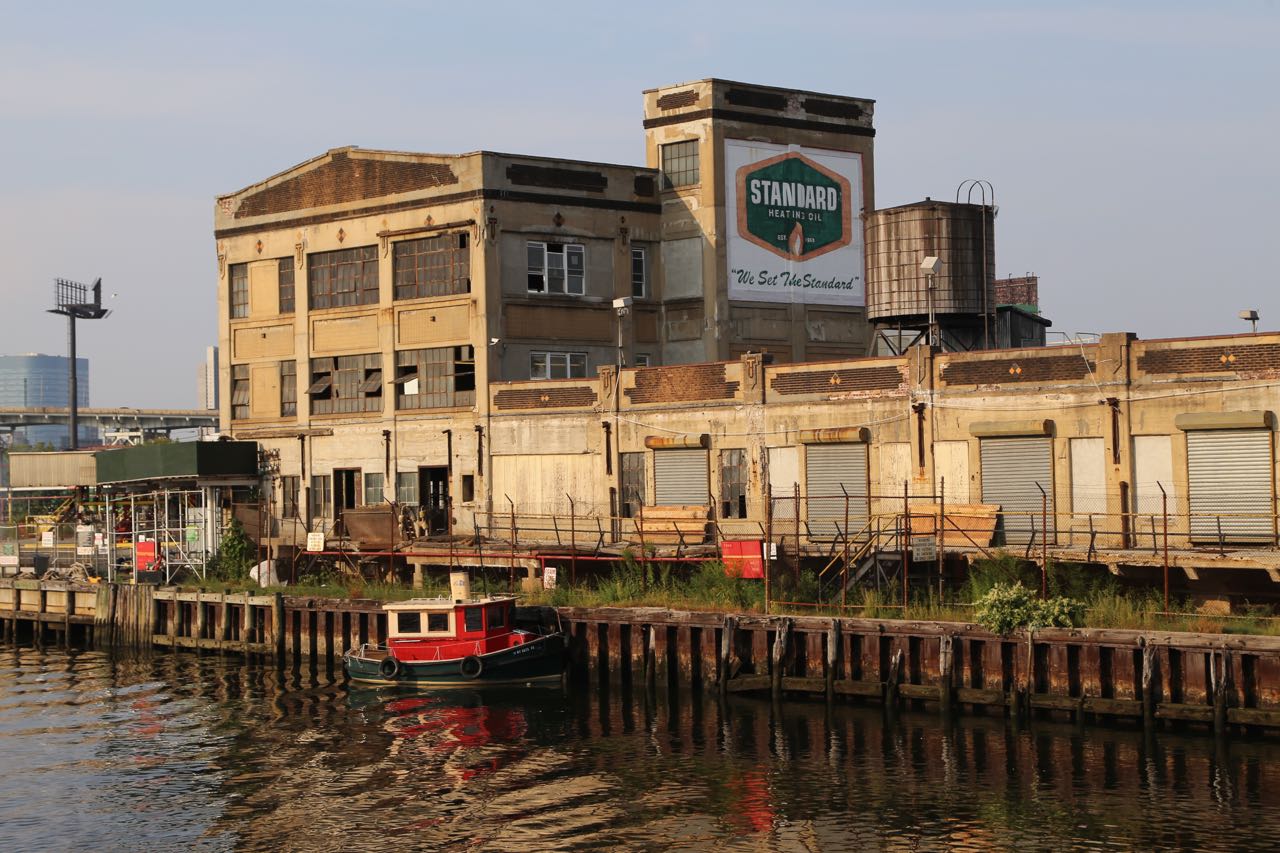
Newtown Creek is a natural creek that now resembles more of an industrial waterway and serves as a divider between Brooklyn and Queens in New York. I recently got a boat tour of it through Open House NY with superb guides from Newtown Creek Alliance and was able to see all the industrial facilities that are on it as well as a few places where its natural state is peaking through. Newtown Creek is heavily polluted because of New York City’s combined sanitary wastewater and stormwater system, which has led to untreated wastewater flowing into the creek during heavy rain events, and also industrial pollution, which has led to it being a Superfund site. A trip down Newtown Creek is almost history lesson down NYC’s past with some historic sites still visible like an old Standard Oil building. More modern parts of NYC also lie on the creek, most famously the newly redesigned and rebuilt Newtown Creek Wastewater Treatment Plant and its eight stainless steel digester eggs.

Brooklyn Queens Expressway

Brooklyn Queens Expressway

cement plant

cement plant

DEP boat

DEP boat

Newtown Creek Wastewater Treatment Plant and DEP offices

Newtown Creek Wastewater Treatment Plant and DEP offices

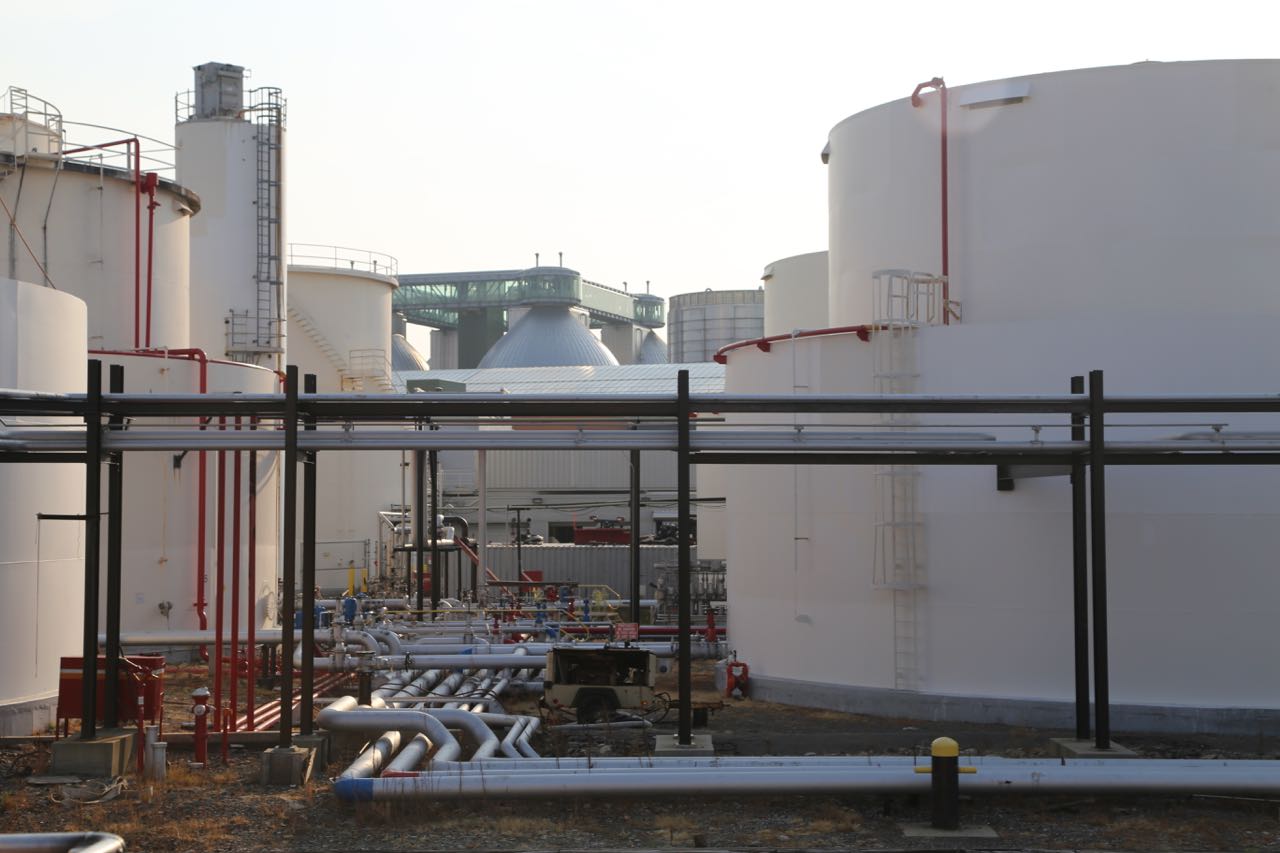
Fuel tanks and barge

Fuel tanks and barge

LPG (or possibly methane) tanks

LPG (or possibly methane) tanks

mud flats

mud flats

Recycling facility

Recycling facility

Sailboats at entrance to Newtown Creek

Sailboats at entrance to Newtown Creek

old Standard Oil facility

old Standard Oil facility

swing bridge

swing bridge

Tanks

Tanks

Newtown Creek Wastewater Treatment Plant

Newtown Creek Wastewater Treatment Plant

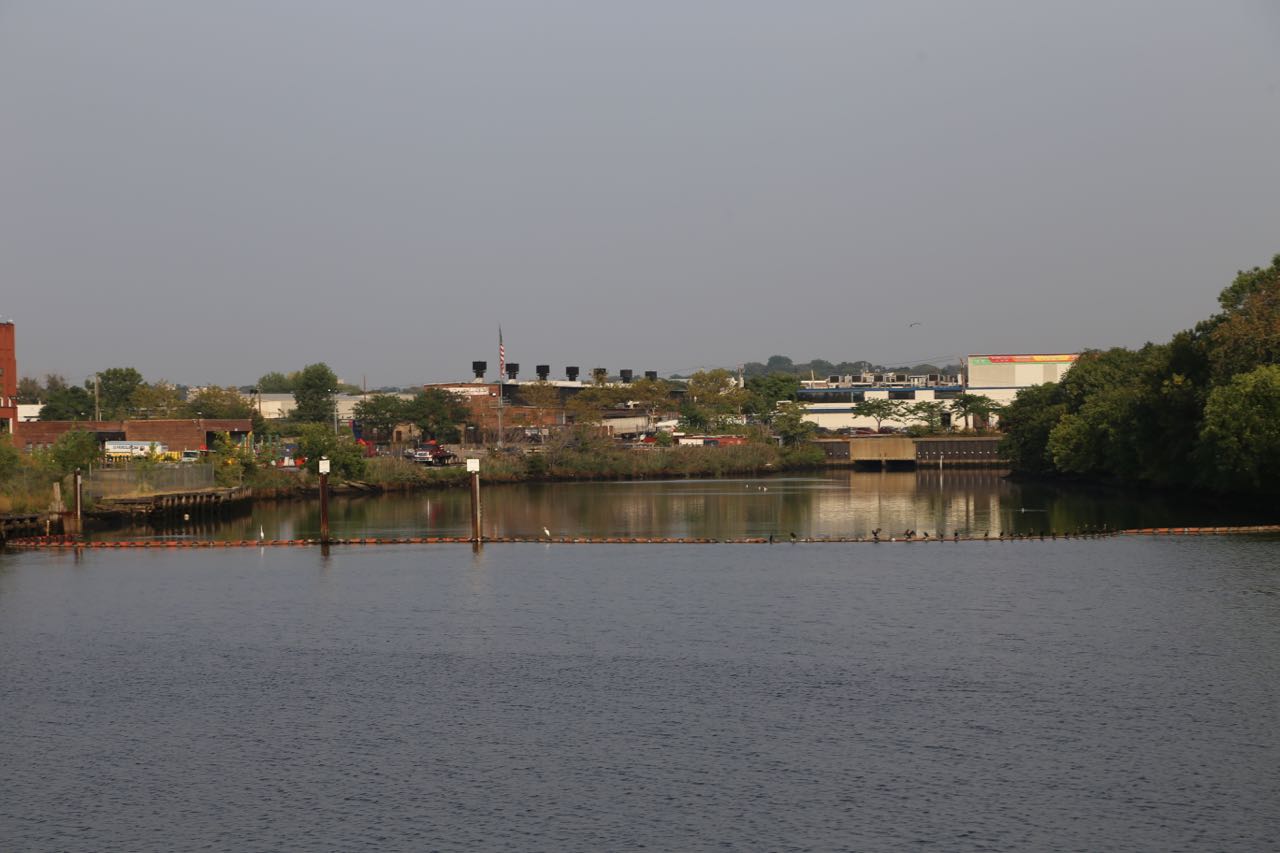
Sewage outfall with birds on boom line

Sewage outfall with birds on boom line

Marine Waste Transfer Station

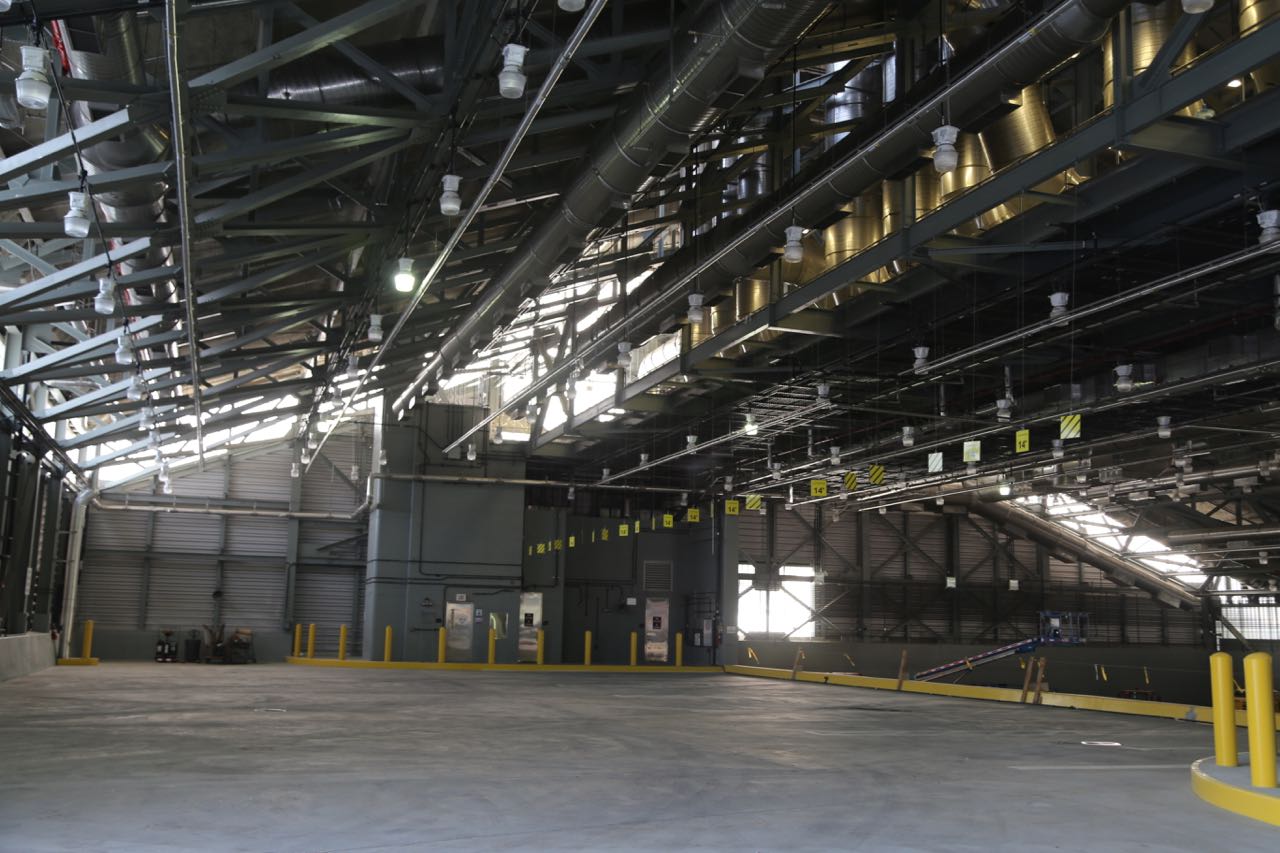
I got the chance to tour New York City’s brand new Hamilton Avenue Marine Transfer Station. It is scheduled to open next year and is located on the Gowanus Canal in Brooklyn. It will be the transfer point for household waste from ten Brooklyn community boards. It is the first marine transfer station there. All other waste is moved on trucks and rail. It is very impressive. Once operational, it will operate 24 hours a day and six days a week (no Sundays). Currently waste from the area goes to waste to energy incinerators. There will be 12 sanitation workers per shift plus one supervisor.

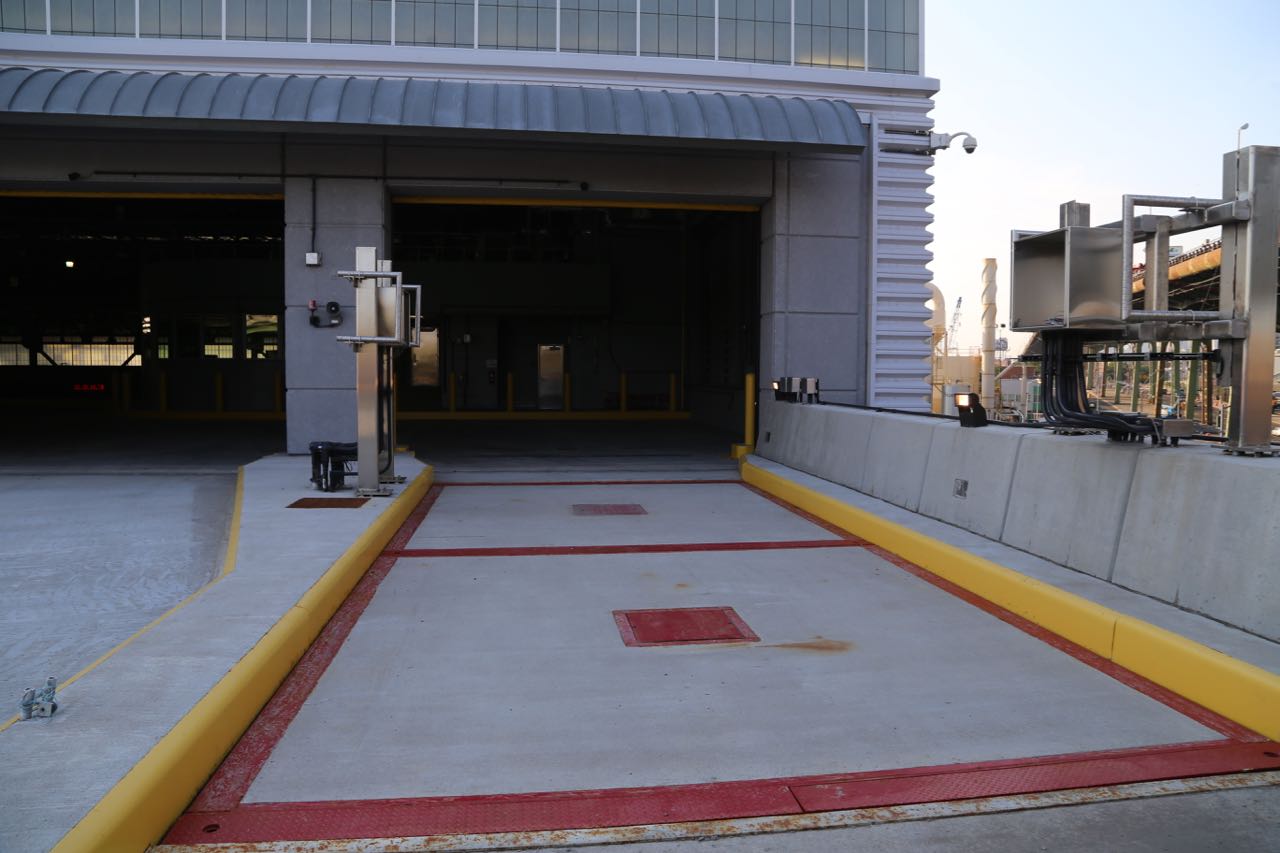
Trucks enter the building and are first weighed on a scale.

Scale where trucks get weighed when entering station

Scale where trucks get weighed when entering station

Once inside the building, the trucks back up to the edge of the floor and lower their trash onto the mixing floor below.

Area where trucks enter and then deposit waste onto mixing floor (right side)

Area where trucks enter and then deposit waste onto mixing floor (right side)

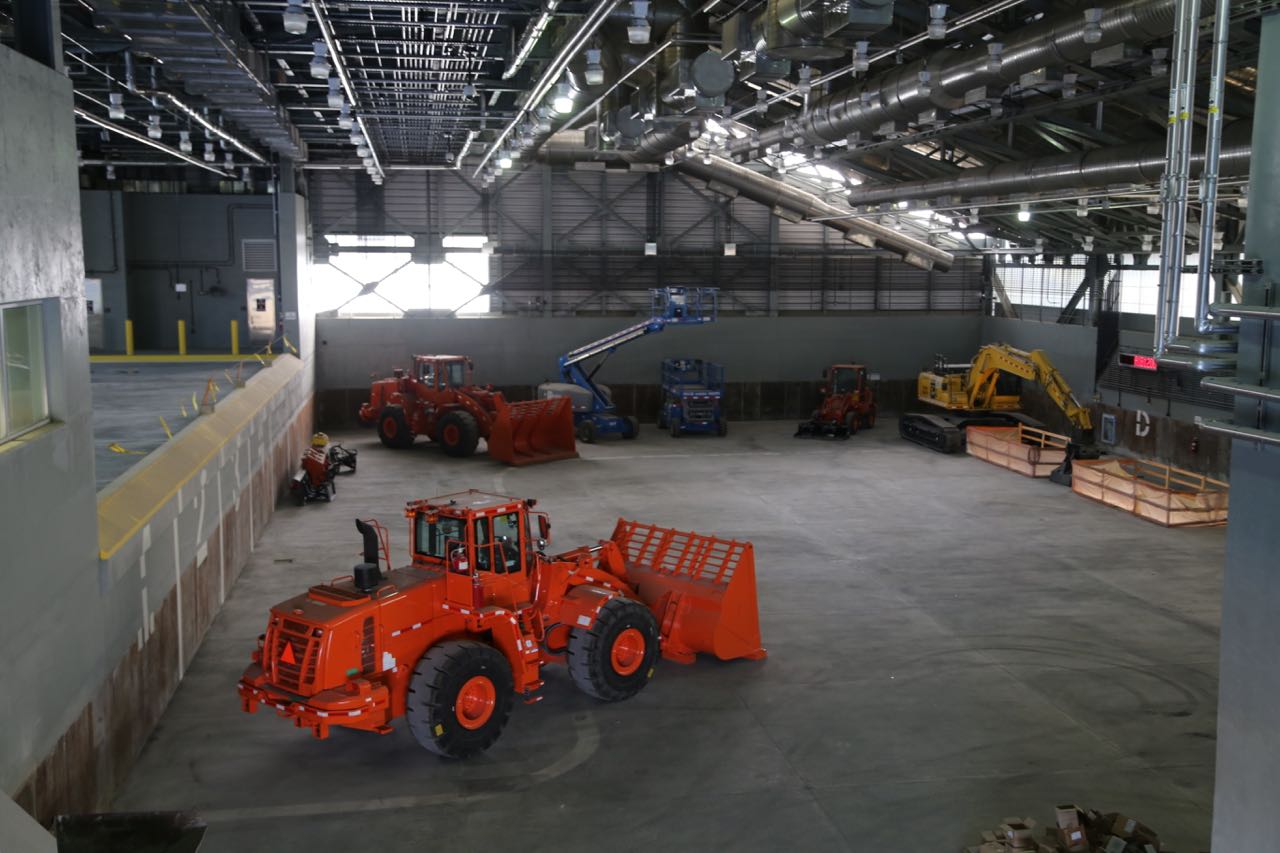
Front loaders and other equipment on the floor below are used to push the waste through openings in the floor into containers waiting below the mixing floor.

Waste mixing floor with equipment to push waste into containers

Waste mixing floor with equipment to push waste into containers, the elevated floor on the left is where the trucks will lower their loads

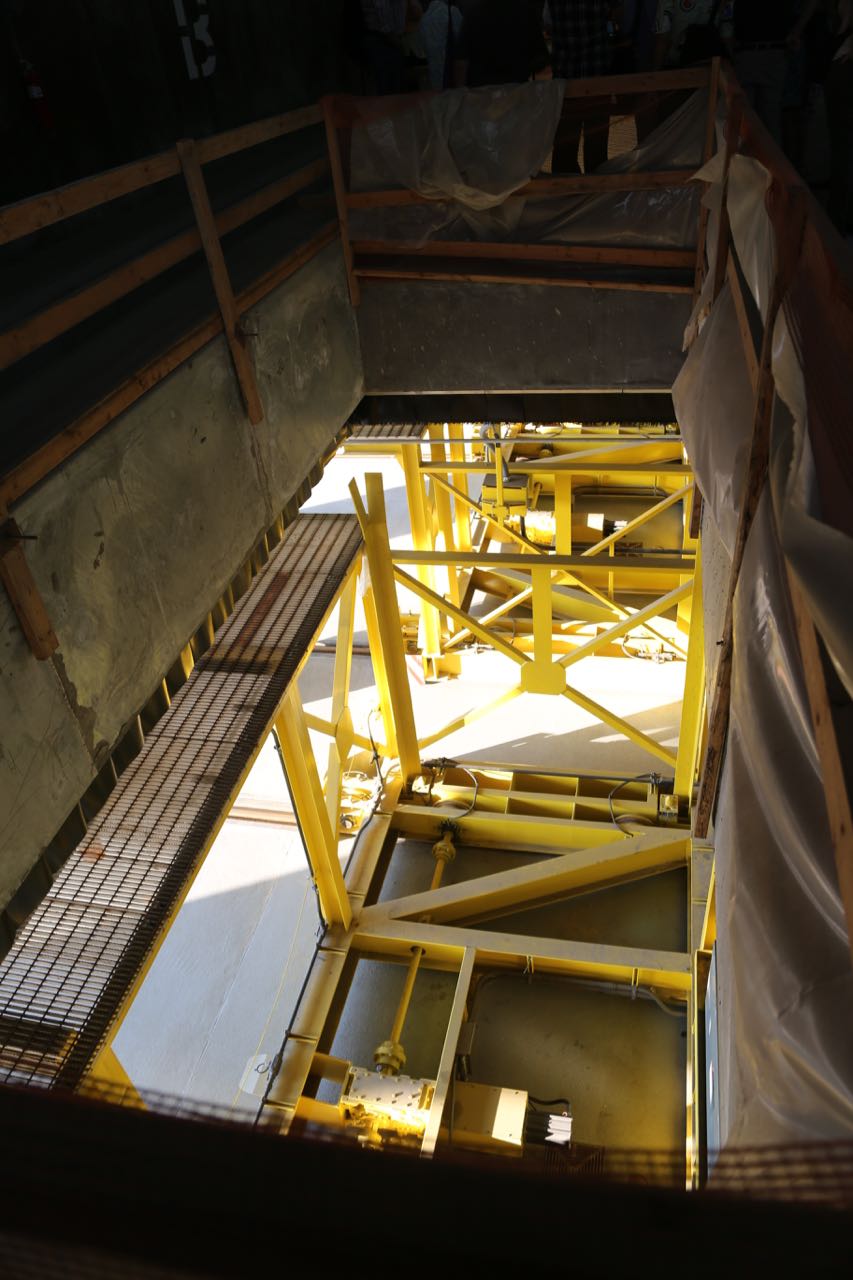
The openings in the mixing floor are only as big as the standard containers that will accept the waste. The station aims to put 20 tons of waste in each container.

Looking down from waste mixing floor into hole where waste will be pushed into a waiting container

Looking down from waste mixing floor into hole where waste will be pushed into a waiting container

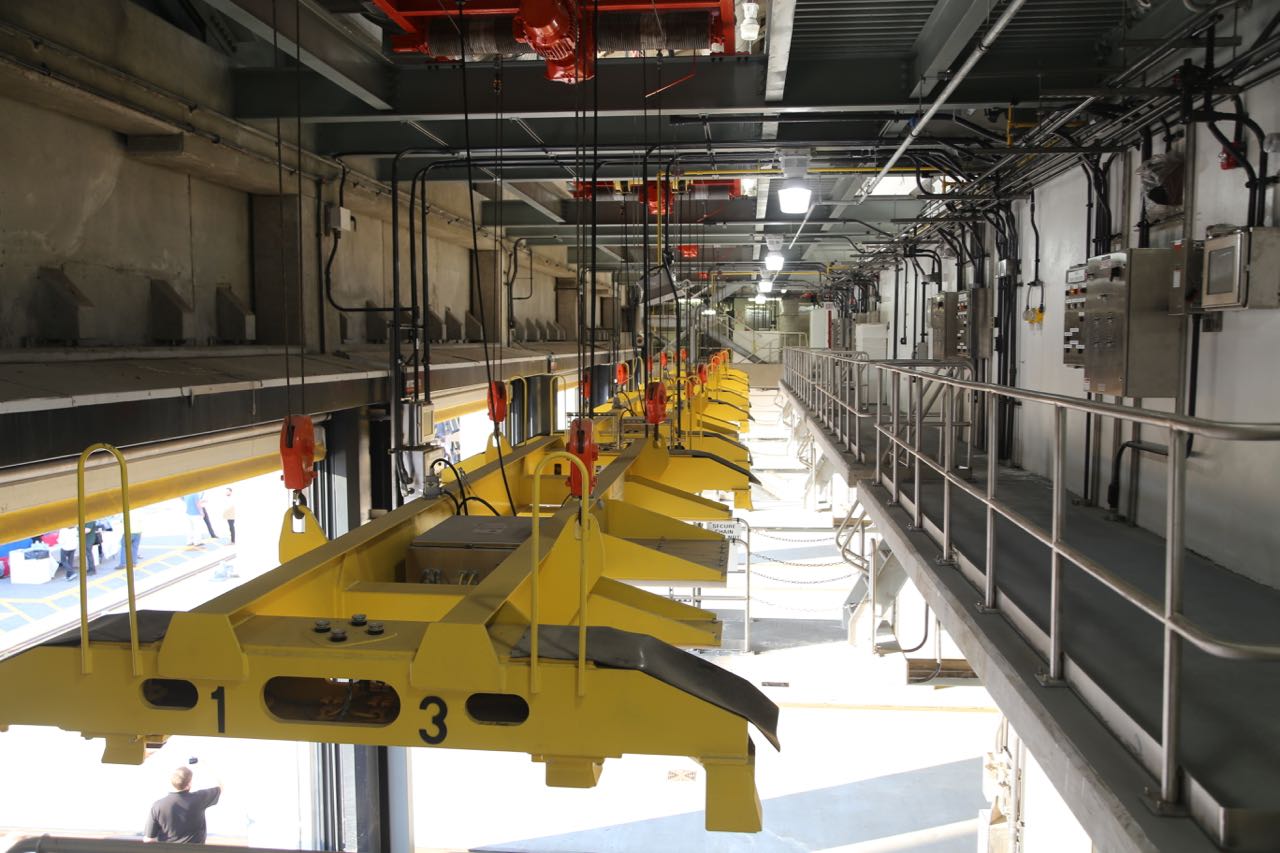
Once the container is full, equipment is then used to place a top on the waste container.

Row of toppers, equipment used to place top on top of container

Row of toppers, equipment used to place top on top of container

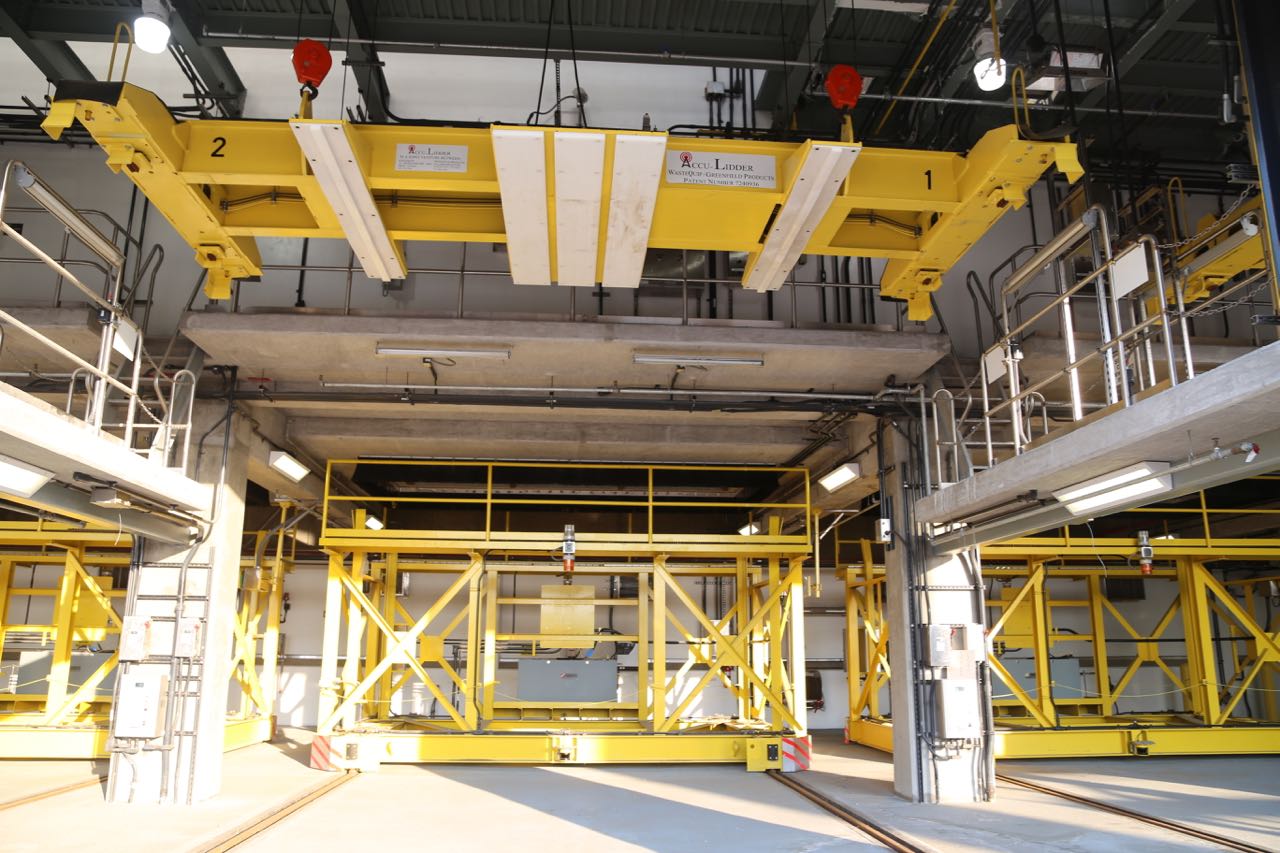
The containers are moved the loading area to the topping area to the storage area on rails.

Loading bay, in foreground are toppers and behind, with yellow frames, are where containers will sit to receive waste

Loading bay, in foreground are toppers and behind, with yellow frames, are where containers will sit to receive waste

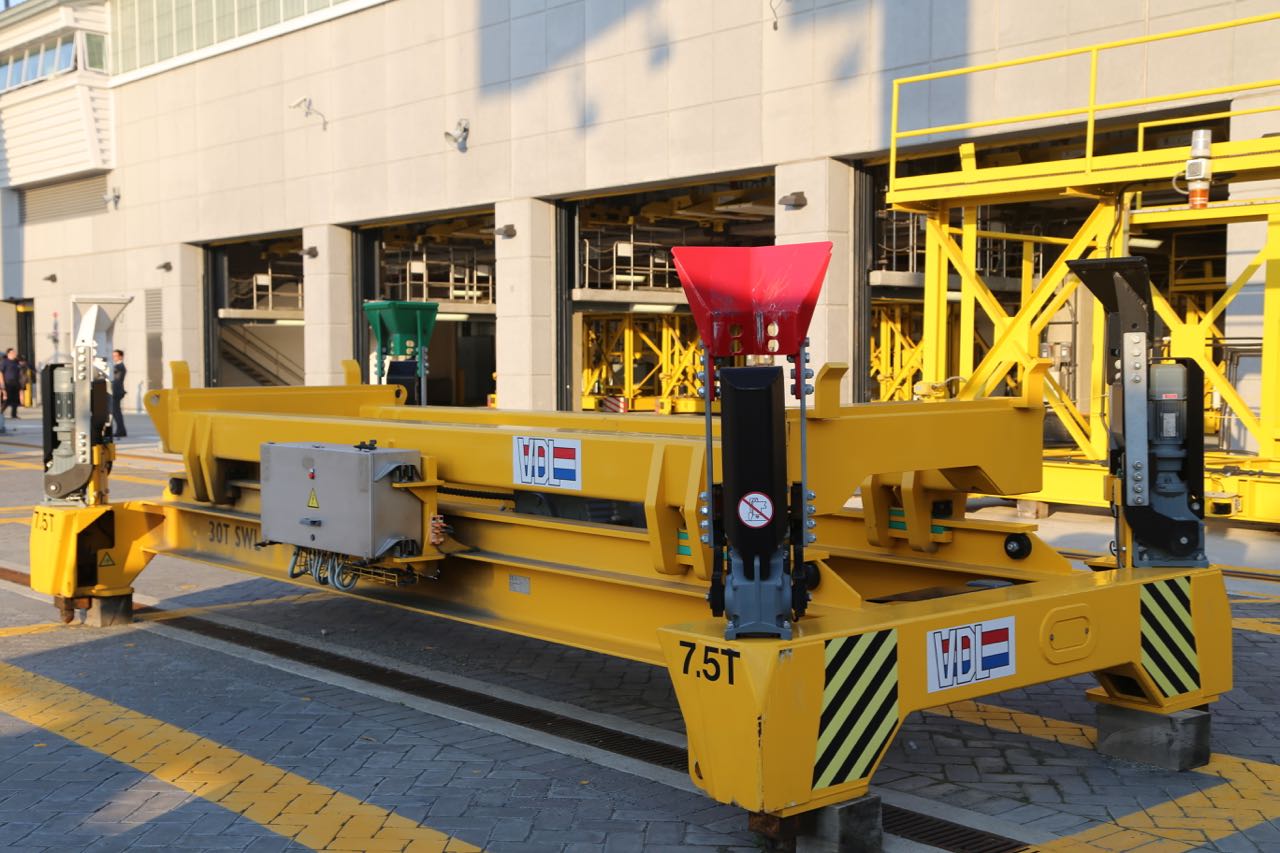
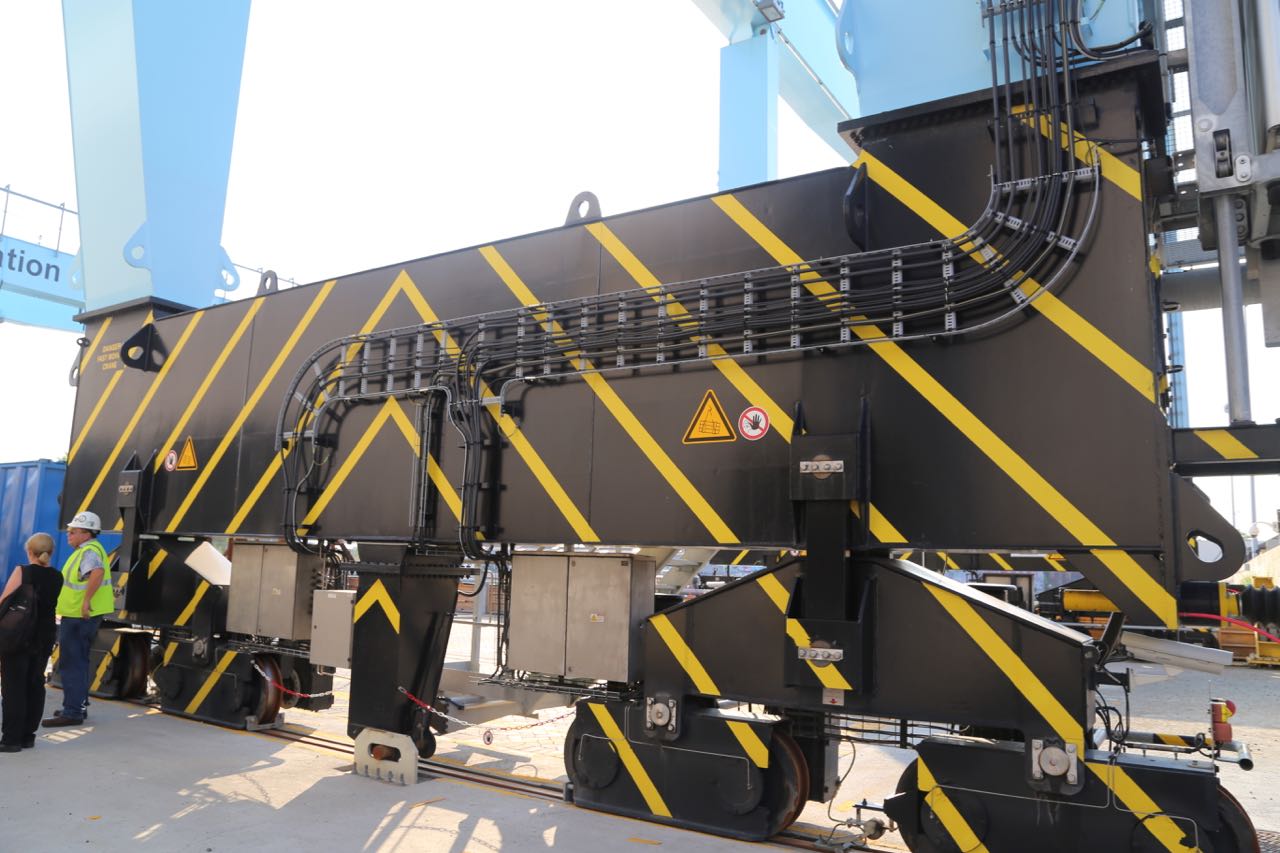
Cranes that are also on rails are used to move the containers from the building to stacking areas to finally the barge.

Equipment that is attached to crane to move containers

Equipment that is attached to crane to move containers

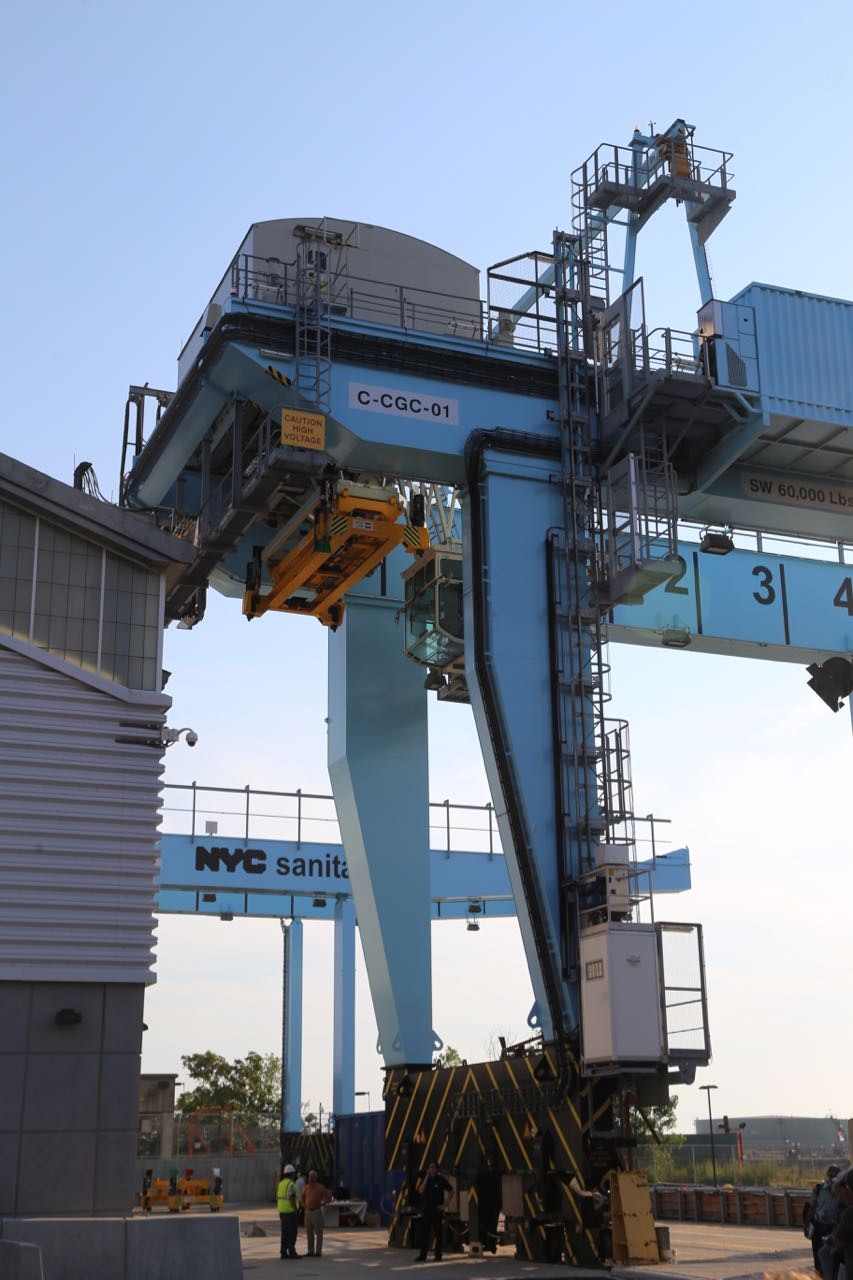
There are two cranes, but for safety, only one is used at a time. The other one is a backup during maintenance.

Container crane

Container crane

Base of container crane, on rails

Base of container crane, on rails

Container crane

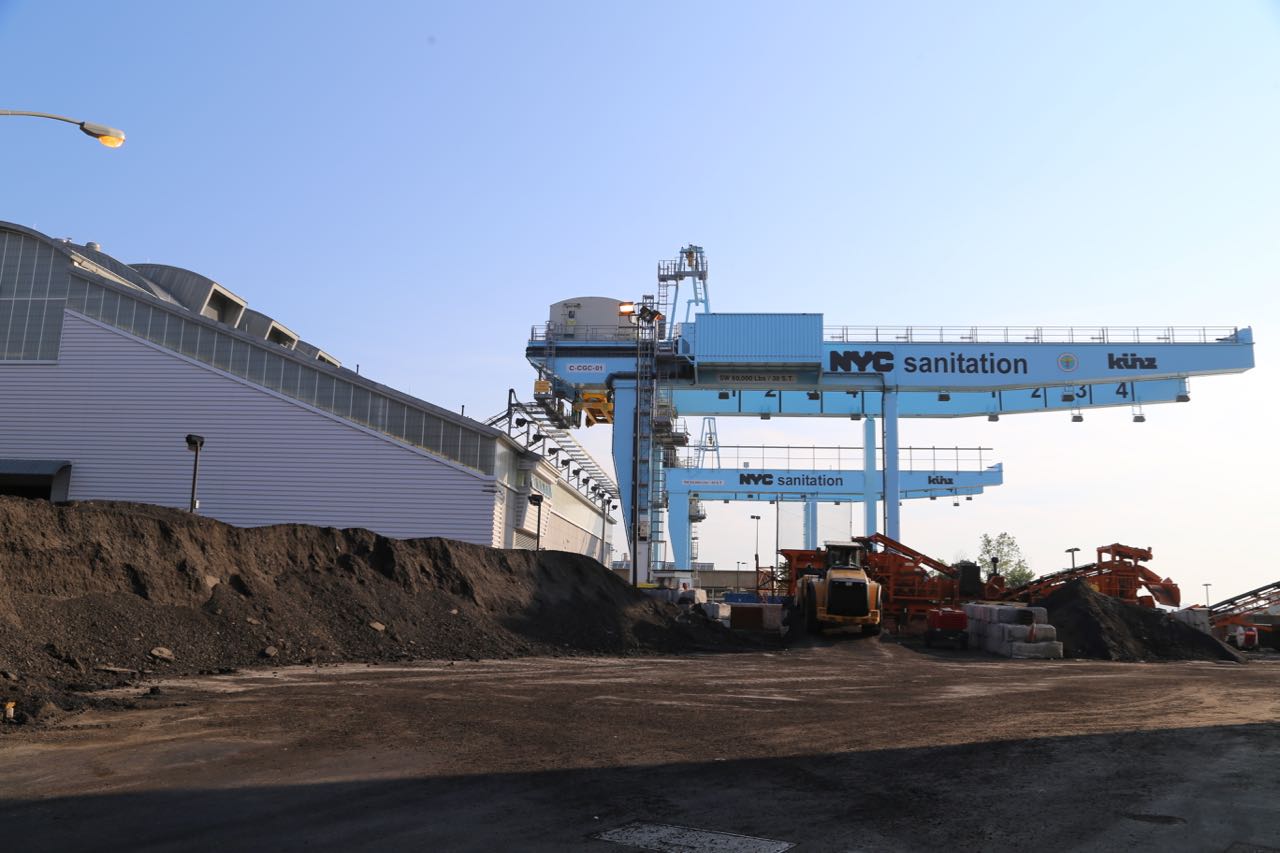
Container cranes with station building to the left

Istanbul: Basilica Cistern

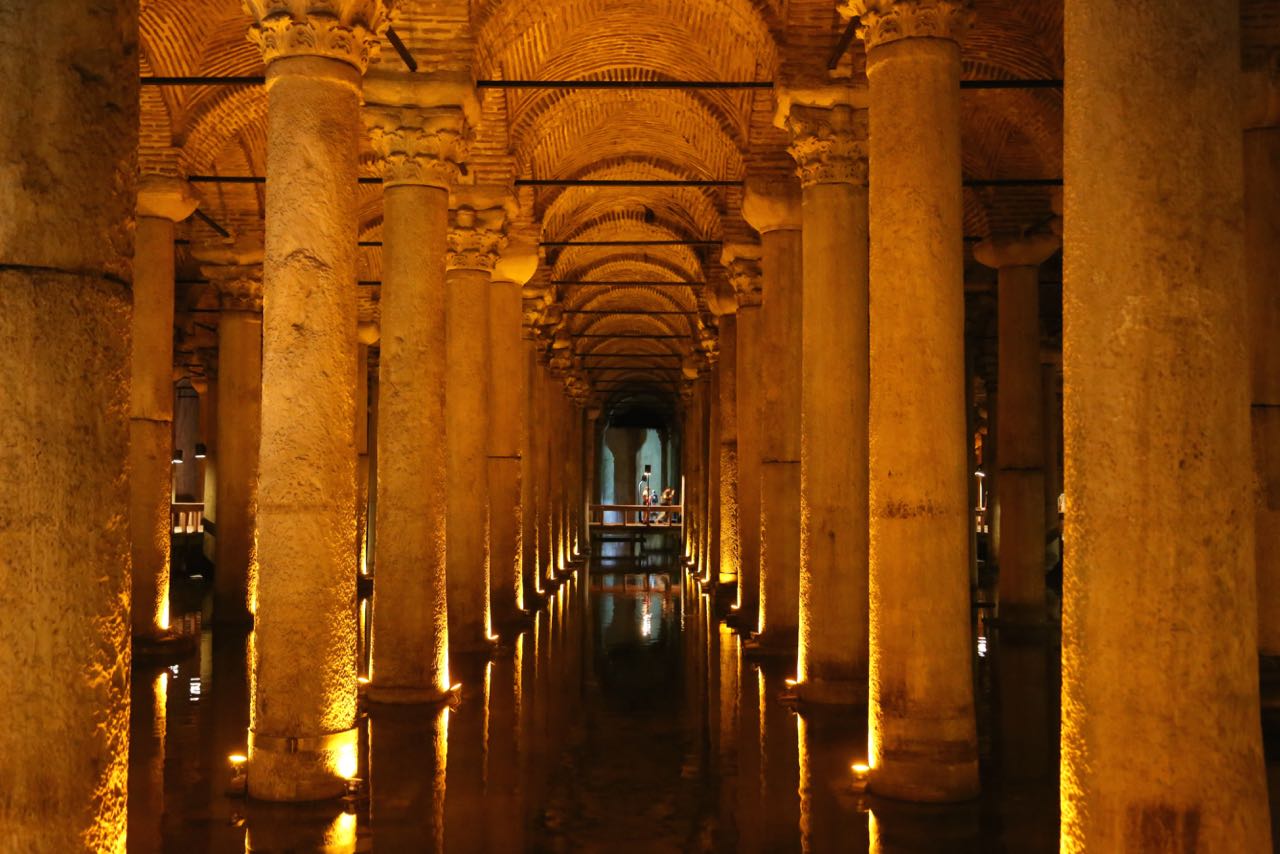
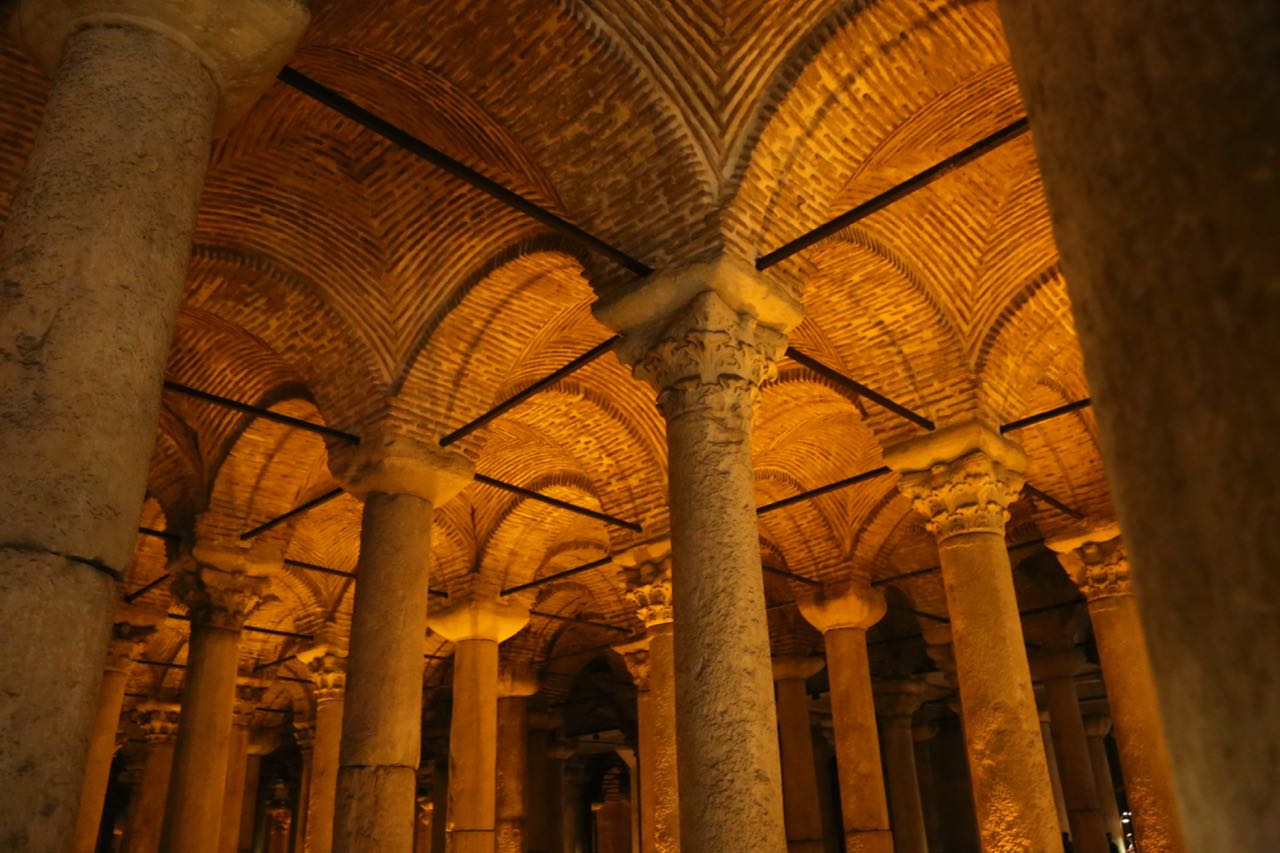
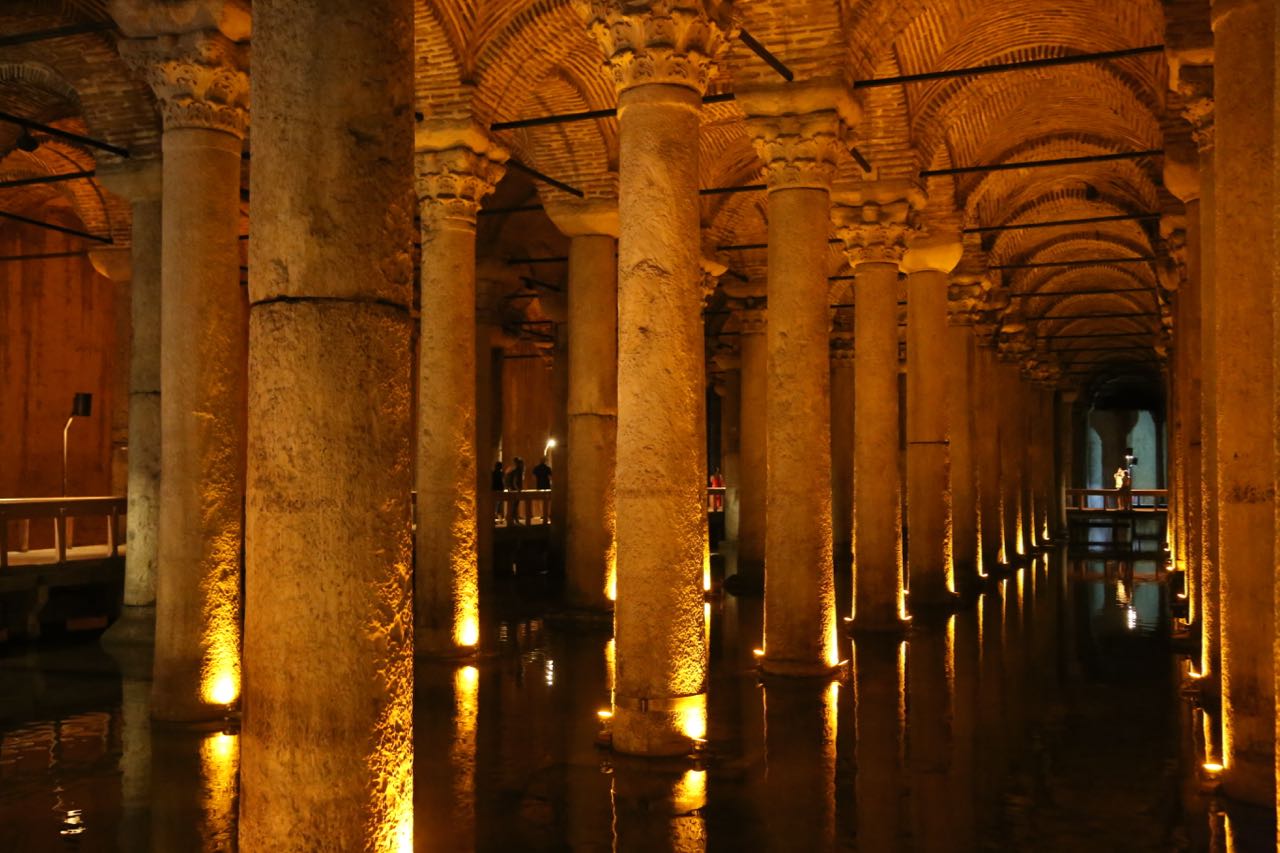
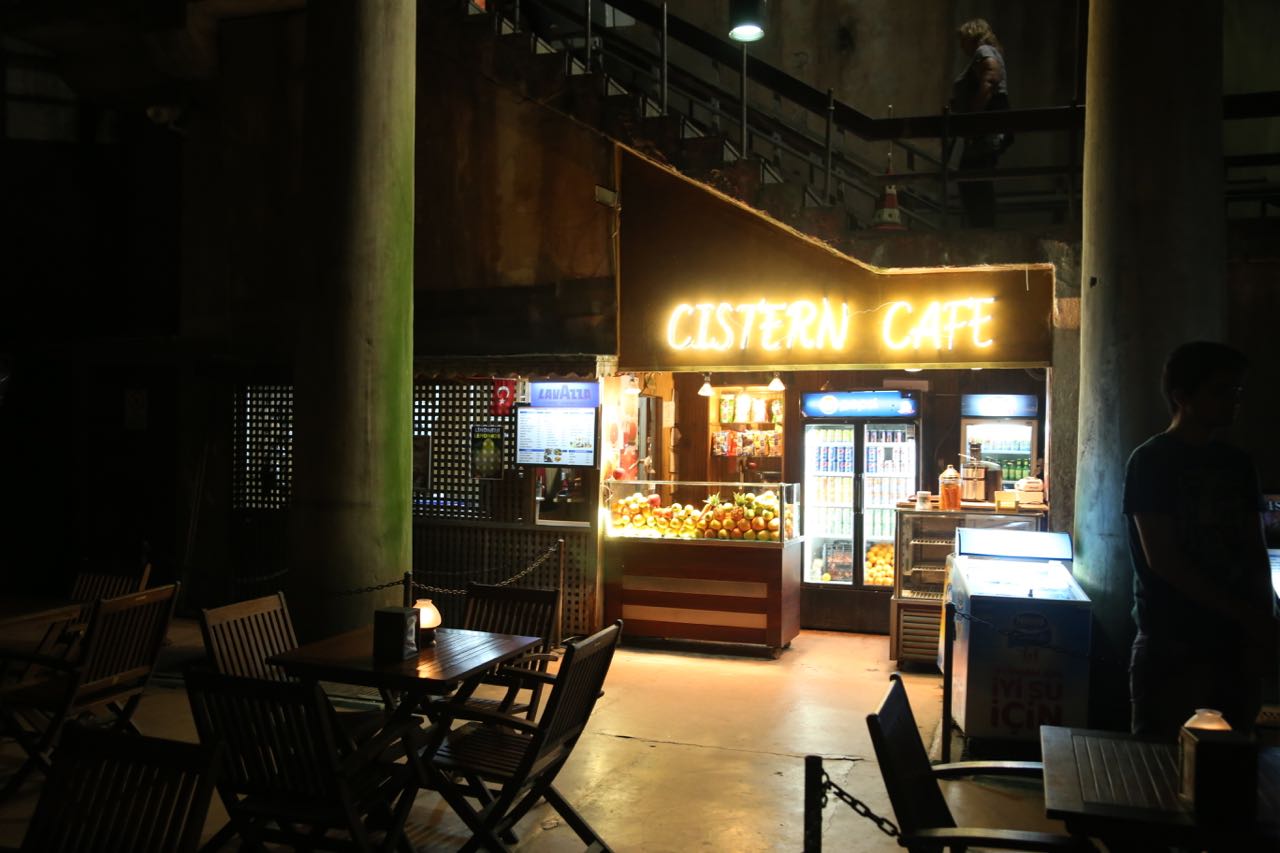
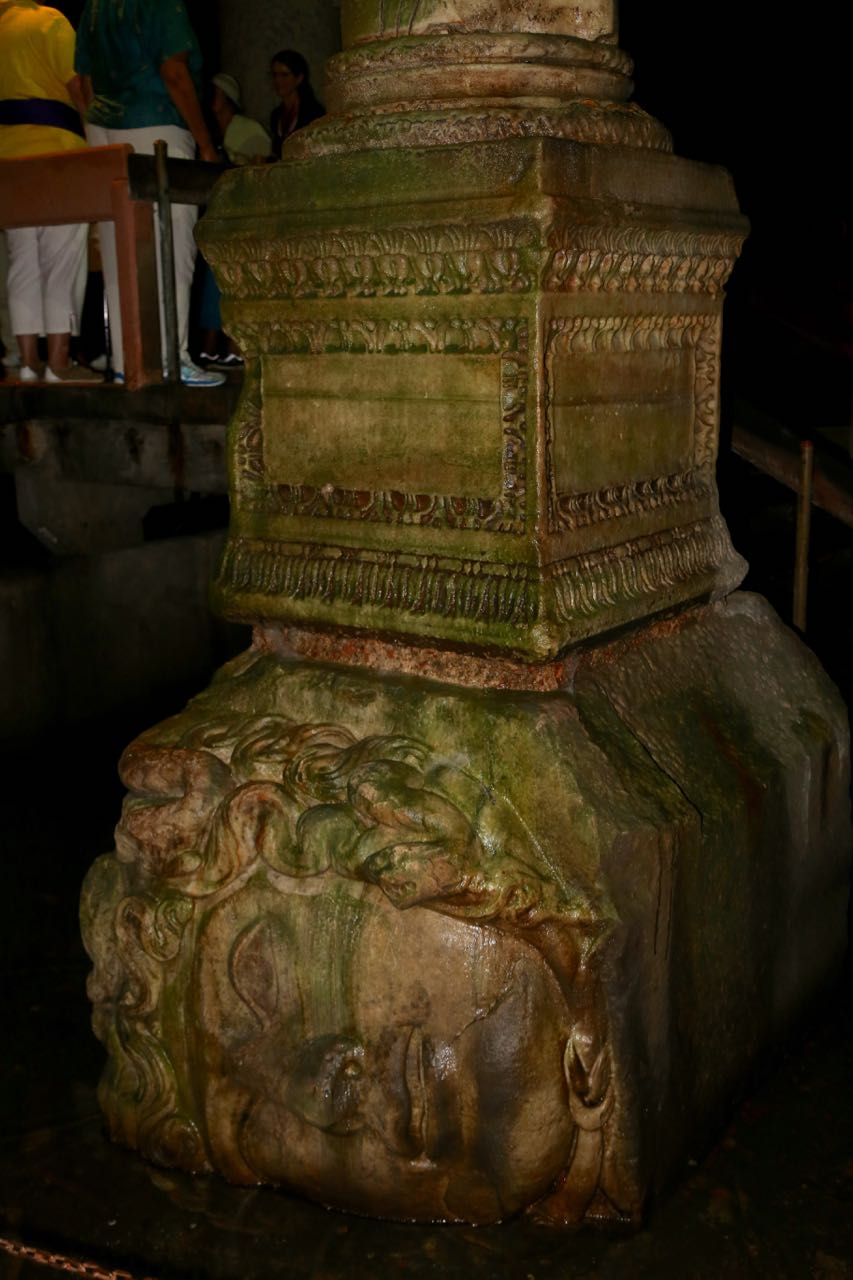
The Basilica Cistern is without a doubt one of the coolest, human made places I have ever been. I don’t think you need to be an engineering nerd like myself to find the place to be really neat. It is an underground cistern built in 532 A.D. It is a wonderful example of engineering and was used to store water. Now it is a tourist attraction complete with a cafe. Yes, there is a cafe, and in my opinion, it would be only more perfect if it was a Starbucks simply because they are everywhere. The cistern was featured in the James Bond movie ‘From Russia With Love.’ Two of the columns have Medusa heads as bases, possibly because they fit and were available. There is still water in it below the walkways, and fish live there. They were introduced to keep the water clean.

Basilica Cistern

Basilica Cistern

Basilica Cistern ceiling

Basilica Cistern ceiling

Basilica Cistern

Basilica Cistern

Cistern Cafe

Cistern Cafe

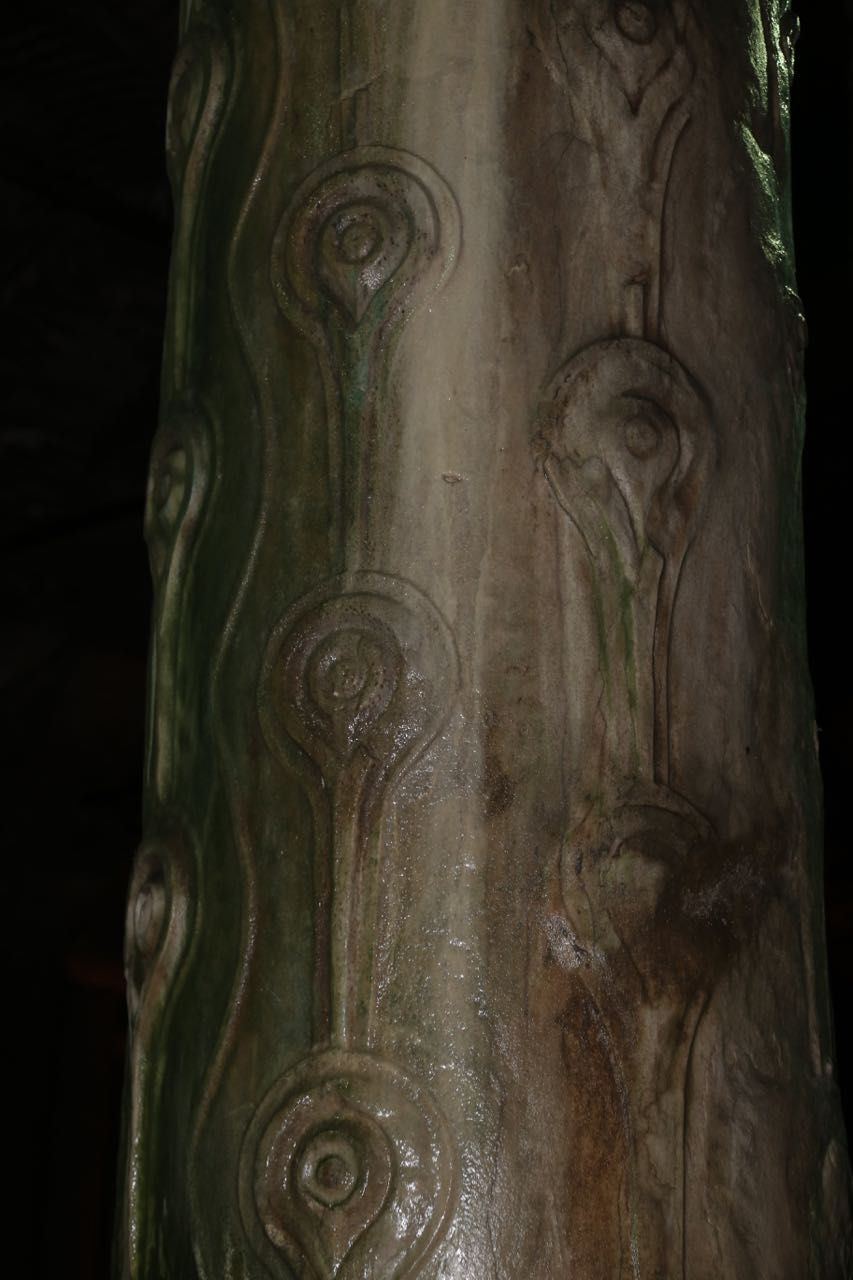
Crying Column

Crying Column

Medusa head as base of column

Medusa head as base of column

Medusa head

Medusa head

Greece: Kalymnos

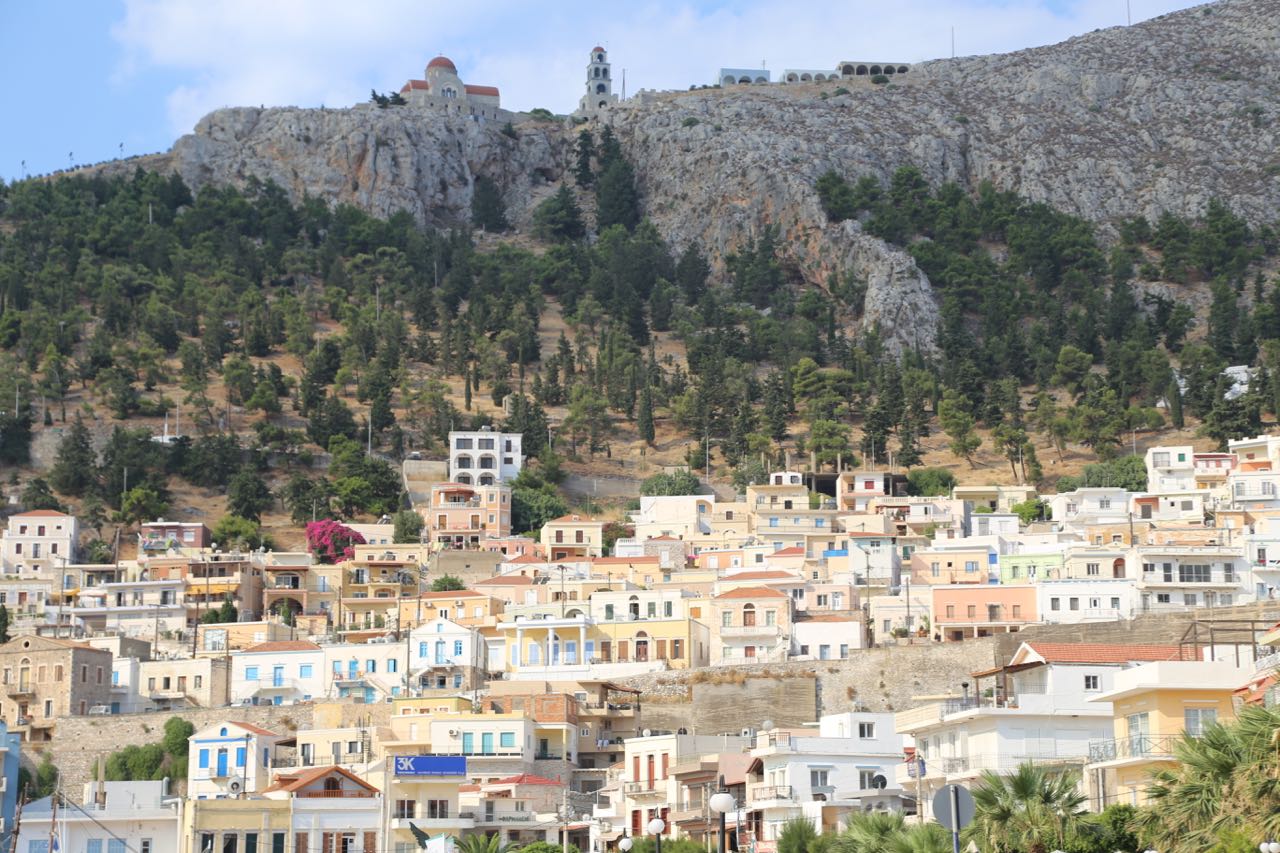
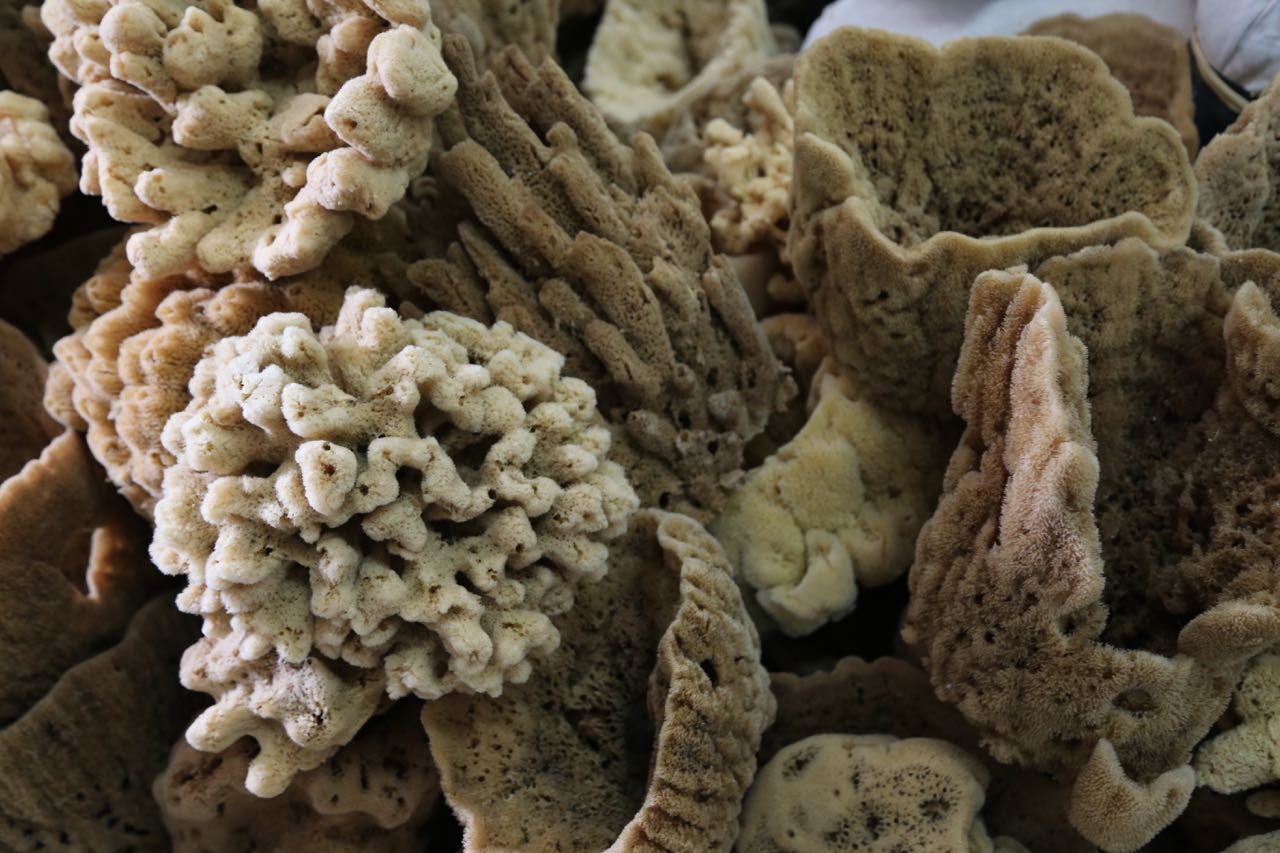
This morning we went to Kalymnos, the sponge divers’ island. The island is in Dodecanese island group and seems be known for the sponge divers and that is about it. We visited Nautical and Folklore Museum. It was tiny but had some nice exhibits on the sponge divers and the history of them. According to the museum curator, the death rate among sponge divers was near 25%, which is depressing to say the least.

Kalymnos

Kalymnos

Kalymnos harbor

Kalymnos harbor

Sponge store

Sponge store

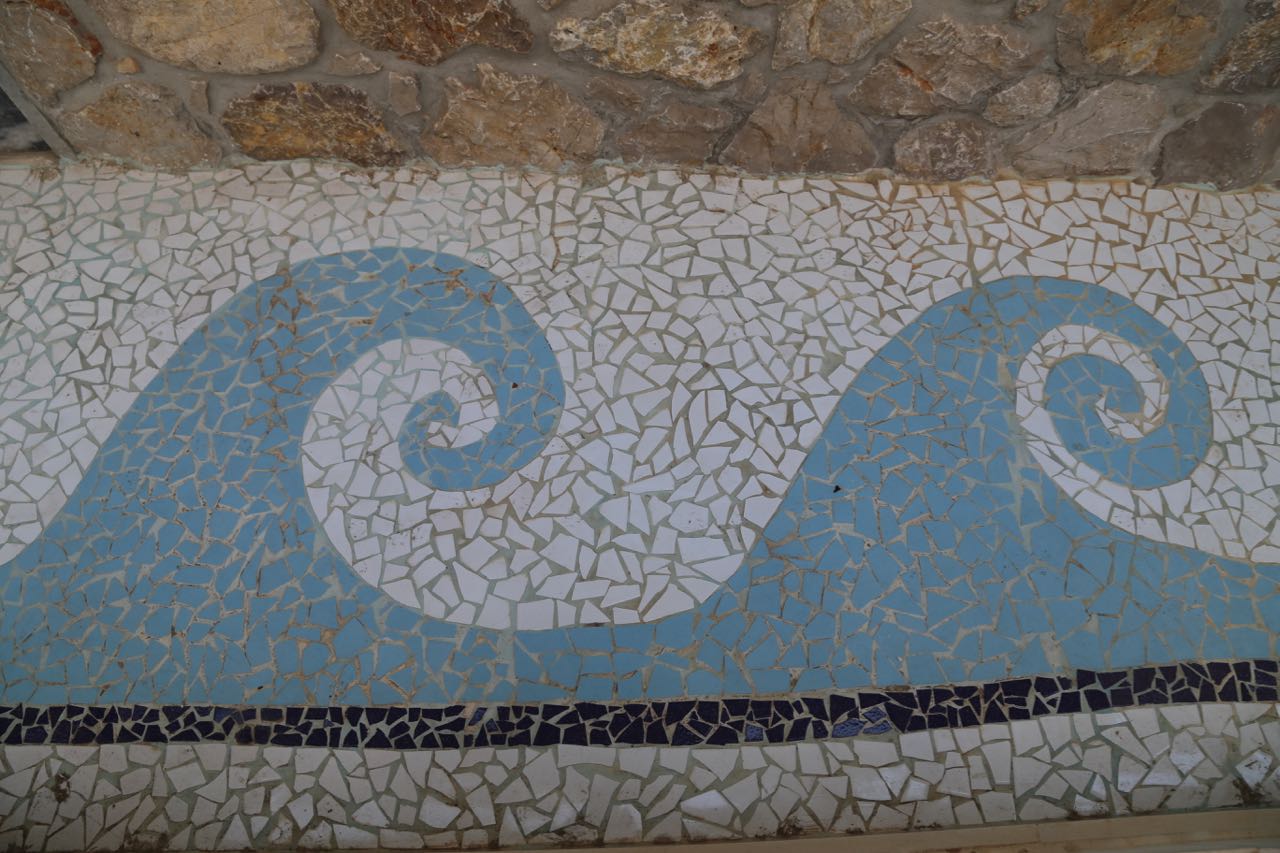
Tile porch floor

Tile porch floor

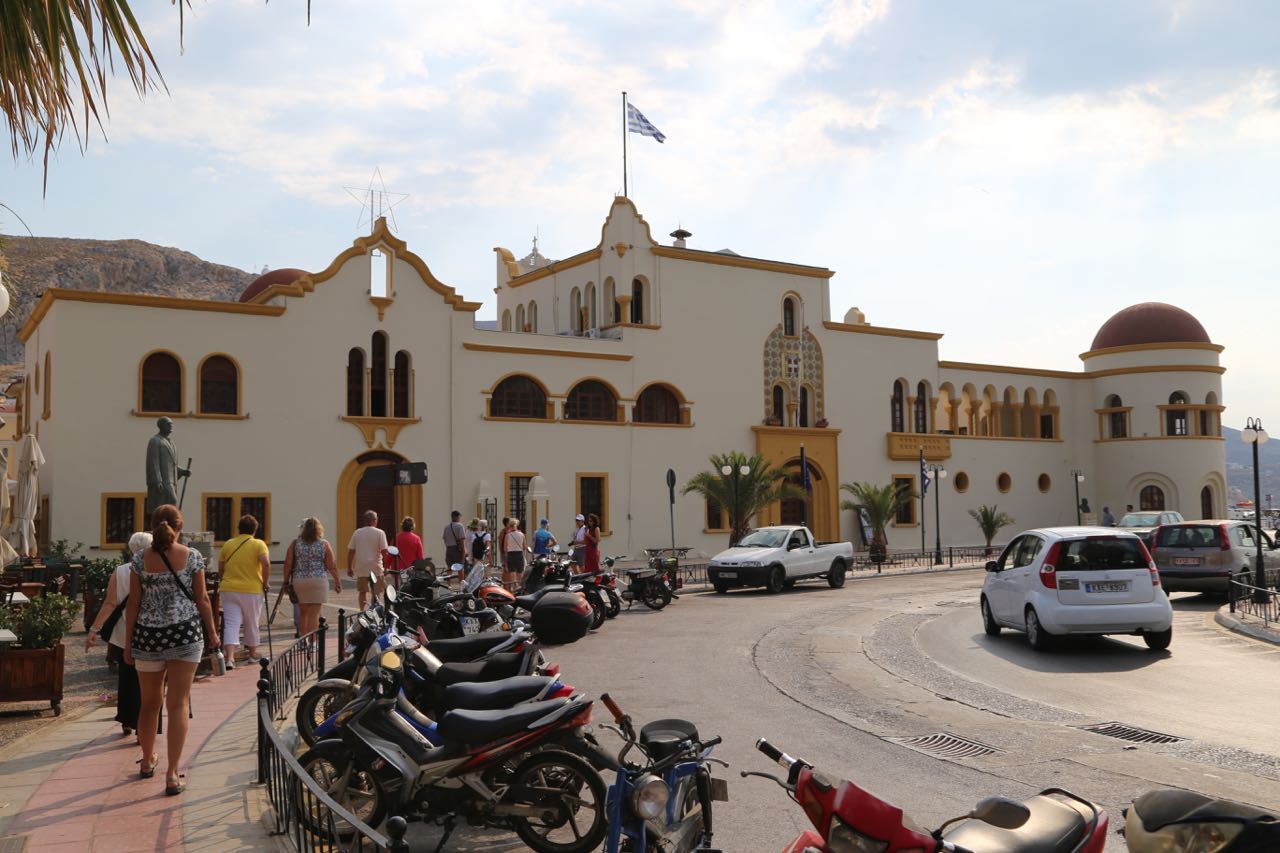
Prefecture

Prefecture

Church

Church

Blue and white house

Blue and white house

Sampling Fish

Recently for work I got to help out in the field taking samples to quantify environmental contamination. Some of the samples we were taking were fish tissue to measure the levels of polychlorinated biphenyls (PCB) in them. The fish live in a river that was contaminated decades ago. The sampling results will be used for fish advisories and also to determine a clean up plan.

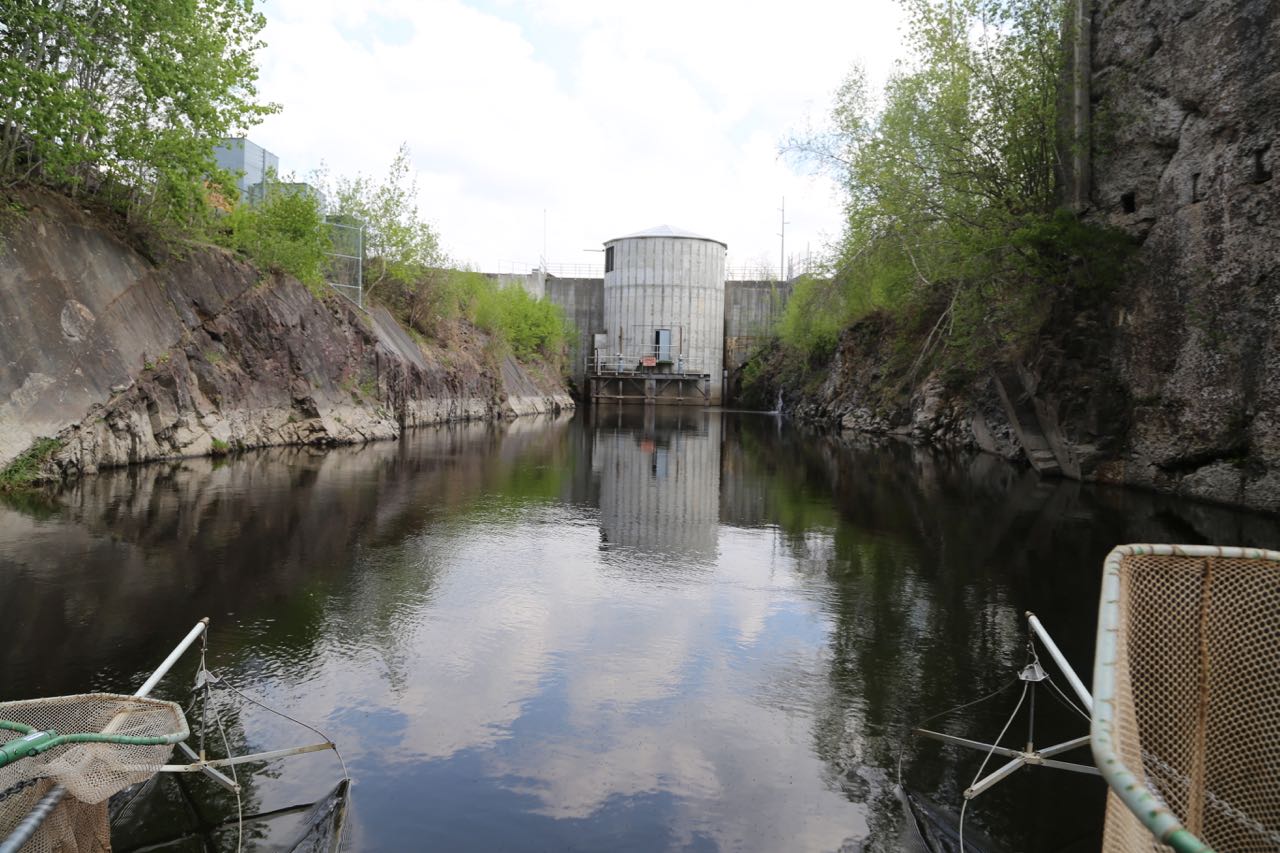
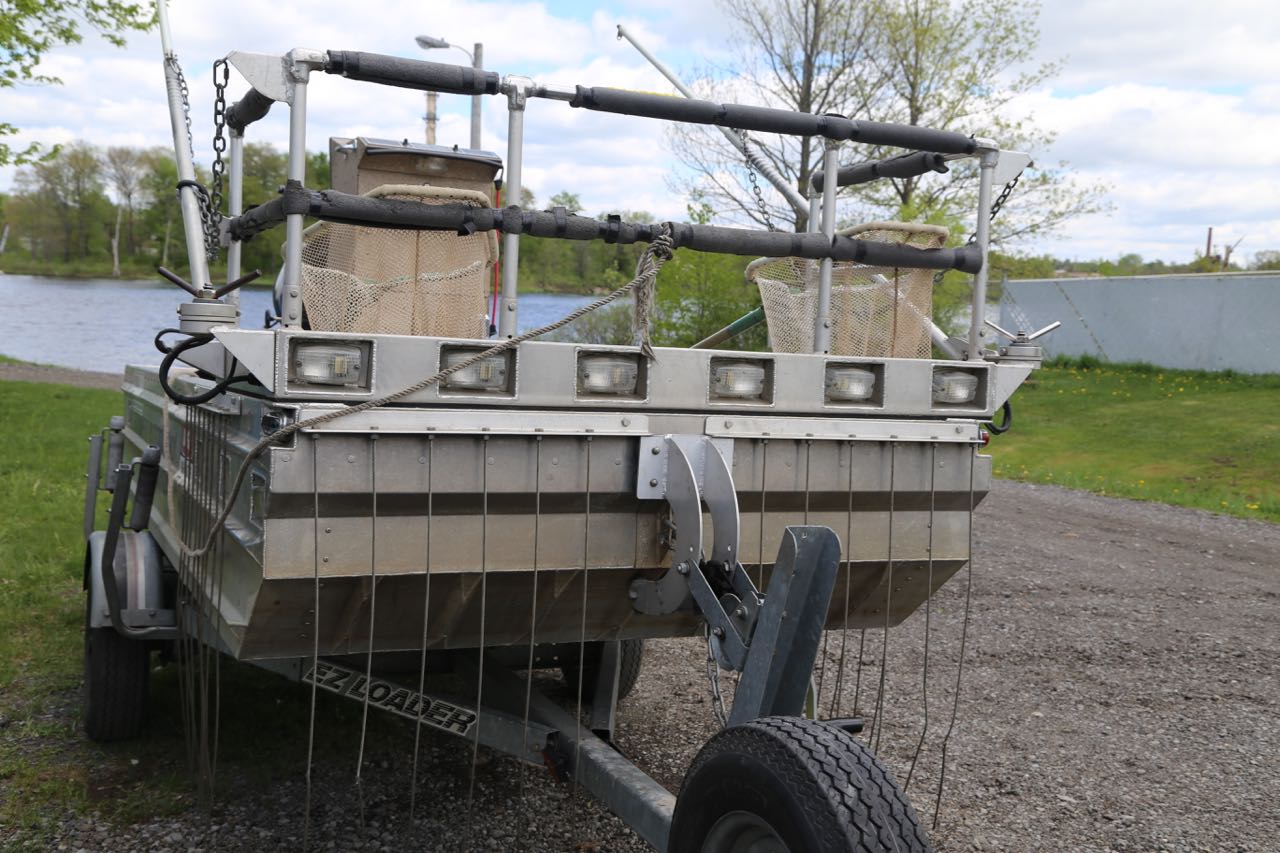
Sampling fish starts with the really fun part, which is cruising on a small electrofishing boat. Electroshocking the fish allows you to catch them alive and throw back any fish we didn’t want. We had target fish we were trying to catch to sample, and those were the only ones we kept, and we only the number of target fish we needed. The electroshock sort of stuns the fish but doesn’t kill them. The electrofishing boat has two long poles with anode wires hanging off of them protruding from the front of the boat. There were more wires hanging from the bow of the boat, and those are the cathodes. The electricity flows from the anodes to the cathodes. We stood at the front of the boat in rubber soled boots with nets extended waiting to catch any fish stunned by the electroshocking. Netting electroshocked fish is not actually as easy as it sounds. Some of the fish are more stunned than others, so some fish seem slightly confused but then swim away. Also, some were stunned but at a depth too low or cloudy for us to catch or see. According to the boat’s captain, the water had really low conductivity, which was making it difficult. Since we had target fish we were trying to catch, I, naturally, kept catching fish we didn’t want. I threw a lot of fish back. Still, a day on a boat catching or not catching fish was a wonderful change from the cubical I normally work in. Also, I learned that you really need polarized sunglasses when out on the water.

View from the boat with the anodes out in front. Not a bad office.

View from the boat with the anodes out in front and nets at the ready. Not a bad office.

Front of boat, cathode wires hang along bow

Front of boat, cathode wires hang along bow

Anode hangs in front of the boat

Anode hangs in front of the boat

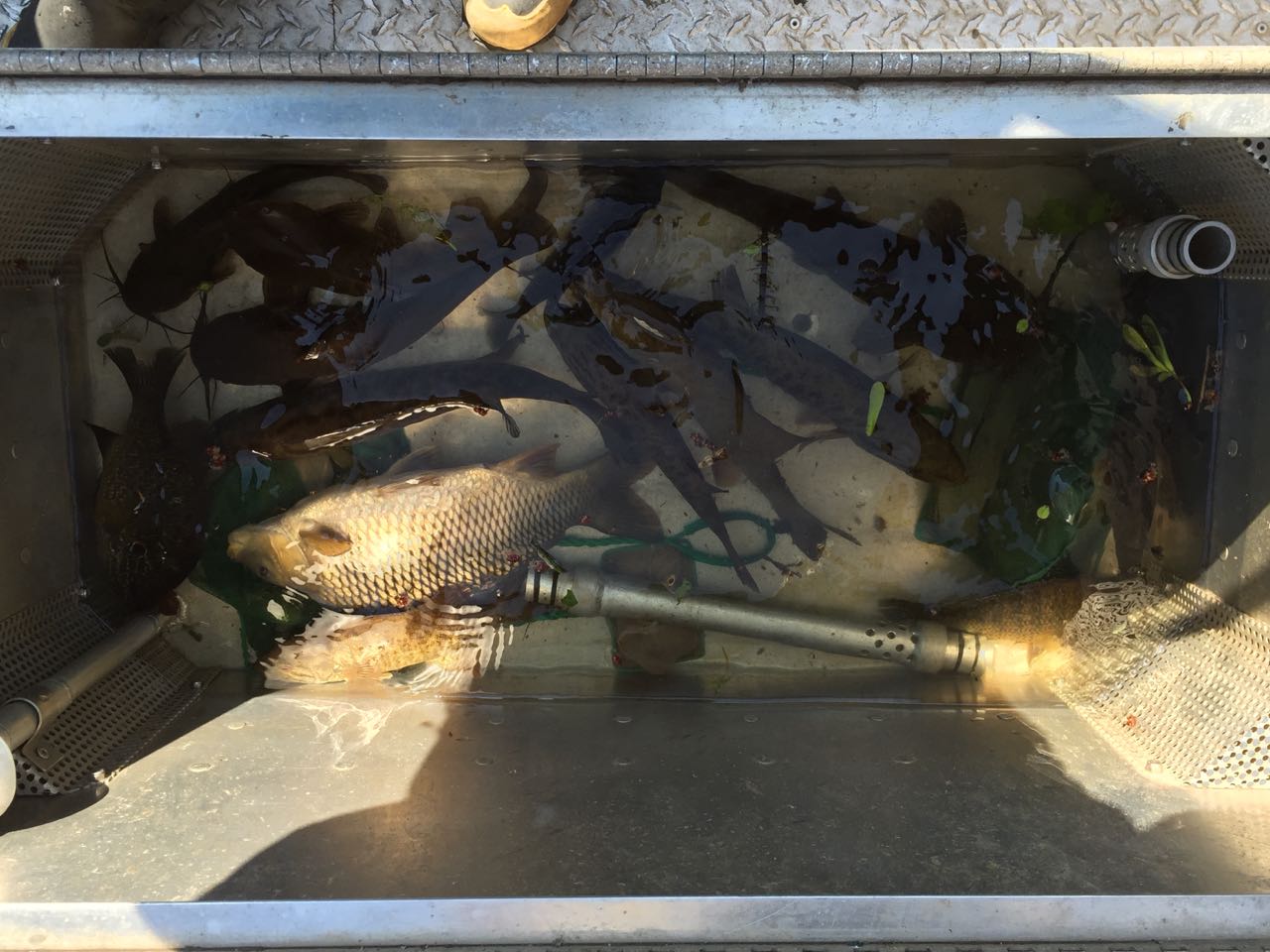
Caught fish in boat's holding tank

Caught fish in boat’s holding tank

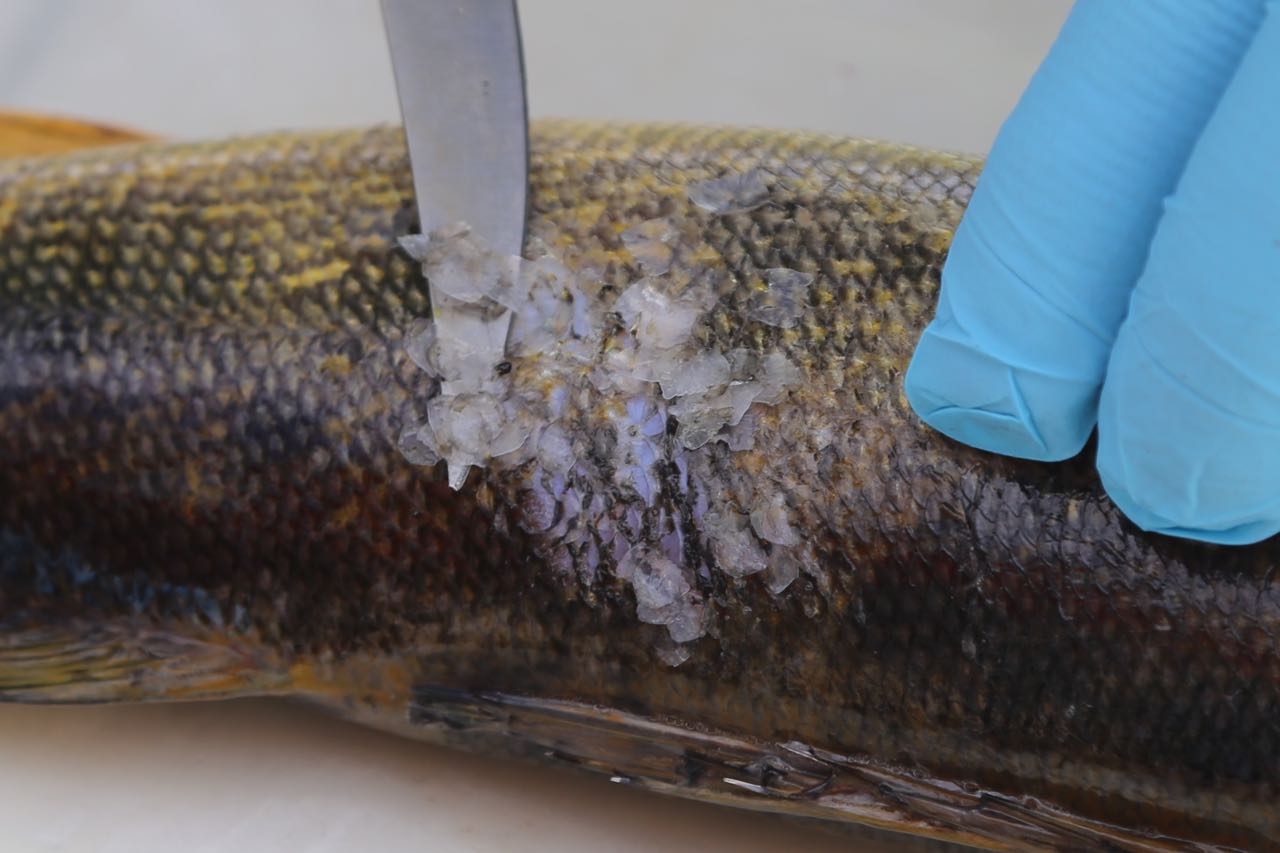
Once we got the fish to shore, the biologist took over. The fish were weighed and their length measured. He took a a sample of their scales from a standard location, and those scales were going to be used by a laboratory to determine their age. Evidently scales can be used to age fish in the same manner tree rings age trees. WARNING: If you are uncomfortable looking at the insides of fish, do not read any further. You should probably not eat fish also, if you can’t look at an uncooked one.

Scrapping scales off fish. Scales are used to age fish.

Scrapping scales off fish. Scales are used to age fish.

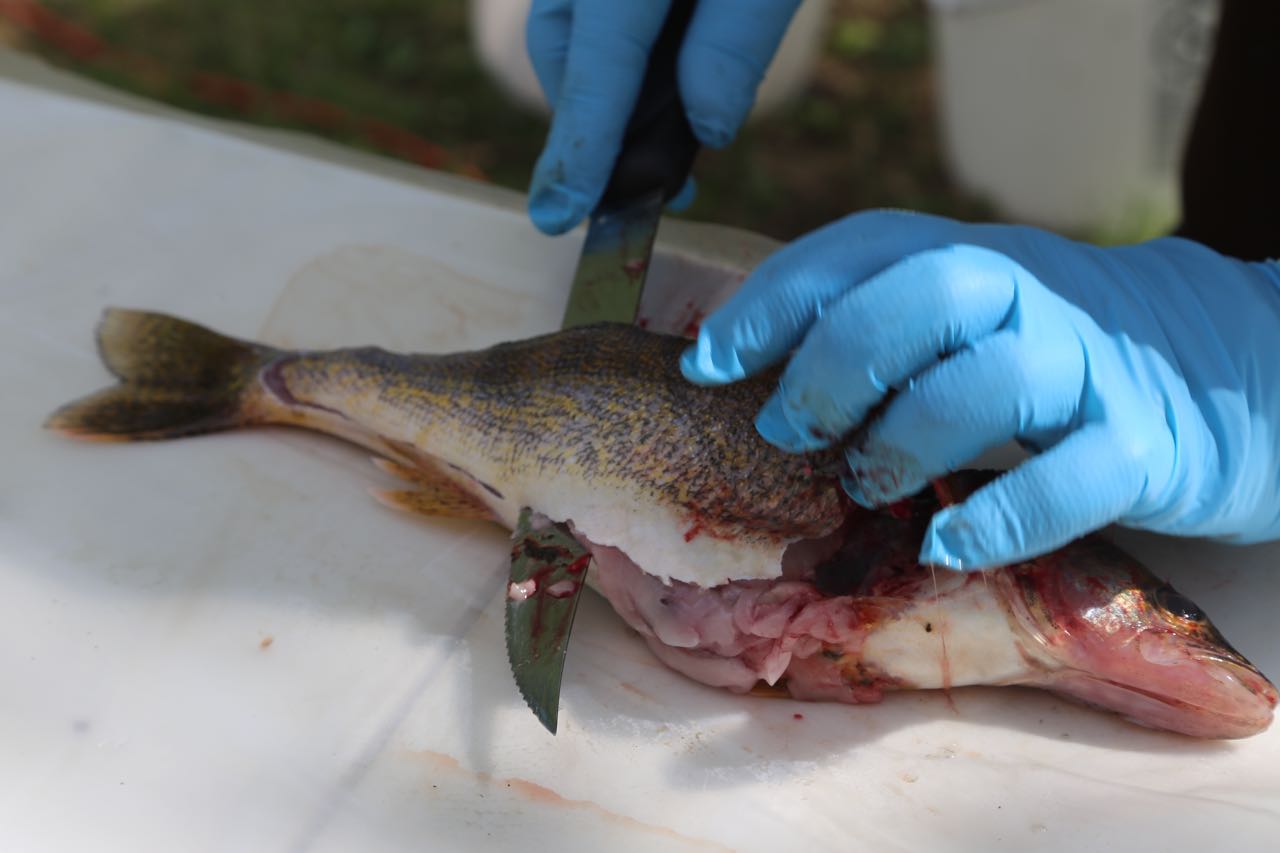
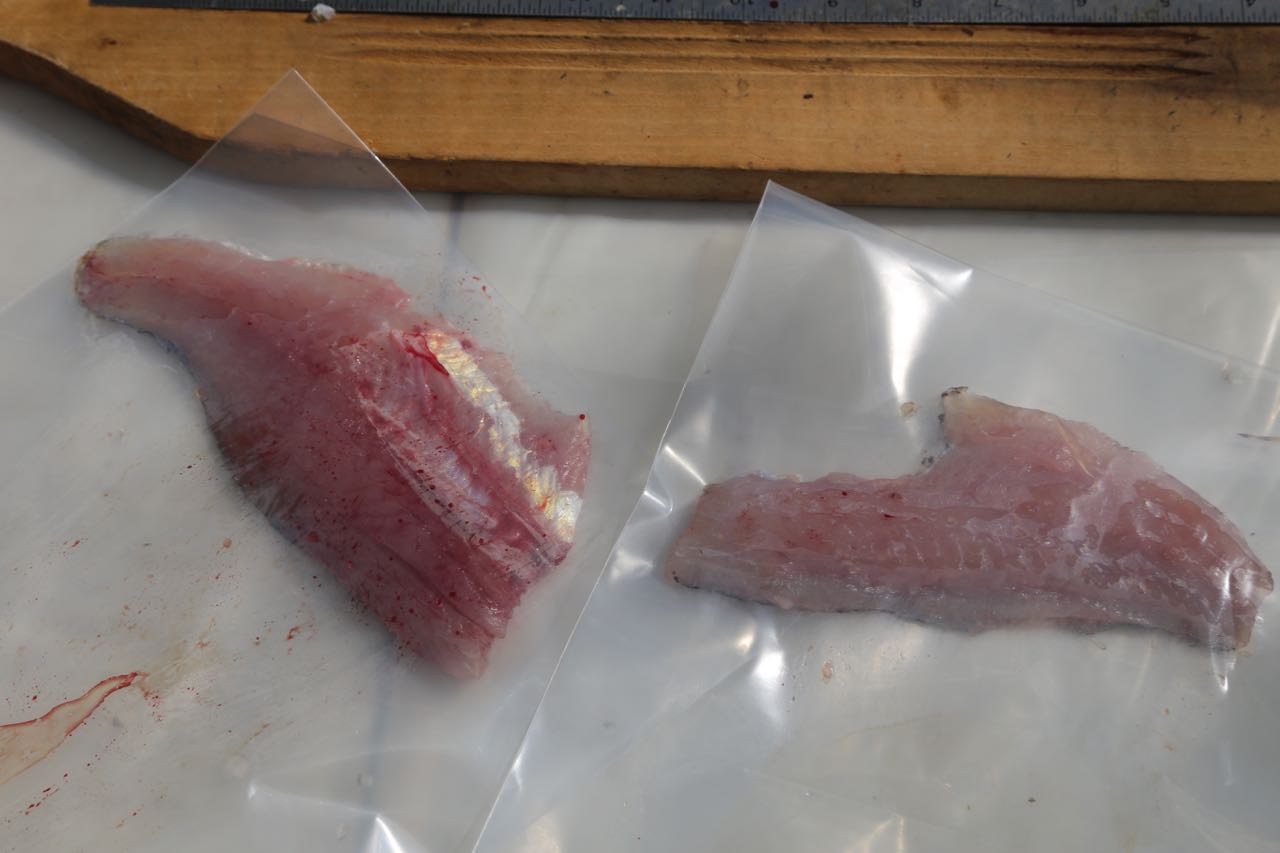
The rest of the scales were then scraped off. The fish were then cut. Only the fillets were used for sampling. The part of the fish used for sampling can differ depending on what the exposure pathway being examined is. We took two different parts: the filet, which represents what a human would normally eat, and also the fillet with rib meat. The rib meat is normally not eaten, but it would have more PCBs in it, so using it in the sample would represent a worse case scenario for a human consuming fish.

Cutting fish to take the samples

Cutting fish to take the samples

Fish samples ready for lab. Left side fillet also has rib meat. Right side fillet does not.

Fish samples ready for lab. Left side fillet also has rib meat. Right side fillet does not.

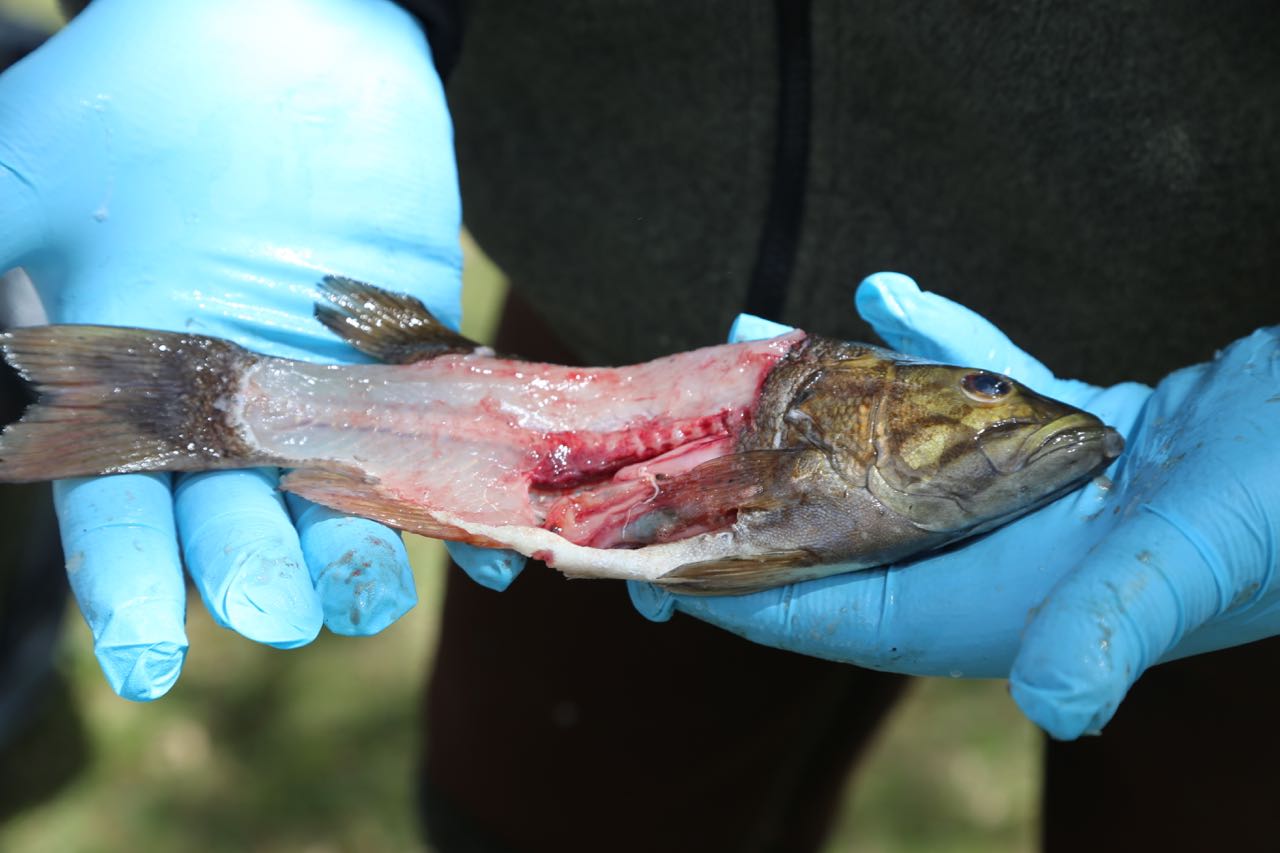
Fish post fillet and rib sample

Fish post fillet and rib sample

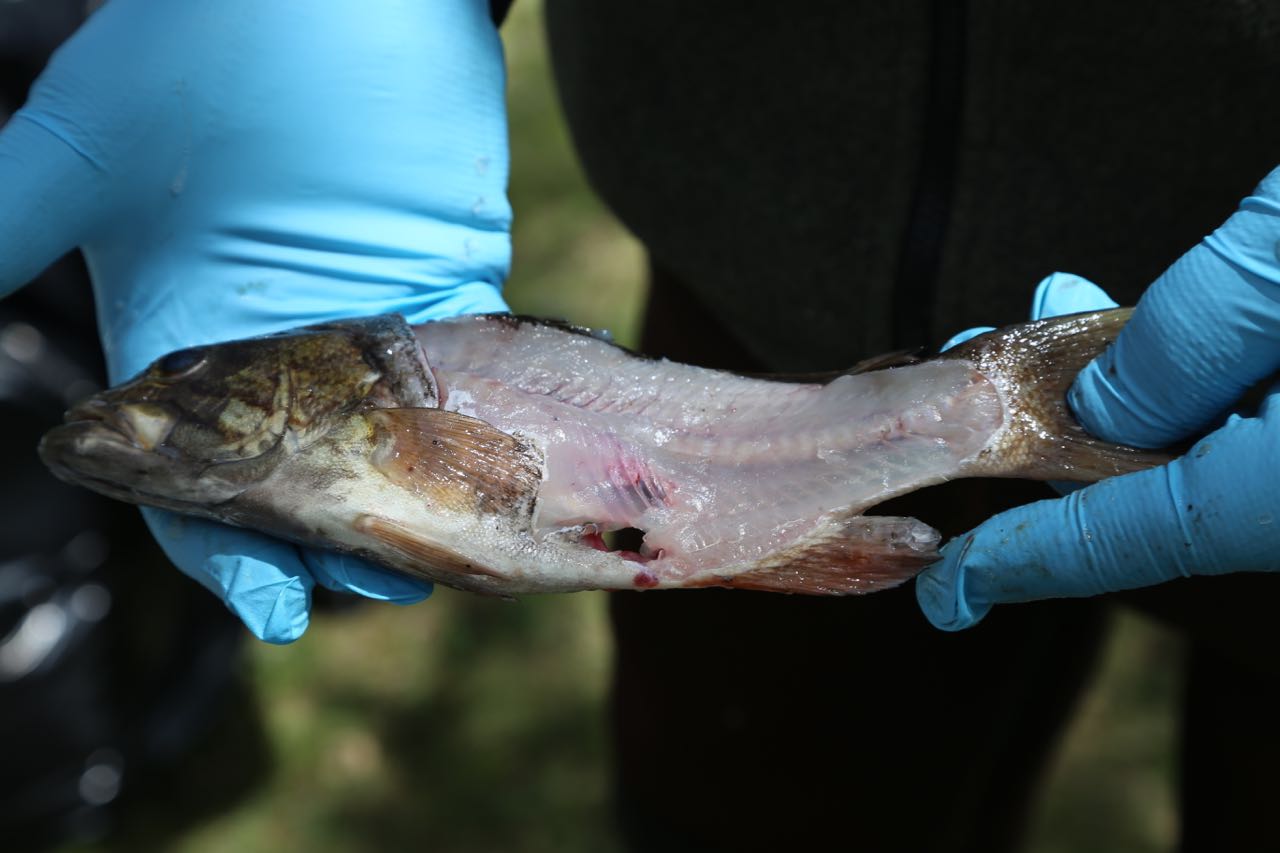
Fish post fillet sample

Fish post fillet sample

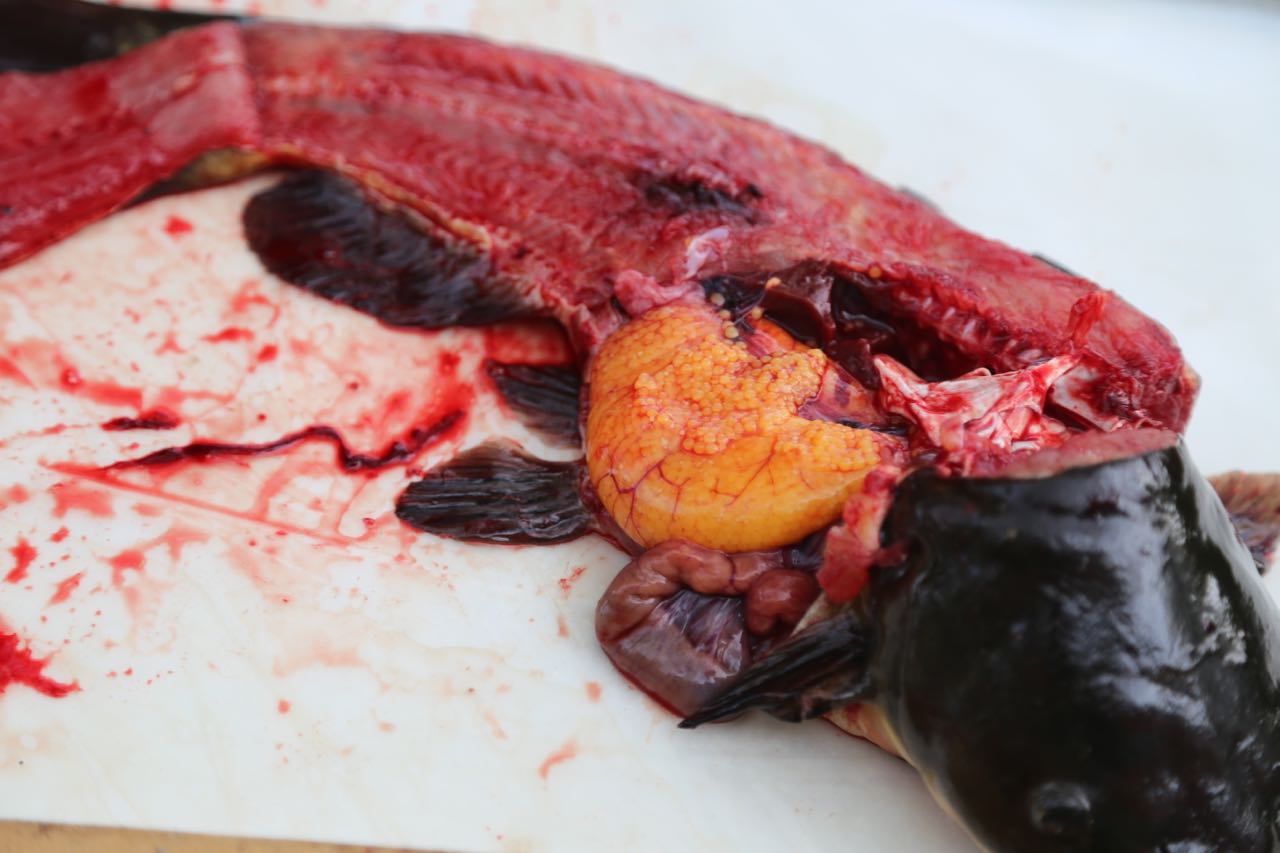
I also learned a bit of fish anatomy during the sampling. The biologist was also sexing the fish.

Female brown bullhead fish with orange egg sack

Female brown bullhead fish with orange egg sack

Male fish

Male fish with testes/seminiferous tubules indicated

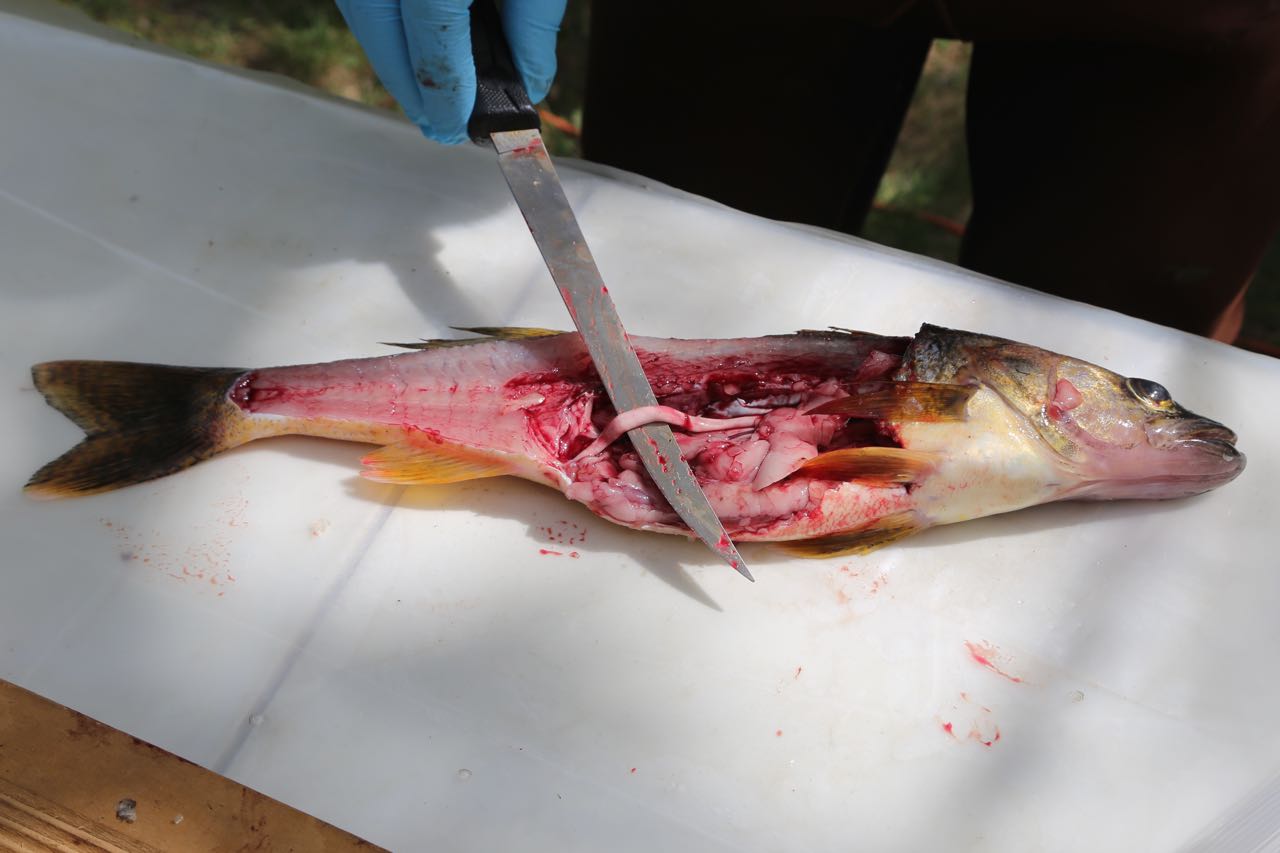
We weren’t necropsying the fish, but we still got a look inside, including sometimes as to what it had eaten recently.

Fish gastro intestine tract. Eaten food is in stomach.

Fish gastro intestine tract. Eaten food is in stomach.

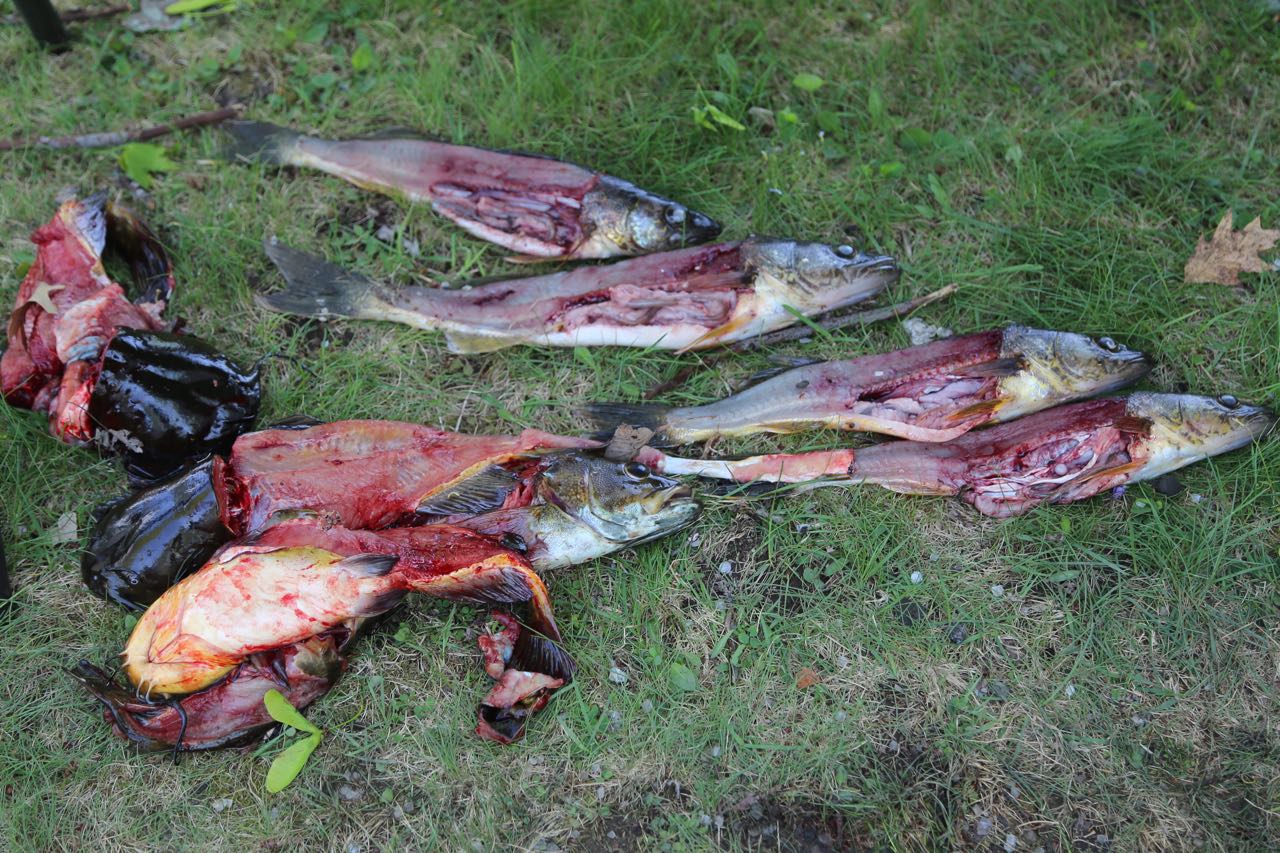
We sampled quite a few fish, but it was for science and to benefit the community.

Pile of fish that have had samples taken from them

Pile of fish that have had samples taken from them

Collapse

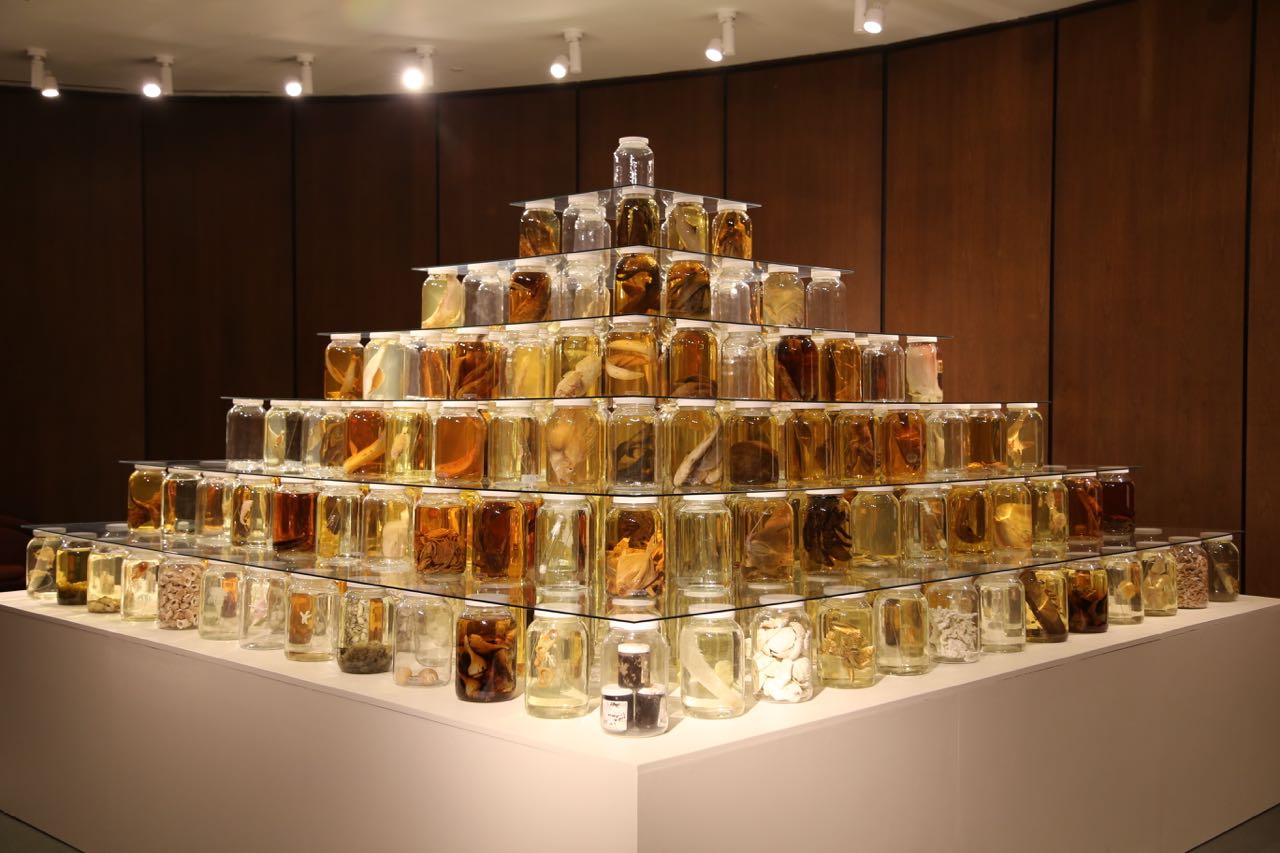
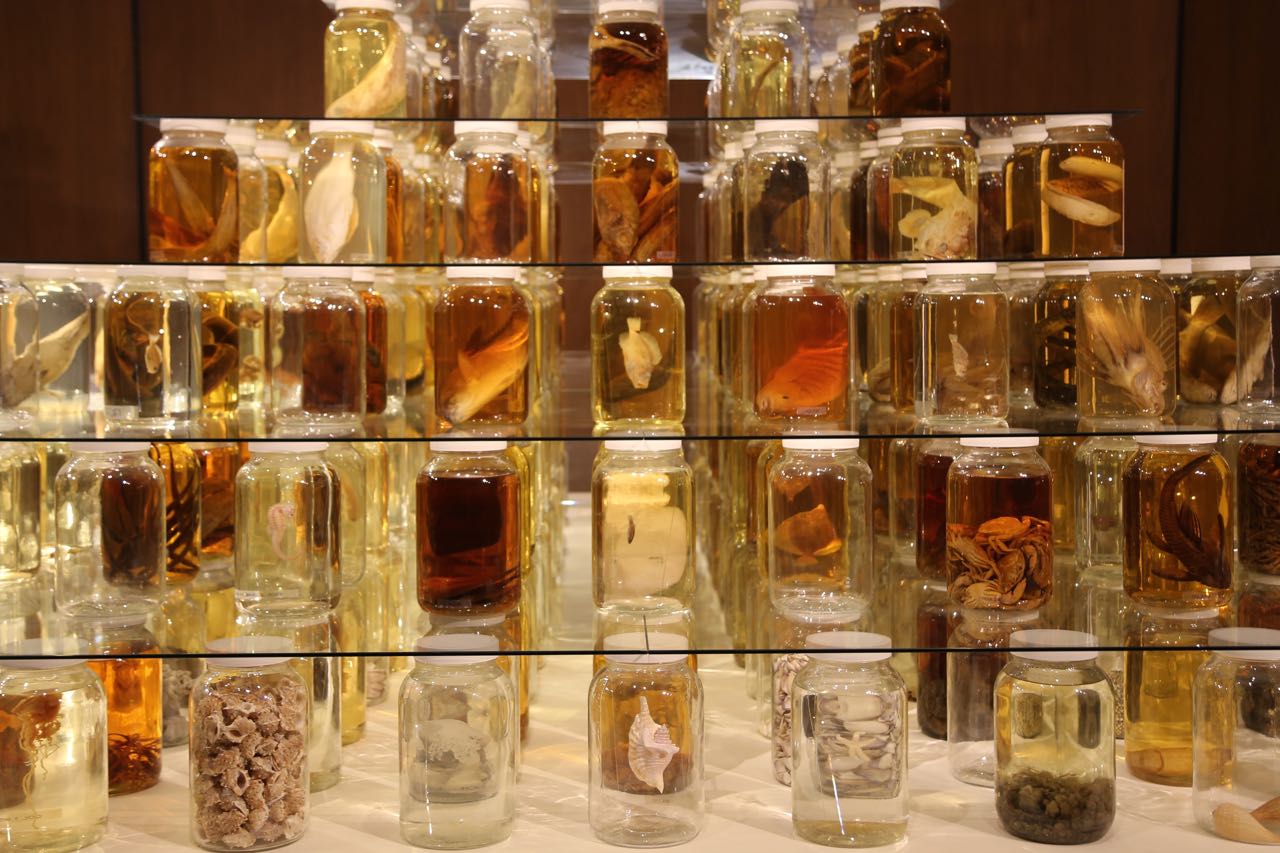
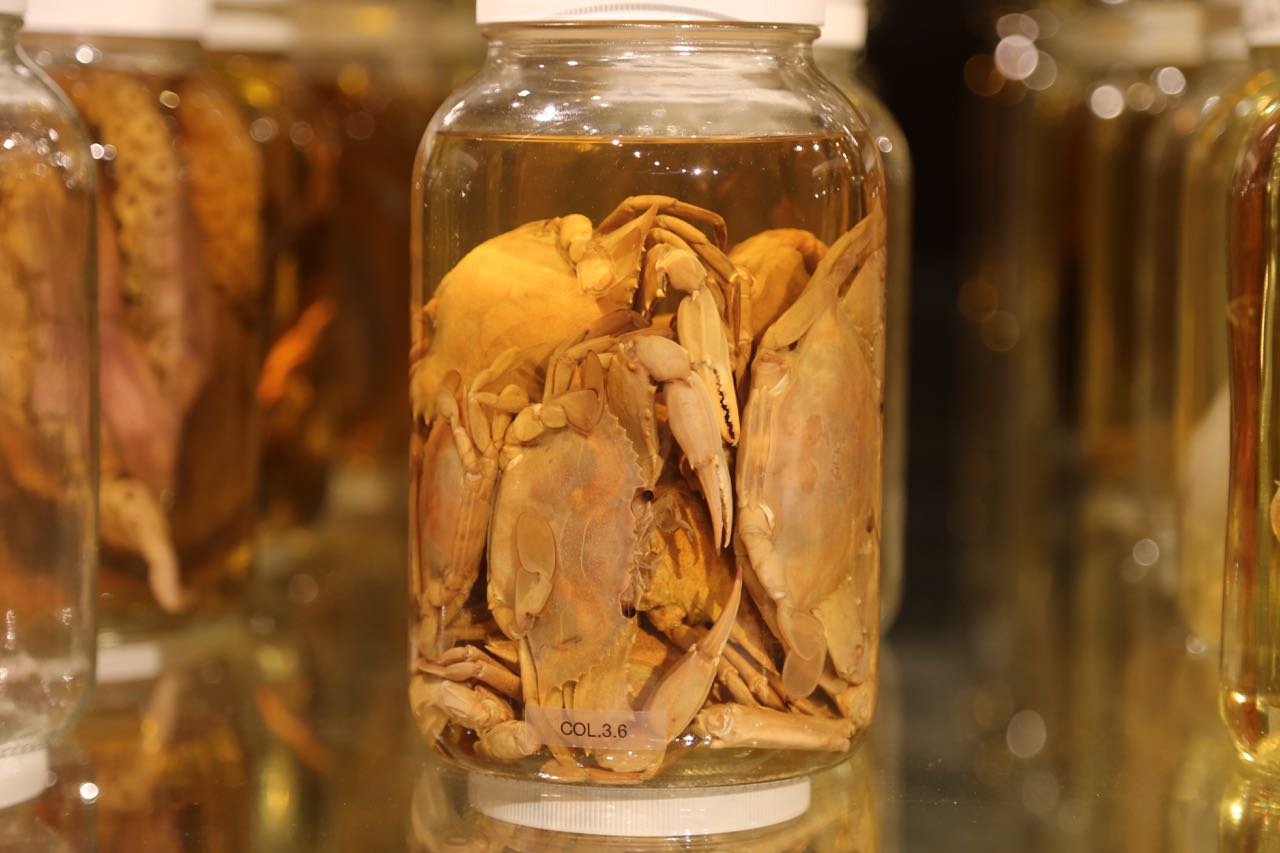
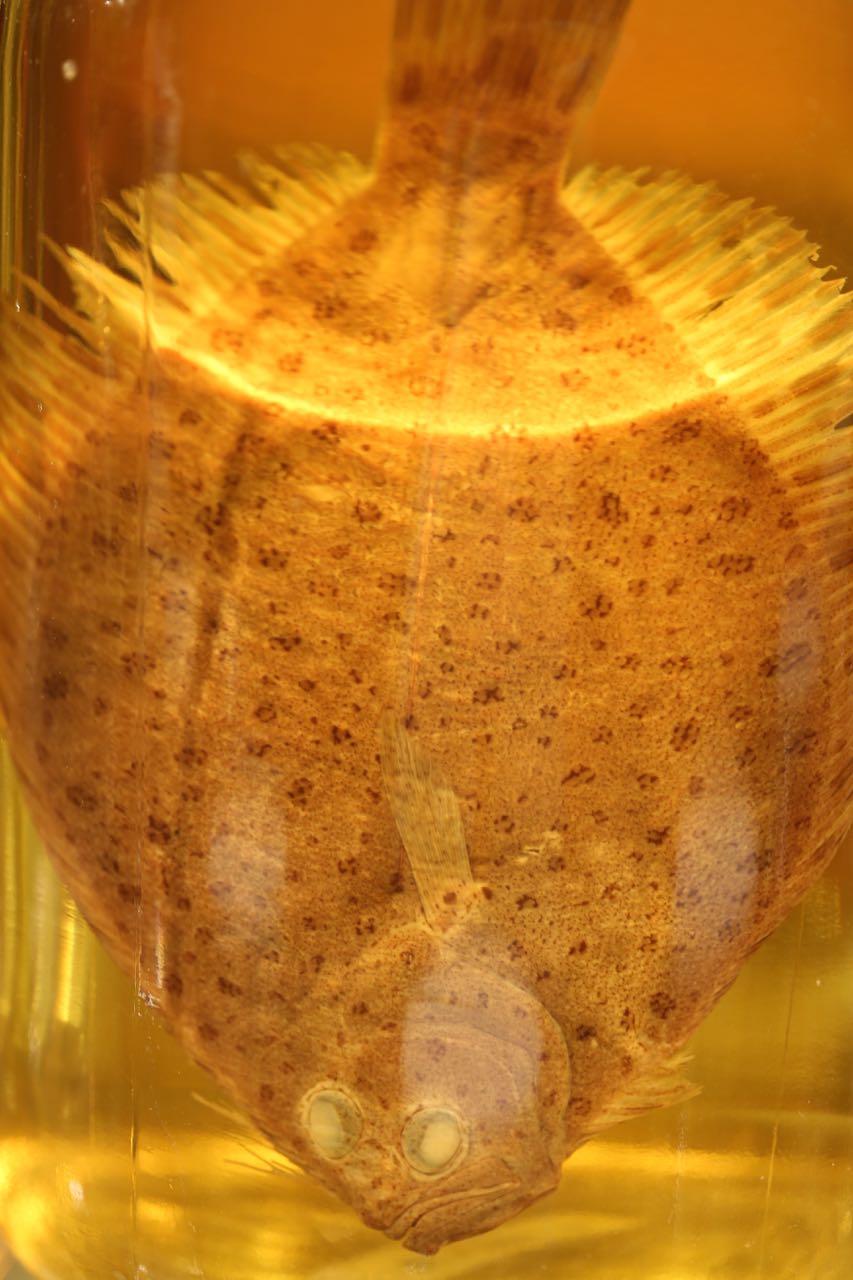
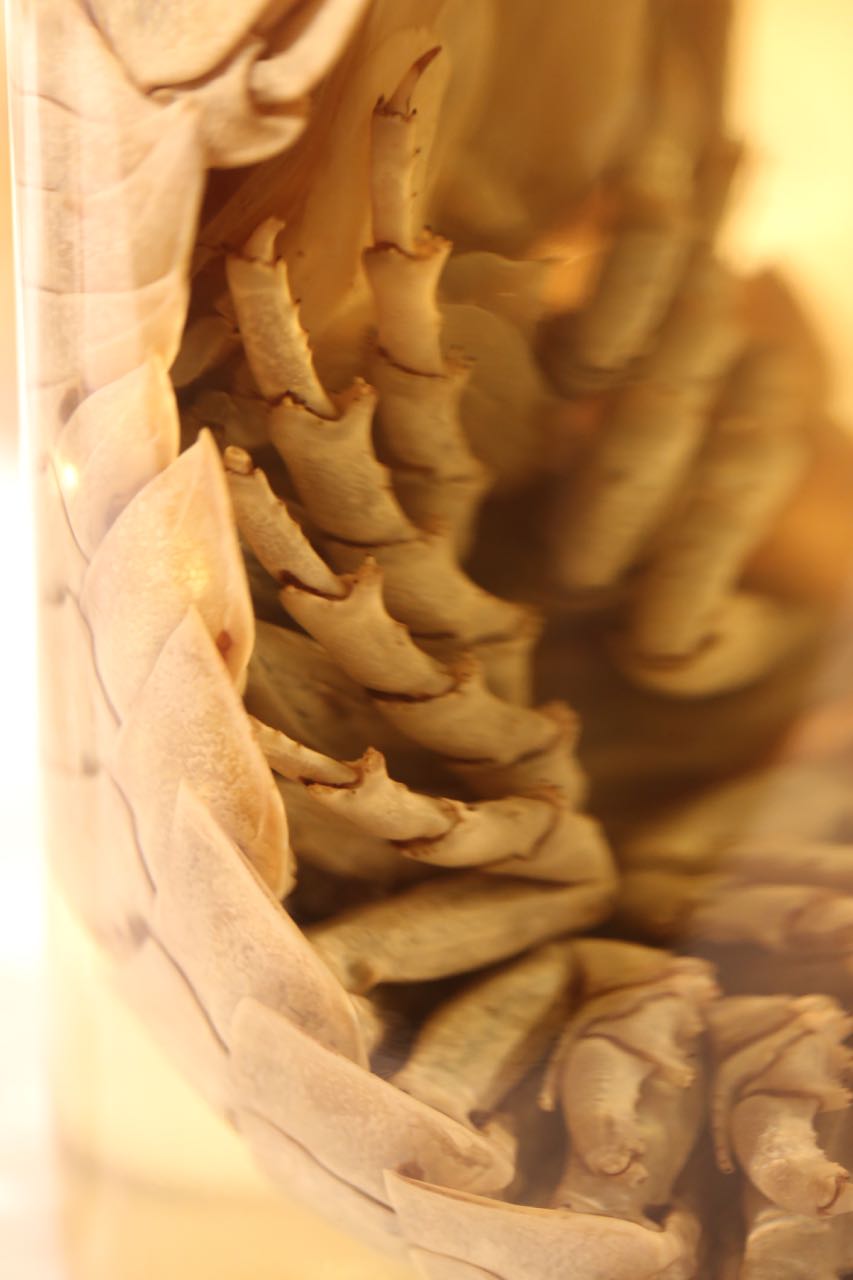
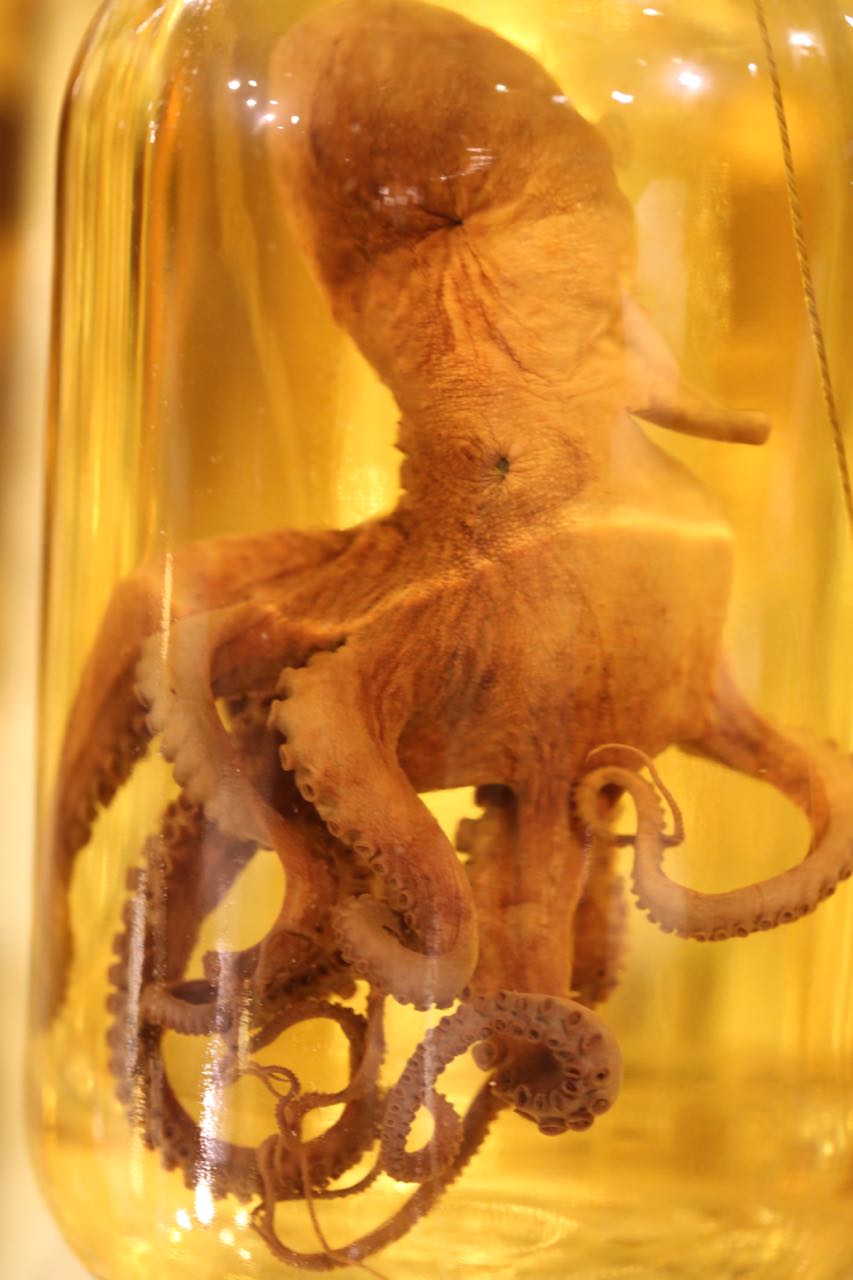
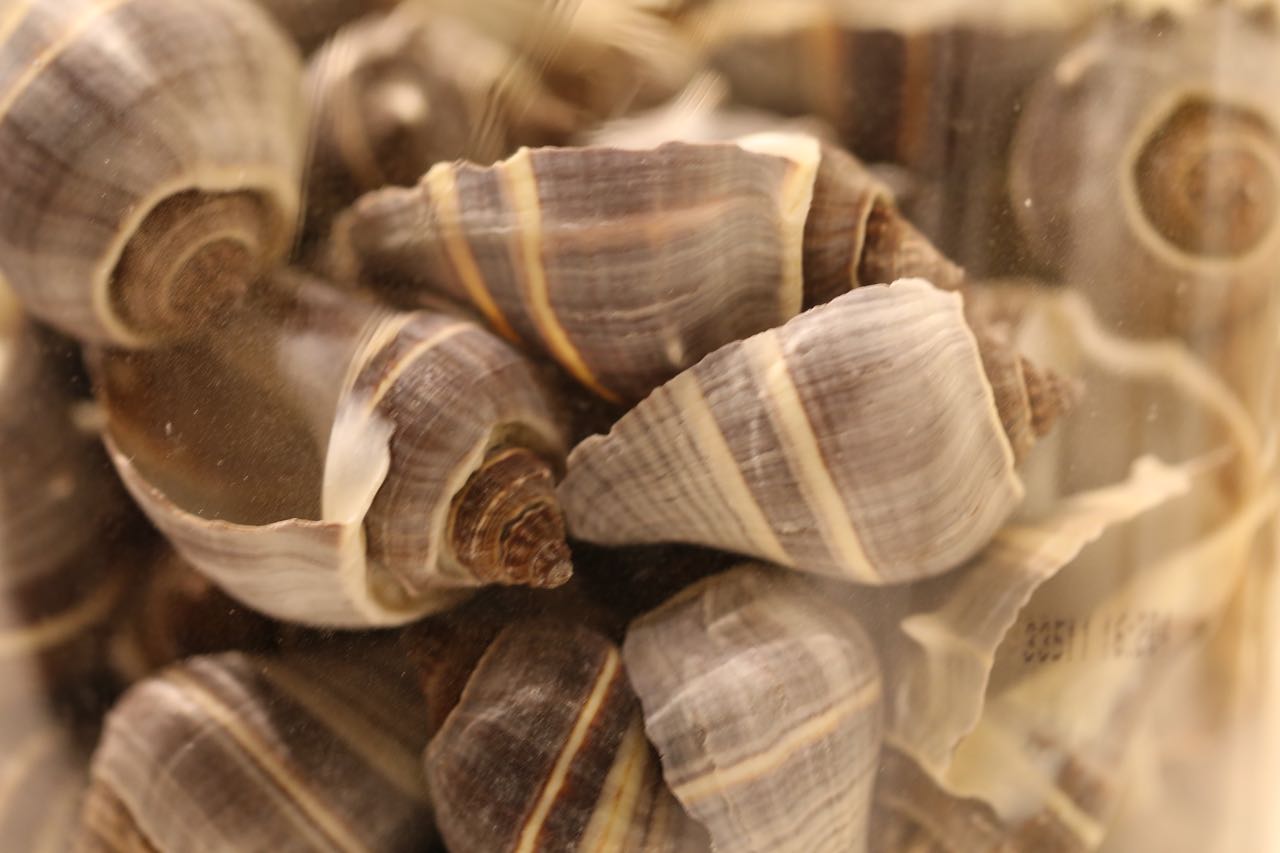
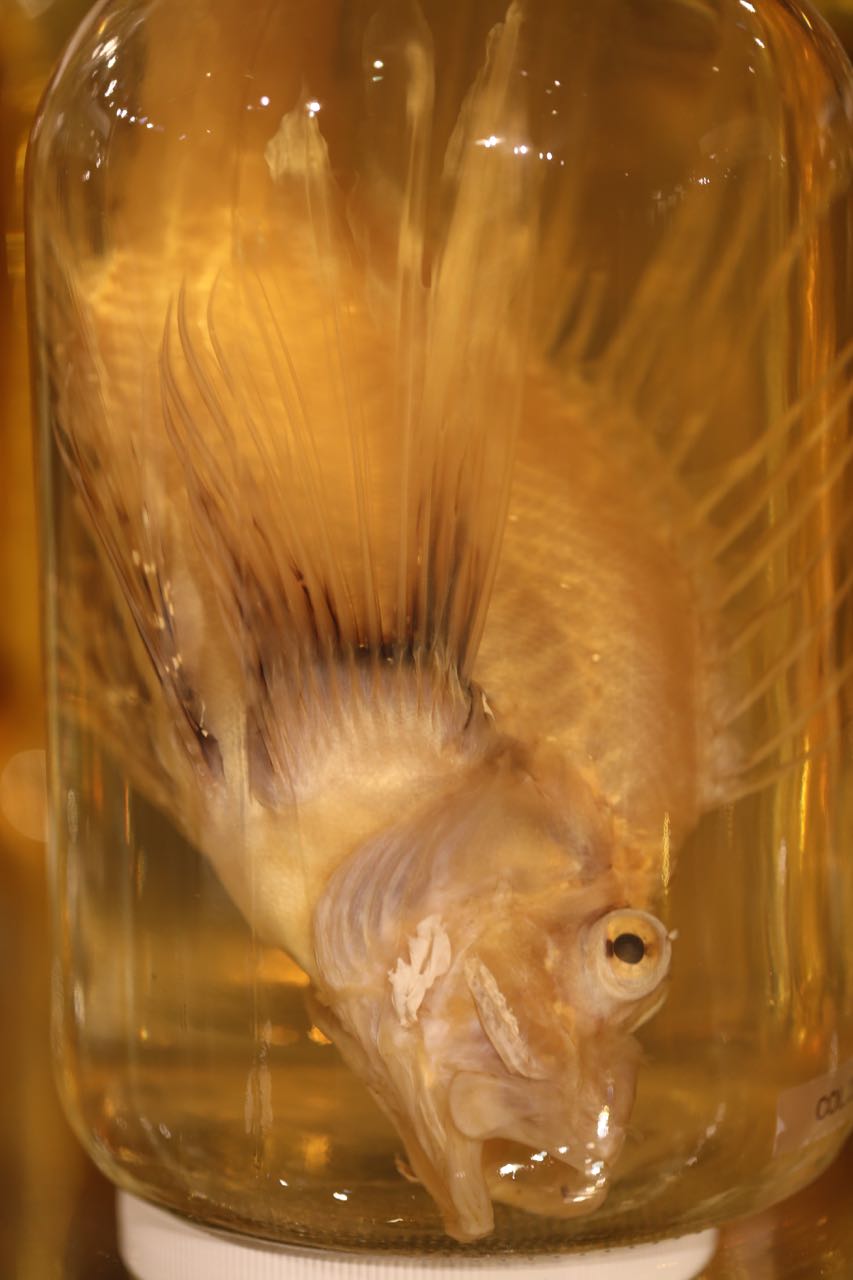
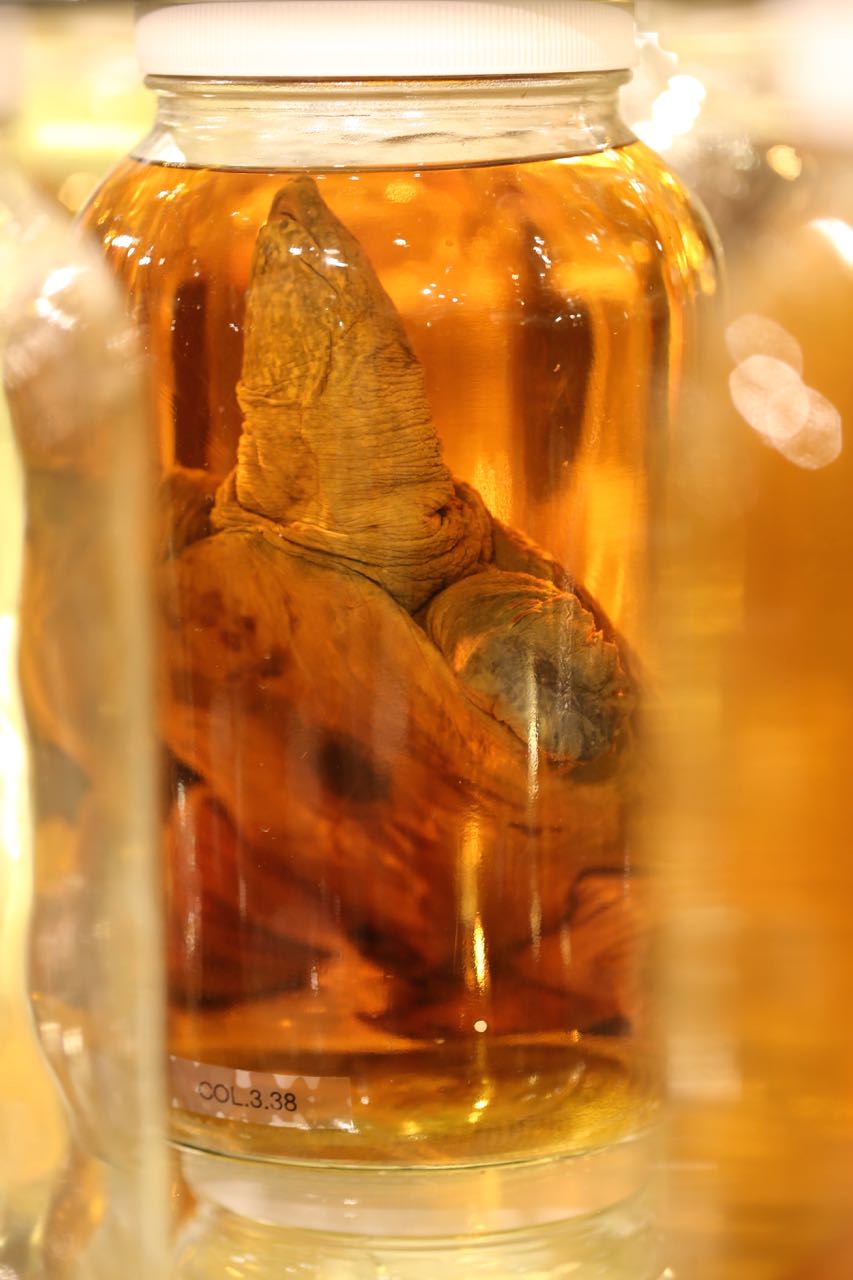
One of the exhibits, we visited during Cultural Programs of the Natural Academy of Sciences’s #NAS_sciart was Brandon Ballengée: Collapse. Collapse is a huge pyramid of specimen jars that contain species from the Gulf of Mexico that are in decline due to the 2010 BP Deepwater Horizon oil spill. It was interesting to be able to see numerous species up close, even if preserved, that I normally would never see. However, it was sad to think that all these species are in decline or at least affected by the Deepwater Horizon oil spill.

Collapse

Collapse

Collapse

Collapse

Crabs

Crabs

Flouder

Flouder

Giant sea roach

Giant sea roach

Octopus

Octopus

Shells

Shells

Fish

Fish

Turtle

Turtle

Gowanus Canal

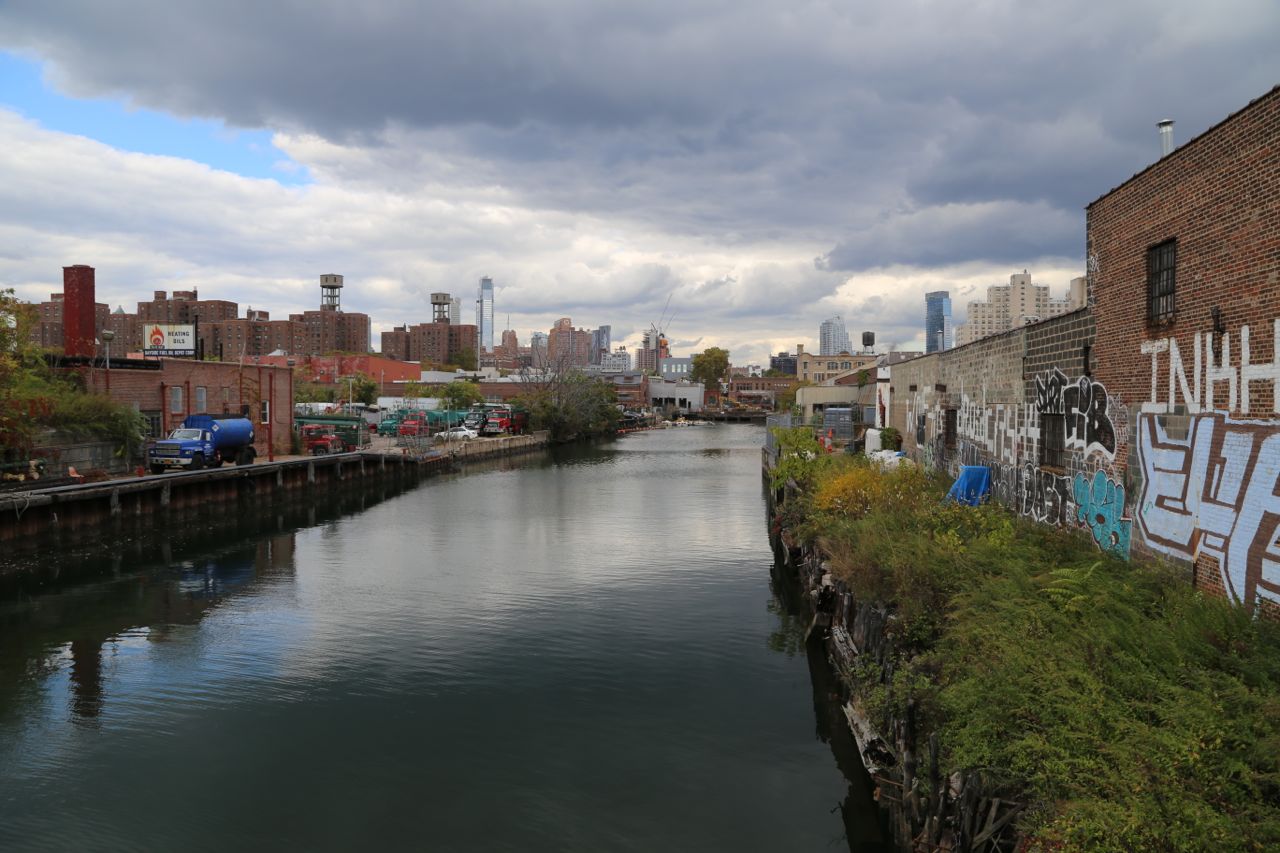
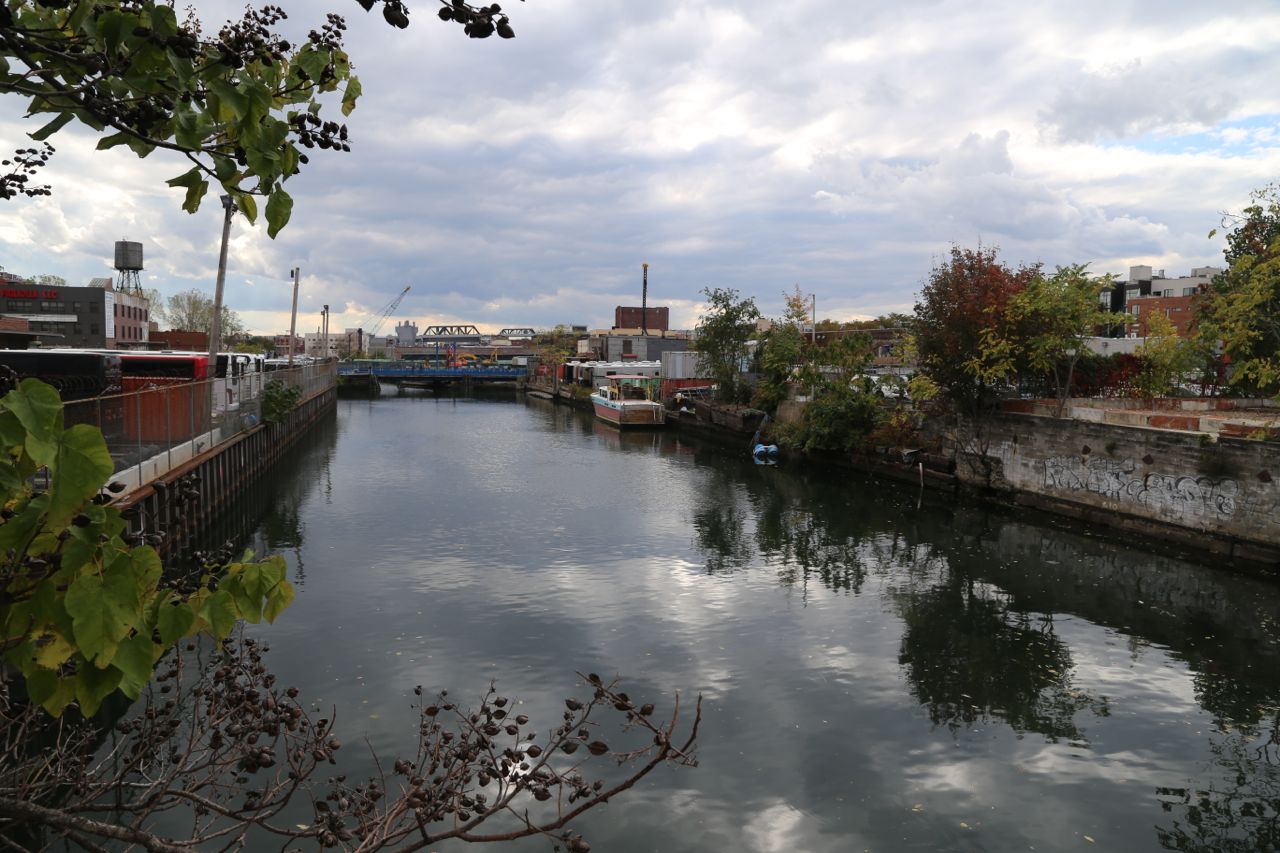
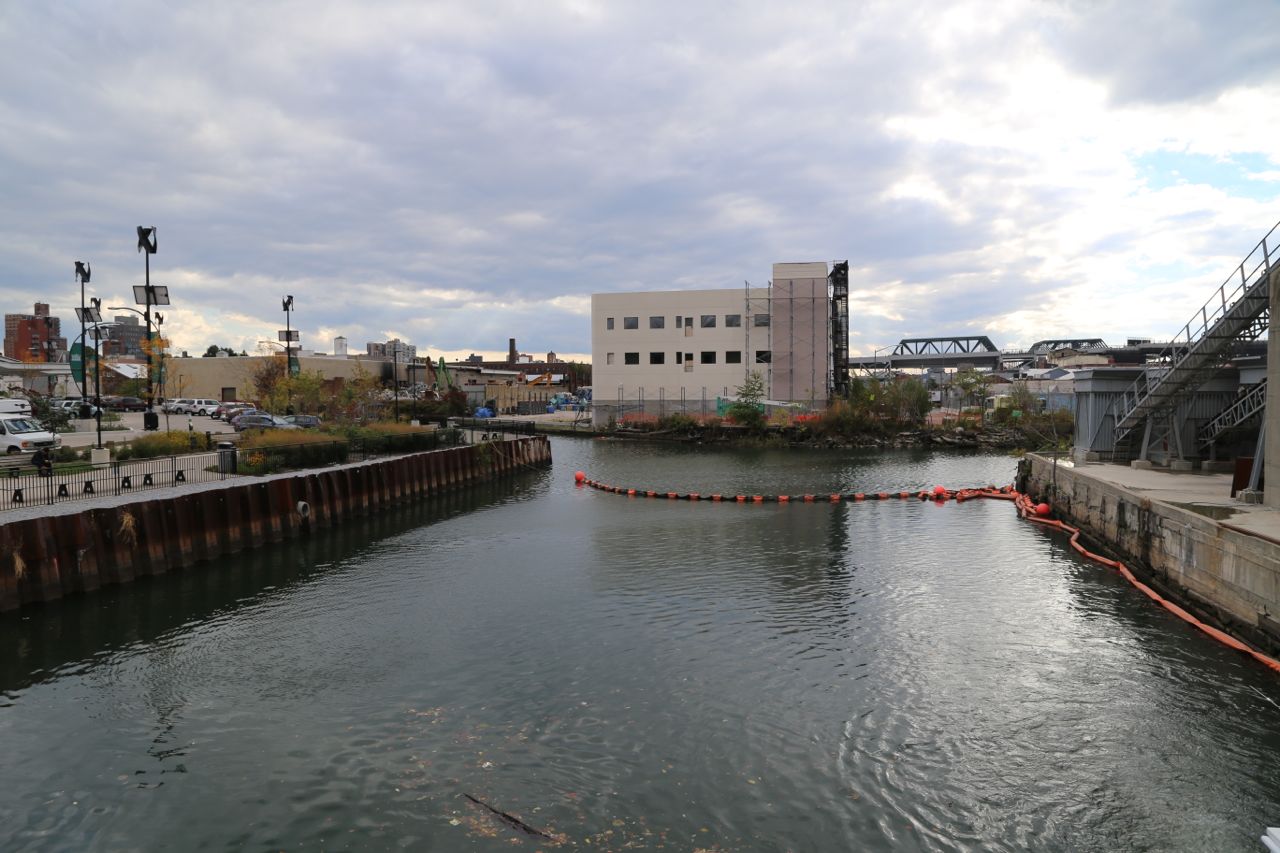
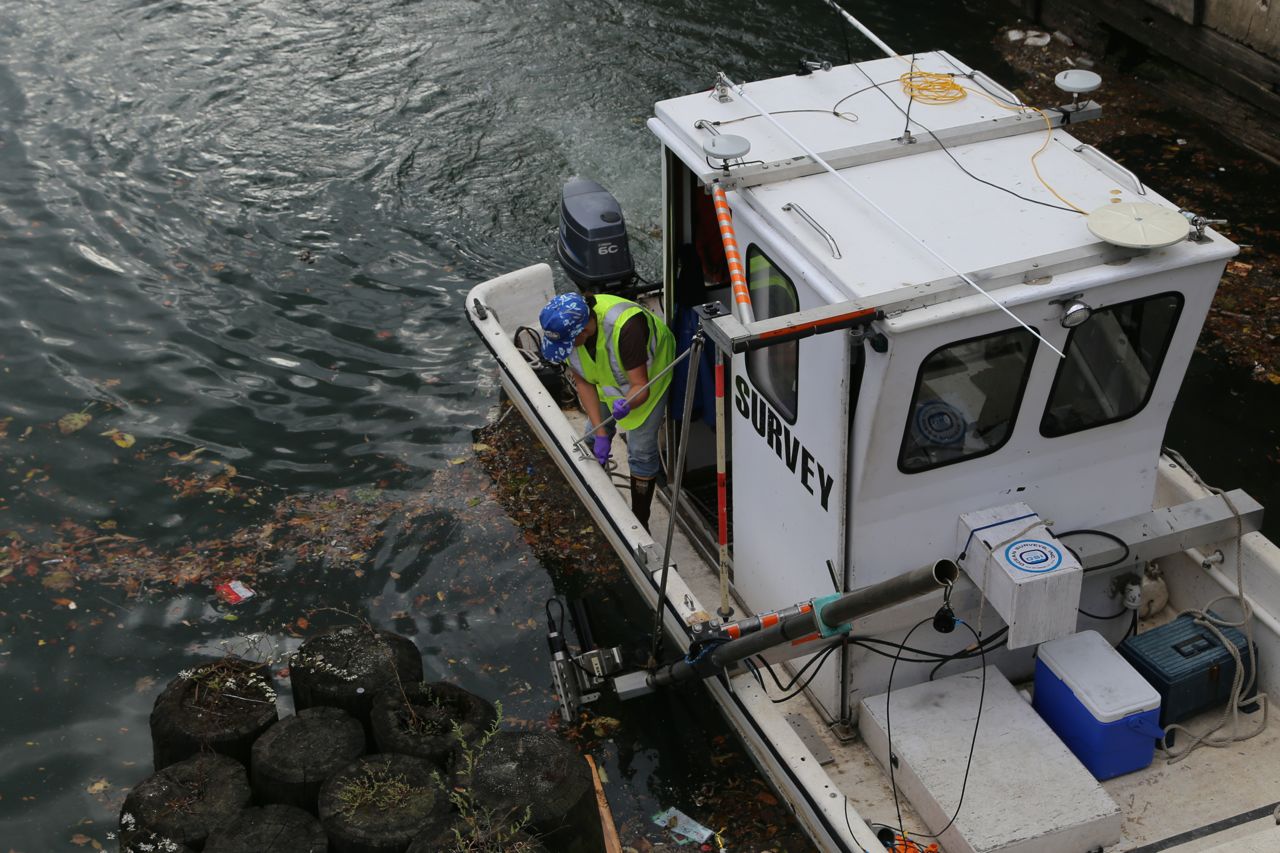
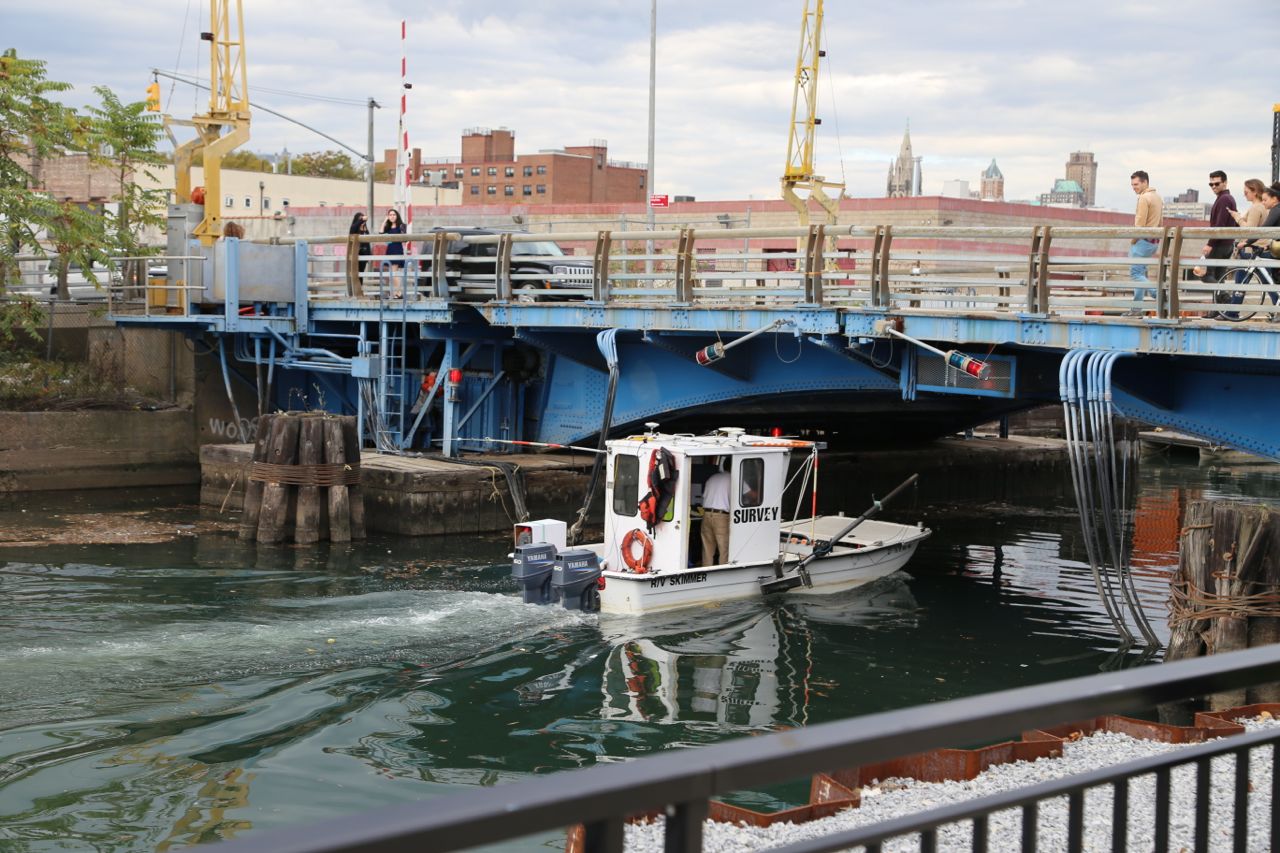
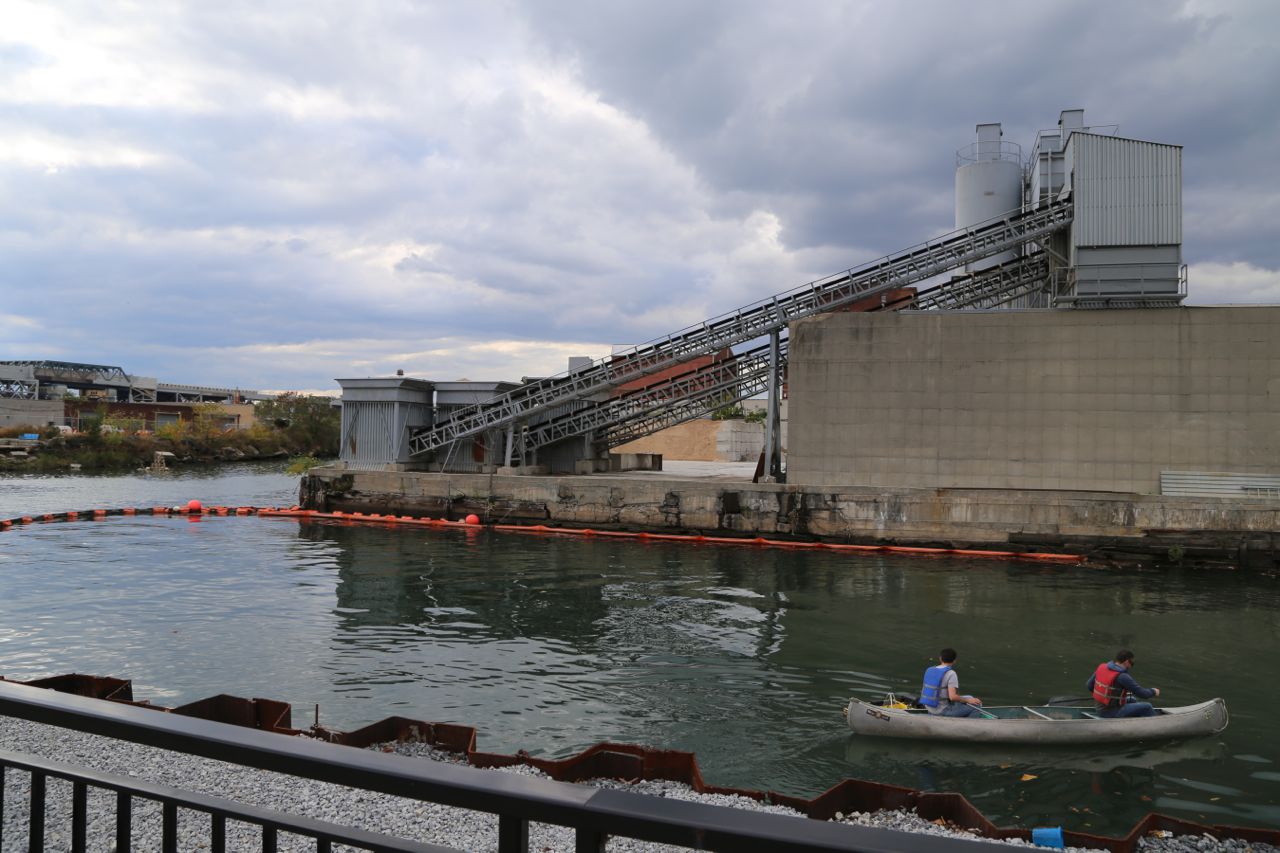
Last month while in New York, I spent some time walking around Gowanus Canal because I’m an environmental engineer, and I couldn’t resist an opportunity to visit a body of water, infamous for being incredibly polluted. The Gowanus Canal is a Superfund site due to contamination with polycyclic aromatic hydrocarbons (PAHs), volatile organic contaminants (VOCs), polychlorinated biphenyls (PCBs), pesticides, and metals. However, the Gowanus Canal is also polluted with more ordinary pollutants such as bacteria from untreated wastewater from combined sewer overflow outfalls and other urban pollutants from surface runoff (and possibly illegal outfalls). The area residents are understandably pushing to get the canal cleaned up quickly, and the cleanup is a joint effort between the city, state, and federal government. The area around the canal is an interesting mixture of industrial, art galleries, and up and coming residential. It is actually a nice area. There is a Whole Foods Market next to the canal that has a nice little canal walk on the property, which features signs that say “This is the greenest supermarket in New York State. No smoking, please.” I will take them at their word about being the greenest supermarket, as I did notice solar panels and wind turbines in the parking lot. However I still had to laugh at the irony of the sign. On the bright side, the Gowanus Canal is not so polluted that should someone smoke near it, it is not in danger of catching on fire, like the Cuyahoga River did in 1969. While I was walking along the canal, I spotted a small boat with two people who seemed to be monitoring the water and also two people in a canoe. I guess the canal is safe to canoe on, if you just make sure you don’t touch the water to your skin and most definitely don’t let any get into your mouth, nose, eyes, or any other orifices. The canal does not look that polluted. There are areas with floating trash, but there are very few places where I saw a sheen. When I was there it did not smell either, but evidently especially in summer, it can smell. However, it is a good example of how appearance is not a good way to tell if something is polluted. If you want to read more about the Gowanus Canal, this article in Popular Science is pretty interesting.

Northern end of the Gowanus Canal

Northern end of the Gowanus Canal

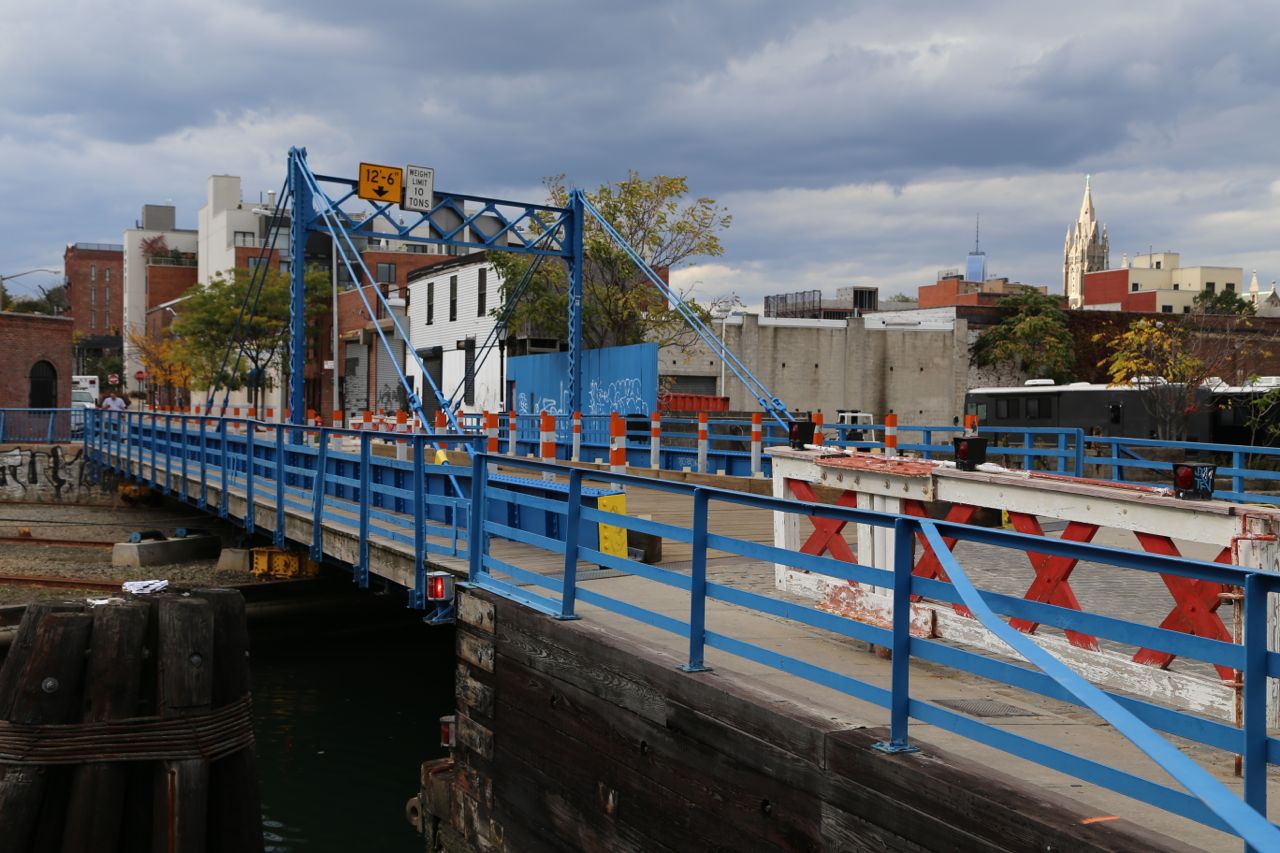
Bridge on northern end

Bridge on northern end

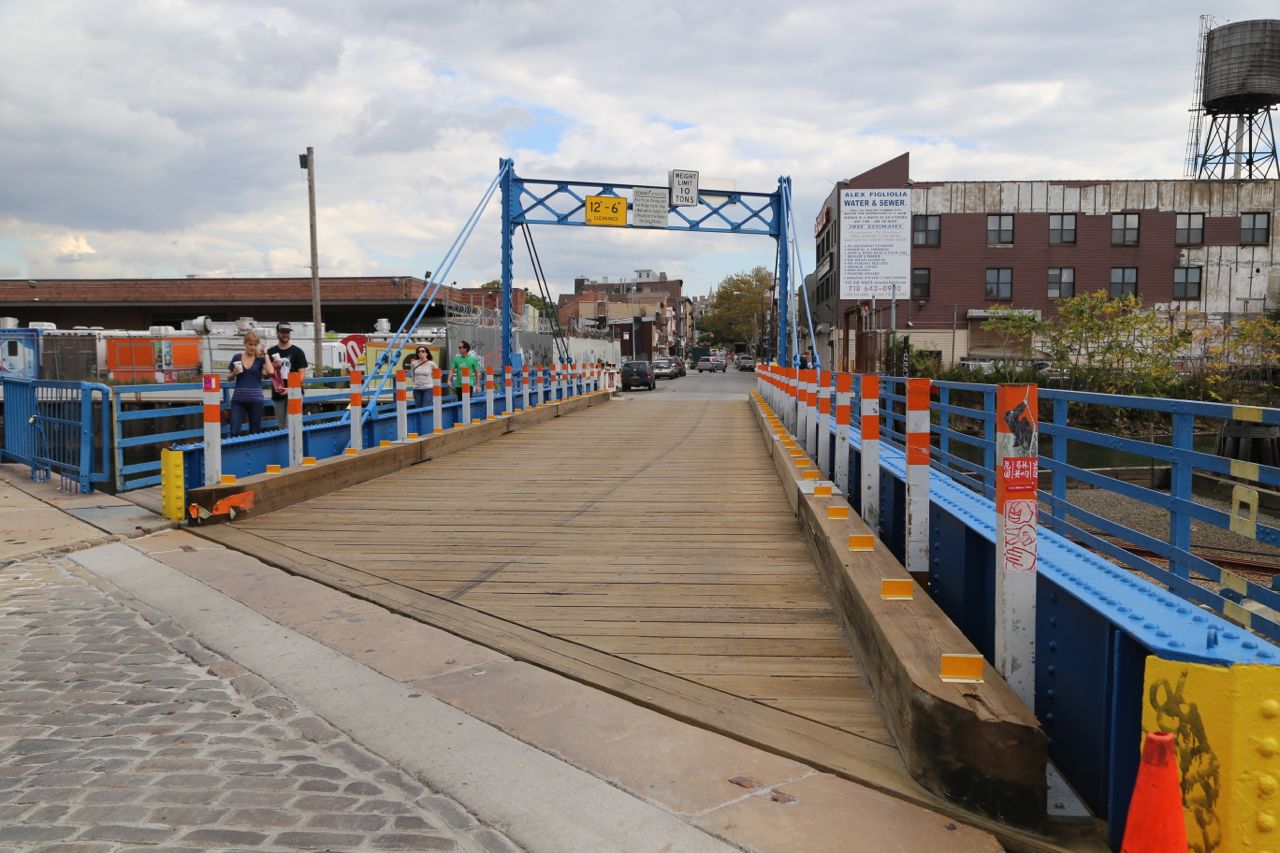
Carroll Street Bridge

Carroll Street Bridge

Carroll Street Bridge

Carroll Street Bridge

Stormwater discharge warning sign

Stormwater discharge warning sign

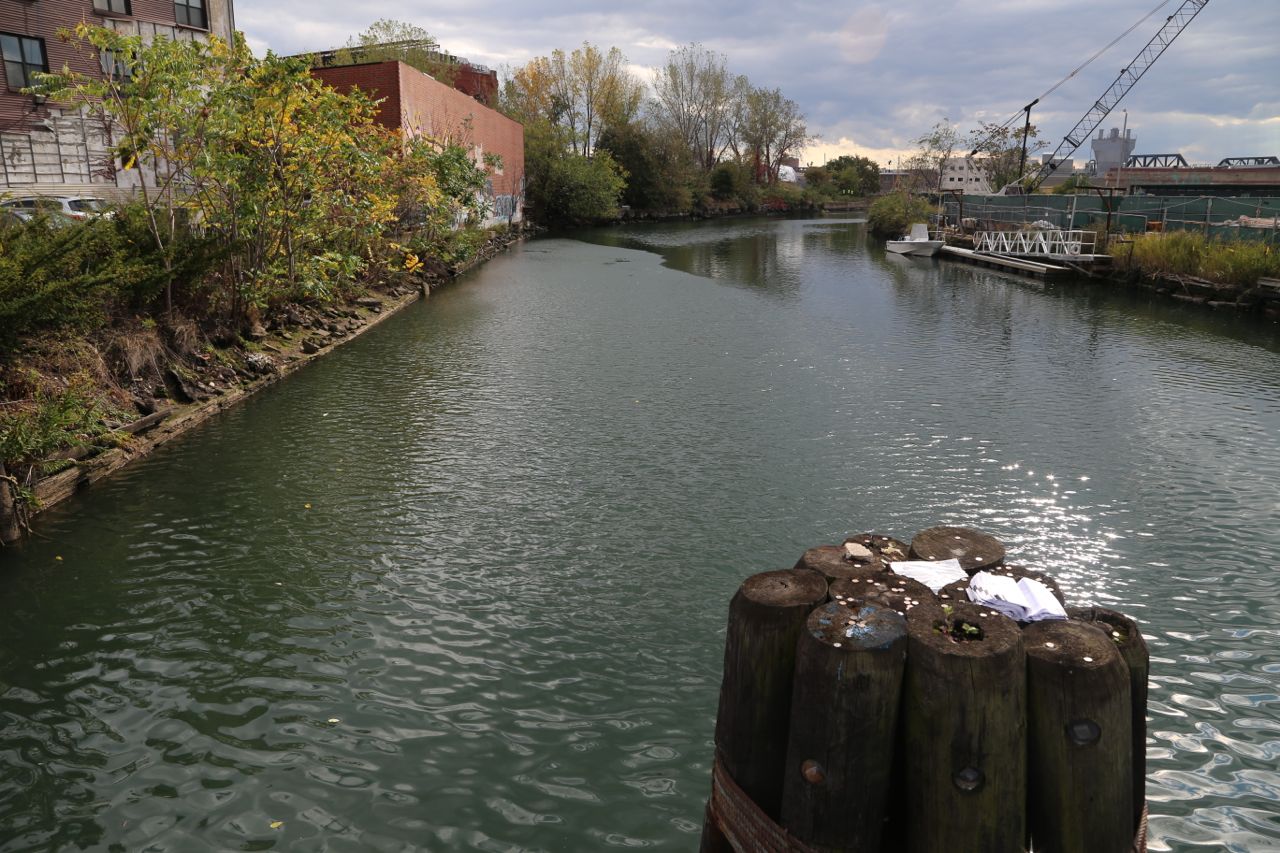
A wooden dolphin that had a book attached to the top as some sort of art or memorial

A wooden dolphin that had a book attached to the top as some sort of art or memorial

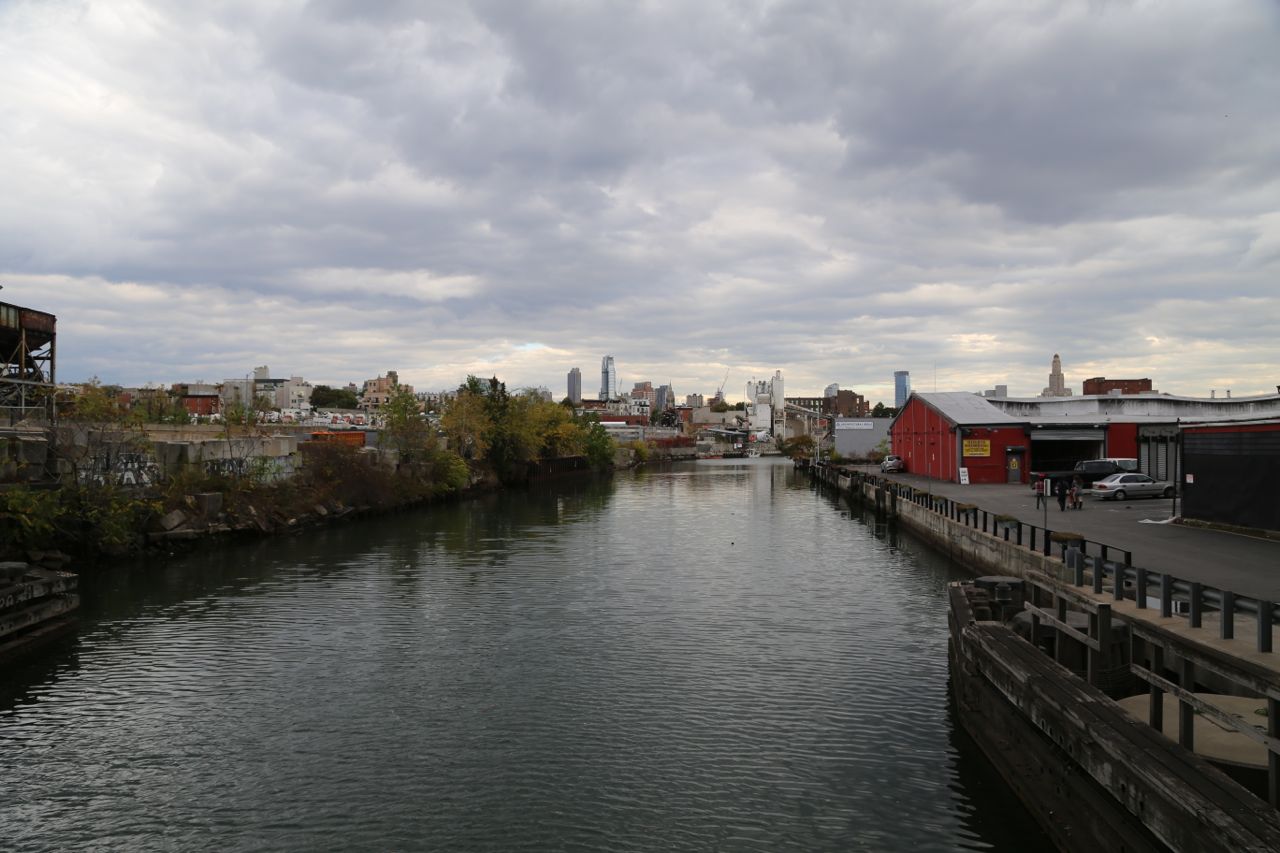
View from the Third Street Bridge

View from the Third Street Bridge

Survey boat

Survey boat

Third Street bridge

Third Street bridge

People actually canoe on the Gowanus Canal

People actually canoe on the Gowanus Canal

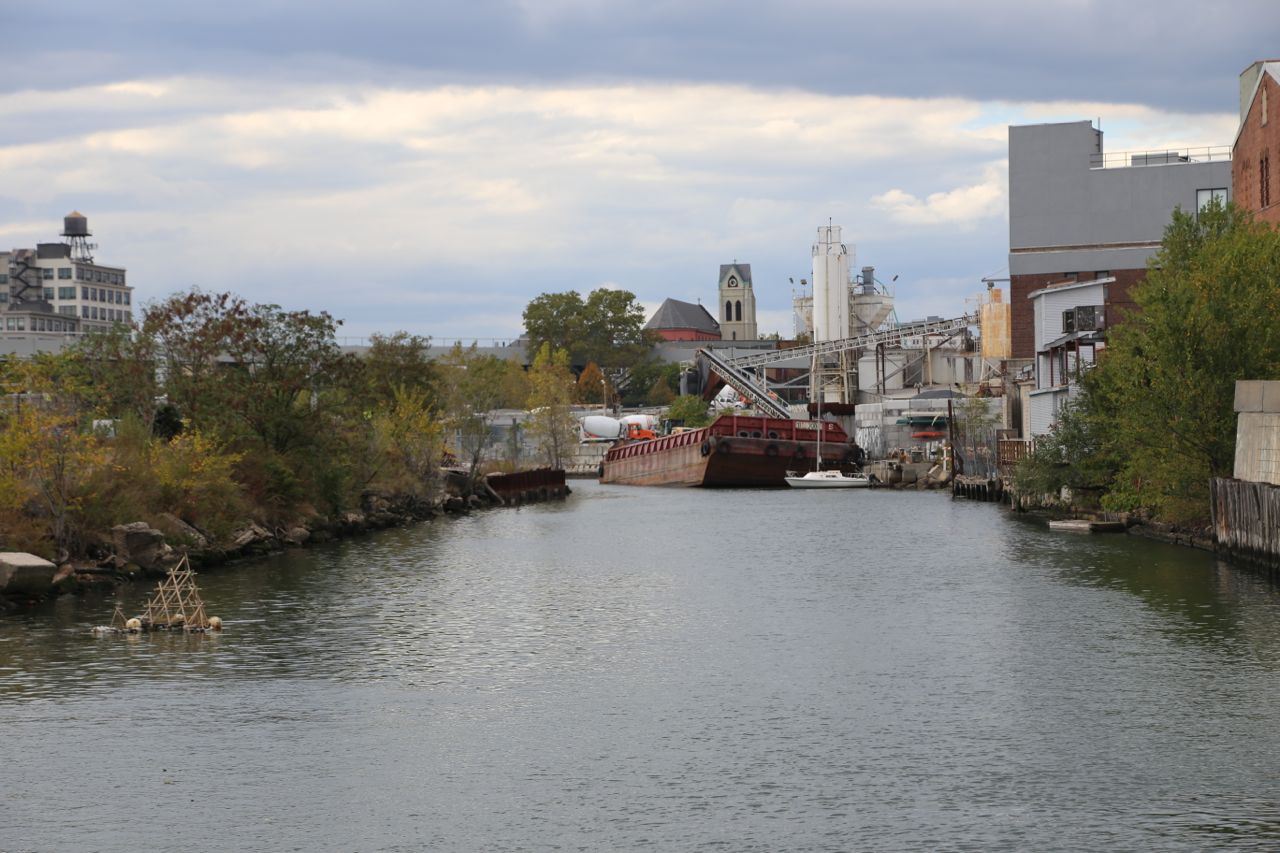
Barge sitting on the canal

Barge sitting on the canal

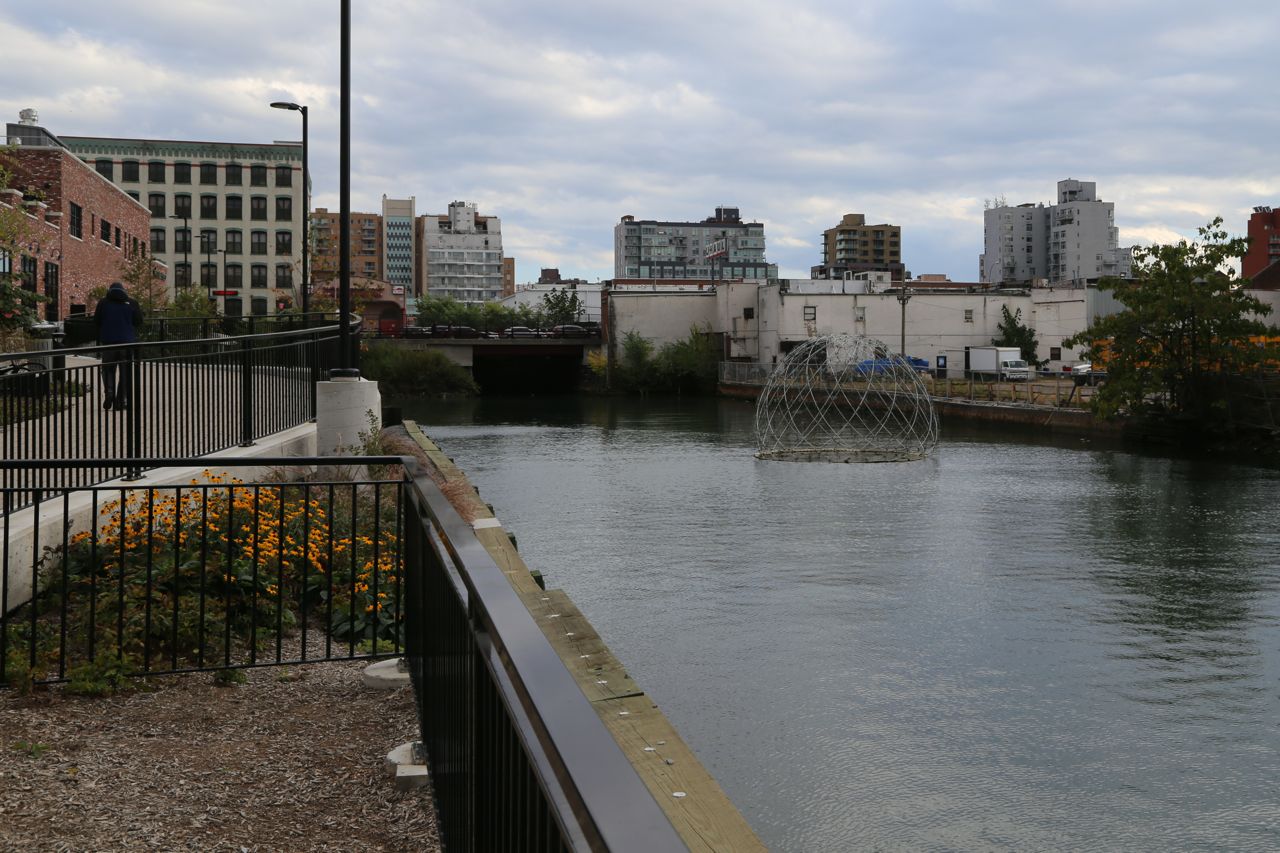
Fourth Street Basin, next to the Whole Foods Market

Fourth Street Basin, next to the Whole Foods Market, with some sort of art in the sculpture in the water

Gowanus Canal southern end

Gowanus Canal southern end

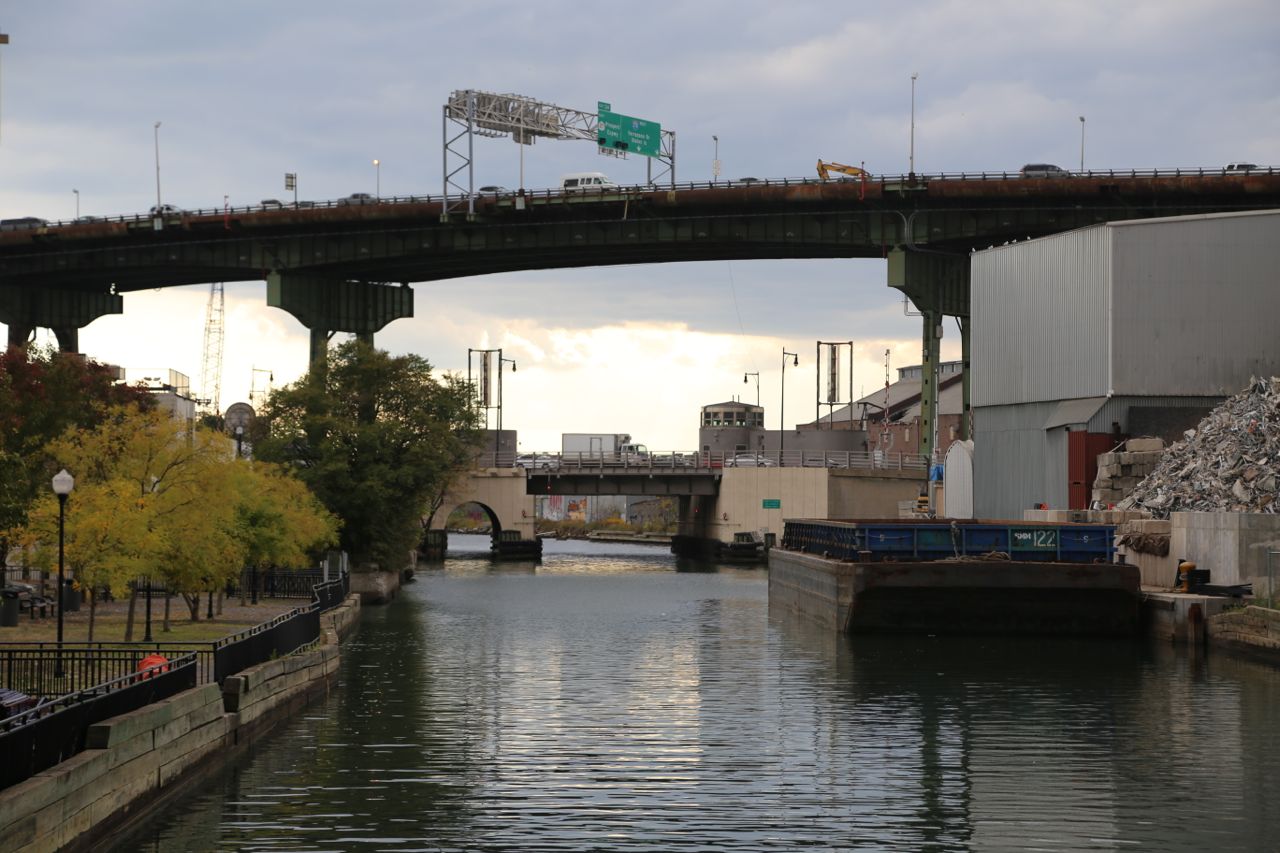
Gowanus Expressway

Gowanus Expressway

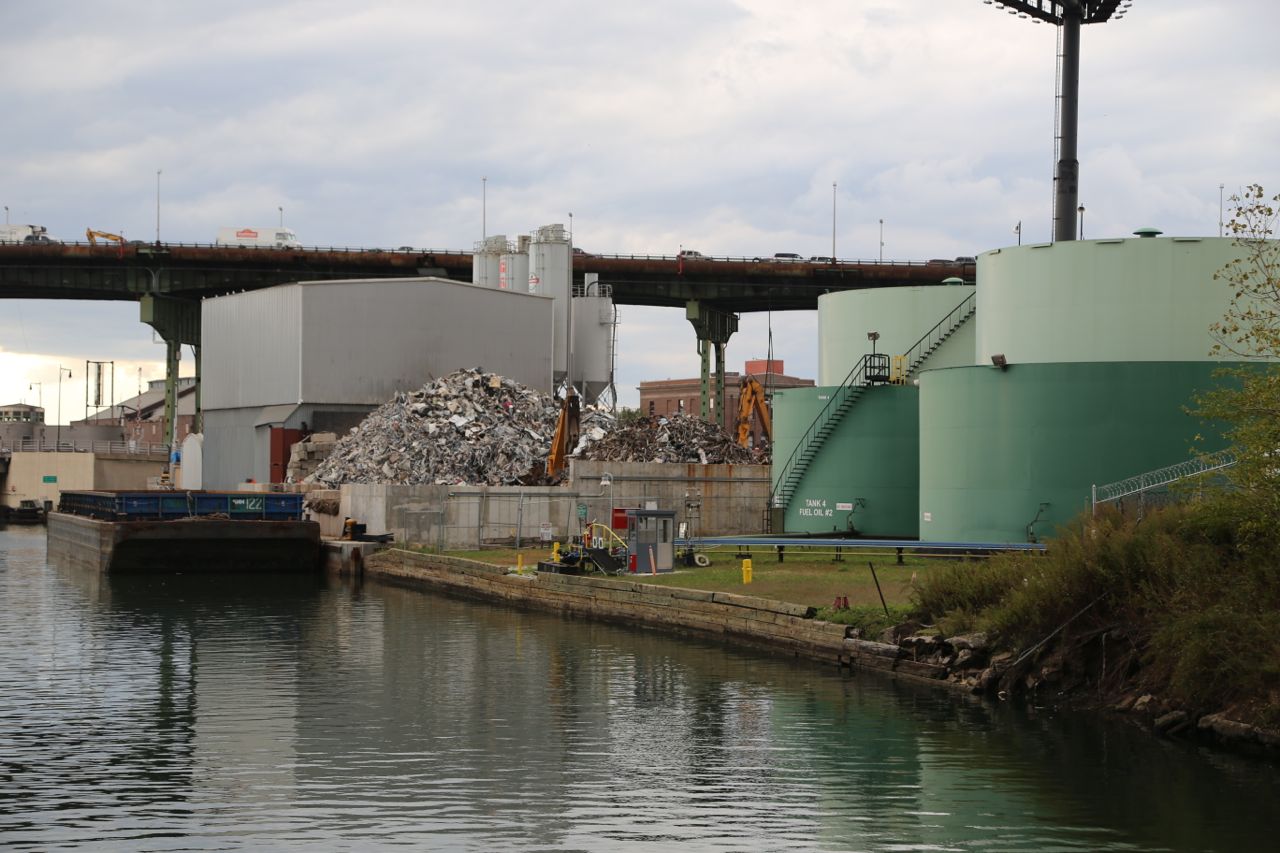
Liquid storage tanks

Liquid storage tanks

Run the Chesapeake Bay Bridge 10K

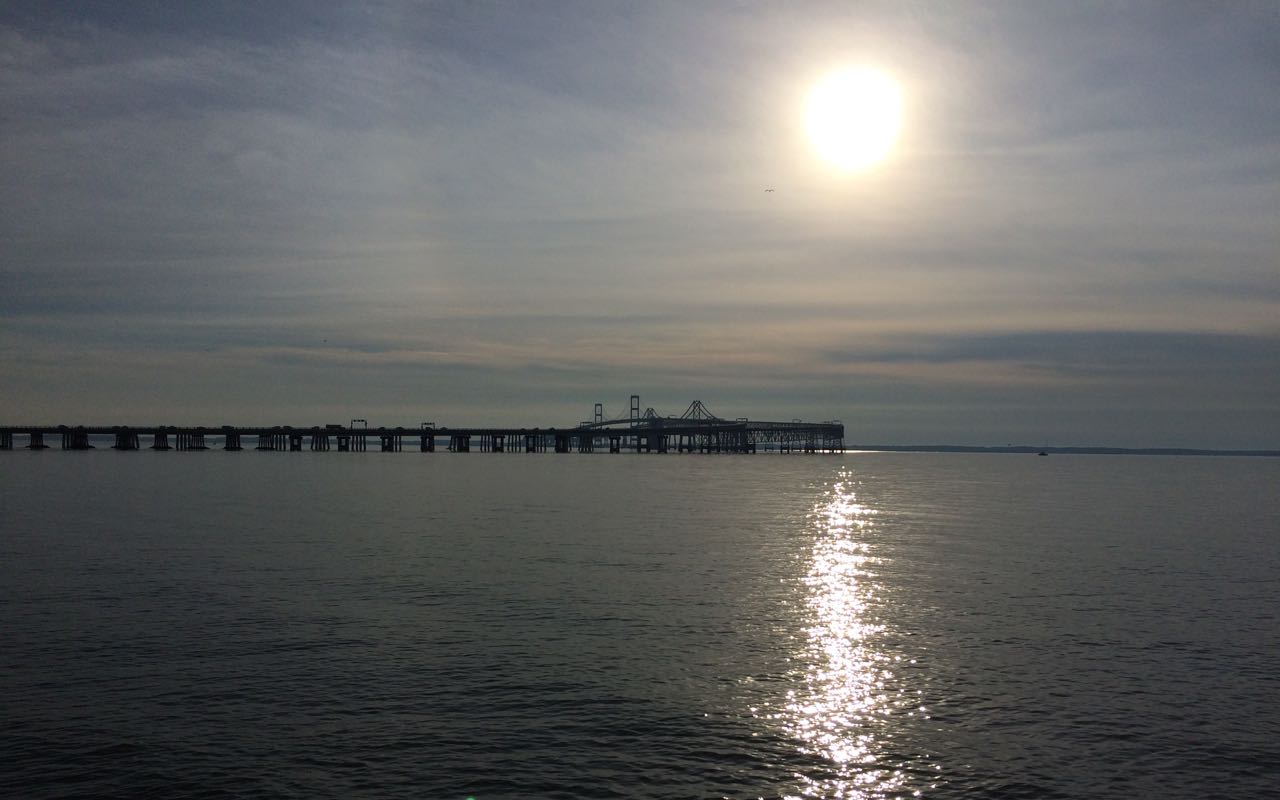
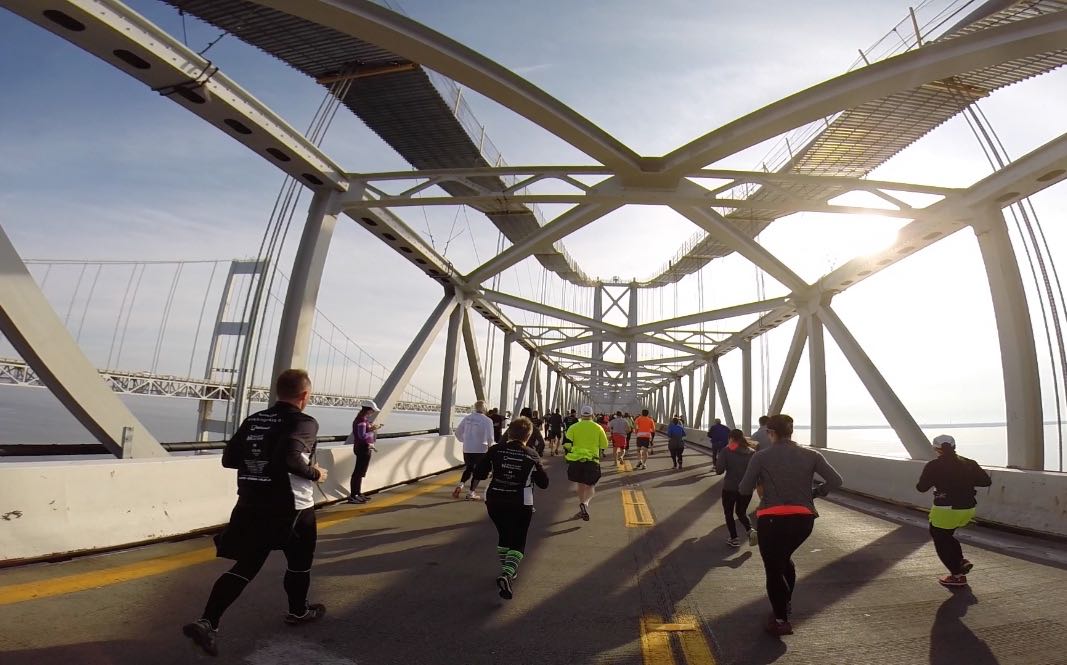
View of the Chesapeake Bay Bridge near the start of the race

View of the Chesapeake Bay Bridge near the start of the race

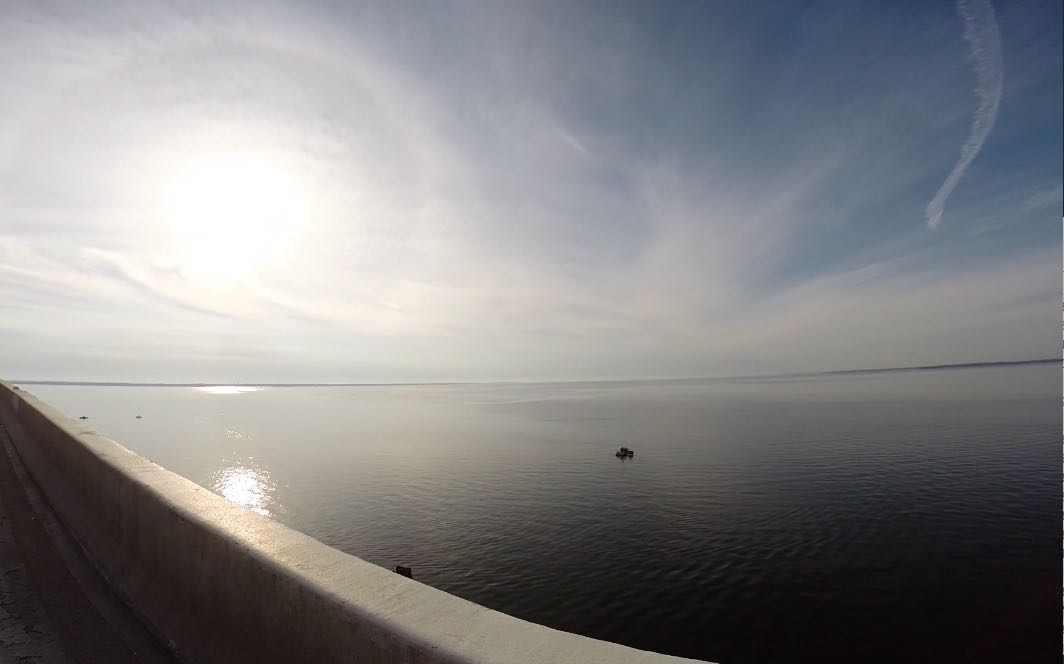
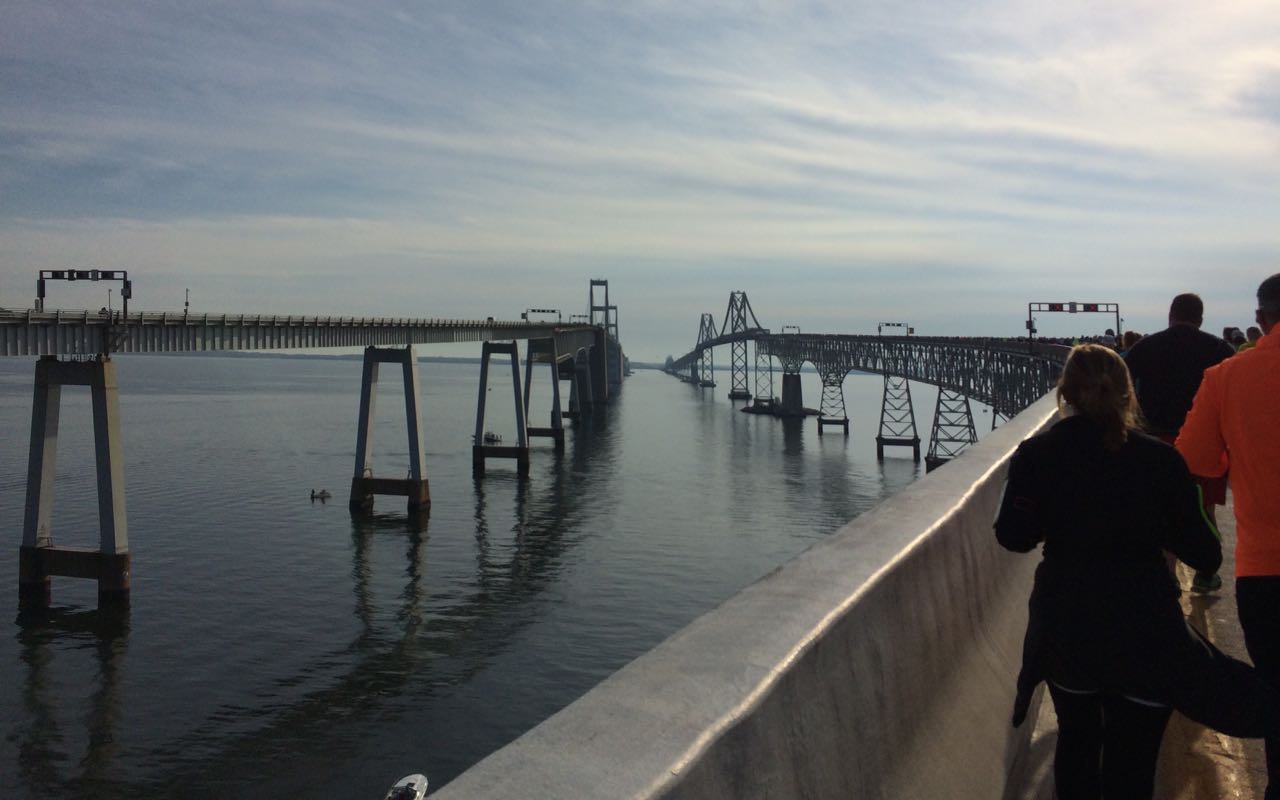
On November 9, 2014, I ran the inaugural Across the Bay 10k Chesapeake Bay Bridge Run. The point to point course includes 4.35 miles across the bridge, which reaches 186 feet at its peak. The run across the bridge provided amazing views of Chesapeake Bay. As an engineer, I really loved being able to examine the bridge up close at a slower pace than when driving across it. I wore a GoPro Hero 3+ on my head during the race to make a video of the run. I have edited the video to only include the start, bridge portion of the run, and the finish, and I have also sped up the video. My official run time was 1:16:24, and nobody wants to watch a video that long of me running across the bridge. I removed the sound due to a weird noise that was created when I sped up the video. Also, I took a few photos with my iPhone and made a few photos from freeze frames from the GoPro video.
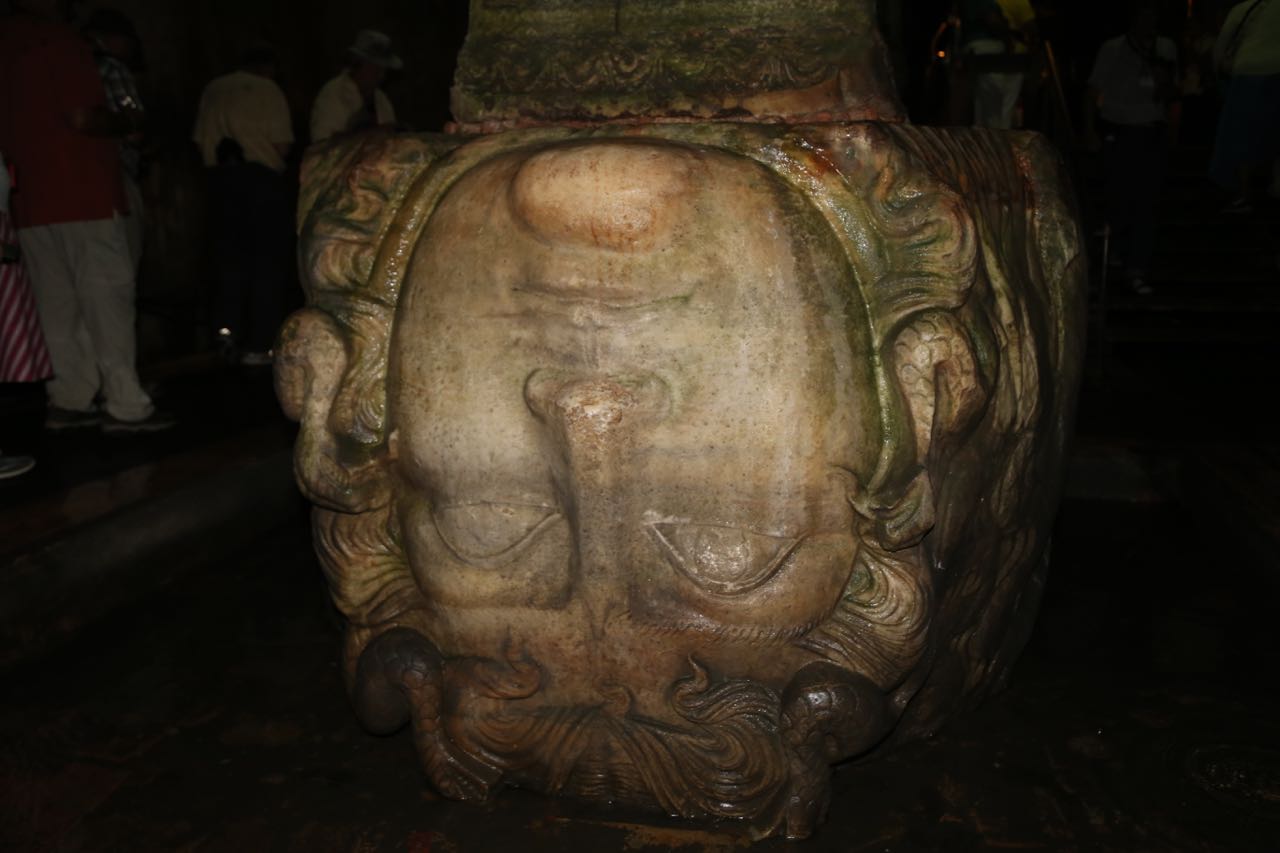
View of the bay from the bridge

View of the bay from the bridge

View of both bridges

View of both bridges

In the truss section of the Chesapeake Bay Bridge

In the truss section of the Chesapeake Bay Bridge

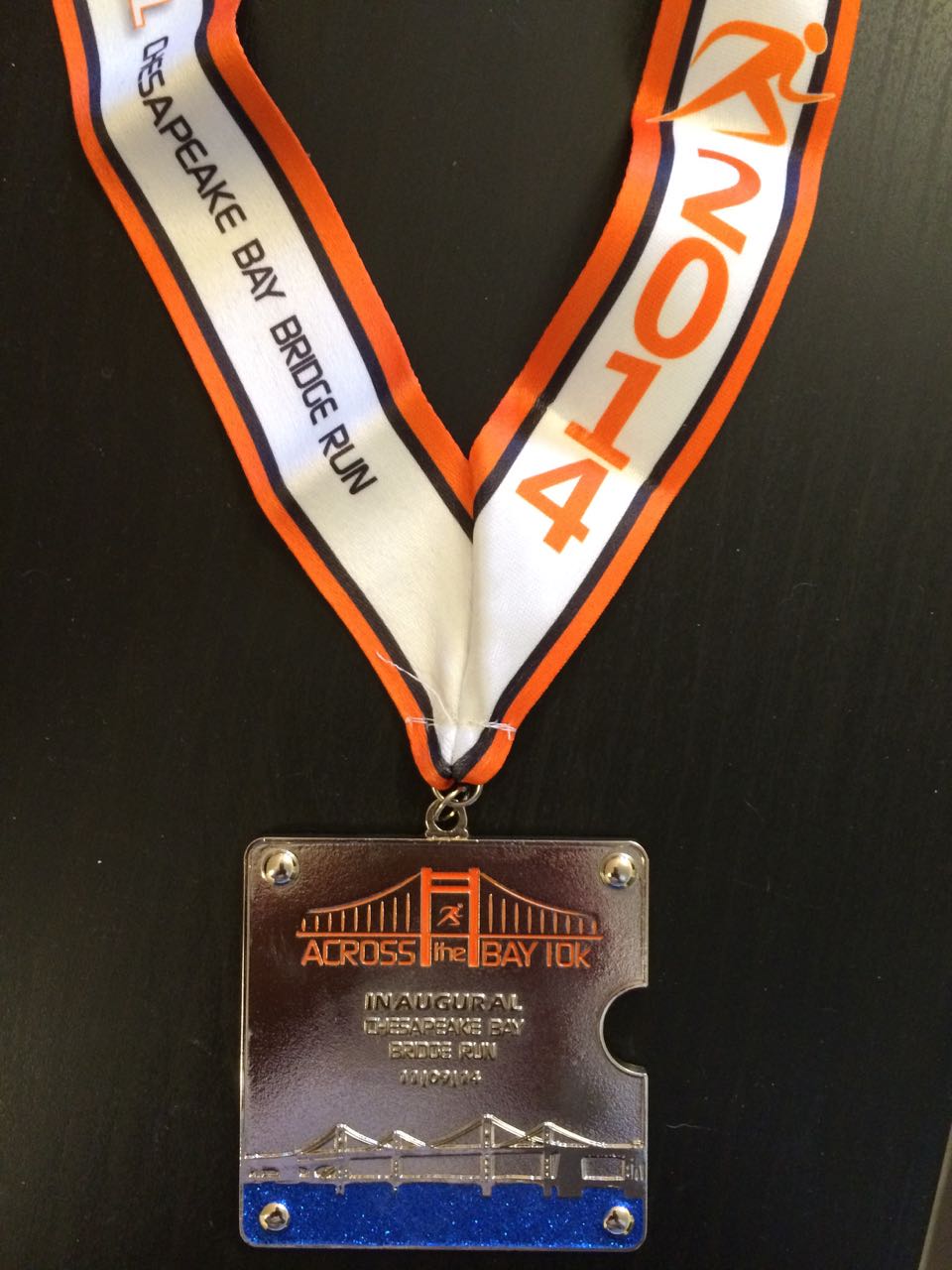
They also gave us a pretty cool medal for completing the race.

Completion medal

Completion medal

Decipher This Warning Sign

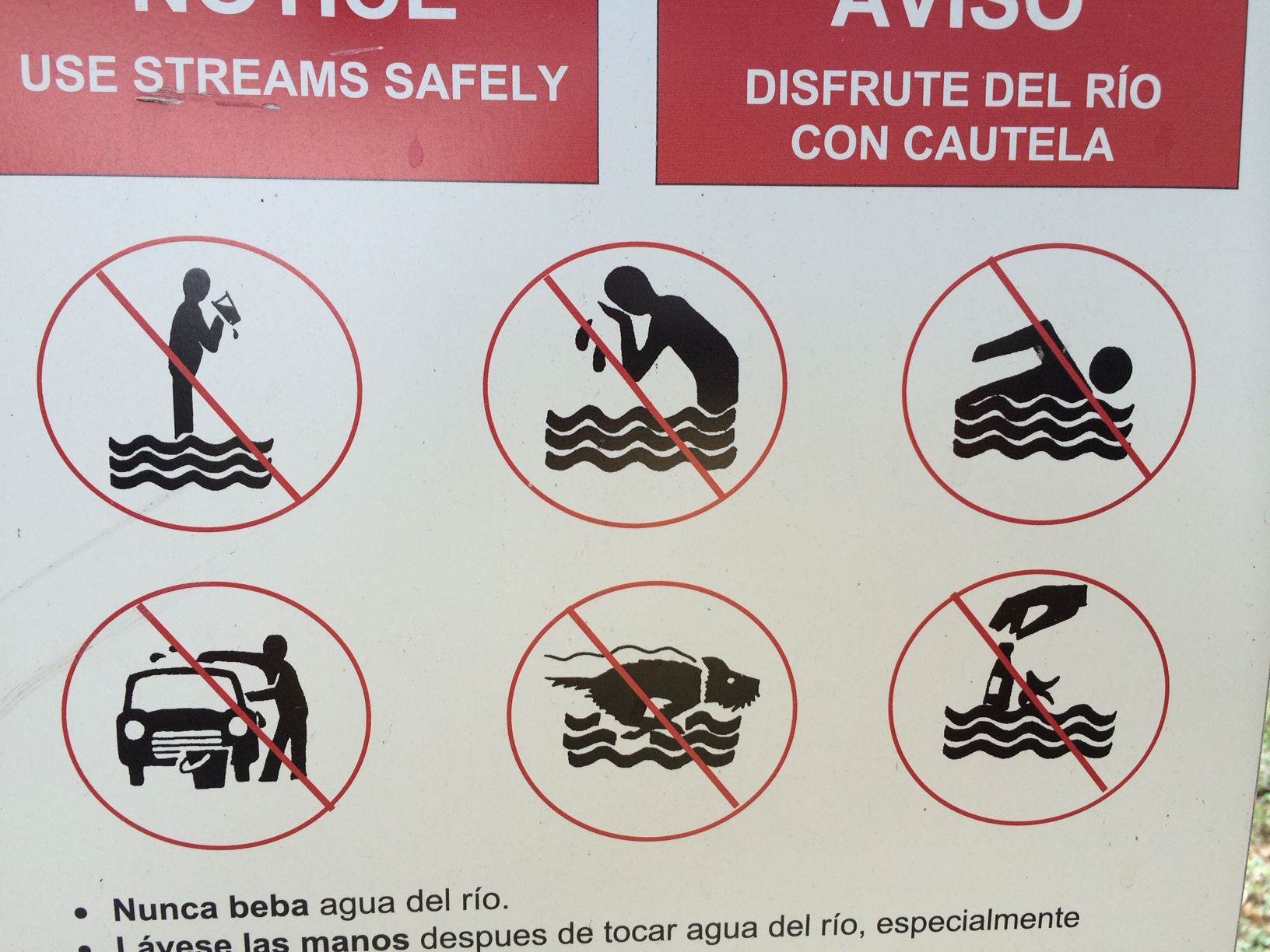
I saw this warning sign today by creek near my office. I know what the sign is trying to warn people against, but the drawings struck me as a little weird. I tweeted the photo out with my interpretation of two of the drawings, and then got some more hilarious interpretations. I have listed them below. Submit a comment with your interpretation if you can do better.
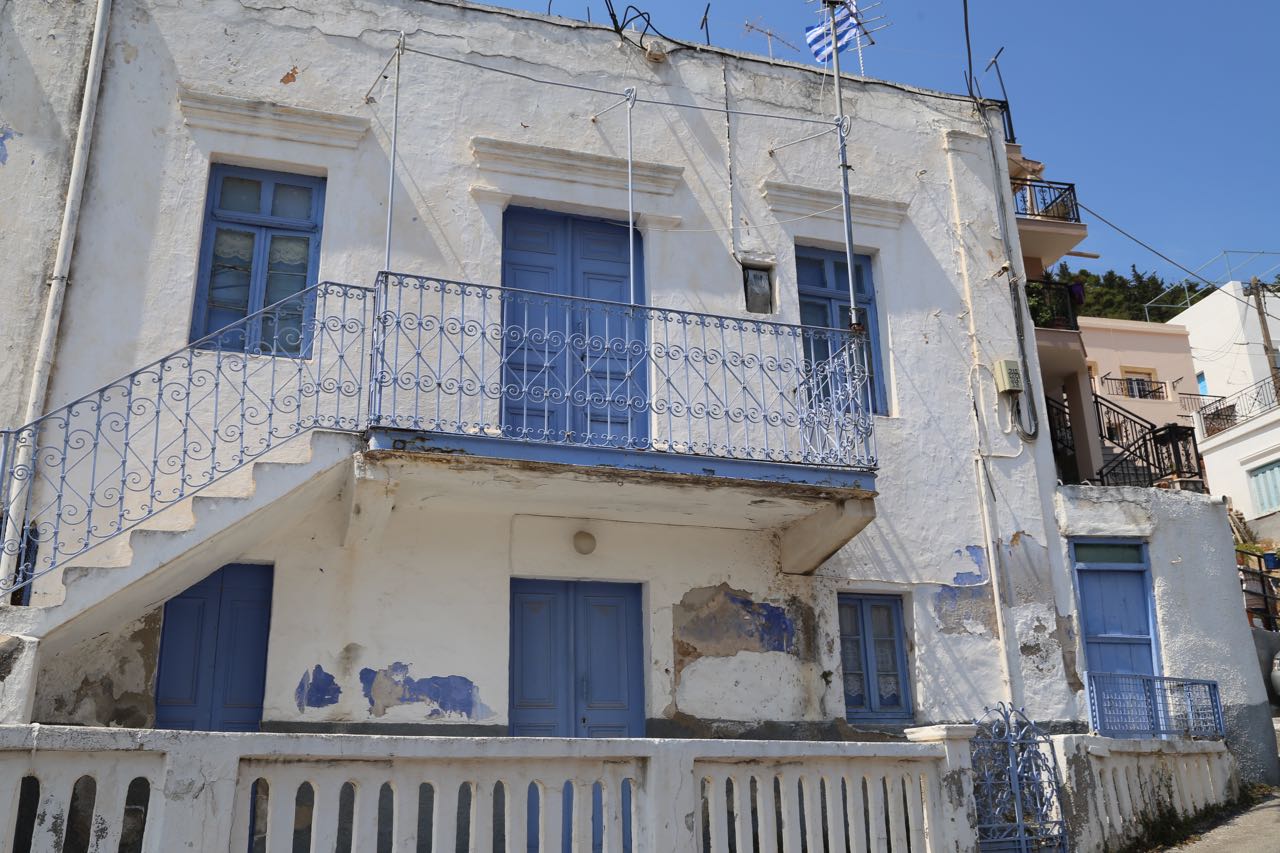
Water warning sign

Water warning sign

1. Person standing above water drinking from glass:

Me: Humans, no standing on top of water.

@Ilovebraaains: No standing on top of bacon

@marginfades: and yet, no admonition for walking on water.

2. Person leaning over water with huge water droplets.

@MGhydro: No crying in the water.

@MGhydro: No crying over bacon! Unless they’re tears of joy!

@fMRI_guy: Caution: Windy. While you are washing your face, your towel may just fly away & you’ll be naked

3. Person swimming

@Swansontea: No punching water while in the prone position

4. Person washing car

@MGhydro: No throwing dog poop over cars.

@fMRI_guy: Don’t use your car as a barrier in a snowball fight. That’s just rude.

5. Dog running above water

Me: Dogs, no swimming on top of the water

6. Hand above water with bottle and banana peel (why is it always a banana peel?)

@MGhydro: No picking up trash from the water.

@fMRI_guy: Also, don’t pick up bottle messages.

Me: No sending messages in bottles

@lockwooddewitt: Garbage and bacon: Gotta keep’em separated