Bargello Quilt

I made my first bargello quilt. I have been exploring the different patterns that can be formed using a bargello technique. For my first, I decided to so something simple, and I designed it to look like a parabola. I also quilted it by connecting the corners of the pieces to emphasize the parabolic shape. I like parabolic shapes. Also I love fluid dynamics, and the velocity profile of laminar flow forms a parabola. While I named this quilt Parabola. I could have named it laminar flow. Also, I am a nerd.

All the fabric is from Island Batik, Gemstones and Rainbow Days series.

Parabola quilt, a bargello quilt

Parabola quilt, a bargello quilt

Parabola quilt, a bargello quilt

New River Gorge National Park

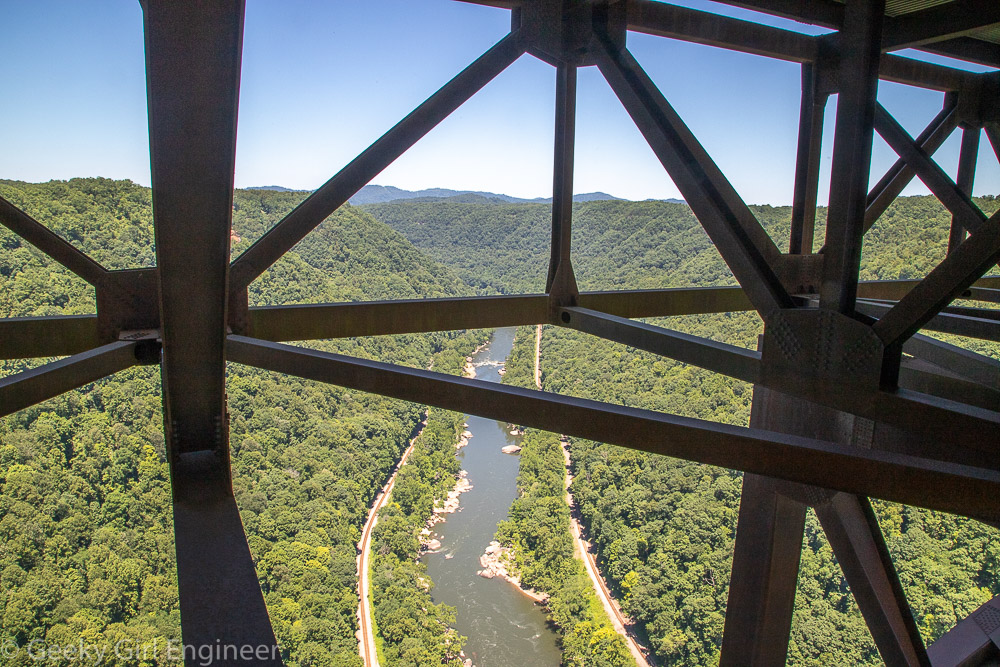
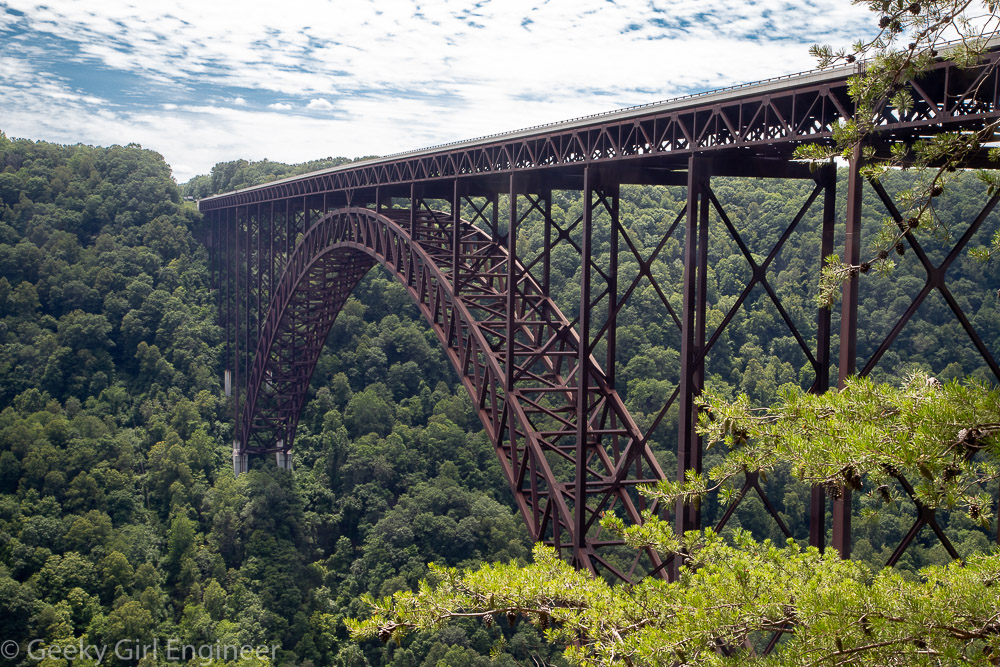
I have been sightseeing and hiking in New River Gorge National Park and surrounding area for several days now. I will be posting the photos in a few different posts. I have taken quite a few photos in the area around the New River Gorge Bridge, so those are what I am posting now.

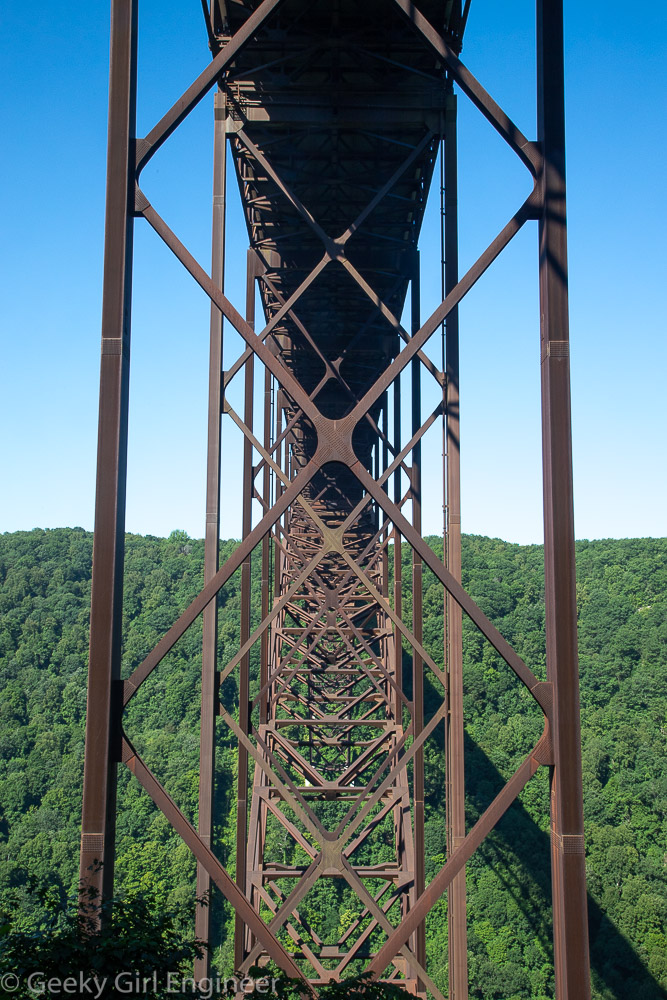
New River Gorge Bridge

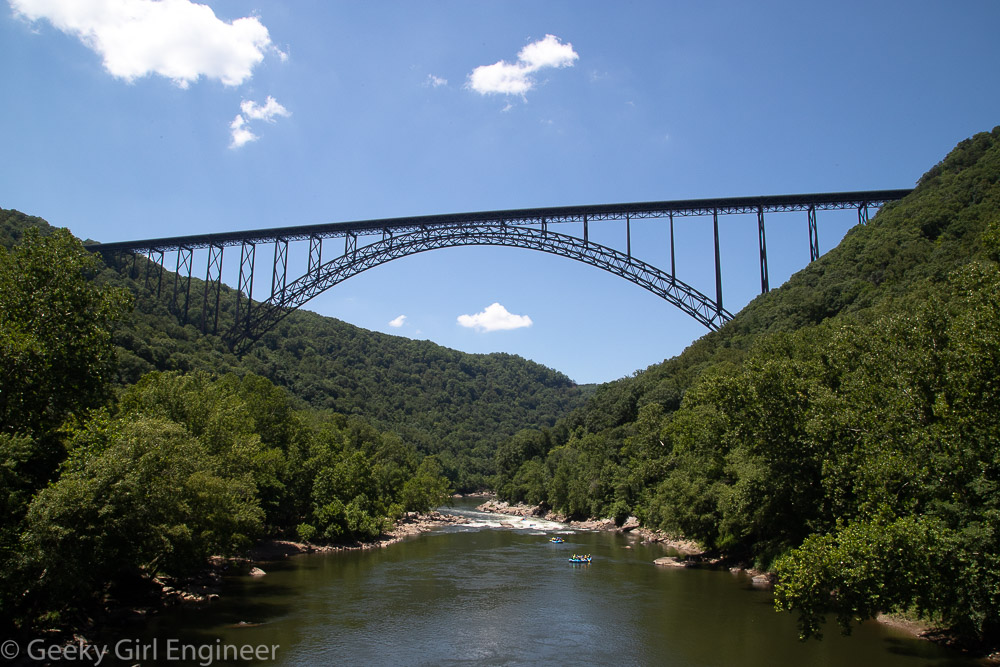
View of New River from Canyon Rim Visitors Center outlook

New River Gorge Bridge

New River Gorge Bridge, view from Tunney Hunsaker Bridge

View from Tunney Hunsaker Bridge of New River

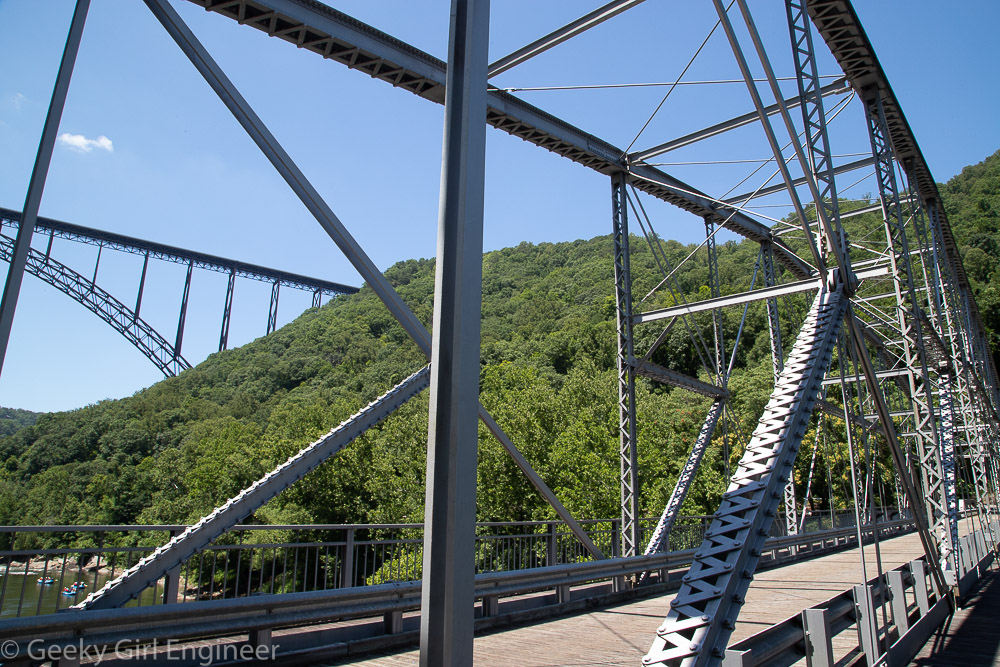
On Tunney Hunsaker Bridge with New River Gorge Bridge in background

New River between Tunney Hunsaker Bridge and New River Gorge Bridge

Bridge Walk

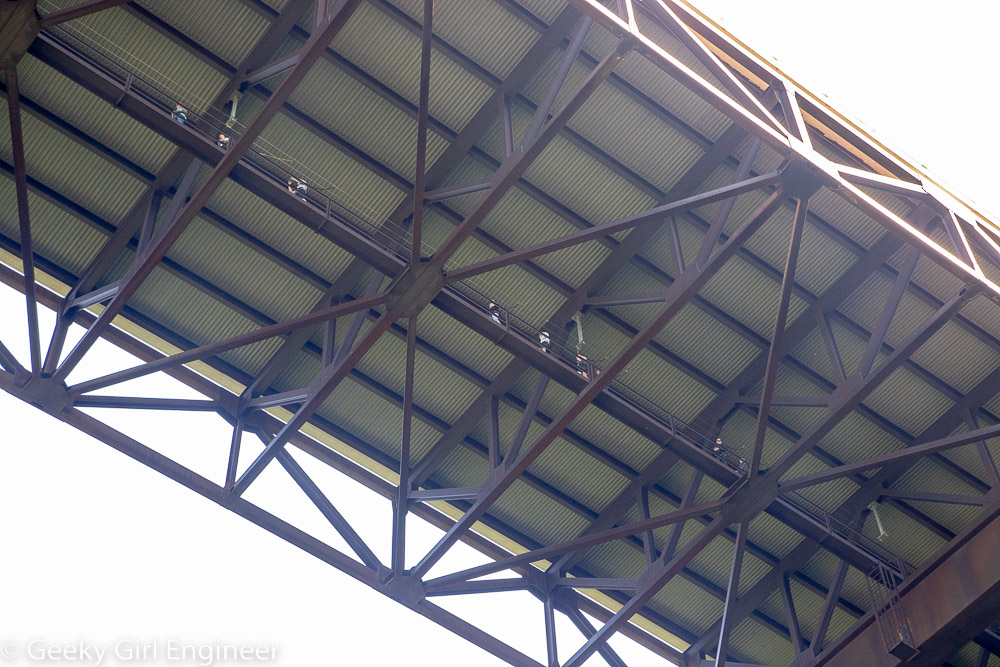
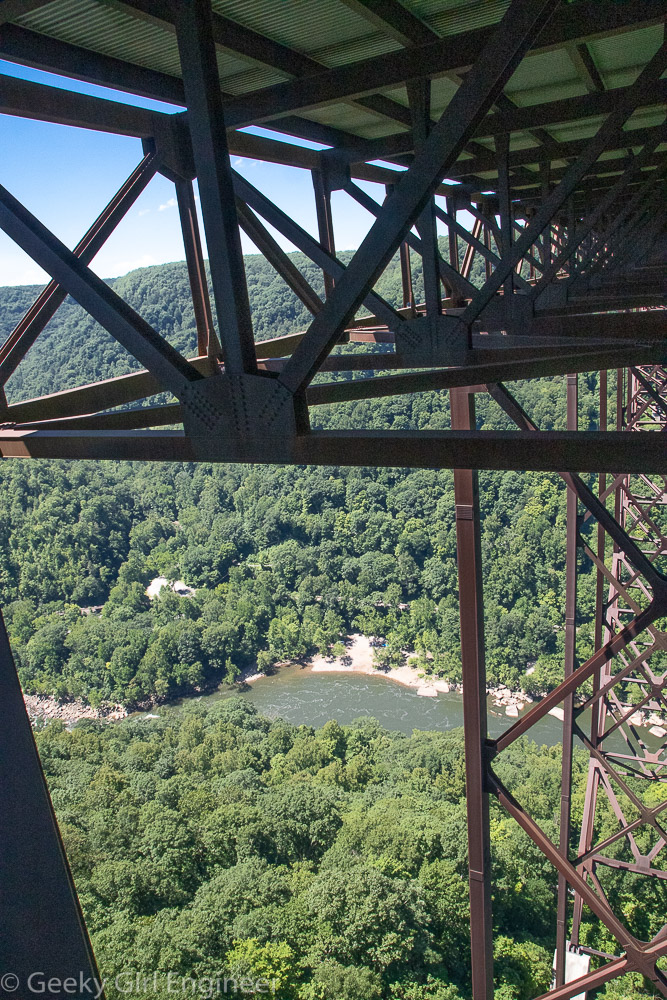
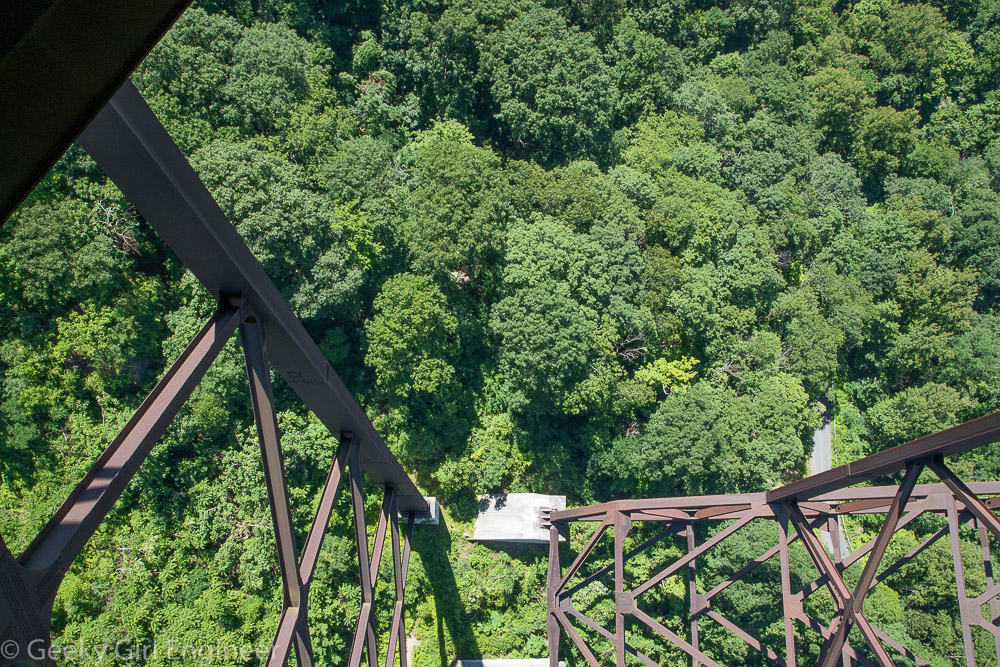
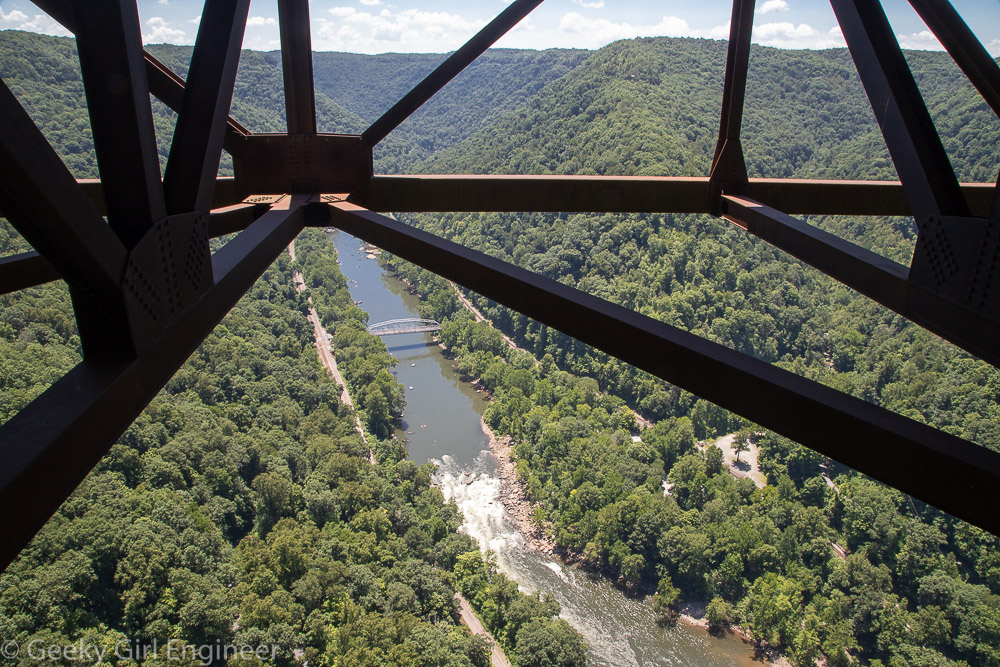
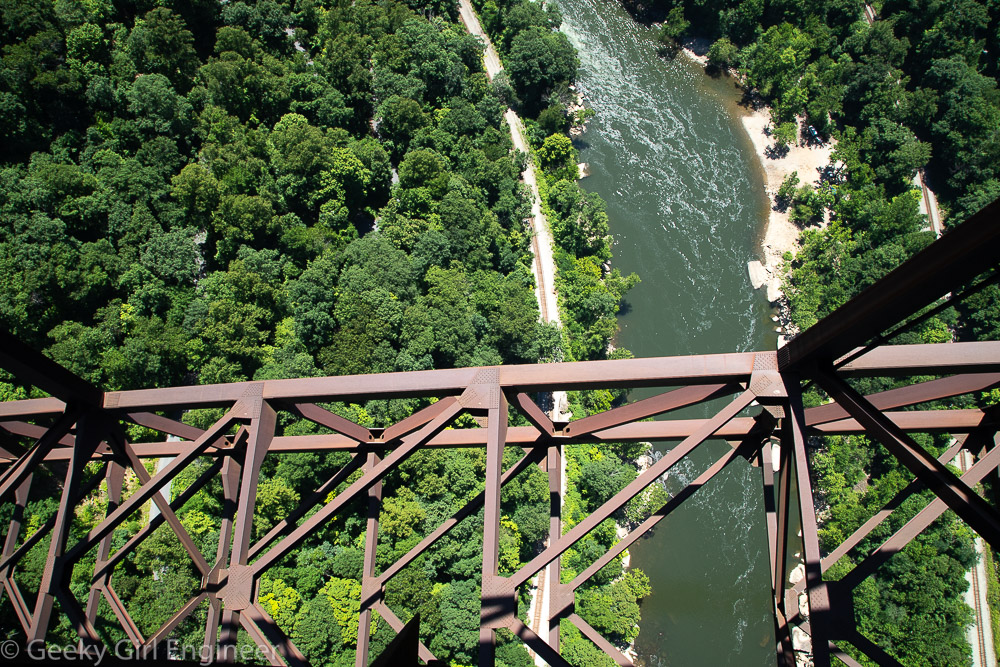
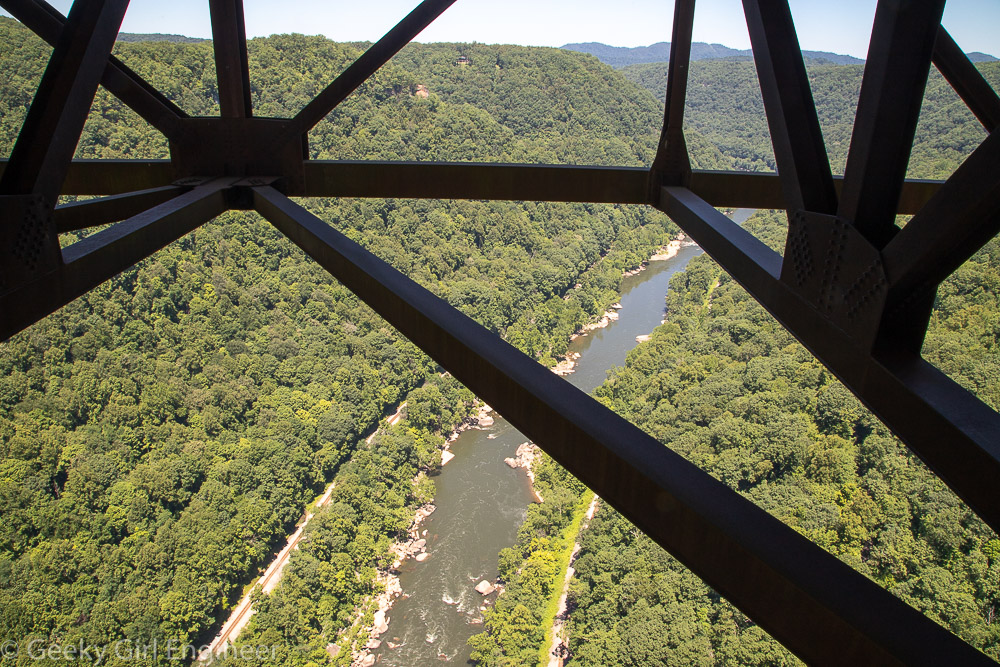
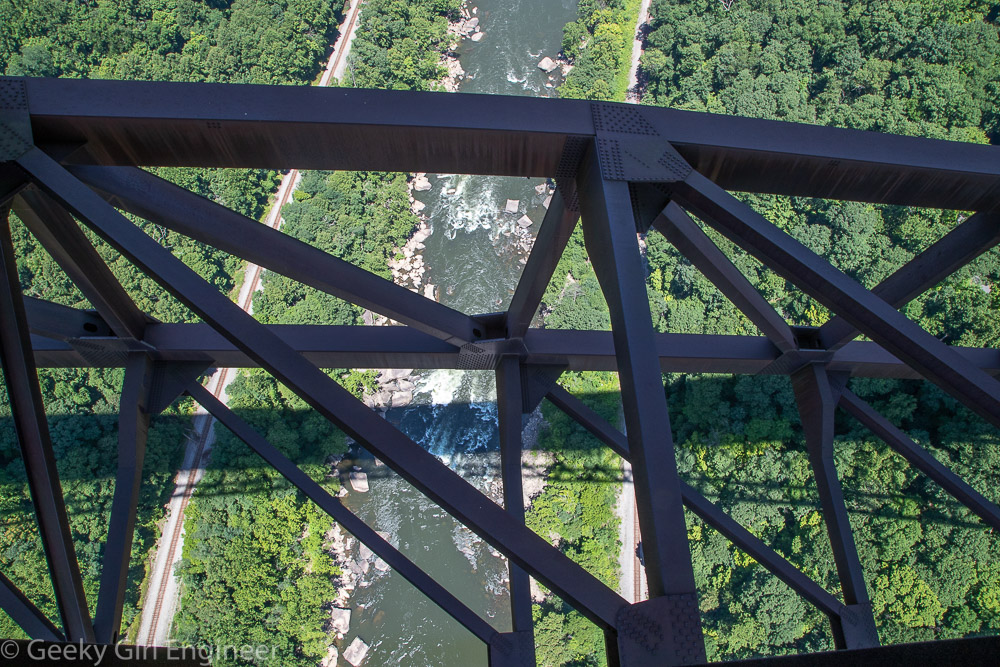
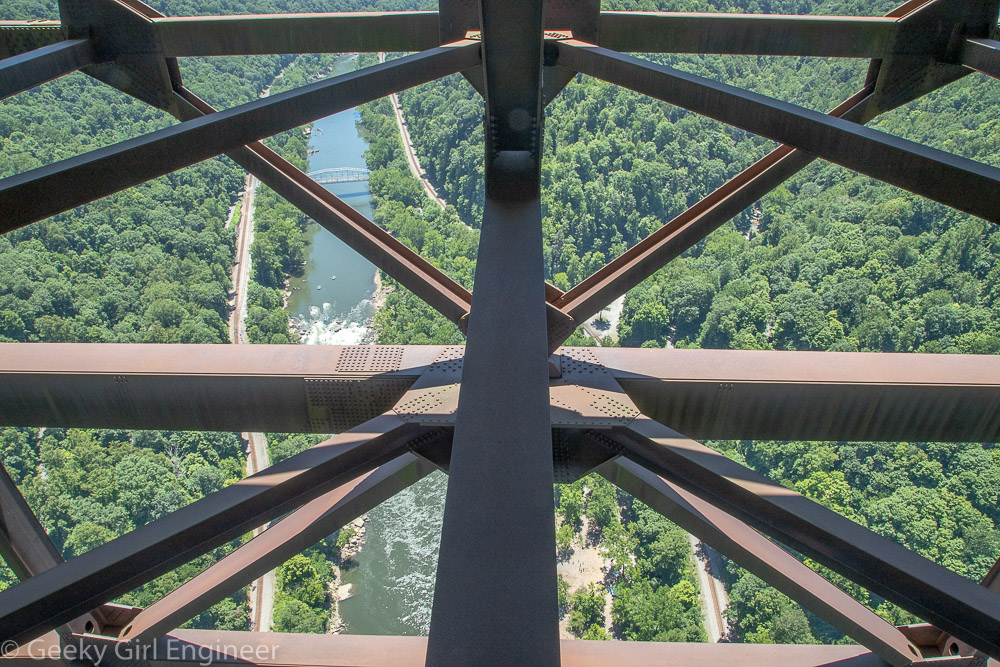
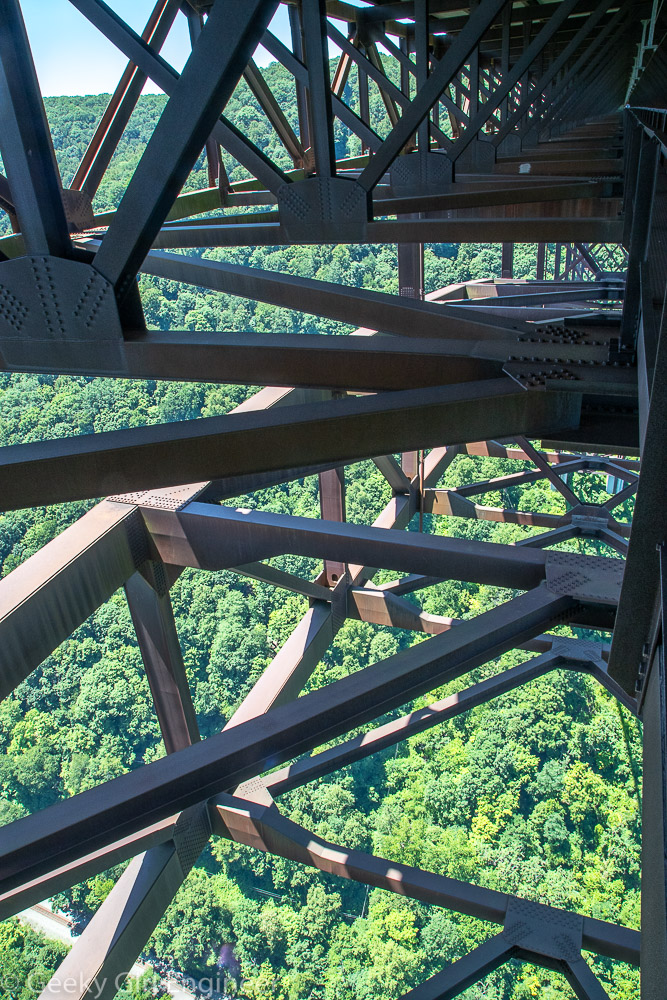
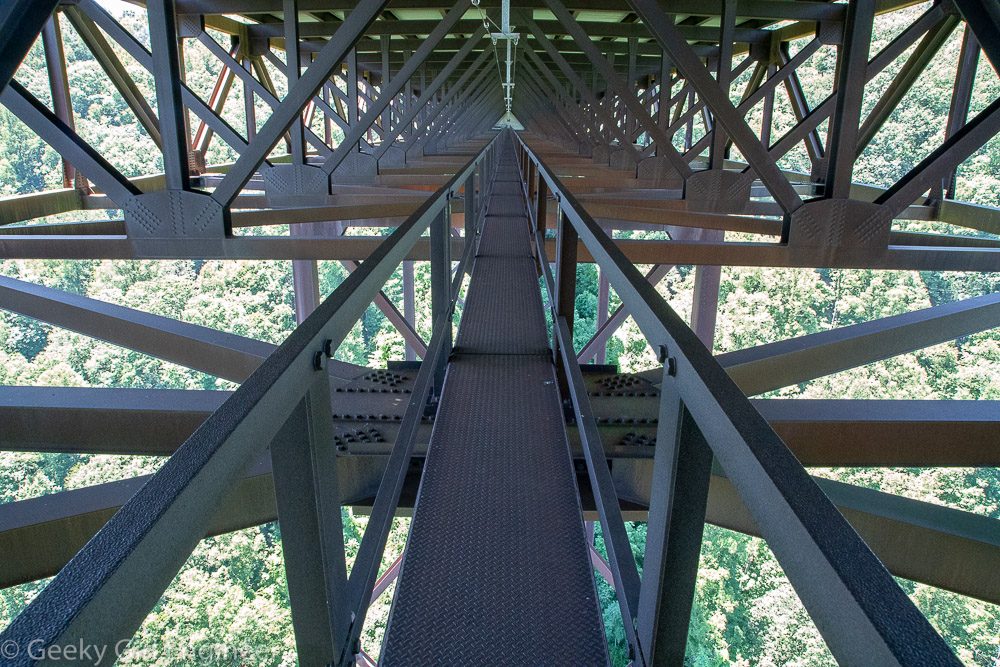
I spent today doing more exploring of New River Gorge National Park, but I started the day by walking across a bridge. The walk across the bridge was under the road deck, which is not something a person normally gets to do. Bridge Walk lets you do just that. The New River Gorge Bridge is beautiful with a wonderful design, and walking under the bridge allowed me better appreciate and to take photos of the structure. Walking on the catwalk also allows for photos of the stunning scenery. It was a nice, leisurely walk that just happens to be, at the highest point, 876 feet above the ground, by walking on a two feet wide catwalk while attached the longest continuous safety line in the world.

Looking up to Bridge Walk from Fayette Station Road

View to the west

Looking down at the piers

View to the east

Looking down at the arch

Looking down at the arch

View to the west

Looking down at the arch

At apex of arch

Looking down at the arch

View to the west

Looking down the catwalk

Nuttallburg

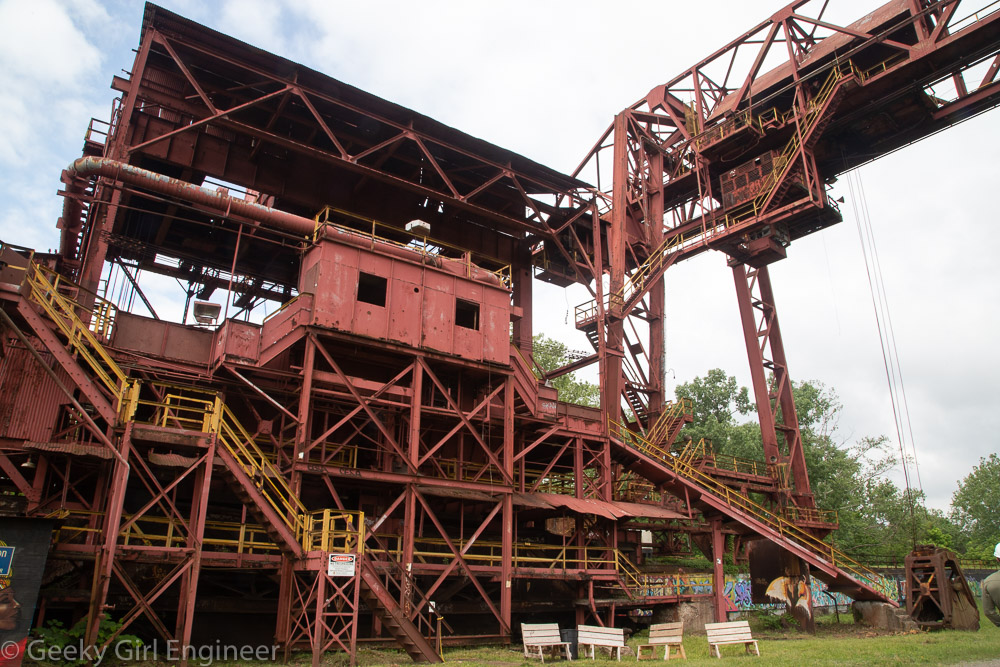
I started exploring New River Gorge National Park today. It is second on my list of things to see in West Virginia after the capitol. The park is really spread out, and there are lots of areas to explore. I did some hiking in the Nuttallburg area today because it features the remains of a coal mining operation, and I love ruins. I hiked from the top to the headhouse. I was originally going to hike down along the trail that somewhat follows the conveyor, but I met some people at the headhouse, who had just hiked up the that trail, and they said do not do it. It is a really difficult trail, and while the park material said as much, somehow their exhausted faces persuaded me more. I then drove to area near the river where the lower part of the mining operation was and hiked around there a little. The area trails are really neat because you can essentially follow the mining operation from the mine entrance to where the coal would have been loaded onto trains.
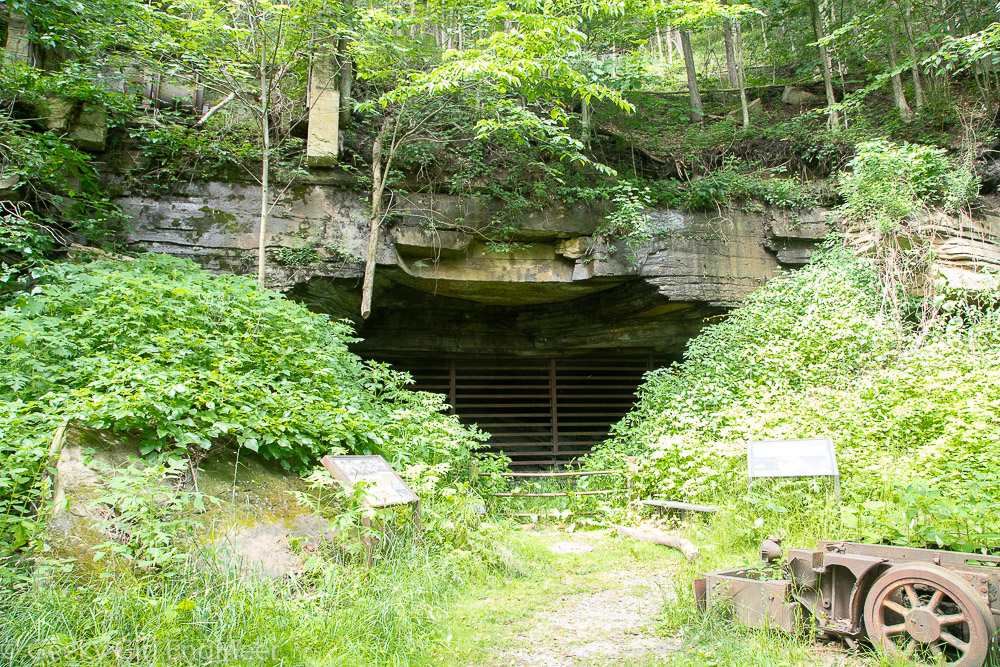
While the mining operation started in the mine, obviously, the first part you can see is the mine entrance. As I stood in front of the mine, I could feel the air coming out was probably 10 or 20 degrees colder.

Mine Entrance

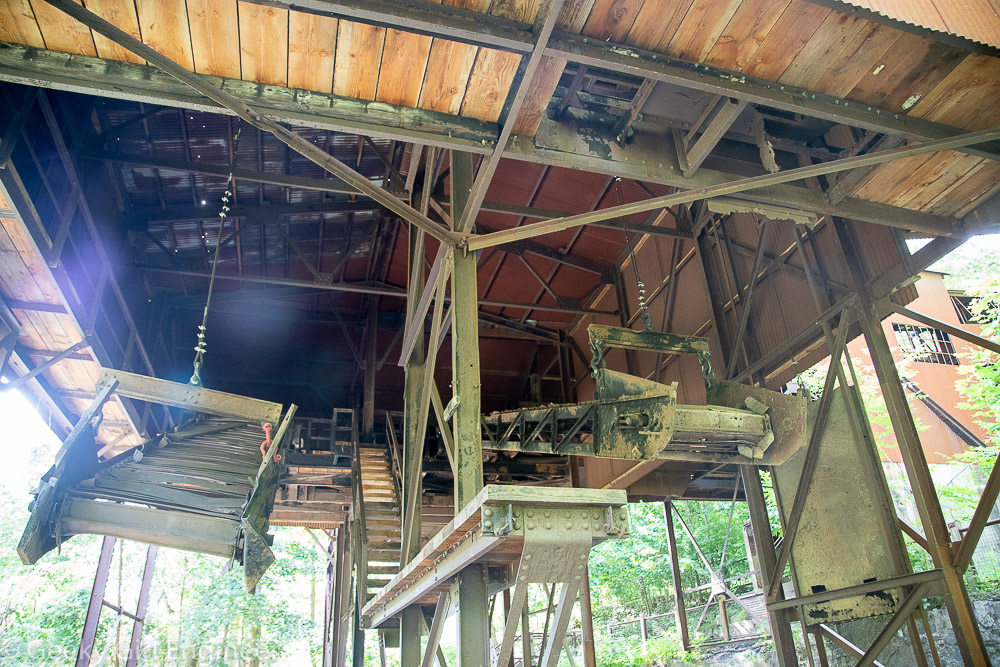
The coal cars then went to the headhouse where the coal was dumped and loaded onto the conveyor, which brought the coal all the way down the slope to be transferred to trains.

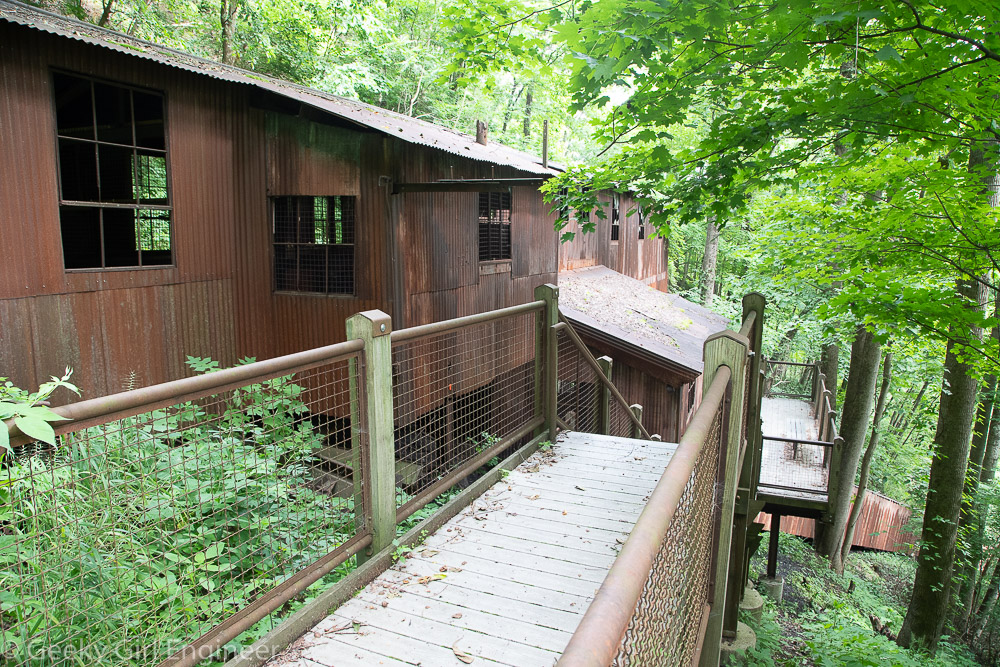
Headhouse where coal was dumped out of the cars from the mine and onto the conveyor. In the lower right, you can see the start of the conveyor.

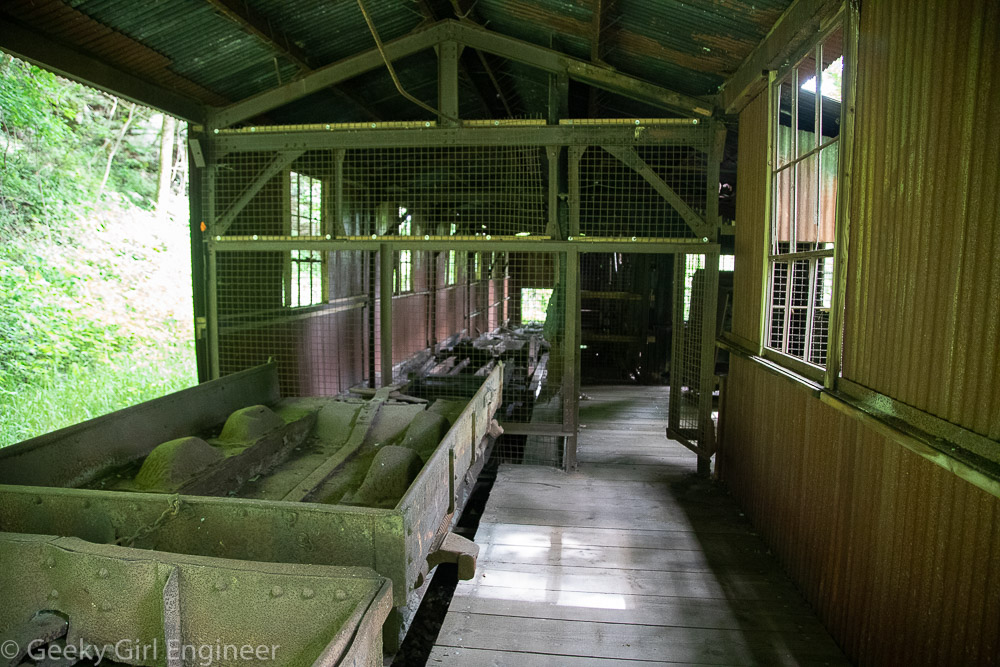
Inside the headhouse where the coal cars came in

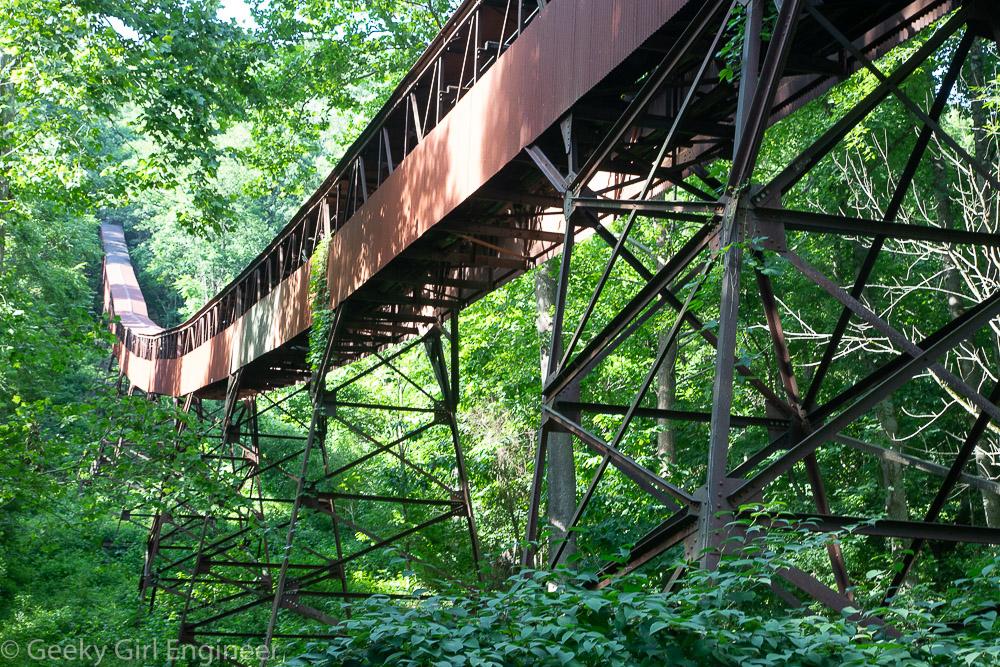
The conveyor was essentially a really long conveyor belt, and it was kind of awesome to stand beneath it.

Conveyor that brought coal from headhouse to tipple

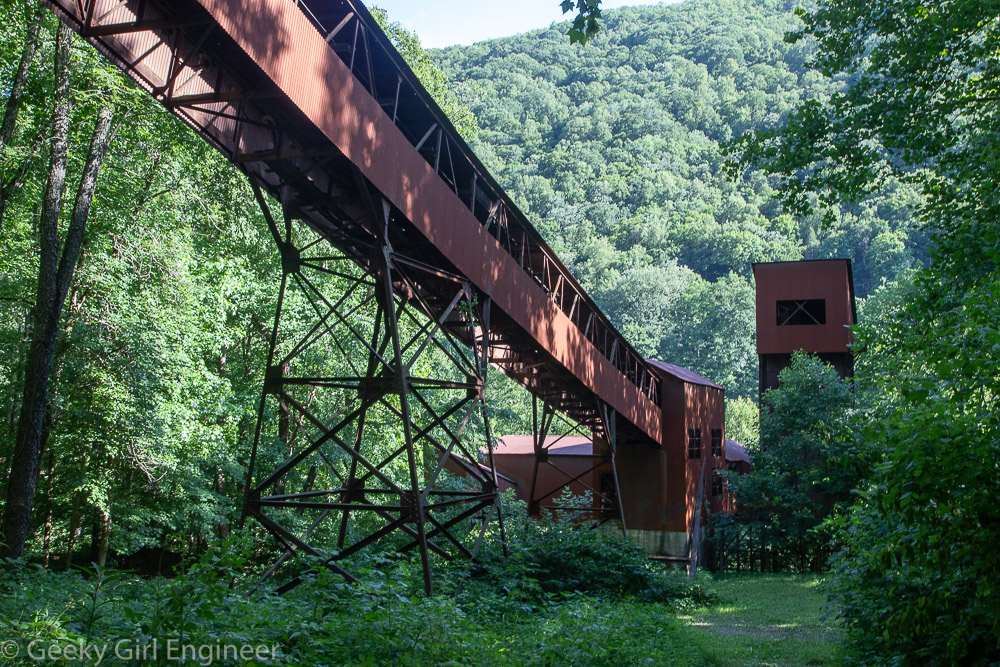
The conveyor ended at the tipple. The tall structure seen on the right was a storage silo for the coal.

Conveyor entering the tipple

Conveyor entering the tipple

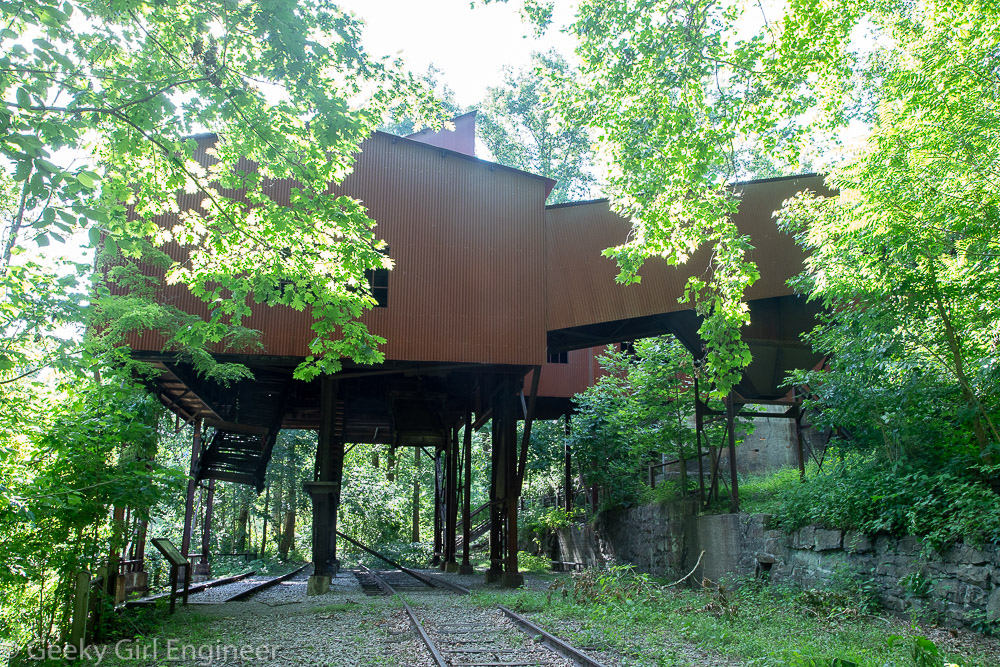
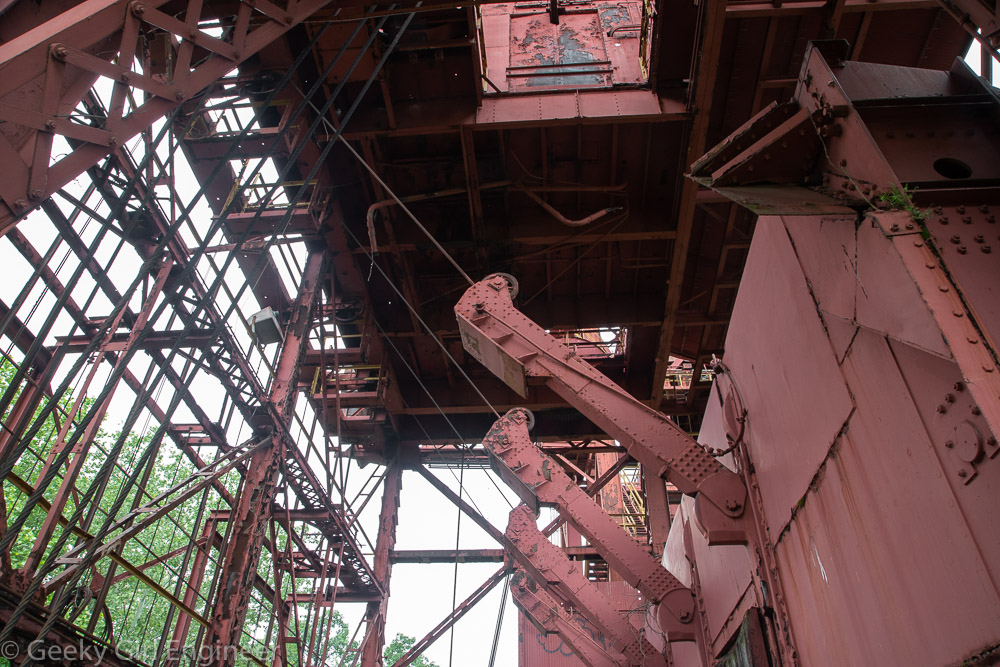
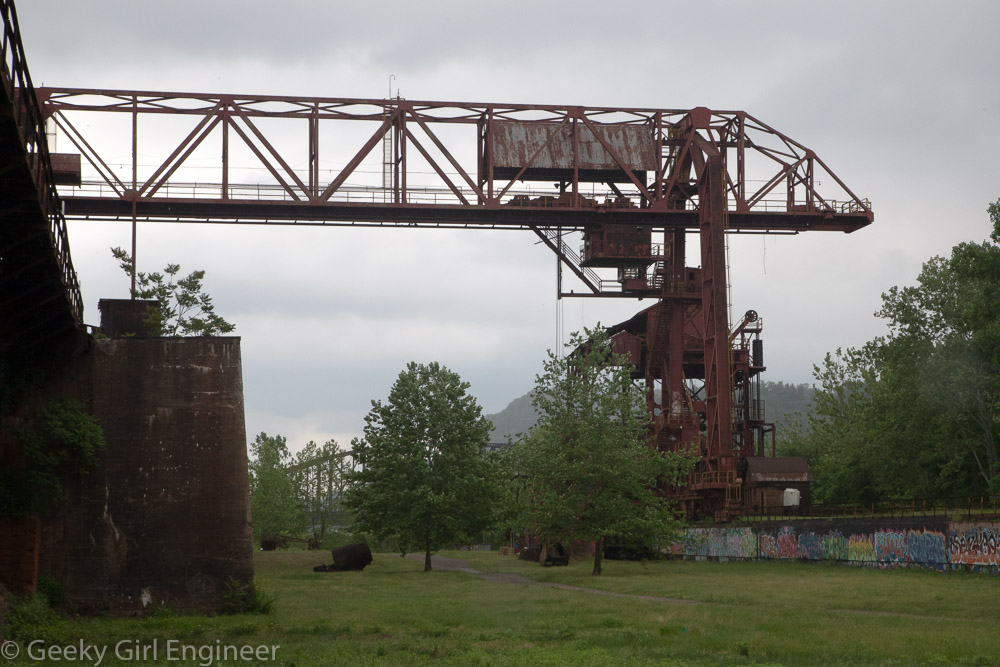
The tipple sat on top of train tracks, and the coal was transferred to the trains there.

Tipple where coal was transferred to trains

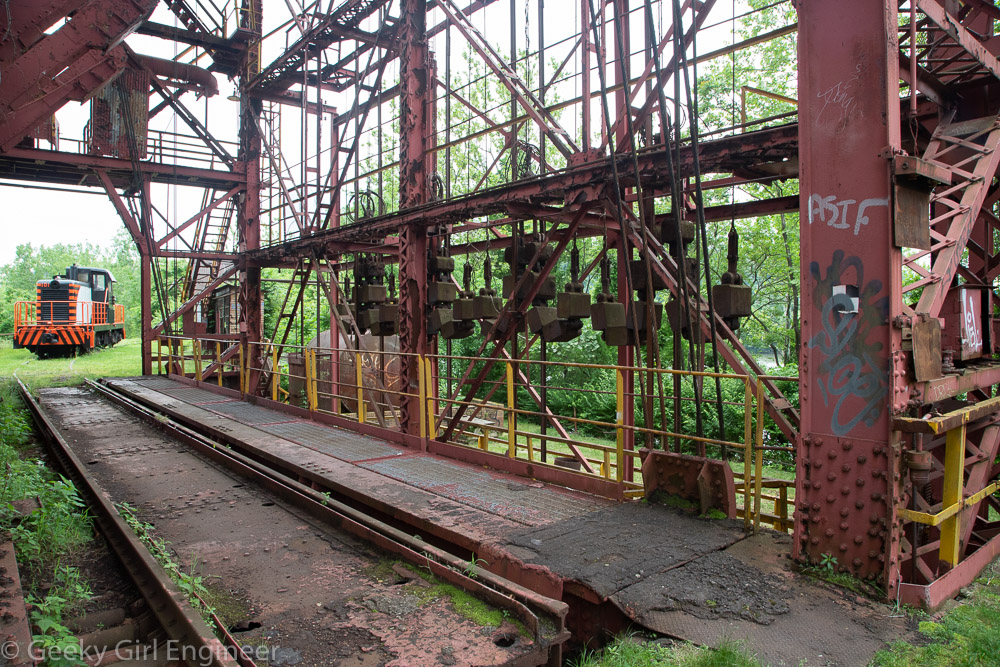
Under the tipple, standing on the old train tracks where coal was transferred

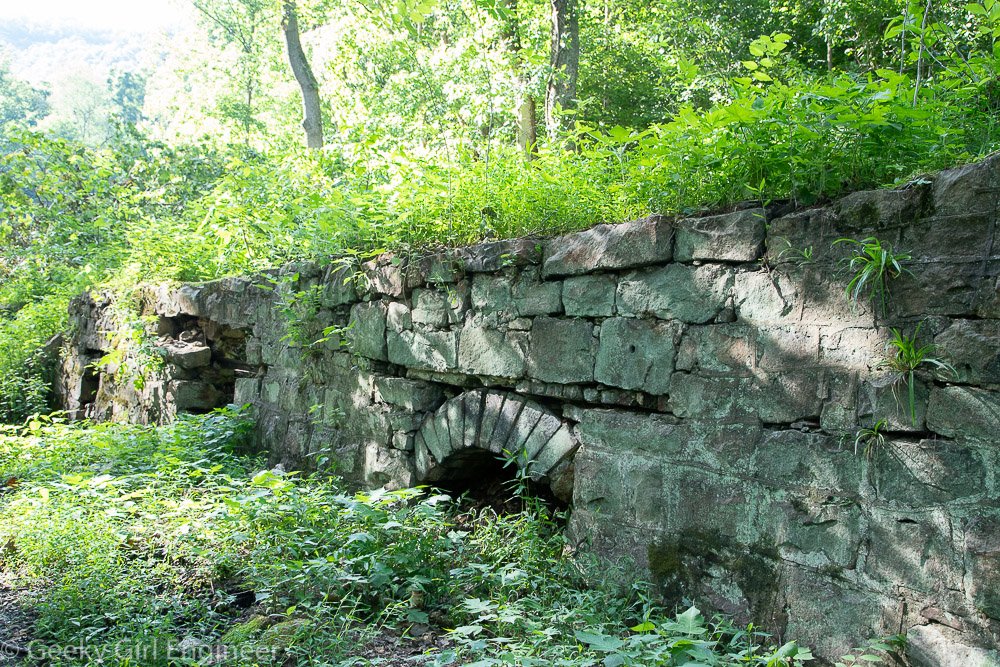
There are also some remains of coke ovens. These are considered to be the earliest remains of coal operations. Originally the coal converted to coke there.

Coke Ovens

Carrie Blast Furnaces

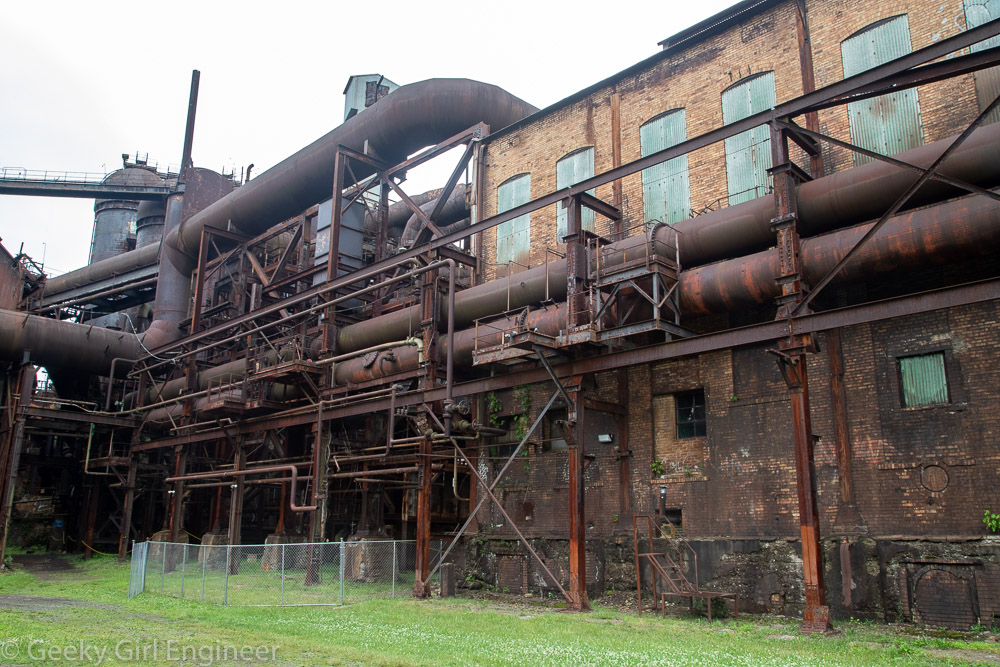
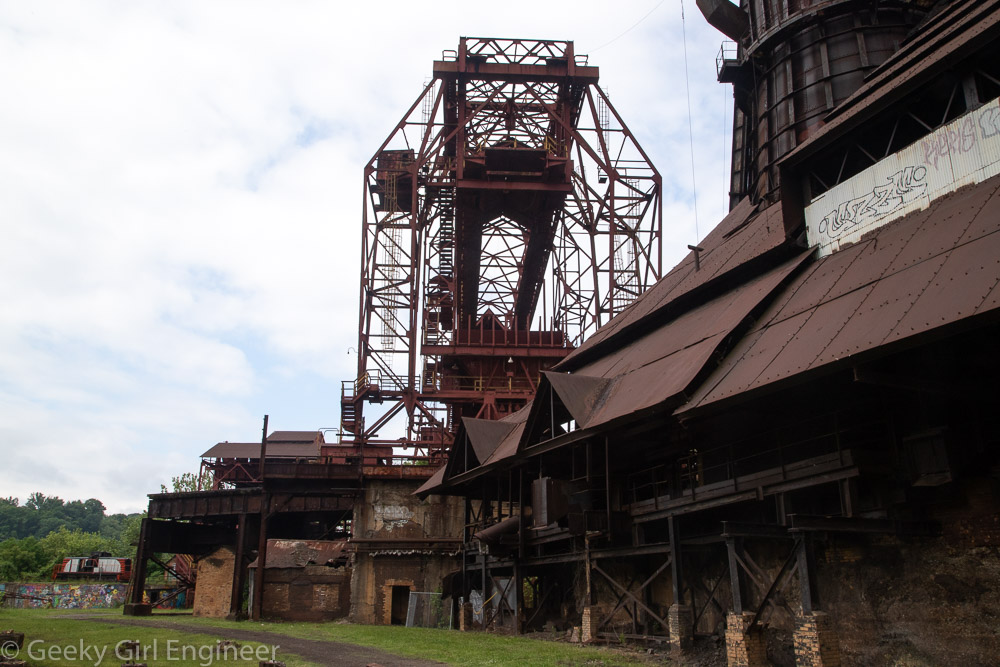
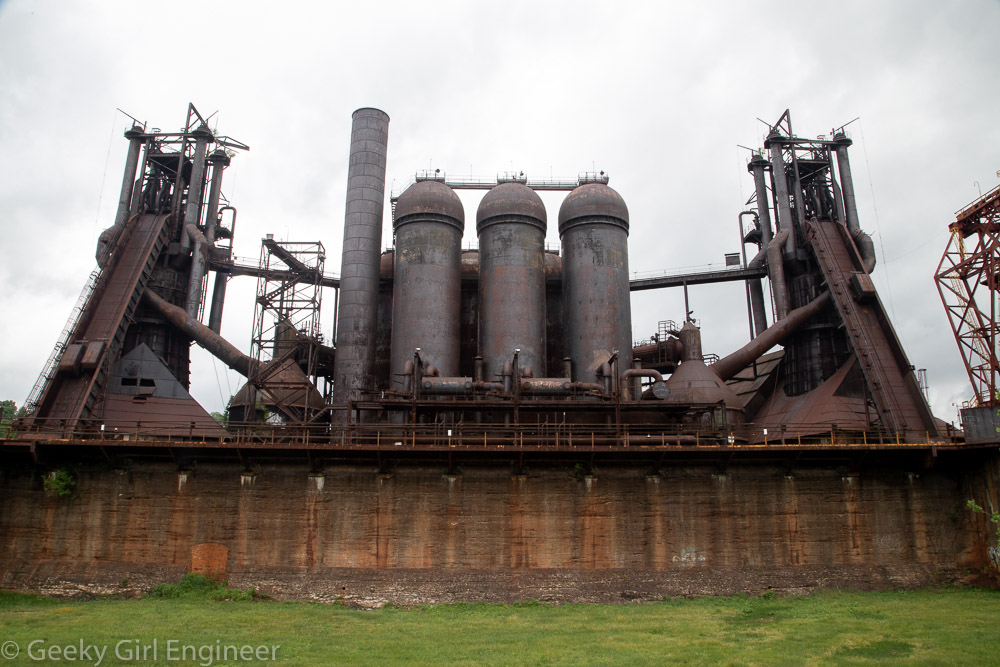
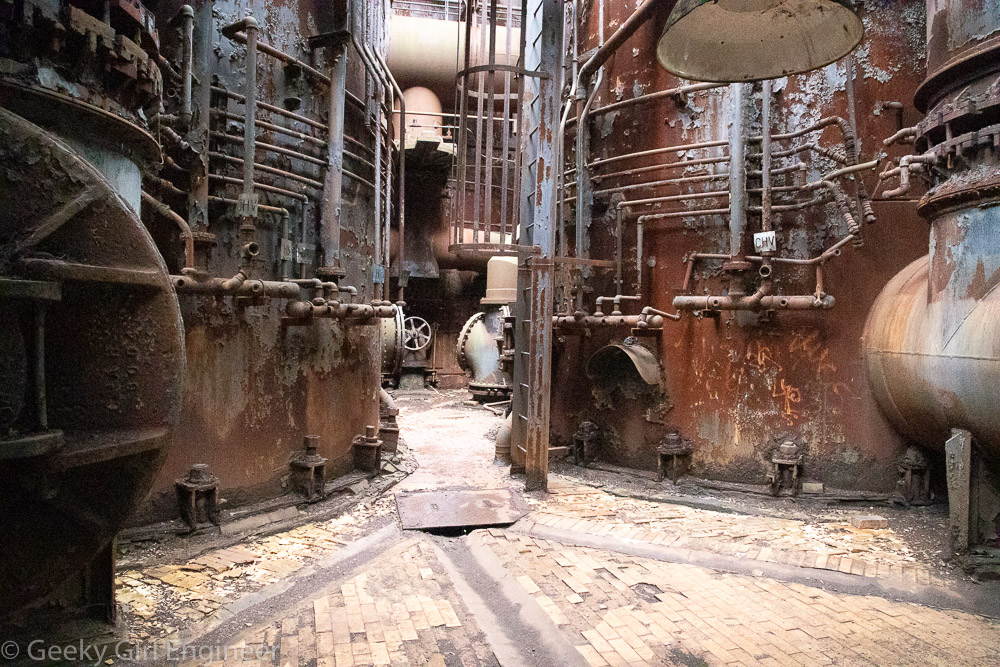
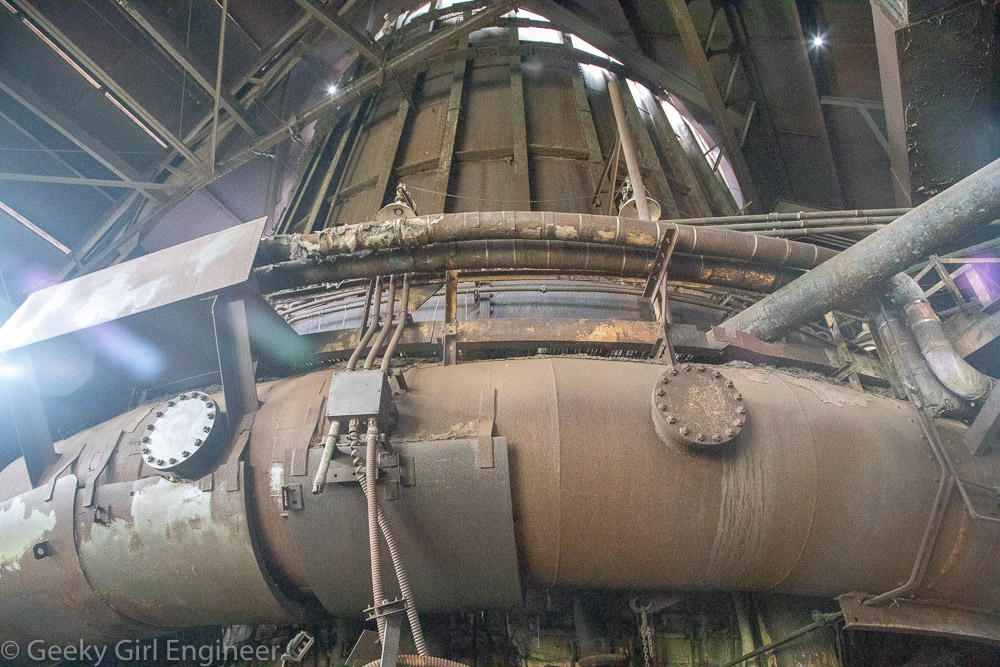
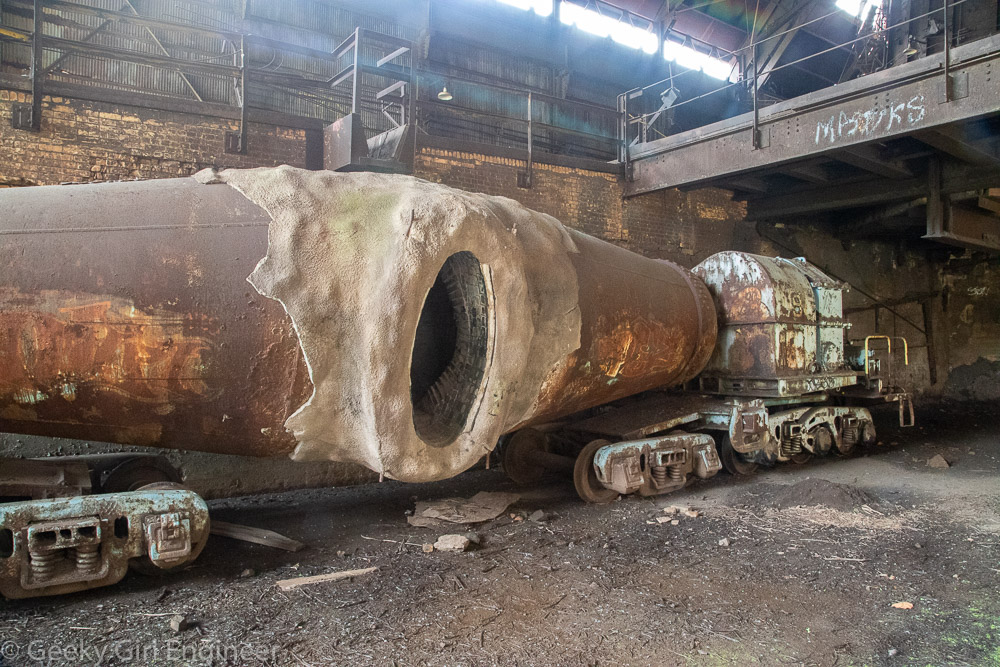
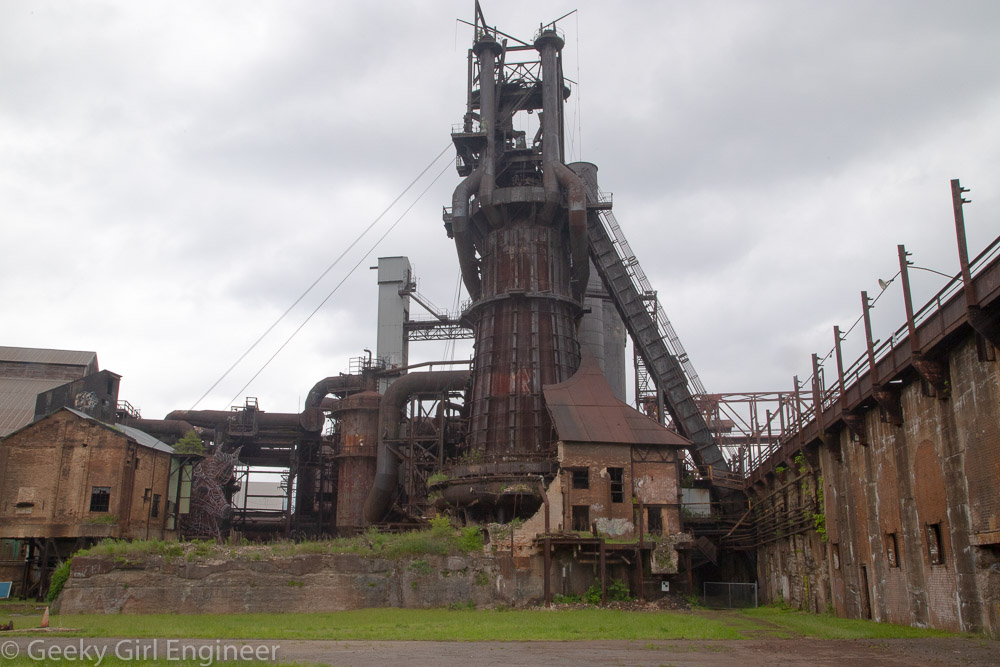
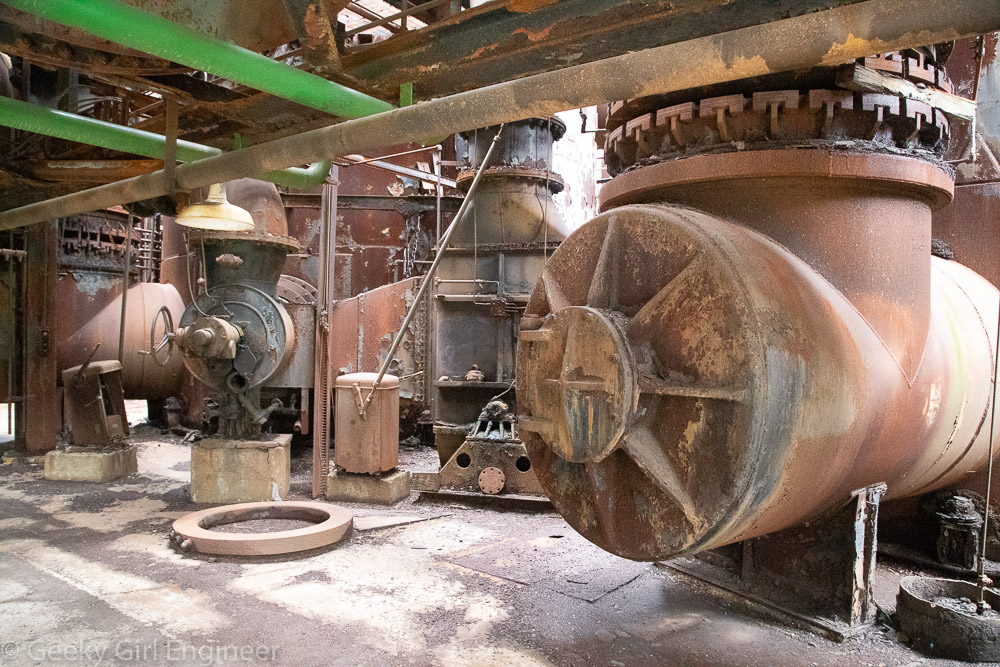
I’m in Pittsburgh for the long weekend. Today I took a tour with Rivers of Steel of the Carrie Blast Furnaces. The area is part of the former U.S. Steel Homestead Steel Works. Blast Furnaces #6 and #7 and the accompanying equipment is all that remains of the site. The site is really interesting, and the tour was lead by a former iron worker who used to work at a similar type of facility. It was rather amazing to hear such first hand knowledge. I admit I did not catch everything, but the tour was fascinating. It was also incredibly interesting and fun to photograph. I’ve tried to name things in the captions of the photos below, but I may have gotten some of it wrong. I should have taken notes while on the tour. If you are in Pittsburgh, I highly recommend the tour. It is a wonderful tour of some incredible history.

Generator building

Blast furnace in foreground and supply crane in background

Supply train area

Supply train area

Supply train area

Crane

Carrie Blast Furnaces

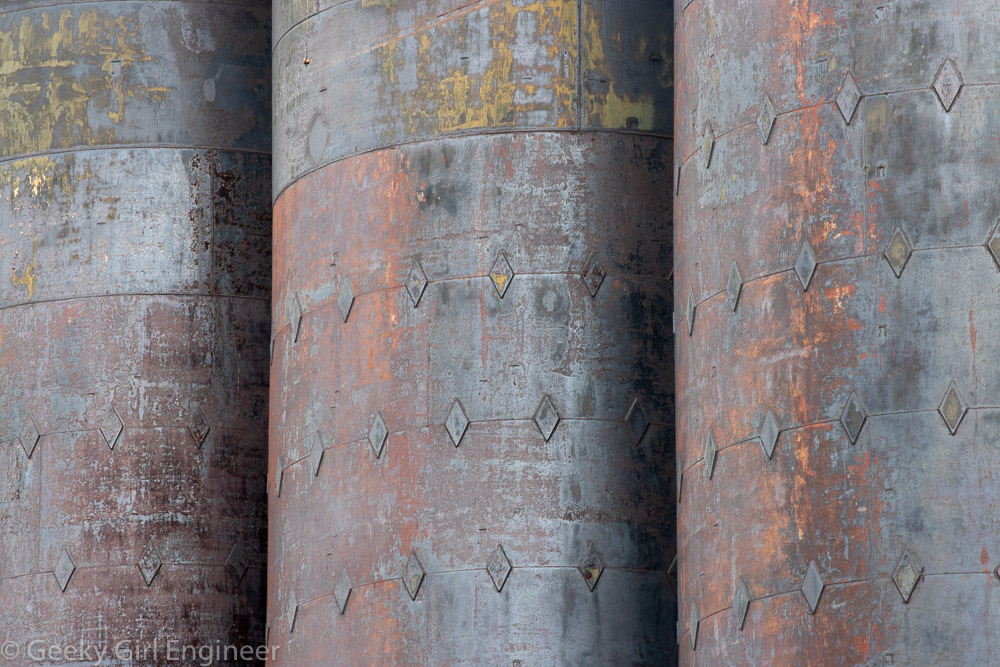
Close up of stoves

Skip Bridge

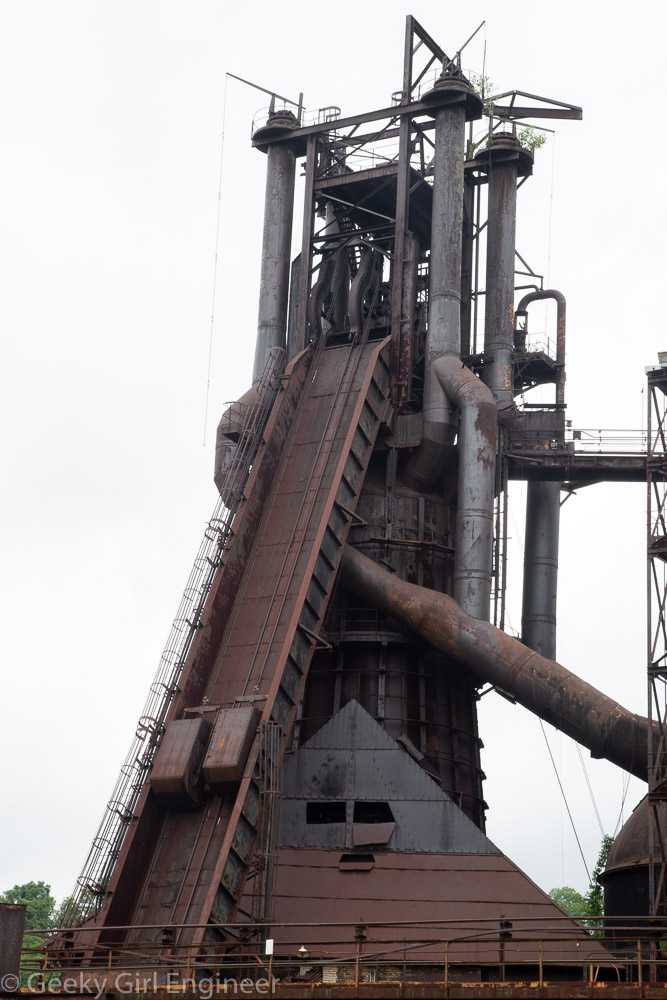
Blast furnace

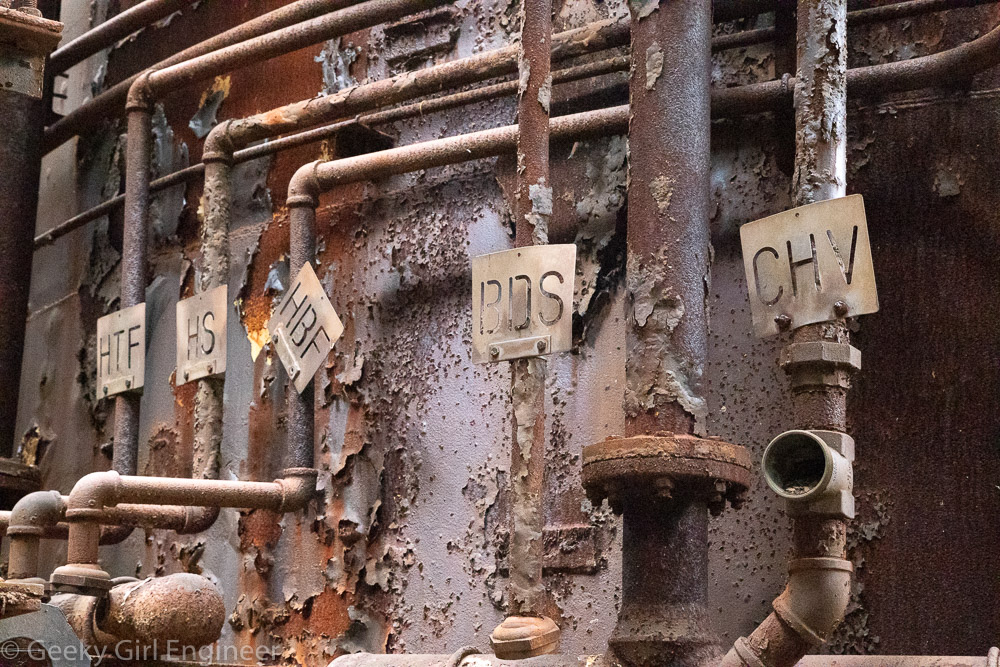
Near stoves

Near stoves

Near stoves

Bottom of blast furnance

Iron notch

Molten iron car

Ellis Island

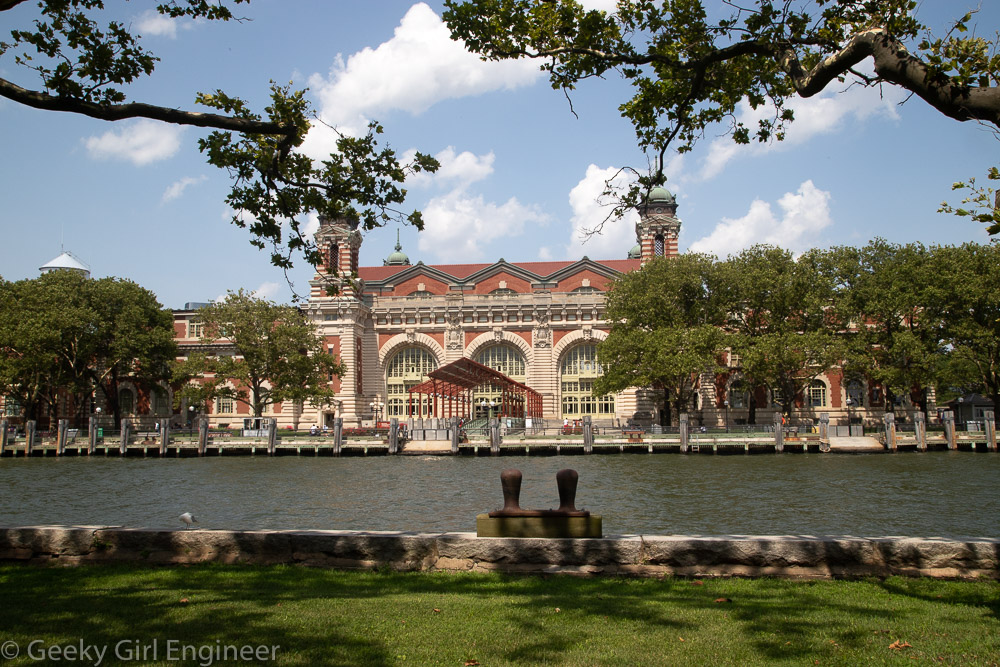
I went to New York City for a quick trip and finally did one of those tourist things that are generally on the last of my list to do. On several occasions, I have traveled to tour a wastewater treatment plant or landfill or some other engineering work, but pure tourist locations are things I go to if I can fit them into my schedule. I visited the Statue of Liberty a couple of decades ago, and I would like to go again. However, for this trip, I visited Ellis Island, partly because they had spots on the hard hat tour of the work being done there available. An interesting historic site plus engineering work definitely fits the bill of my interests. The original Ellis Island immigration building is open including the restored Great Hall (i.e. Registry Room) with numerous interesting exhibits. The hard hat tour however allows you to tour parts of the hospital on the other side of the island that are being stabilized and restored. The buildings are fascinating, especially from a modern viewpoint. [This immediately makes me wonder how someone in 100 years will view our buildings such as hospitals.] I also find the work being done to restore the buildings fascinating. The hard hat tour is a great way for the National Park Service to highlight work that is being done and needs to be done when there is funding. The tour is very informative, but I have to admit the tour could be a lot better. The main problem with the tour is trying to hear the tour guide. There is no audio technology used. It was only how loud the guide talked, and the guide I was with did never bothered to find out if those at the back could hear what he was saying. He rarely waited for everyone to catch up before talking, and as I was generally in the back trying to get photos, I missed half of what he was saying. The audio problem is compounded by the fact that area being toured is an active worksite, so there were also lawnmowers, banging, and other equipment noise in the background. Still, touring the area was fascinating and informative.

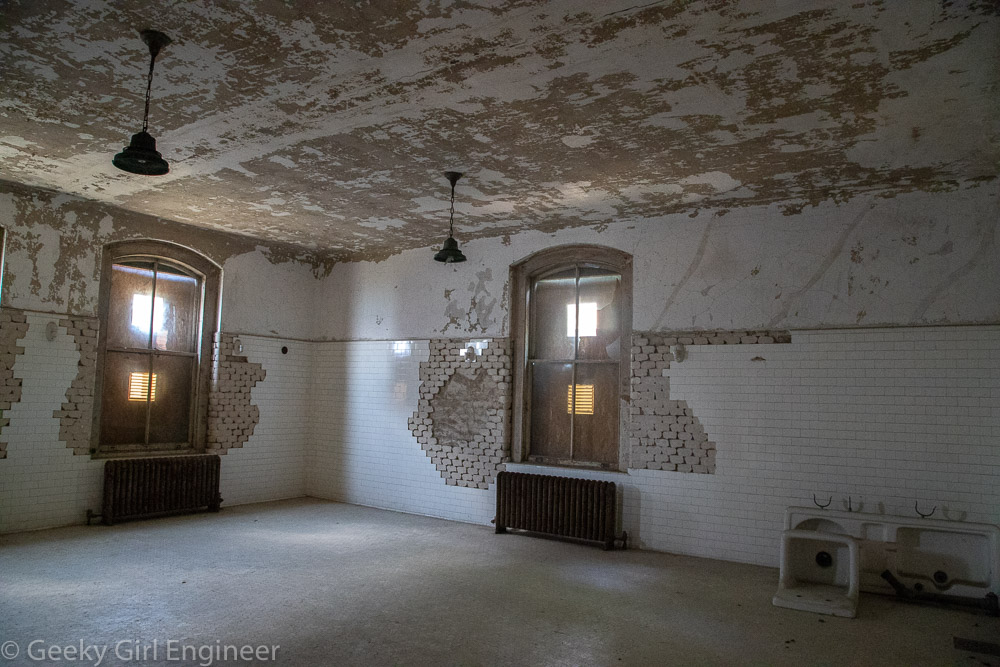
Note with the photos below that most of the buildings being restored have had all their windows covered with plywood that has a small plastic window and a ventilation panel. The plywood prevents the elements from getting in and further degrading the structures, and the window and ventilation panel helps prevent mold from growing inside the buildings.

On hospital side of island looking at the original building where the Great Hall is

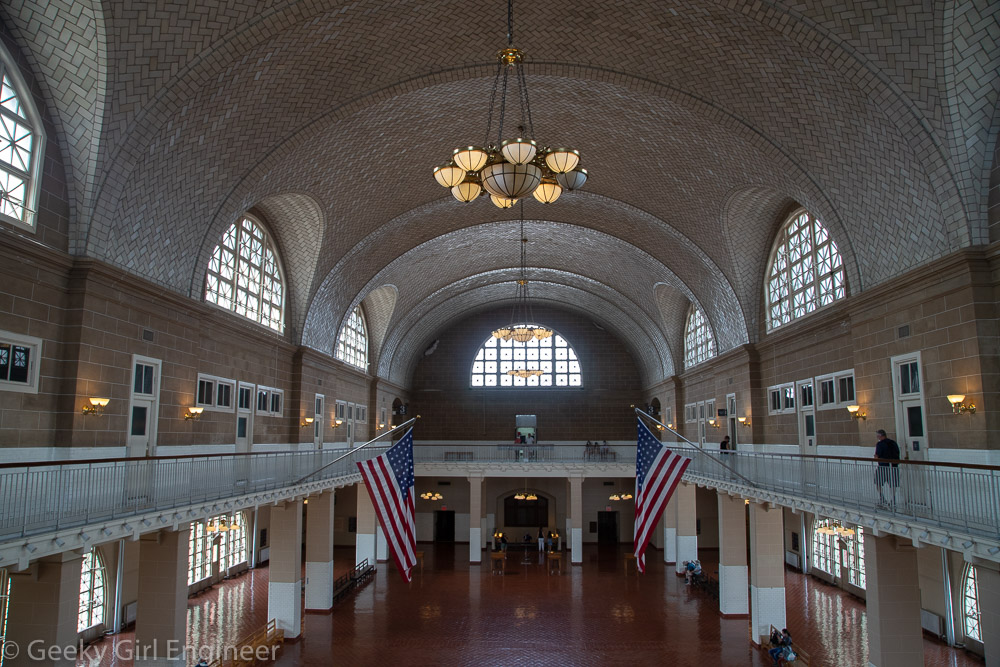
Ellis Island Great Hall (aka Reception Room)

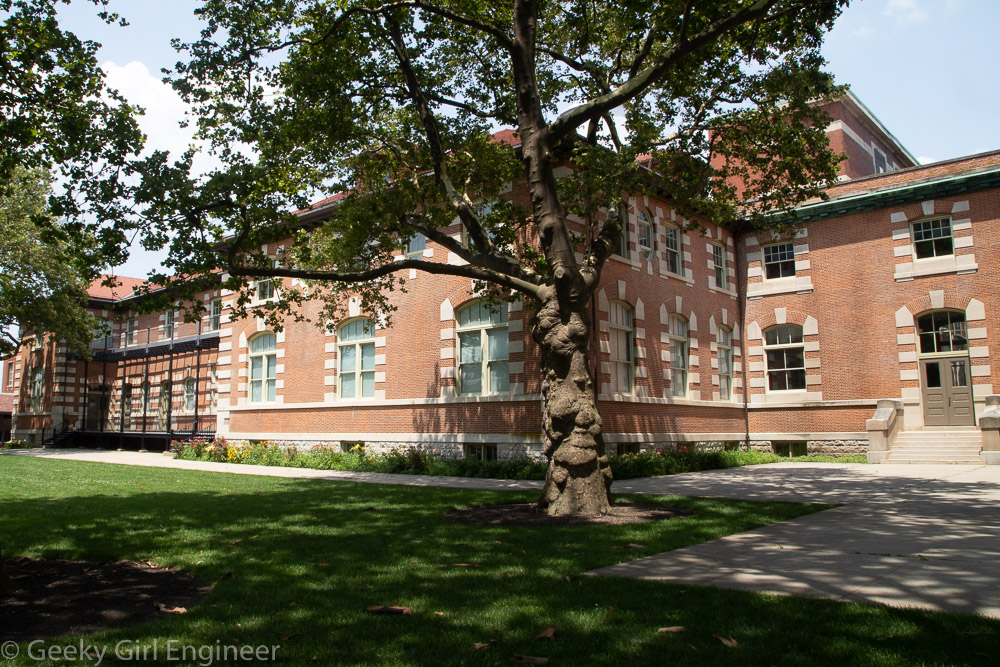
Building on administrative side of island

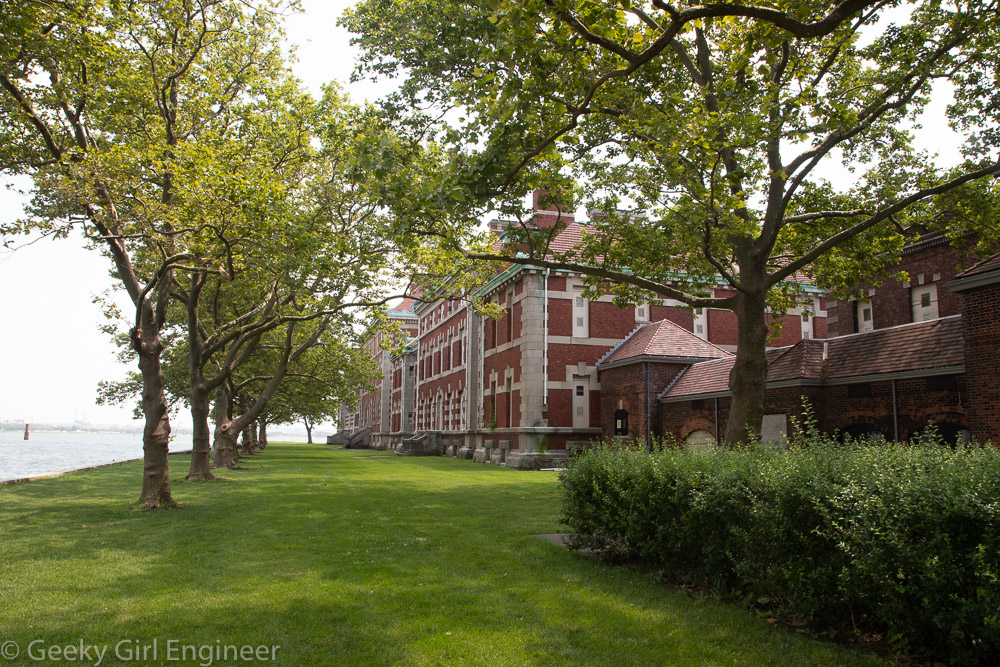
Hospital buildings

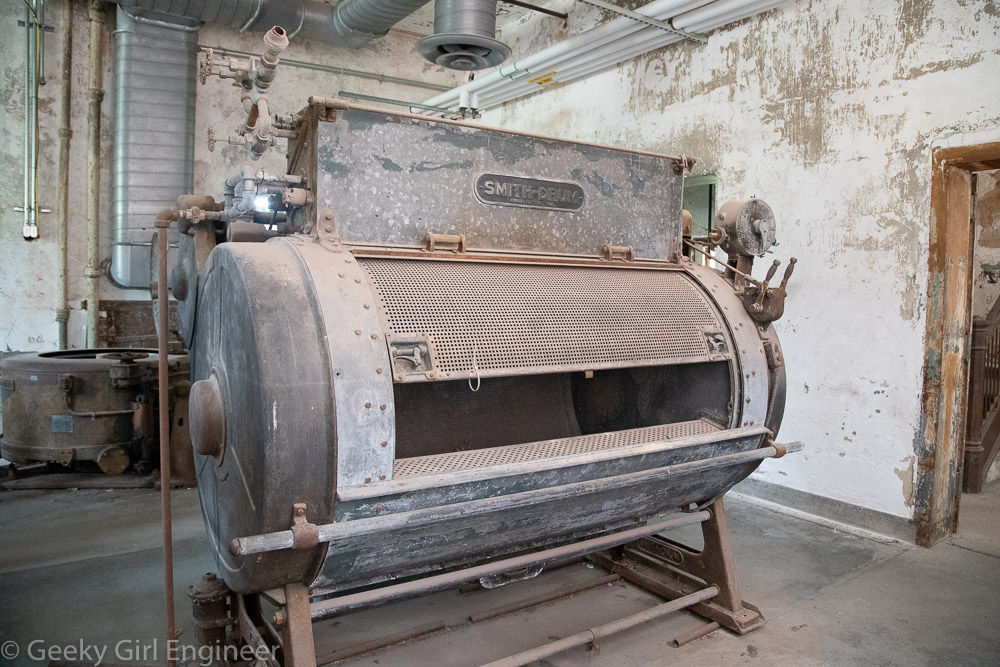
Laundry room

Hospital buildings

Hallway in hospital

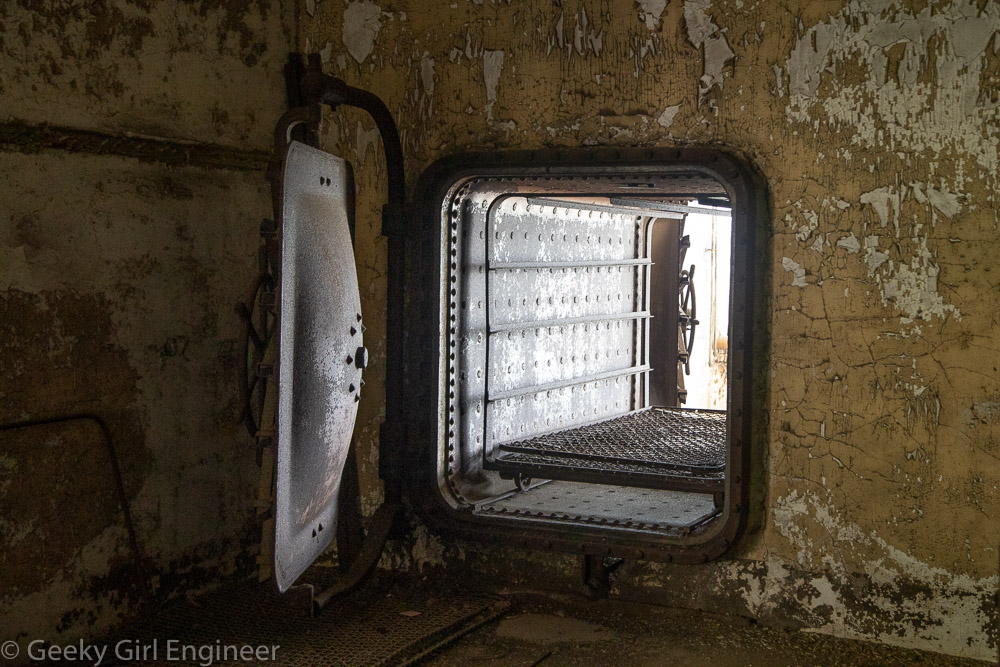
Incinerator

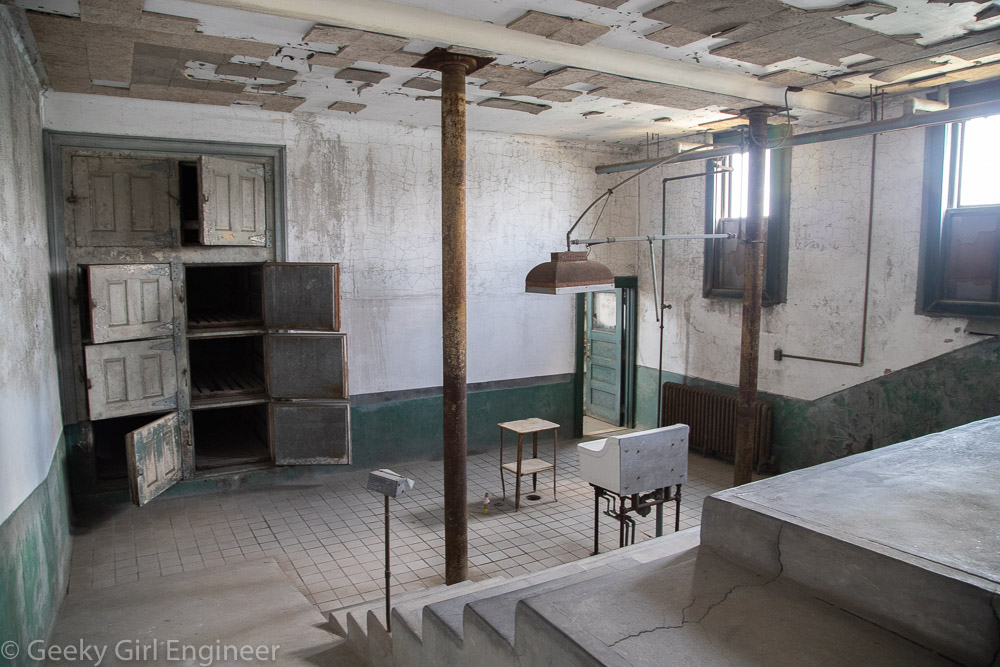
Morgue

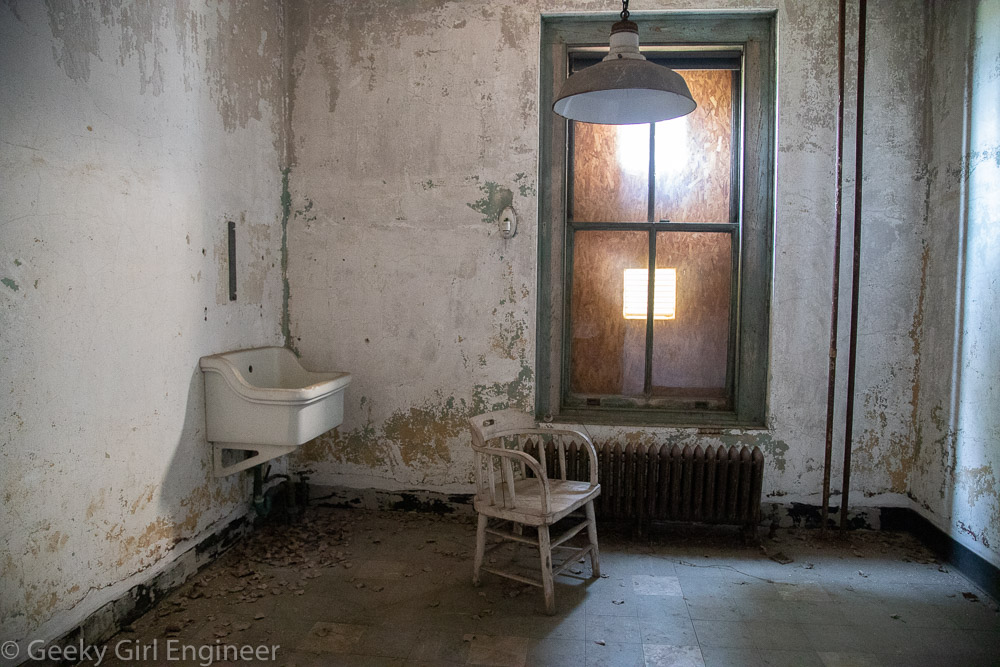
Hospital room

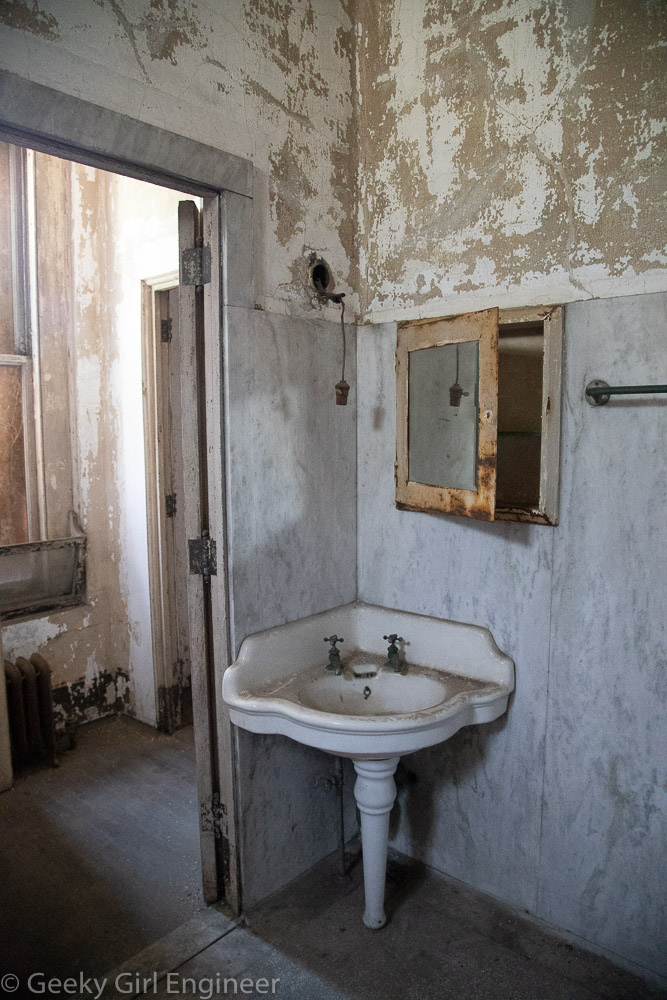
Bathroom in hospital

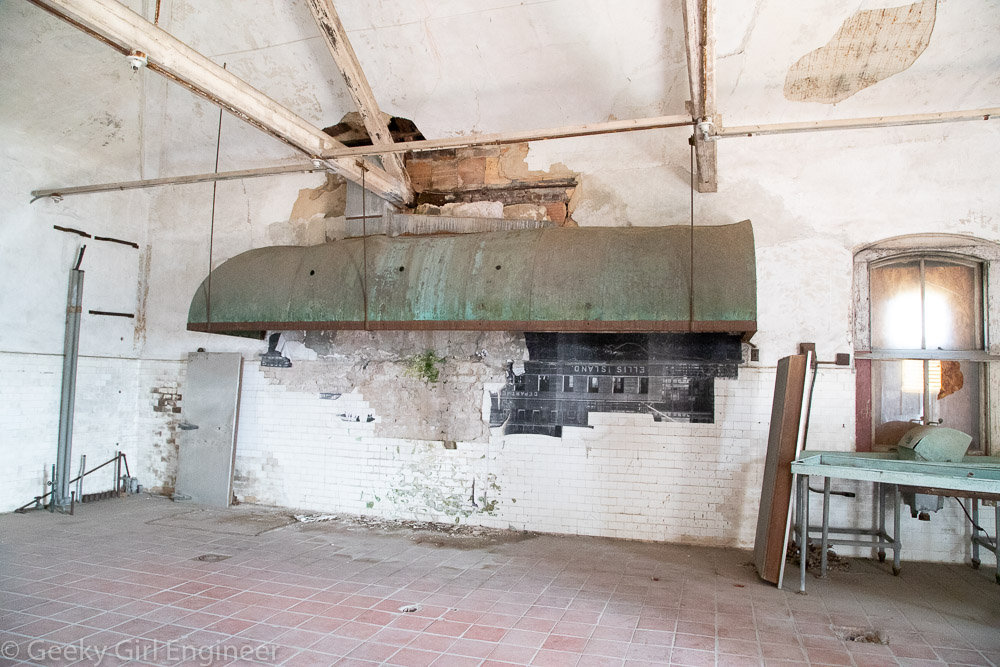
Hospital kitchen

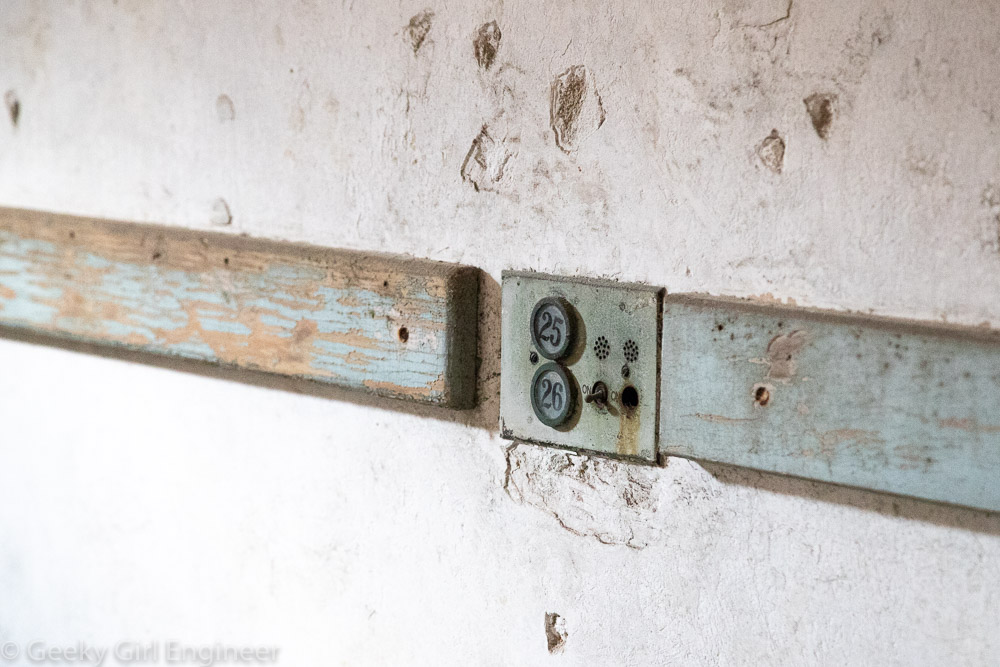
Fixtures in a hospital room

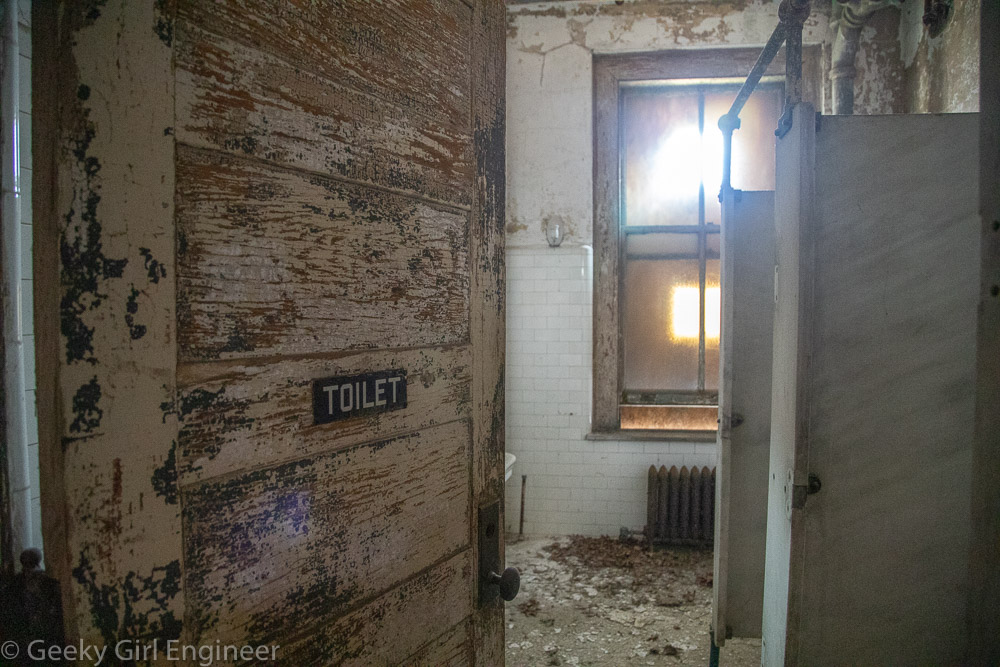
Bathroom in hospital

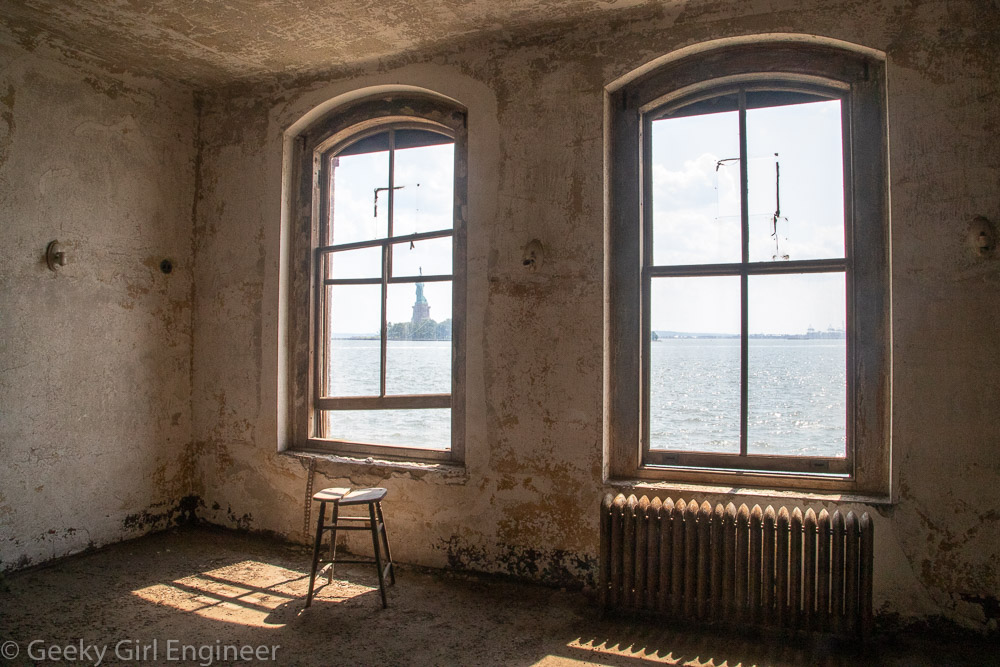
Hospital room looking towards Liberty Island

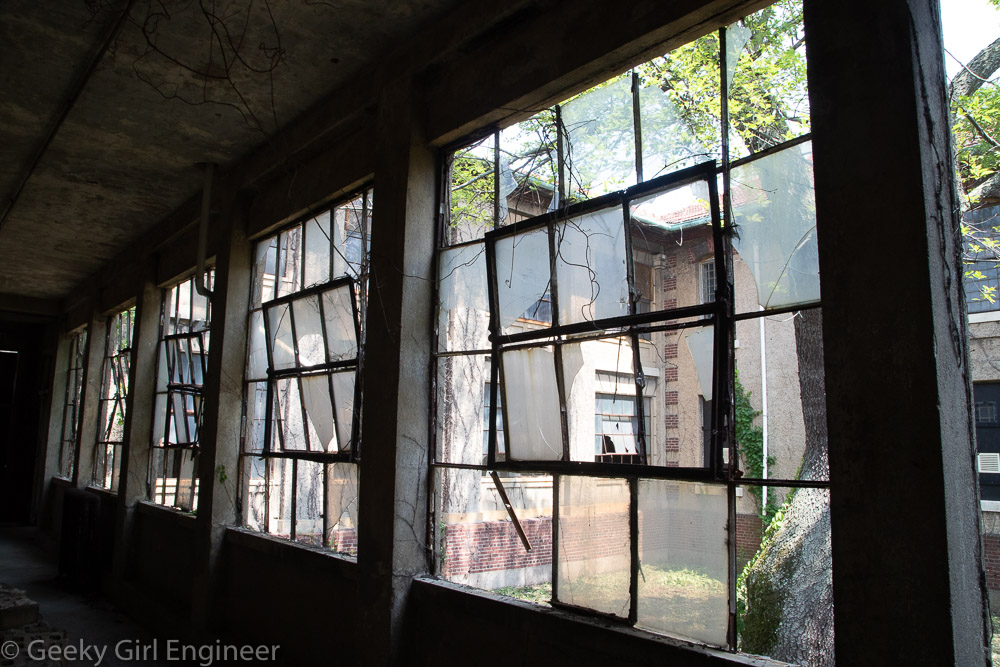
Room in contagious disease hospital

Gold Creek Flume Trail

The rain stopped for just a little bit this afternoon, so we went hiking on the Gold Creek Flume Trail, which is close to downtown Juneau. As far as I can tell, the entire trail is on top of a flume that takes water from the Gold Creek to a hydroelectric plant. With the exception of a small segment where a rock slide seems to be on top of the flume, it is a really easy trail to walk on, as you are on wooden planks. It is a nice hike through the woods with views of Gold Creek below and the mountains above. The western end is where the flume heads down the mountain. The eastern end seems to be where the flume separates from Gold Creek.

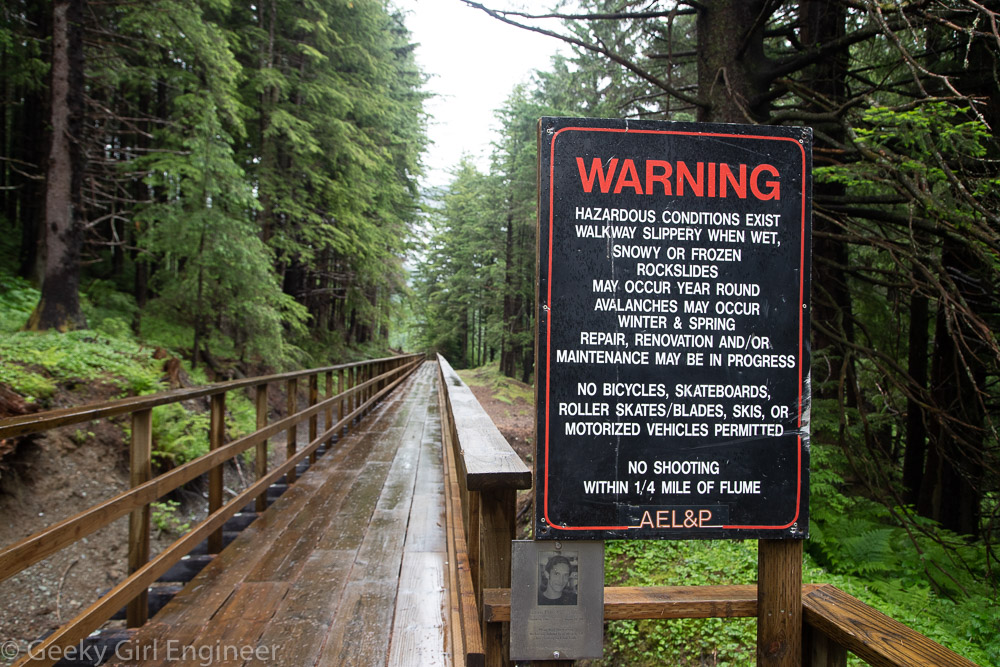
The western end of the trail has a very Alaska warning sign because Alaska. Only missing warning about bears.

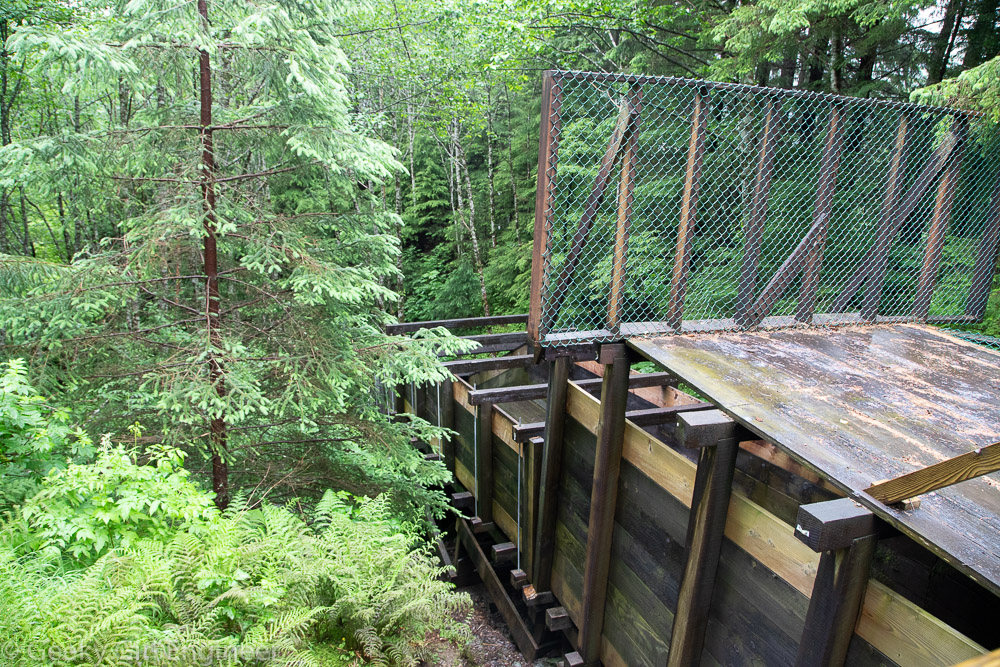
Flume flows down the mountain

Trail is on top of the flume through the woods

Small waterfalls everywhere

Rock slide area

Waterfalls are visible in the mountains and streams are frequent near trail

Eastern end appears to be where flume is separated from Gold Creek

Gold Creek at western end of trail

Risk Reduction Engineering for COVID-19

In response to some discussions I had seen about the use of HEPA filters to help with the COVID-19 crises, I wrote some thoughts on how effective I thought HEPA might be. Several people on Twitter stated they agreed with my statements. An HVAC technician (@JSTootell) provided some thoughts that I had never even considered such as the energy requirements on the buildings where a HEPA filter is installed as HEPA requires more energy (i.e. electricity) to run than normal HVAC filters. He also said the normal air velocity is super low because if you increase the air velocity and hence get more circulation, people complain about the noise of the air through the vents.

Some others have noted that HEPA filters, on a whole HVAC system or portable units in each room, won’t hurt to which I agree. One said they should be a part of a multiple layer approach to prevent the spread of COVID-19 to which I also agree. In fact, while I did not say it, that is part of my argument, HEPA filters alone will not solve the problem of COVID-19 transmission. I want to take a step back though and discuss this from an engineering perspective.

The basic, general idea in engineering is you find out what your design specifications are, you make some calculations and draw some designs to comply with those specifications based on proven information, you throw in some safety factors, and then you build whatever it is to comply with your design and calculations. If you want to build a bridge, you need to know before hand what are the design specifications. Is it for trains, vehicles (cars and trucks), pedestrians, or something else entirely? How many of the intended type of users will be crossing the bridge daily? What is the span of the bridge? What is the height of the bridge? What type of weather will the bridge will be exposed to? There are far more questions, but that is the general idea. You can’t design a bridge until you know what you are designing.

I currently work in human health risk assessment related to exposure to hazardous chemicals. It is not the same as risk assessment related to exposure to infectious agents, but there are similarities. With hazardous chemicals, the goal is to reduce people’s exposure such that they are not at undue risk to the chemical exposure. You can’t reduce risk to zero; it is simply impossible. With chemicals that cause cancer, generally you are trying to get the risk below one in a million chance of cancer caused by exposure to that chemical. Another part of this is who is at most risk. With chemicals, the people we are generally most concerned with are children or pregnant women as they can be more susceptible to harmful effects than healthy, non-pregnant adults. The risk requirement is one of your design requirements. If a person can be exposed to 100 mg/l per day (via ingestion) or 100 mg/g (via inhalation) of a certain chemical and not be above one in a million risk of cancer, then you have to figure out what needs to be done at a contaminated site or with contaminated drinking water to get their exposure (and thus risk level) below that number. This could mean filtering water or removing topsoil at site (to avoid incidental ingestion of contaminated soil or to avoid breathing in soil particles). What kind of treatment and how much treatment is needed to get below that concentration? That is one of your design requirements. Similarly the design and operation of water treatment plants is based on cleaning water such that the water has less than some amount of a contaminant before it is sent via pipes to the customers. Design requirements from water treatment plants is generally based less on risk calculations and more on state and federal requirements for contaminant levels in drinking water. These federal requirements are called Maximum Contaminant Levels. Water treatment plants must meet these requirements, and they are designed to prevent the people who drink that water from getting sick from microorganisms or chemicals in the water.

This leads me to designing a HVAC system with HEPA filters or the use of portable HEPA filters in buildings to protect against COVID-19. In order to design a system, you have to know the design requirements. It is absolutely fine to say you want to reduce virus particles in the air and reduce transmission, but that is not a design requirement. Reduce is a vague, qualitative word. Engineering requires quantitative requirements. If you only want to reduce particles in the air, then you will only reduce the risk by an unknown amount with no clarity on if that reduction is an acceptable amount to the occupants of the building. Reducing risk could mean that instead of 30% of the occupants of a building getting sick, only 20% do. I personally don’t find that to be an acceptable reduction. A design requirement is based on what concentration of virus particles can be in the air and no person gets sick from COVID-19. Perhaps your requirement would not be that stringent, perhaps you would be ok with one in a thousand people getting sick from COVID-19 based on the design. The design requirement can be based on people wearing a mask or not wearing a mask. Maybe with everyone wearing a mask indoors, they can be exposed to 10 virus particles per hour, but without a mask, they can only be exposed to 2 virus particles per hour. This is where infectious disease experts are needed to provide information as to the pathogenicity and virulence of the pathogen, which in this case is COVID-19. An engineer designing a HVAC or some other filtering system for a building is not the person to decide what those design requirements are. They need the infectious disease experts to state what concentration of a pathogen a person can be exposed to without getting infected. The concentration may be zero. The problem at this point is I don’t think we know how much COVID-19 a person can be exposed to without getting sick. Thus, if we don’t know how much COVID-19 a person can be exposed to without getting sick, how can we possibly design a system to prevent a person from getting sick.

I can already hear arguments that we just need to do something. We need to accept some risk but do some things to reduce risk, so we can get things back to normal. I don’t think most business owners are going to be willing to spend a non-negligible amount of money on some design that will simply reduce risk to an unknown and unproven amount. For a place of employment or a school, is it reasonable to ask people, especially children, to return to a building with an unknown risk if a system has been put in place that reduces the risk an unknown amount? How much money should employers and educational boards spend to reduce risk an unknown amount? If you are willing to accept some risk, then why spend money on something that may reduce risk by some unknown amount? Everyone is already spending money on masks, gloves, hand sanitizer, etc. which at least has been proven to reduce risk, but not eliminate it, by a reasonable degree from a cost benefit perspective. I spent $20 or something on two reusable cotton masks that I wash after use. That is a very reasonable cost benefit amount from my perspective even though I can’t calculate the risk reduction of the mask. How much money is reasonable to invest in either a whole system HEPA filter or portable HEPA filters when the risk reduction is unknown? An extremely quick internet search provides options for portable HEPA filters from $200 to $1200. Should schools buy one per classroom, even at the low price end, when there is no data to show they would reduce risk at all? The point is, reducing risk is good, but if you going to invest money to reduce the risk, it would be prudent to determine how much the risk is actually going to be reduced before you do it.

HVAC, HEPA, and COVID-19

I recently saw some discussions on Twitter about the usefulness of HEPA filters in schools and other buildings to protect the building occupants against COVID-19. There seemed to be a general agreement that HEPA filters could lower the virus particles in the air, but there was not agreement if this would help lower transmission of the virus and infections. There seemed to some non-biological scientists and engineers arguing that it would definitely lower transmission. Others wanted trials and tests. It was simple some said, less virus particles, less transmission. I am engineer, and I found these statements to be rather narrow thinking in consideration of transmission.

I want to explain more fully the flaws I see in the idea that HEPA filters will definitely solve the problem or will greatly help. I need to state first that I am not an HVAC engineer. HVAC by the way, stands for heating, ventilation, and air conditioning. HVAC engineers are the people who design the ventilation systems for buildings. They are also to blame for women always being cold in buildings by the way. The air conditioning design is based on old calculations that involve men in buildings, but I digress. However, my Bachelor’s degree is in chemical engineering, which means I have a good background in fluid flow. Air flowing through a building is fluid flow. Not the kind I normally work in, but fluid flow nonetheless. Also I am not an industrial hygienist. These are the people who figure out how to keep workers safe. I don’t think normal office workers and definitely not school children are their normal scope of work, but they could offer informative thoughts on this.

First, what is HEPA? HEPA stands for high-efficiency particulate air, and HEPA filters are basically really good air filters. Some technical information on them can be found on U.S. EPA’s website. I have really bad allergies, and I have a whole house HEPA filter installed in my house’s HVAC system. There is an initial mesh filter, a giant honeycomb type filter that traps particles then a panel that zaps the air with electricity to kill things. I clean it a couple of times a year. I still sneeze.

For the sake of argument, let’s say that HEPA filters remove all viruses, including COVID-19. For a HEPA filter to work, the virus has to get to the filter. Now we need to think about air flow in buildings, and how the air is going to get to the filter and more importantly how fast the air is going to get to the filter. Most modern non-residential buildings are designed with air ducts and other infrastructure (water and waste pipes, electrical cords, network cords, etc.) overhead in the space between floor above and the drop down ceiling with somewhat ugly acoustical tile. Think of all those movies and tv shows where a character goes into the ceiling and crawls around in the HVAC duct work to get to wherever to save someone or steal a jewel. Thus, in general, all the duct work is overhead, and so the inlet vents, the vents by which the air flows into a room, and the return vents, the vents by which the air leaves the room area, are all overhead. When air leaves the room, it flows back to mechanical works that cool or heat the air. This is where filters, HEPA or not, generally are. The air then goes to a blower which sends it back to the building and its occupants. In a house, the inlet vents are generally in the ceiling or the floor (in my house they are in both depending on the room), and the return vents are often in walls or ceilings. The vent where you place the air filter is the return vent. Thus in most houses, you filter the air after it leaves the room and before sending it to the mechanical works for heating or cooling.

That is the basics of building ventilation. Consider a classroom. Consider if ten children and one teacher are in a classroom, and one child is infected and coughs. Consider the air flow in the average classroom. When the child coughs, the aerosols, droplets, virus, spread out from the child. Unless the HVAC system is pulling the air up and out of the classroom continuously with really good suction, the virus can still easily spread to nearby people. Also, I want to emphasize the word “up” in my previous sentence. It depends on where exactly you are in the room as to the actual direction of airflow. In the office building I normally work in, my cubicle is directly beneath an inlet vent. I know this because I can look up and see it, and because I am always freezing, and because I can hear it when the air blower turns on. Air blows down onto me then outward to the side then pulled up a couple of yards away where the return vent is. I have not mapped out the exact airflow in the building, but you can feel it and make guess based on where the inlet and return vents are. In the vast majority of buildings, you do not feel a breeze. The air is not flowing at a high enough rate for paper to fly away. If paper is not flying away, the virus is probably not either. In my two-story house, there are two return vents, both in the halls. Air flows into the bedrooms, living rooms, etc. into the hall. If two people are in the living room, and one coughs, the cough is going to go out from the person and potentially right by the other person before it ever flows to the return vent. Also, like most houses, my air blower is not on continuously. The air is not always flowing. The same for office buildings. Buildings are designed differently, but I can definitely hear it when the air kicks on, which means it is not always on. If the air blower is not on, the air is not flowing, and virus, particles, etc. are not being pulled out of the space.

In graduate school, I worked in a brand new laboratory building. It literally opened the second year I was there. There was a common area with places to sit, talk, and eat and passages to the adjoining buildings. Off of the common area, where two halls that led to the laboratories. The building was designed for negative pressure. Air flowed from the common area to the halls then to the laboratories. It was perceptible. The doors to the halls, which required a card to open and swung open into the halls, would pull in because of the pressure they were under. You had to physically push the entry door back into place or an alarm would go off. The exit door, which swung open into the common area, would slam shut from the pressure. [Whether or not the negative pressure was too high is debatable.] The building was designed this way so that the volatile chemicals and infectious agents that we worked with in the laboratories would not get into the common areas and expose people. In the laboratories themselves, there were other precautions to protect people inside.

Normal office buildings and schools are not designed this way. They are not designed to be under continuous negative pressure. They not designed to be continuously pulling air away from the occupants. To a certain degree, they are designed to push air onto the occupants. If one person coughs, depending on where they are in the room and the air flow at the time, I would argue that the ventilation may help push the cough droplets from one person to another.

HEPA filters might be able to help solve the COVID-19 problem, but we need studies to show that they can. HVAC engineers and industrial hygienists would need be part of the solution and consider the design of buildings. Independent of COVID-19, HEPA filters are not a bad idea. However, they require more energy to use. Also, consider the time and expense of installing HEPA filters in all the buildings. You cannot just stick one into the system if the system is not designed for it. If it will solve the problem, most of us would say it is worth it, but it is not a problem that can be solved in a day or a week.

If I got anything wrong above, I welcome HVAC experts or filtration experts commenting below.

Edited to add: Someone who read my post stated that portable HEPA filters is what they are suggesting, not whole system filters. My argument remains the same. Assuming they mean one portable HEPA filter per classroom, if the filter is right next to the sick child, it might work. However one of the problems with COVID-19, is you don’t necessarily know who is sick. If the sick person coughs on the other side of the room as the HEPA filter, the portable filter, is going to pull the droplets from the cough across the room to the filter, potentially right by other people. It depends on how fast it pulls the droplets as to if another person would have time to breathe in the droplets, or for the droplets to land on their face. You really need studies to see if this would be effective.

PPE Basics

People are scared by COVID-19. This is understandable. Some people have started wearing personal protective equipment (PPE), mainly masks and gloves, although some are going for bonus points PPE like protective overalls, because they think the PPE will help protect them from COVID-19. It may, but it may not. I thought I might present just a few basics points for people who don’t normally wear to consider about wearing PPE.

What do I know about PPE you may ask. I am engineer and scientist. I have worn PPE in the field when taking environmental and industrial hygiene samples including soil, groundwater, urine, blood, air samples, and more. To earn my Ph.D., I worked in a lab that handled both chemical and biological samples. That is, one day I might have been handling urine or blood and needed to protect myself from pathogens, and another day I might have been handling chemical samples (or more likely part of a biological sample that had been placed into a chemical for processing) and needed to protect myself from chemical hazards. I am also HAZWOPER certified, and as part of the training, you have to dress in Level A and Level B PPE.

The most basic thing you need to know about PPE is first that PPE is essentially anything you wear that protects you from a hazard. In some places, jeans and long sleeves are PPE because they cover your skin from minor hazards. Steel-toed, leather boots are PPE that I have worn on a frequent basis when in the field as they protect my feet from many physical hazards including in at least one location I was working, rattlesnakes. [Not a hazard I was expecting on that site inspection, but, well, Texas.]

The second most basic thing you need to know about PPE is that it is not magical. PPE has to be worn correctly, and the correct PPE must be worn. For example, not all gloves protect against all hazards. In most of my work, I have worn nitrile gloves. Nitrile tent to be preferred over latex. The minor reason is potential latex allergy. However the main reason is that nitrile protects against more chemicals than latex. For most of my work, it is chemicals for which I need to protect myself. Most gardening gloves will protect you against some physical hazards like prickly vines, but they will not in general protect you against chemicals like pesticides you might be applying.

On the subject of gloves, gloves do not kill bacteria or viruses. If you are worried about viruses getting on your hands because you are touching a grocery cart for example, and so you decide to wear nitrile gloves, if you dispose of the gloves after touching the grocery cart and don’t touch anything else, then gloves may have protected you. However, if after touching the grocery cart with the gloves, you then touch your phone or your face with the gloves, then the gloves have done you no good. You have just transferred any viruses from the grocery cart to your gloves to your phone or face, just as efficiently as if you had not worn gloves. A week ago, I went to Costco and went first to the bathroom. When I was washing my hands, I noticed a woman washing her hands while wearing latex gloves. I simply don’t want to know what else she touched with the gloves before doing this or after.

A final note about gloves, there is a definite technique to how to remove them. The goal is to remove them without touching the outside of them. There may possible be another way, but the best way I have found to do it, is place one gloved finger on the outside of the other hand’s glove, near the wrist and carefully pull that other hand’s glove off, sort of rolling it off. Then with the now glove free hand, place your ungloved thumb under the other glove near the wrist and pull that glove off. Easier to show than explain.

Masks and respirators are designed for different types of protection, and it is critical that they be worn properly and for the correct use. Surgical masks are really more to the protect the patient from the surgeon sneezing or coughing on them than to protect the surgeon from the patient. Surgical masks can protect the wearer from splashes or larger droplets or to a certain extent large particles, but that is about it. Surgical masks do not provide even a decent seal around the face, so they do not protect from airborne viruses, bacteria, chemicals, or even small particles. If you don’t believe me, believe the FDA.

The now popular N95 masks can protect against some particles, viruses, and some other things if worn correctly. First, it is important to consult the manufacture’s information as to what they are designed to do and not to do. Second, it is critical that the wearer has a good seal. What does that mean? It means the edges of the masks must fit snugly against the skin for the entire perimeter of the mask. Men, you have to be clean shaven. Even an evening stubble will prevent the seal. N95 masks have a piece of metal that goes over the nose. That metal needs to be adjusted to get a good seal over the nose. Both elastic bands for the mask must be used to increase the fitness of the seal. Finally, masks get saturated. They can only be worn for a certain period of time before whatever you are breathing in breakthrough the mask.

I can’t emphasize enough how critical seals are. When I was graduate school, for the field work I was doing, I needed to be able to use a half-face respirator. That required me to first get medical clearance to wear the respirator. Second, I had to be fit-tested for the specific respirator I was going to wear. Different manufacturers make different size masks, and they don’t generally agree with each other. Hence I was fit-tested to wear a specific manufacture’s specific sized mask, and that was the one I wore throughout my field work.

Finally with respirators and masks also, the manufacture will state what the respirator or mask is designed to protect you from. If you go to a hardware store and look at respirators, you will notice that some respirators are for lead, some for particulates, some VOCs, and some will do a combination. A mask to protect from VOCs and PM10 is common. If you are going to work with VOCs, and you get one that is only for PM10, you will not be protected at all. Cartridges for respirators have to be changed frequently. Every two weeks is a common changeout time.

Those are the basics. There is really a lot more to understand about PPE, but those of the initial basic critical points to understand if you are thinking about wearing PPE to protect you from a virus or other hazards.