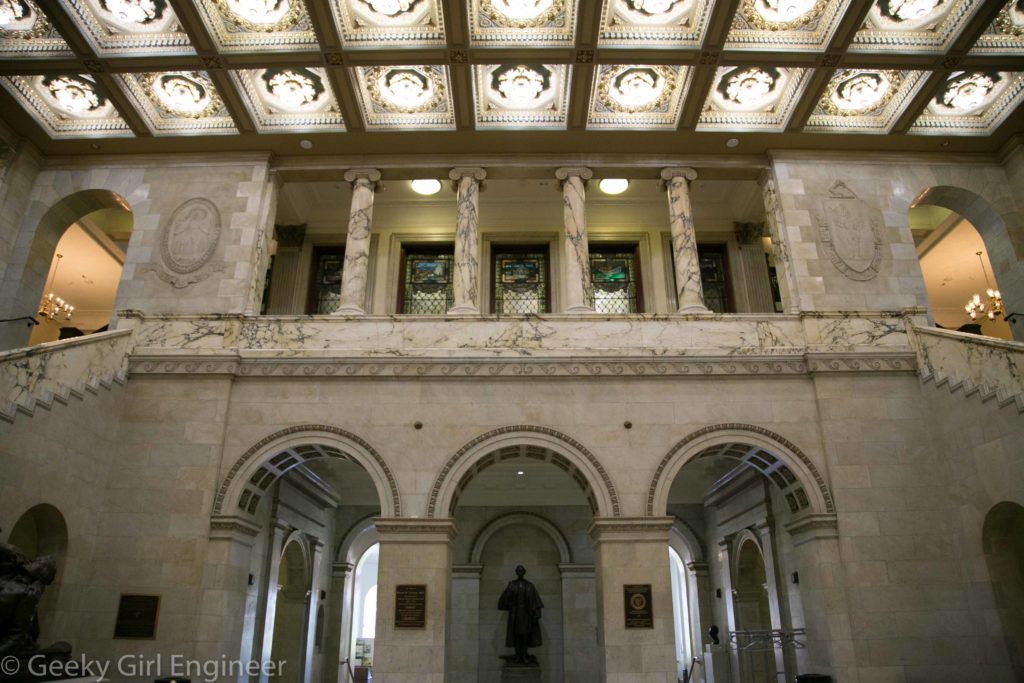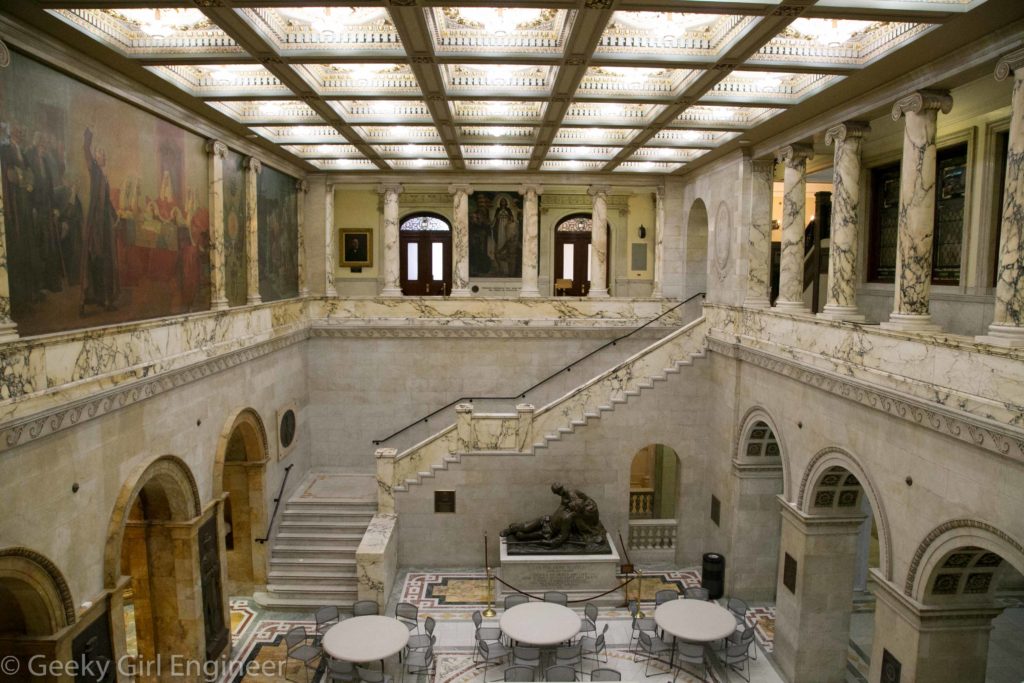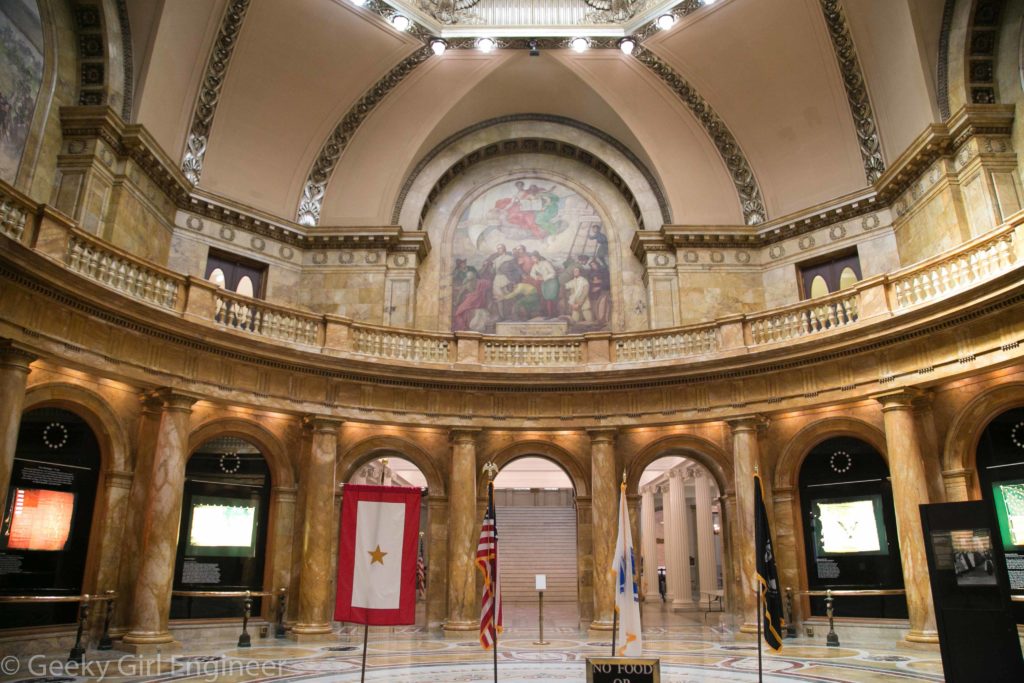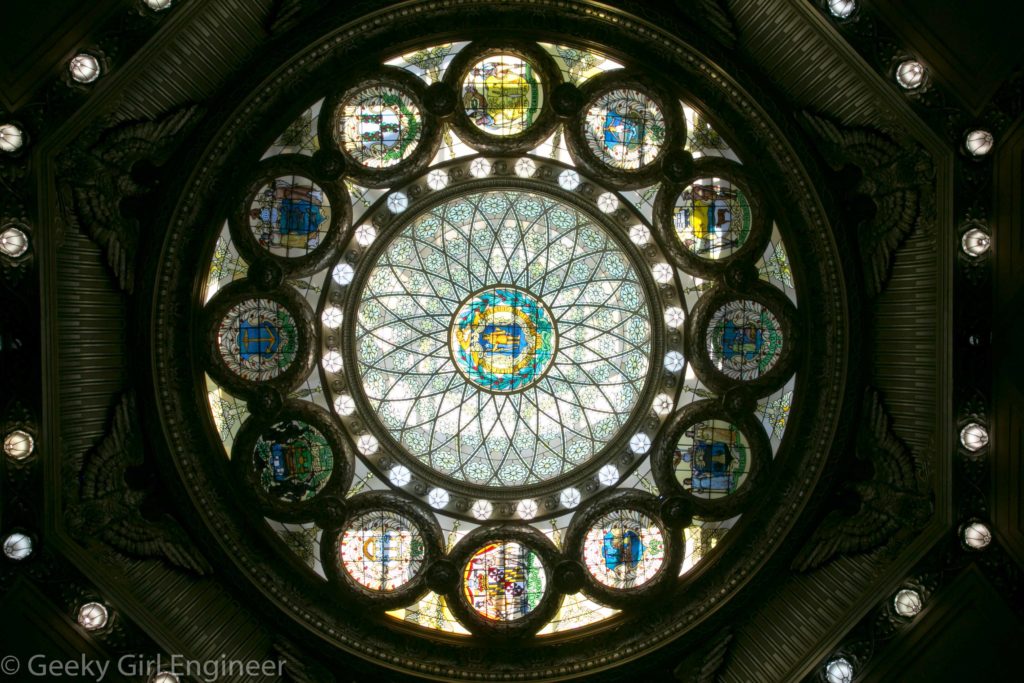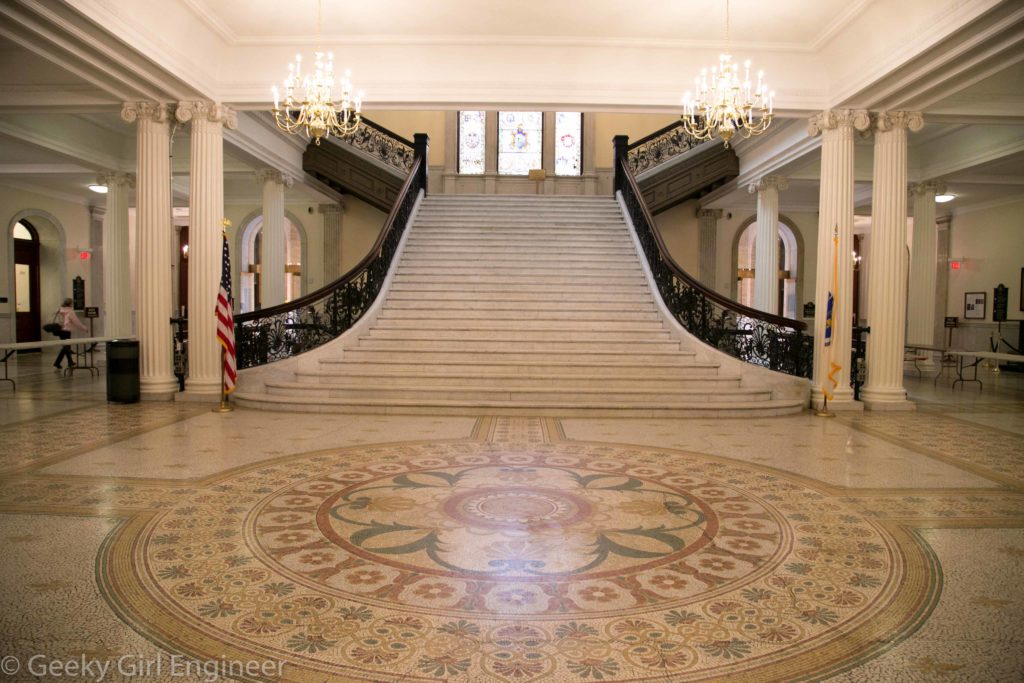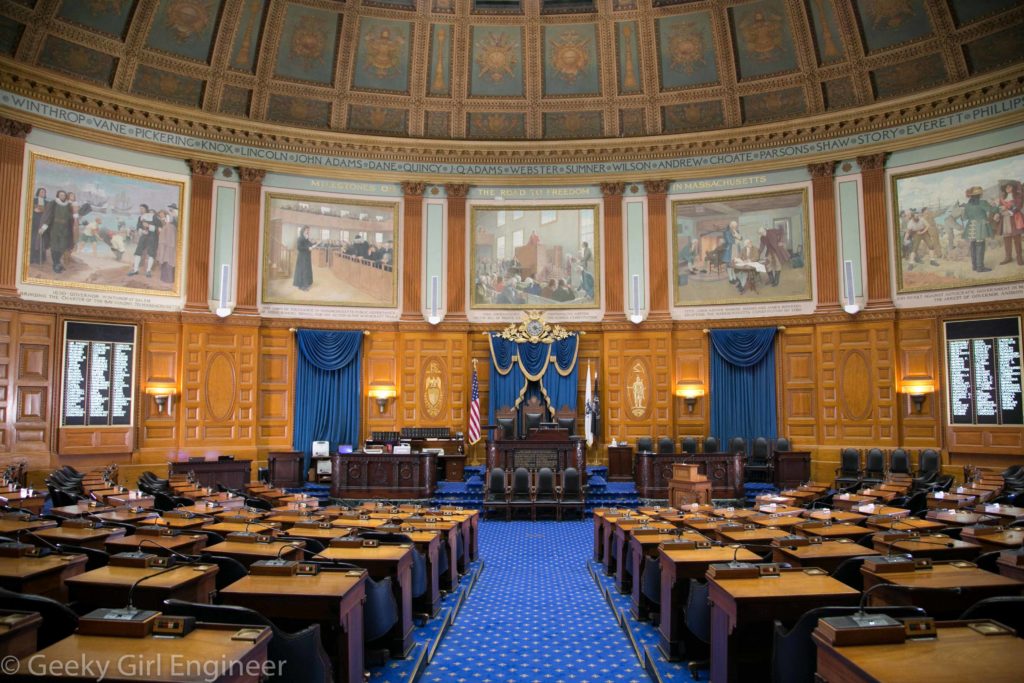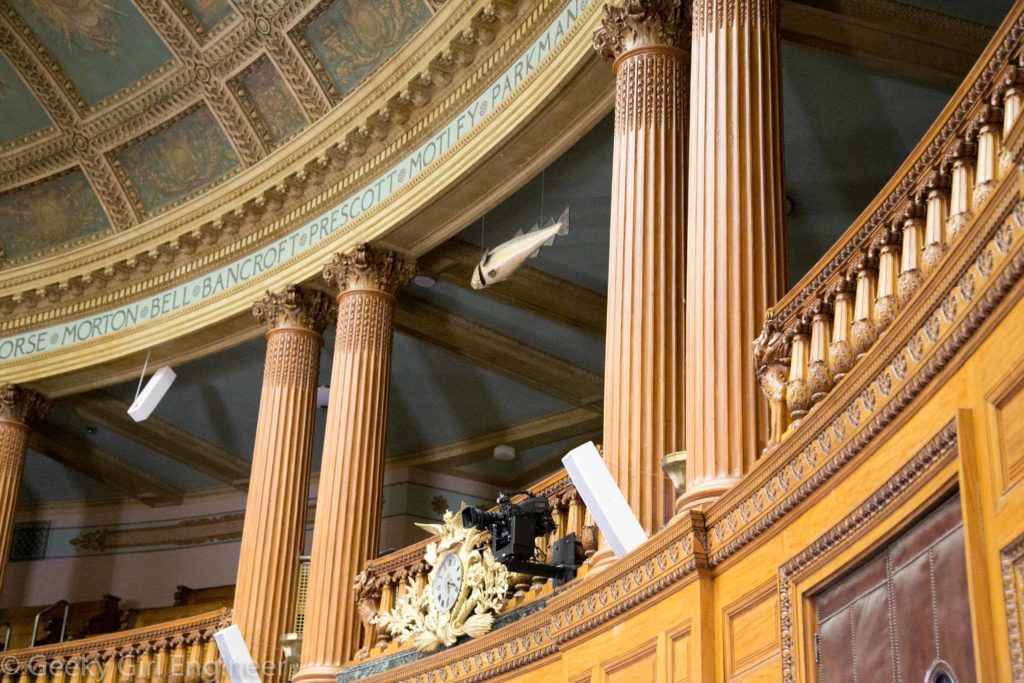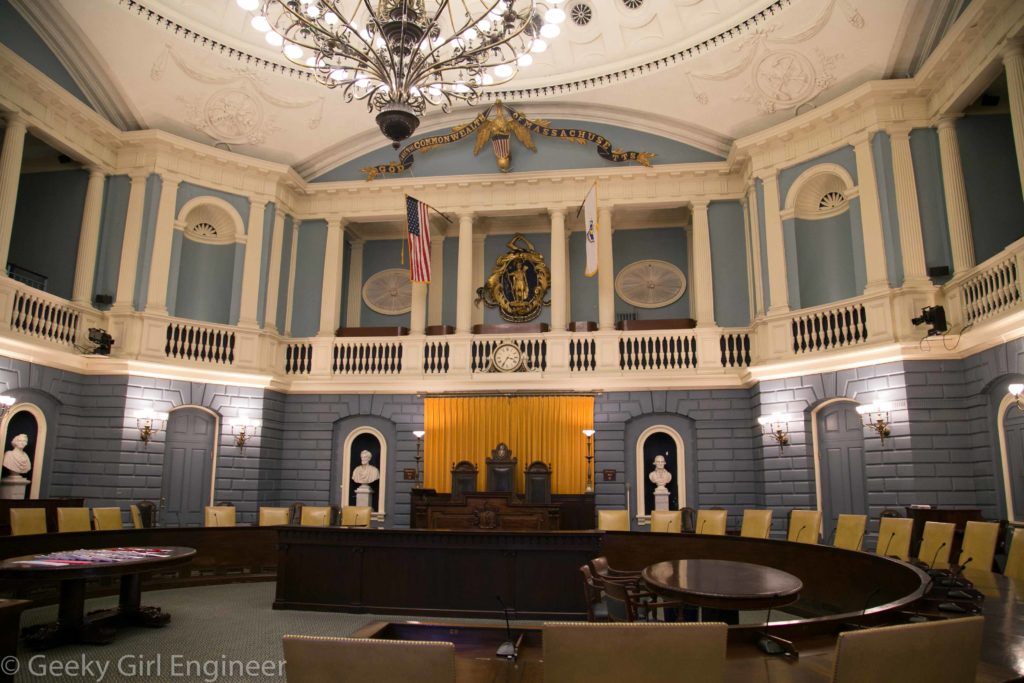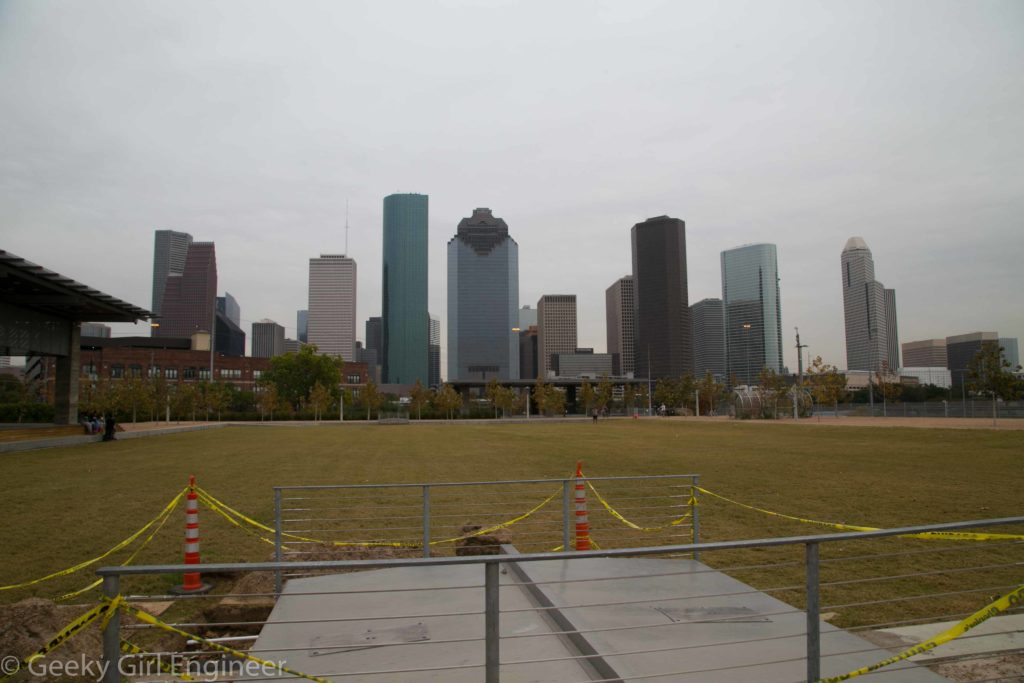
I have a goal to visit all 50 state houses. I am in Boston for a few days, so I was able to visit the Massachusetts State House. The State House is very pretty with a whole lot of marble. There is a definite sea theme in it, with waves and fish in many different areas. There is a large fish in both the House of Representatives and the Senate Chamber. The main portion (or pretty area as one worker there called it), is smaller than I originally thought it would be. However I guess the actual working area is generally more functional, not as pretty.
Tag Archives: Photography
Quechee Gorge
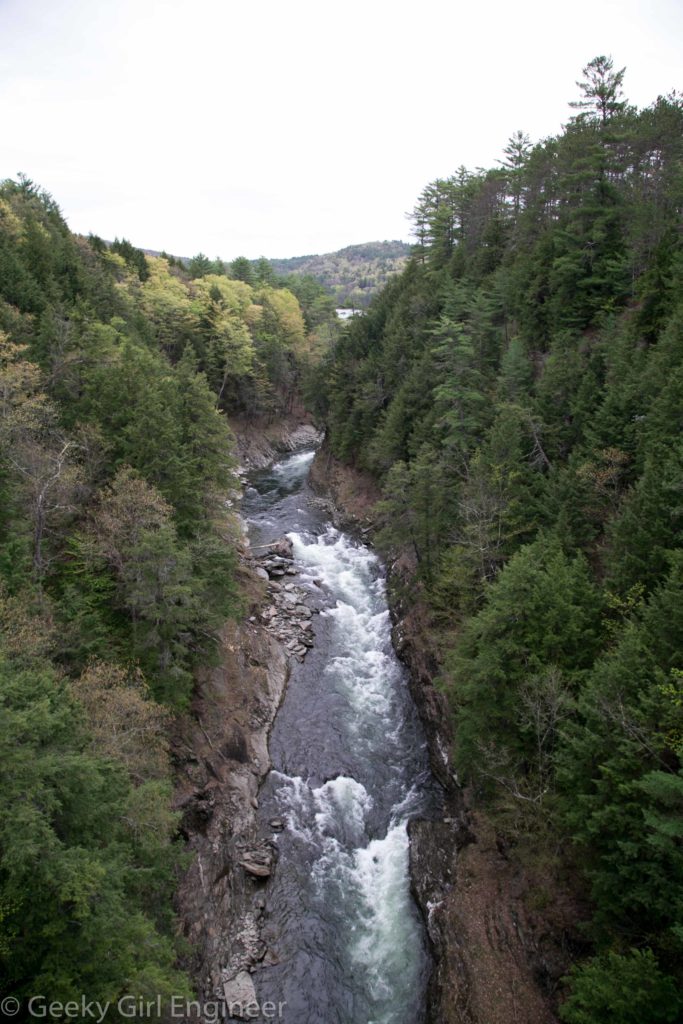
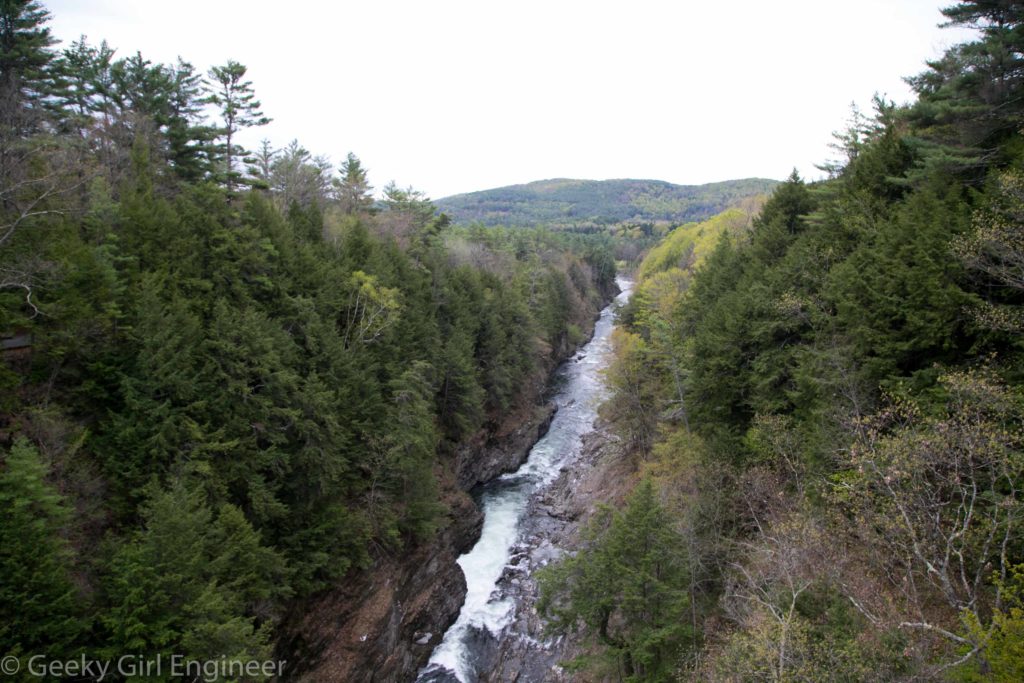
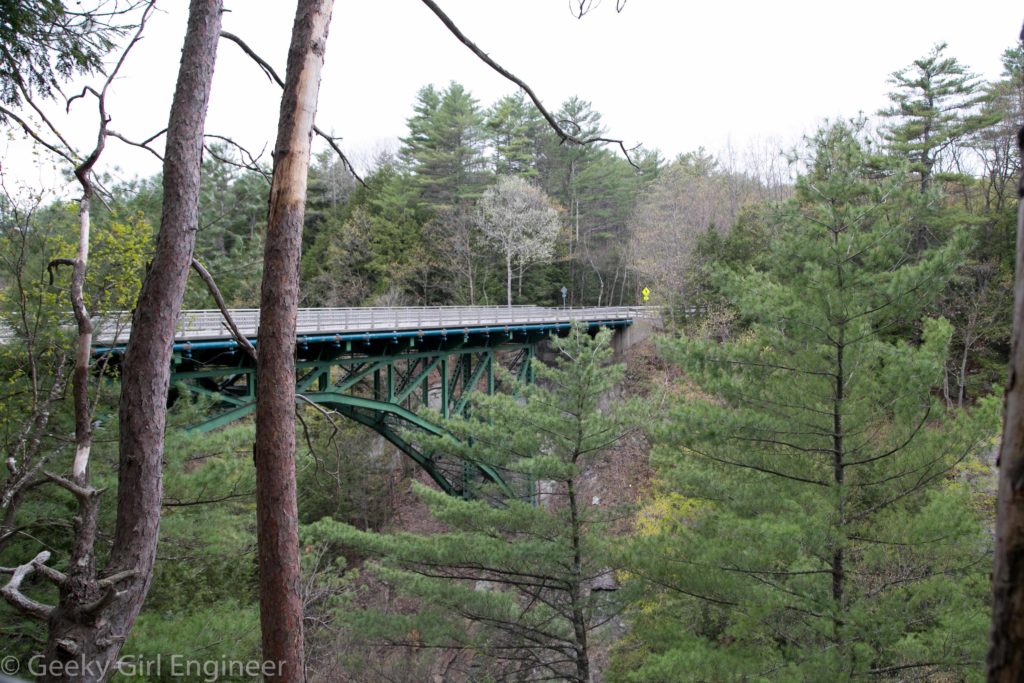
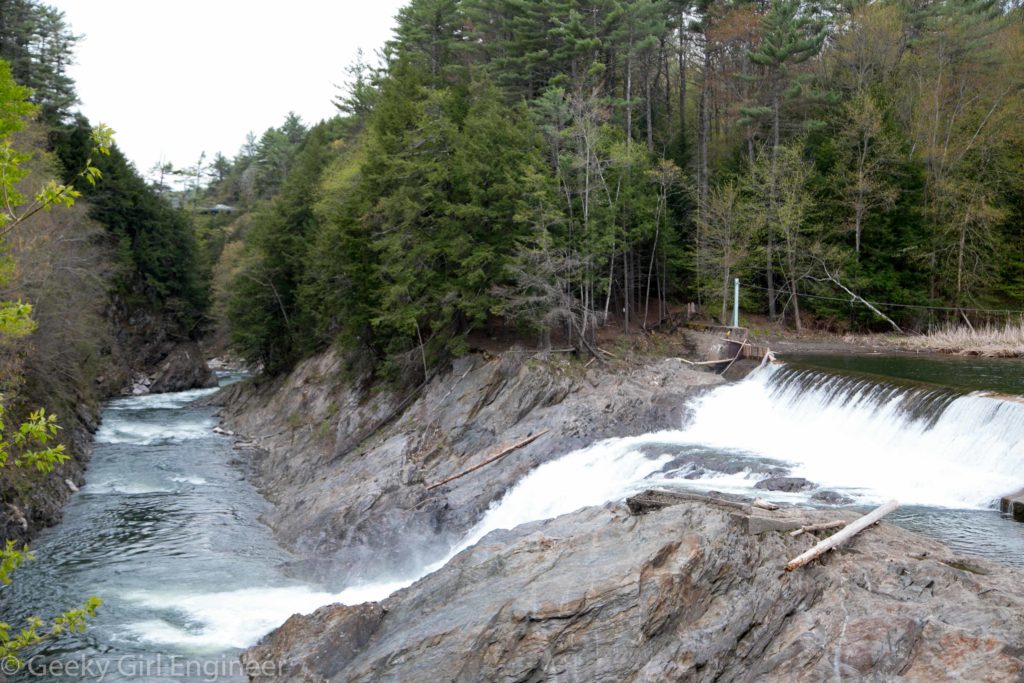
I’m in White River Junction, Vermont for a very short work trip. My waiter at dinner last night tells me if I have any free time, I need to make the 10 minute drive to see the Quechee Gorge. He was right. I didn’t have time to go hiking down to the bottom, which I would have loved to do. I only had time to walk along a little to see the dam. I do love to see dams and bridges.
Lowline Lab
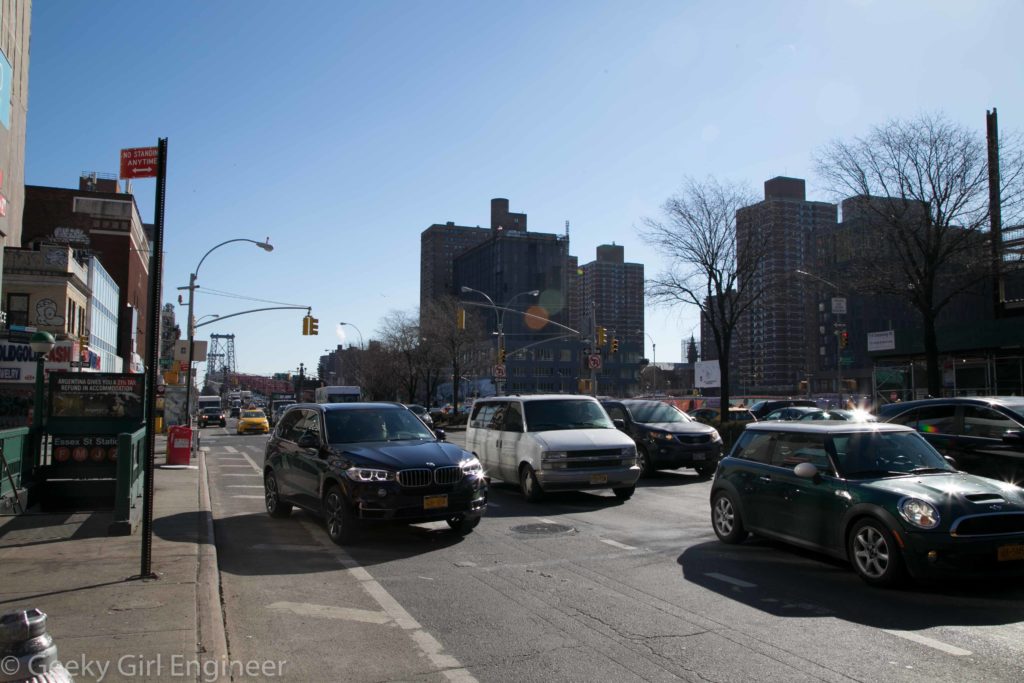
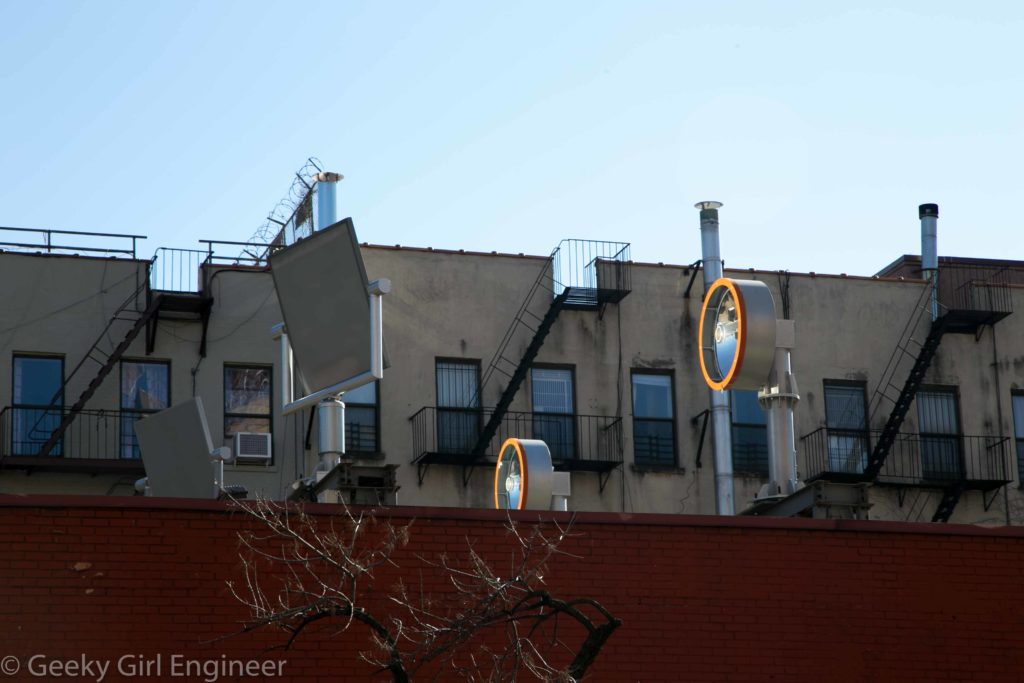
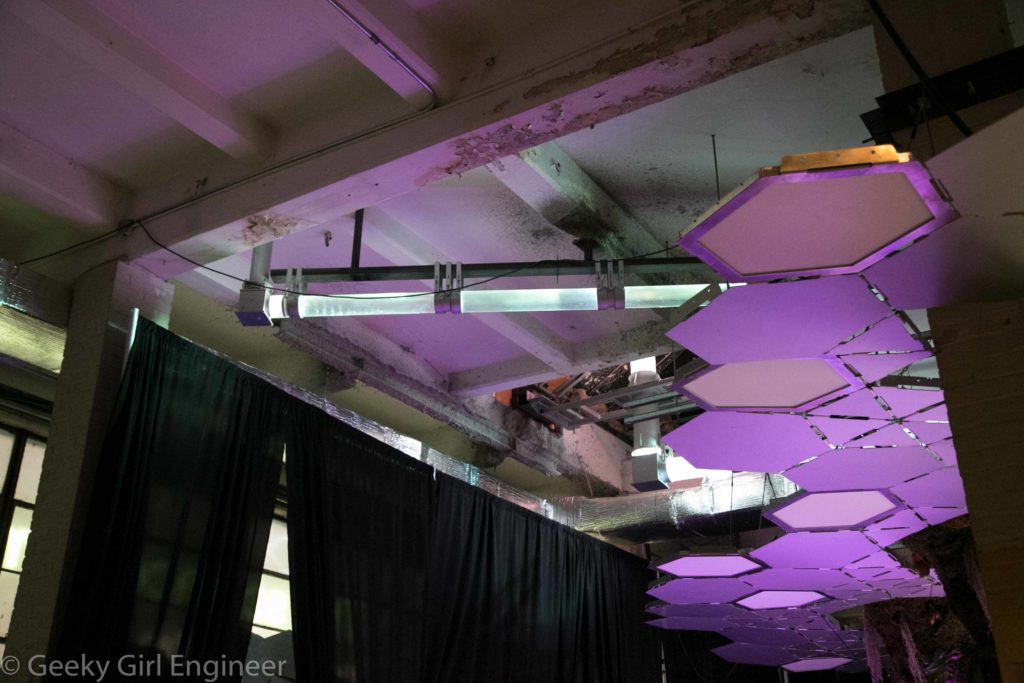
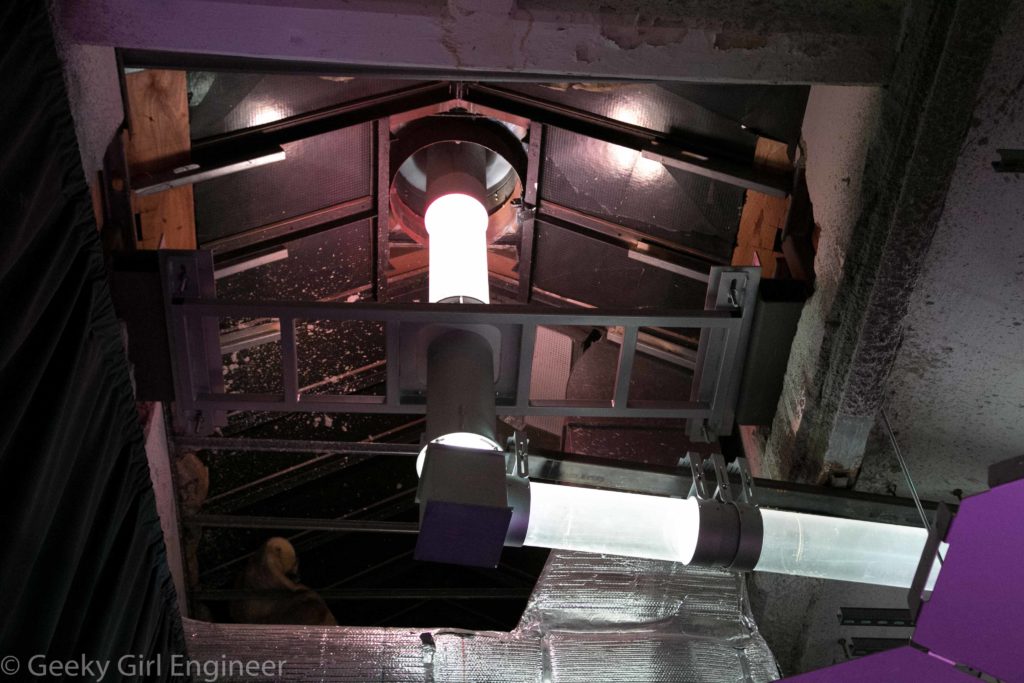
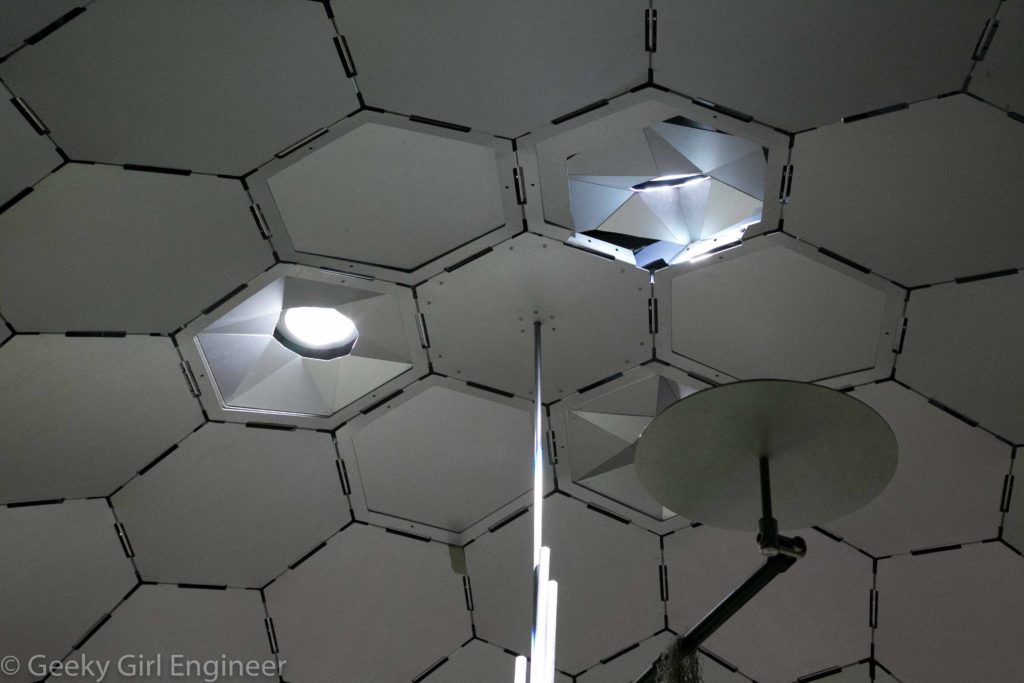
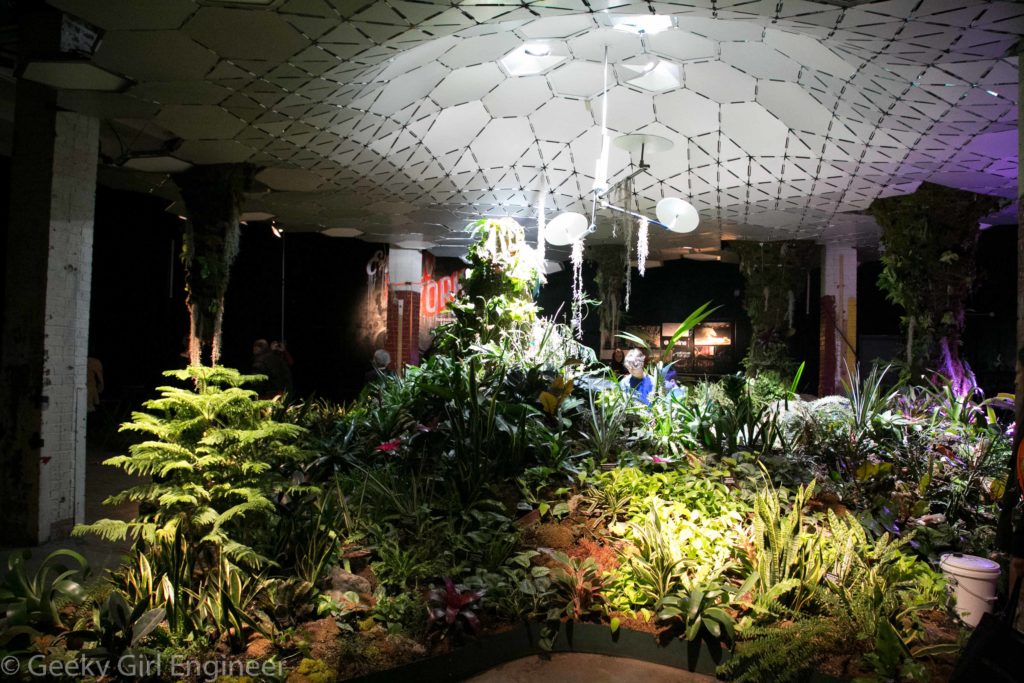
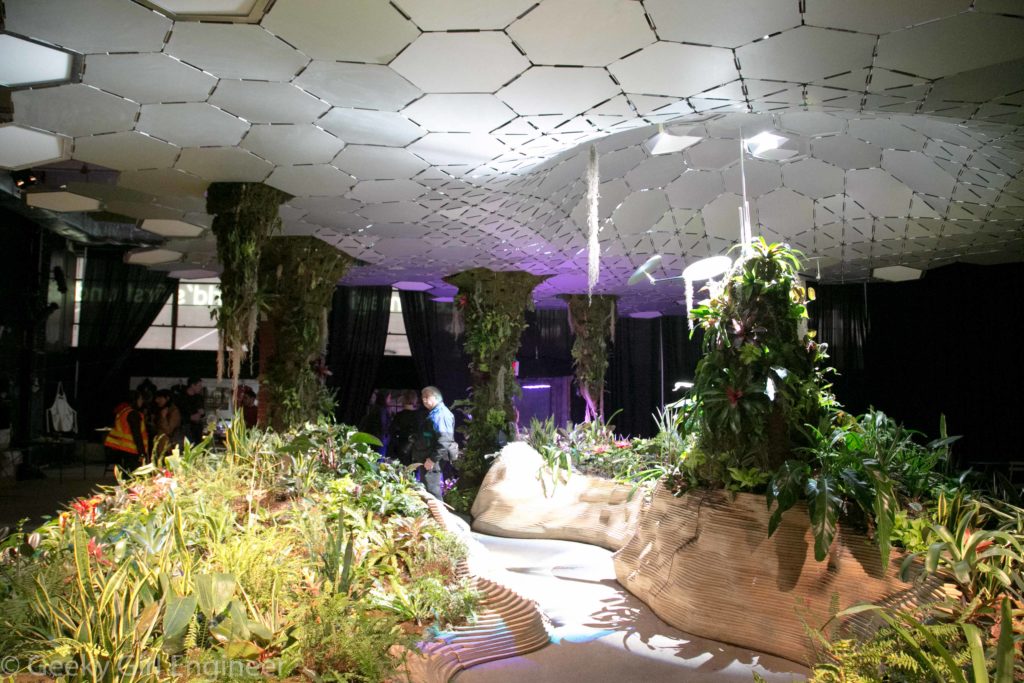
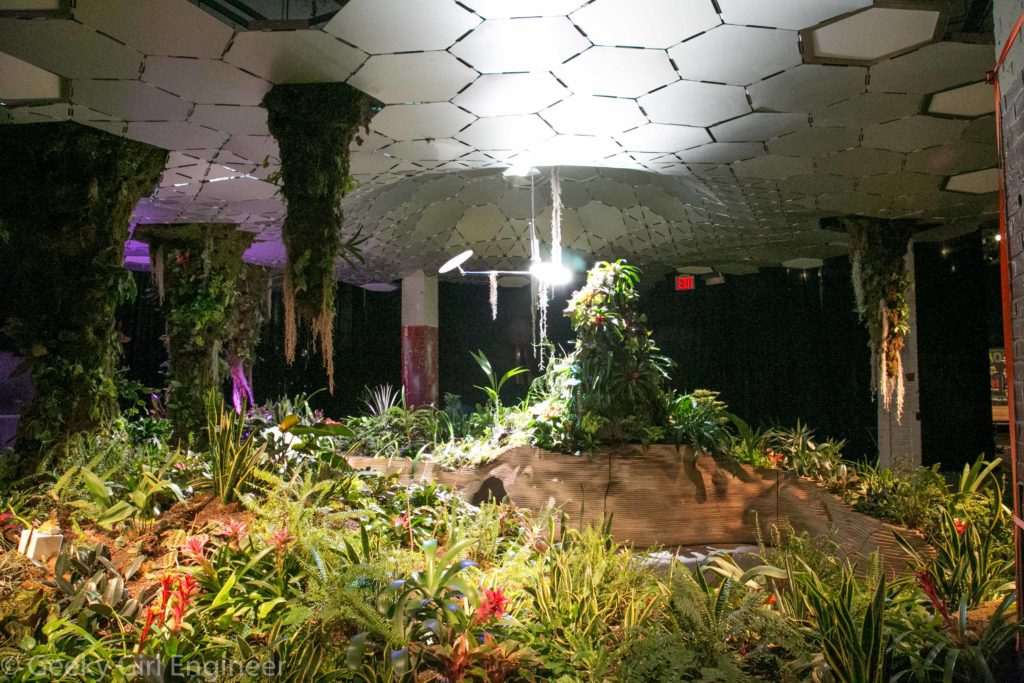
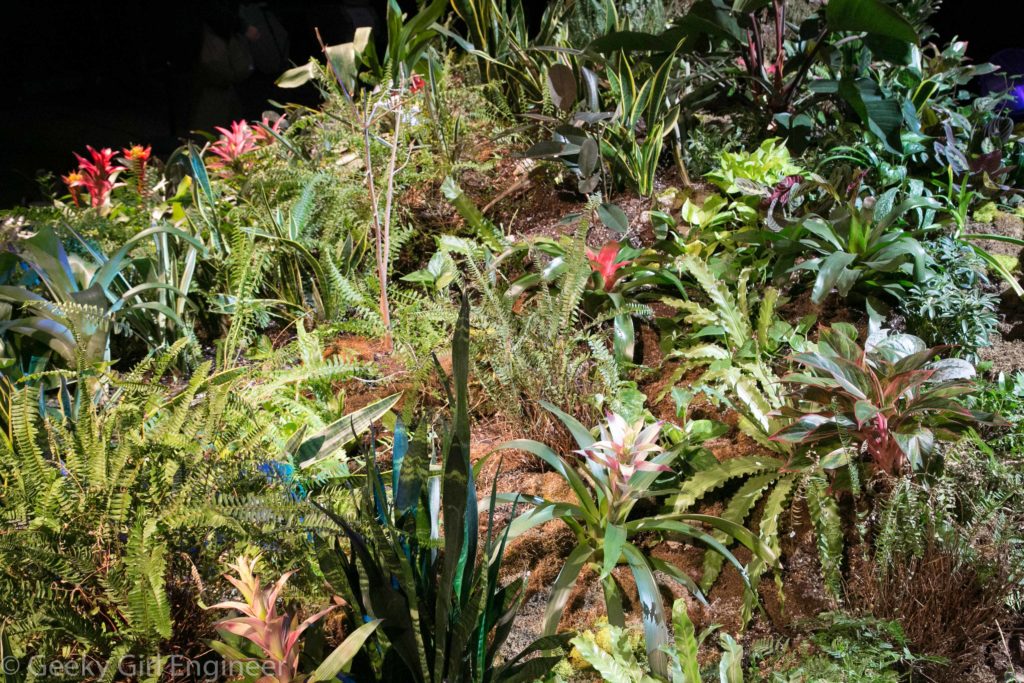
Many people are familiar with New York City’s Highline, which has become a really popular spot with tourists and residents. It it is really cool, and beautiful all year round, in the dead of winter and in bloom. Because of the Highline’s success, some people came up with the idea of the Lowline. The Lowline would make use of of the abandoned Williamsburg Bridge trolley terminal under Delancey Street, which is right next to the Essex Street subway station. However, the somewhat radical idea for the Lowline is that it would make use of sunlight to light the space, which is completely underground. To help design and work out issues with this idea, the Lowline Lab was created. It is now closed, but luckily about a month ago I got to tour it.
I encourage your to click the hyperlink to my photos of the Williamsburg Bridge trolley terminal under Delancey Street because in order to comprehend the challenge of this project, you really need to see the space as it is now.
Snorkeling Belize
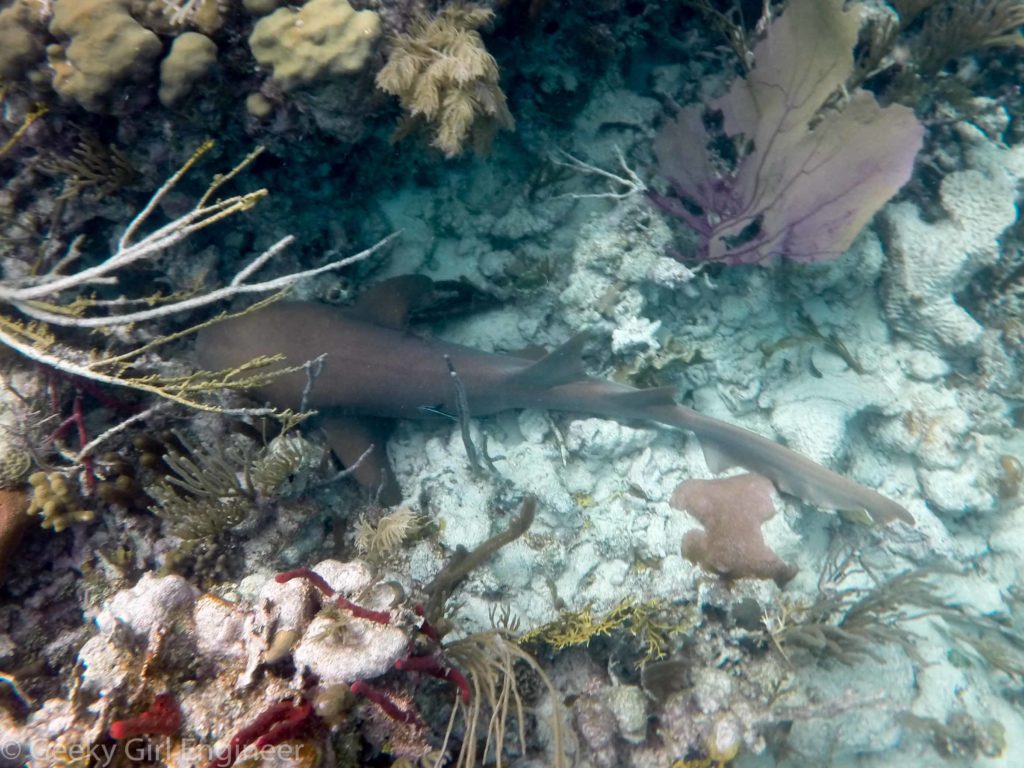
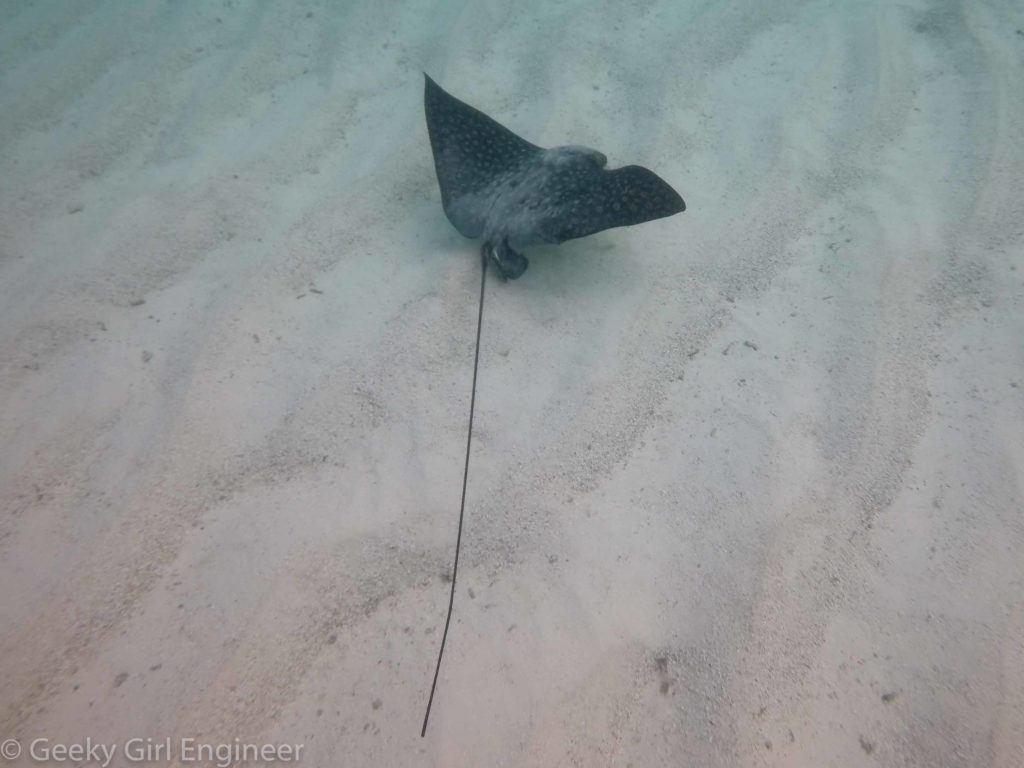
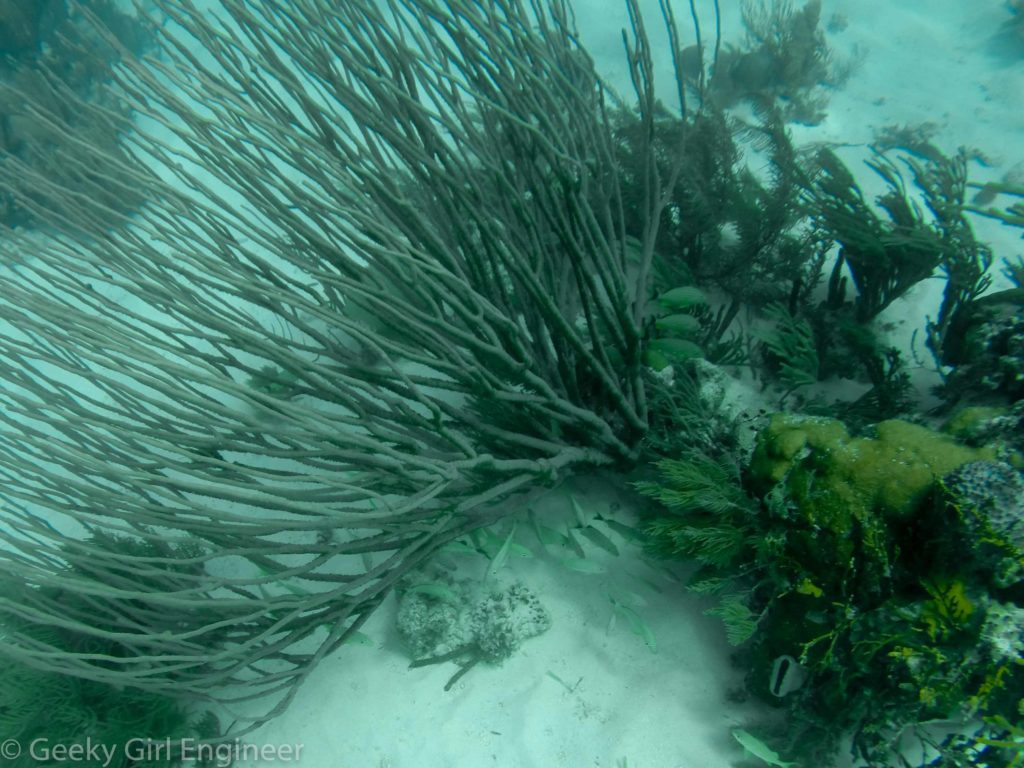
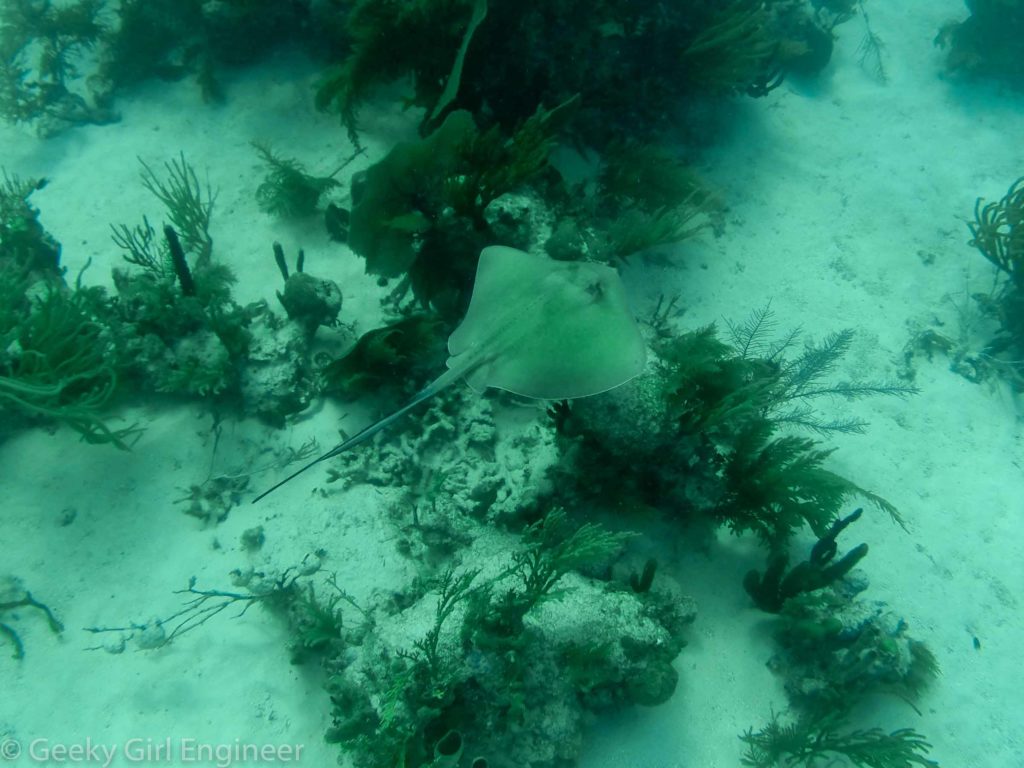
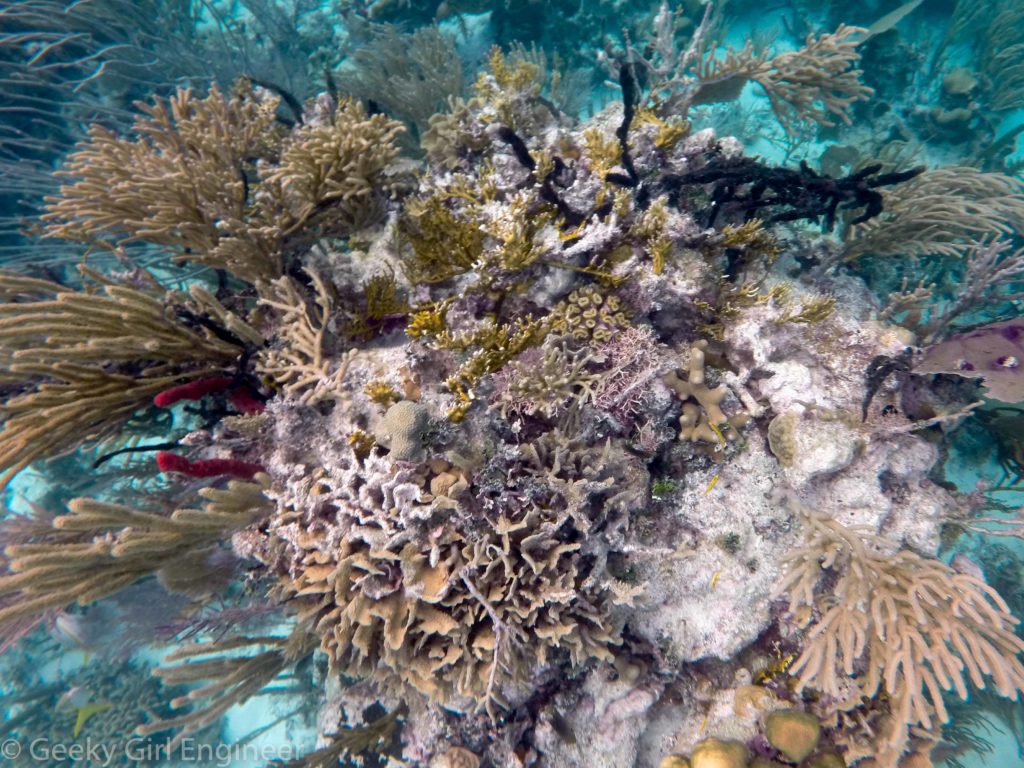
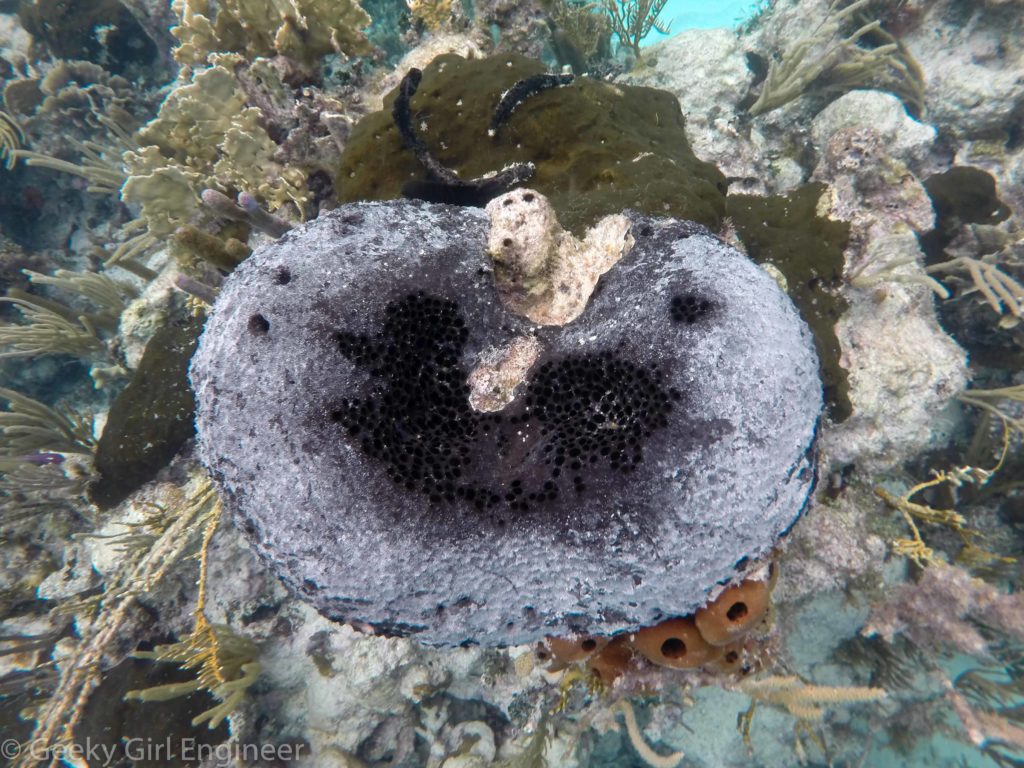
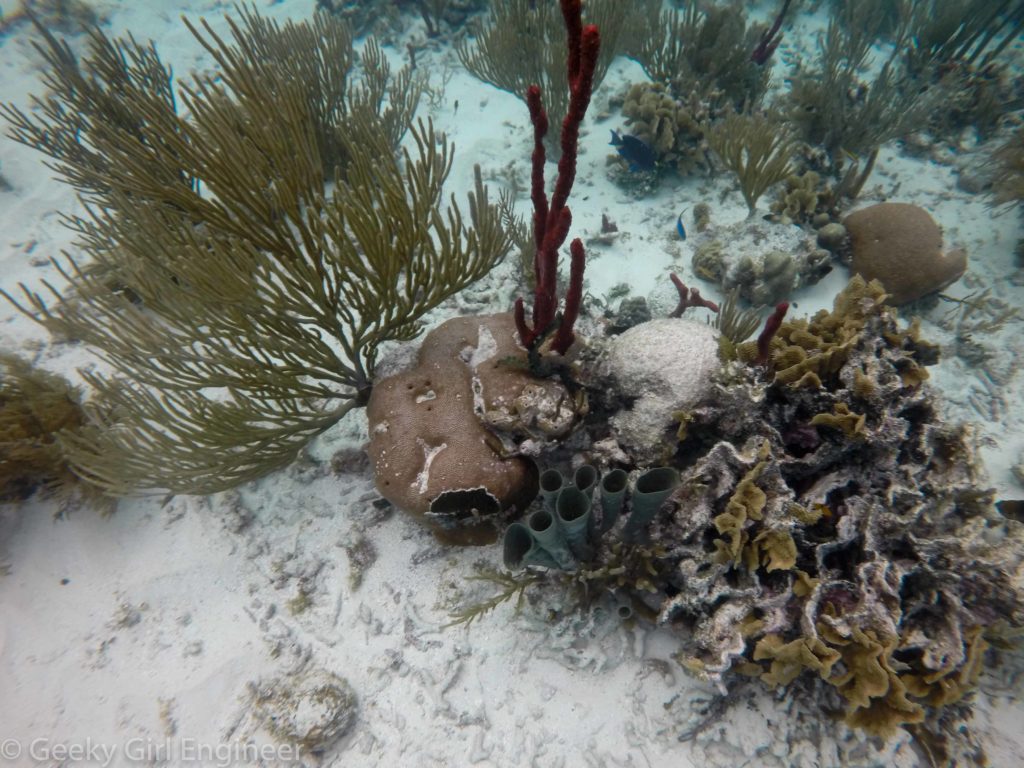
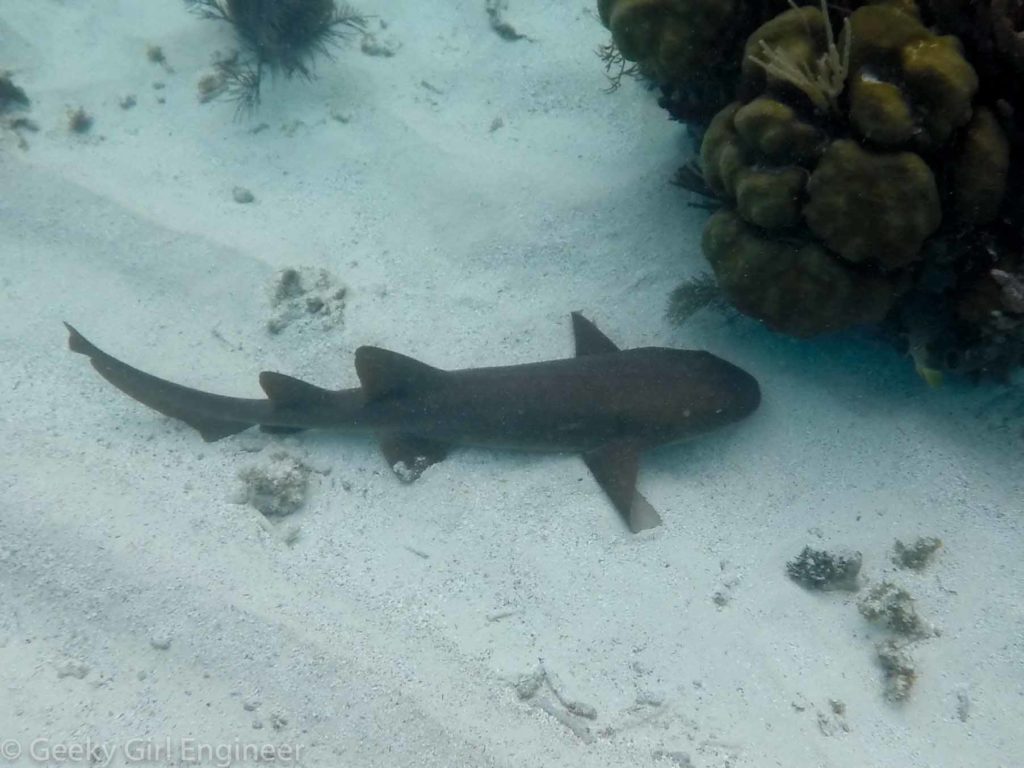
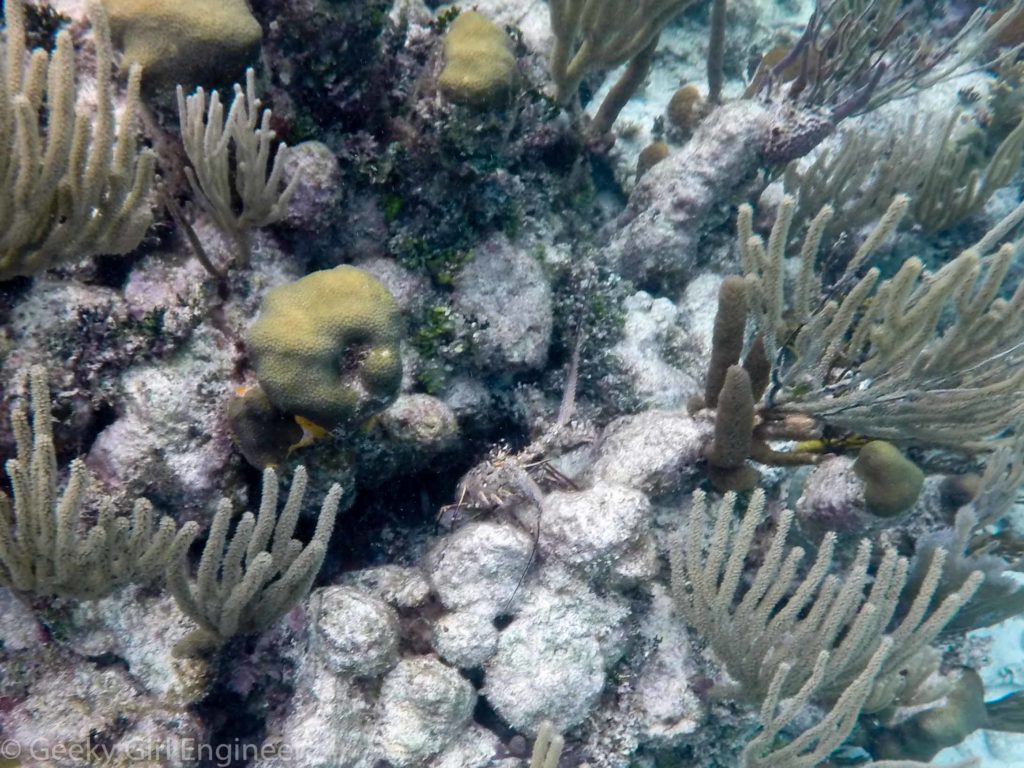
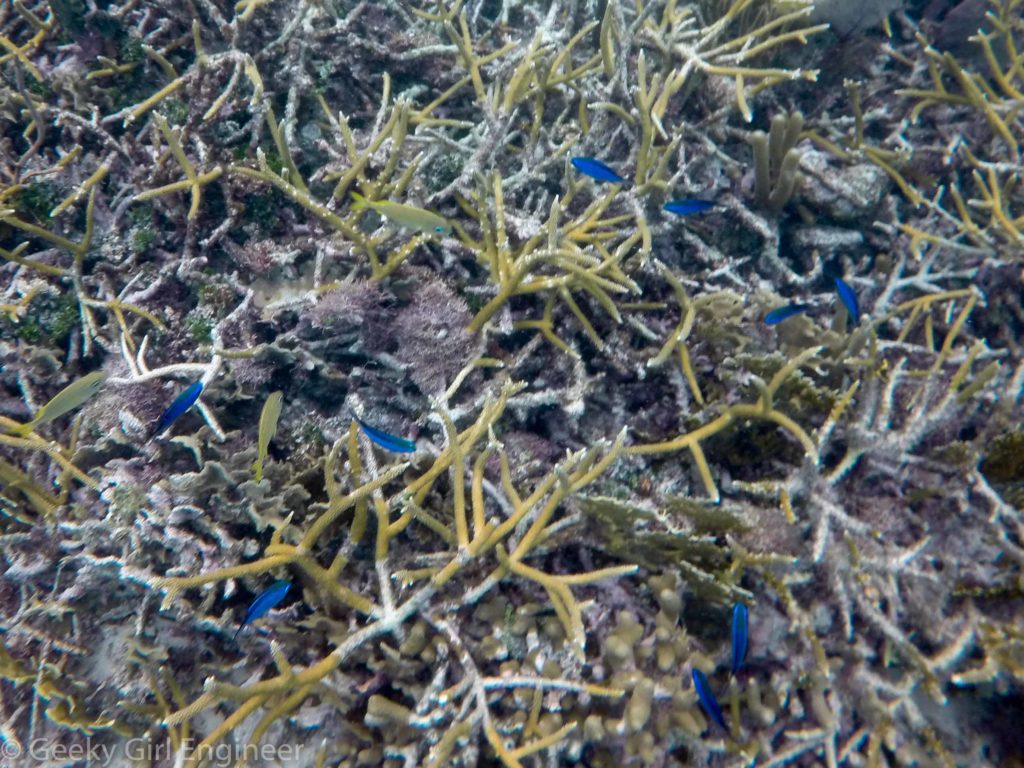
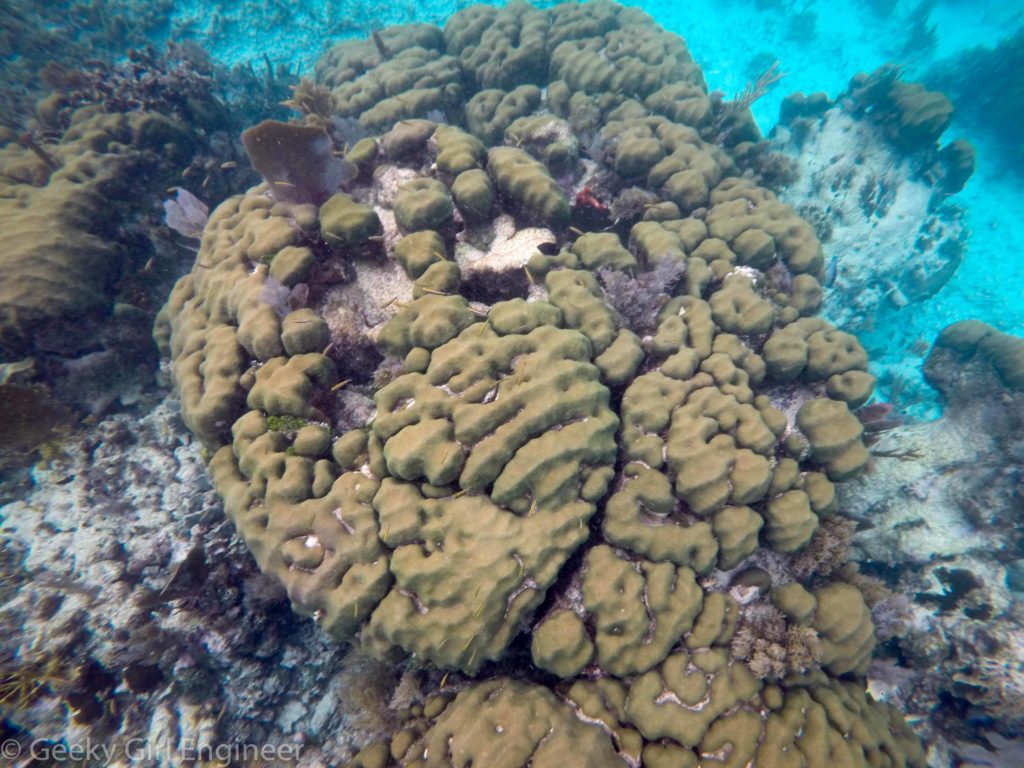
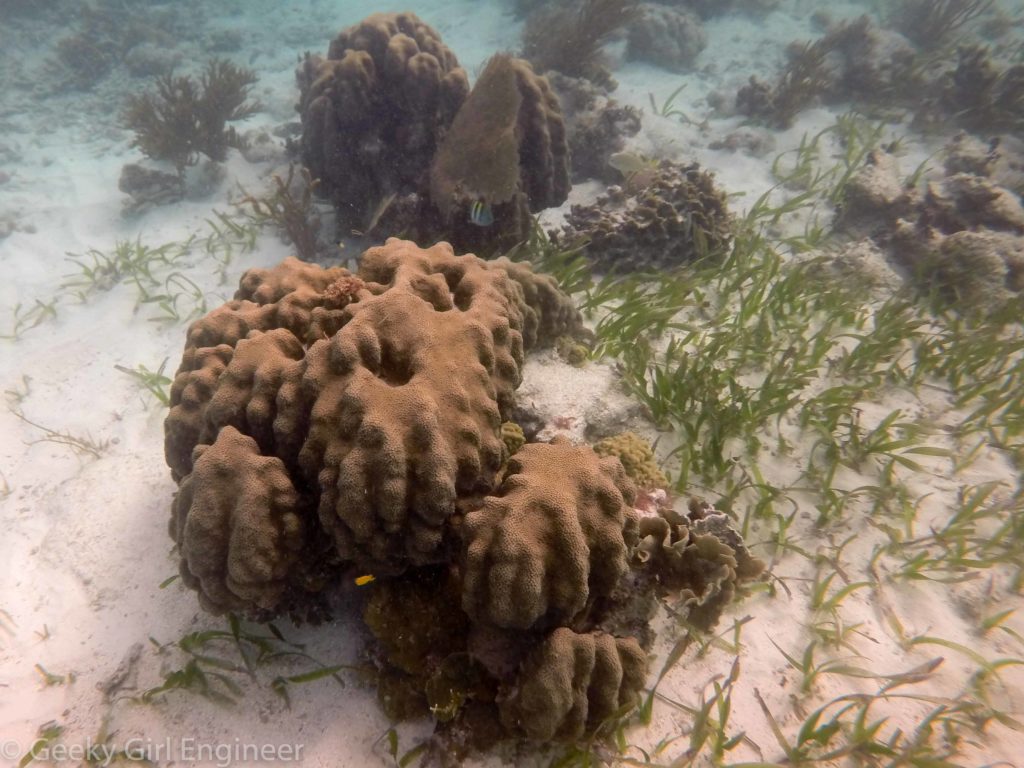
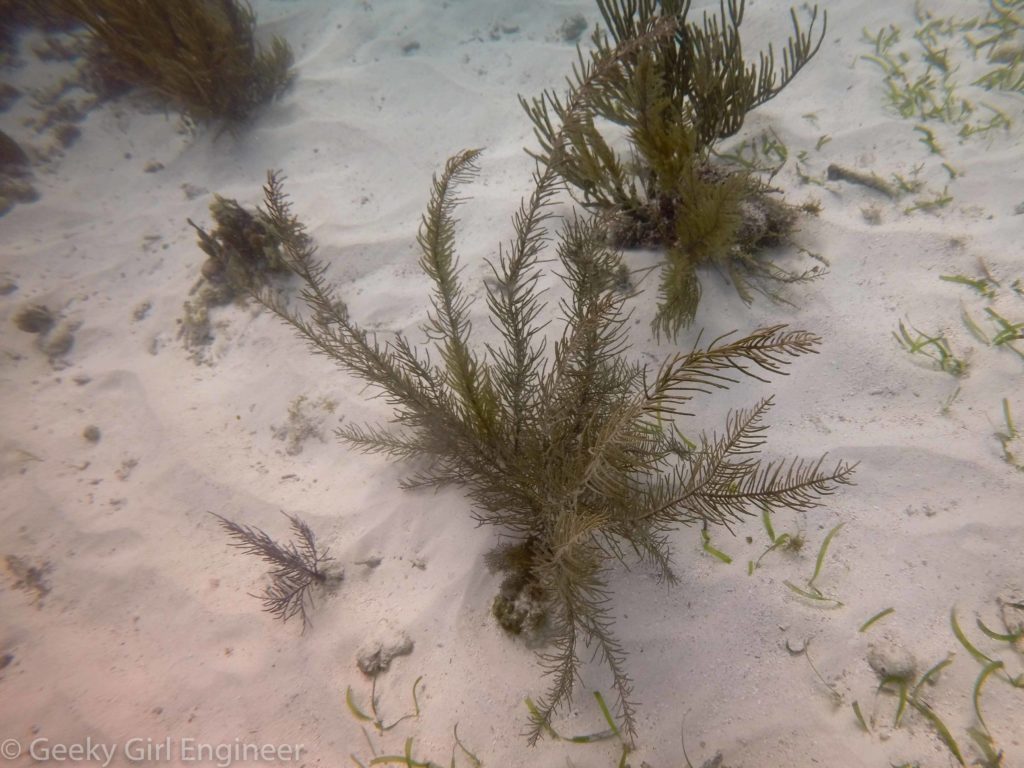
I went snorkeling today off the coast of Belize on part of its barrier reef. I have no true idea where I was, other than they said the boat ride was going to be about 14 miles. So that clears that up. Anyway, I saw several lobsters, a couple of rays, and a couple of nurse sharks. I was super excited by the rays and sharks. The coral was lovely, but somewhat sparse in that area. Also, there seemed to be a bit of what I can only assume was coral bleaching, which was rather depressing.
On the Monkey River
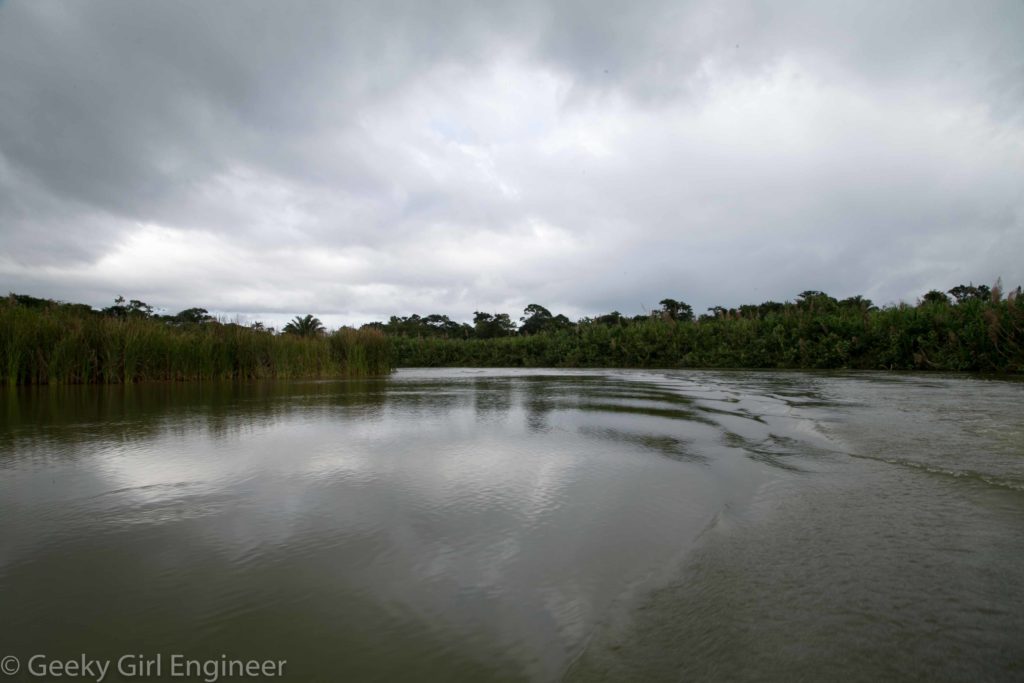
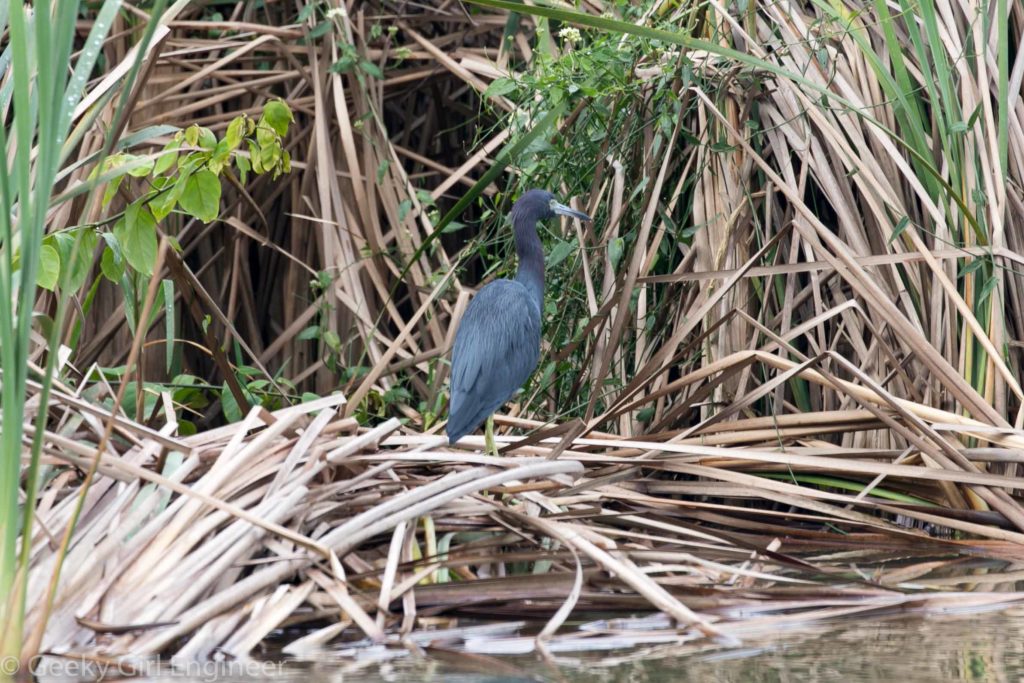
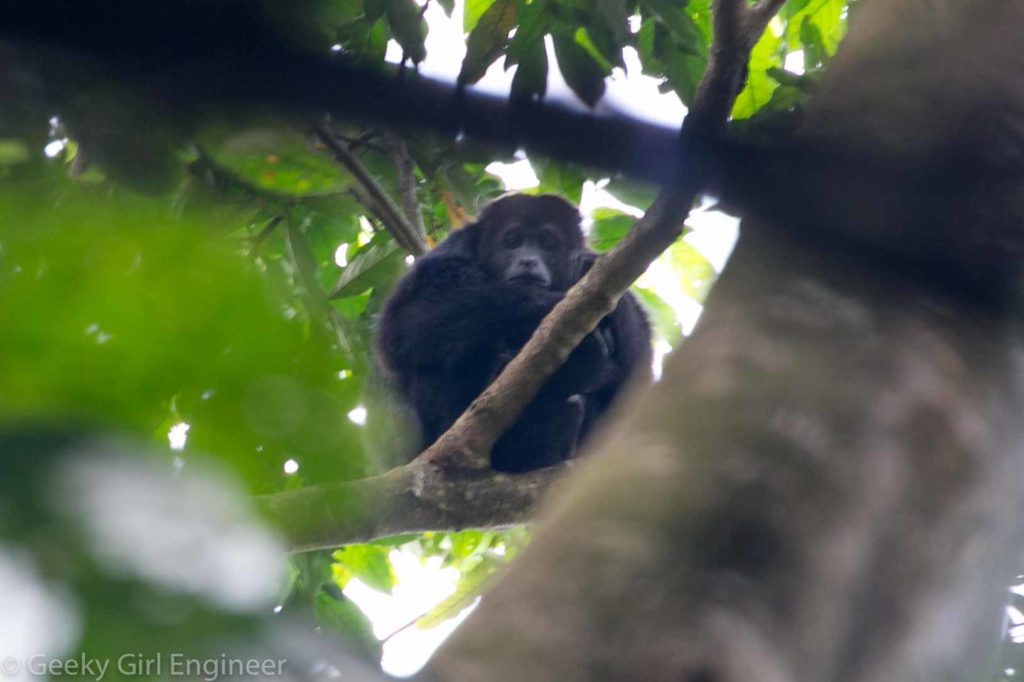
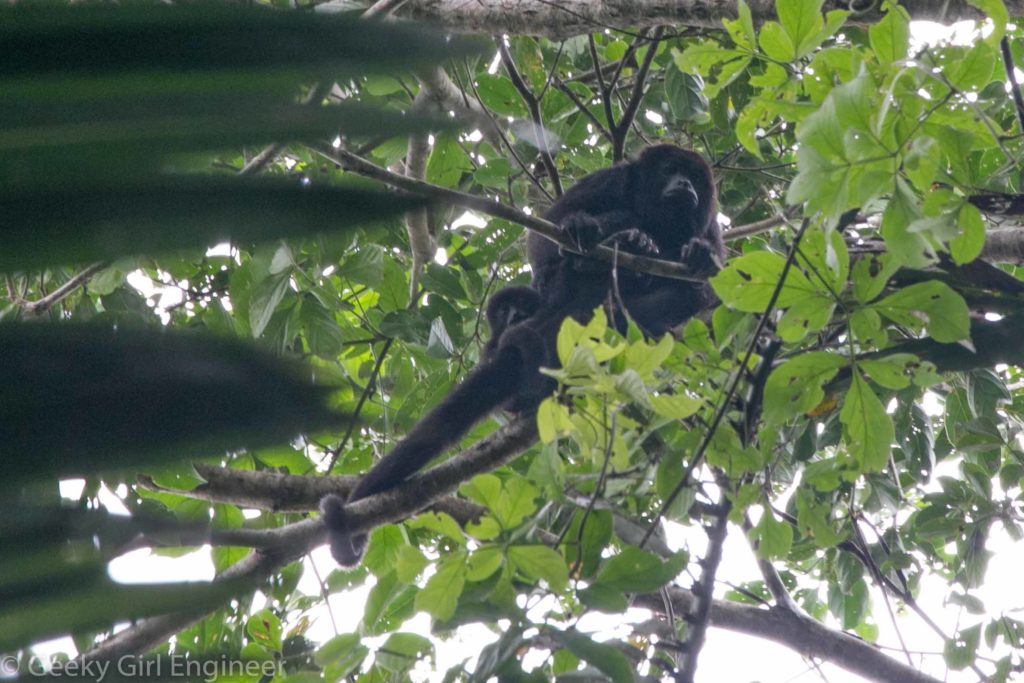
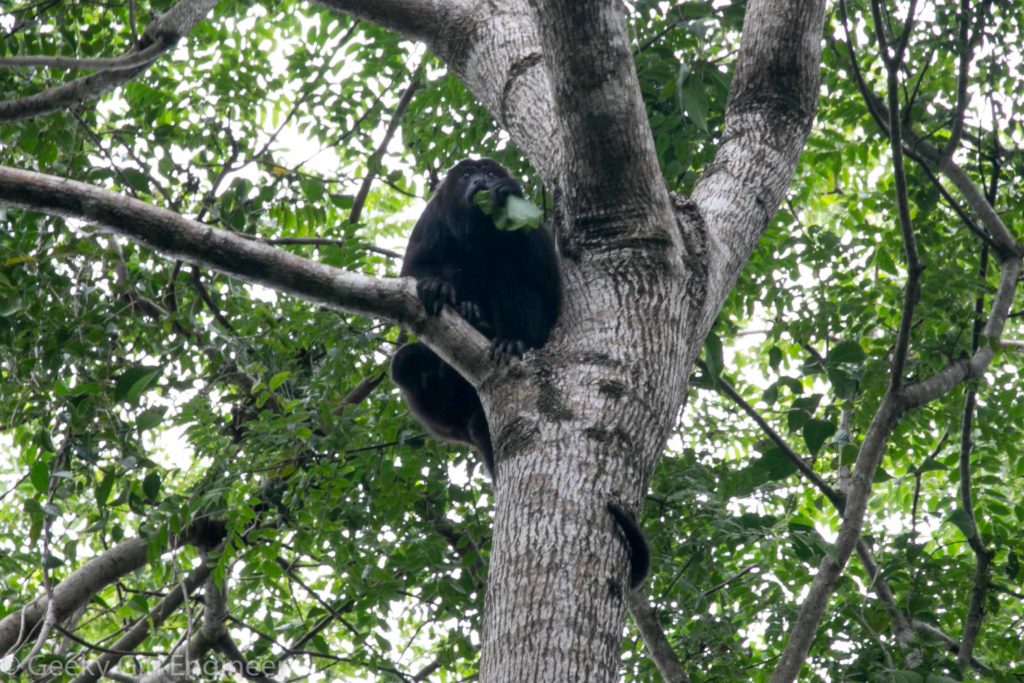
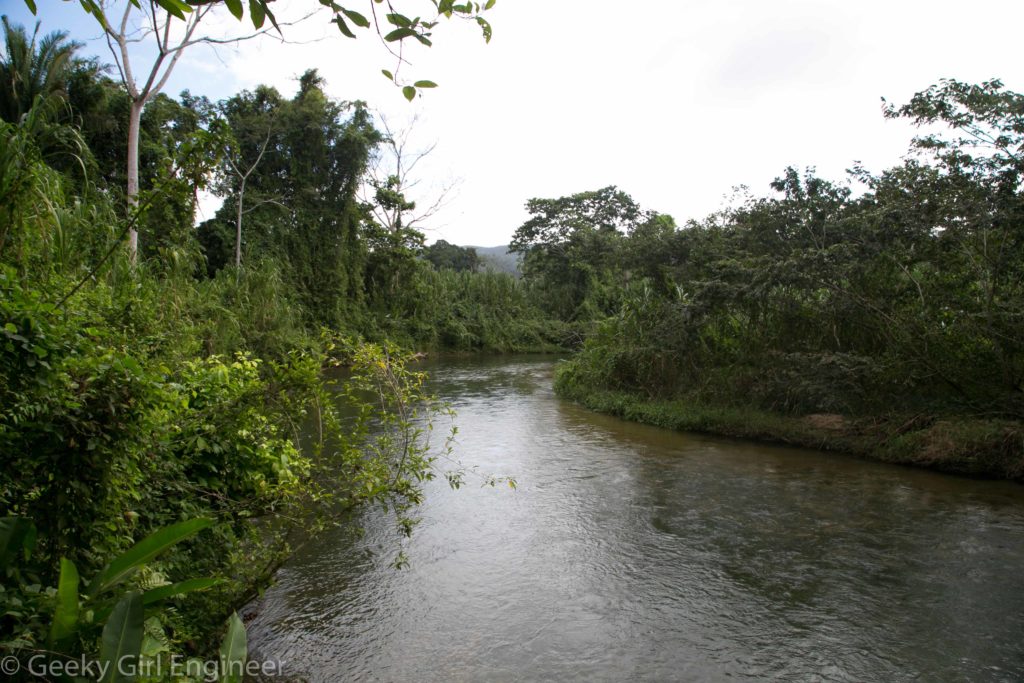
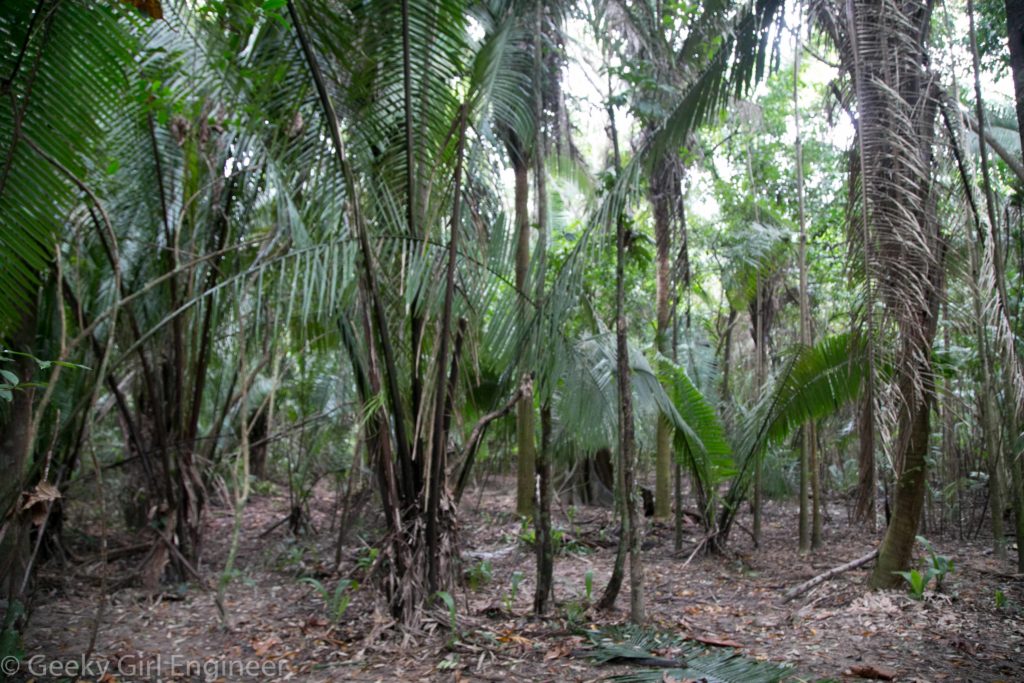
I took a cruise up the Monkey River today. Getting there was an adventure into itself. An hour drive to Placencia, then at least a half hour boat ride to Monkey River Town, to finally then cruise up the Monkey River. The journey ended at a spot in the jungle which is completely overrun by mosquitoes, but there are also some howler monkeys. The howler monkeys are about as loud as you can imagine an animal that gets the name howler would be. The Monkey River flows through a grassy and mangrove area that is quite pretty. There were numerous birds just sitting along the edge waiting to be spotted. Our guide also spotted a crocodile on the way back that nicely ignored us.
Making chocolate
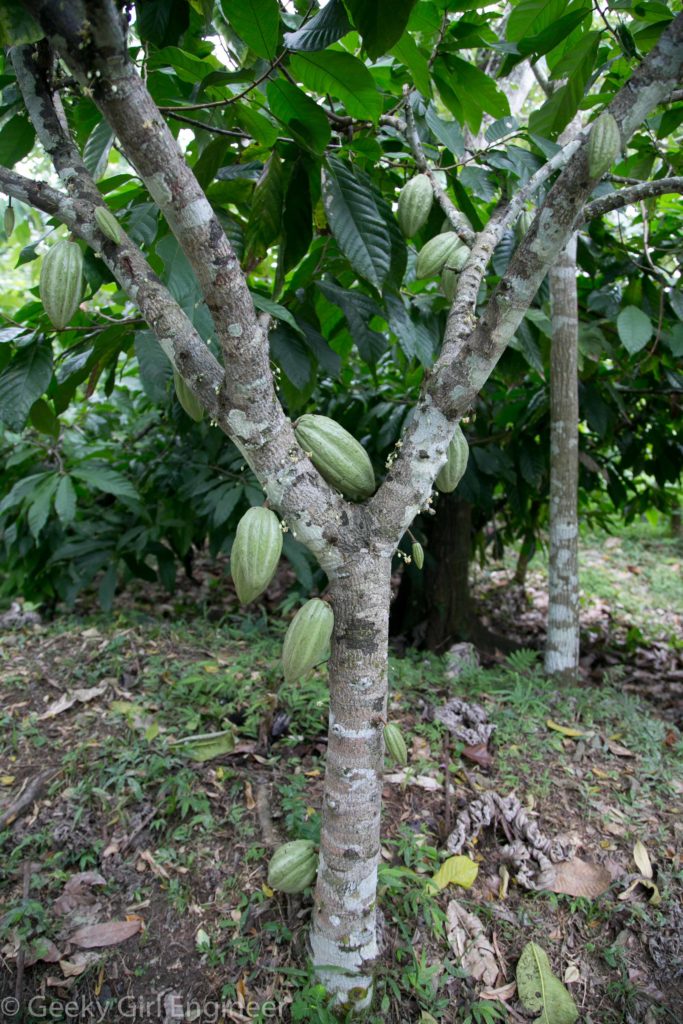
I took a tour of Che’il Mayan Chocolate, which included an organic cacao farm and a tiny factory where they make chocolate. I am not sure it qualifies as a factory, but they make do make a small amount of chocolate there as well as some chocolate products like nibs, cocoa powder, and cacao tea. The tour was fascinating, and the following is a brief synopsis. It all starts off with a cacao tree.
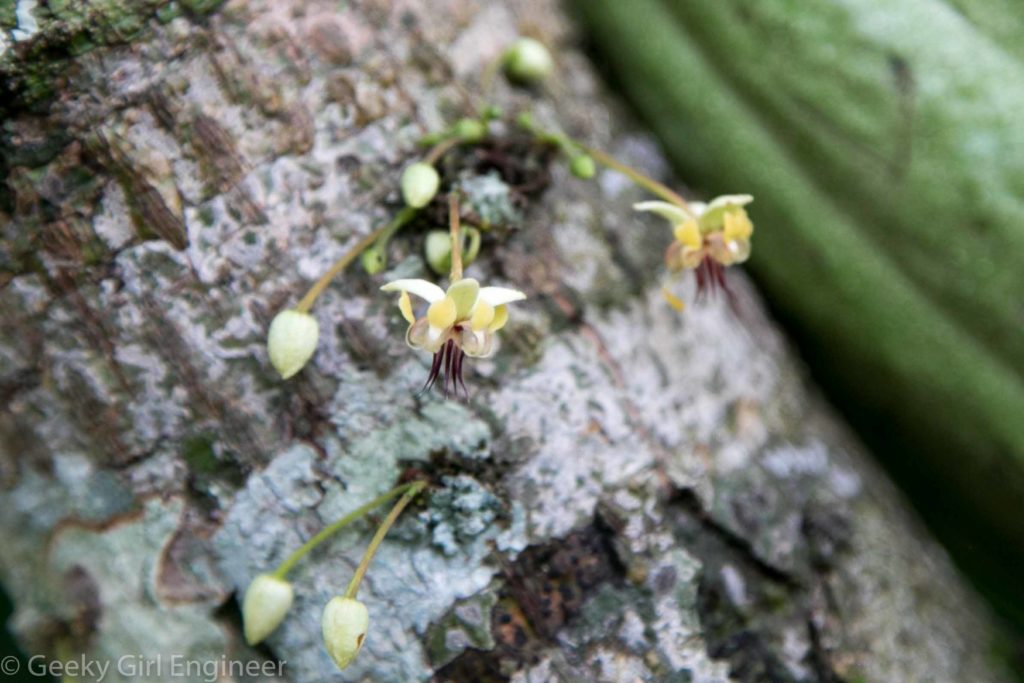
The beginning of the deliciousness that is chocolate starts with a tiny, little flower.
When the flower is fertilized, a giant fruit or seed pod forms. The flowers bloom for months, and hence seed pods form and grow at different times.
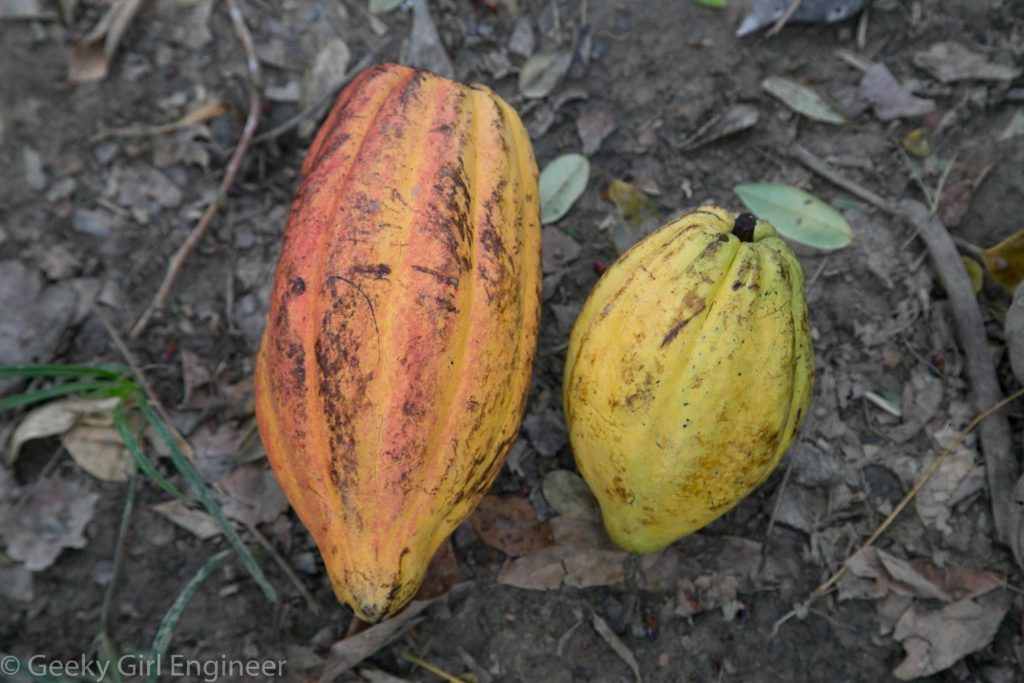
The seed pods ripen to a yellow or red color depending on the specific cacao tree species.
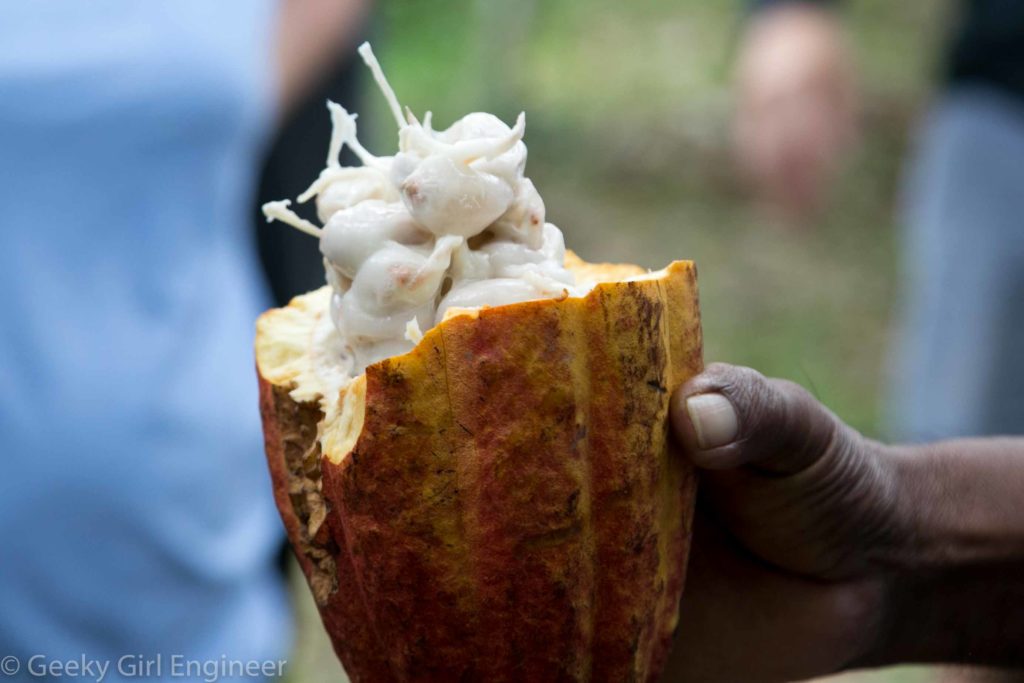
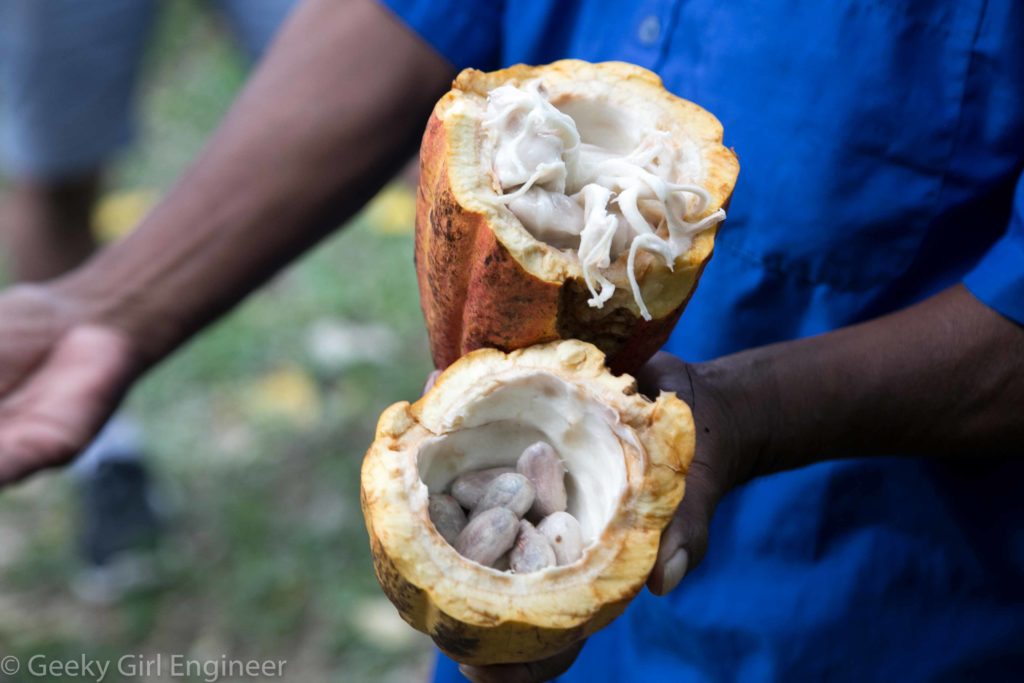
Inside the seed pods are cacao beans covered in a white pulp. We got to take a bean and suck the pulp. The pulp was quite tasty with sort of a creamy, light fruit taste.
The beans have a dark brown interior.

Cacao seed pods with beans covered in pulp in upper half and seeds we sucked pulp off of in lower half
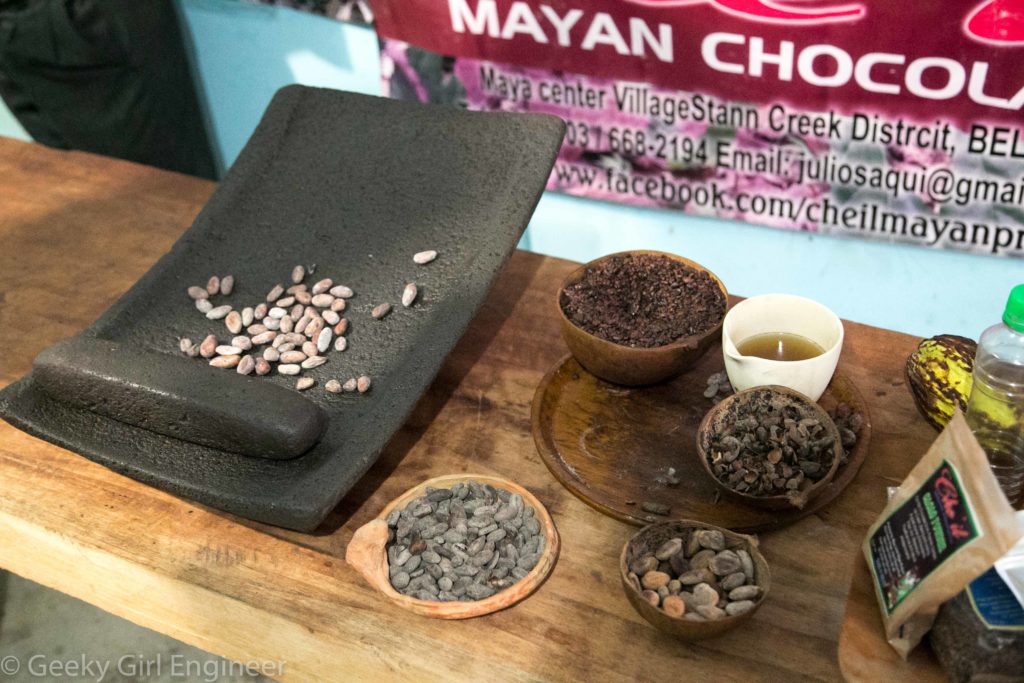
The beans are first fermented in a box for several days. They are then roasted over low heat. In the photo below, the light beans (on the traditional Mayan grinding stone) are the beans that have not been roasted. The dark ones in the middle front bowl have been roasted. Cocoa butter is in the white bowl, and the bowl right in front of it are the shells from de-shelled beans. The shells are removed from the beans before roasting. After roasting the beans, they are ground into nibs, which can be seen in the bowl to the left of the cocoa butter.
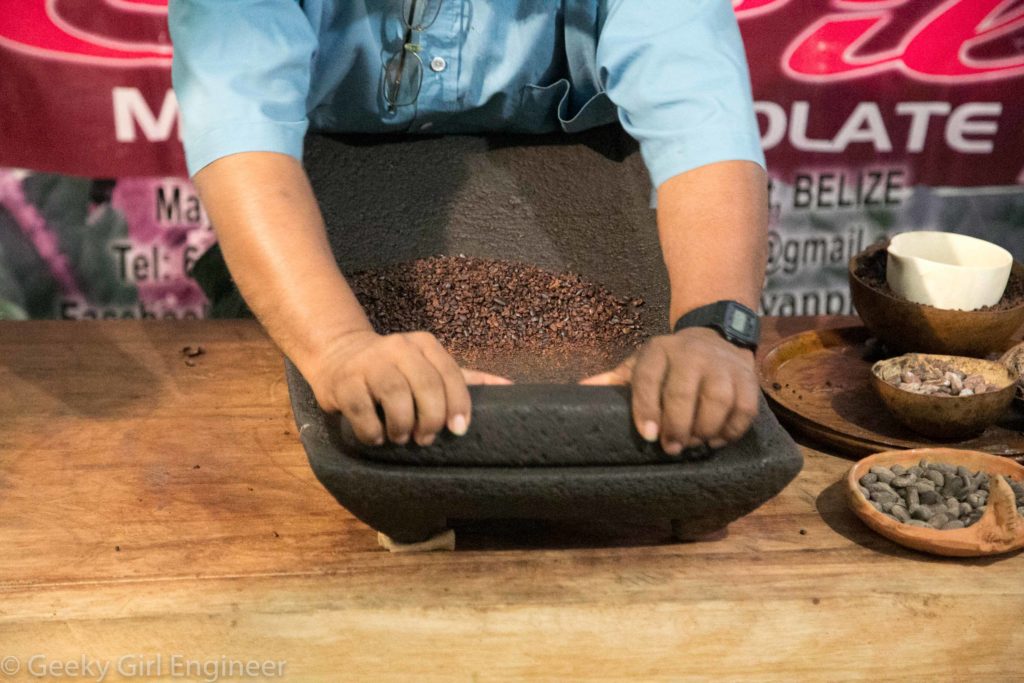
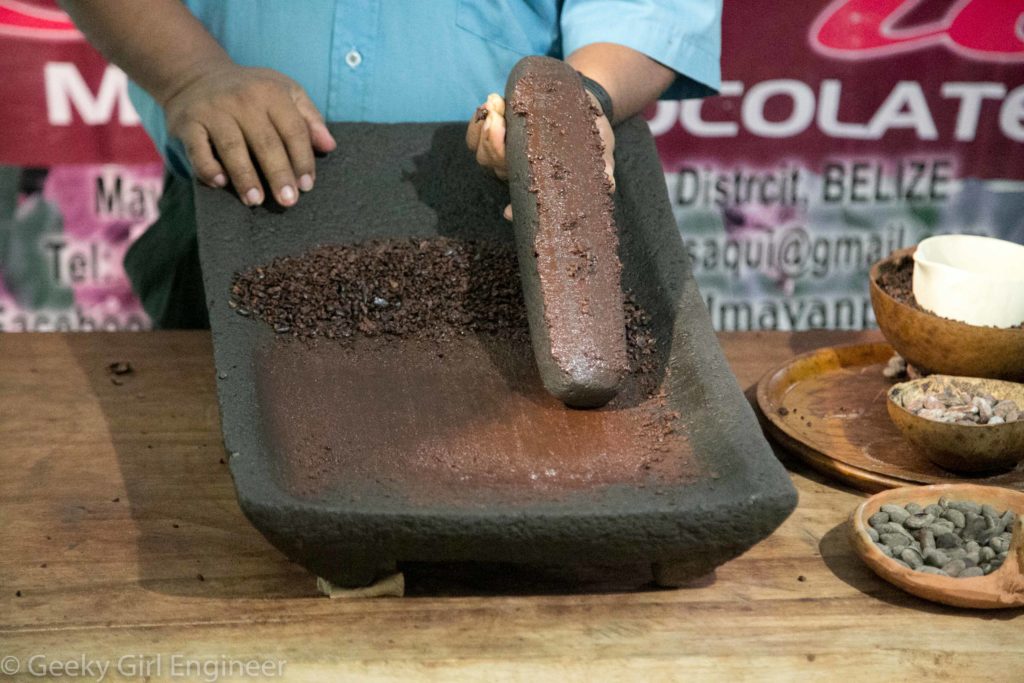
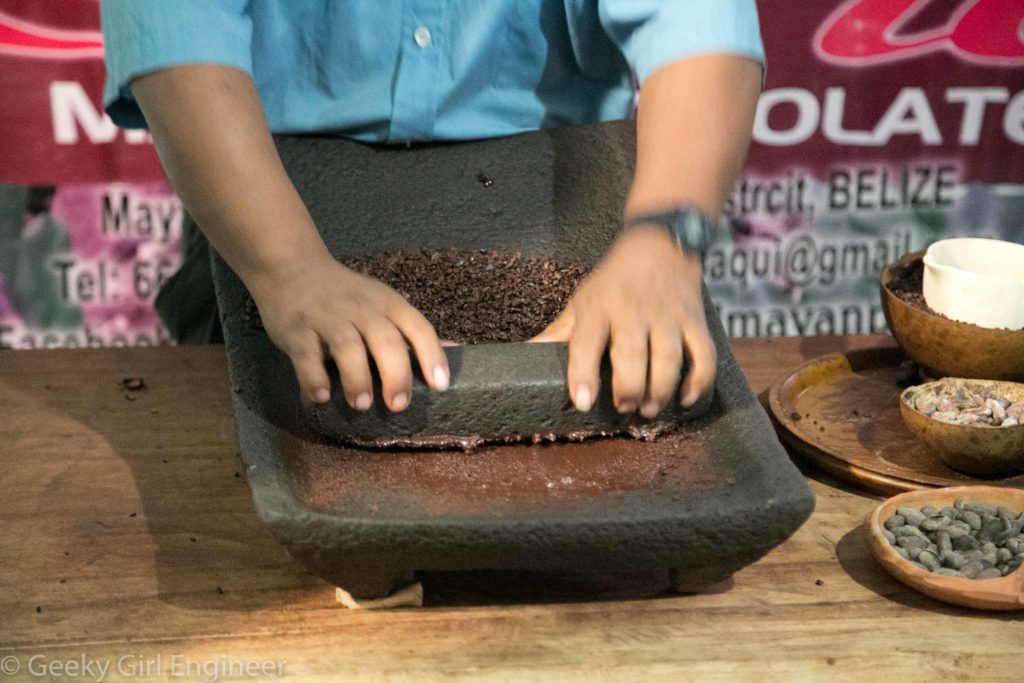
The nibs are placed on the stone and crushed.
The grinding motion with the stone pulverizes the nibs, and the pressure causes heat, which starts to melt the oils in the nibs. We got to taste it at this point, and the chocolate is rather bitter.
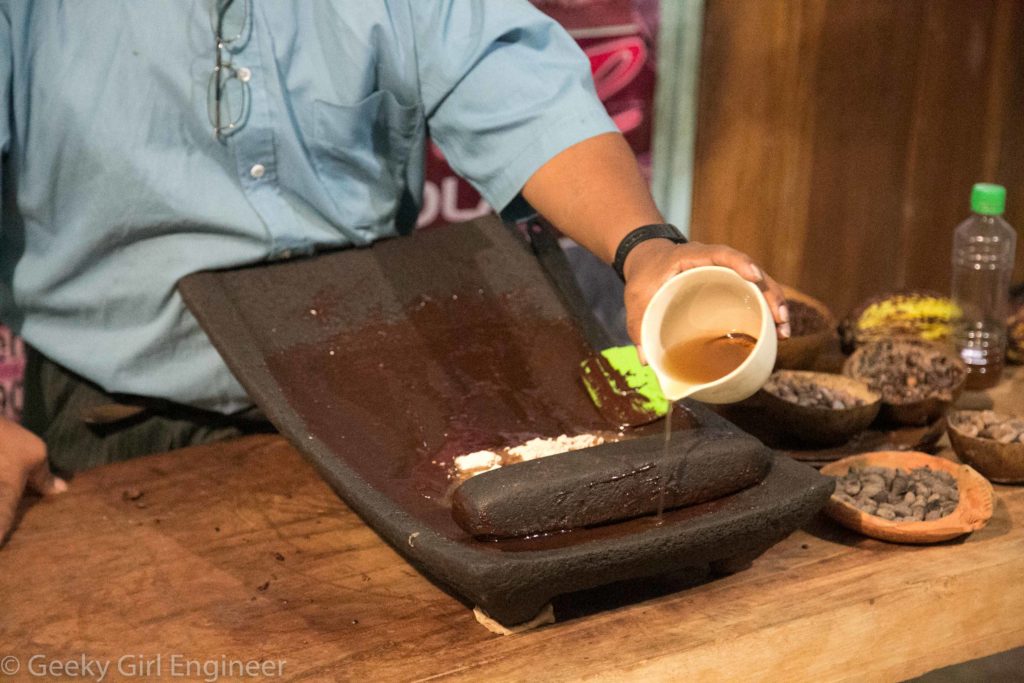
After quite a bit of grinding of the nibs, only liquid remains. Sugar and cocoa butter is added.
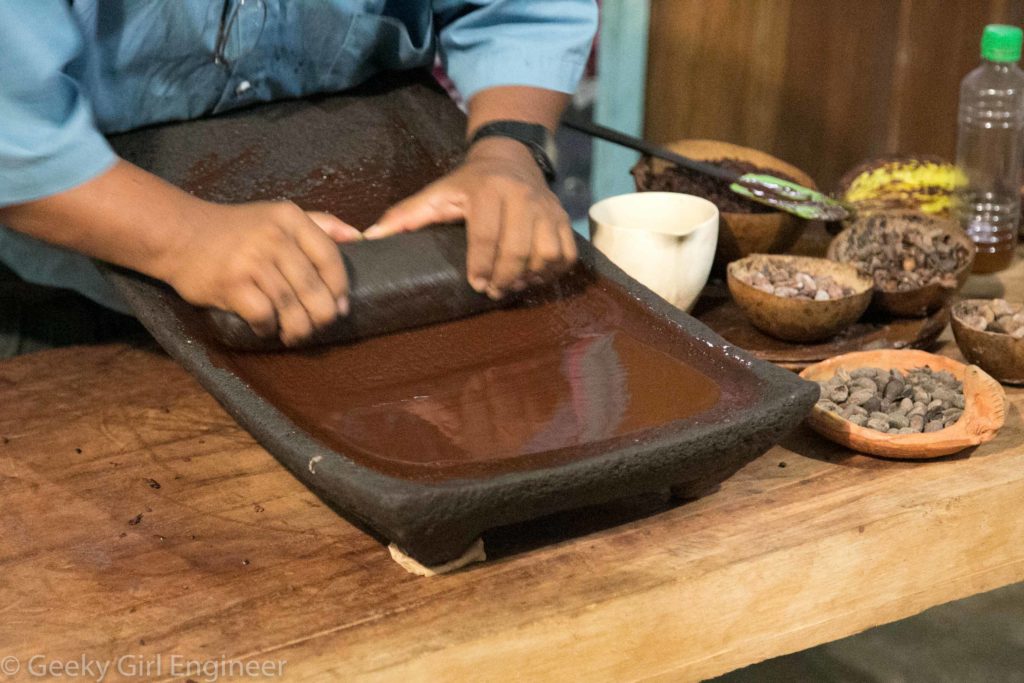
The mixture is ground more to mix everything. We got to taste the finished chocolate at this point again. It definitely was sweeter with the sugar, but to me, it still had a bitter after taste.
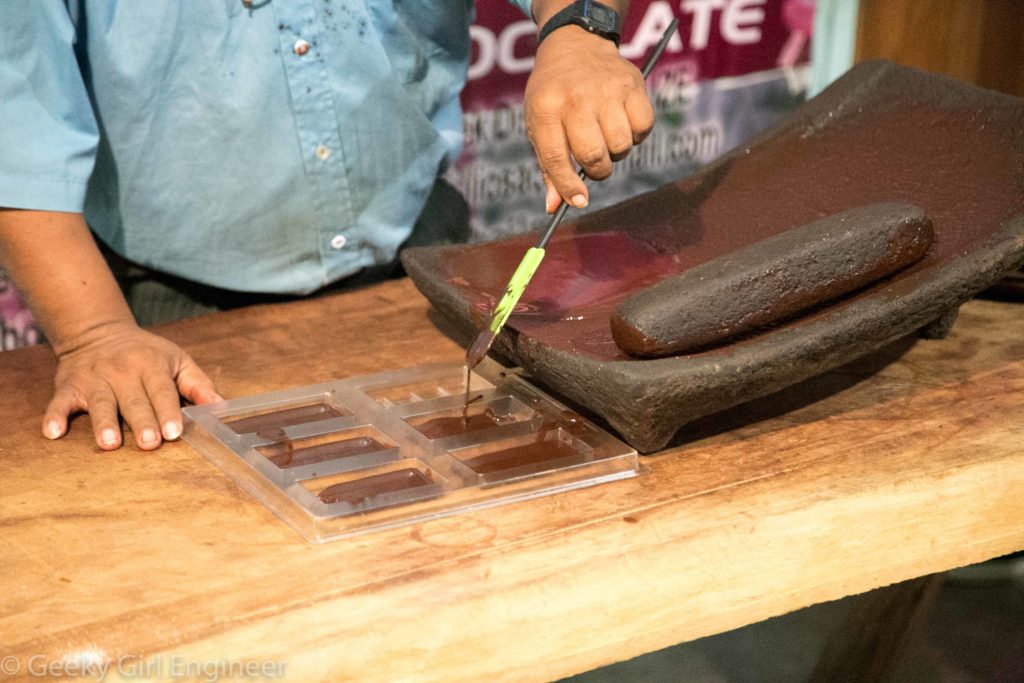
The liquid is then poured into forms and allowed to harden. These were put into a fridge to harden quickly.
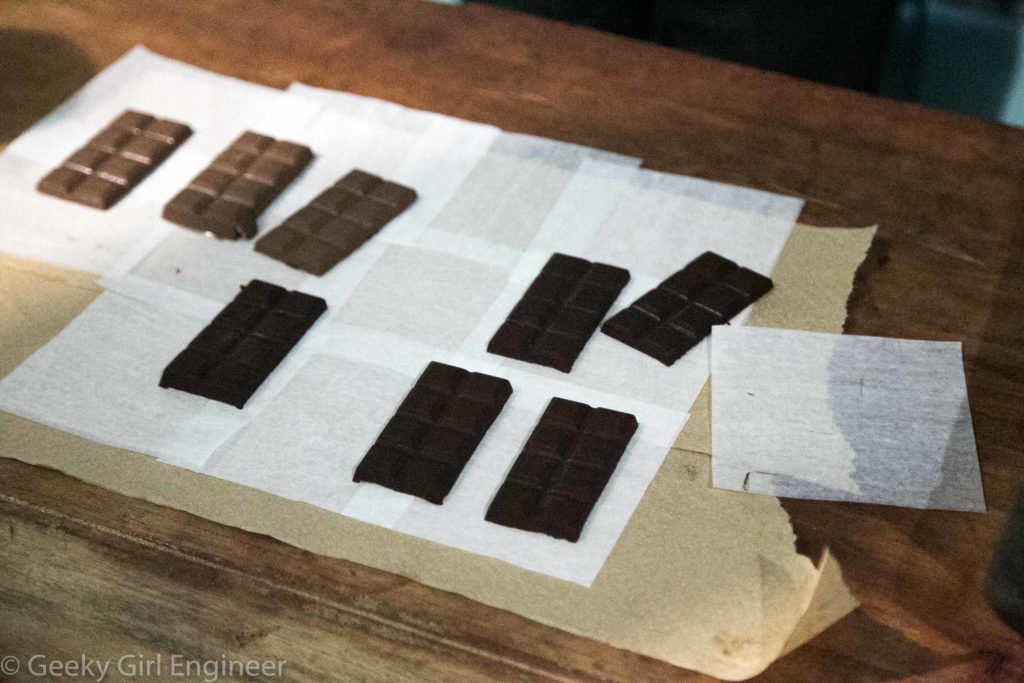
The finished product. The mixture made was 70% cacao. It tasted a bit different from the dark chocolate I have had before. It also melted very quickly in my hands compared to store bought chocolate, which must have stabilizers or something. Interestingly, even though this was the same mixture as what I tasted before it was poured into the forms, after cooling and hardening, it had lost most if not all of the bitter after taste that I tasted with the liquid.
Cockscomb Basin Wildlife Sanctuary
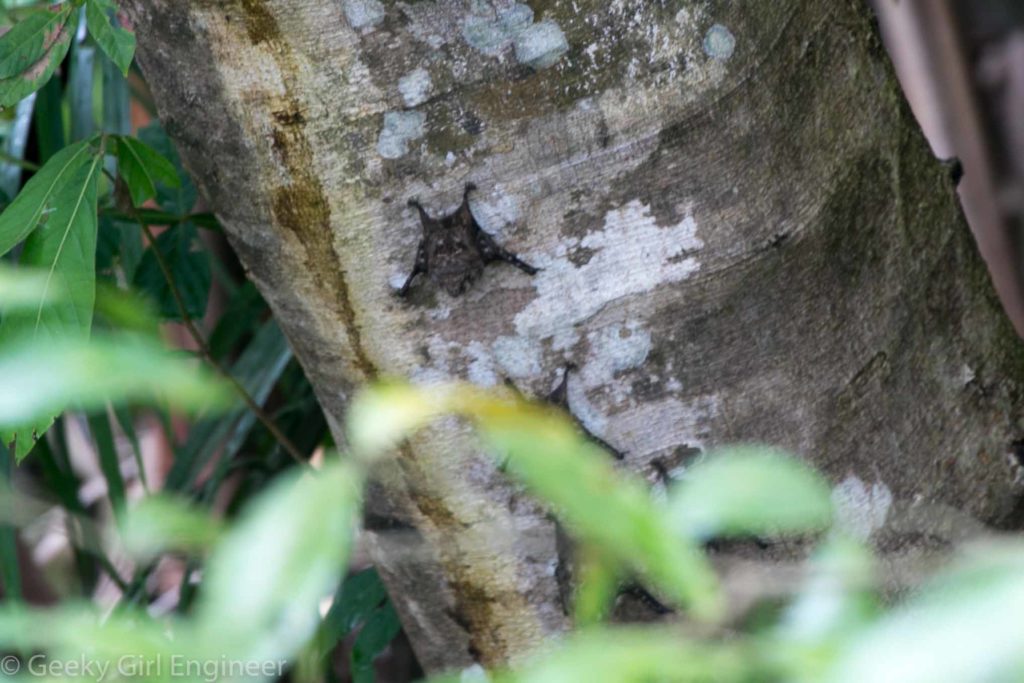
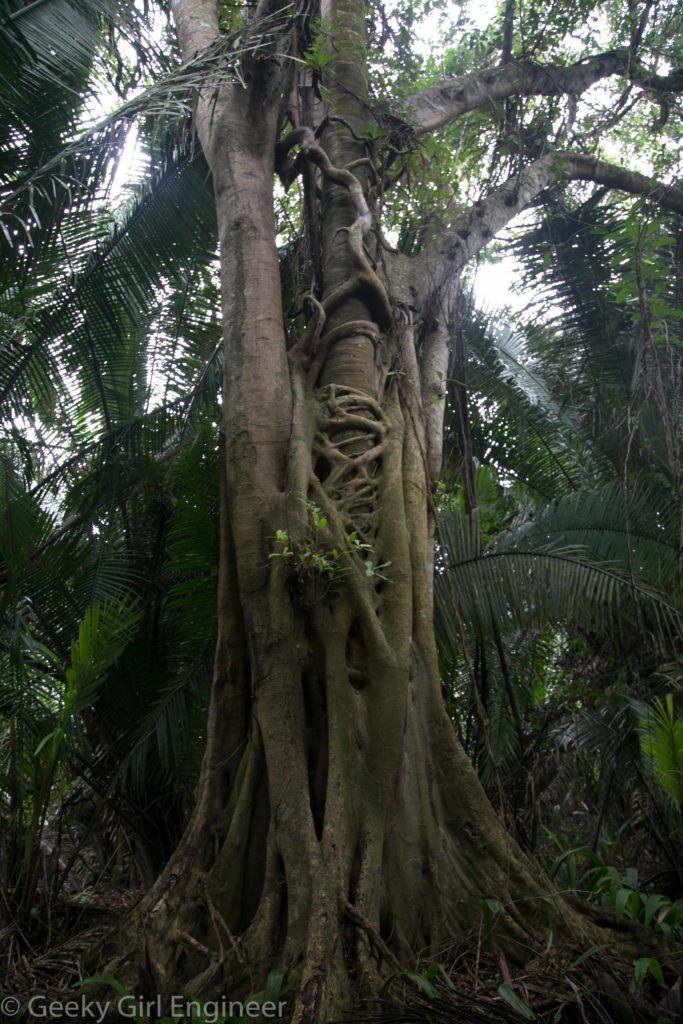
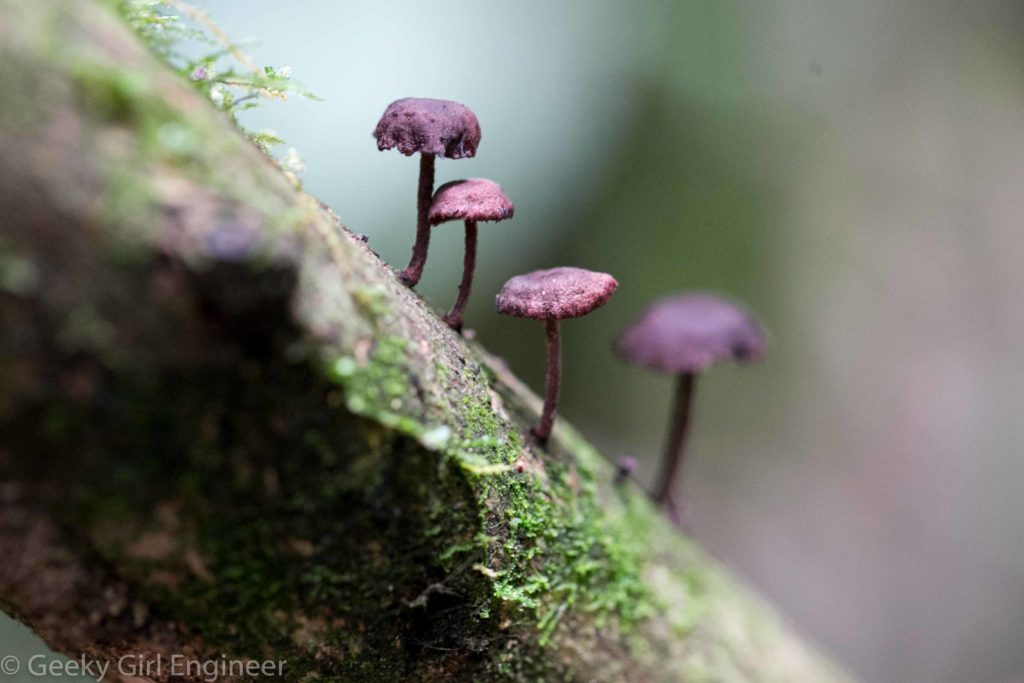
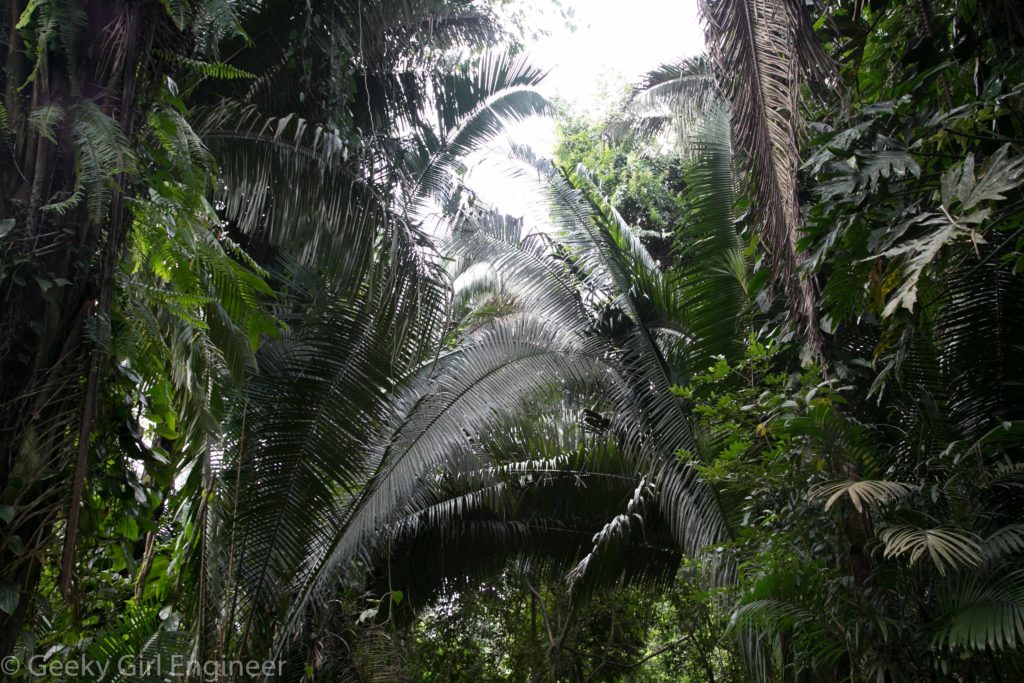
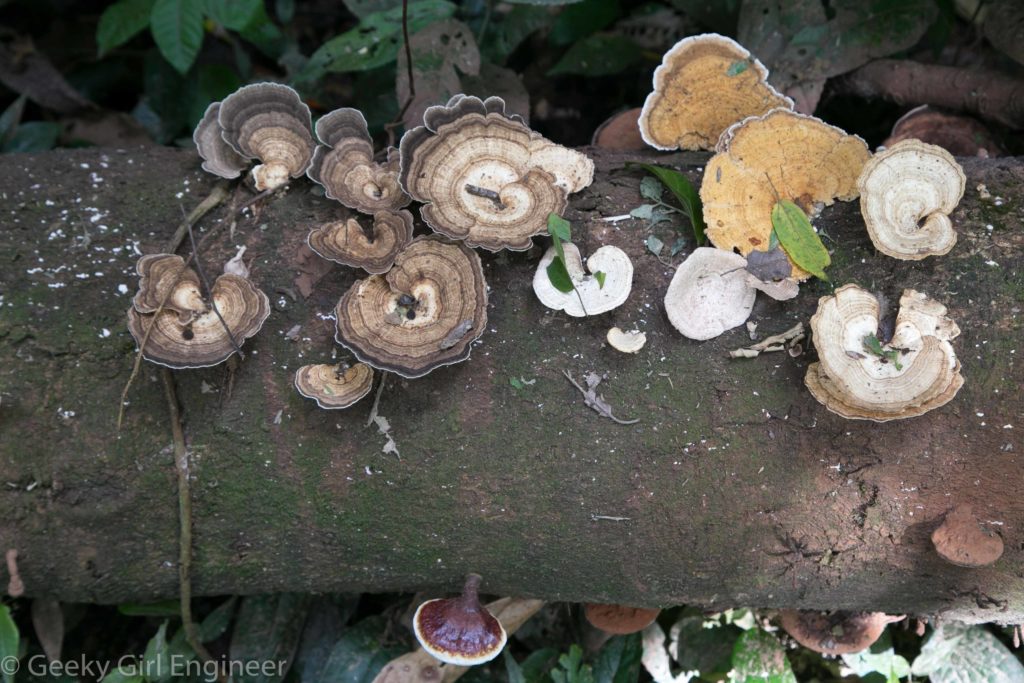
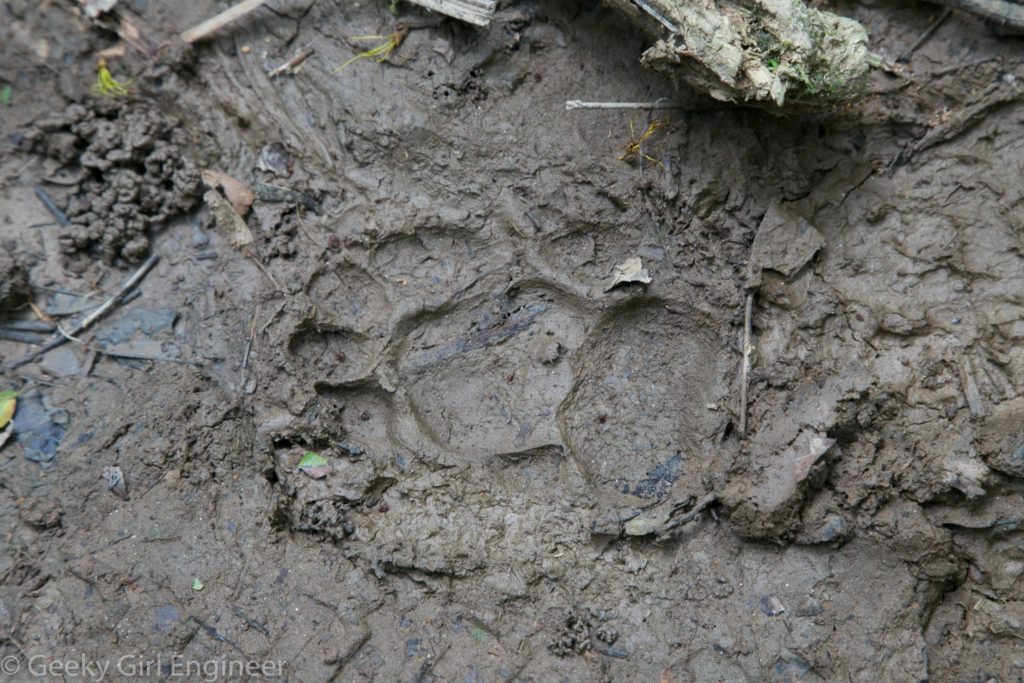
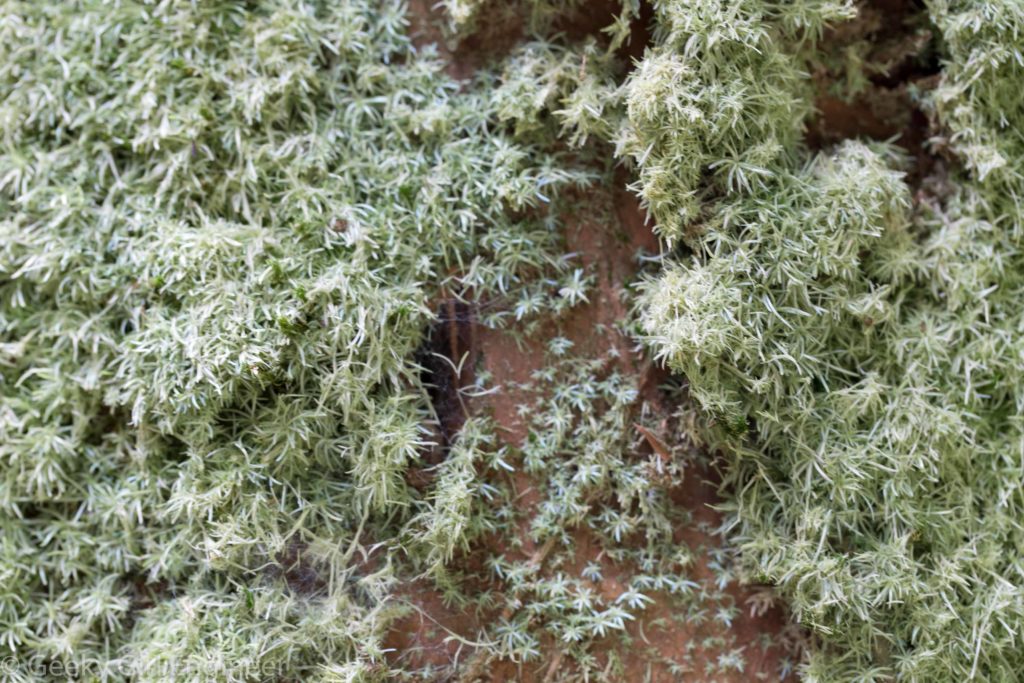
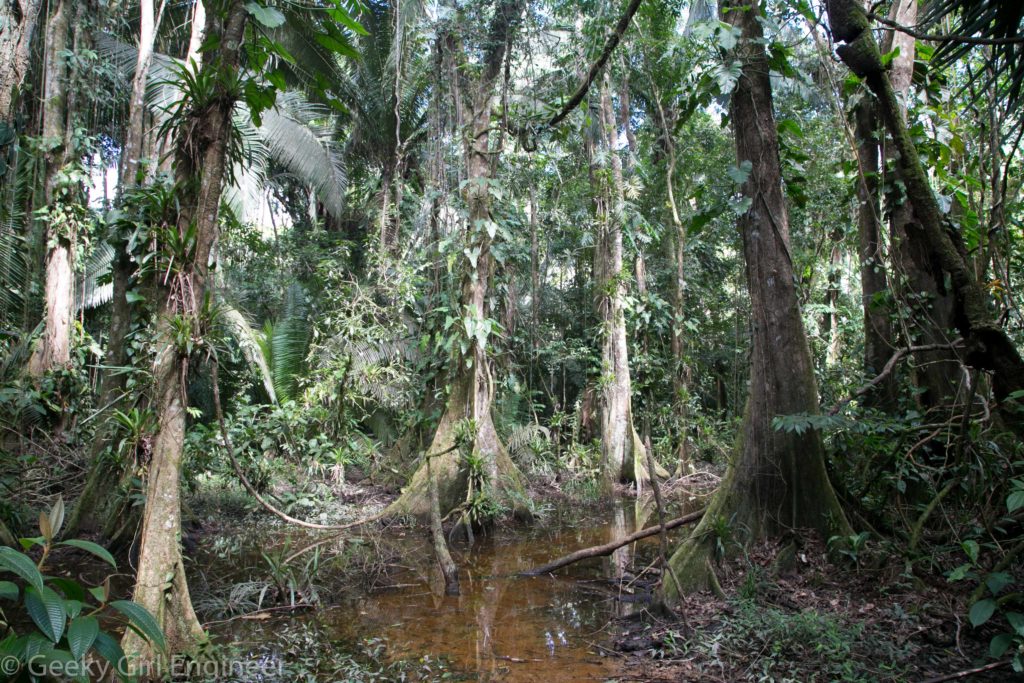
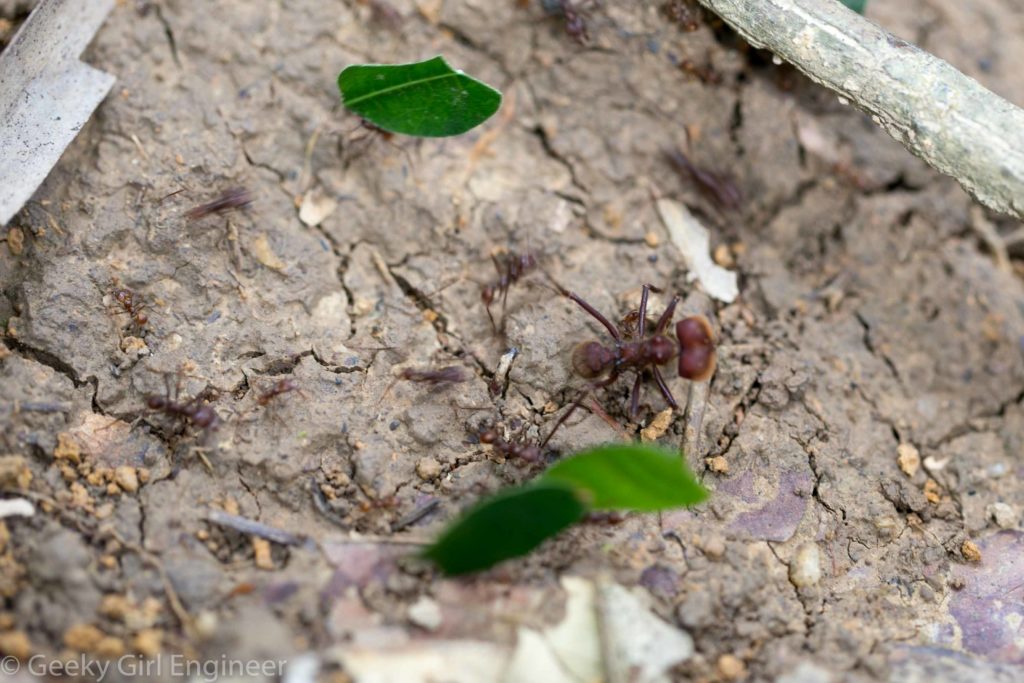
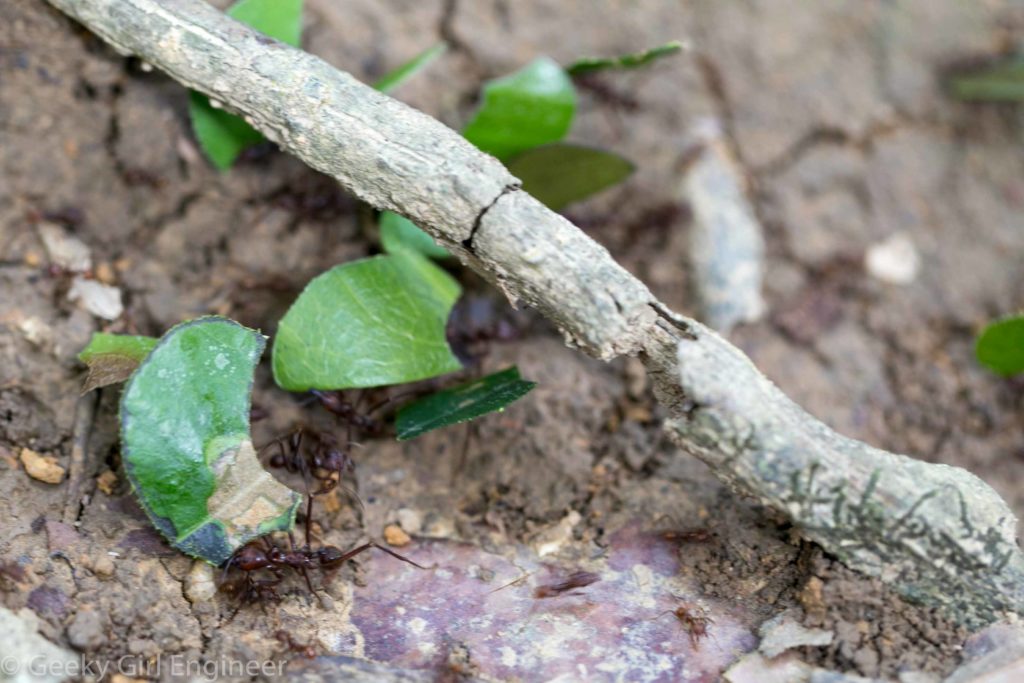
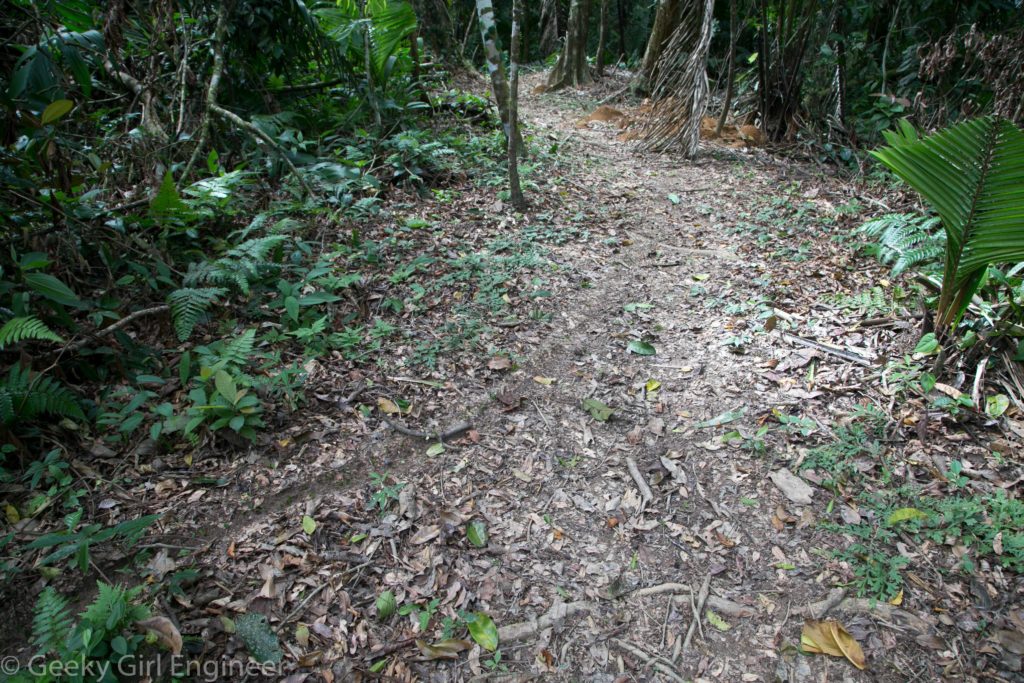
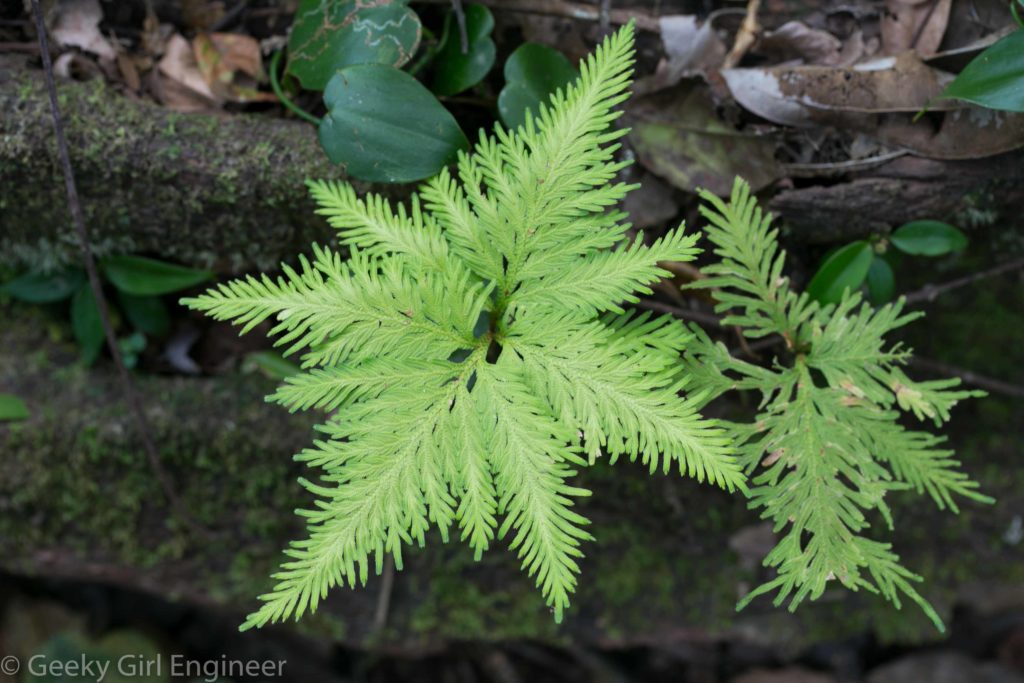
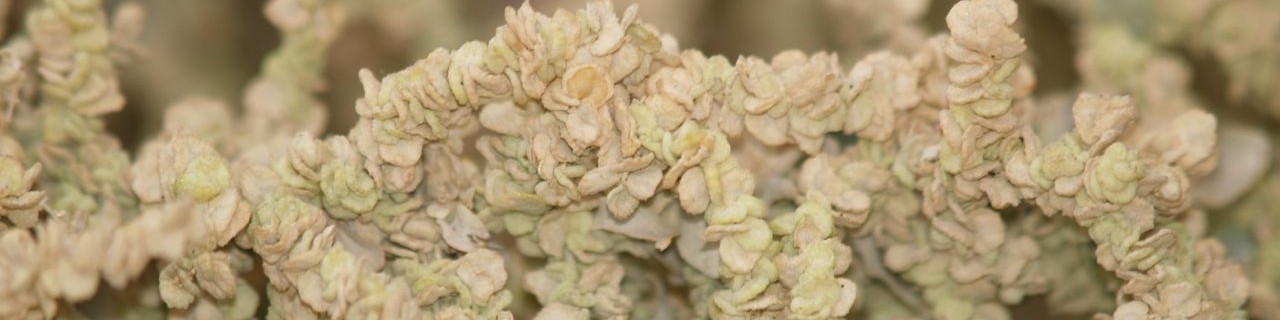
I visited Cockscomb Basin Wildlife Sanctuary yesterday. I did not get to see any jaguars, which is the reason the sanctuary was created. However, thanks to the rain the day before, I did get to see some of their tracks, which made me happy. It appears to me the sanctuary actually belongs to leaf cutter ants though. They are everywhere. They have created ant highways across all the paths, and their mounds are everywhere. I am rather in awe of what these tiny insects can do in transforming their environment. Numerous places of the hiking paths have the weeds completely mowed clear by the ants, so they can walk unhindered. The sanctuary is quite pretty, and I admit, one of my favorite things about it was the moss and fungus growing on trees that I became quite obsessed with photographing.
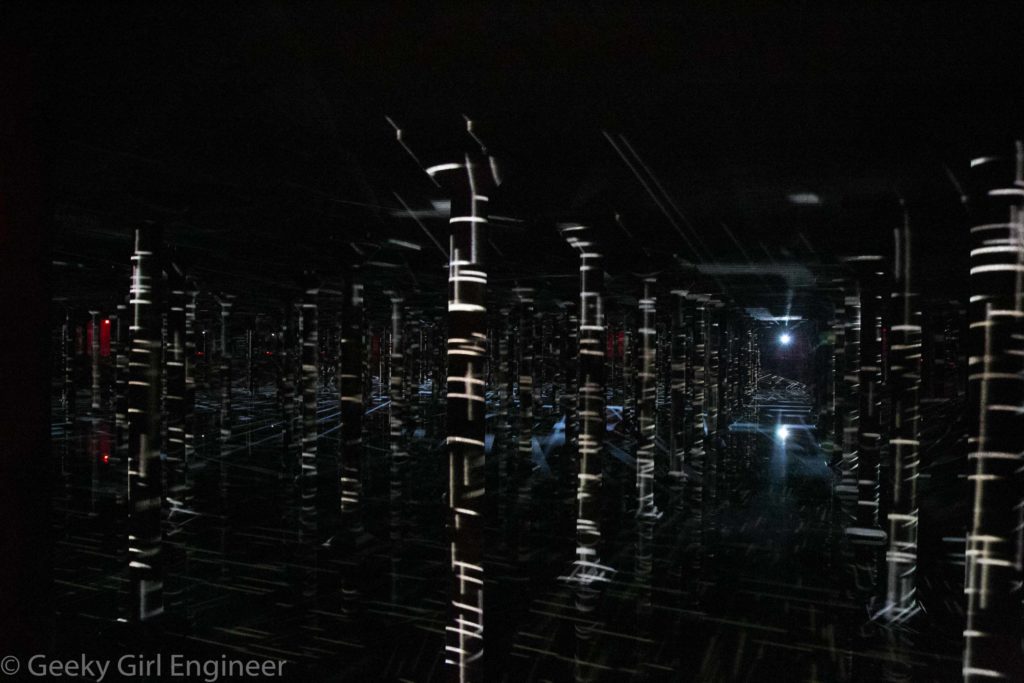
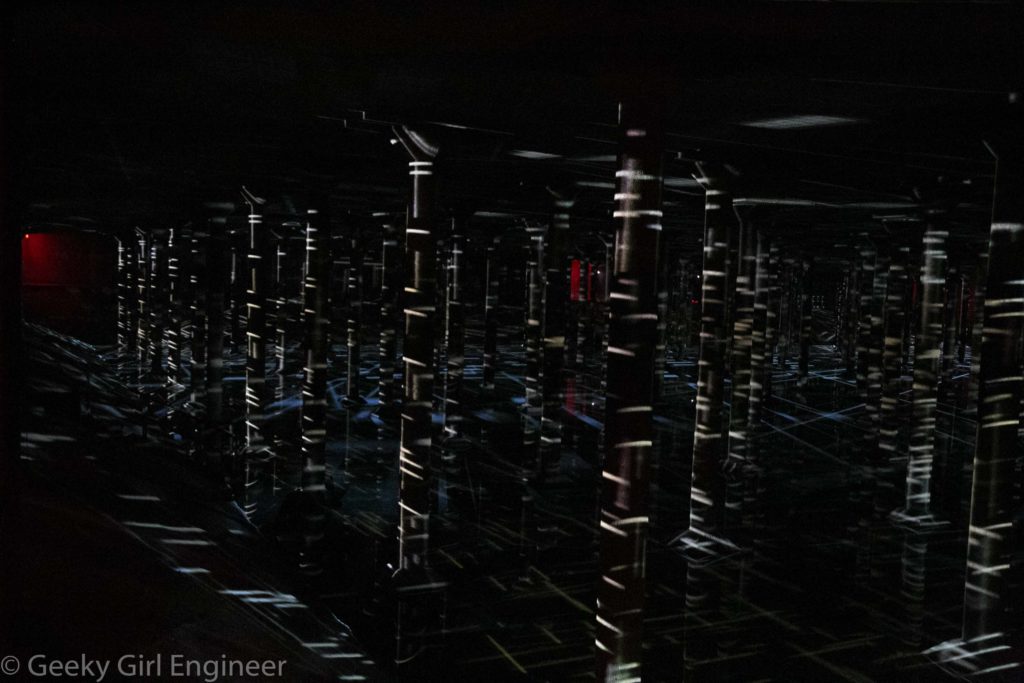
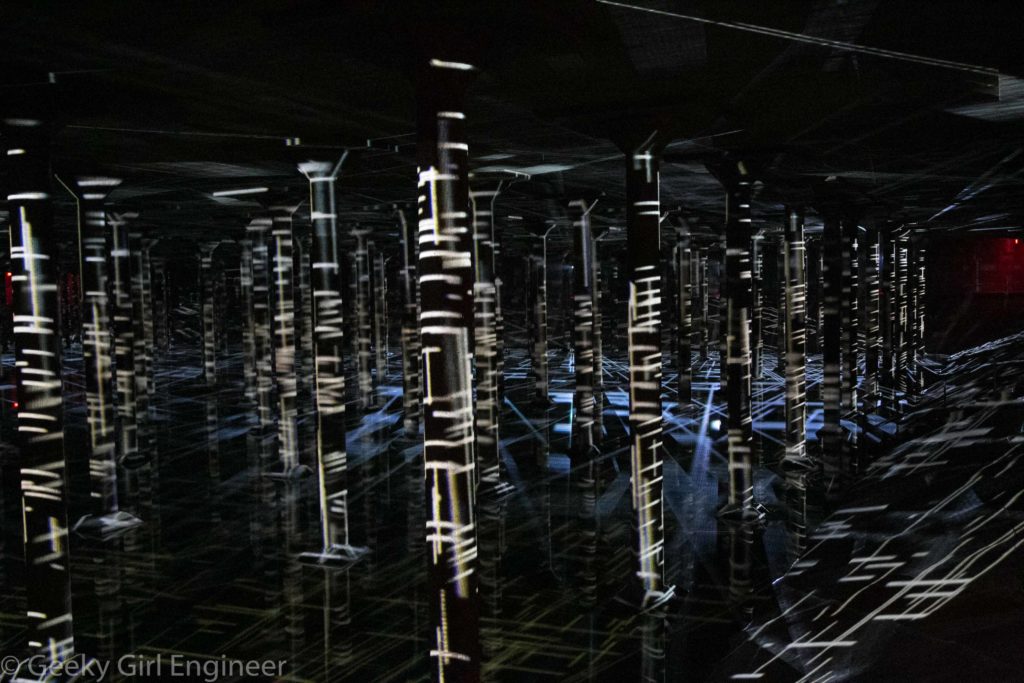
Rain: Madgalena Fernández at the Houston Cistern
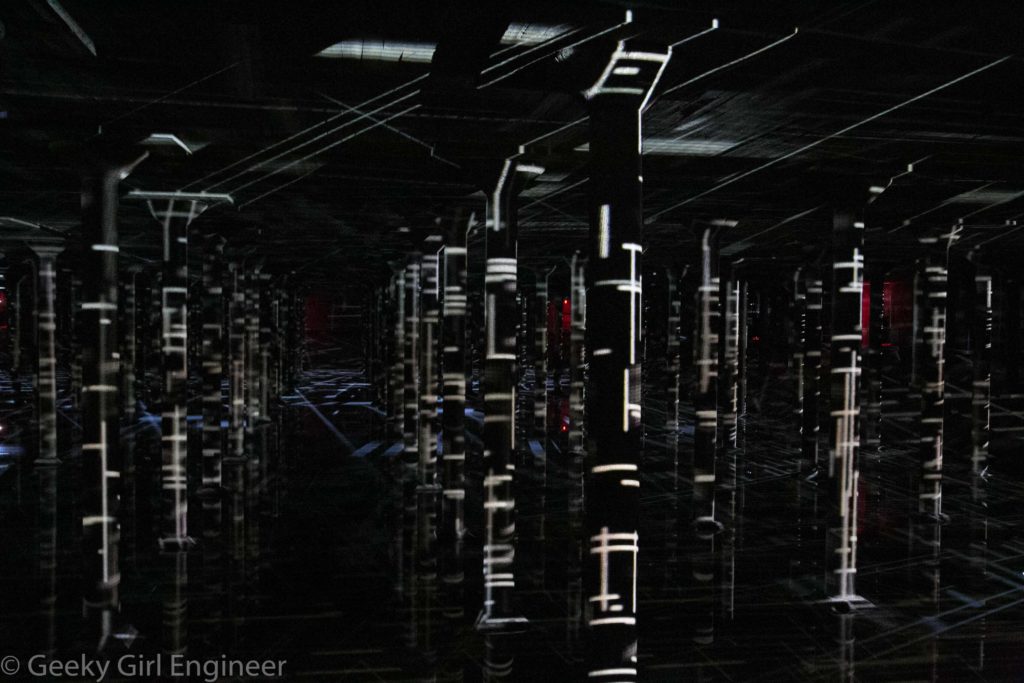
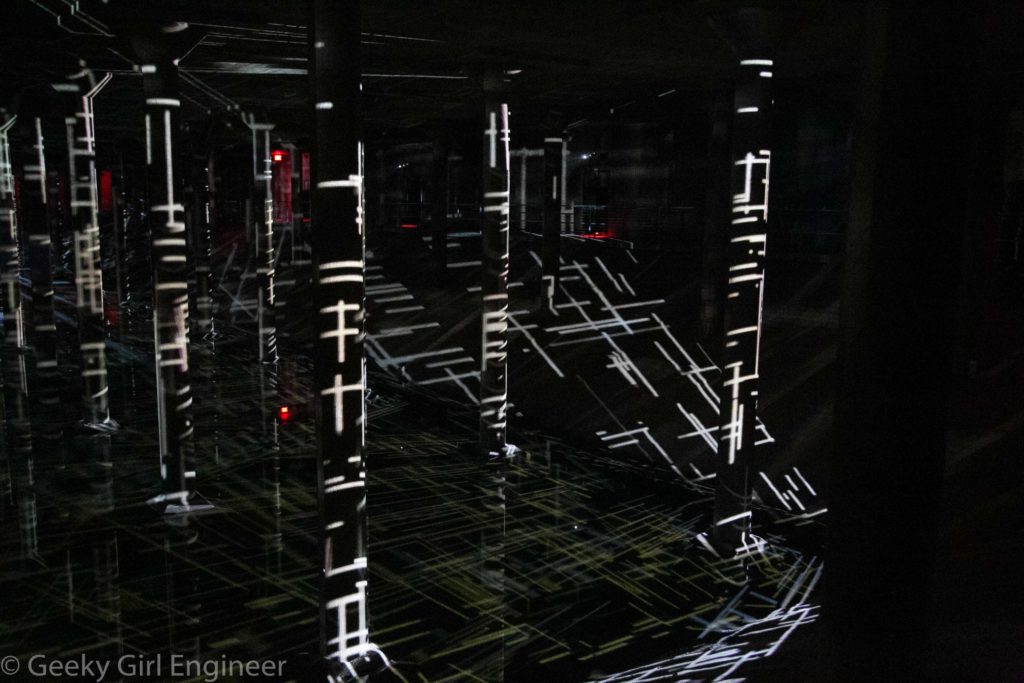
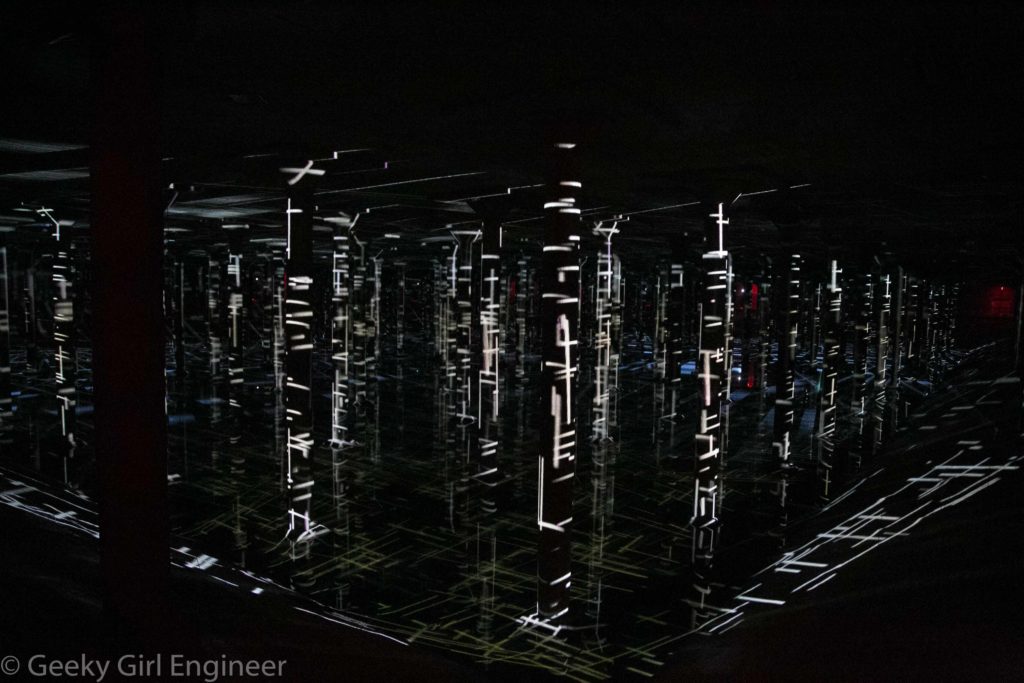
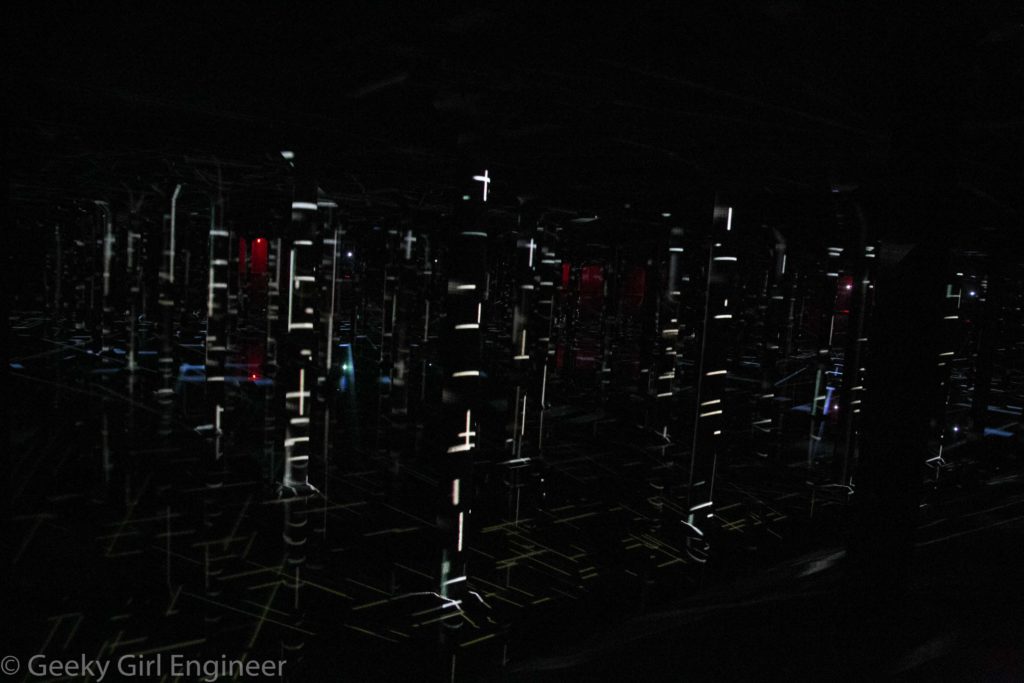
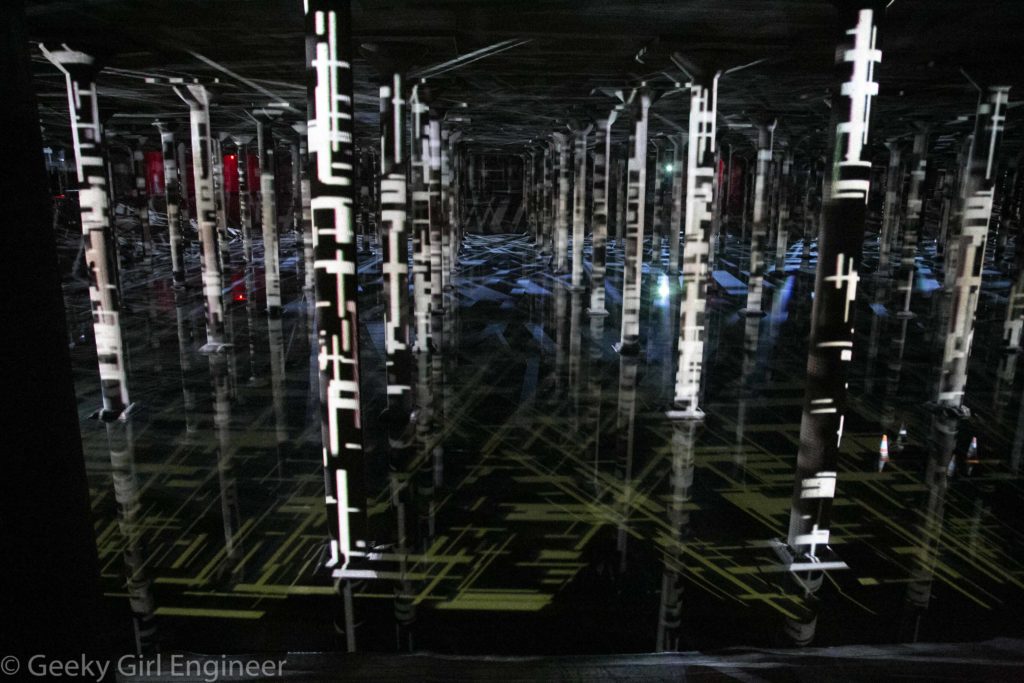
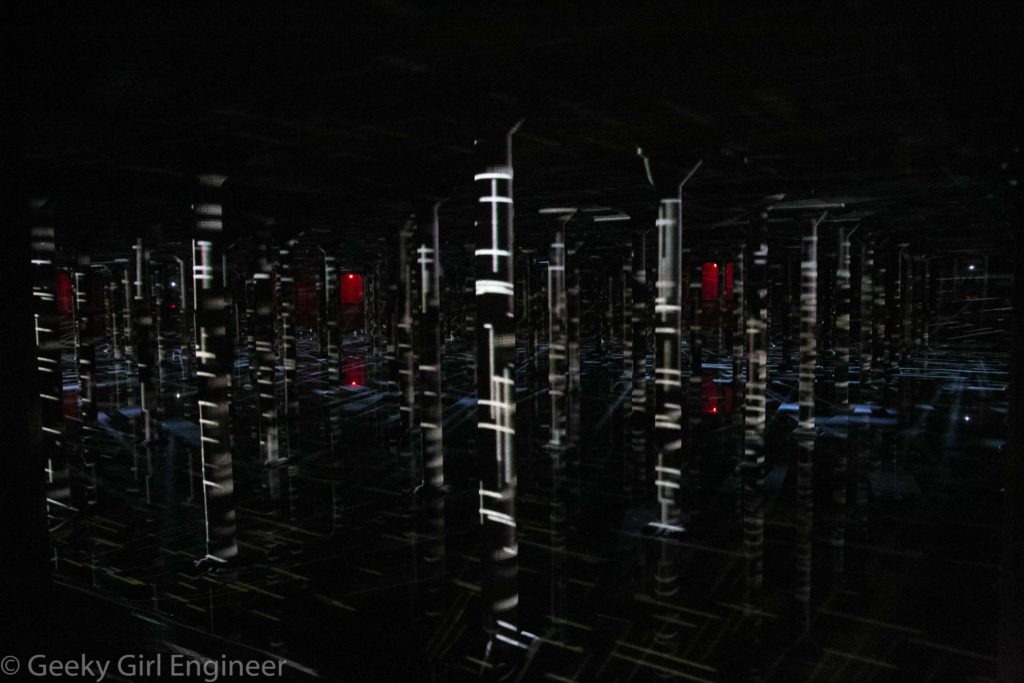
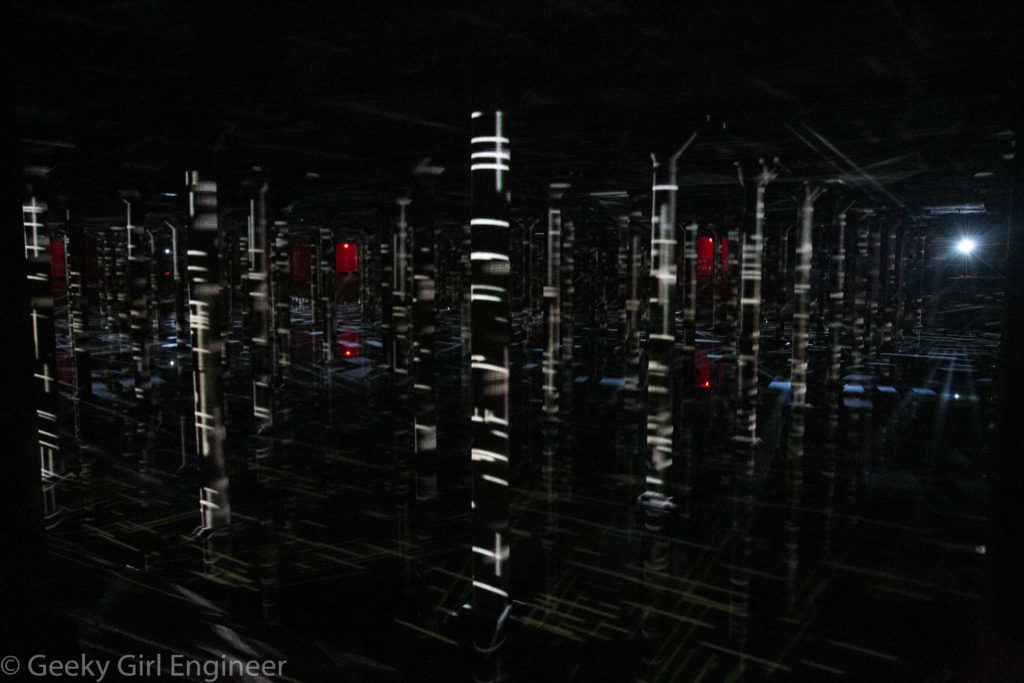
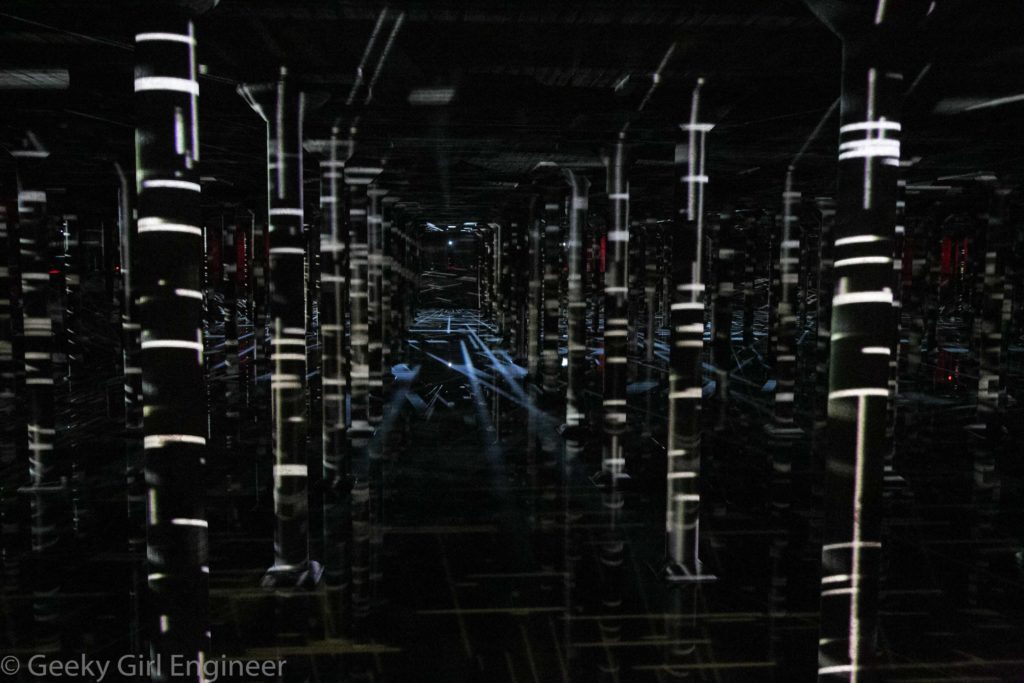
After touring the Houston Cistern, we took another tour of it with an art installation completely encompassing it. Rain: Madgalena Fernández at the Houston Cistern is a video installation with the video projected from all sides onto and into the cistern while sound plays. I don’t think I can fully explain it other than to say it is really, really cool, and you can read more about it here. The sound sounds likes rain, but it is completely human made sound. The video starts off looking a little like rain falling then becomes something that looks like how Hollywood loves to portray cyberspace. It is incredibly neat to watch, and I love the way takes over the space.

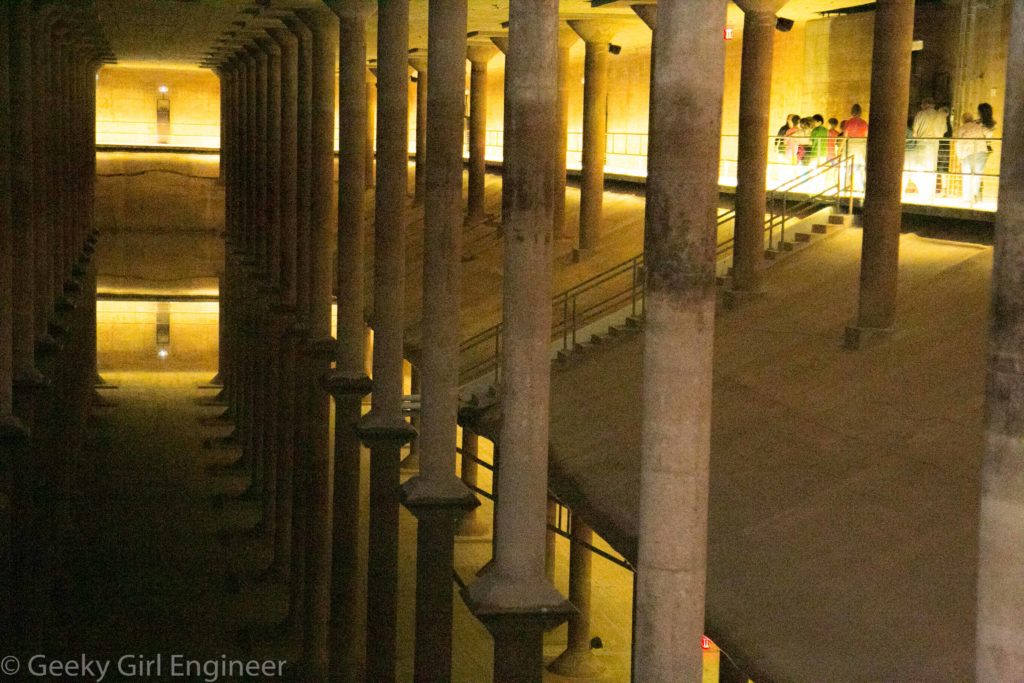
Houston Cistern
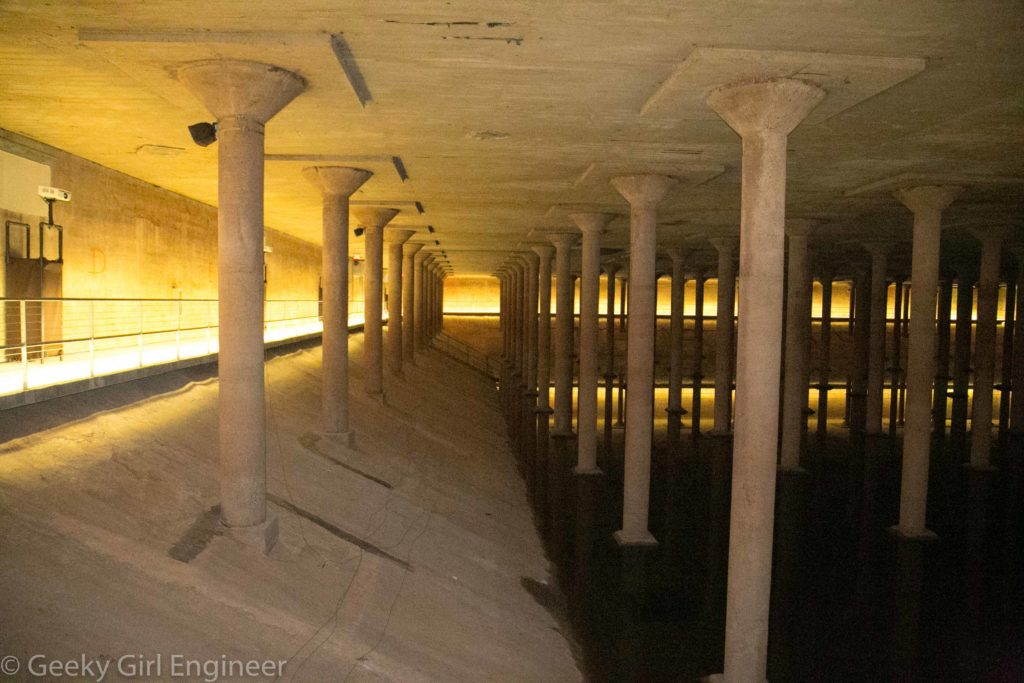
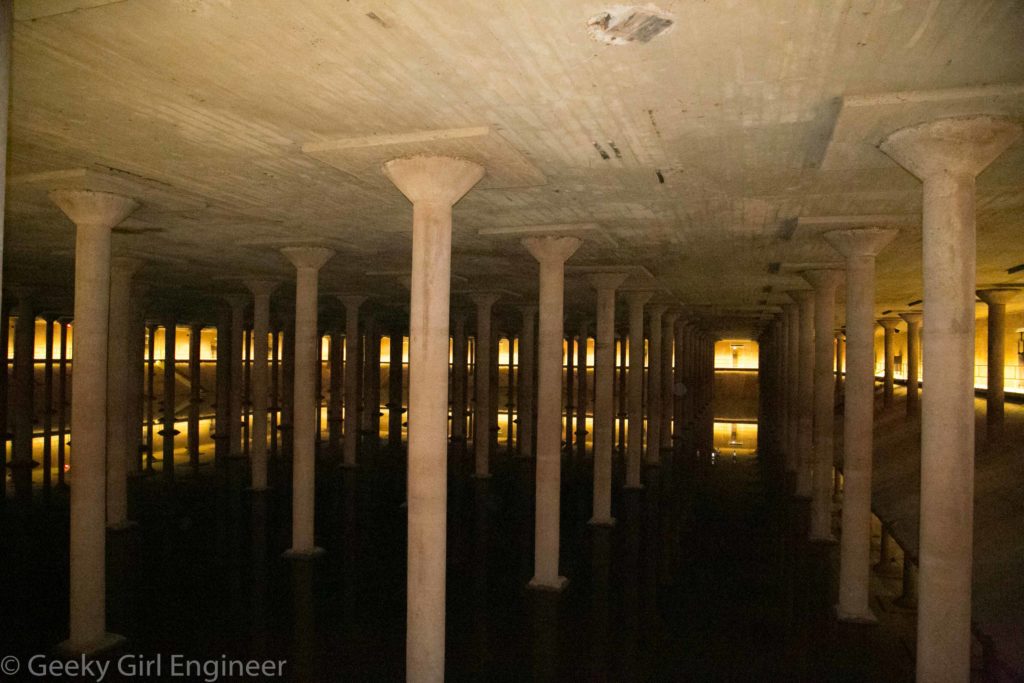
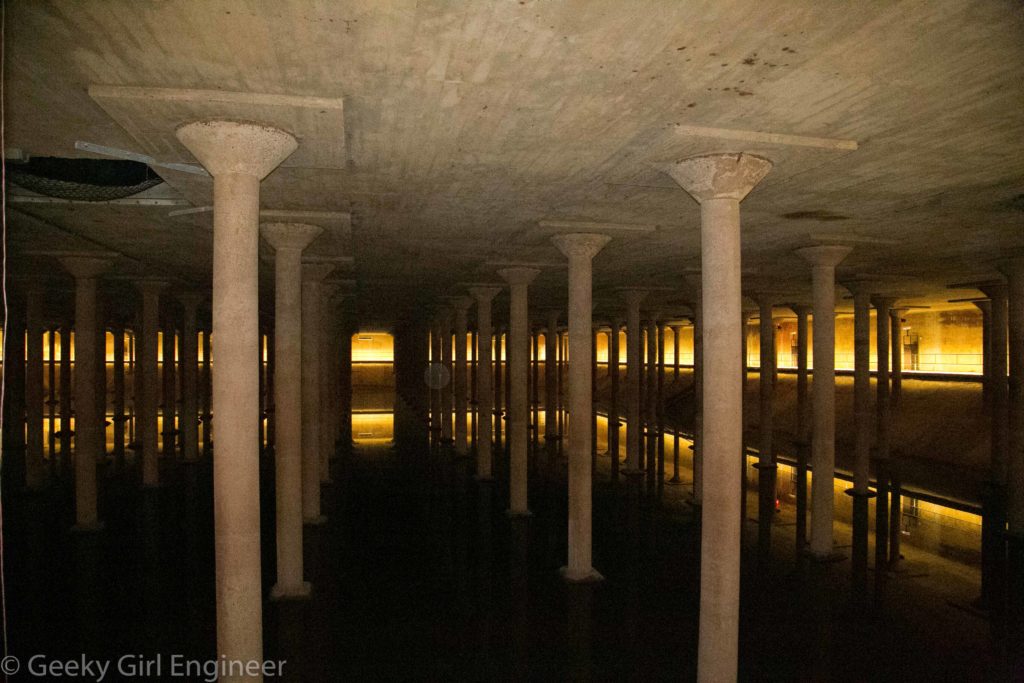
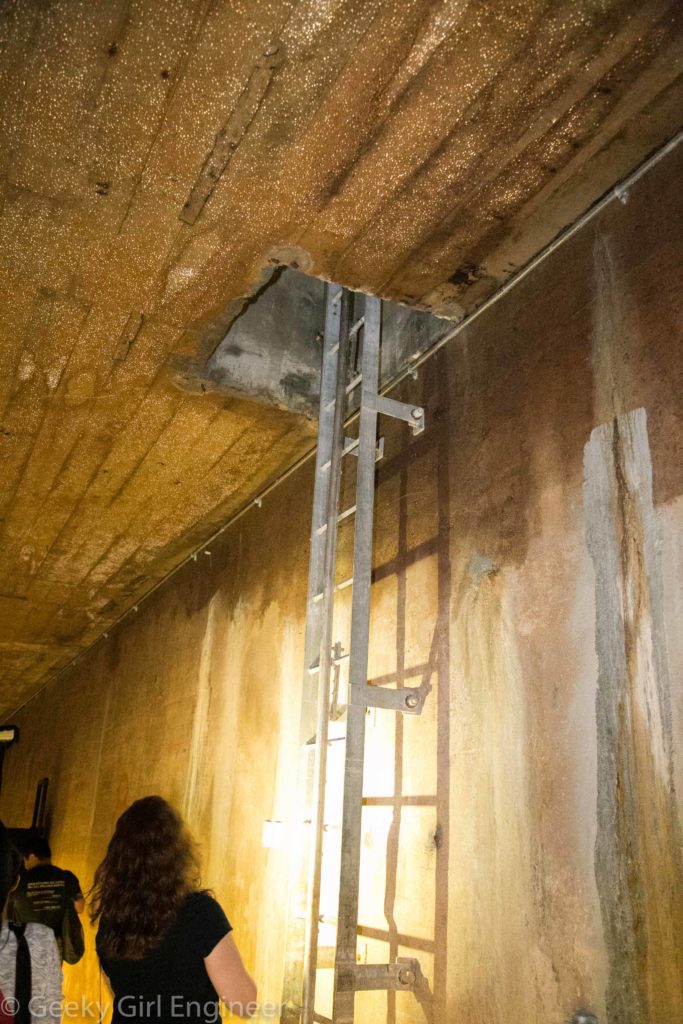
I love hidden places. I love places that you can just walk by and not have any idea are there. It just makes them more magical. I recently found out that Houston has an underground drinking water storage reservoir, a cistern. I have passed by this place so many times not having any idea it was there. The cistern was decommissioned in 2007 after an irreparable leak was discovered. Buffalo Bayou Partnership and the City of Houston turned it into space for people to visit and learn about the history of it and also a space that can be used for art installations. When functioning, the reservoir could hold 15 million gallons, but now it just has about 6 inches of water across. Enough water is there just for a neat reflection of the columns in it.
Freshkills Landfill Turned Park
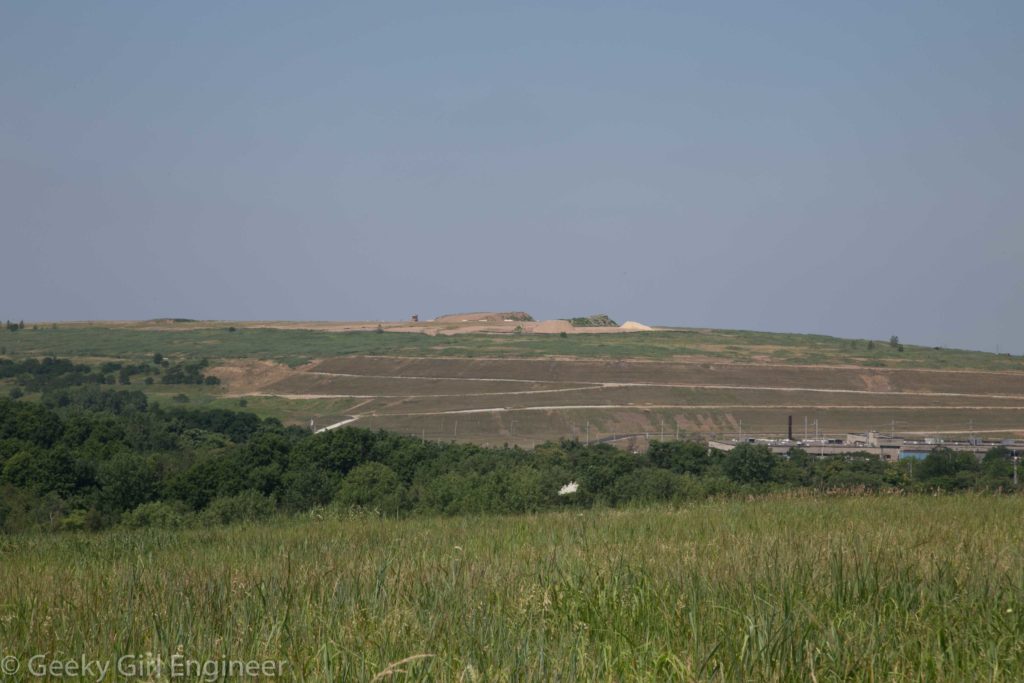
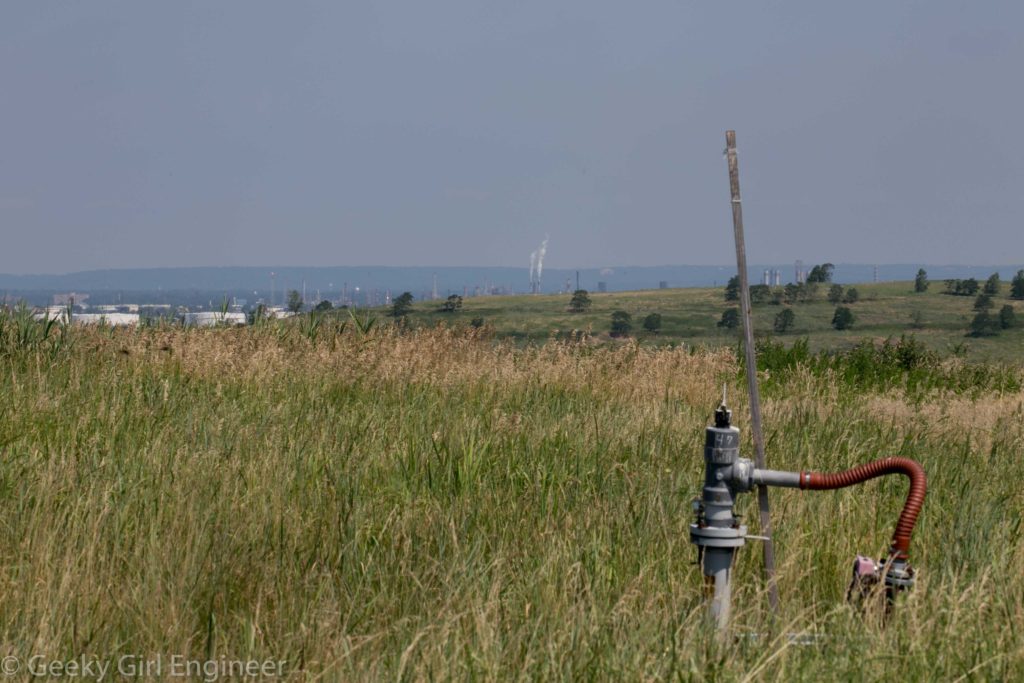
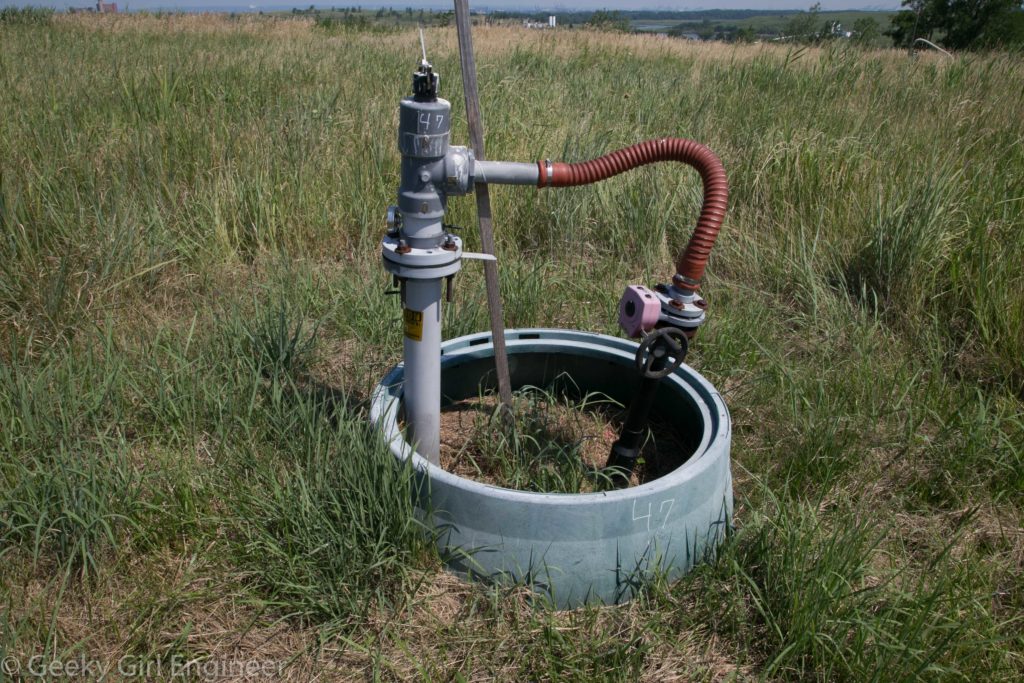
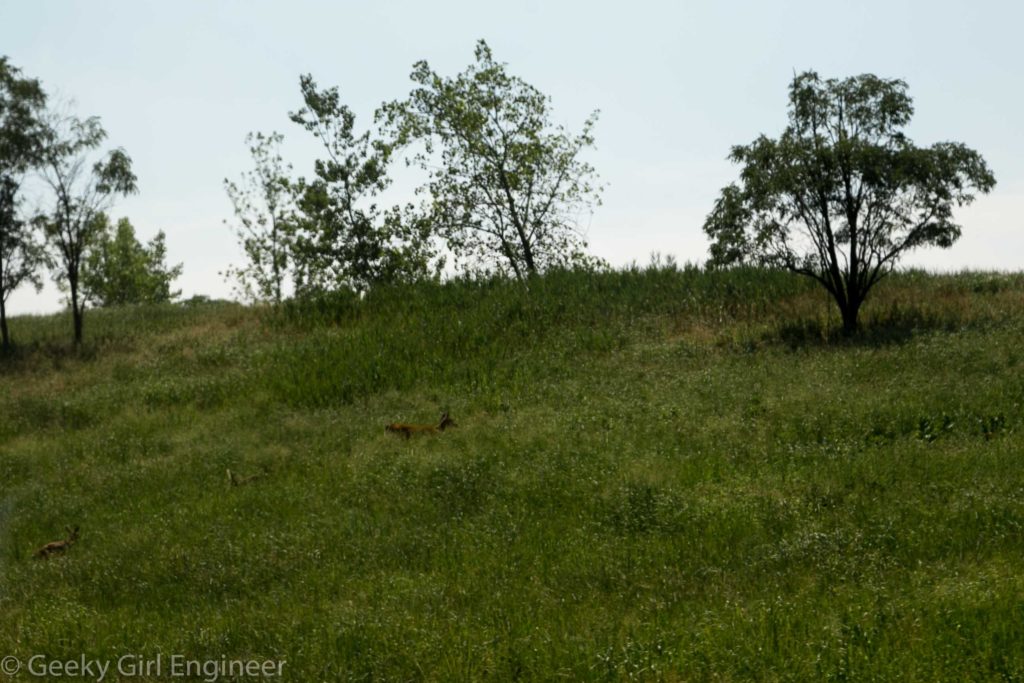
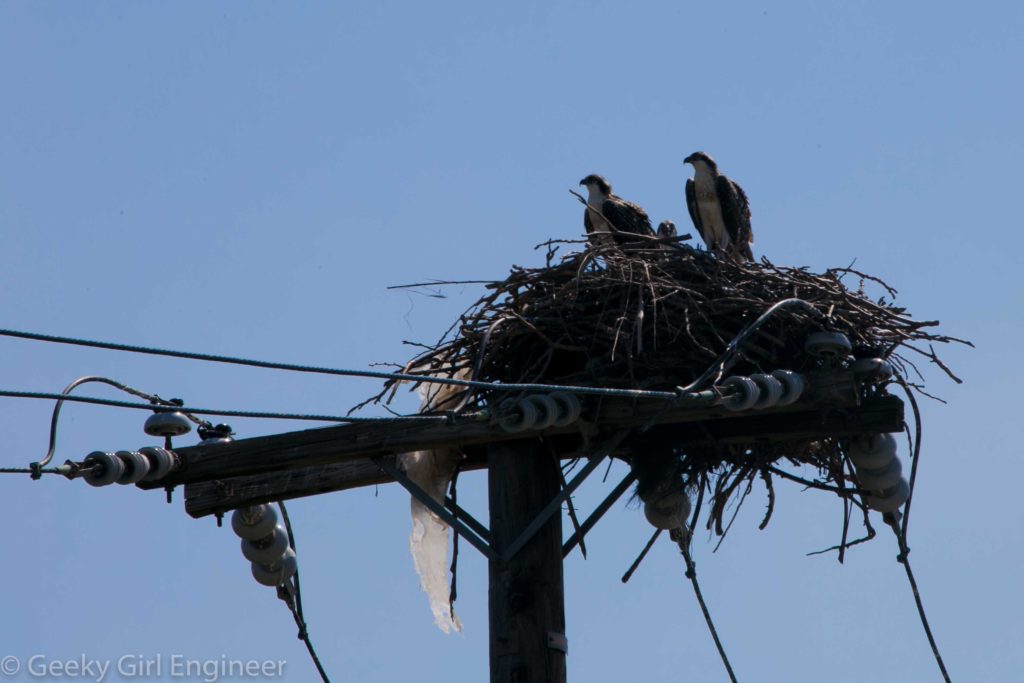
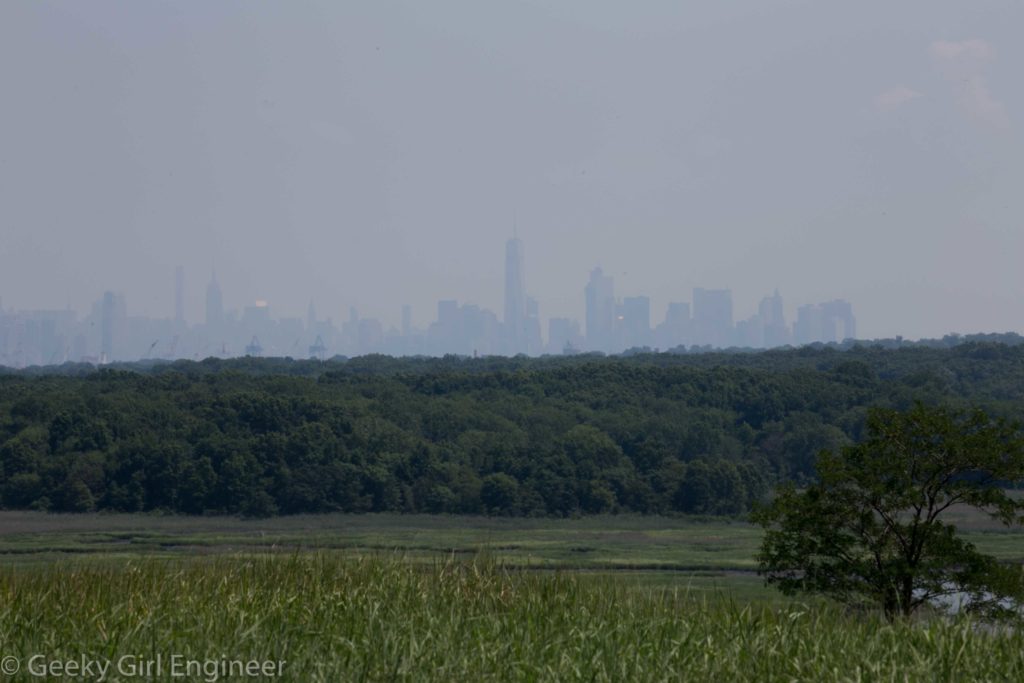
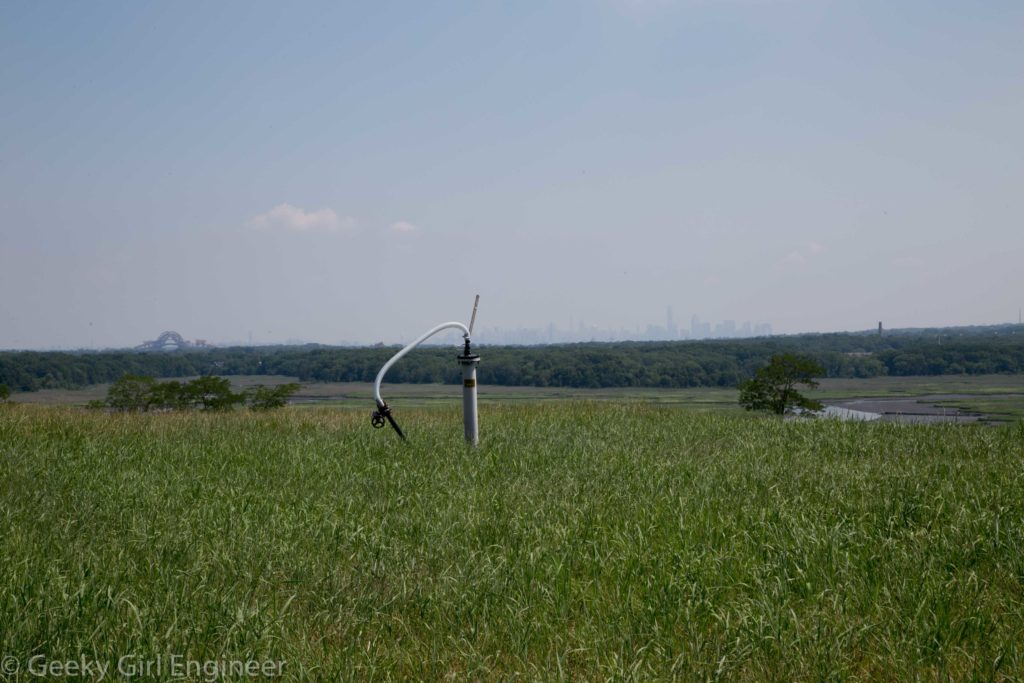
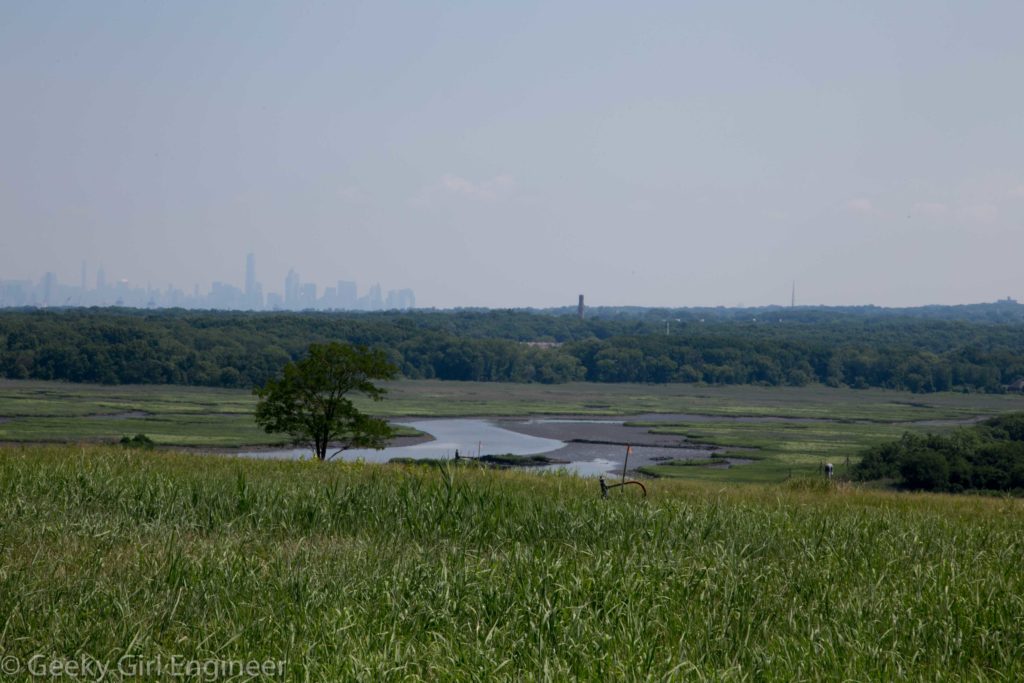
This past weekend, I got to check an item off my bucket list when I got a tour of Freshkills, the former landfill that is being turned into a park. This is probably not an item on most people’s bucket list, but I have heard so much about the landfill that when I found out New York City Parks Department gives tours, I jumped to sign up. The vast majority of the landfill has been fully capped and vegetated. The mounds are dotted by the landfill gas collection system with gas wells popping up from the high grass at regular intervals. The wildlife has already moved in. There were butterflies flying everywhere in the grass, and birds were everywhere. We also saw a family of deer. The wetlands are lovely and evidently filled with wildlife. Also, the view from the top of the mounds is spectacular. It will be a while before the area will be completely converted to a park and open to the public, but the transformation already is incredible. As an environmental engineer, I am incredibly happy to see it and proud of my profession that did it.