Athens Day 4: Agora Ruins

I took a different route through Plaka to visit more sites, and I ended up climbing partially up the Acropolis hill and winding through a little neighborhood filled with cute little adobe-like houses that I associate with the Greek islands. Then I visited the Roman Agora, Ancient Agora, and Hadrian’s Library. The rest of the day was spent wandering through the National Gardens.
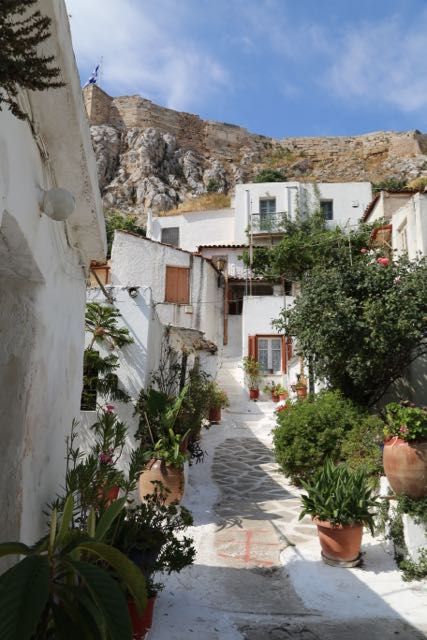
Houses in a neighborhood at base of Acropolis hill
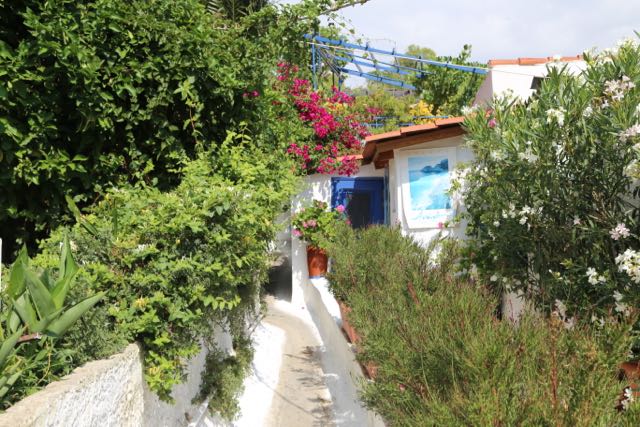
Houses in a neighborhood at base of Acropolis hill
Houses in a neighborhood at base of Acropolis hill

Houses in a neighborhood at base of Acropolis hill

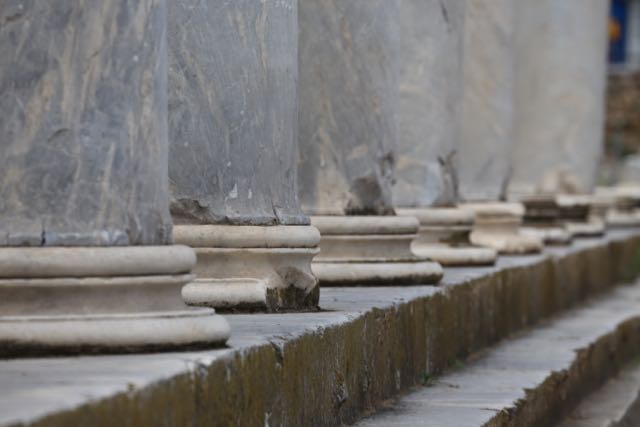
Roman Agora columns
Roman Agora columns

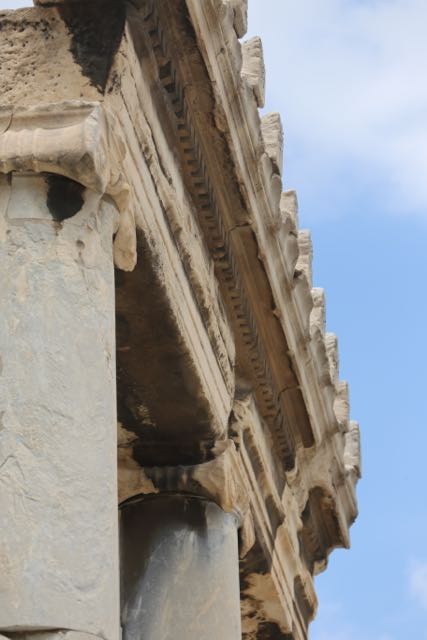
Roman Agora pediment
Roman Agora pediment

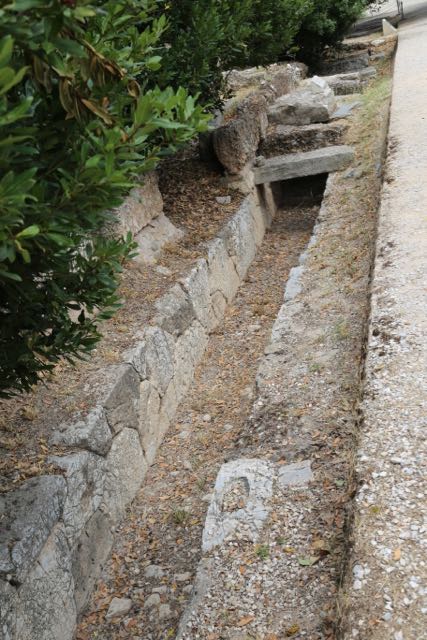
The Great Drain in Ancient Agora
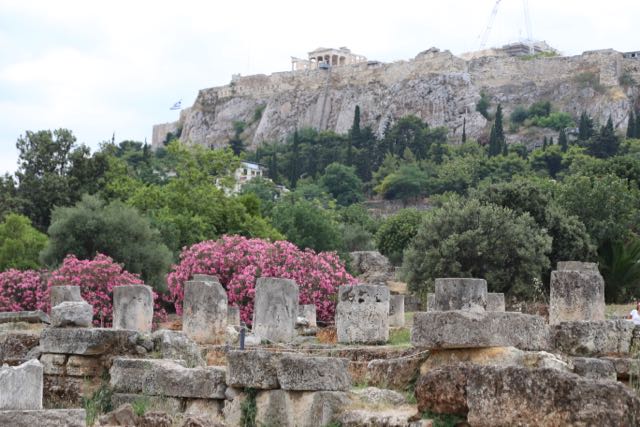
The Great Drain in Ancient Agora

Middle Stoa in Ancient Agora

Middle Stoa in Ancient Agora

Stoa of Attalos in Ancient Agora
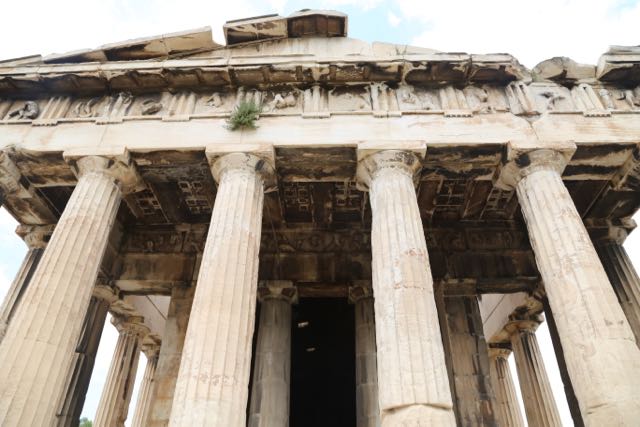
Stoa of Attalos in Ancient Agora

Temple of Hephaistos in Ancient Agora
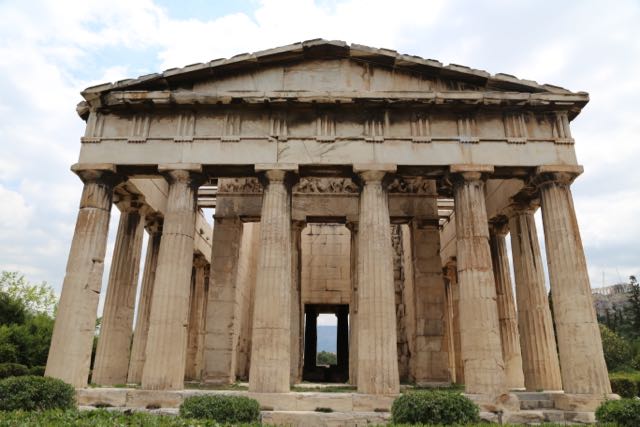
Temple of Hephaistos in Ancient Agora
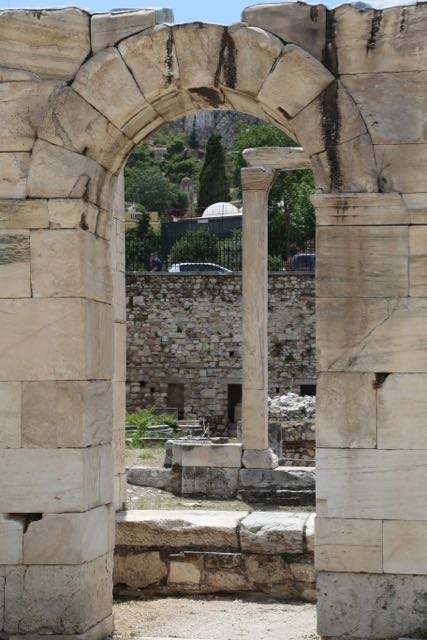
Temple of Hephaistos in Ancient Agora

Temple of Hephaistos in Ancient Agora

Ruins in Hadrian's Library

Ruins in Hadrian’s Library
Athens Day 3: Artifacts and More Ruins

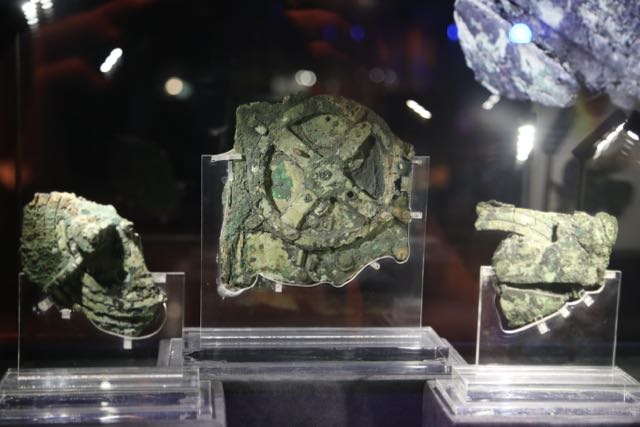
I spent the majority of the day at the National Archaeological Museum, which has an amazing collection of artifacts. Being a nerd, the highlight for me was the Antikythera Mechanism. However the stone, pottery, glass, and metal artifacts were amazing too. I could have spent more time there, but there are only so many vases and sculptures I can look at in one time period.

A few photos of some of my favorite things in the museum, starting of course with the Antikythera Mechanism. After seeing it, I am very impressed with whoever made it and also with the modern scientists that have been able to understand what it did, at least on some level.

Antikythera Mechanism

Antikythera Mechanism

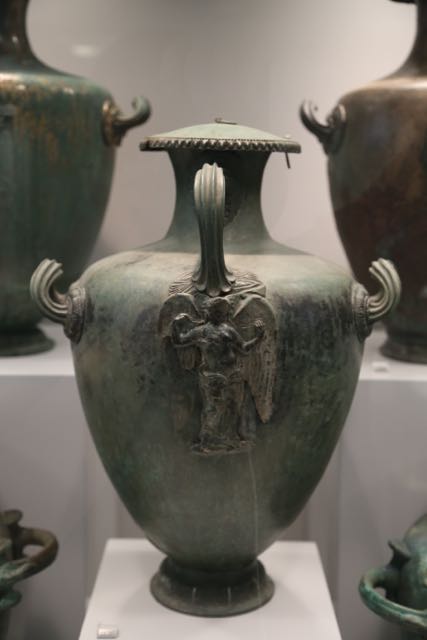
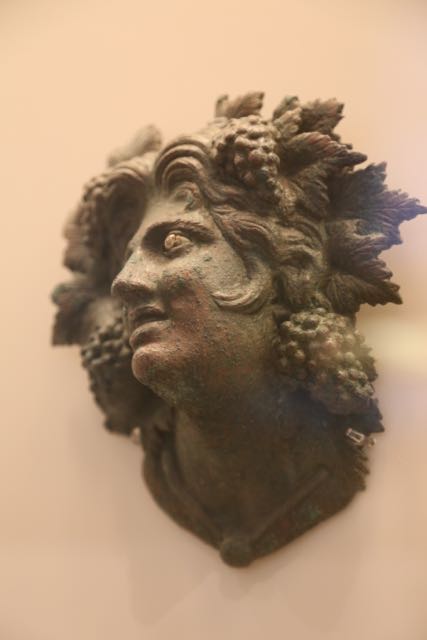
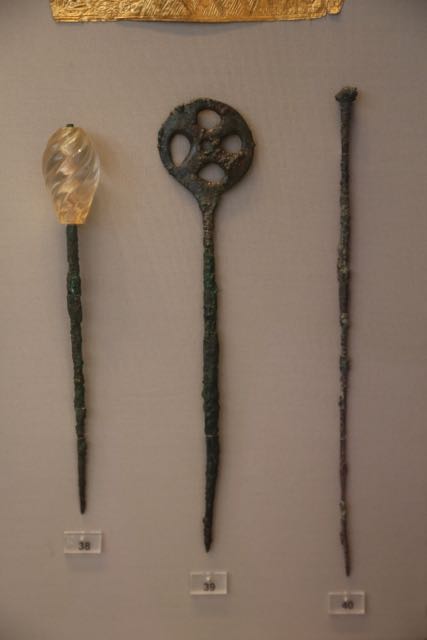
There were lots of metal sculptures and other items.

Bronze vase

Bronze vase

Bronze head

Bronze head

Pins

Pins

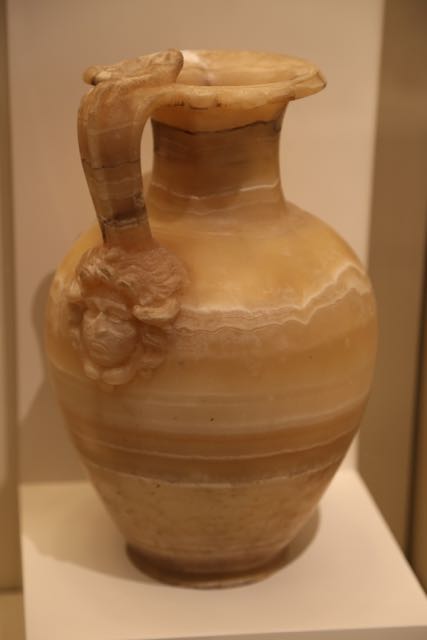
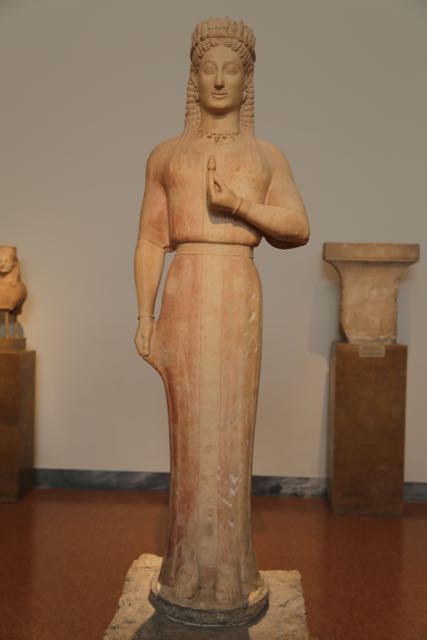
There was also amazing carved stone items.

Alabaster pitcher

Alabaster pitcher

Statue of a kore

Statue of a kore

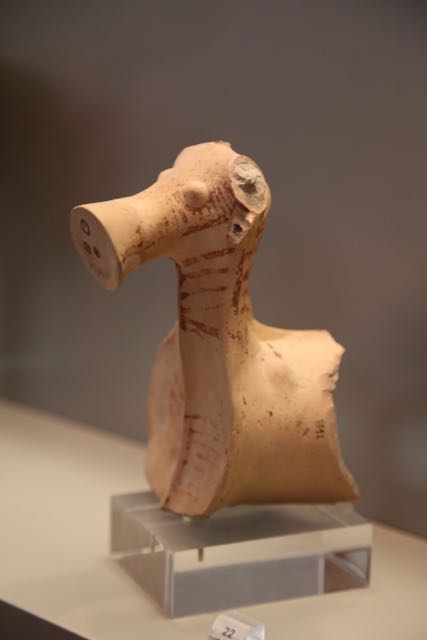
The below was labeled as a bull figure. I think it looks like a cross between a seahorse and real horse.

Bull figure

Bull figure

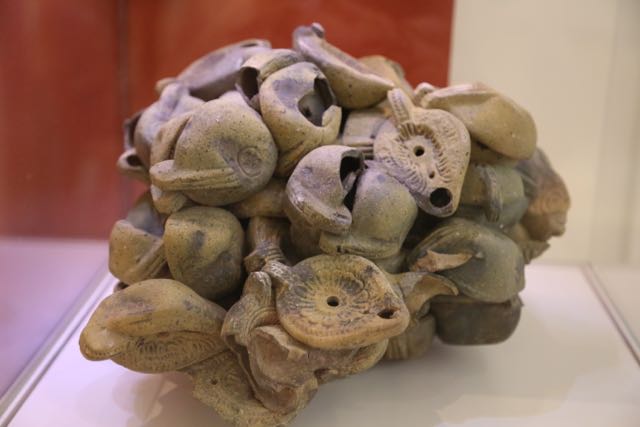
Below may be one of my favorite pieces. Take heart all artists and craft people, especially if you are like me and go through many trials before getting something right, some day your failed pieces may end up in a museum!

Failed pottery batches

Failed pottery batches

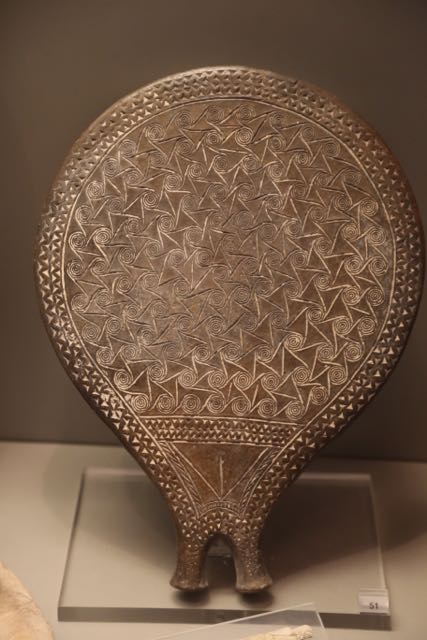
This frying pan was labeled as something that would buried with someone. I would rather not be buried with a frying pan, no matter how pretty.

Frying pan

Frying pan

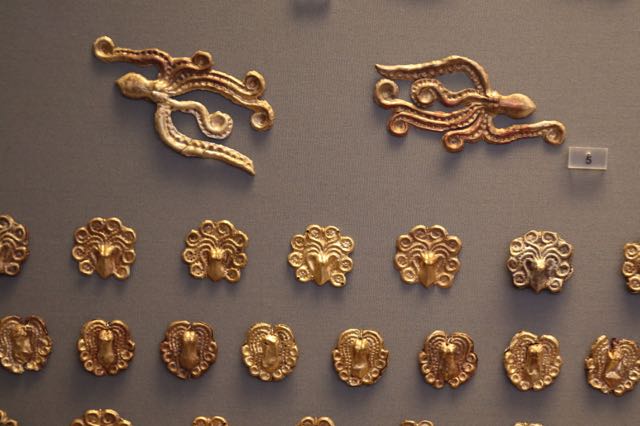
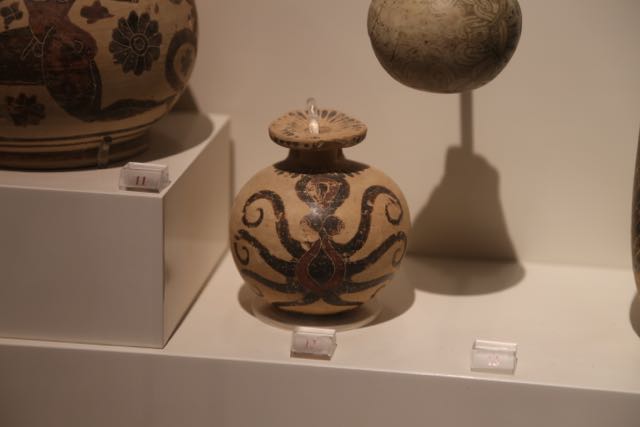
They were very big on the octopus in metal pieces and painted on pottery. I love cephalopods, so I thought this was really neat.

Gold Octupi

Gold Octupi

Octopus Vase

Octopus Vase

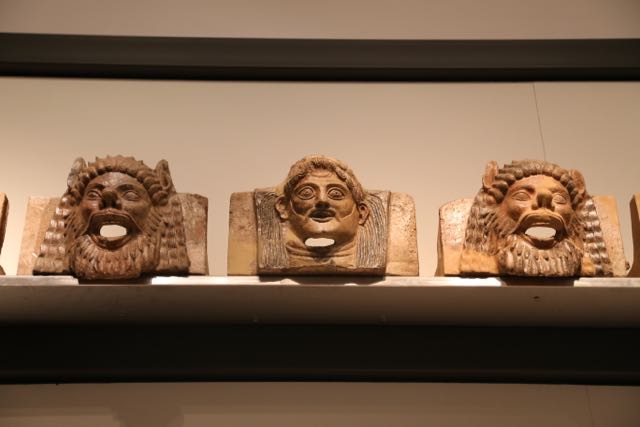
The roof spouts cracked me up.

Roof spouts

Roof spouts

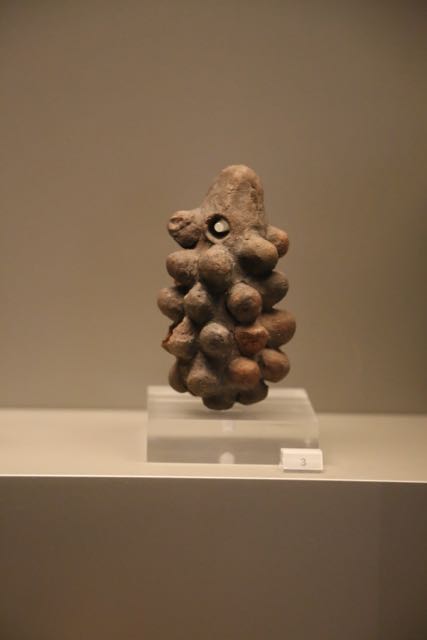
This piece was labeled as “clay artifact in the form of bunch of breasts or multi-cluster fruit. Probably symbol of fertility.” When I first saw this, I thought it was supposed to be a bunch of grapes or perhaps a pine cone. No where in my guesses was bunch of breasts. I don’t know if that says more about my ignorance of artifacts, my imagination, or perhaps the thought process of the archaeologists studying this, whom I am going to go out on a limb and guess are mostly men.

Bunch of breasts or fruit

Bunch of breasts or fruit

Afterwards, I went to the Archaelogical site of Keramikos to view yet more ruins. This was a nice site because it was not jammed packed with people, and I could just wander around the ruins or really all the walls.

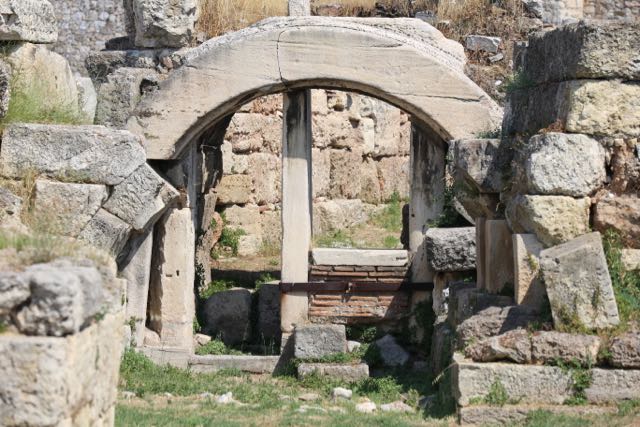
Sacred Gate

Sacred Gate

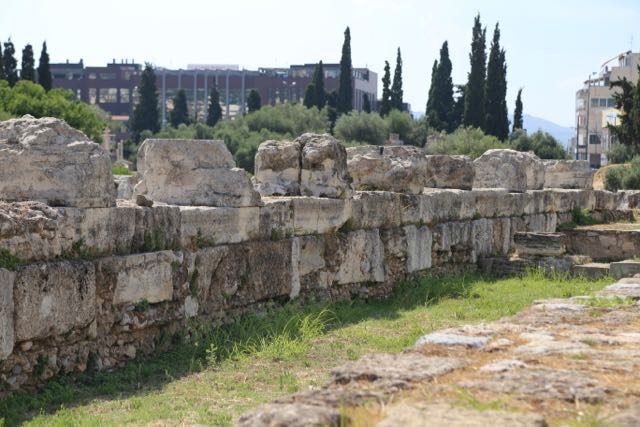
Wall

Wall

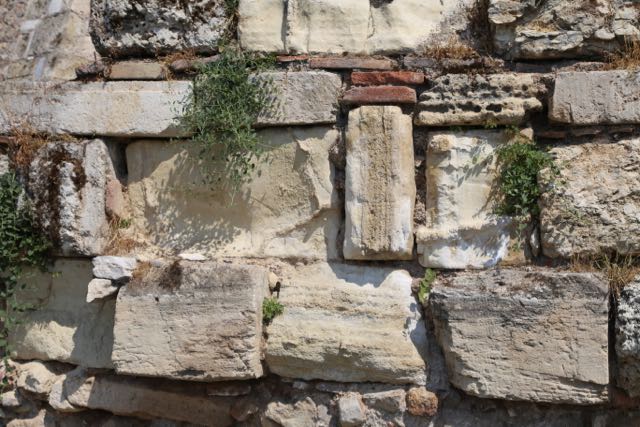
Stones of wall

Stones of wall

Athens Day 2: Ruins and Hills

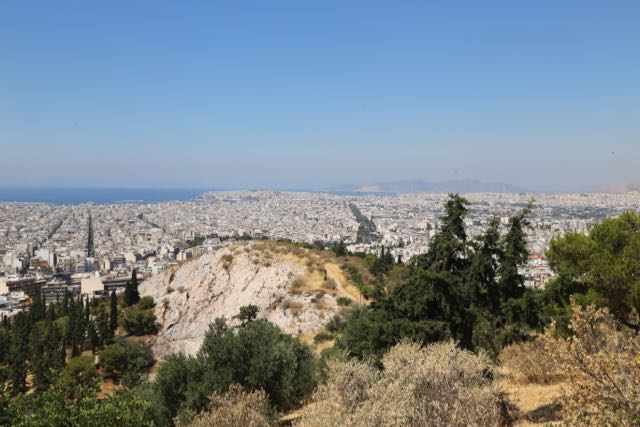
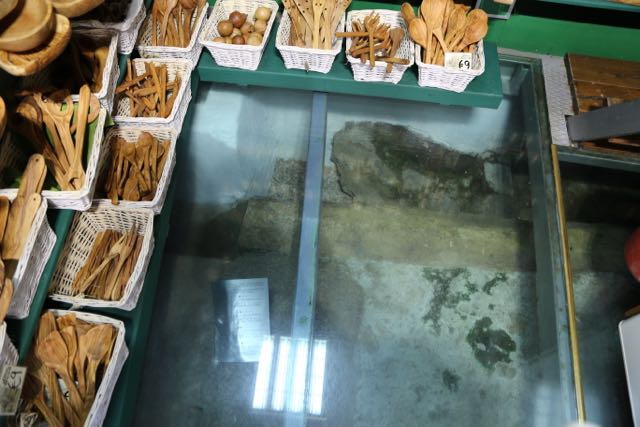
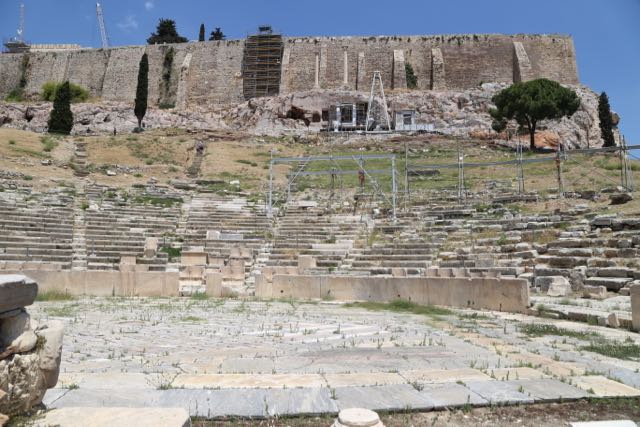
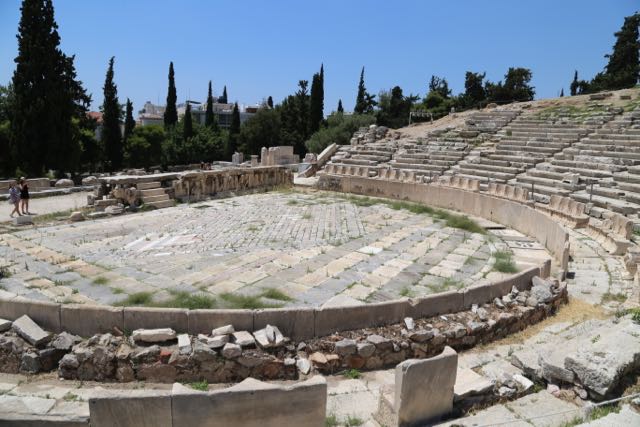
I started off the day by hiking up Filopappou Hill because I heard it had great views. It does! You can see all the way to the sea to the south, and it allows wonderful views of the Acropolis as well as most other parts of the city. While up there, I saw the Filopappos Monument and did a little birding. Then I pushed on to see as many historical sites as possible including Theatre of Dionysos, Hadrian’s Arch, Temple of Olympian Zeus, Panathenaic Stadium, and a few smaller ones that are scattered everywhere. I am not kidding about this. You turn a corner, and there is a very small archeological site. I walked into a store selling everything made from olive wood and realized I was standing on a glass floor and below was ruins, complete with a sign describing them.

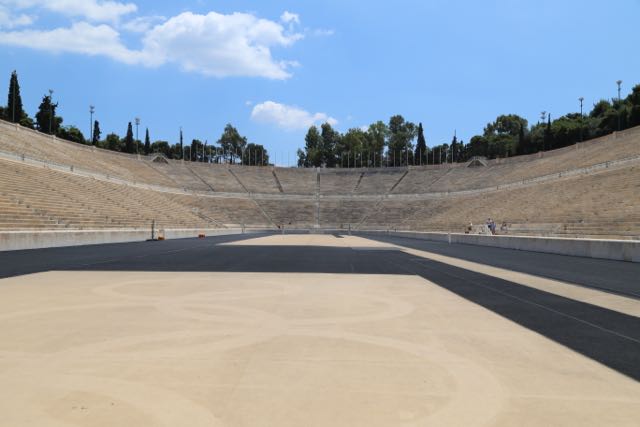
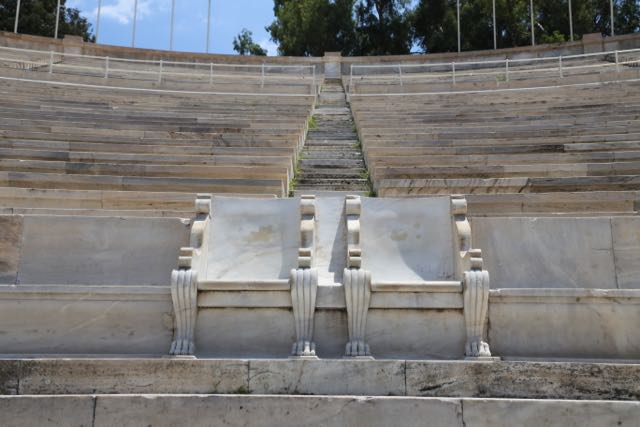
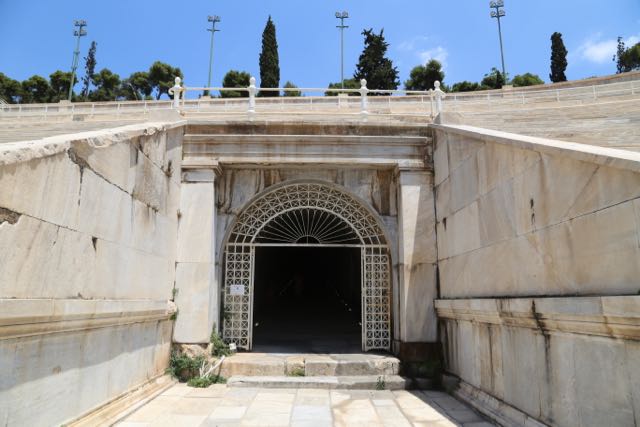
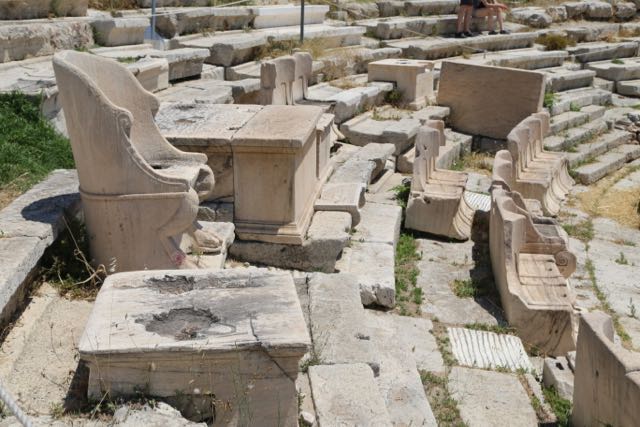
It was rather fun to get to wander around Panathenaic Stadium because it was used for the Olympics, yet it is a historical site with stone seats, some of which look like the stone seats at the Theatre of Dionysos. As an engineer, I am in awe that these structures have lasted so long. Some have had to be restored, and the Acropolis is currently case in point. As much as I would love to get photos of it unobstructed from construction equipment, I am kind of amused to see this ancient engineering structure being restored with modern engineering.

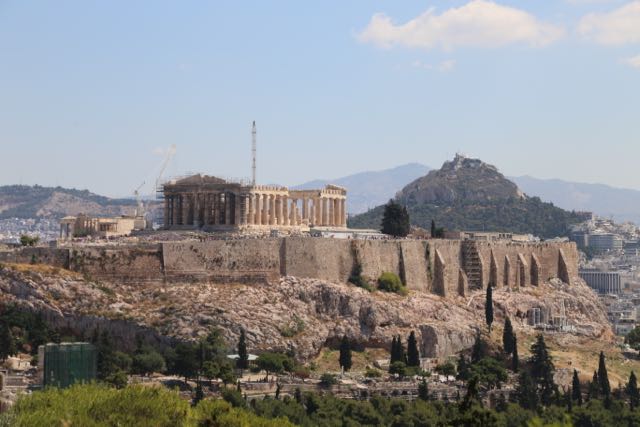
Acropolis view from Filopappou Hill

Acropolis view from Filopappou Hill

Coastal view from Filopappou Hill

Coastal view from Filopappou Hill

Filopappos Monument, atop Filopappou Hill

Filopappos Monument, atop Filopappou Hill

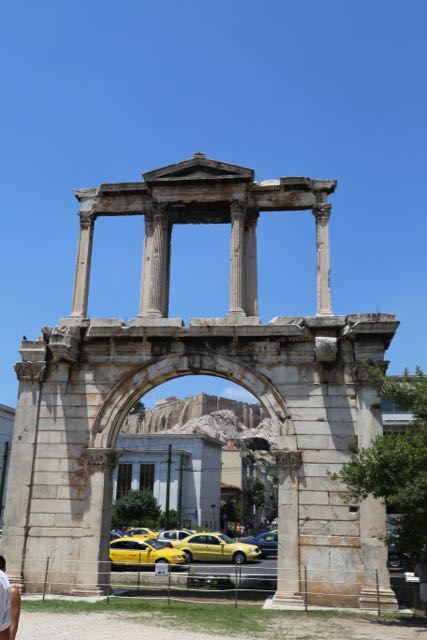
Hadrian's Arch

Hadrian’s Arch

Panathenaic Stadium

Panathenaic Stadium

Panathenaic Stadium seats

Panathenaic Stadium seats

Panathenaic Stadium passage

Panathenaic Stadium passage

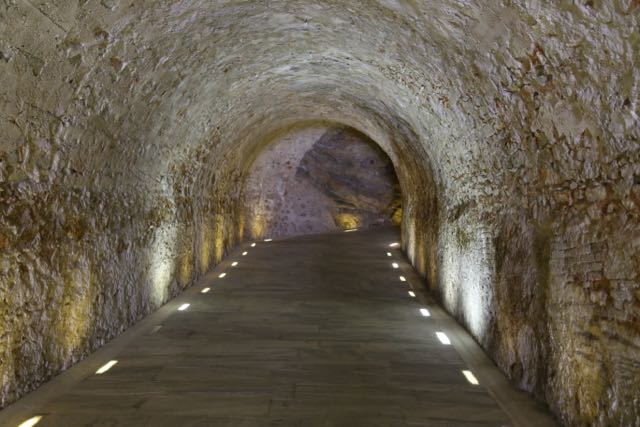
Panathenaic Stadium tunnel

Panathenaic Stadium tunnel

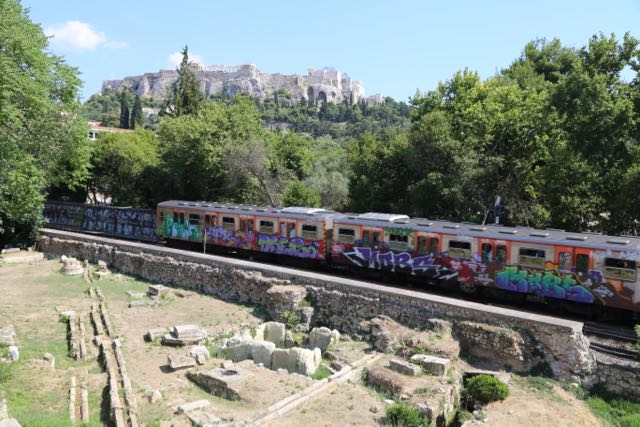
Ruins next to railroad with Acropolis in background

Ruins next to railroad with Acropolis in background

Store on top ruins

Store on top ruins

Temple of Olympian Zeus

Temple of Olympian Zeus

Theatre of Dionysos

Theatre of Dionysos

Theatre of Dionysos

Theatre of Dionysos

Chairs at Theatre of Dionysos

Chairs at Theatre of Dionysos

Athens Day 1: Plaka

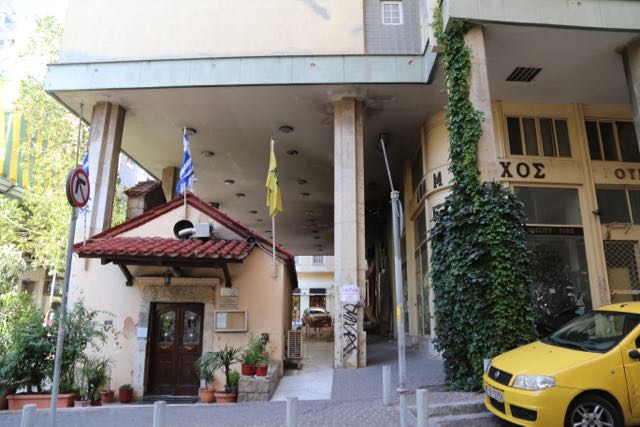
I got to my hotel a bit before 5 pm, and even though I got no sleep on the plane, I headed right back out to walk around the city a bit. I mainly walked around Plaka, which is one of the old sections of town. I have decided it is not possible to see Athens without getting lost in Athens, or at least in Plaka. I thought Boston had crazy streets, but I don’t even know what was going on in Plaka. Luckily there are monuments or ruins every other block. I would get lost every third block or so because I could never figure out what street I was on, but I only had to walk a few blocks before running into another ruin or monument, so I could quickly figure out in general where I was again using a tourist map. To a certain extent, I was just looking around buildings to find where the Acropolis was, and then used that to navigate directionally. Also, the sidewalks are tiny, so people walk on the streets, but the scooters also drive on the sidewalks, so that seems fair. Cars also drove down alleys that it was not clear to me were actually streets, but evidently they were. I already love this city though. I got lost, but it is just a glorious city in which to get lost.

Aghia Dynamis, a 16th Century Chapel that they evidently just built a high rise around

Aghia Dynamis, a 16th Century Chapel that they evidently just built a high rise around

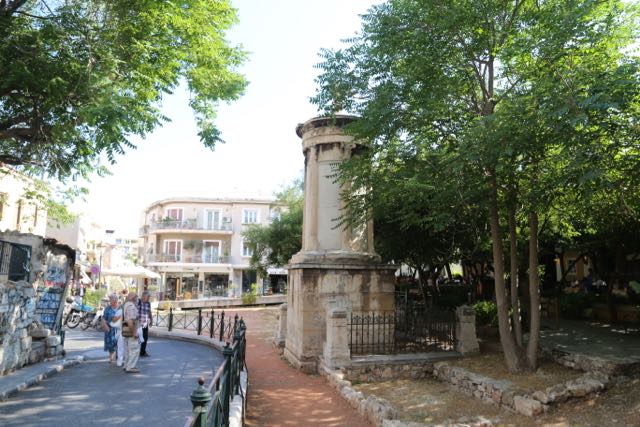
Monument of Lysikrates

Monument of Lysikrates

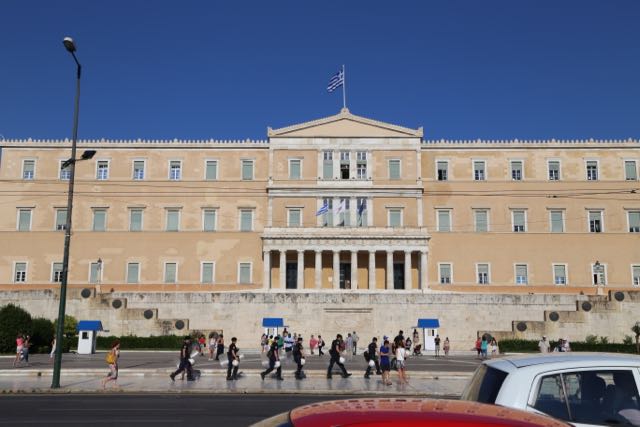
Parliament, with police dressed in riot gear walking in front

Parliament, with police dressed in riot gear walking in front

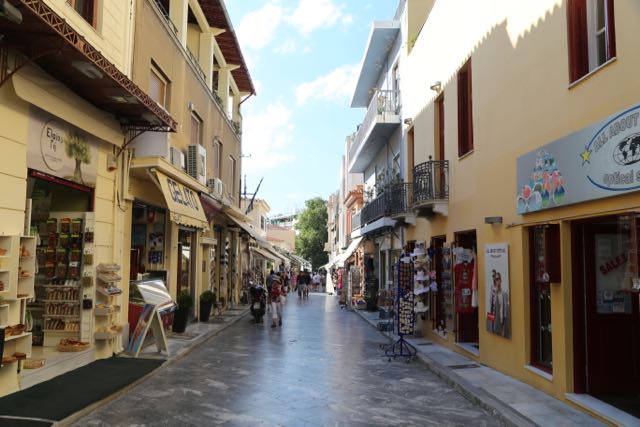
Narrow streets of Plaka

Narrow streets of Plaka

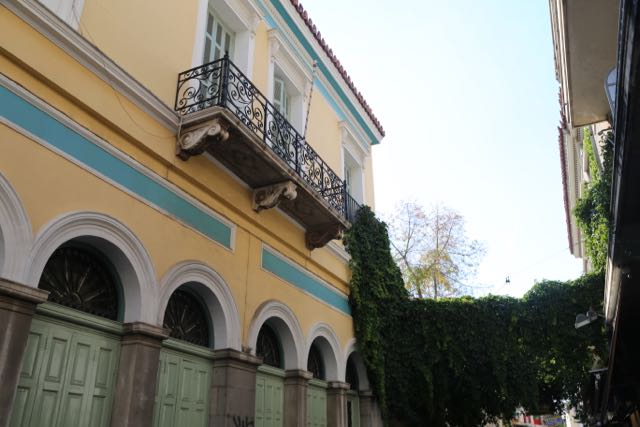
Vine covered bridge across buildings

Vine covered bridge across buildings

NY Subways

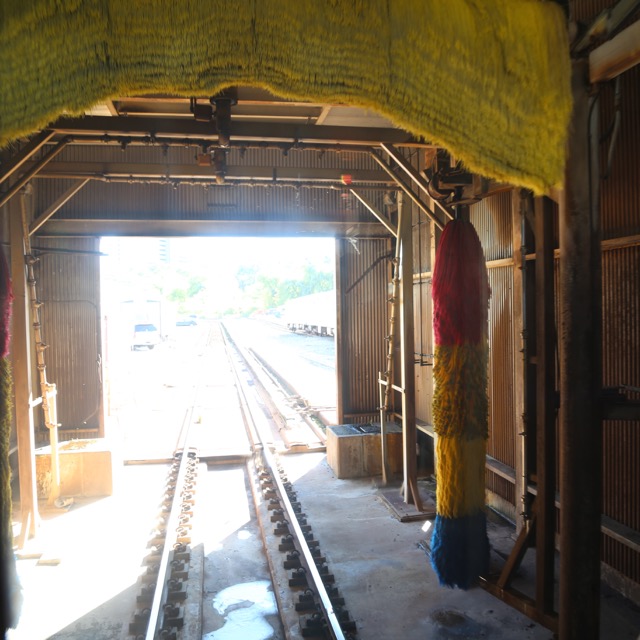
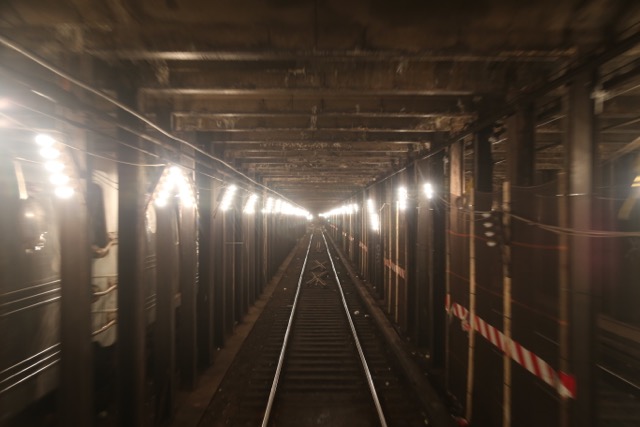
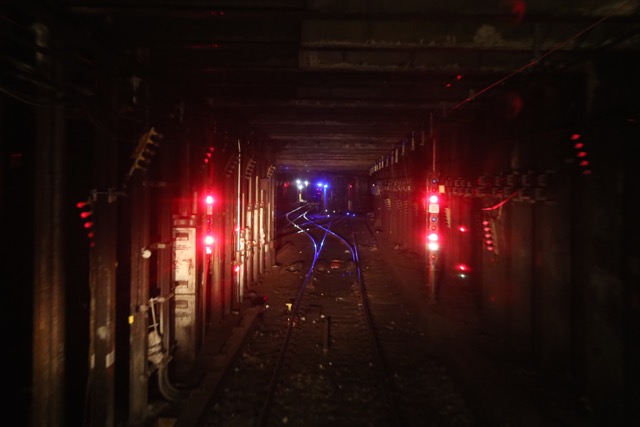
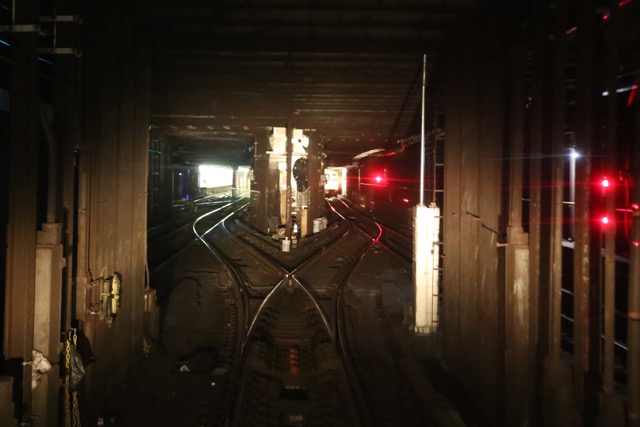
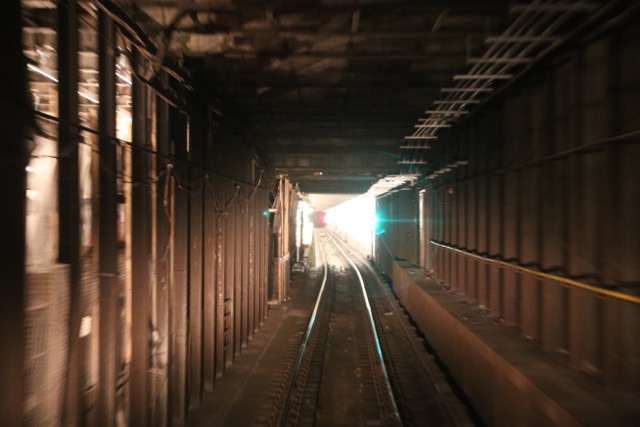
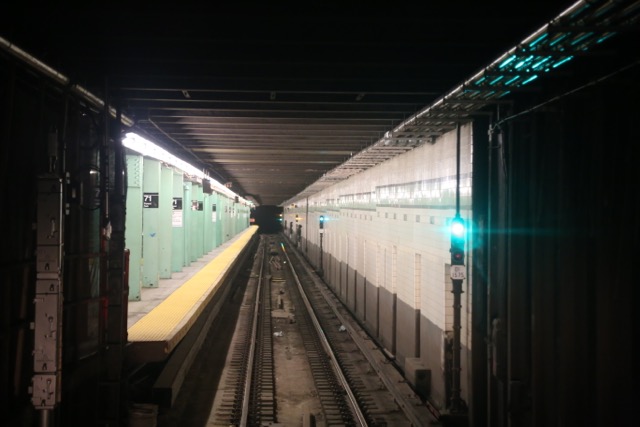
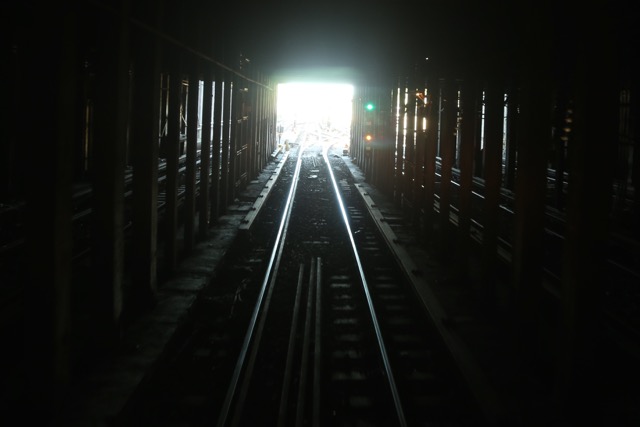
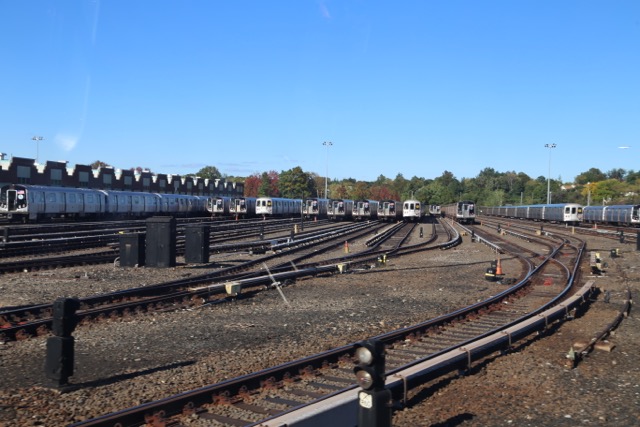
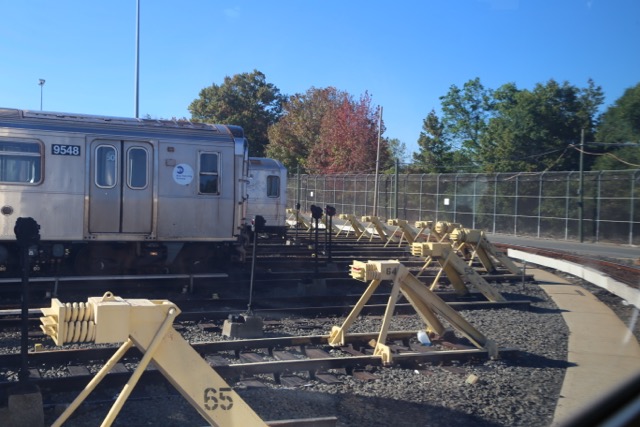
On my last trip to New York, I took a tour with the New York Transit Museum that included a subway ride through the Jamaica Maintenance Shop yard and the tunnels through it. Even cooler, the train conductor kept the door open to the train control room, so we could go in and take a few pictures out the front window of the train. Normally when on a subway train, you can only see stuff go flying by out a side window, so being able to see the tunnels through the front, allowed a much better view. In some places they were working in the tunnels, so there were a lot of lights lit, which allowed even better viewing.

Subway tunnel surfacing to ground level

Subway tunnel surfacing to ground level

Jamaica Maintenance Shop yard

Jamaica Maintenance Shop yard

Jamaica Maintenance Shop yard

Jamaica Maintenance Shop yard

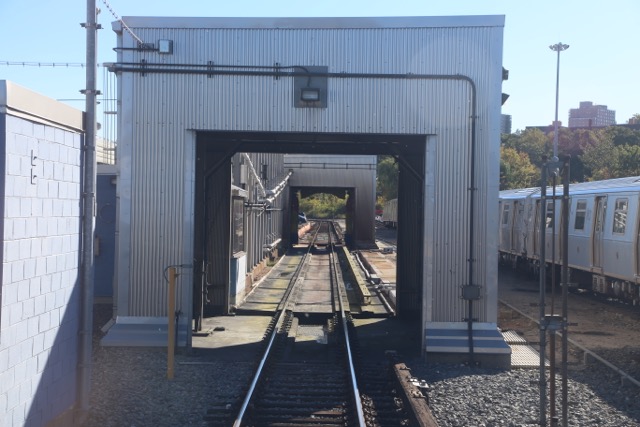
Subway car wash

Subway car wash

Subway car wash

Subway car wash

Subway tunnel

Subway tunnel

Subway tunnel

Subway tunnel

Subway tunnel

Subway tunnel

Subway tunnel spliting

Subway tunnel spliting

Subway tunnel right before station

Subway tunnel right before station

Subway tunnel entering station

Subway tunnel entering station

Gowanus Canal

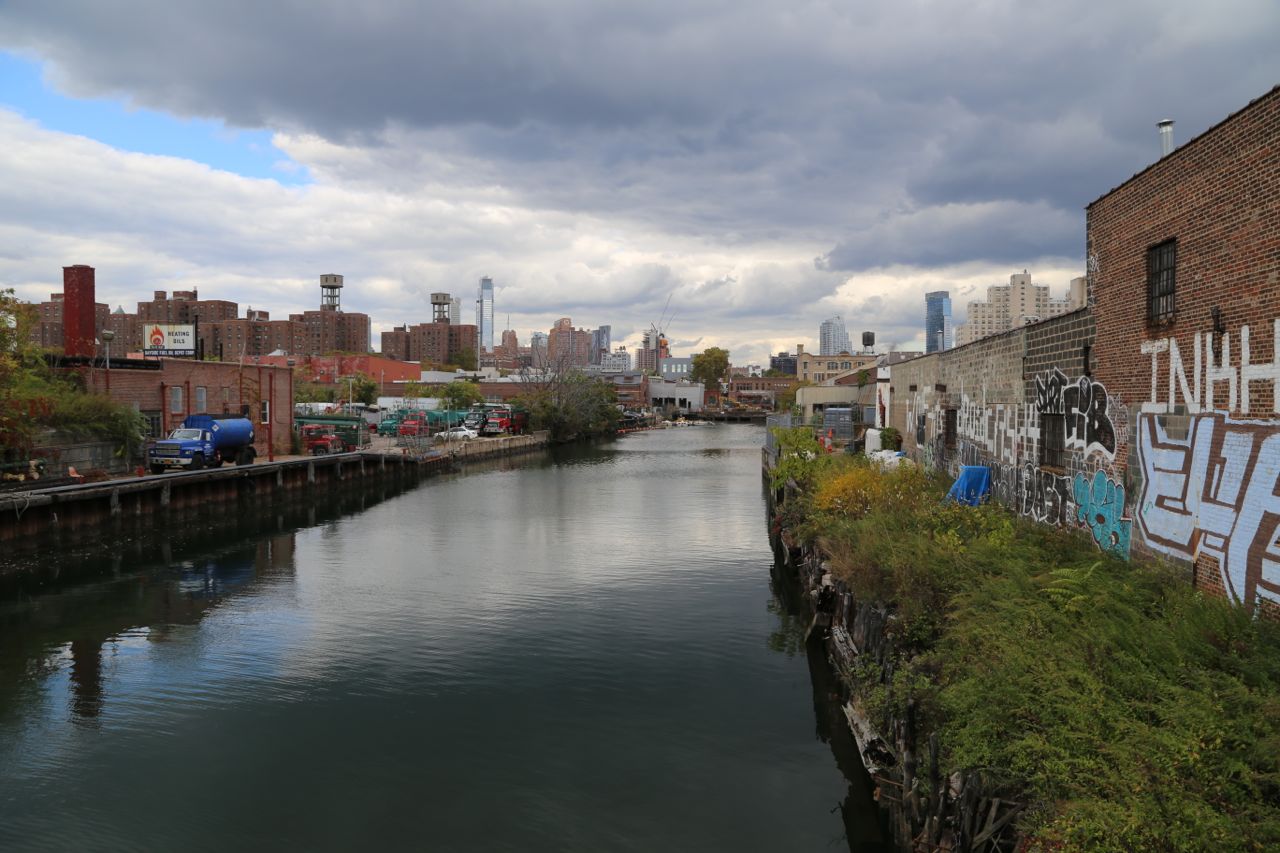
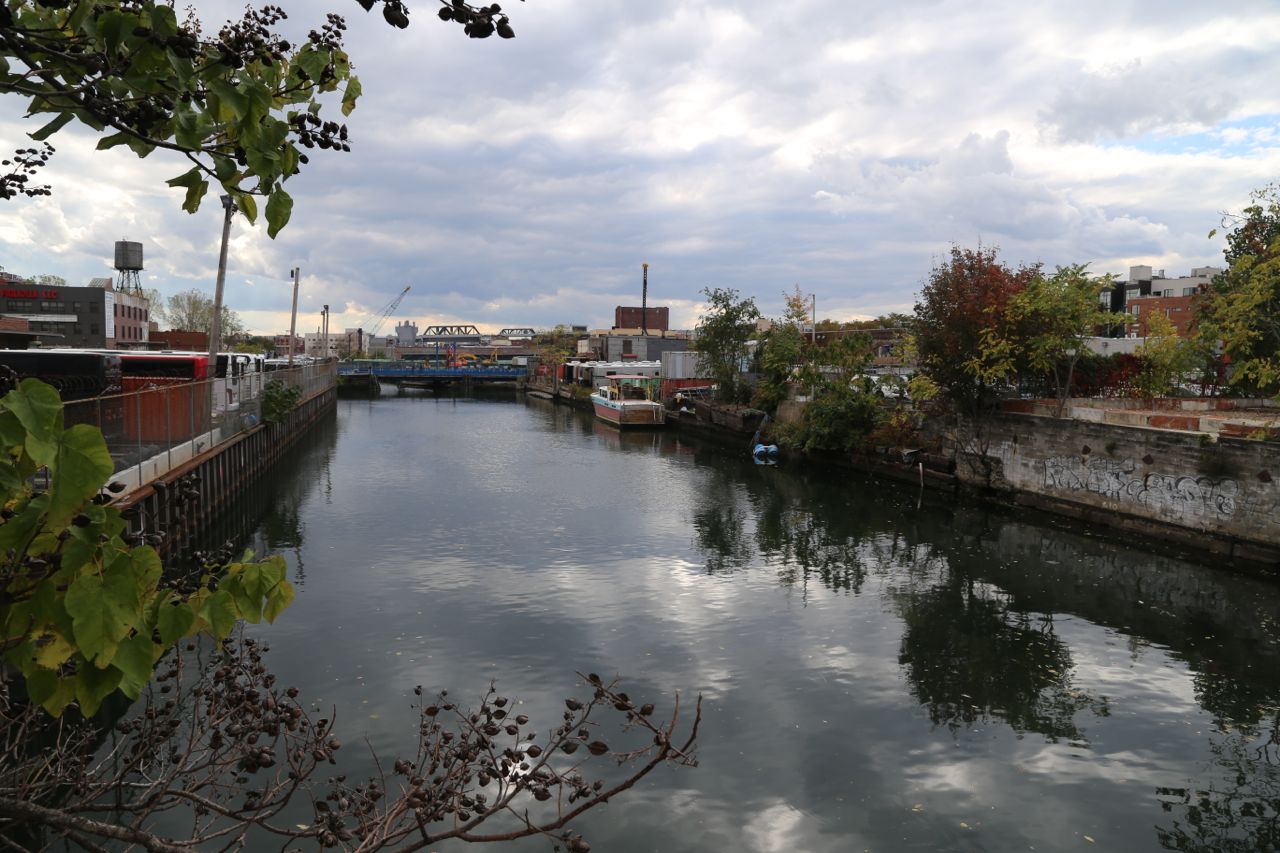
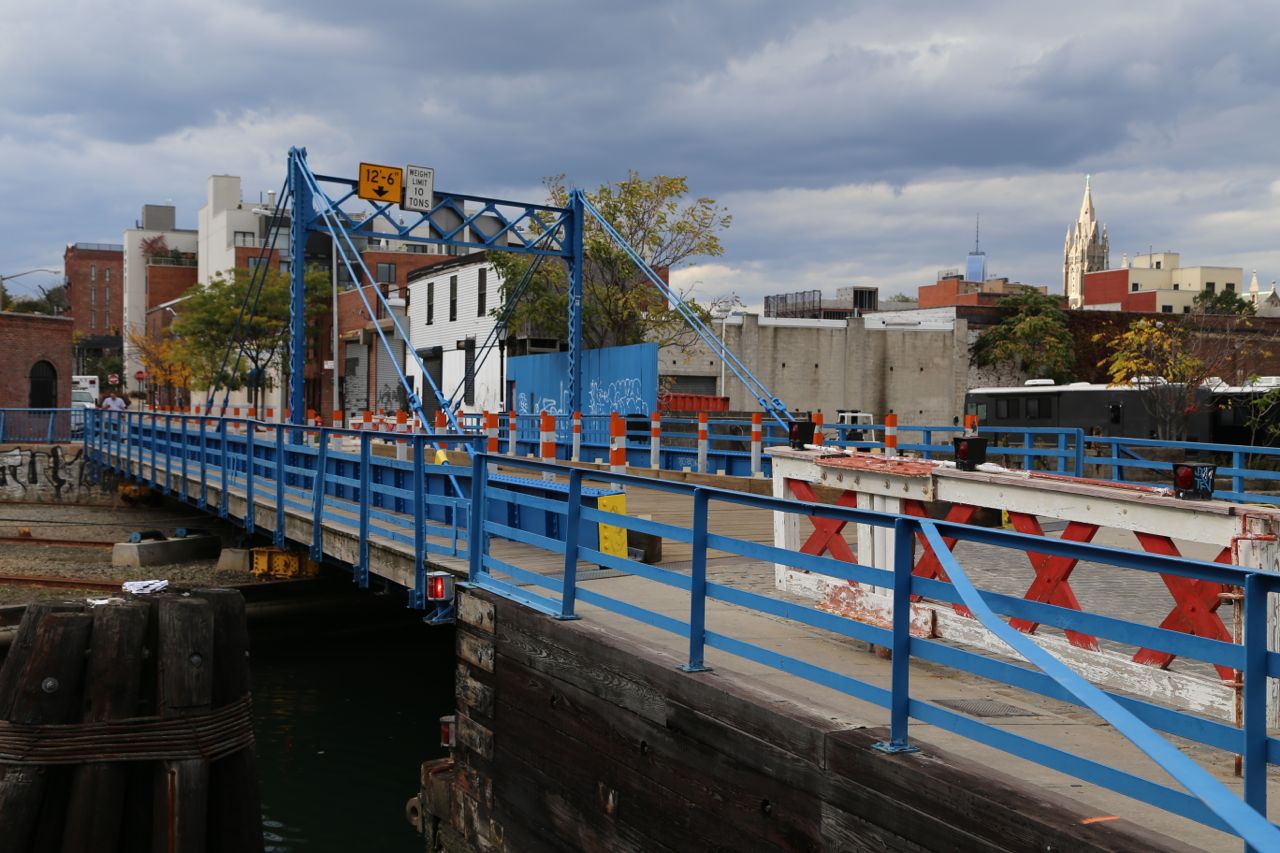
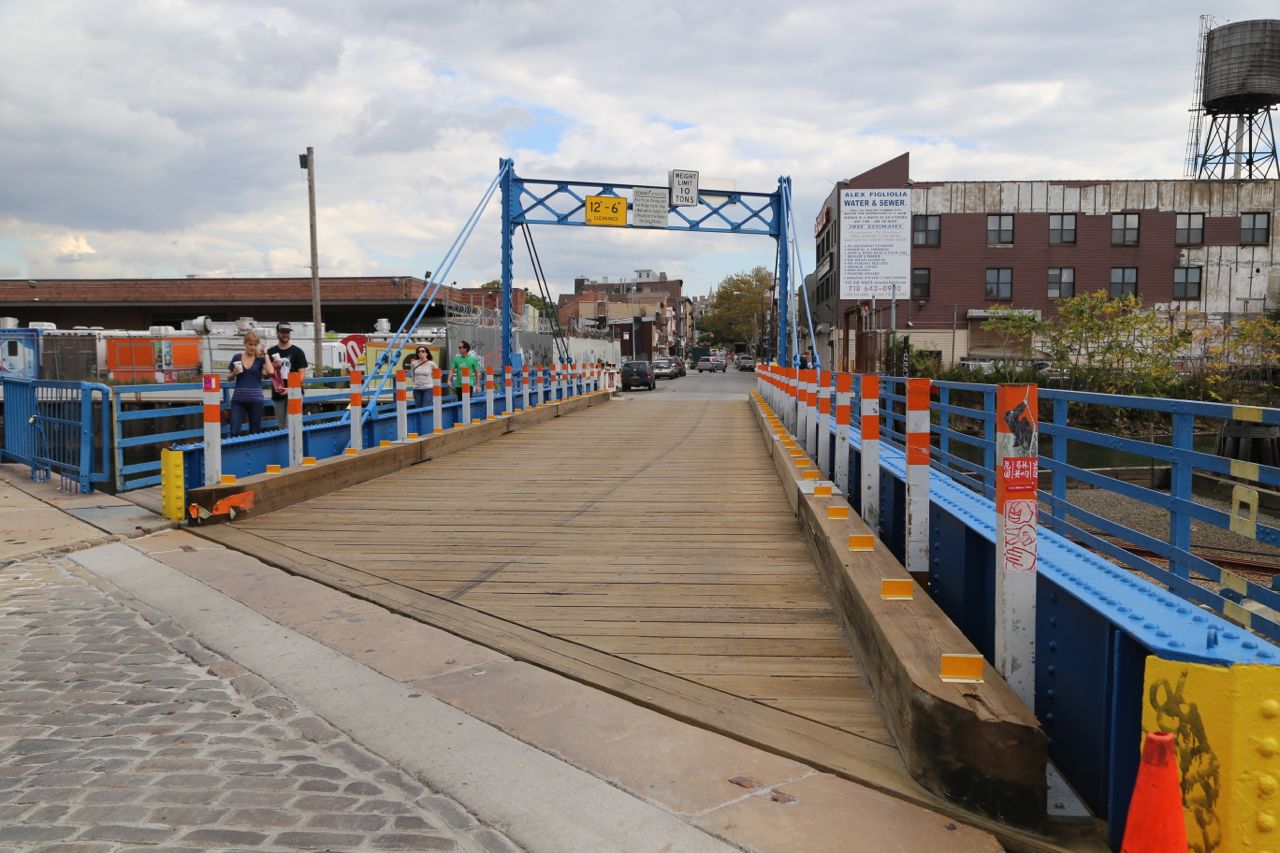
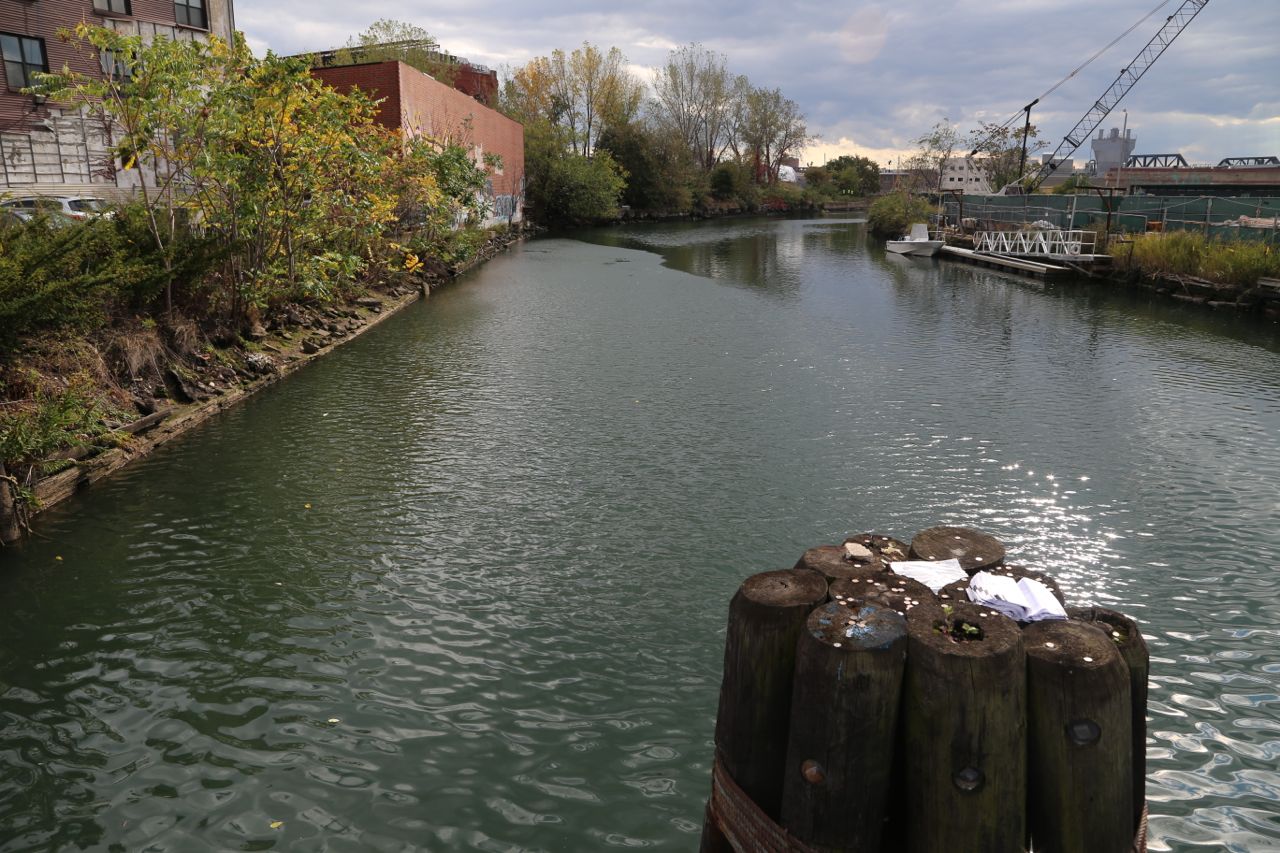
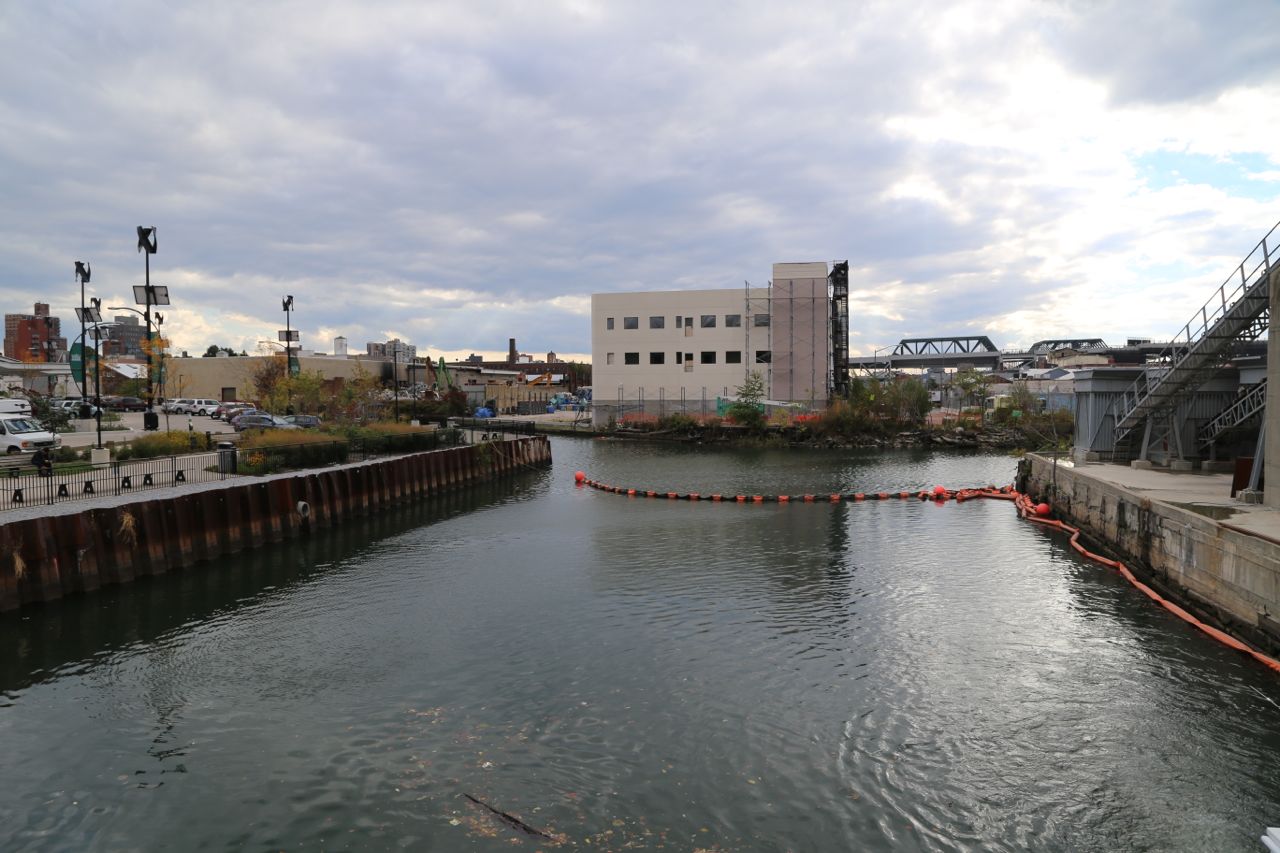
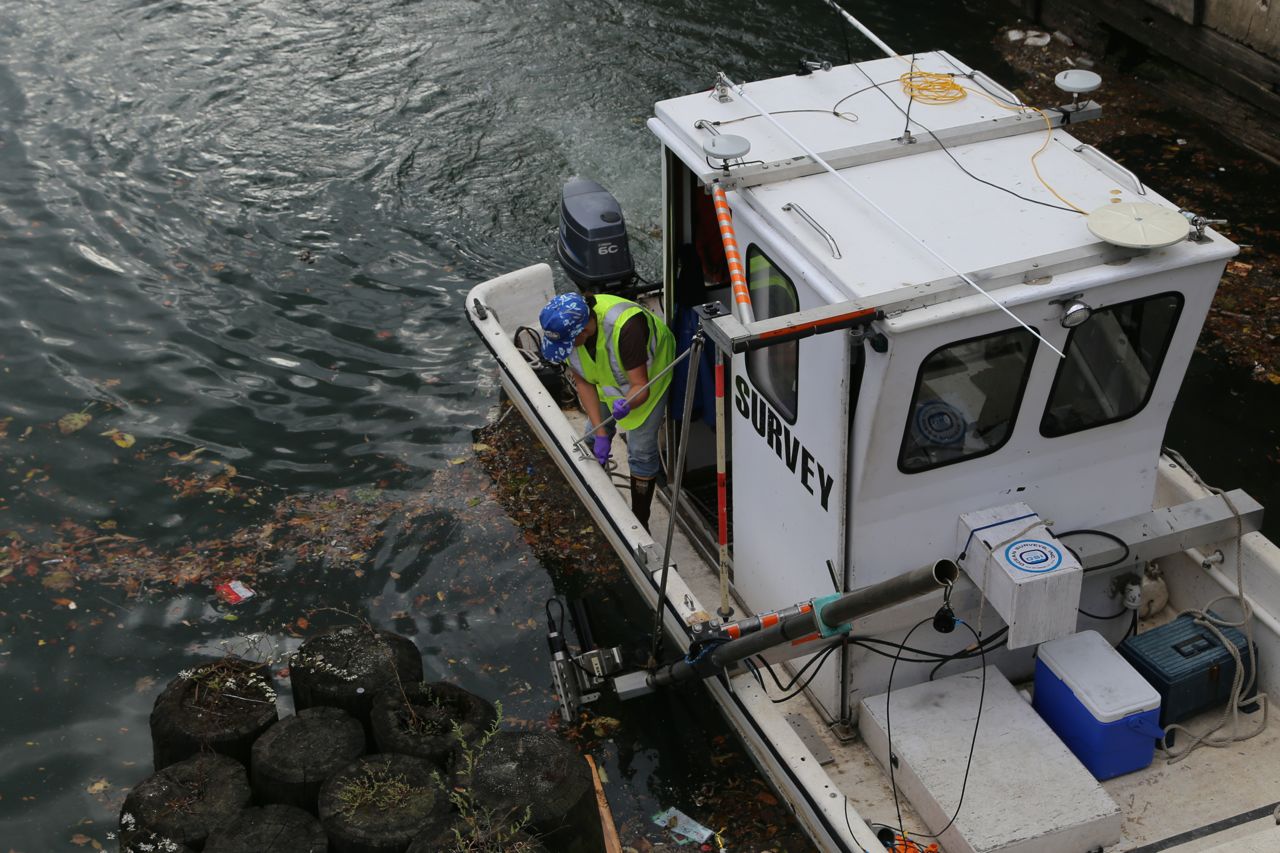
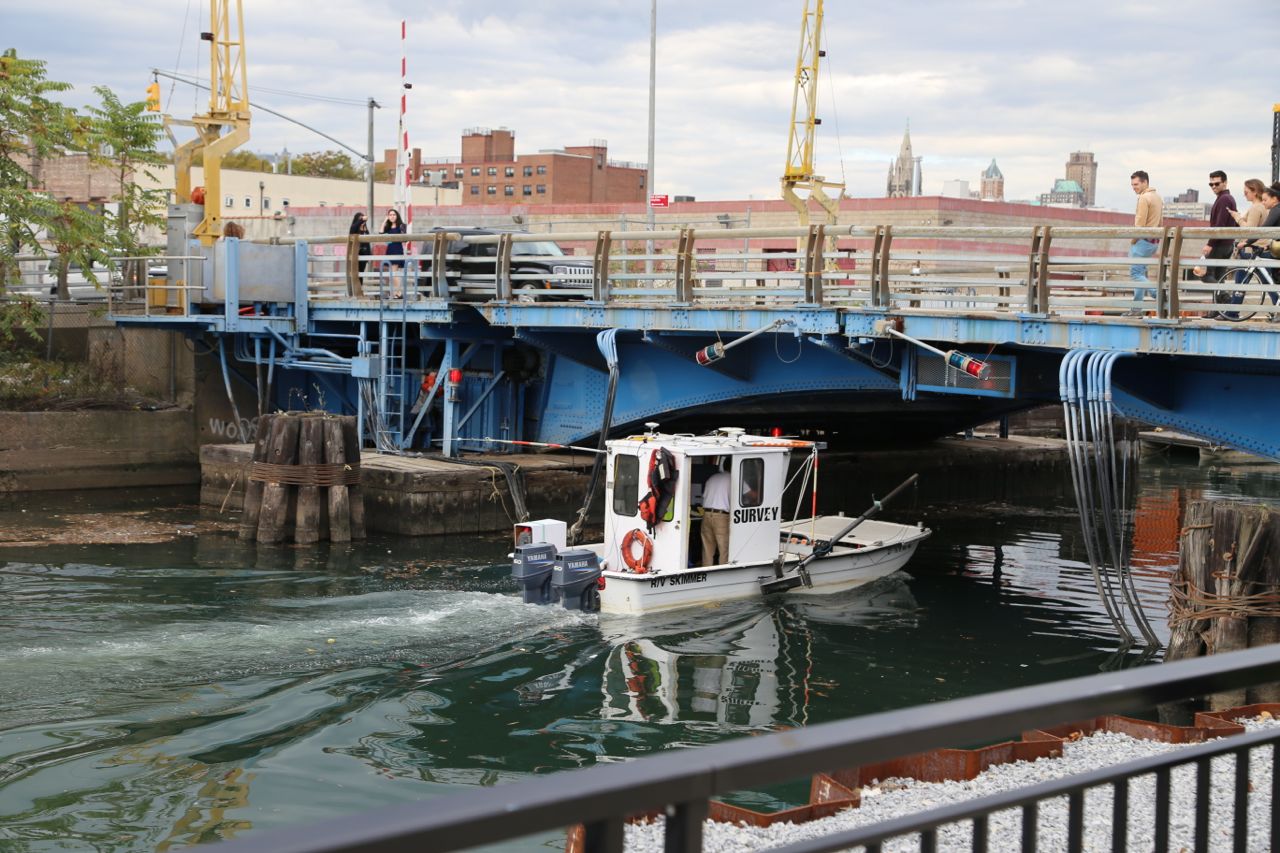
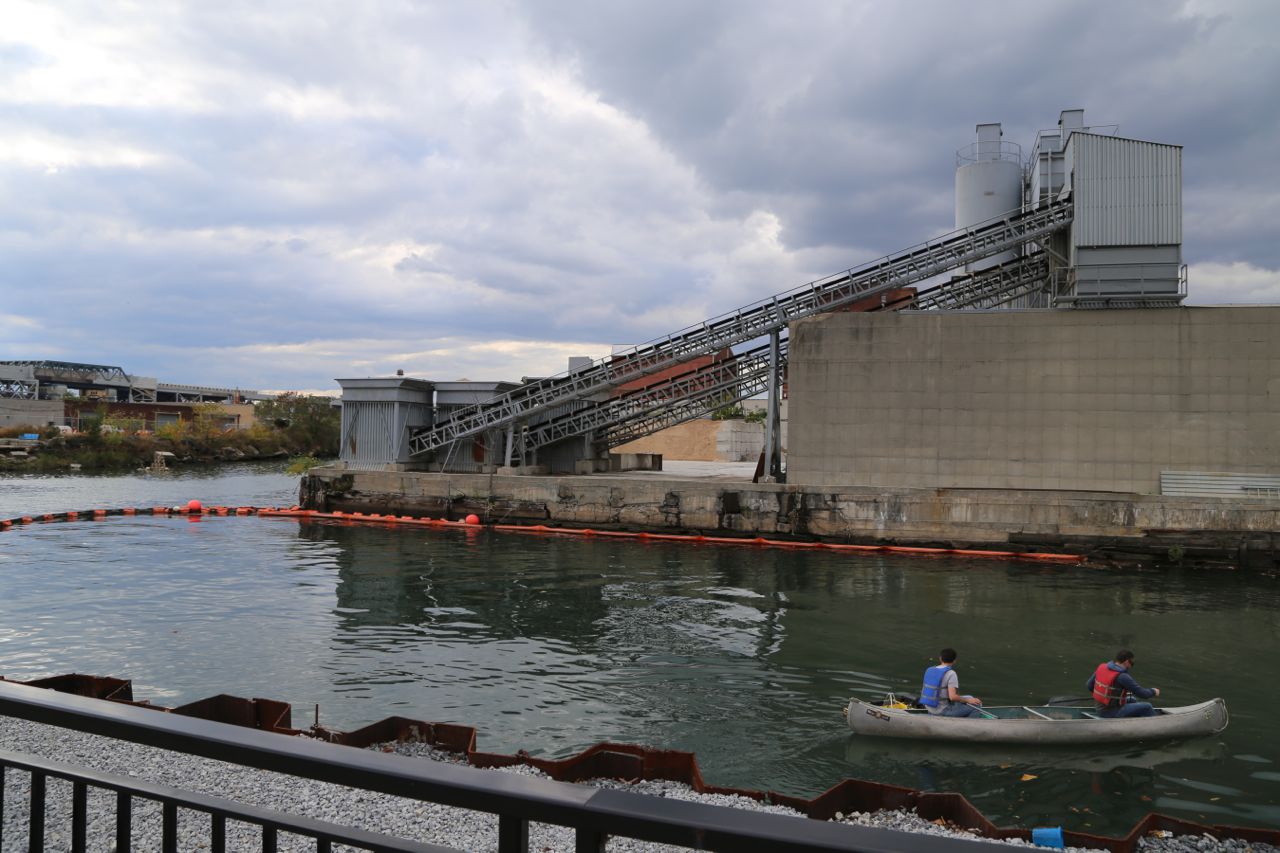
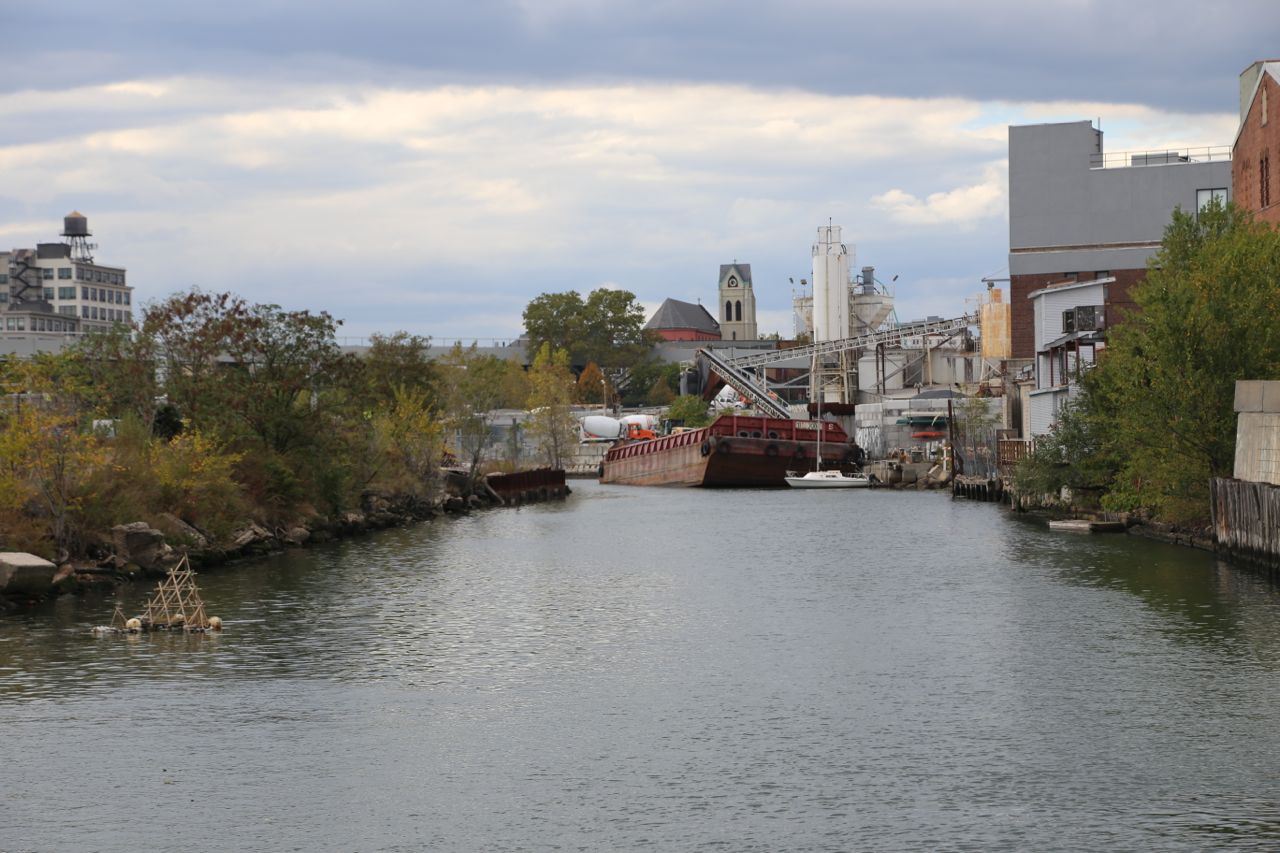
Last month while in New York, I spent some time walking around Gowanus Canal because I’m an environmental engineer, and I couldn’t resist an opportunity to visit a body of water, infamous for being incredibly polluted. The Gowanus Canal is a Superfund site due to contamination with polycyclic aromatic hydrocarbons (PAHs), volatile organic contaminants (VOCs), polychlorinated biphenyls (PCBs), pesticides, and metals. However, the Gowanus Canal is also polluted with more ordinary pollutants such as bacteria from untreated wastewater from combined sewer overflow outfalls and other urban pollutants from surface runoff (and possibly illegal outfalls). The area residents are understandably pushing to get the canal cleaned up quickly, and the cleanup is a joint effort between the city, state, and federal government. The area around the canal is an interesting mixture of industrial, art galleries, and up and coming residential. It is actually a nice area. There is a Whole Foods Market next to the canal that has a nice little canal walk on the property, which features signs that say “This is the greenest supermarket in New York State. No smoking, please.” I will take them at their word about being the greenest supermarket, as I did notice solar panels and wind turbines in the parking lot. However I still had to laugh at the irony of the sign. On the bright side, the Gowanus Canal is not so polluted that should someone smoke near it, it is not in danger of catching on fire, like the Cuyahoga River did in 1969. While I was walking along the canal, I spotted a small boat with two people who seemed to be monitoring the water and also two people in a canoe. I guess the canal is safe to canoe on, if you just make sure you don’t touch the water to your skin and most definitely don’t let any get into your mouth, nose, eyes, or any other orifices. The canal does not look that polluted. There are areas with floating trash, but there are very few places where I saw a sheen. When I was there it did not smell either, but evidently especially in summer, it can smell. However, it is a good example of how appearance is not a good way to tell if something is polluted. If you want to read more about the Gowanus Canal, this article in Popular Science is pretty interesting.

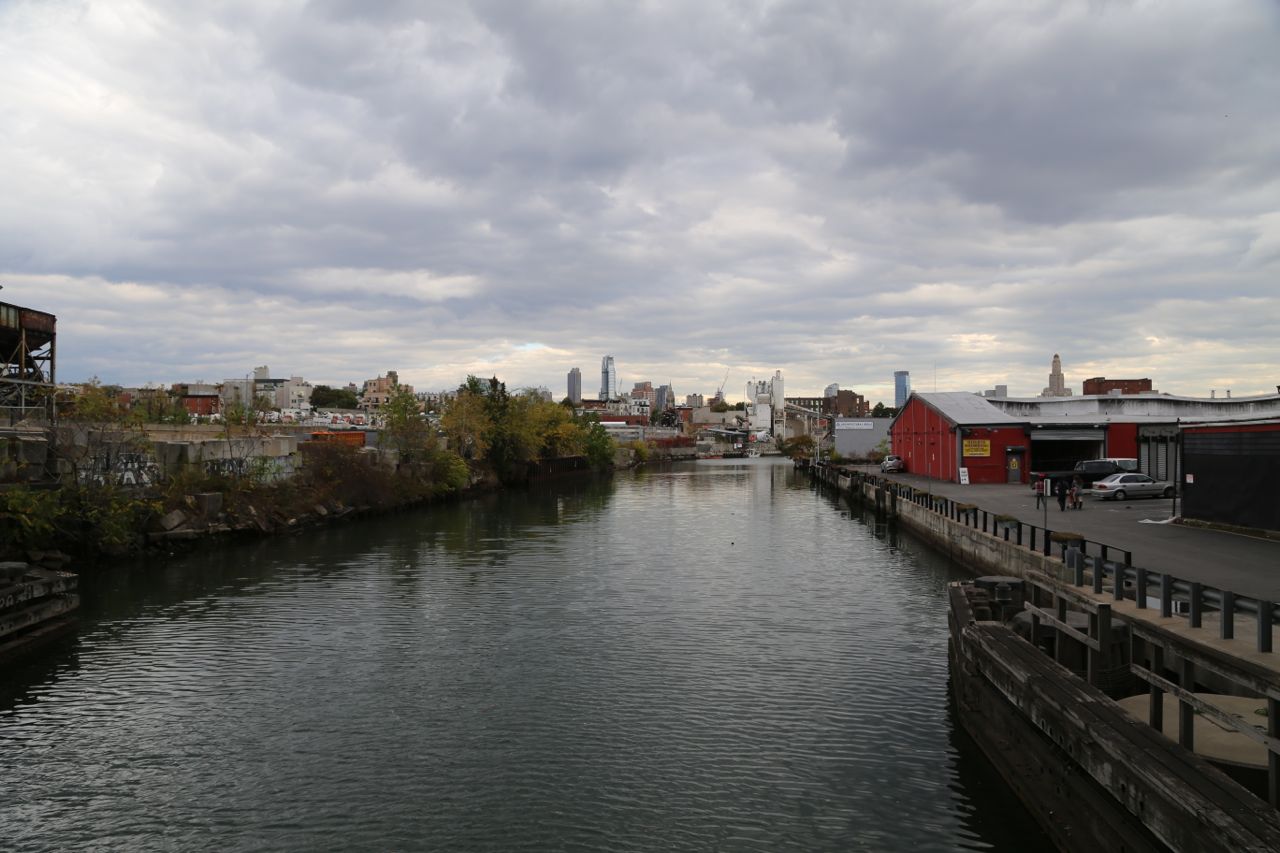
Northern end of the Gowanus Canal

Northern end of the Gowanus Canal

Bridge on northern end

Bridge on northern end

Carroll Street Bridge

Carroll Street Bridge

Carroll Street Bridge

Carroll Street Bridge

Stormwater discharge warning sign

Stormwater discharge warning sign

A wooden dolphin that had a book attached to the top as some sort of art or memorial

A wooden dolphin that had a book attached to the top as some sort of art or memorial

View from the Third Street Bridge

View from the Third Street Bridge

Survey boat

Survey boat

Third Street bridge

Third Street bridge

People actually canoe on the Gowanus Canal

People actually canoe on the Gowanus Canal

Barge sitting on the canal

Barge sitting on the canal

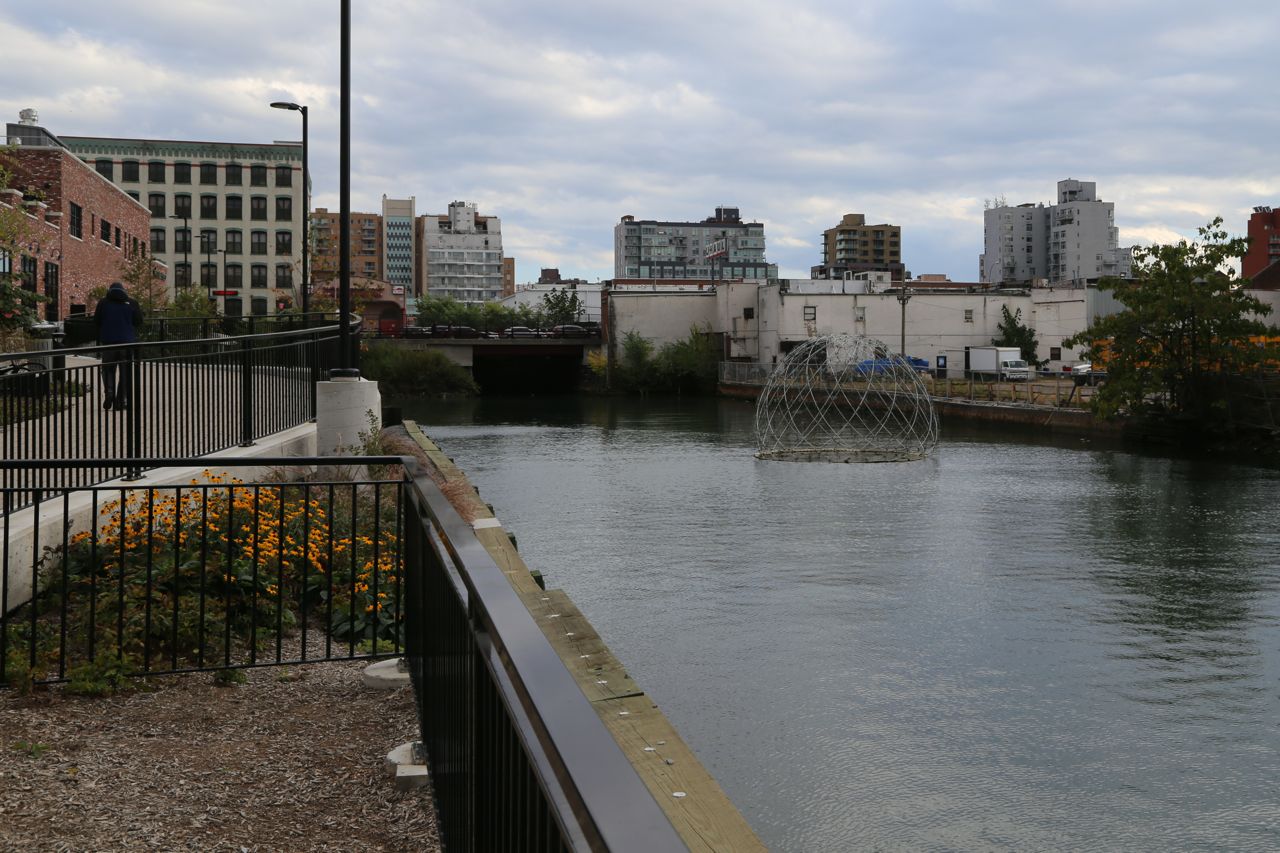
Fourth Street Basin, next to the Whole Foods Market

Fourth Street Basin, next to the Whole Foods Market, with some sort of art in the sculpture in the water

Gowanus Canal southern end

Gowanus Canal southern end

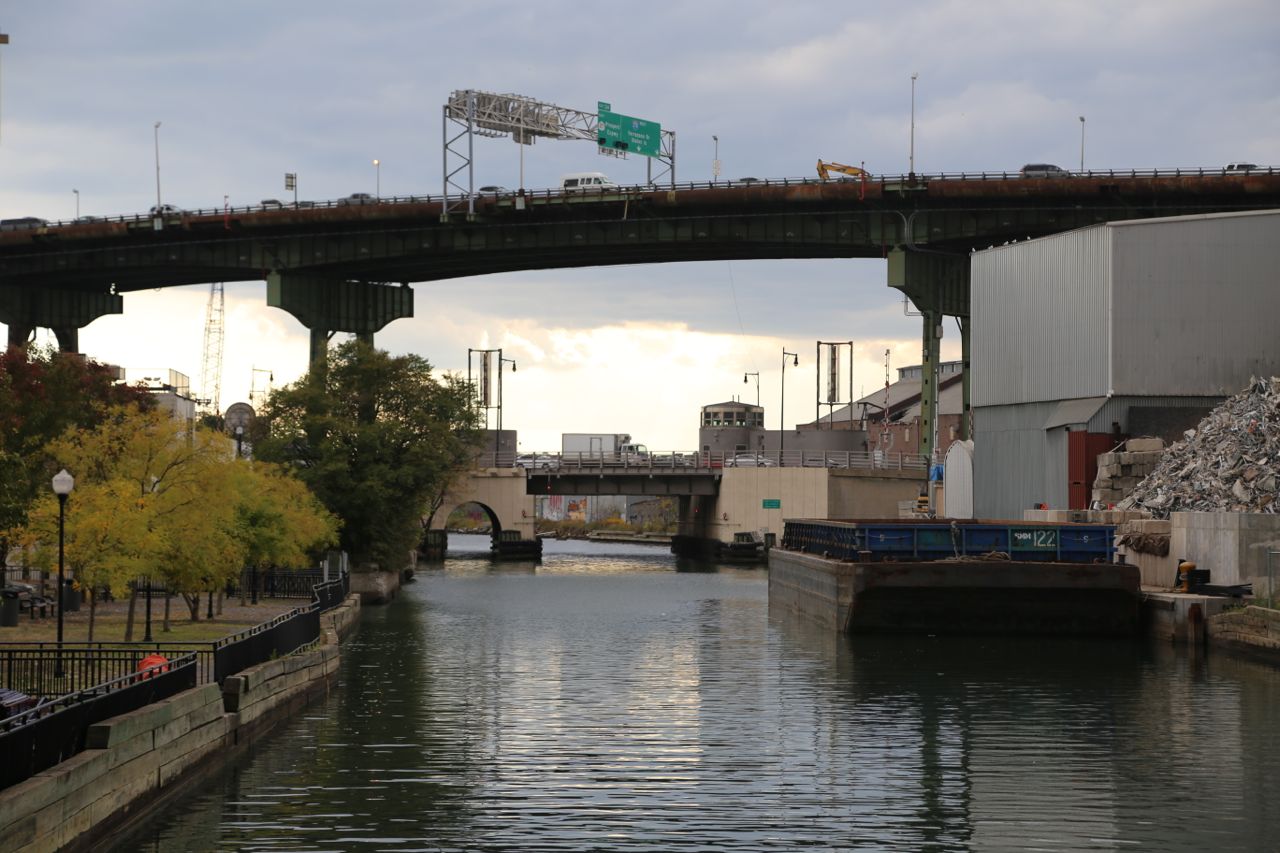
Gowanus Expressway

Gowanus Expressway

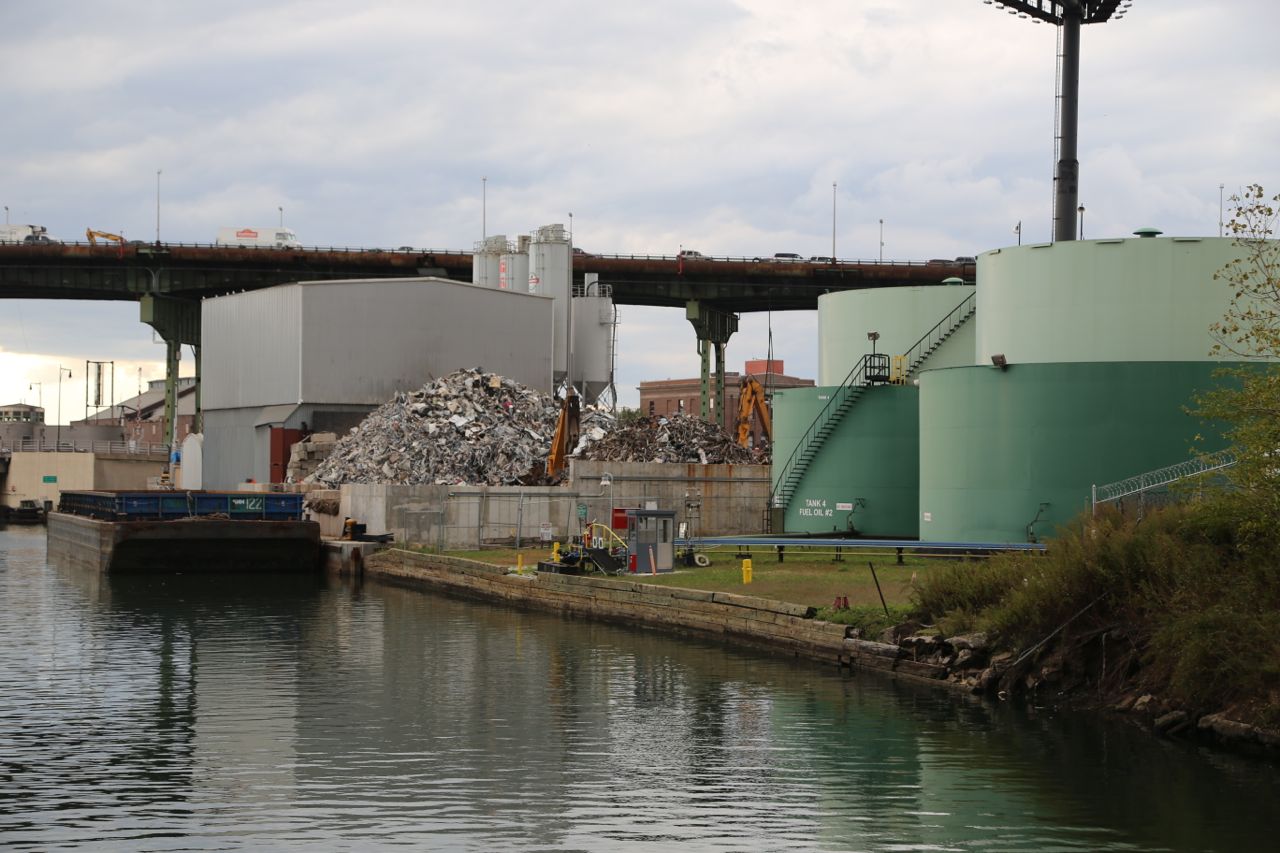
Liquid storage tanks

Liquid storage tanks

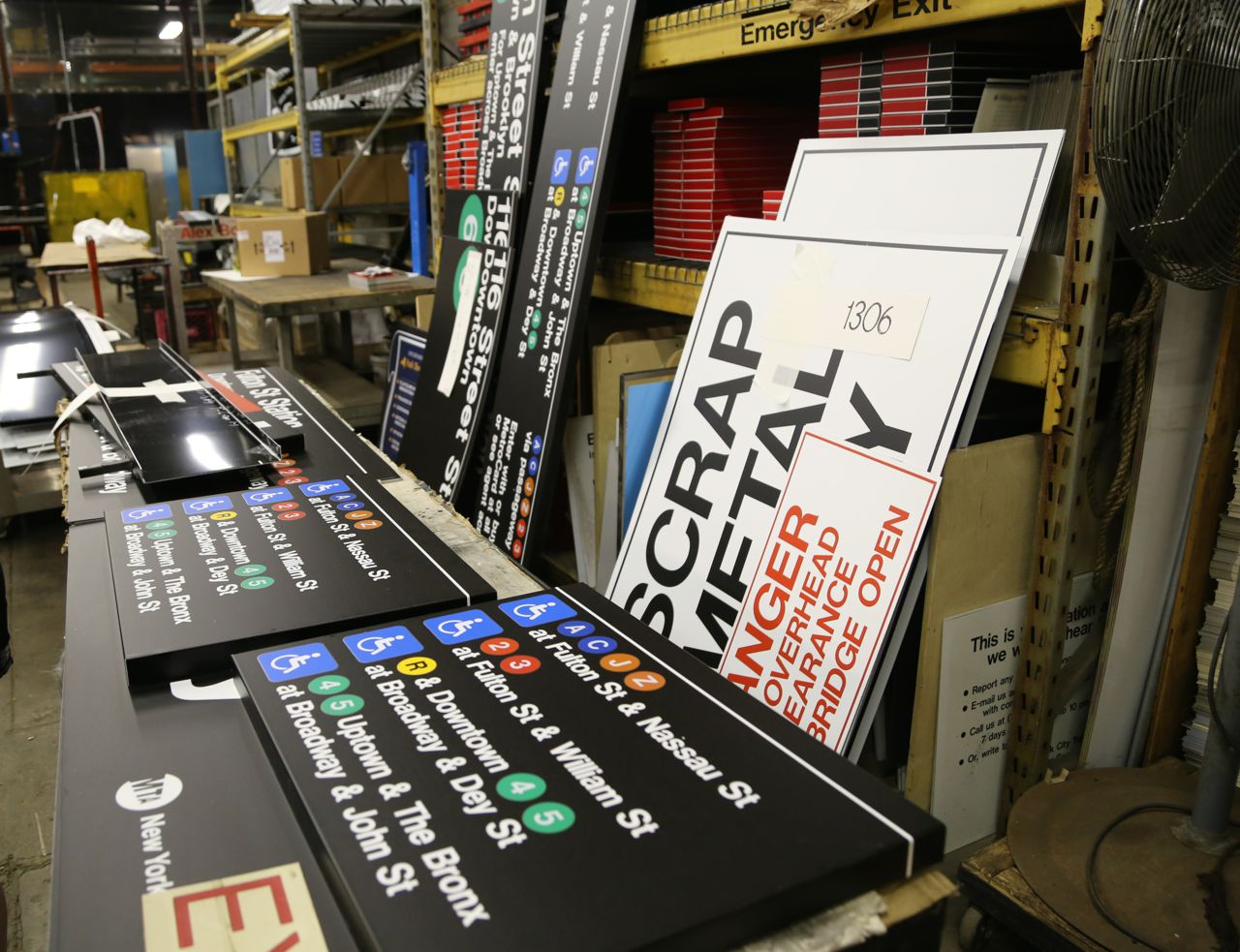
Bergen Sign Shop

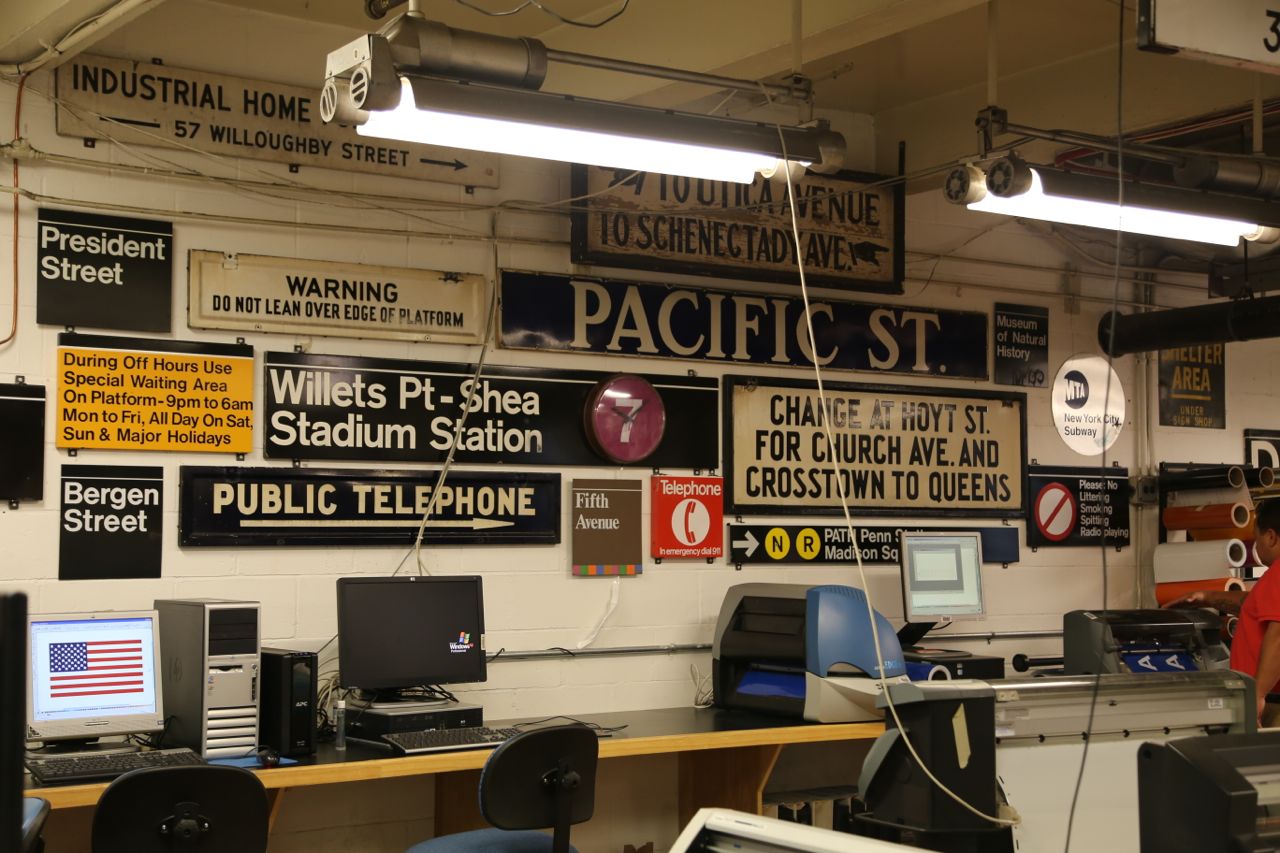
Collection of old signs on the shop's wall

Collection of old signs on the shop’s wall

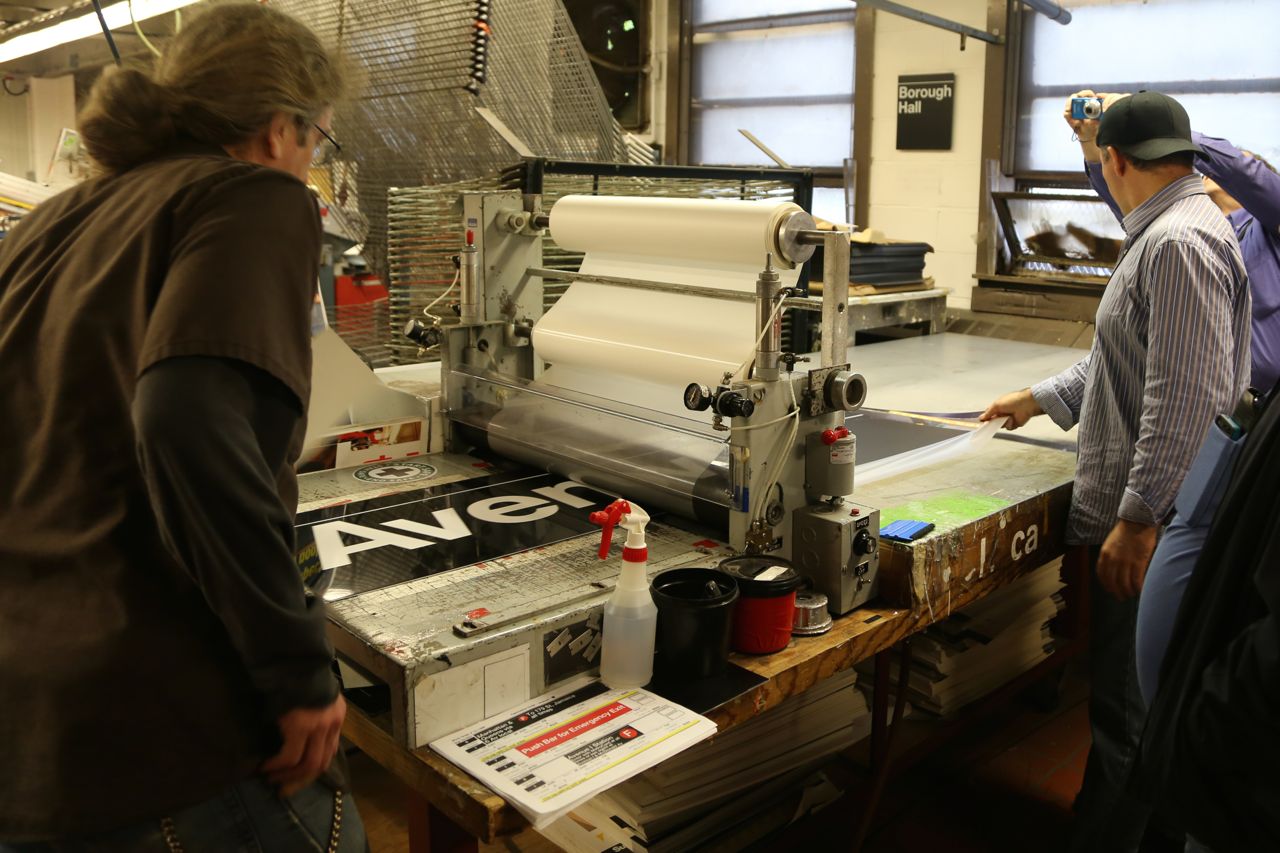
I recently had a chance to tour New York City’s MTA’s Bergen Sign Shop. The Bergen Sign Shop is where all the signs for MTA’s subways are made and possibly a few other signs. The wonderful employees came in on a Saturday so that they could take two tour groups, from the New York Transit Museum, through the shop and show us how they make the signs. It was really neat to see and also interesting to hear how things have changed from the way things used to be made. Computers are now used for much of the process where as like many things, they used to have to be done by hand. Some of the signs they make are made like many of us make signs with regular ink jet printers, although they have massive printers with the biggest ink cartridges I have ever seen.

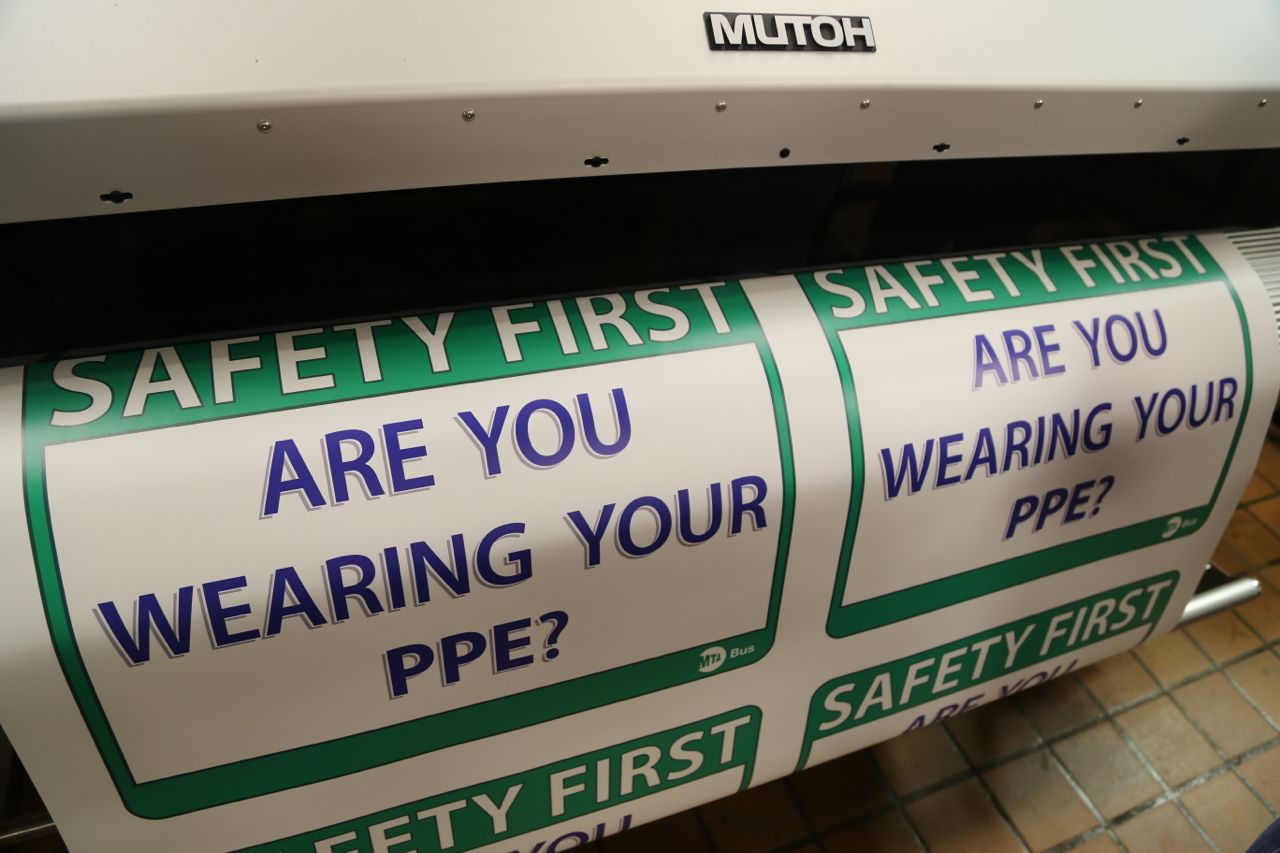
Safety first signs being printed in bulk. As an engineer, I particularly enjoyed seeing this.

Safety first signs being printed in bulk. As an engineer, I particularly enjoyed seeing this.

All the “buttons”, the colored circles with the subway line letter or number, are printed on rolls of colored vinyl with adhesive backing. The line’s letter or number is then printed in black or white. A machine also cuts the circle into the vinyl, so employees just have to remove the excess from around the circles.

Rolls of vinyl in various colors ready for the printer. C line buttons being printed.

Rolls of vinyl in various colors ready for the printer. C line buttons being printed.

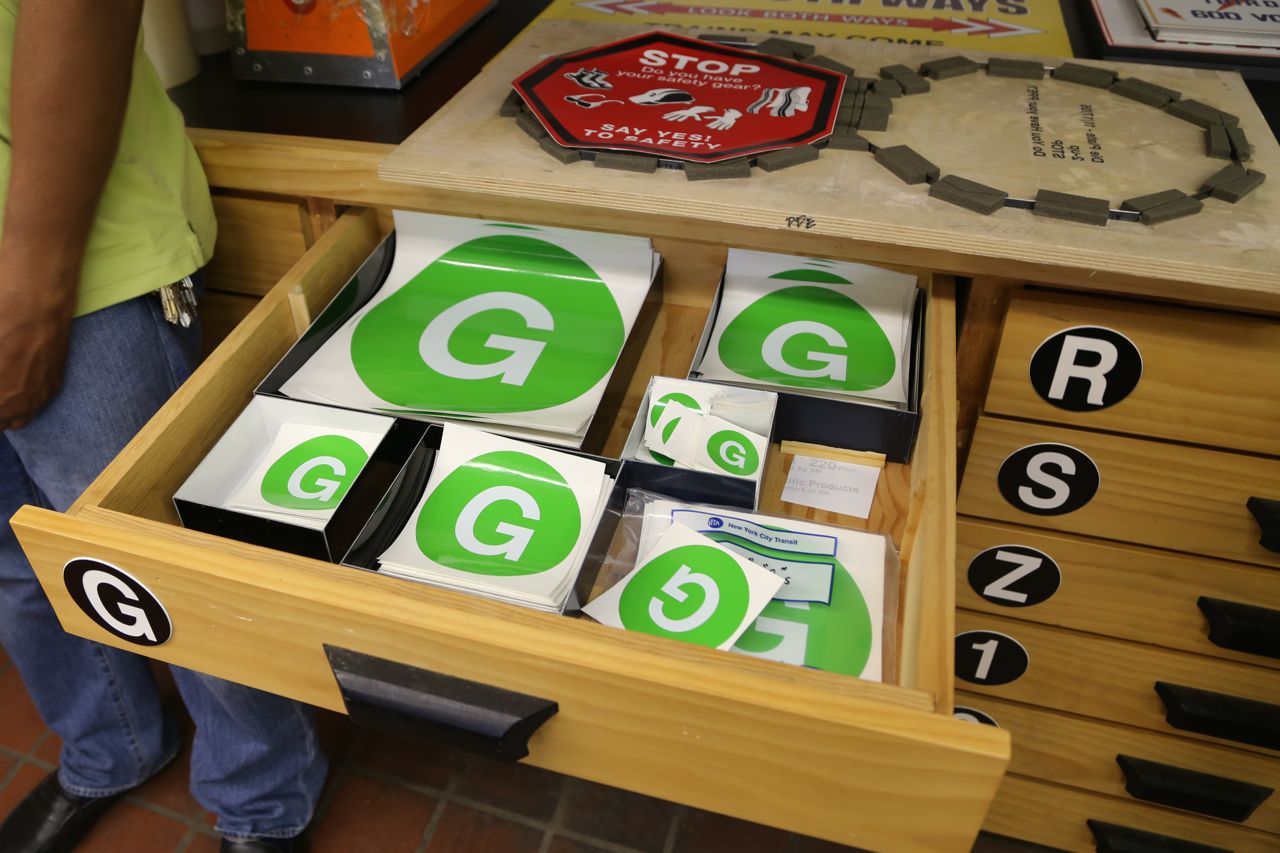
Drawer full of ready to go buttons. The buttons are made in 7 standard sizes.

Drawer full of ready to go buttons. The buttons are made in 7 standard sizes.

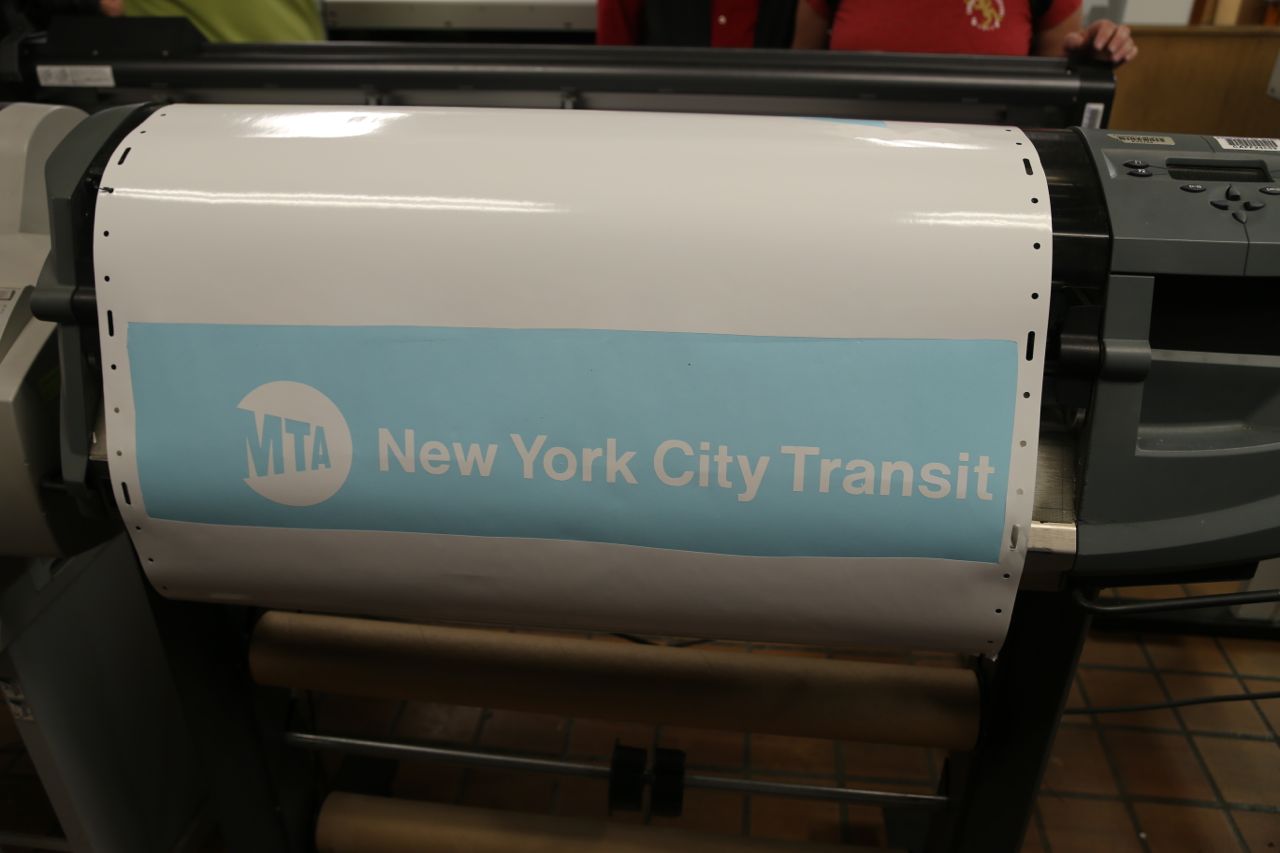
They have another machine that just does detailed cutting of vinyl rolls. Once the vinyl has been cut, the excess is removed, and letters, numbers, and symbols are left in place. The letters are already spaced properly like they would be from a printer and are then transferred as a unit by an employee to a sign.

Roll of vinyl leaving the cutter.

Roll of vinyl leaving the cutter.

The below, very short video is a series of photographs of an employee showing how he transfers the cut letters to a sign. The method he uses keeps all the letters spaced properly as they were spaced by the computer. The letters are transferred from the vinyl roll to transfer paper then to the sign.

Once the letters, buttons, etc. are on the sign, the sign is then laminated. It is later sent to the tin shop to be applied to a metal frame.

Sign being laminated

Sign being laminated

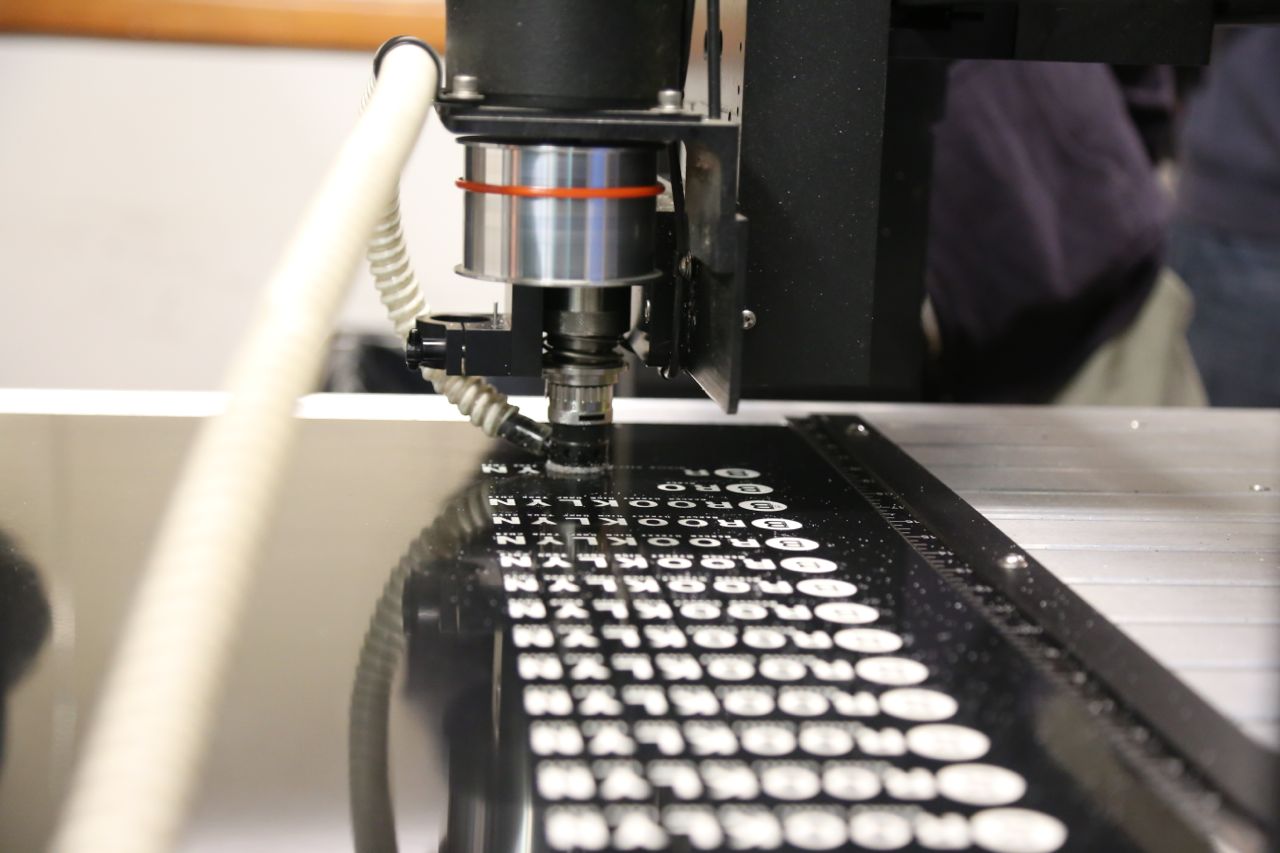
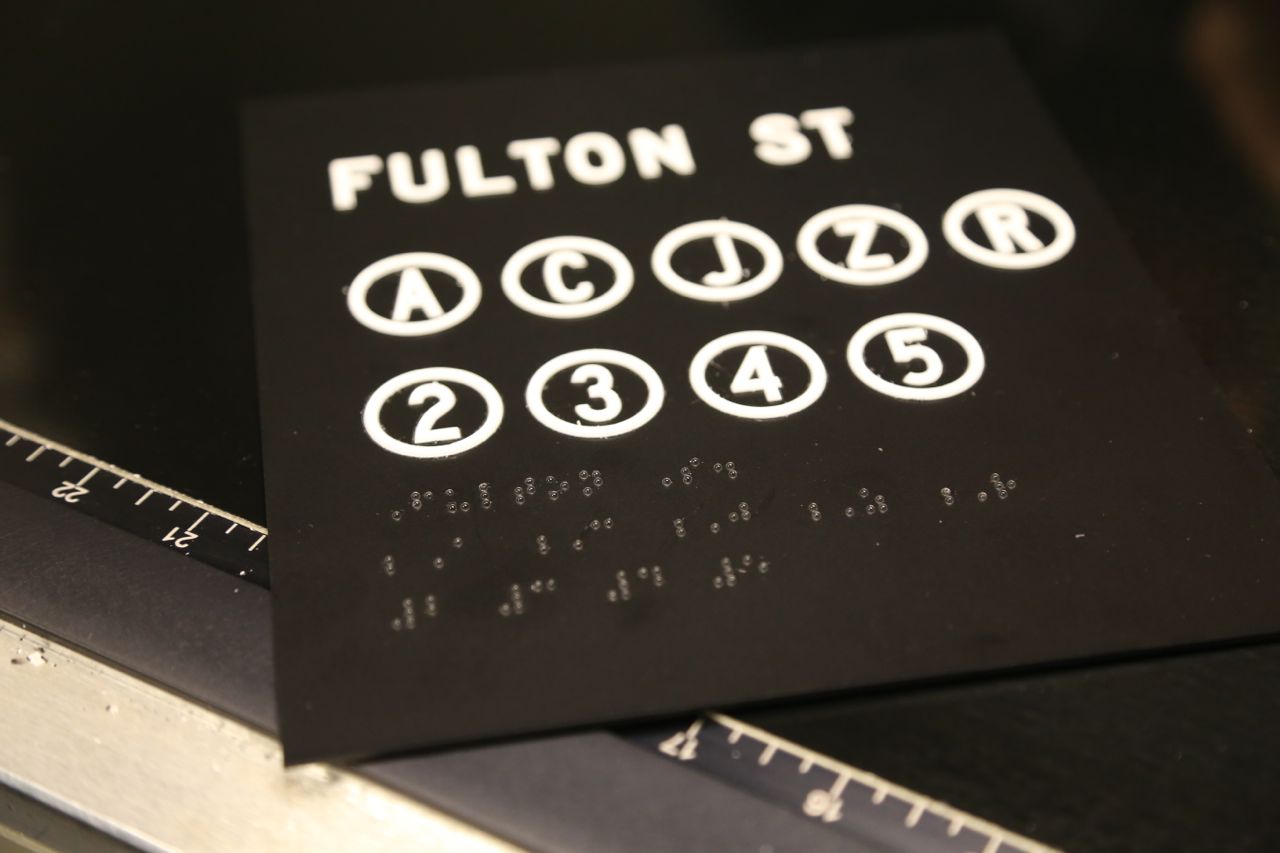
There is another machine that engraves signs and also applies to plastic beads to make braille signs.

Engraving machine

Engraving machine

Temporary location sign with Braille.
Temporary location sign with Braille.
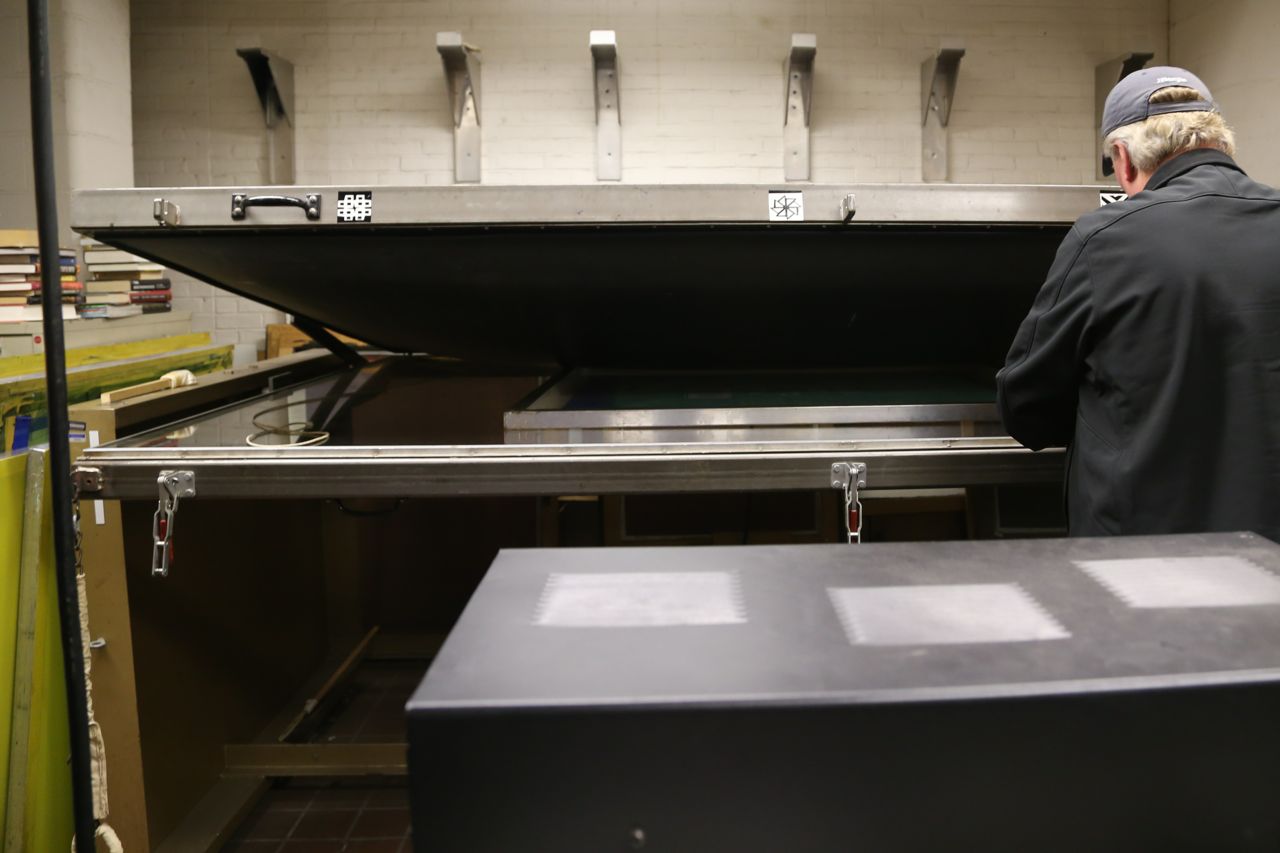
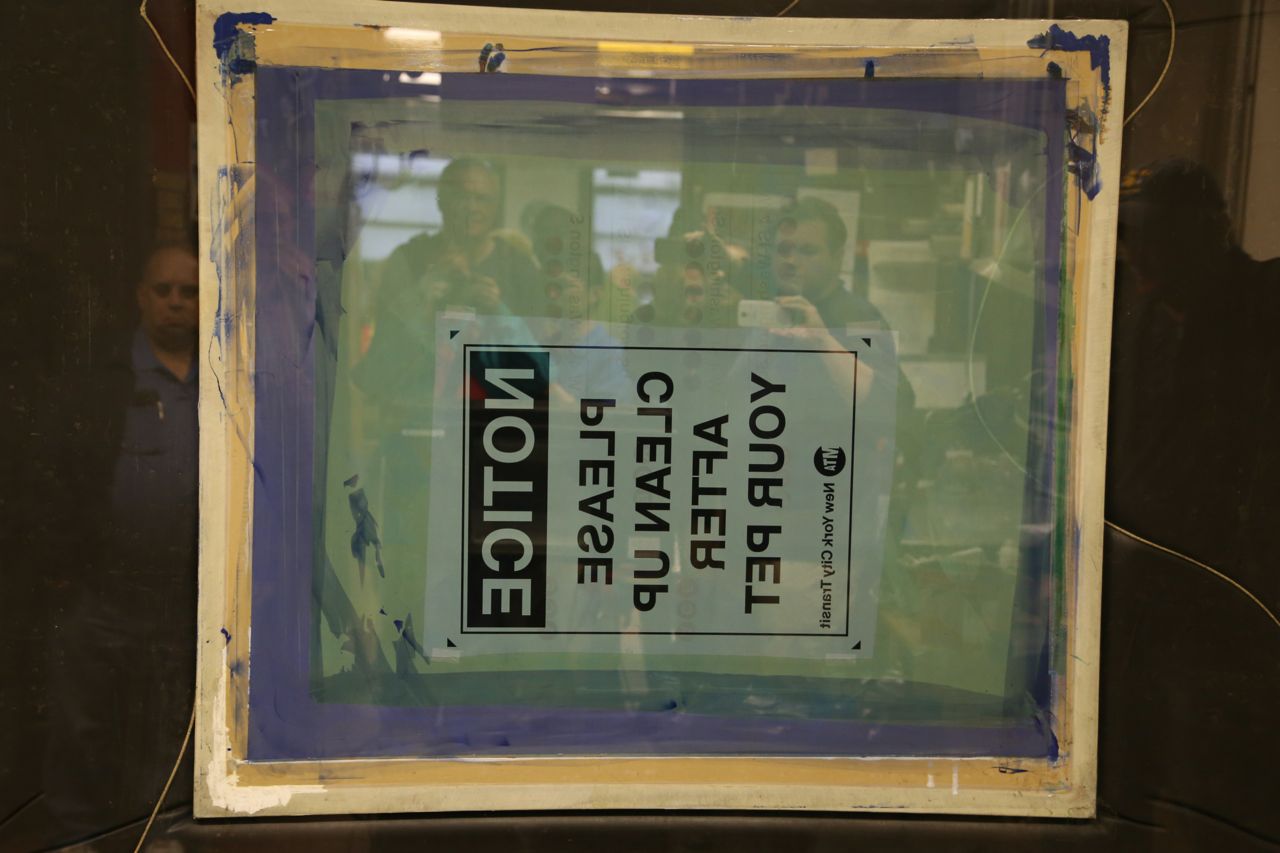
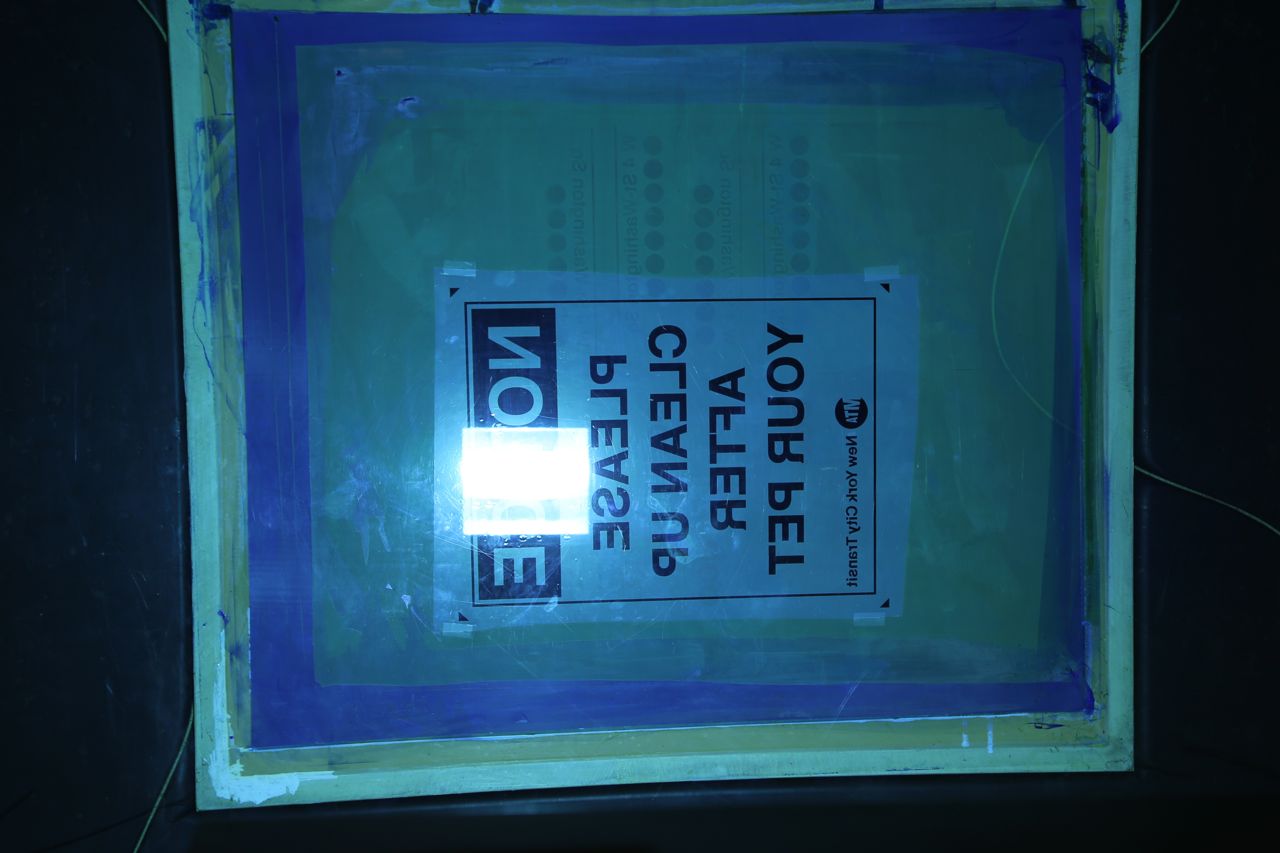
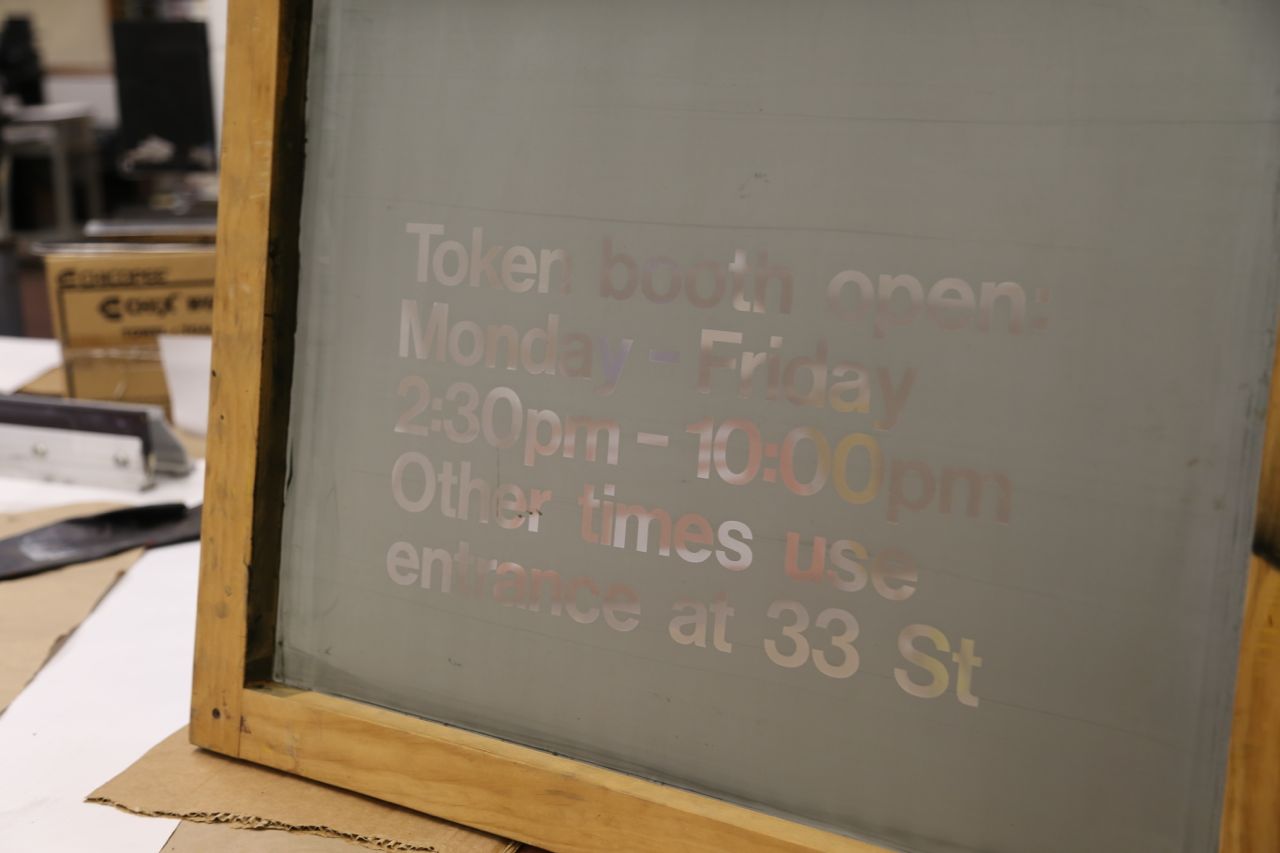
In a separate room, they make frosted glass signs by applying a template and coating the glass with uv-activated substance. Ultraviolet light is then applied, and anything not covered by the template will be frosted.

Glass placed into machine where a vacuum will be applied and then it will be treated under ultraviolet light

Glass placed into machine where a vacuum will be applied and then it will be treated under ultraviolet light

Sign about to be treated under ultraviolet light

Sign about to be treated under ultraviolet light

Sign being treated under ultraviolet light

Sign being treated under ultraviolet light

Glass after being treated with uv light

Glass after being treated with uv light

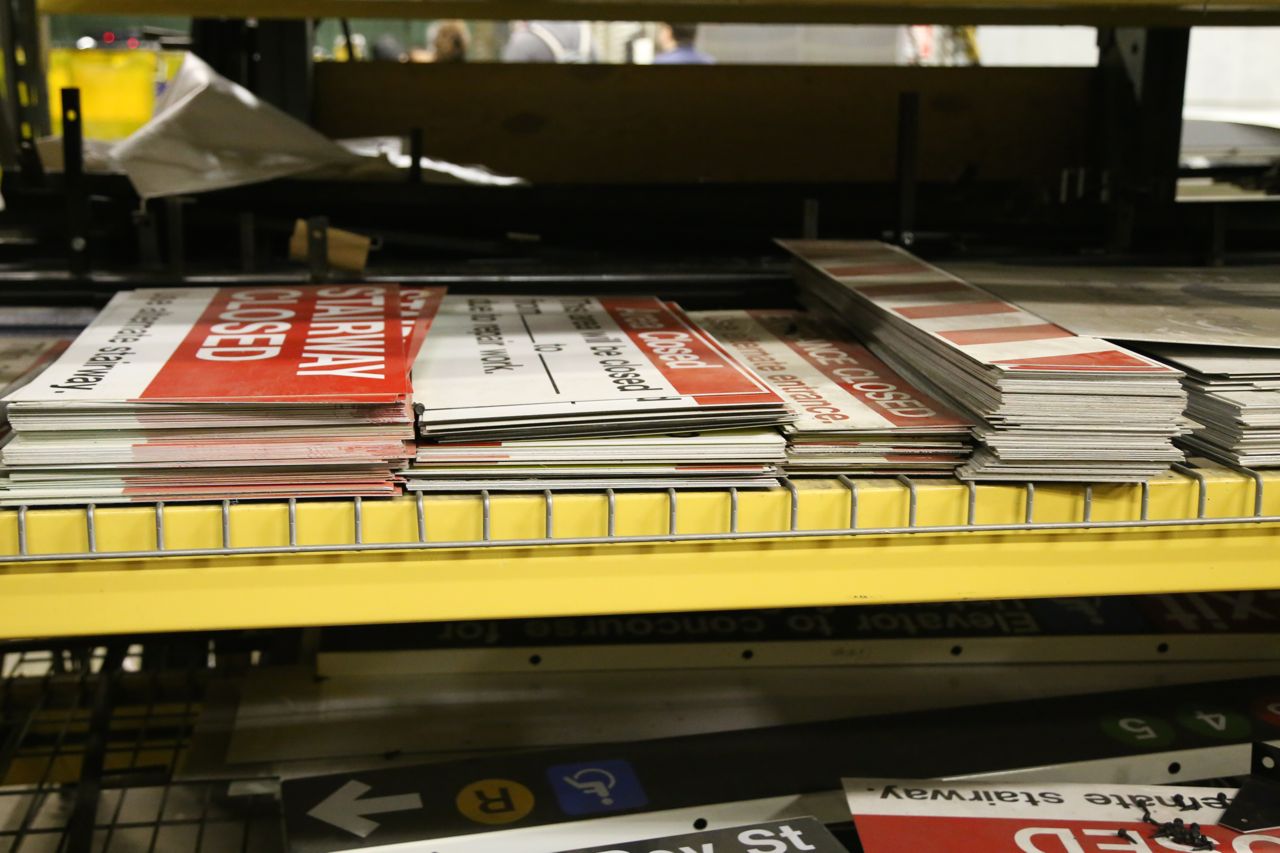
In the back, they had the finished signs stacked up ready to be installed. They also had a supply of generic signs used in various places.

Spare generic signs stacked in storage

Spare generic signs stacked in storage

Finished signs ready to be installed

Finished signs ready to be installed

It was a really fun tour, and it was really neat to learn how the signs are made. Thanks to the New Your Transmit Museum and MTA employees for allowing us to take this tour and showing us how they do everything!

Montreal

While we spent a good portion of our Montreal visit in Old Montreal, we did spend some time wandering around other parts of the city. (Also, see previous Parc du Mont-Royal post.) The Montreal Plateau could probably be considered the original suburbs and has beautiful townhouses and various ethnic areas. Downtown (Centre-Ville) has a lovely mix of old and new buildings and some nice parks that give much needed green space.

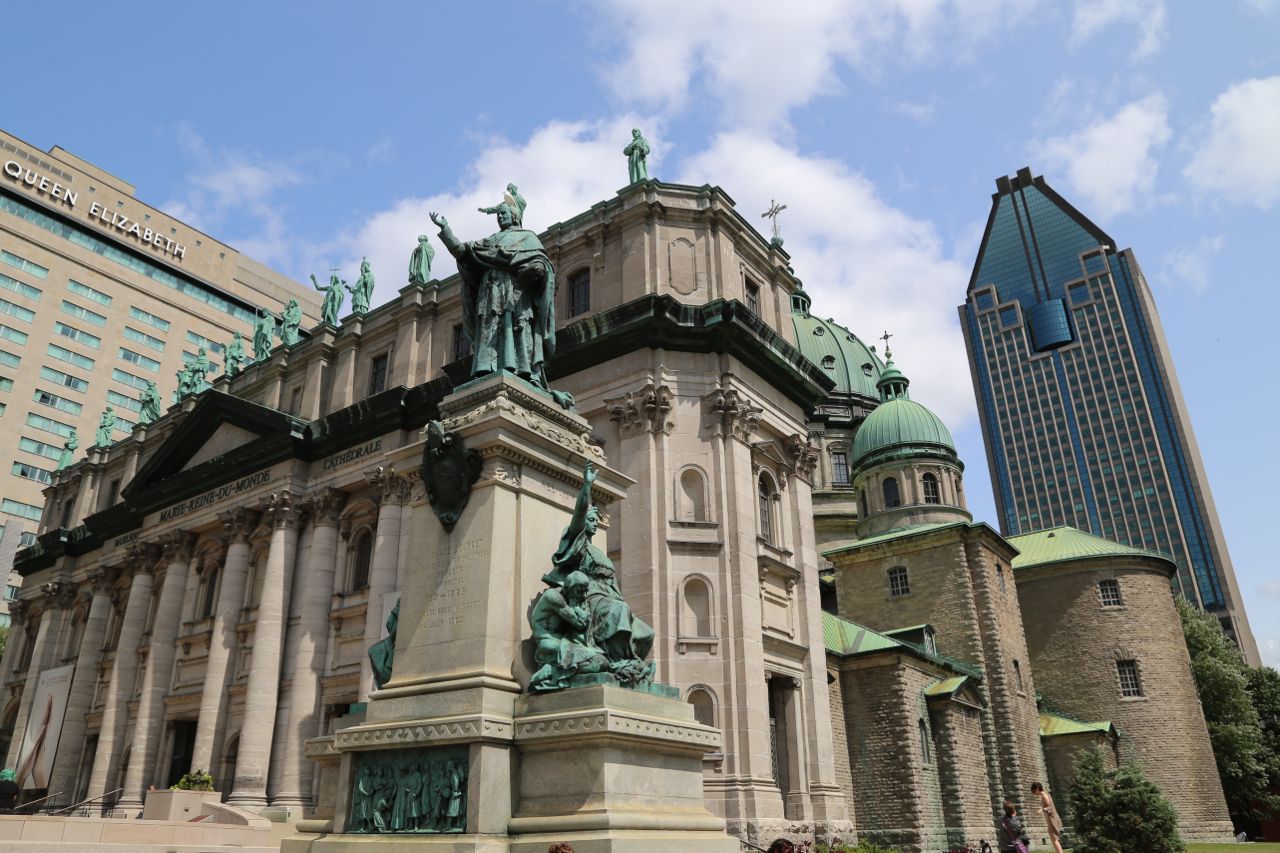
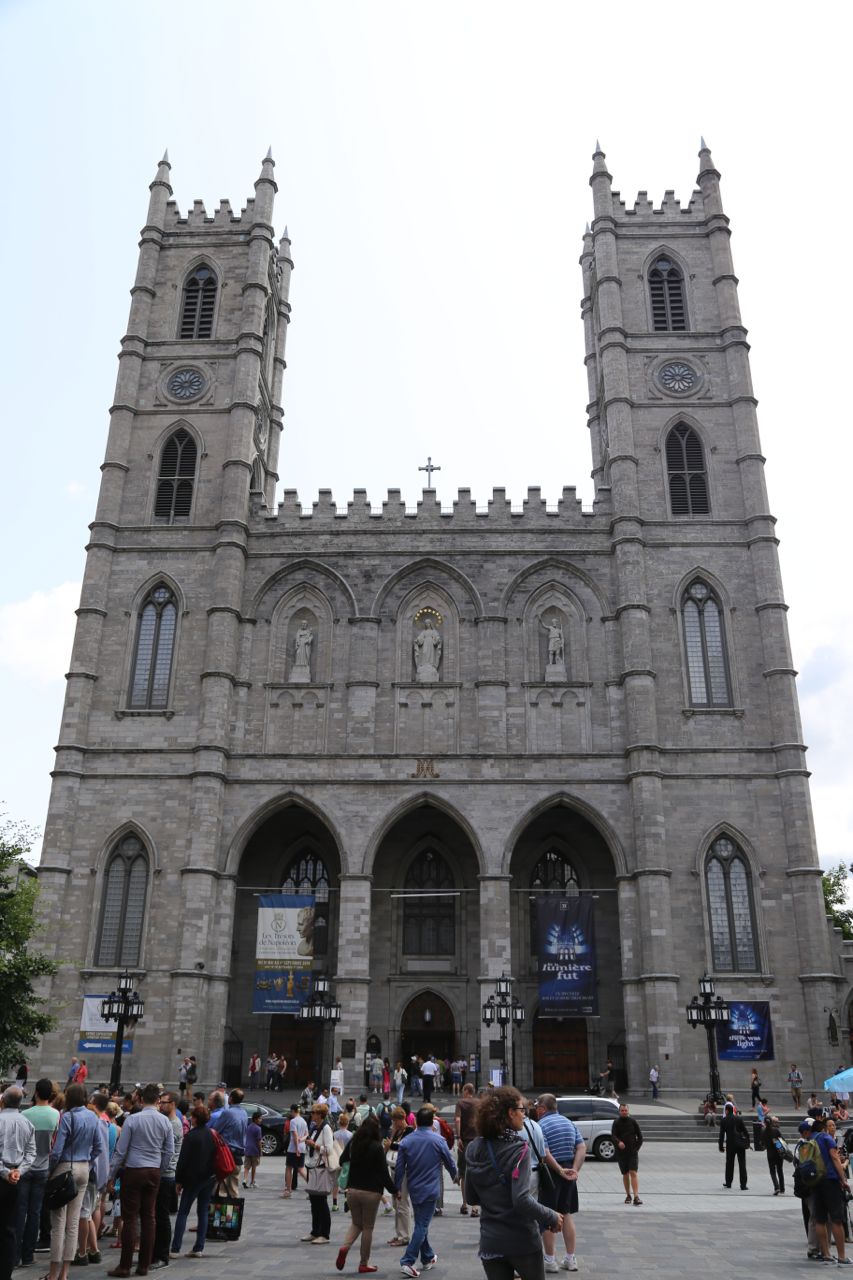
Cathédrale Marie-Reine-du-Monde

Cathédrale Marie-Reine-du-Monde

Centre Bell

Centre Bell

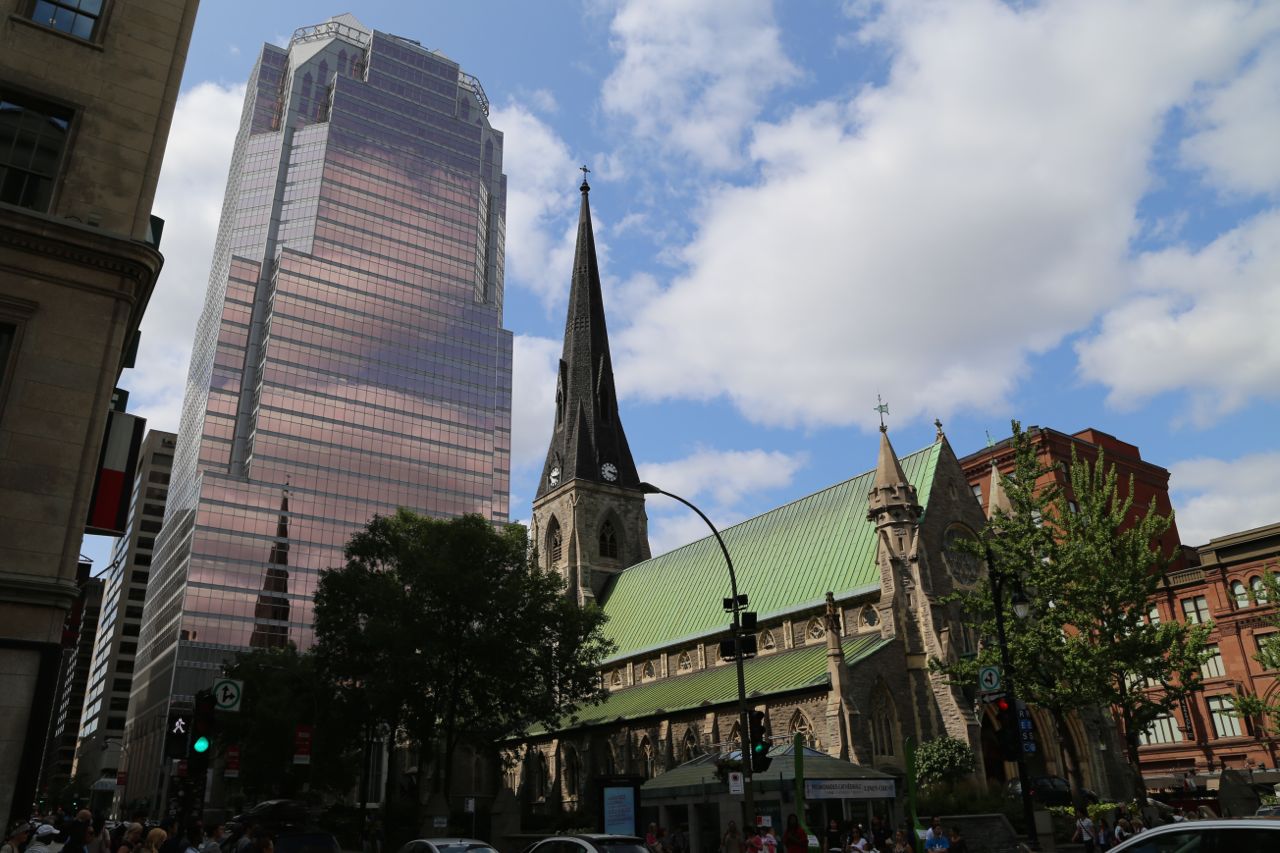
Christ Church Cathedral

Christ Church Cathedral

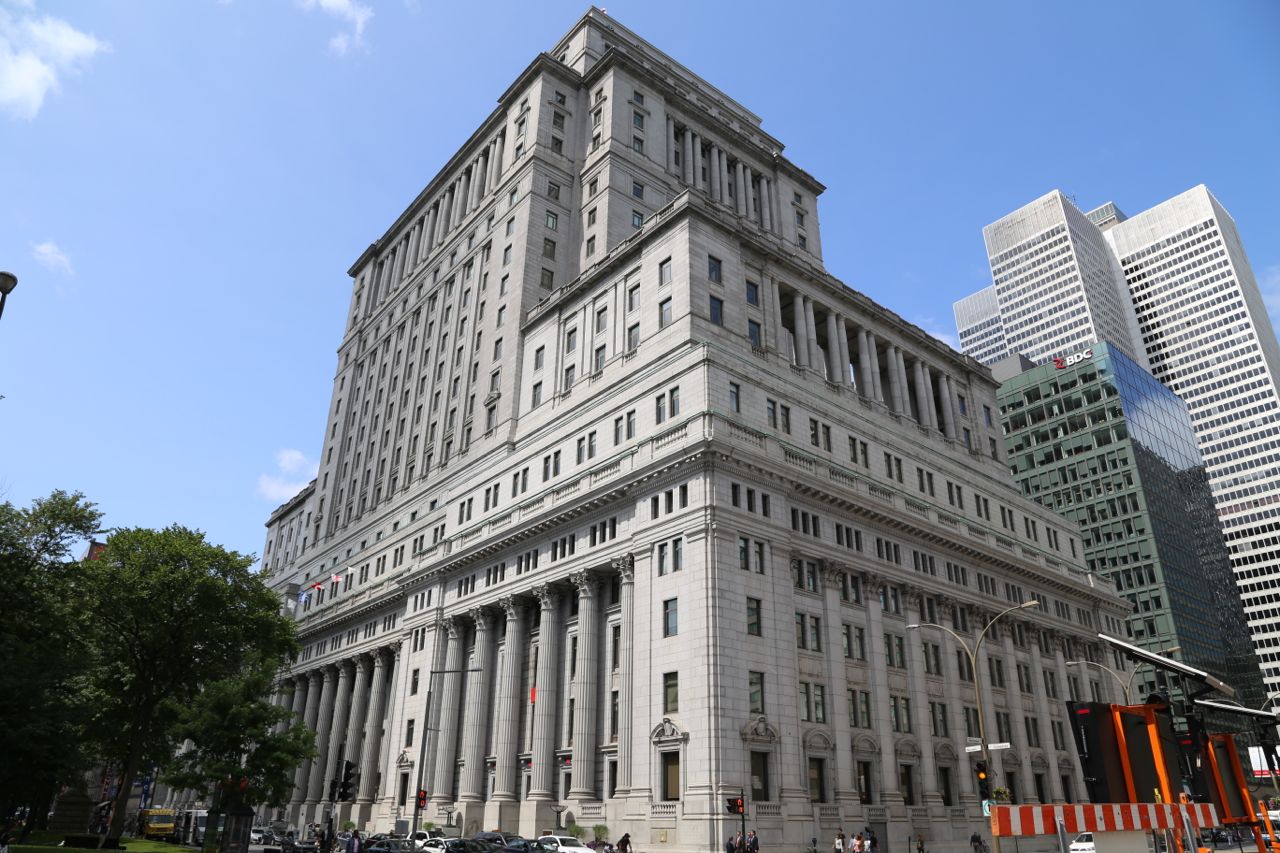
Edifice Sun Life

Edifice Sun Life

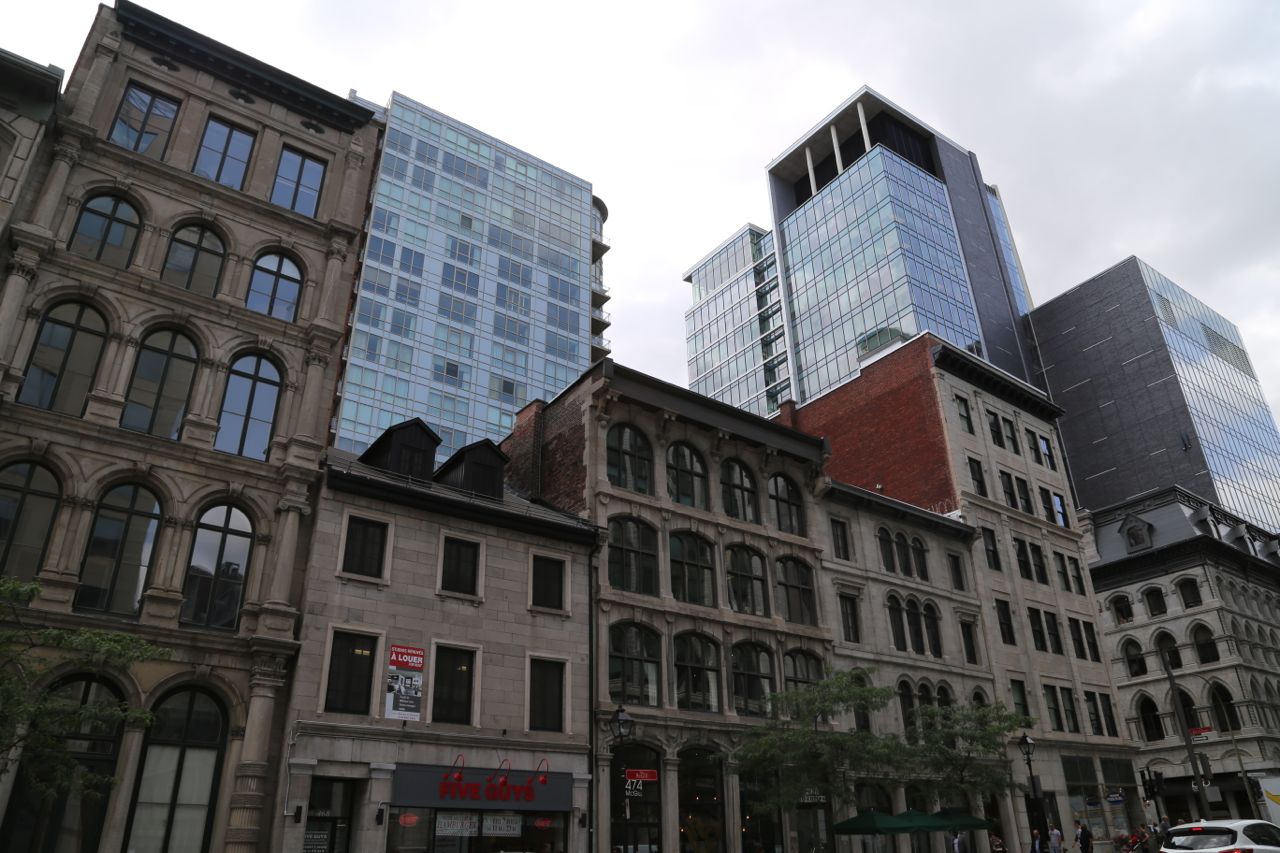
Old and new Montreal

Old and new Montreal

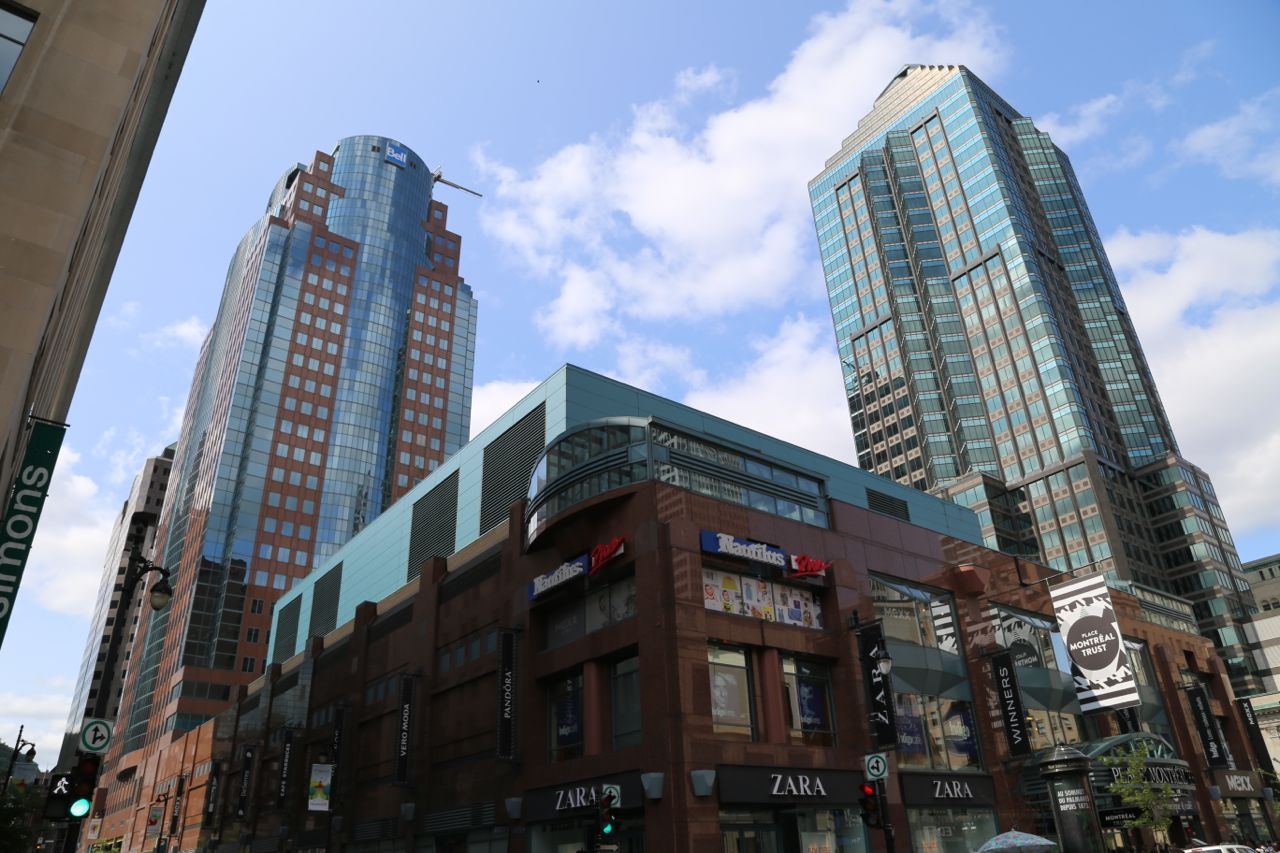
Place Montréal Trust

Place Montréal Trust

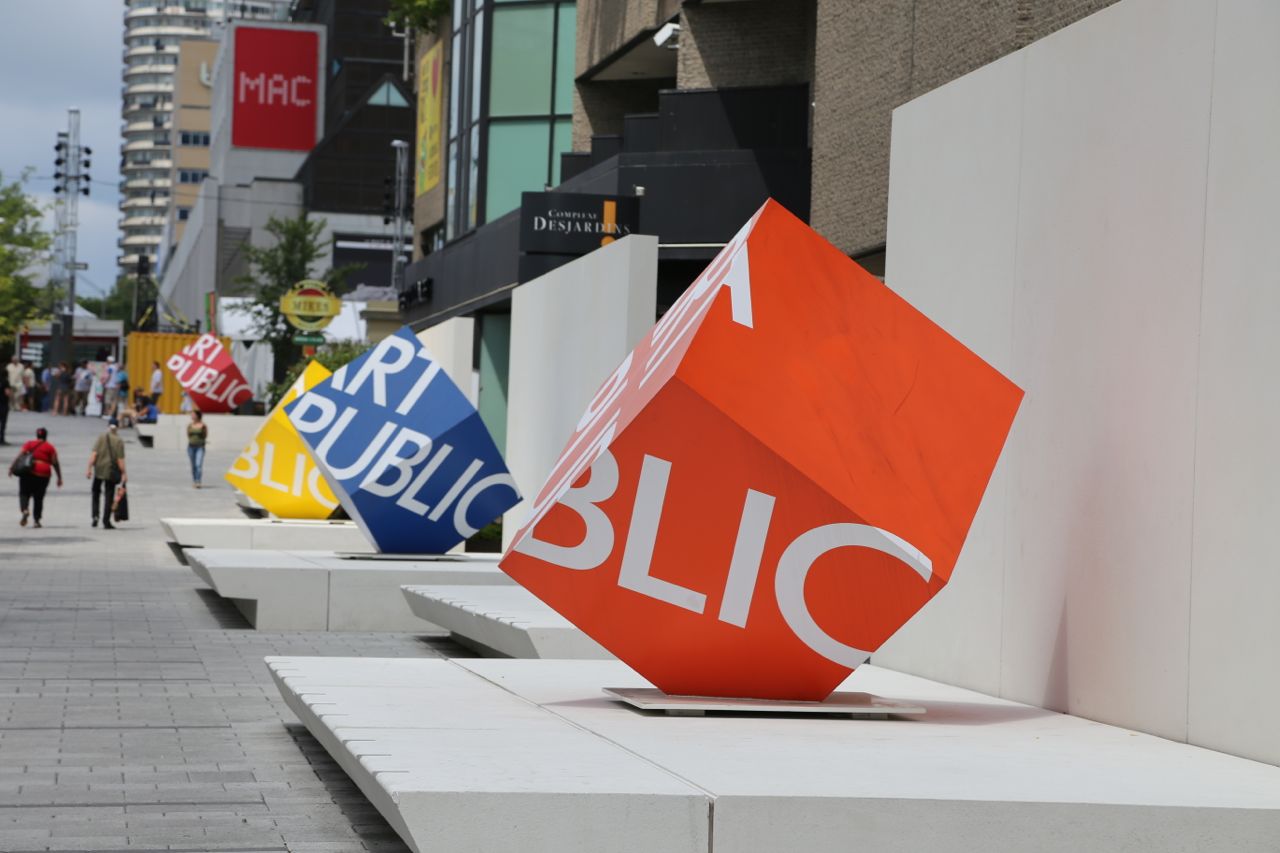
Public are that makes sure you know it is public art

Public are that makes sure you know it is public art

Square Dorchester

Square Dorchester

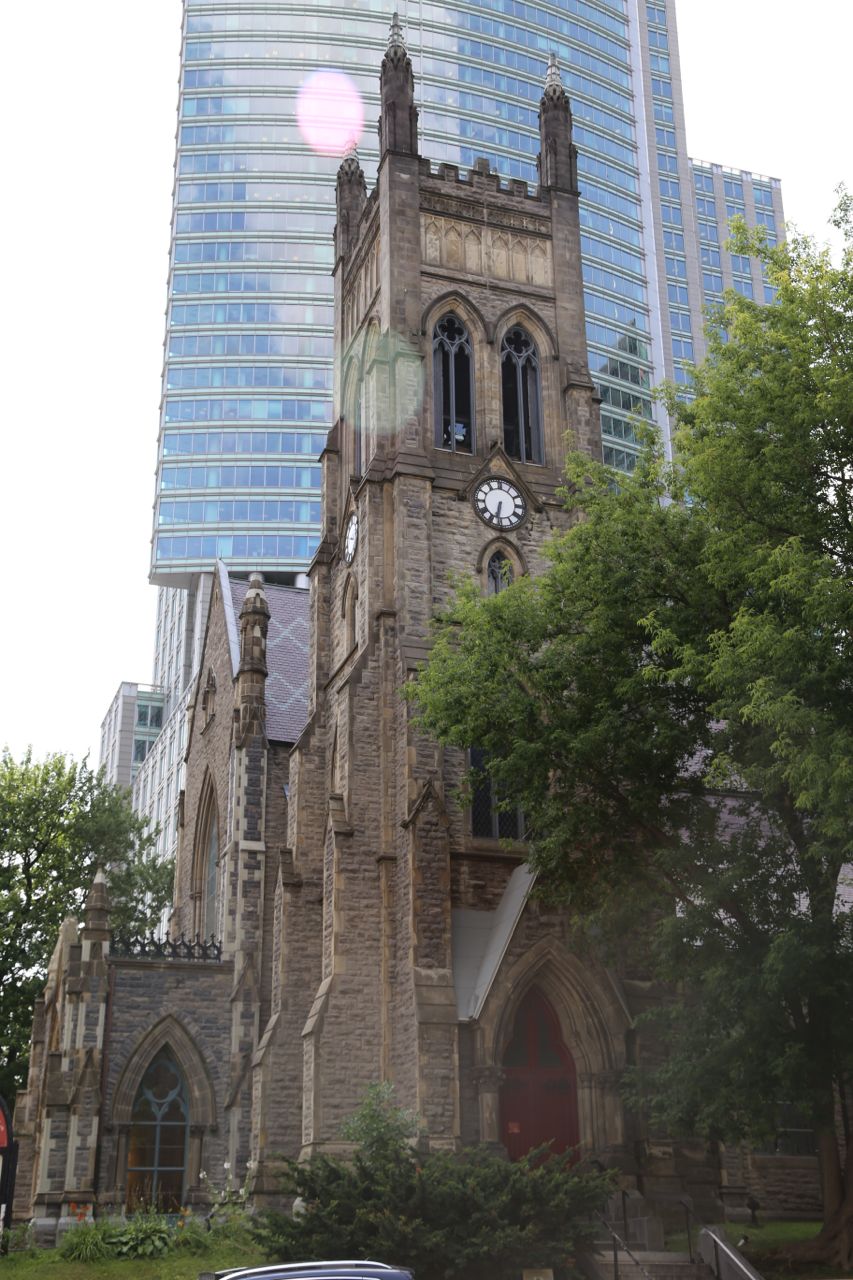
St. George's Anglican Church

St. George’s Anglican Church

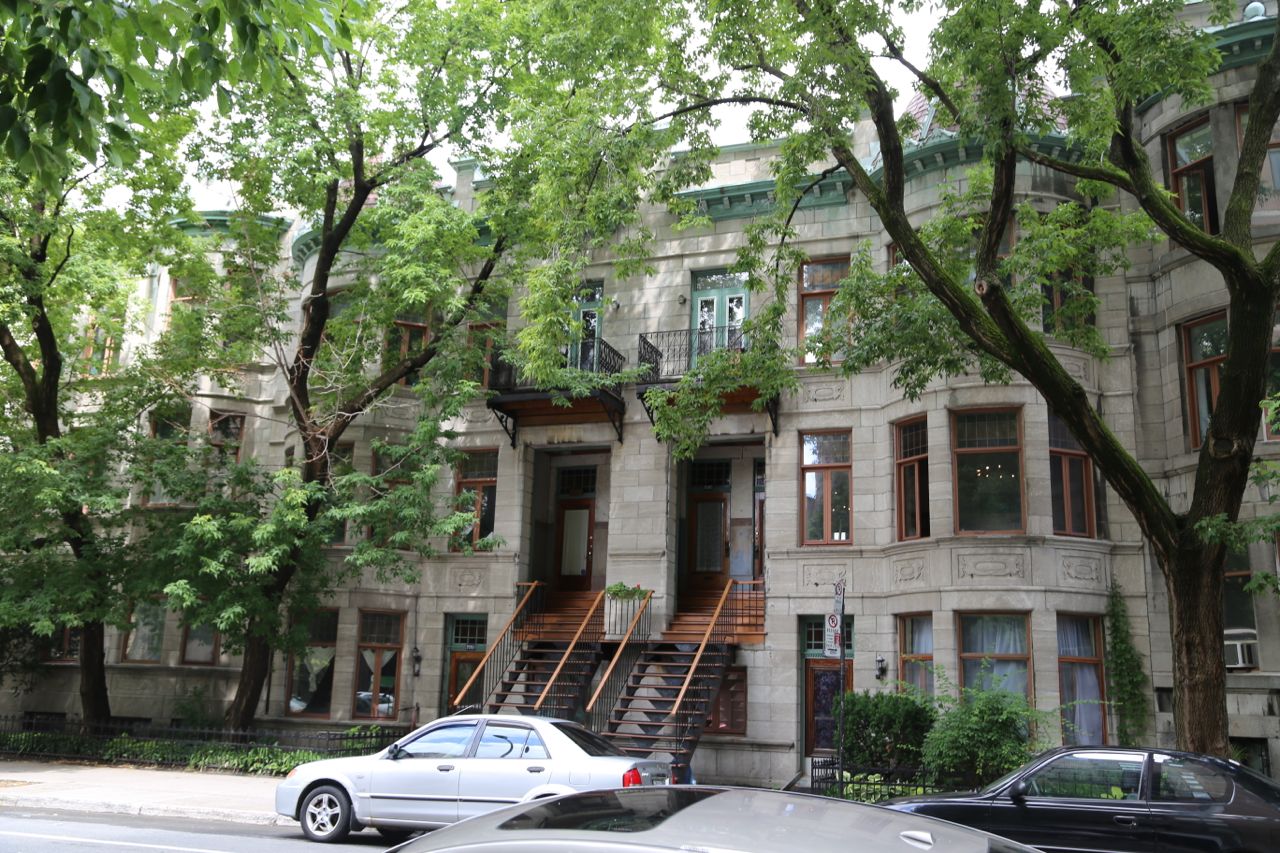
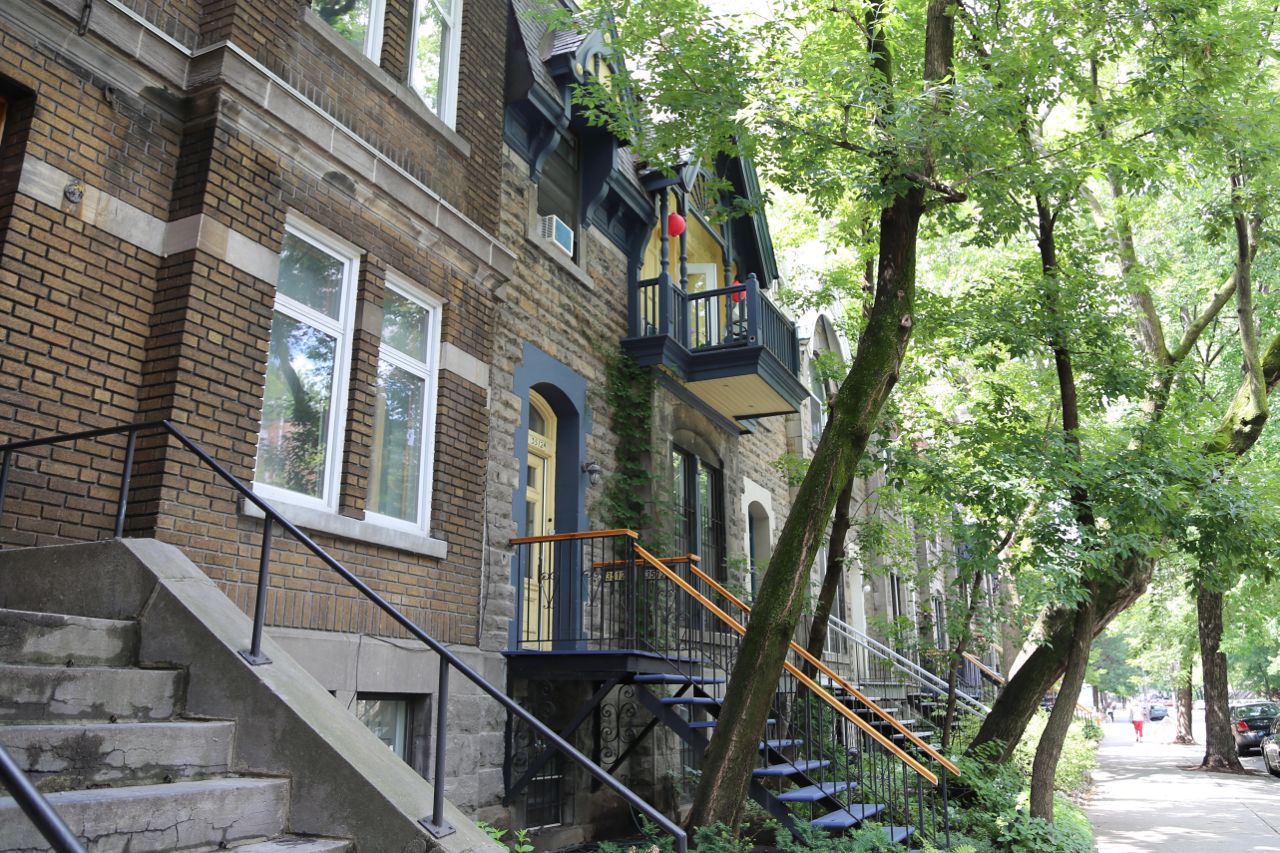
townhouses

townhouses

townhouses

townhouses

Basilique Notre-Dame de Montréal

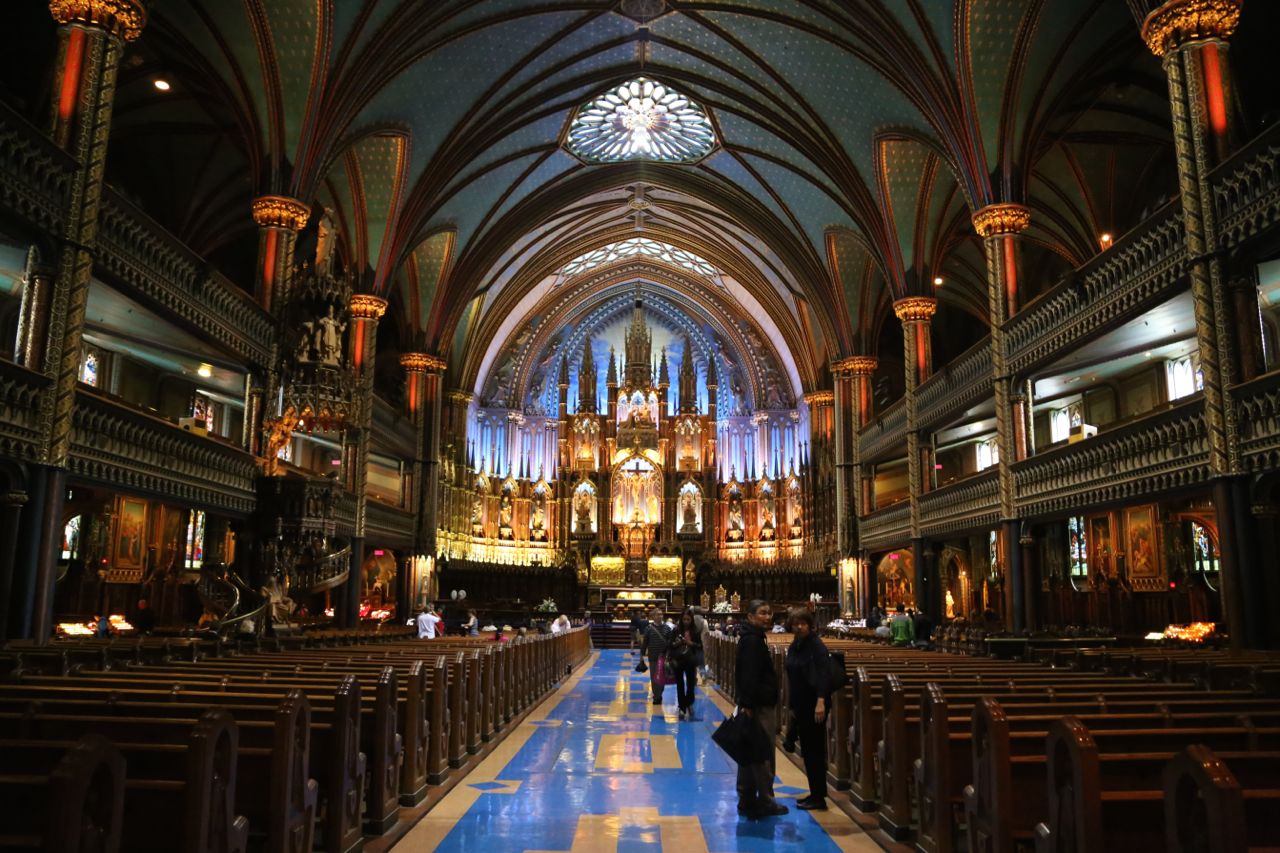
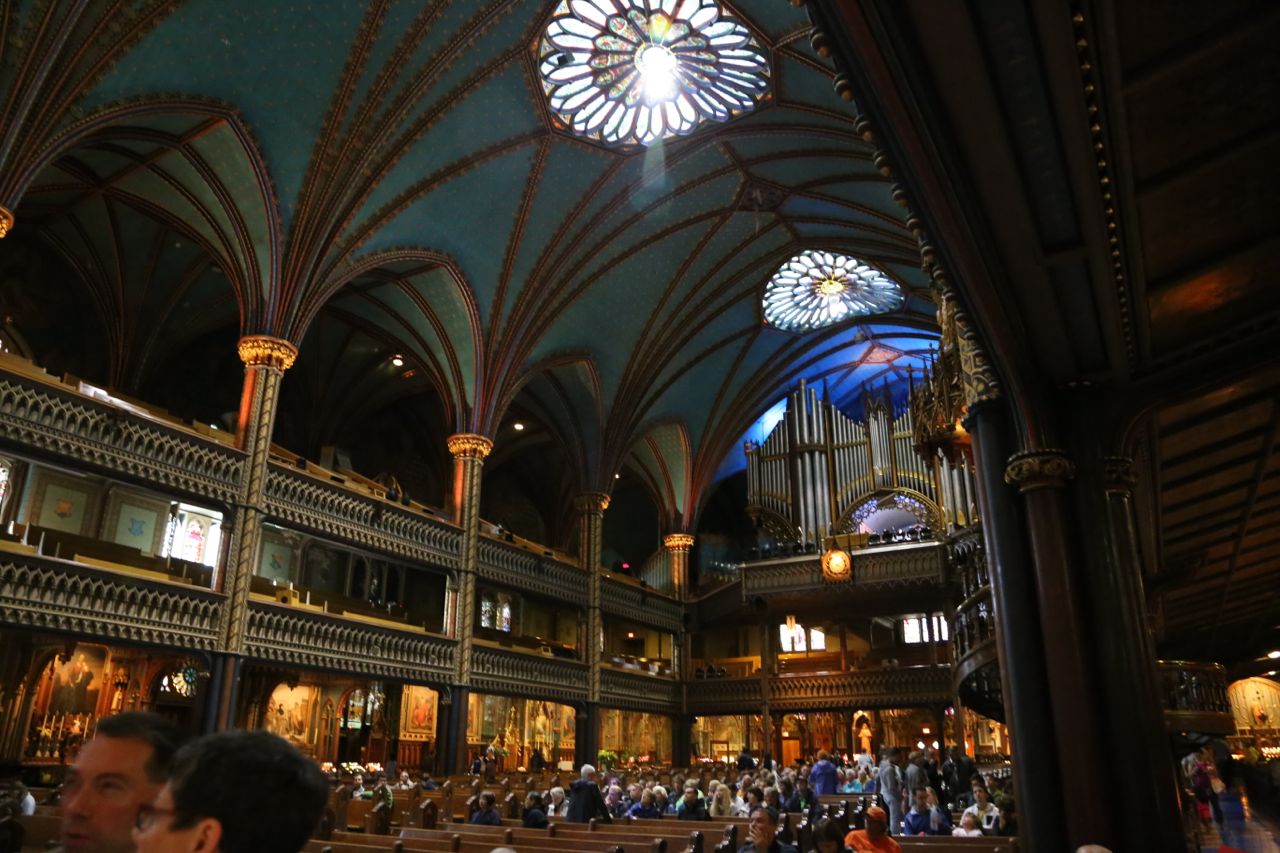
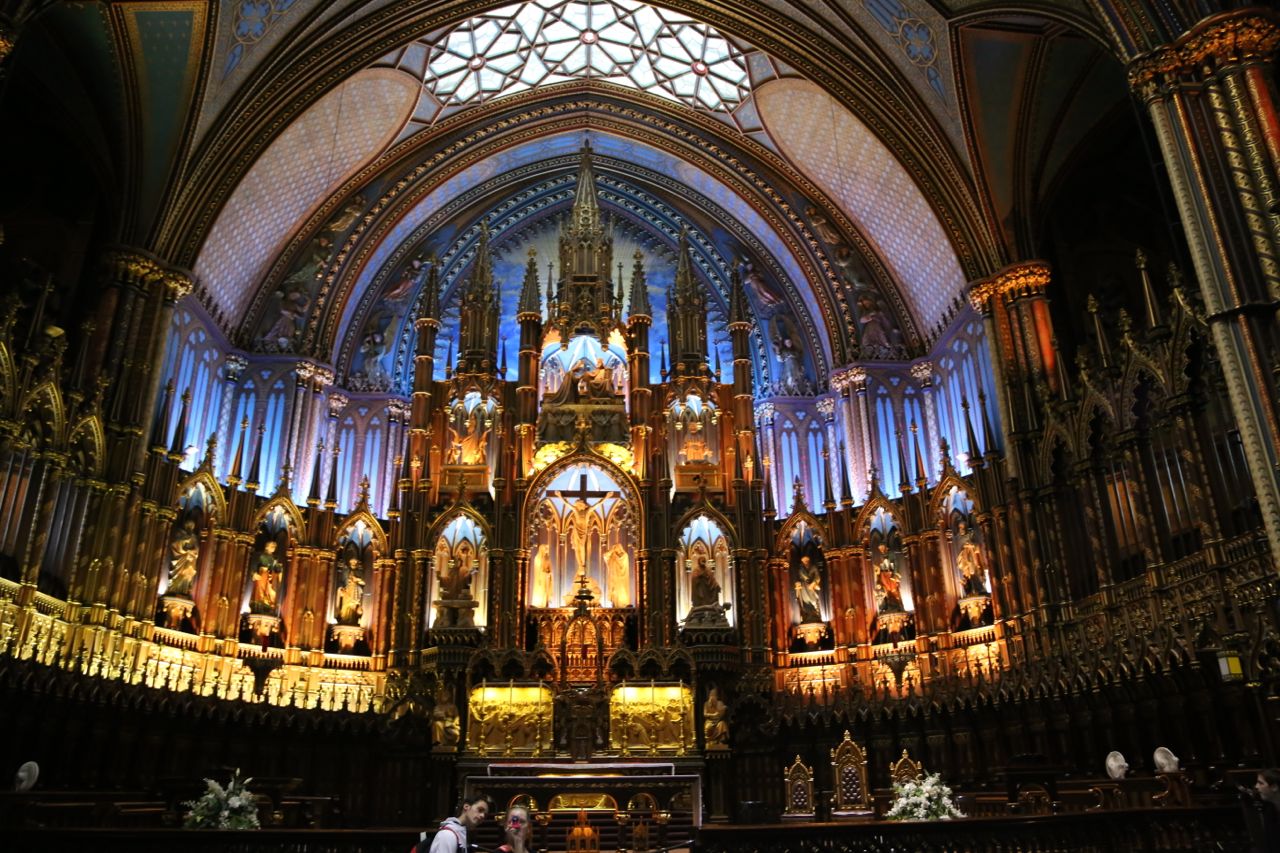
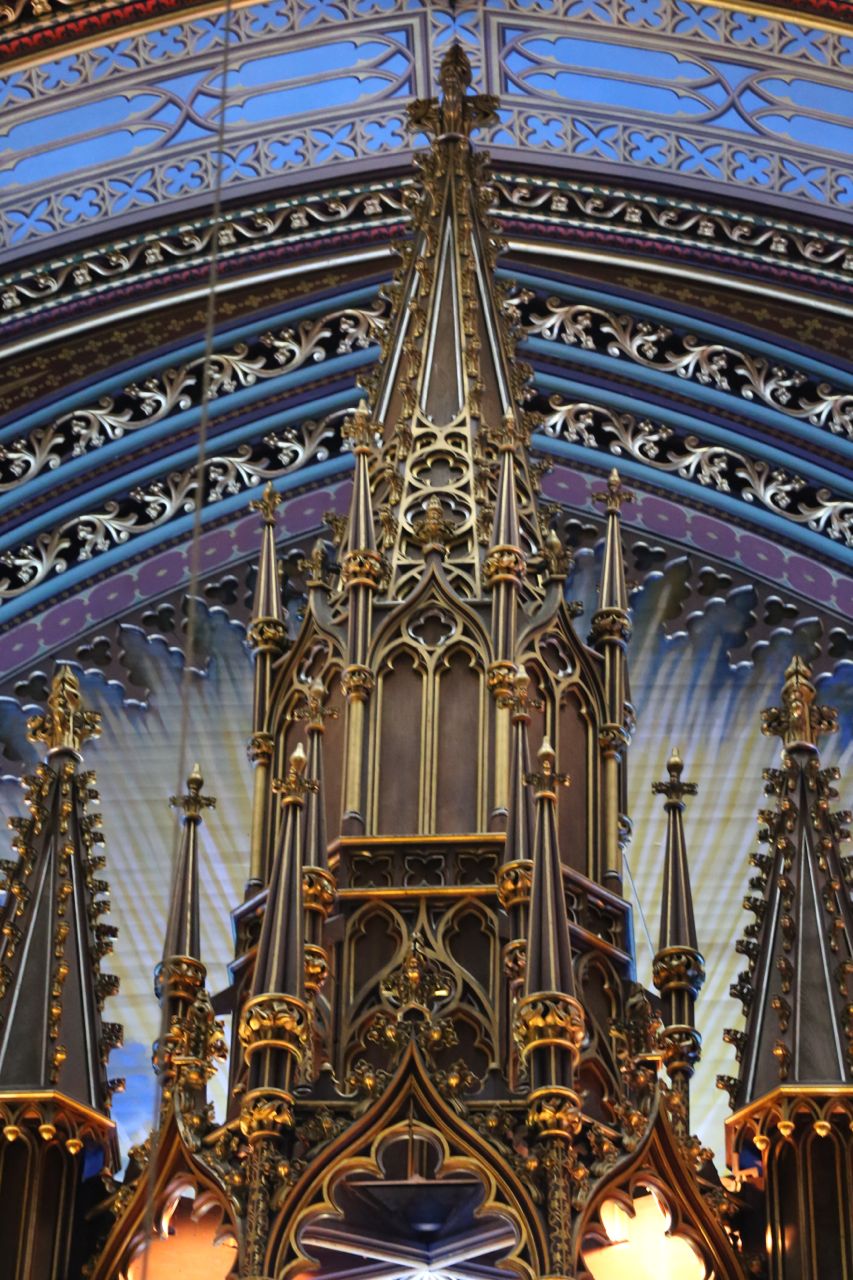
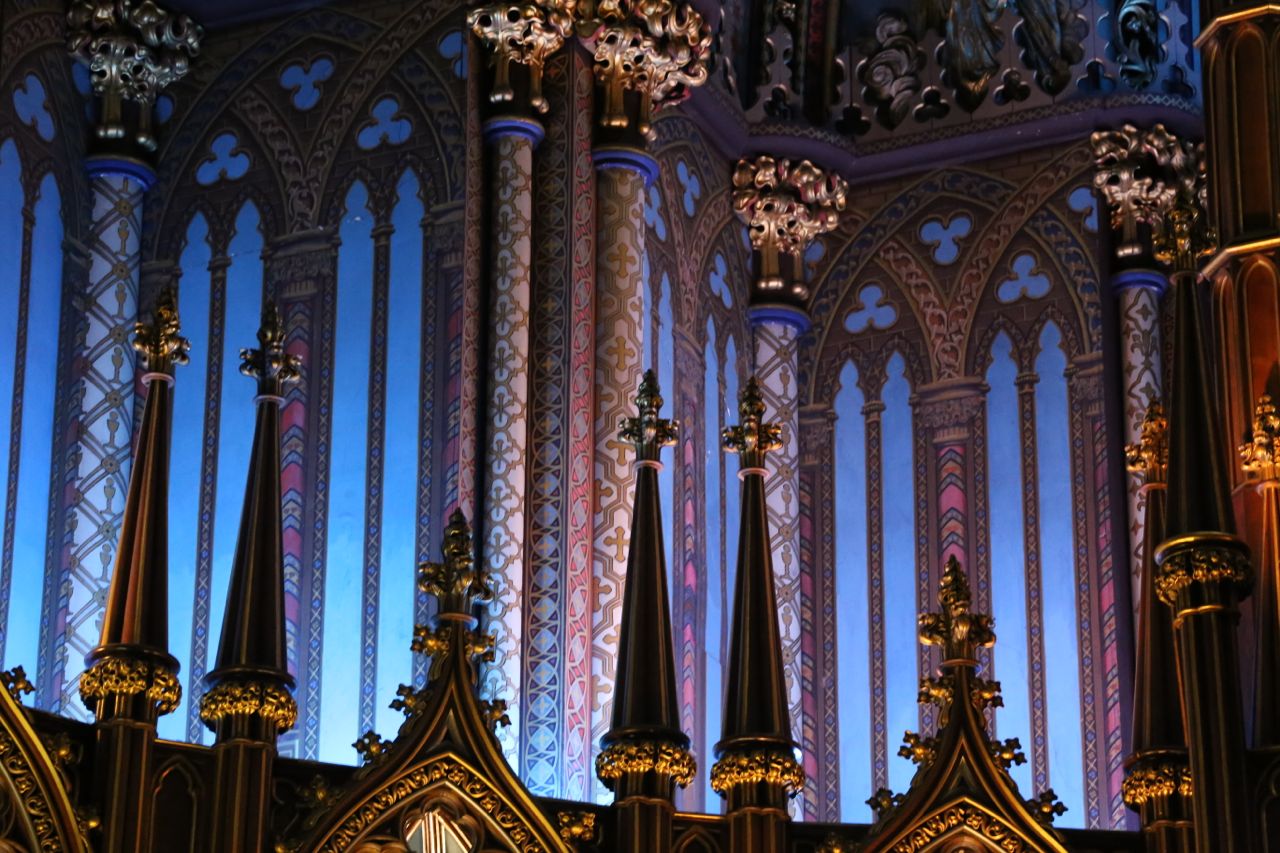
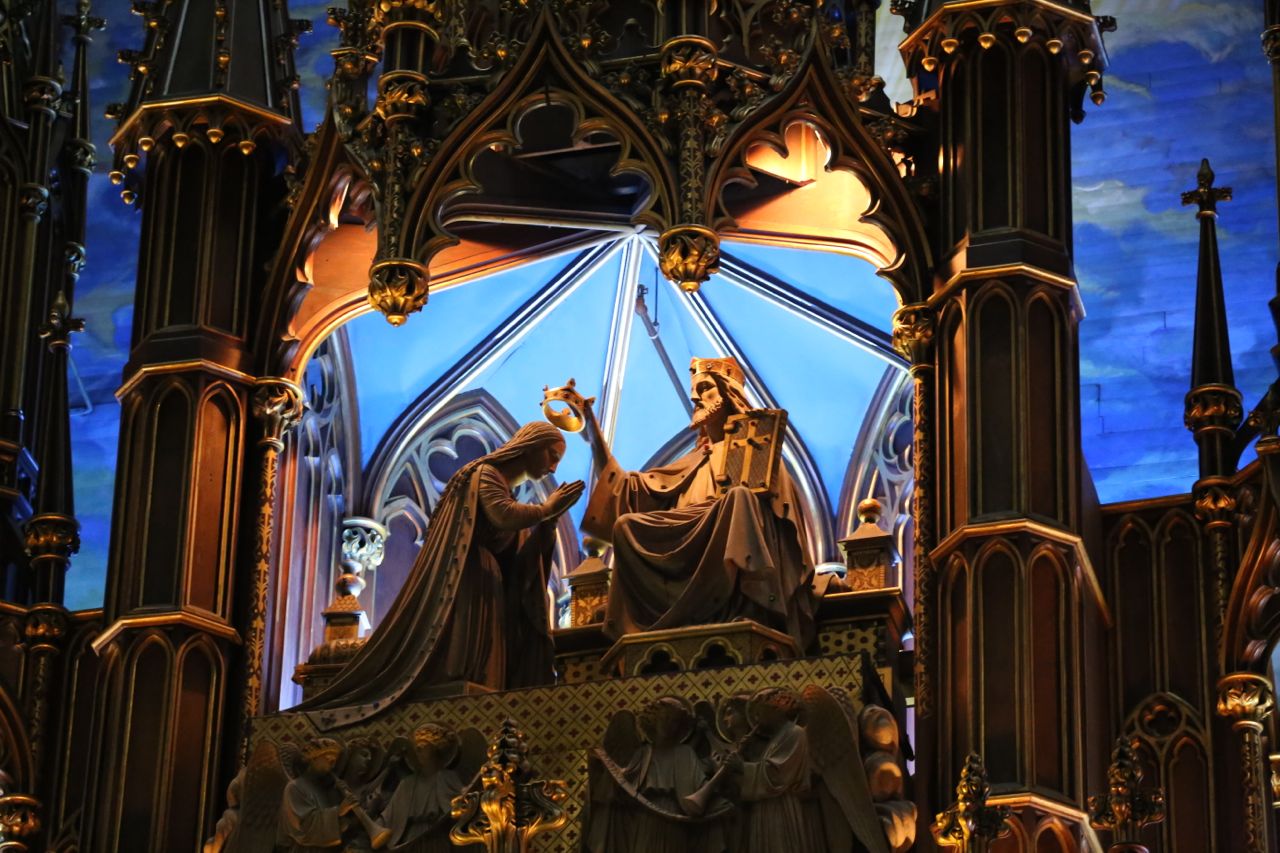
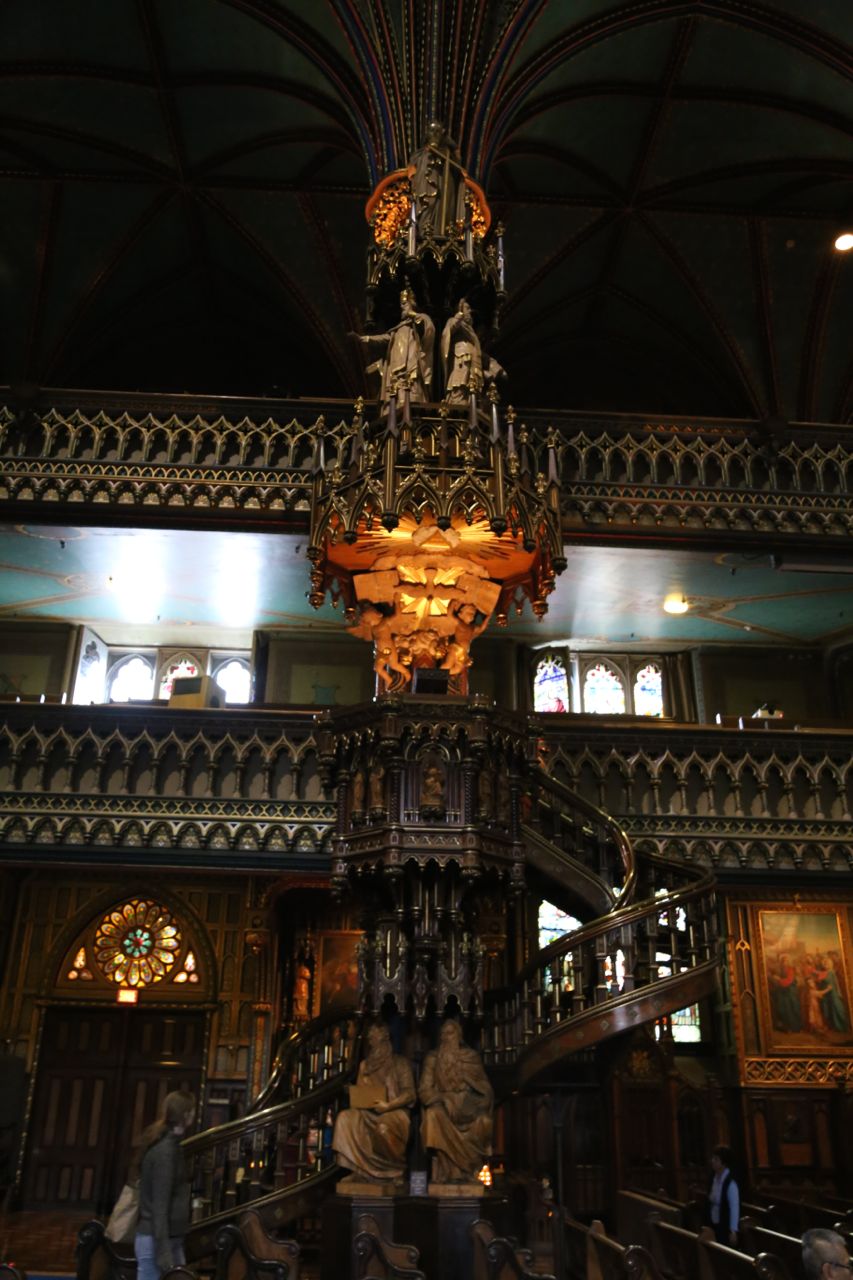
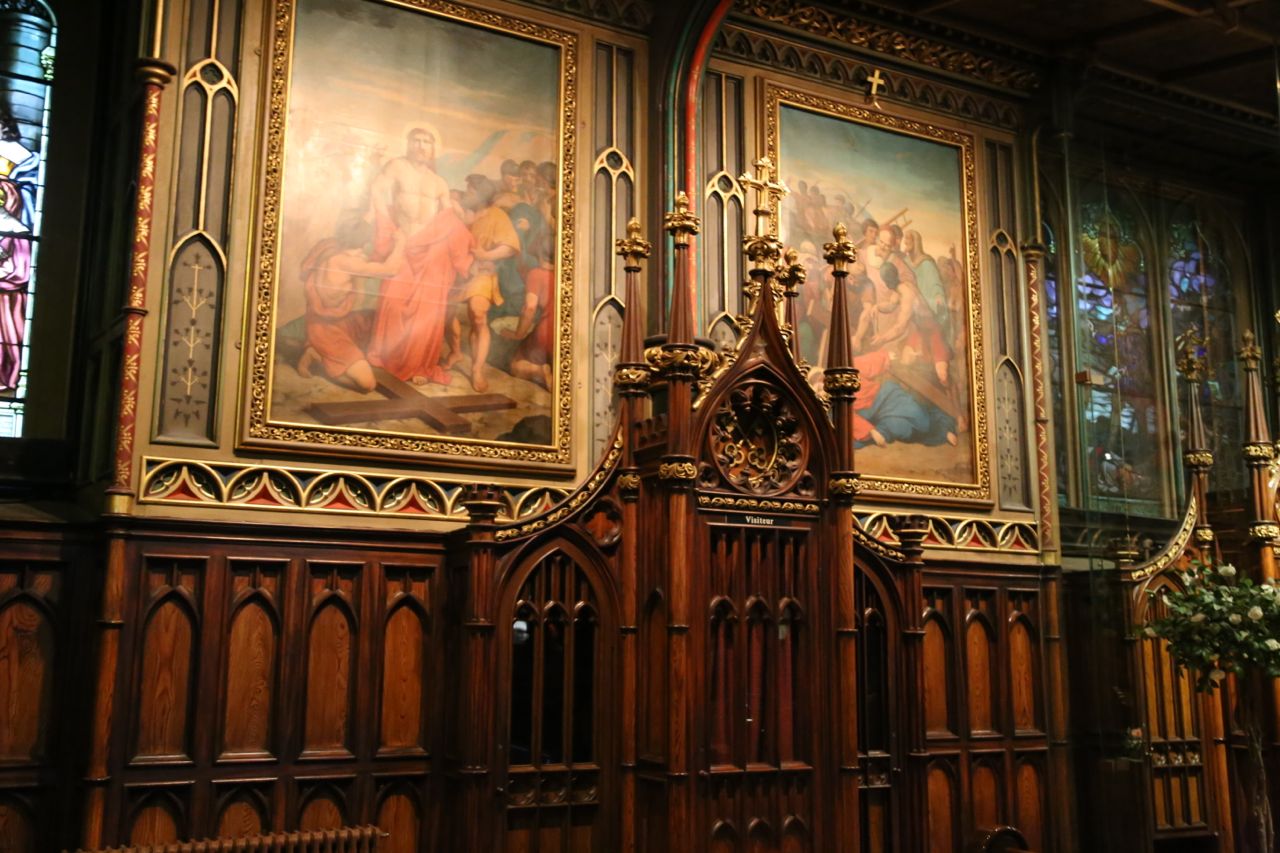
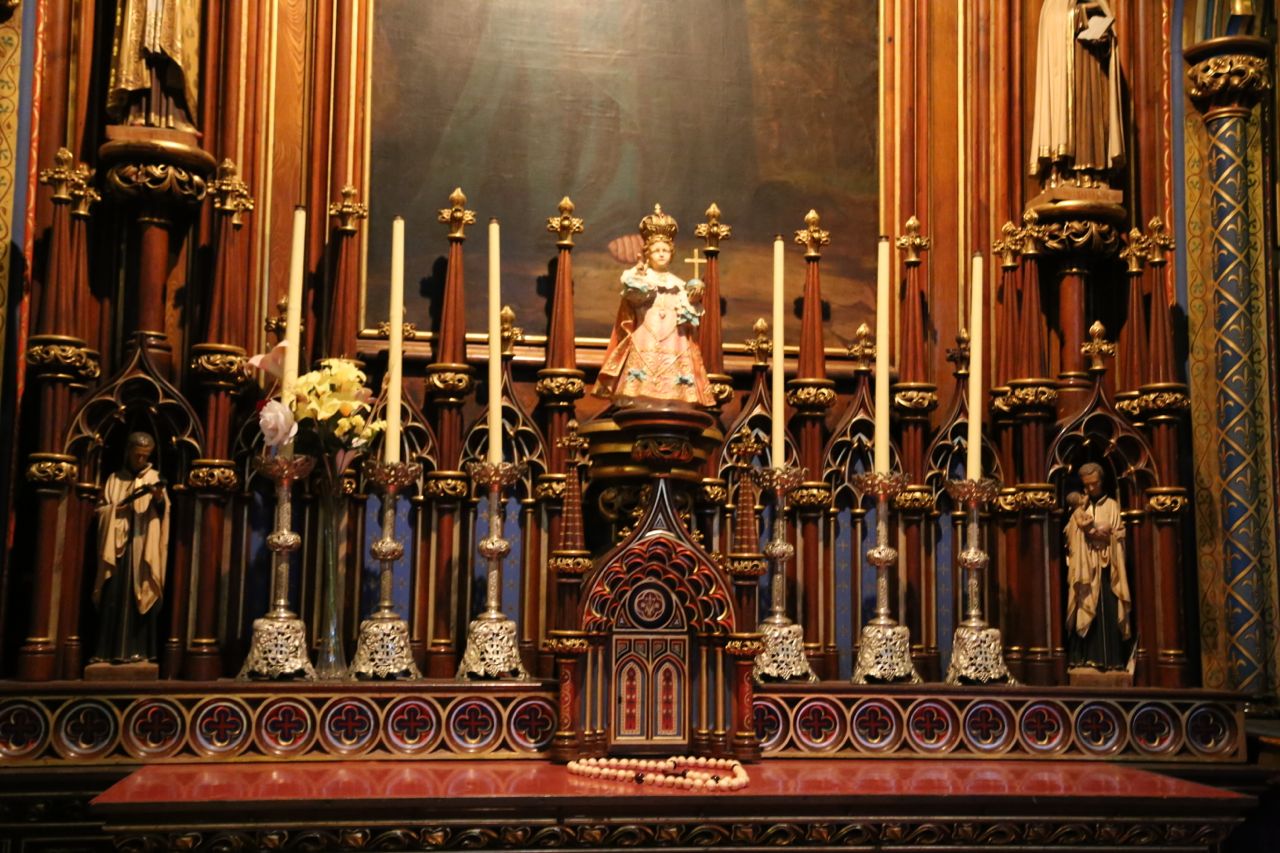
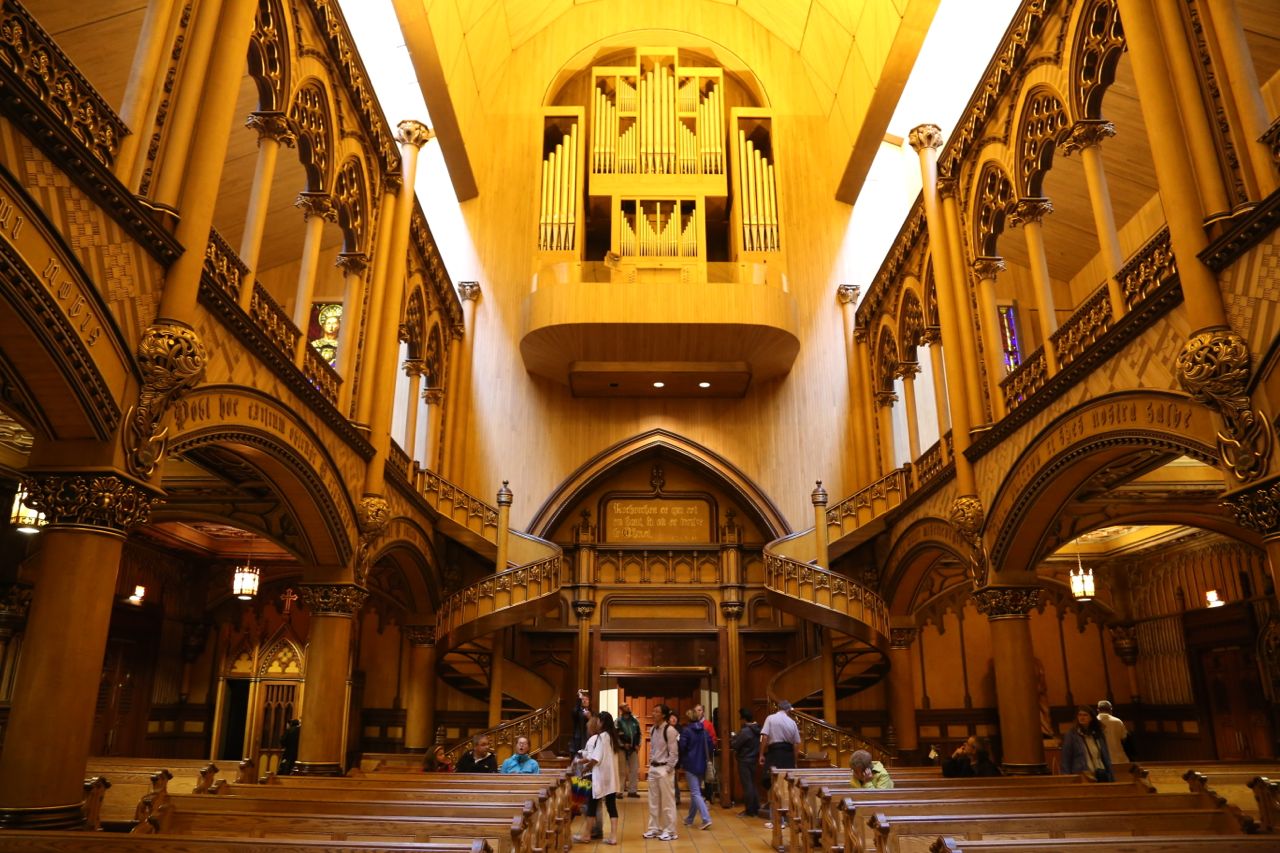
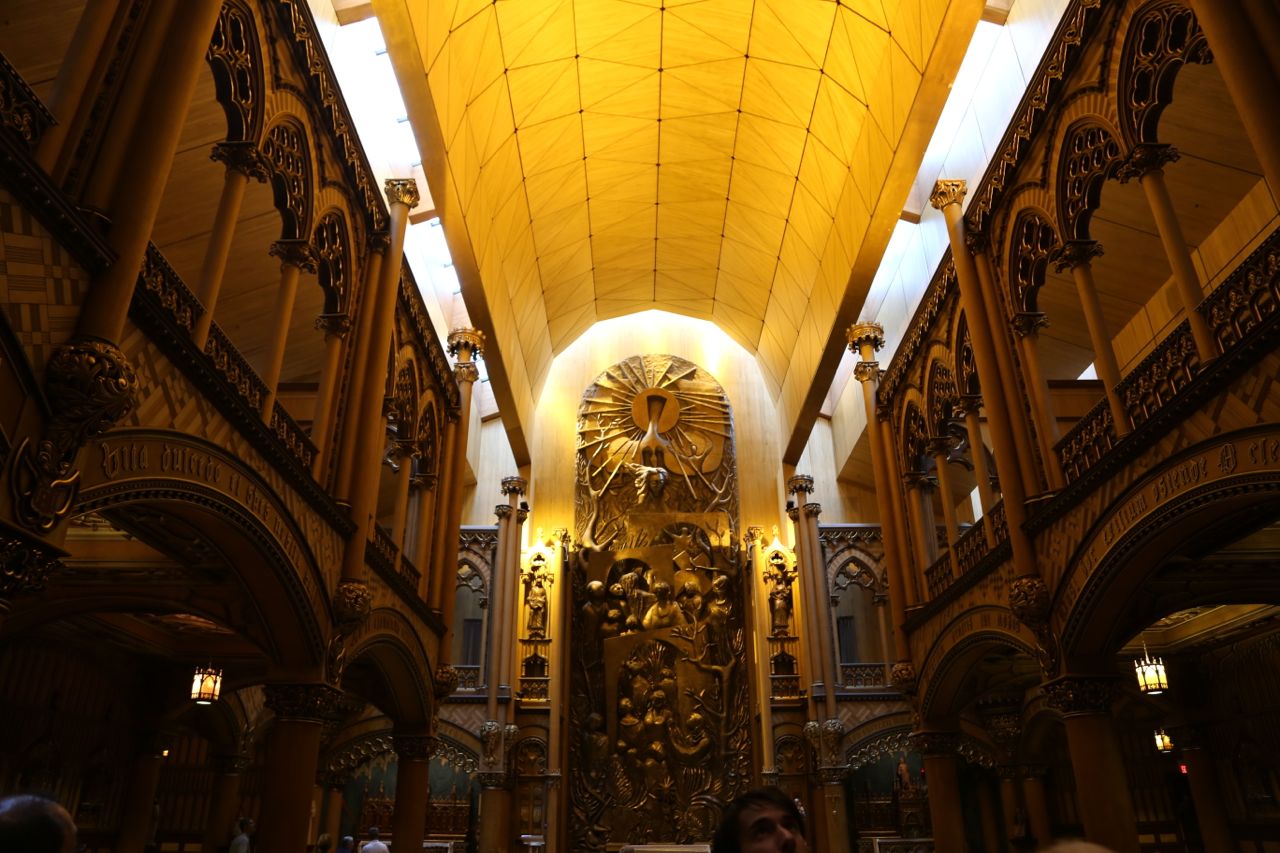
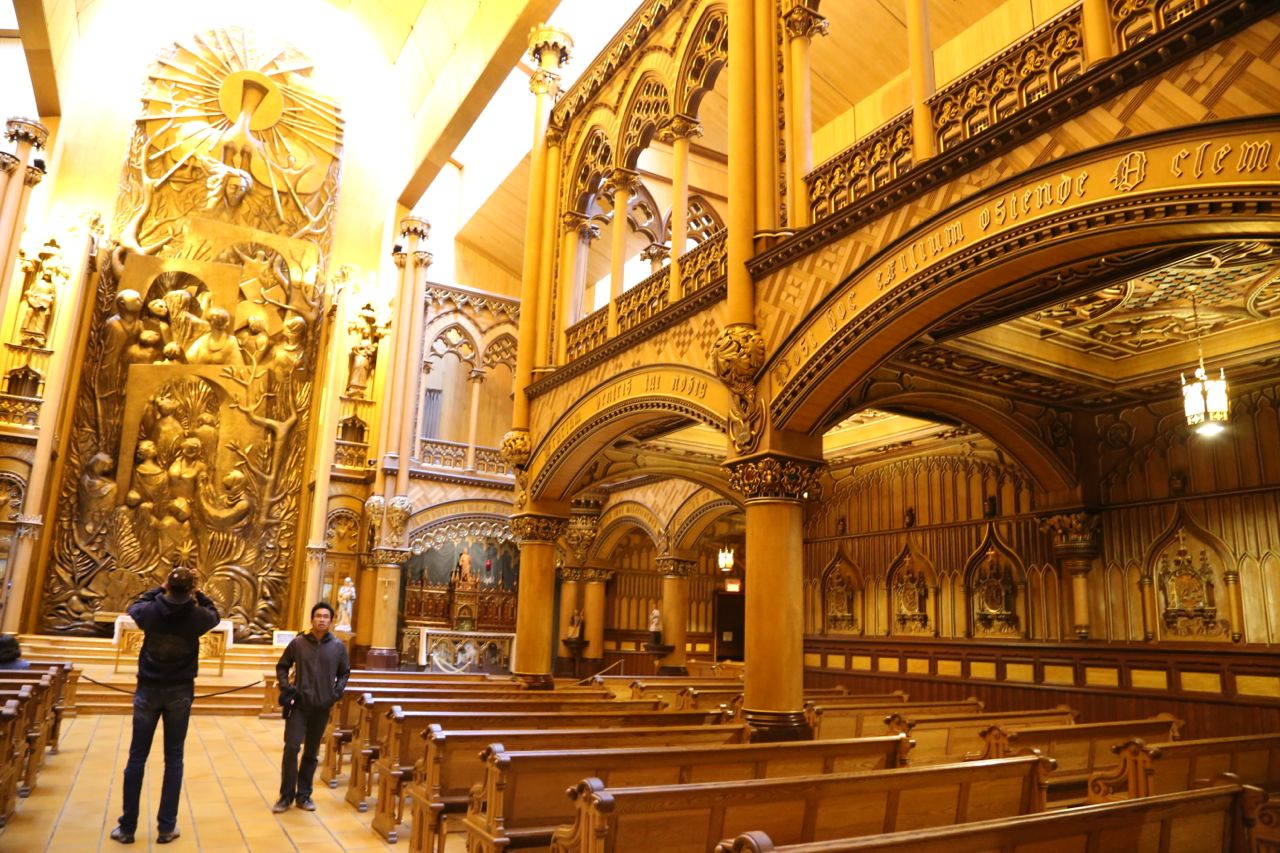
While visiting Old Montreal, we visited the Basilique Notre-Dame de Montréal (Notre-Dame Basilica). In my opinion, while the outside is pretty, the outside is somewhat deceptively plain compared to the beauty inside. The inside is gorgeous. There is just amazingly detailed decoration everywhere. There is beautiful wood, gilding, colors, paintings, stained glass, statues, and more. You name it; it is there. Much of the detailed decoration on the walls and ceilings is really well done trompe l’oeil. Then behind the church is the chapel, which has a sort of gilded modern decoration. While the church is bathed in a blue light, the chapel is bathed in a gold light. The builders and artists who built and decorated the basilica really did any amazing job.

Basilique Notre-Dame de Montréal

Basilique Notre-Dame de Montréal

Basilique Notre-Dame de Montréal, looking towards alter

Basilique Notre-Dame de Montréal, looking towards alter

Basilique Notre-Dame de Montréal, looking towards organ

Basilique Notre-Dame de Montréal, looking towards organ

sanctuary
sanctuary
top of alter

top of alter

wall behind alter

wall behind alter

alter statue

alter statue

Pulpit

Pulpit

confessional

confessional

Alter on side of the church

Alter on side of the church

Basilique Notre-Dame de Montréal Chapel

Basilique Notre-Dame de Montréal Chapel

Basilique Notre-Dame de Montréal Chapel

Basilique Notre-Dame de Montréal Chapel

Basilique Notre-Dame de Montréal Chapel

Basilique Notre-Dame de Montréal Chapel

Old Montreal

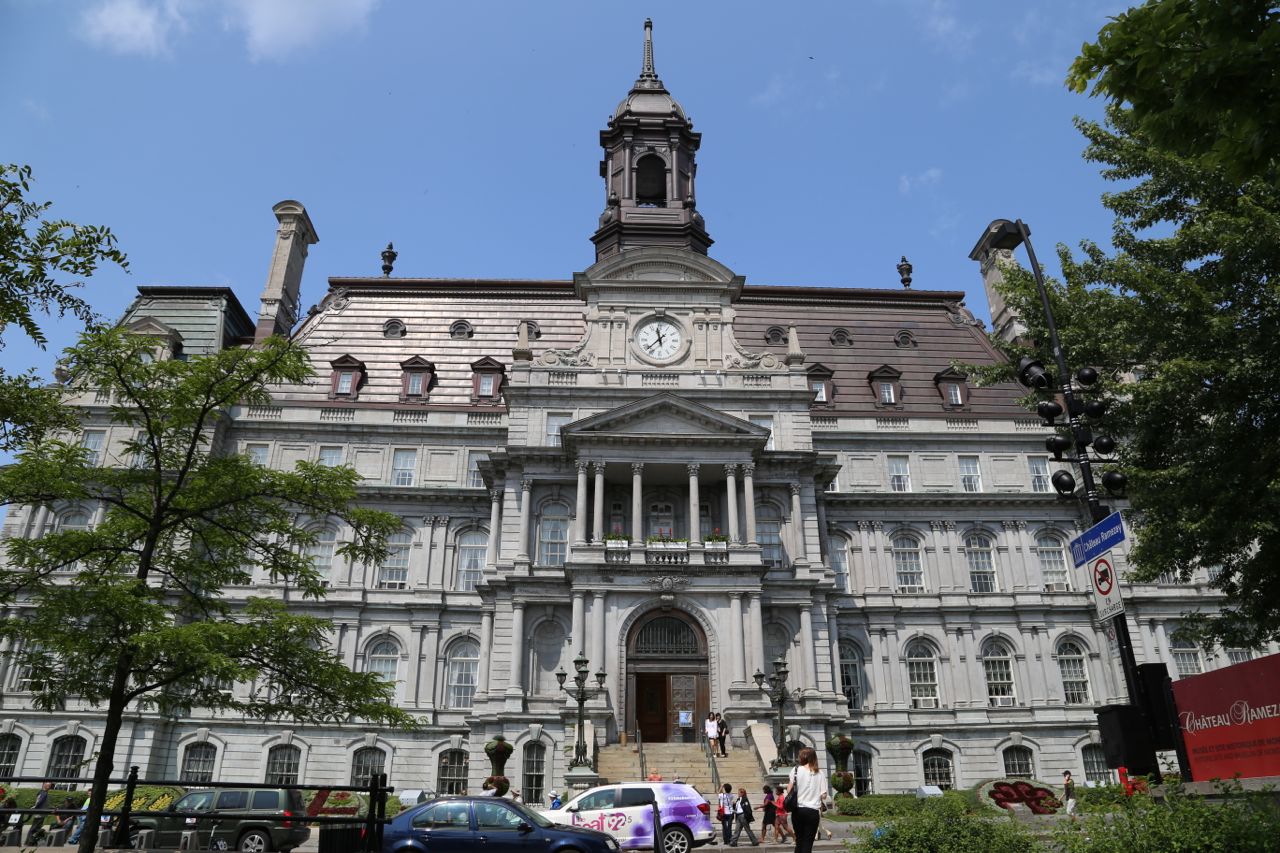
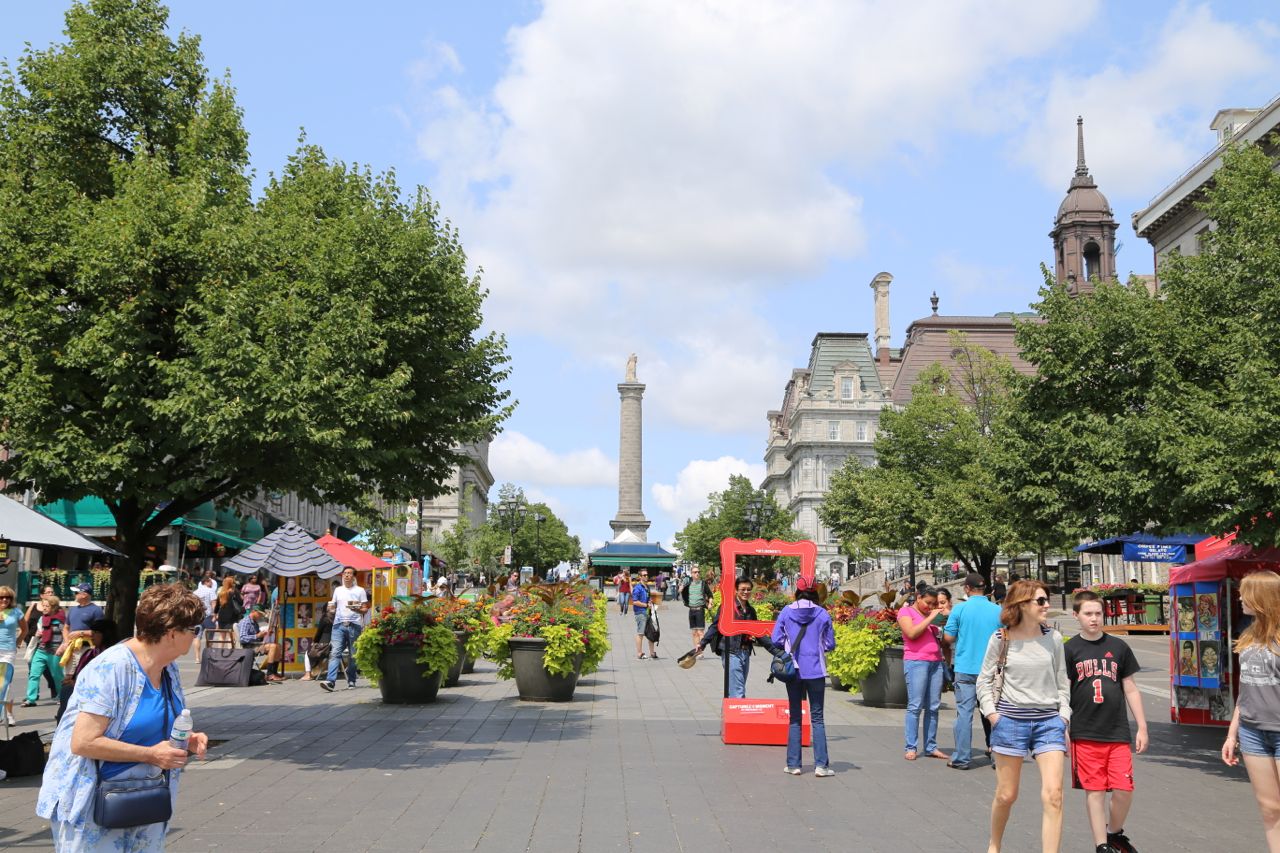
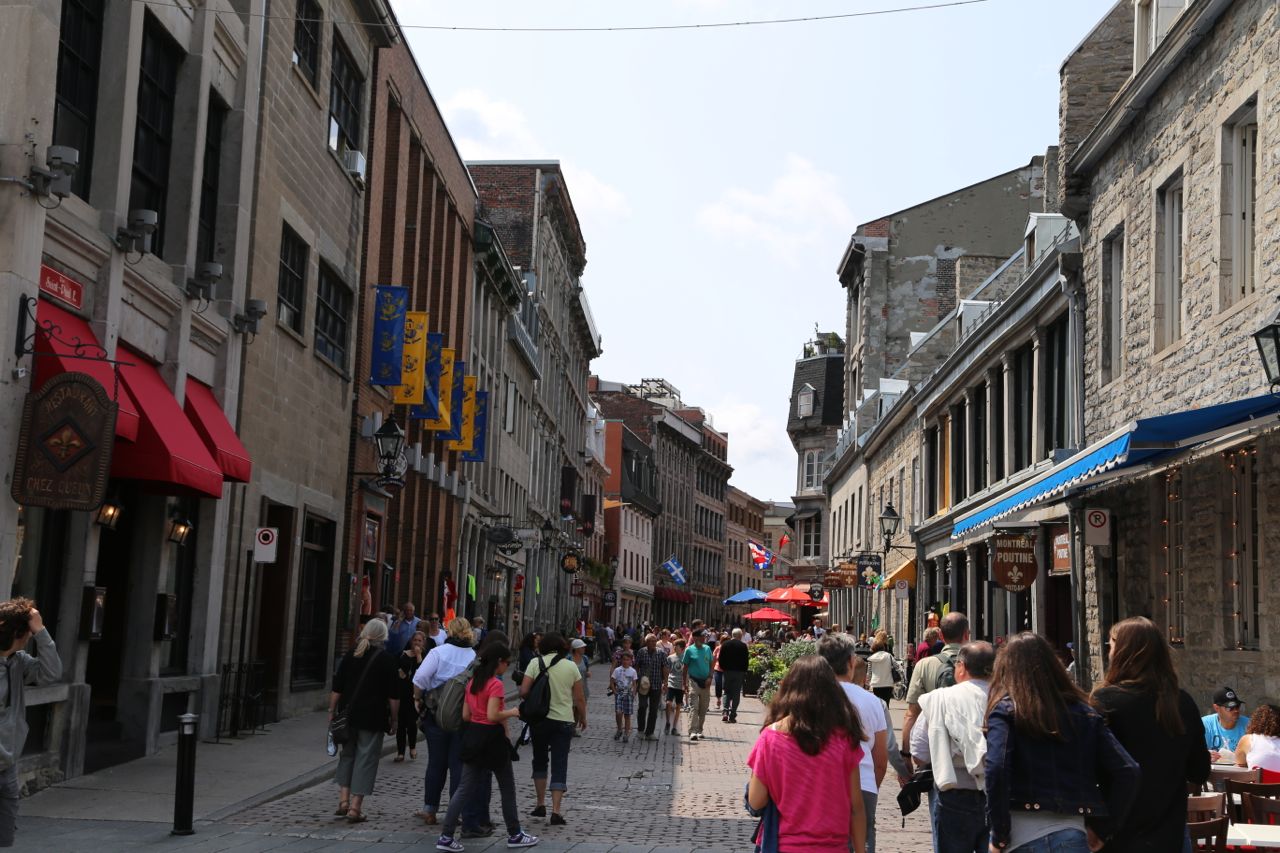
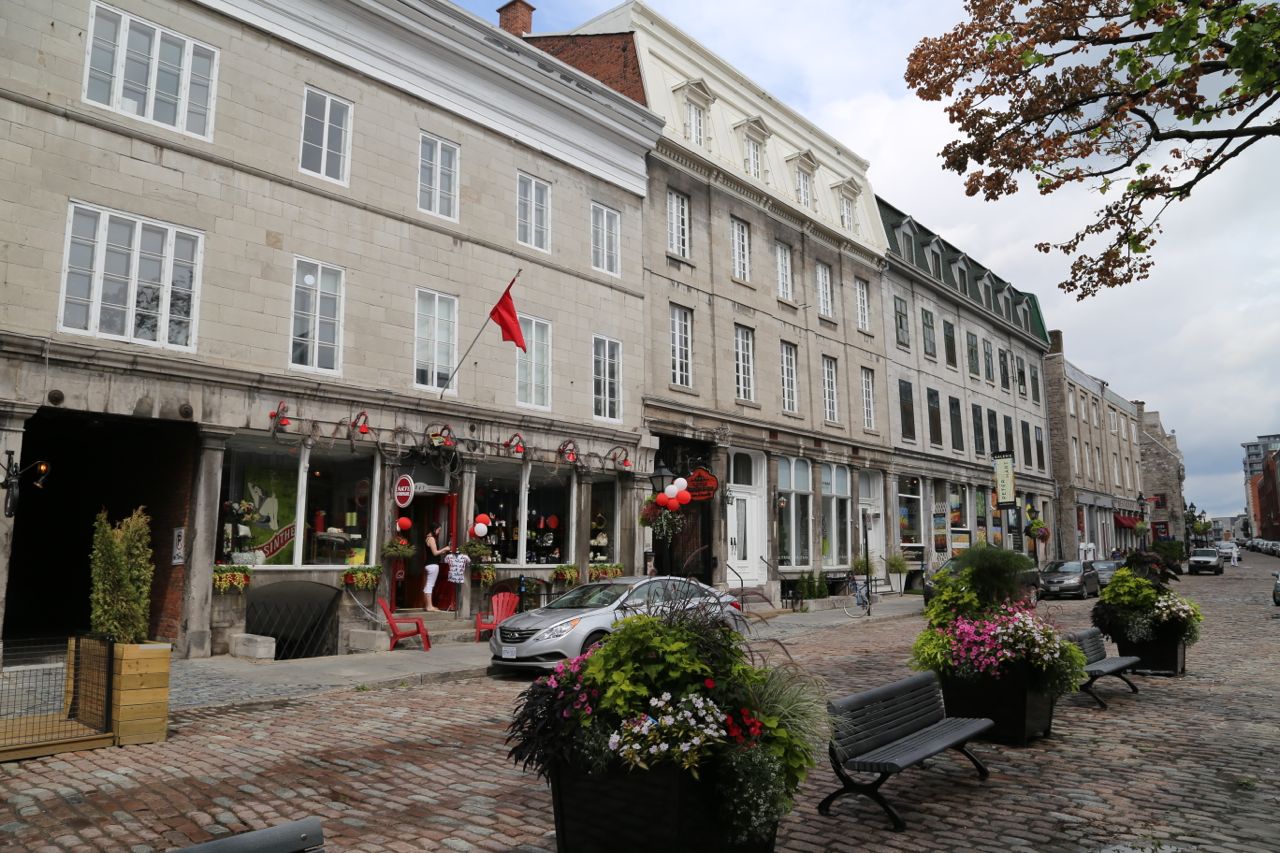
I spent much of my short visit to Montreal just wandering around Old Montreal (Vieux-Montréal). I love old buildings, and Old Montreal certainly has plenty of them. It has lots of charm, cobblestone streets, cafes, and shops. It sits right on the St. Lawrence River, and there is a wonderful linear park that separates the river and its quais (wharfs) from the main part of Old Montreal. It is just a lovely place to visit and walk around.   

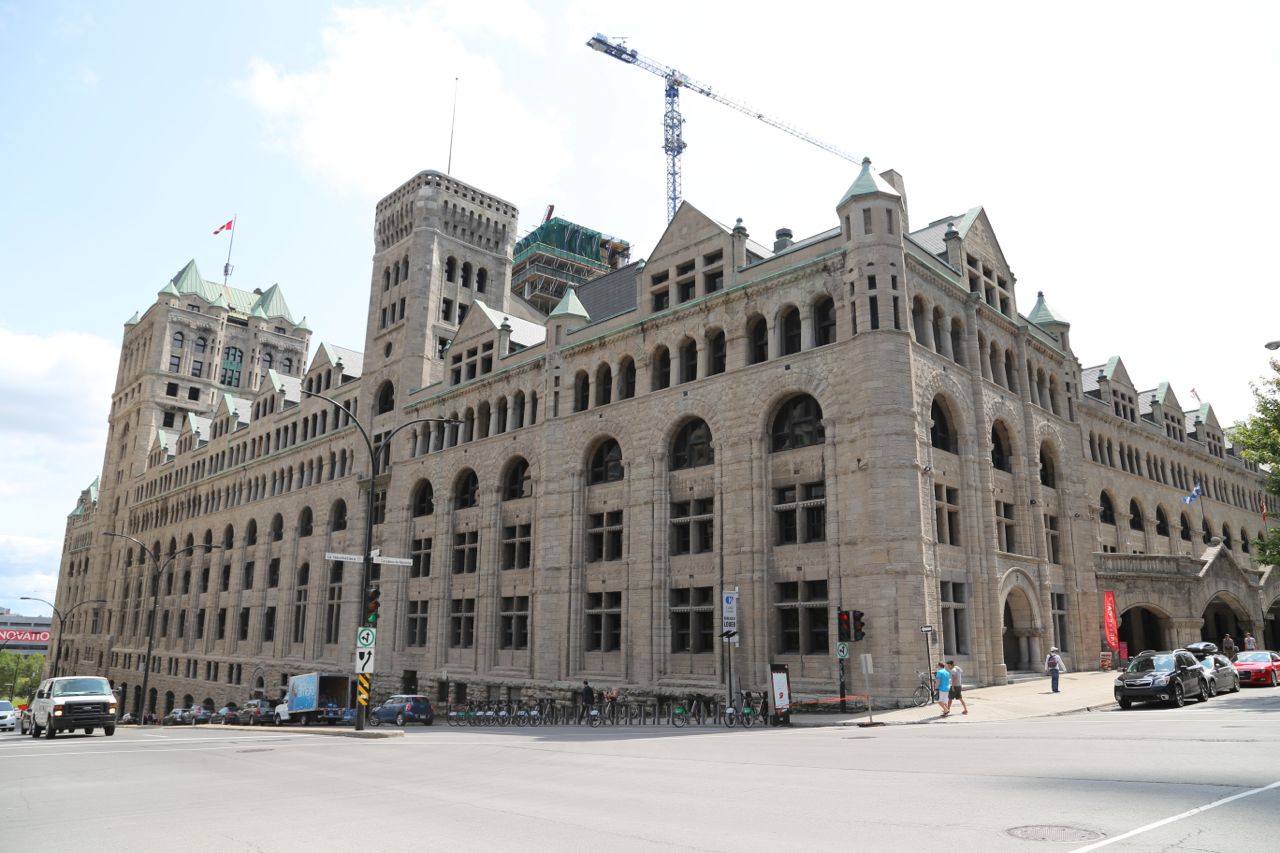
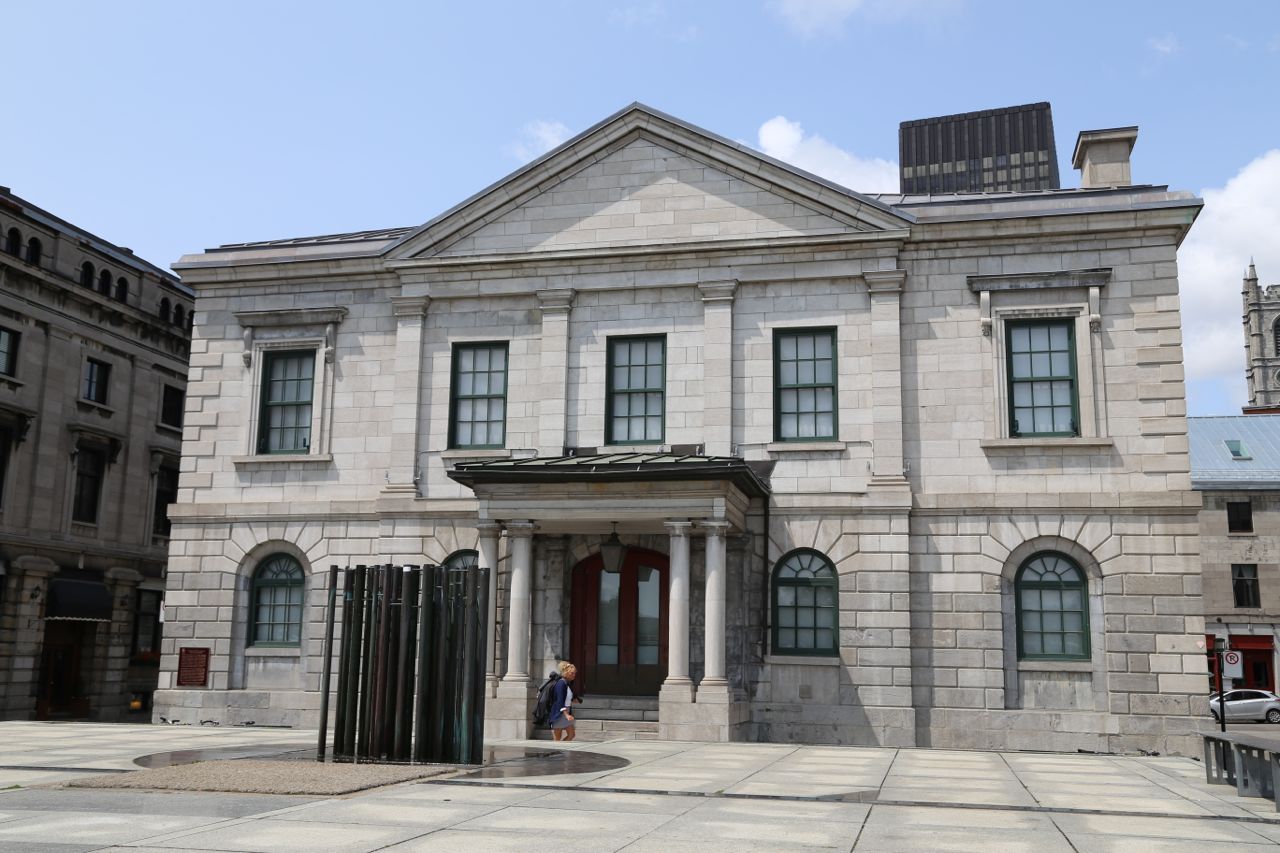
Old City Hall (Hôtel de ville de Montréal)

Old City Hall (Hôtel de ville de Montréal)

Place Jacques-Cartier

Place Jacques-Cartier

Rue Saint Paul

Rue Saint Paul

Rue Saint Paul

Rue Saint Paul

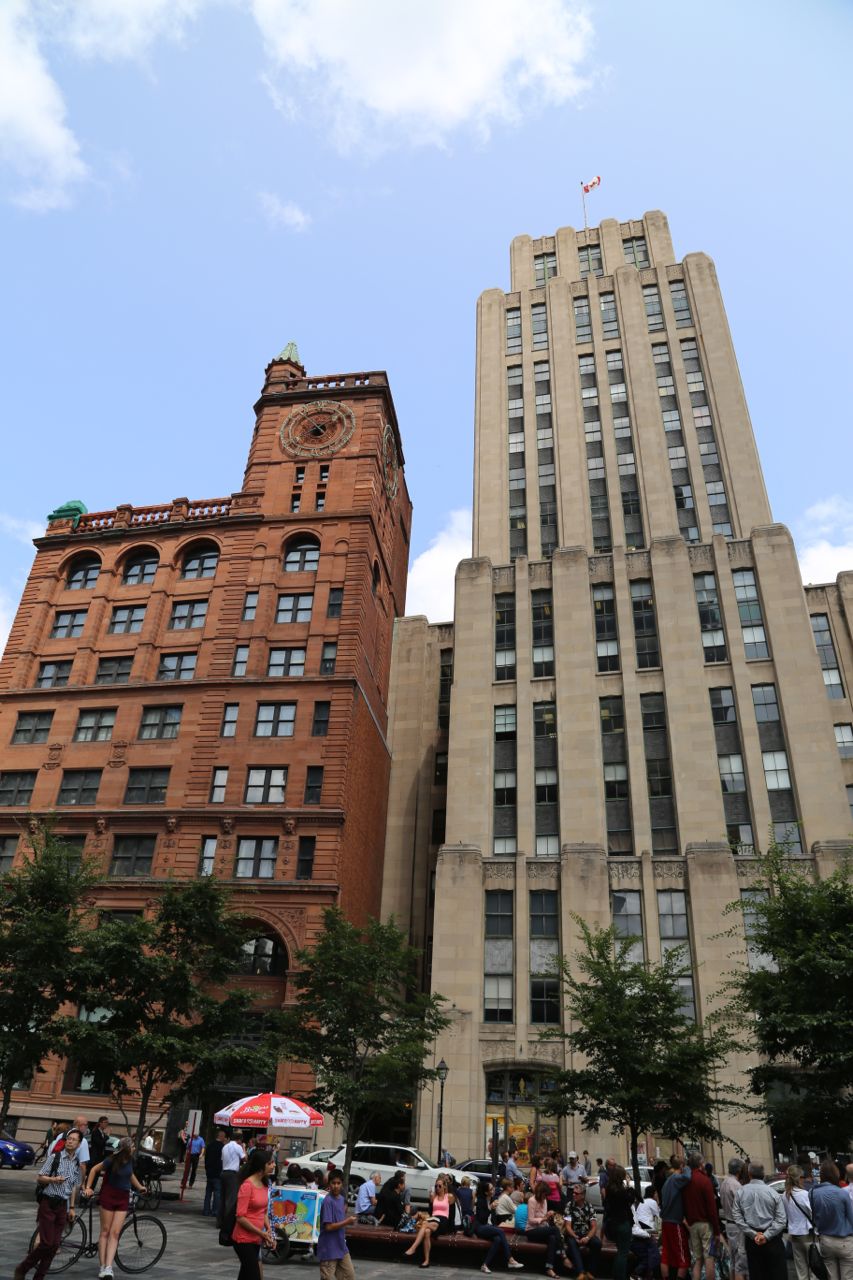
Place d'Armes with views of the more modern buildings in Old Montreal

Place d’Armes with views of the more modern buildings in Old Montreal

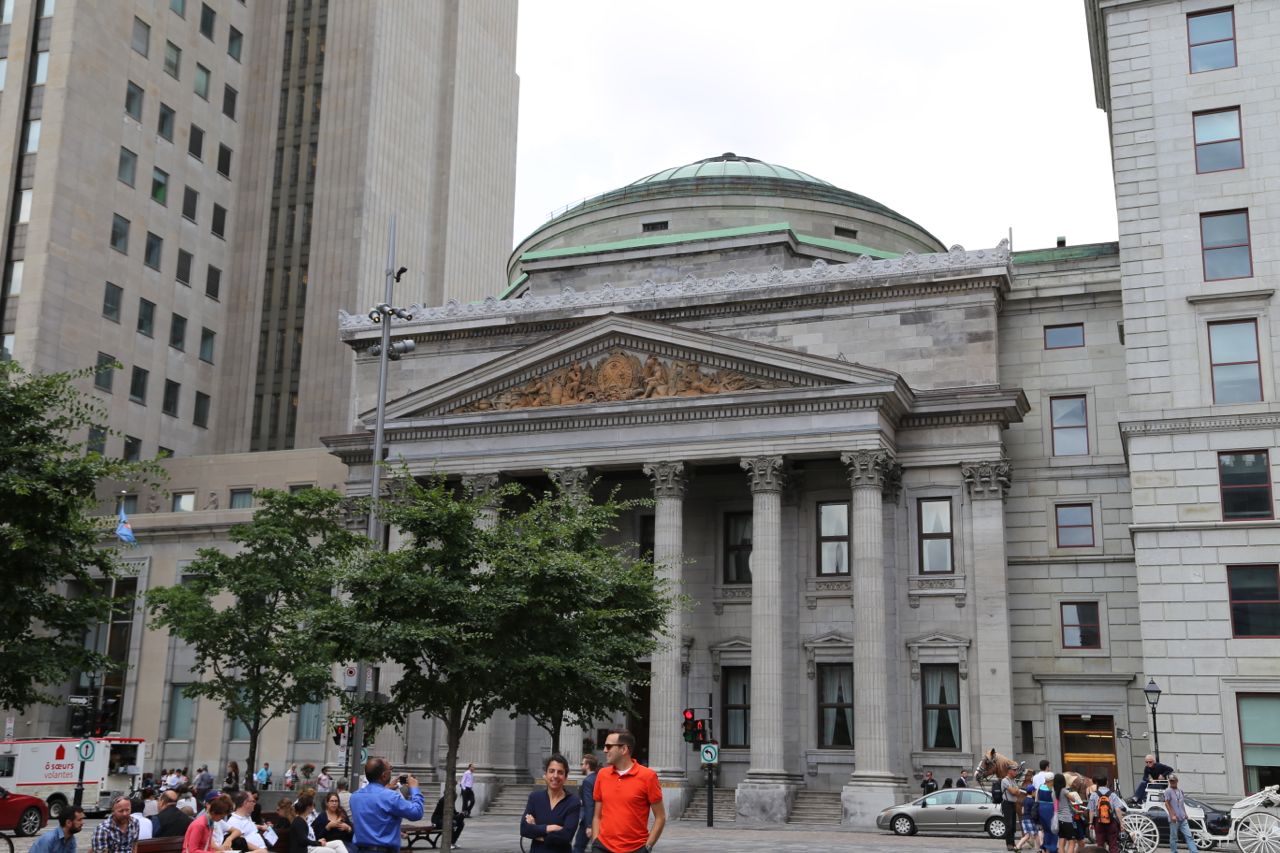
Bank of Montreal

Bank of Montreal

Saint-Sulpice Seminary
Saint-Sulpice Seminary
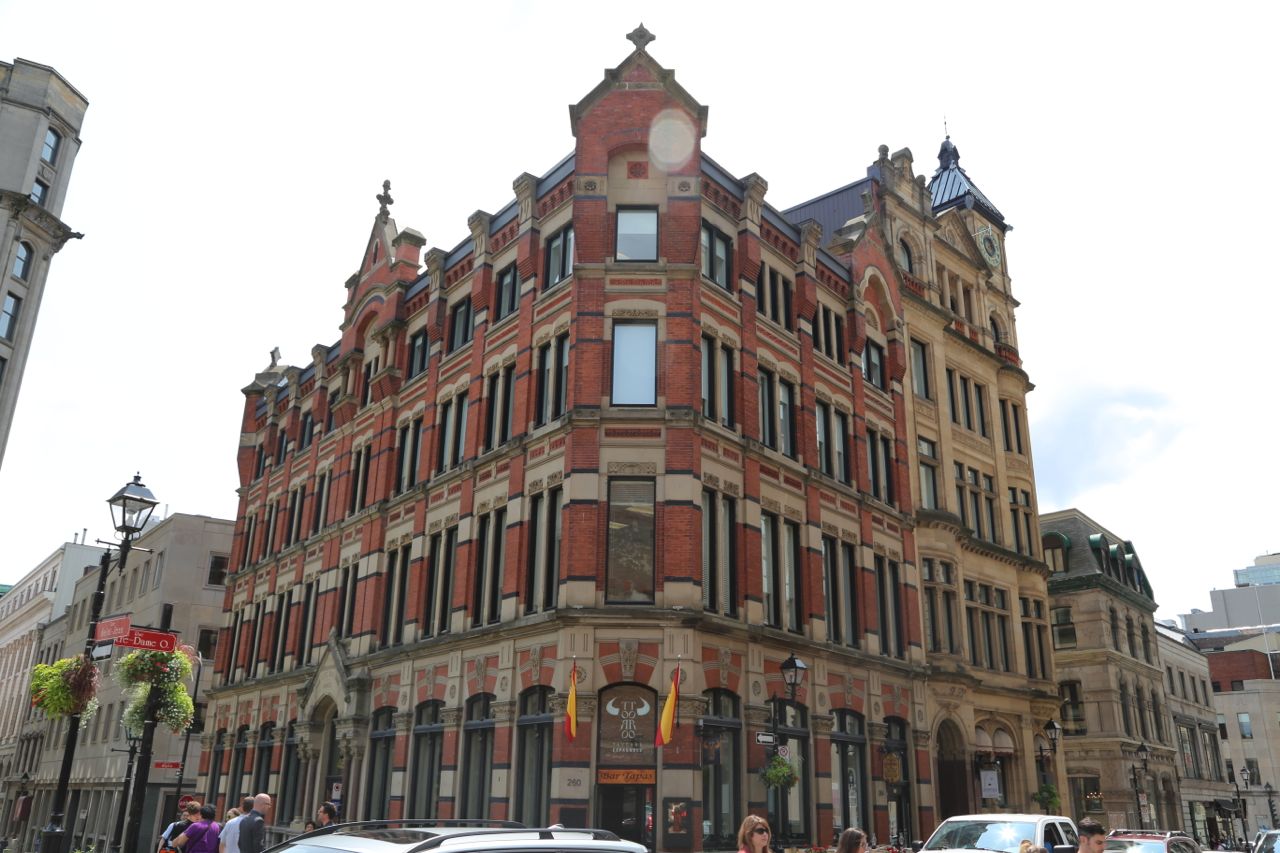
Old Montreal building

Old Montreal building

Place Royale

Place Royale

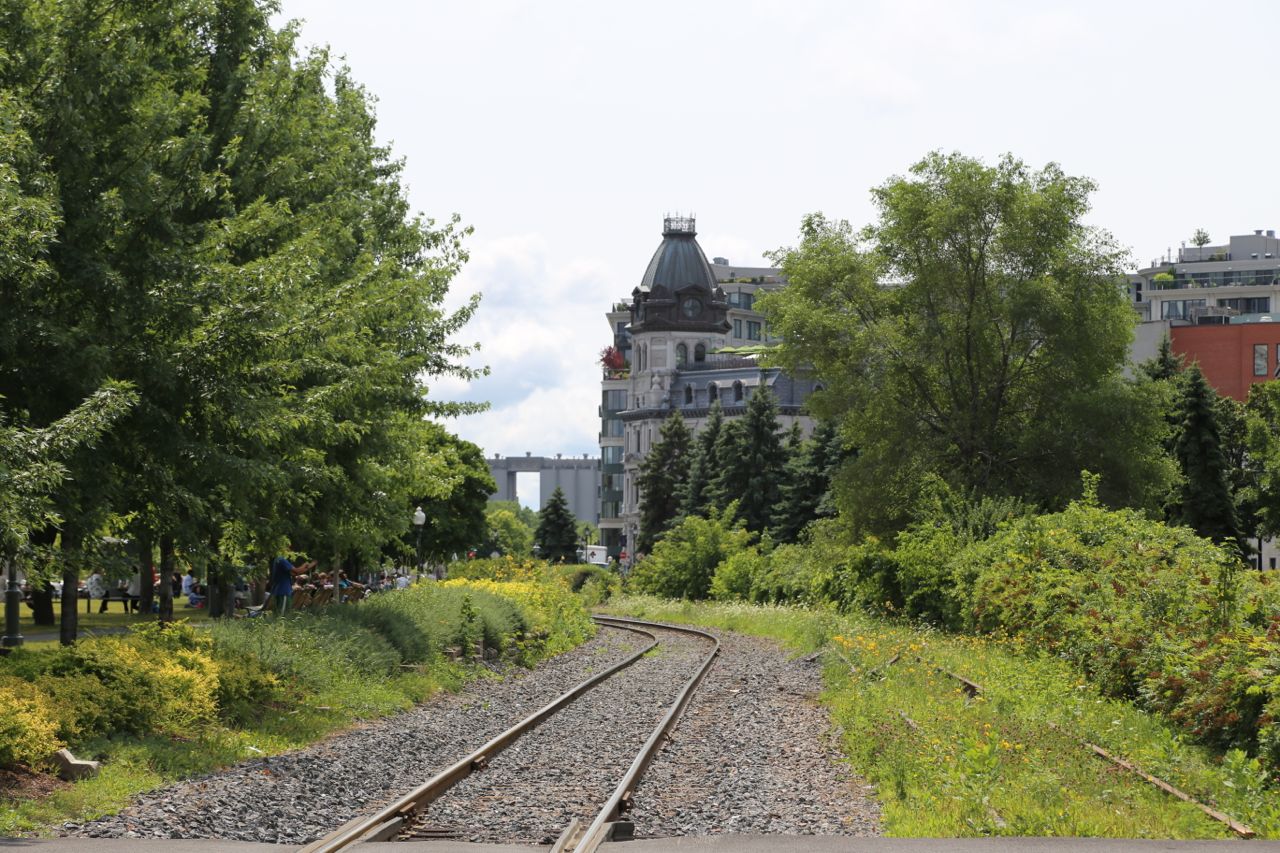
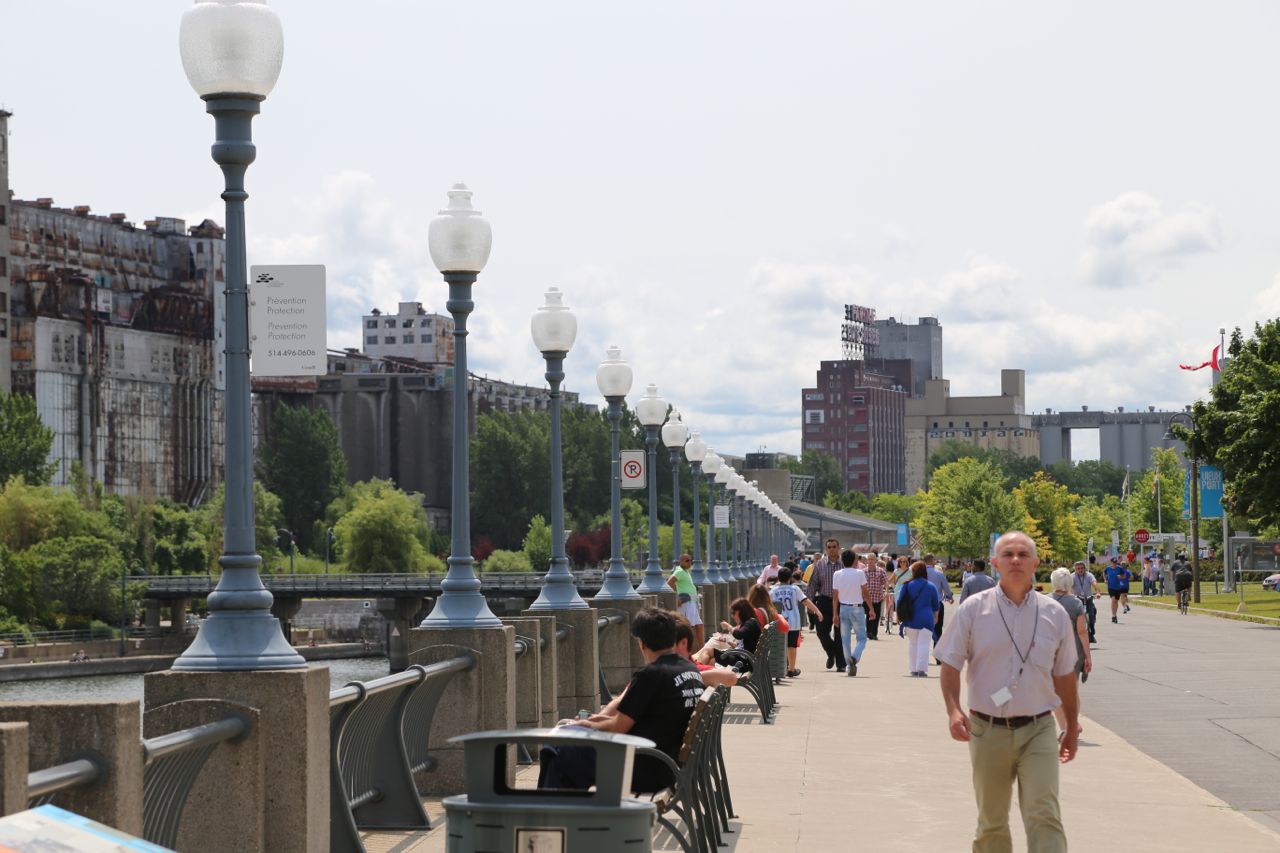
Parc Lineaire de la Commune

Parc Lineaire de la Commune

Parc Lineaire de la Commune

Parc Lineaire de la Commune

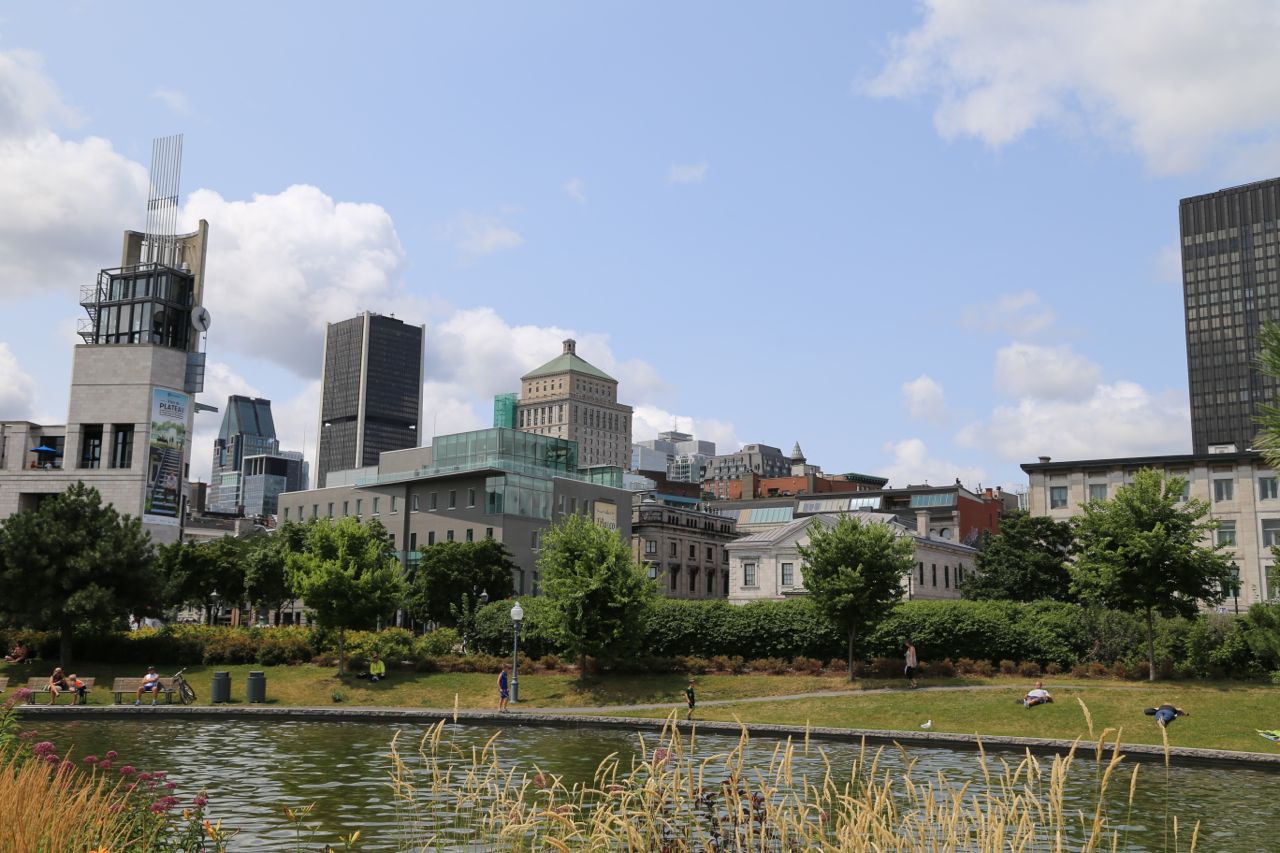
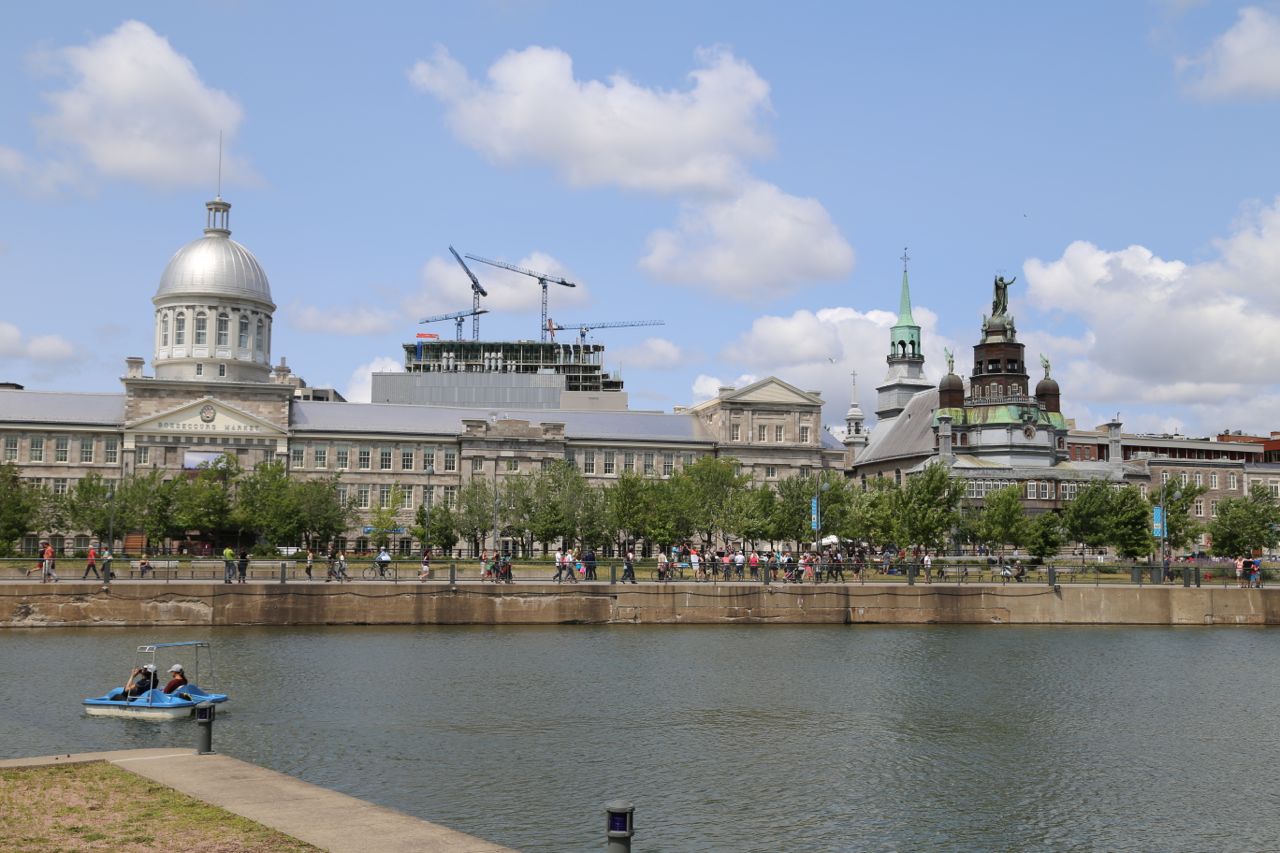
Bonsecours Basin Park with views of Bonsecours Market and Notre-Dame-de-Bon-Secours Chapel

Bonsecours Basin Park with views of Bonsecours Market and Notre-Dame-de-Bon-Secours Chapel

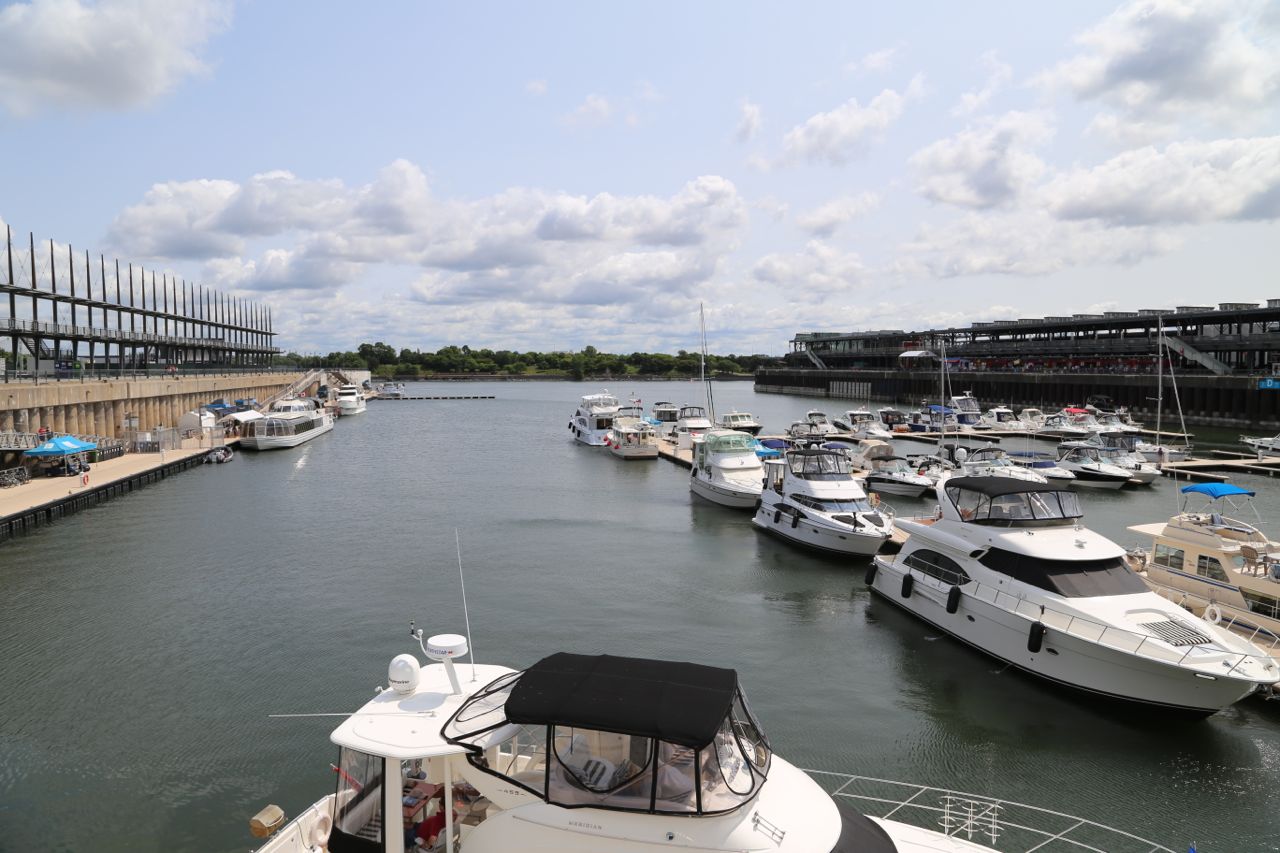
Quai des Convoyeurs

Quai des Convoyeurs

Quai Jacques-Cartier

Quai Jacques-Cartier